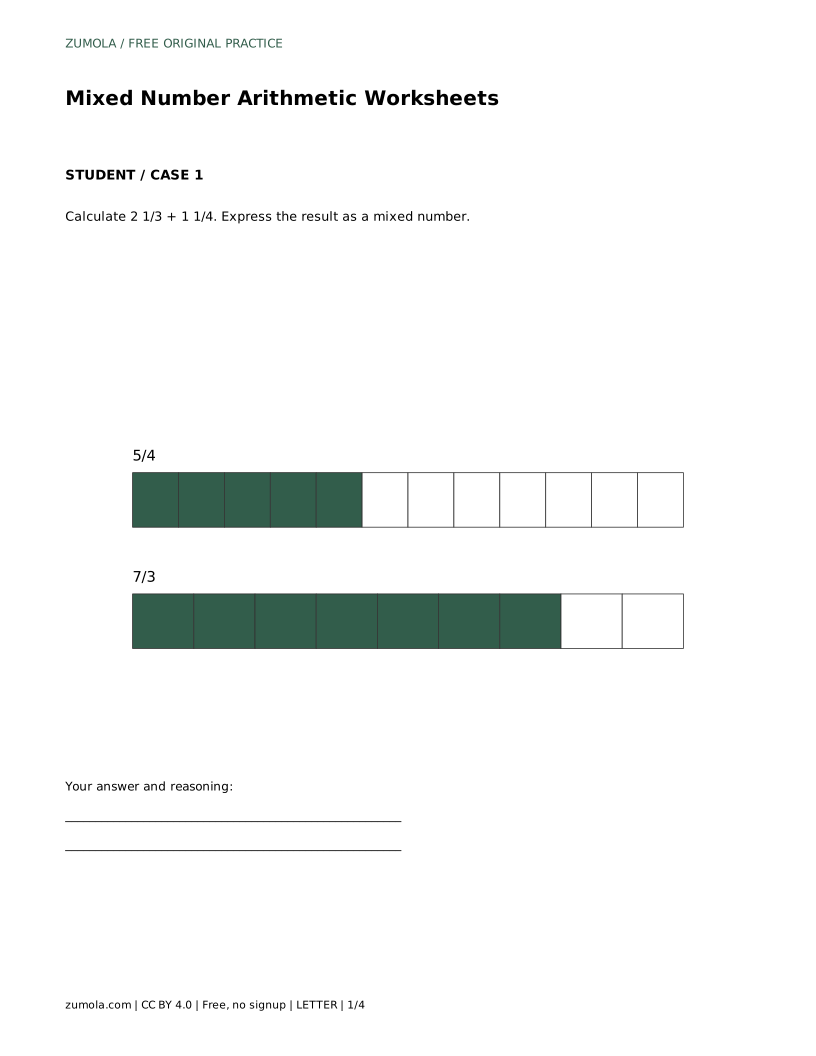
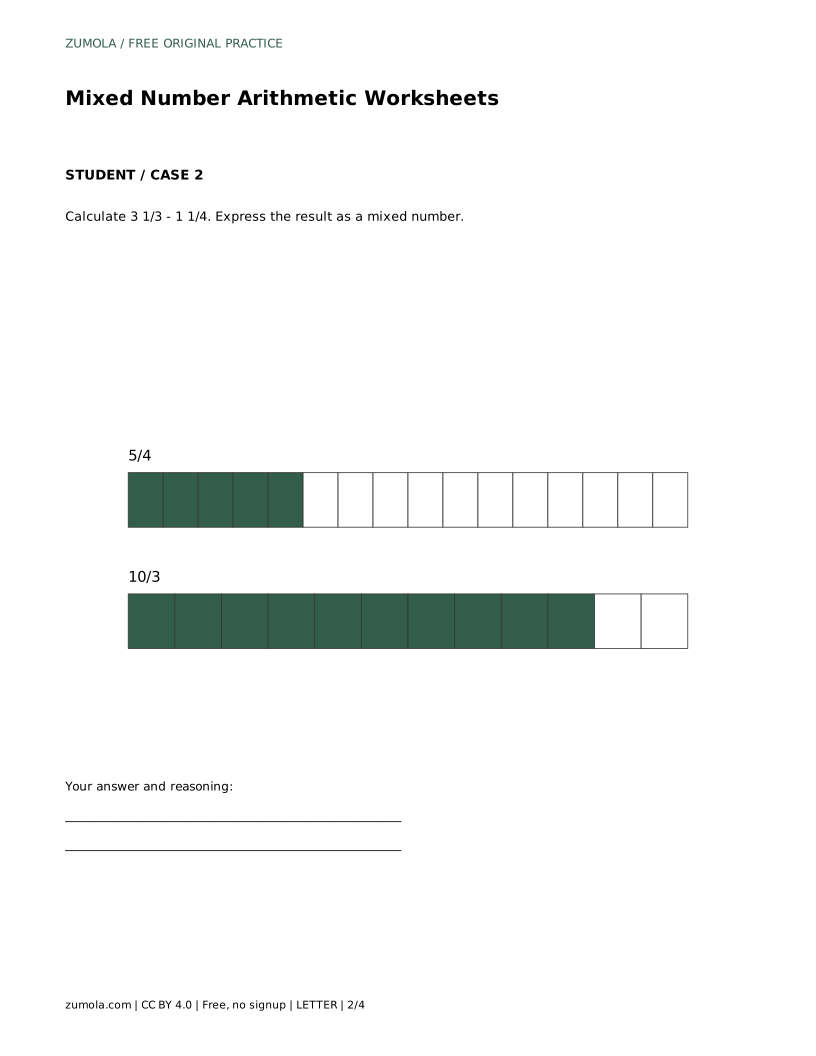
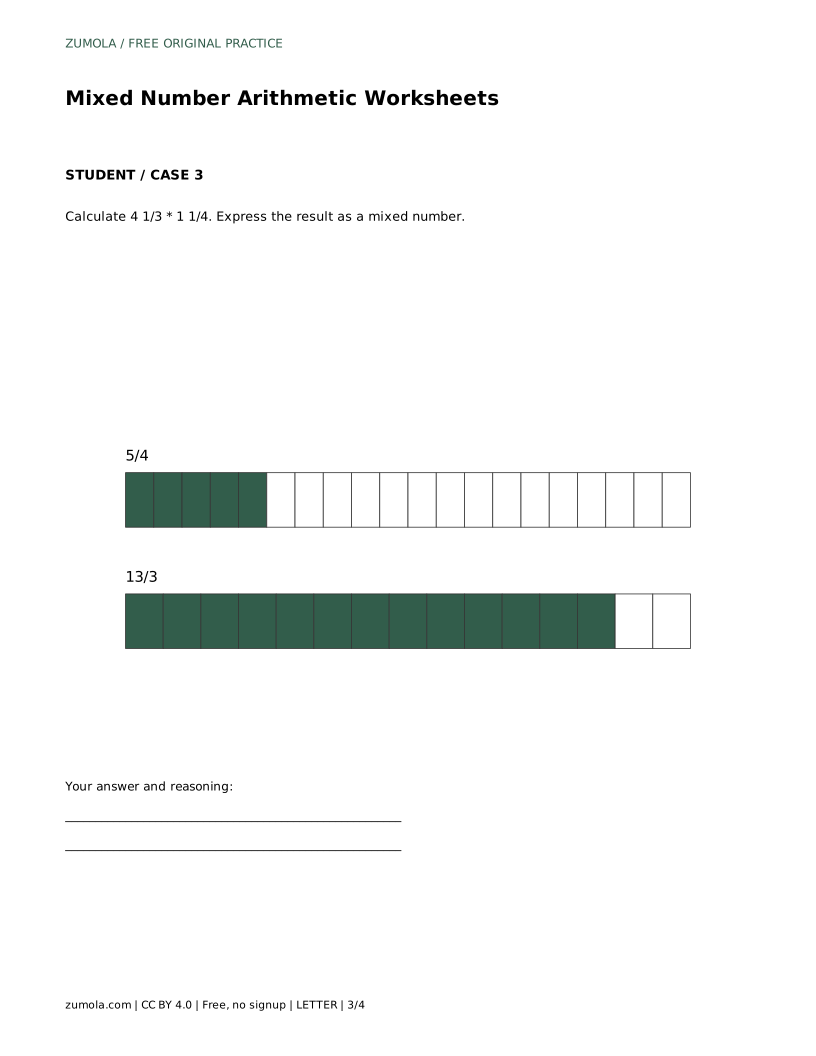
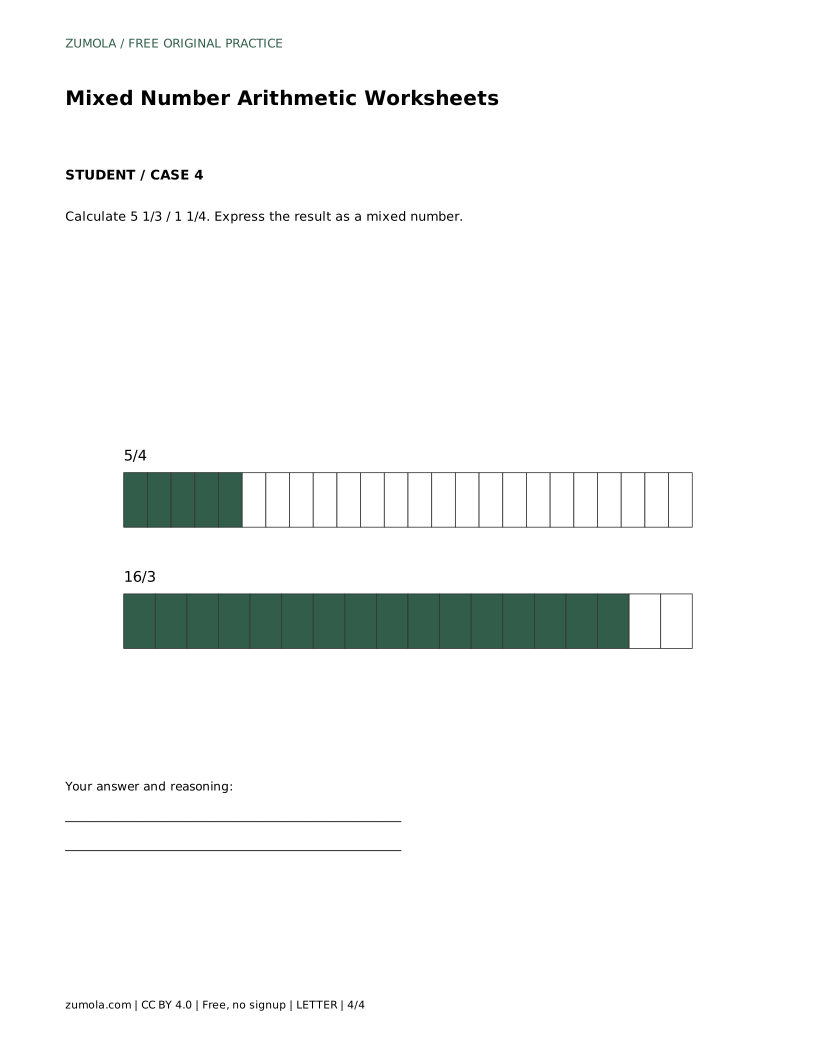
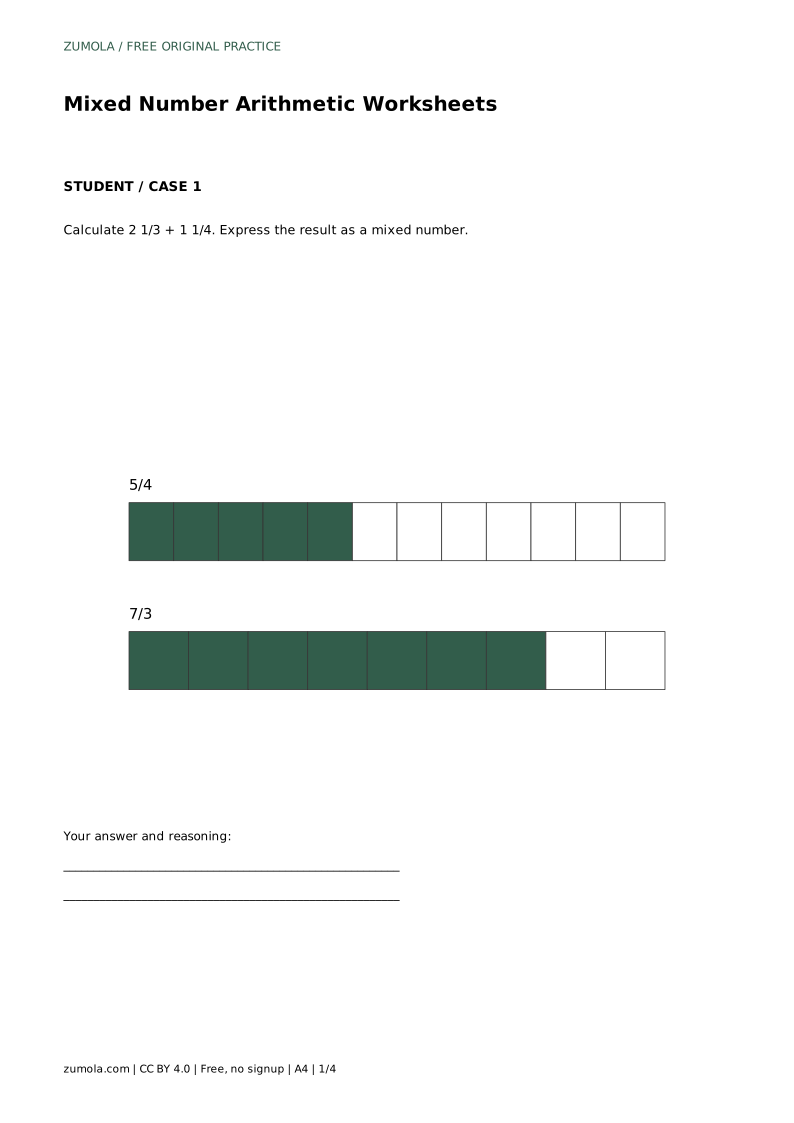
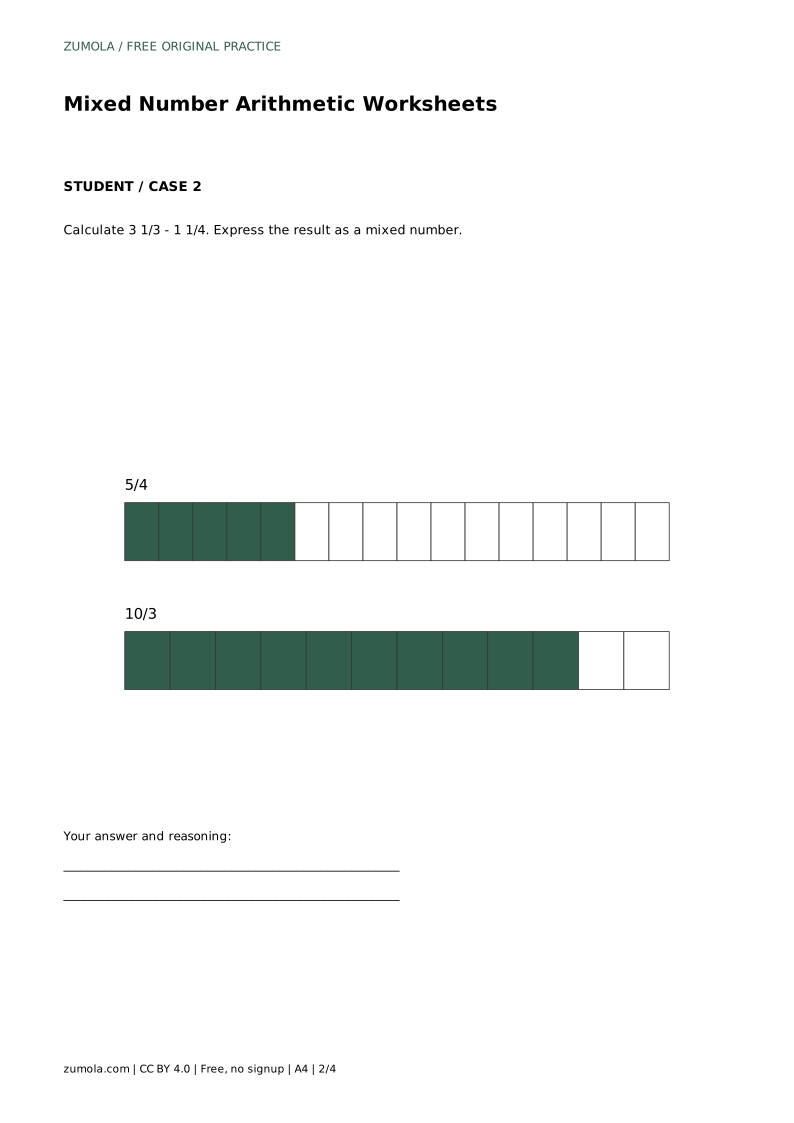
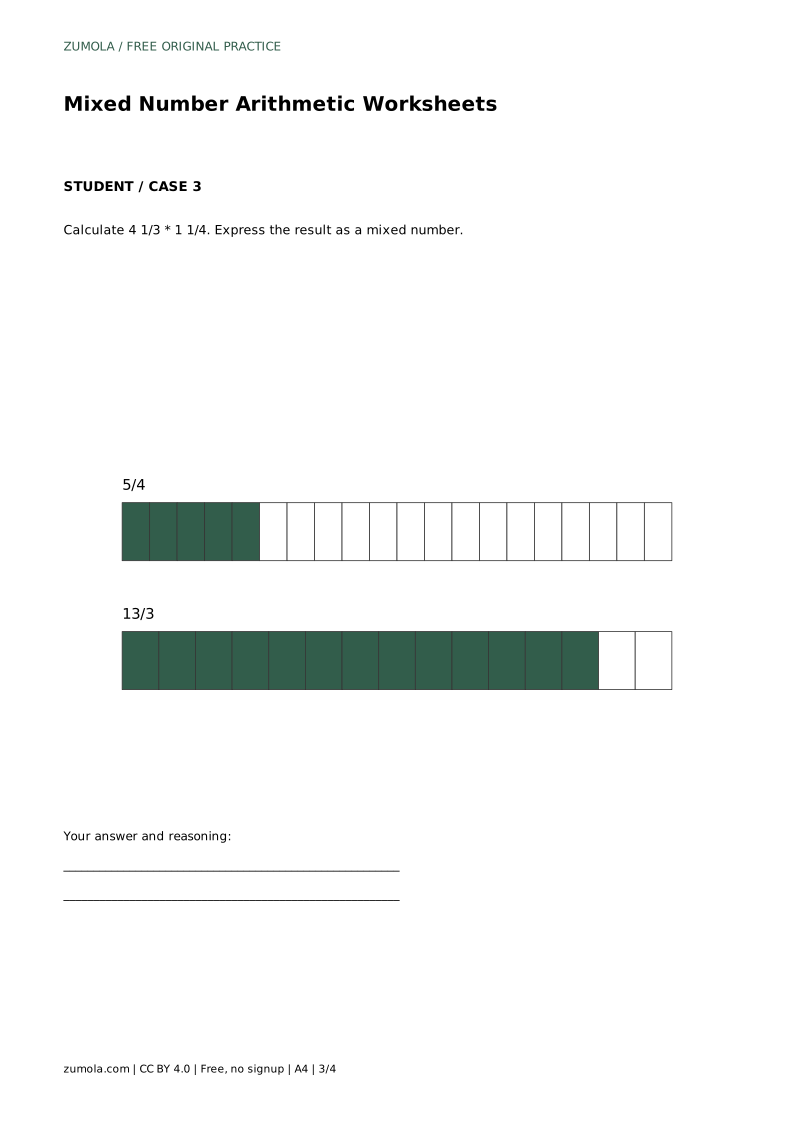
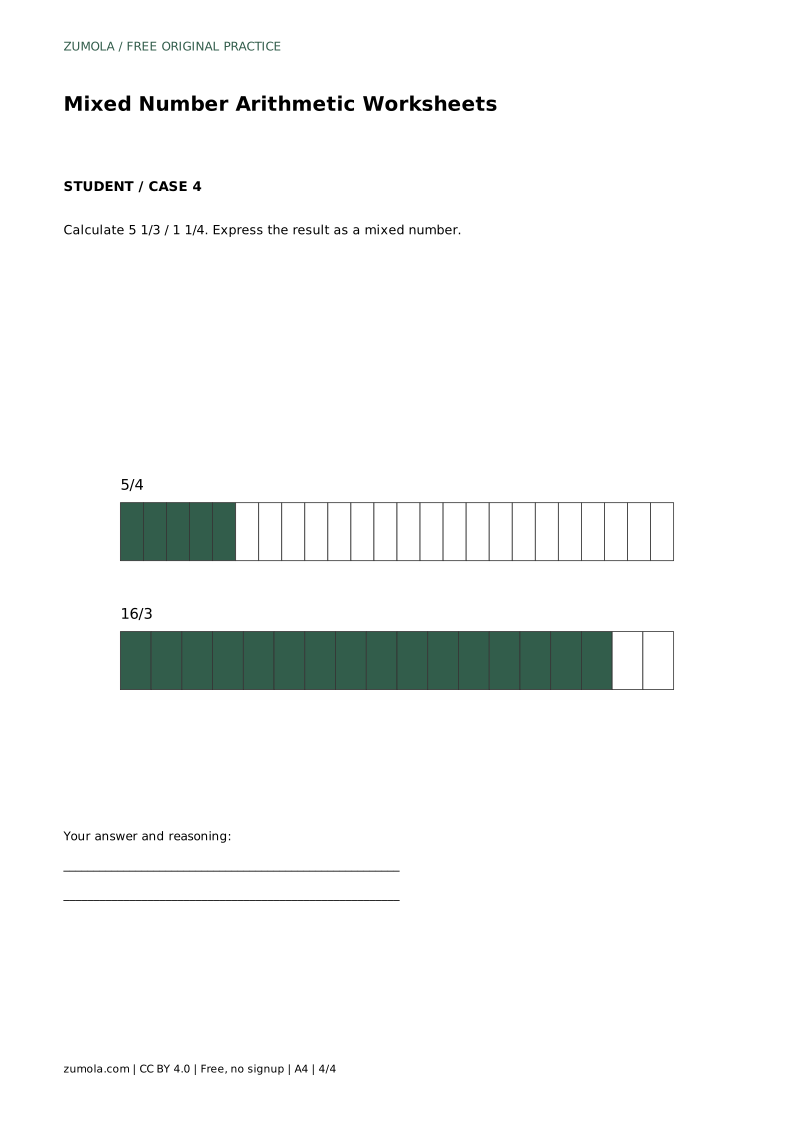
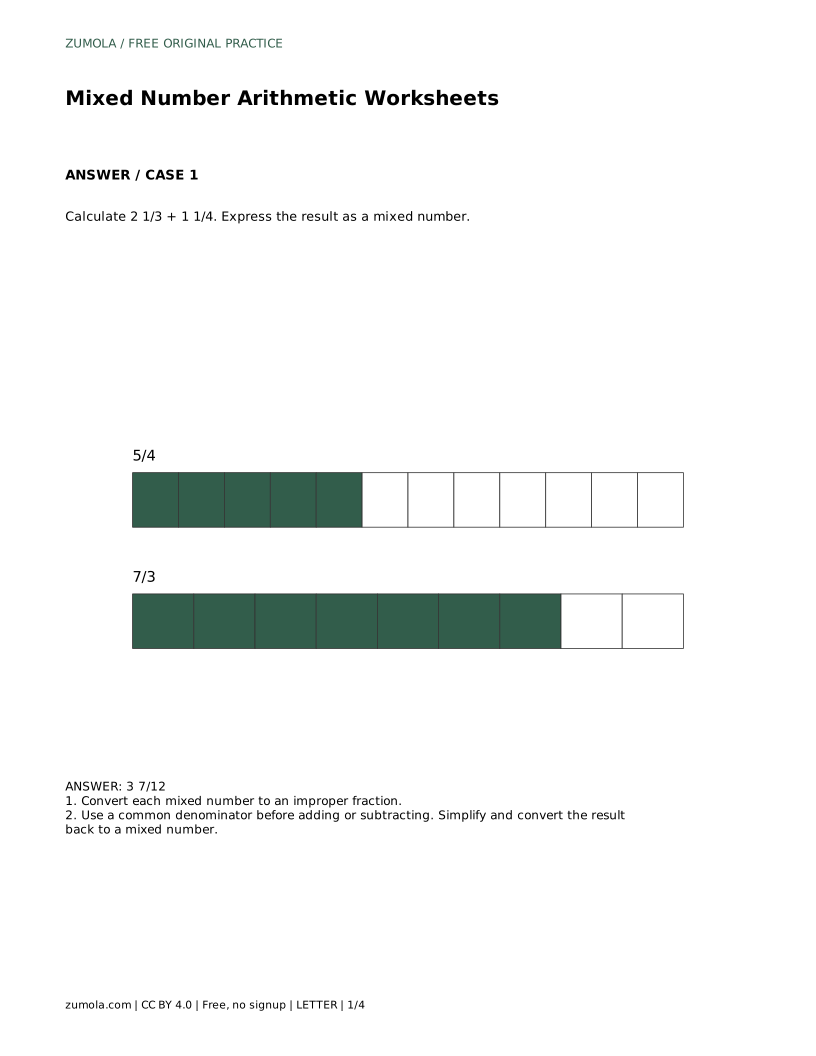
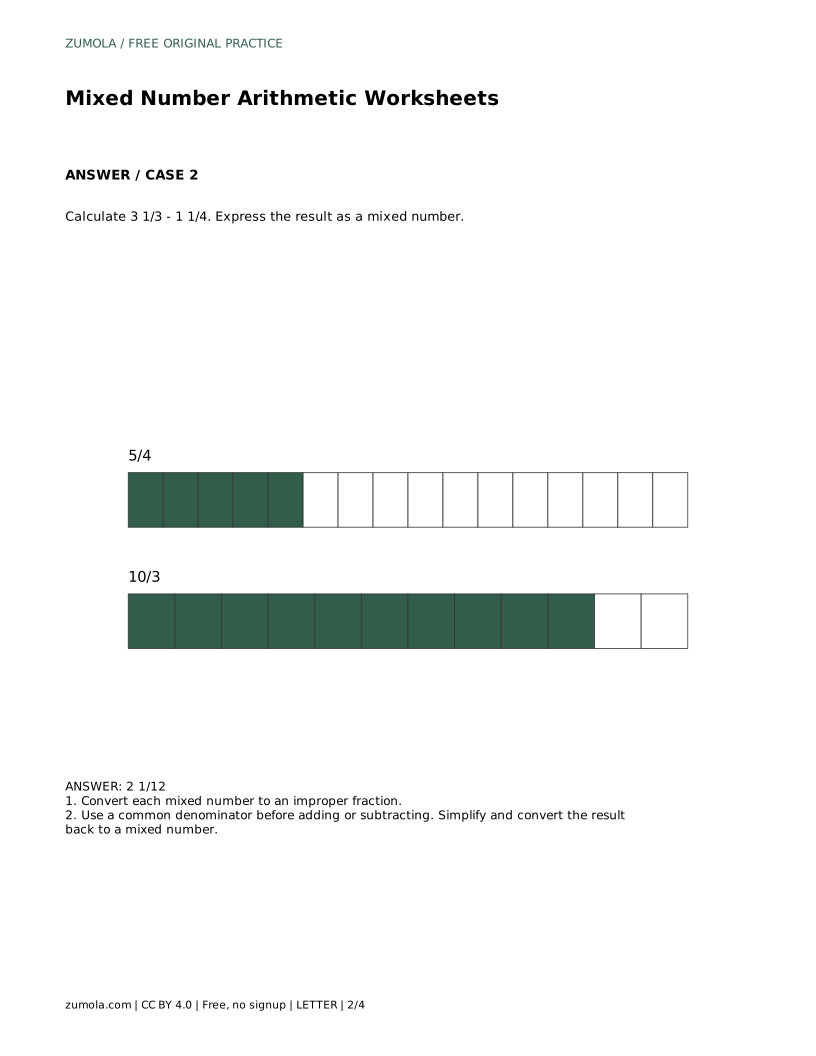
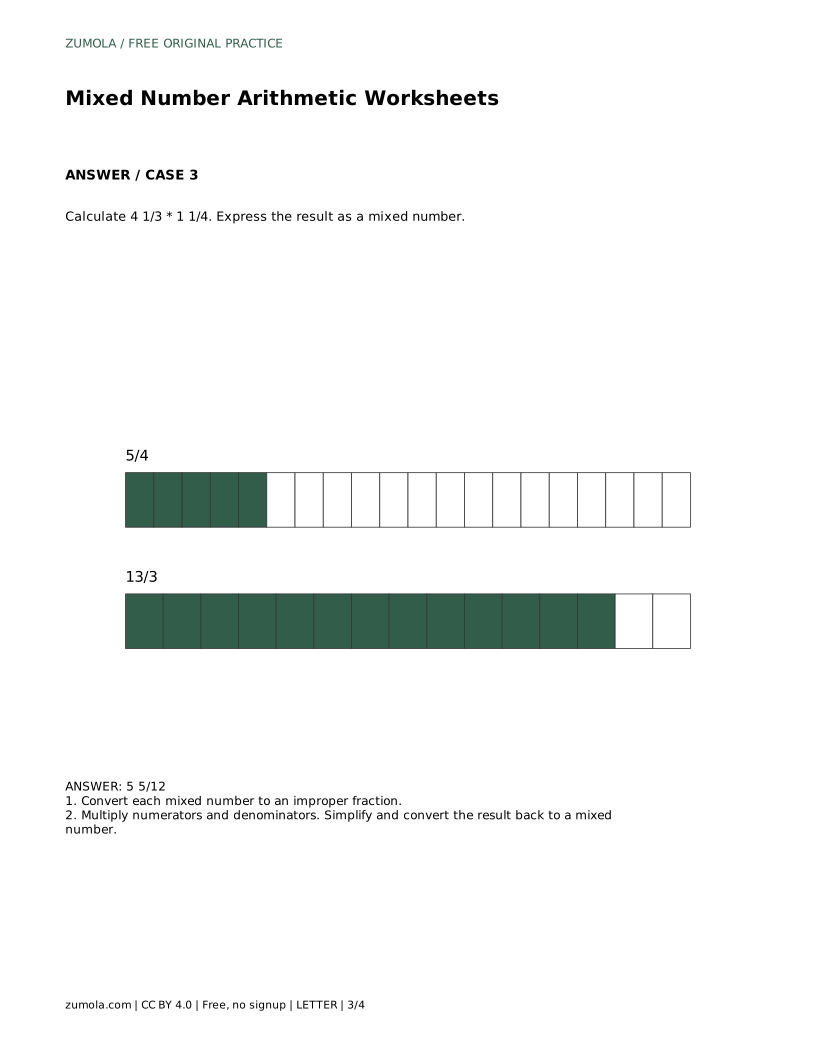
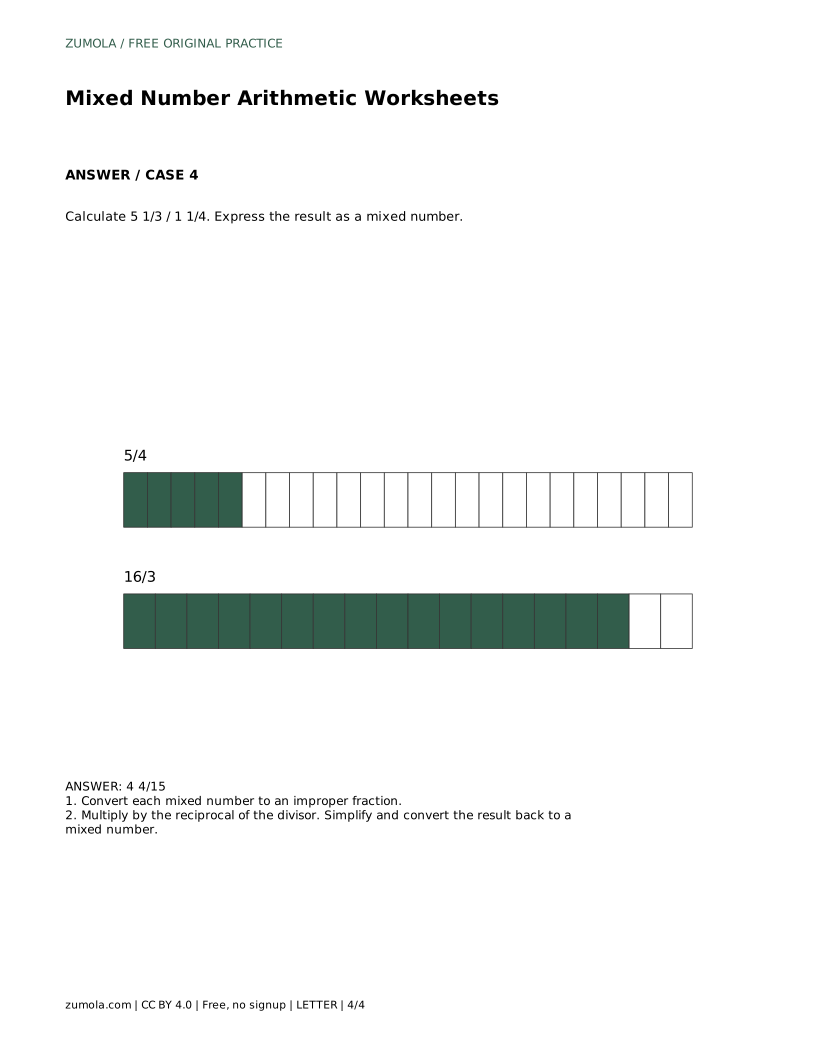
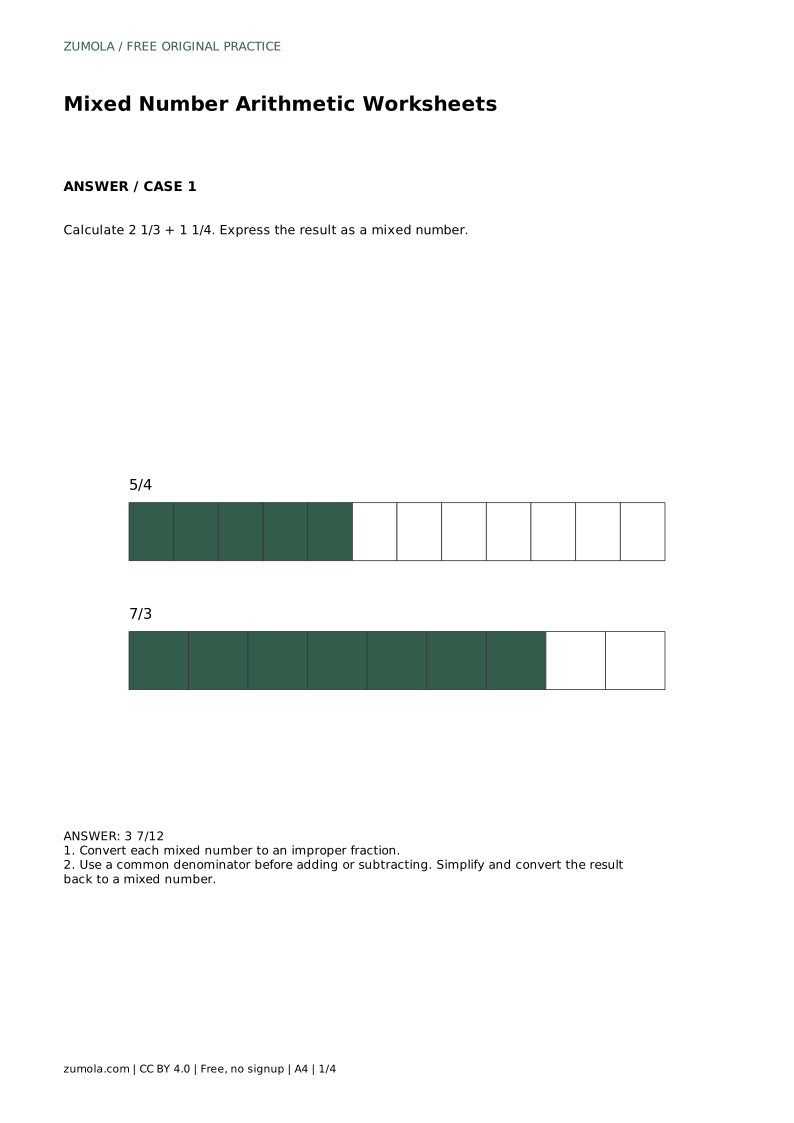
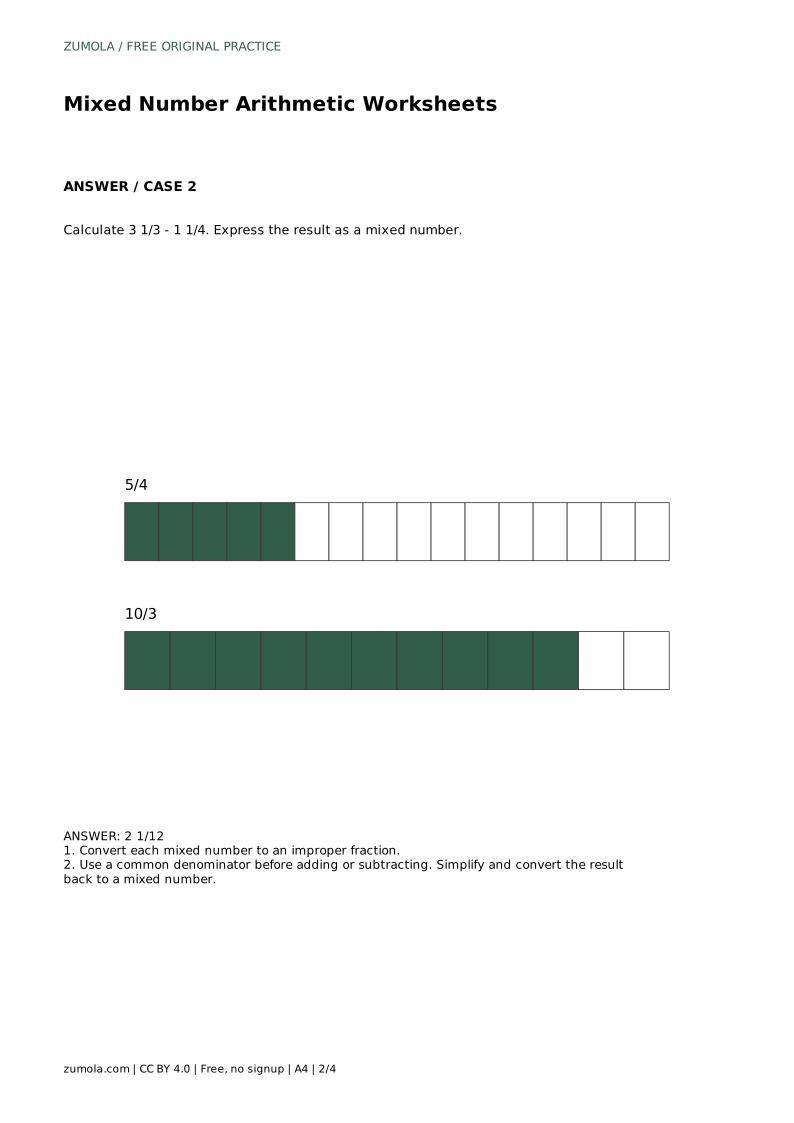
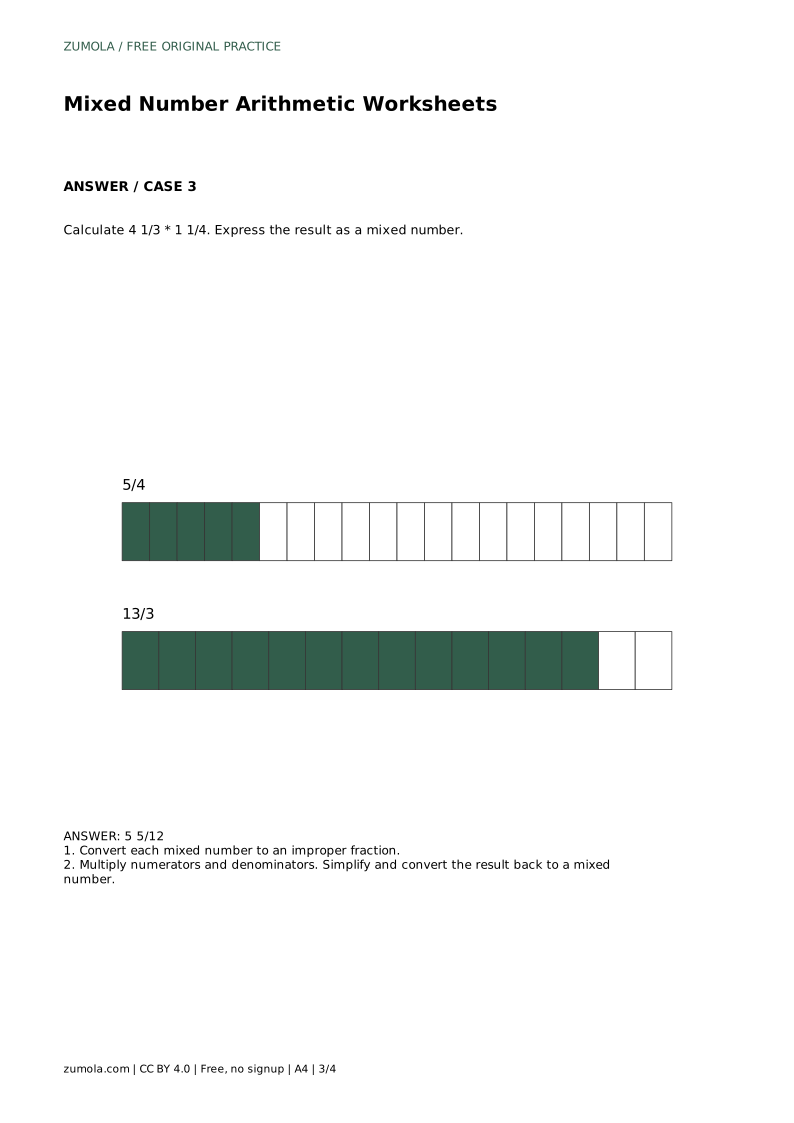
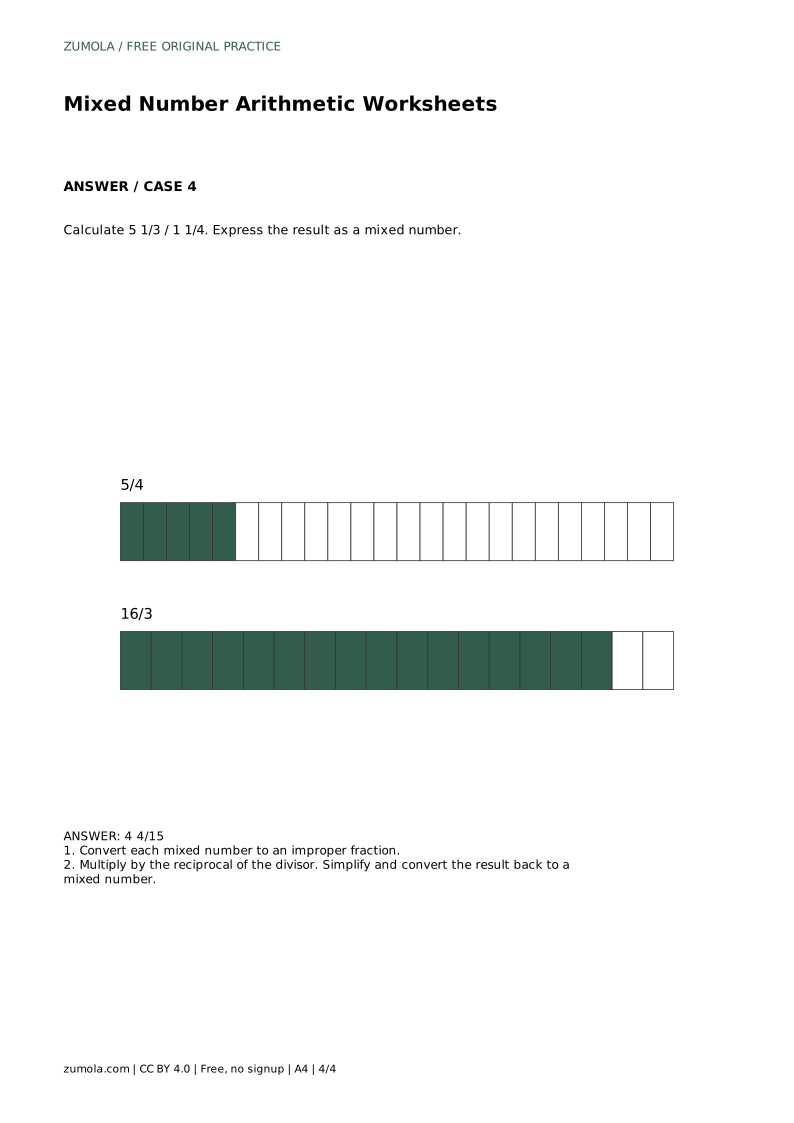
Reference diagrams
LETTER · Download PDF
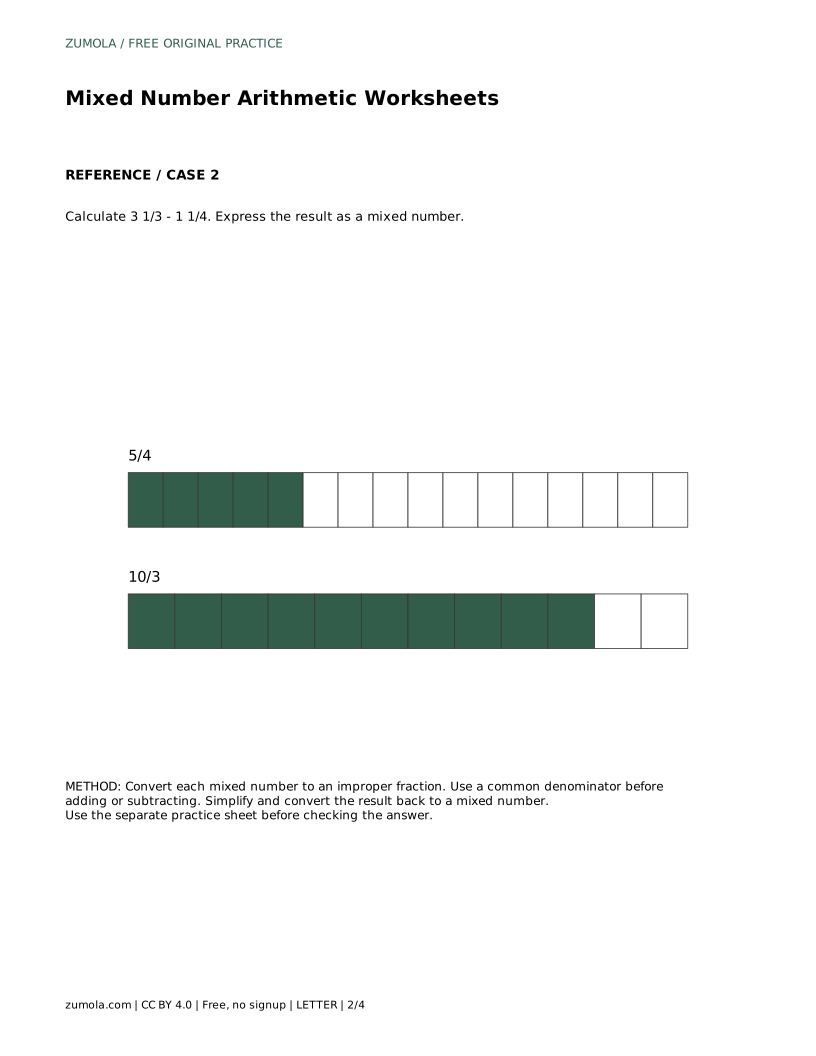
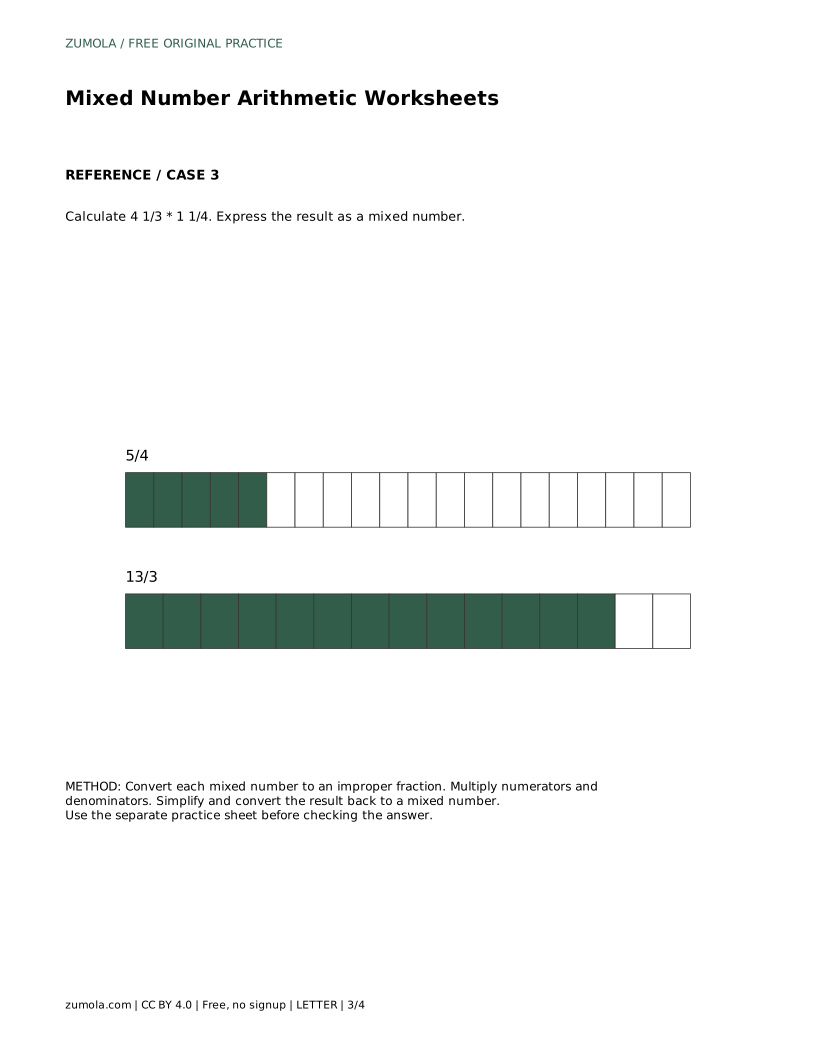
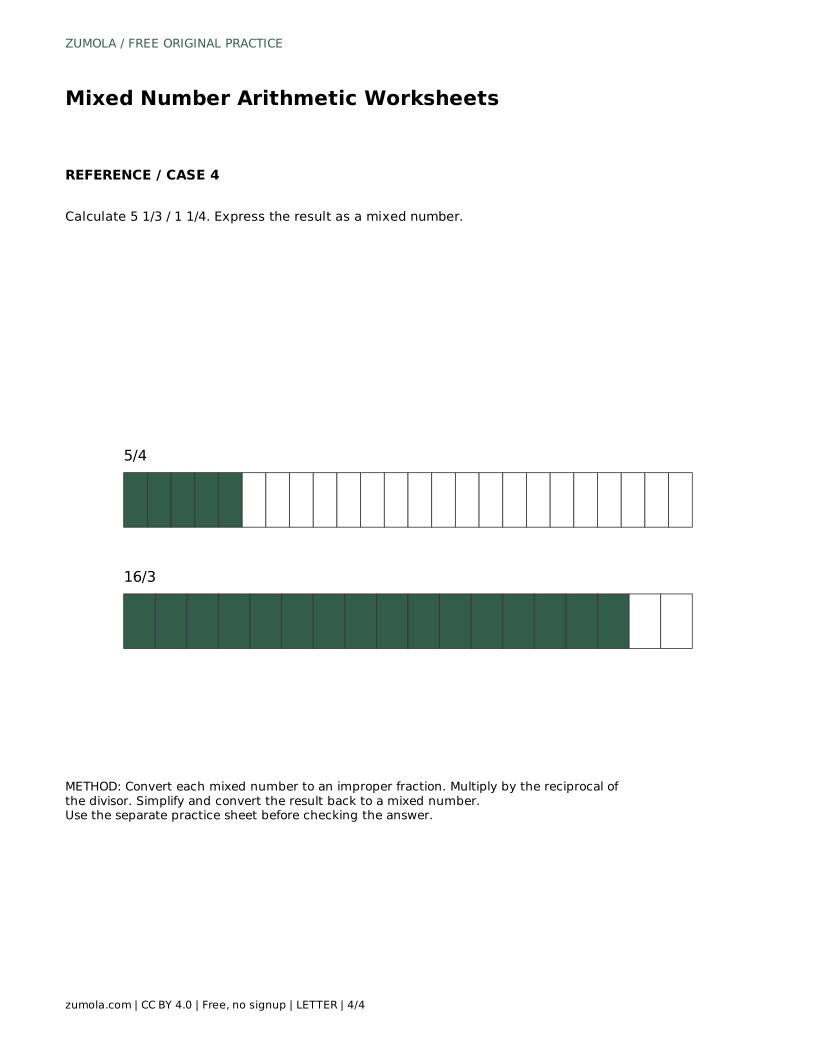
A4 · Download PDF
Free original resources
Practice mixed number arithmetic by converting to improper fractions, finding common denominators, multiplying by reciprocals, and returning answers to mixed form.
Four original cases, with reference diagrams, practice sheets and worked answers. Everything is free; no signup required.
LETTER · Download PDF
A4 · Download PDF
LETTER · Download PDF
A4 · Download PDF
LETTER · Download PDF
A4 · Download PDF
Use A4 or US Letter to match your printer. Use the stated values and conditions to solve each exercise; diagrams are not physical measuring rulers.
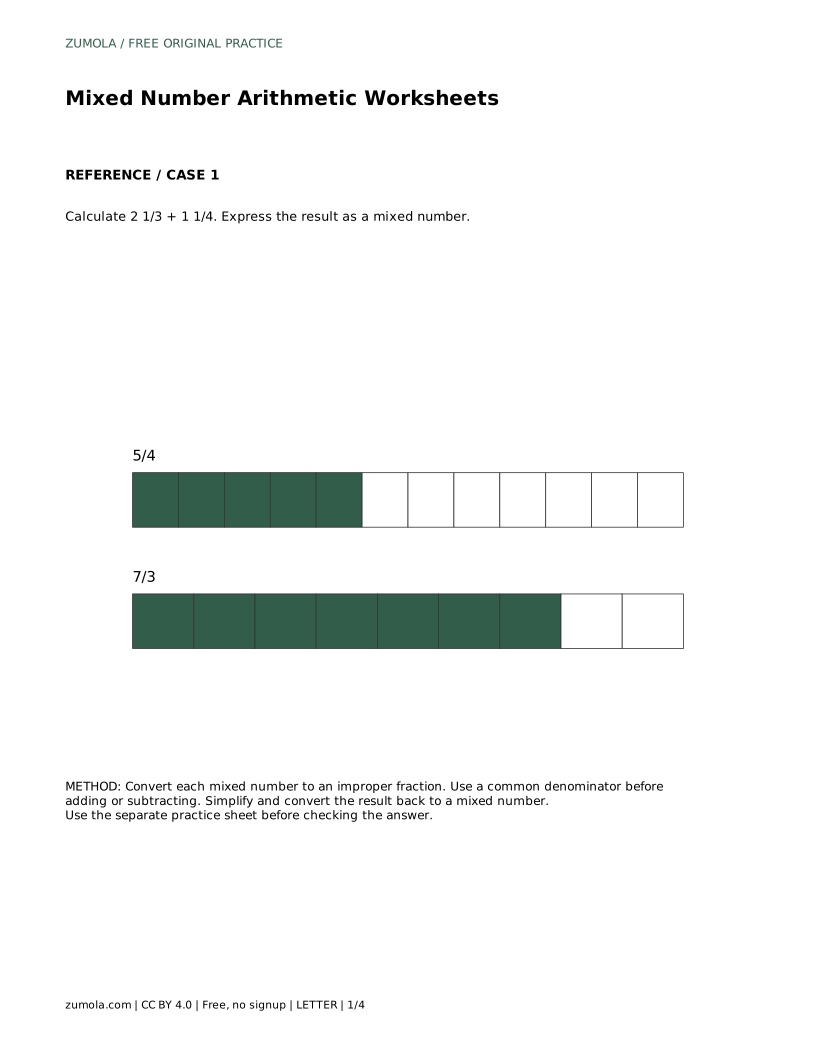
Mixed numbers combine a whole number and a fraction, such as 2 1/3. Arithmetic with them is reliable when you work in improper fractions first, apply the operation, then convert back. This page explains that method for addition, subtraction, multiplication, and division, with a worked example and a rubric for checking your own sheets. It is written for printable practice, so keep a pencil handy and show each conversion step.
A mixed number is shorthand for a sum: 2 1/3 means 2 + 1/3, which equals 7/3. Adding, subtracting, multiplying, or dividing the whole parts and fraction parts separately usually fails because the fraction parts do not behave independently. Converting both operands to improper fractions puts every quantity over a single denominator, so ordinary fraction rules apply without special cases.
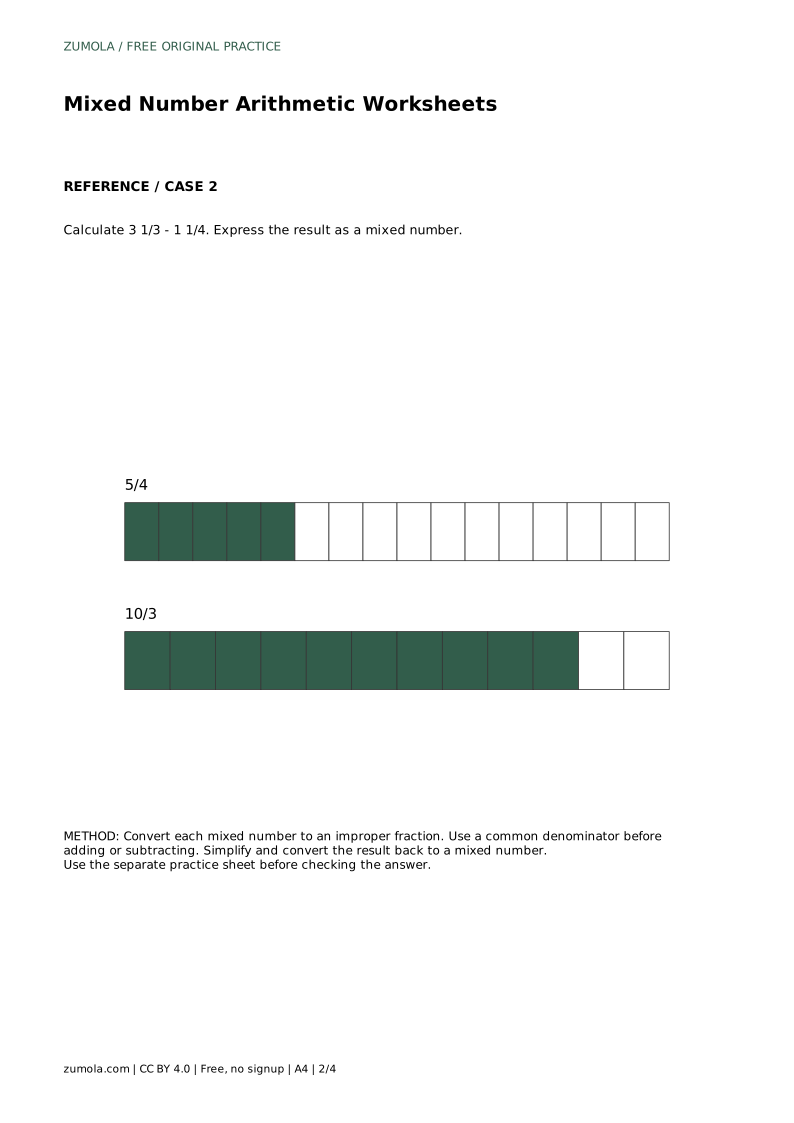
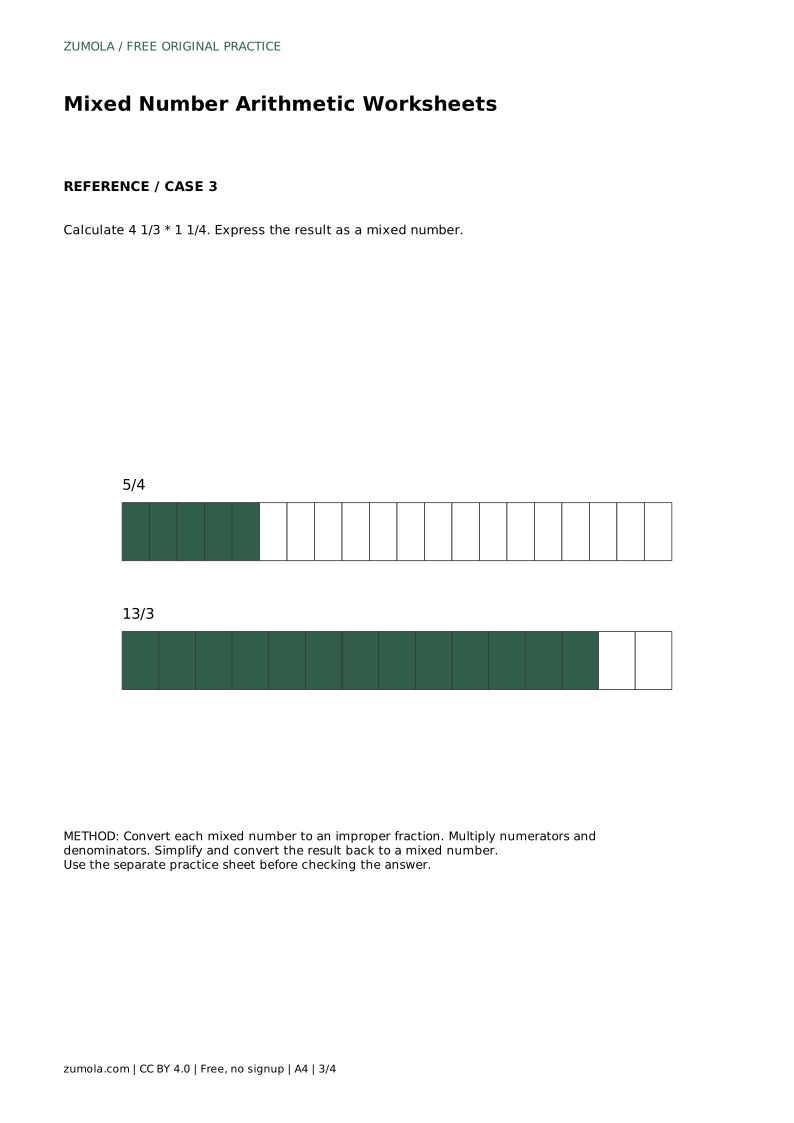
To convert, multiply the whole number by the denominator, add the numerator, and place the total over the same denominator. For 1 1/4: 1 times 4 is 4, plus 1 is 5, so the improper fraction is 5/4. Do this for each mixed number before choosing an operation. Keep the denominator unchanged during conversion; only the numerator changes.
Addition and subtraction require matching denominators. Once both mixed numbers are improper fractions, find a common denominator, rewrite each fraction, then combine numerators. Simplify the result and convert back to a mixed number by dividing the numerator by the denominator: the quotient is the whole part and the remainder becomes the new numerator.
Subtraction follows the same path, but watch the order. Convert both values first, then subtract the second numerator from the first after rewriting over the common denominator. If the result is negative, the answer is not a standard mixed number; state it as a negative improper fraction or a negative mixed number with the sign in front.
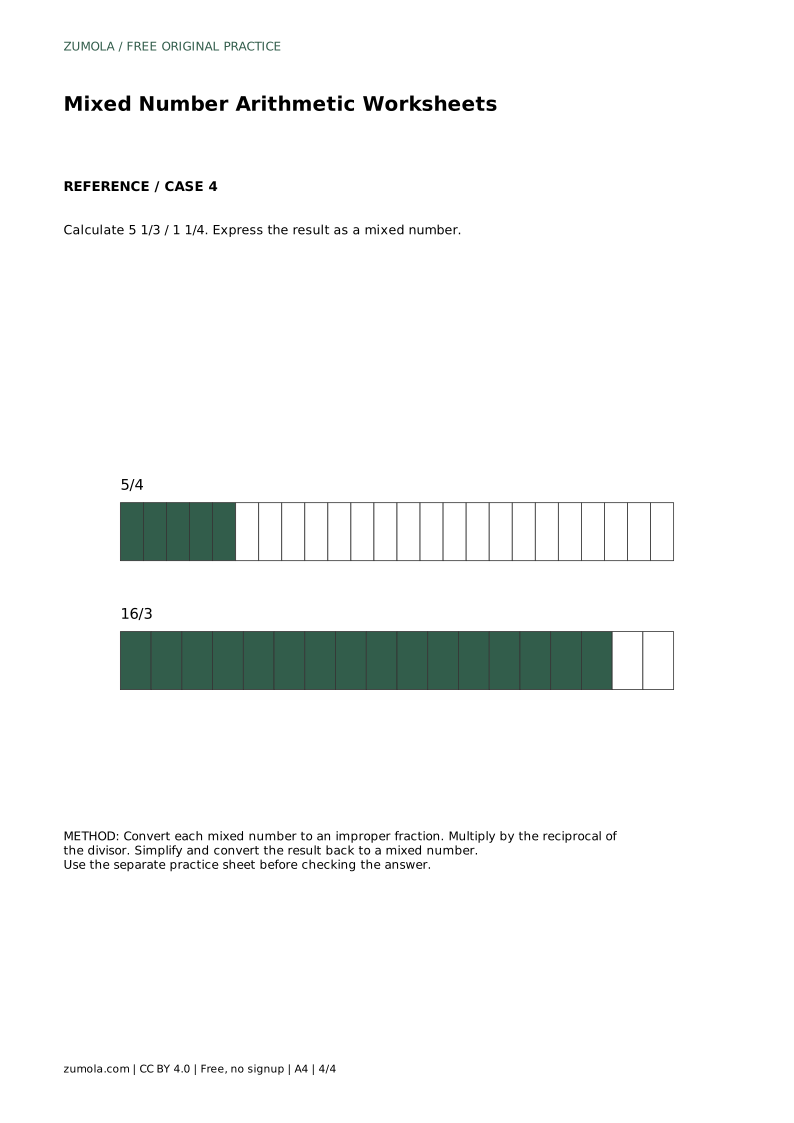
Multiplication does not need a common denominator. Convert both mixed numbers to improper fractions, multiply numerator by numerator and denominator by denominator, simplify, and convert back. Division adds one step: multiply by the reciprocal of the divisor. The reciprocal swaps the divisor's numerator and denominator, so dividing by 5/4 means multiplying by 4/5.
Keep the divisor's reciprocal exact; do not convert it to a mixed number before multiplying. After multiplying, simplify by common factors before converting, which keeps numbers smaller. Division by zero is undefined, so a divisor of zero is not a valid problem.
Use the rubric below to review a completed sheet. It rewards correct conversions, correct operation choice, simplified results, and clear mixed-number form rather than a single exact layout.
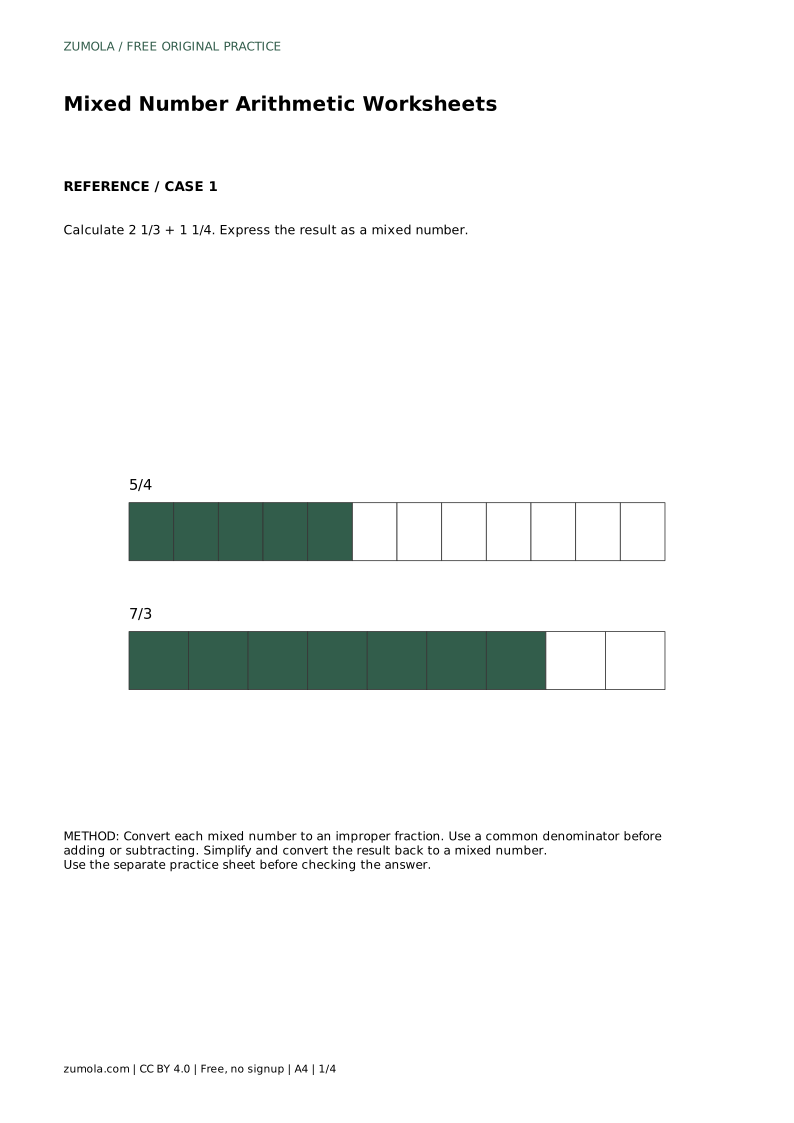
Calculate 2 1/3 + 1 1/4 and express the result as a mixed number. Convert 2 1/3 to 7/3 and 1 1/4 to 5/4. The common denominator is 12, giving 28/12 and 15/12. Adding gives 43/12. Since 43 divided by 12 is 3 with remainder 7, the answer is 3 7/12.
Calculate 2 1/3 + 1 1/4. Express the result as a mixed number.
3 7/12 Convert each mixed number to an improper fraction. Use a common denominator before adding or subtracting. Simplify and convert the result back to a mixed number.
Only for addition and subtraction. Multiplication and division work directly on improper fractions without matching denominators.
Yes, but write the sign in front, such as -2 1/3, and treat the whole expression as negative rather than mixing signs inside the fraction.
Improper fractions are easier to calculate with, but mixed numbers often communicate size more clearly. Convert after simplifying.
All math worksheets · Free coordinate paper
Original resources · CC BY 4.0 · Free for personal and classroom use with attribution.