Reference diagrams
LETTER · Download PDF
A4 · Download PDF
Free original resources
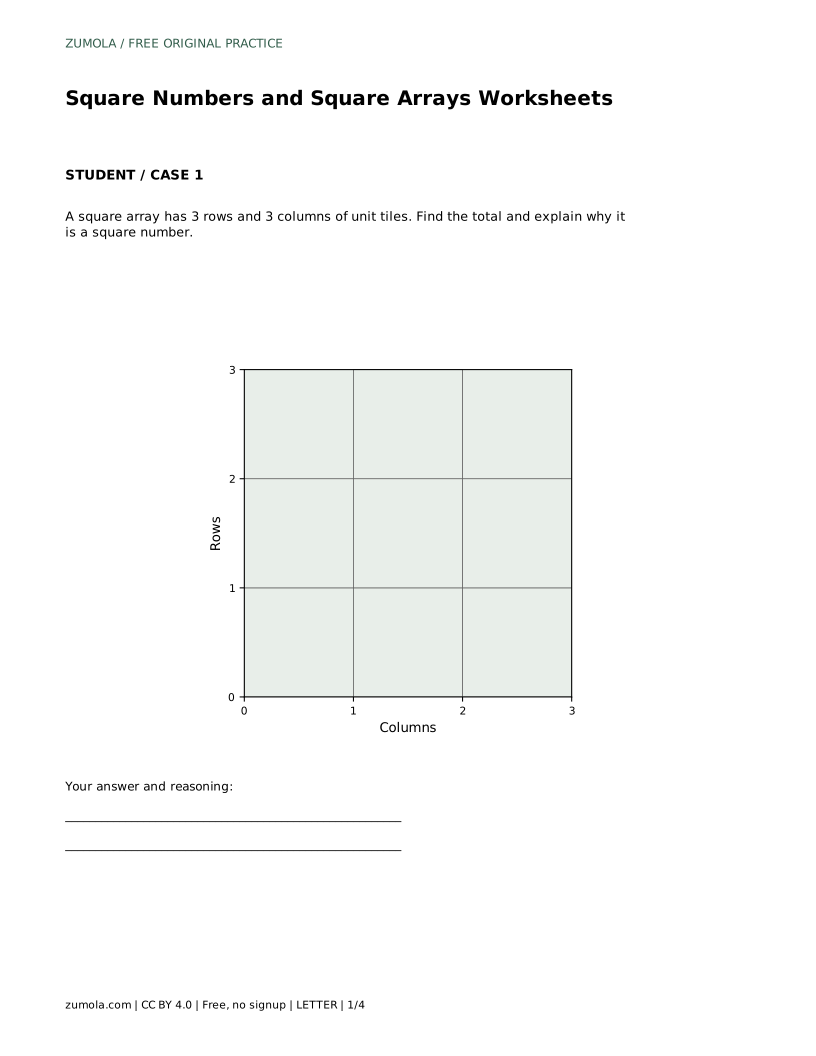
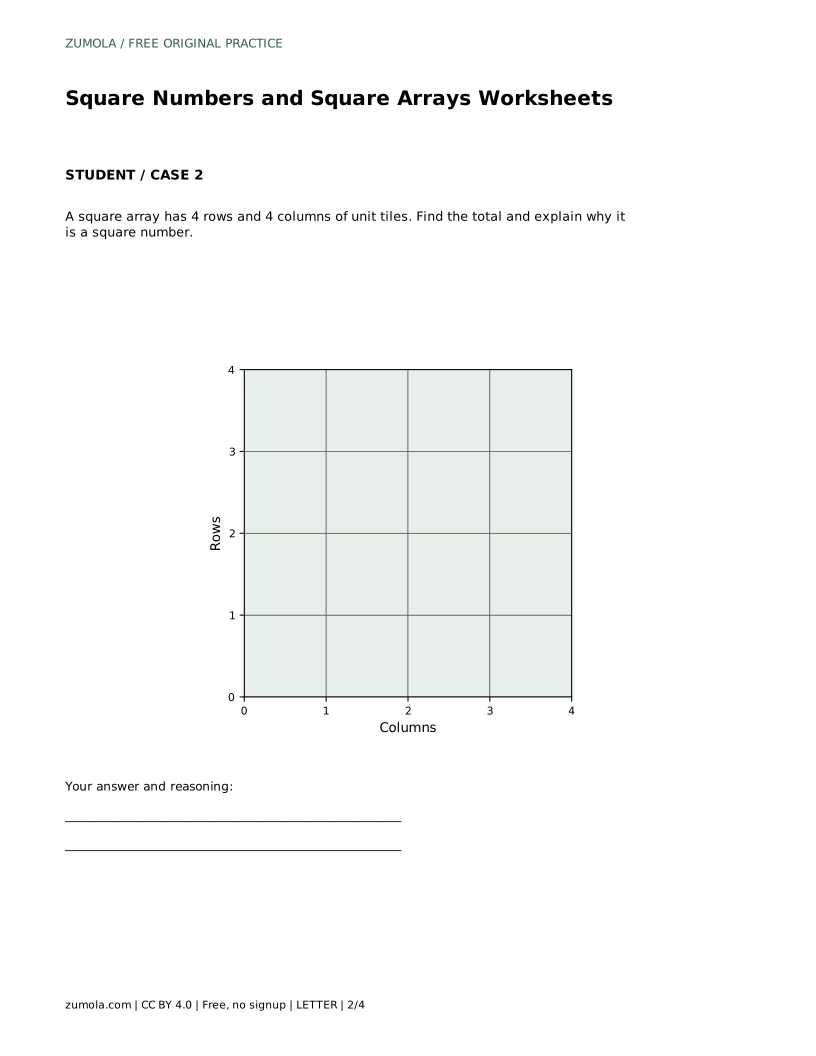
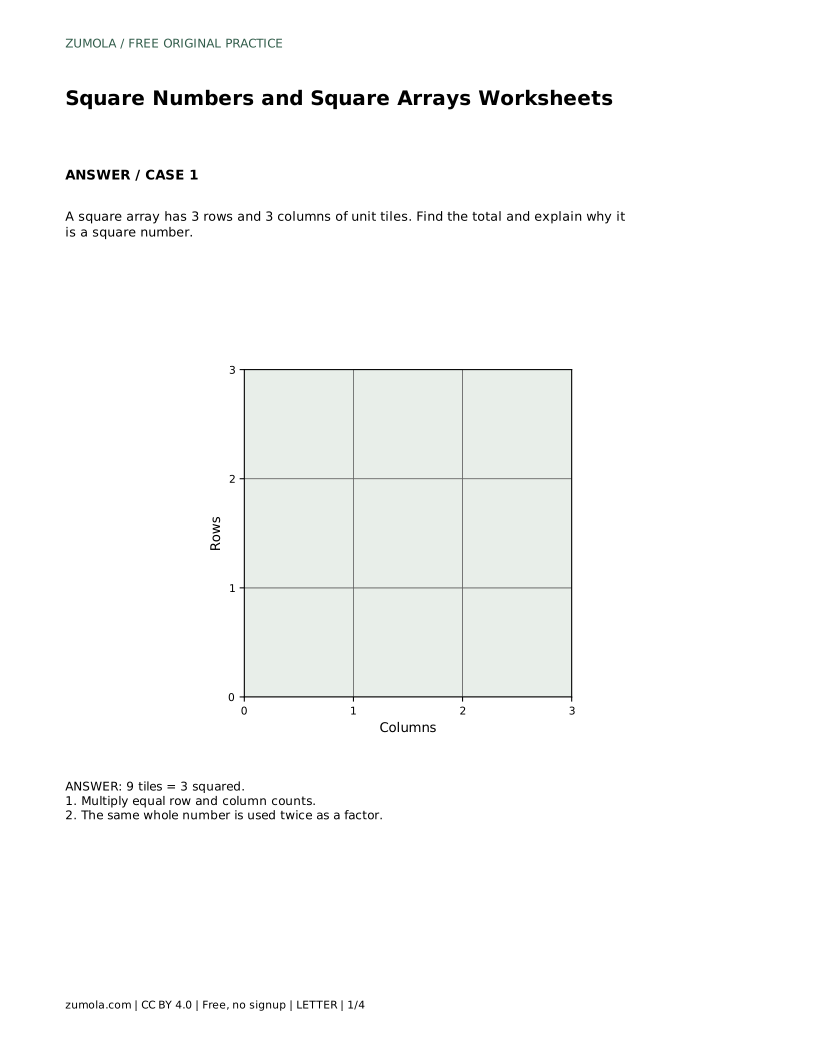
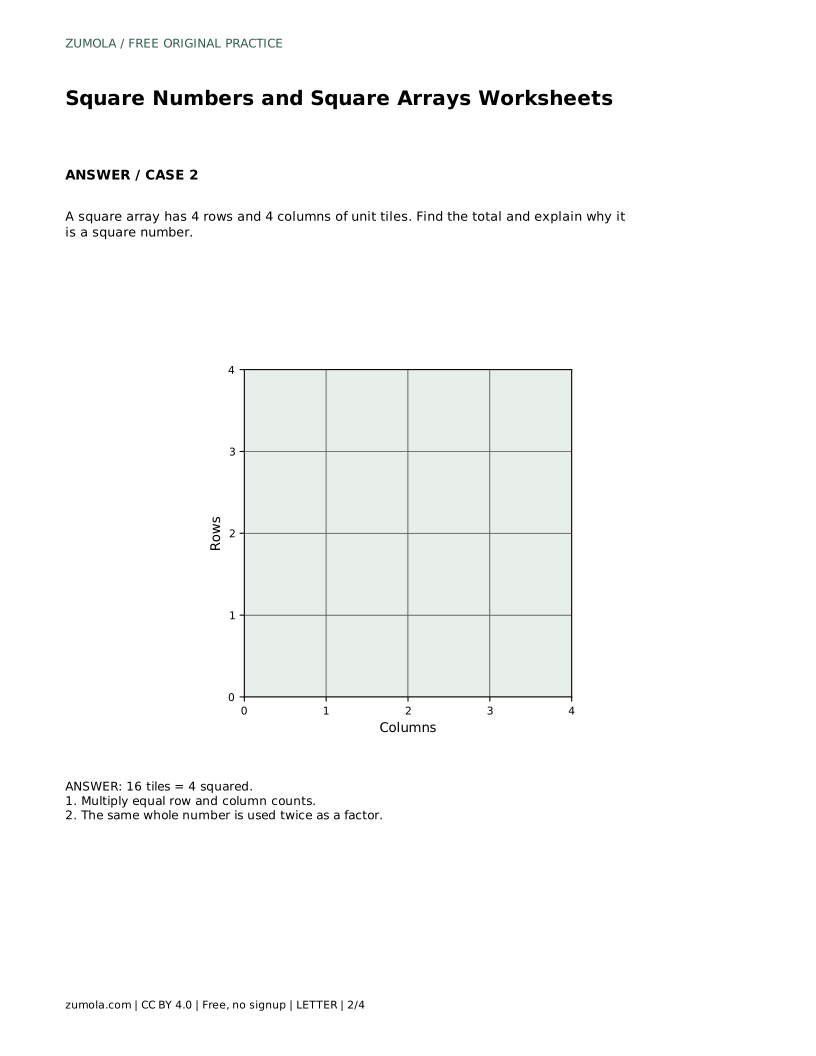
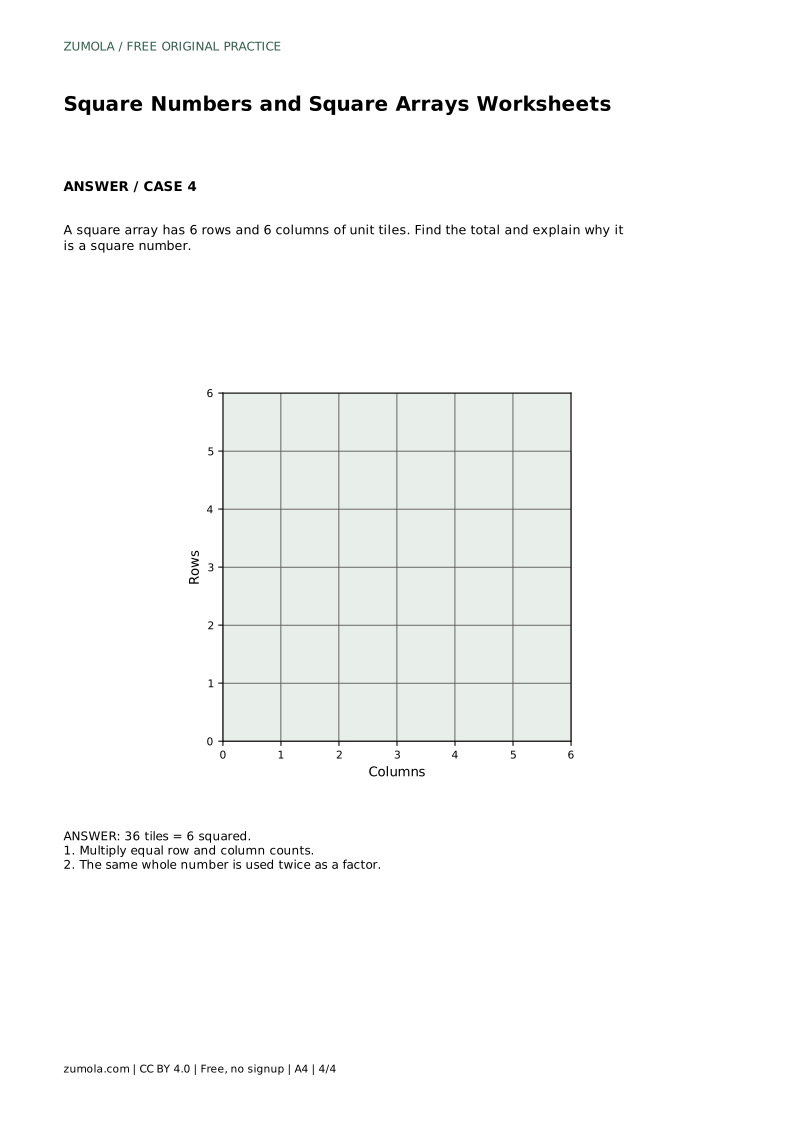
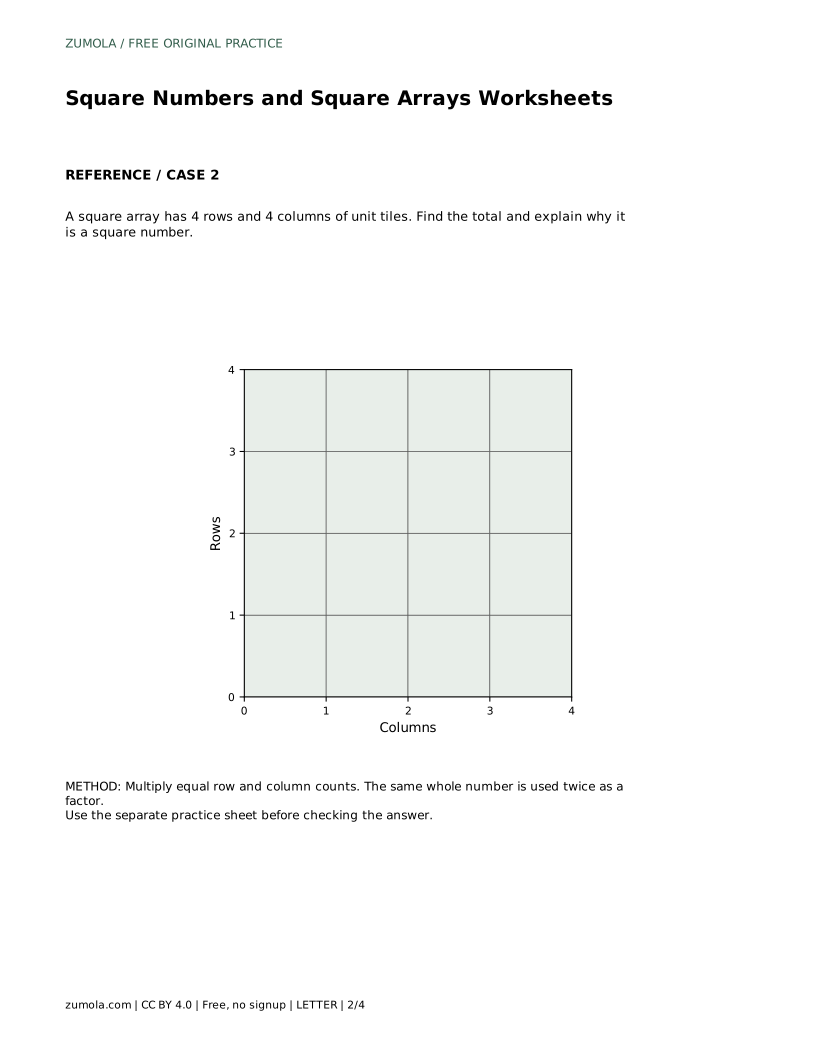
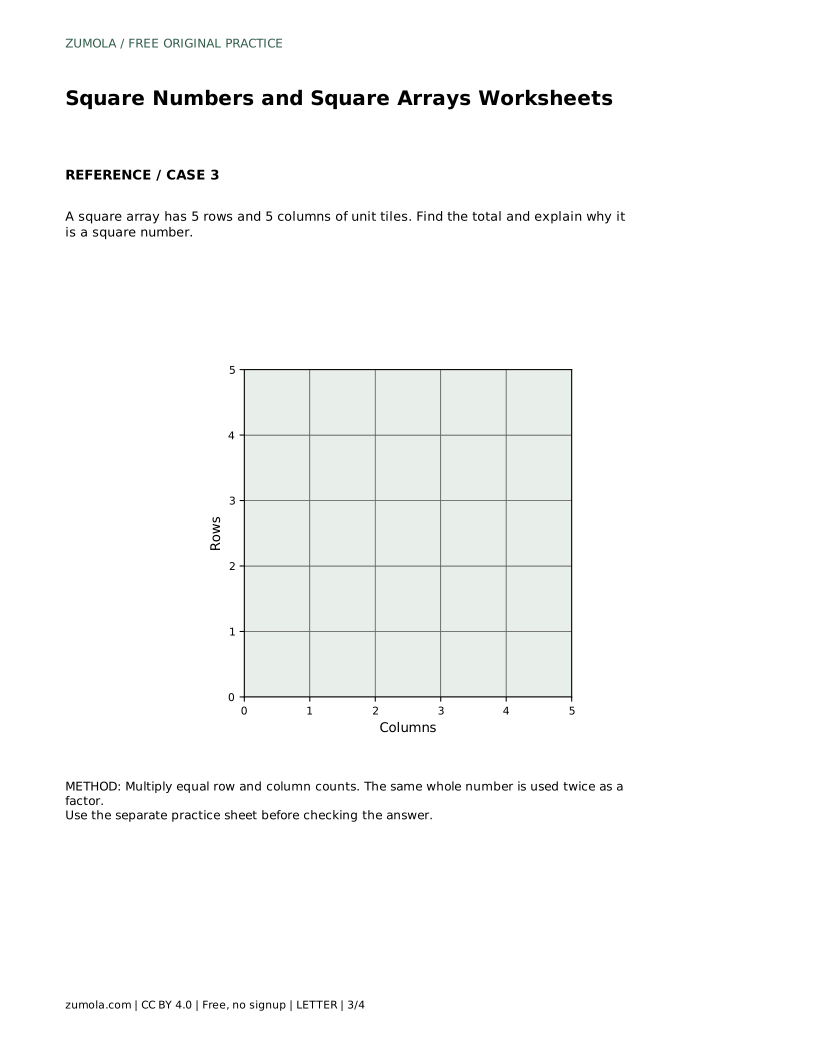
Teach square numbers with centimeter grid paper. Students build equal-row arrays, multiply equal factors, and explain why 3 by 3 gives 9 tiles and 4 by 4 gives 16.
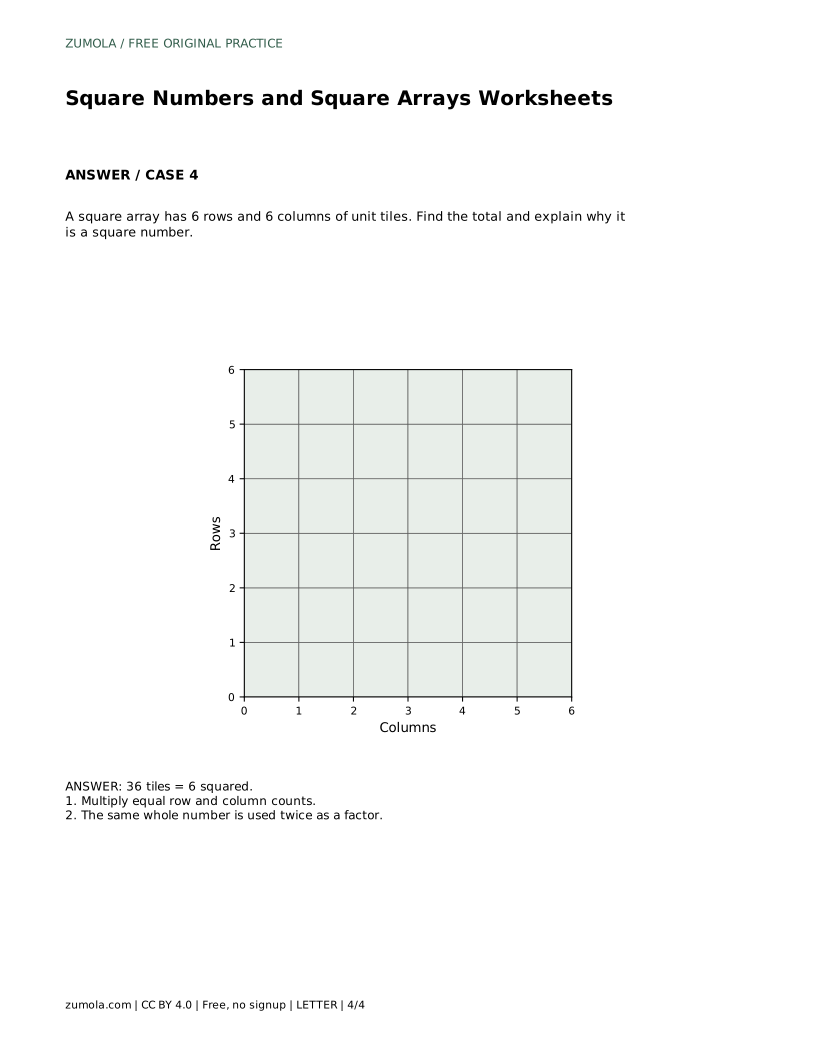
Four original cases, with reference diagrams, practice sheets and worked answers. Everything is free; no signup required.
LETTER · Download PDF
A4 · Download PDF
LETTER · Download PDF
A4 · Download PDF
LETTER · Download PDF
A4 · Download PDF
Use A4 or US Letter to match your printer. Use the stated values and conditions to solve each exercise; diagrams are not physical measuring rulers.
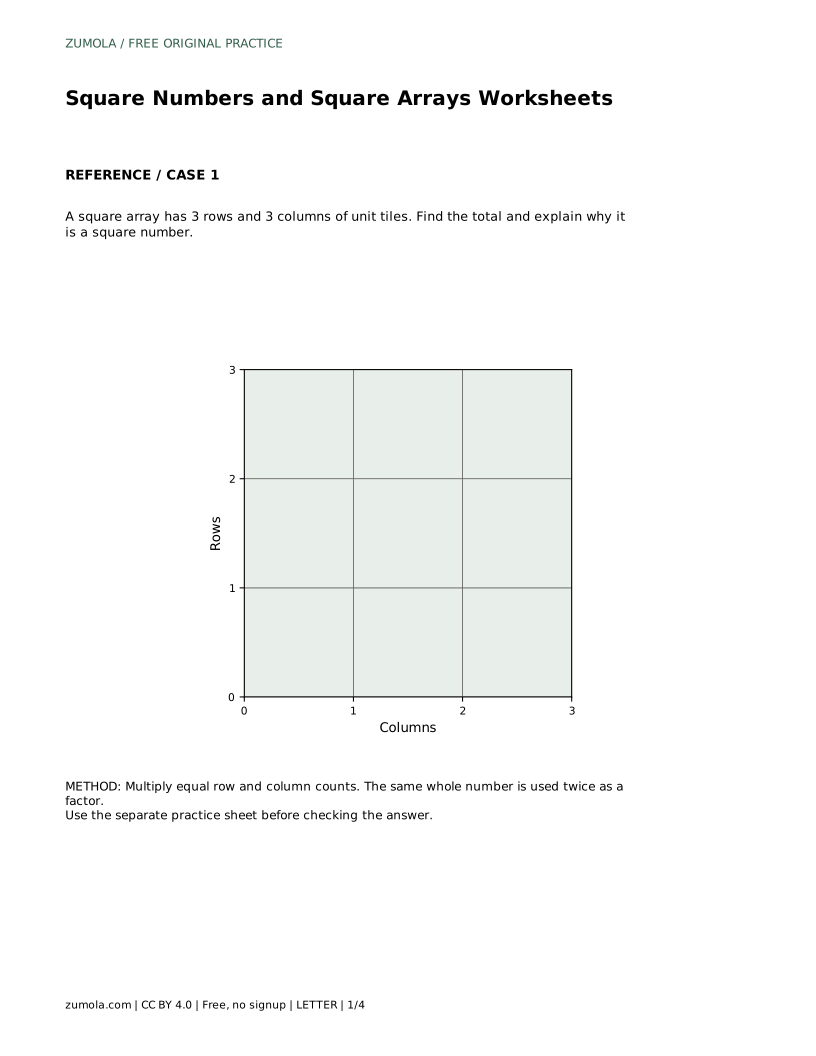
Square numbers are the totals you get when rows and columns are equal. On centimeter grid paper, each unit tile is one square centimeter, so an array of 3 rows and 3 columns covers 9 square centimeters. This page shows how to build square arrays, count them efficiently, and explain why the total is called a square number.
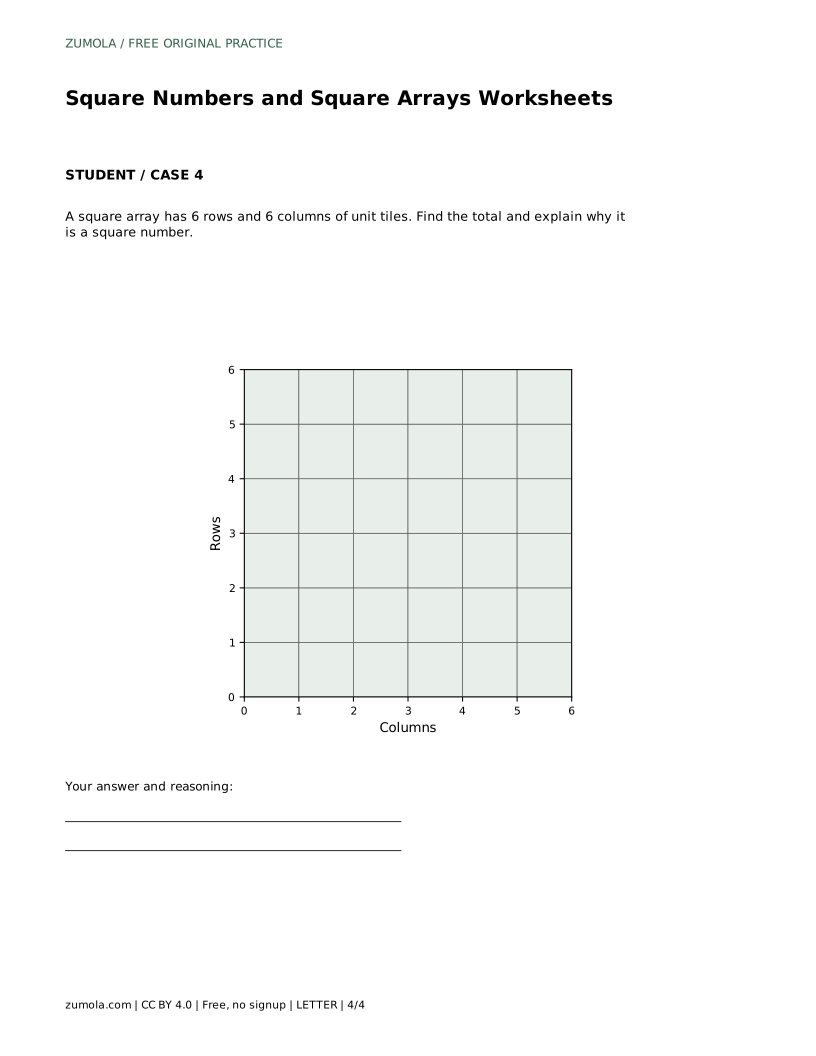
An array is a rectangular arrangement of unit tiles in rows and columns. It is square only when the number of rows equals the number of columns. A 3 by 3 array is square; a 3 by 4 array is not, even though both are rectangles.
On centimeter grid paper, one small grid square is one unit tile. Count rows first, then columns. If both counts match, the total is a square number. The side length of the array is that shared count.
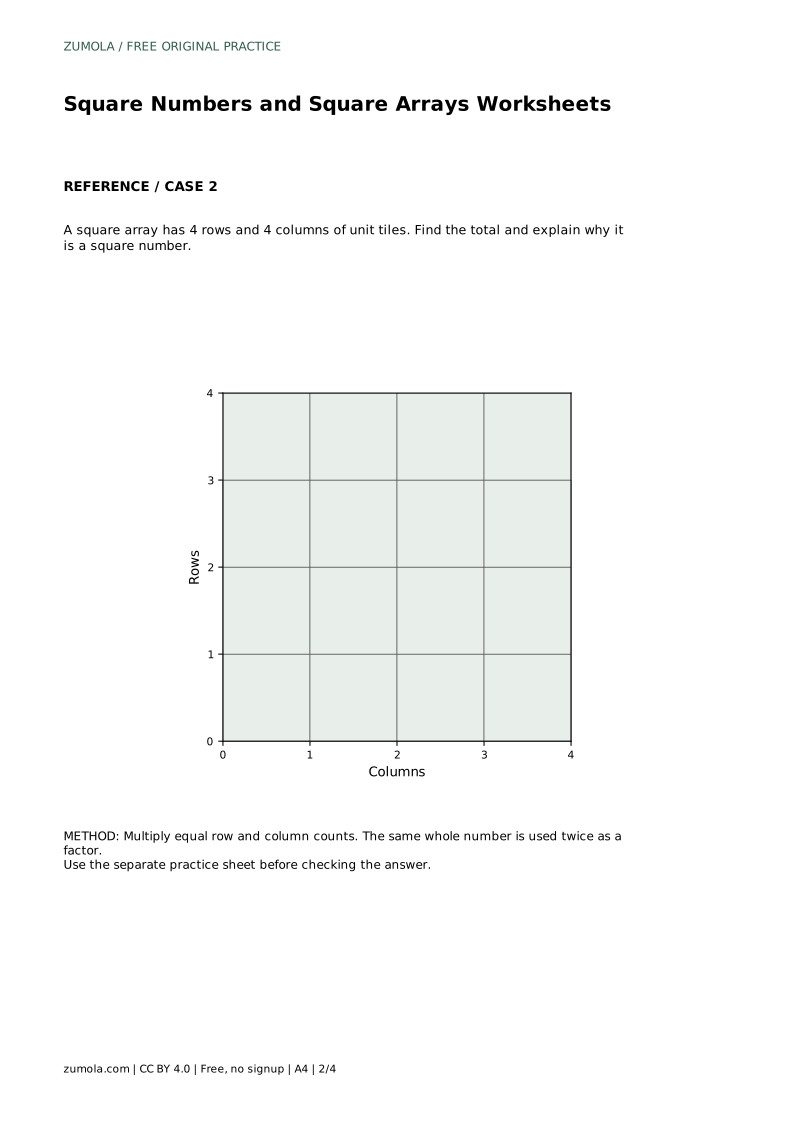
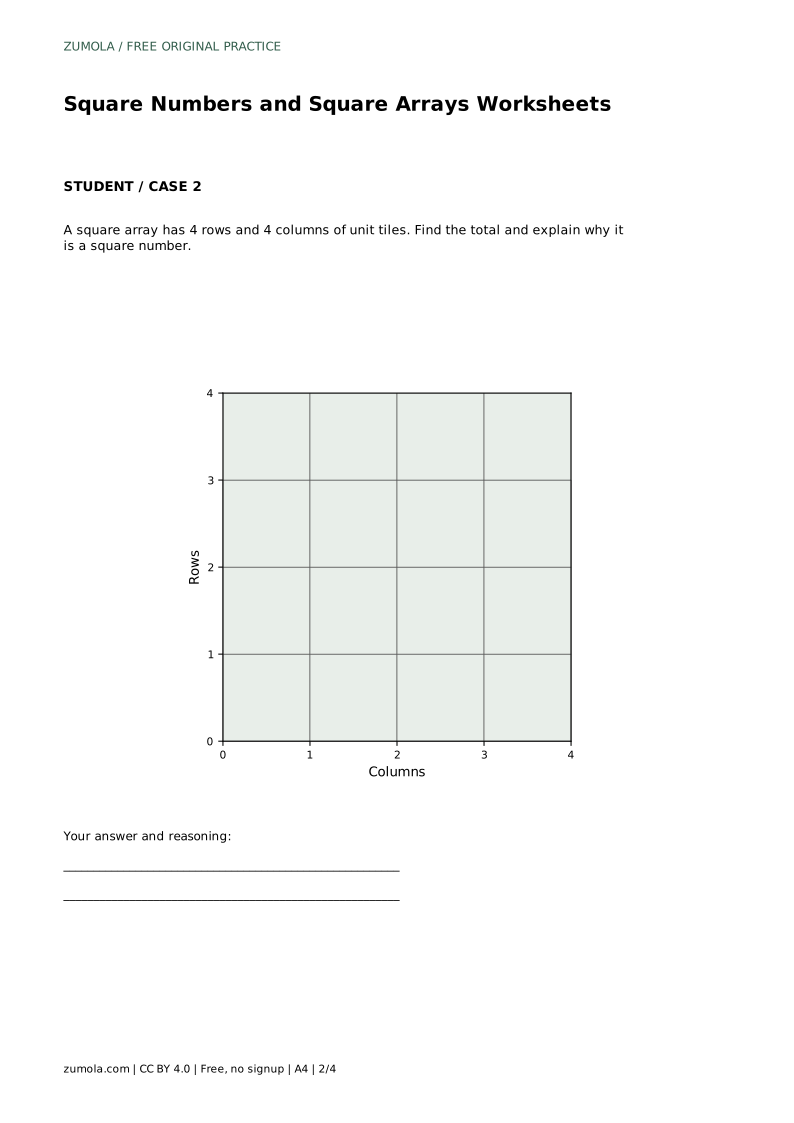
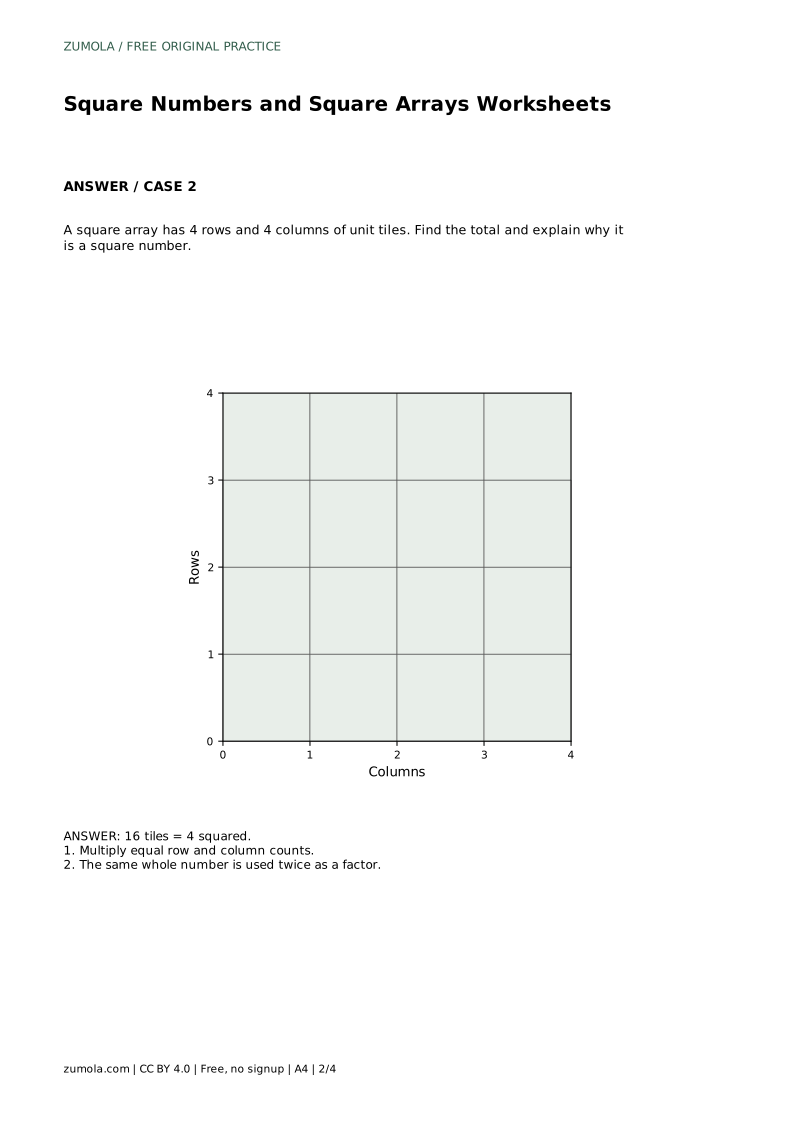
To find the total, multiply the row count by the column count. In a square array the two factors are the same whole number, so the product is that number squared. For example, 4 rows of 4 tiles give 4 times 4, or 16 tiles.
Writing 4 squared means using 4 as a factor twice: 4 times 4. It does not mean doubling 4. Keep the two factors visible in your work so the meaning stays clear.
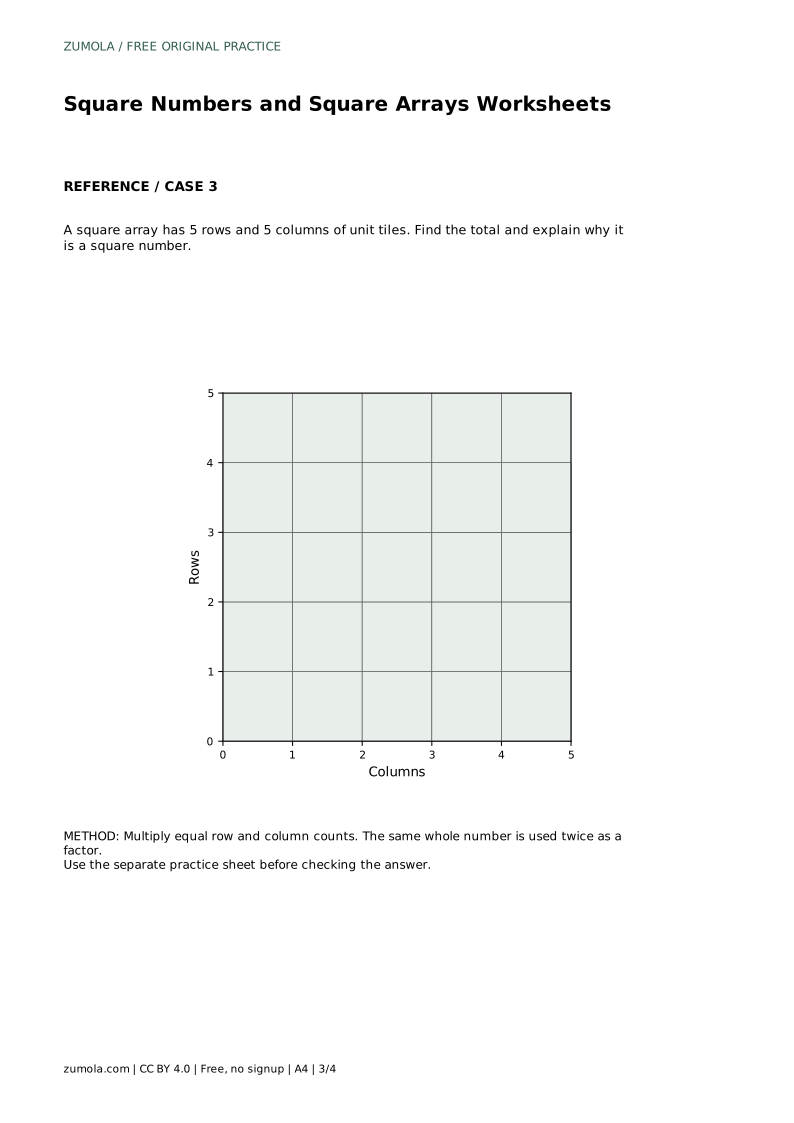
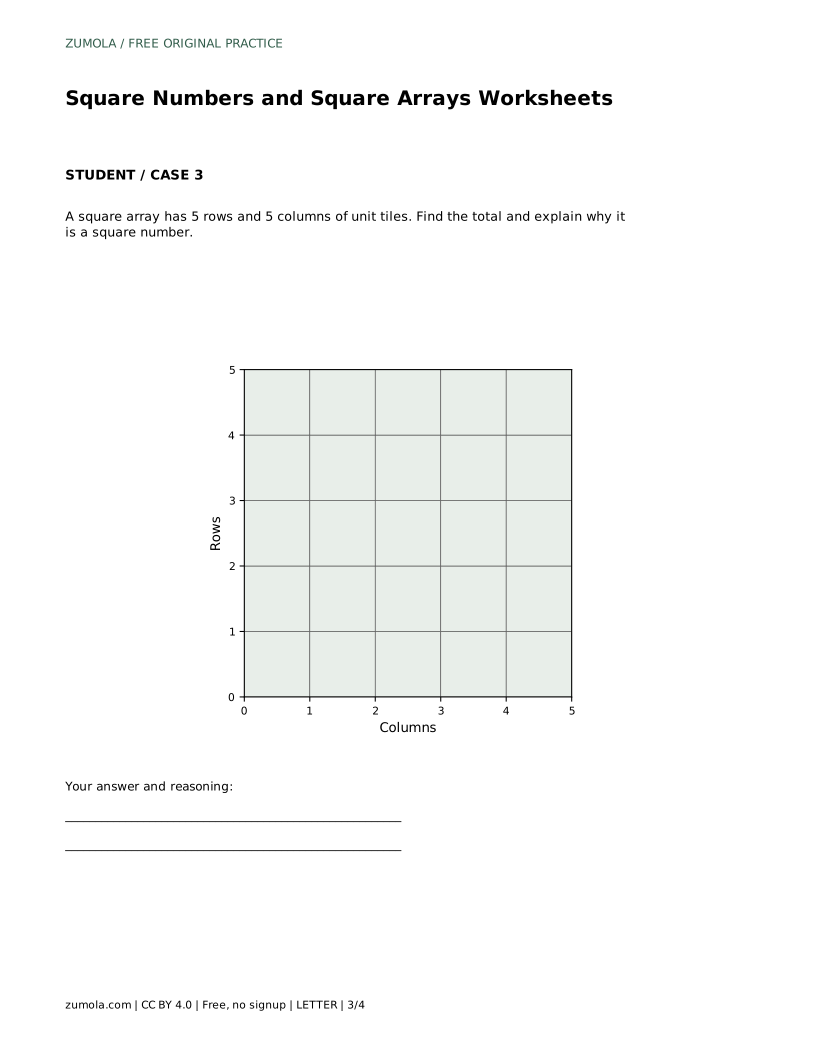
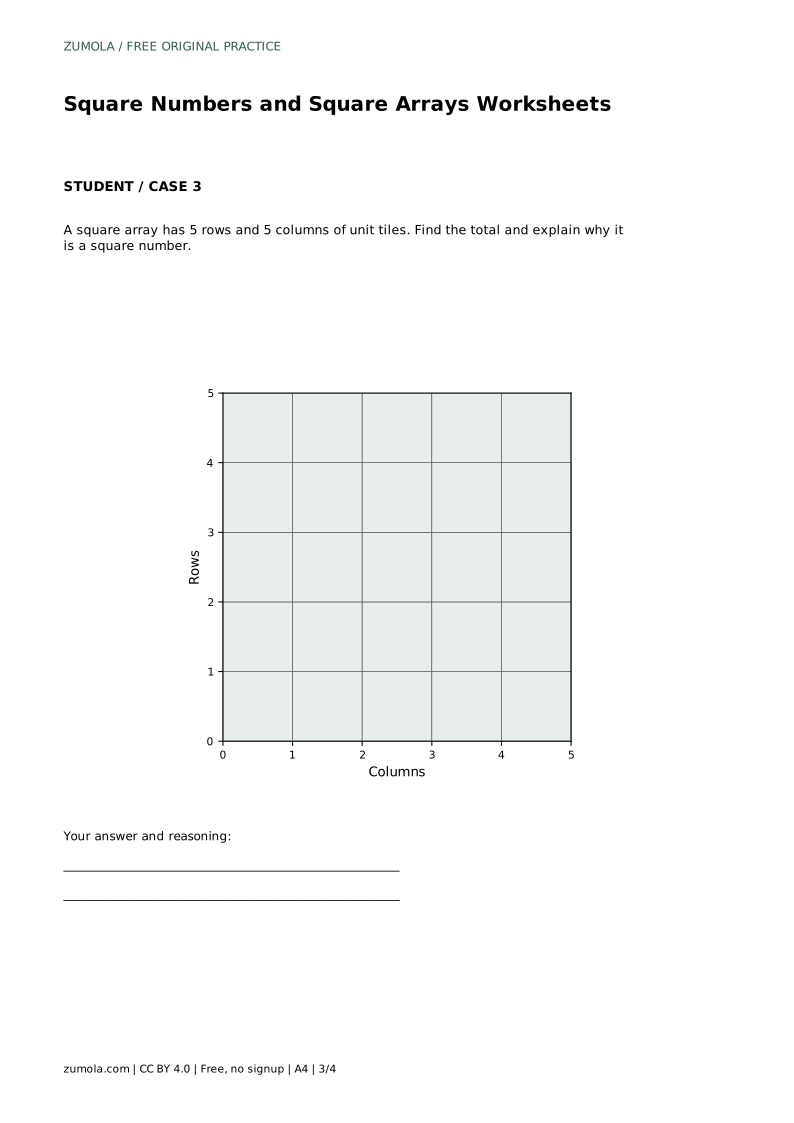
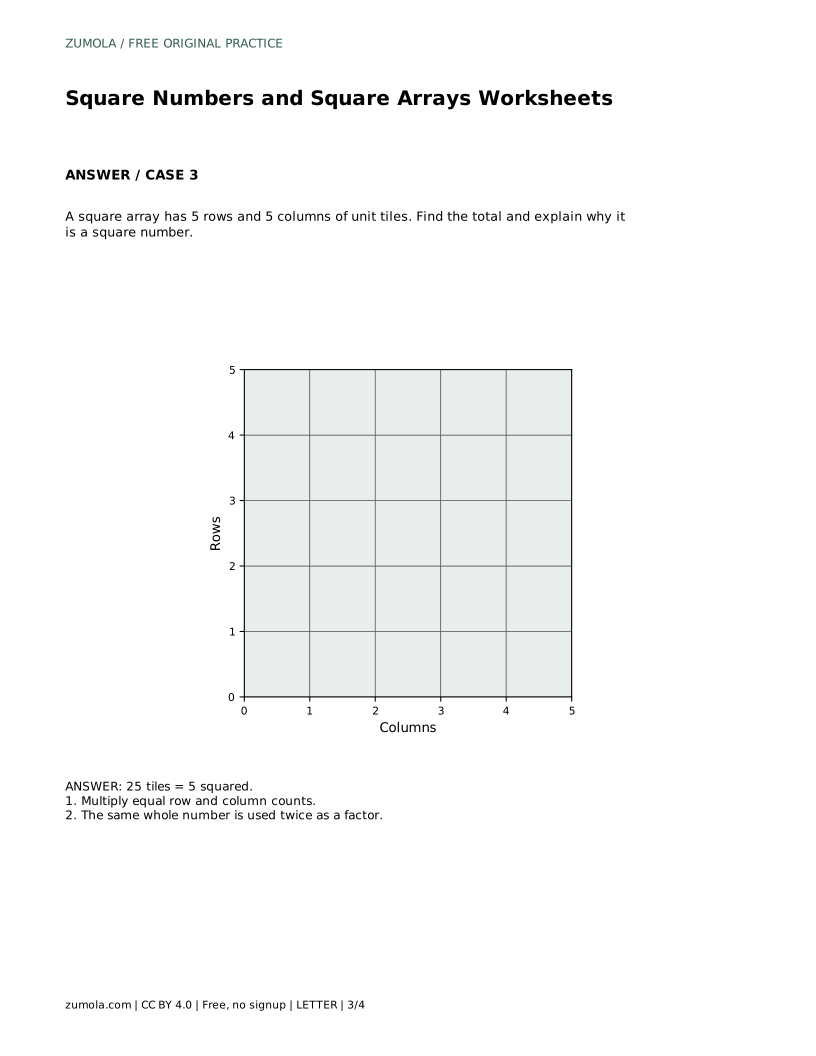
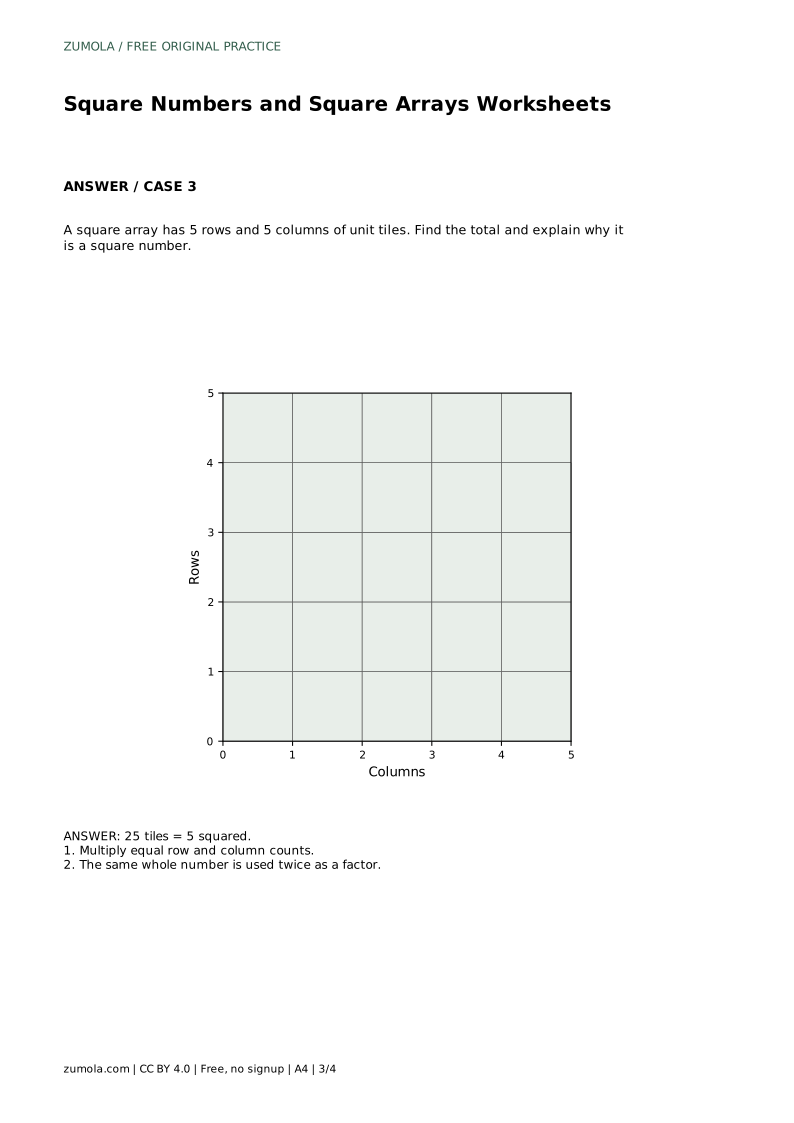
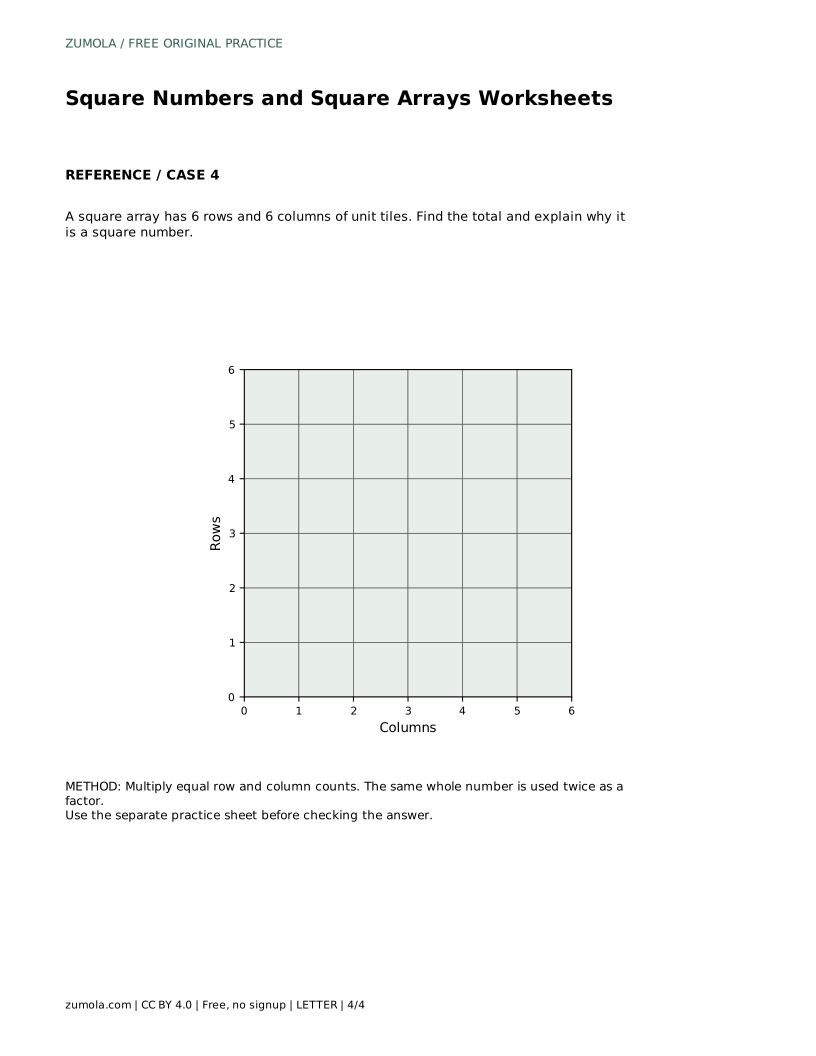
Multiplication is faster than counting one tile at a time, but a count can check your work. Count one row, then add the same row total repeatedly for each row. A 5 by 5 array has five rows of five, so 5 plus 5 plus 5 plus 5 plus 5 equals 25.
This repeated-addition check connects the array picture to the multiplication sentence. If the repeated sum and the product disagree, recount the rows or columns before changing the answer.
Art and design work can have many valid outcomes, but a square-number task has a checkable total. The array must have equal rows and columns, and the product must match the count.
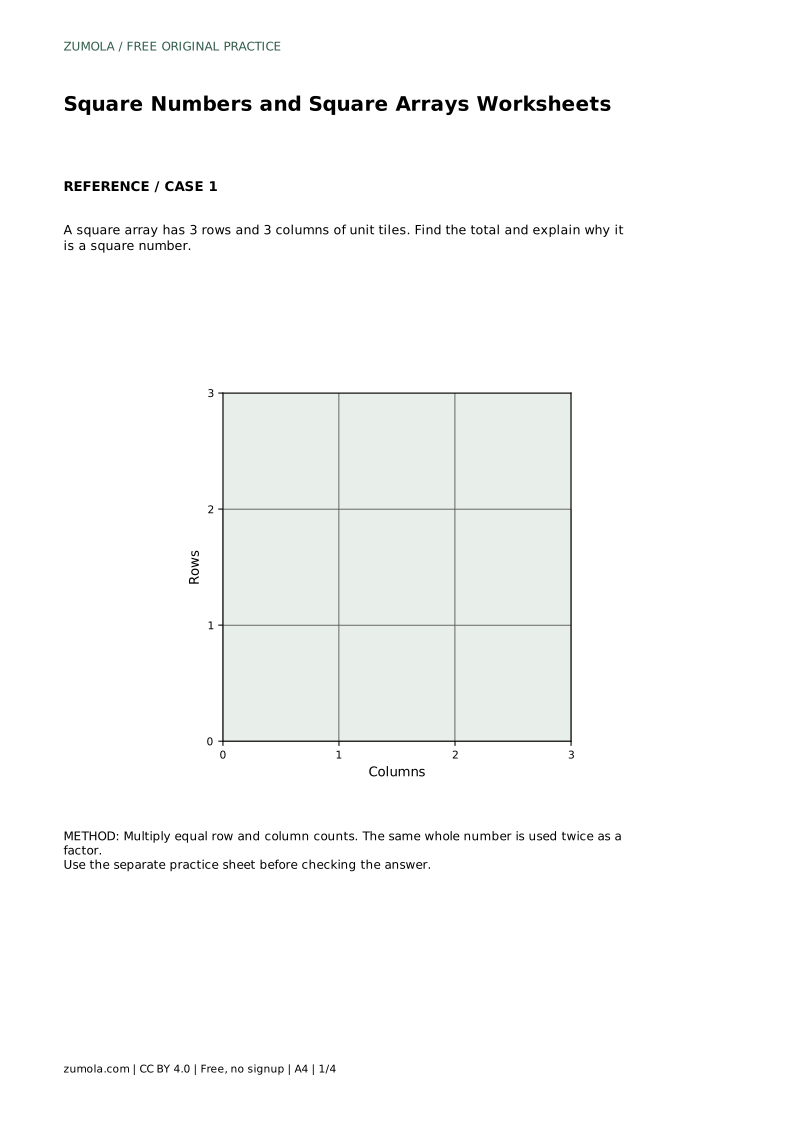
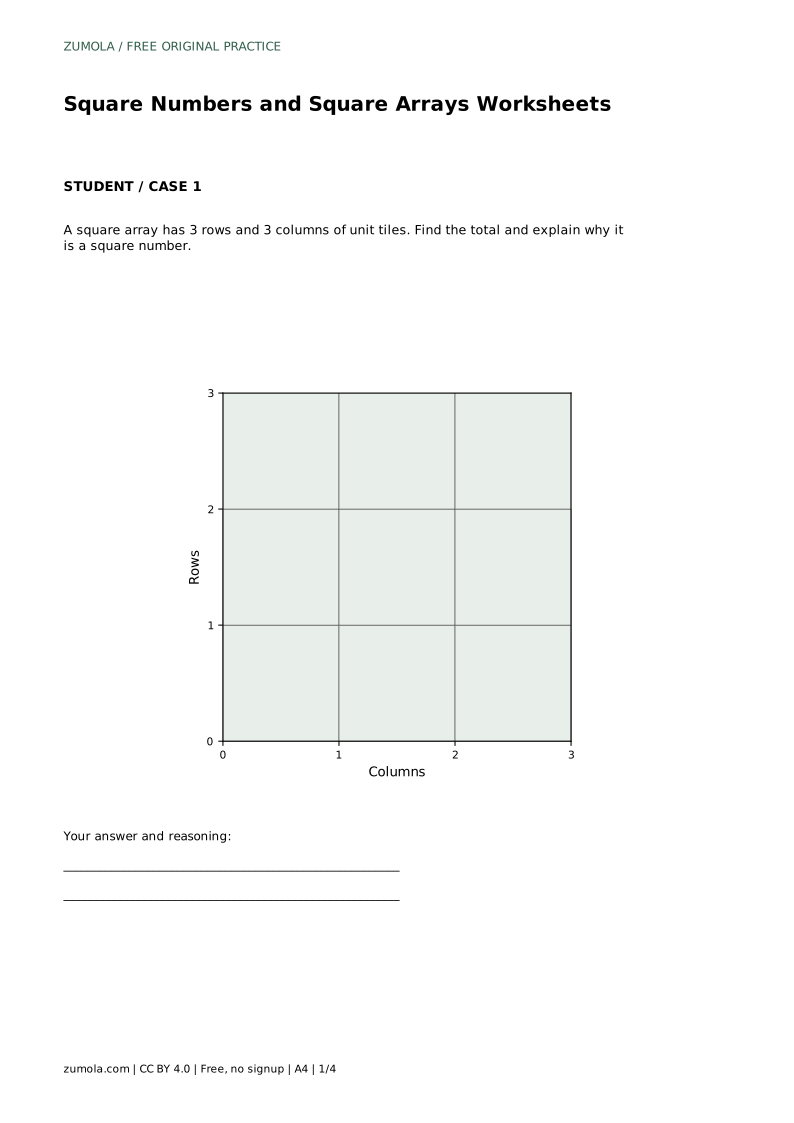
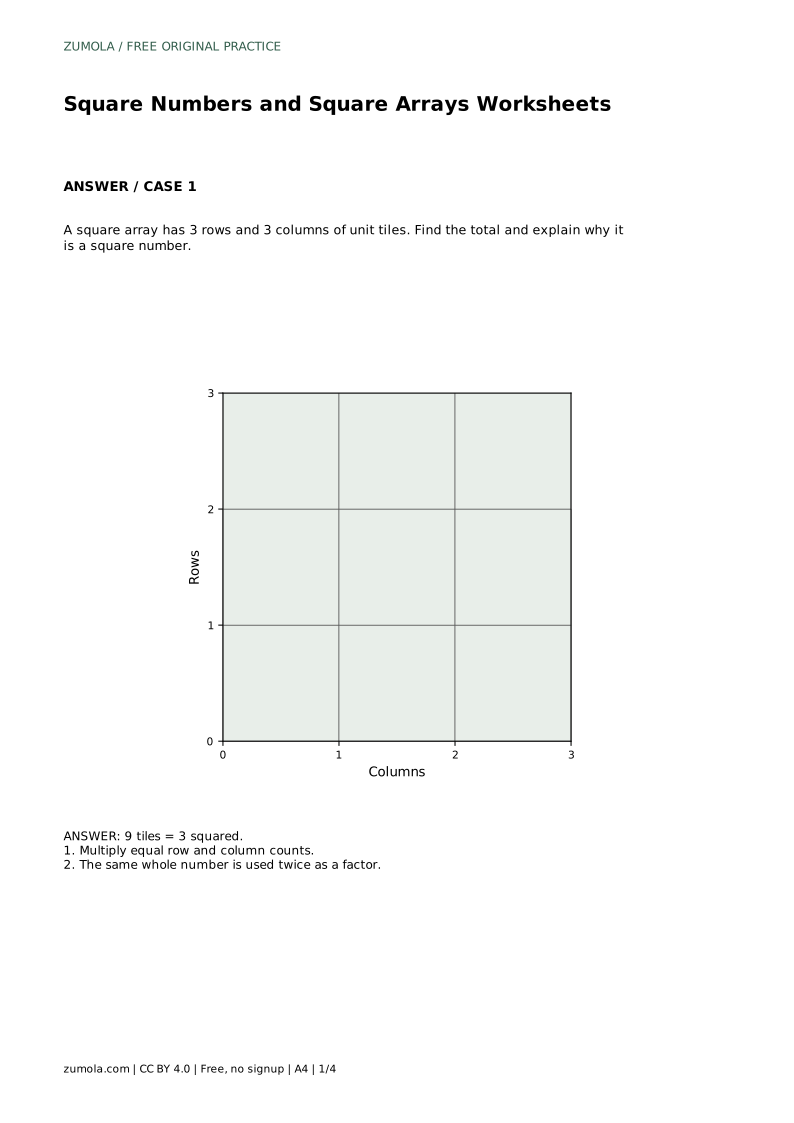
A square array has 3 rows and 3 columns of unit tiles. Find the total and explain why it is a square number.
9 tiles = 3 squared. Multiply equal row and column counts. The same whole number is used twice as a factor.
Yes. A 1 by 1 array has one row and one column, and 1 times 1 equals 1.
16 can be arranged as 4 equal rows of 4. No whole-number side length gives 15 with equal rows and columns.
The square-number idea works with any equal unit. Centimeter grid paper simply makes each tile one square centimeter.
All math worksheets · Free coordinate paper
Original resources · CC BY 4.0 · Free for personal and classroom use with attribution.