Reference diagrams
LETTER · Download PDF
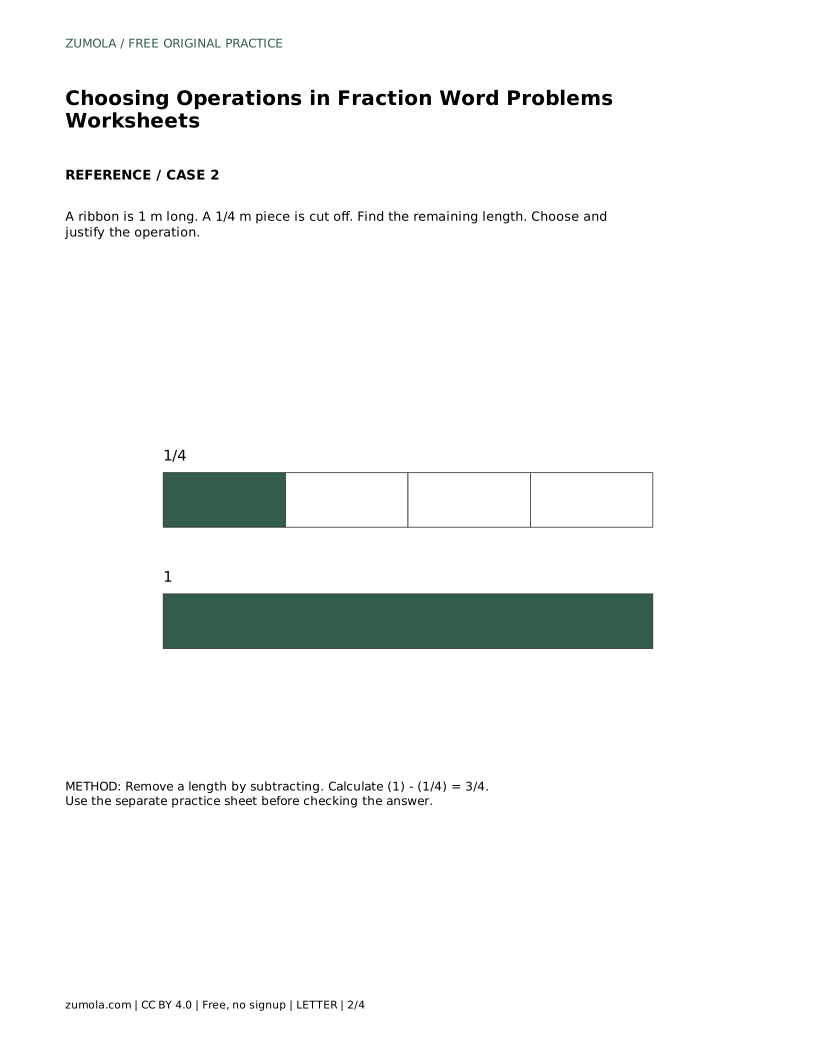
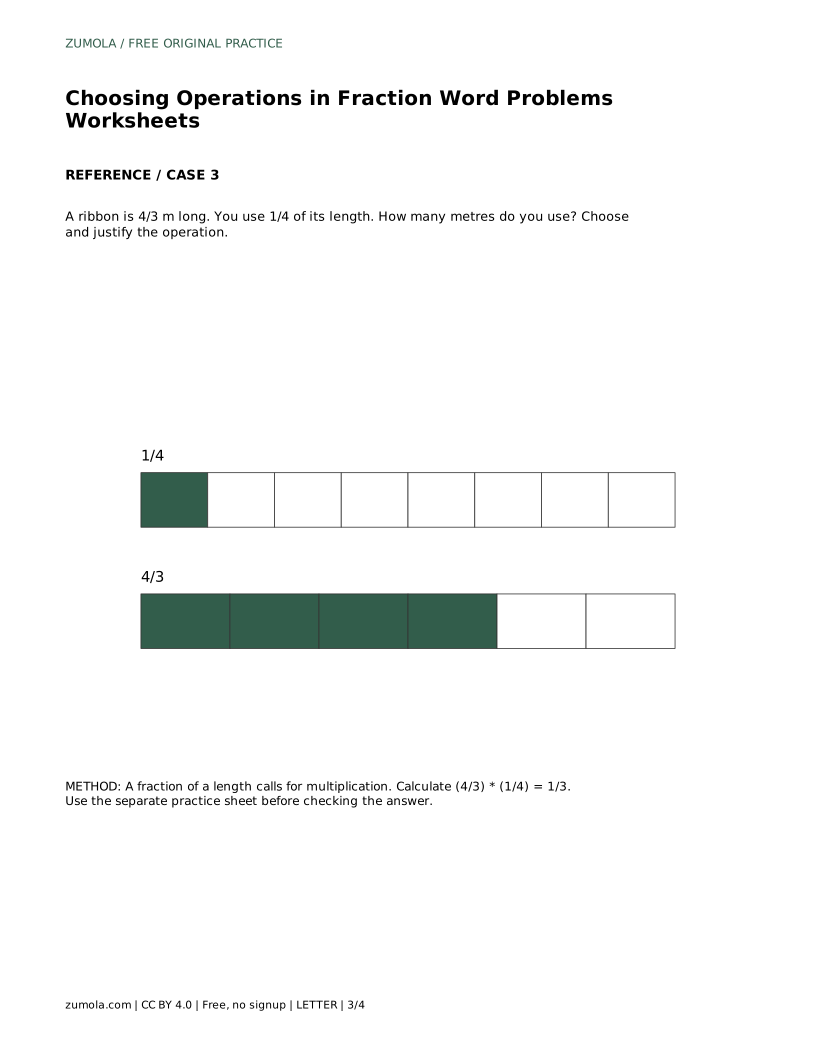
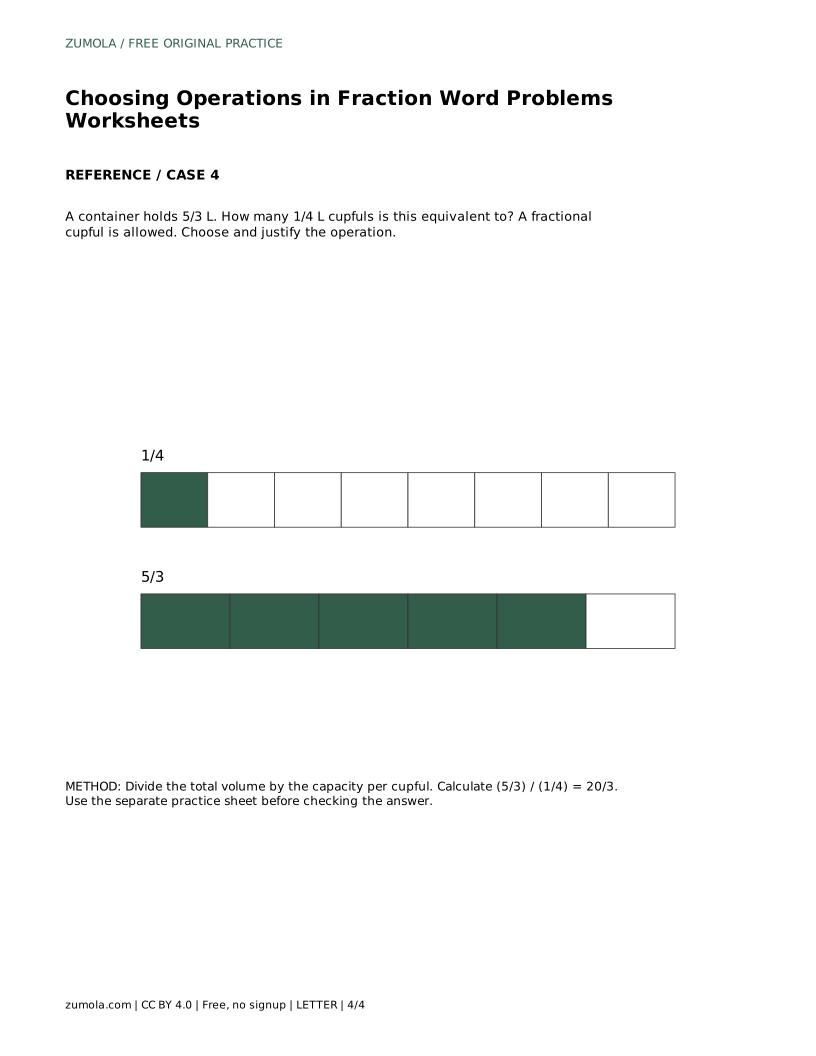
A4 · Download PDF
Free original resources
Learn to choose addition, subtraction, multiplication, or division for fraction word problems by identifying what each quantity represents and checking the result.
Four original cases, with reference diagrams, practice sheets and worked answers. Everything is free; no signup required.
LETTER · Download PDF
A4 · Download PDF
LETTER · Download PDF
A4 · Download PDF
LETTER · Download PDF
A4 · Download PDF
Use A4 or US Letter to match your printer. Use the stated values and conditions to solve each exercise; diagrams are not physical measuring rulers.

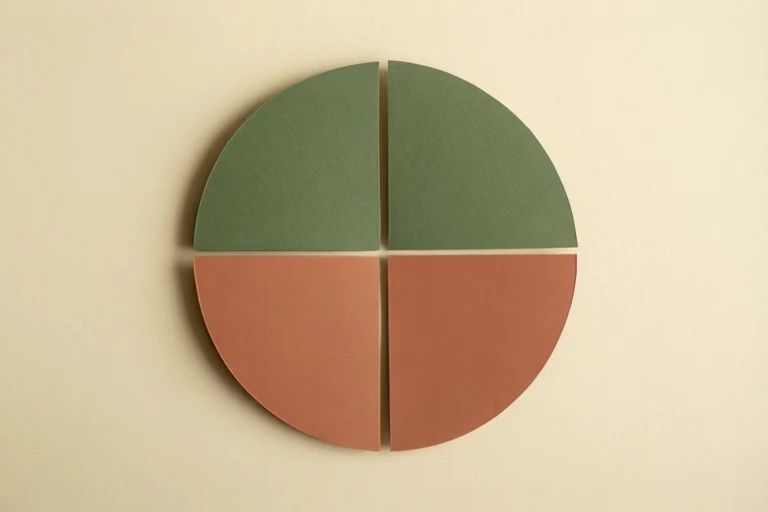
Fraction word problems are rarely difficult because the arithmetic is hard. They are difficult because the operation is not stated. This page teaches a reliable method: read the situation, decide what kind of relationship the quantities have, choose the matching operation, then check that the answer makes sense in the problem's units. The worked example joins two ribbon lengths end to end, so the operation is addition. Other situations call for subtraction, multiplication, or division, and each has its own signal.
Before calculating, name each quantity and its unit. In a ribbon problem, lengths are in metres; in a container problem, volumes are in litres or cupfuls. Then ask what the problem wants: a combined length, a remaining length, a part of a length, or a count of equal portions. The answer's unit often reveals the operation. A total length in metres comes from adding lengths. A remaining length comes from subtracting a removed length from the original. A length used as a fraction of another length comes from multiplying. A number of cupfuls comes from dividing a total volume by the volume per cupful.
Write the operation as an expression before computing. This makes the reasoning visible and catches errors early. If the expression's units do not match the question, the operation is probably wrong.
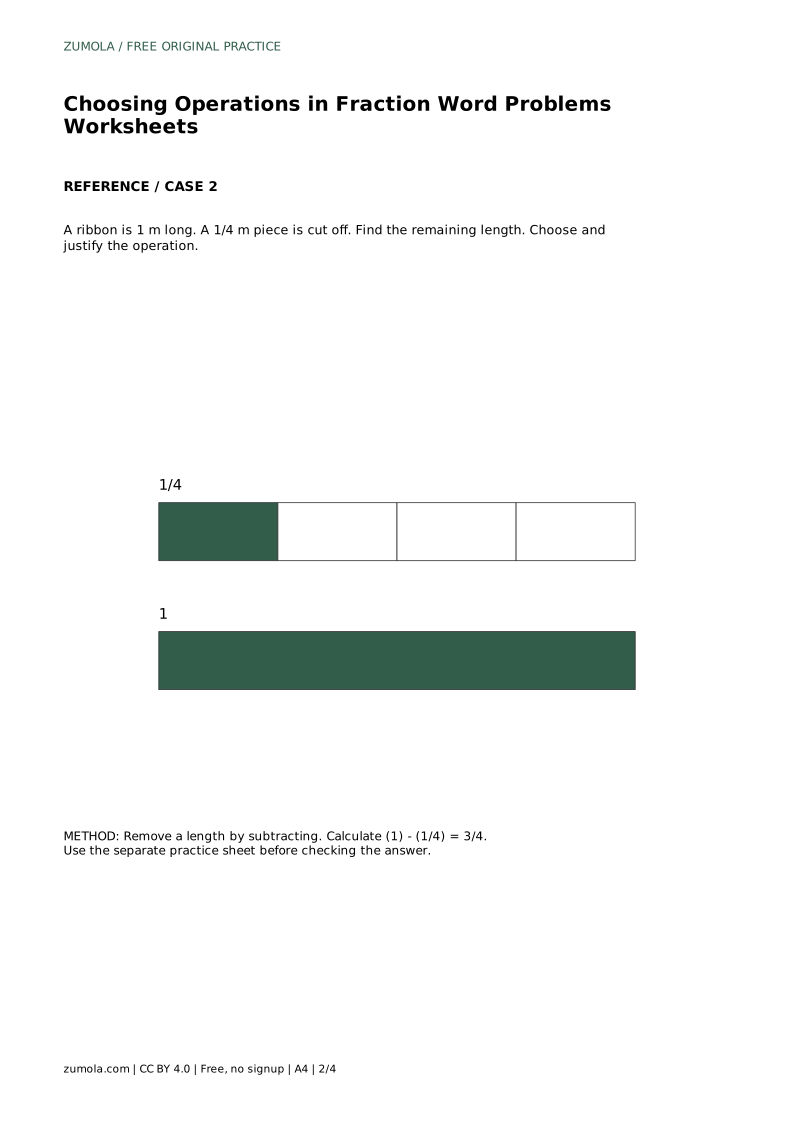
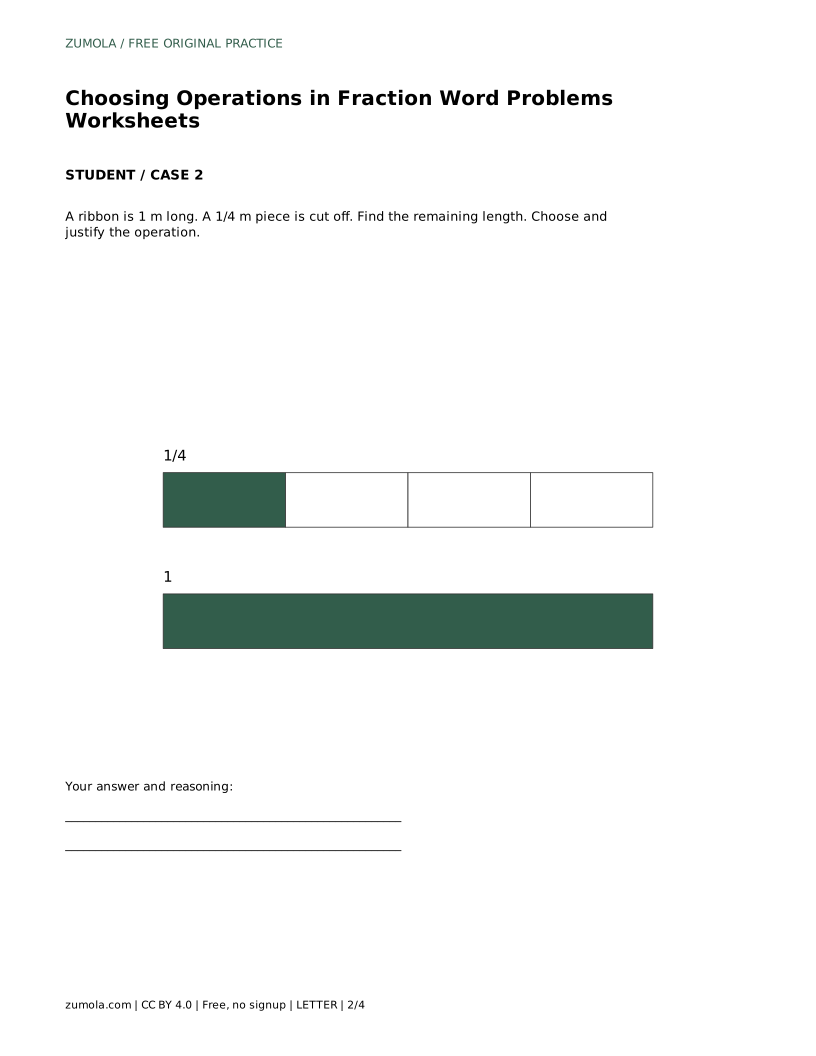
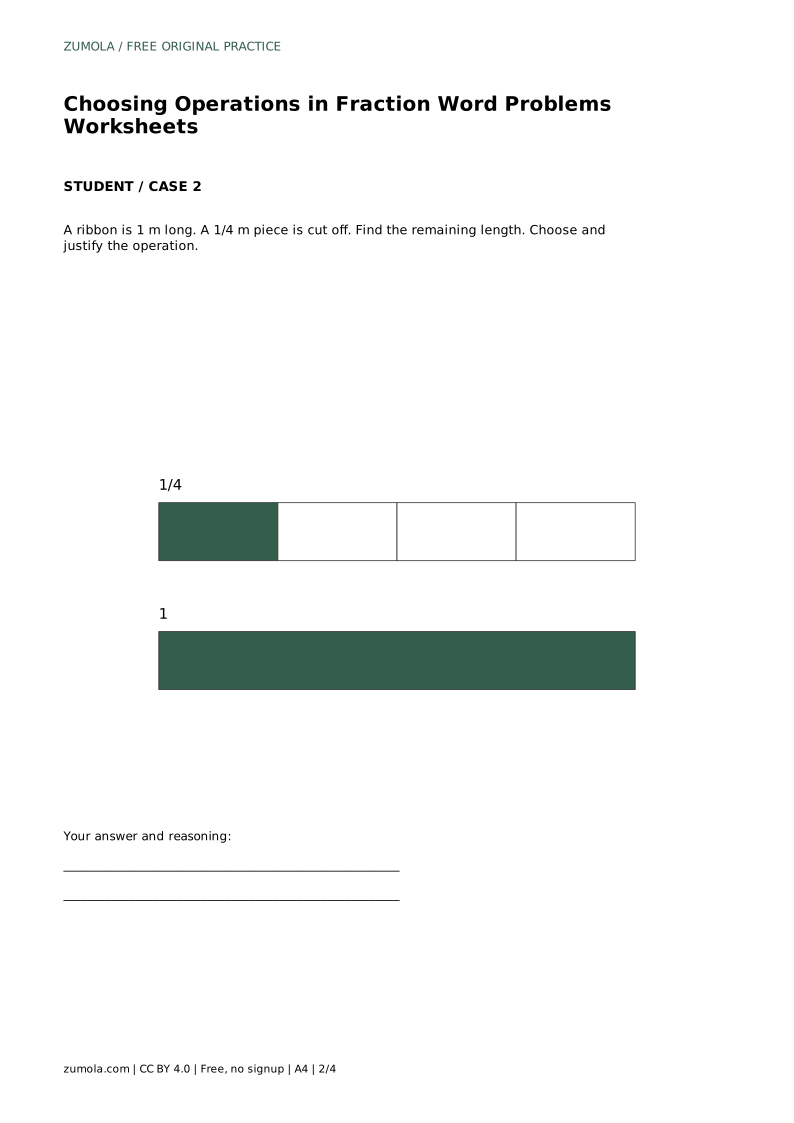
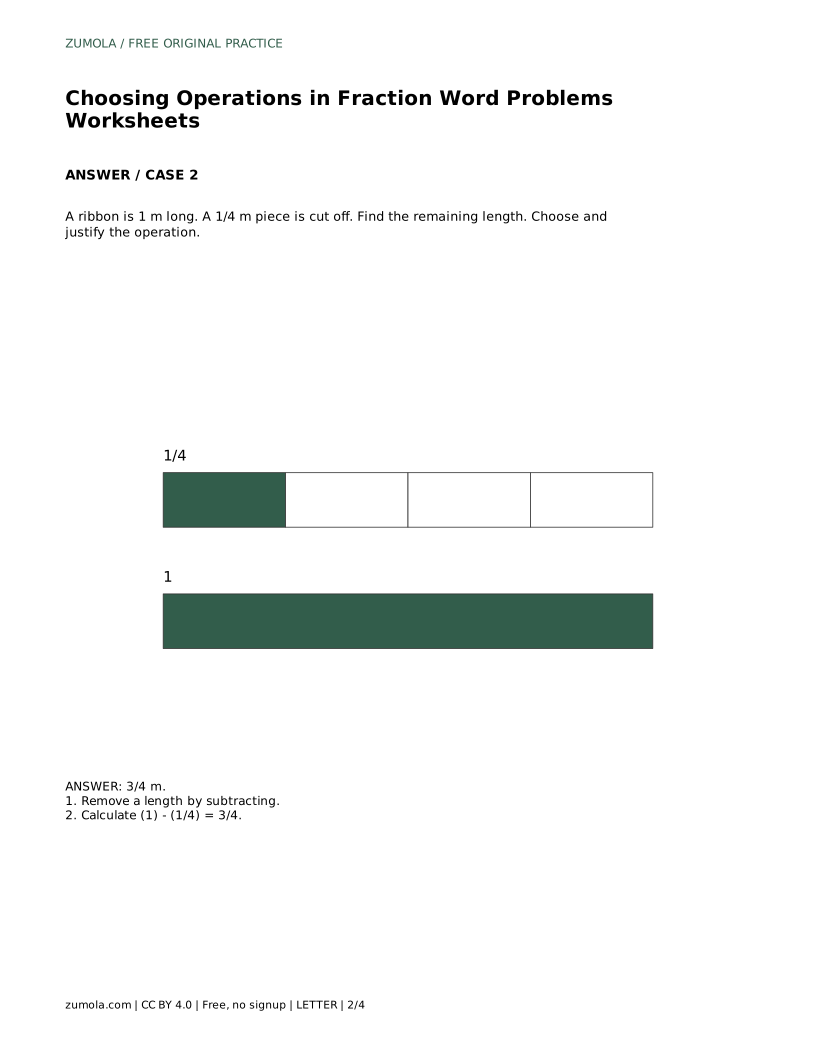
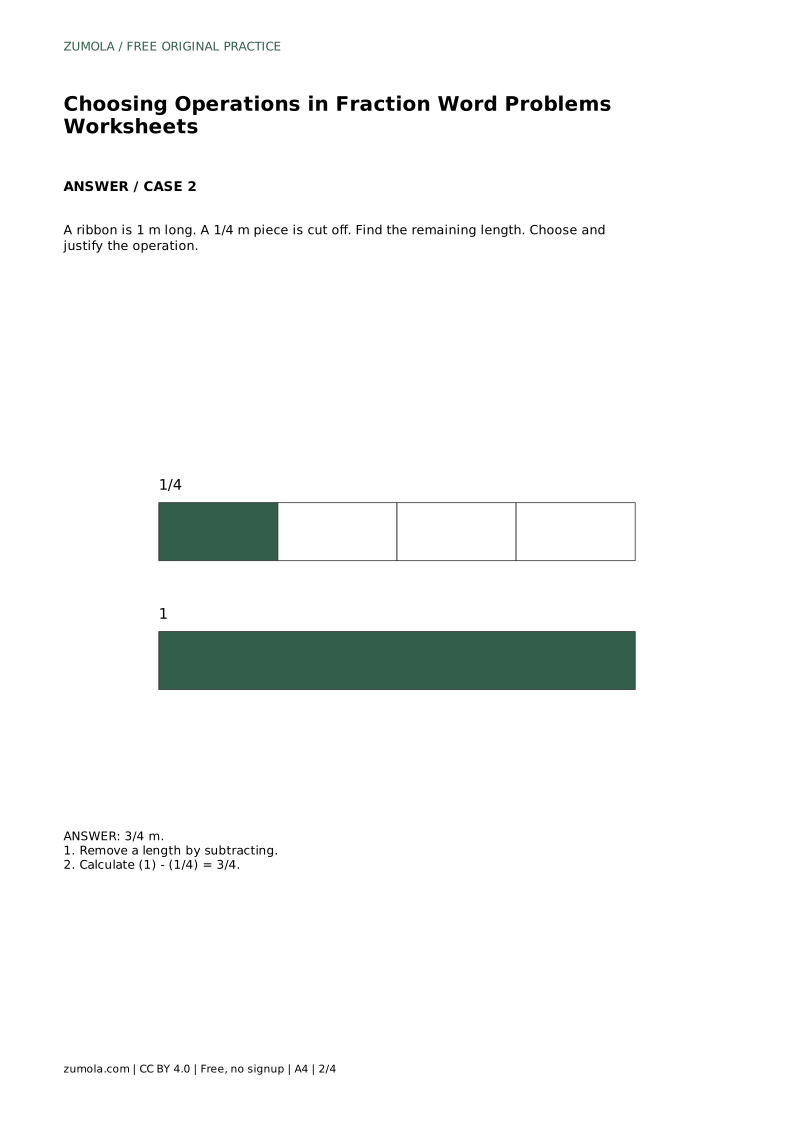
When two lengths are joined end to end without overlap, the total is the sum. When a piece is cut from a longer ribbon, the remainder is the difference. These are direct length relationships, so the units stay the same.
Use a common denominator before adding or subtracting. For thirds and quarters, the common denominator is 12. Convert each fraction, combine, then simplify if possible. Keep the unit in the final sentence.
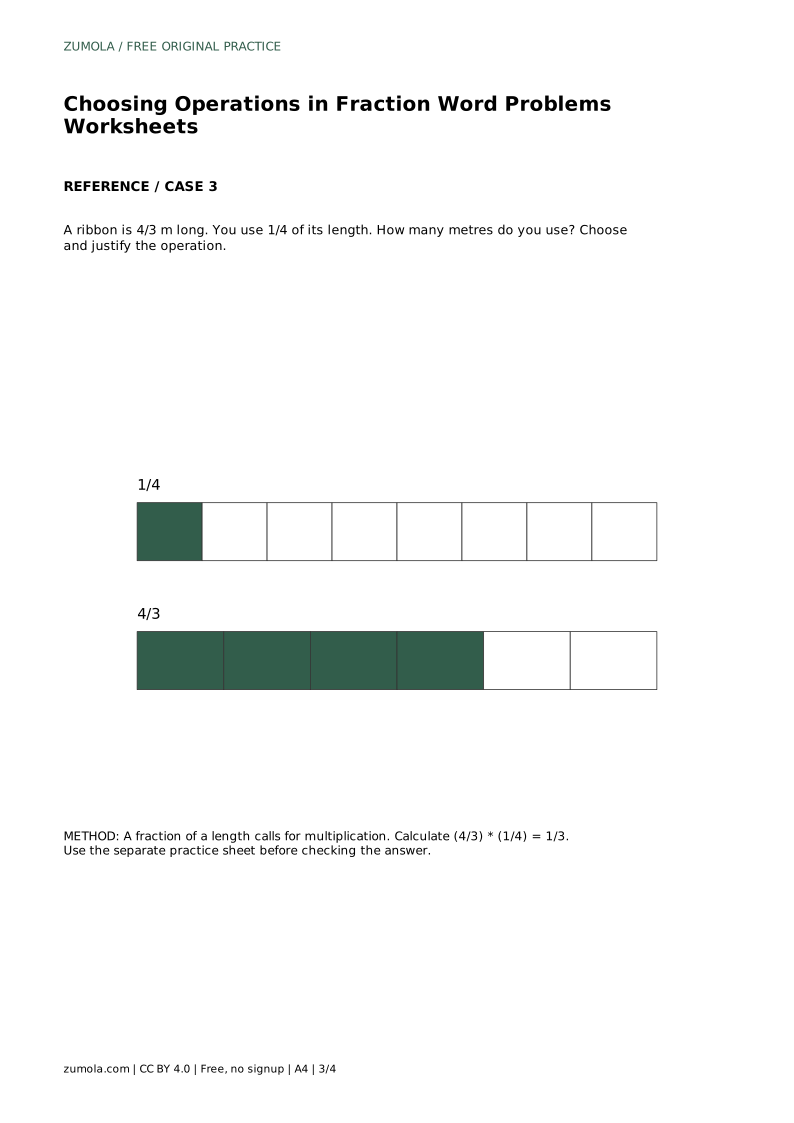
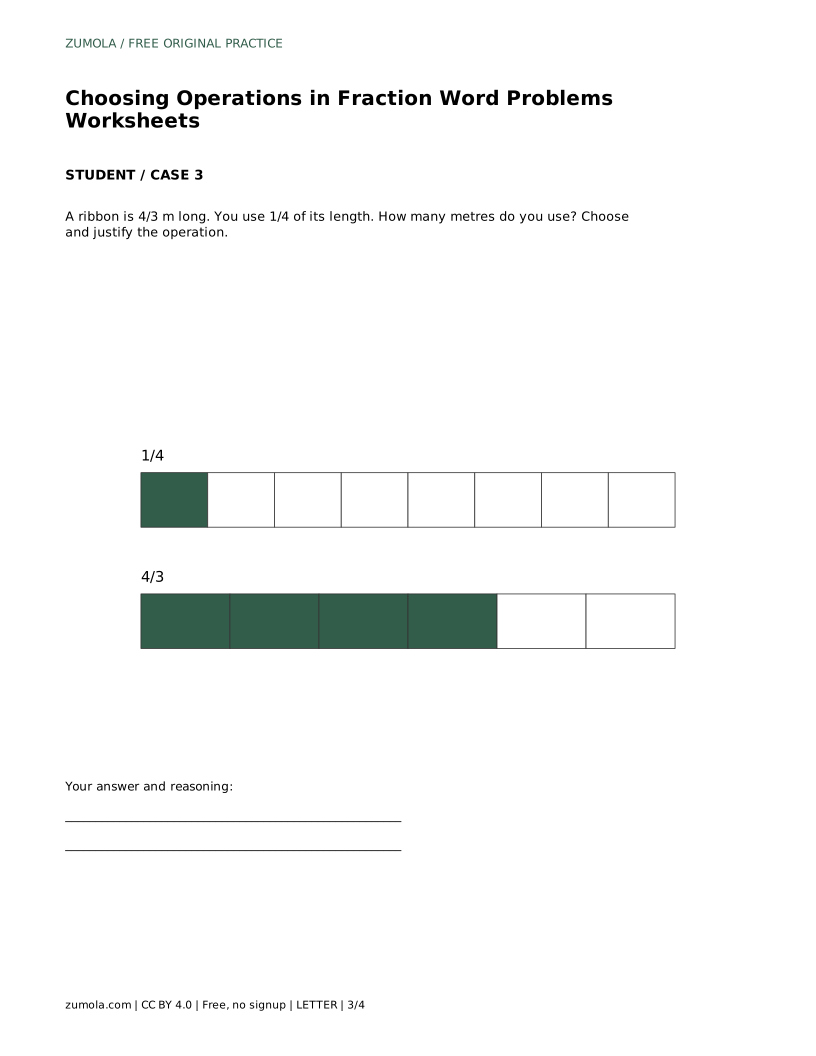
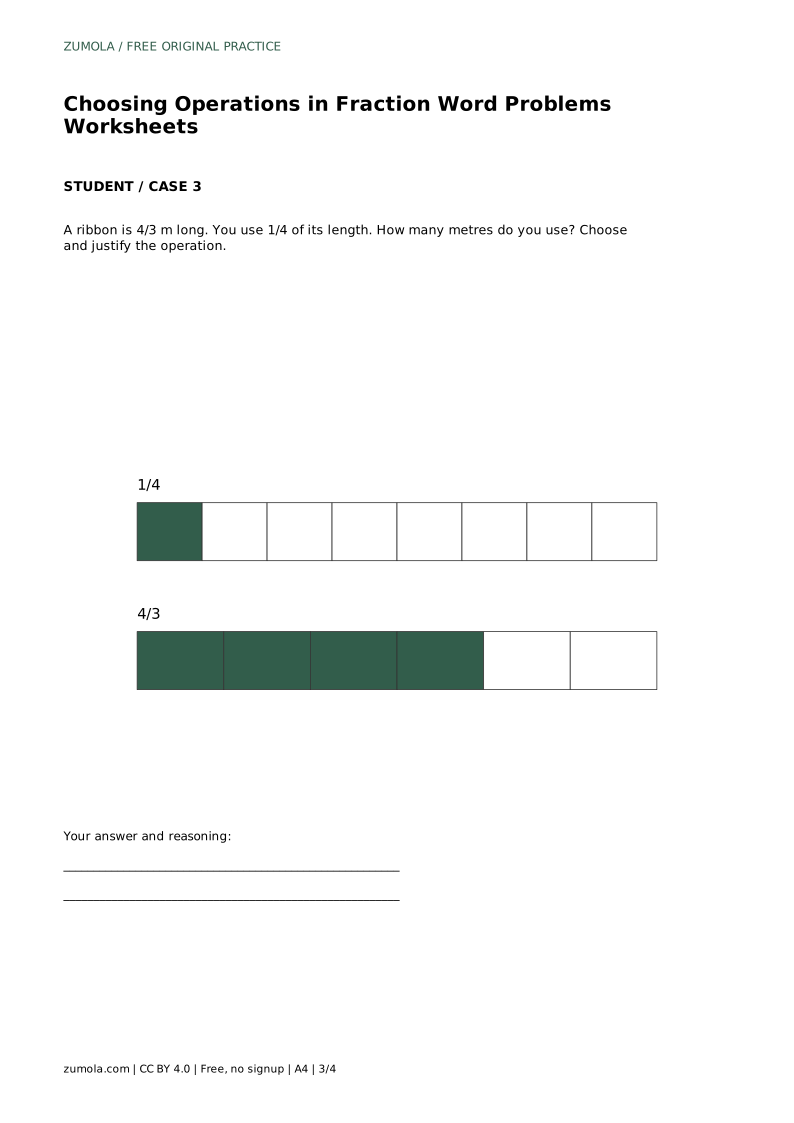
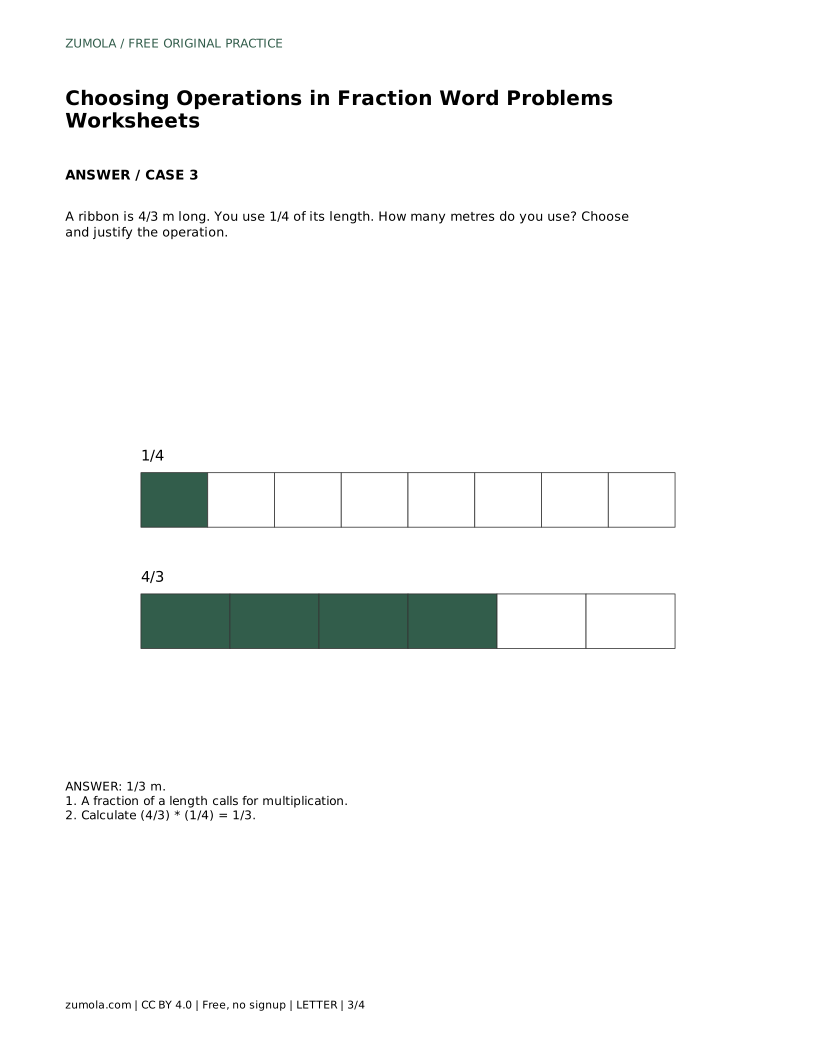
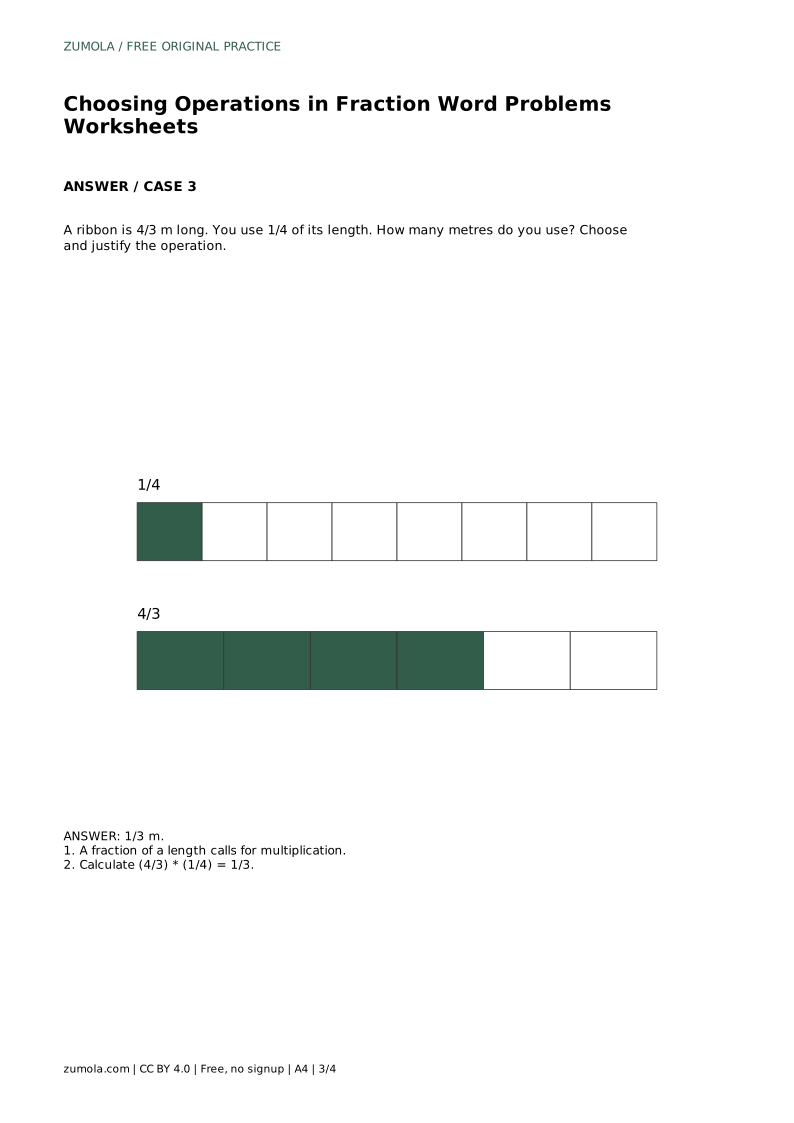
A phrase such as one quarter of its length signals multiplication: the fraction acts on the length. The result is still a length, but smaller than the original when the fraction is less than one.
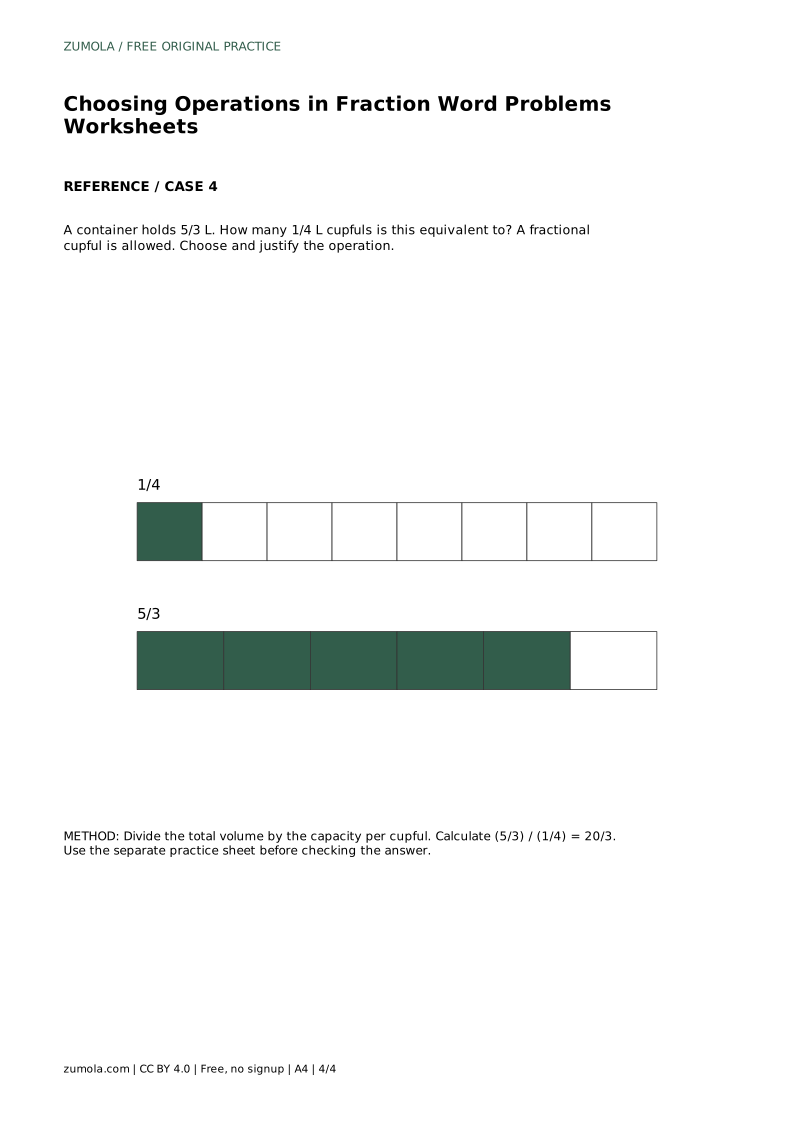
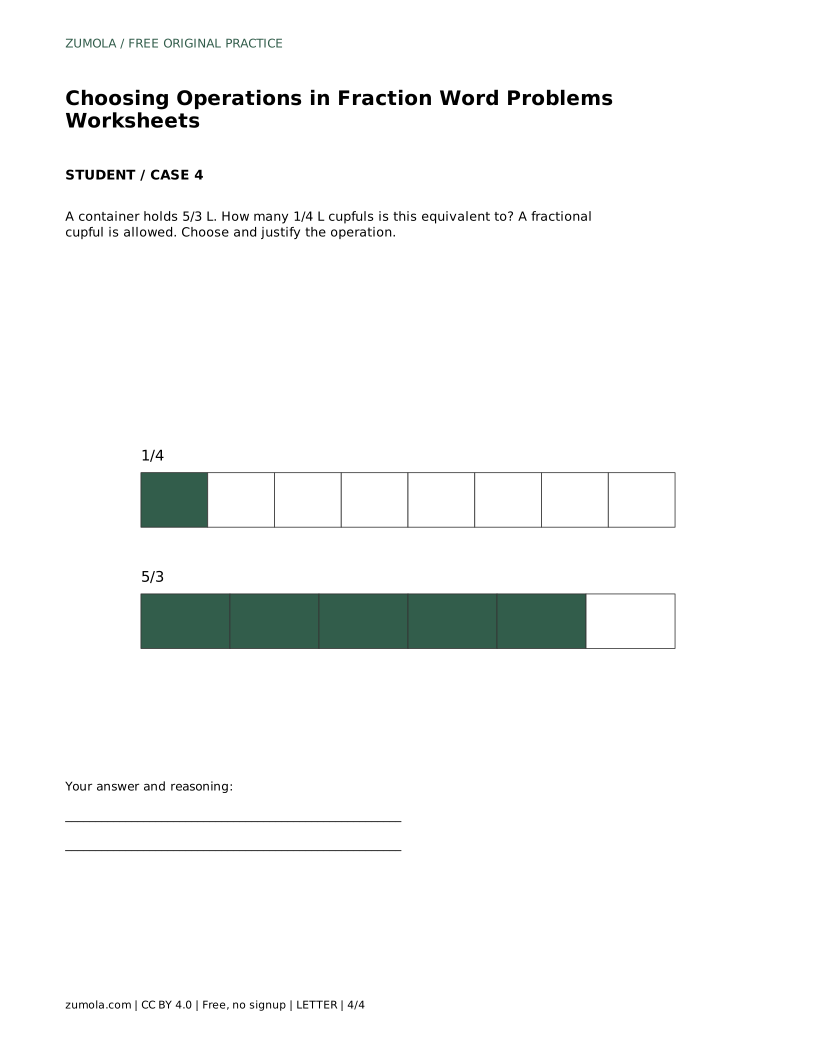
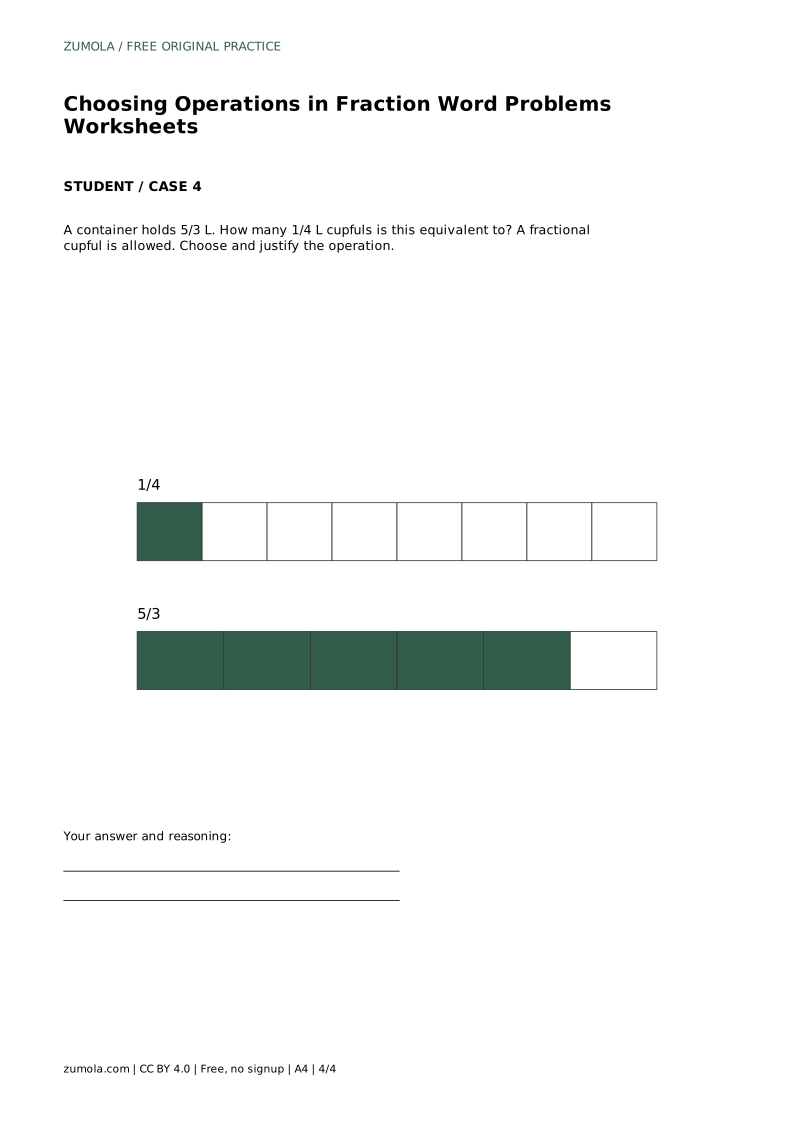
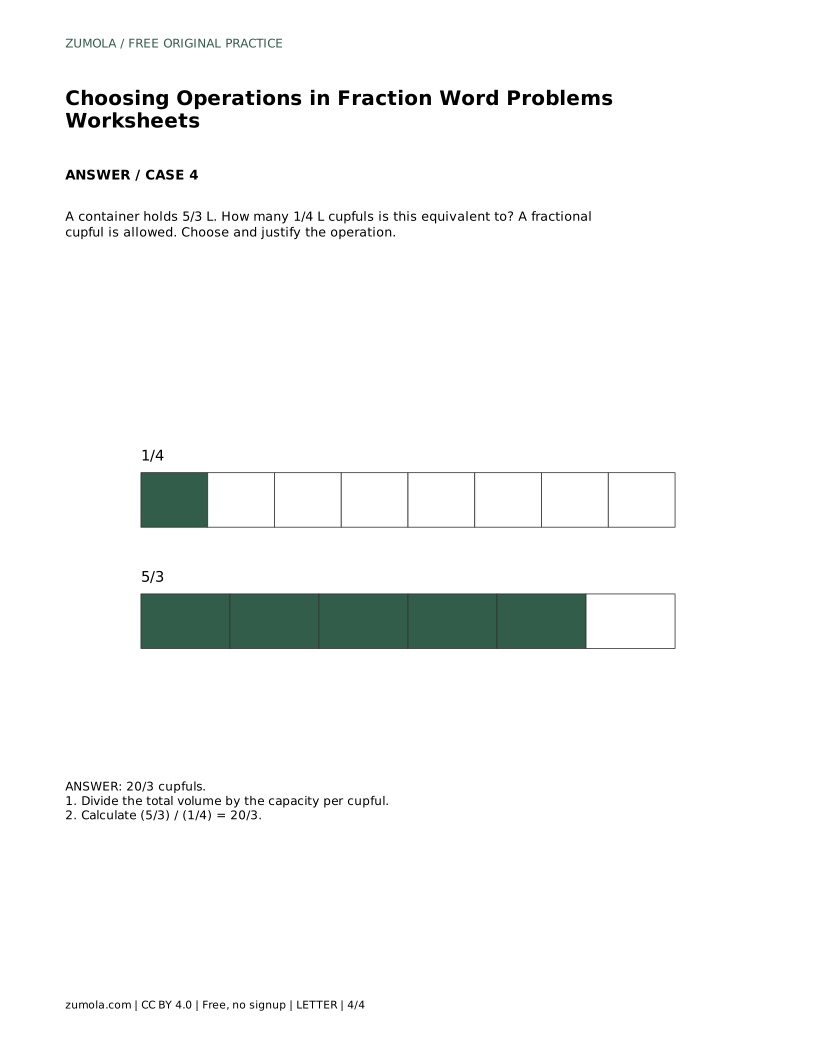
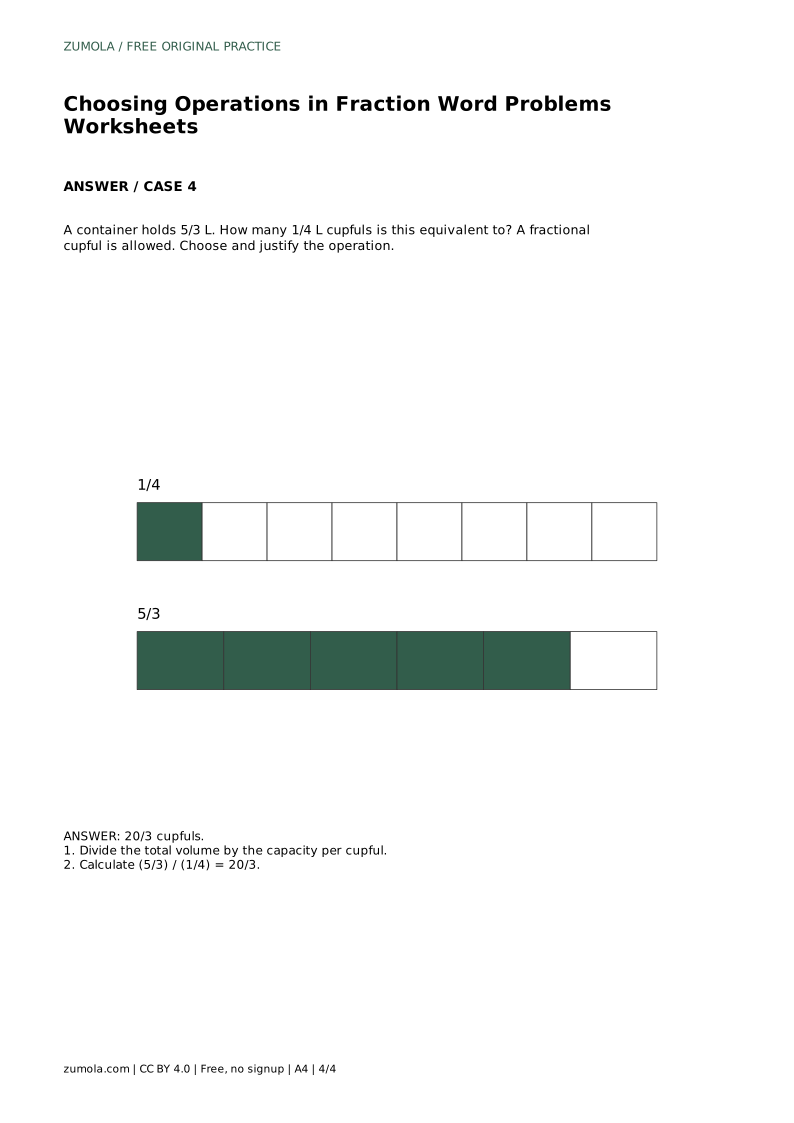
A question asking how many cupfuls fit into a container signals division: total volume divided by volume per cupful. The answer counts cupfuls, and a fractional count is allowed when the problem says so. Division by a fraction is the same as multiplying by its reciprocal, but the reasoning should stay tied to the quantities.
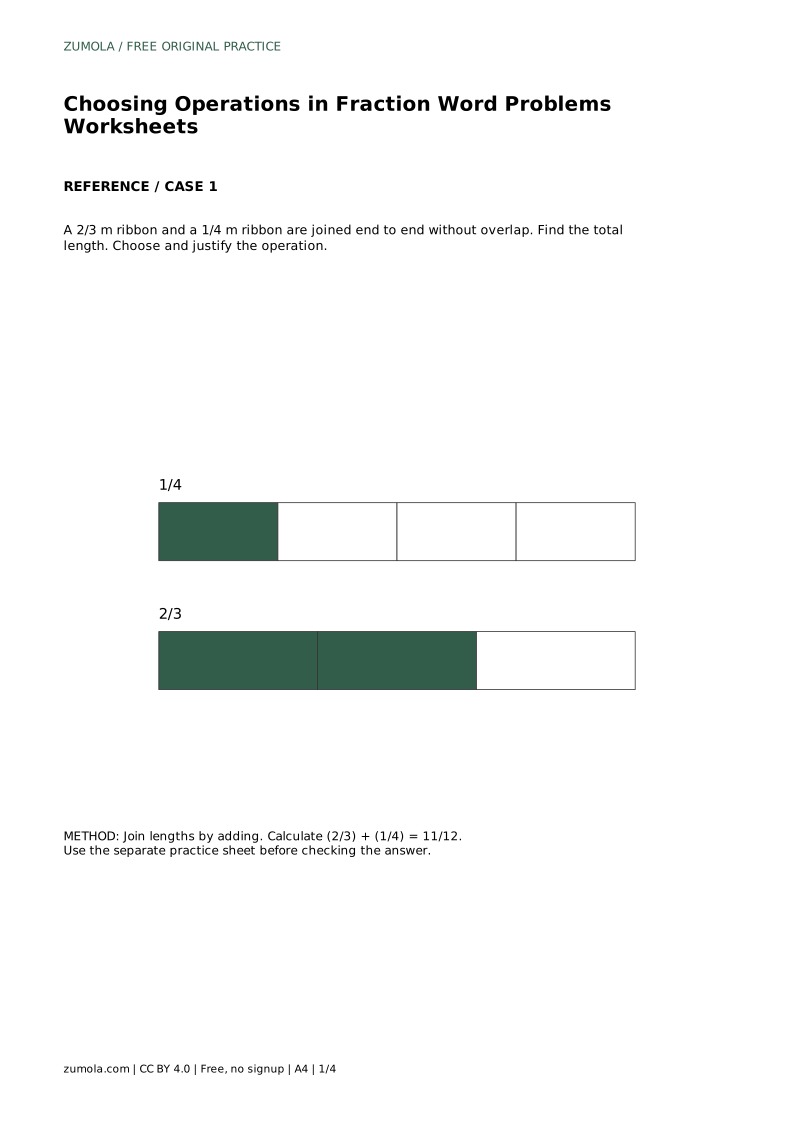
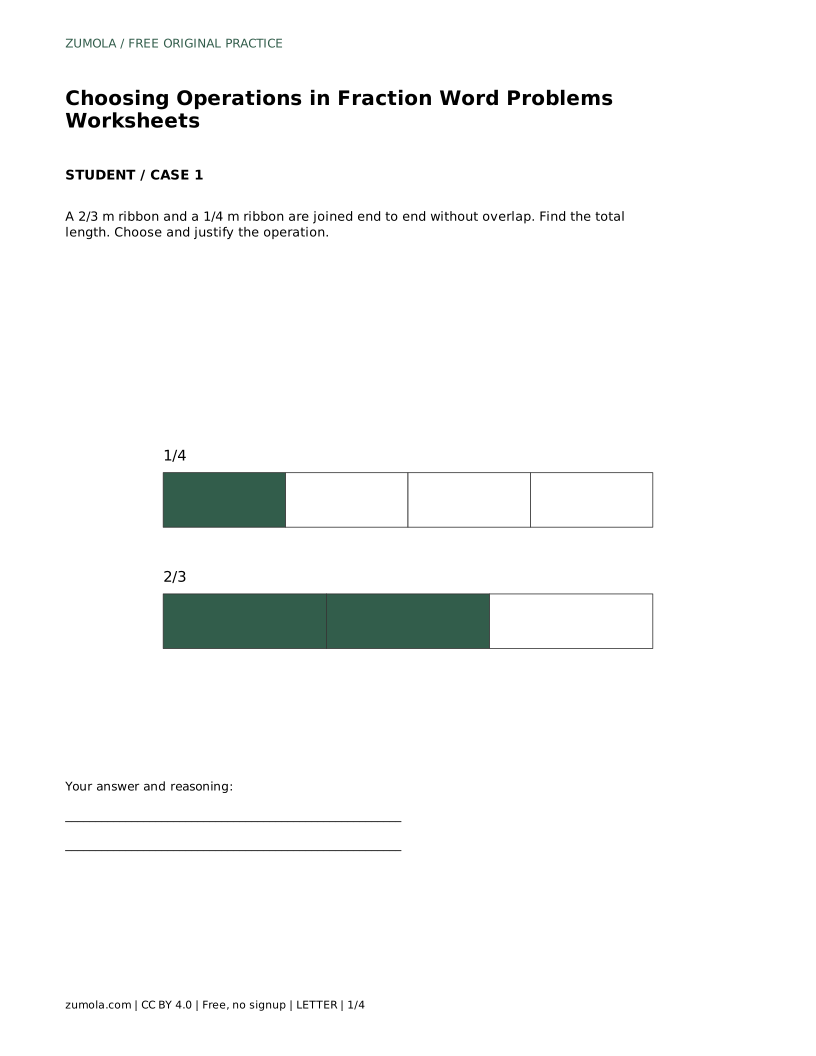
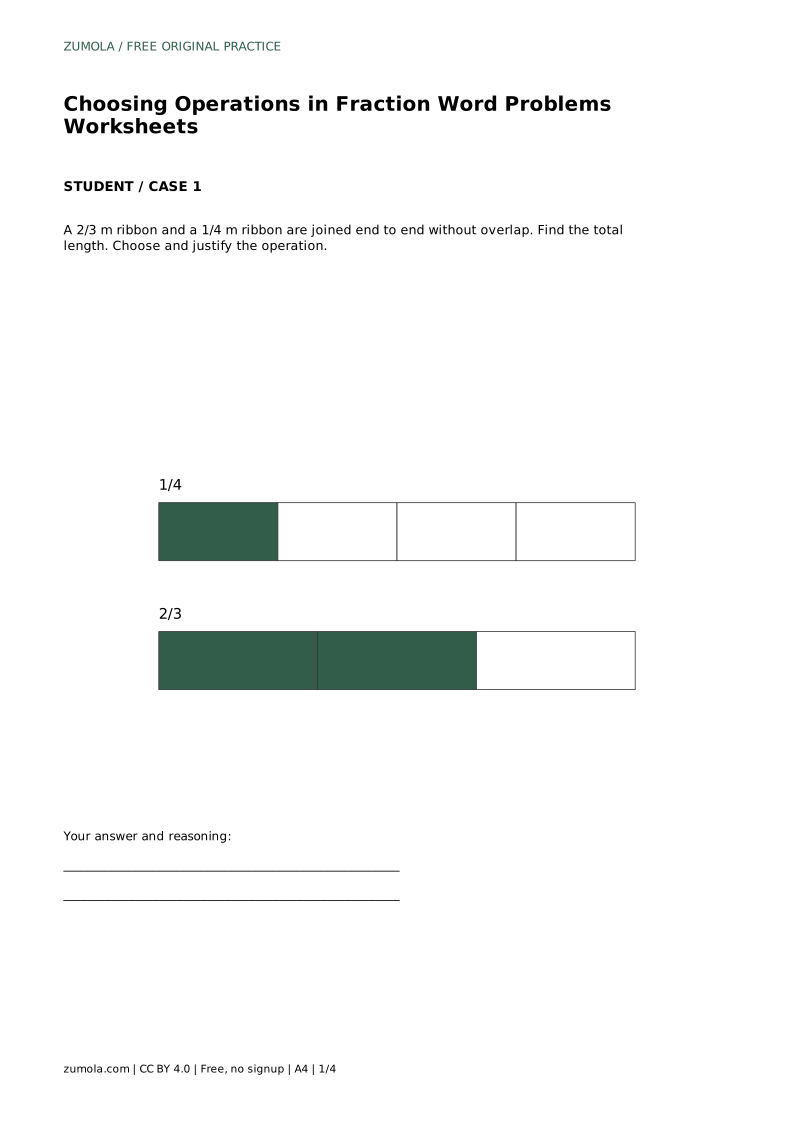
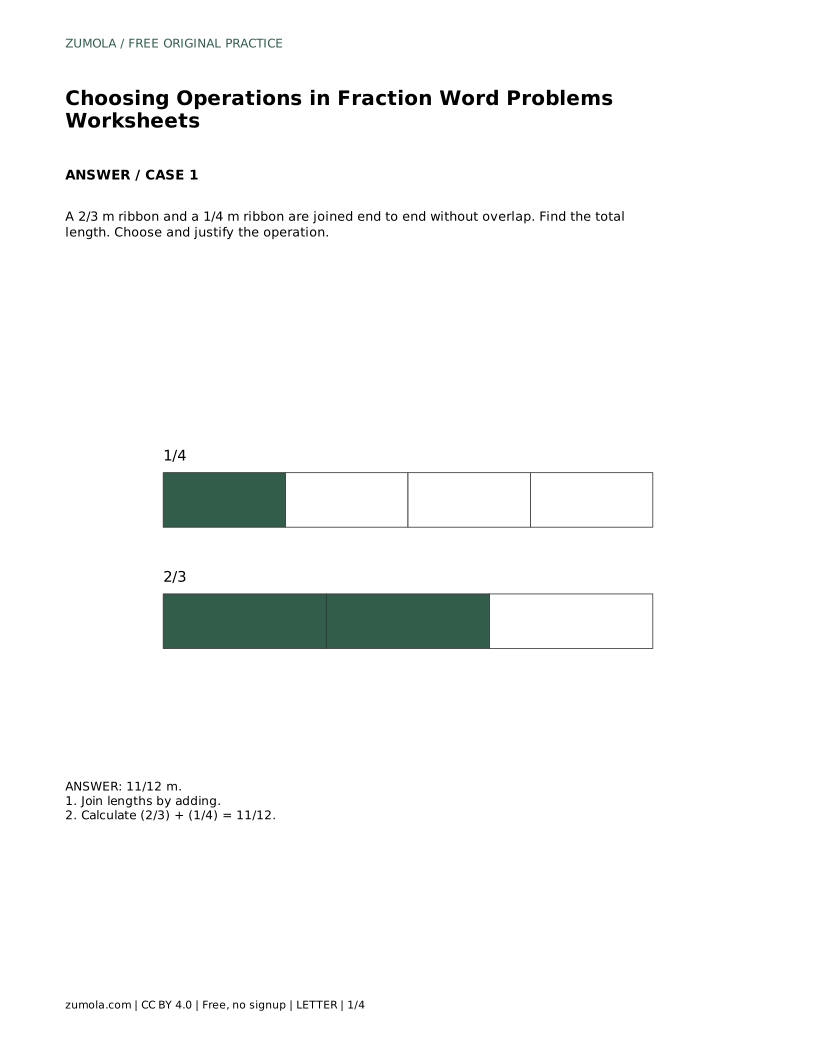
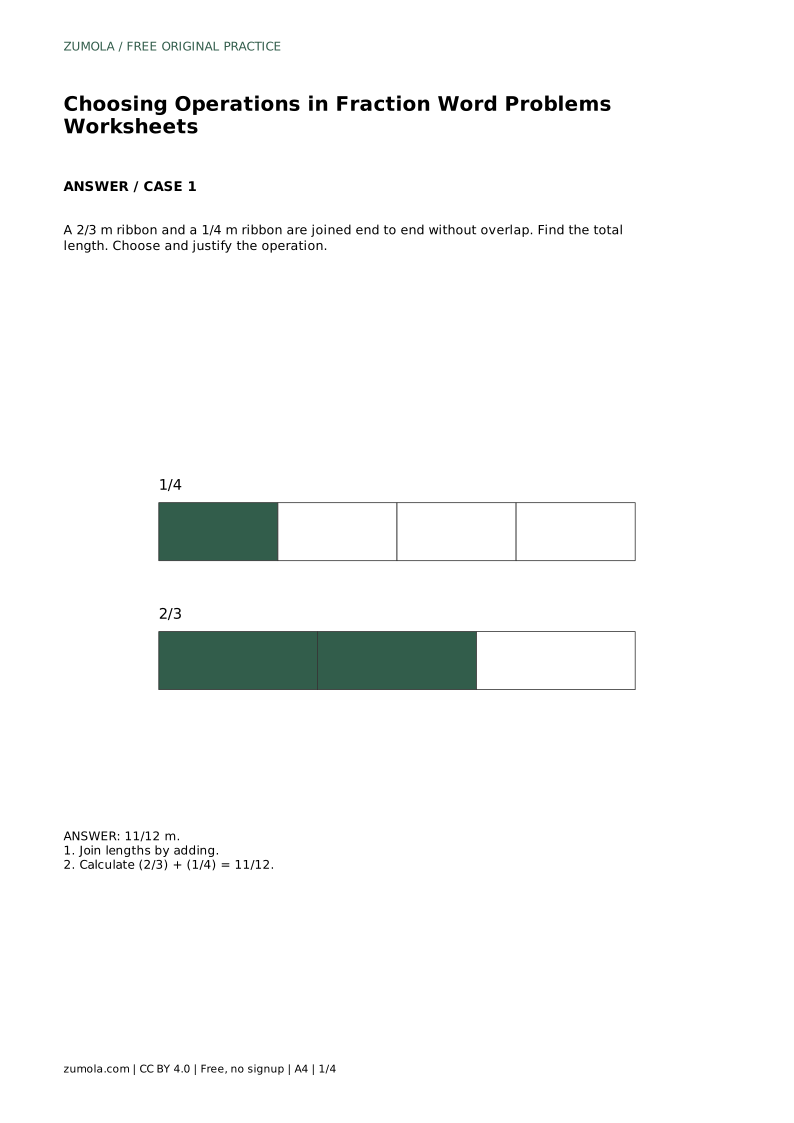
A 2/3 m ribbon and a 1/4 m ribbon are joined end to end without overlap. Find the total length and justify the operation.
The ribbons are joined, so their lengths add. Use a common denominator of 12: 2/3 = 8/12 and 1/4 = 3/12. Then 8/12 + 3/12 = 11/12. The total length is 11/12 m. The answer is a length in metres, matching the question, and it is larger than each piece, which fits a join.
A 2/3 m ribbon and a 1/4 m ribbon are joined end to end without overlap. Find the total length. Choose and justify the operation.
11/12 m. Join lengths by adding. Calculate (2/3) + (1/4) = 11/12.
Multiply when finding a fraction of a quantity. Divide when finding how many portions of a given size fit into a total.
Yes, when the problem allows a fractional portion. Check the wording before rounding or discarding a remainder.
The justification shows the reasoning, not just the result, and makes it easier to catch a mismatched operation.
All math worksheets · Free coordinate paper
Original resources · CC BY 4.0 · Free for personal and classroom use with attribution.