Reference diagrams
LETTER · Download PDF
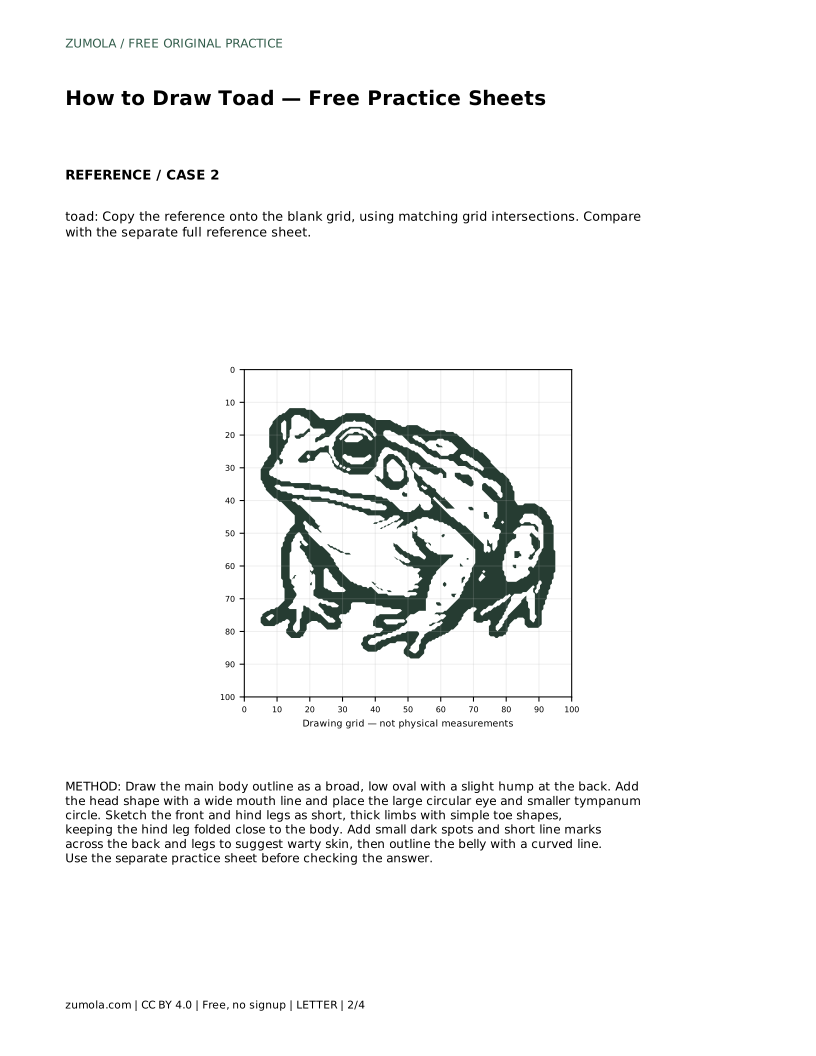
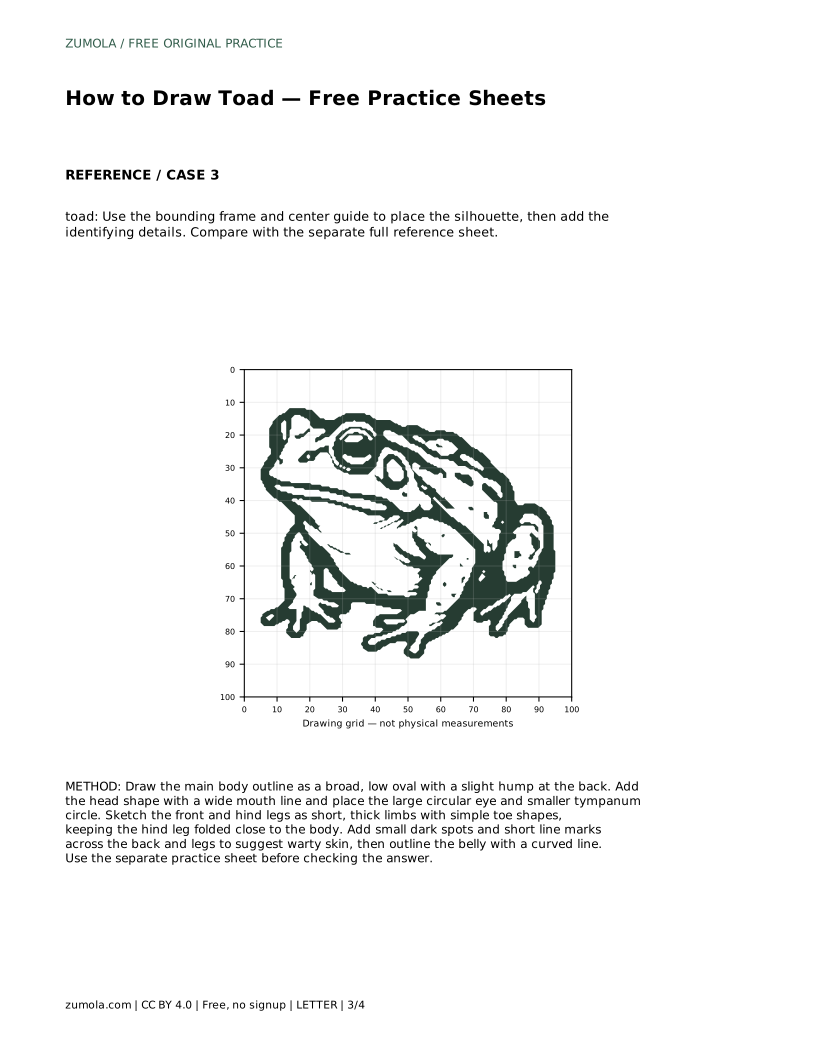
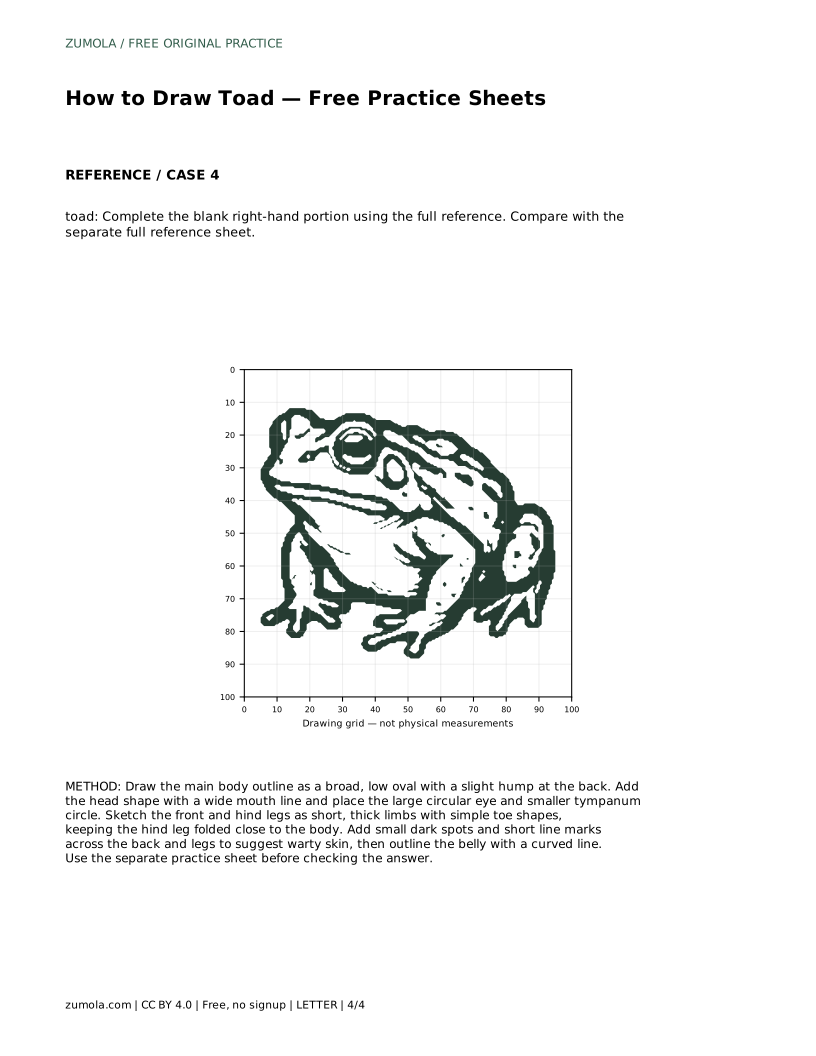
A4 · Download PDF
Free original resources
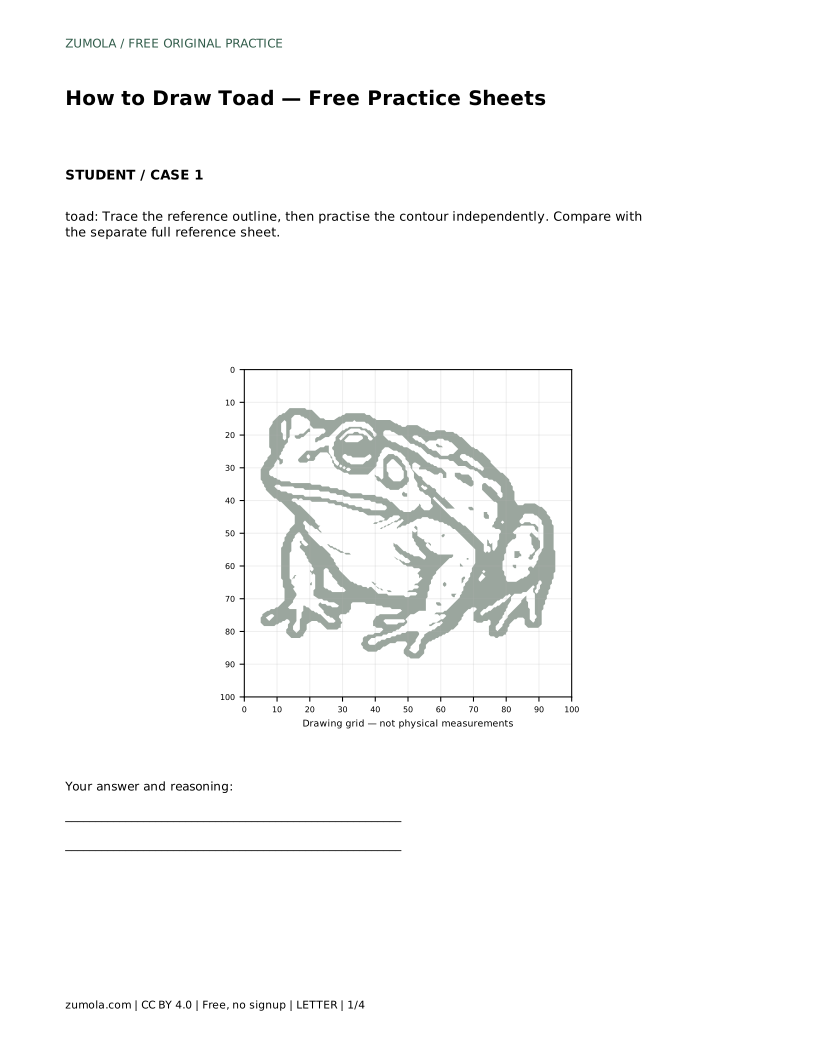
Learn to draw a toad by building a broad, low body, placing the eye and tympanum, adding folded hind legs, and suggesting warty skin with small marks.
Four original cases, with reference diagrams, practice sheets and worked answers. Everything is free; no signup required.
LETTER · Download PDF
A4 · Download PDF
LETTER · Download PDF
A4 · Download PDF
LETTER · Download PDF
A4 · Download PDF
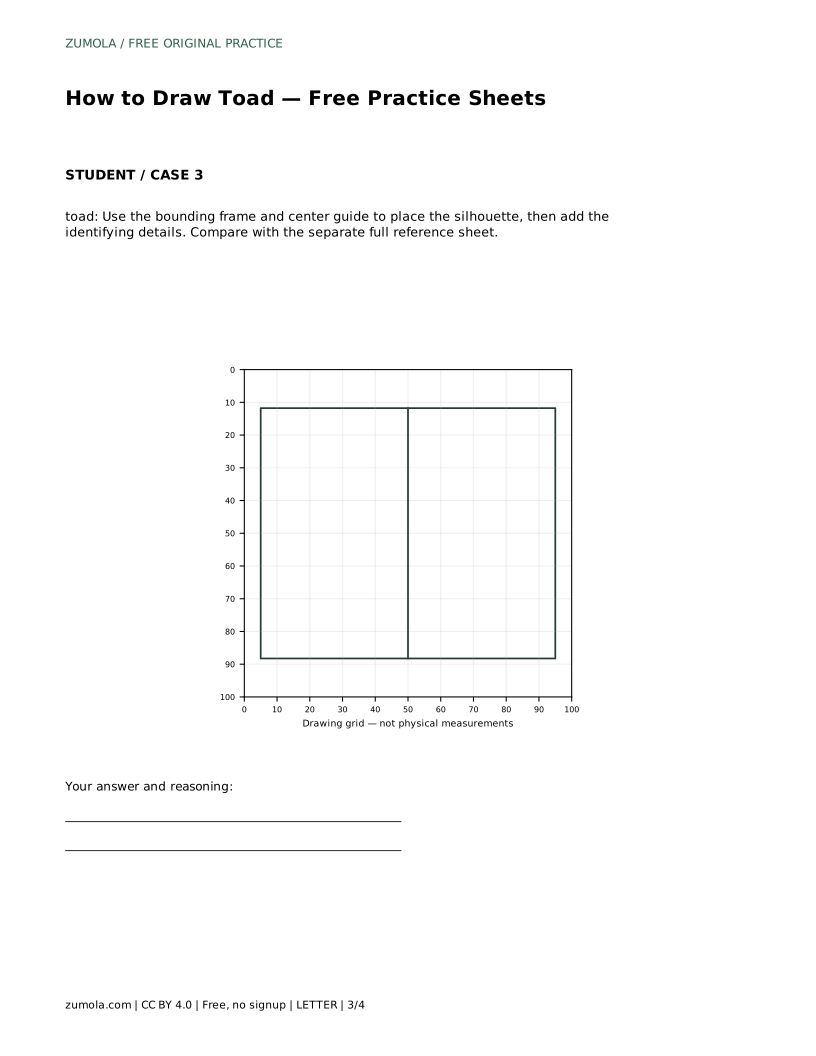
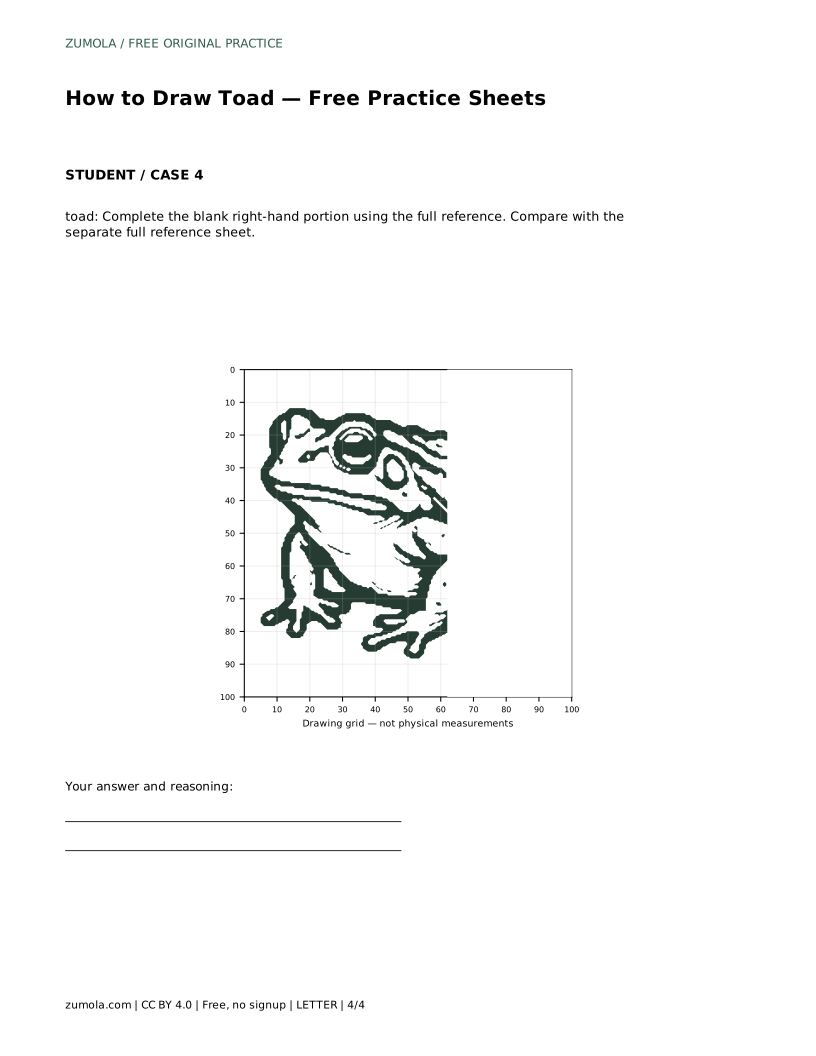
Use A4 or US Letter to match your printer. Use the stated values and conditions to solve each exercise; diagrams are not physical measuring rulers.
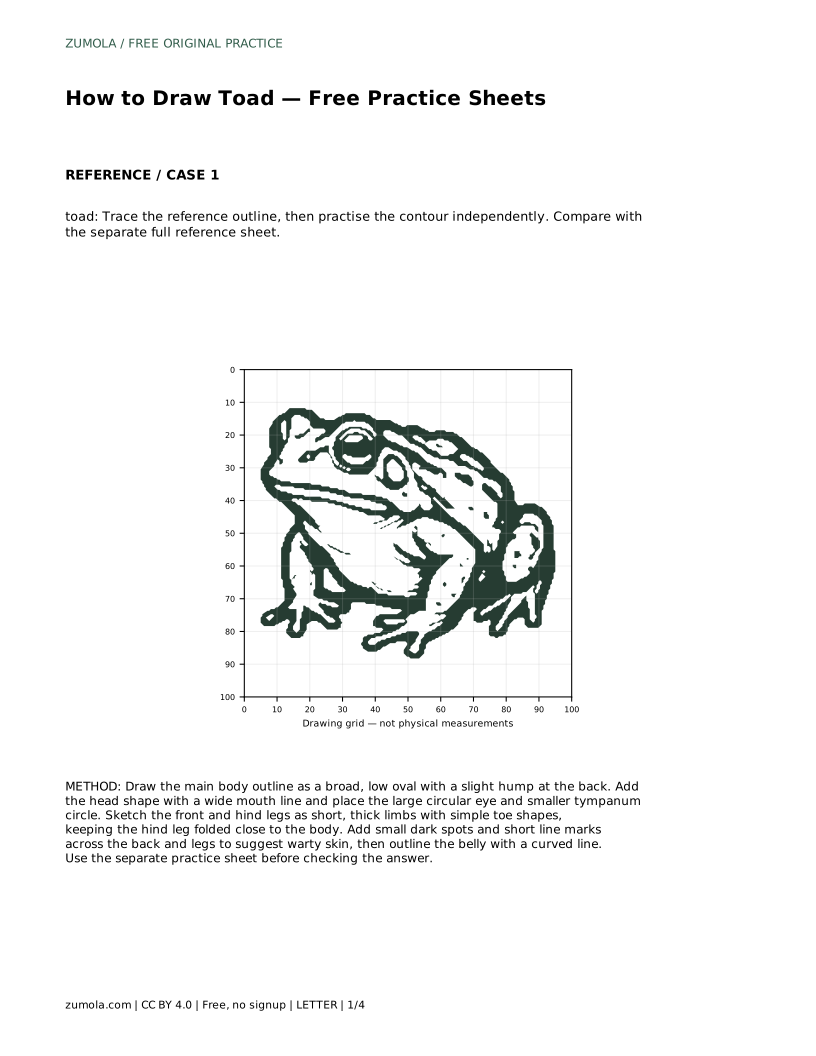
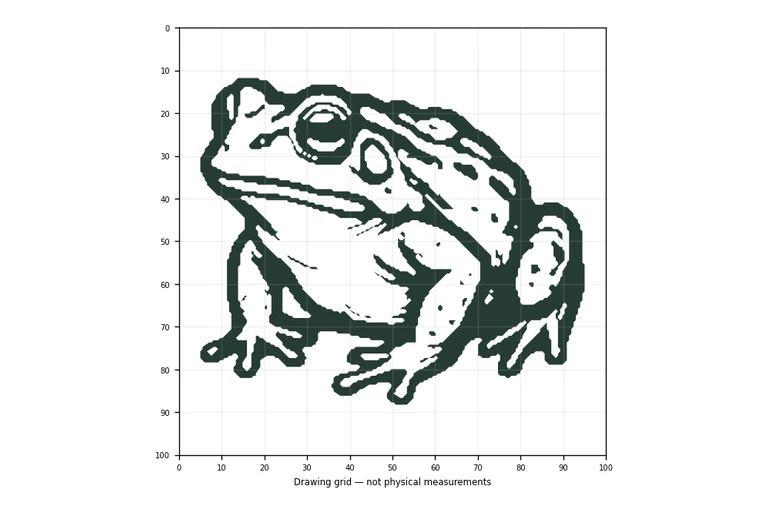
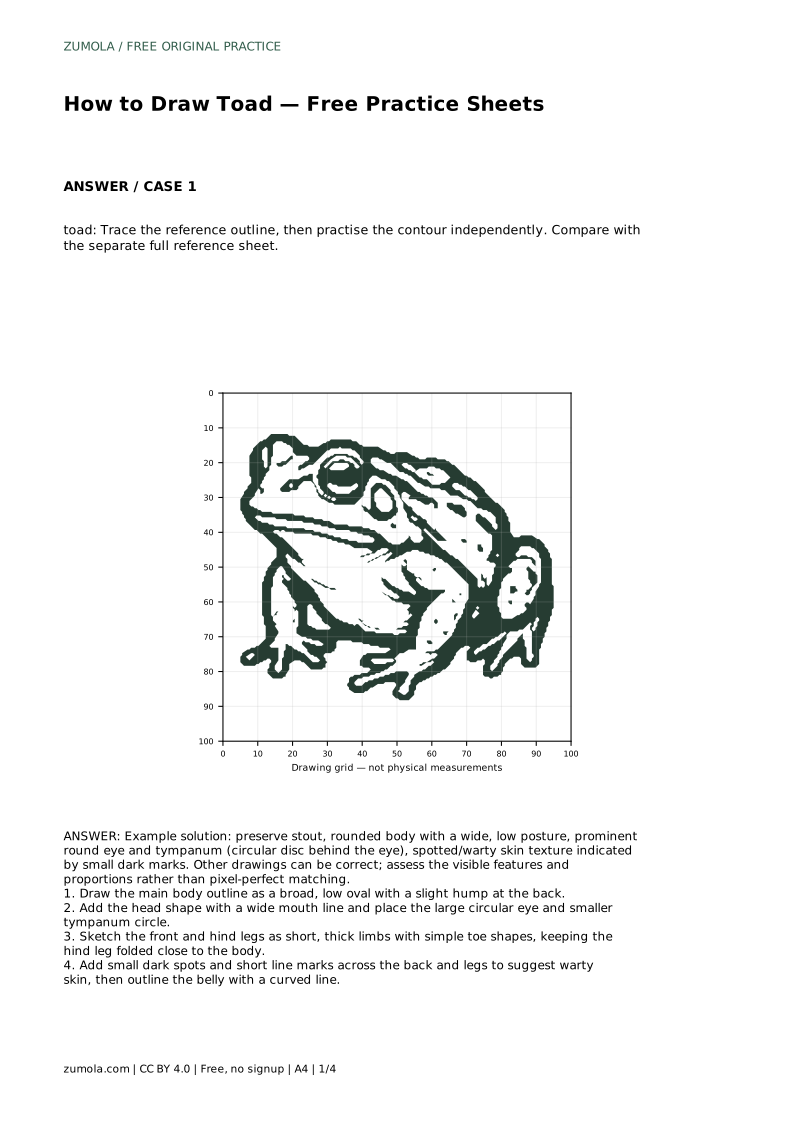
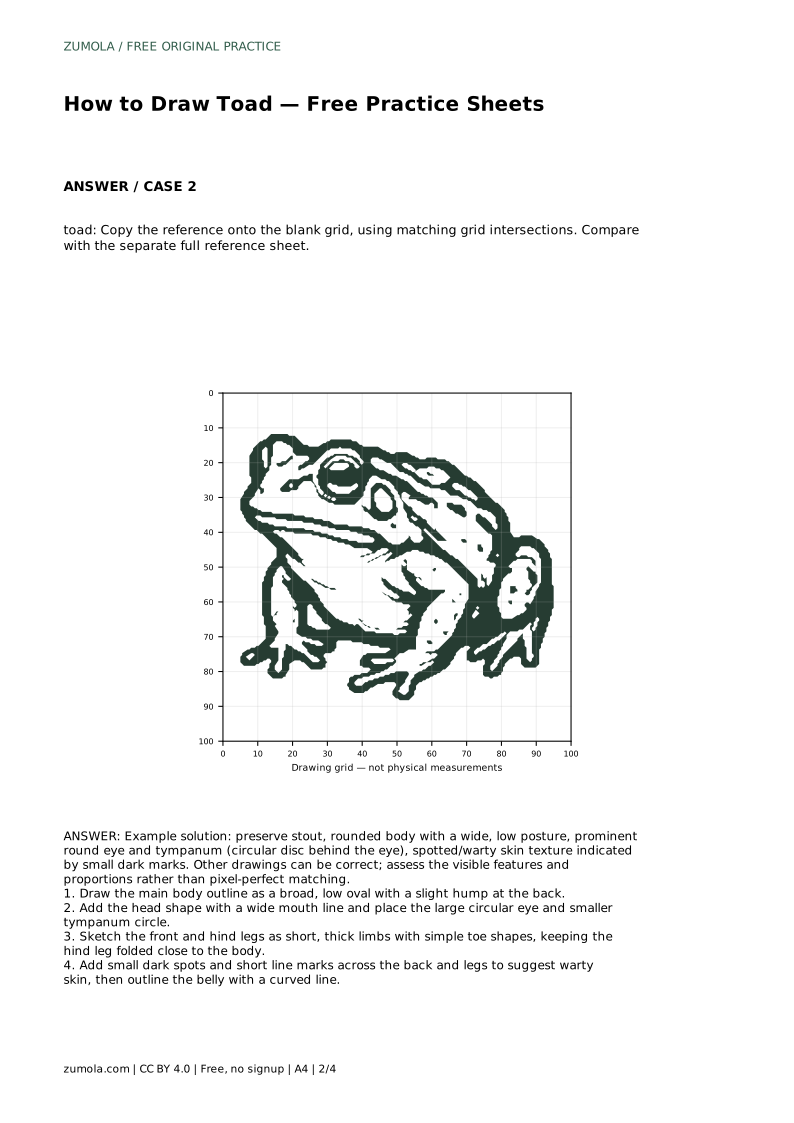
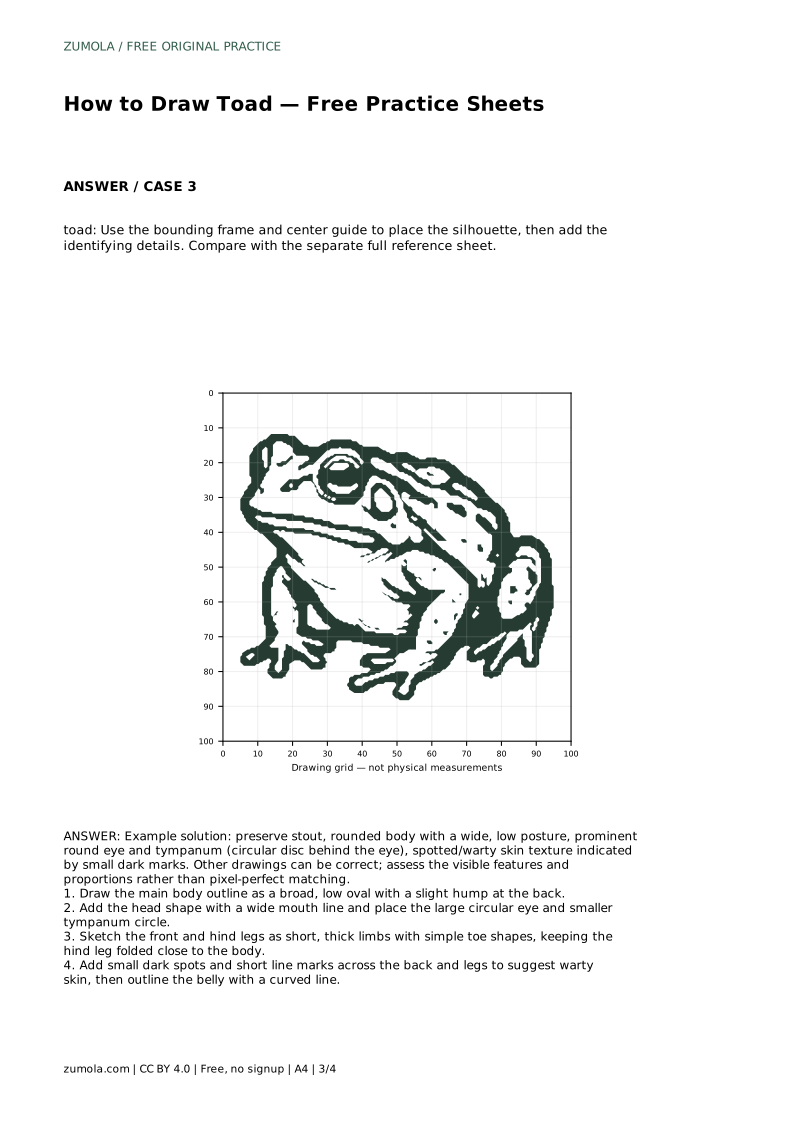
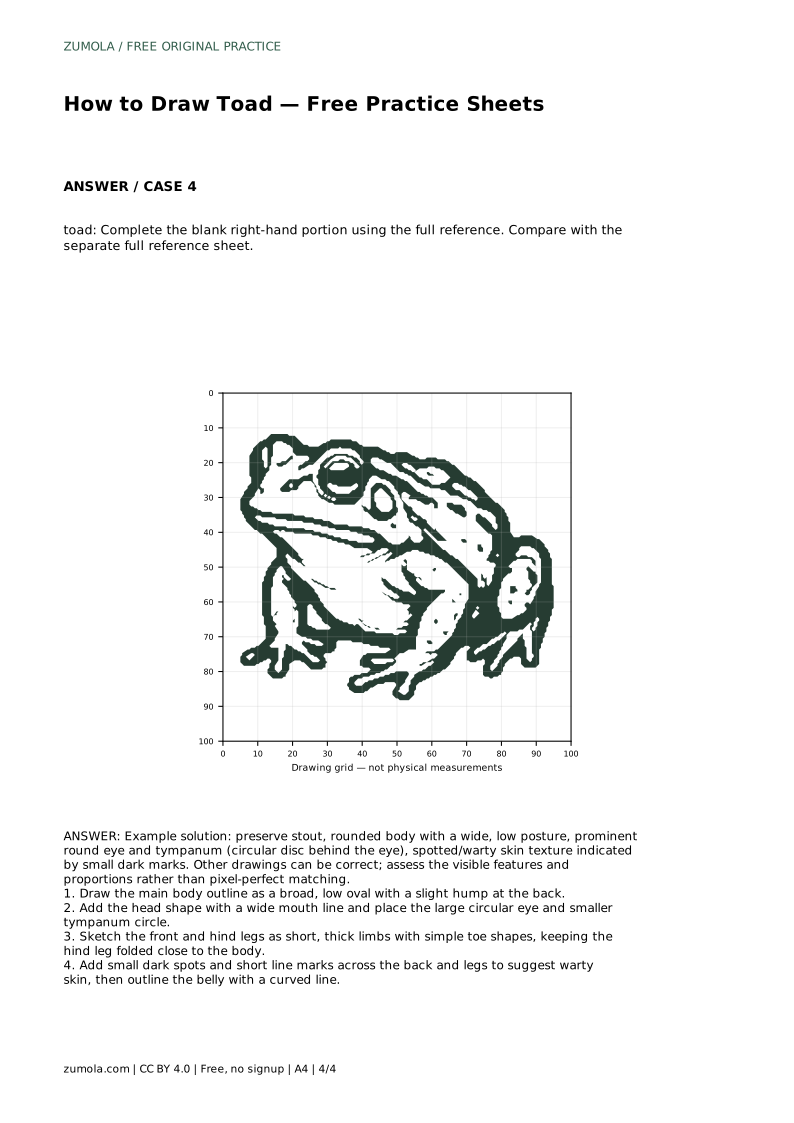
Drawing a toad is mostly a problem of proportion and placement. A toad reads as a toad when the body is stout and low, the head is wide with a large round eye and a smaller circular tympanum behind it, the hind legs are folded close to the body, and the skin is marked with small dark spots. This page explains a reliable order for those features and how to use the practice sheets to check your work without expecting a pixel-perfect copy.
Begin with the largest shape: a broad, low oval that sits close to the ground. Give the back a slight hump rather than a tall arch. The head should be wide and shallow, merging into the body rather than sitting on a narrow neck. A wide mouth line runs across the front of the head.
Place the eye as a large circle near the top of the head, then add a smaller circle just behind and slightly below it for the tympanum. The tympanum is a circular disc, not an ear flap. Keeping these two circles distinct helps the drawing read correctly even before any texture is added.
Toad limbs are short and thick. Sketch the front legs as simple, slightly bent shapes with a few toe marks. The hind legs should stay folded close to the body, with the knee pointing outward and the foot tucked near the hip. Avoid long, straight legs; they change the silhouette into something more frog-like or lizard-like.
Keep the toes simple. A few short lines or small rounded shapes are enough to suggest the foot without turning the drawing into a detailed anatomy study. The goal is a clear, readable outline, not a clinical diagram.
Toad skin is often described as warty, but you do not need to draw every bump. Small dark spots and short line marks across the back and legs are enough to suggest the texture. Keep the marks irregular and sparse; too many even dots can look like a pattern rather than skin.
Finish with a curved belly line to separate the lower body from the back. Then compare your drawing with the reference sheet. Check the overall width-to-height ratio, the position of the eye and tympanum, and whether the hind legs stay folded. Small differences are fine; the drawing is successful when those key features are visible and in roughly the right places.
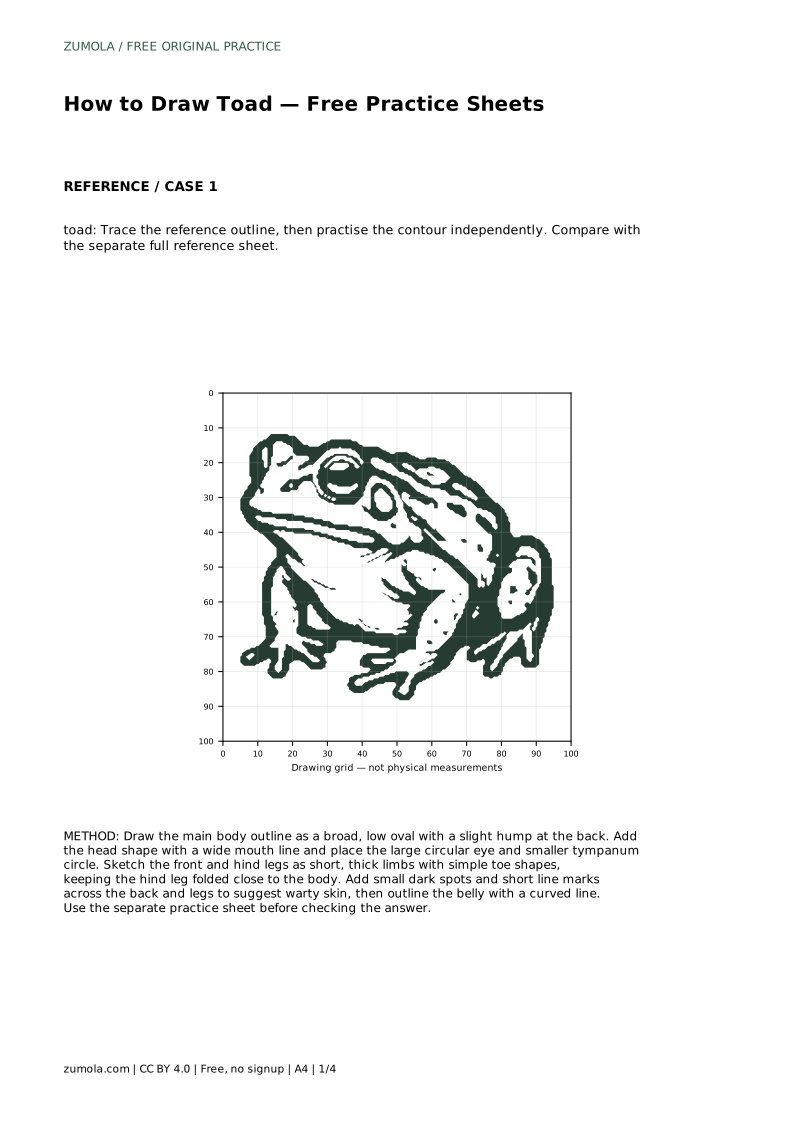
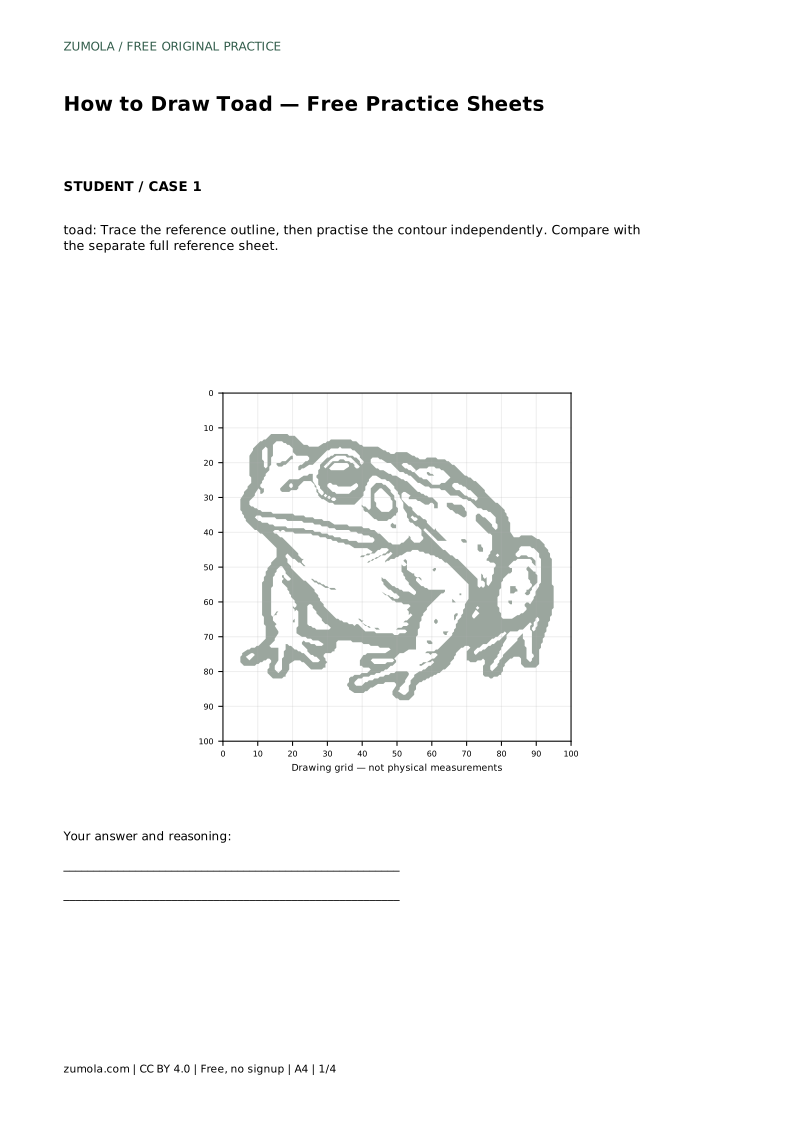
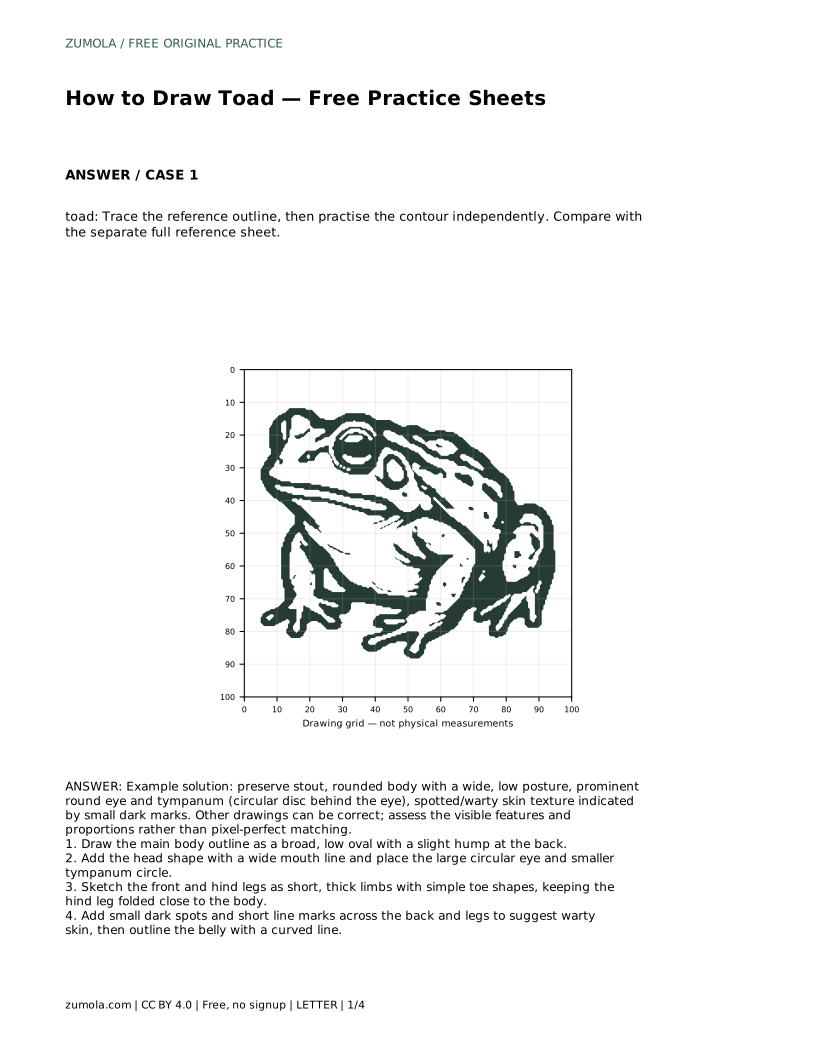
toad: Trace the reference outline, then practise the contour independently. Compare with the separate full reference sheet.
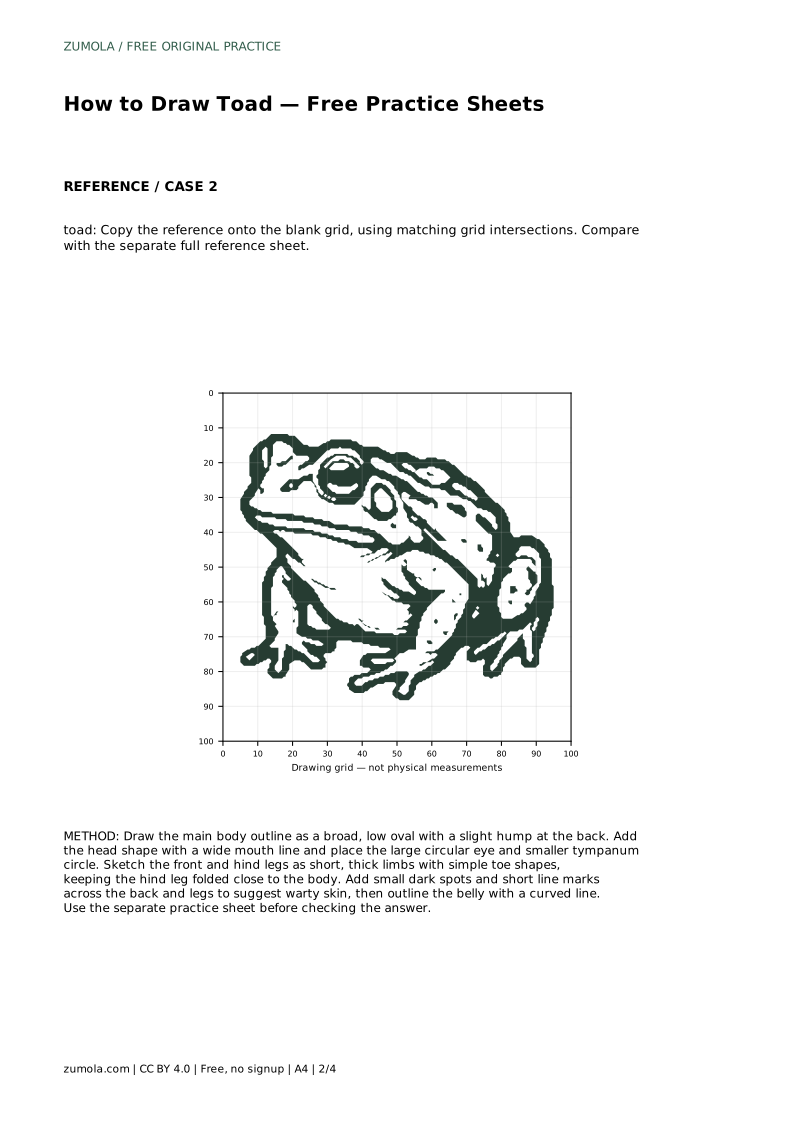
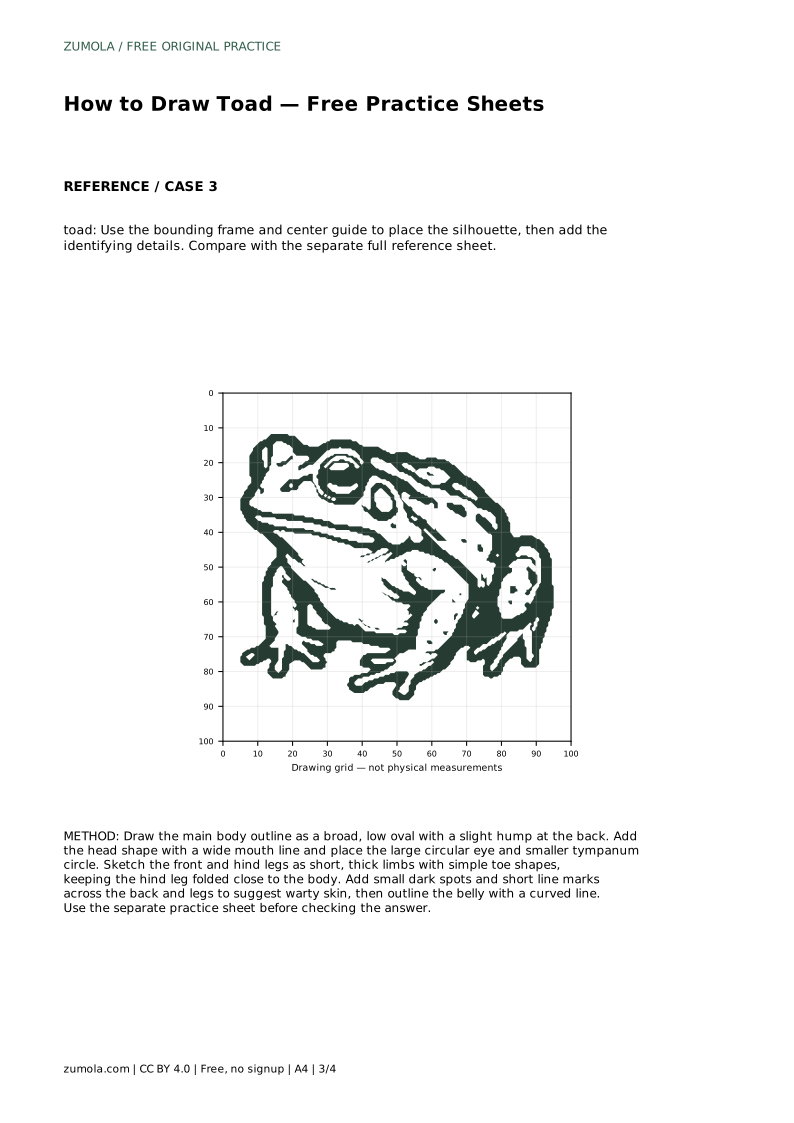
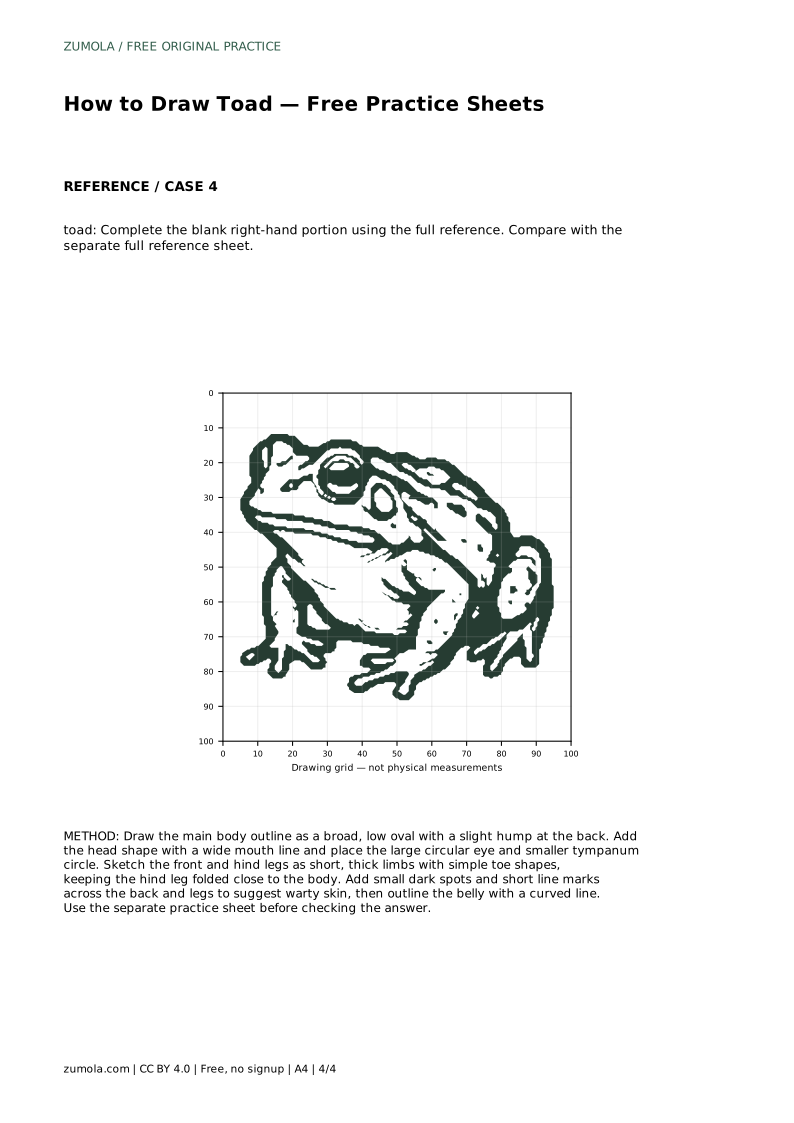
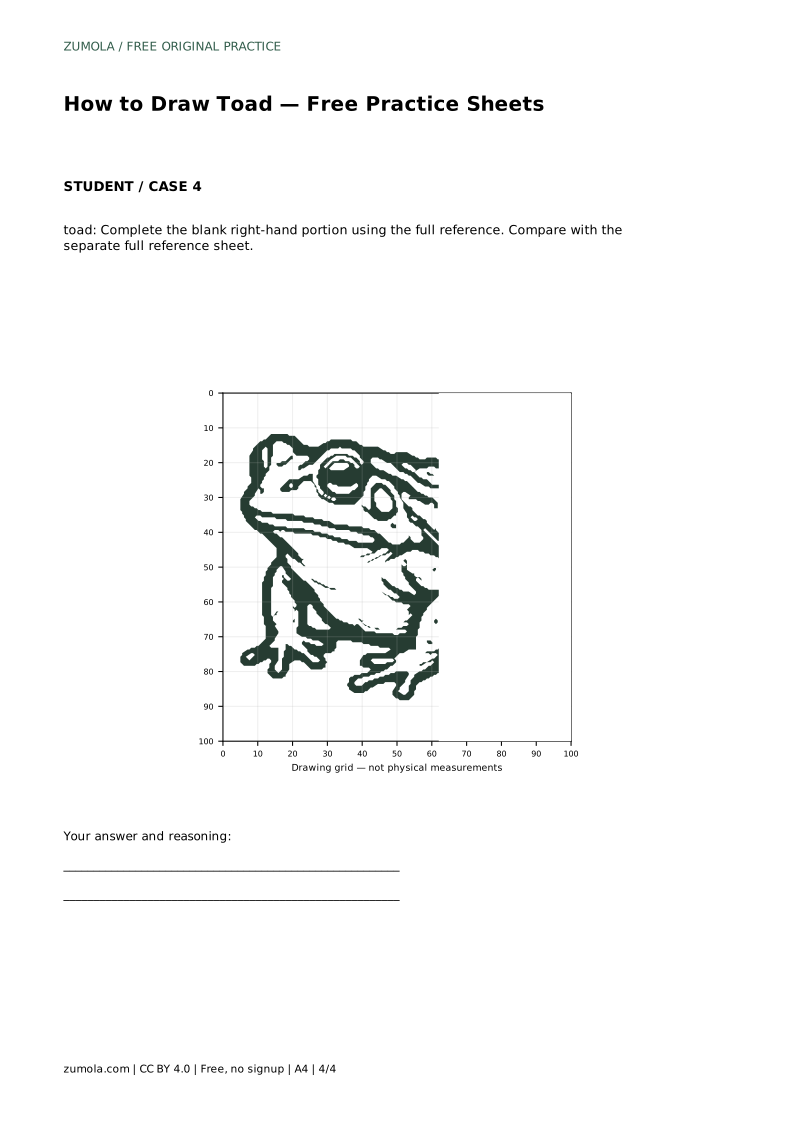
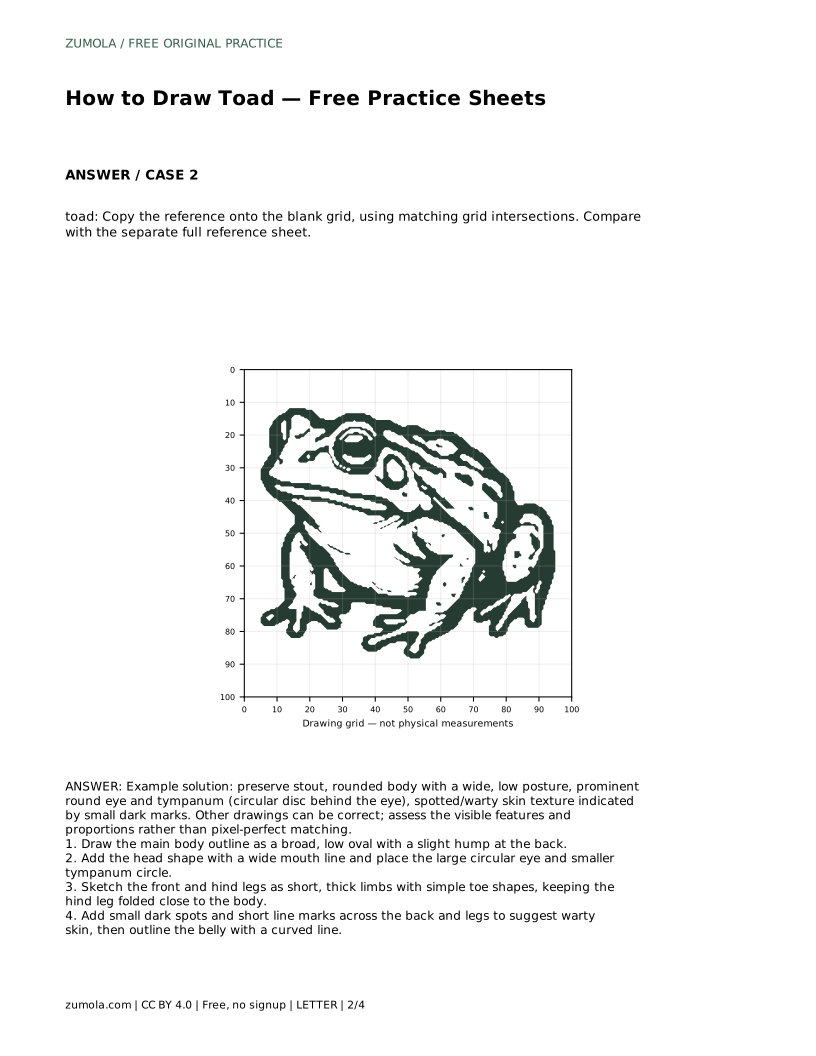
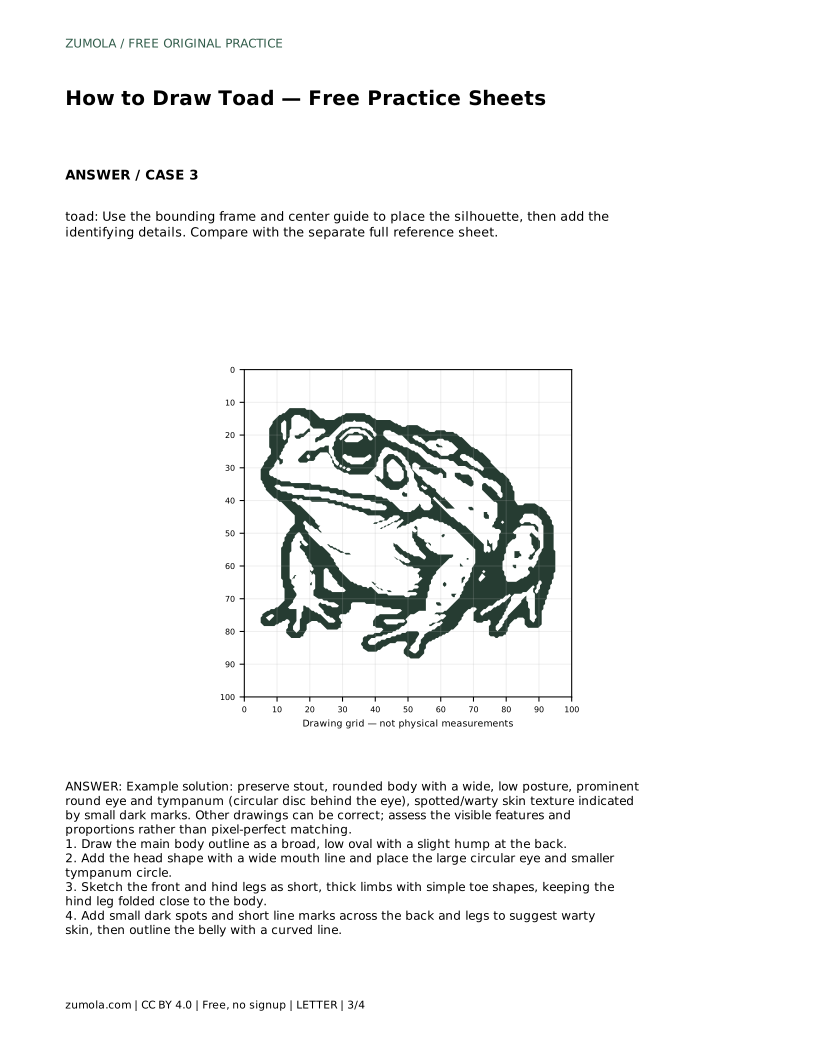
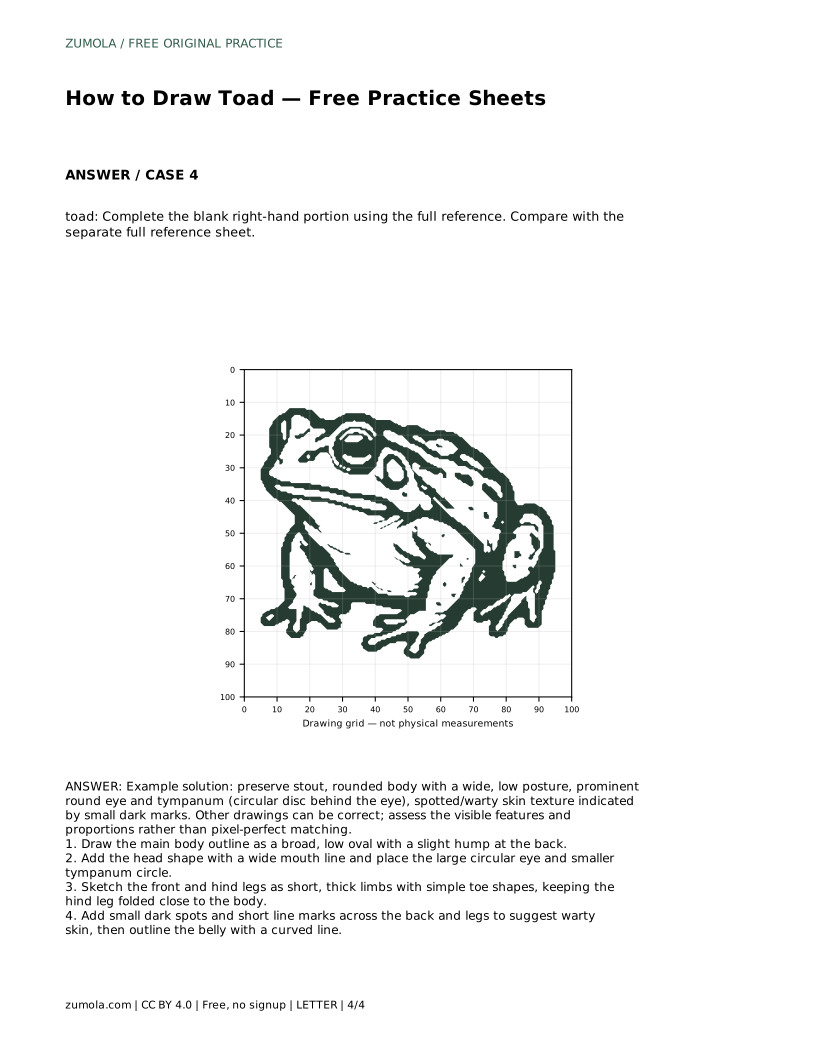
Example solution: preserve stout, rounded body with a wide, low posture, prominent round eye and tympanum (circular disc behind the eye), spotted/warty skin texture indicated by small dark marks. Other drawings can be correct; assess the visible features and proportions rather than pixel-perfect matching. Draw the main body outline as a broad, low oval with a slight hump at the back. Add the head shape with a wide mouth line and place the large circular eye and smaller tympanum circle. Sketch the front and hind legs as short, thick limbs with simple toe shapes, keeping the hind leg folded close to the body. Add small dark spots and short line marks across the back and legs to suggest warty skin, then outline the belly with a curved line.
No. A few small dark spots and short line marks are enough to suggest warty skin. The drawing should read as a toad from its body shape, eye, tympanum, and folded legs.
The tympanum is a circular disc behind the eye. Draw it as a smaller circle just behind and slightly below the large eye circle.
Check the visible features and proportions instead of pixel-perfect matching. A correct drawing keeps the stout, low body, the wide head, the large eye and smaller tympanum, the folded hind legs, and the spotted skin texture.
All drawing practice · Free coordinate paper
Original resources · CC BY 4.0 · Free for personal and classroom use with attribution.