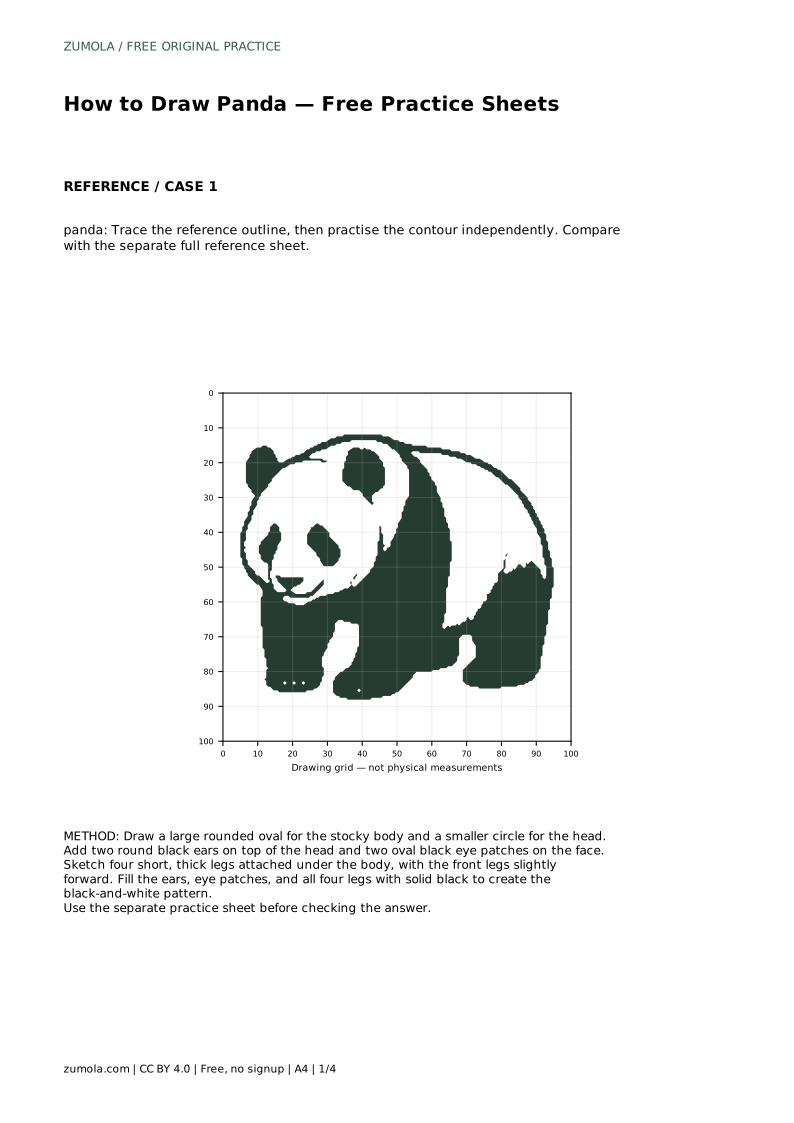
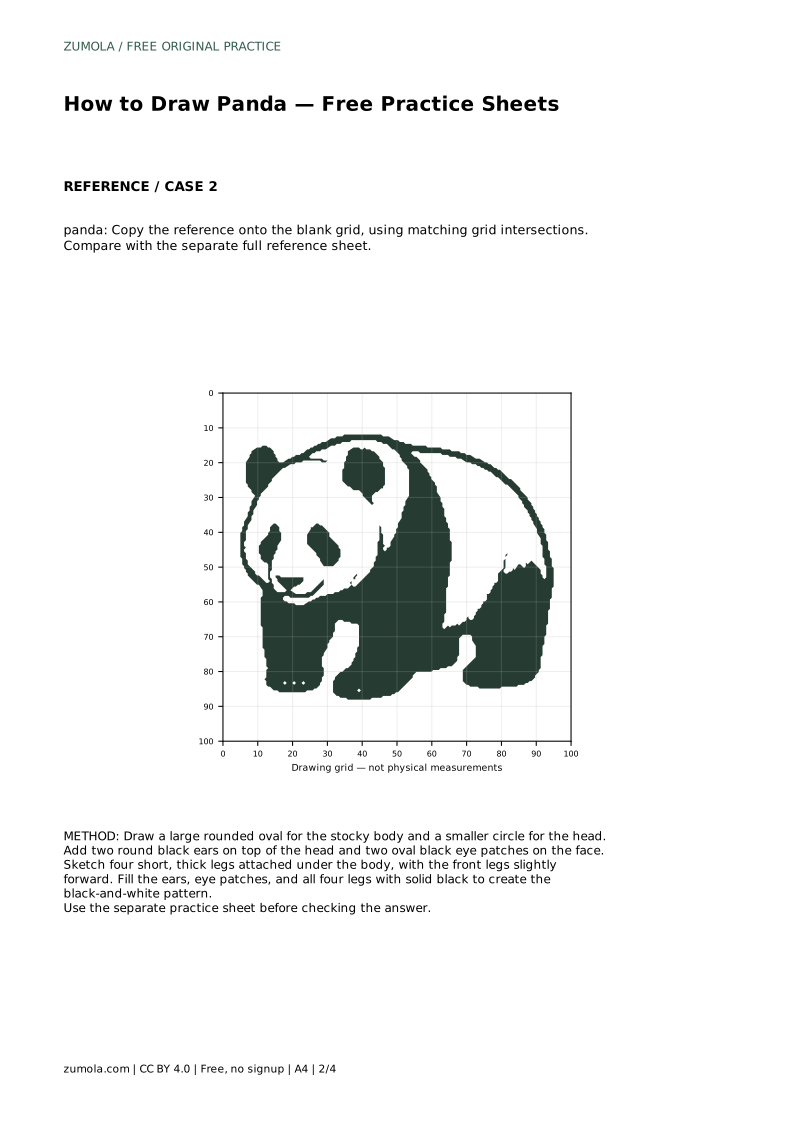
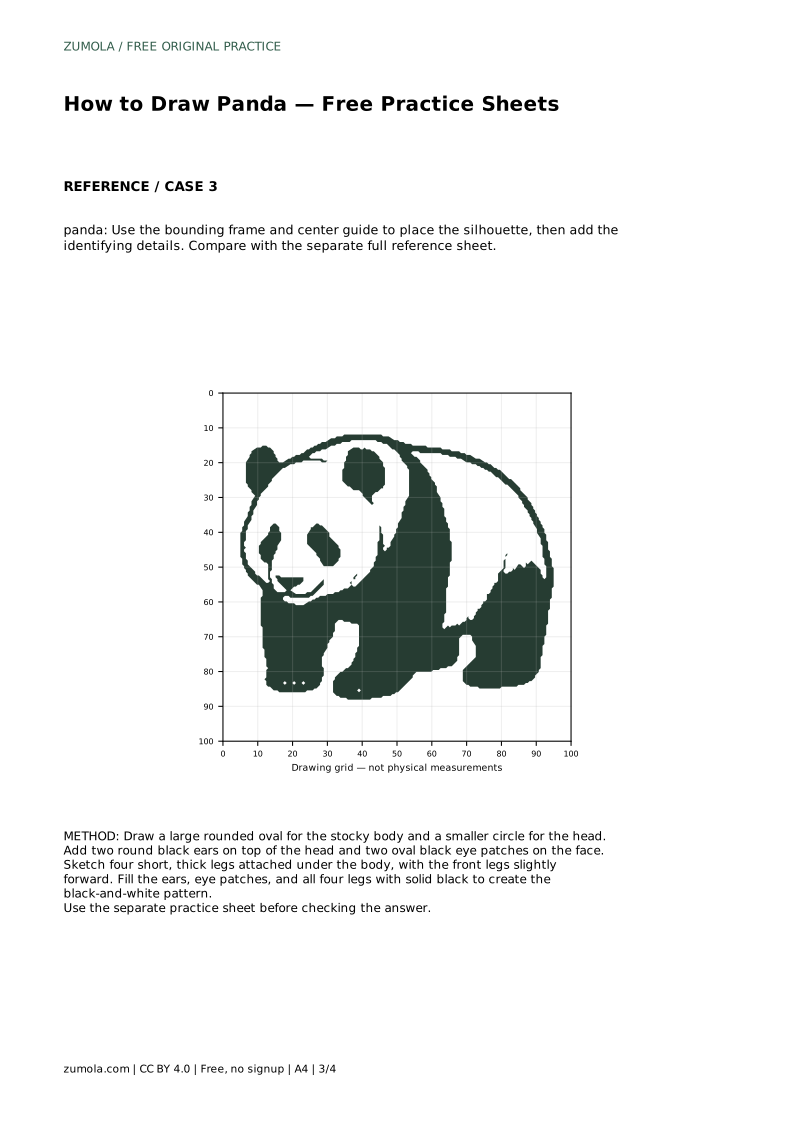
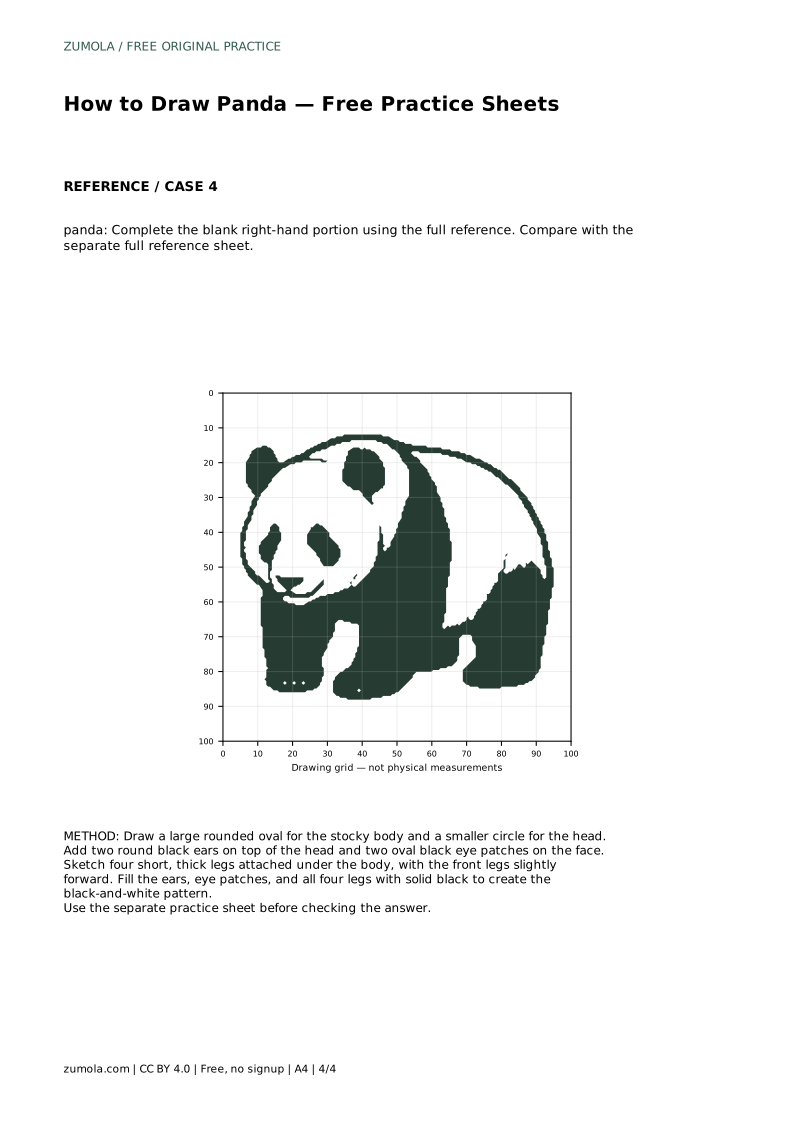
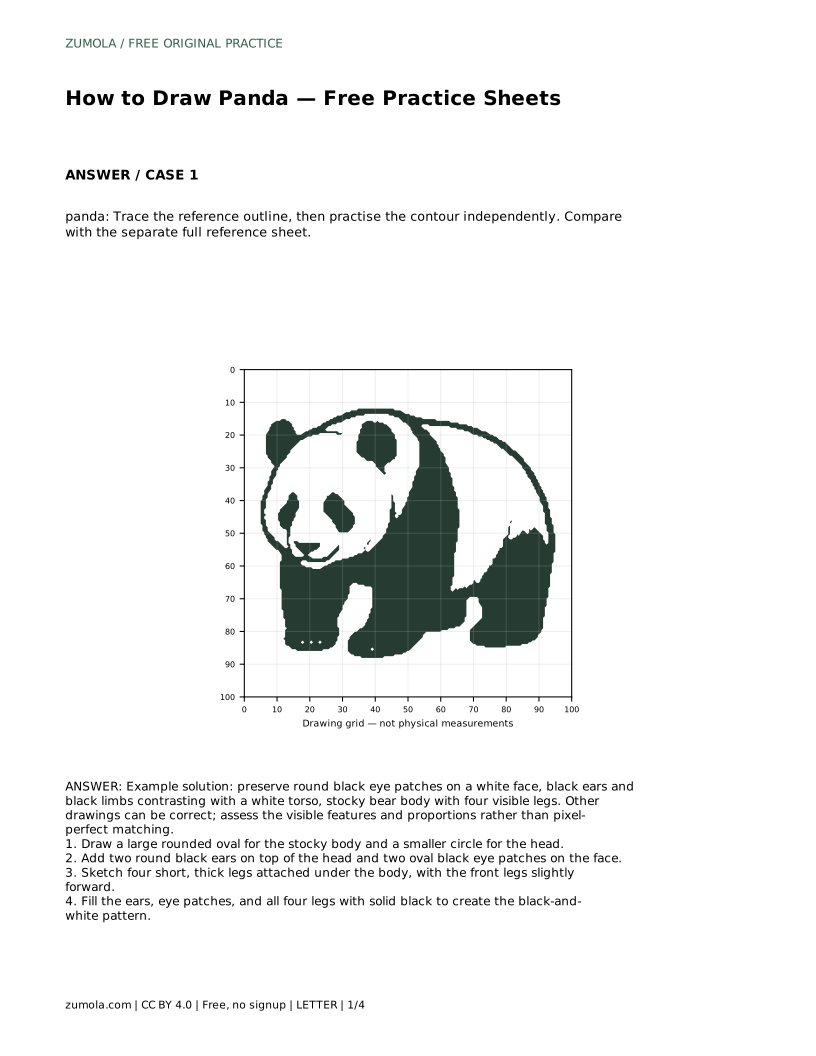
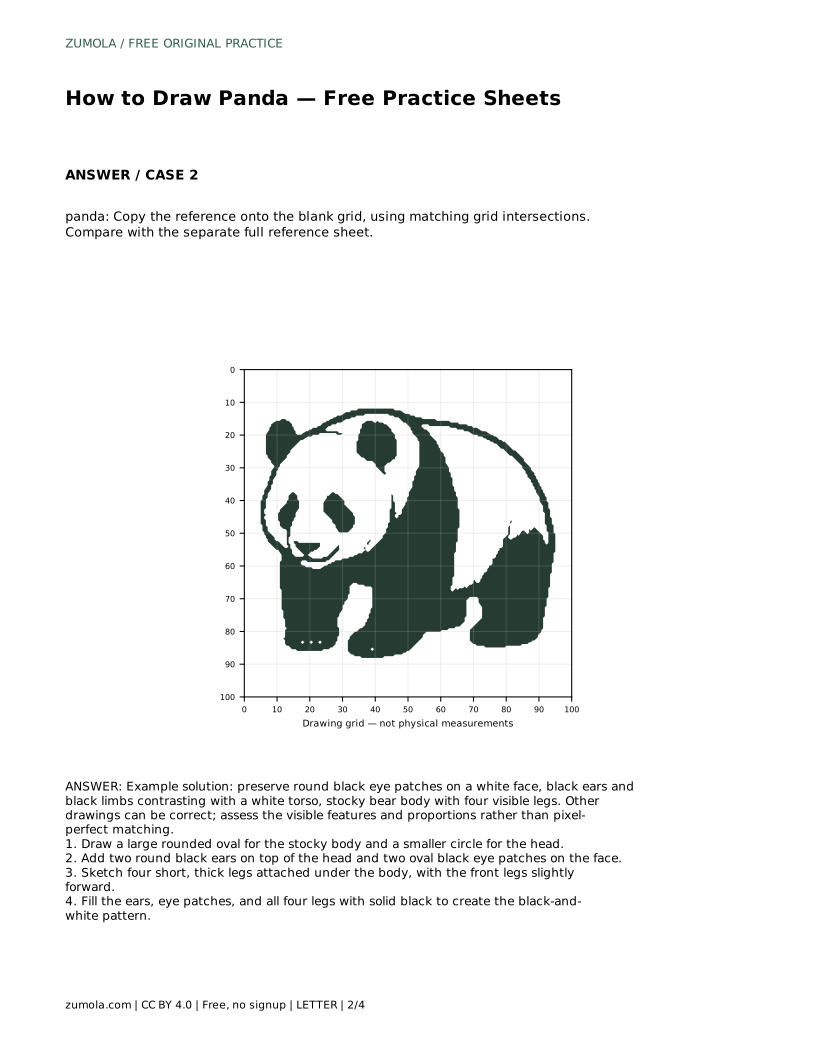
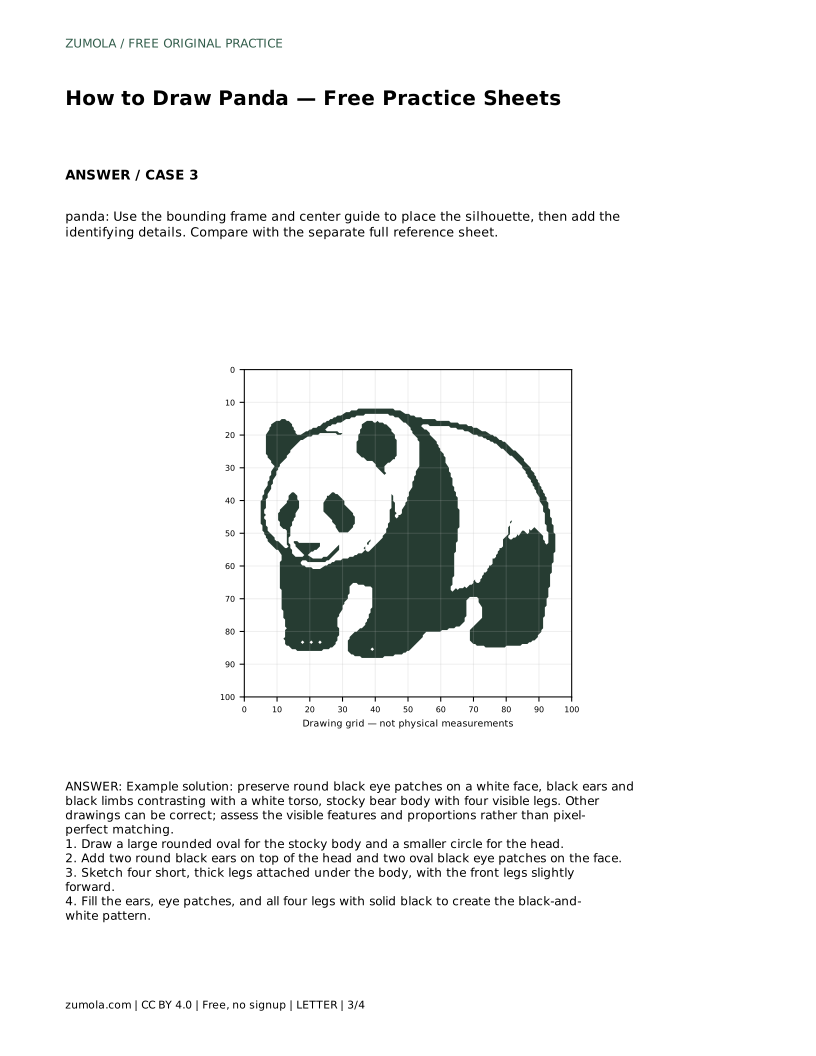
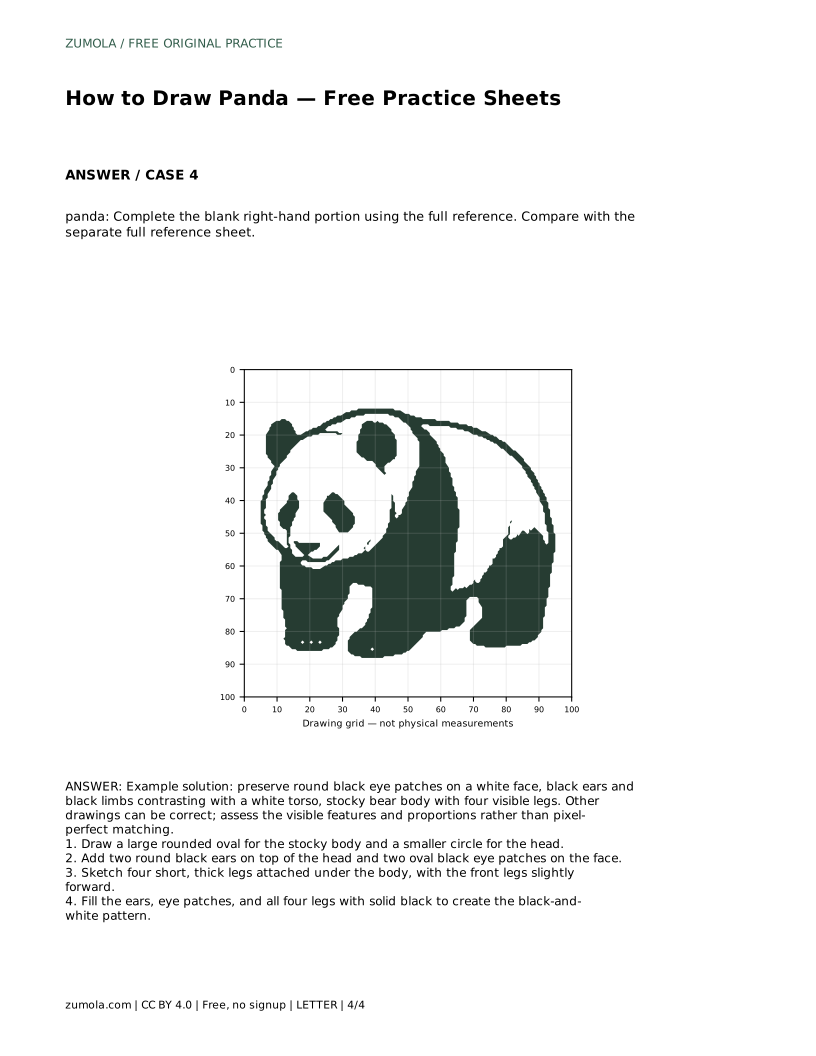
Reference diagrams
LETTER · Download PDF
A4 · Download PDF
Free original resources
Learn to draw a panda with bamboo using tracing, grid, and frame guides. Free printable practice sheets help you build the silhouette and black-and-white pattern.
Four original cases, with reference diagrams, practice sheets and worked answers. Everything is free; no signup required.
LETTER · Download PDF
A4 · Download PDF
LETTER · Download PDF
A4 · Download PDF
LETTER · Download PDF
A4 · Download PDF
Use A4 or US Letter to match your printer. Use the stated values and conditions to solve each exercise; diagrams are not physical measuring rulers.
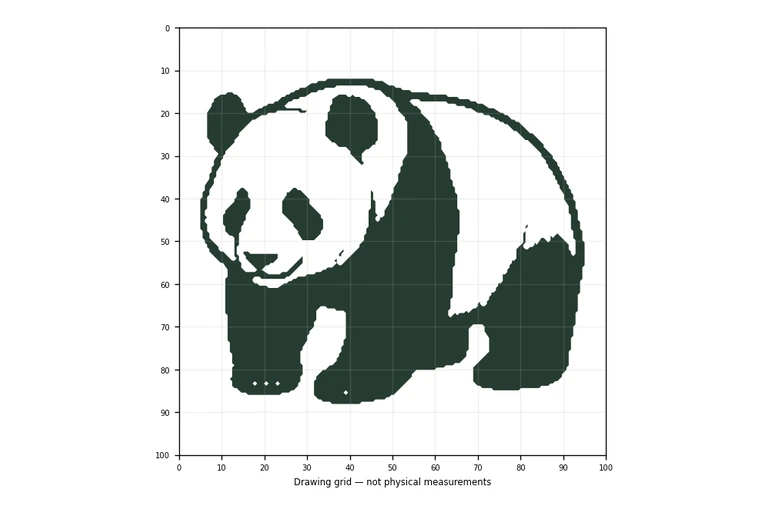
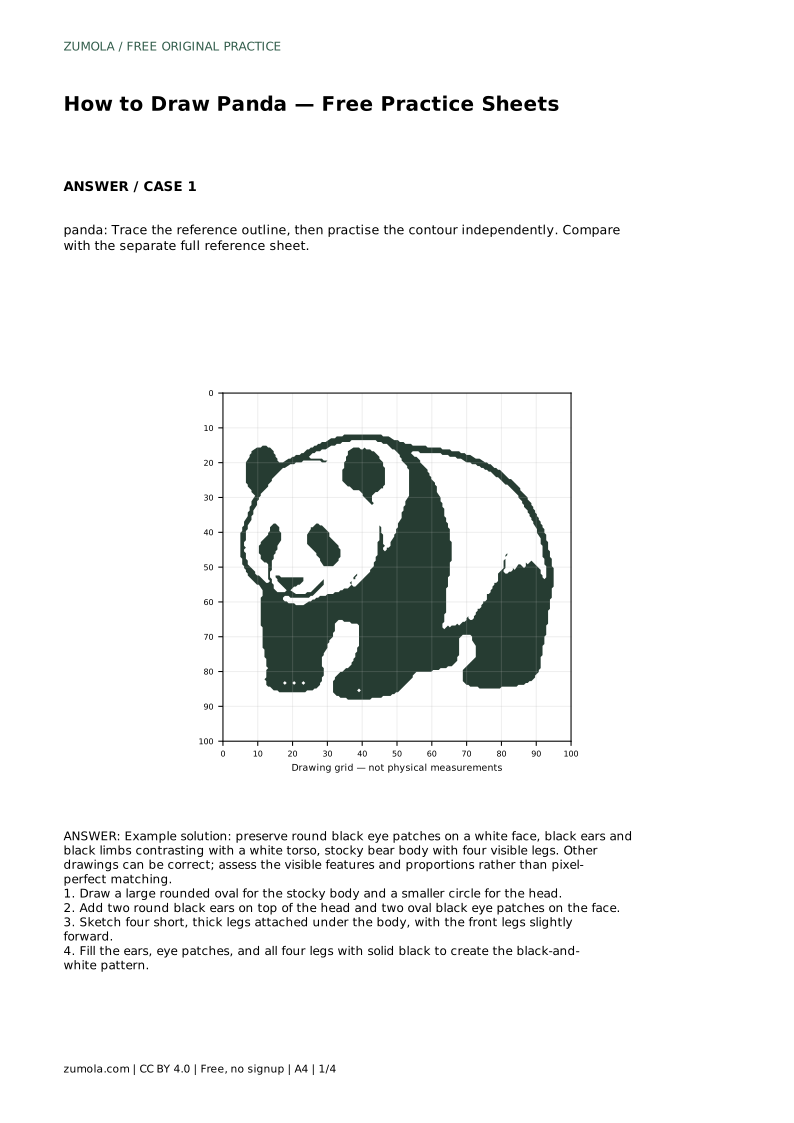
Drawing a panda with bamboo is a satisfying project because the panda's bold black-and-white pattern and rounded body are easy to recognize. This page explains how to use the free practice sheets to develop the contour, place the bamboo, and check your work against a full reference. You will focus on the stocky bear body, four visible legs, round ears, and oval eye patches. The bamboo adds a vertical element that helps frame the panda. Work through the guided cases in order, then try the blank grid or frame to test your understanding.
Begin by drawing a large rounded oval for the stocky body. Pandas have a heavy, bear-like torso, so keep the oval wide rather than tall. Add a smaller circle for the head above the body, overlapping slightly so the neck area connects naturally. The head should be noticeably smaller than the body but still large enough to hold the eye patches and ears.
Next, place two round black ears on top of the head. They sit on the upper curve, spaced apart with a gap between them. On the face, draw two oval black eye patches. These patches are angled slightly downward toward the nose, giving the panda its characteristic gentle expression. Keep the patches rounded, not sharp or rectangular.
Sketch four short, thick legs attached under the body. The front legs should be slightly forward, as if the panda is reaching toward the bamboo. Keep the legs close together and sturdy; pandas do not have long, slender limbs. Each leg ends in a rounded paw, which you can leave simple or add small toe lines.
For the bamboo, draw a vertical stalk beside the panda, usually on the right or left depending on your composition. Bamboo is segmented: draw a straight line for the stalk, then add horizontal lines at intervals to mark the nodes. Add a few narrow leaves branching from the nodes. The bamboo should be taller than the panda's head to create a natural frame. Keep the stalk thin compared to the panda's body so the animal remains the focus.
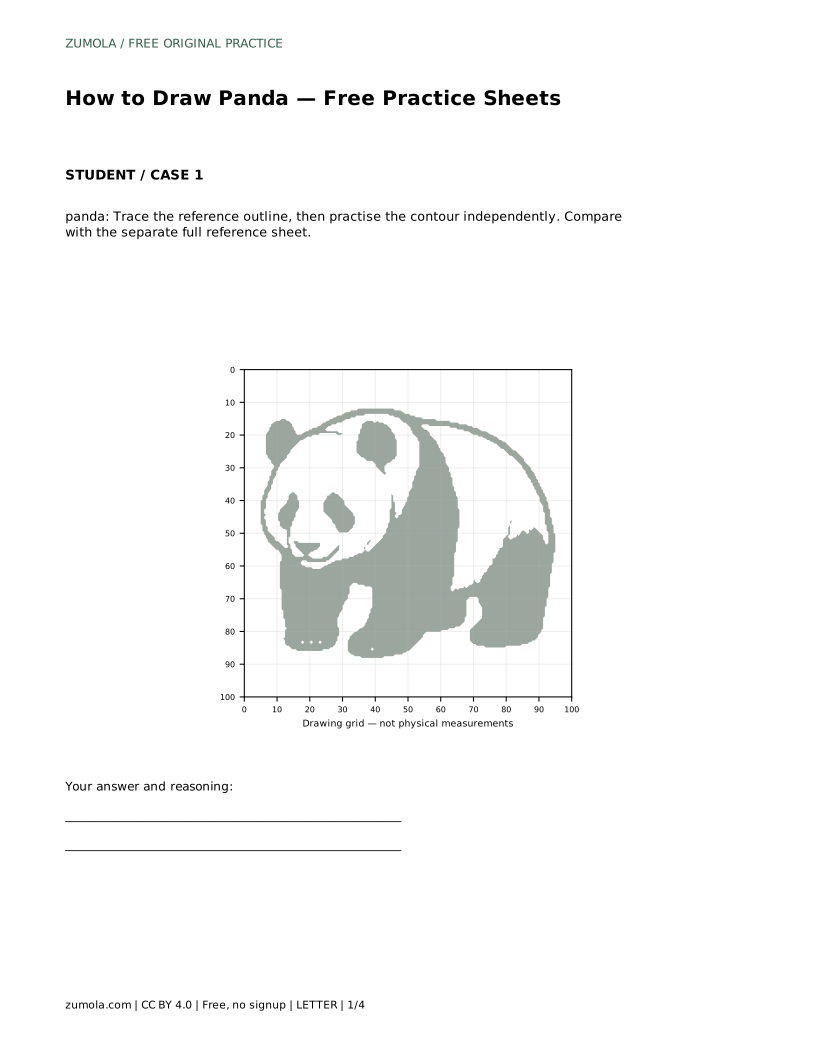
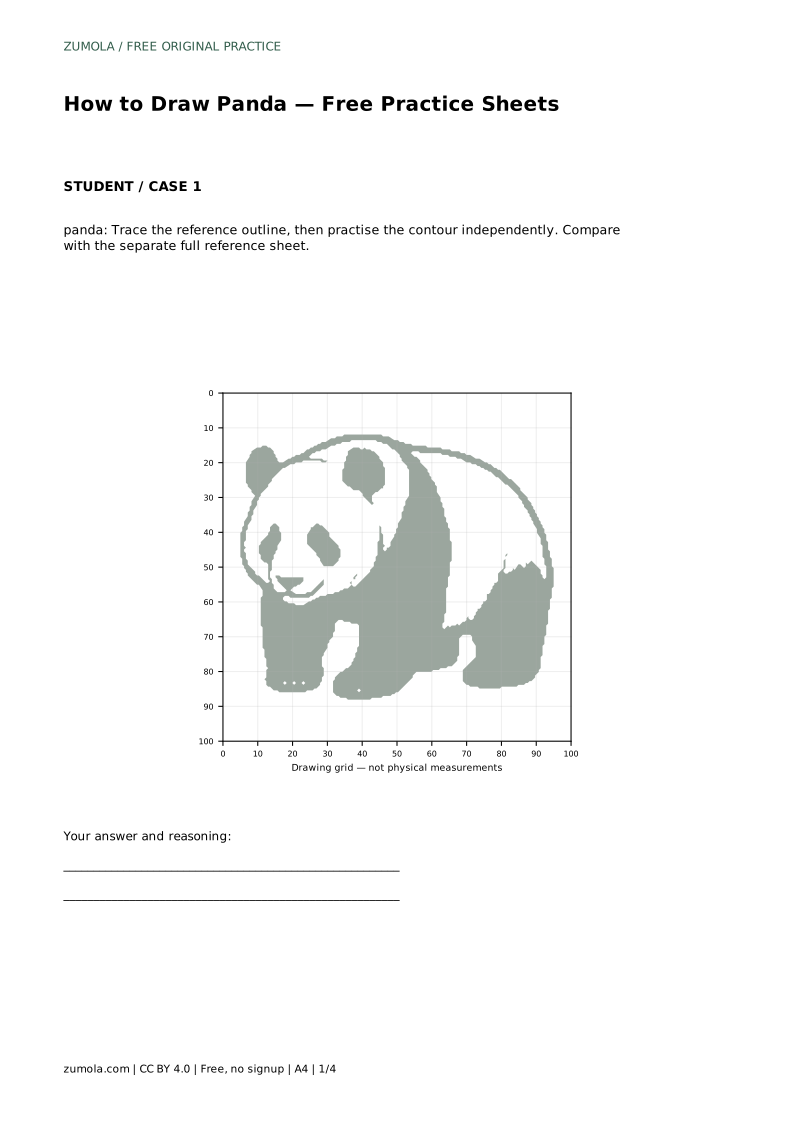
Fill the ears, eye patches, and all four legs with solid black. The torso and face remain white. This contrast is the panda's defining feature, so keep the black areas clean and distinct. Avoid shading the white areas with gray; leave them open. If you are using the tracing sheet, follow the reference outline first, then try the contour independently on a blank sheet. Compare your drawing with the separate full reference sheet to check the roundness of the eye patches and the stockiness of the body.
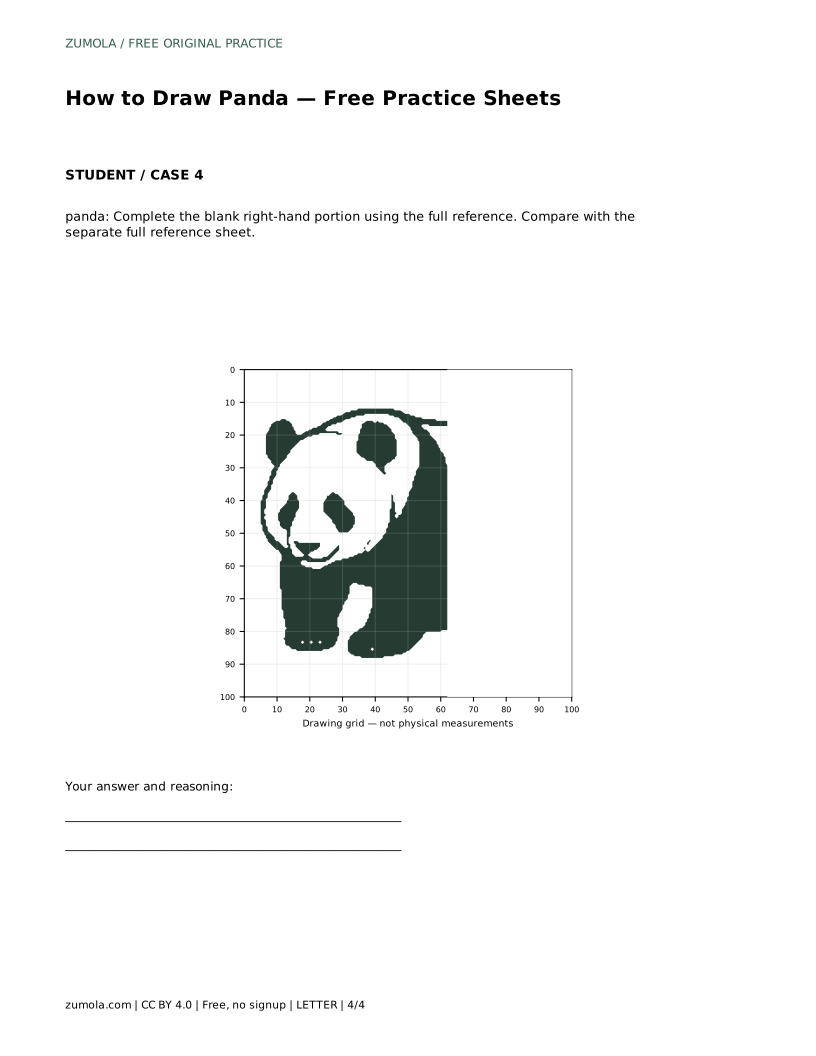
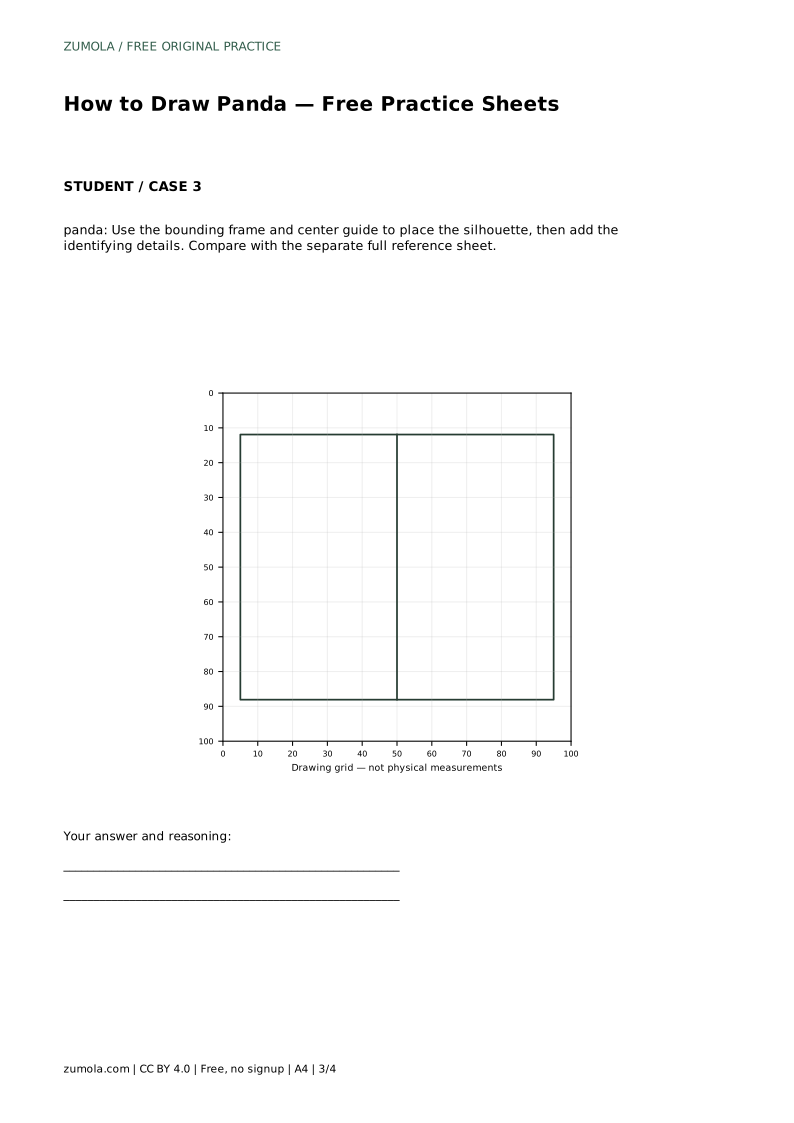
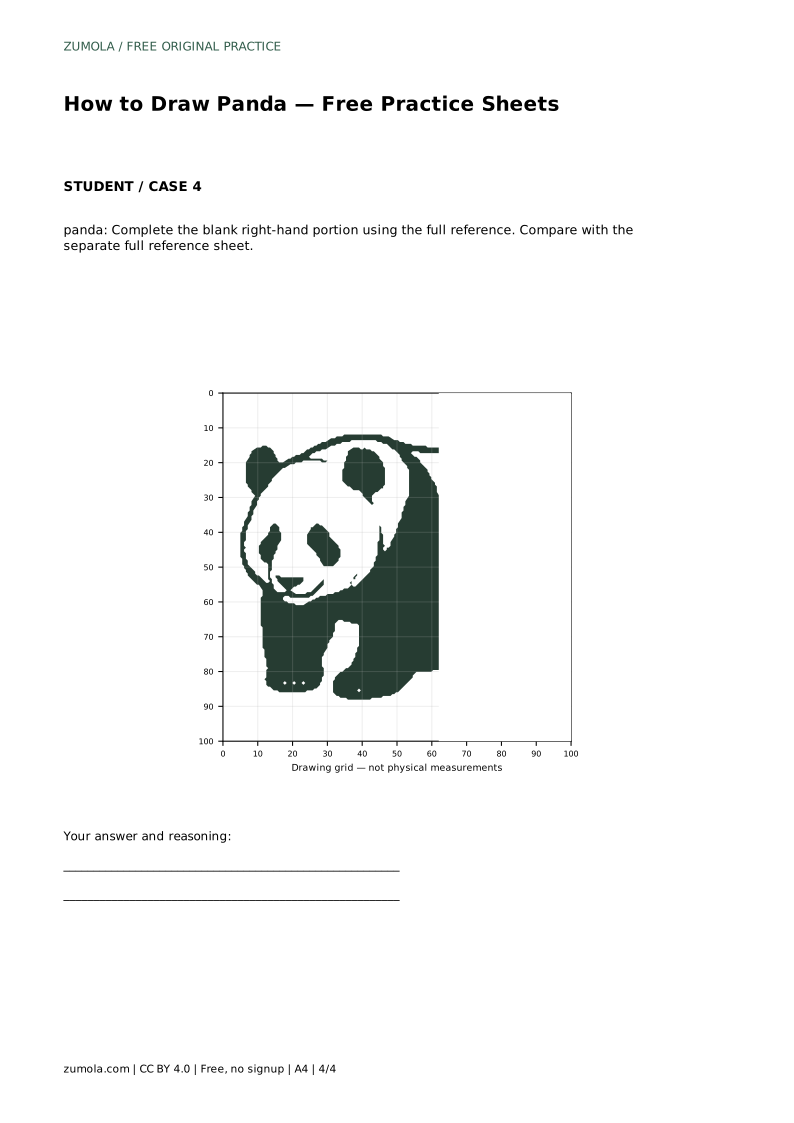
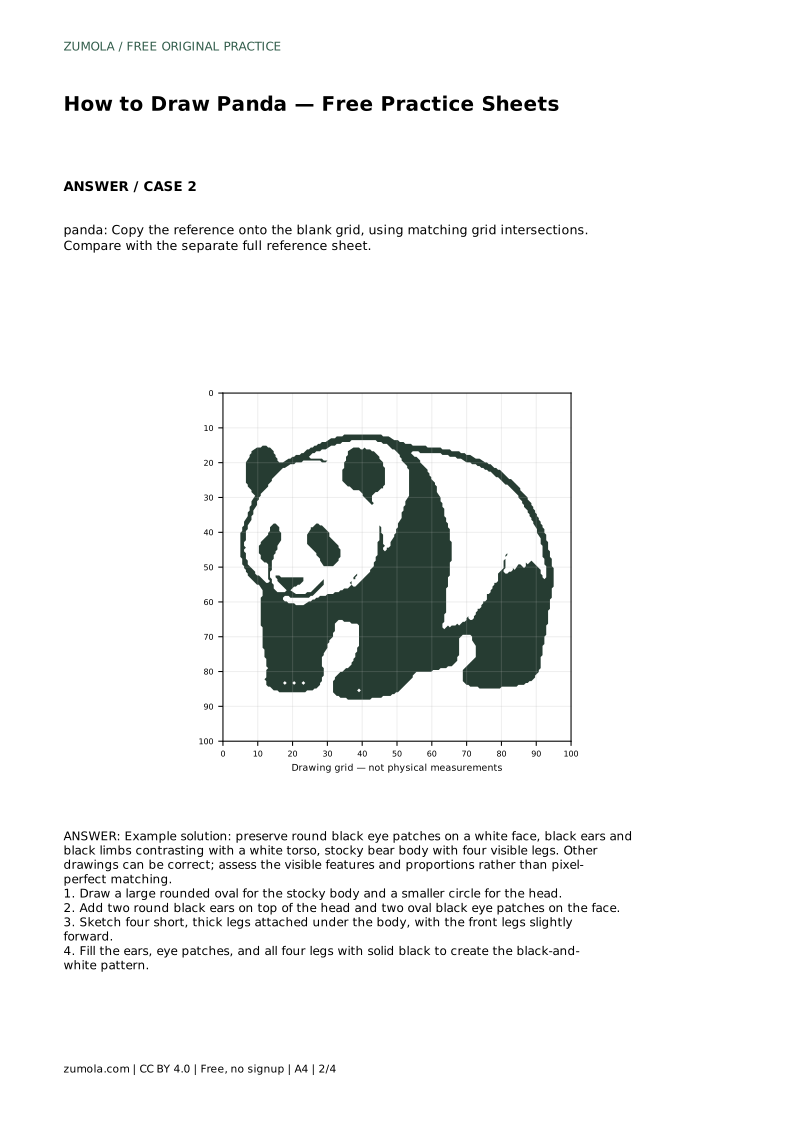
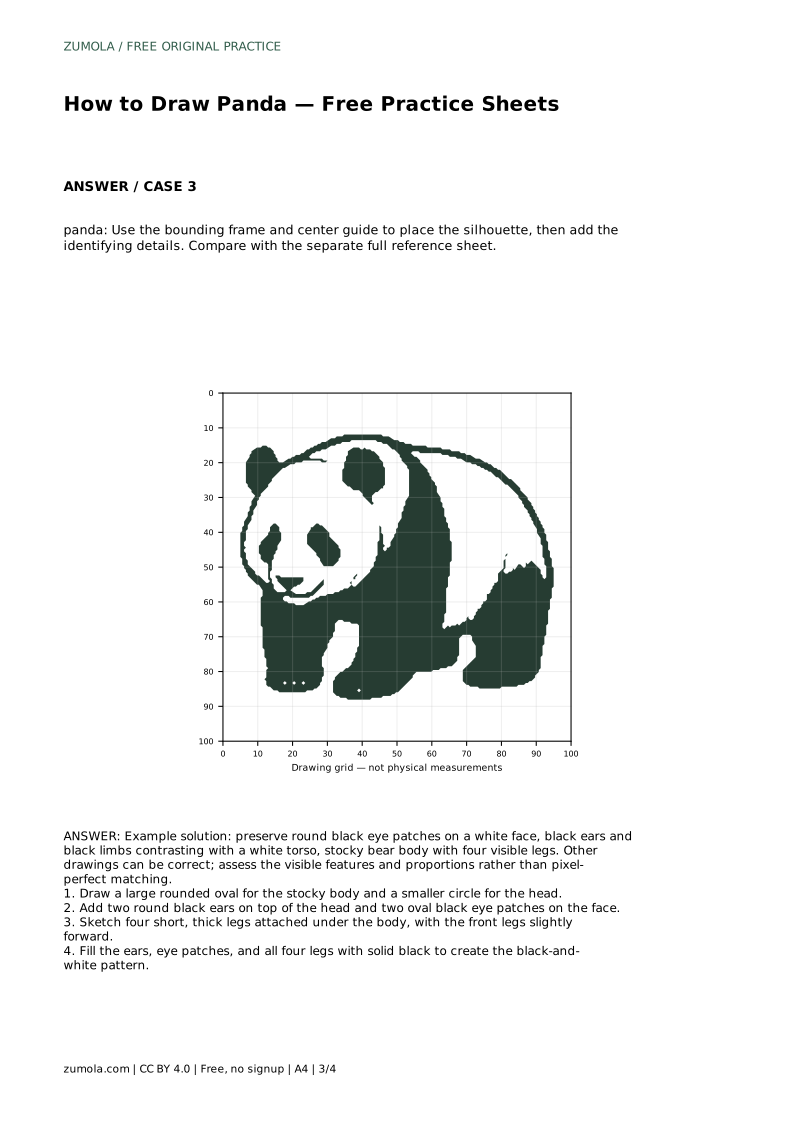
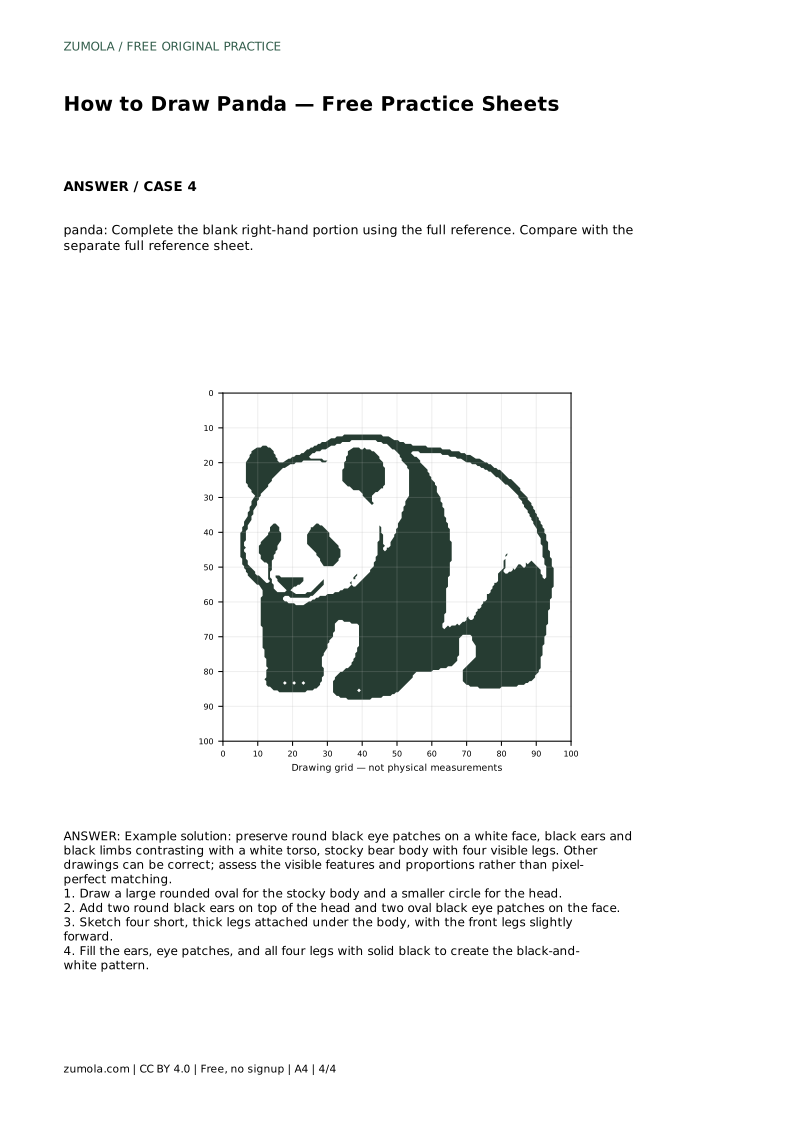
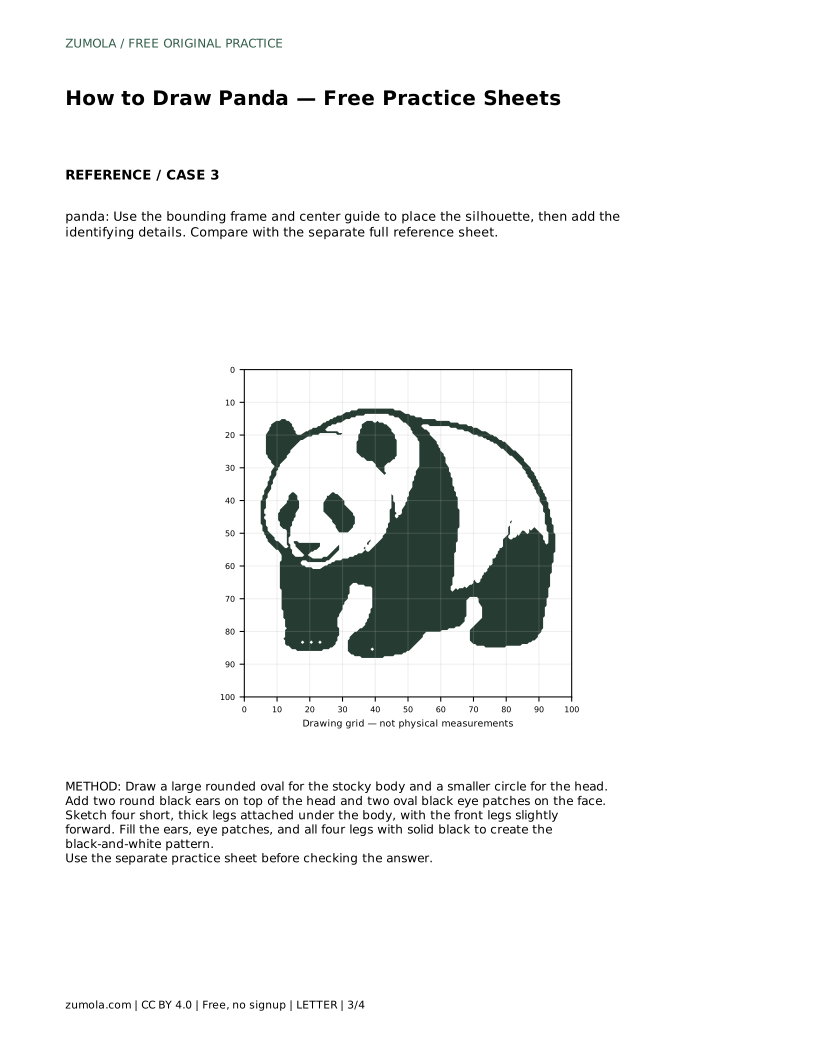
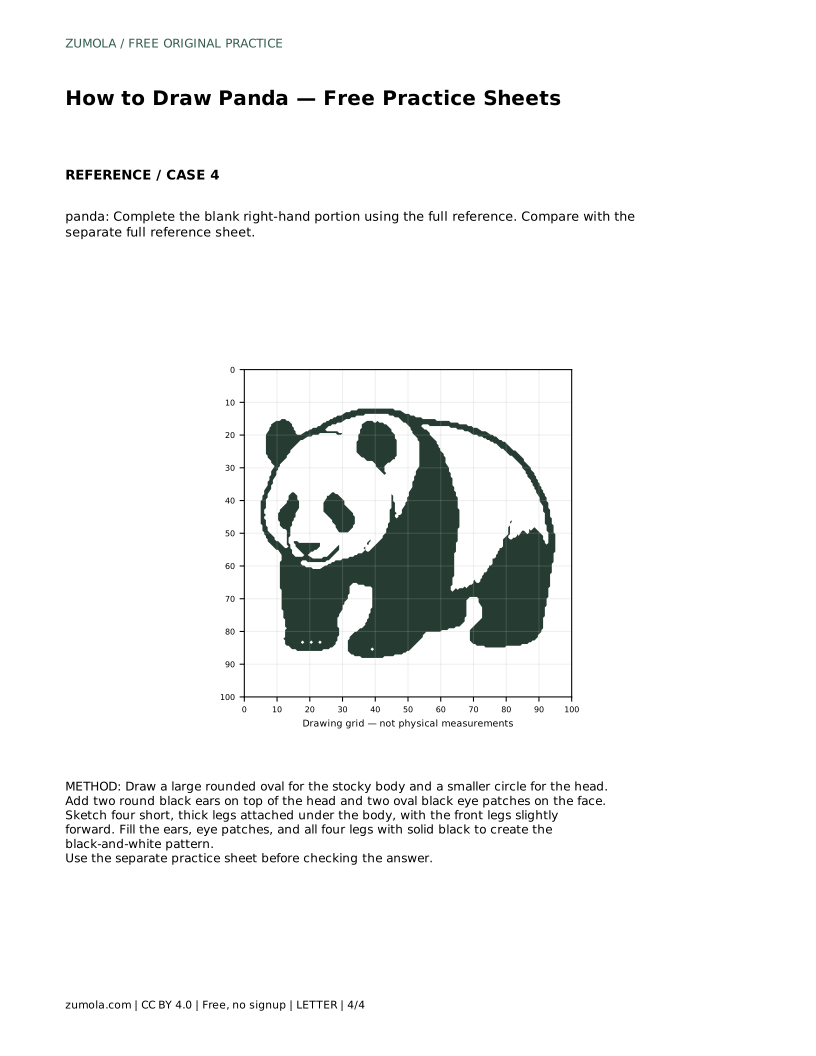
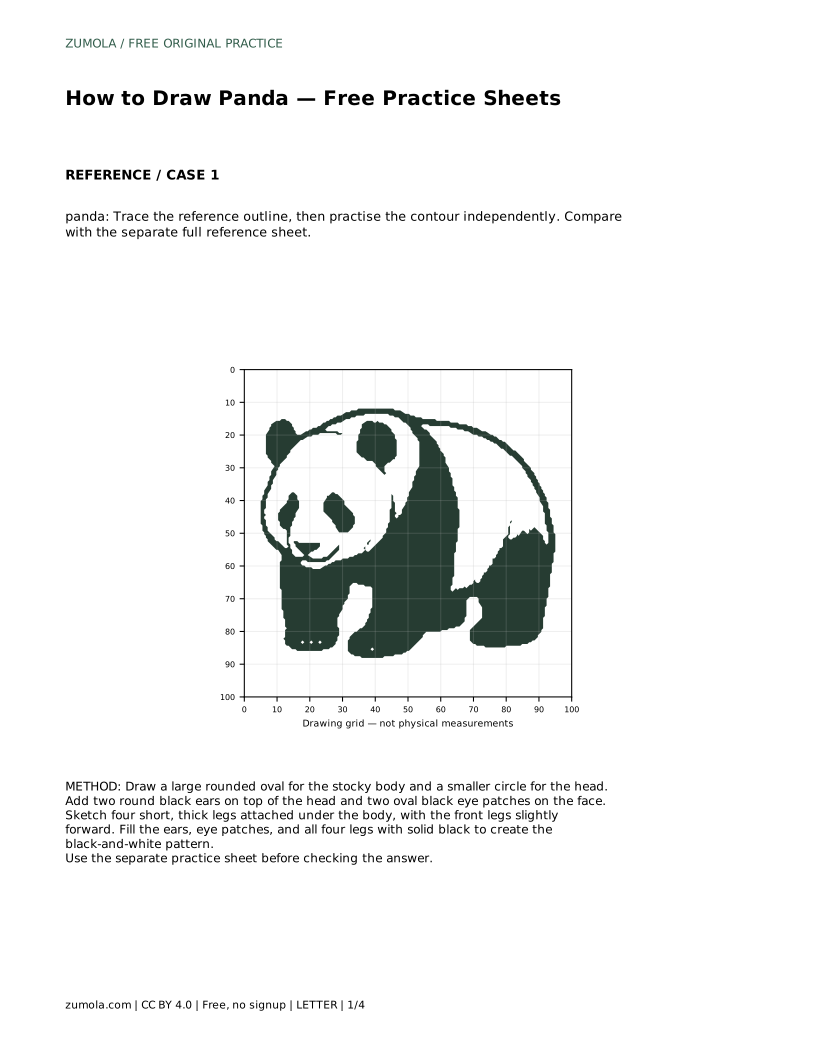
Use the grid or frame sheets to practice placement. On the grid, copy the reference onto the blank grid by matching grid intersections. On the frame sheet, use the bounding frame and center guide to place the silhouette before adding details. The half-sheet case asks you to complete the blank right-hand portion using the full reference. In every case, assess the visible features and proportions rather than pixel-perfect matching. Multiple valid outcomes exist, so use the rubric to guide your self-check.
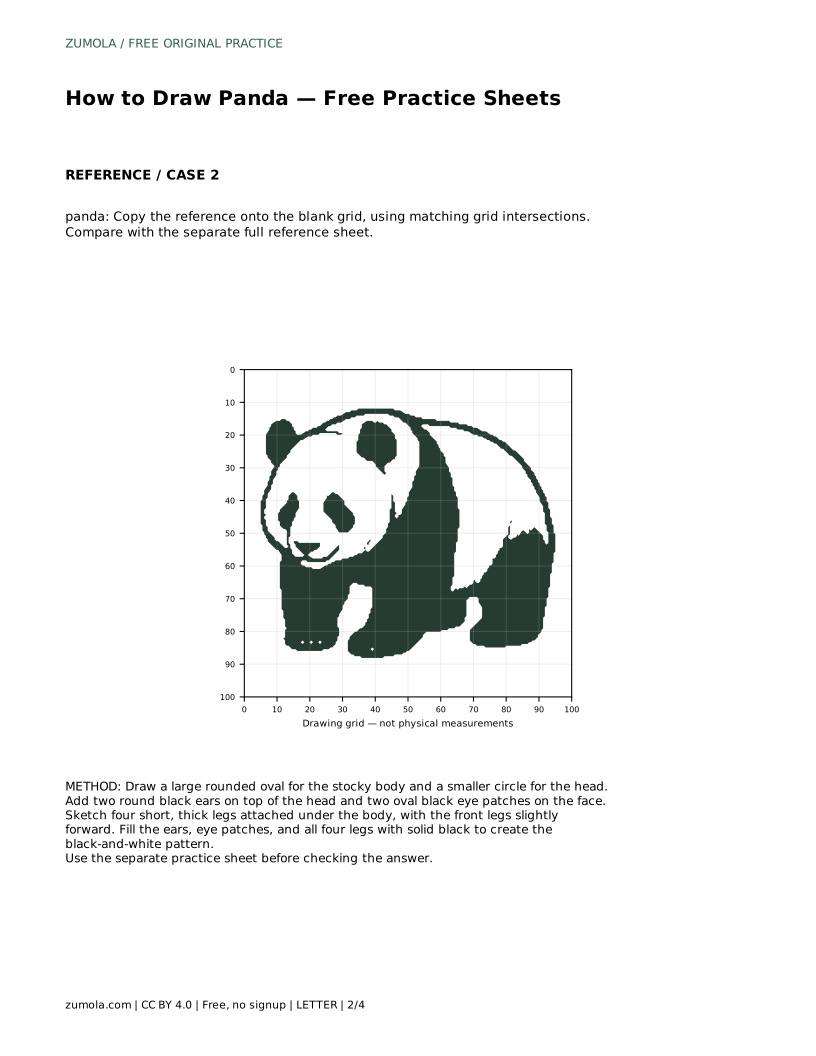
panda: Trace the reference outline, then practise the contour independently. Compare with the separate full reference sheet.
Example solution: preserve round black eye patches on a white face, black ears and black limbs contrasting with a white torso, stocky bear body with four visible legs. Other drawings can be correct; assess the visible features and proportions rather than pixel-perfect matching. Draw a large rounded oval for the stocky body and a smaller circle for the head. Add two round black ears on top of the head and two oval black eye patches on the face. Sketch four short, thick legs attached under the body, with the front legs slightly forward. Fill the ears, eye patches, and all four legs with solid black to create the black-and-white pattern.
Draw the panda's body and head first, then add the bamboo stalk beside it. This order helps you judge the panda's size and keep the bamboo proportional.
Show four visible legs. Pandas have four legs, and in a side or three-quarter view, all four can be drawn under the body with the front legs slightly forward.
Yes. The grid sheet is designed for independent practice. Match the reference to the blank grid by using grid intersections, then compare with the full reference sheet.
All drawing practice · Free coordinate paper
Original resources · CC BY 4.0 · Free for personal and classroom use with attribution.