Reference diagrams
LETTER · Download PDF
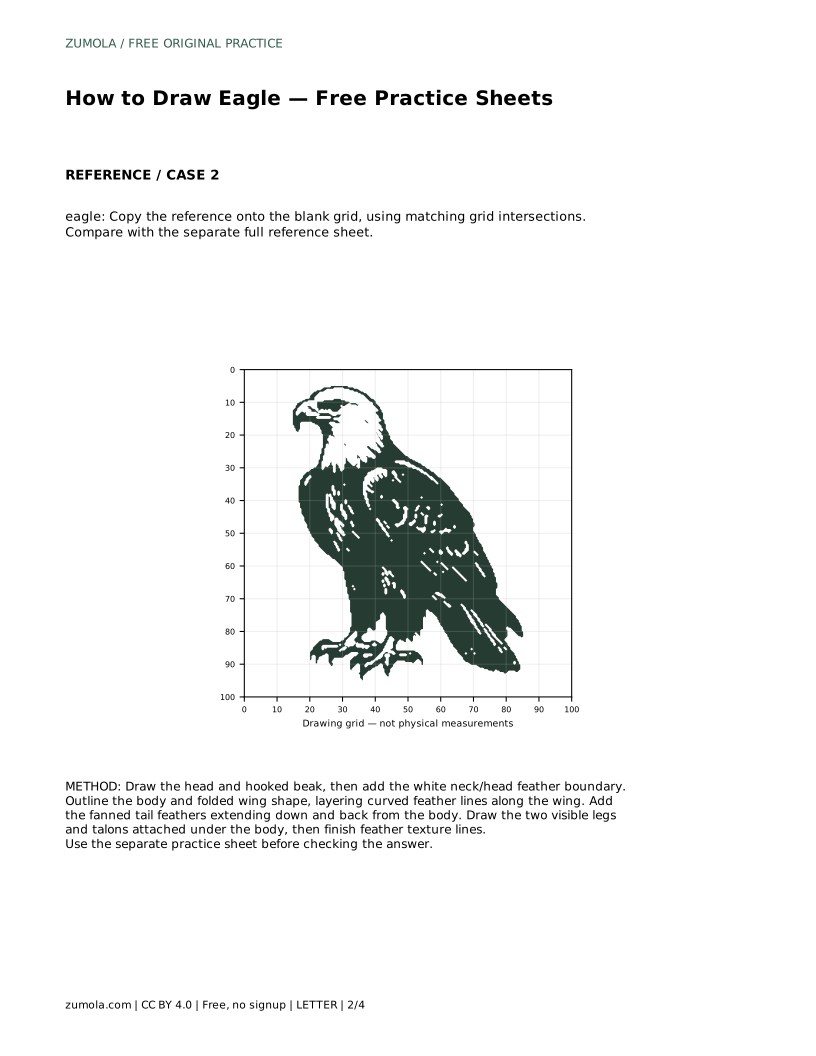
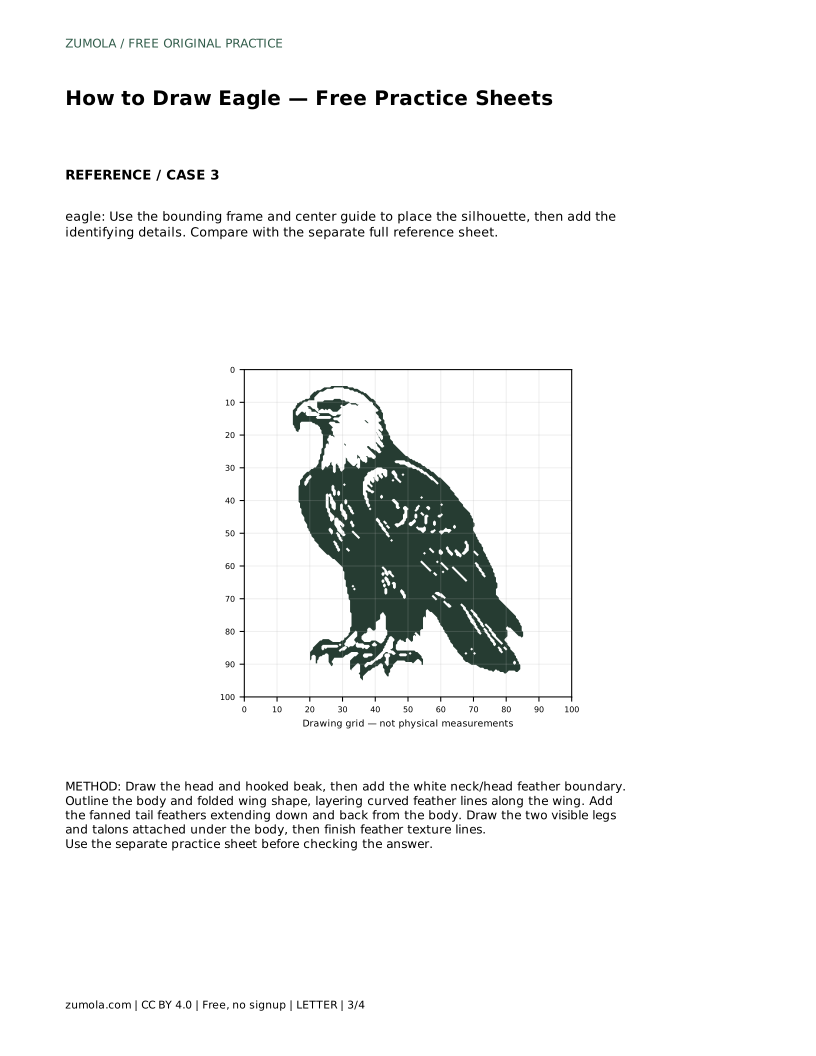
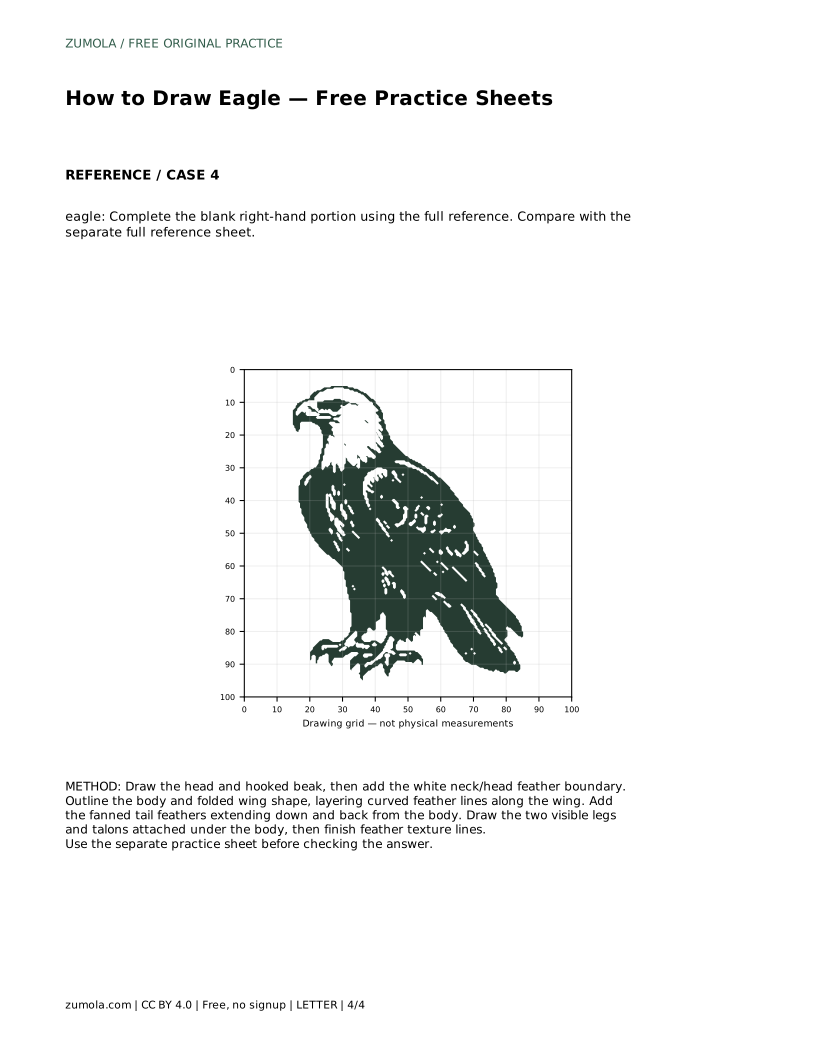
A4 · Download PDF
Free original resources
Learn to draw an eagle by tracing its outline, then working independently. Practise the hooked beak, folded wings, fanned tail and talons with free sheets.
Four original cases, with reference diagrams, practice sheets and worked answers. Everything is free; no signup required.
LETTER · Download PDF
A4 · Download PDF
LETTER · Download PDF
A4 · Download PDF
LETTER · Download PDF
A4 · Download PDF
Use A4 or US Letter to match your printer. Use the stated values and conditions to solve each exercise; diagrams are not physical measuring rulers.
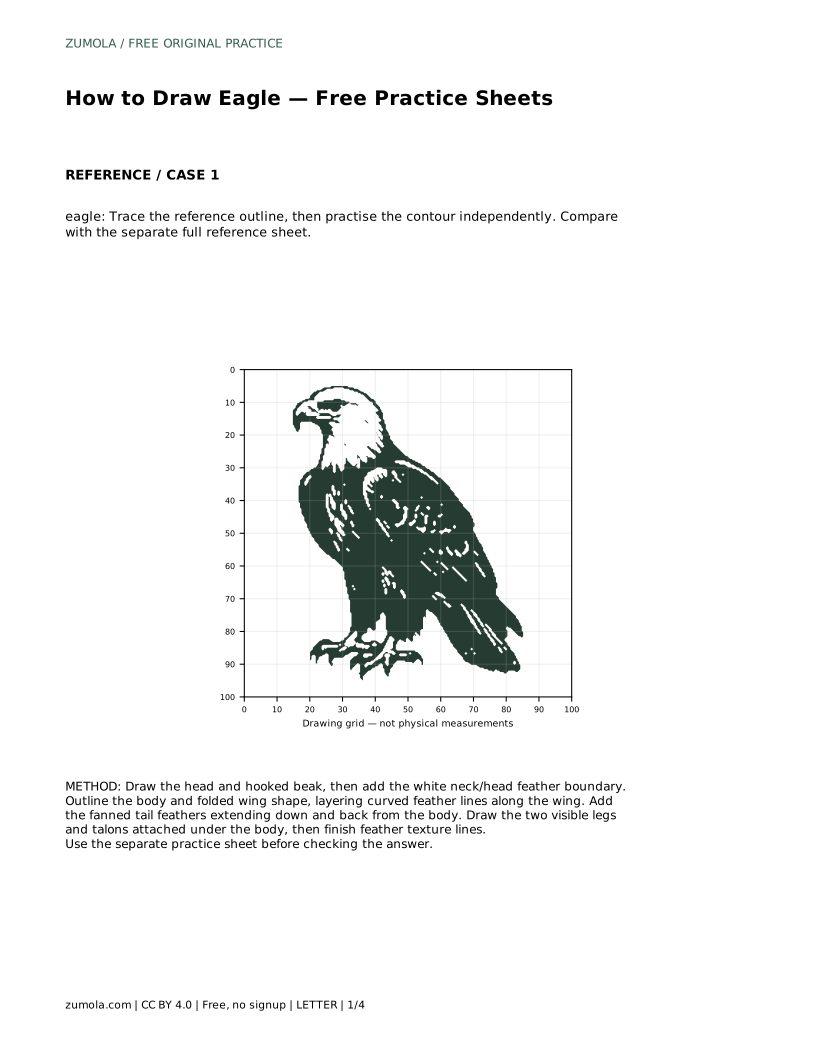
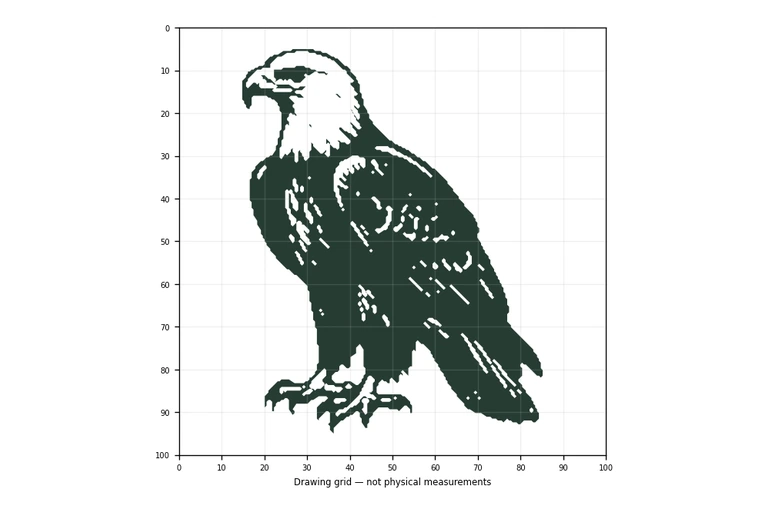
Drawing an eagle is mostly a problem of arranging a few strong shapes in the right order. The hooked beak, the folded wing, the fanned tail and the gripping talons each carry part of the bird's character. This page walks through a tracing exercise first, then asks you to repeat the contour without the guide. Because several drawings can be correct, judge your work by visible features and proportions rather than an exact match.
Begin at the top of the bird. Draw a rounded head shape, then attach the beak as a short, downward-curving hook. The hook should point toward the chest, not straight out. Where the head meets the neck, mark the boundary between the pale head feathers and the darker body. Keep this line simple at first; you can soften it later with small feather strokes.
Check the head against the body before moving on. On most eagle references the head is small relative to the folded wings, so a head drawn too large will make the rest of the bird look cramped.
Outline the body as a broad, slightly tapered shape beneath the head. The folded wings sit against the sides and create the widest part of the silhouette. Draw the wing edge as one long curve, then layer shorter curved lines inside it to suggest overlapping feathers. Feather lines should follow the direction the wing folds, running roughly from shoulder toward tail.
Keep the layers uneven. Real feather rows vary in length, and a few longer lines among shorter ones read more naturally than evenly spaced stripes.
The fanned tail extends down and back from the body. Draw it as a set of overlapping feather shapes spreading outward, wider at the end than at the base. Then place the two visible legs under the body, each ending in a foot with curved talons. Talons should curve inward as though gripping a branch.
Finish with light feather texture across the body and tail. Stop adding lines once the main shapes read clearly; too much texture can flatten the form.
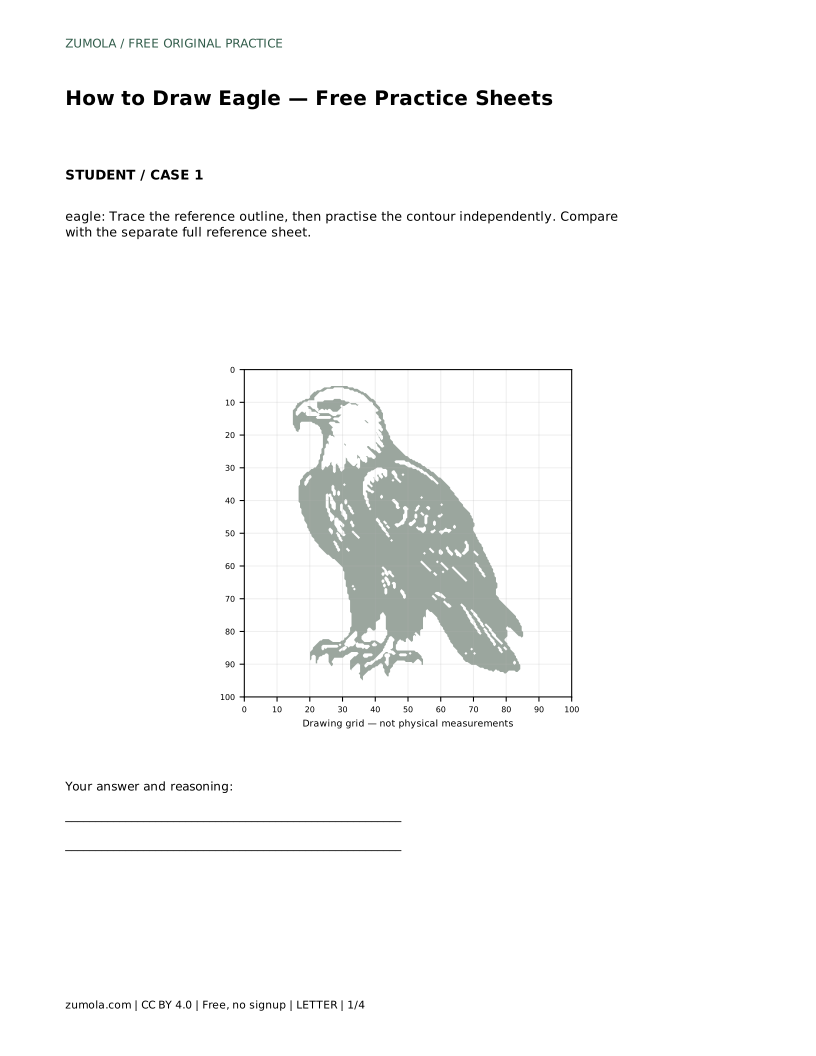
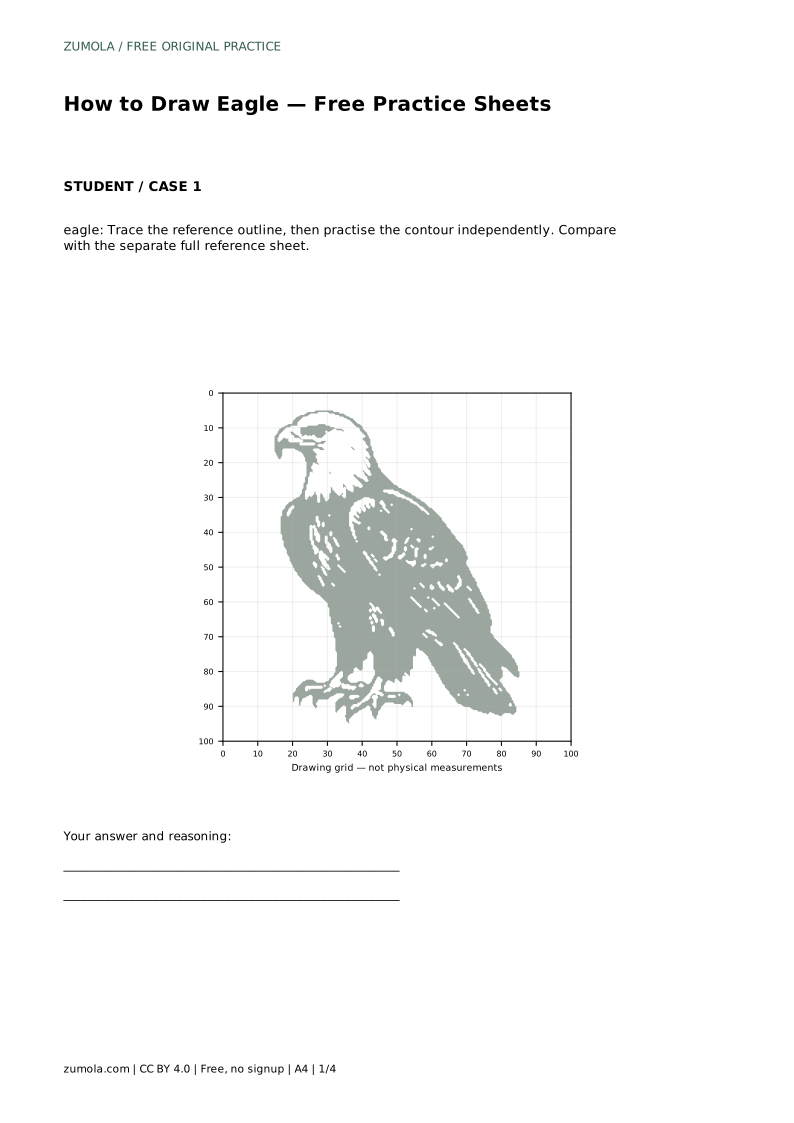
After tracing the reference outline, set the traced sheet aside and redraw the eagle on a blank page. Compare your independent drawing with the separate full reference sheet, not with your traced copy. Look for the hooked beak, the layered folded wing, the fanned tail and the talons. If one feature is missing or misplaced, redraw just that part rather than starting over.
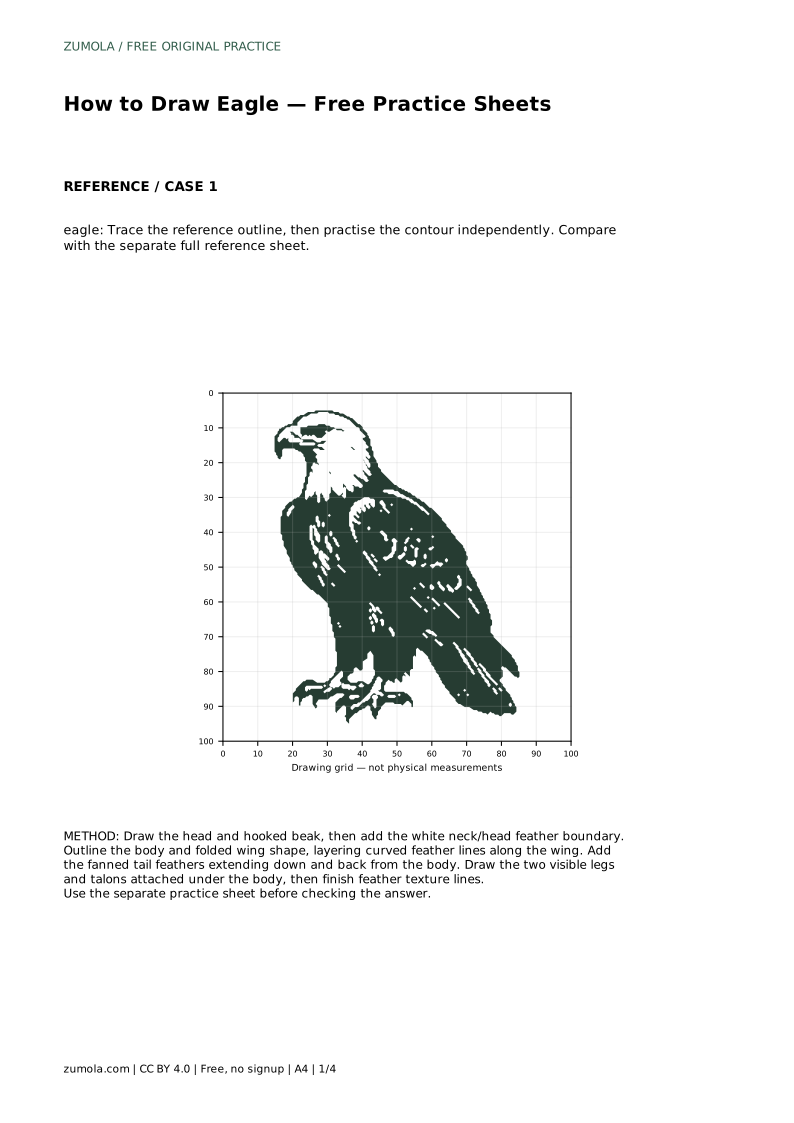
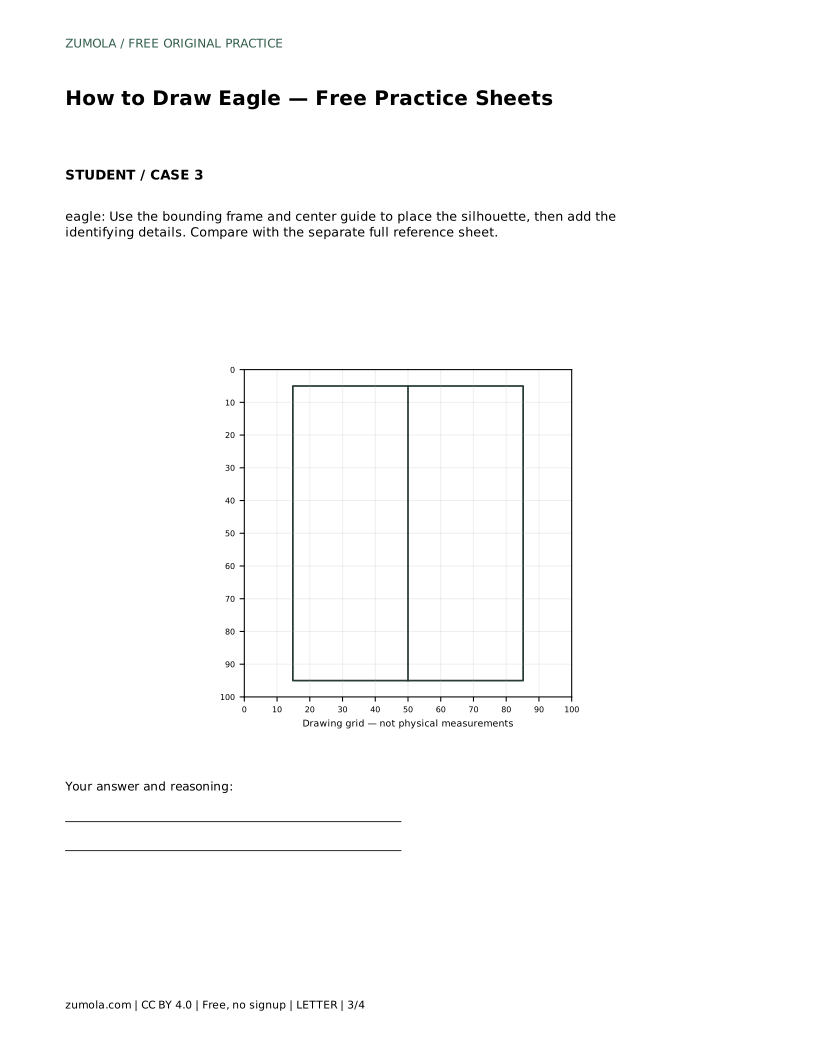
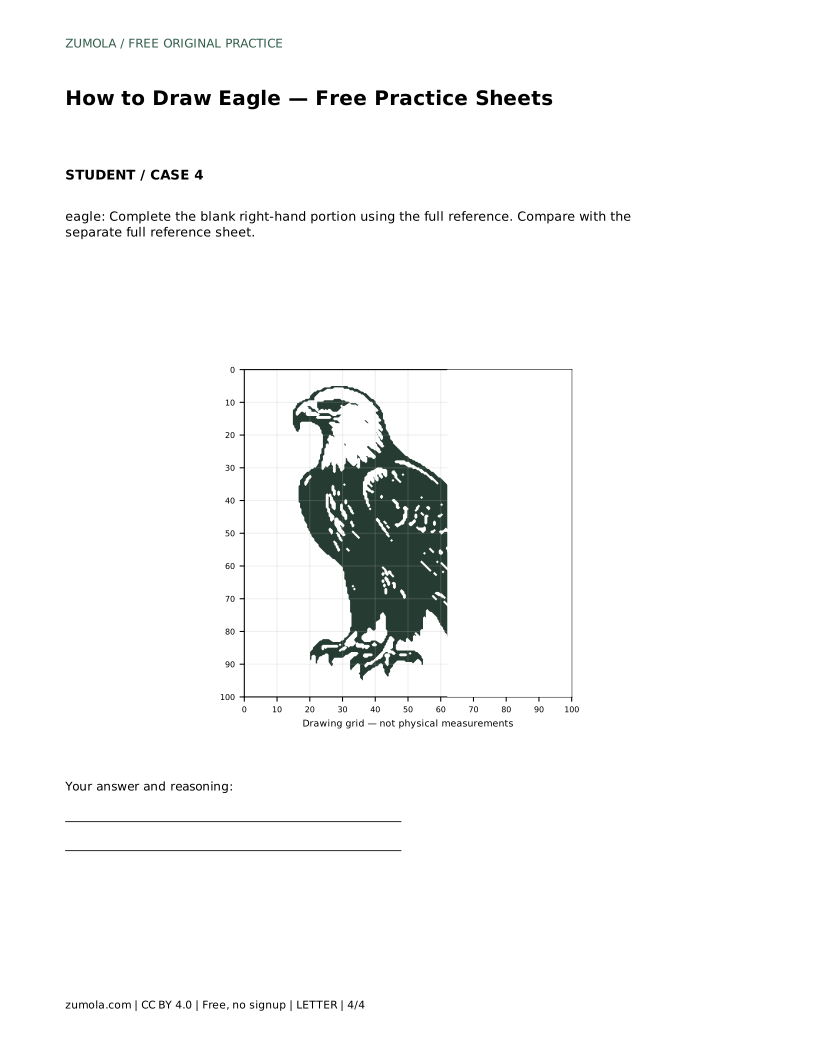
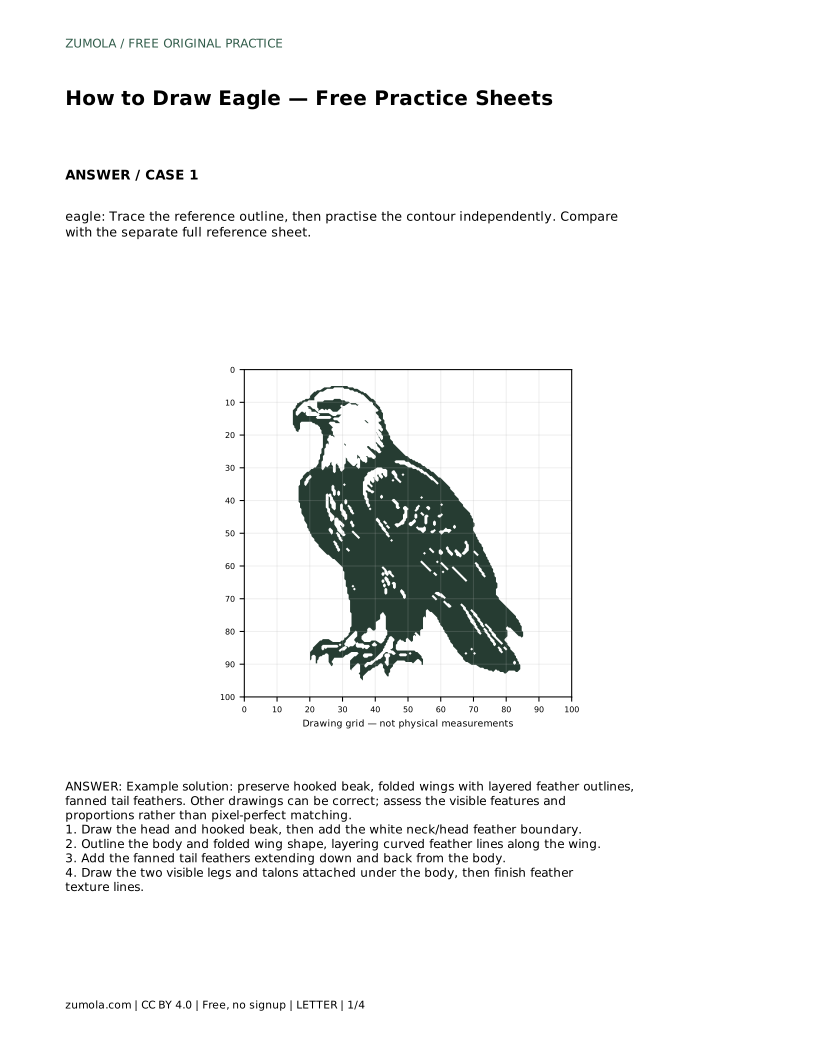
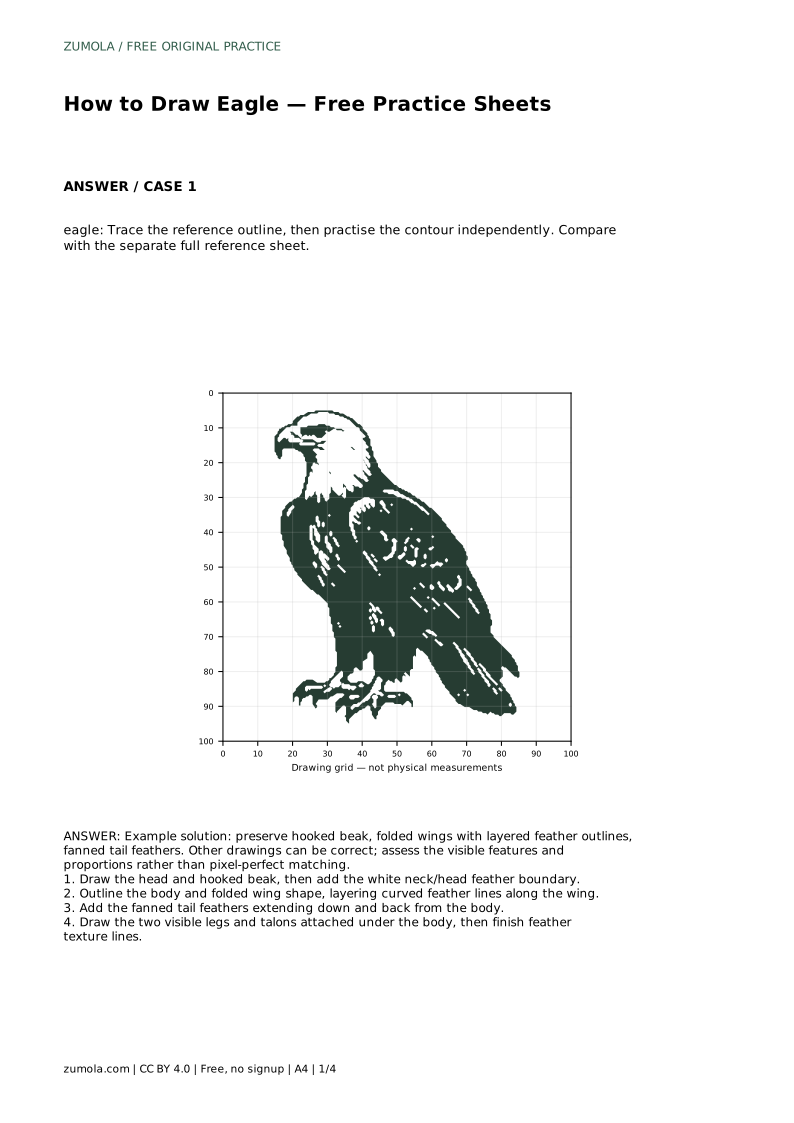
eagle: Trace the reference outline, then practise the contour independently. Compare with the separate full reference sheet.
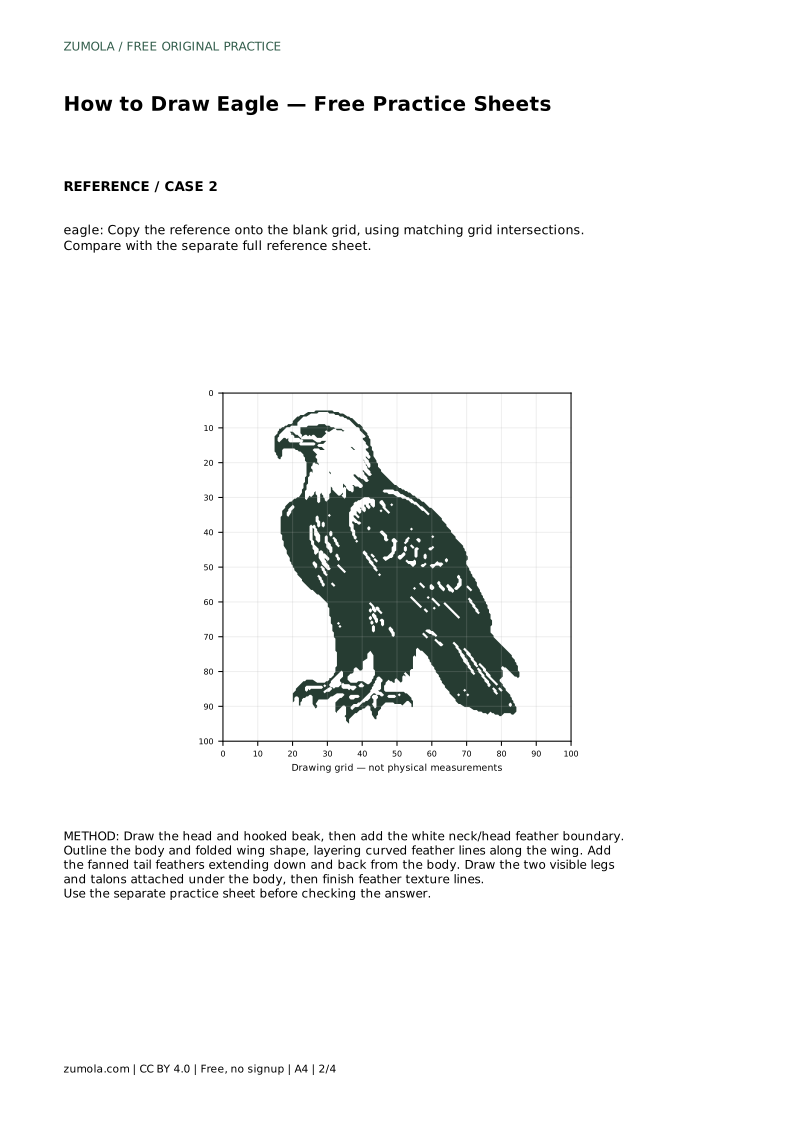
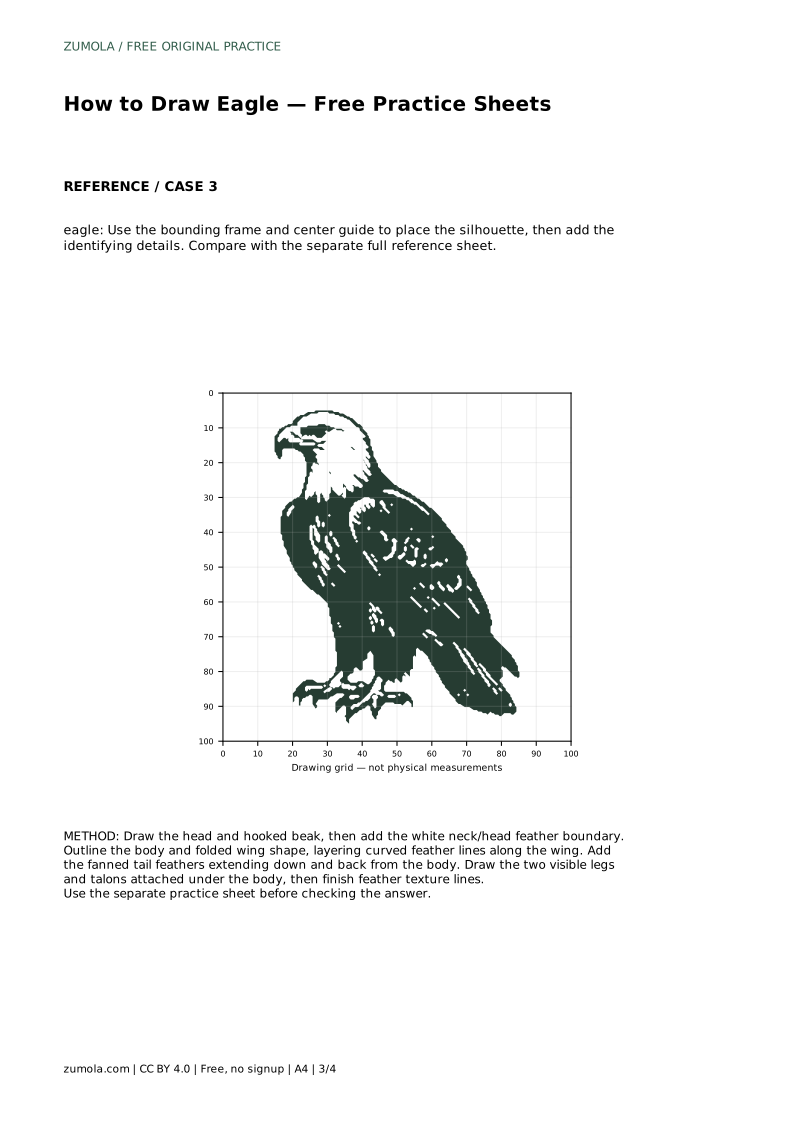
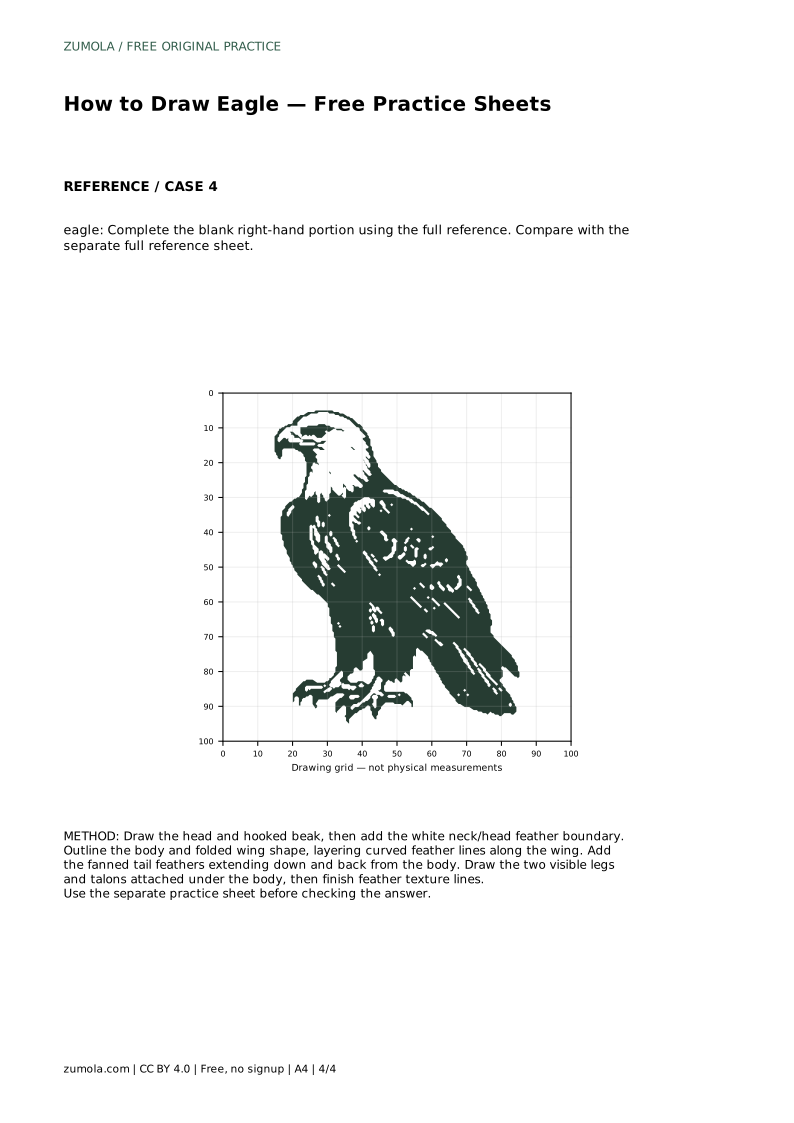
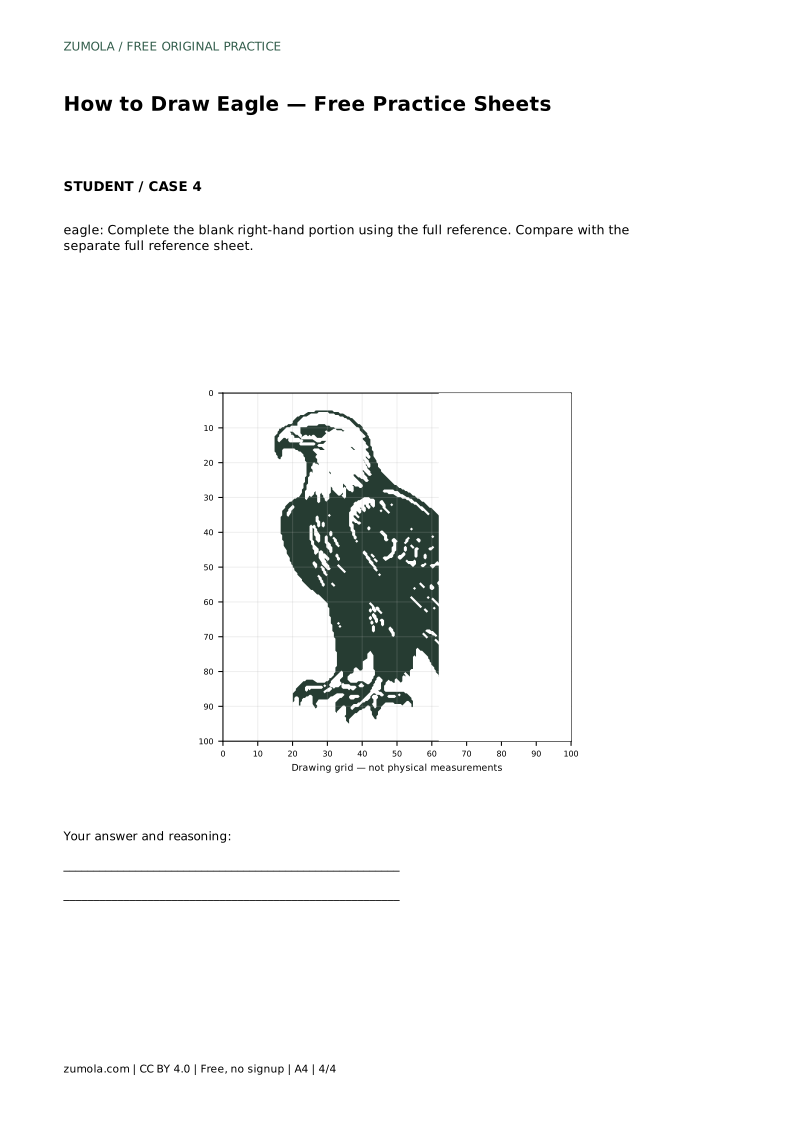
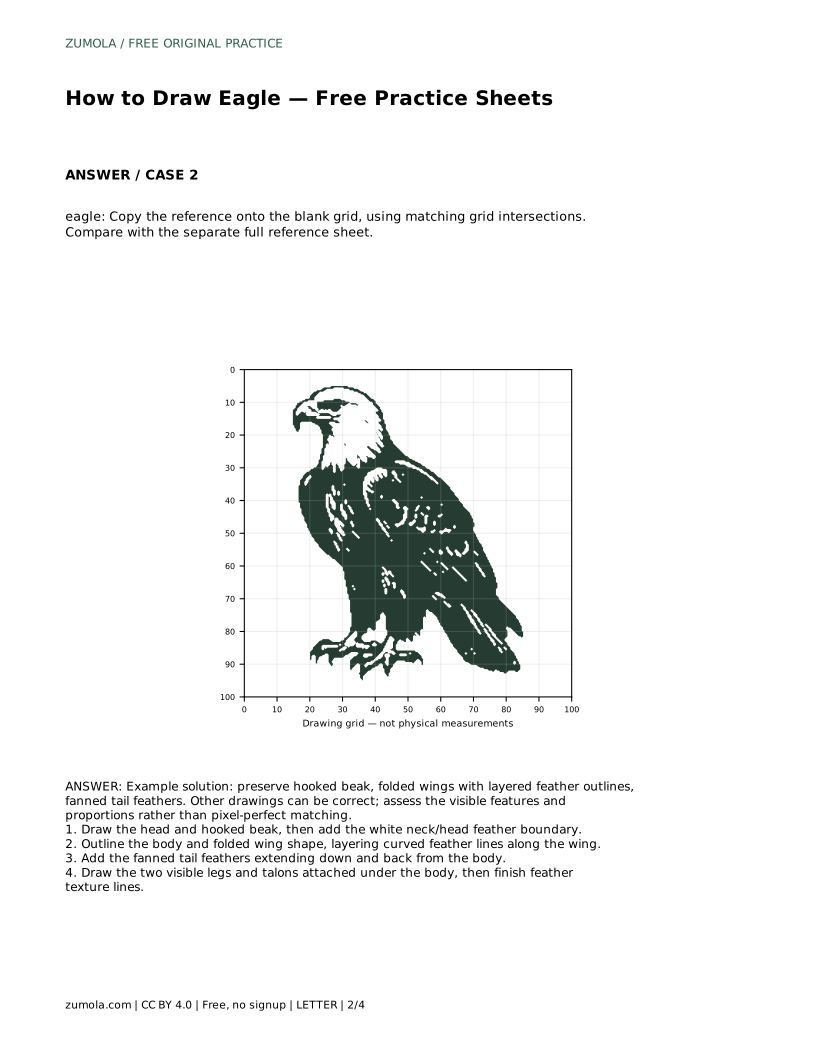
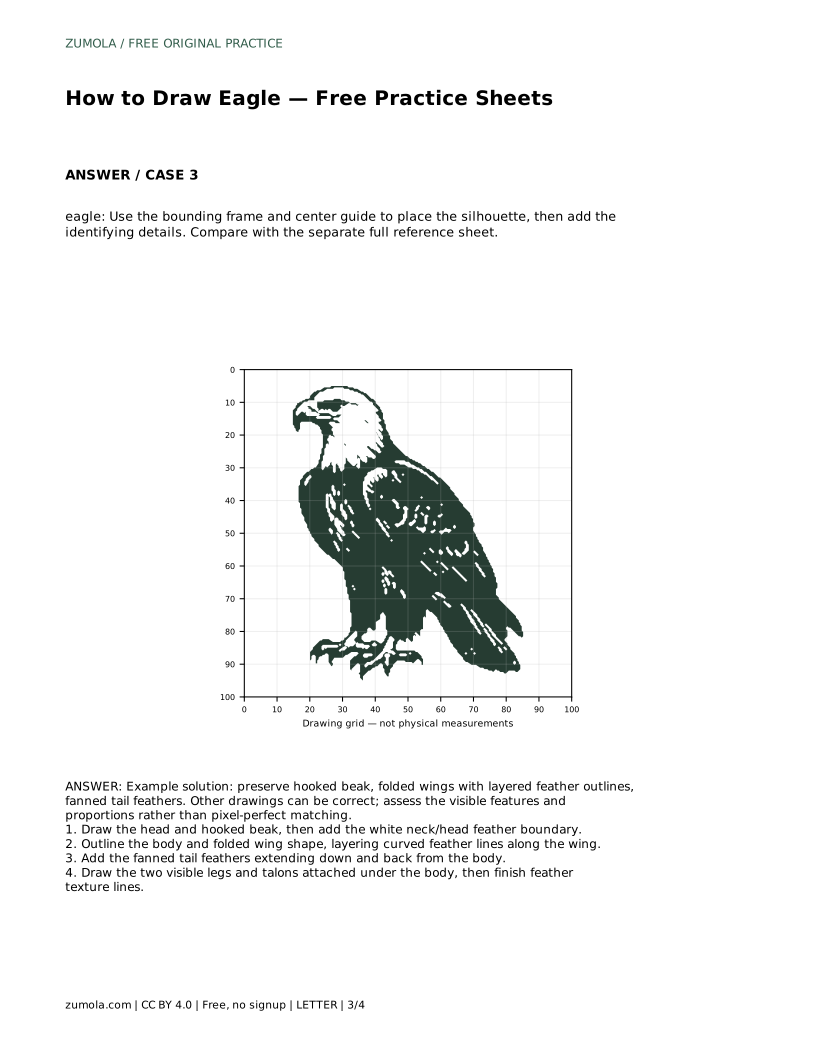
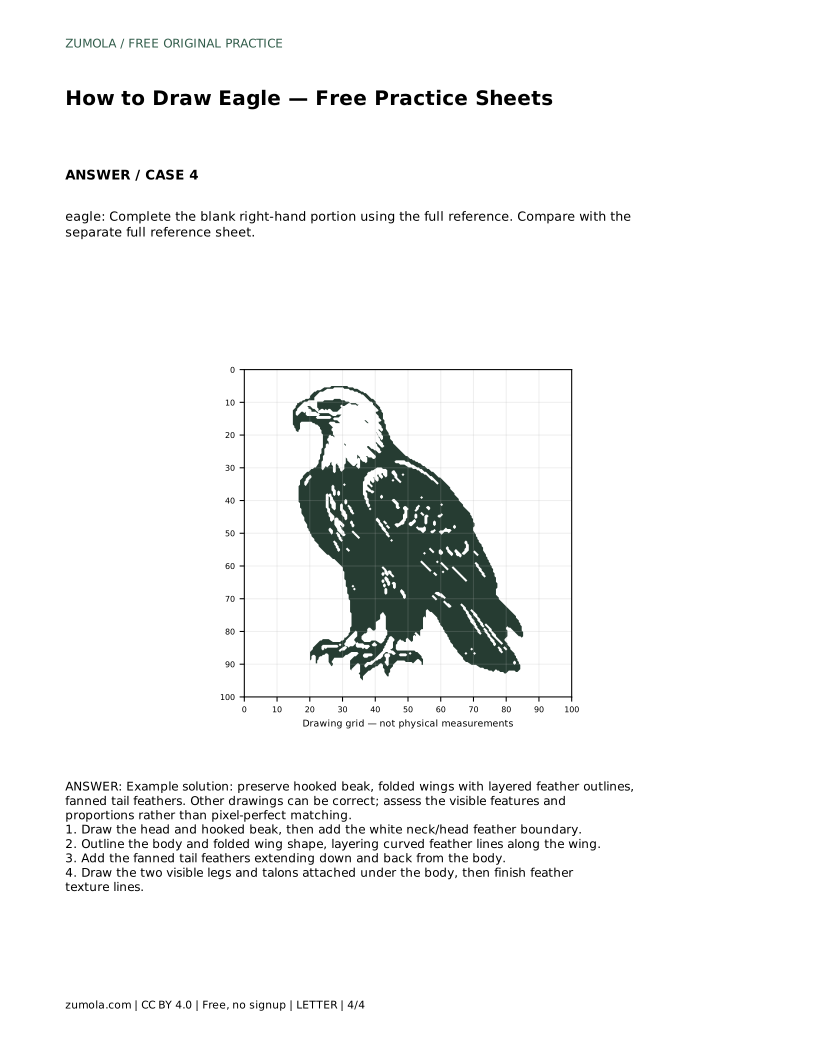
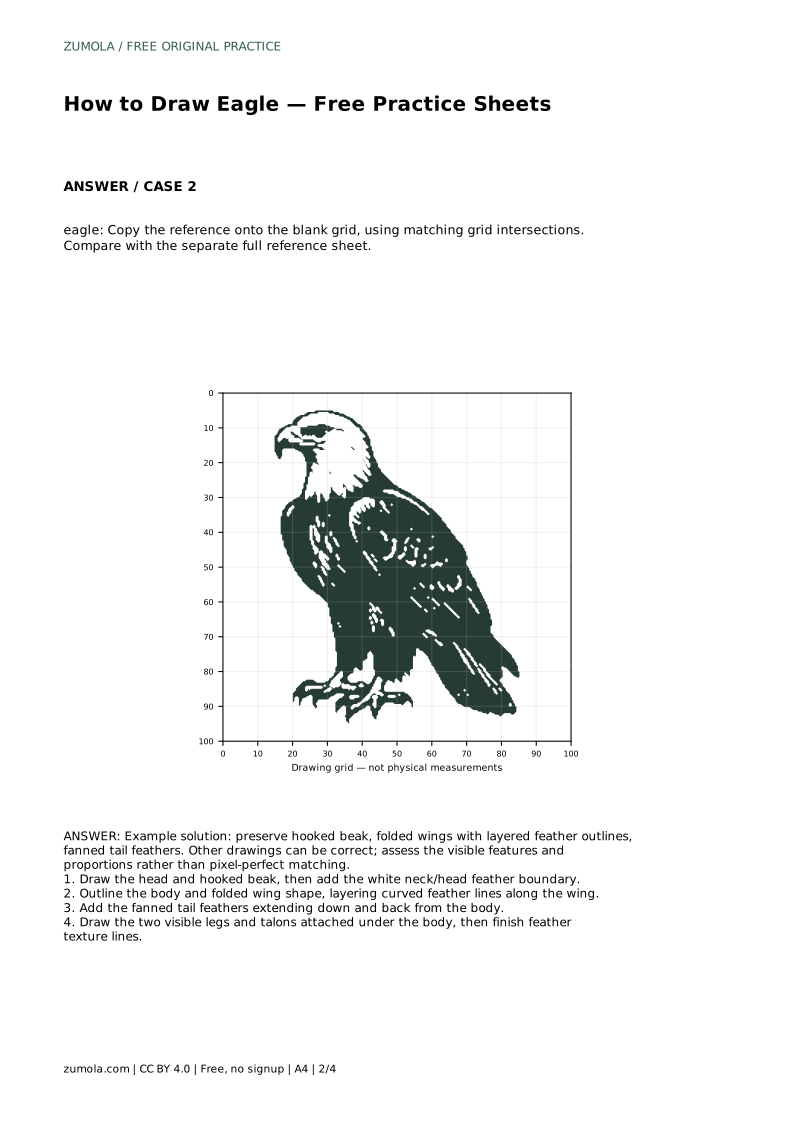
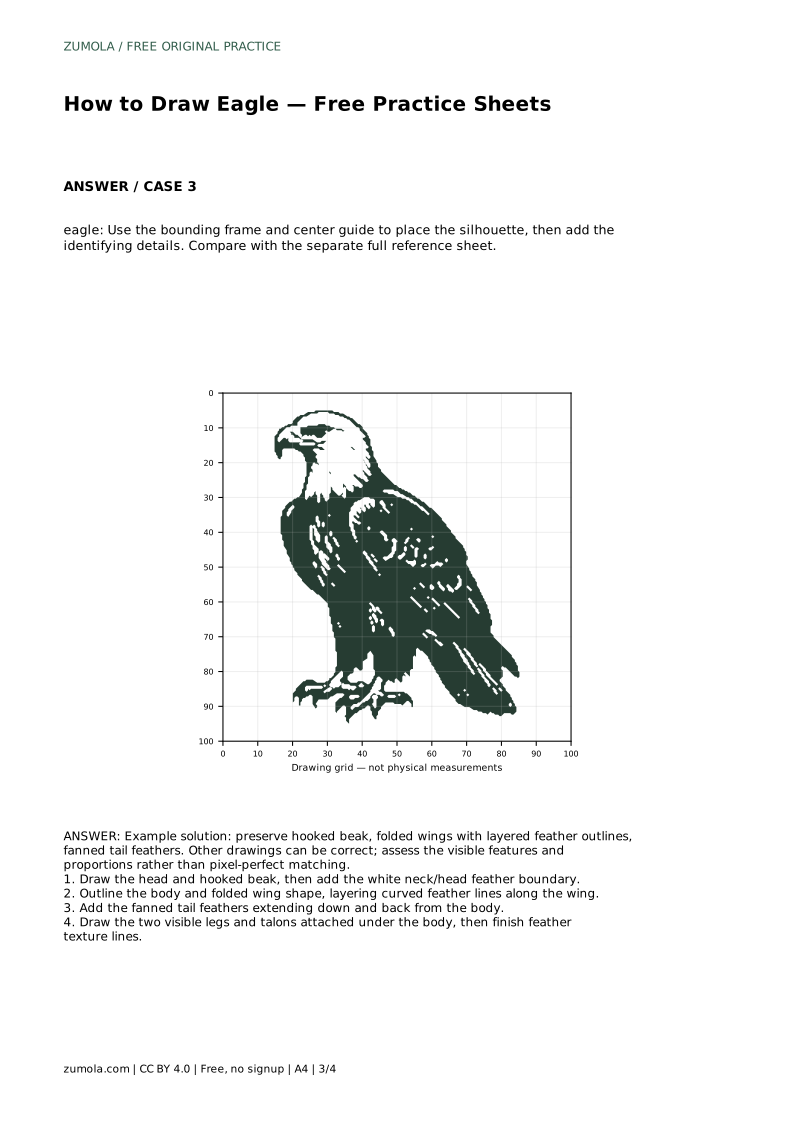
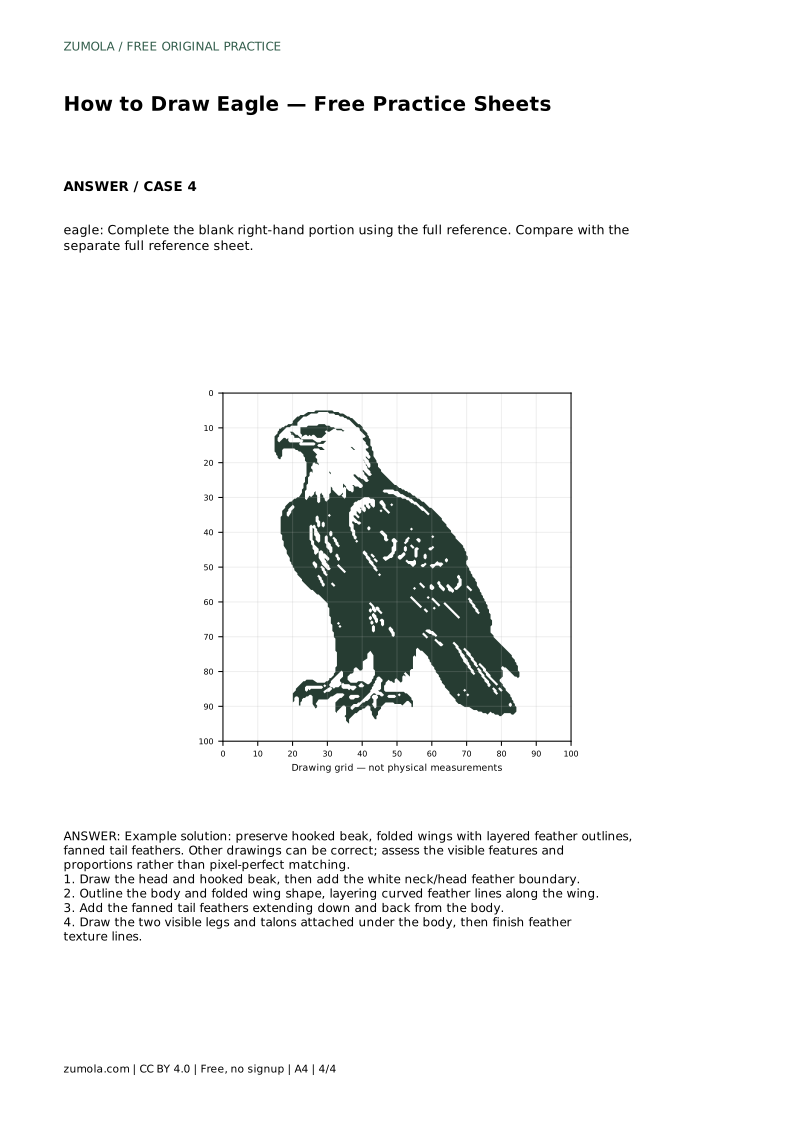
Example solution: preserve hooked beak, folded wings with layered feather outlines, fanned tail feathers. Other drawings can be correct; assess the visible features and proportions rather than pixel-perfect matching. Draw the head and hooked beak, then add the white neck/head feather boundary. Outline the body and folded wing shape, layering curved feather lines along the wing. Add the fanned tail feathers extending down and back from the body. Draw the two visible legs and talons attached under the body, then finish feather texture lines.
No. Several drawings can be correct. Assess the visible features and proportions instead of aiming for a pixel-perfect match.
Head and hooked beak first, then body and folded wing, then fanned tail, legs and talons, and finally feather texture.
Compare it with the separate full reference sheet and look for the hooked beak, layered wing, fanned tail and talons.
All drawing practice · Free coordinate paper
Original resources · CC BY 4.0 · Free for personal and classroom use with attribution.