Reference diagrams
LETTER · Download PDF
A4 · Download PDF
Free original resources
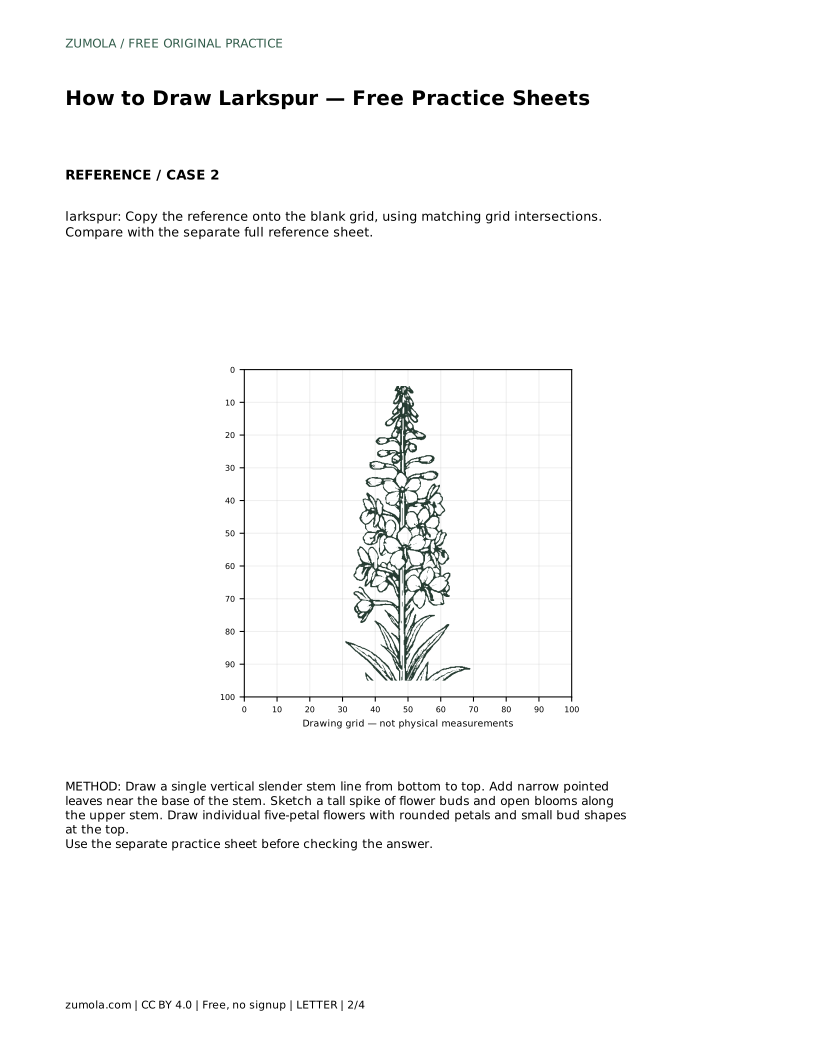
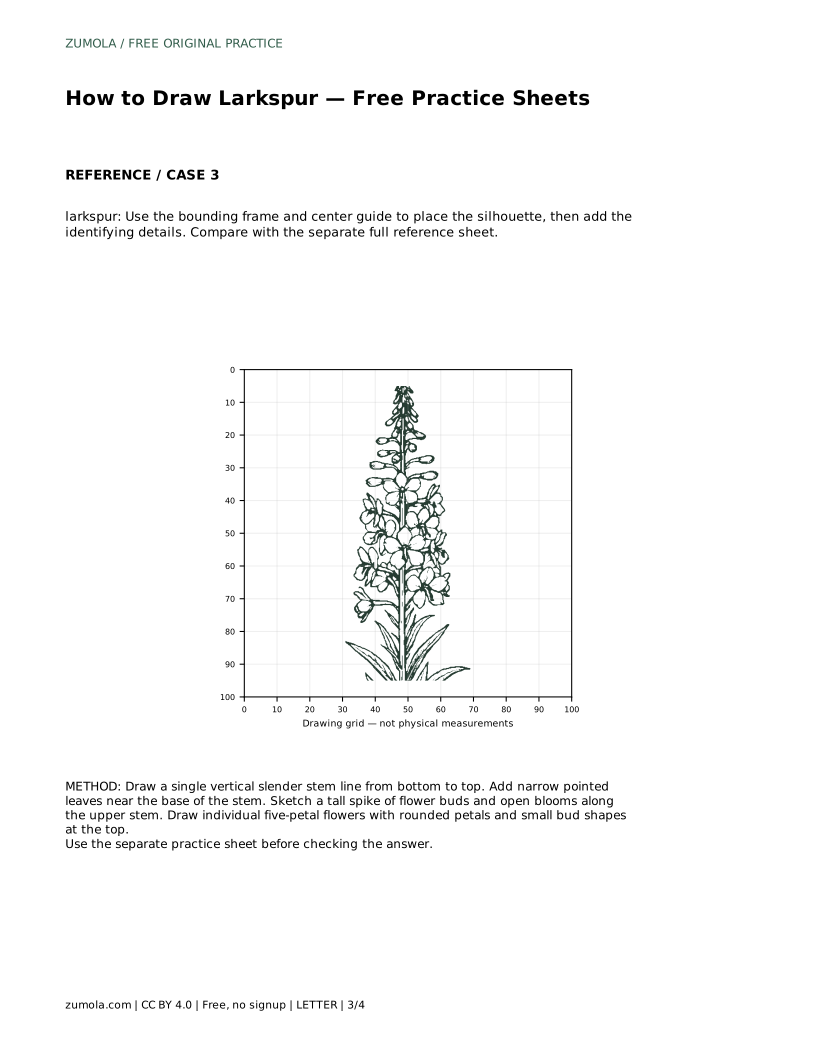
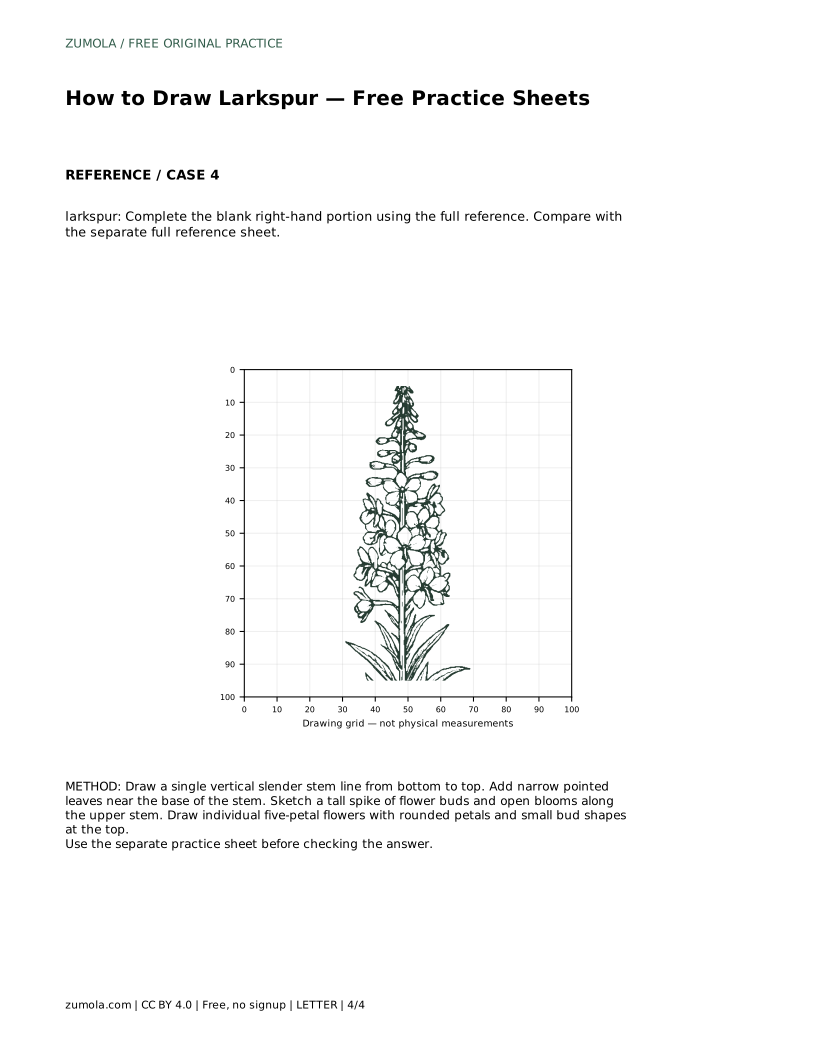
Learn to draw a larkspur with a tall flower spike, five-petal blooms, buds, and narrow basal leaves. Trace, grid, or complete a half-sheet, then self-check.
Four original cases, with reference diagrams, practice sheets and worked answers. Everything is free; no signup required.
LETTER · Download PDF
A4 · Download PDF
LETTER · Download PDF
A4 · Download PDF
LETTER · Download PDF
A4 · Download PDF
Use A4 or US Letter to match your printer. Use the stated values and conditions to solve each exercise; diagrams are not physical measuring rulers.
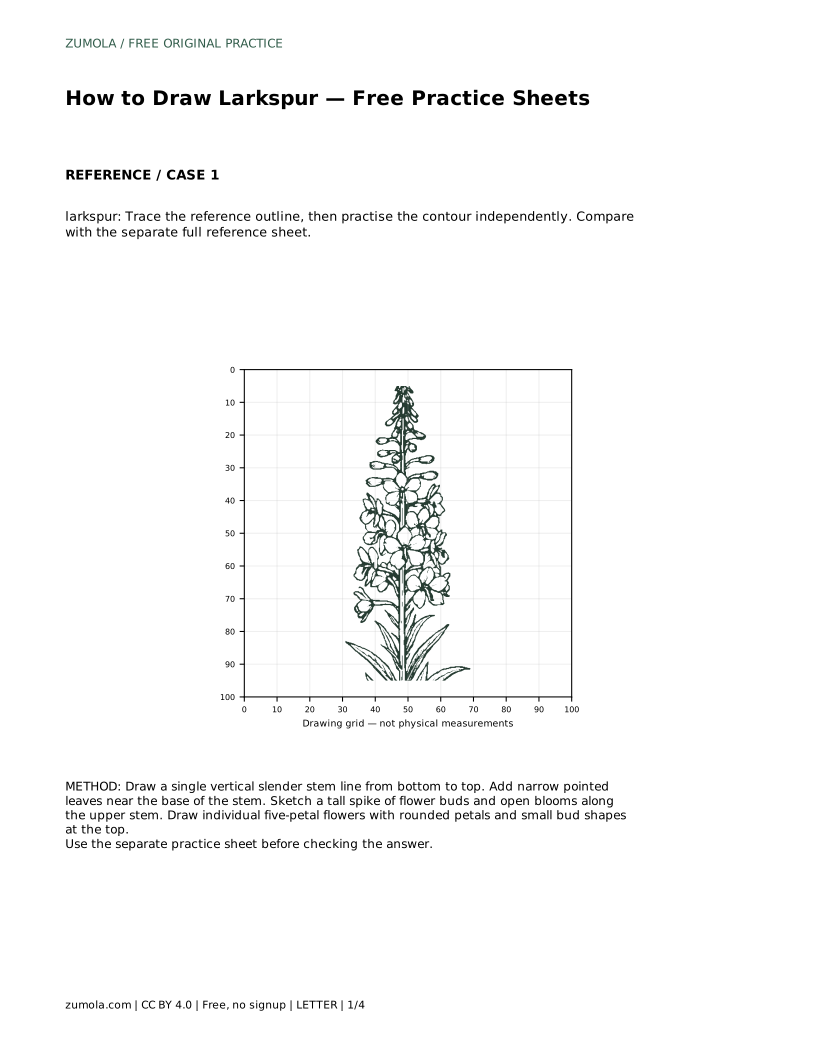
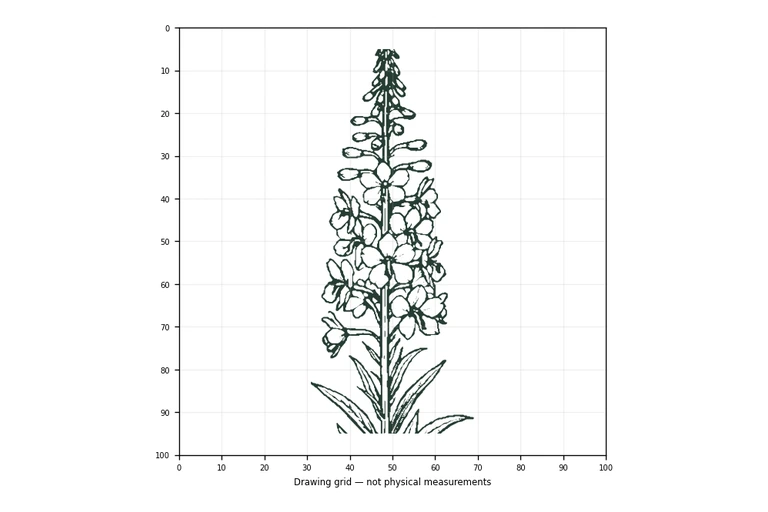
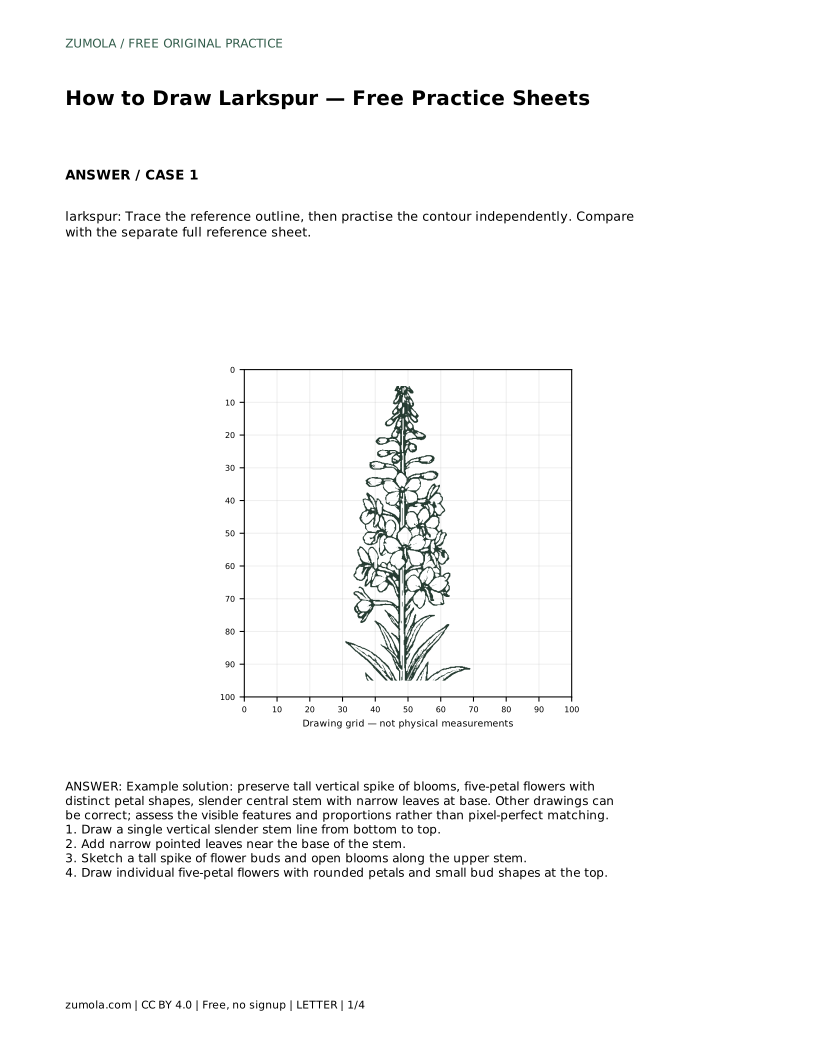
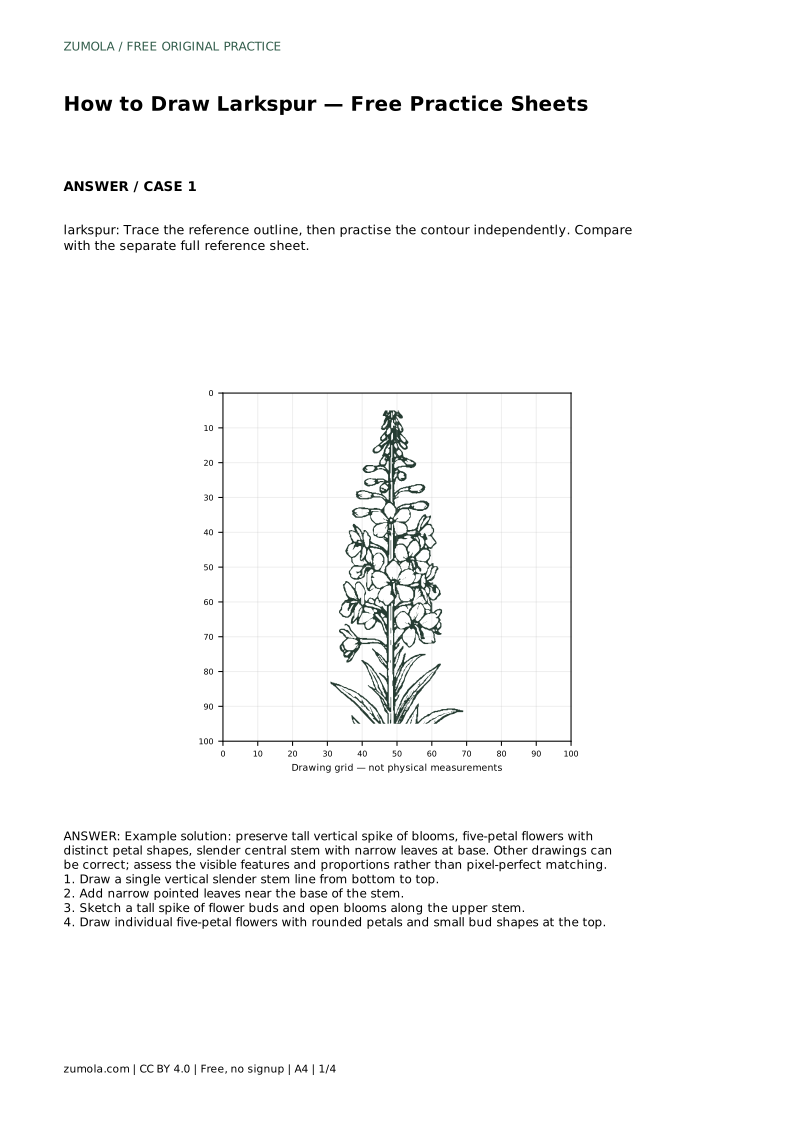
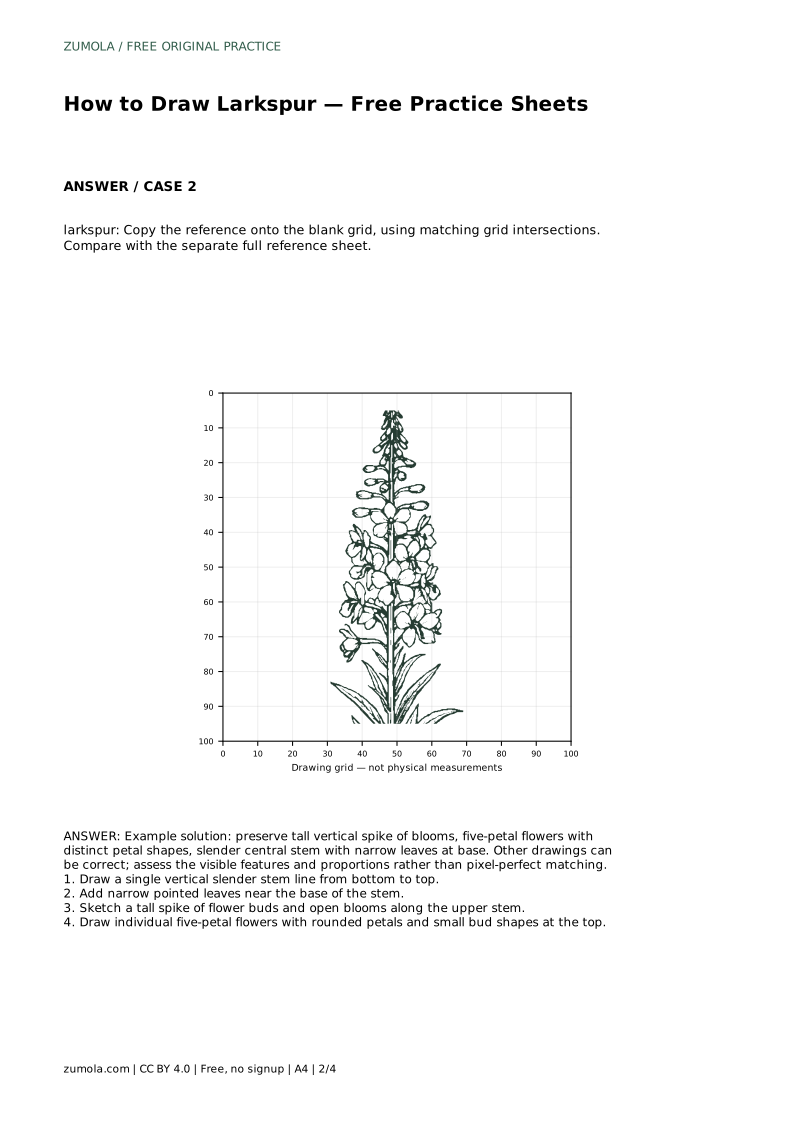
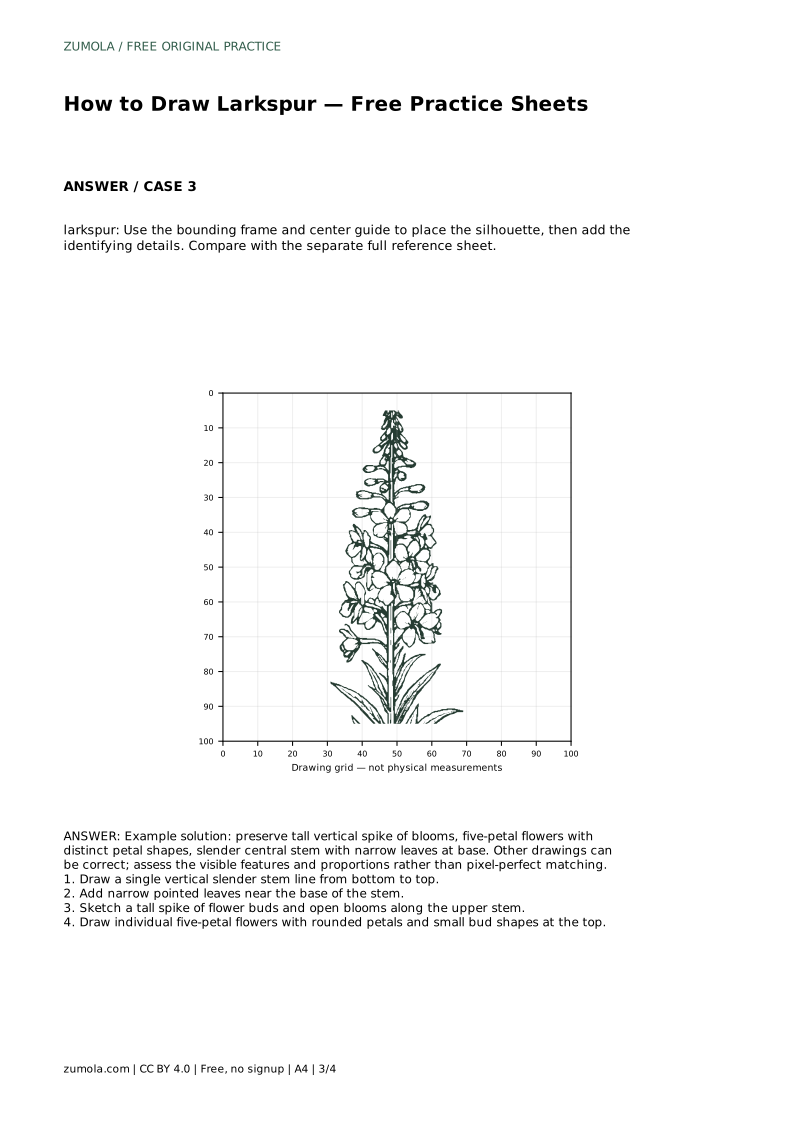
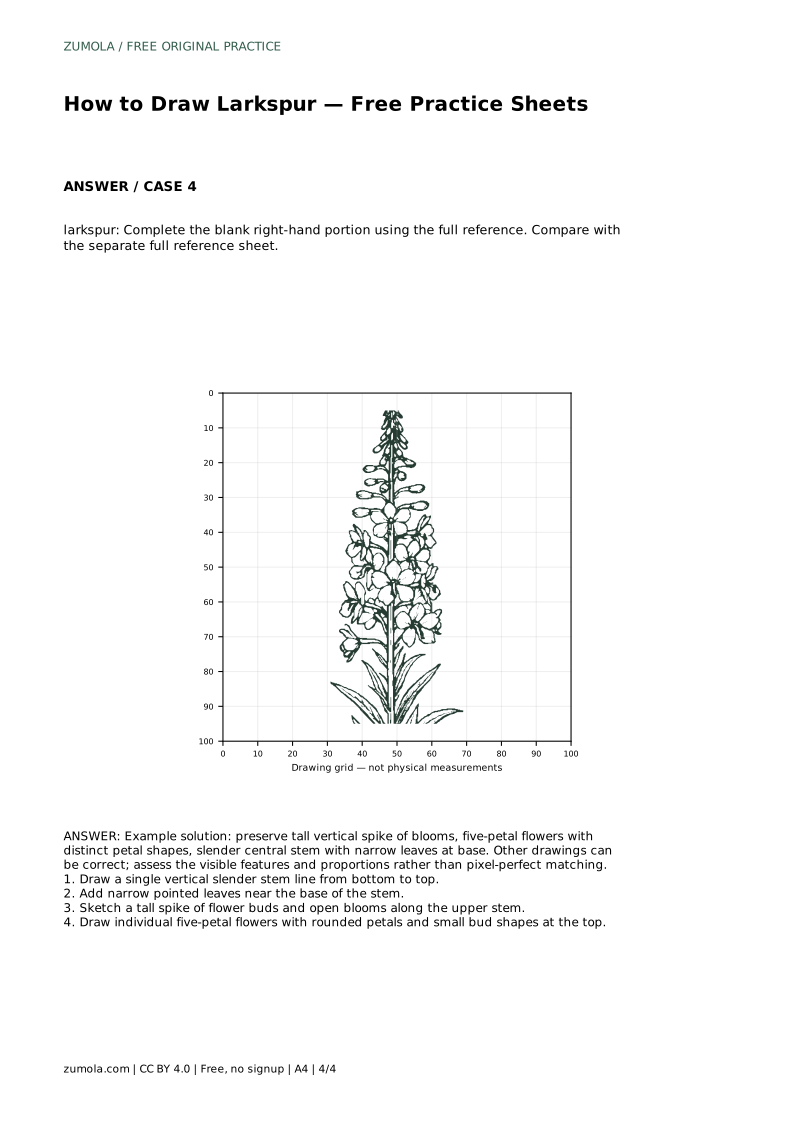
A larkspur line drawing depends on a few clear features: one slender upright stem, a tall spike of open flowers and buds, five-petal blooms with rounded petals, and narrow pointed leaves near the base. This guide walks through those parts in order so you can trace a reference outline, copy onto a grid, place a silhouette inside a frame, or finish a blank half-sheet. Because drawings can differ and still be correct, judge your work by visible features and proportions, not pixel-perfect matching.
Start with the structure that holds everything else. Draw one slender vertical stem line from the bottom of the page to the top. Keep it close to straight; a slight natural curve is fine, but the overall impression should be tall and upright. Larkspur reads as a vertical plant, so a leaning or thick stem changes the character of the drawing.
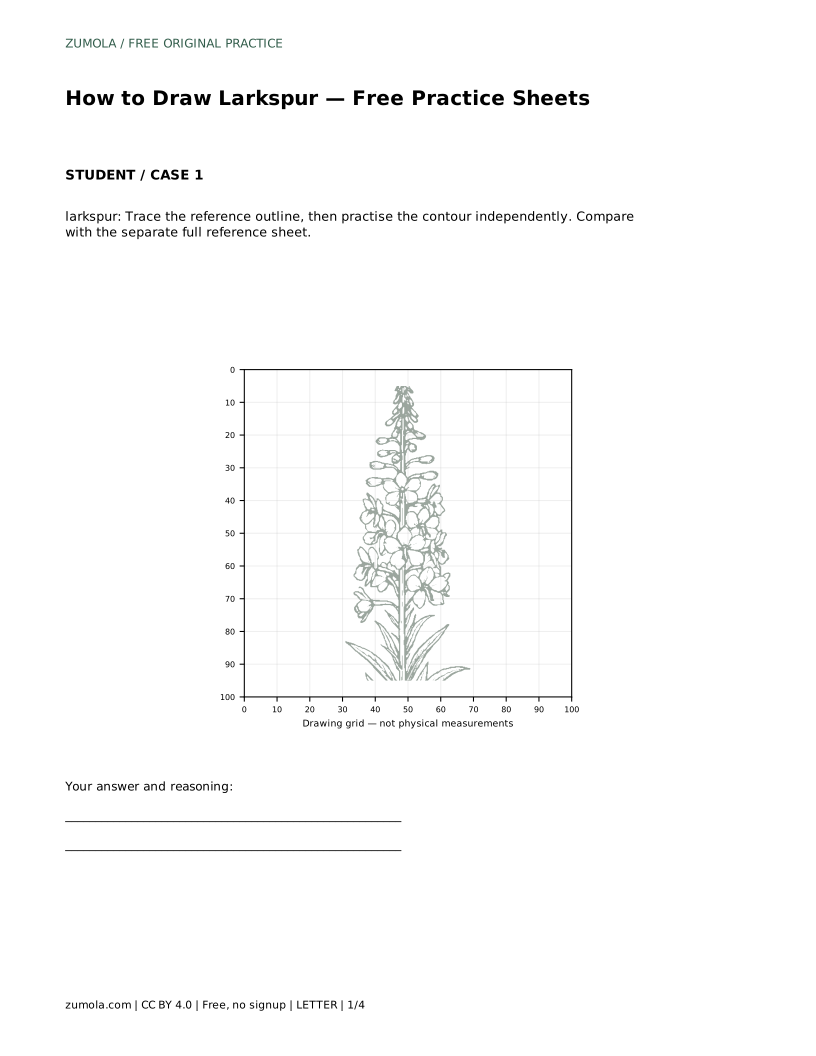
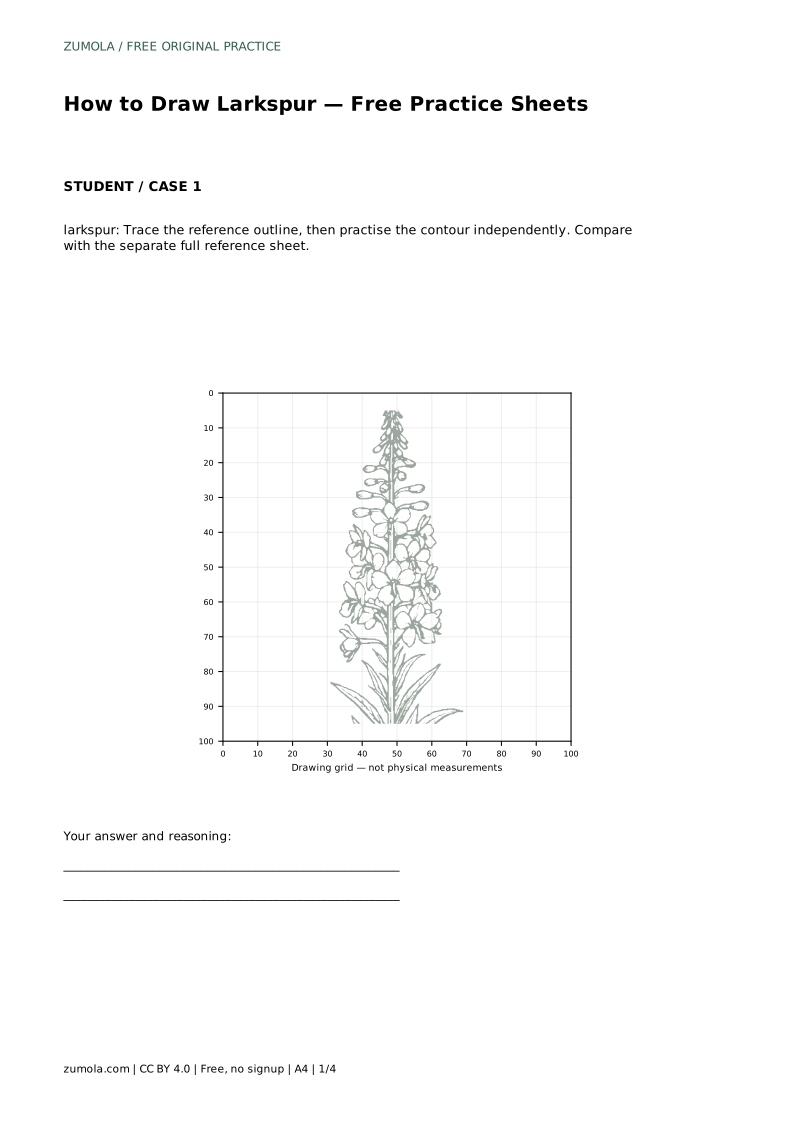
Next, add narrow pointed leaves near the base of the stem. These leaves are long and slim rather than broad, and they sit low on the plant. Draw a few on each side, angling outward and slightly downward. Leave the middle and upper stem clear for the flower spike. If you are tracing, follow the reference outline here before working independently on a blank sheet.
The flower spike is the tallest and most recognizable part of a larkspur. Sketch a tall spike of flower buds and open blooms along the upper stem. Open flowers usually sit lower on the spike, with smaller buds gathering toward the top. Space the blooms so the spike stays airy rather than crowded into a solid block.
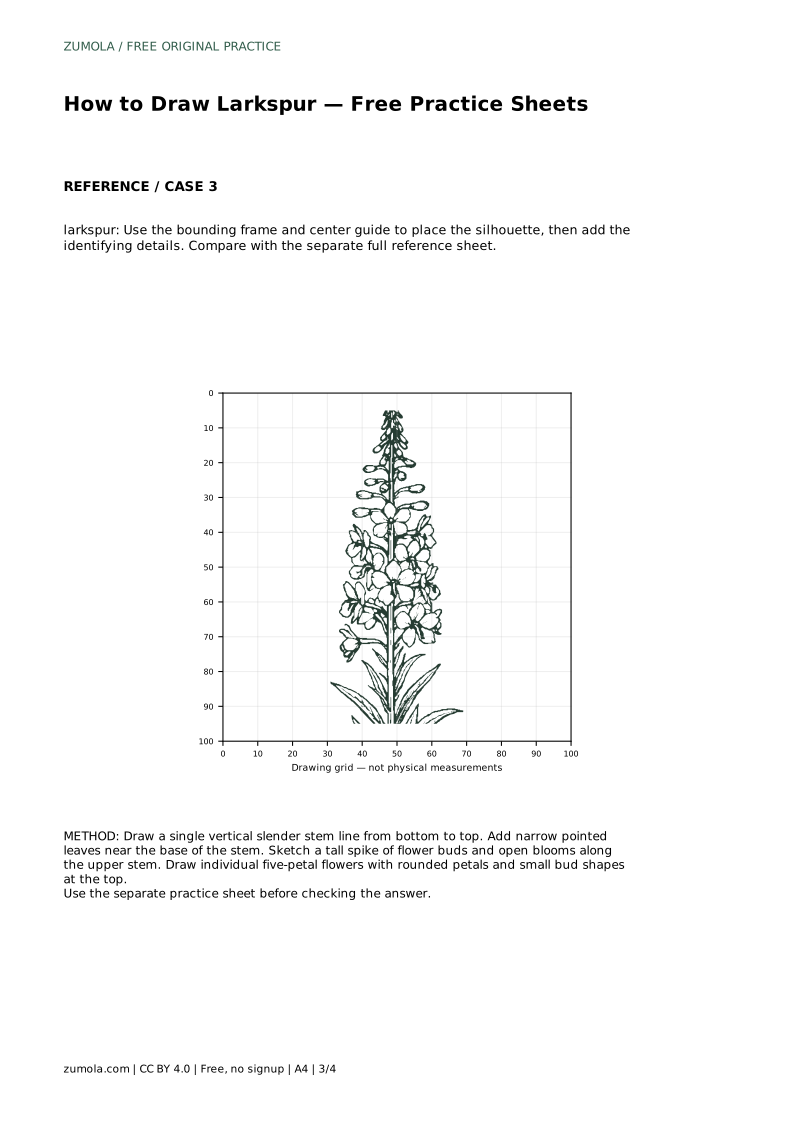
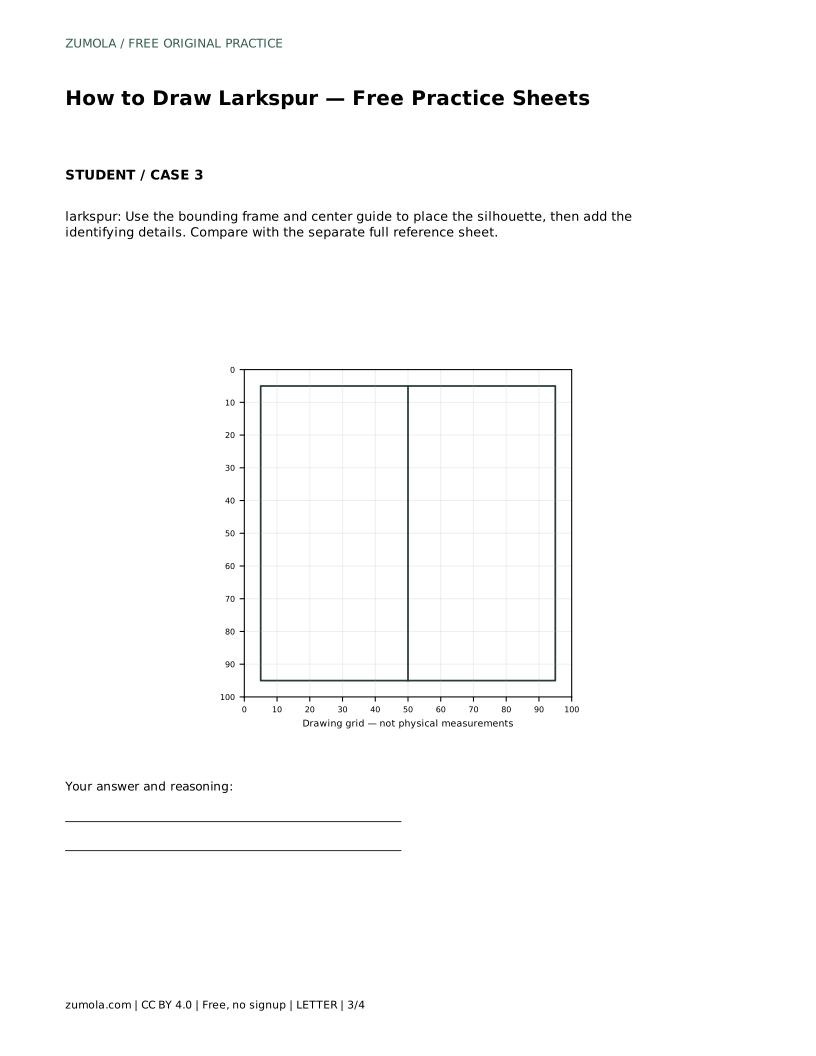
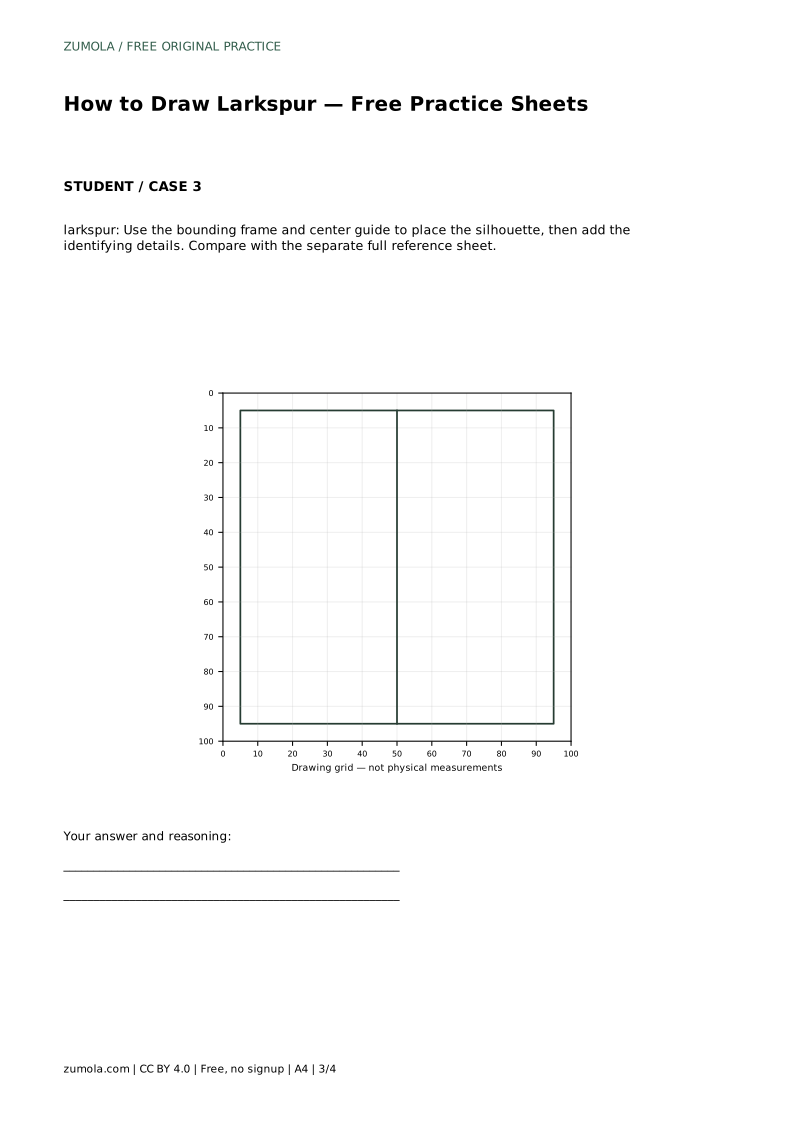
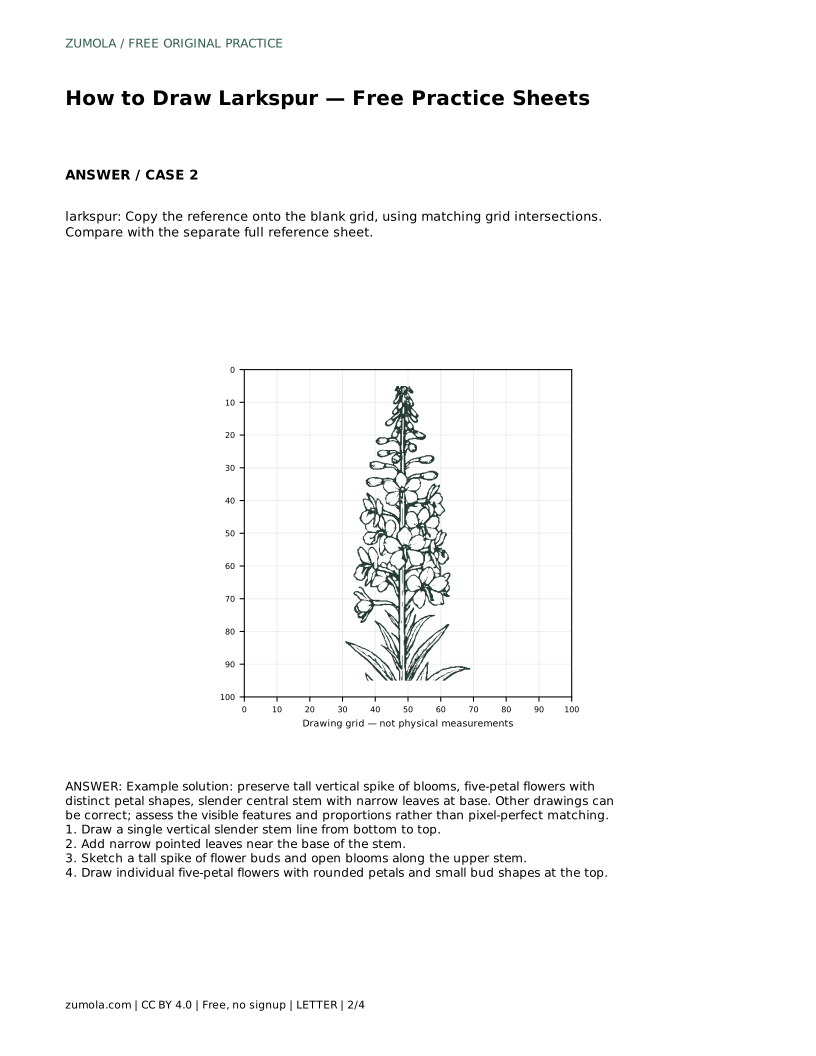
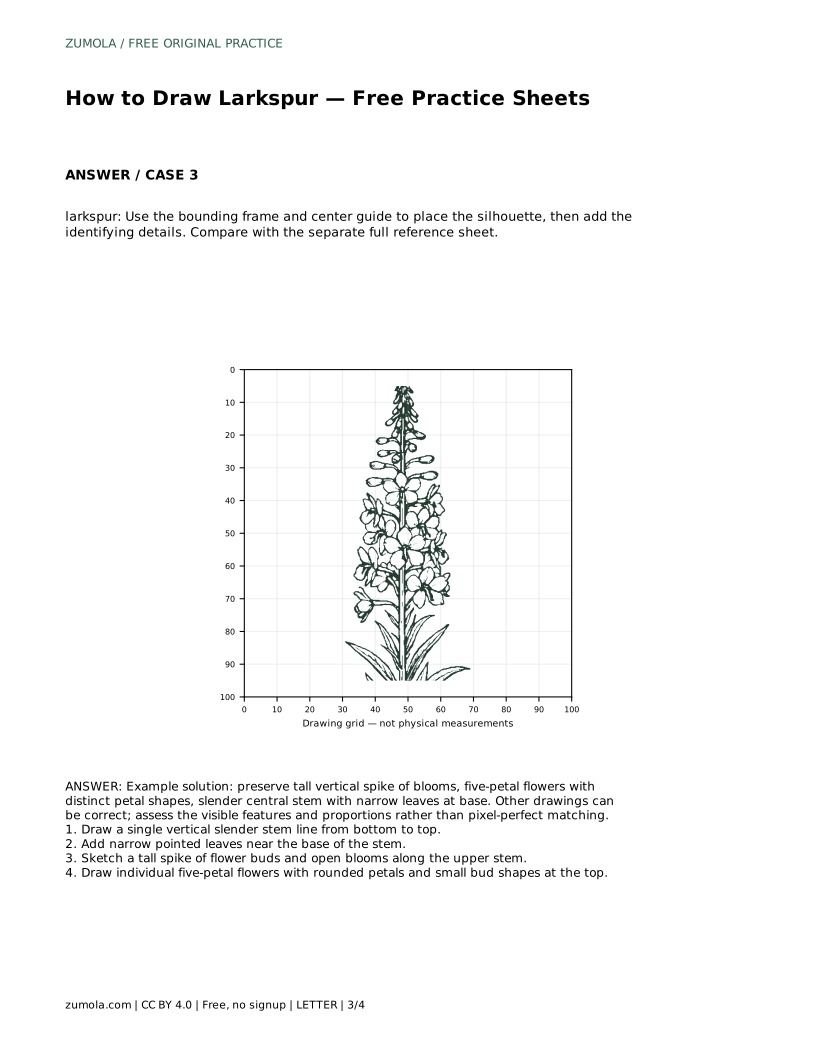
When using a bounding frame and center guide, use the frame to set the overall height and width of the silhouette, and the center guide to keep the stem vertical. Place the spike inside those limits before adding detail. On a grid sheet, match the spike to the same grid intersections as the reference so its height and position stay consistent.
Each open bloom should show five distinct petals with rounded shapes. Draw them around a small center, keeping the petals separate enough to count. Vary the size slightly along the spike, since blooms near the bottom are often fuller than the buds above. Small bud shapes at the top can be simple ovals or teardrops attached to the stem.
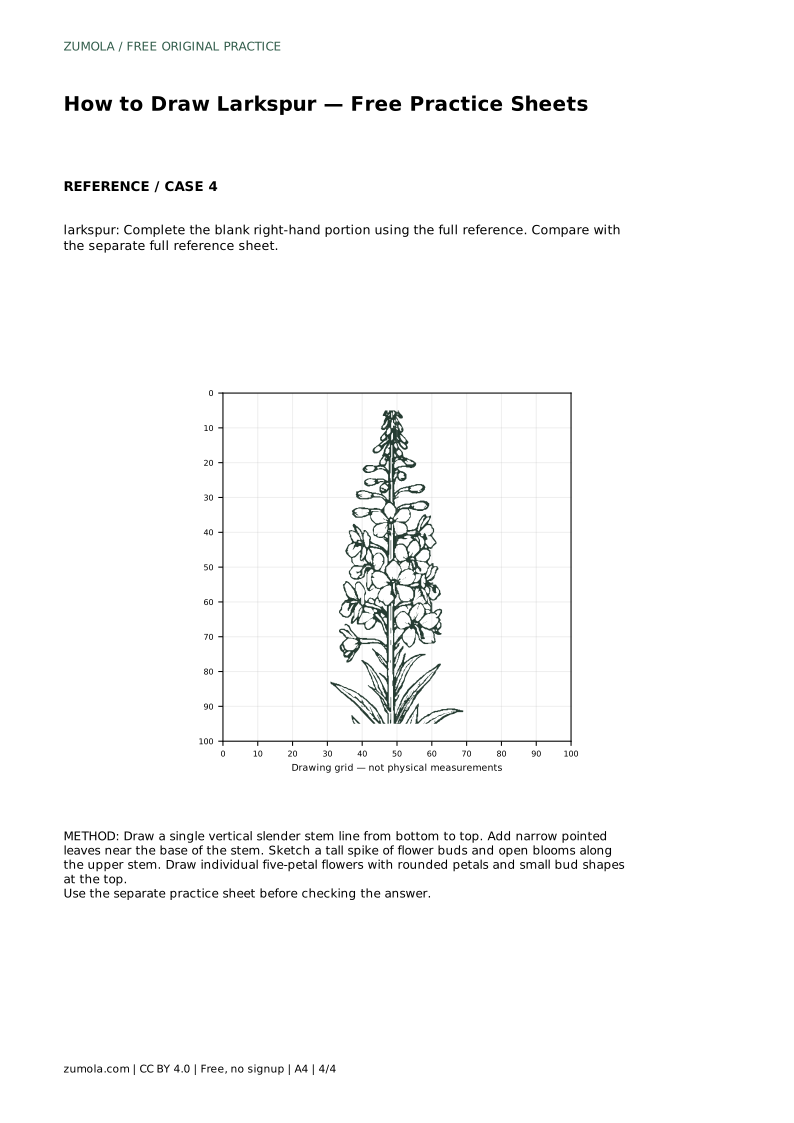
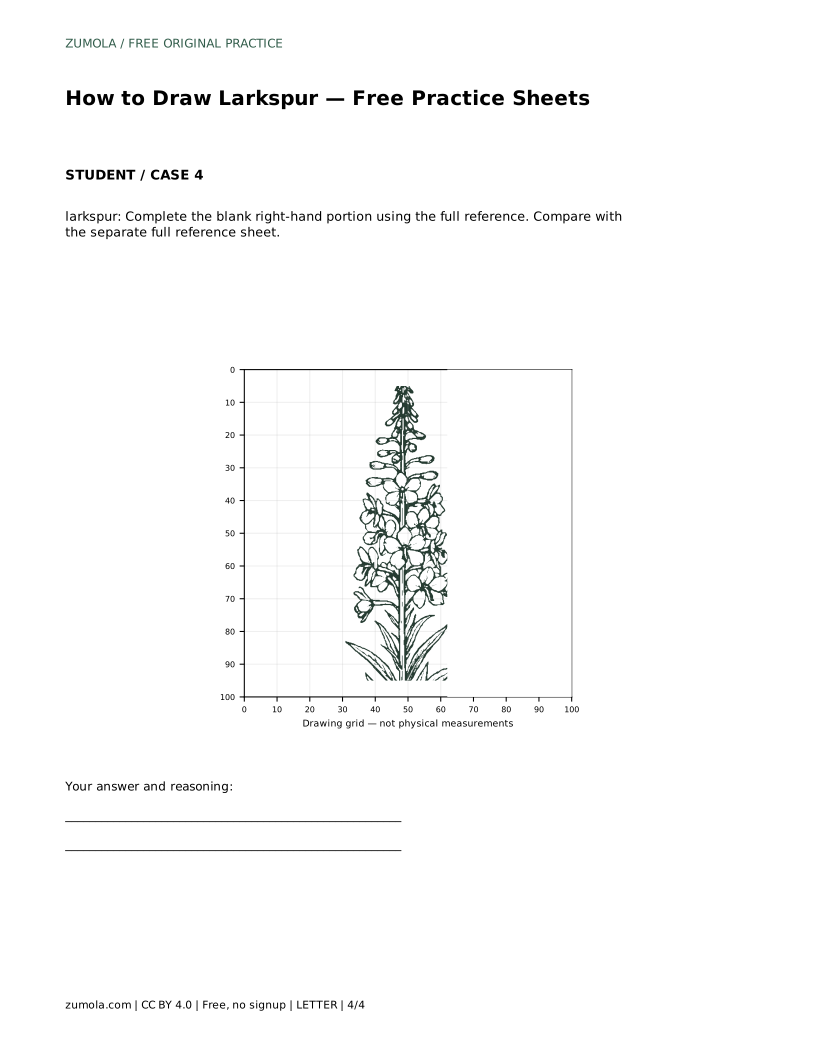
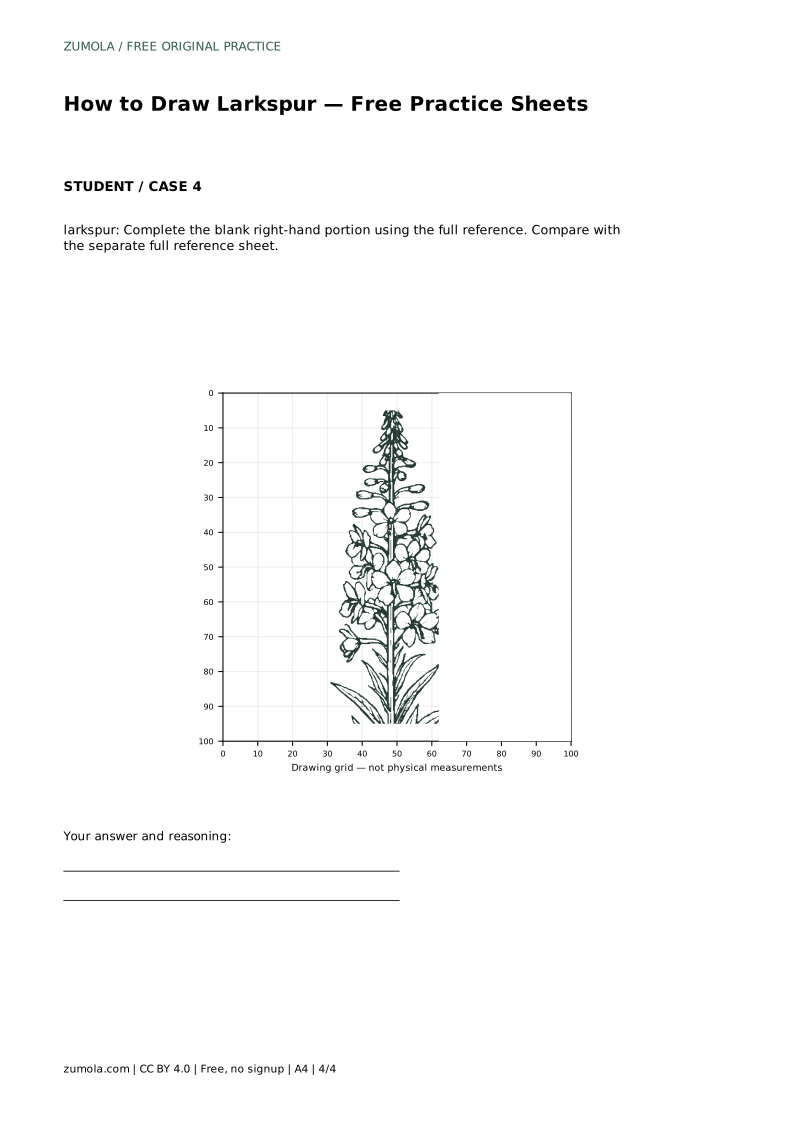
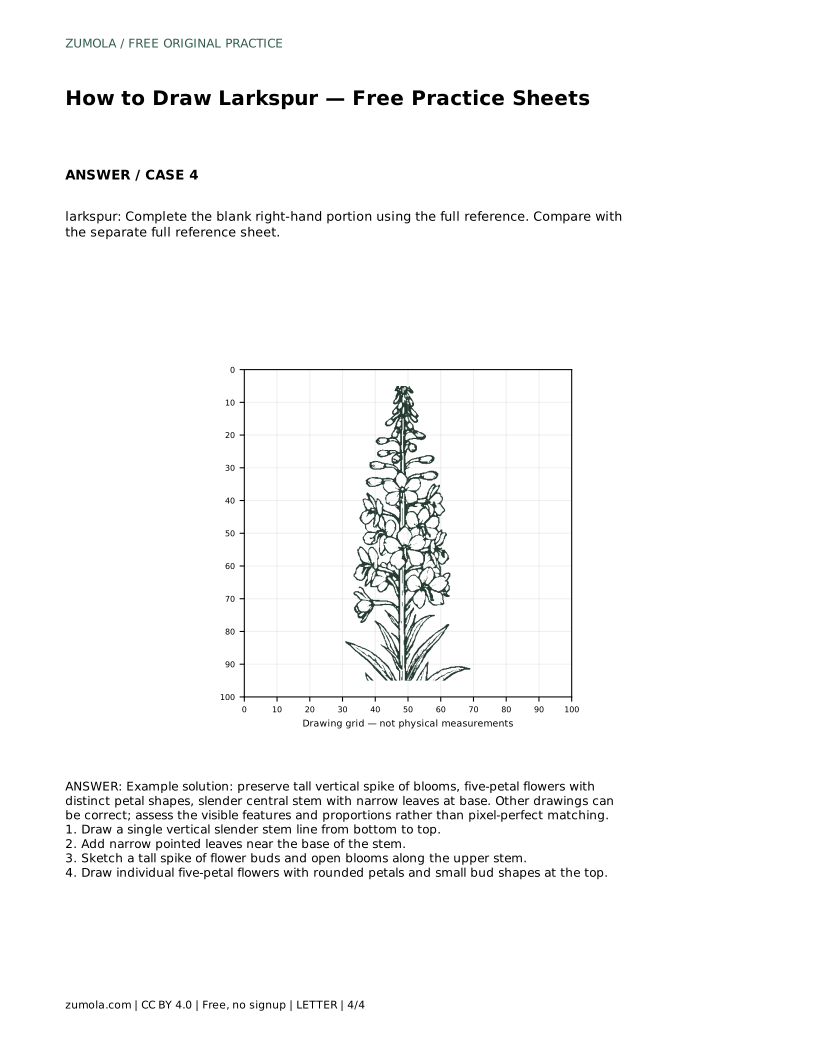
If your sheet has a blank right-hand portion, complete it using the full reference. Work from the stem outward: finish the spike line, then add blooms, then buds. Compare your finished drawing with the separate full reference sheet and check the features listed in the rubric rather than chasing an exact copy.
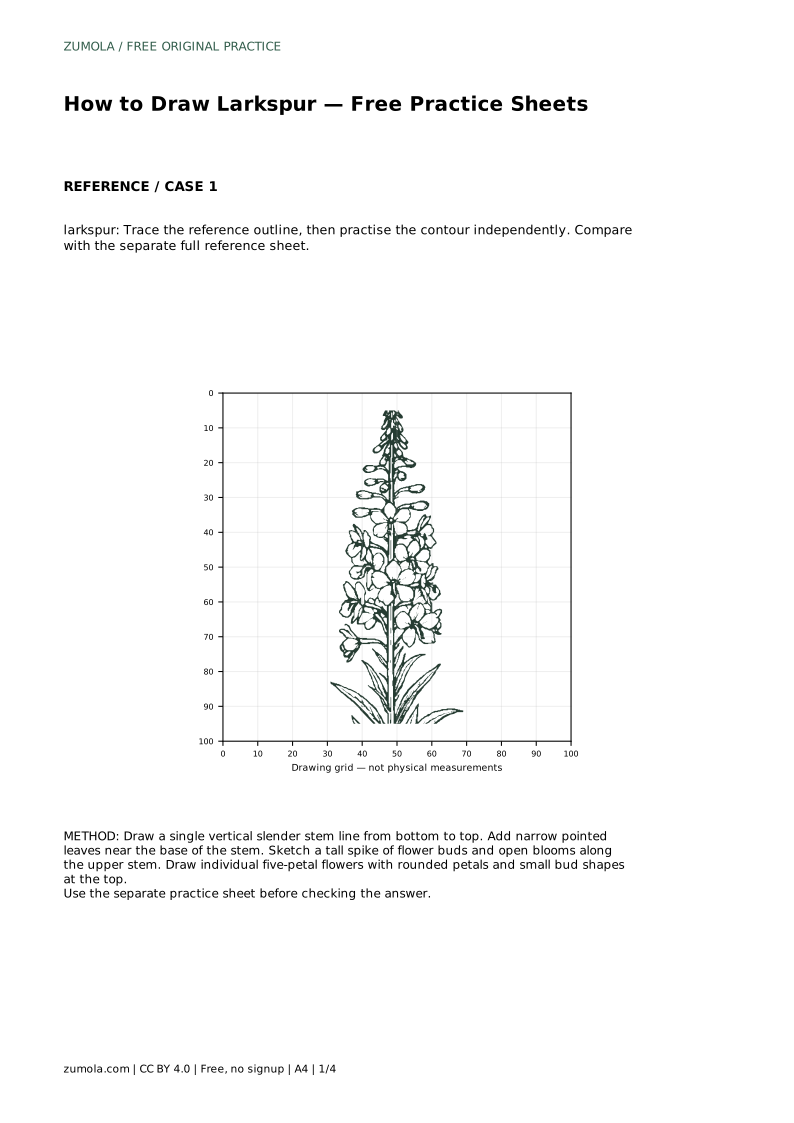
larkspur: Trace the reference outline, then practise the contour independently. Compare with the separate full reference sheet.
Example solution: preserve tall vertical spike of blooms, five-petal flowers with distinct petal shapes, slender central stem with narrow leaves at base. Other drawings can be correct; assess the visible features and proportions rather than pixel-perfect matching. Draw a single vertical slender stem line from bottom to top. Add narrow pointed leaves near the base of the stem. Sketch a tall spike of flower buds and open blooms along the upper stem. Draw individual five-petal flowers with rounded petals and small bud shapes at the top.
No. Other drawings can be correct. Assess the visible features and proportions, such as the vertical spike, five-petal flowers, slender stem, and narrow basal leaves, rather than pixel-perfect matching.
Draw the stem first, add narrow pointed leaves near the base, sketch the tall spike of buds and blooms, then draw individual five-petal flowers with small buds at the top.
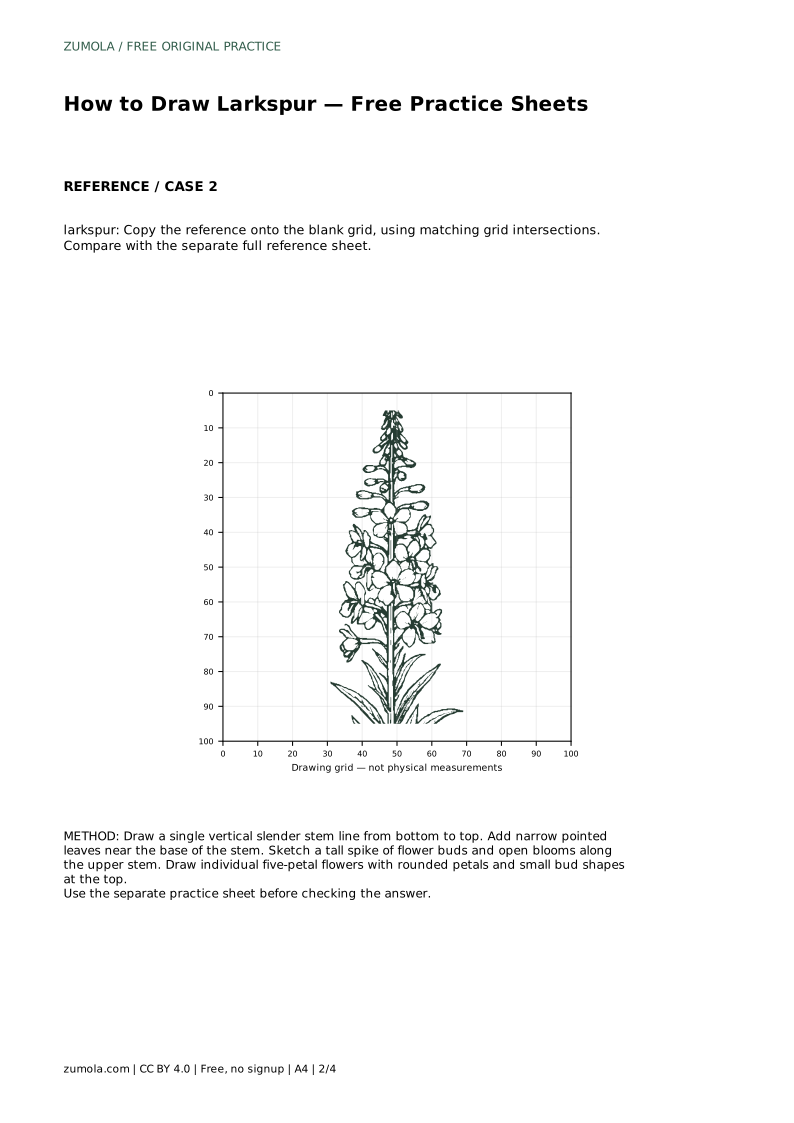
On a grid sheet, match the reference at the same grid intersections. With a bounding frame and center guide, use the frame to set the silhouette and the center guide to keep the stem vertical before adding details.
All drawing practice · Free coordinate paper
Original resources · CC BY 4.0 · Free for personal and classroom use with attribution.