Reference diagrams
LETTER · Download PDF
A4 · Download PDF
Free original resources
Learn to draw an orange with a round body, stem, leaf, and dimpled peel texture. Practice tracing, grids, guides, and completing a partial drawing.
Four original cases, with reference diagrams, practice sheets and worked answers. Everything is free; no signup required.
LETTER · Download PDF
A4 · Download PDF
LETTER · Download PDF
A4 · Download PDF
LETTER · Download PDF
A4 · Download PDF
Use A4 or US Letter to match your printer. Use the stated values and conditions to solve each exercise; diagrams are not physical measuring rulers.
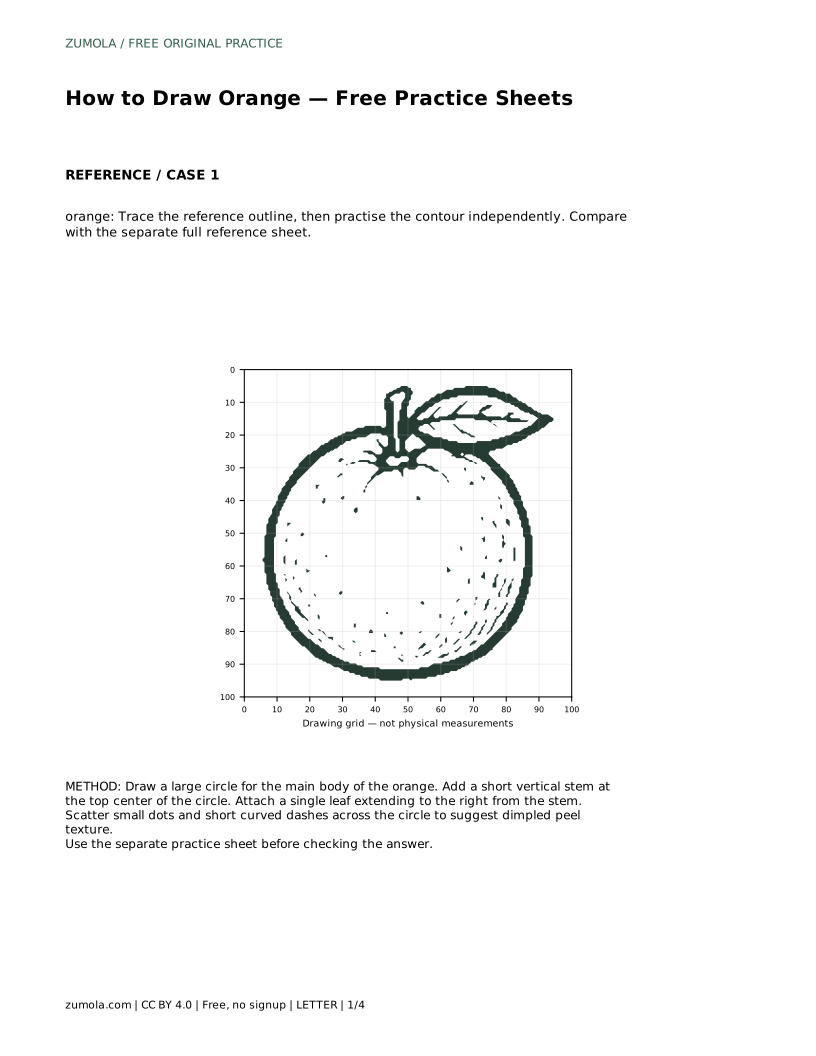
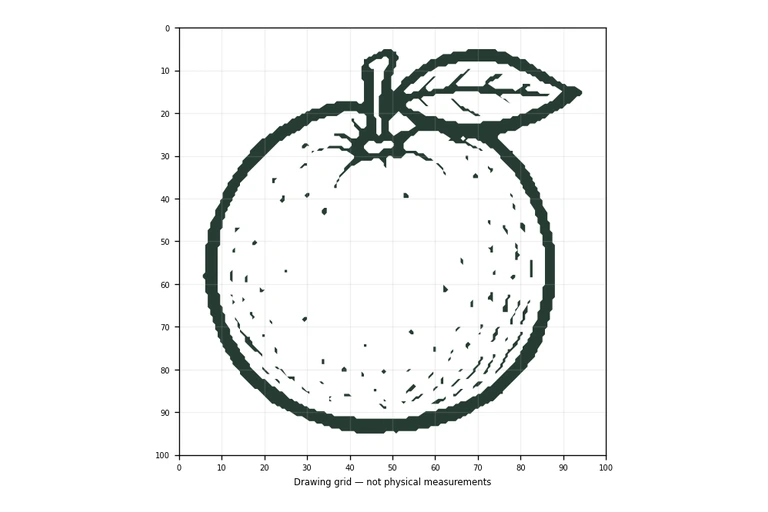
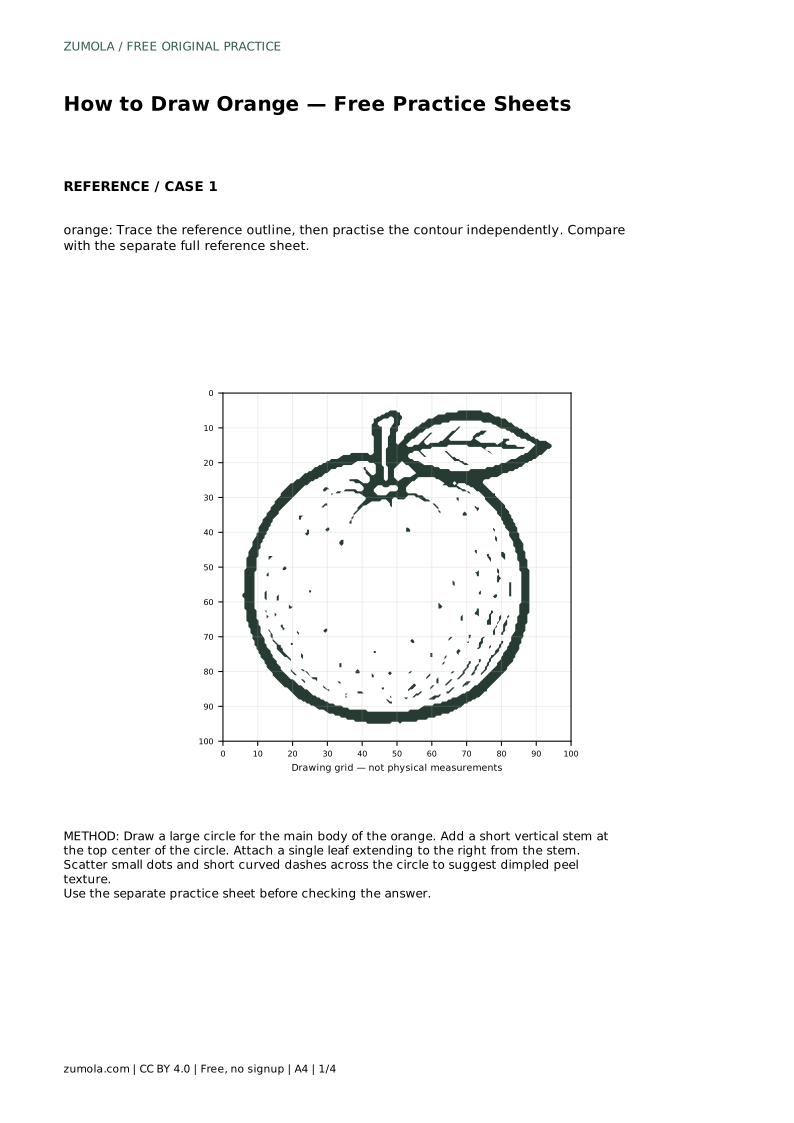
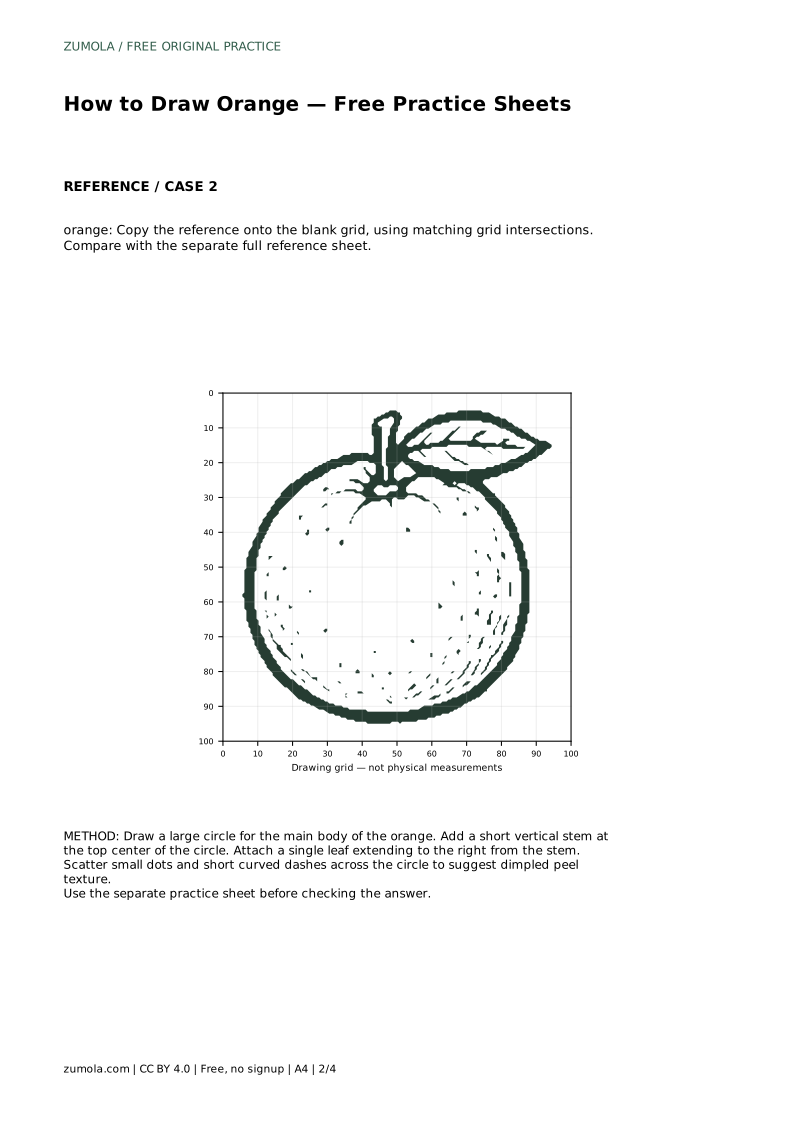
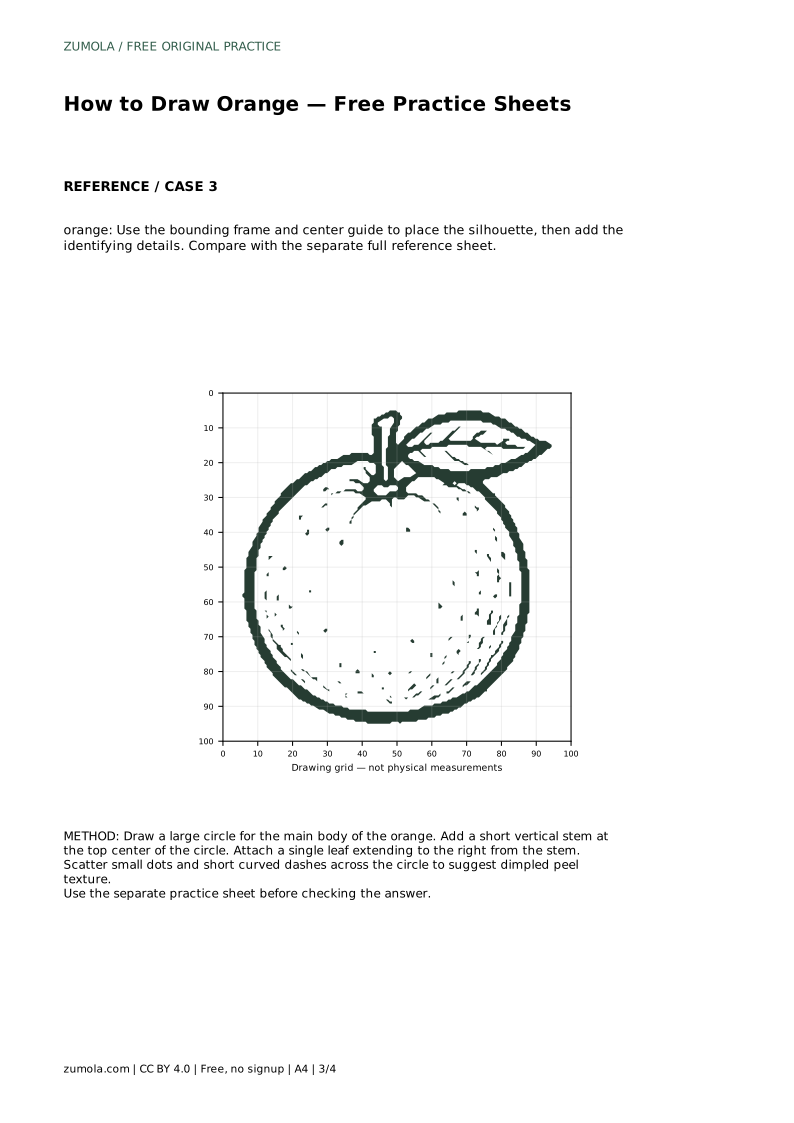
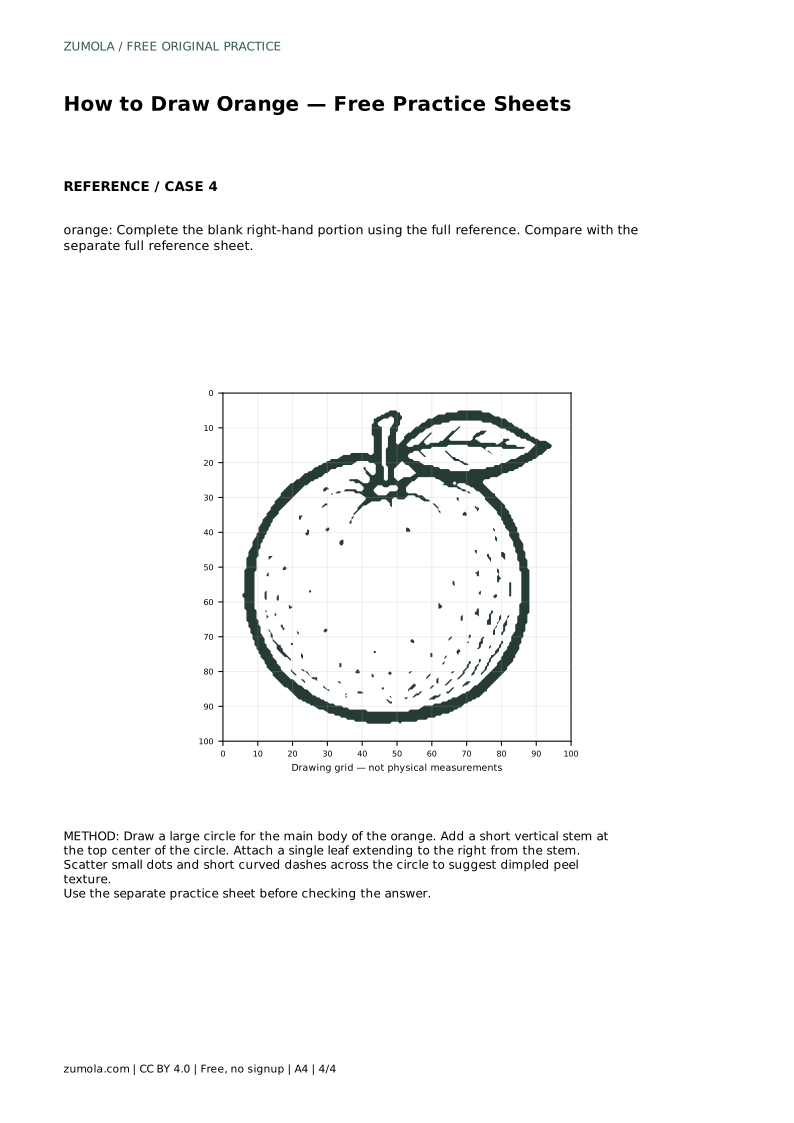
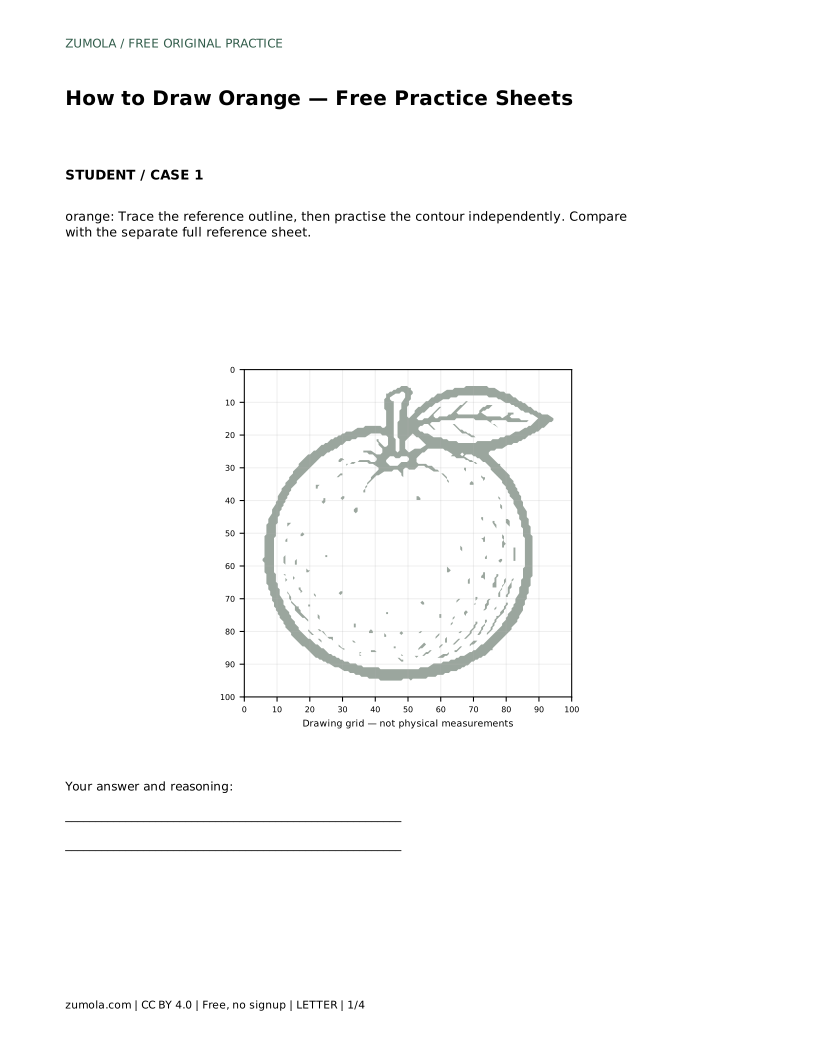
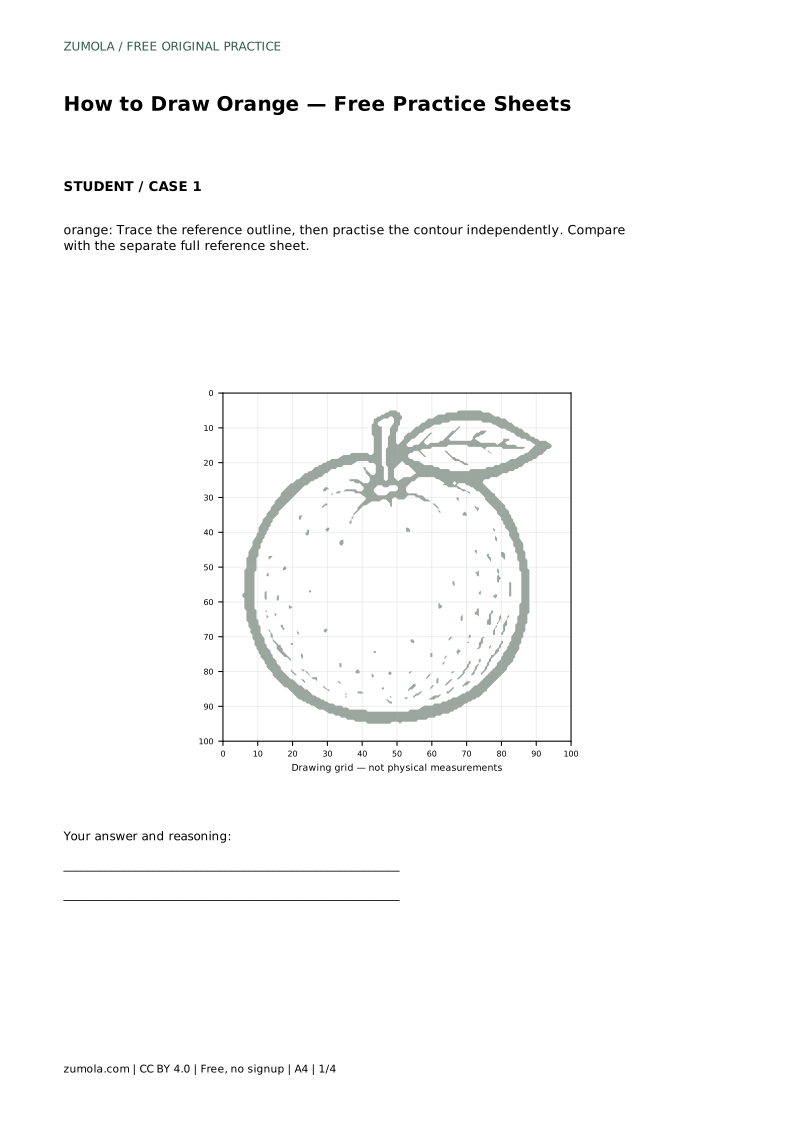
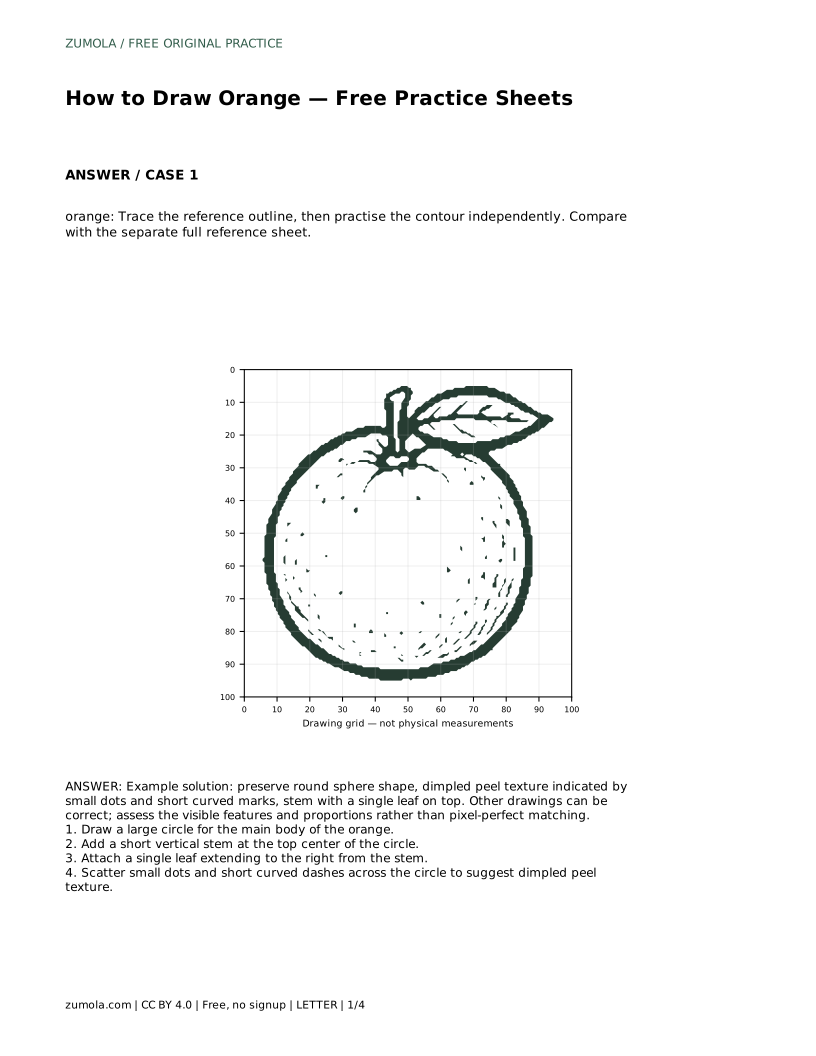
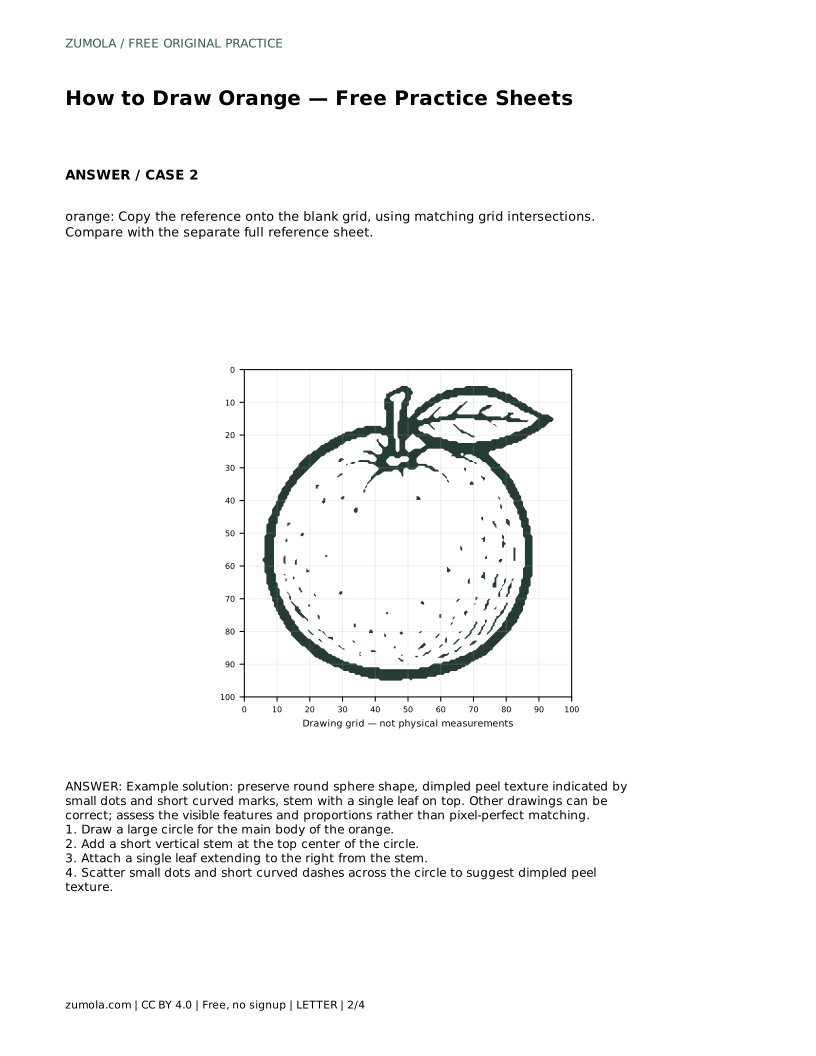
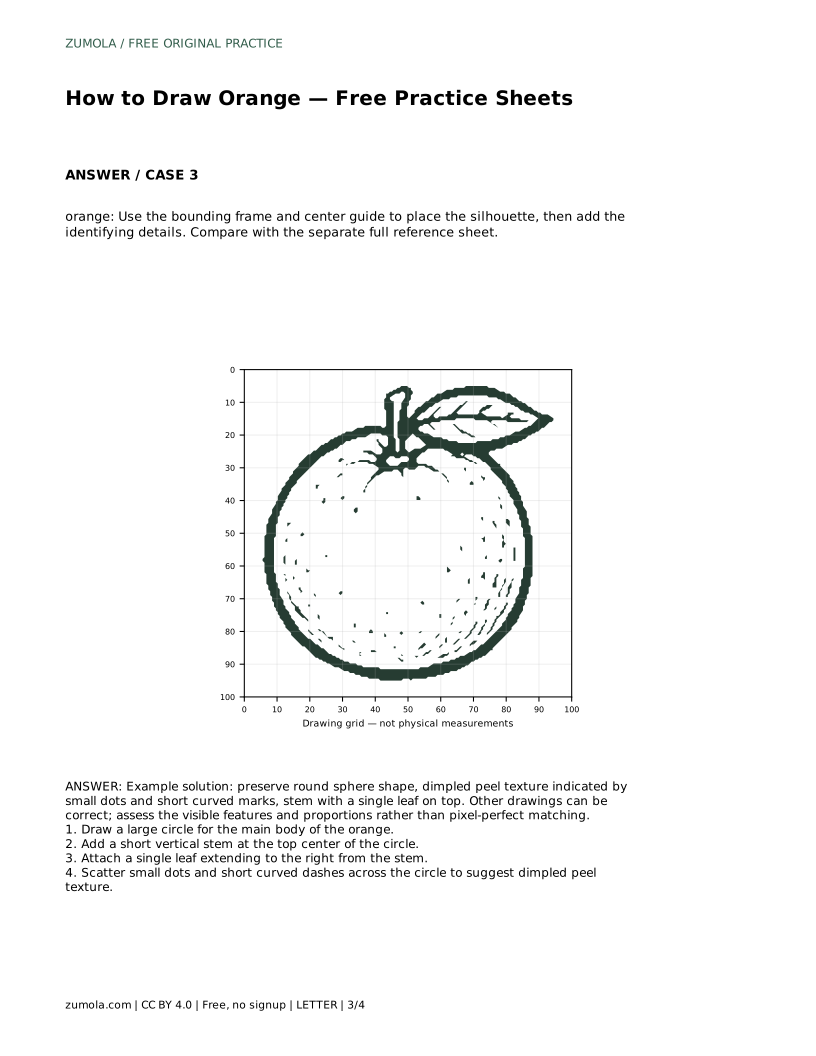
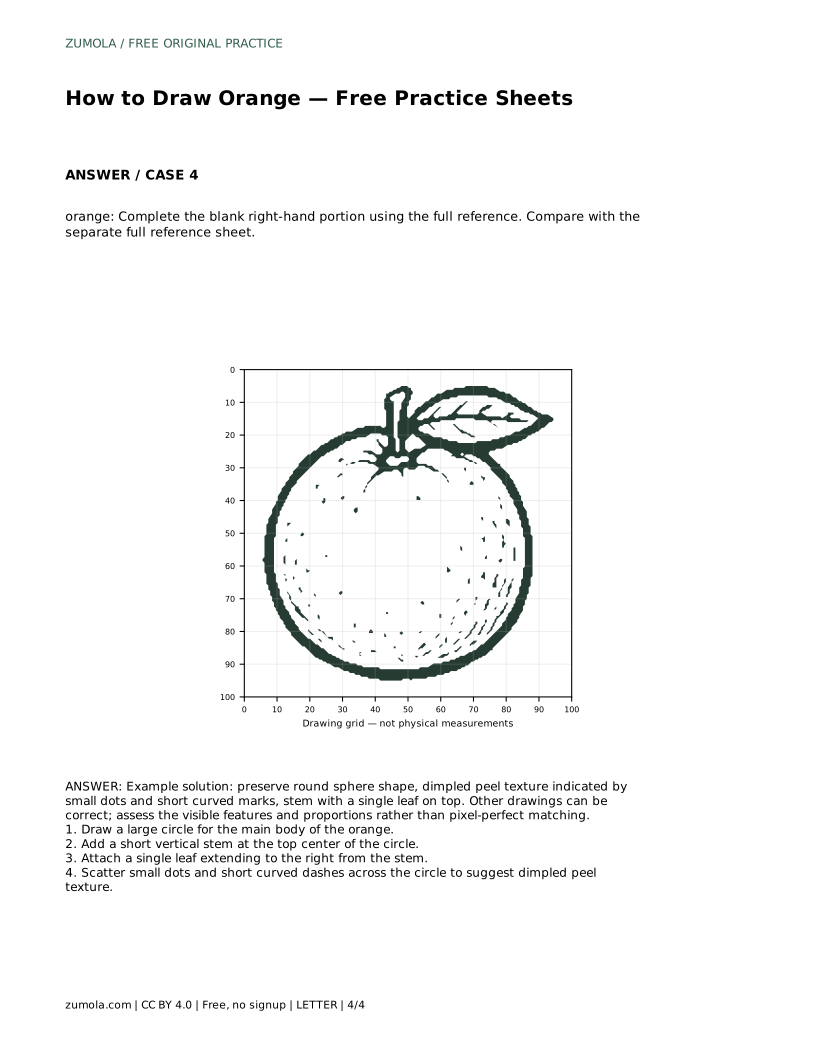
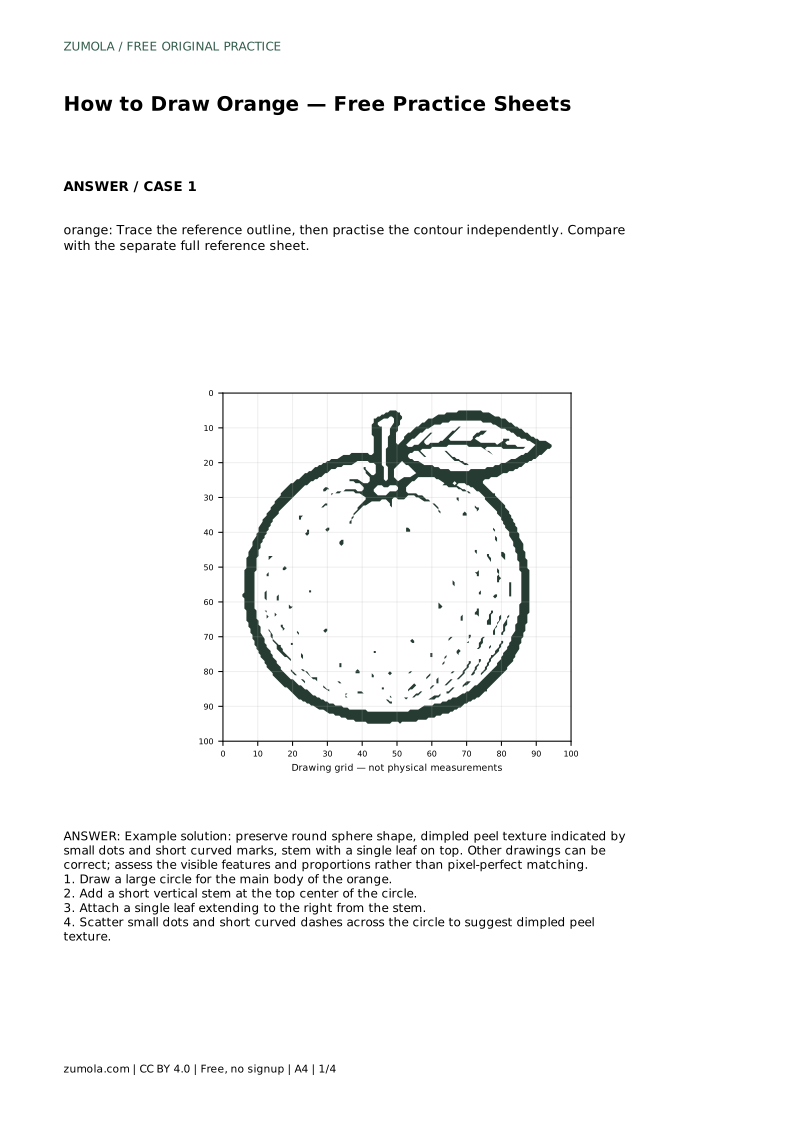
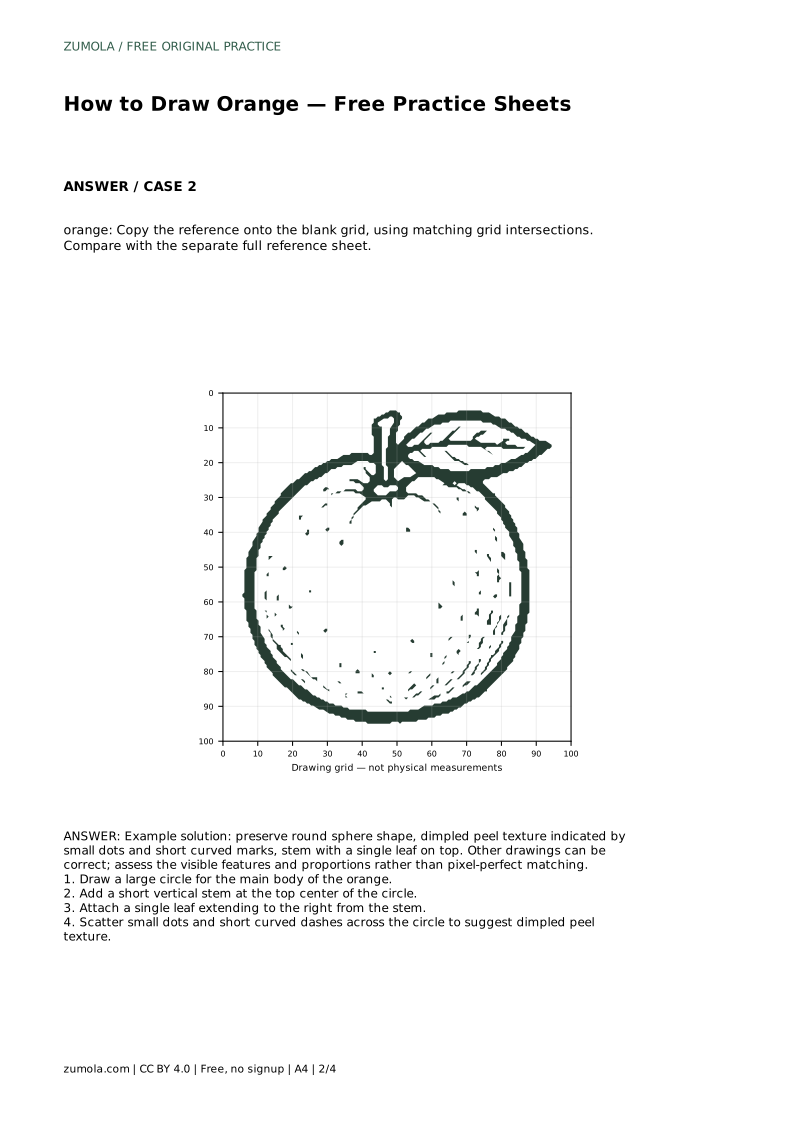
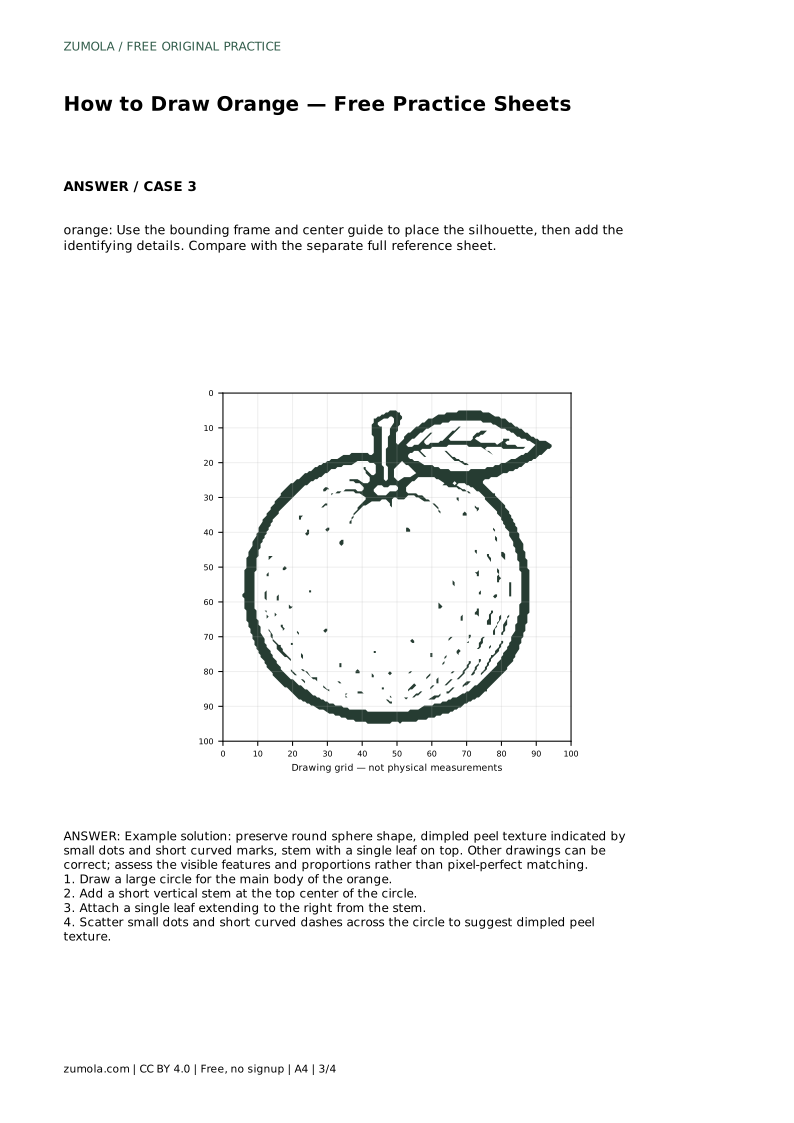
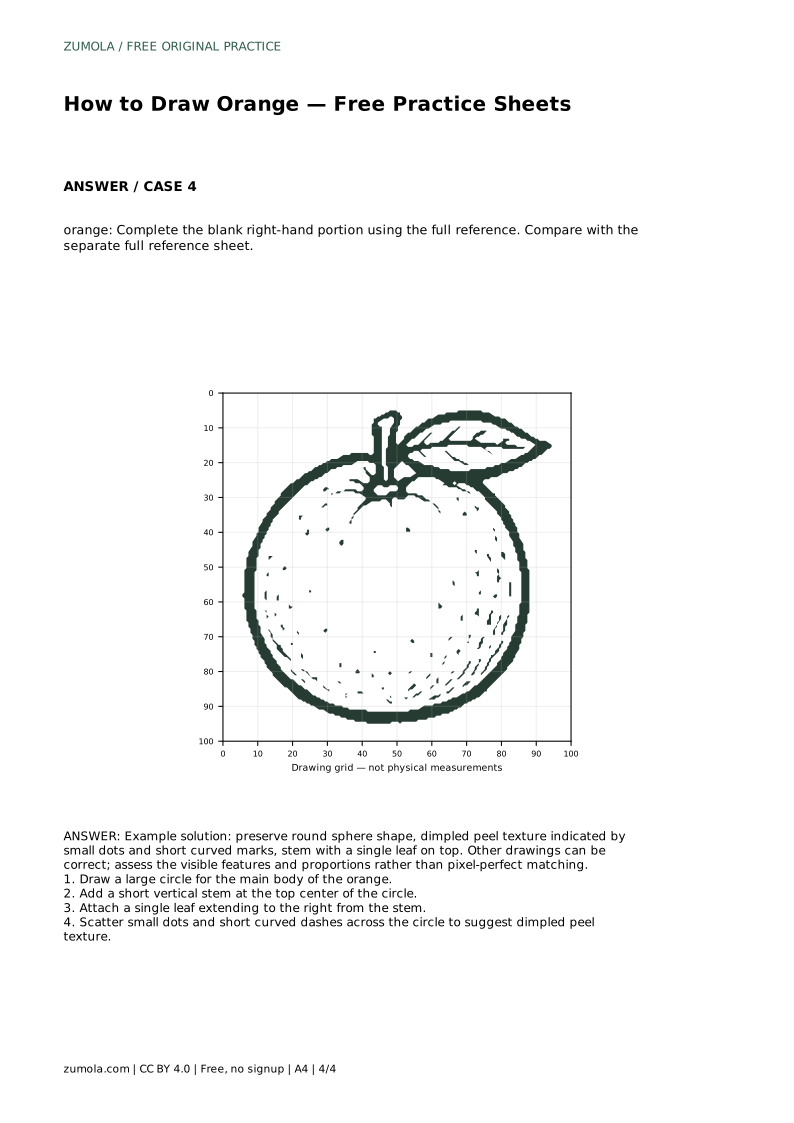
An orange is a forgiving subject to draw because its main shape is simple, but it rewards careful looking. The body is a round sphere, the stem sits at the top center, and one leaf extends to the right. Small dots and short curved dashes suggest the dimpled peel. This page explains how to build those features in order, then use the practice sheets to compare your drawing with the separate full reference sheet.
Begin by drawing a large circle for the main body of the orange. Treat it as a sphere rather than a flat disc: the outline should stay round and even, without flattening one side or stretching it into an oval. A light circle drawn first is easier to adjust than a heavy line.
Check the circle before adding details. Look at the top, bottom, left, and right edges and ask whether the distances across feel balanced. The stem and leaf will sit above the body, so leave a little room at the top of the page. The body remains the largest element; the stem and leaf are small additions, not competing shapes.
Add a short vertical stem at the top center of the circle. Keep it brief and upright, connecting clearly to the body rather than floating above it. Then attach a single leaf extending to the right from the stem. The leaf should look attached at its base, with a simple pointed or rounded tip.
One leaf is enough for this drawing. Avoid adding a cluster of leaves or extra stems unless you are deliberately varying the subject. The reference shows a single leaf on top, so matching that arrangement keeps your drawing comparable to the practice sheet.
Scatter small dots and short curved dashes across the circle to suggest dimpled peel texture. Spread them over the visible surface rather than clustering them in one spot. Keep the marks light and varied; the texture is a suggestion, not a pattern of identical symbols.
Texture should follow the round form. Marks near the edges can curve slightly with the outline, while marks near the center can stay short and simple. Do not let texture marks overwhelm the circle or spill outside it. The stem and leaf usually stay smoother, so keep most dots and dashes on the body.
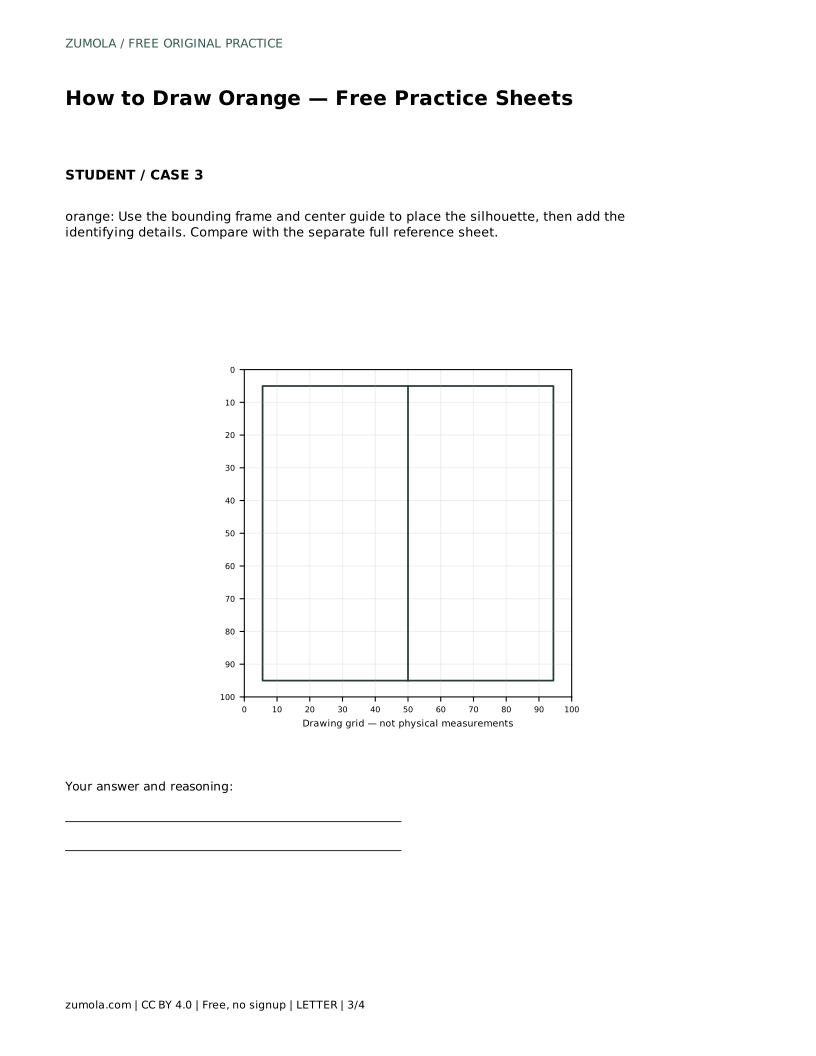
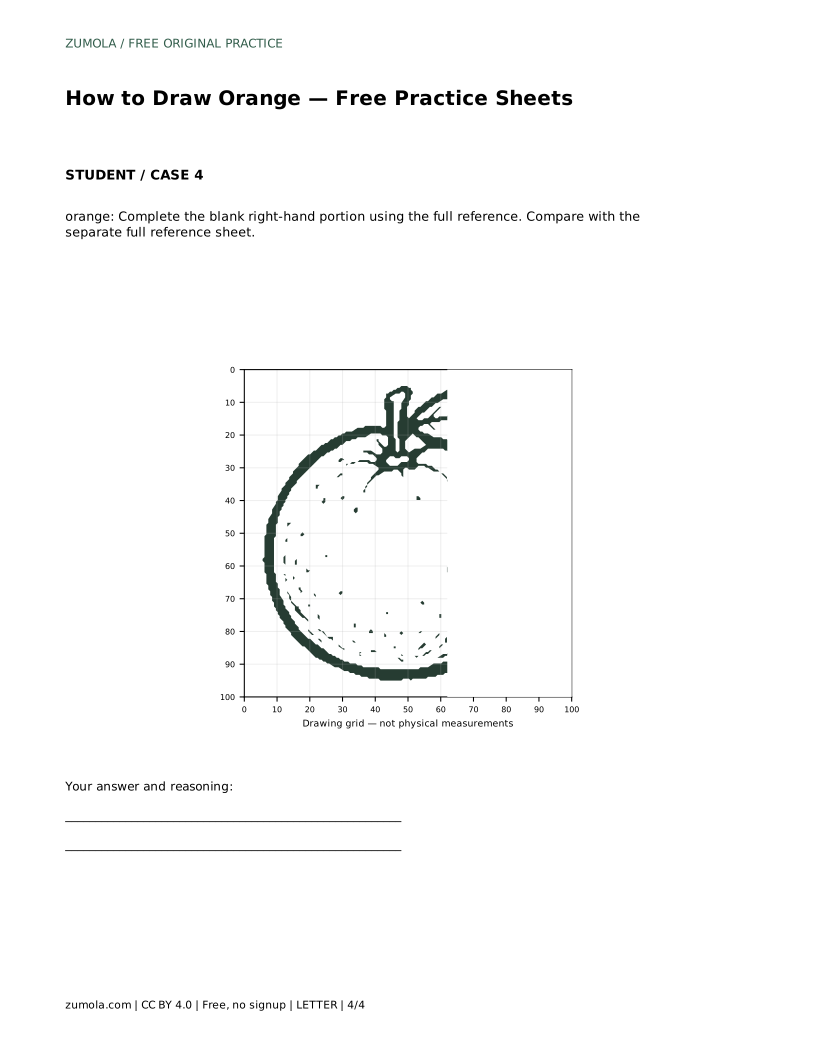
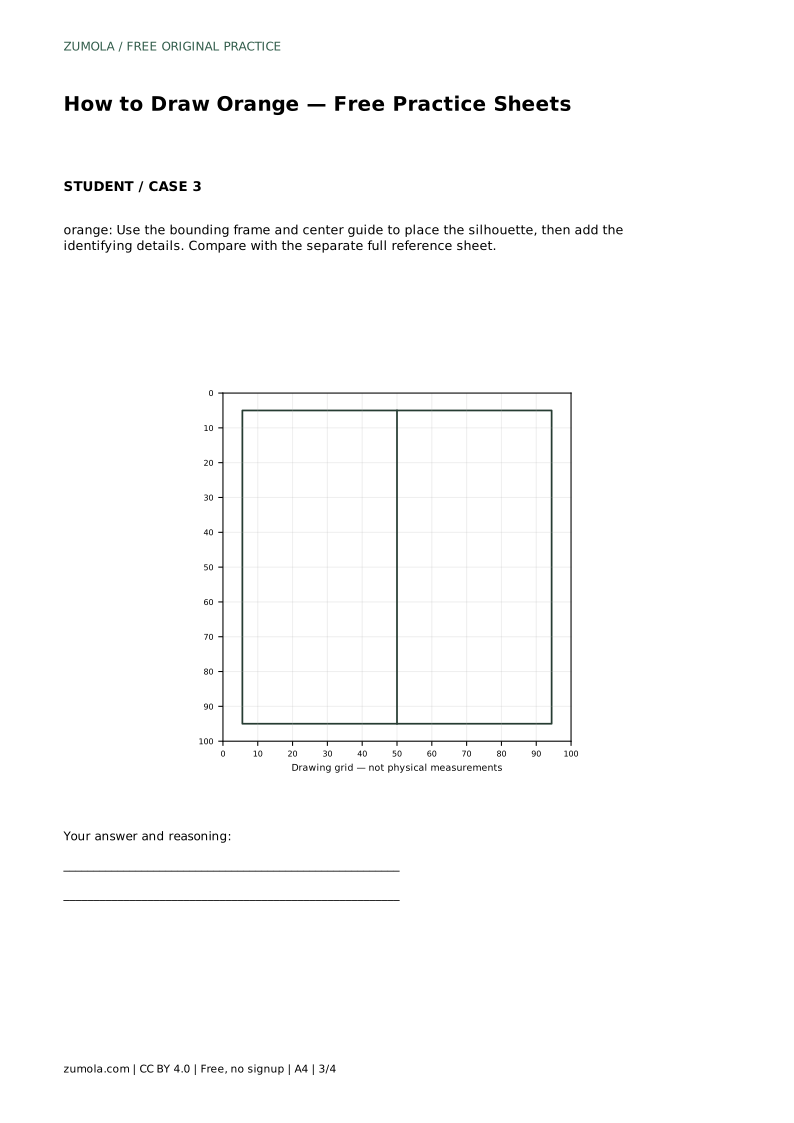
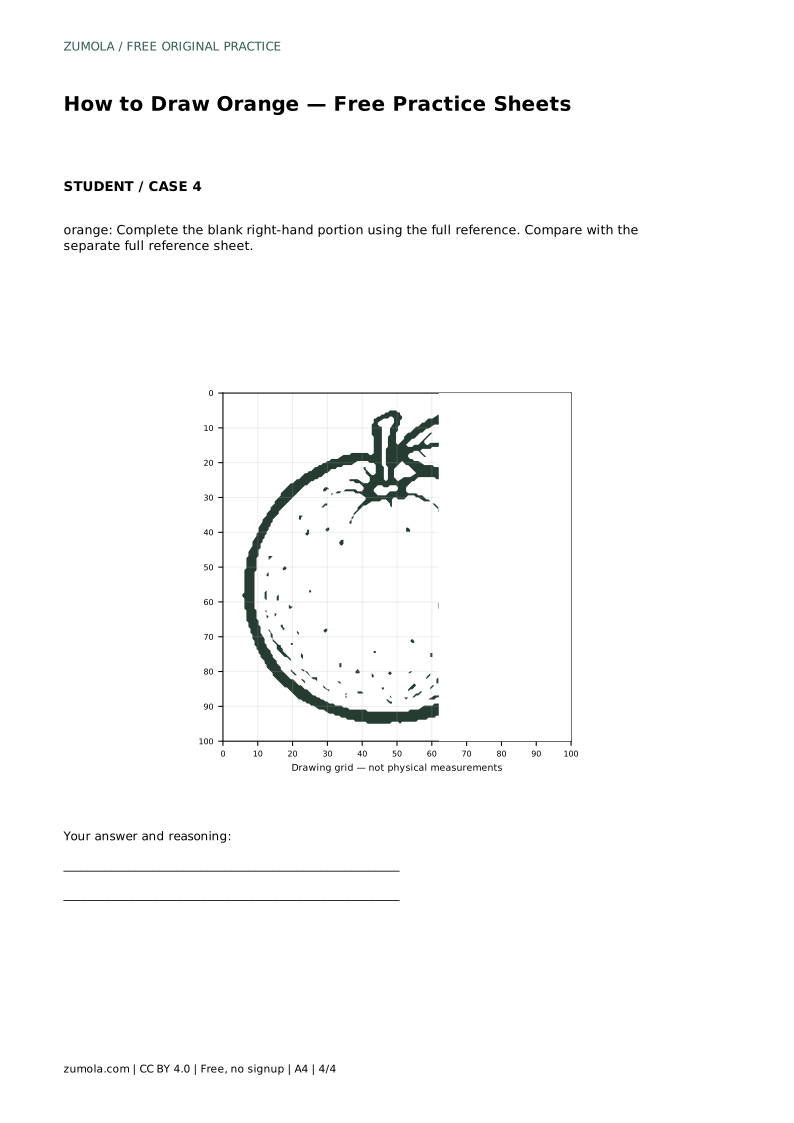
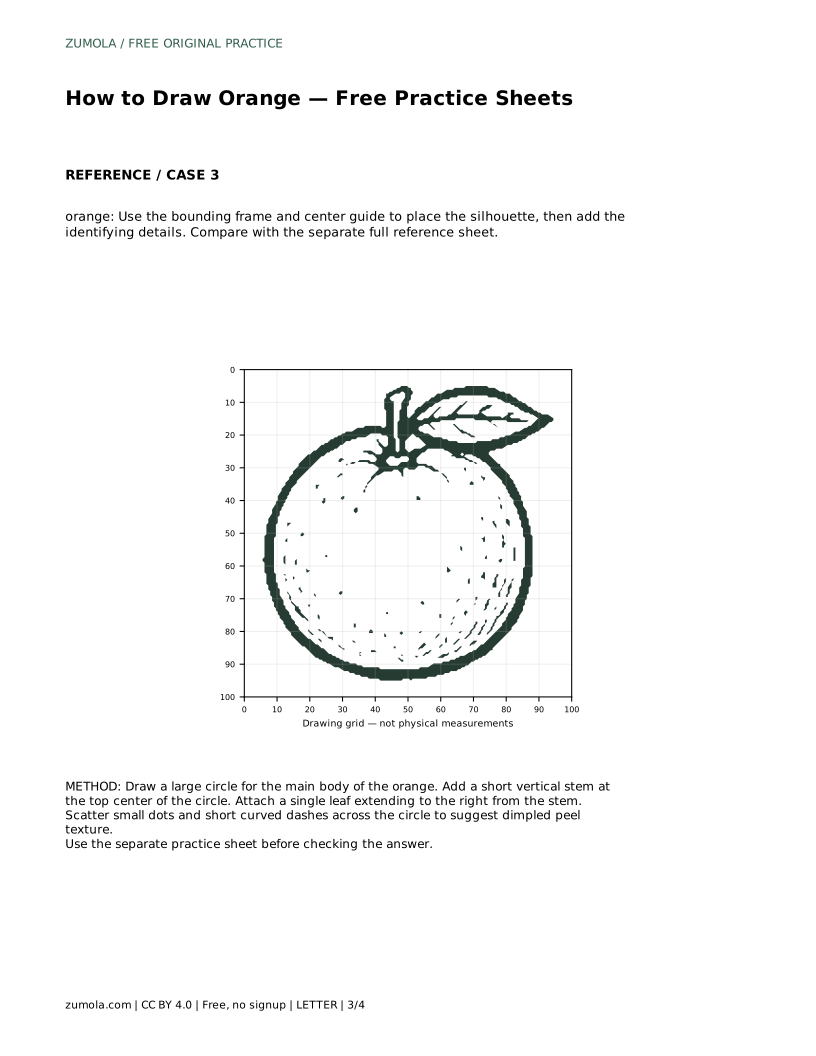
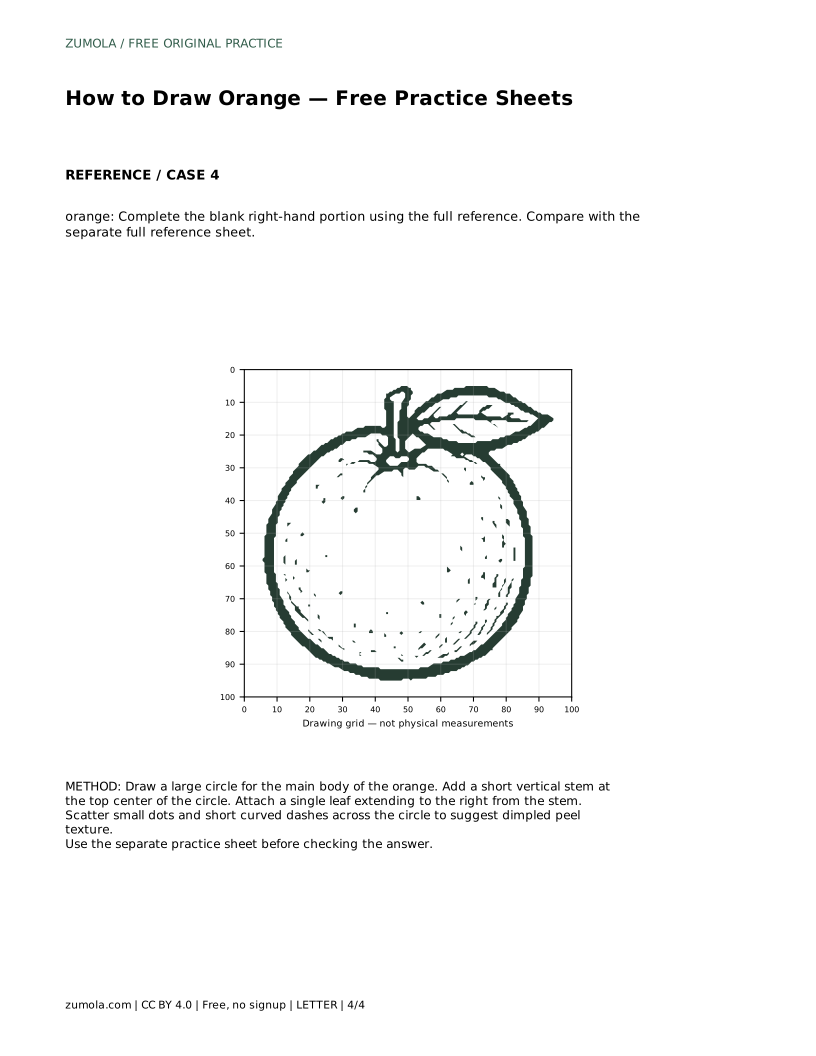
The practice sheets offer different ways to work on the same subject. In the tracing exercise, trace the reference outline, then practise the contour independently. Compare your result with the separate full reference sheet. In the grid exercise, copy the reference onto the blank grid using matching grid intersections. In the guide exercise, use the bounding frame and center guide to place the silhouette before adding identifying details. In the partial exercise, complete the blank right-hand portion using the full reference.
Each format asks for the same visible features: a round body, a short vertical stem at the top center, a single leaf extending right, and dimpled peel texture. Other drawings can be correct, so assess the visible features and proportions rather than pixel-perfect matching.
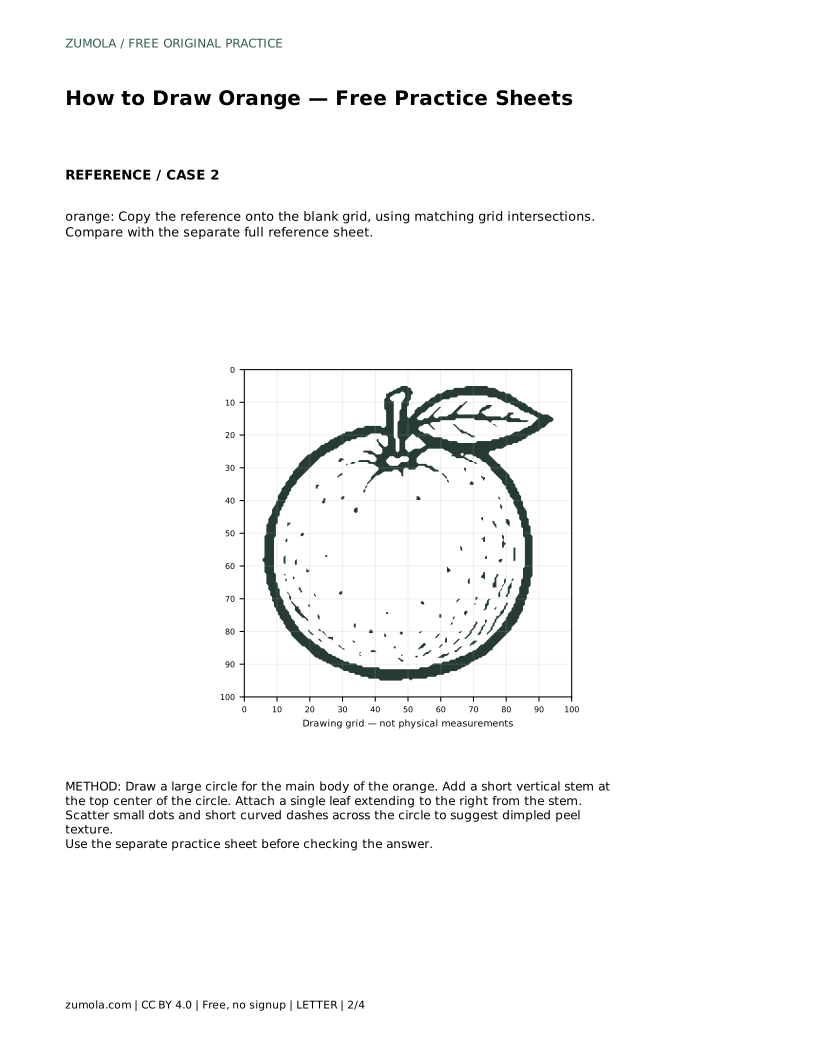
orange: Trace the reference outline, then practise the contour independently. Compare with the separate full reference sheet.
Example solution: preserve round sphere shape, dimpled peel texture indicated by small dots and short curved marks, stem with a single leaf on top. Other drawings can be correct; assess the visible features and proportions rather than pixel-perfect matching. Draw a large circle for the main body of the orange. Add a short vertical stem at the top center of the circle. Attach a single leaf extending to the right from the stem. Scatter small dots and short curved dashes across the circle to suggest dimpled peel texture.
The reference shows a single leaf extending to the right from the stem. Following that arrangement makes comparison with the full reference sheet easier, though other arrangements can still be valid drawings.
Enough small dots and short curved dashes to suggest dimpled peel without hiding the round body. Keep the marks light, varied, and inside the circle.
Check the round body, the short vertical stem at the top center, the single leaf attached and extending right, and the spread of dimpled peel texture.
All drawing practice · Free coordinate paper
Original resources · CC BY 4.0 · Free for personal and classroom use with attribution.