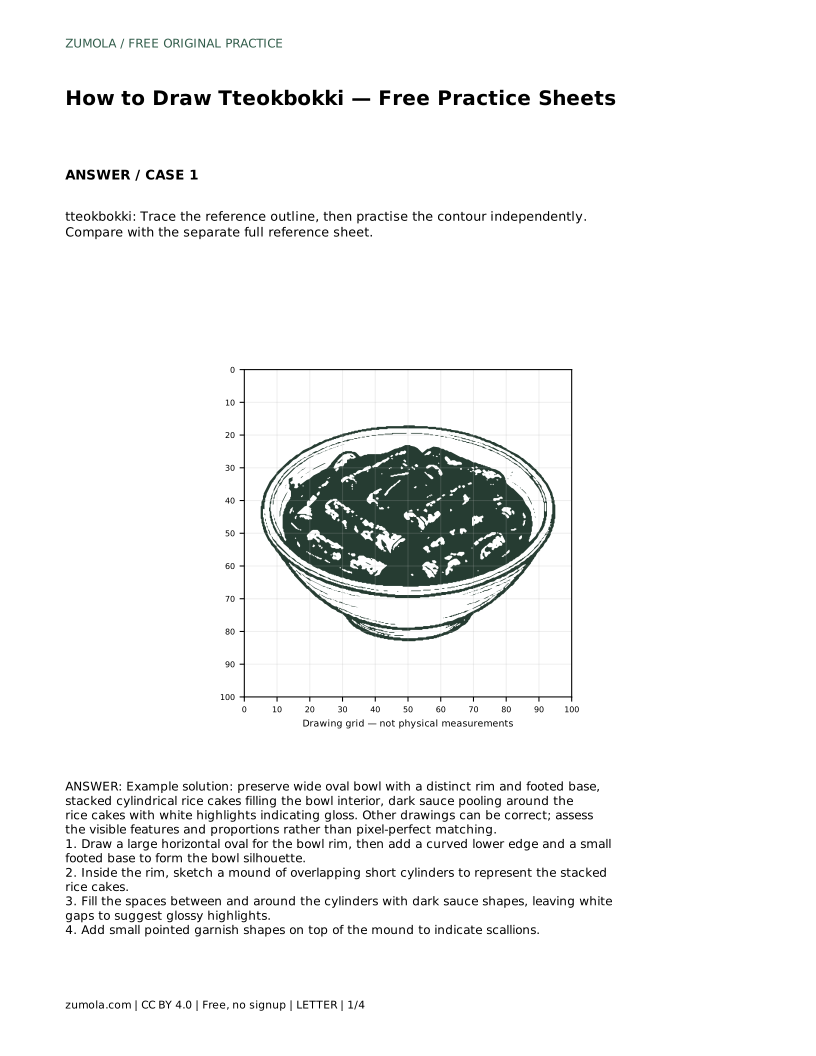
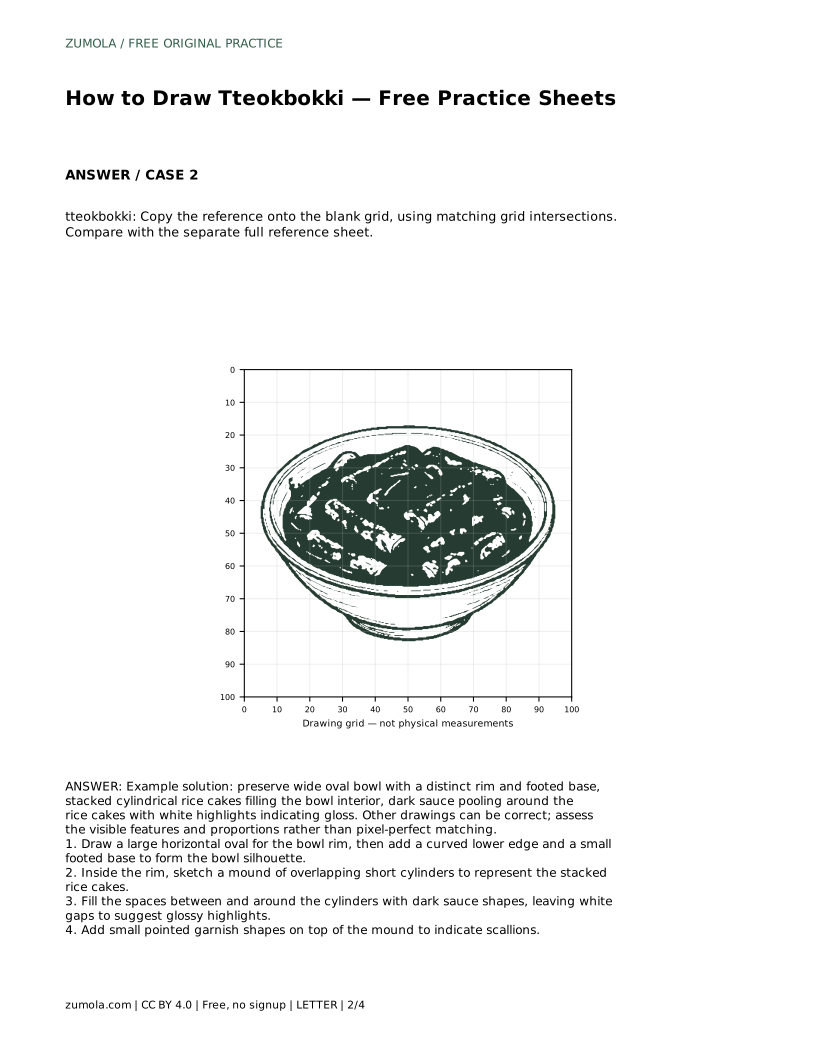
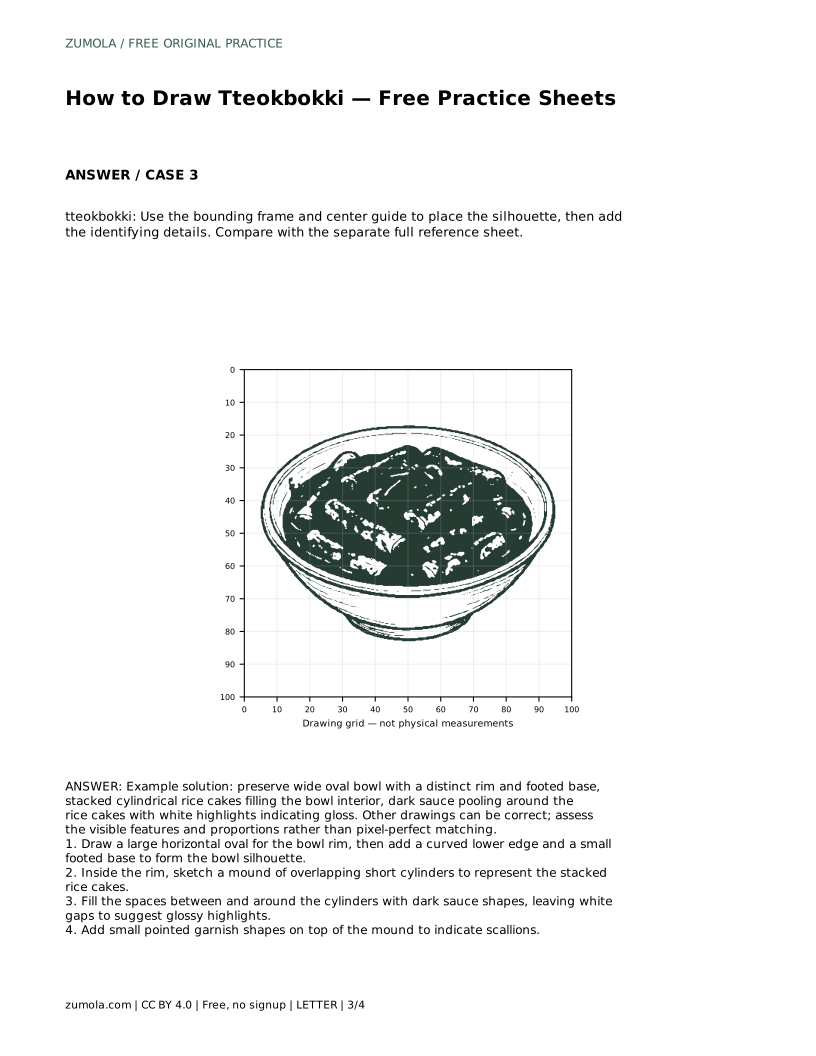
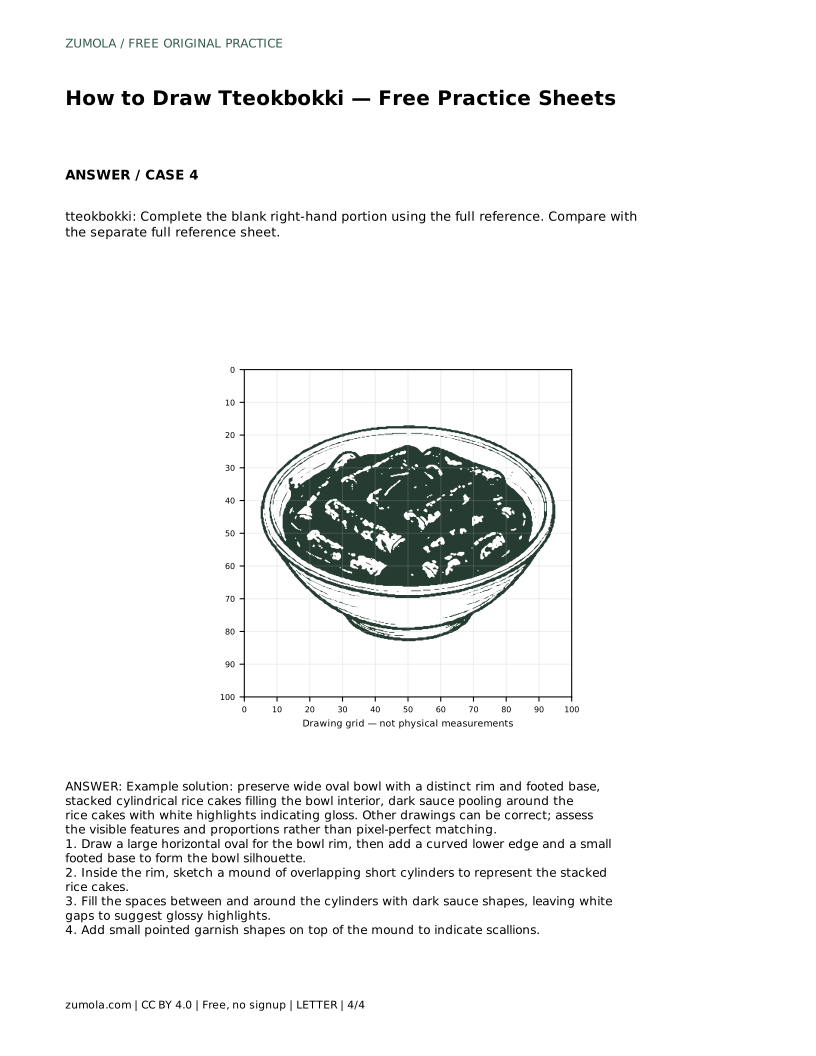
Reference diagrams
LETTER · Download PDF
A4 · Download PDF
Free original resources
Learn to draw tteokbokki by building a wide oval bowl, stacked cylindrical rice cakes, glossy dark sauce and scallion garnish, then check proportions with a rubric.
Four original cases, with reference diagrams, practice sheets and worked answers. Everything is free; no signup required.
LETTER · Download PDF
A4 · Download PDF
LETTER · Download PDF
A4 · Download PDF
LETTER · Download PDF
A4 · Download PDF
Use A4 or US Letter to match your printer. Use the stated values and conditions to solve each exercise; diagrams are not physical measuring rulers.
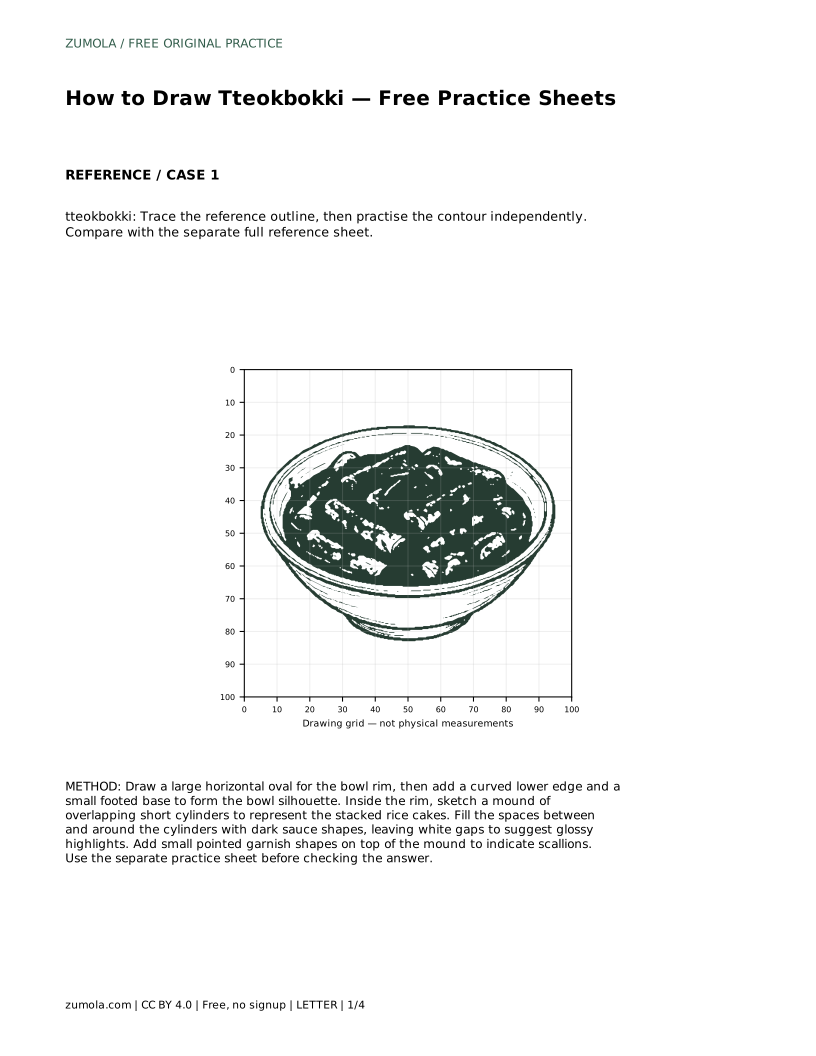
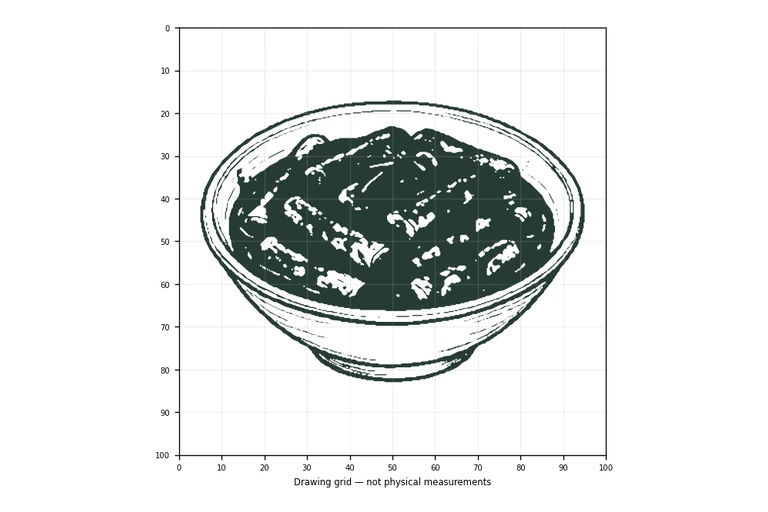
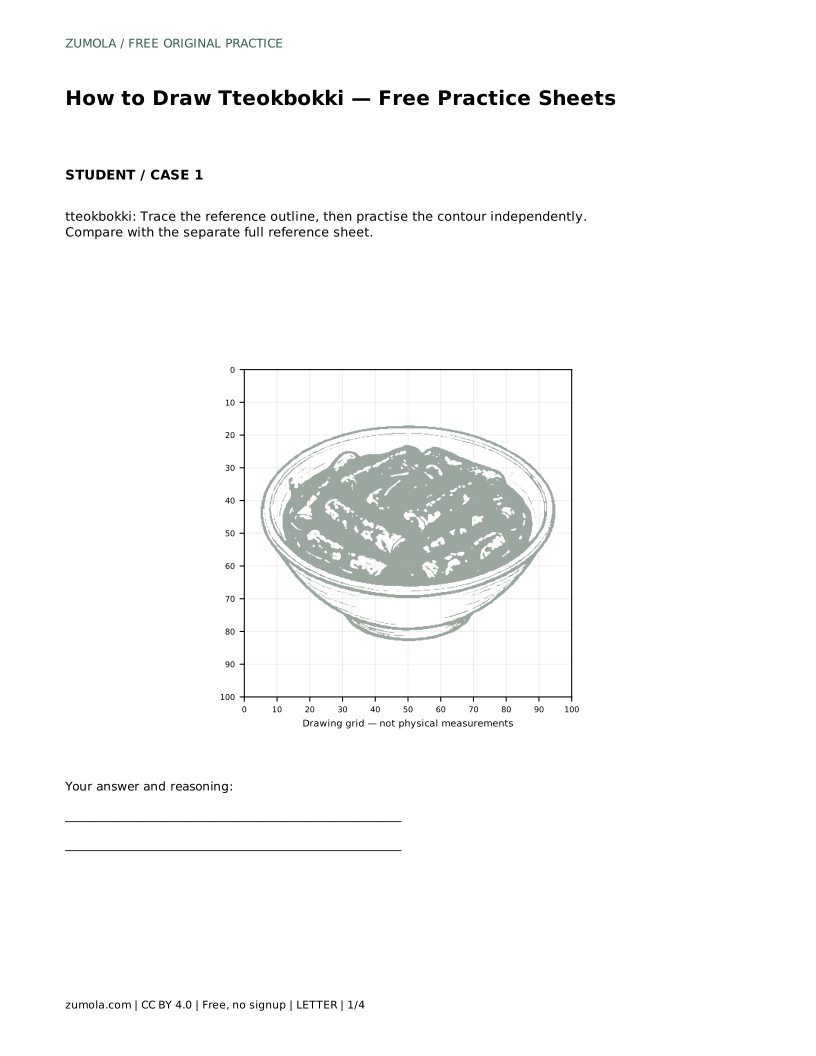
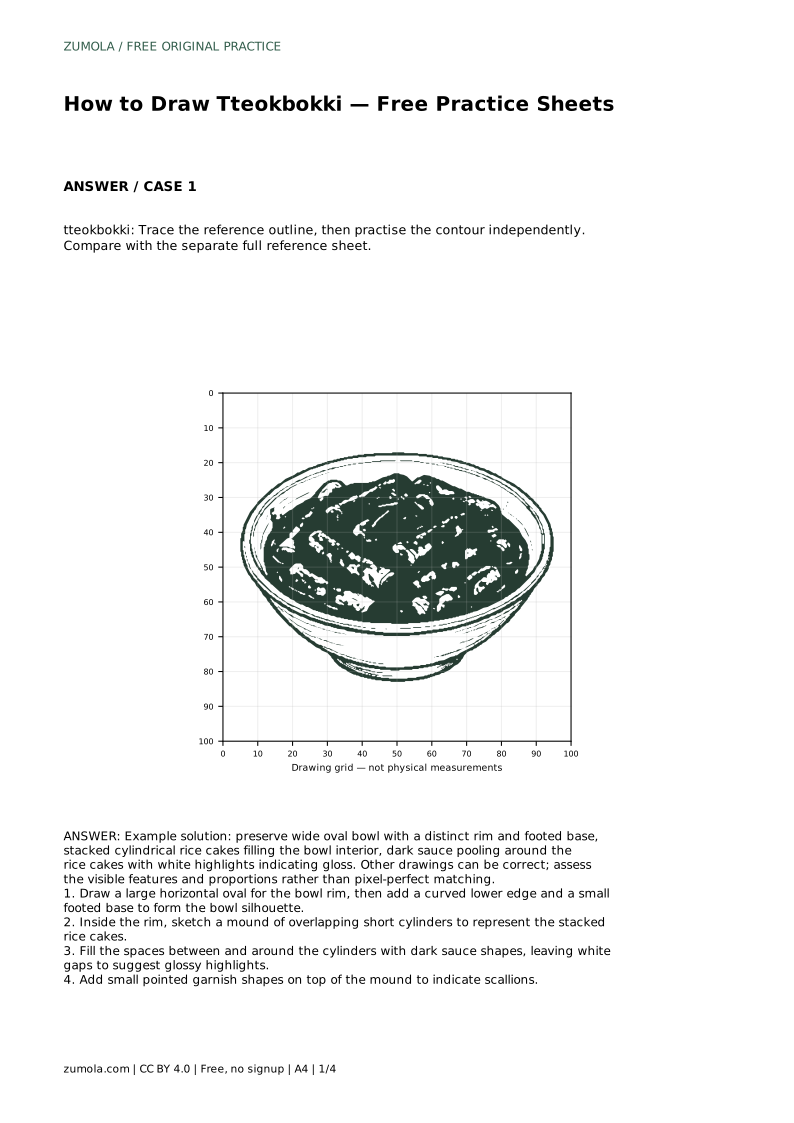
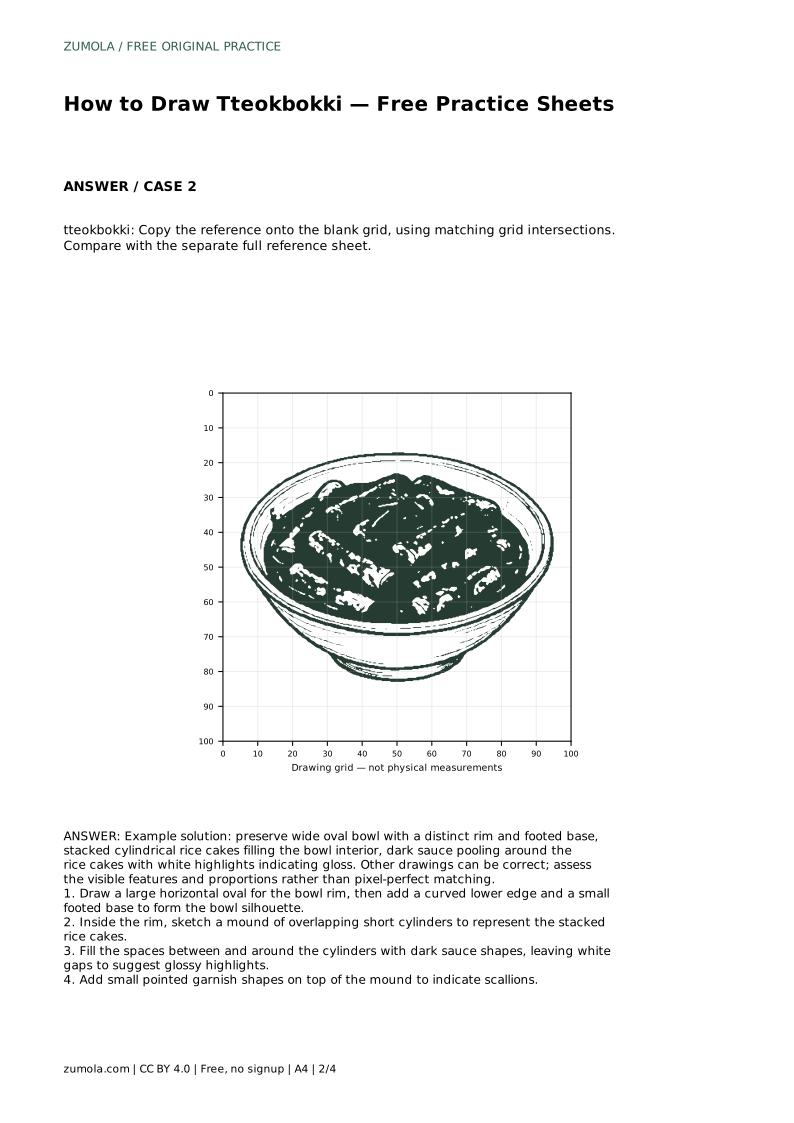
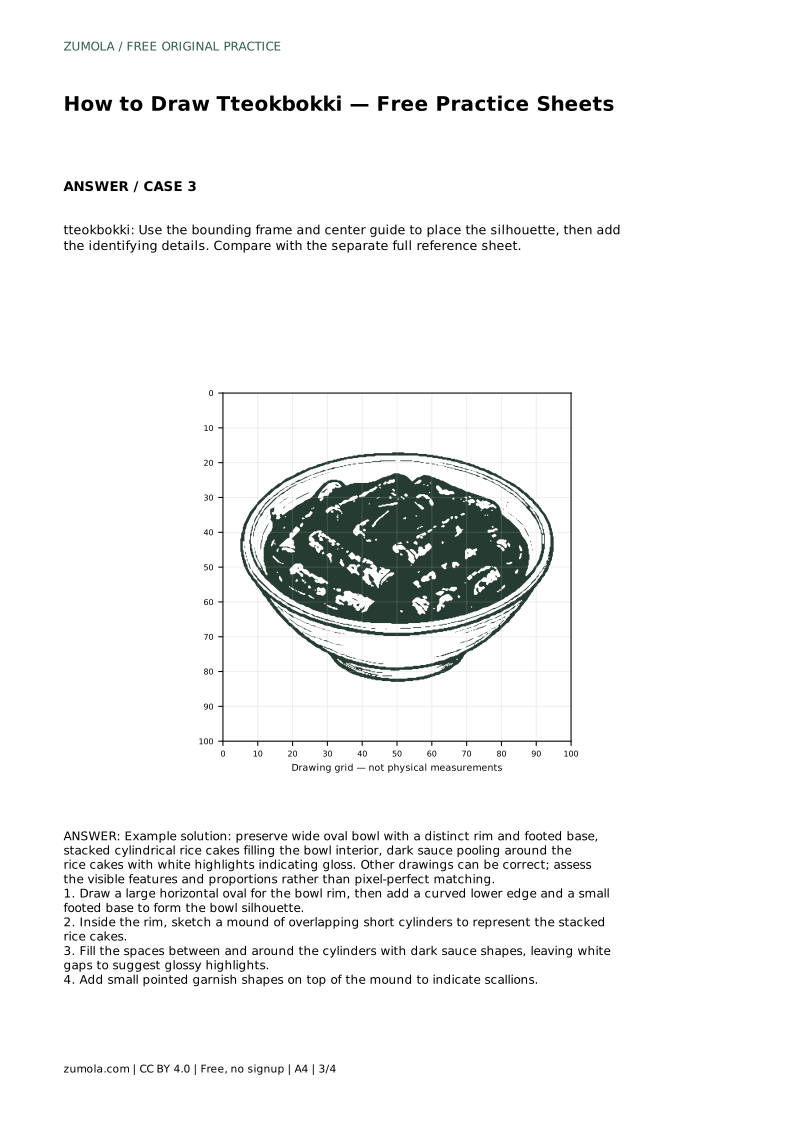
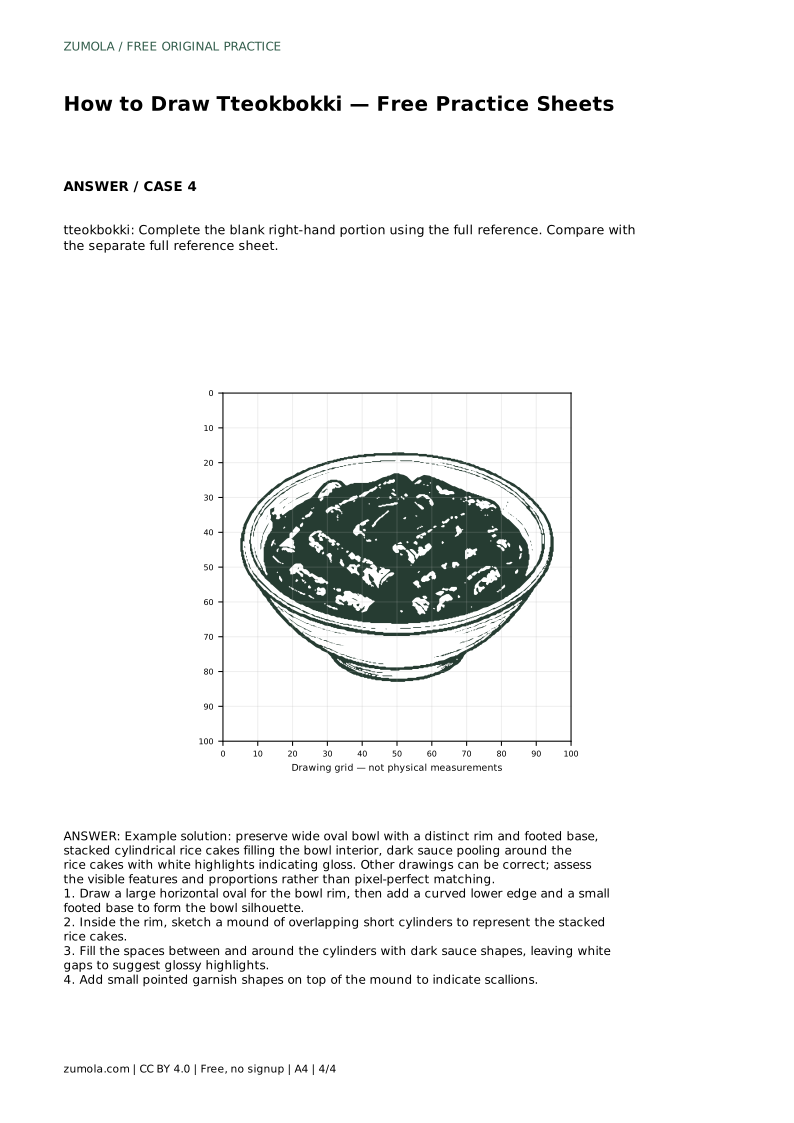
Tteokbokki is a Korean rice cake dish, and its drawing is mostly a problem of stacking shapes inside a bowl. This page shows how to build the silhouette first, then place the rice cakes, sauce and garnish so the food reads clearly. The method suits tracing, grid copying or free drawing from a reference. Because drawings can differ and still be correct, judge your work by visible features and proportions rather than an exact match.
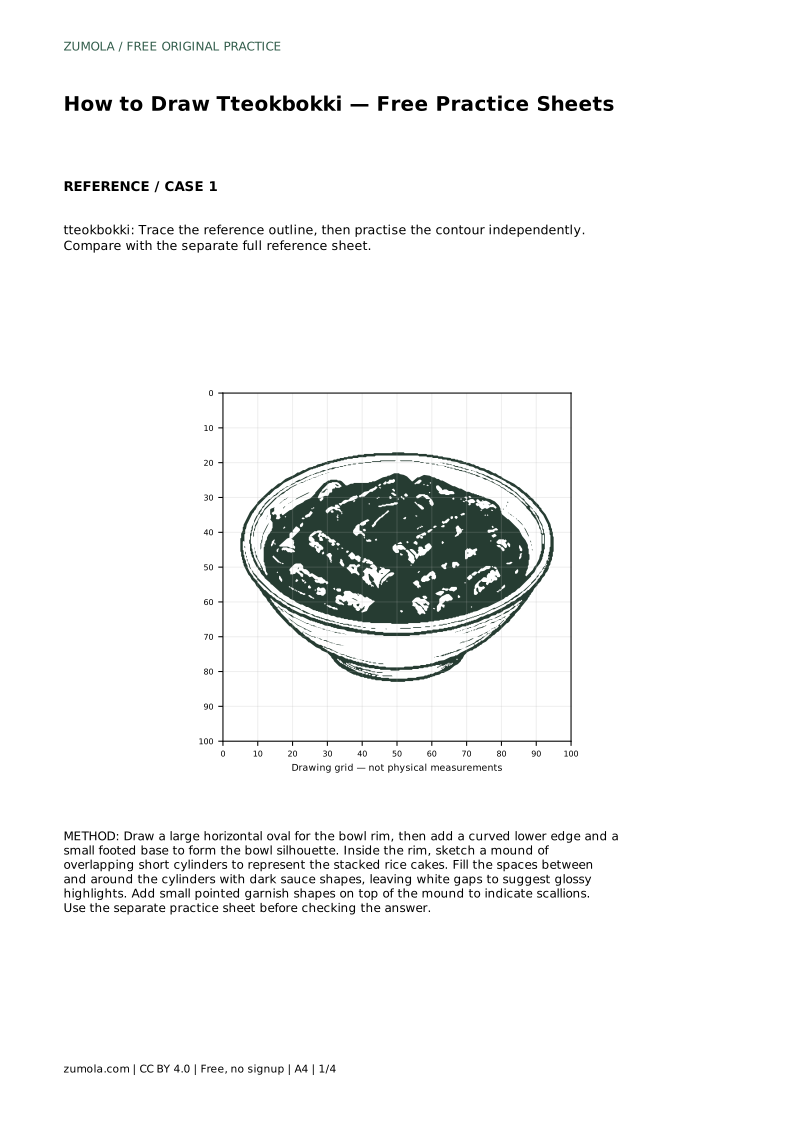
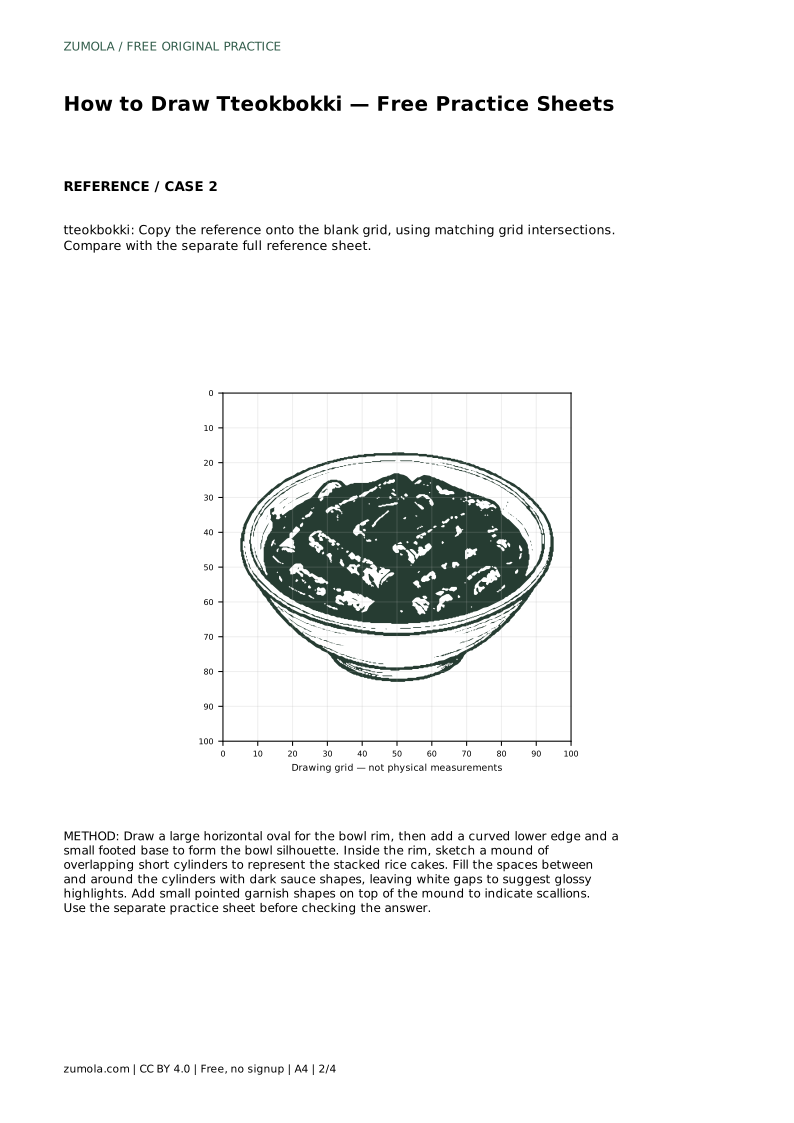
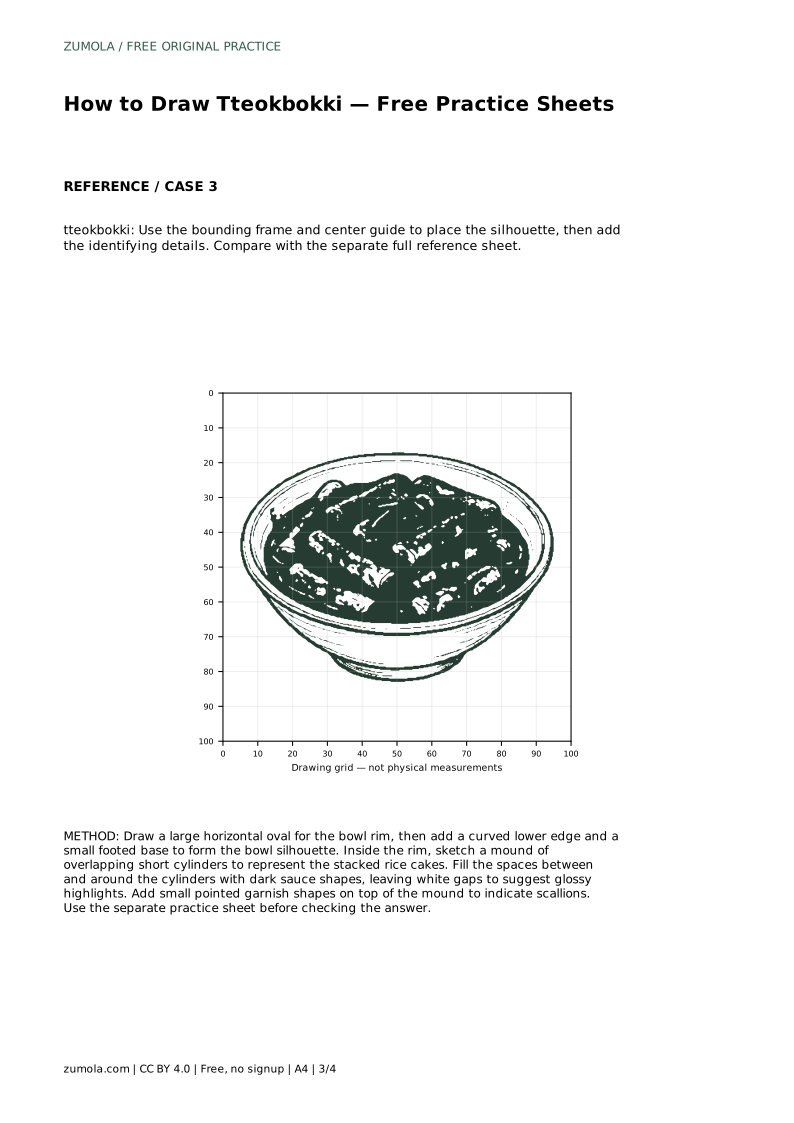
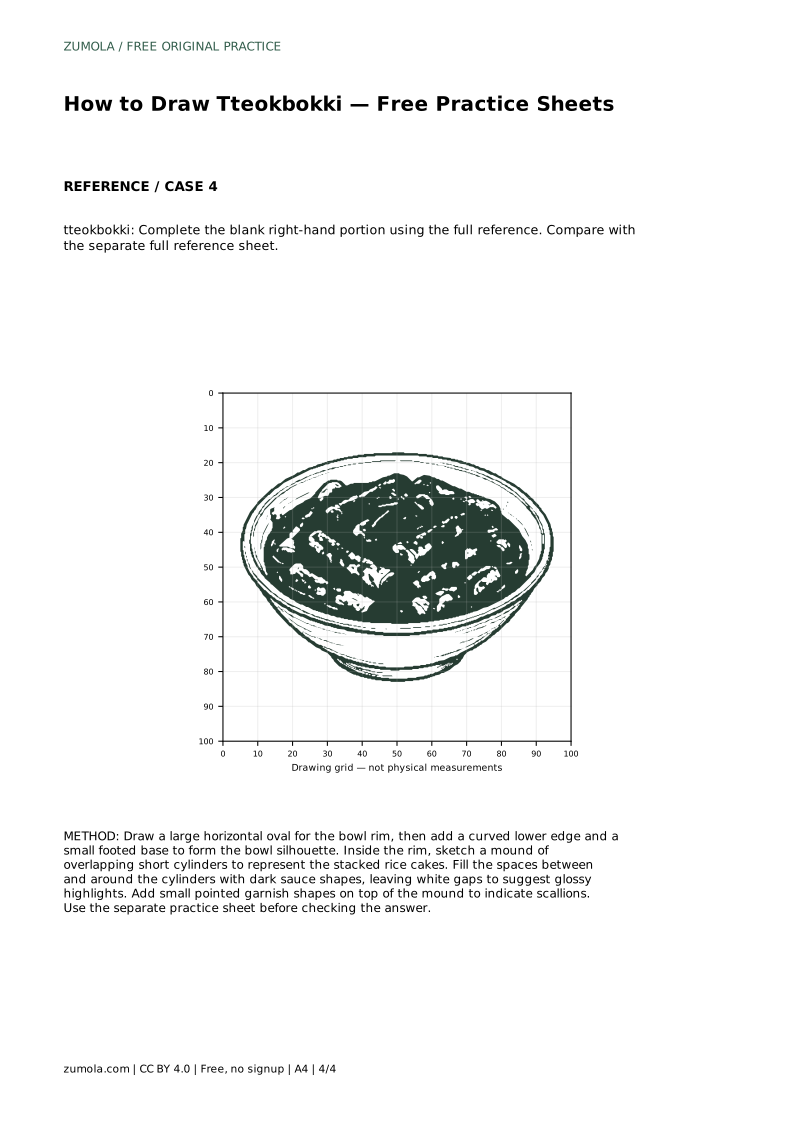
Start with the container, because it controls where everything else can sit. A tteokbokki bowl is usually wide and shallow, with a clear rim and a small footed base. Draw a large horizontal oval for the rim opening. From the ends of that oval, curve a lower edge downward to suggest the outside of the bowl. Add a short, narrow base beneath the curve so the bowl appears to rest on a surface rather than float.
Keep the rim oval wide rather than circular. A narrow oval makes the bowl look tall and cup-like, which changes the dish's character. Check that the left and right sides of the lower edge are roughly balanced, and that the base sits near the center of the bowl's width.
Inside the rim, sketch a mound of overlapping short cylinders. Each rice cake is a rounded rectangle with slightly curved ends, drawn at a similar length. Overlap them so some sit in front of others, which creates depth without needing shading. Keep the mound inside the rim oval, leaving a margin so the bowl edge stays visible.
Vary the angle slightly from cake to cake. Perfectly parallel cylinders look like a diagram; small tilts look like food piled in a bowl. Avoid making individual cakes much longer than the bowl's width, since that breaks the scale.
Fill the gaps between and around the cylinders with dark sauce shapes. Let the sauce pool near the bottom of the bowl and creep between the rice cakes. Leave a few white gaps on the sauce and on the upper edges of the cakes to suggest glossy highlights. Gloss is shown by contrast, not by adding a separate shiny object.
Finish with small pointed garnish shapes on top of the mound to indicate scallions. Keep them short and scattered rather than evenly spaced. A few pieces resting against the rim can help the food feel contained by the bowl.
Compare your drawing with the separate full reference sheet after finishing, not while drawing every line. Look for the wide oval rim, the footed base, the stacked cylinders, the dark sauce with highlights and the garnish. If one feature is missing, adjust that area rather than redrawing everything.
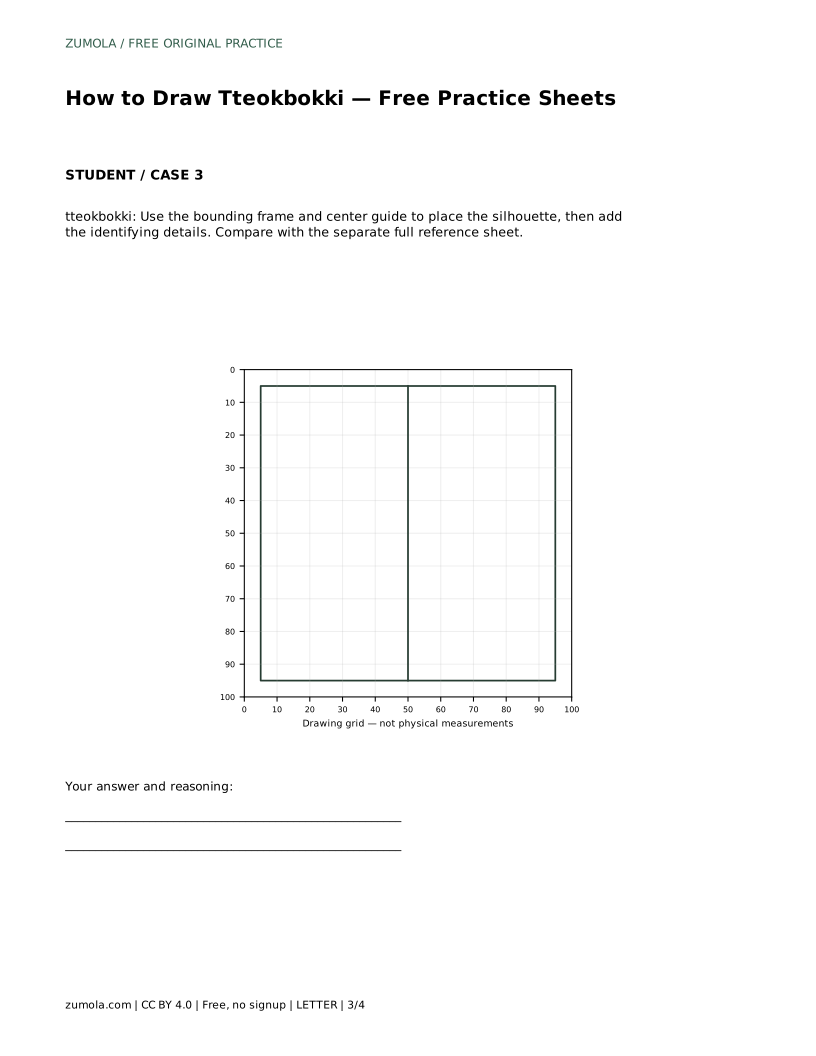
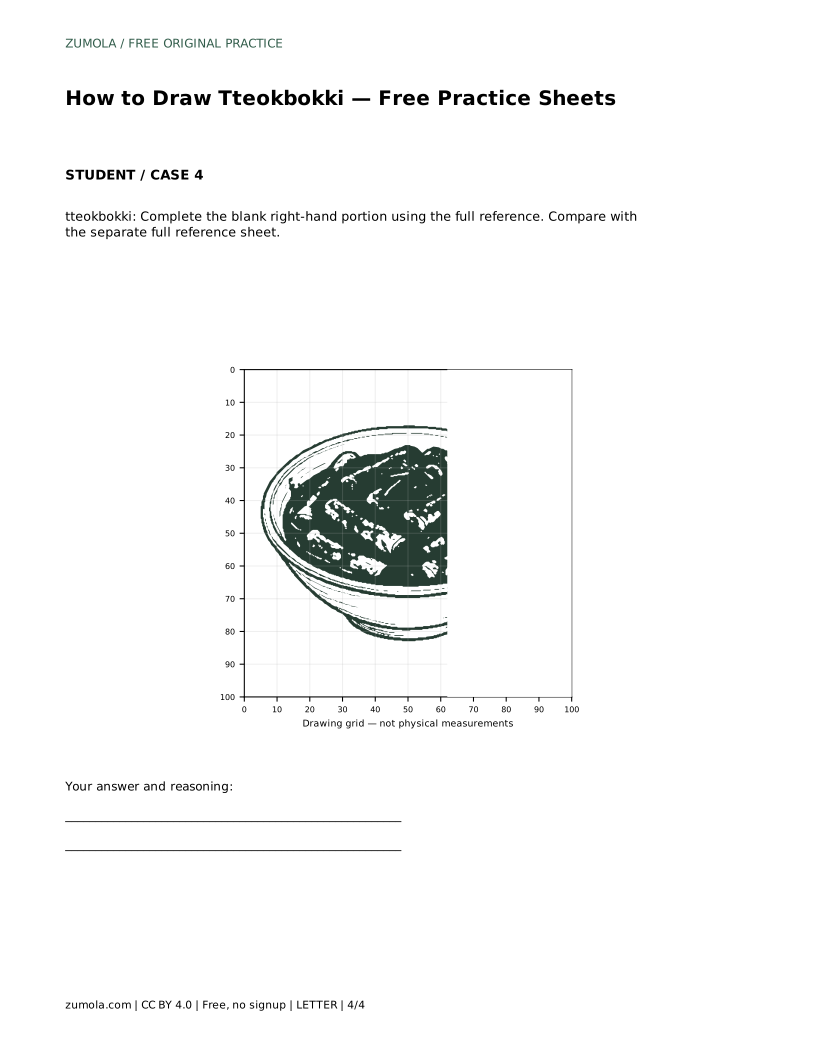
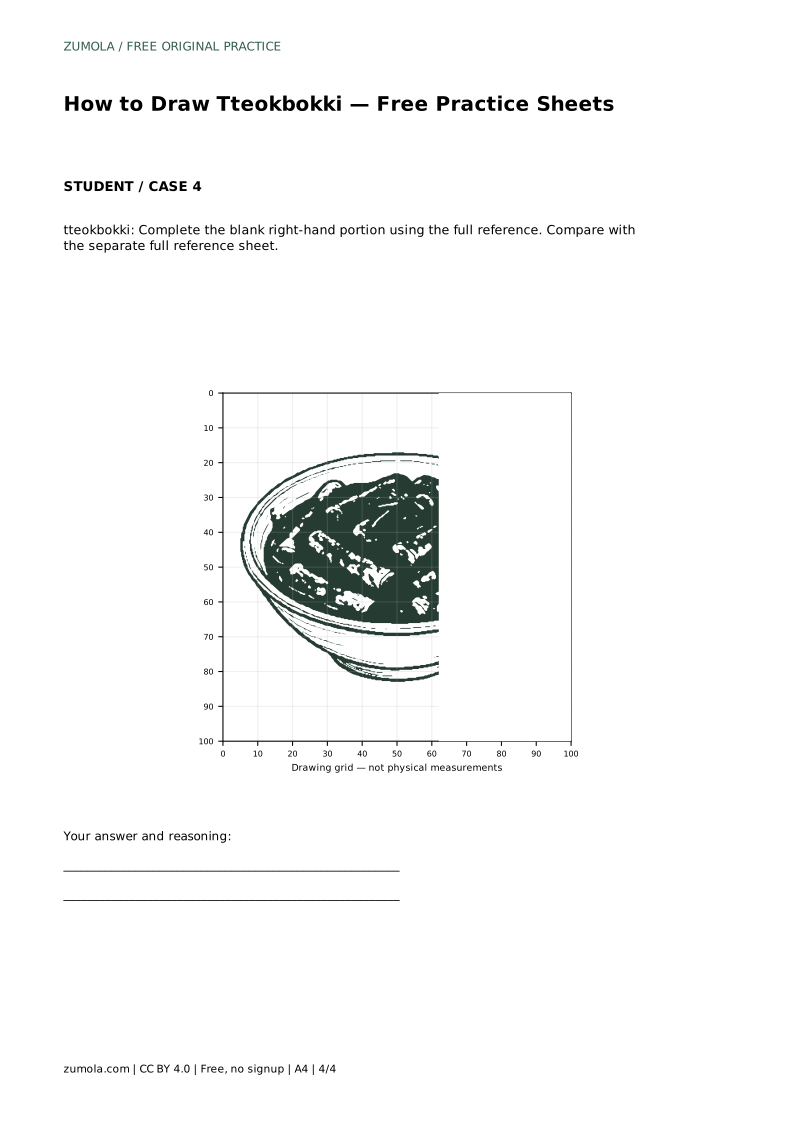
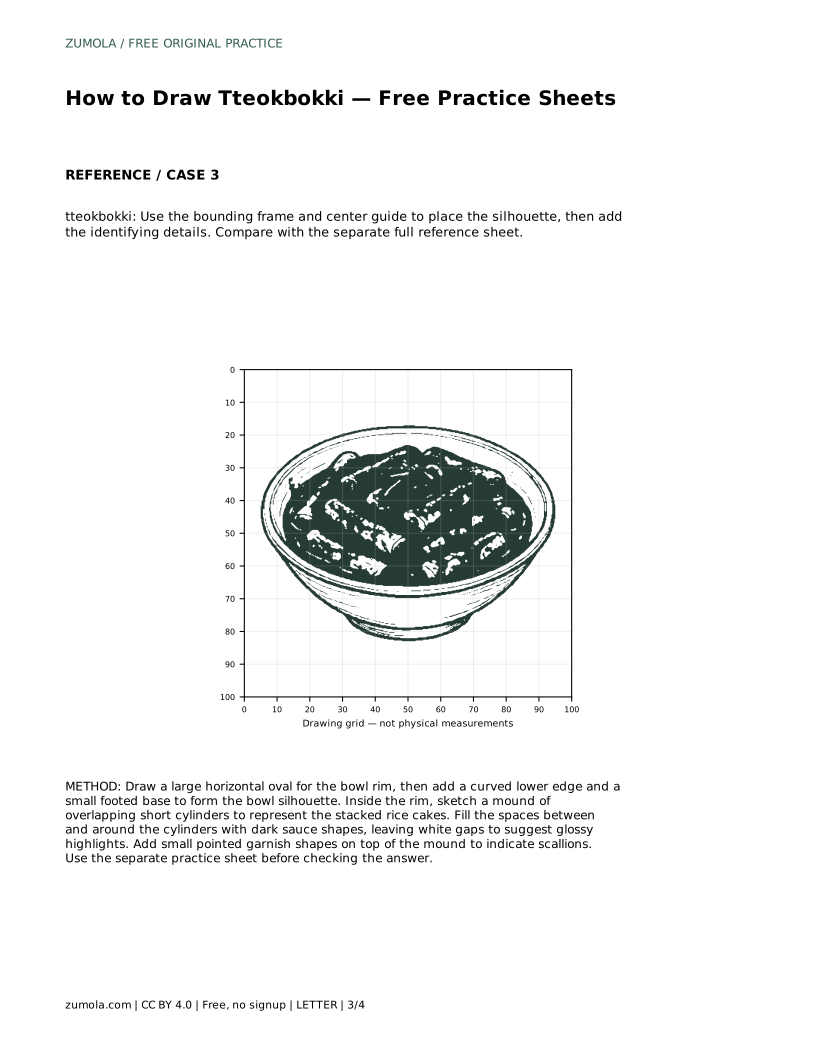
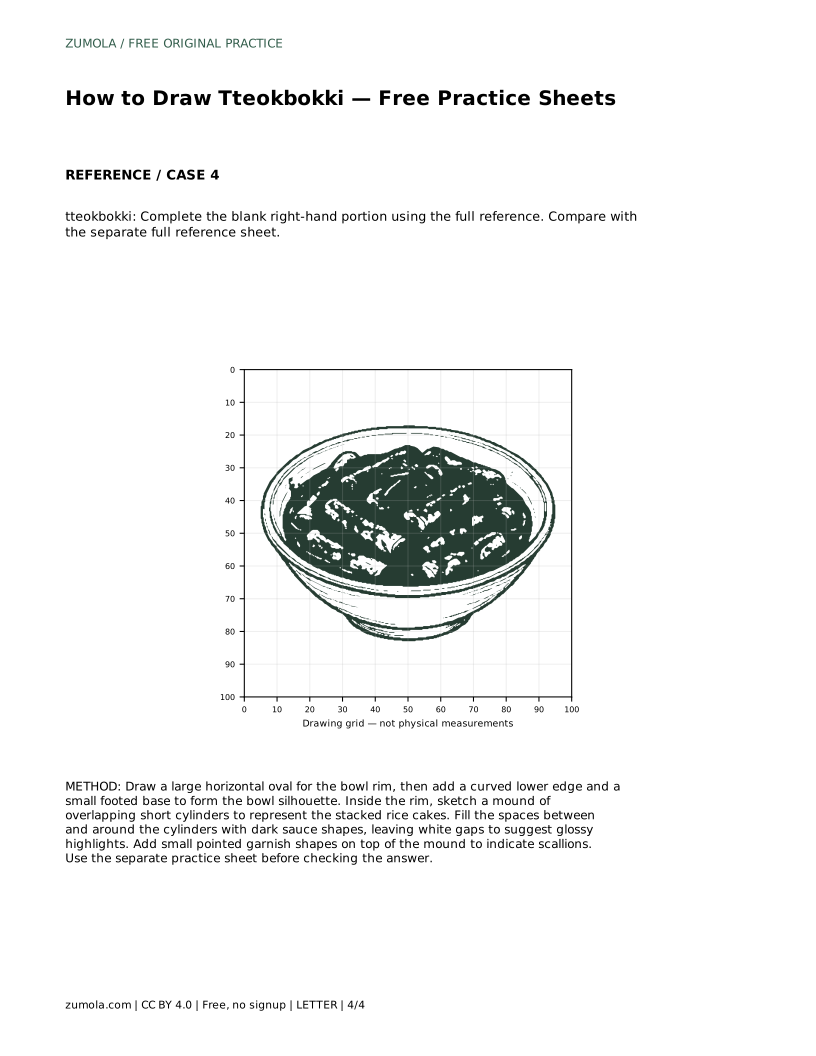
When tracing, follow the outline first and then practise the contour independently. When copying onto a grid, use matching intersections to place the bowl and the mound before adding sauce and garnish. When completing a blank portion, use the full reference to judge where the missing shapes belong.
Most problems come from drawing the food before the bowl, or from treating the sauce as a flat fill. Correcting the order and the contrast usually solves them.
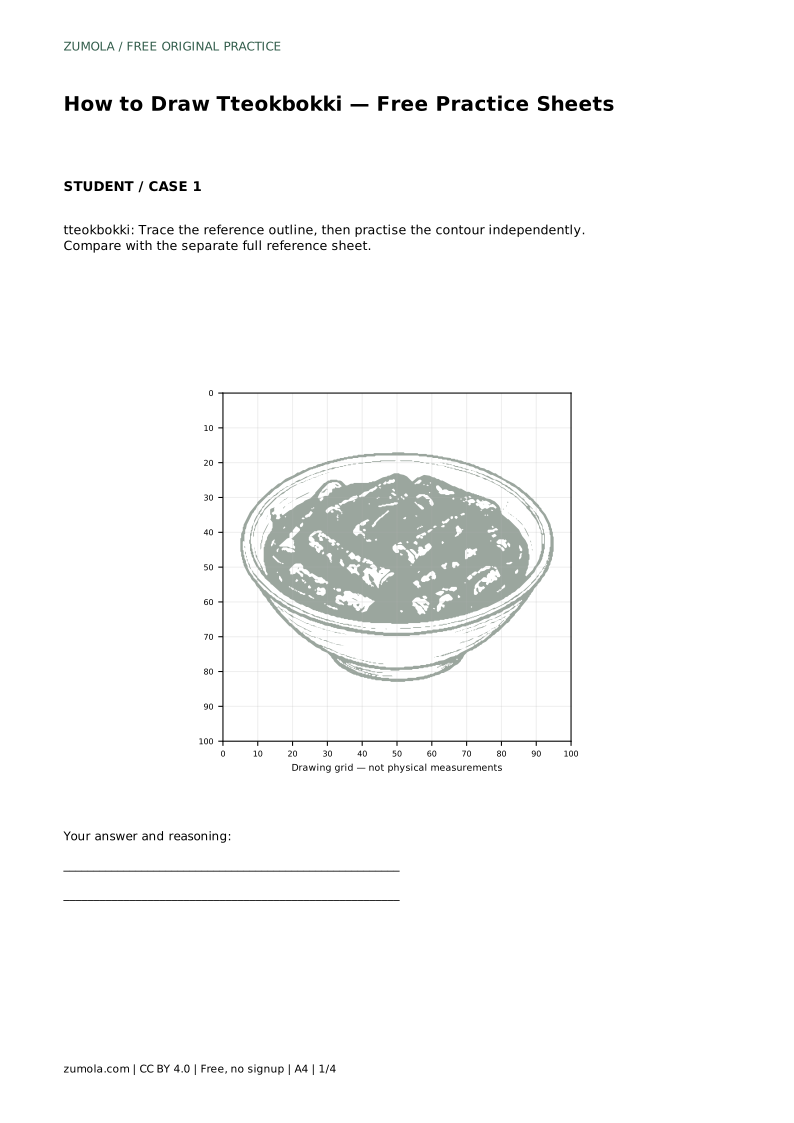
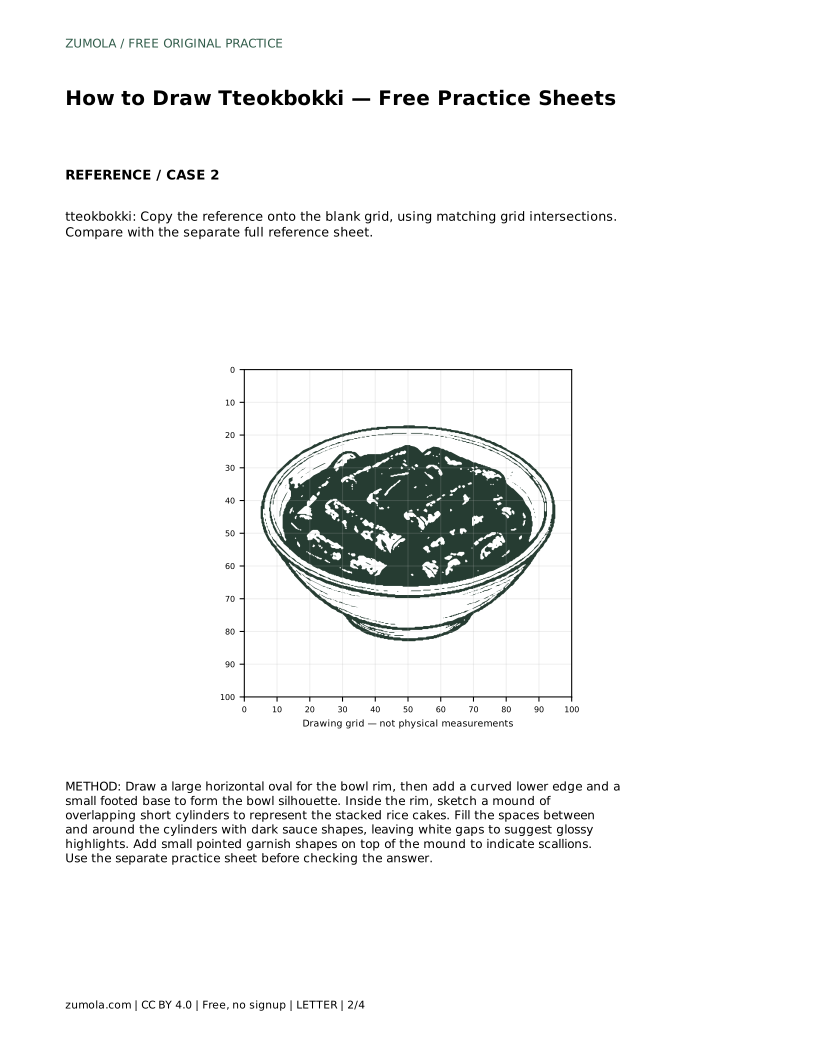
tteokbokki: Trace the reference outline, then practise the contour independently. Compare with the separate full reference sheet.
Example solution: preserve wide oval bowl with a distinct rim and footed base, stacked cylindrical rice cakes filling the bowl interior, dark sauce pooling around the rice cakes with white highlights indicating gloss. Other drawings can be correct; assess the visible features and proportions rather than pixel-perfect matching. Draw a large horizontal oval for the bowl rim, then add a curved lower edge and a small footed base to form the bowl silhouette. Inside the rim, sketch a mound of overlapping short cylinders to represent the stacked rice cakes. Fill the spaces between and around the cylinders with dark sauce shapes, leaving white gaps to suggest glossy highlights. Add small pointed garnish shapes on top of the mound to indicate scallions.
No. Several drawings can be correct. Check that the wide oval bowl, footed base, stacked cylinders, dark sauce with highlights and garnish are all visible and in proportion.
Draw the bowl first, then the rice cakes, then the sauce. The sauce fills gaps around the cakes, so it depends on where the cakes sit.
Use contrast. Leave a few white gaps inside the dark sauce and along the upper edges of the rice cakes so the surface appears to catch light.
All drawing practice · Free coordinate paper
Original resources · CC BY 4.0 · Free for personal and classroom use with attribution.