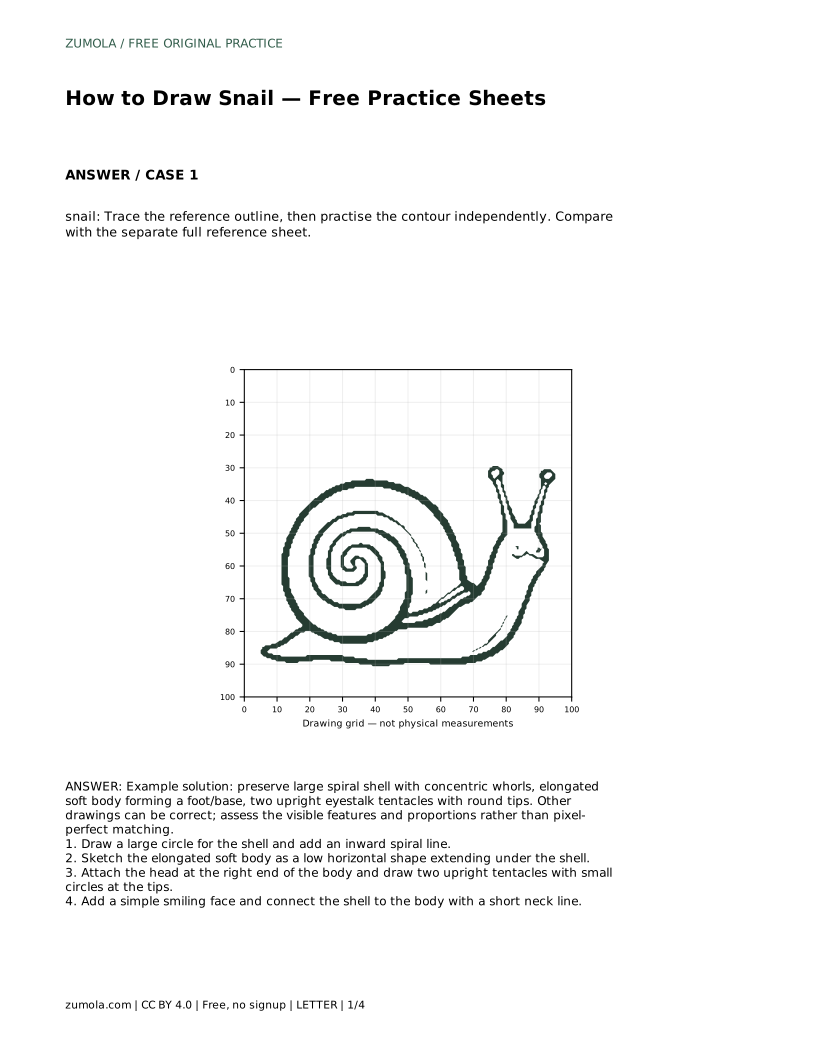
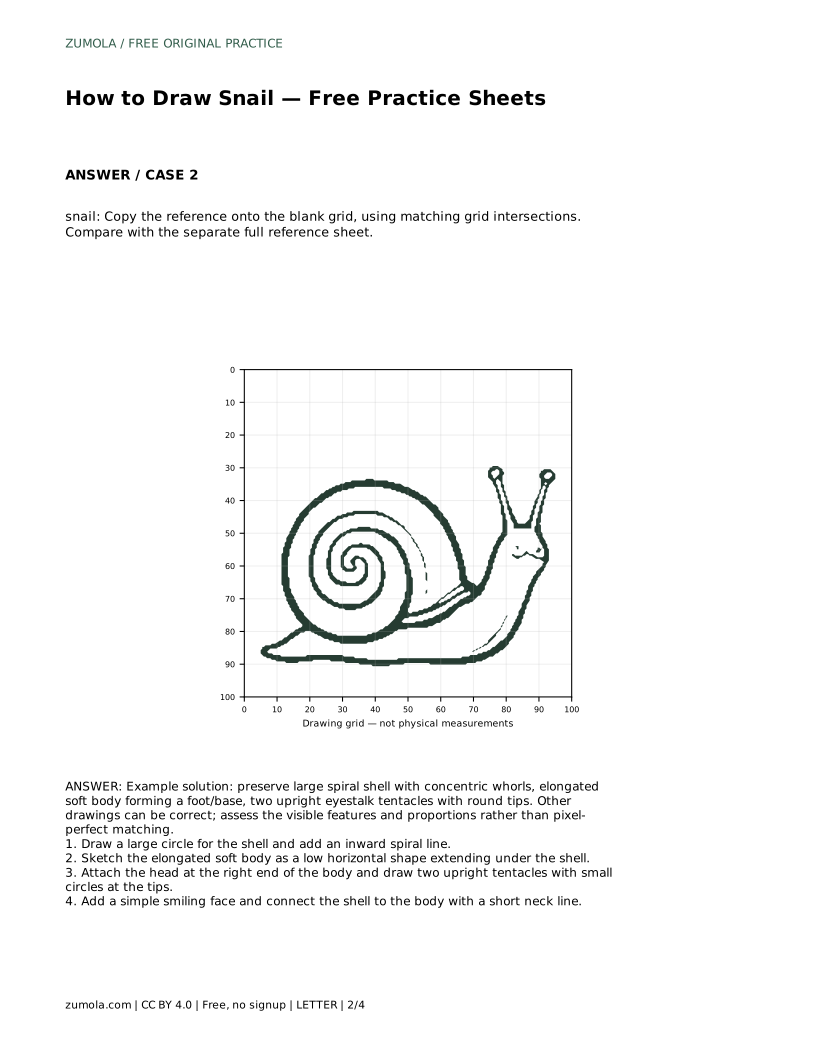
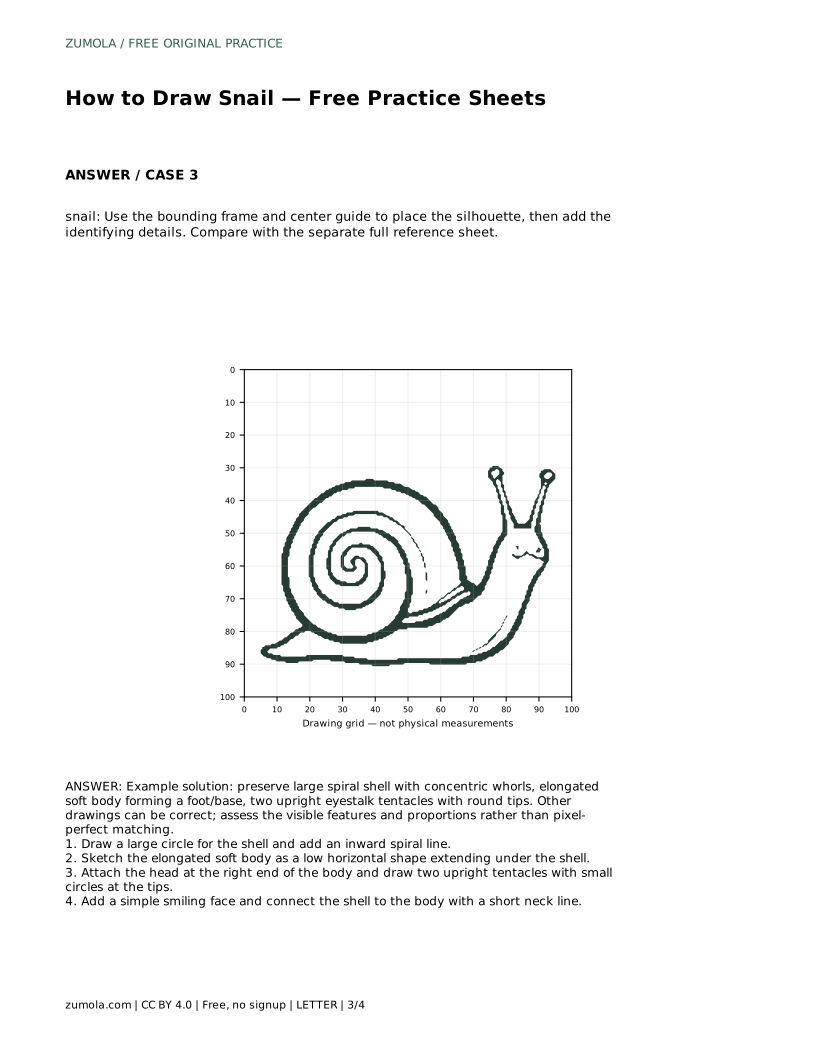
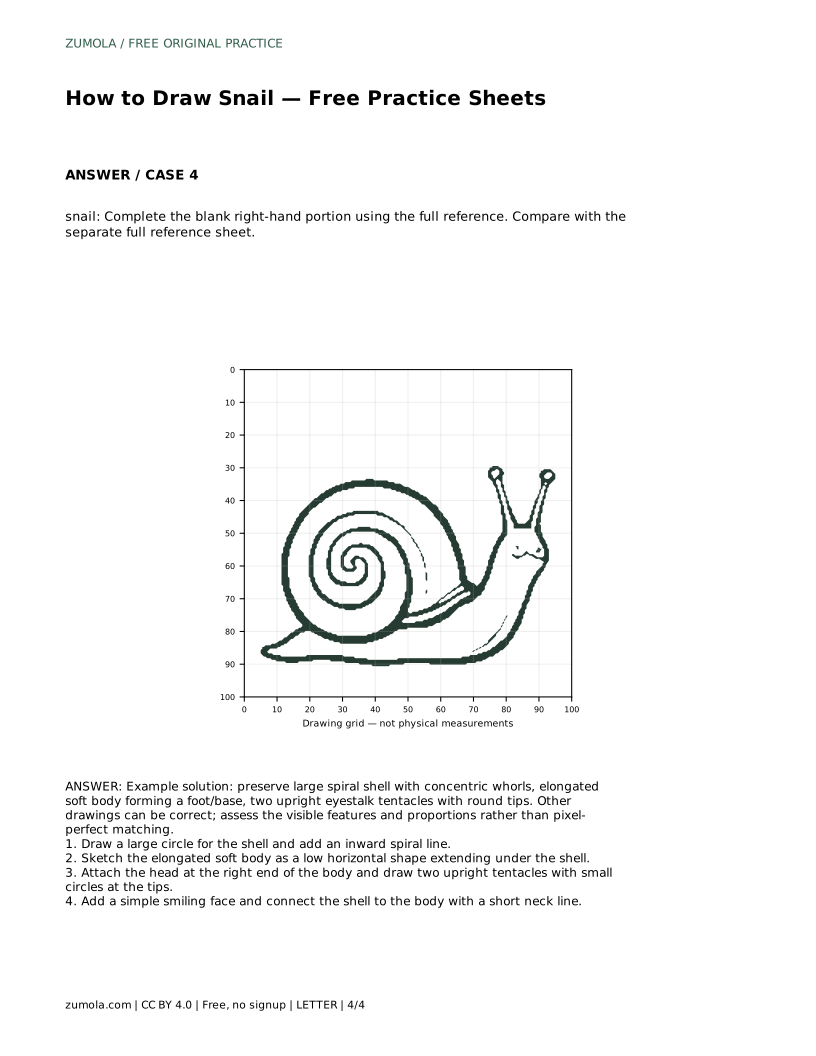
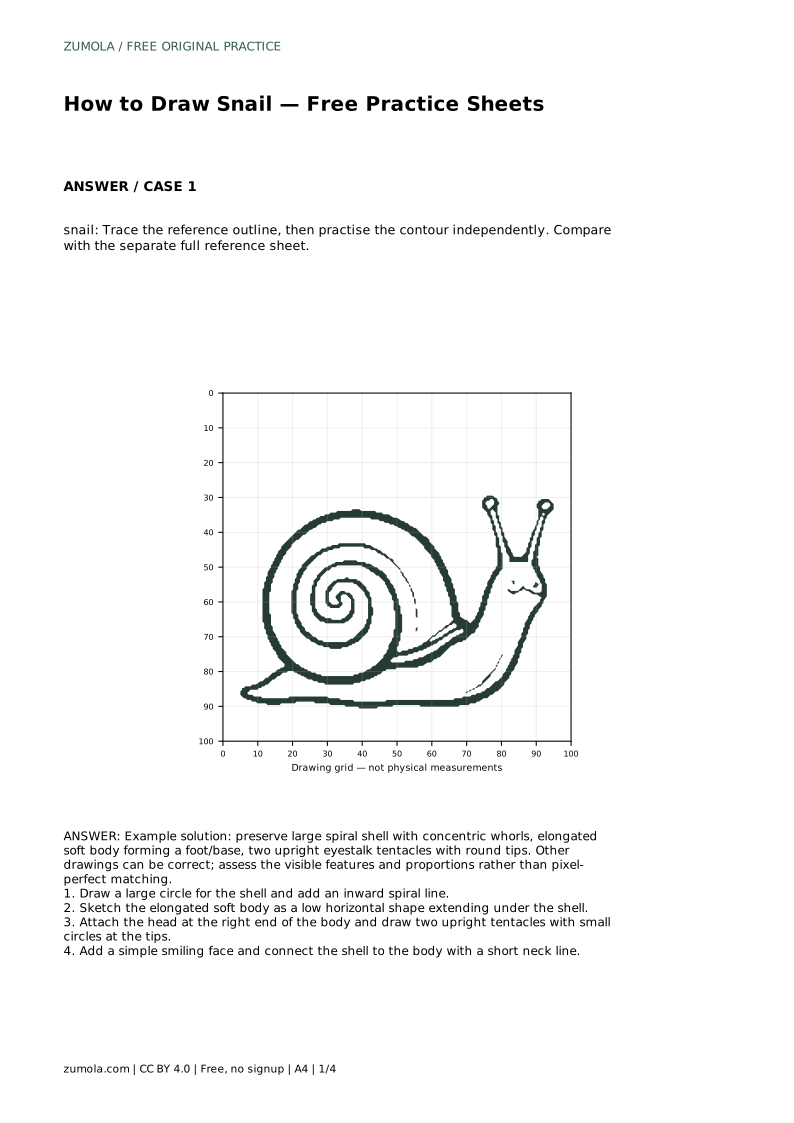
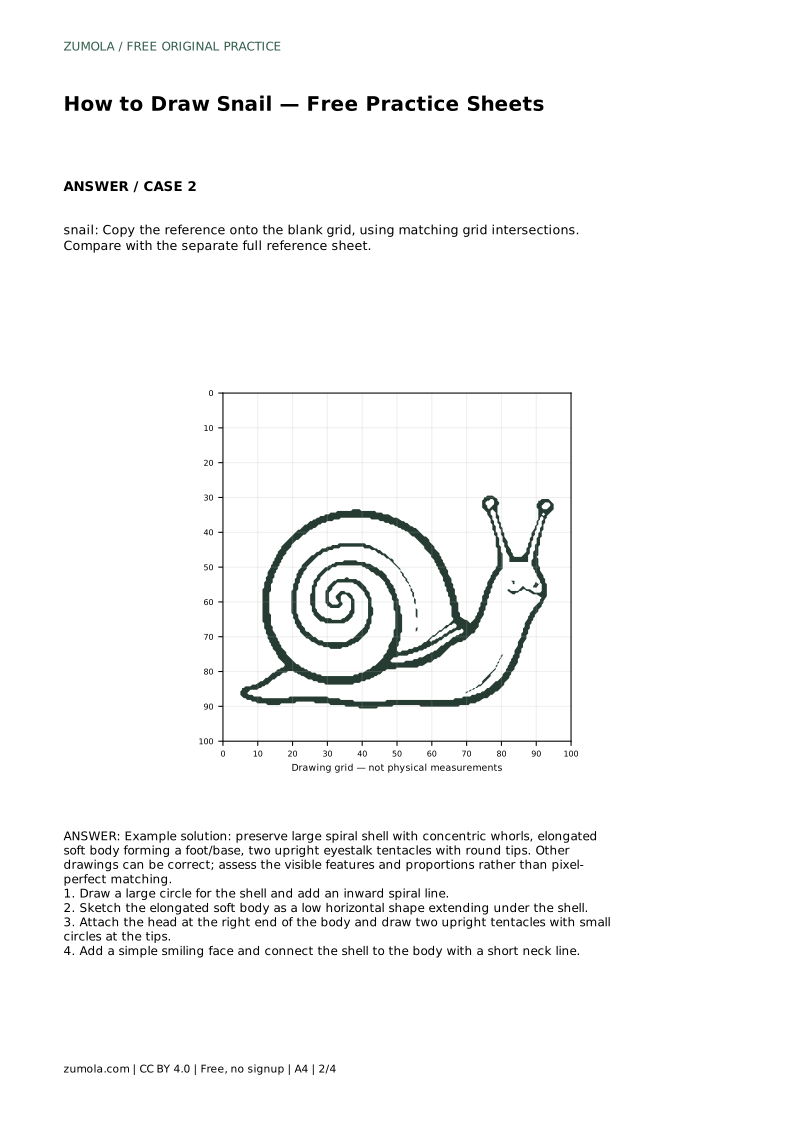
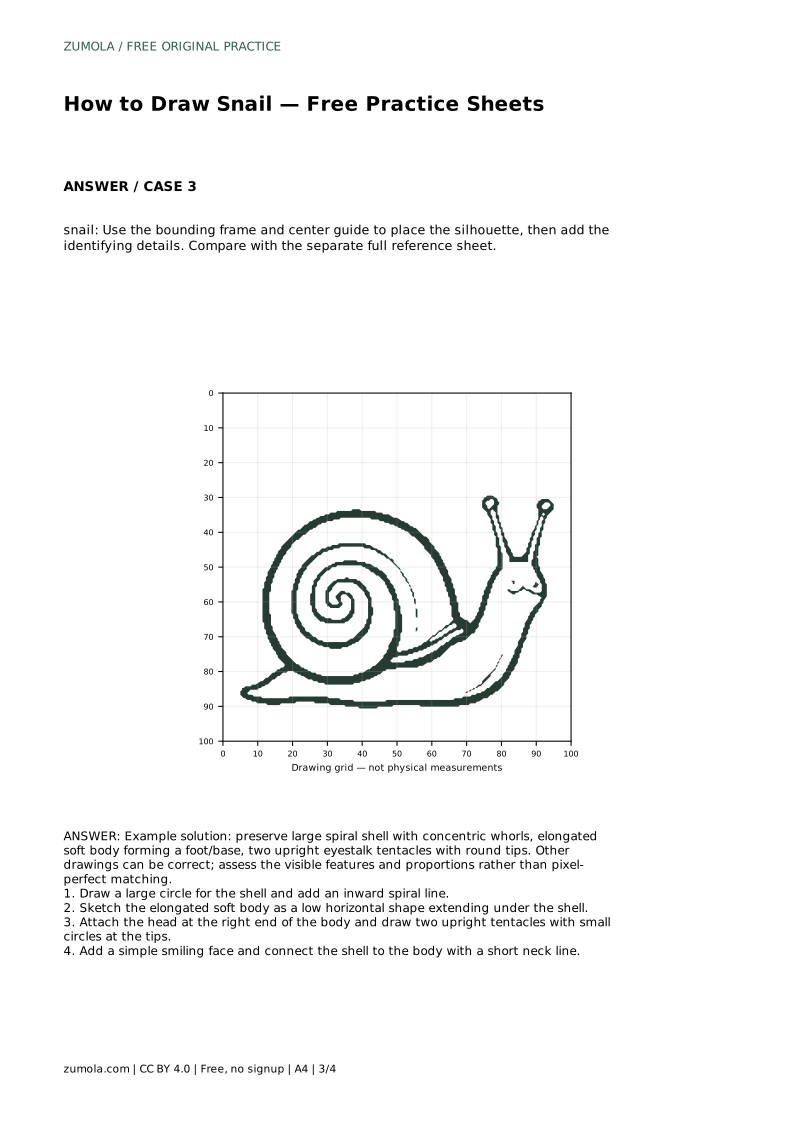
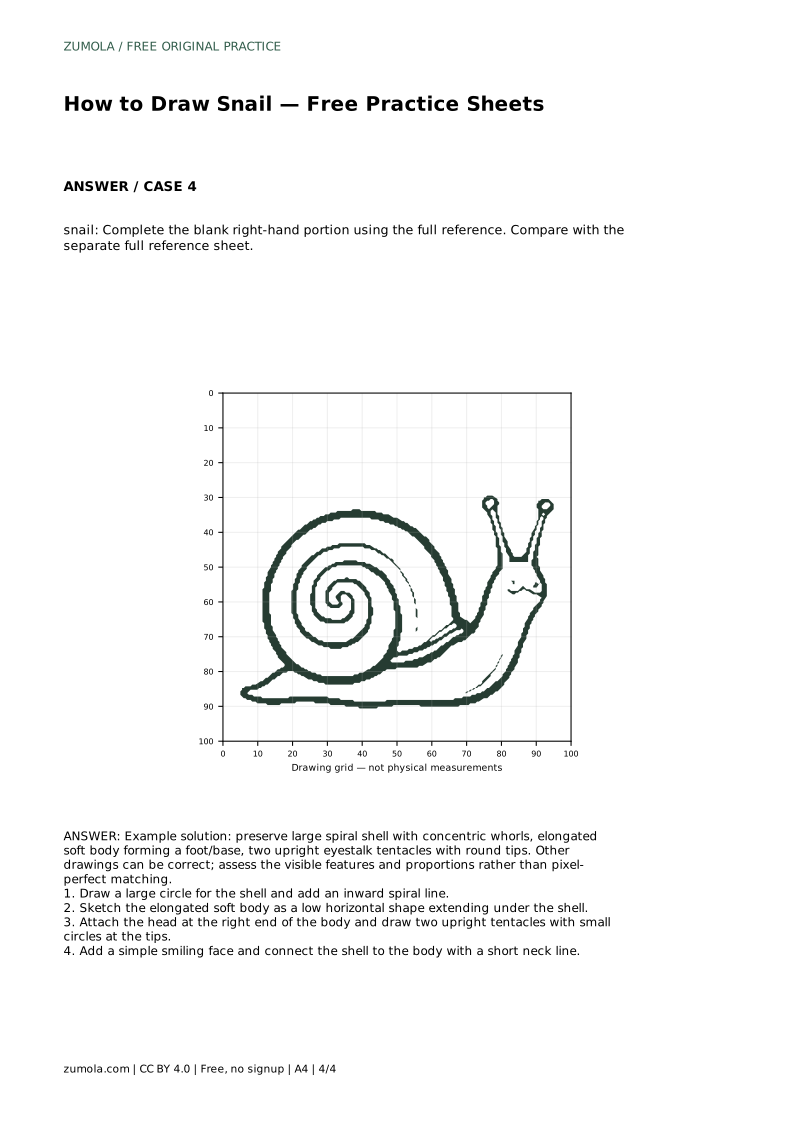
Reference diagrams
LETTER · Download PDF
A4 · Download PDF
Free original resources
Learn to draw a snail with a spiral shell, soft foot, and two tentacles. Trace, grid, and frame practice sheets build contour and proportion skills.
Four original cases, with reference diagrams, practice sheets and worked answers. Everything is free; no signup required.
LETTER · Download PDF
A4 · Download PDF
LETTER · Download PDF
A4 · Download PDF
LETTER · Download PDF
A4 · Download PDF
Use A4 or US Letter to match your printer. Use the stated values and conditions to solve each exercise; diagrams are not physical measuring rulers.
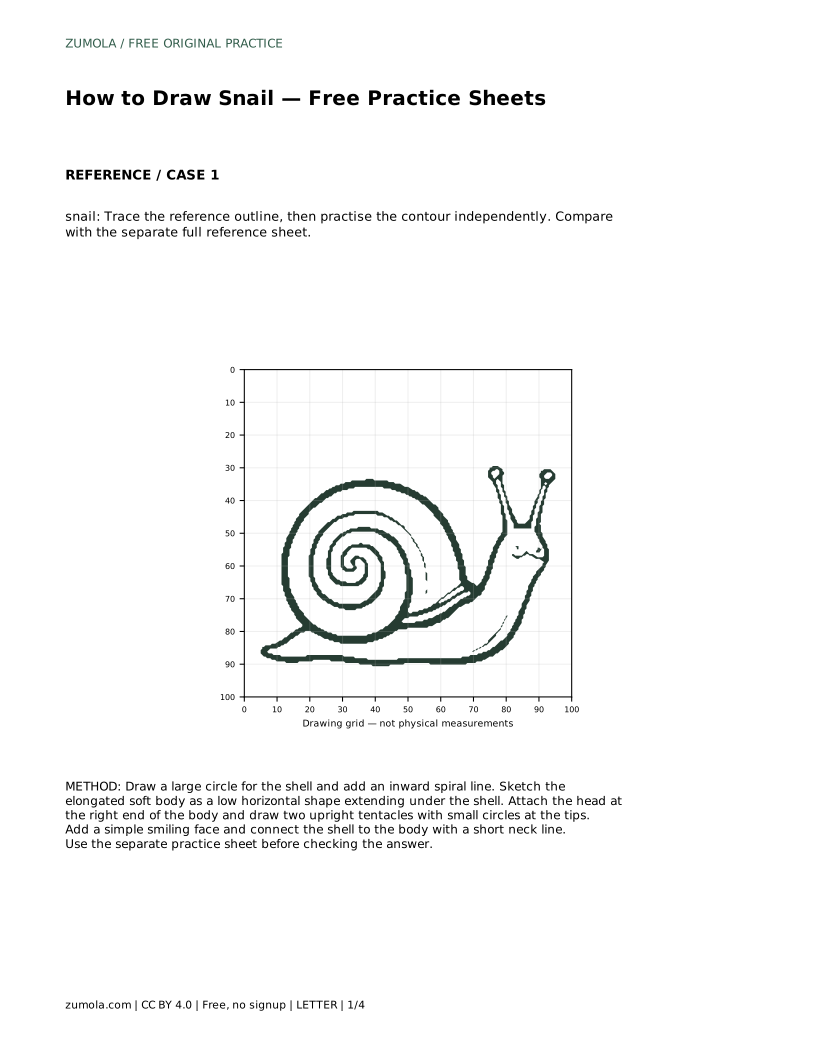
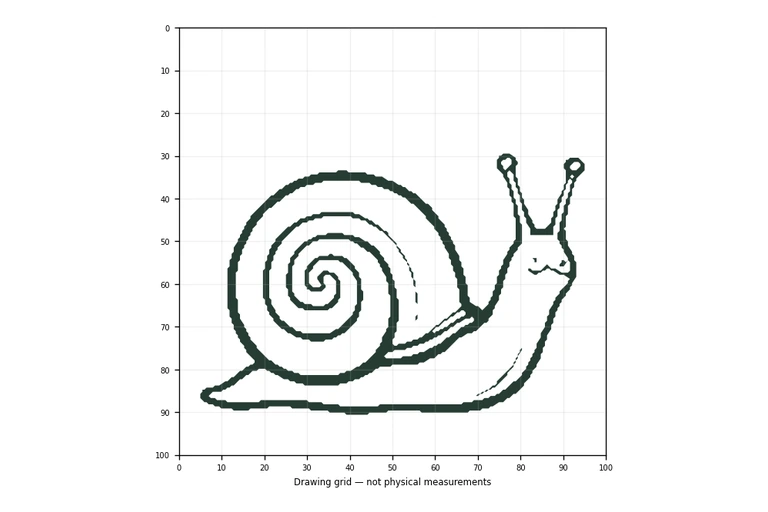
A snail is a forgiving subject for beginners because its main shapes are large and easy to see: a rounded spiral shell, a low soft body, and two upright tentacles. This page explains how to build those parts in order, then how to use tracing, grid, and frame practice sheets to strengthen your control. The goal is not a pixel-perfect copy. Different drawings can be correct when the visible features and proportions hold together.
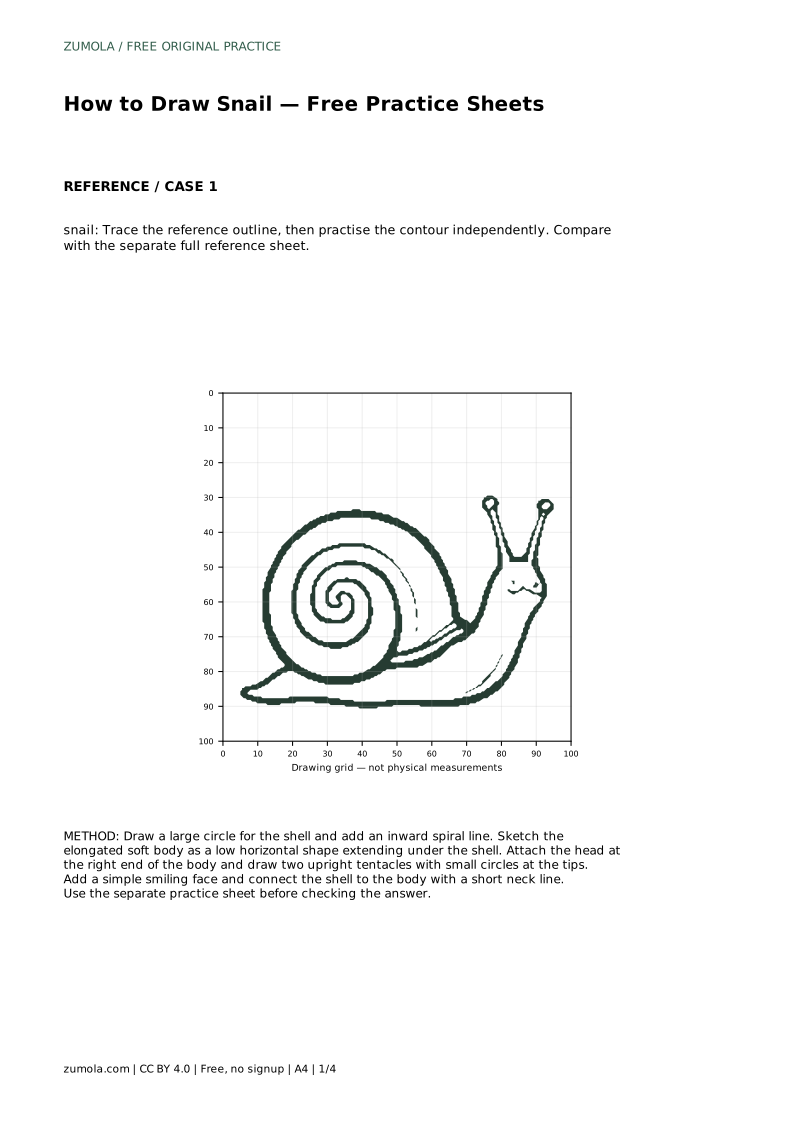
Start with the shell, because it is the largest and most recognizable part. Draw a large circle, then add an inward spiral line so the whorls appear to wind toward the center. Keep the spiral loose rather than tight; a snail shell reads clearly when the outer circle is generous and the inner turns are evenly spaced.
Next, sketch the soft body as a low horizontal shape that extends under the shell. This base should look long and slightly flattened, not tall. Attach the head at the right end of the body, then draw two upright tentacles with small circles at the tips. Add a simple smiling face if you like, and connect the shell to the body with a short neck line so the parts feel joined rather than stacked.
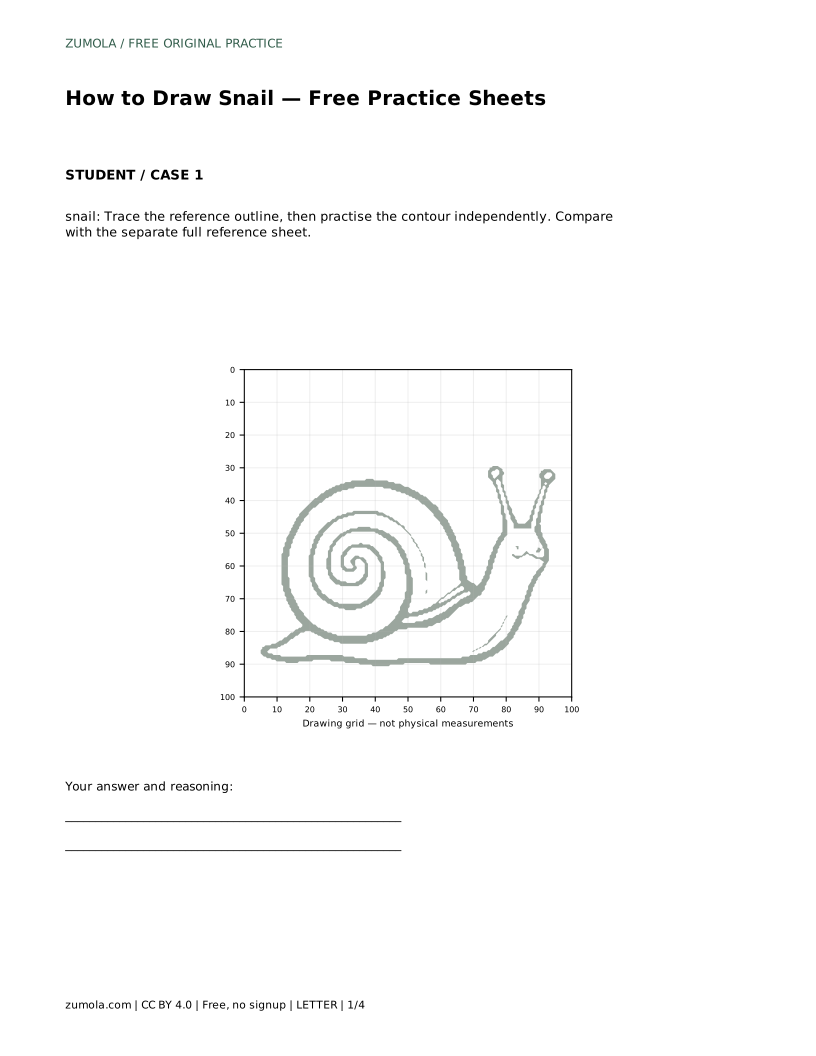
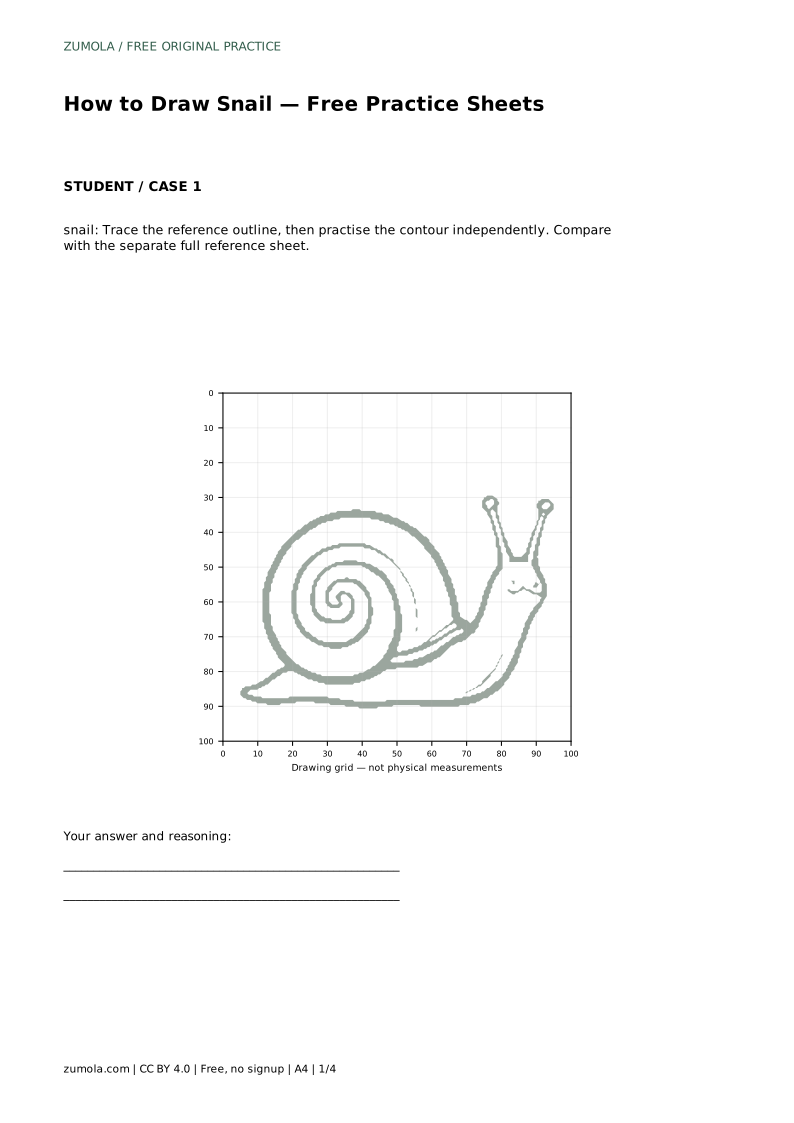
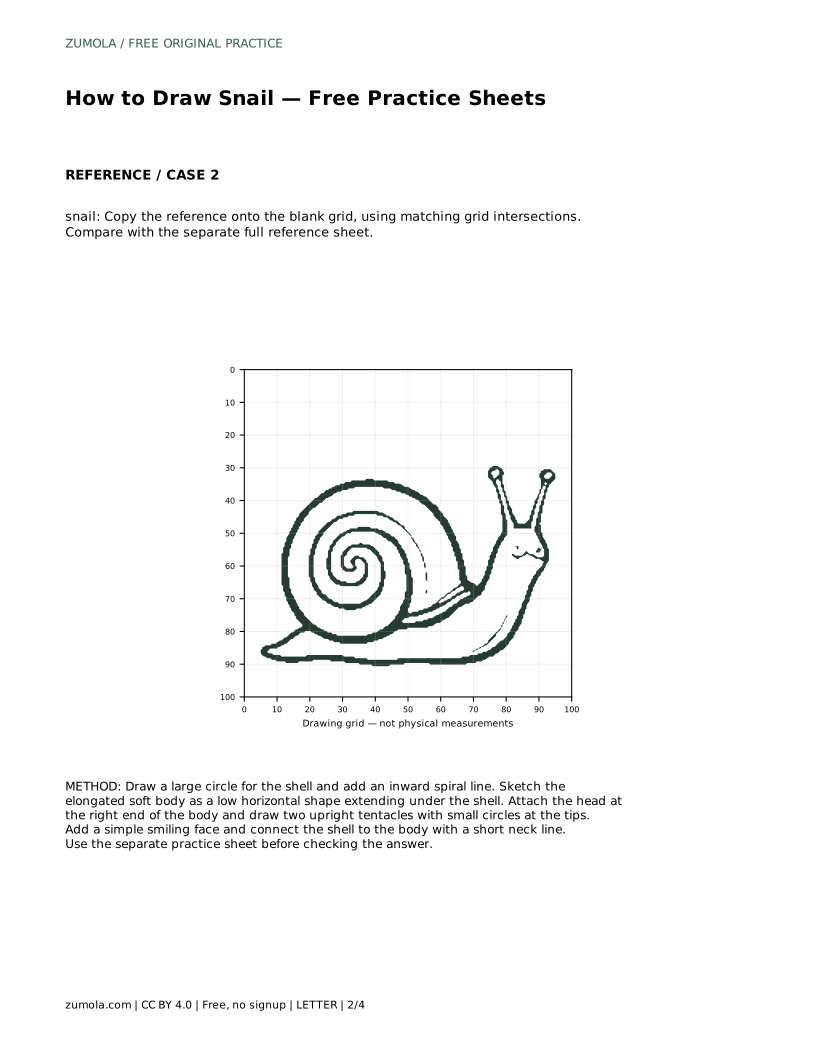
The tracing sheet asks you to follow the reference outline first, then practise the contour independently. Tracing teaches the path of the line; drawing it again without the guide tests whether you remember that path. Compare your result with the separate full reference sheet rather than judging it from memory.
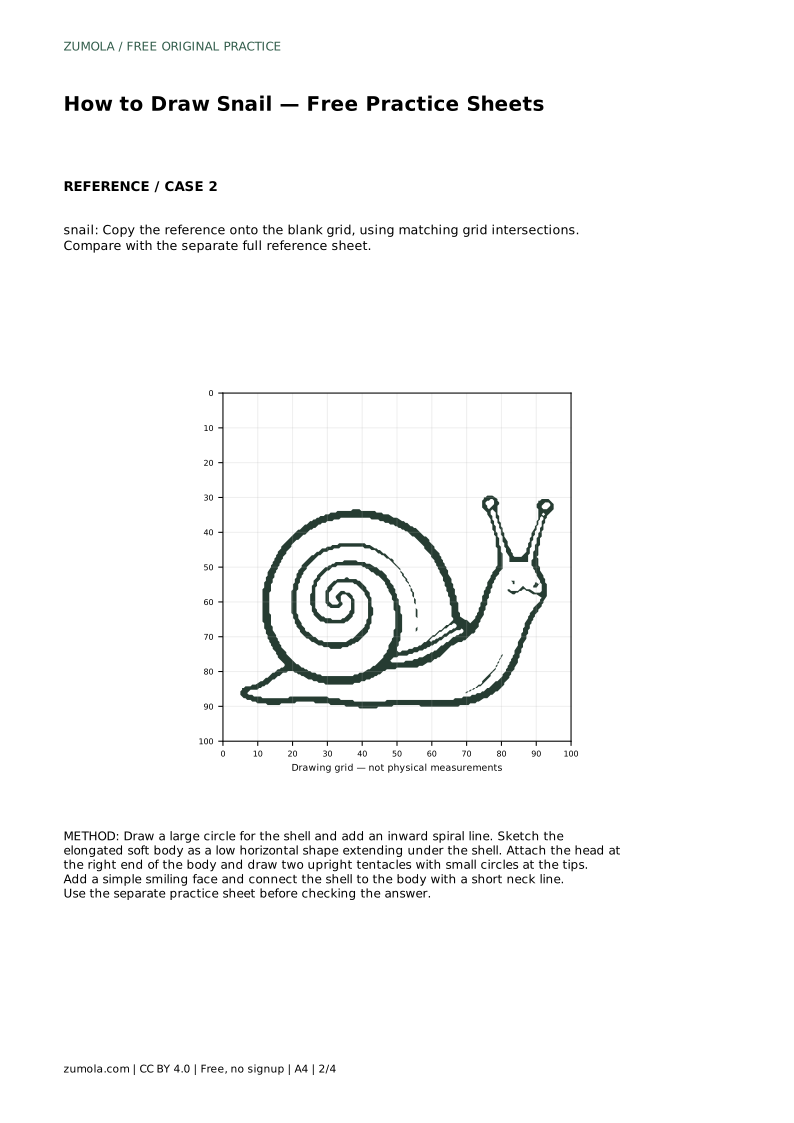
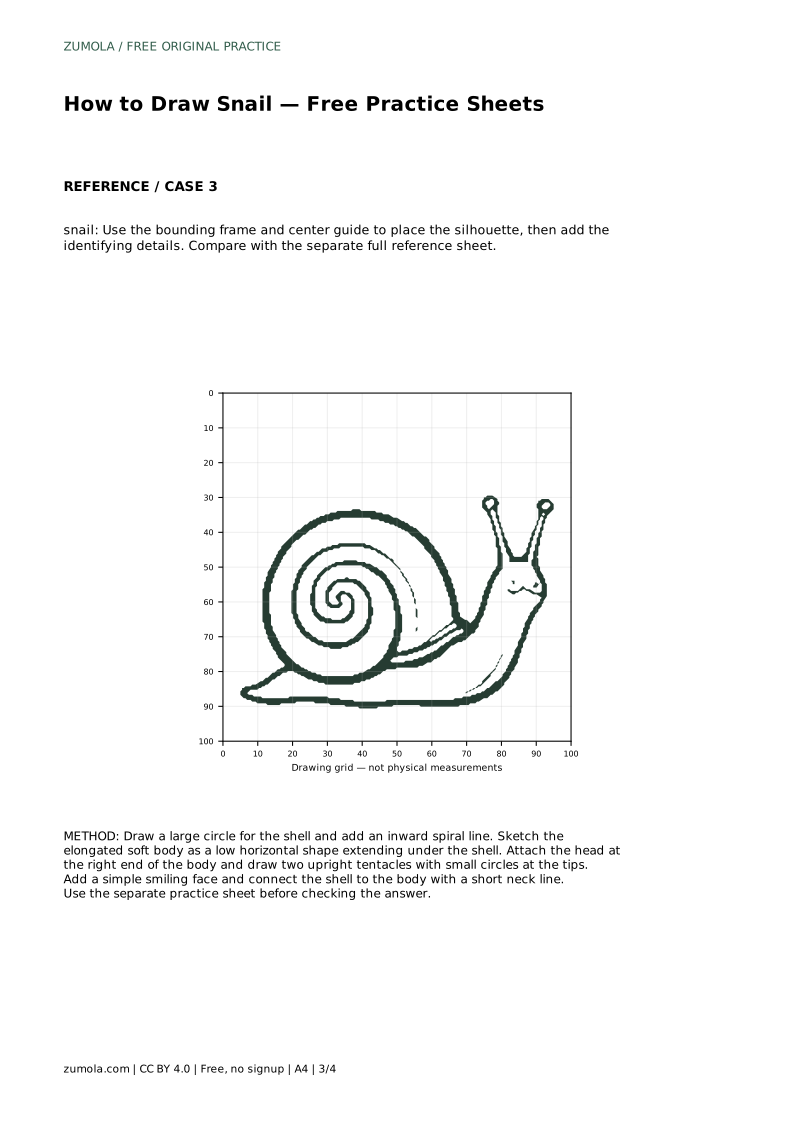
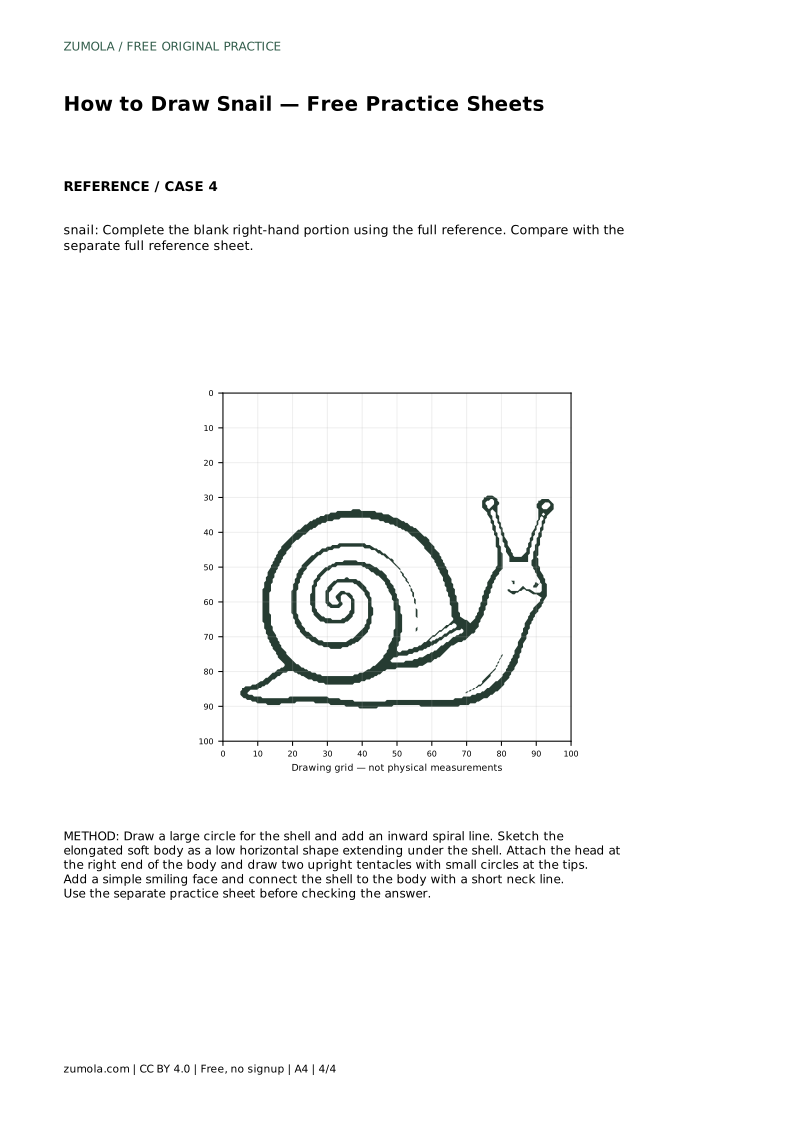
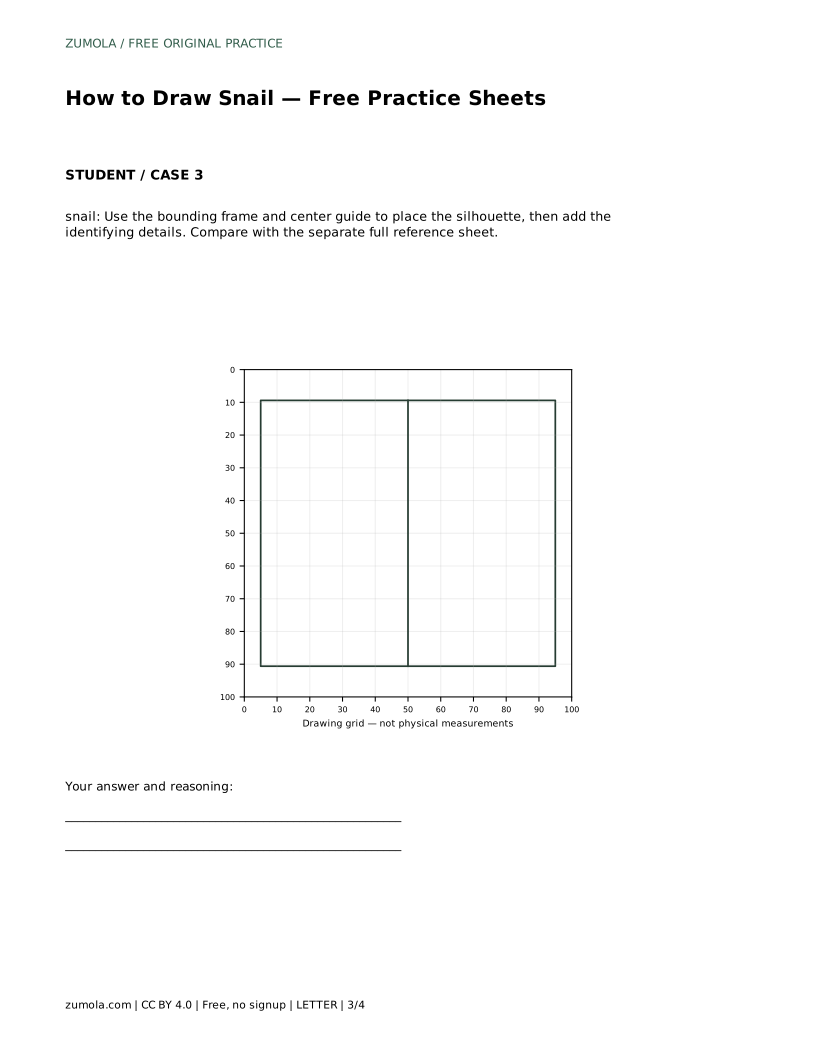
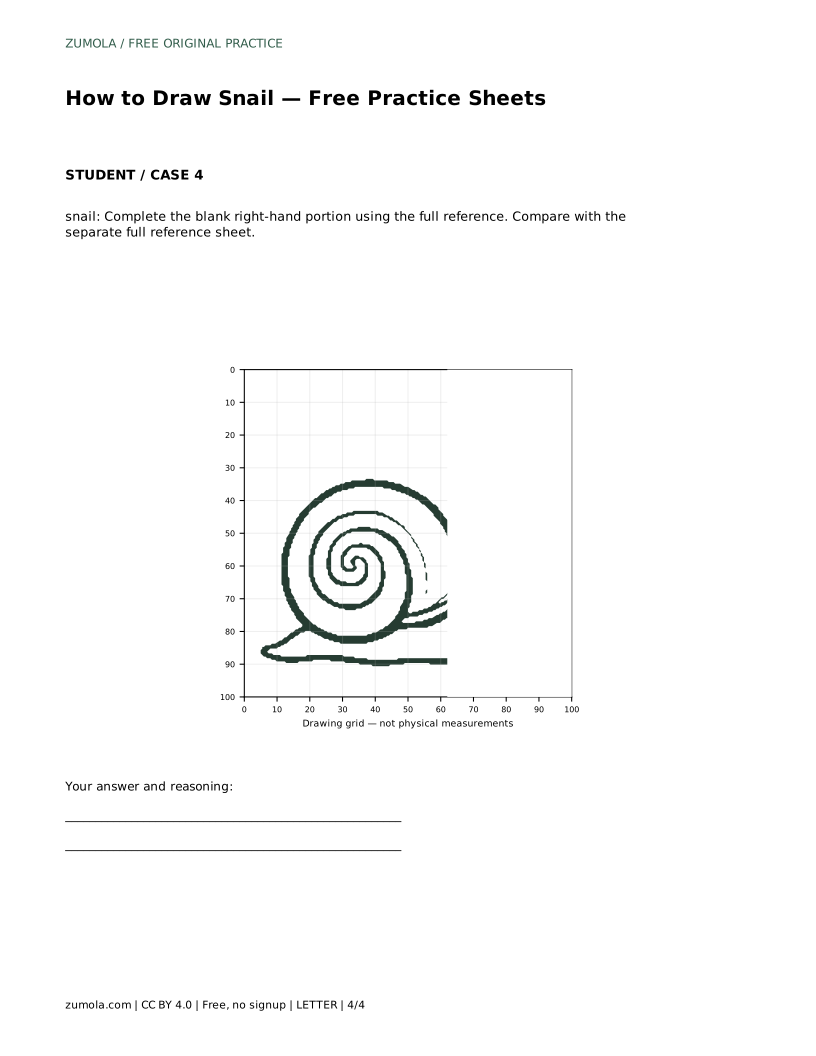
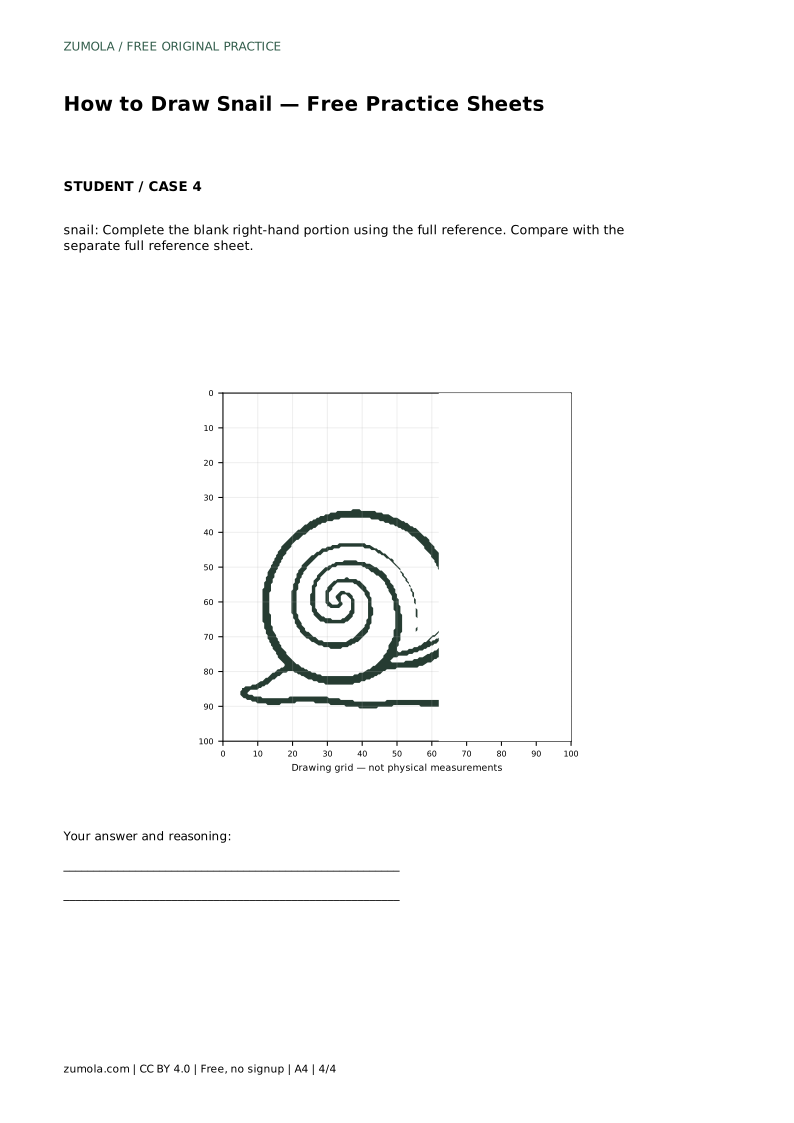
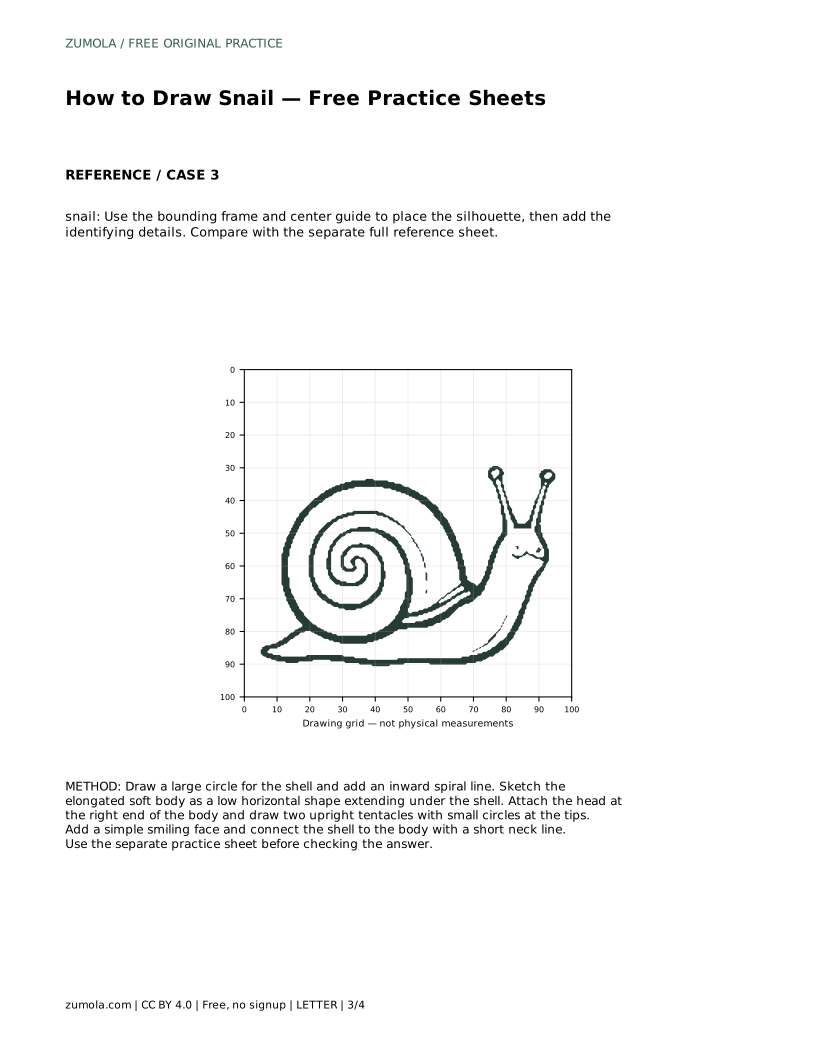
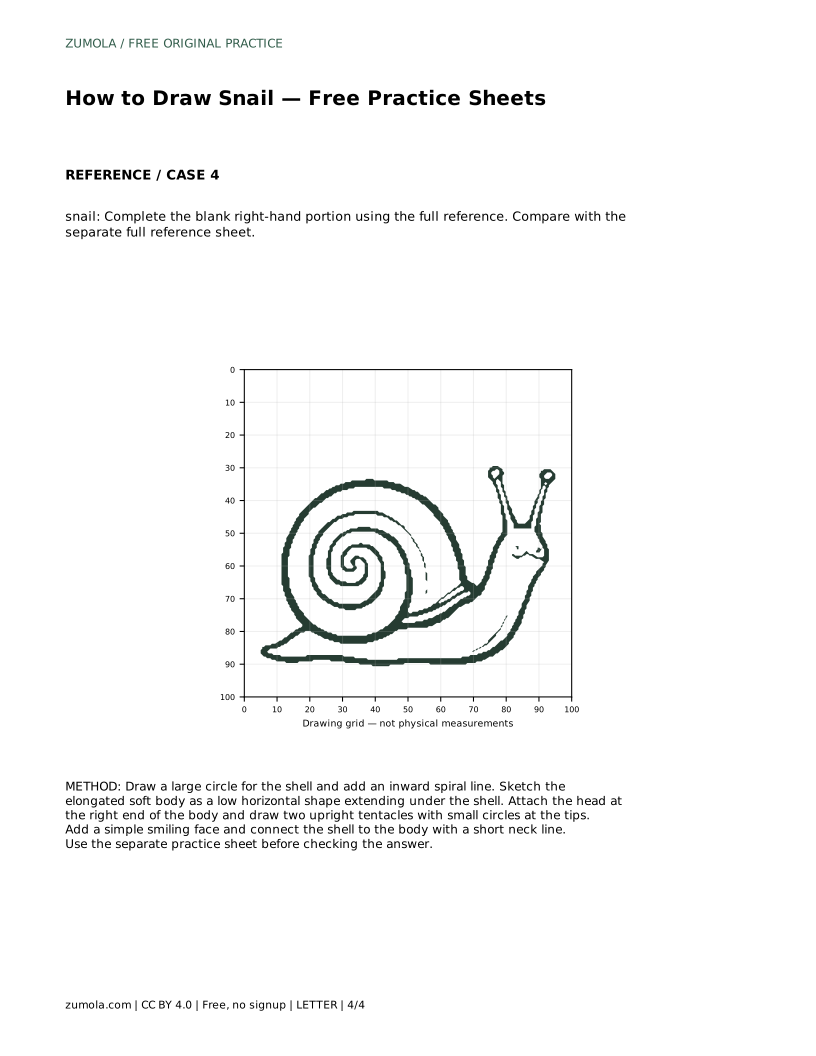
The grid sheet asks you to copy the reference onto a blank grid using matching grid intersections. This is a placement exercise: note where the shell edge, body base, and tentacle tips fall relative to nearby intersections, then reproduce those relationships. The bounding-frame sheet works differently. Use the frame and center guide to place the silhouette first, then add the identifying details. The partial sheet gives you the left portion and asks you to complete the blank right-hand portion using the full reference.
A common problem is a shell that sits too high or too small, leaving the body looking like a separate shape. Check that the shell overlaps the body slightly and that the neck line bridges them. Another check is tentacle length: the two upright tentacles should be similar in height, with round tips rather than sharp points.
Because art has multiple valid outcomes, assess your drawing with a rubric instead of hunting for one exact answer. Look for the large spiral shell with concentric whorls, the elongated soft body forming a foot or base, and two upright eyestalk tentacles with round tips. If those features are present and reasonably proportioned, the drawing succeeds even if your spiral turns differ from the reference.
Draw the snail once from the steps above, then choose one practice sheet that targets your weakest area. If your spiral wobbles, repeat the shell alone several times. If placement drifts, use the grid sheet and mark intersections lightly before committing to curves. Keep sessions short and compare each attempt with the full reference sheet, noting one specific improvement for the next try.
snail: Trace the reference outline, then practise the contour independently. Compare with the separate full reference sheet.
Example solution: preserve large spiral shell with concentric whorls, elongated soft body forming a foot/base, two upright eyestalk tentacles with round tips. Other drawings can be correct; assess the visible features and proportions rather than pixel-perfect matching. Draw a large circle for the shell and add an inward spiral line. Sketch the elongated soft body as a low horizontal shape extending under the shell. Attach the head at the right end of the body and draw two upright tentacles with small circles at the tips. Add a simple smiling face and connect the shell to the body with a short neck line.
No. Other drawings can be correct. Assess the visible features and proportions rather than pixel-perfect matching.
Start with the tracing sheet to learn the contour, then move to the grid or frame sheet to practise placement.
Draw two upright eyestalk tentacles with small round tips, both rising from the head.
All drawing practice · Free coordinate paper
Original resources · CC BY 4.0 · Free for personal and classroom use with attribution.