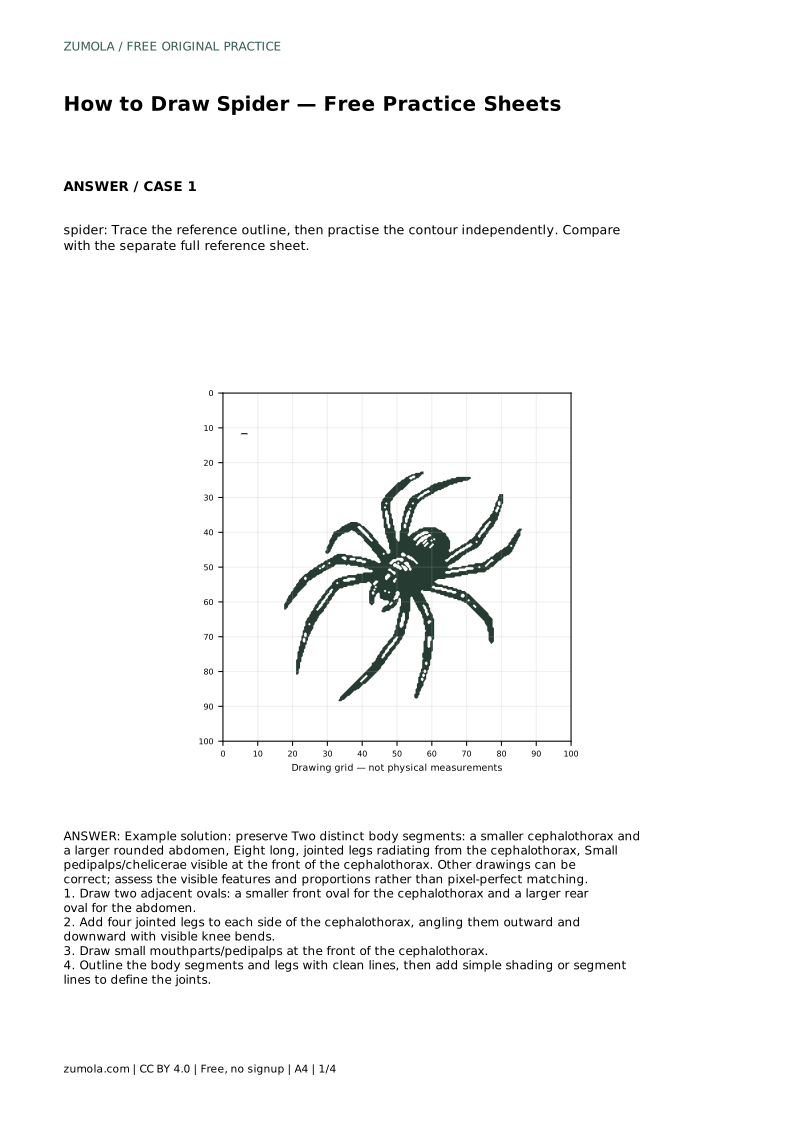
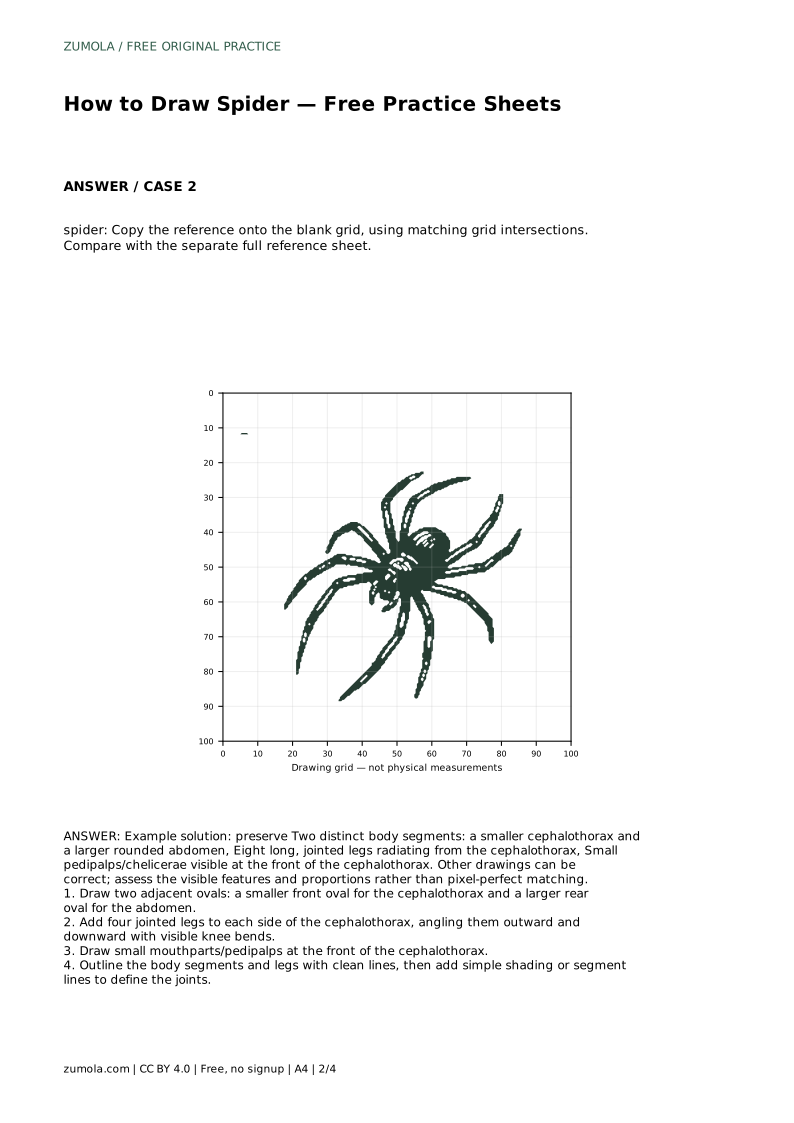
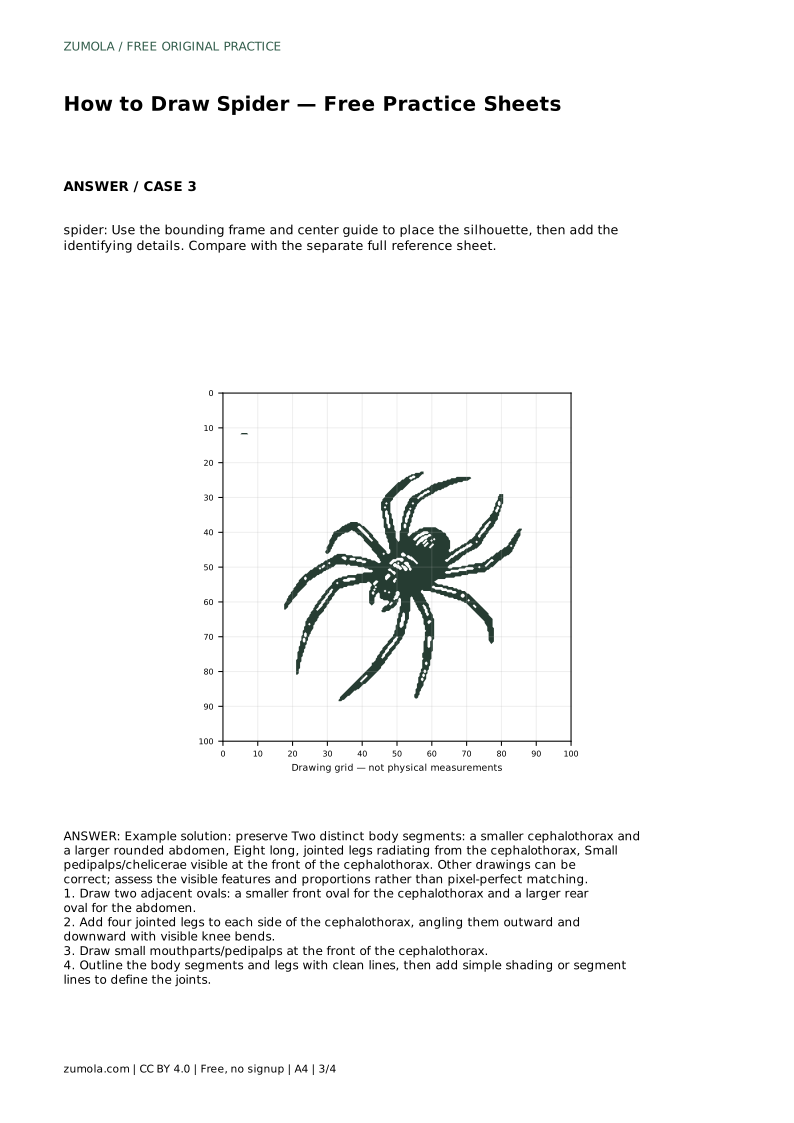
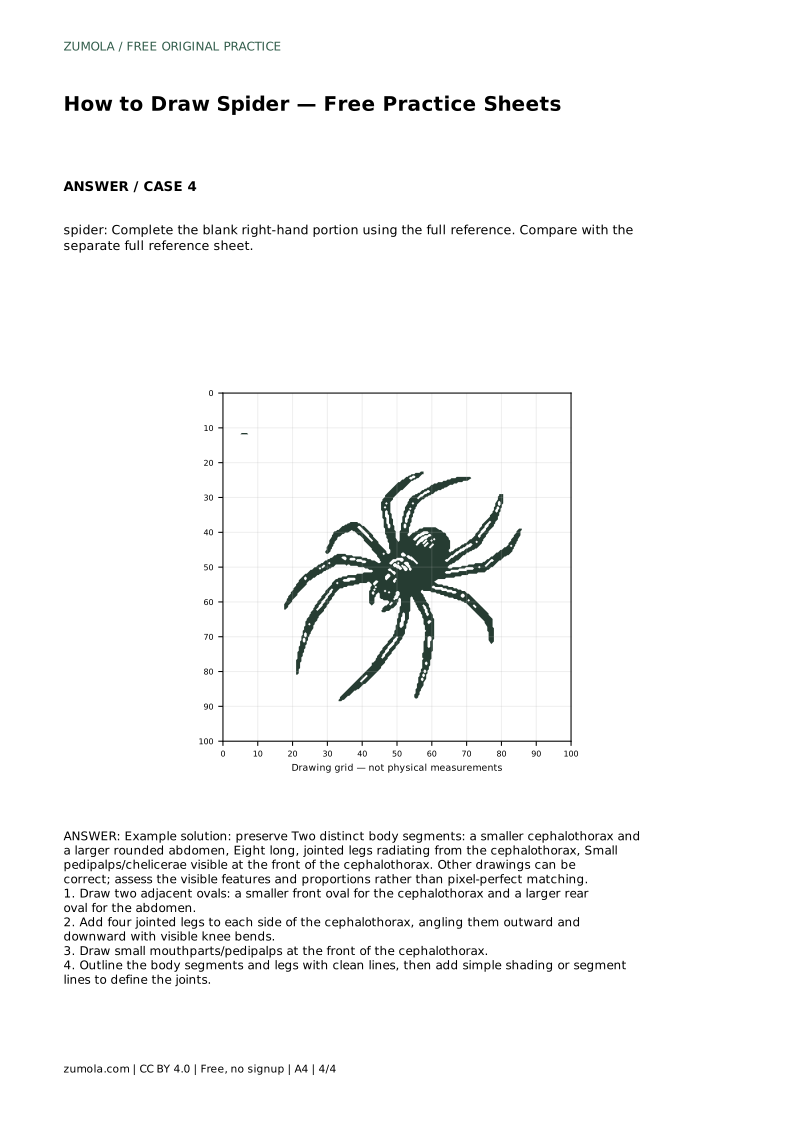
Reference diagrams
LETTER · Download PDF
A4 · Download PDF
Free original resources
Learn to draw a spider with two body segments, eight jointed legs, and front mouthparts. Trace, grid, and complete-the-drawing practice sheets support careful observation.
Four original cases, with reference diagrams, practice sheets and worked answers. Everything is free; no signup required.
LETTER · Download PDF
A4 · Download PDF
LETTER · Download PDF
A4 · Download PDF
LETTER · Download PDF
A4 · Download PDF
Use A4 or US Letter to match your printer. Use the stated values and conditions to solve each exercise; diagrams are not physical measuring rulers.
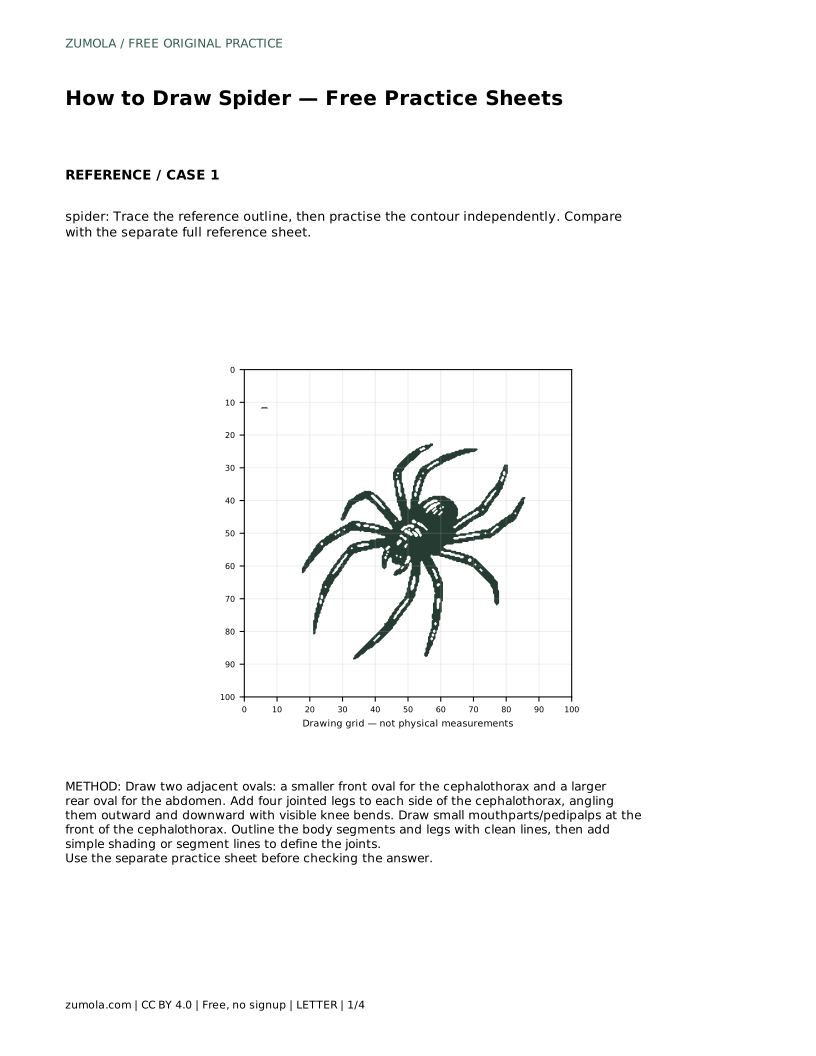
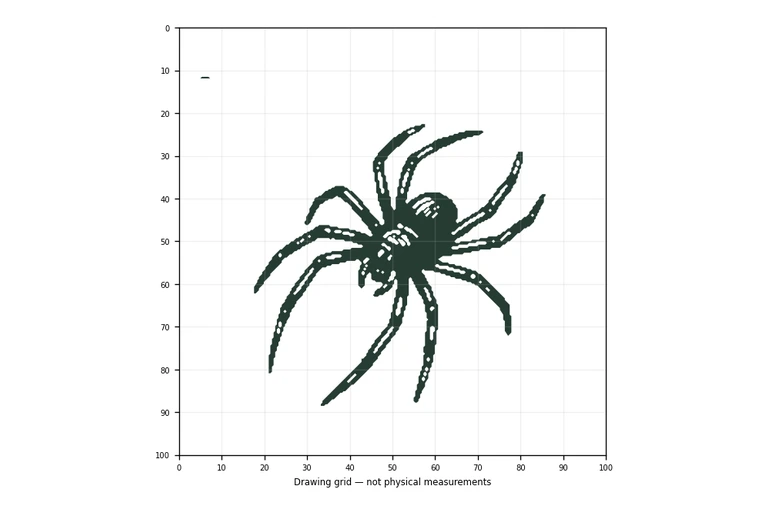
Drawing a spider is mostly a problem of arrangement: two body segments, eight legs, and a few small front details. The practice sheets give you different ways to study that arrangement, from tracing an outline to copying a reference onto a grid or completing a partly drawn figure. Each method asks you to notice proportions and joint positions rather than rush the legs. Work slowly, compare your drawing with the reference, and treat small differences as information for your next attempt.
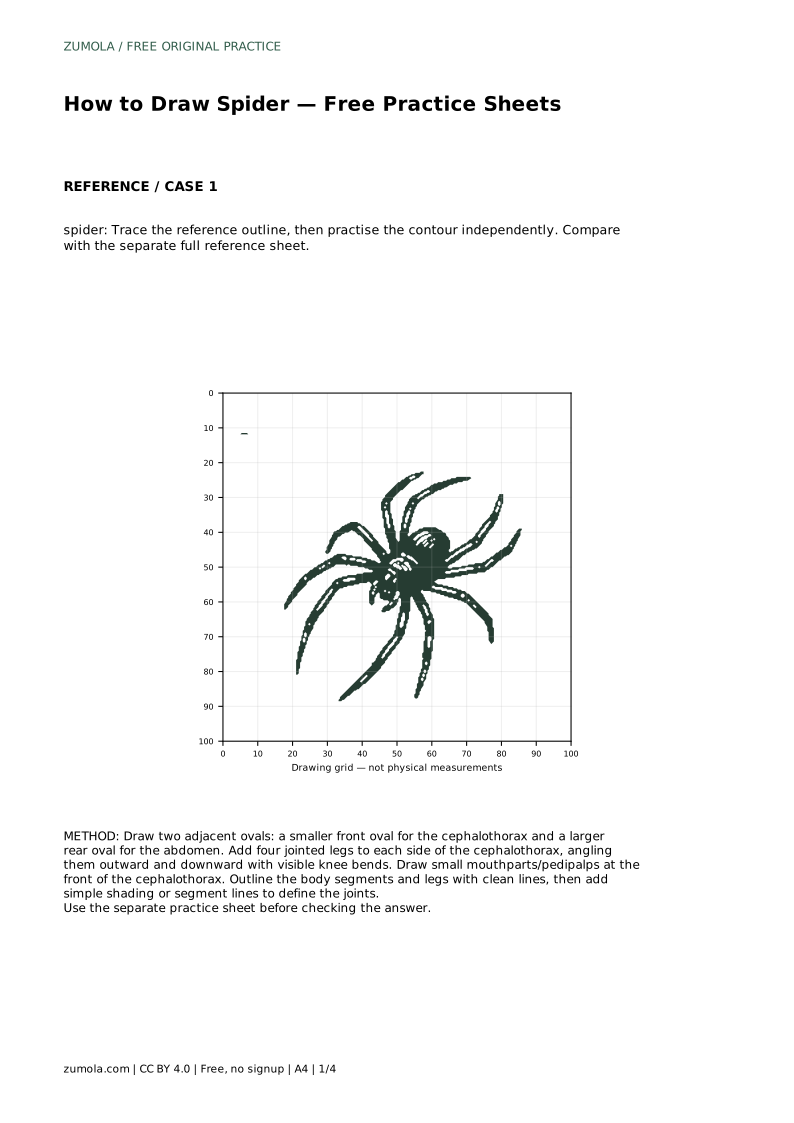
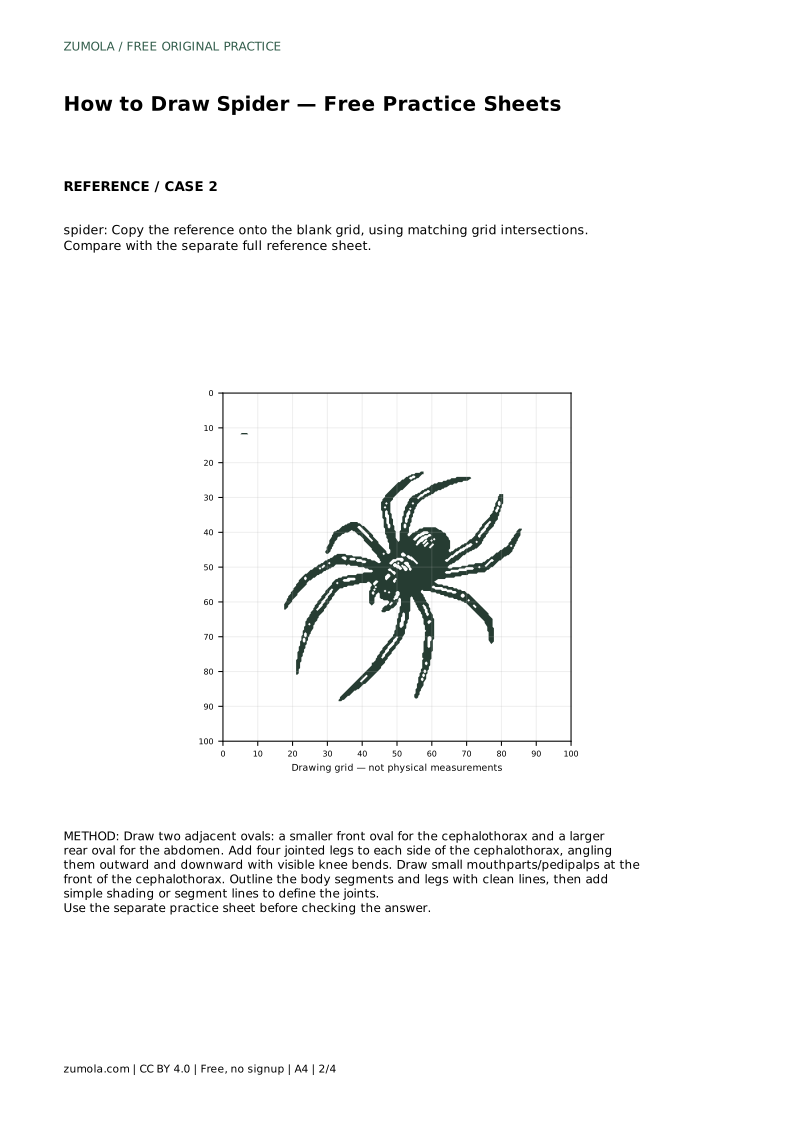
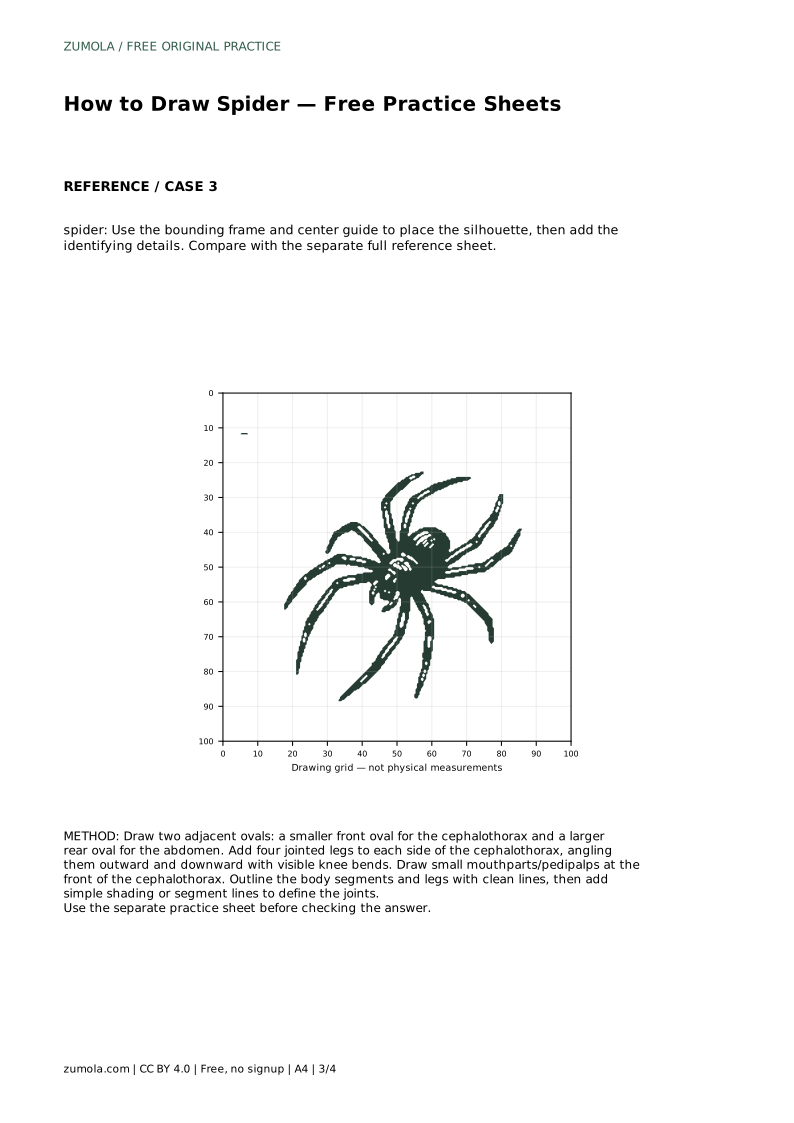
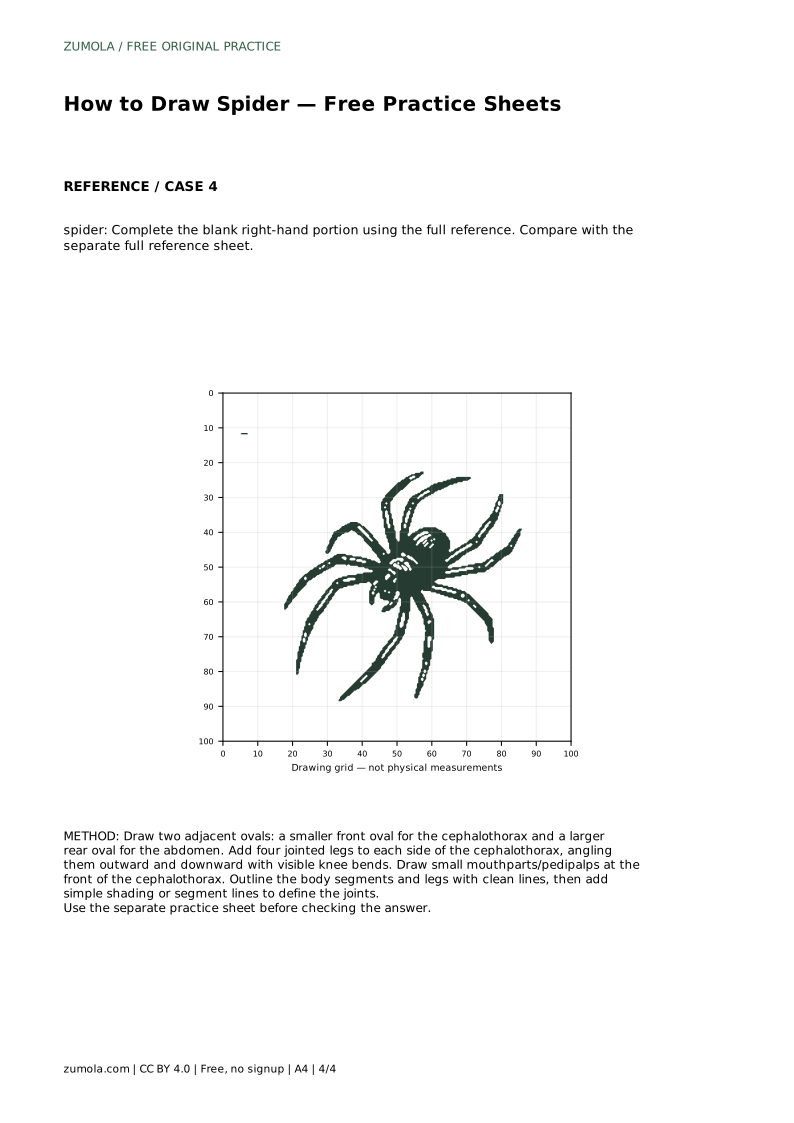
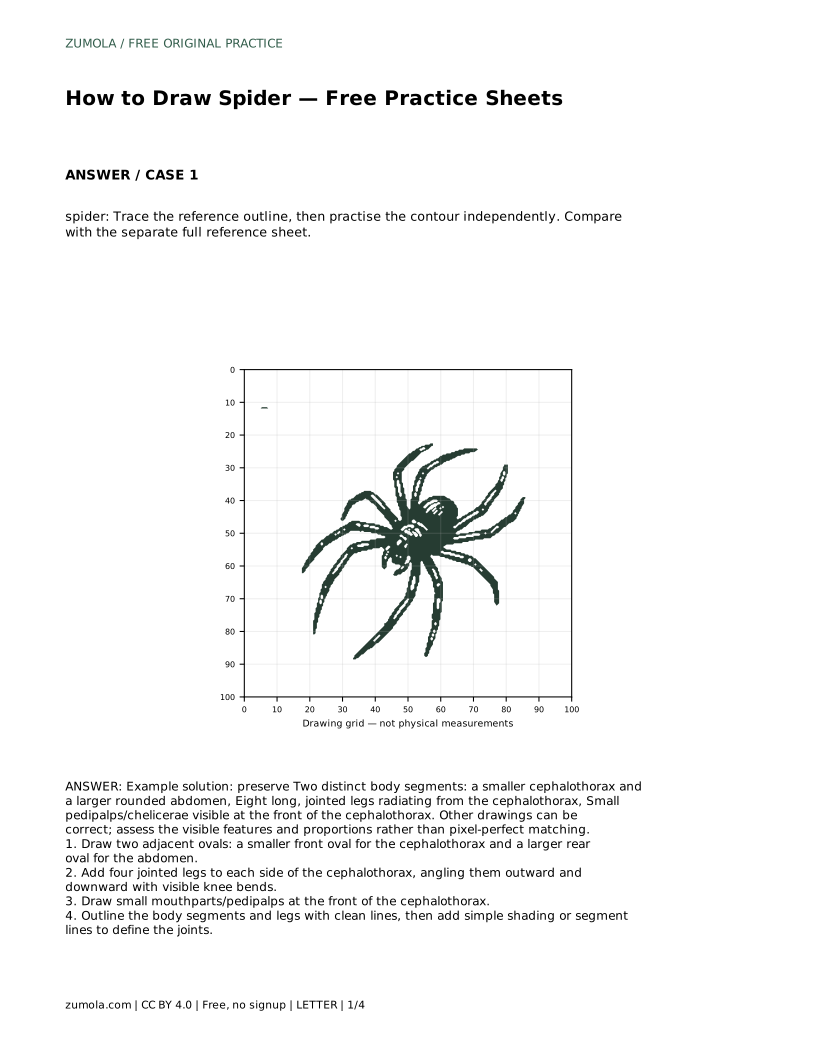
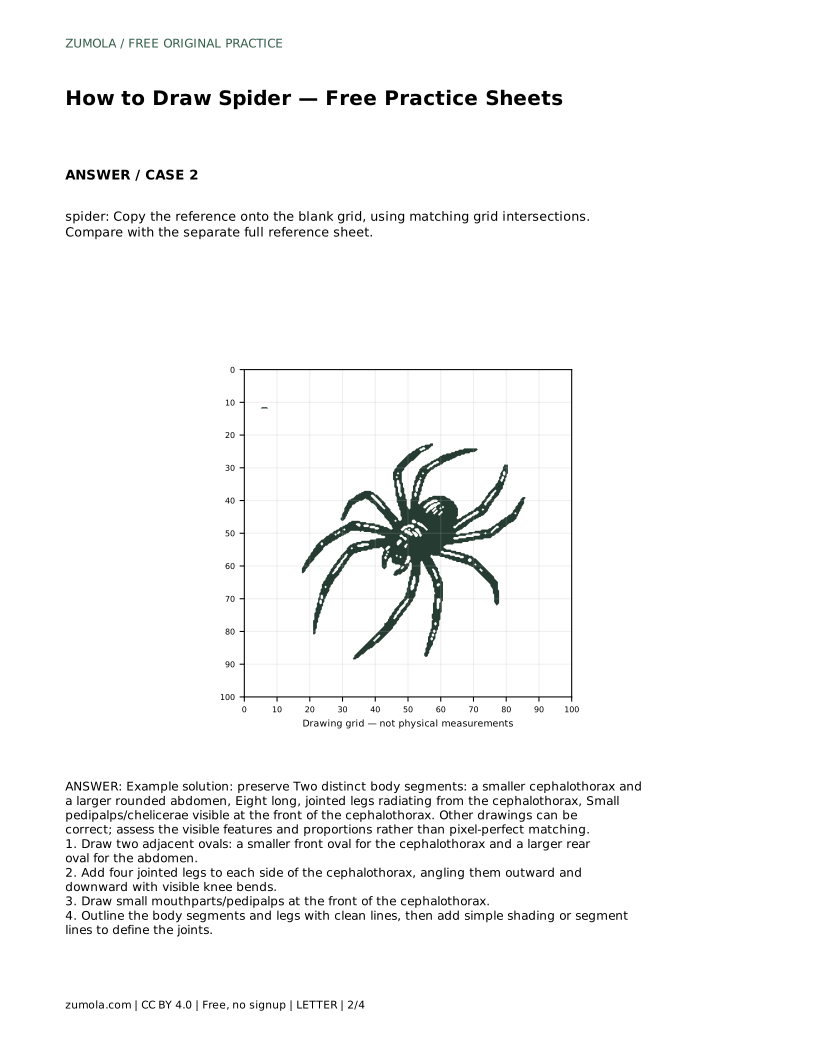
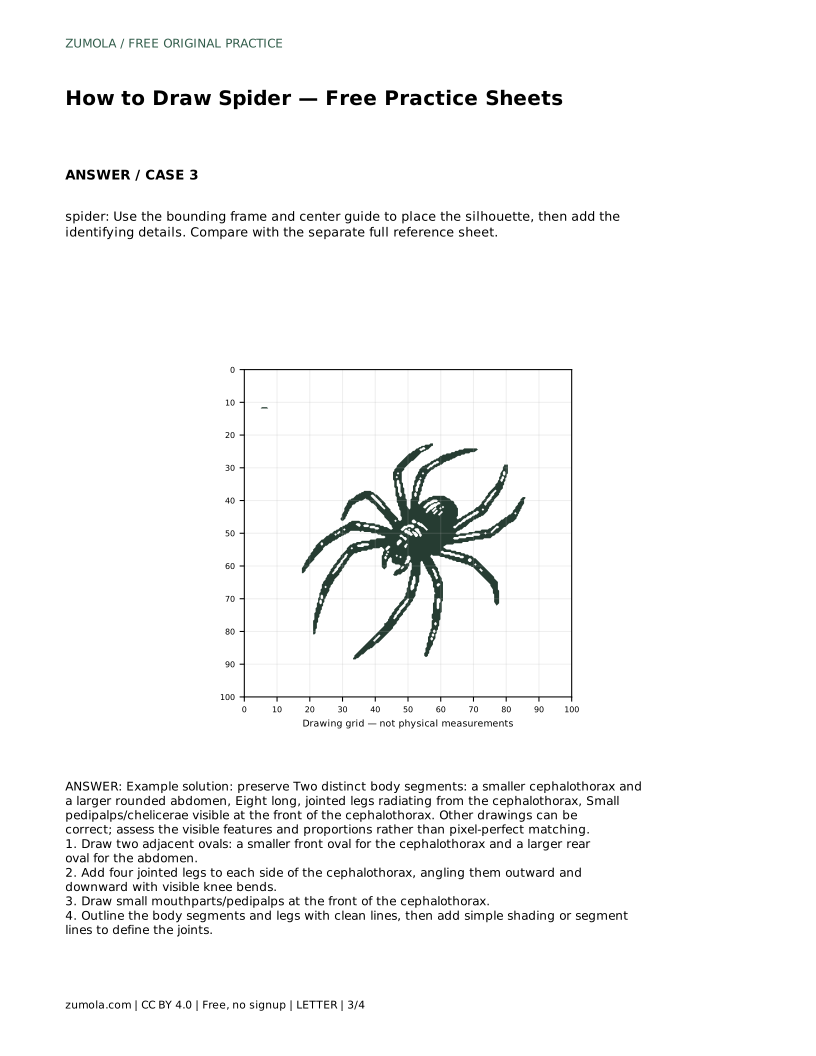
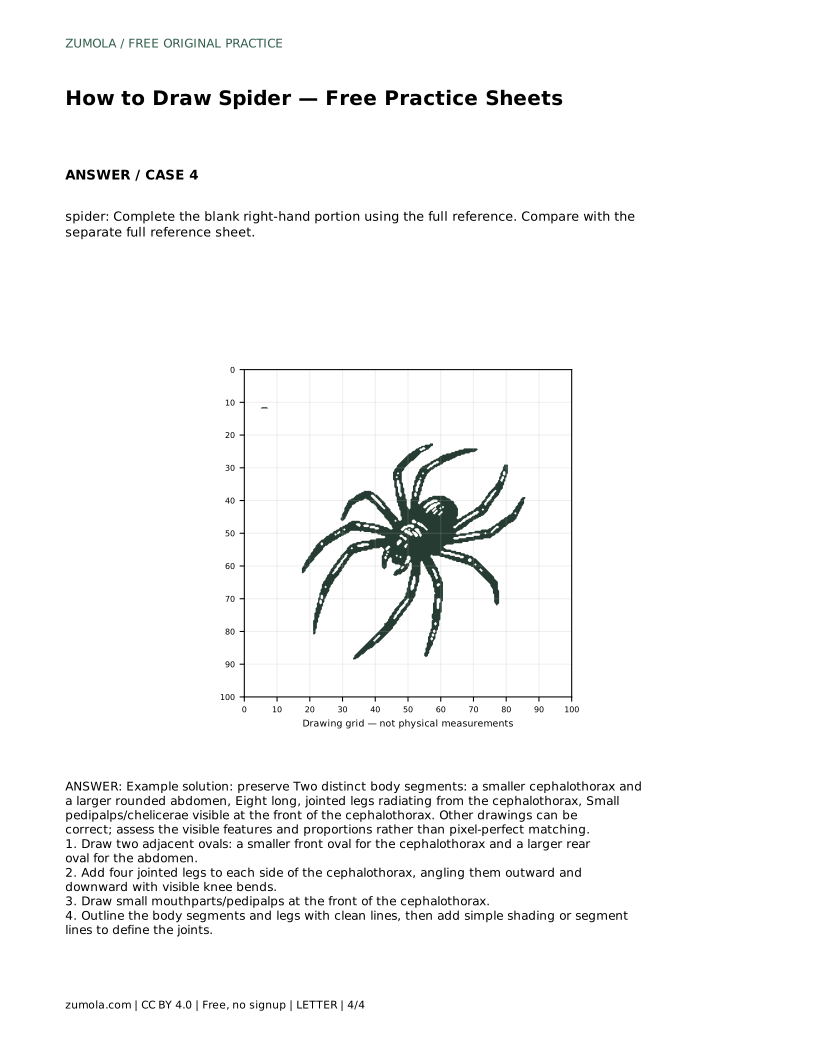
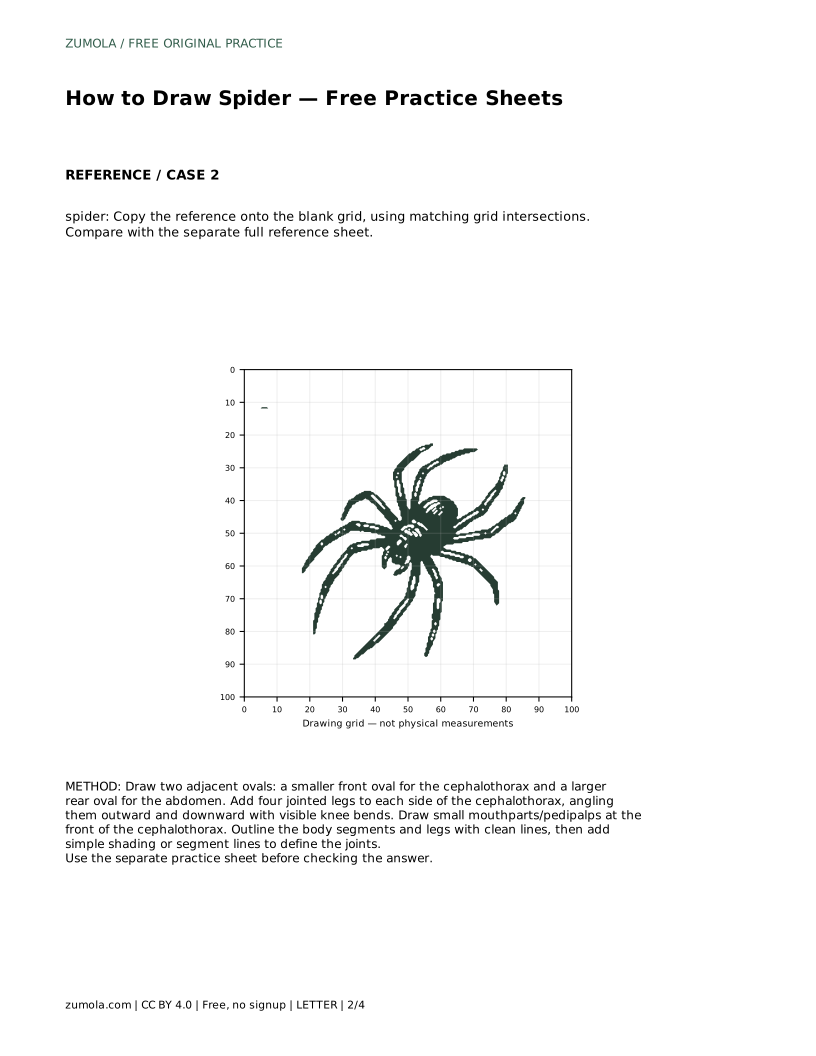
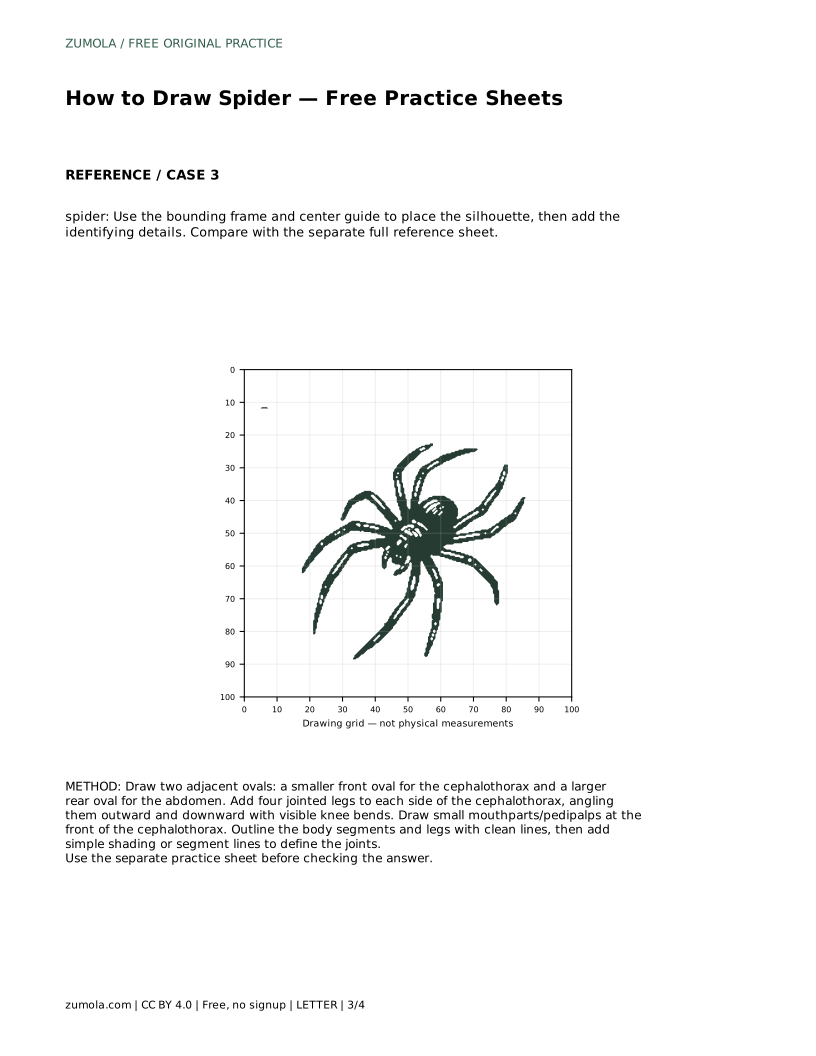
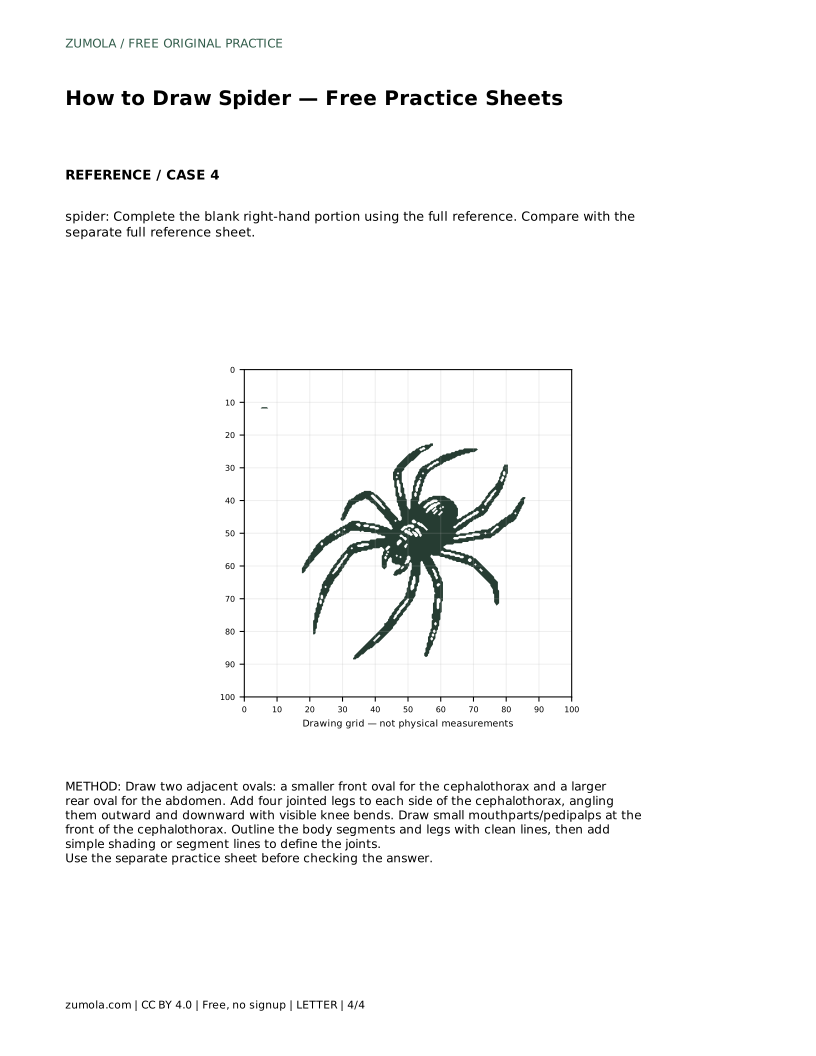
A spider's body reads as two connected ovals. The front oval, the cephalothorax, is smaller and carries the legs and mouthparts. The rear oval, the abdomen, is larger and rounded. Place them adjacent, not overlapping heavily, and check that the front oval sits toward the direction the spider faces.
Keep the ovals light at first. Their relative sizes control the whole silhouette, so adjust them before adding legs. A common early error is making the abdomen too small, which leaves the finished spider looking cramped.
All eight legs attach to the cephalothorax, four on each side. Angle them outward and downward, and give each leg a visible knee bend so the joints read clearly. Legs should radiate from the body rather than bunch together.
Draw the legs in pairs, one left and one right, to keep the arrangement balanced. Vary the angles slightly so the spider looks natural, but keep the count at eight. After the leg lines are placed, outline them with cleaner strokes and mark the joints with short segment lines.
At the front of the cephalothorax, draw small pedipalps or chelicerae. These are short structures near the mouth area, not extra legs. Keep them small so they do not compete with the leg arrangement.
Finish by outlining the body segments and legs with clean lines. Simple shading or segment lines can define the joints without turning the drawing into an anatomy diagram. The goal is a clear, readable spider shape, not a clinical illustration.
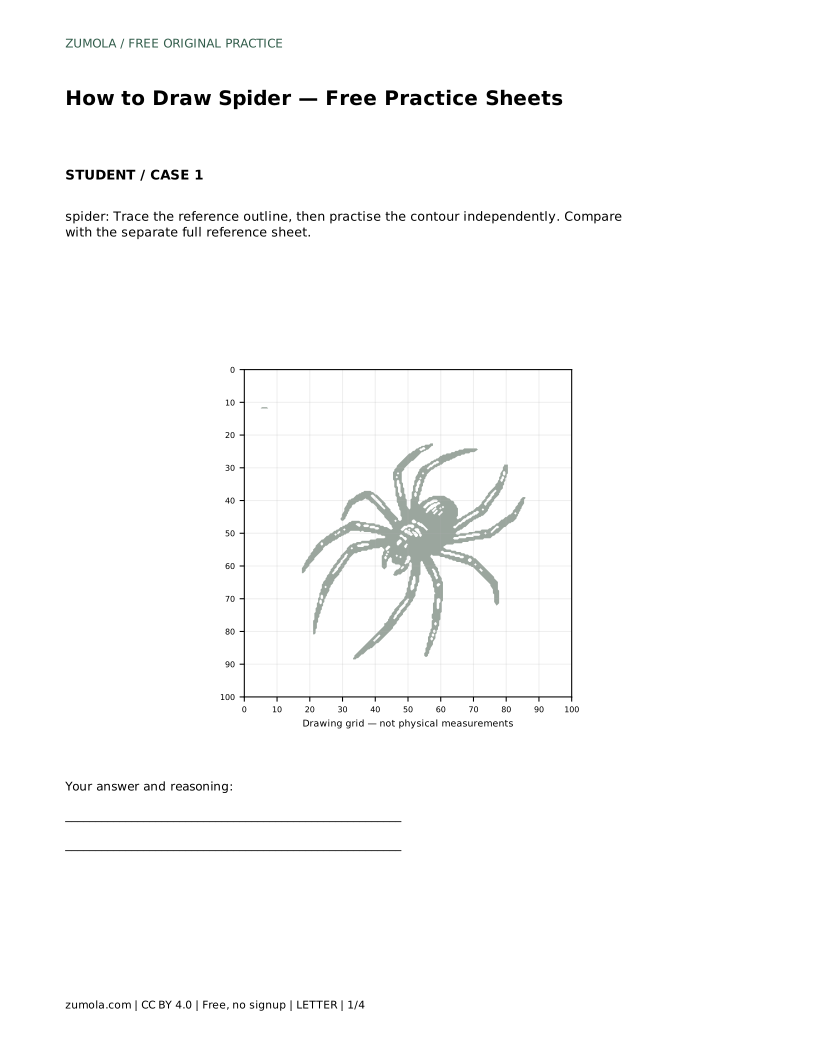
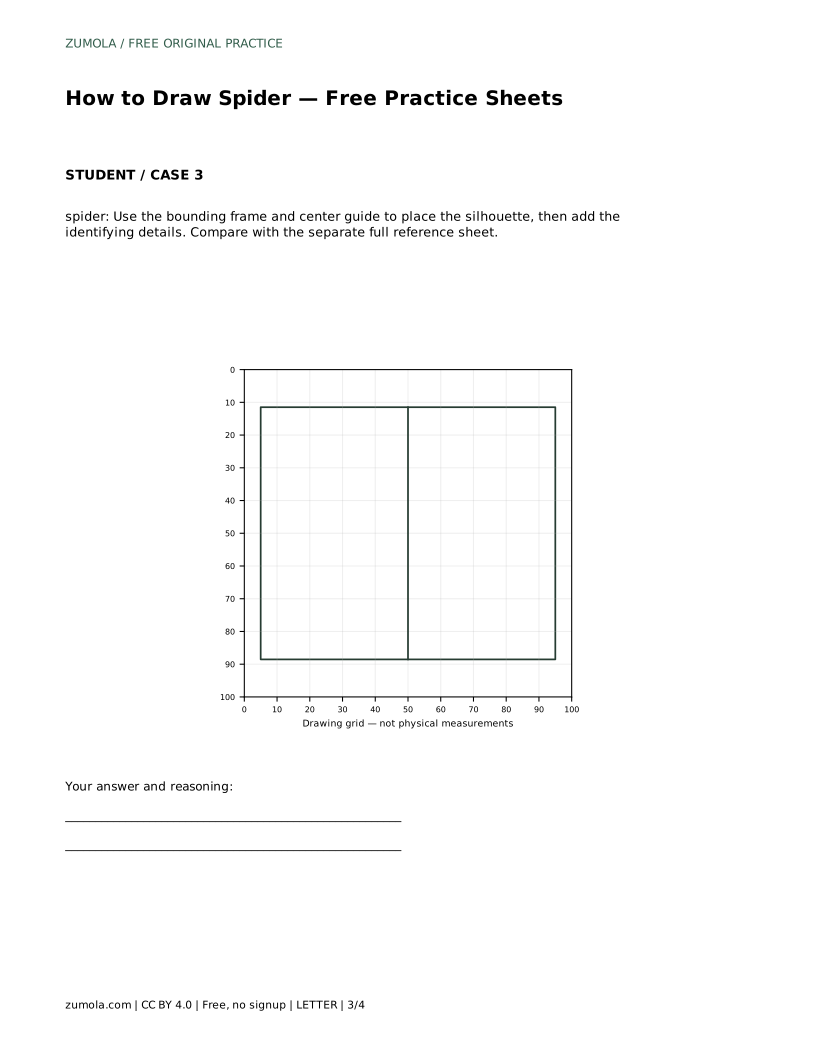
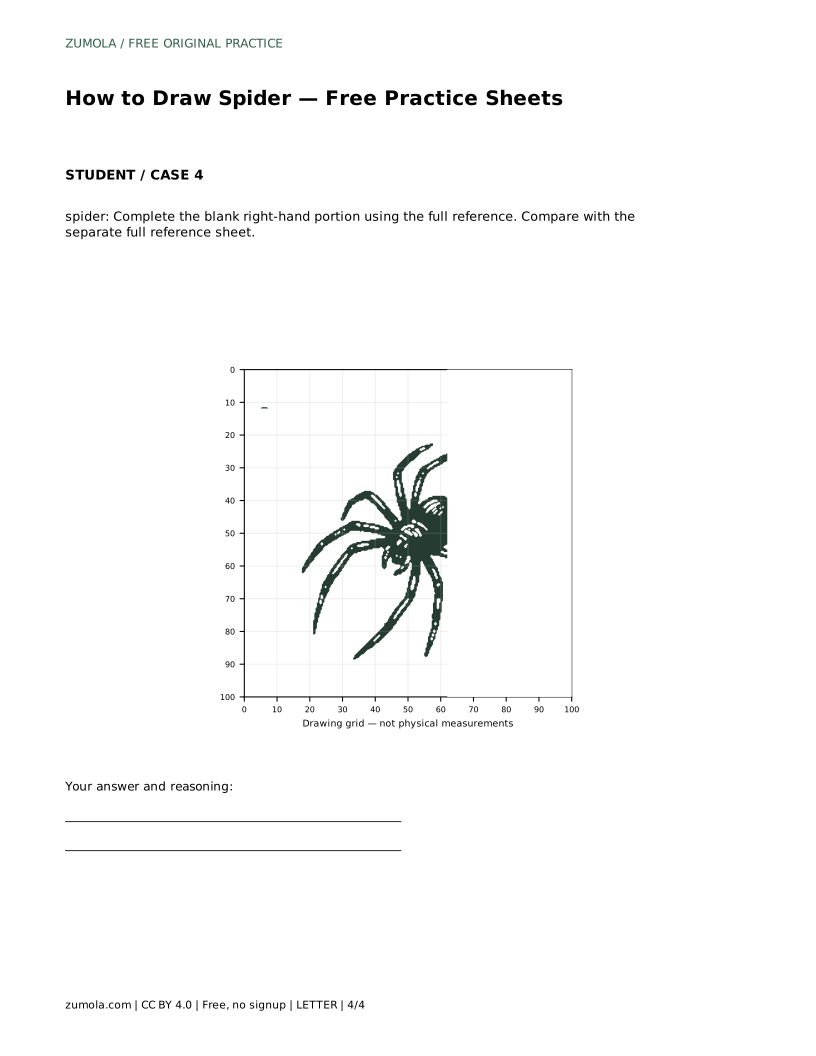
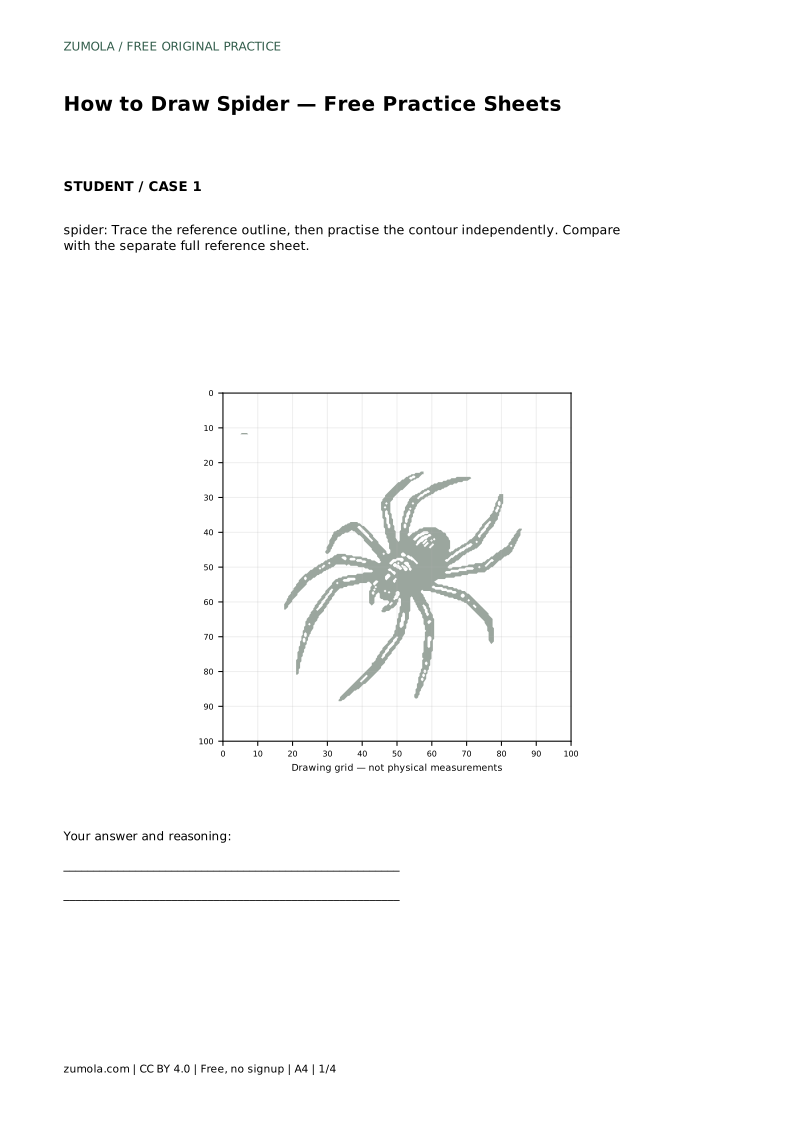
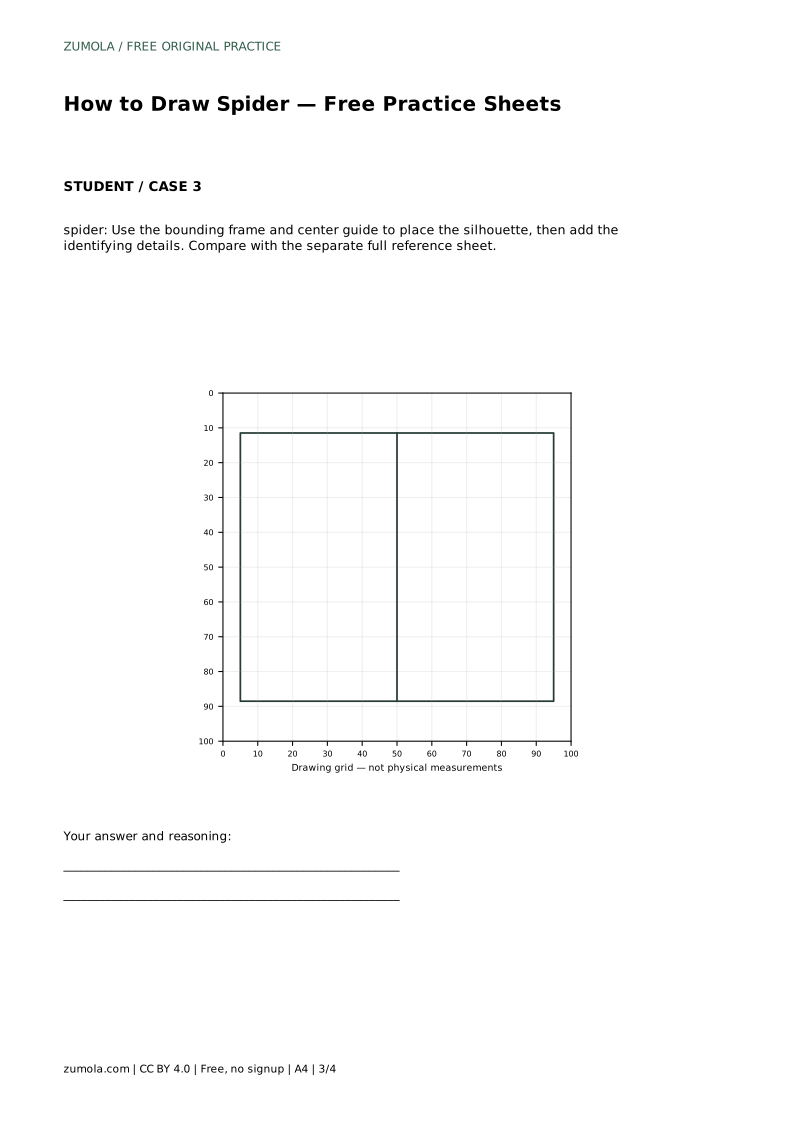
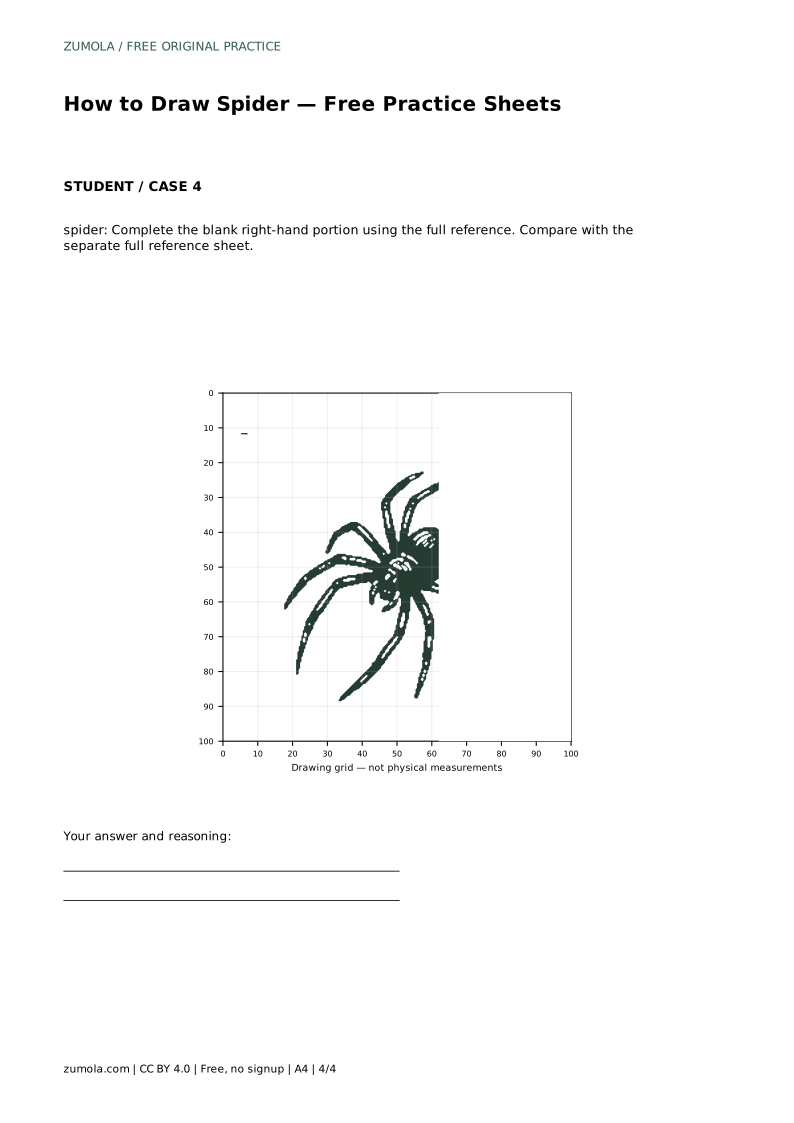
The trace sheet asks you to follow the reference outline, then practise the contour independently. The grid sheet asks you to copy the reference onto a blank grid using matching intersections. The bounding-frame sheet uses a center guide to place the silhouette before adding details. The complete-the-drawing sheet gives you the left portion and asks you to finish the right using the full reference.
Each format tests a different skill: contour control, proportion, placement, and completion. Compare your result with the separate full reference sheet and note which feature drifted most.
Use the reference sheet as a comparison tool, not a target for pixel-perfect matching. Different drawings can be correct if they preserve the two body segments, eight jointed legs radiating from the cephalothorax, and small front mouthparts. Check proportions and visible features rather than exact line placement.
spider: Trace the reference outline, then practise the contour independently. Compare with the separate full reference sheet.
Example solution: preserve Two distinct body segments: a smaller cephalothorax and a larger rounded abdomen, Eight long, jointed legs radiating from the cephalothorax, Small pedipalps/chelicerae visible at the front of the cephalothorax. Other drawings can be correct; assess the visible features and proportions rather than pixel-perfect matching. Draw two adjacent ovals: a smaller front oval for the cephalothorax and a larger rear oval for the abdomen. Add four jointed legs to each side of the cephalothorax, angling them outward and downward with visible knee bends. Draw small mouthparts/pedipalps at the front of the cephalothorax. Outline the body segments and legs with clean lines, then add simple shading or segment lines to define the joints.
Eight legs, four on each side, all attached to the cephalothorax.
At the front of the cephalothorax, drawn small as pedipalps or chelicerae.
No. Preserve the two body segments, eight jointed legs, and small front details; other proportions can vary.
All drawing practice · Free coordinate paper
Original resources · CC BY 4.0 · Free for personal and classroom use with attribution.