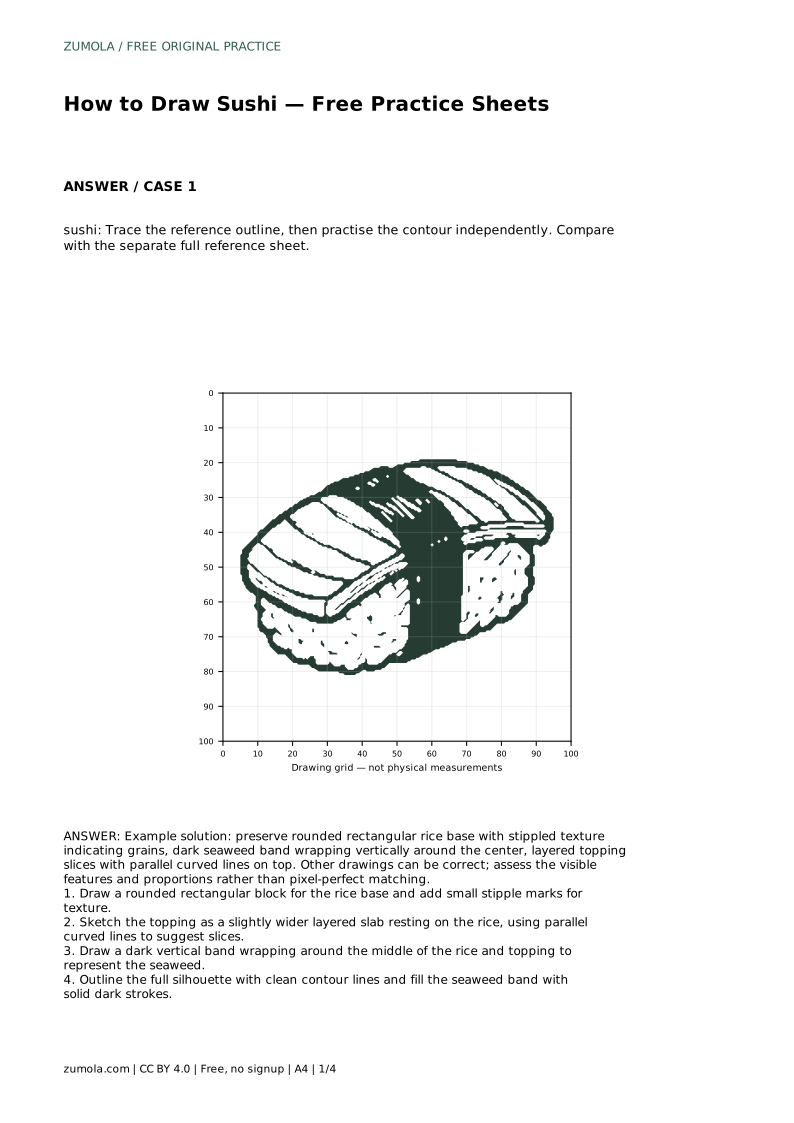
Reference diagrams
LETTER · Download PDF
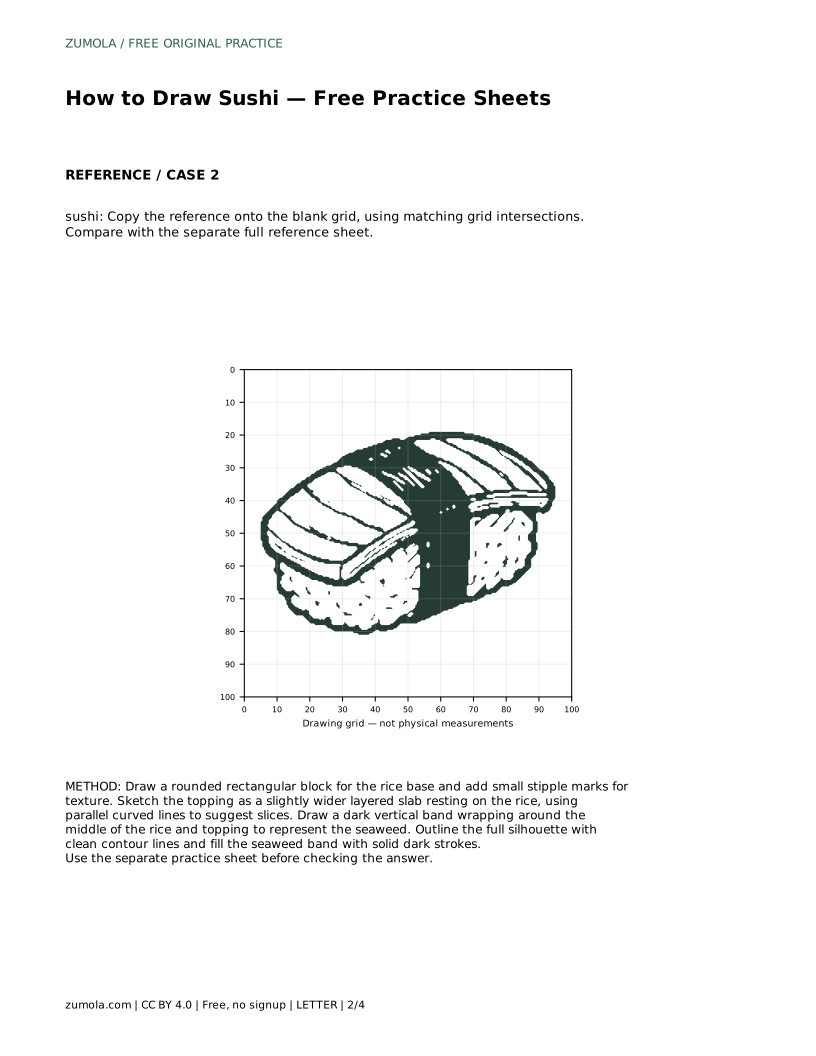
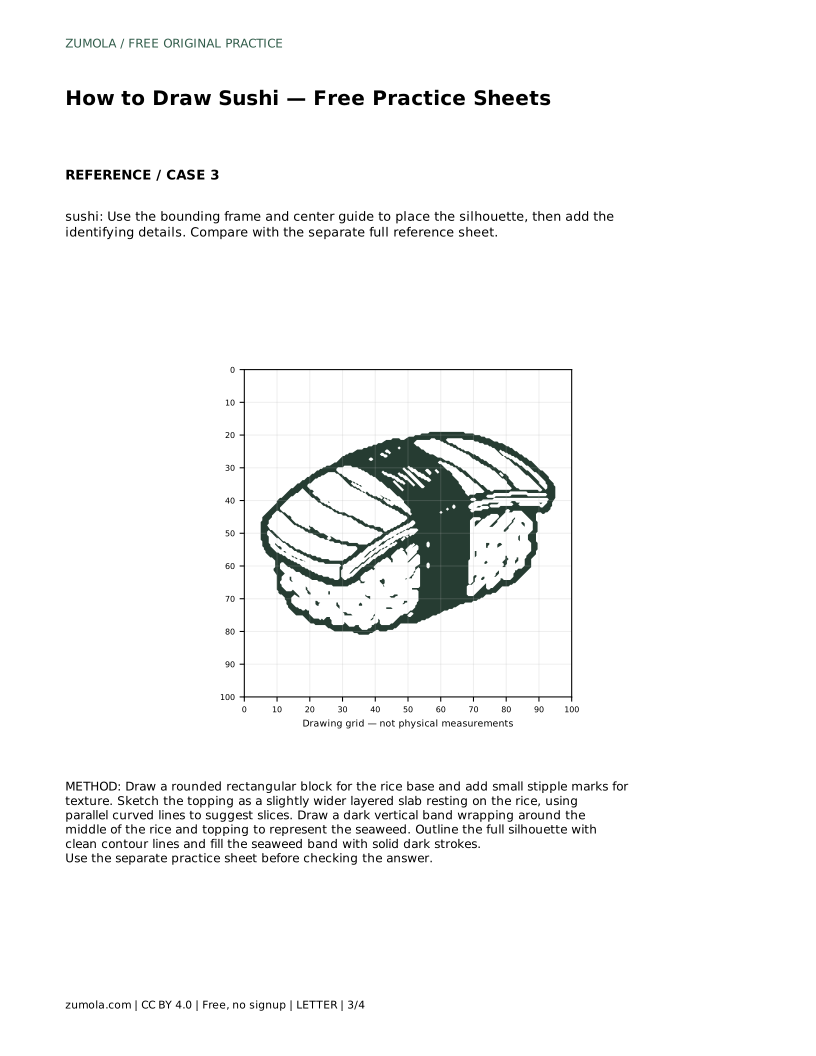
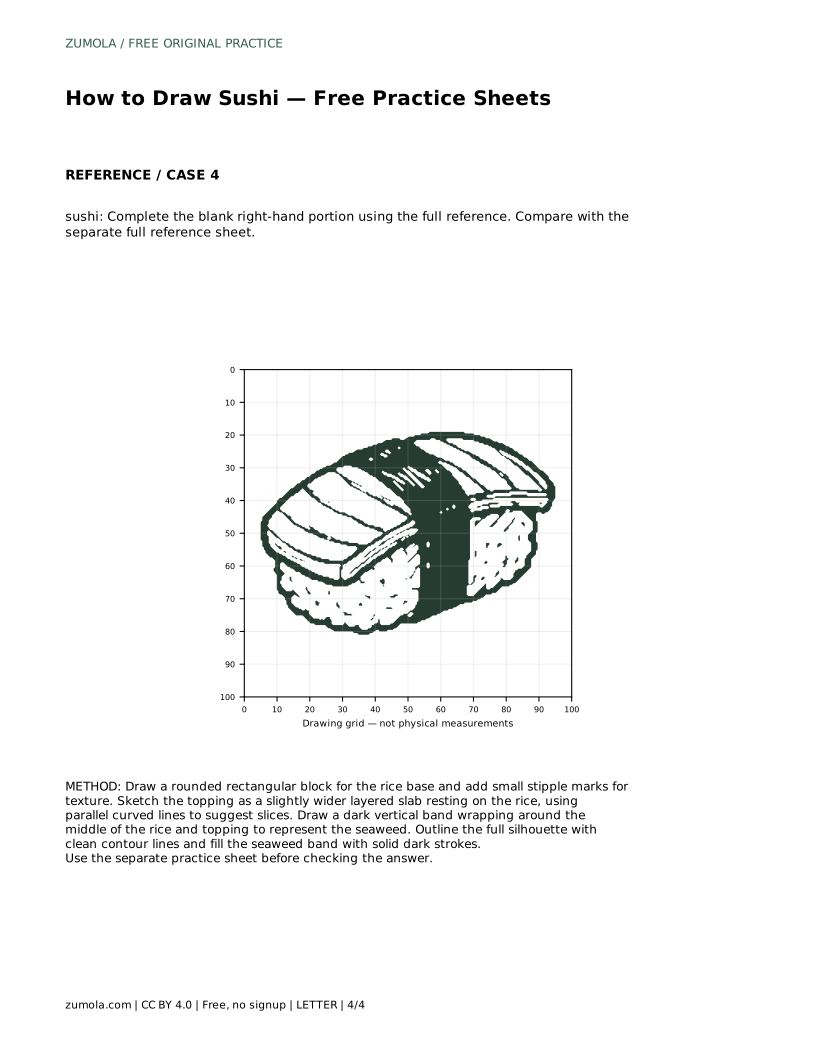
A4 · Download PDF
Free original resources
Learn to draw sushi by building a rounded rice base, layered topping, and seaweed band. Use trace, grid, and frame practice sheets to compare with a full reference.
Four original cases, with reference diagrams, practice sheets and worked answers. Everything is free; no signup required.
LETTER · Download PDF
A4 · Download PDF
LETTER · Download PDF
A4 · Download PDF
LETTER · Download PDF
A4 · Download PDF
Use A4 or US Letter to match your printer. Use the stated values and conditions to solve each exercise; diagrams are not physical measuring rulers.
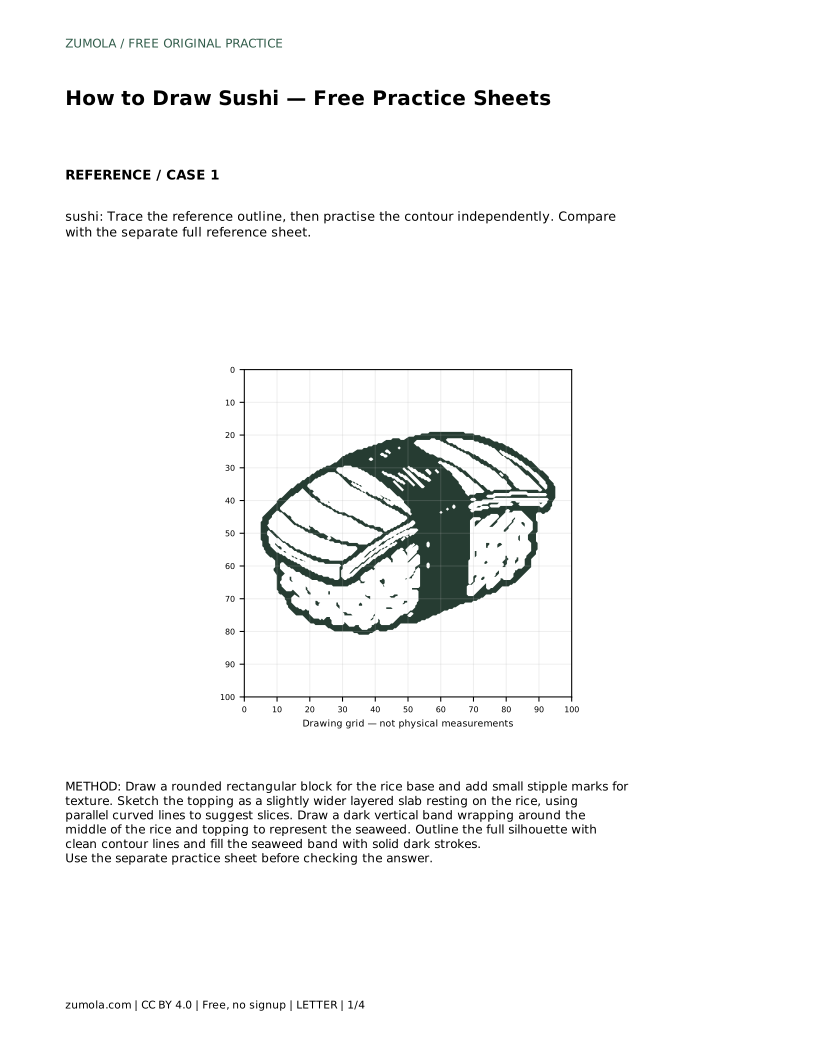
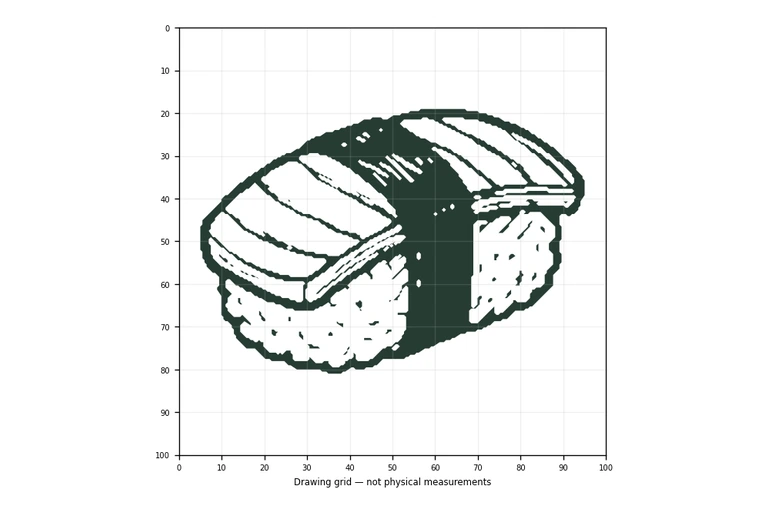
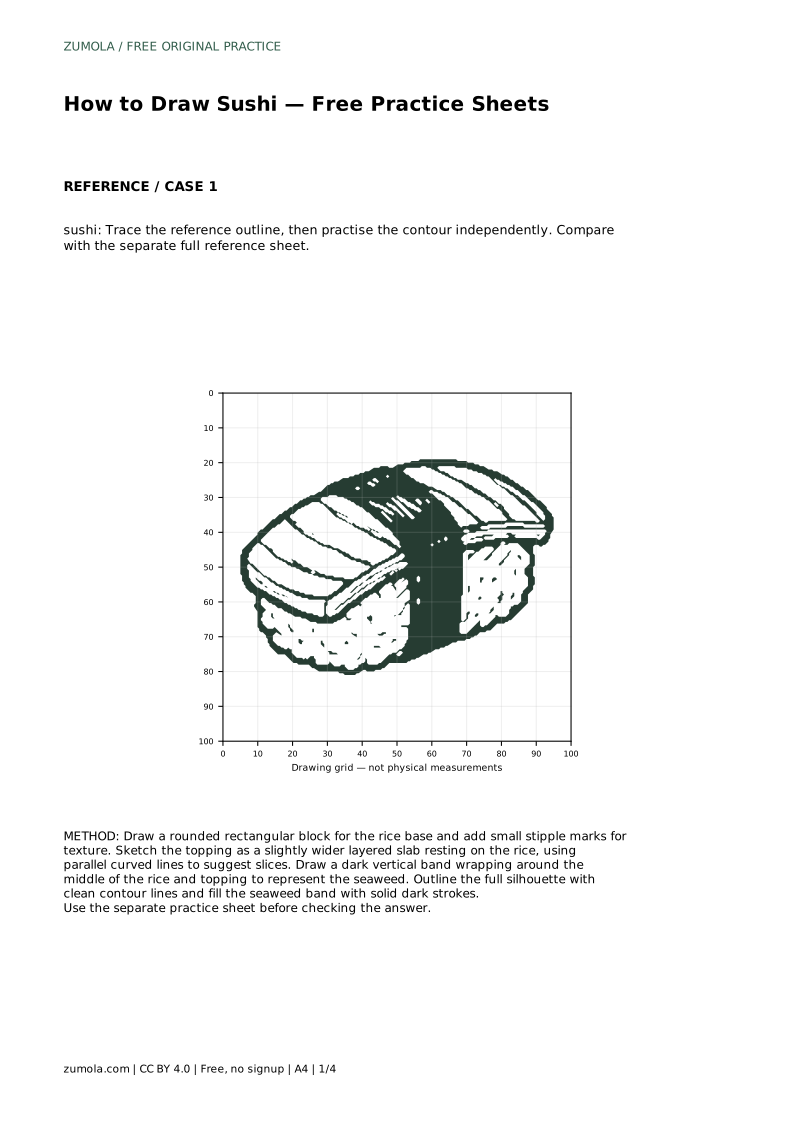
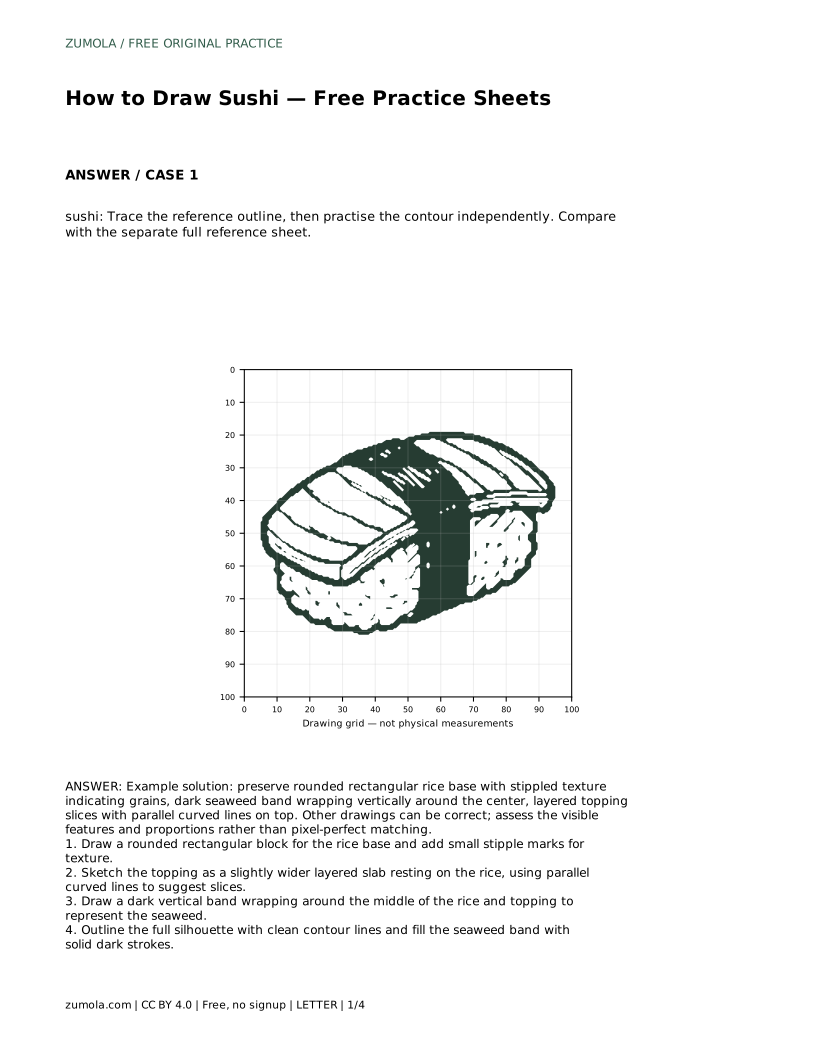
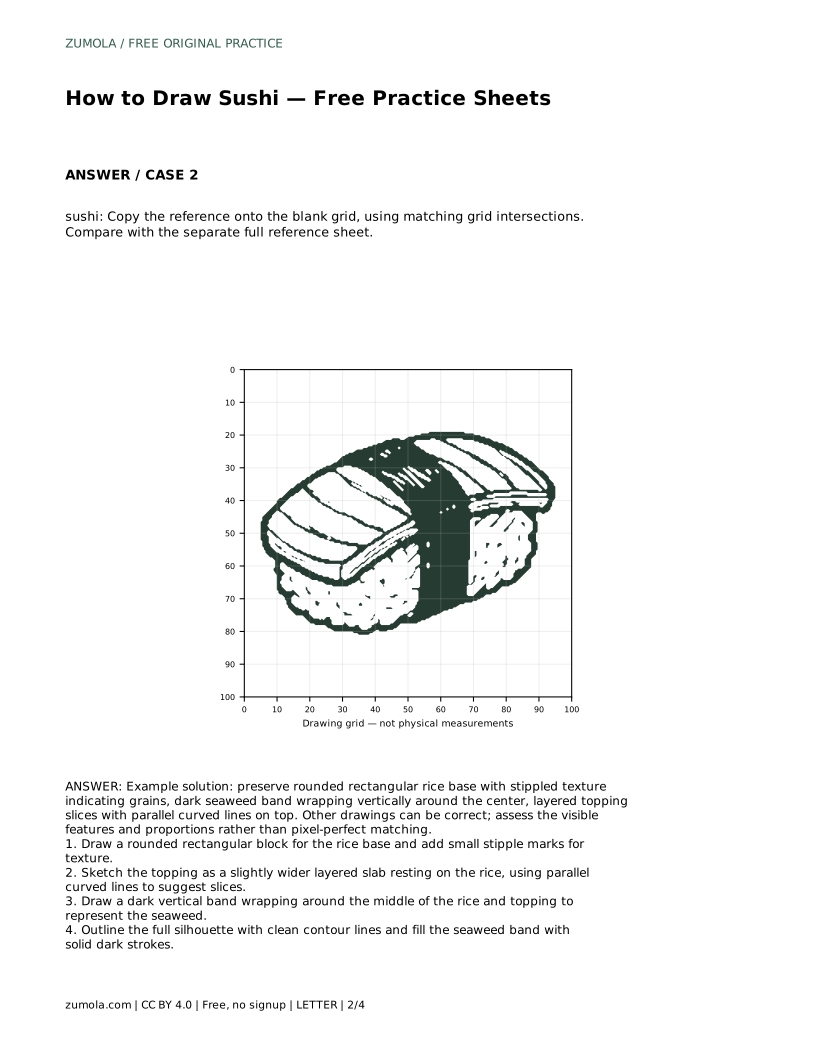
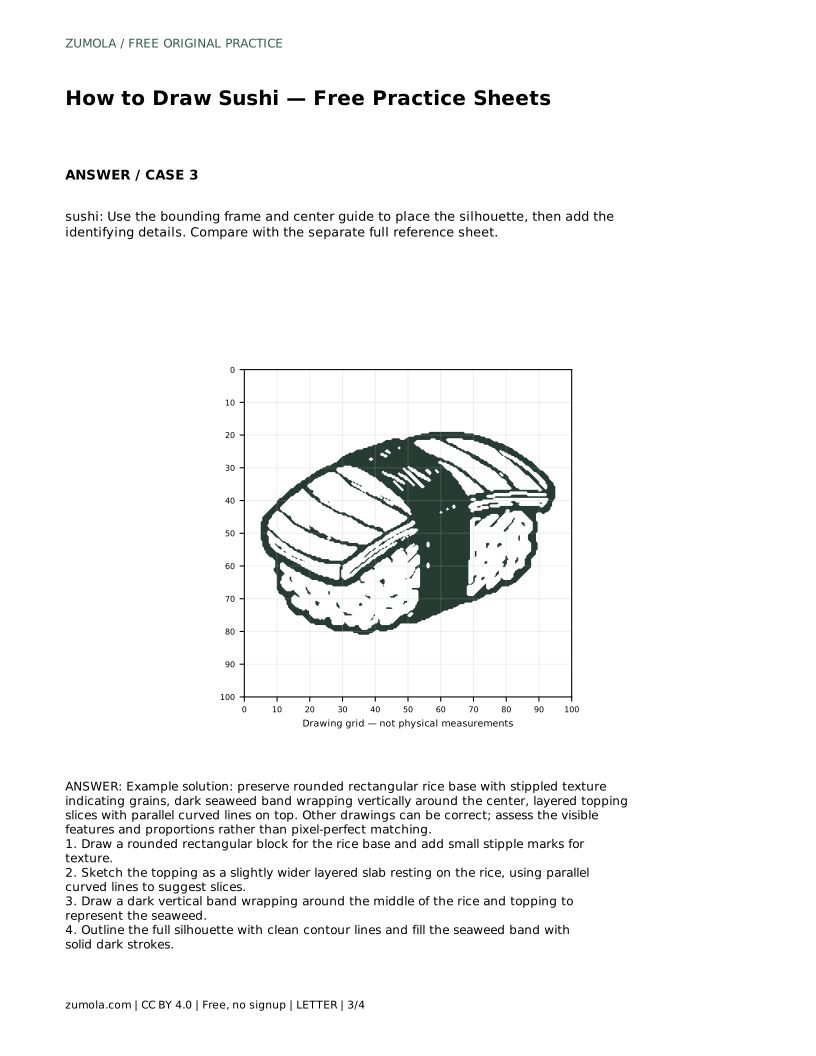
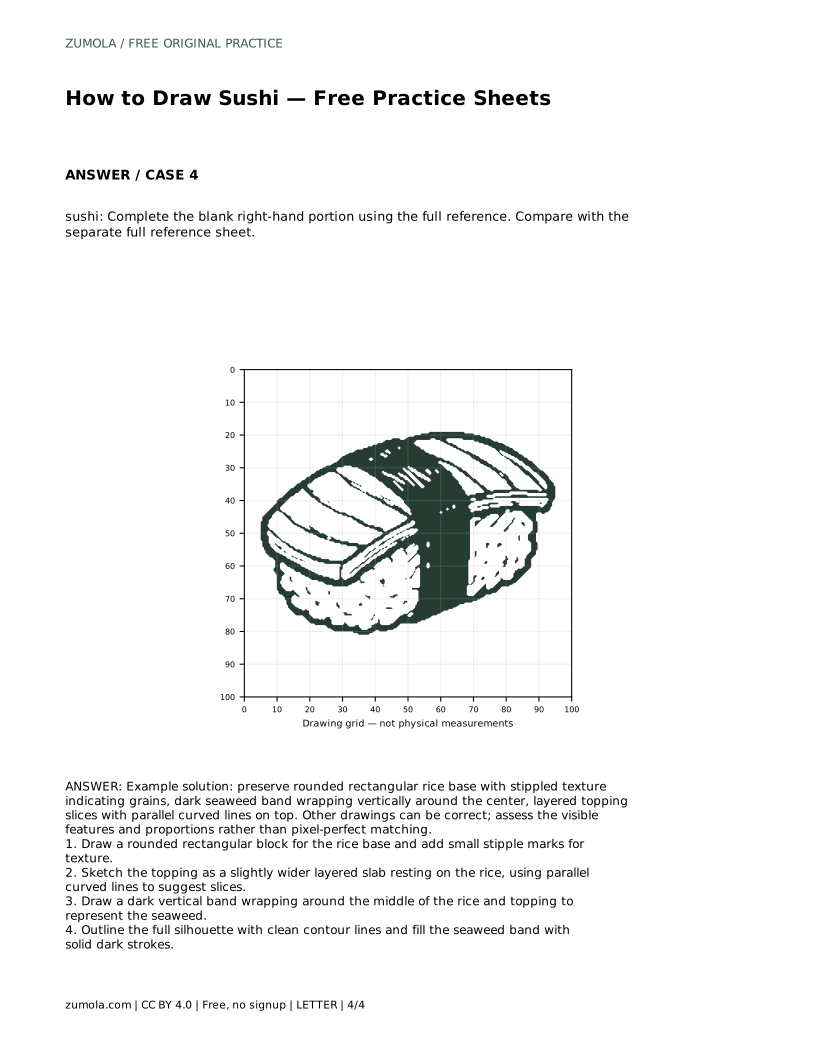
Drawing sushi is a manageable subject because its main forms are simple: a rounded rice block, a topping slab, and a dark seaweed band. The challenge is not the outline alone but the small cues that make the drawing read as sushi, such as stippled rice texture and parallel curved lines on the topping. This page explains a reliable construction order and how to use the practice sheets to check proportions and visible features without expecting a pixel-perfect match.
Start with the rice because it sets the overall footprint of the sushi. Draw a rounded rectangular block, wider than it is tall, with softly curved corners rather than sharp right angles. Keep the top edge slightly flatter where the topping will rest. Add small stipple marks across the rice area to suggest individual grains; these marks should be light and scattered, not a solid fill. The rice base is the anchor for every later detail, so check that its width and height feel balanced before adding anything else.
The topping sits on the rice as a slightly wider layered slab. Sketch it so it overhangs the rice a little on the sides, then add parallel curved lines across the top to suggest slices. These lines should follow the same direction and stay evenly spaced. Next, draw a dark vertical band wrapping around the middle of the rice and topping to represent the seaweed. The band should cross the full height of the silhouette, not stop partway. Finally, outline the whole silhouette with clean contour lines and fill the seaweed band with solid dark strokes so it reads as a distinct wrap.
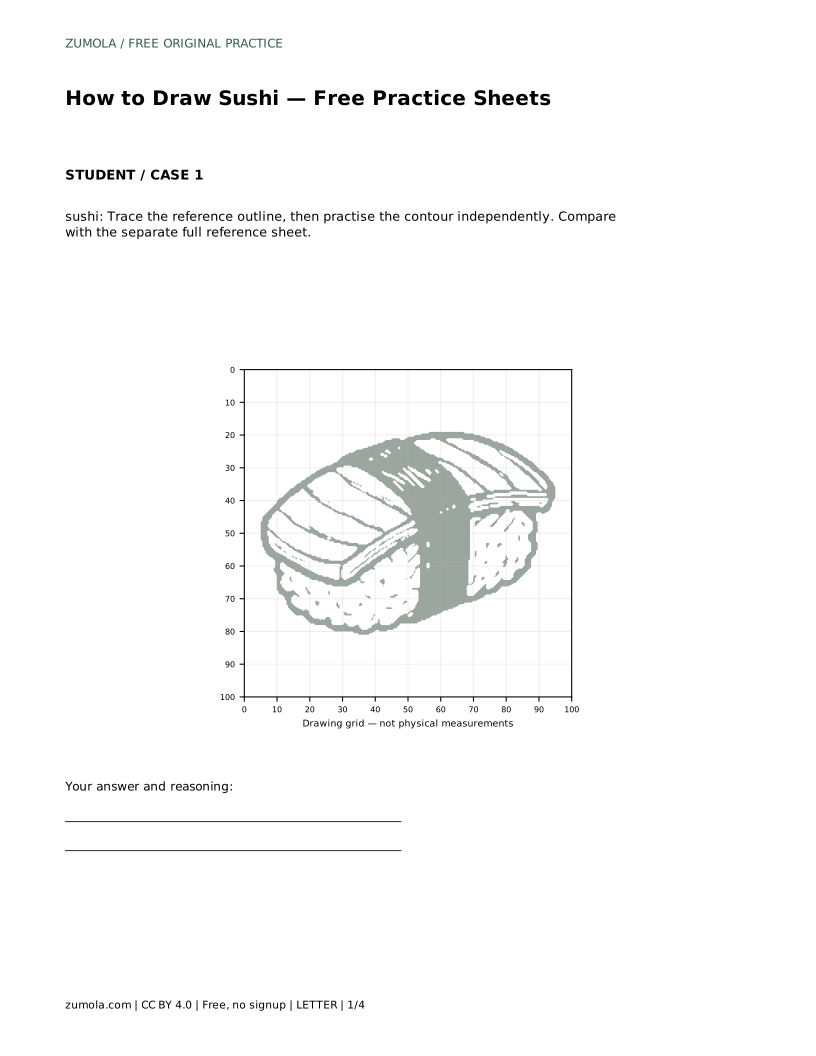
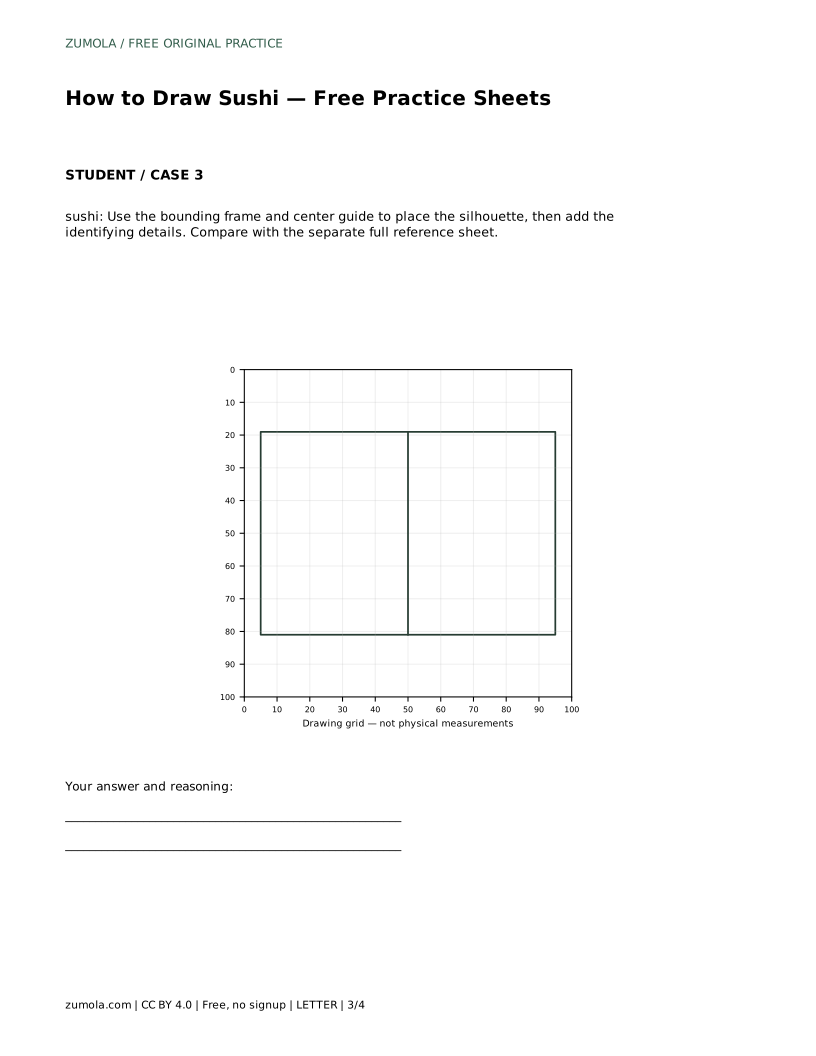
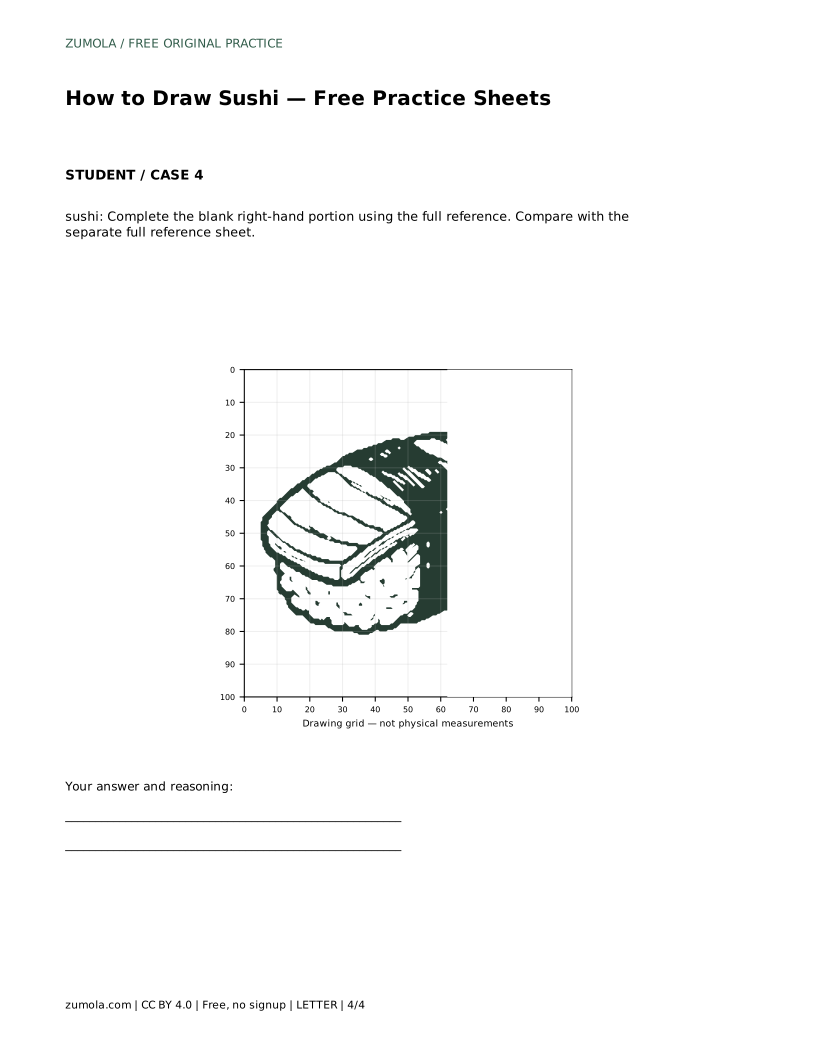
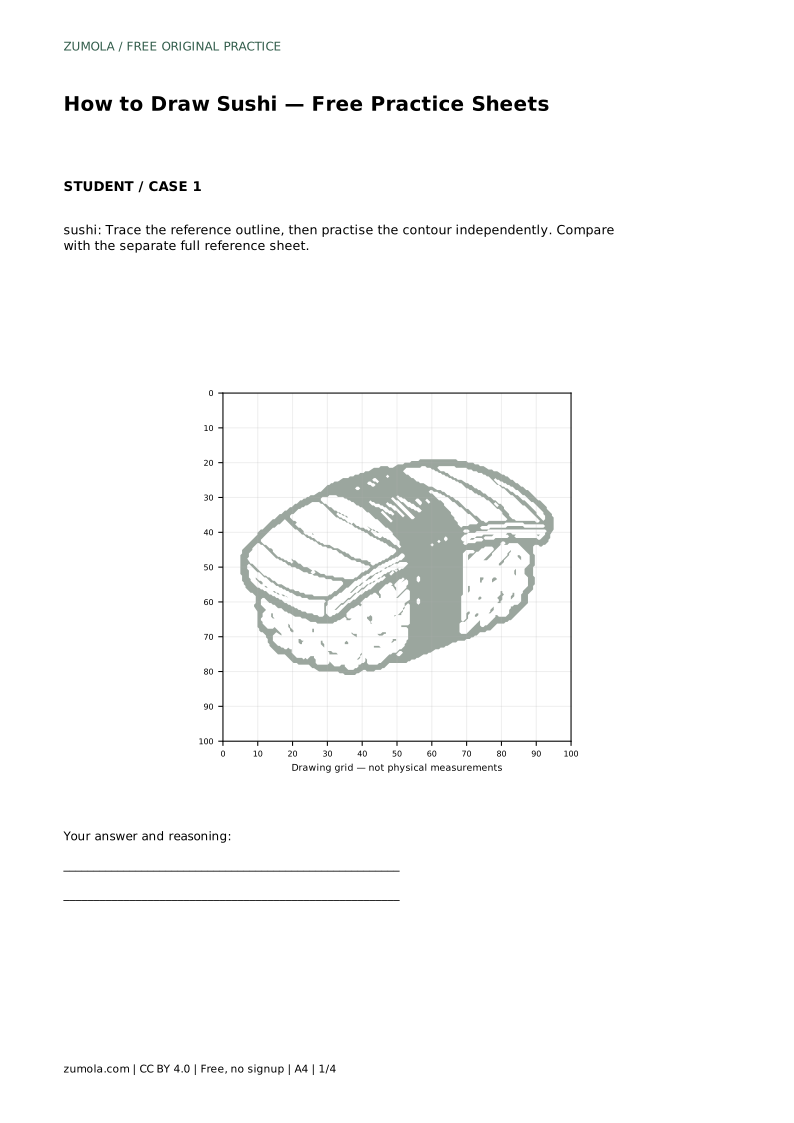
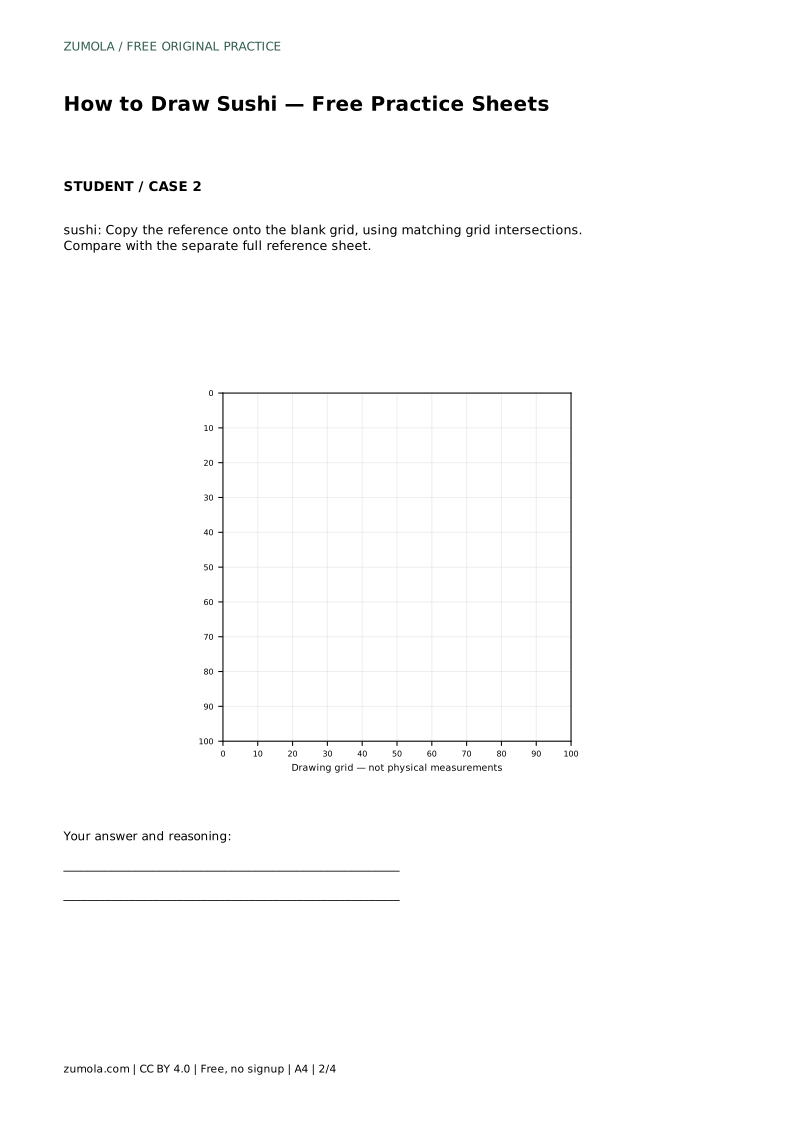
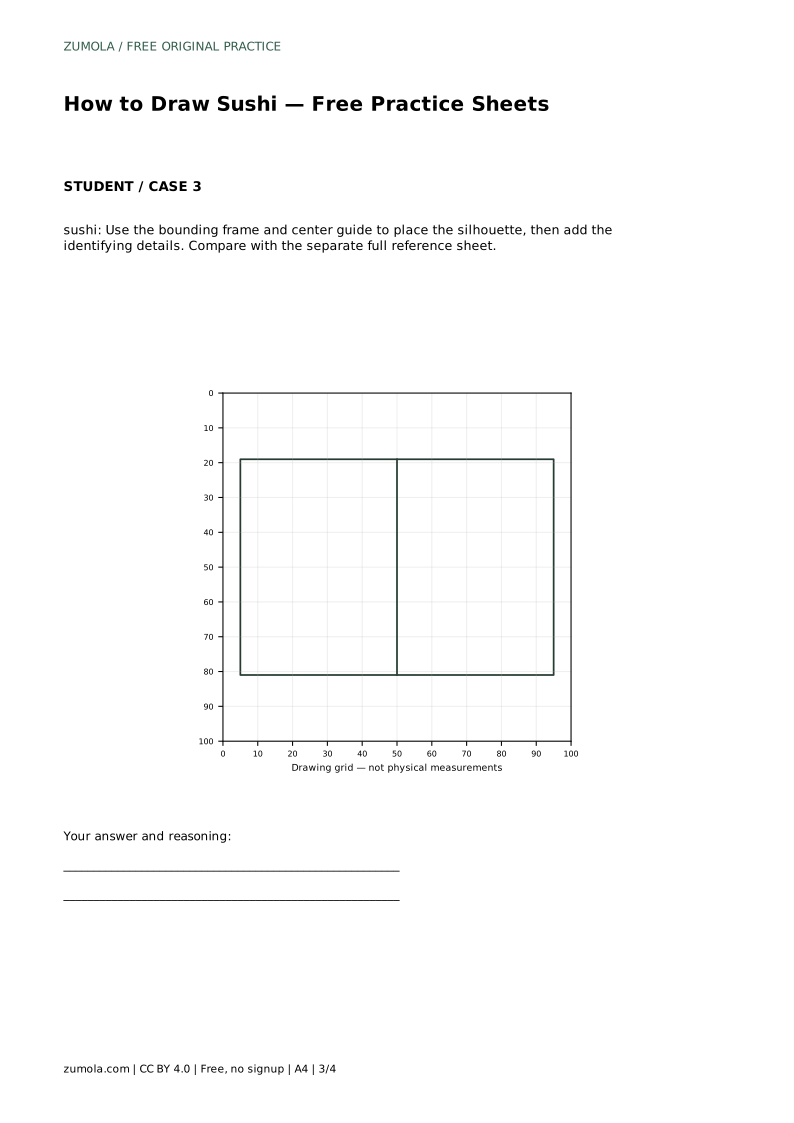
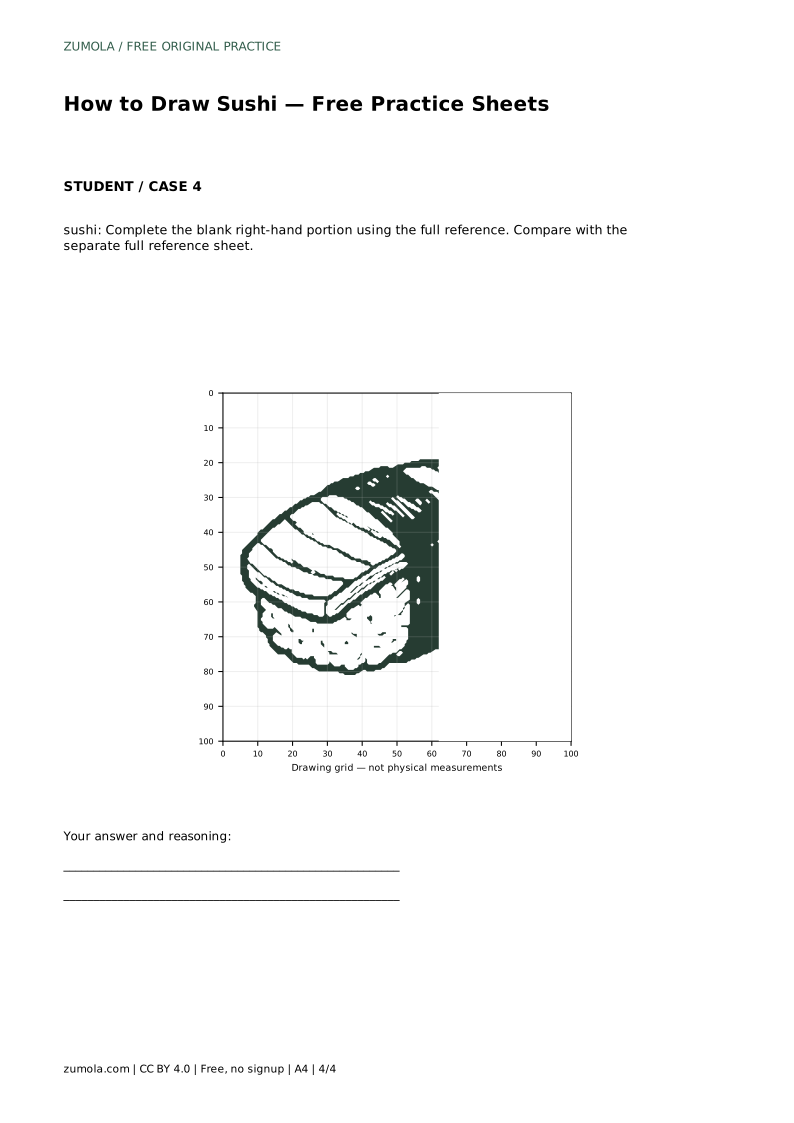
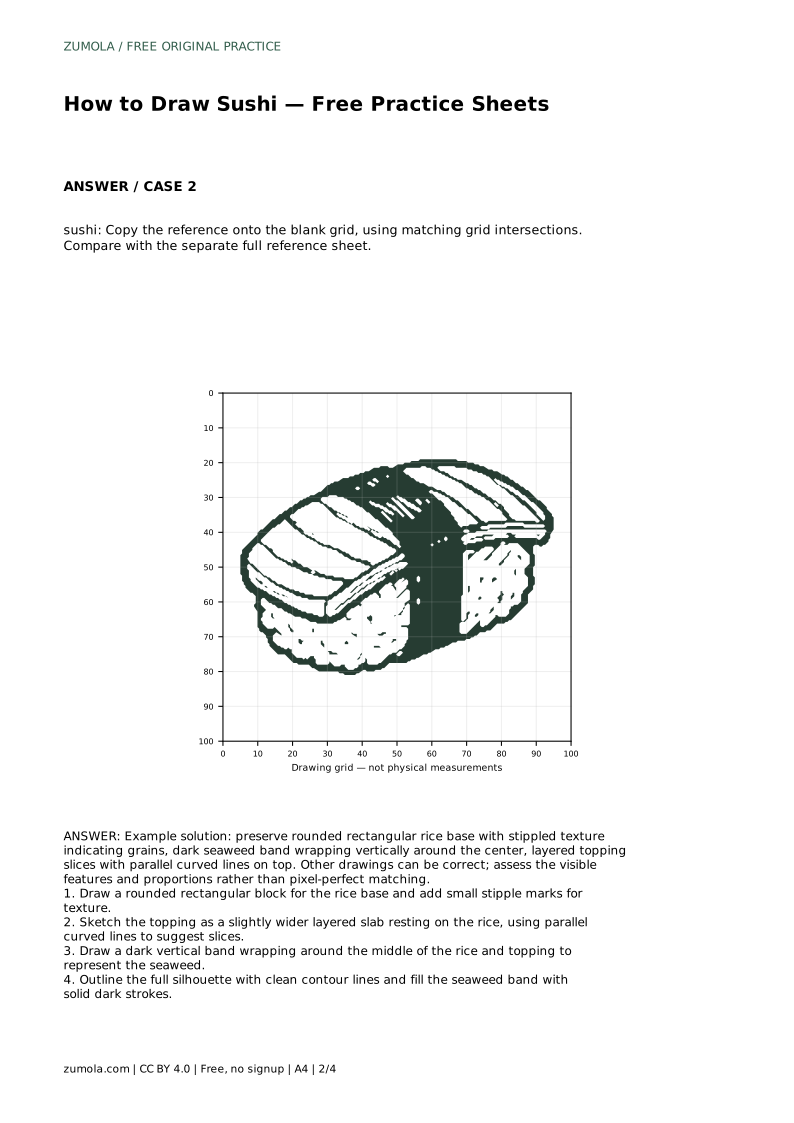
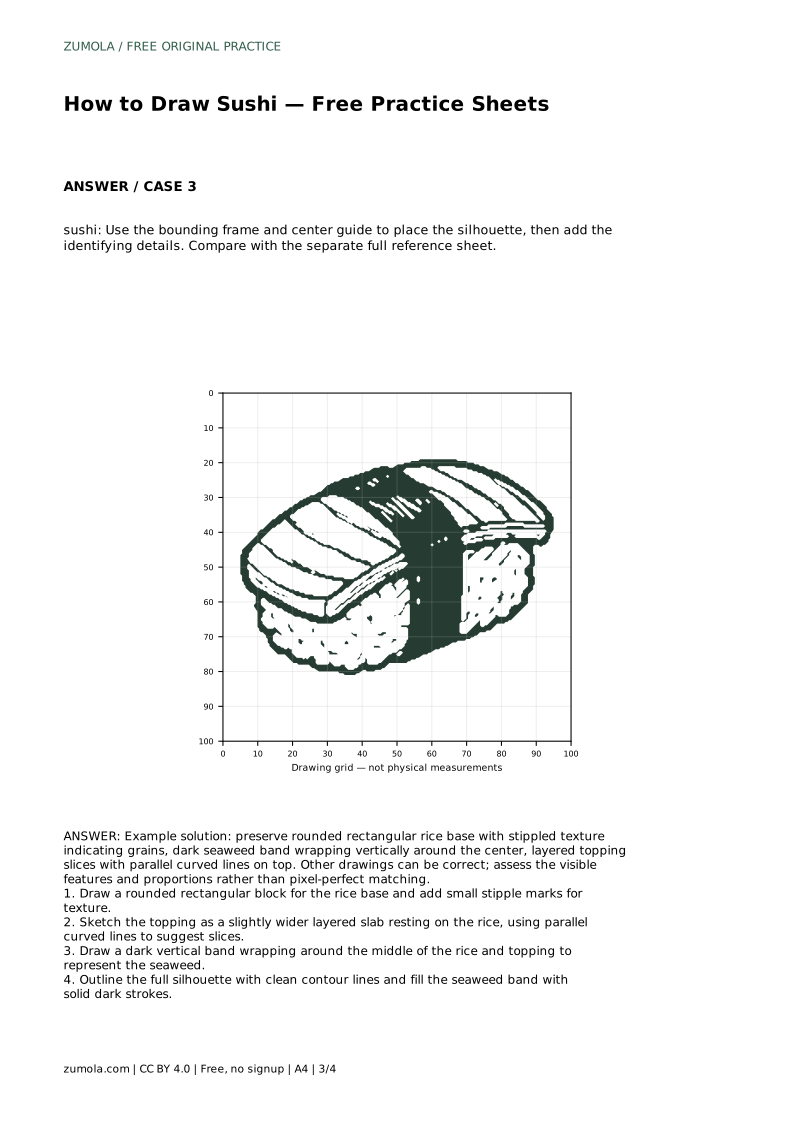
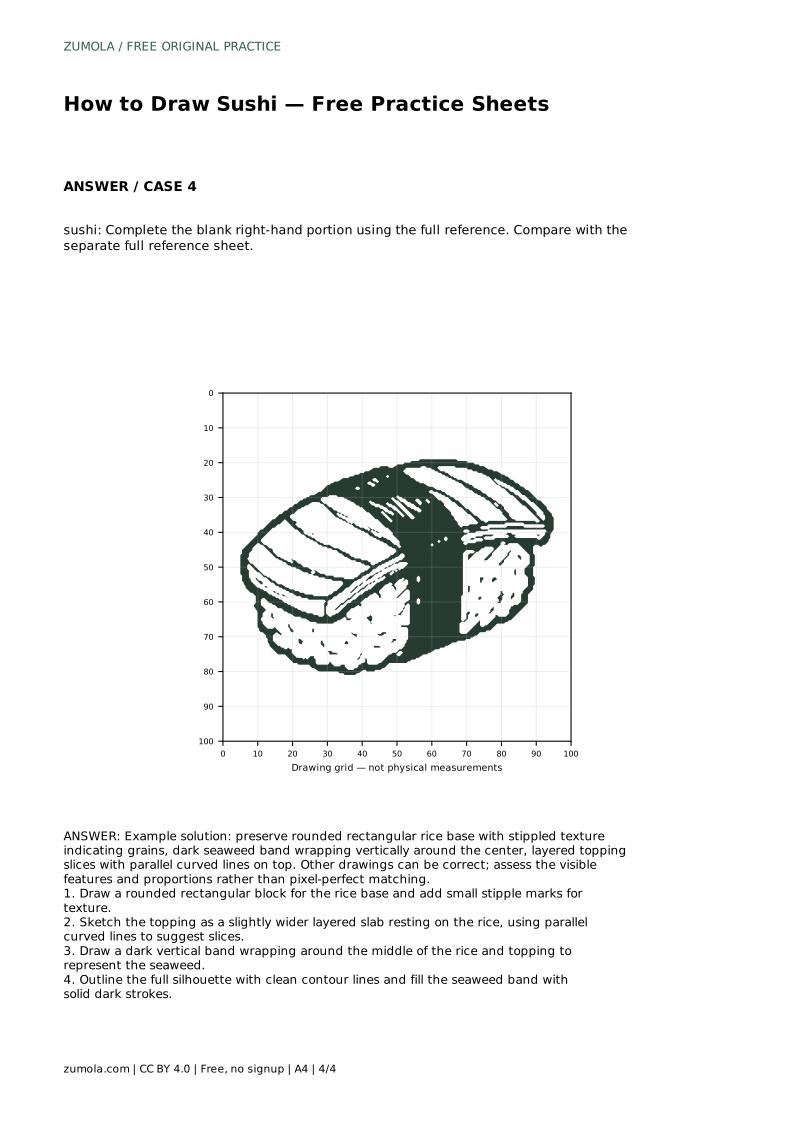
The trace sheet asks you to follow the reference outline first, then practise the contour independently. The grid sheet asks you to copy the reference onto a blank grid using matching intersections. The frame sheet gives you a bounding frame and center guide to place the silhouette before adding details. The partial sheet asks you to complete the blank right-hand portion using the full reference. In every case, compare your drawing with the separate full reference sheet and assess visible features and proportions rather than pixel-perfect matching. Art has multiple valid outcomes, so a slightly different curve or stipple pattern can still be correct.
sushi: Trace the reference outline, then practise the contour independently. Compare with the separate full reference sheet.
Example solution: preserve rounded rectangular rice base with stippled texture indicating grains, dark seaweed band wrapping vertically around the center, layered topping slices with parallel curved lines on top. Other drawings can be correct; assess the visible features and proportions rather than pixel-perfect matching. Draw a rounded rectangular block for the rice base and add small stipple marks for texture. Sketch the topping as a slightly wider layered slab resting on the rice, using parallel curved lines to suggest slices. Draw a dark vertical band wrapping around the middle of the rice and topping to represent the seaweed. Outline the full silhouette with clean contour lines and fill the seaweed band with solid dark strokes.
No. Use the full reference sheet to check visible features and proportions, but accept other valid outcomes. A different curve or stipple pattern can still be correct.
Start with the trace sheet to learn the contour, then move to the grid or frame sheet to practise placement without tracing.
The combination of a rounded rice base with stipple texture, a slightly wider layered topping with parallel curved lines, and a dark vertical seaweed band wrapping the middle.
All drawing practice · Free coordinate paper
Original resources · CC BY 4.0 · Free for personal and classroom use with attribution.