Reference diagrams
LETTER · Download PDF
A4 · Download PDF
Free original resources
Learn to draw a treasure chest with a domed lid, plank lines, metal bands and a lock plate. Trace, grid and complete-the-picture practice methods explained.
Four original cases, with reference diagrams, practice sheets and worked answers. Everything is free; no signup required.
LETTER · Download PDF
A4 · Download PDF
LETTER · Download PDF
A4 · Download PDF
LETTER · Download PDF
A4 · Download PDF
Use A4 or US Letter to match your printer. Use the stated values and conditions to solve each exercise; diagrams are not physical measuring rulers.
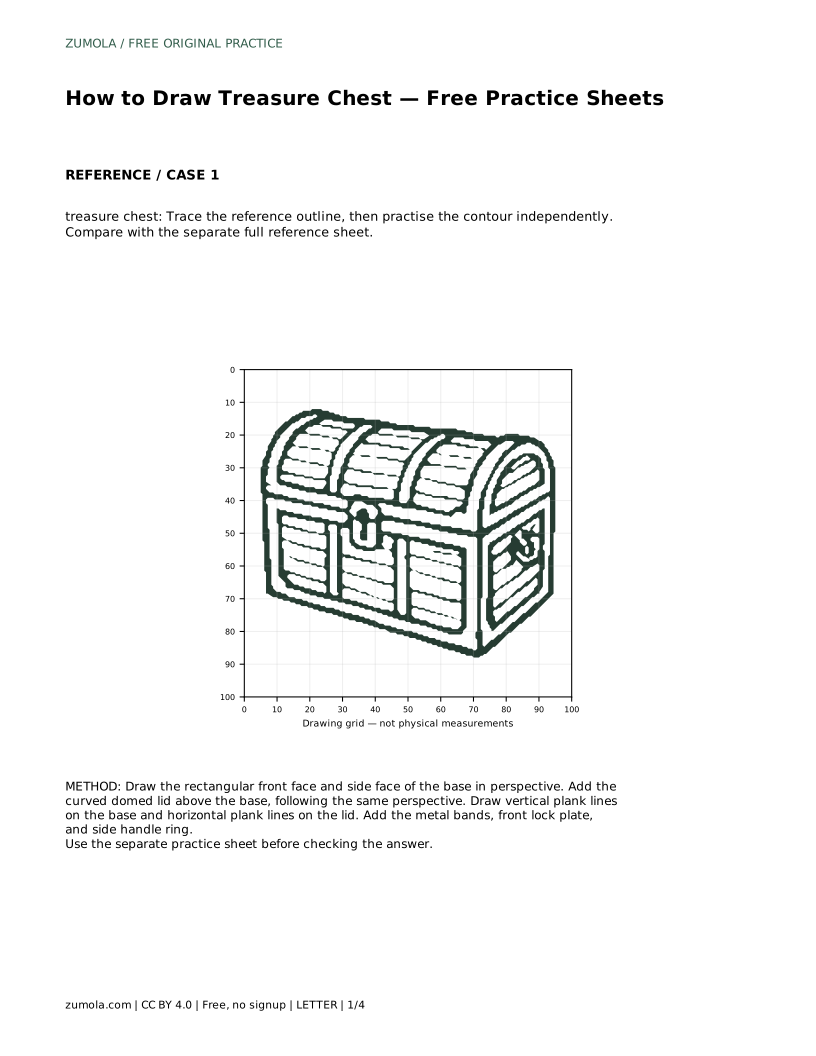
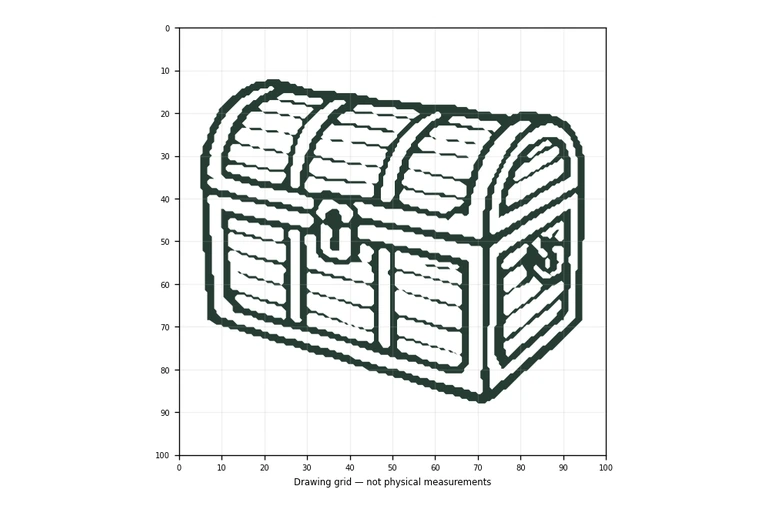
A treasure chest is a good subject for learning to combine a box shape with a curved top. The base is a rectangular box drawn in simple perspective, and the lid is a rounded dome sitting on it. Once those two forms are in place, plank lines, metal bands and a lock plate make the chest readable. This guide explains the drawing order and how to use trace, grid and completion practice sheets, with a rubric for judging your own work.
Start with the base: a rectangular front face and a side face that recede slightly, so the box reads as three-dimensional. Keep the front face wider than the side face unless your reference shows otherwise. The lid sits directly on the base, so its lower edge should follow the same perspective lines as the top of the base.
The lid is a rounded dome, not a flat rectangle. Draw its curve so the highest point sits roughly above the middle of the chest, then bring the curve down to meet the base edges. Check that the lid's width matches the base's width at the join; a mismatch is the most common proportion error.
Plank lines describe how the wood is built. On the base, vertical lines divide the front and side faces into boards. On the lid, horizontal lines run across the dome, curving with it so they follow the surface rather than cutting straight across. Space the lines evenly and keep them parallel to the edges they divide.
Metal bands cross the chest and usually continue from the lid onto the base. Draw each band as a narrow strip with two edges, not a single line, so it reads as a strap. The front lock plate sits centered on the front face where the lid meets the base. A side handle ring is a small circle or loop attached to the side face. These details identify the object, so place them deliberately rather than scattering them.
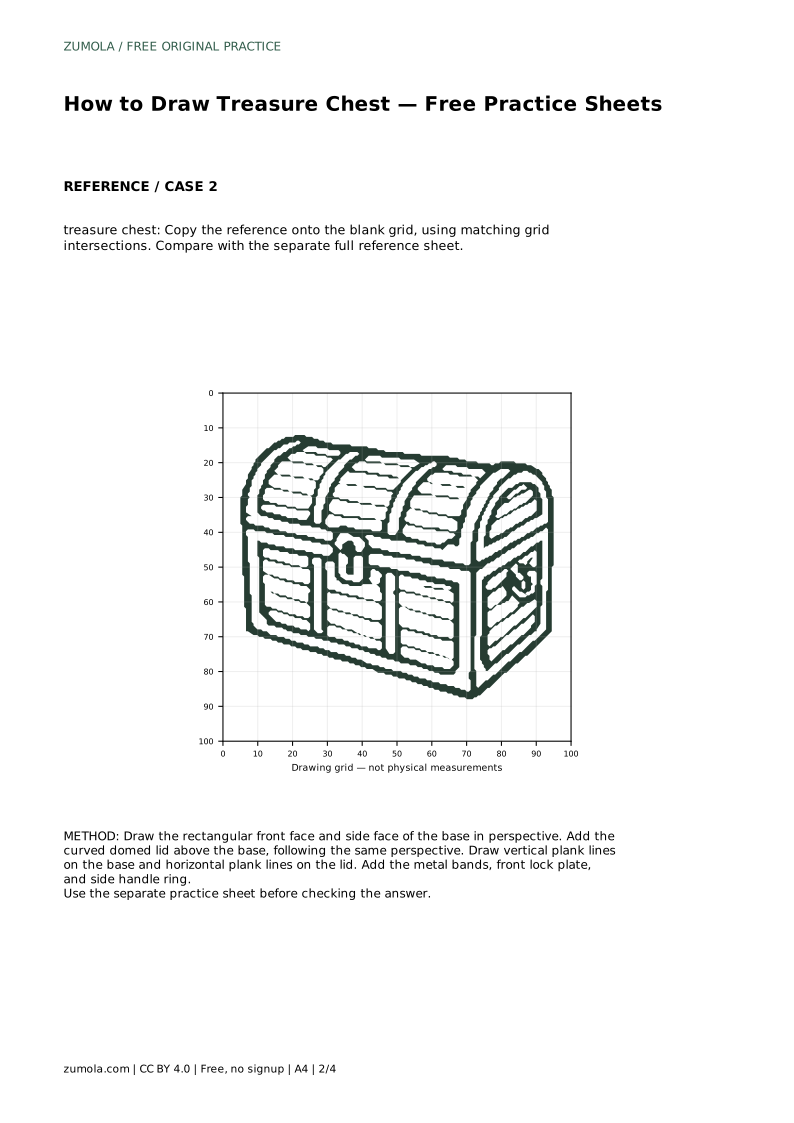
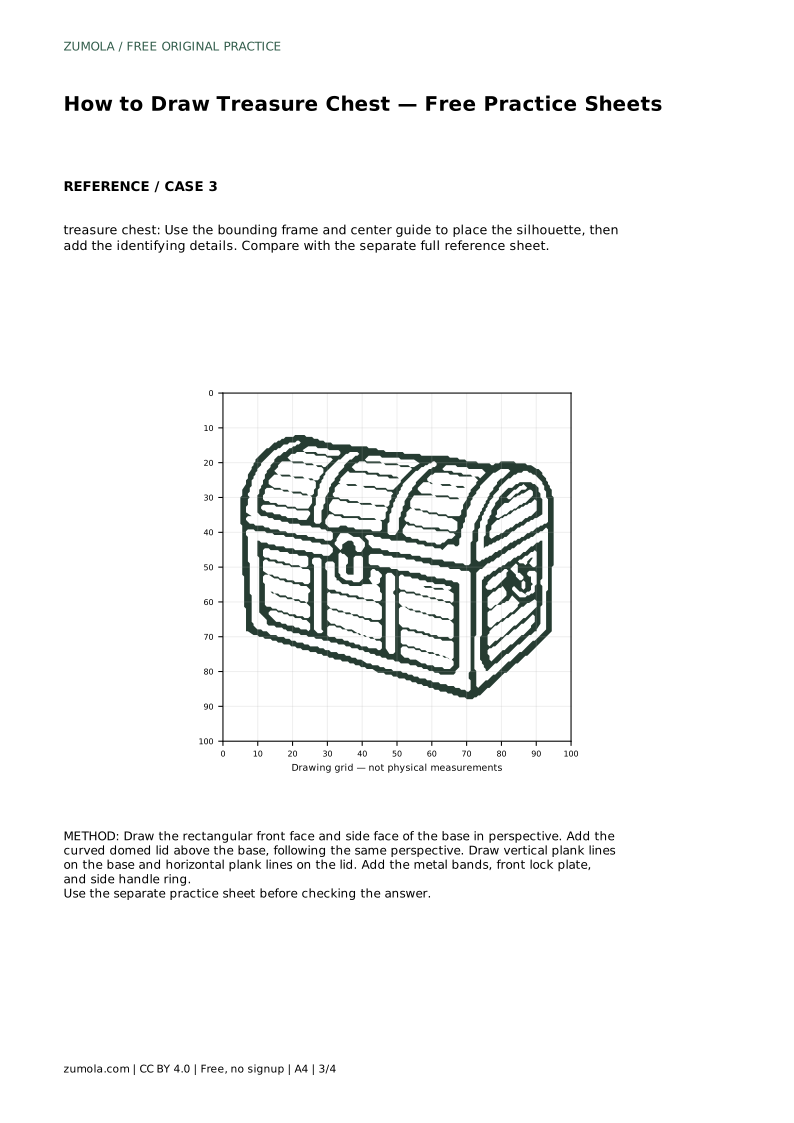
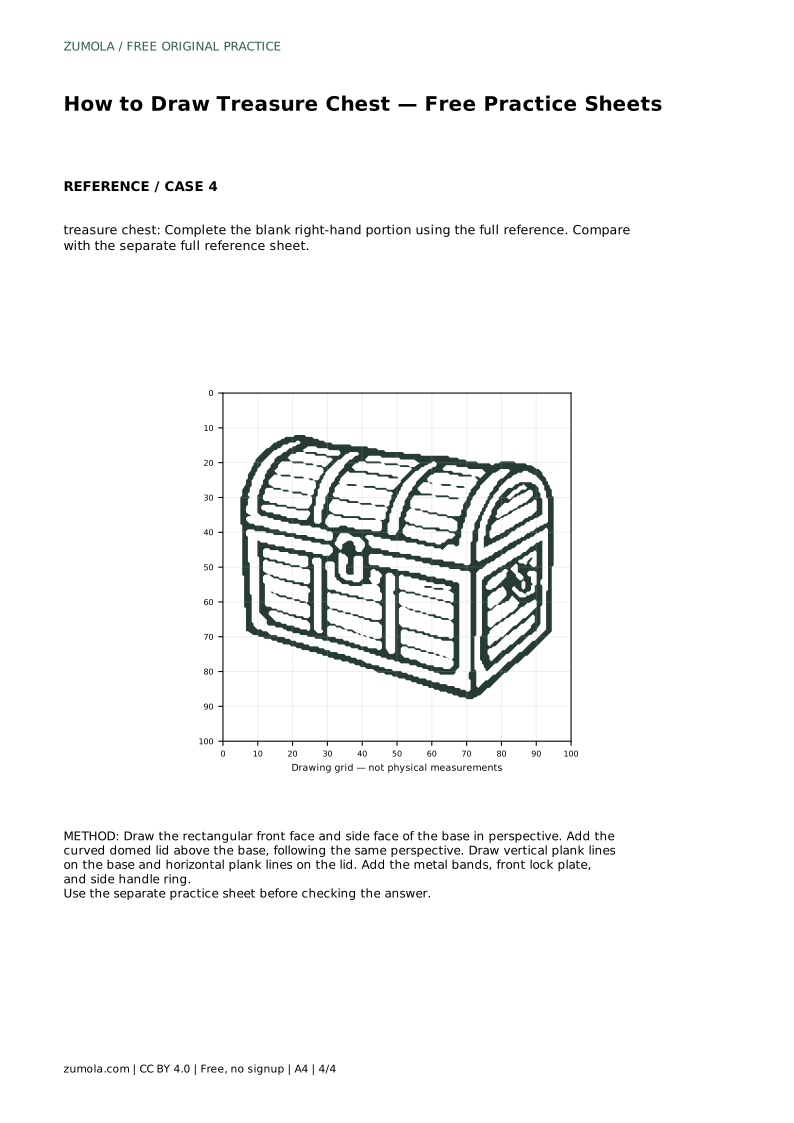
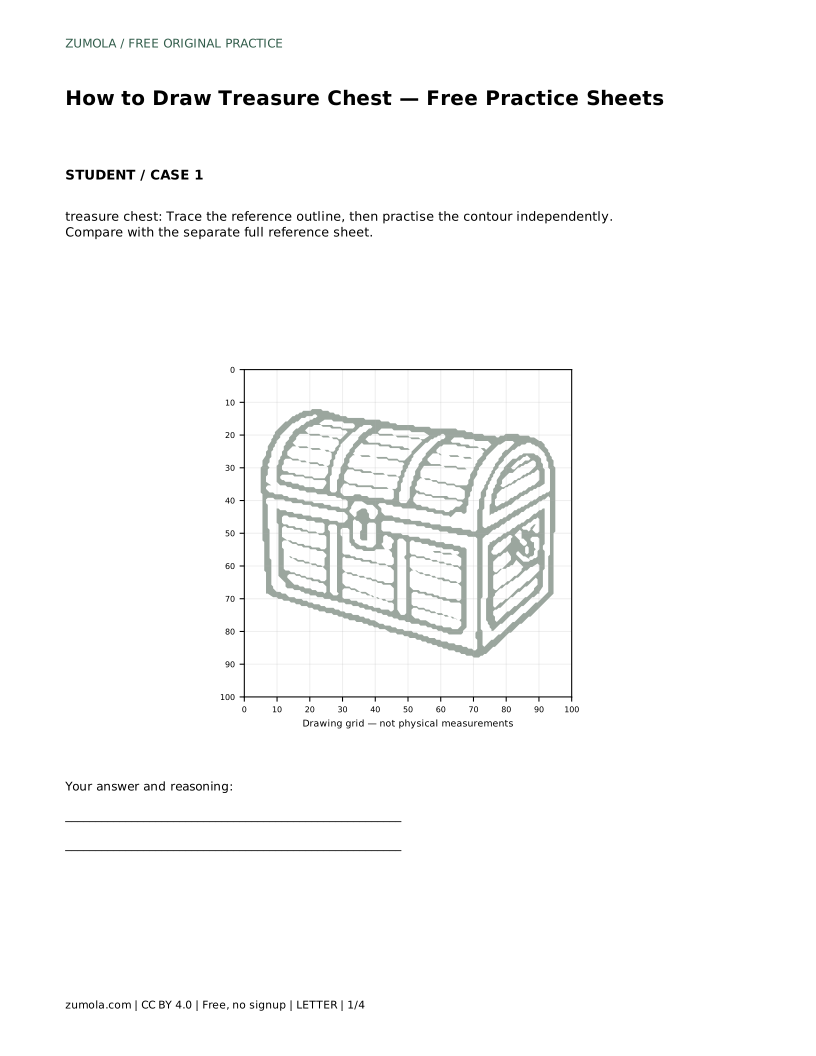
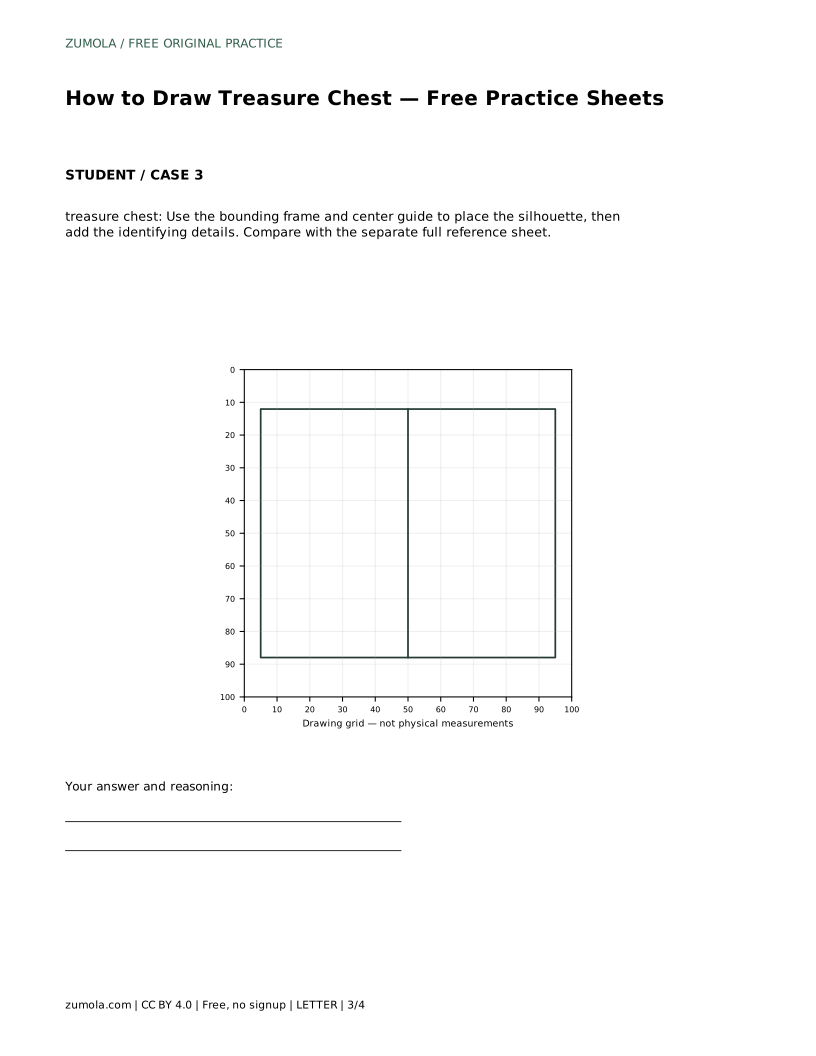
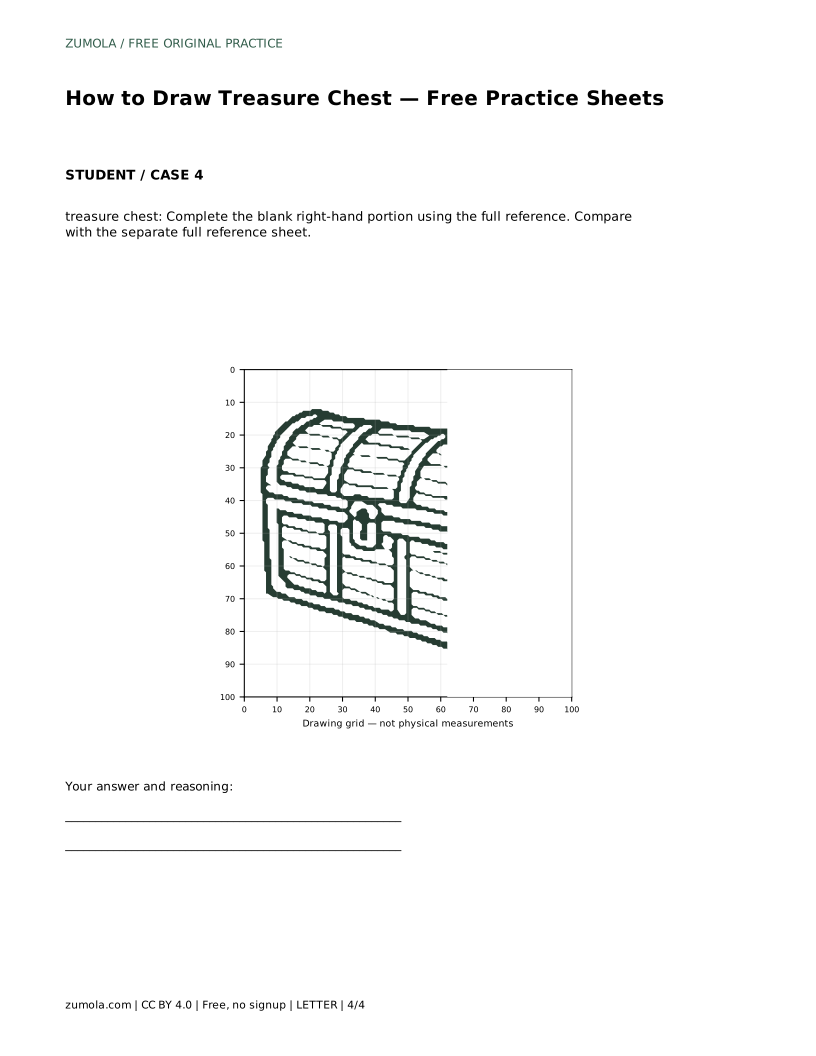
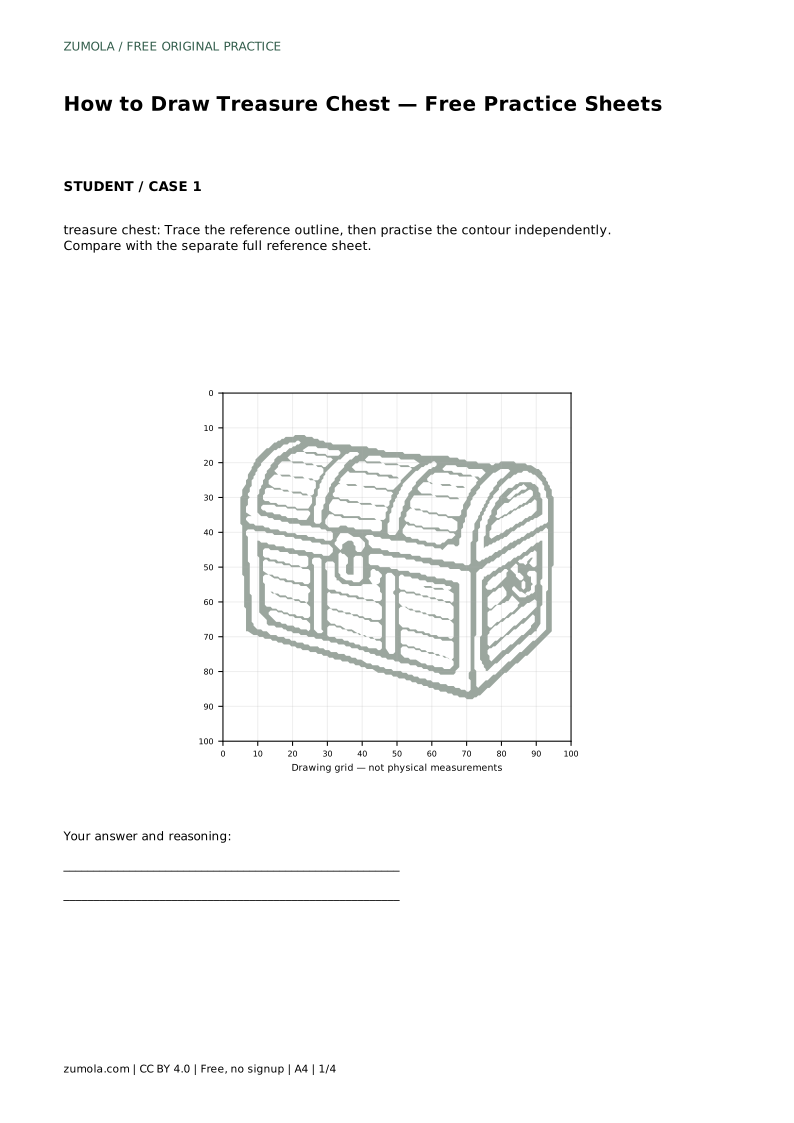
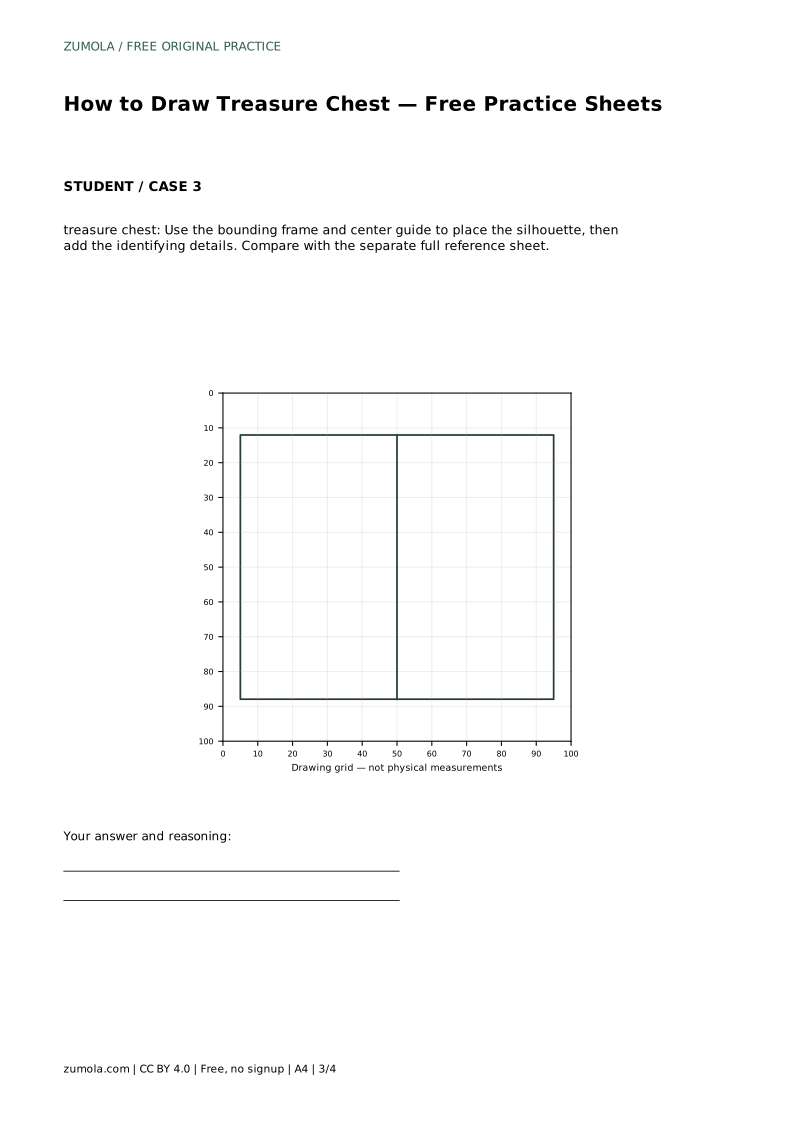
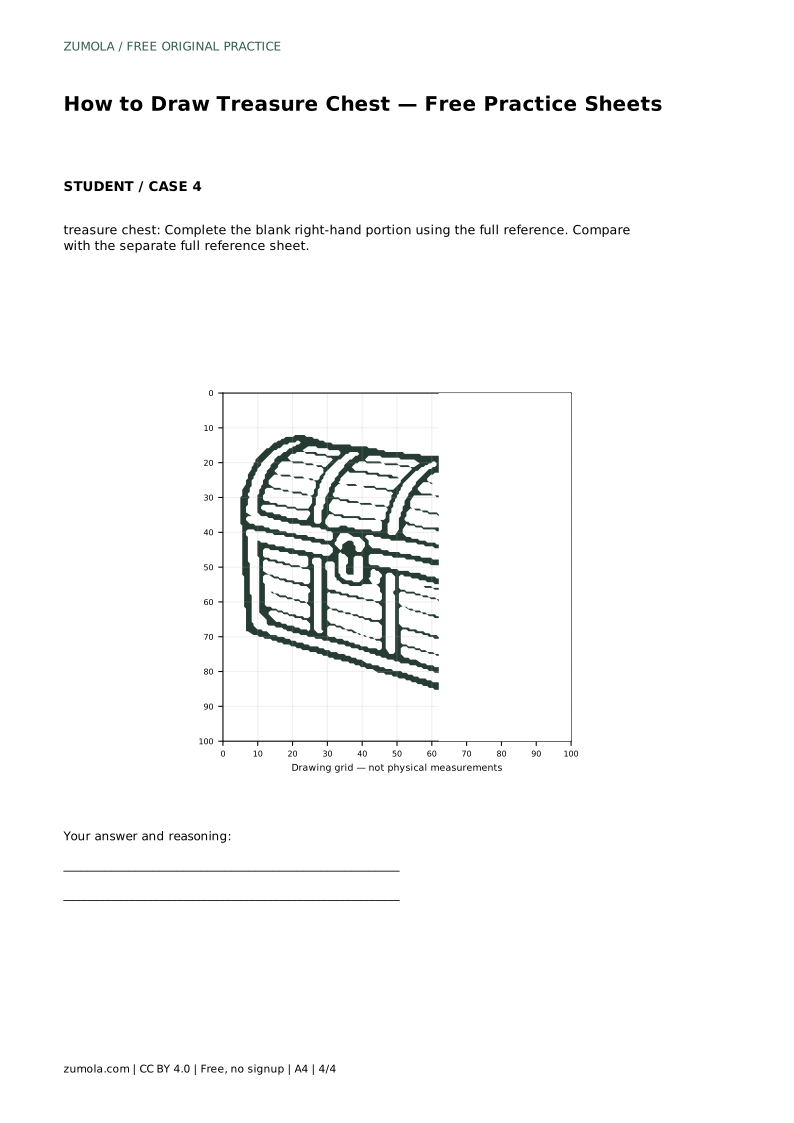
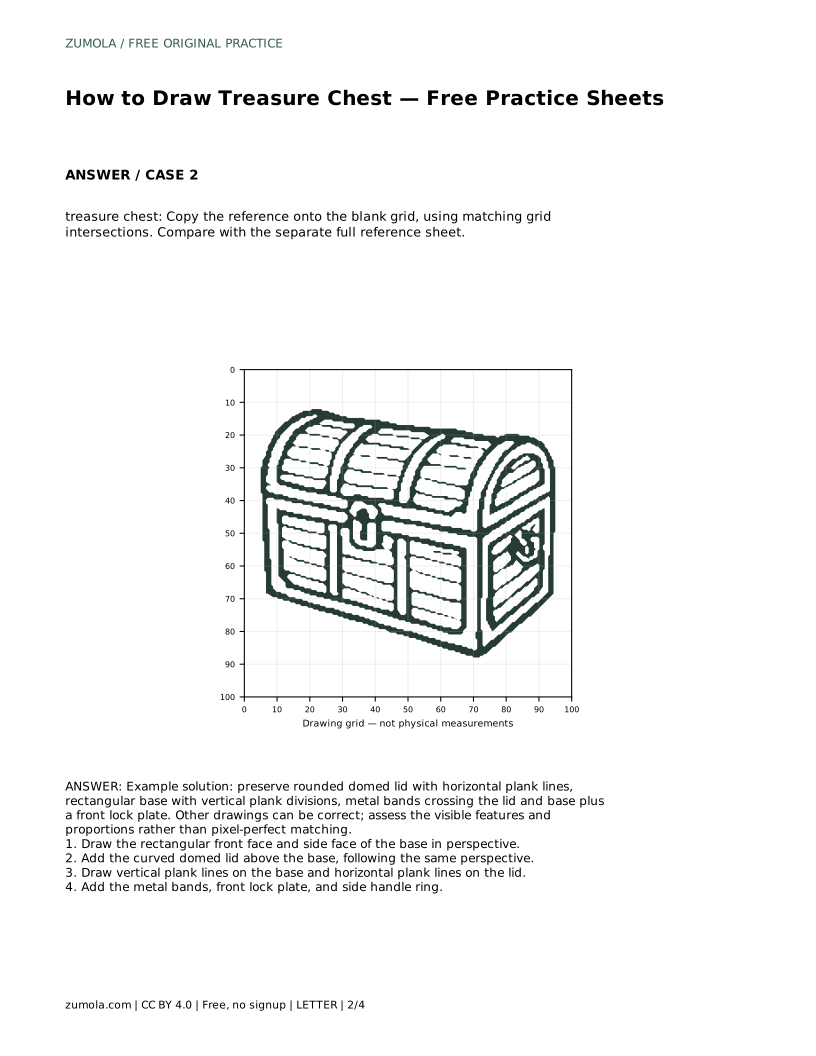
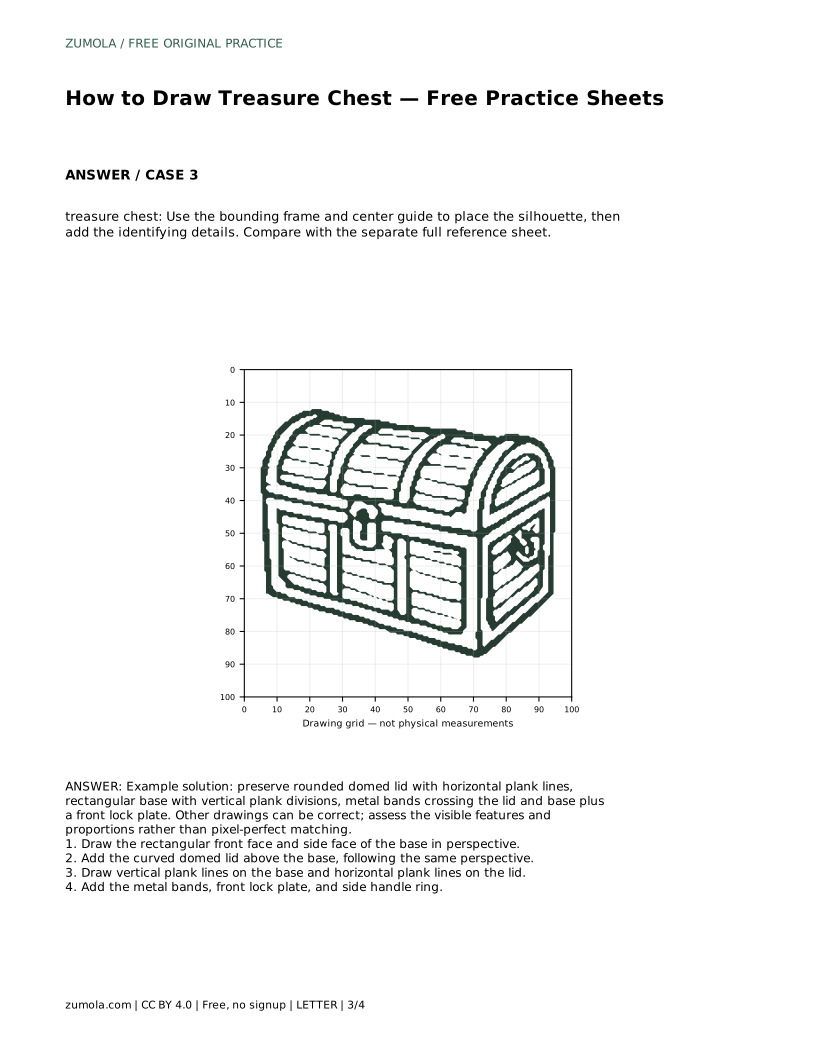
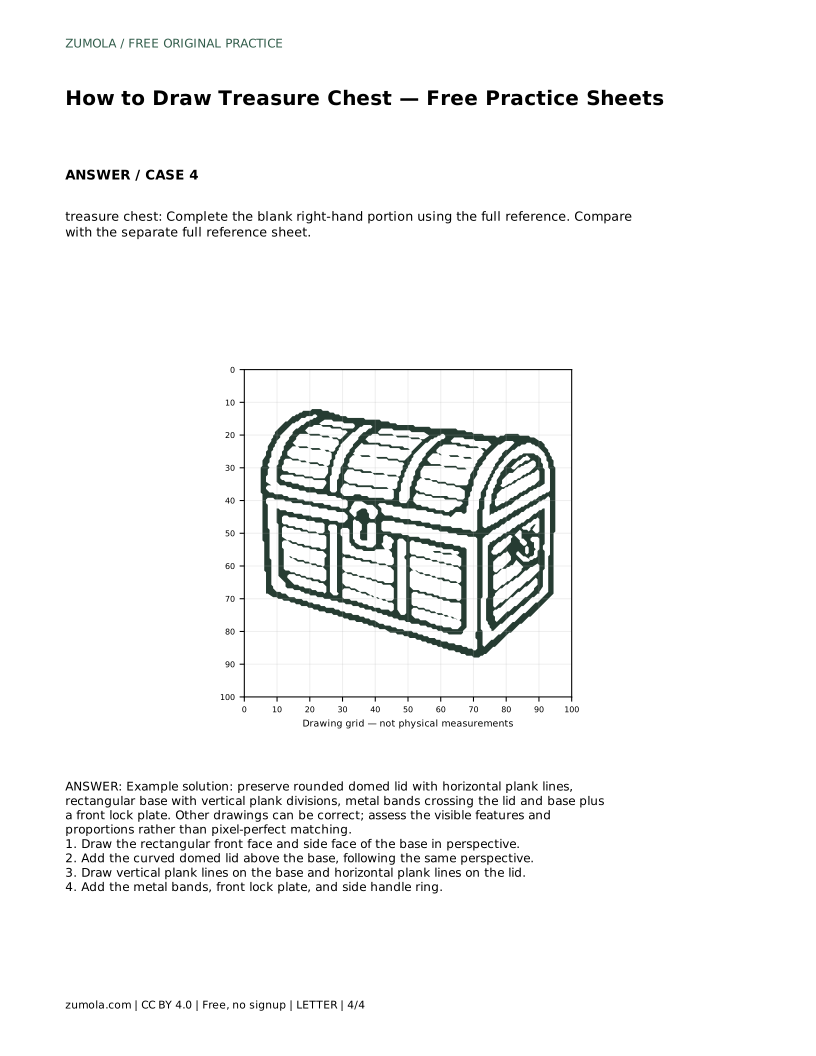
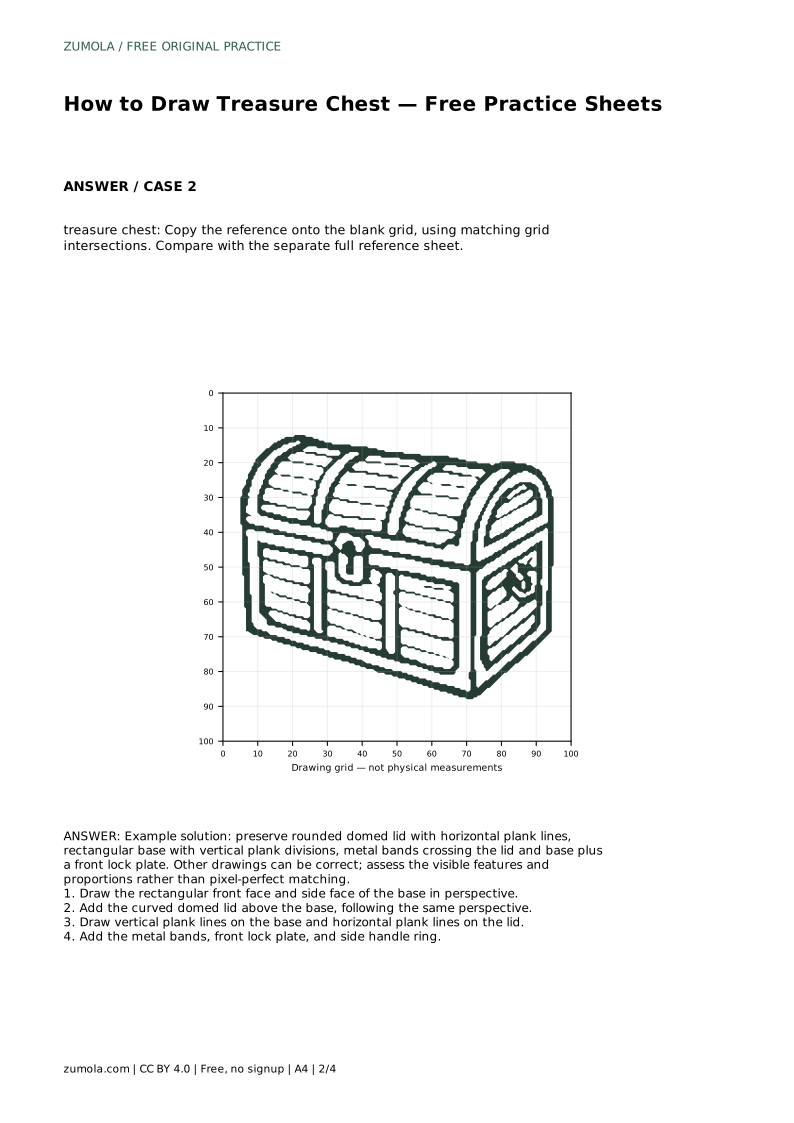
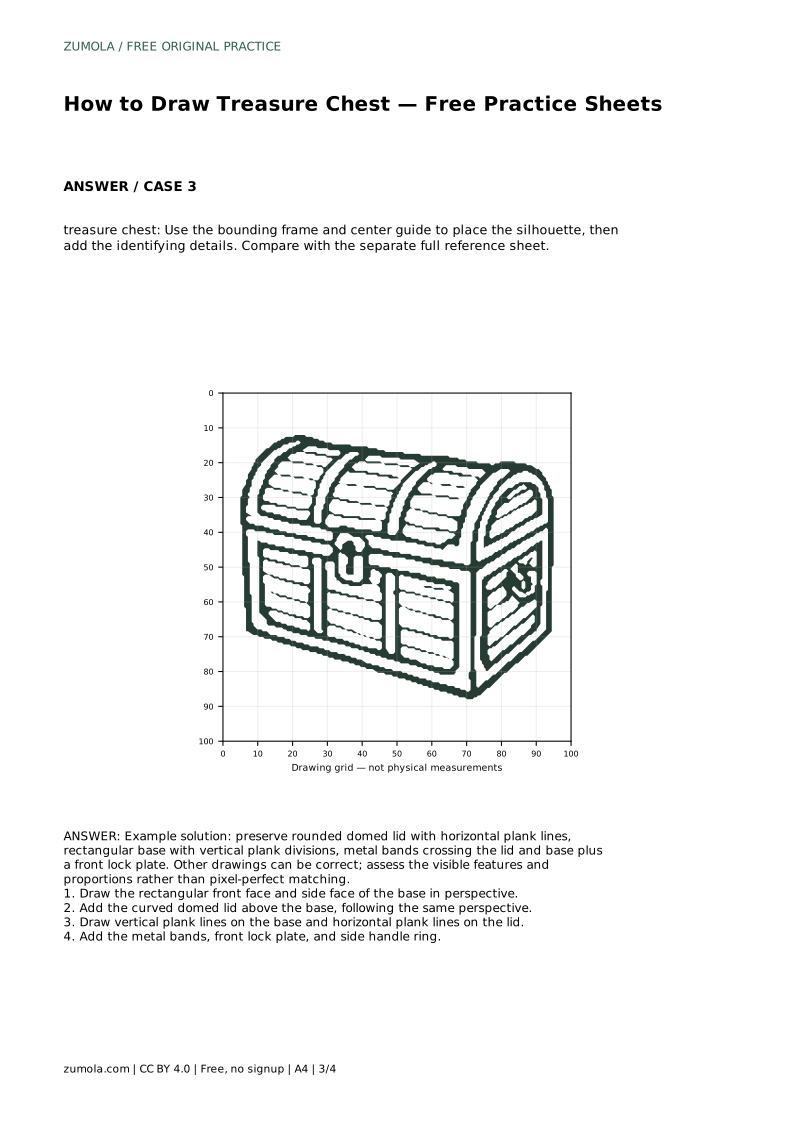
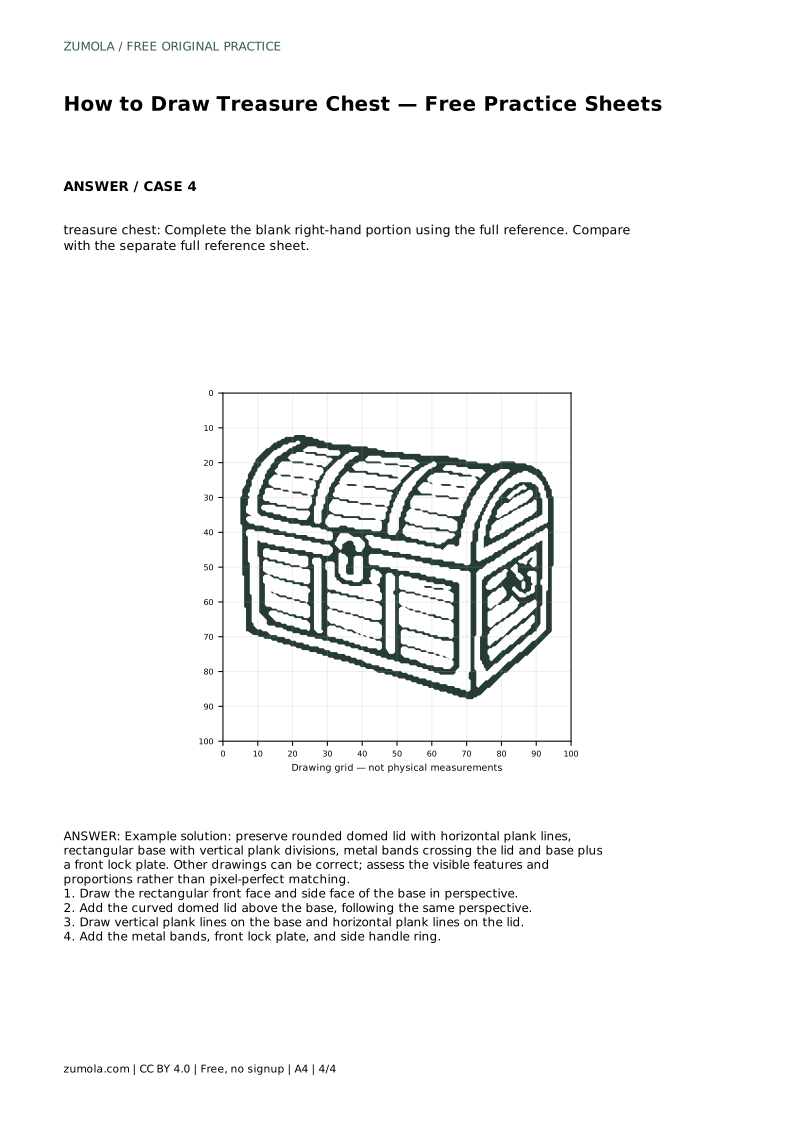
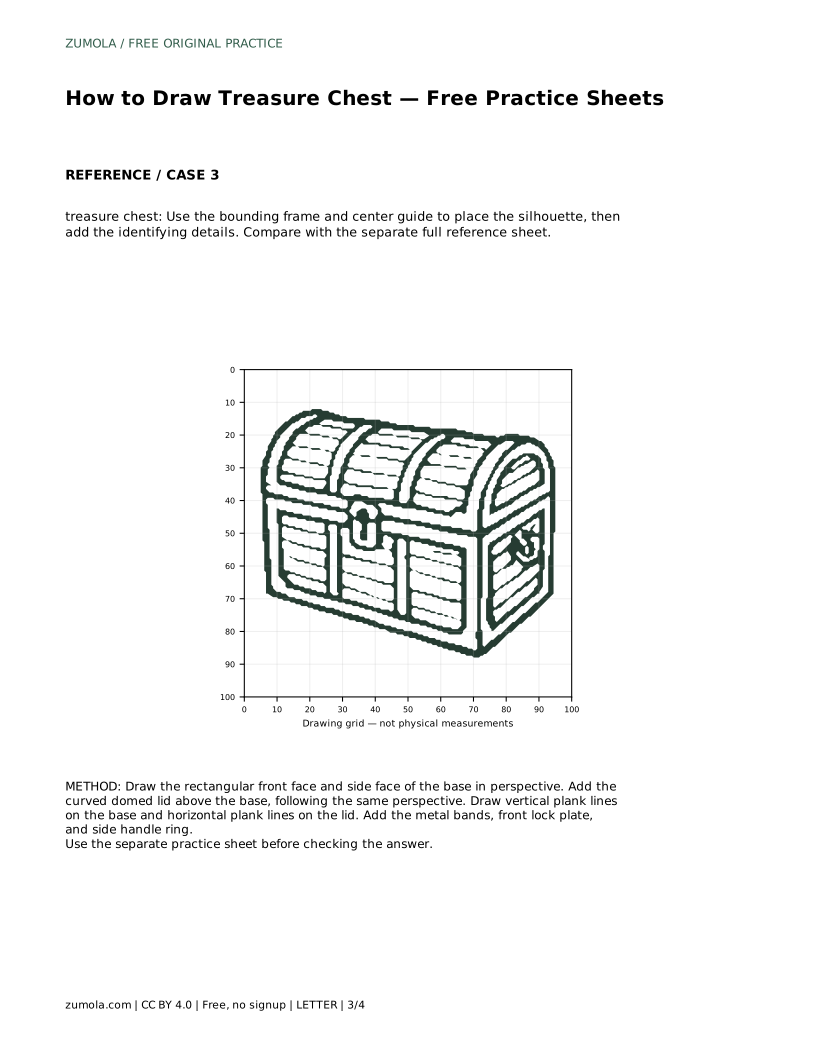
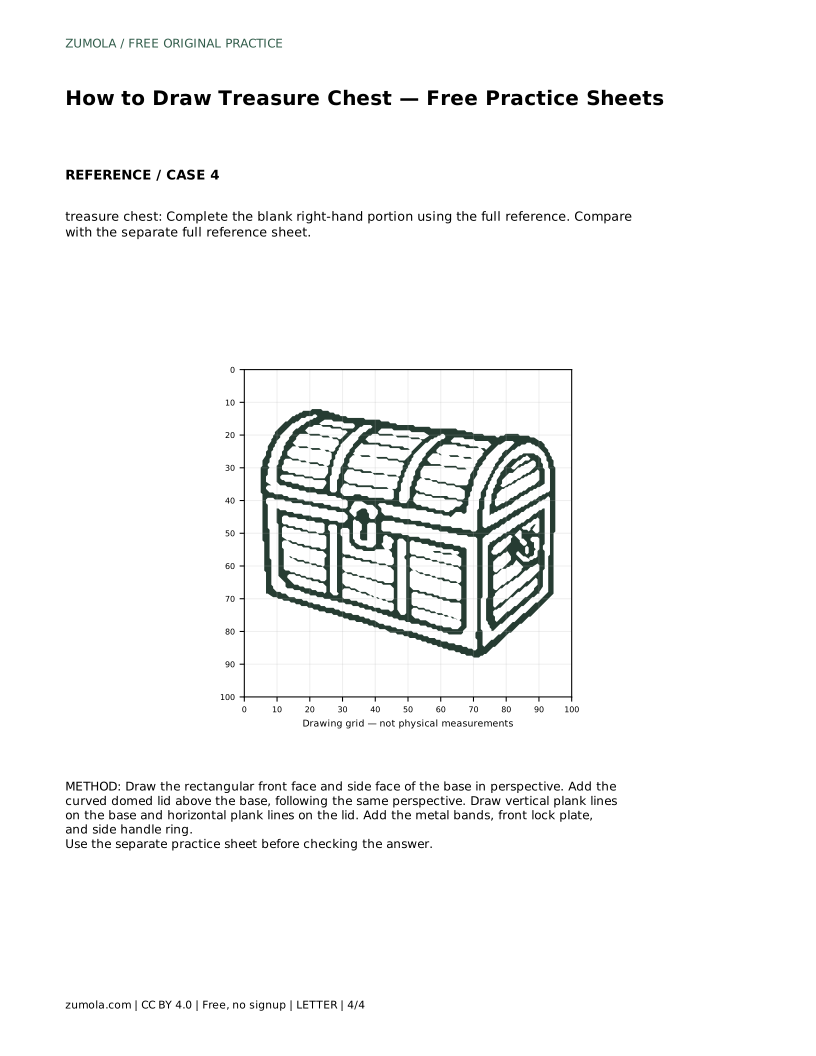
Tracing the reference outline first lets you feel the shape before drawing it freehand. After tracing, cover the reference and redraw the contour independently, then compare with the separate full reference sheet. The grid method asks you to copy the drawing onto a blank grid by matching intersections, which trains proportion and placement. The bounding frame and center guide method helps you position the silhouette before adding details. The completion sheet gives you the left portion and asks you to finish the right side using the full reference.
Each format targets a different skill, so use the one that matches what you want to improve. Tracing builds shape memory; grids build proportion control; completion builds inference from partial information.
There is no single correct drawing of a treasure chest. Several proportions and detail placements can all read correctly. Judge the visible features instead: a rounded domed lid, a rectangular base with vertical plank divisions, horizontal plank lines on the lid, metal bands crossing both parts, and a front lock plate. Check that the lid meets the base cleanly and that the perspective of the side face is consistent with the front.
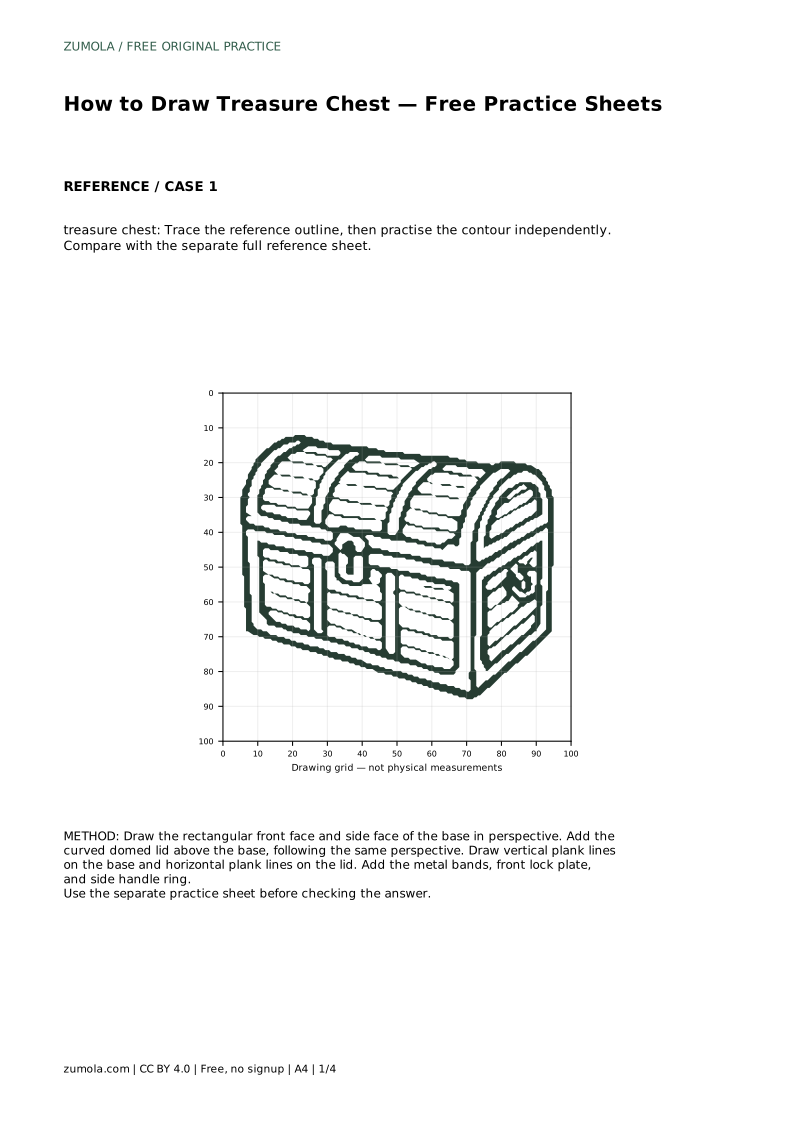
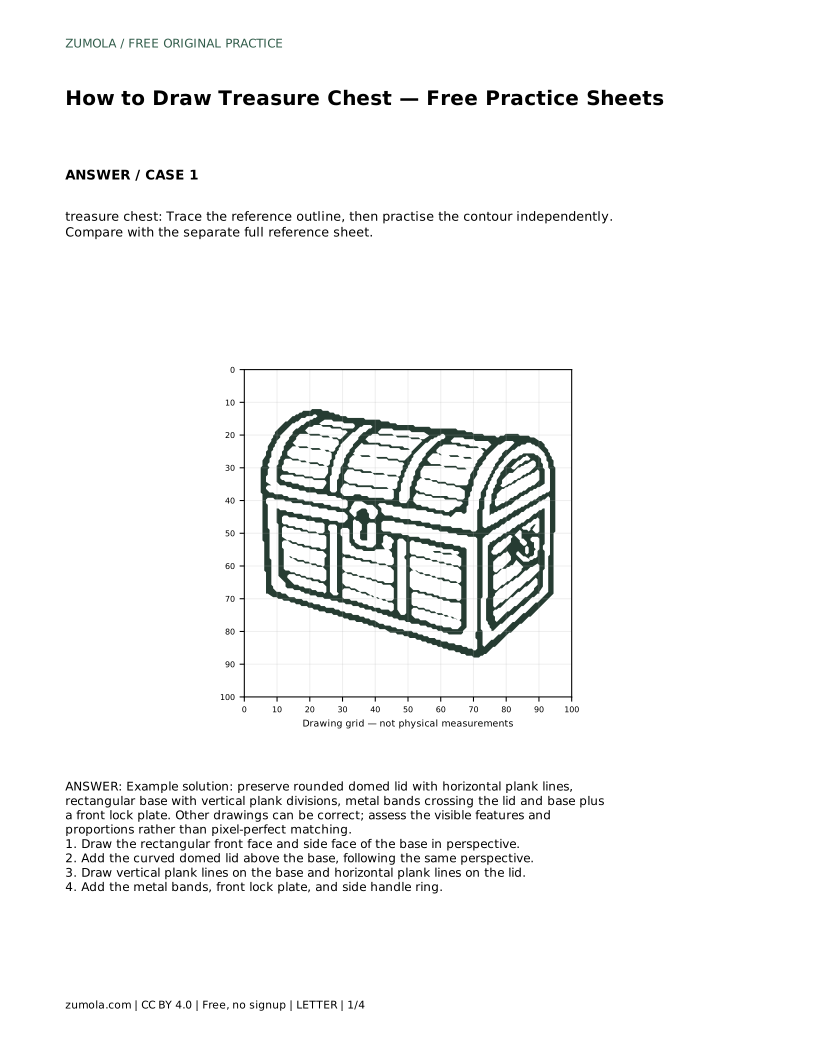
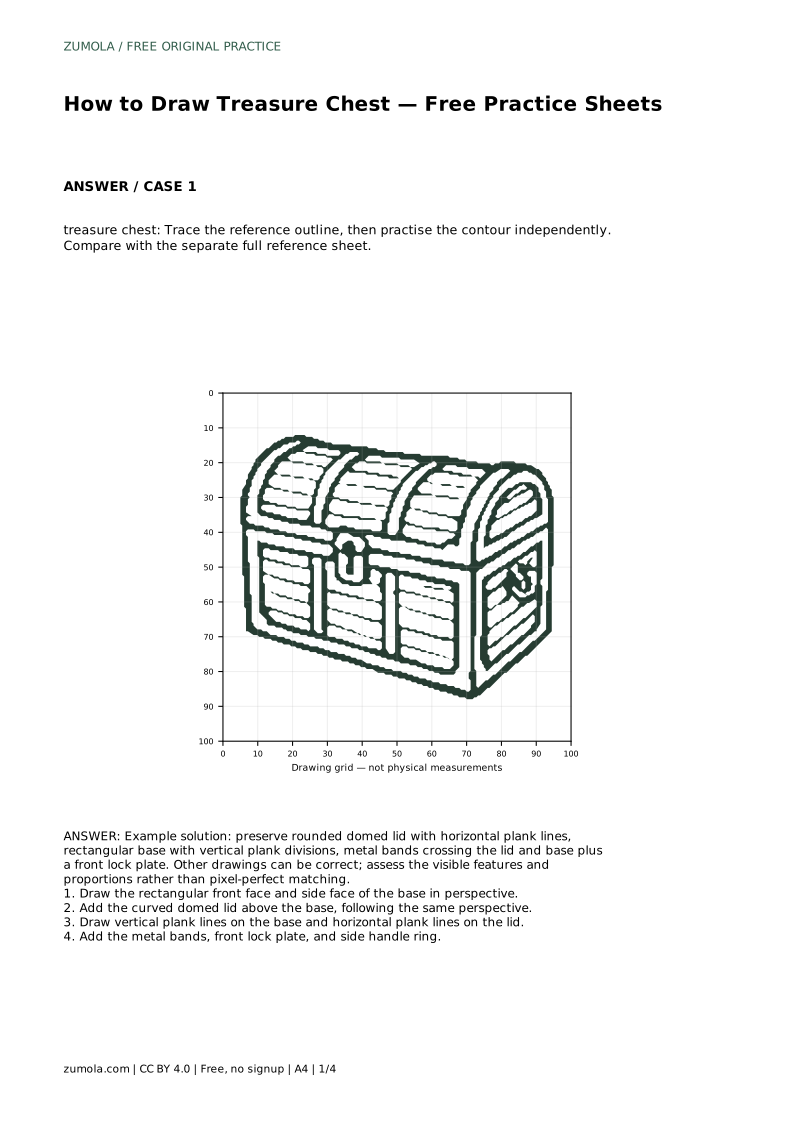
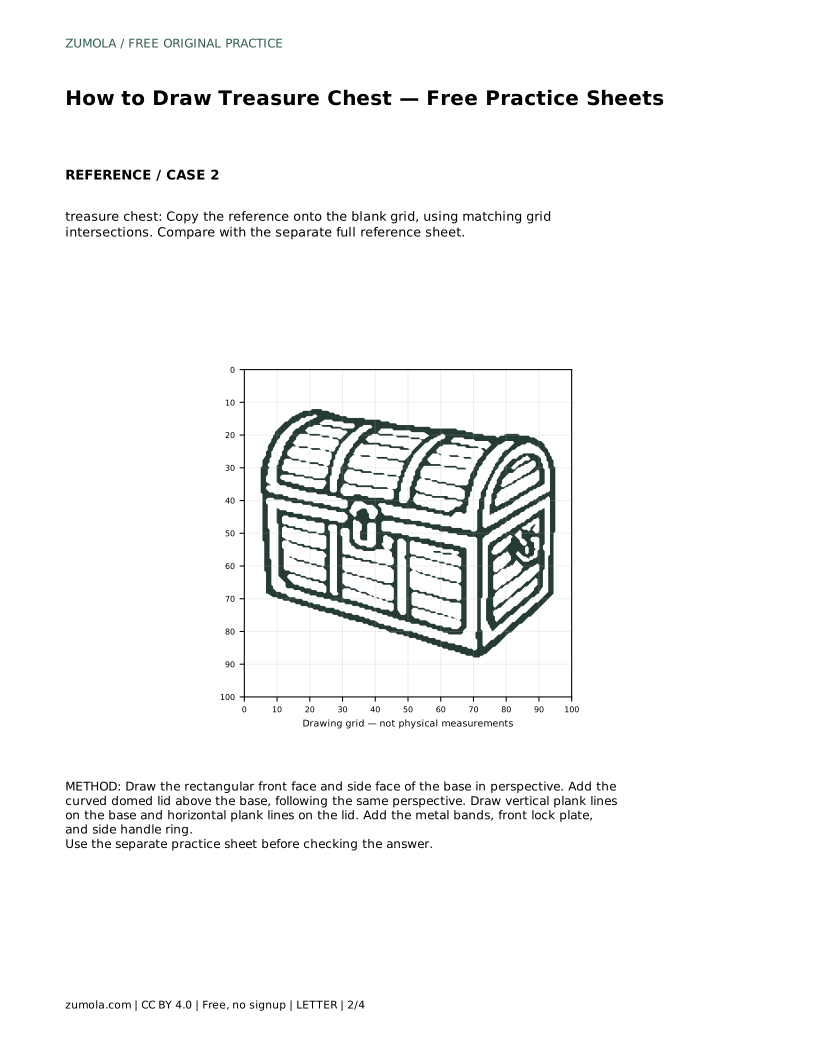
treasure chest: Trace the reference outline, then practise the contour independently. Compare with the separate full reference sheet.
Example solution: preserve rounded domed lid with horizontal plank lines, rectangular base with vertical plank divisions, metal bands crossing the lid and base plus a front lock plate. Other drawings can be correct; assess the visible features and proportions rather than pixel-perfect matching. Draw the rectangular front face and side face of the base in perspective. Add the curved domed lid above the base, following the same perspective. Draw vertical plank lines on the base and horizontal plank lines on the lid. Add the metal bands, front lock plate, and side handle ring.
A slight perspective on the side face makes the box read as three-dimensional, but a simple front-facing chest with a small side face is enough for practice.
Horizontal, curving with the dome. The base uses vertical plank divisions.
That is acceptable. Assess whether the domed lid, rectangular base, plank lines, bands and lock plate are all present and proportioned sensibly.
All drawing practice · Free coordinate paper
Original resources · CC BY 4.0 · Free for personal and classroom use with attribution.