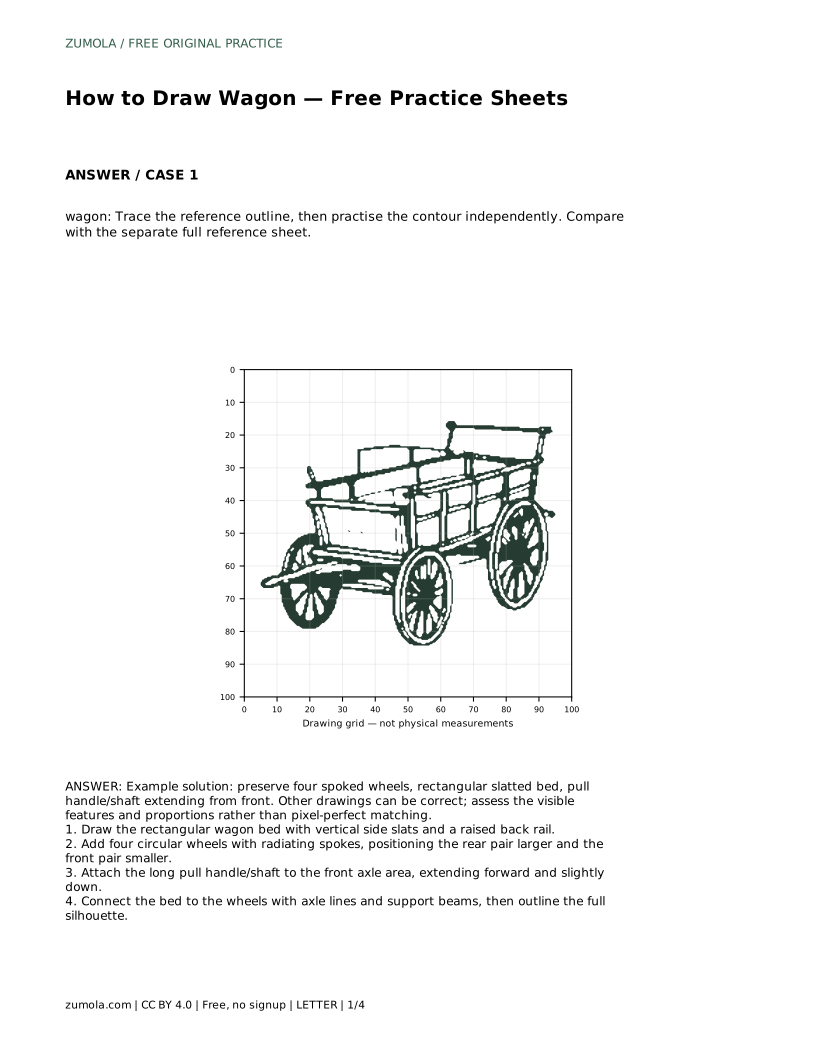
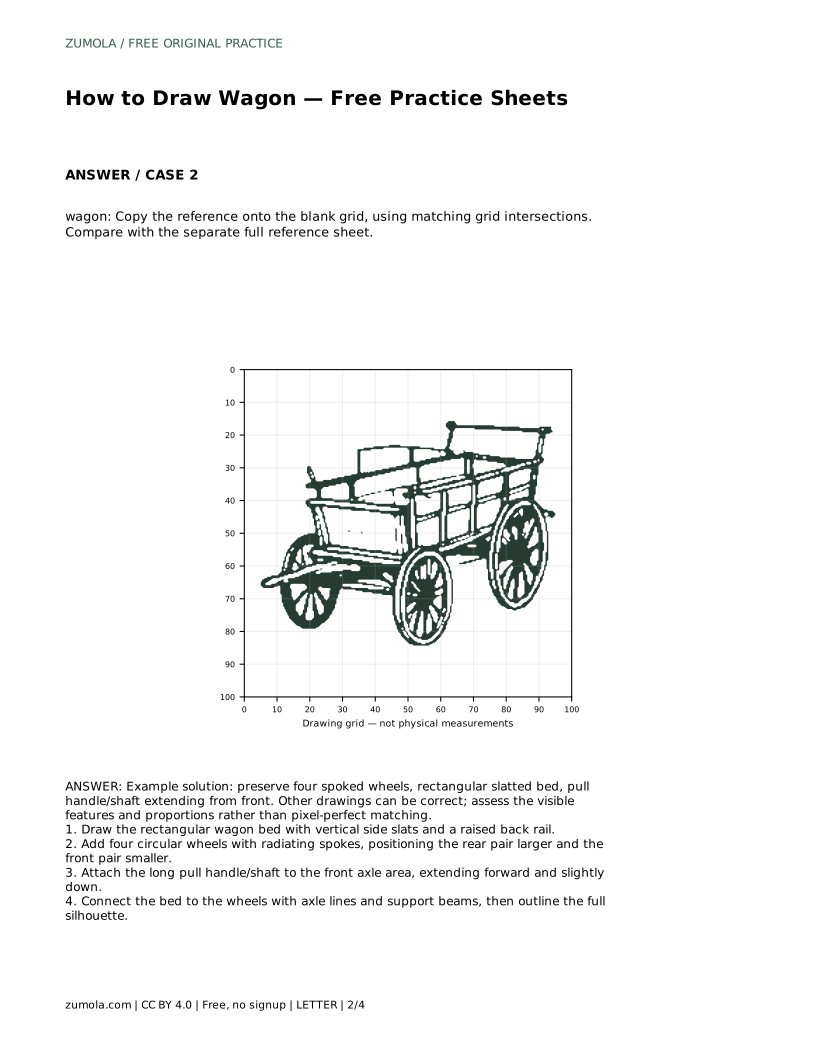
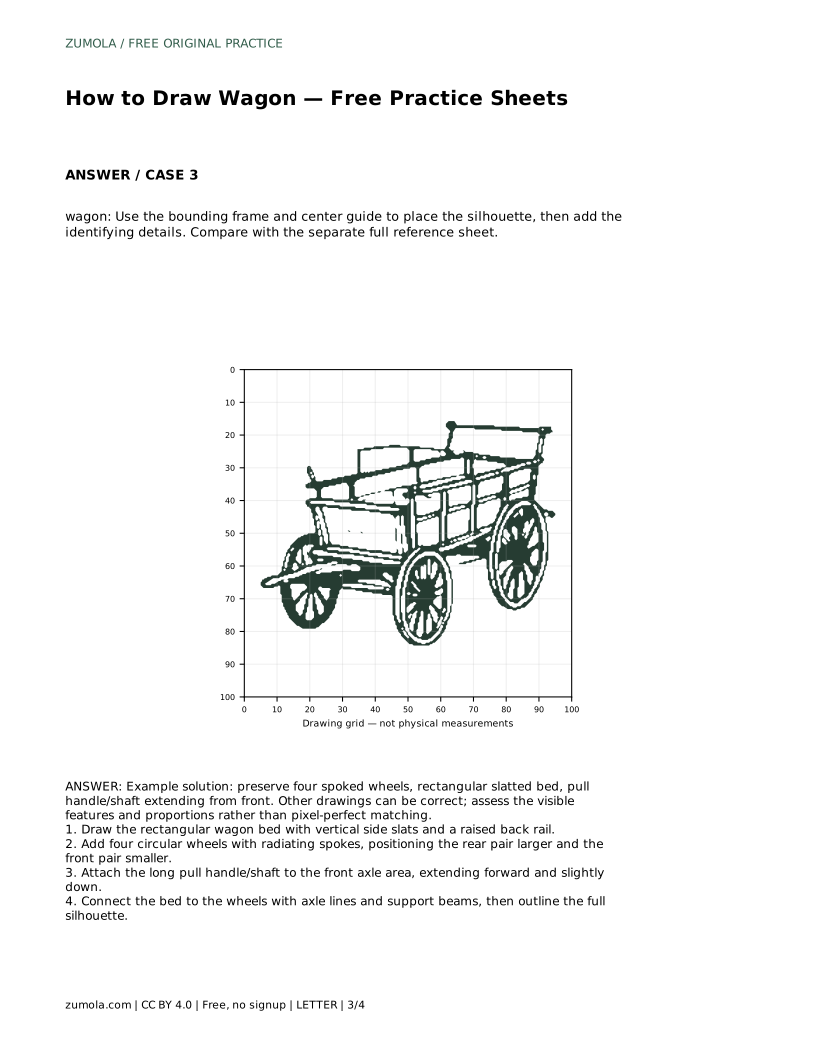
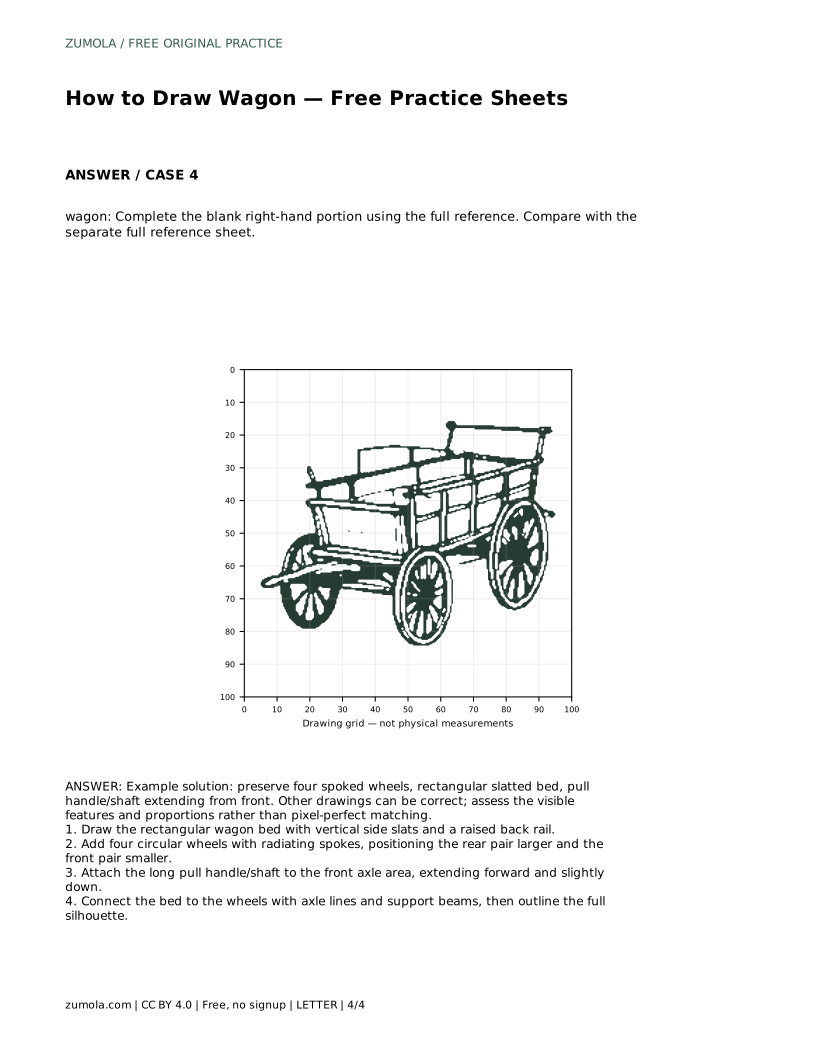
Reference diagrams
LETTER · Download PDF
A4 · Download PDF
Free original resources
Learn to draw a wagon by building a slatted bed, four spoked wheels, axles, and a front pull handle. Free practice sheets support tracing, grids, and guided outlines.
Four original cases, with reference diagrams, practice sheets and worked answers. Everything is free; no signup required.
LETTER · Download PDF
A4 · Download PDF
LETTER · Download PDF
A4 · Download PDF
LETTER · Download PDF
A4 · Download PDF
Use A4 or US Letter to match your printer. Use the stated values and conditions to solve each exercise; diagrams are not physical measuring rulers.
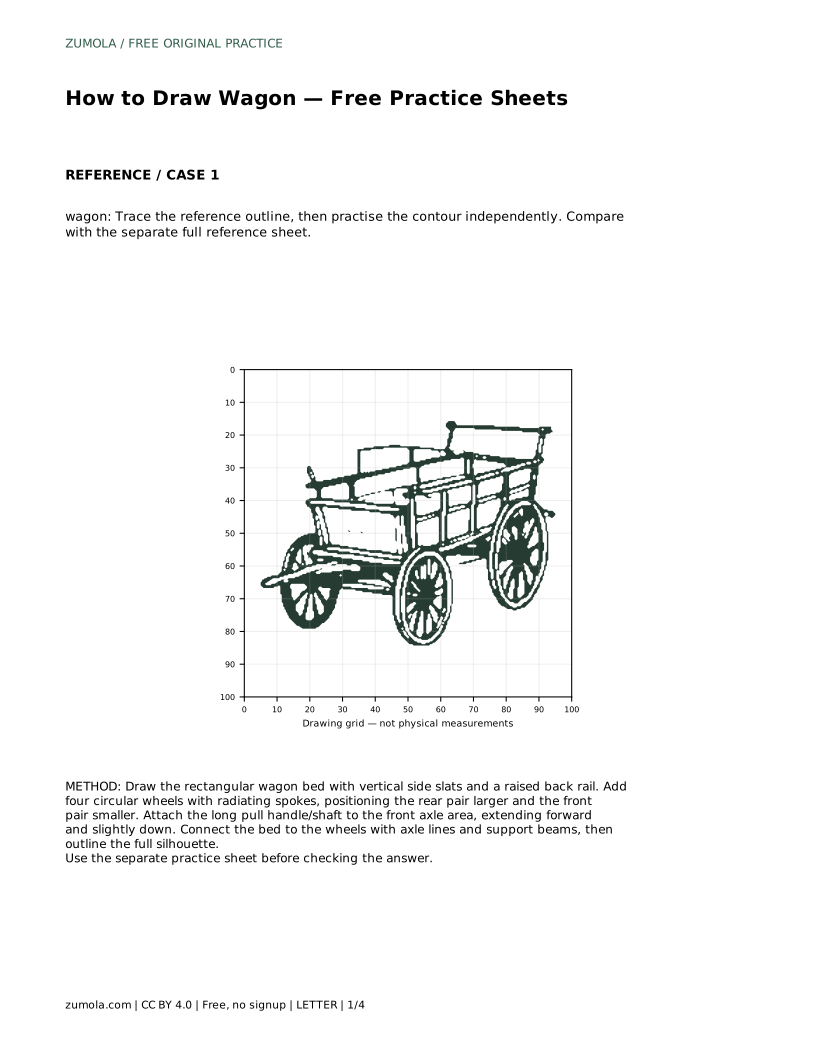
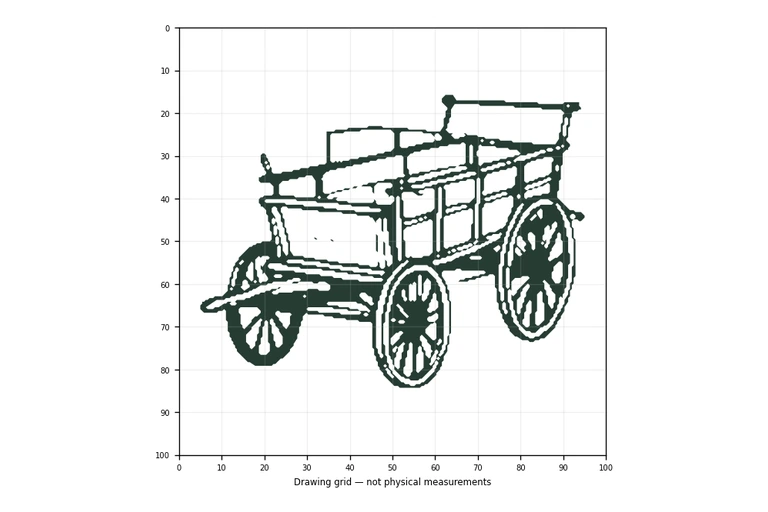
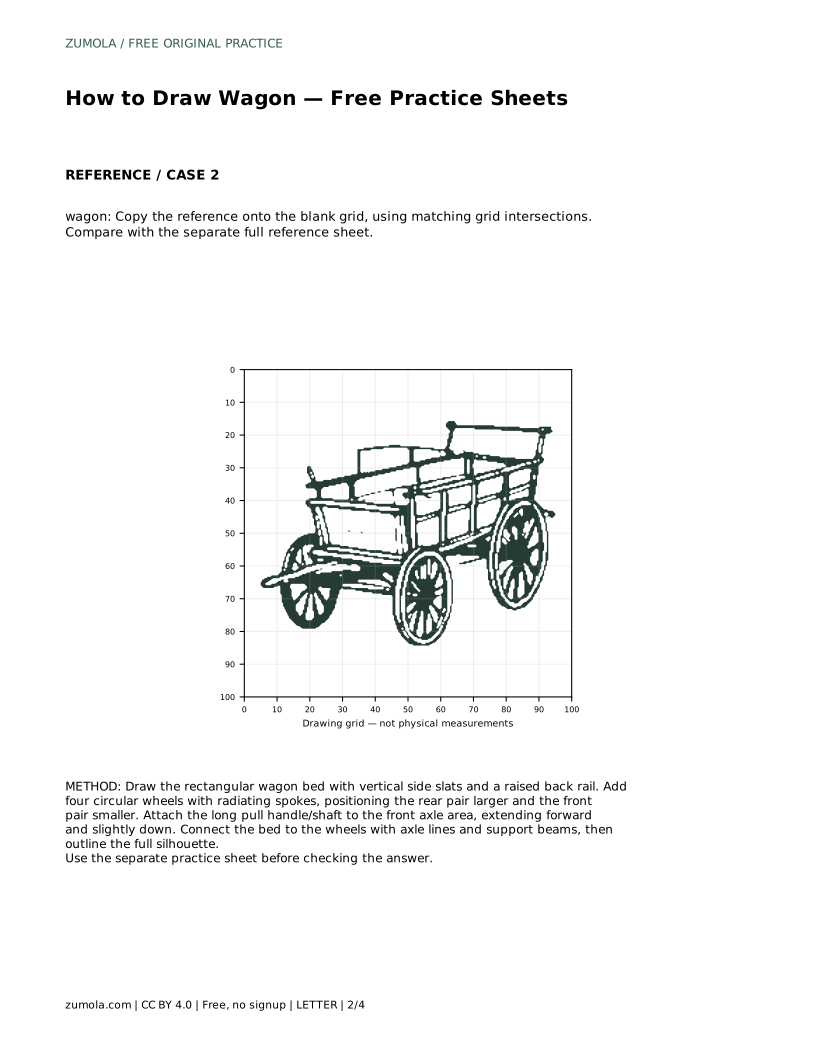
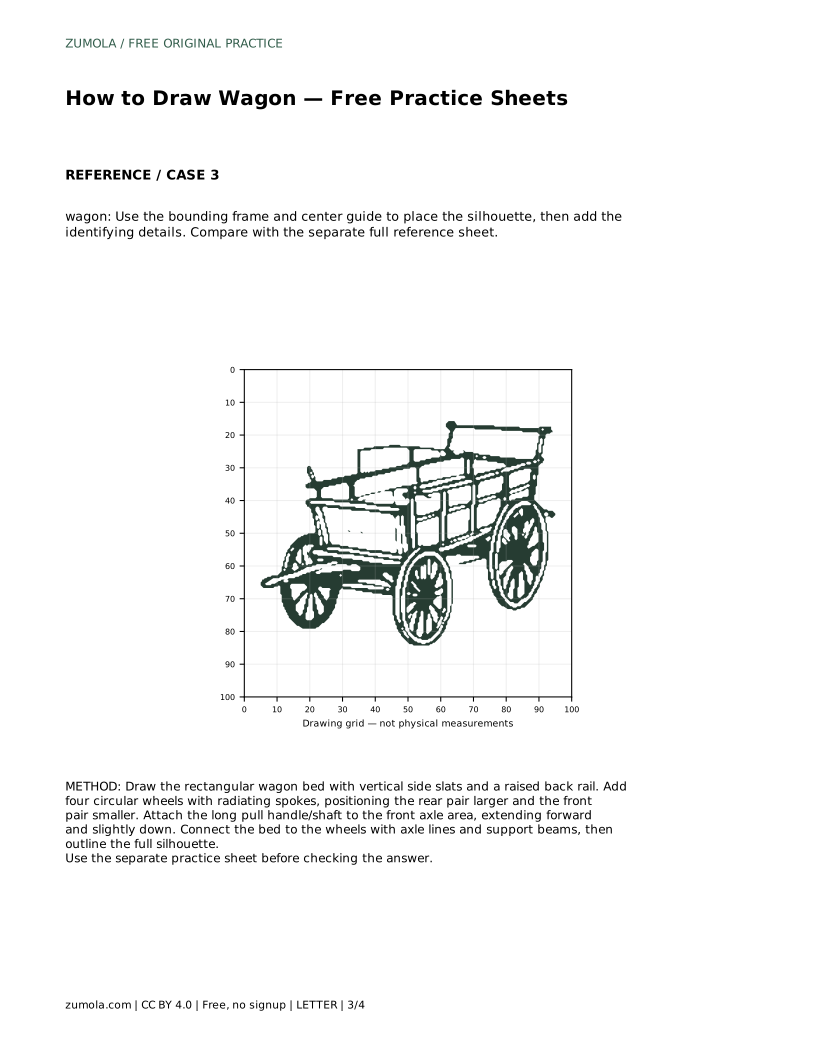
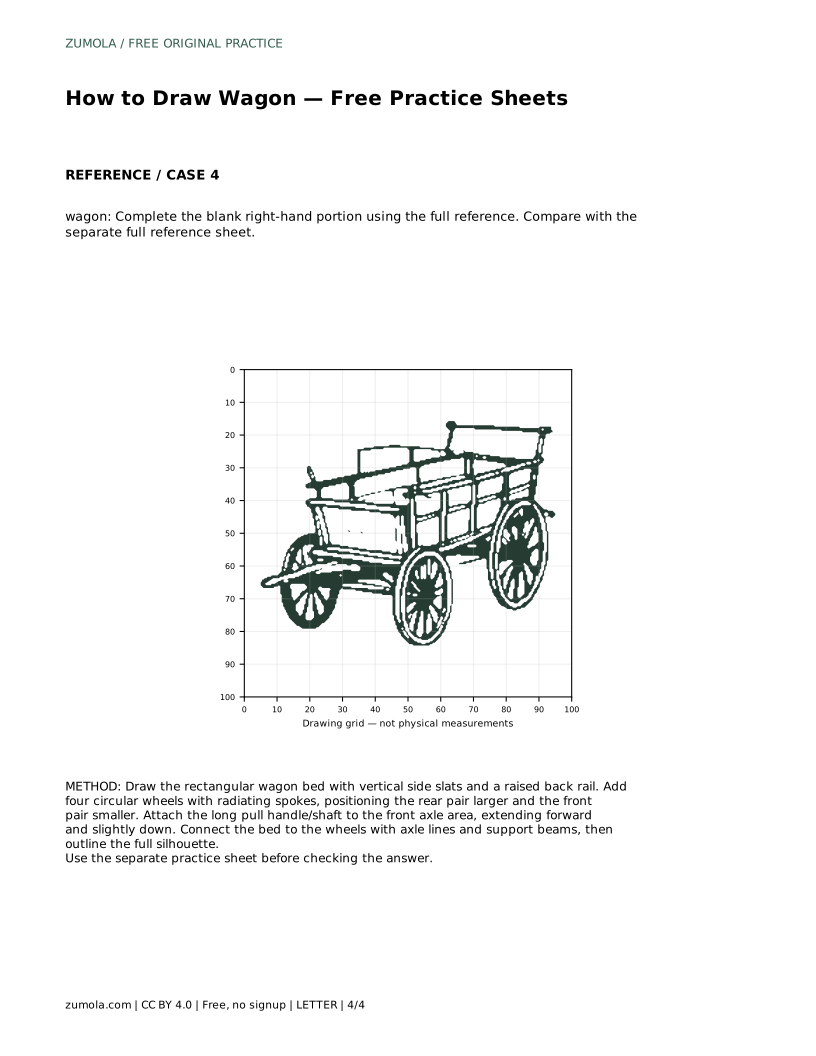
A wagon drawing reads clearly when its structure is right: a rectangular bed, four spoked wheels, connecting axles, and a pull handle reaching forward from the front. The practice sheets let you study that structure in different ways, from tracing a reference outline to copying onto a grid or completing a partly drawn figure. This guide explains the order of construction and the features to check, so your finished drawing looks like a wagon rather than a box on circles.
Begin with the wagon bed, because it sets the overall width and height of the drawing. Draw a long rectangle in a slight perspective, so the top surface is visible and the far side sits a little higher than the near side. Add vertical side slats at even spacing along the visible side, and finish the bed with a raised back rail that stands above the top edge. Keep the slats roughly parallel; uneven spacing is the quickest way to make the bed look tilted or unstable.
The bed should feel like a shallow open box, not a solid block. Leave the top open so the interior reads as a space that could hold something. If you are tracing the reference outline first, pay attention to where the back rail meets the side panels, then repeat that junction independently on a blank sheet.
A wagon needs four wheels, and their size and position carry much of the drawing's character. Place the rear pair slightly larger and the front pair slightly smaller, which suggests the perspective of a vehicle seen from the side and front. Draw each wheel as a circle, then add a hub at the center and radiating spokes that reach the rim. Keep the spokes evenly spaced around the hub so the wheel looks balanced.
Wheels sit below the bed, connected by axle lines and support beams. Draw those connections before outlining the full silhouette, because the axles explain how the bed rests on the wheels. If a wheel looks detached, the axle line is usually missing or too short.
The pull handle, sometimes called a shaft, extends from the front axle area forward and slightly down. It is the feature that tells a viewer the wagon is meant to be pulled, so give it a clear length and a consistent thickness. Attach it near the front axle rather than floating in front of the bed.
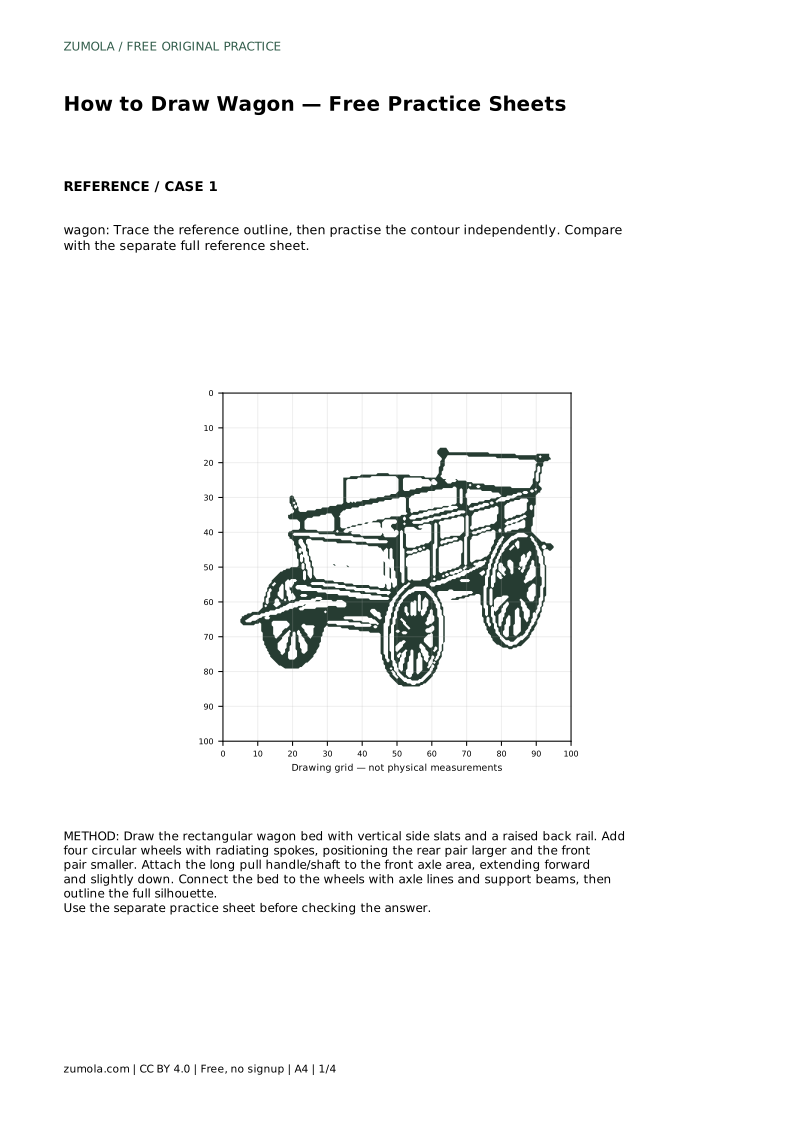
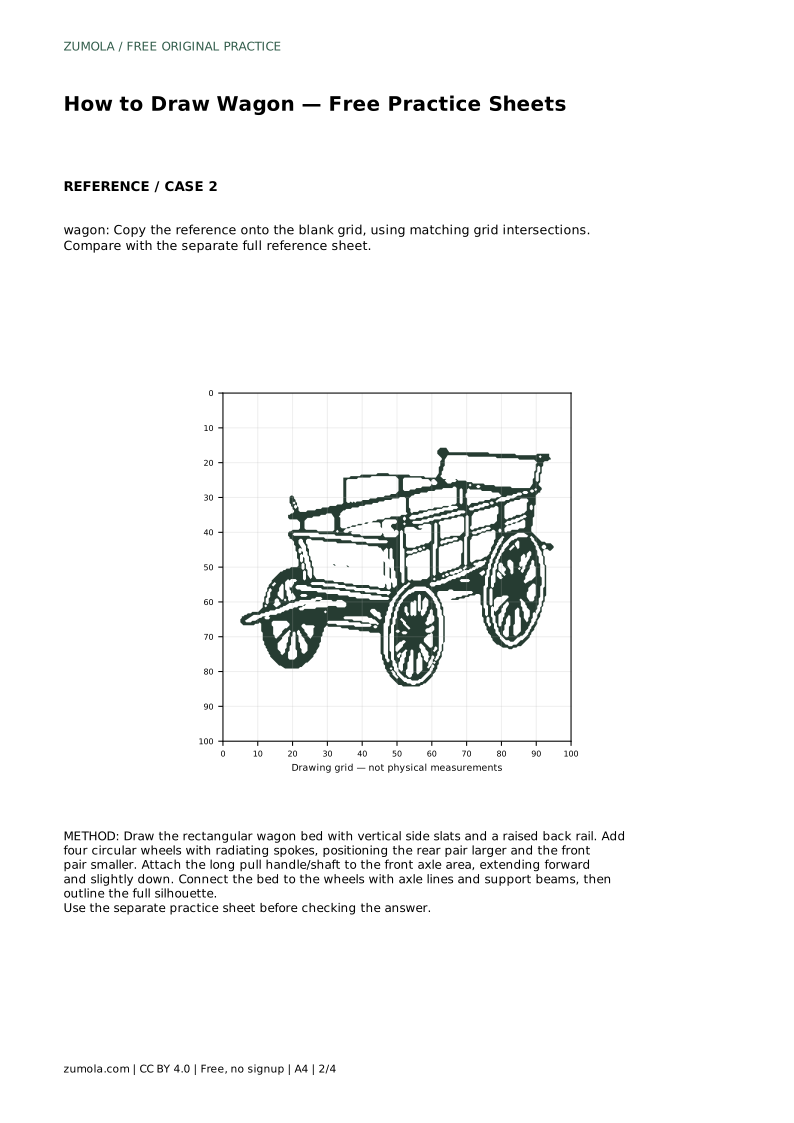
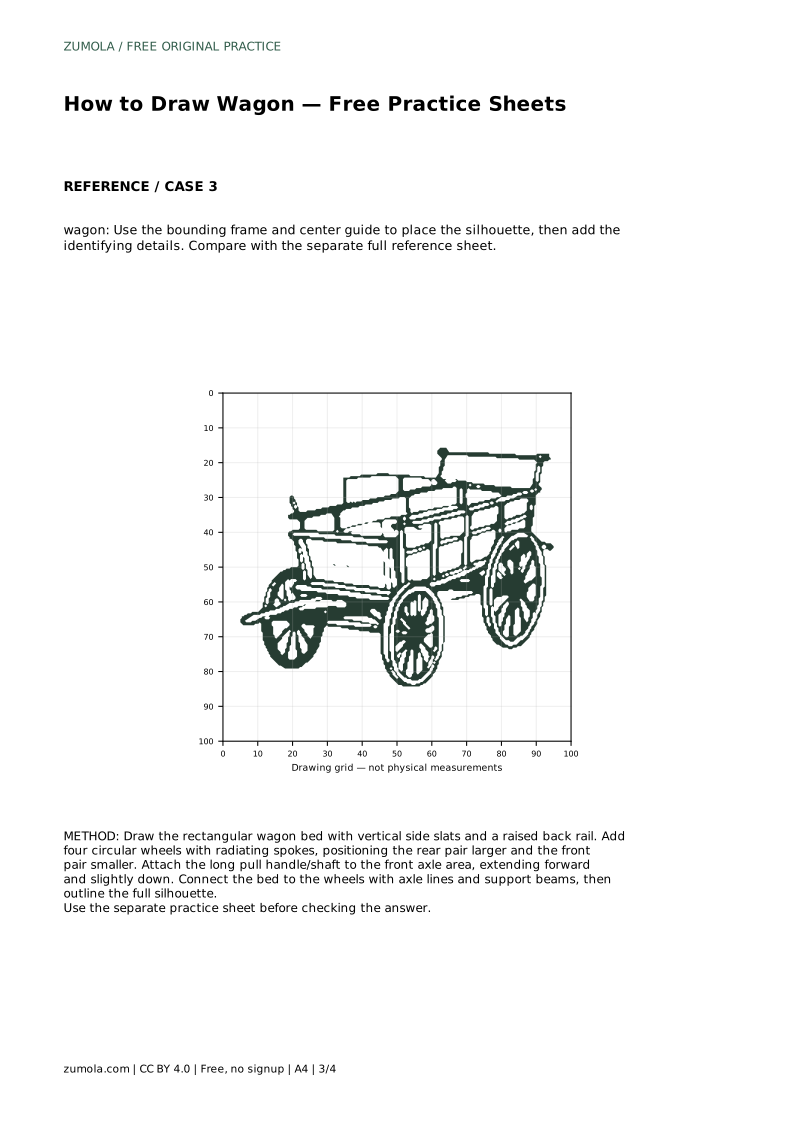
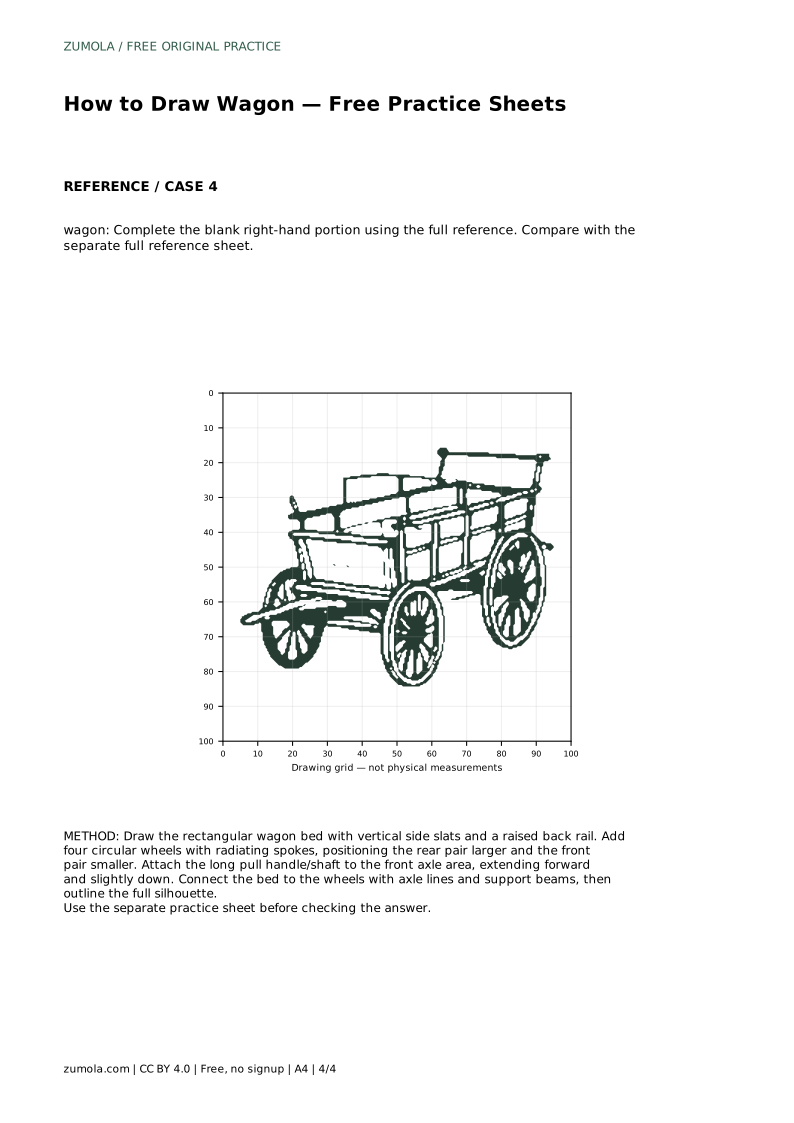
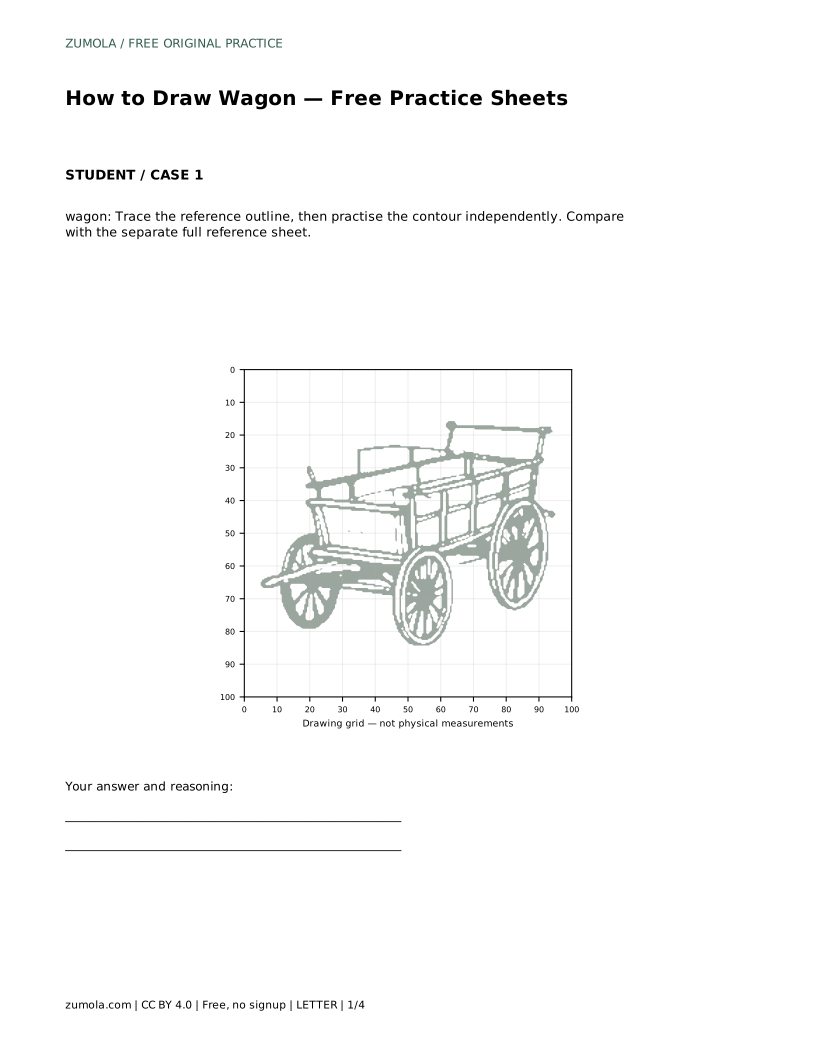
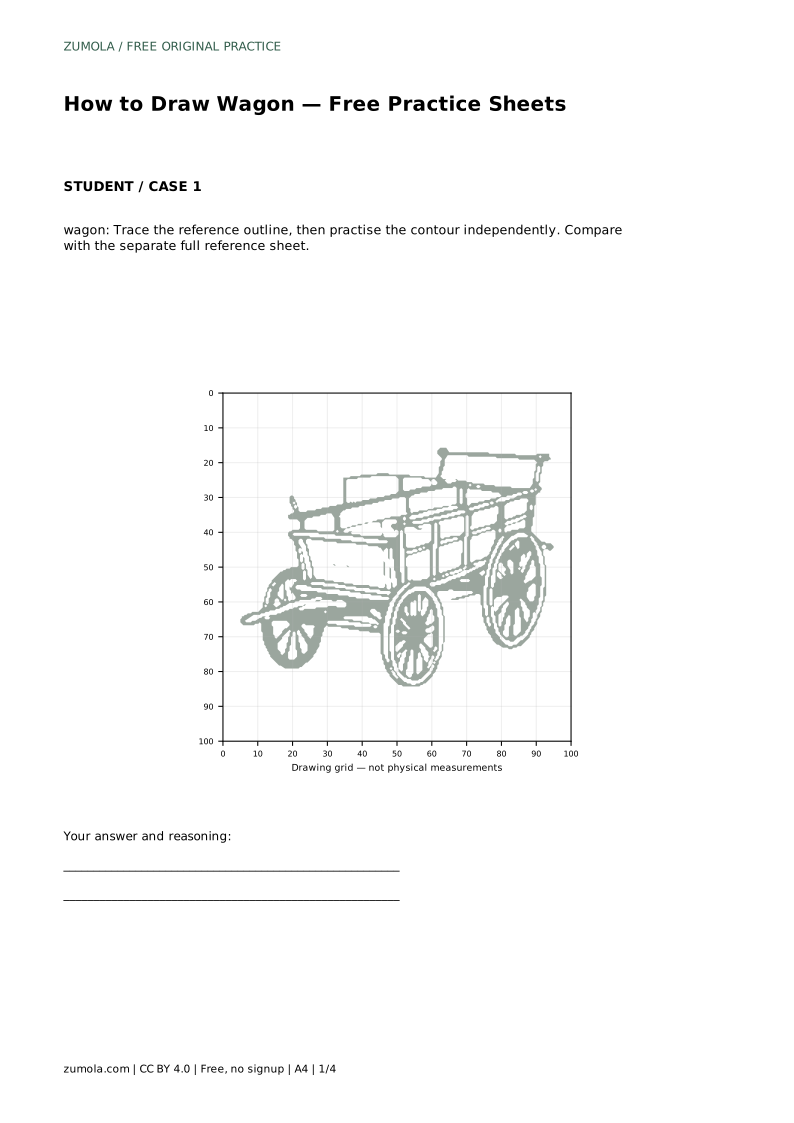
When the drawing is complete, compare it with the separate full reference sheet. Check four things: four spoked wheels, a rectangular slatted bed, a raised back rail, and a pull handle extending from the front. Proportions matter more than pixel-perfect matching, and other drawings can be correct if those visible features are preserved.
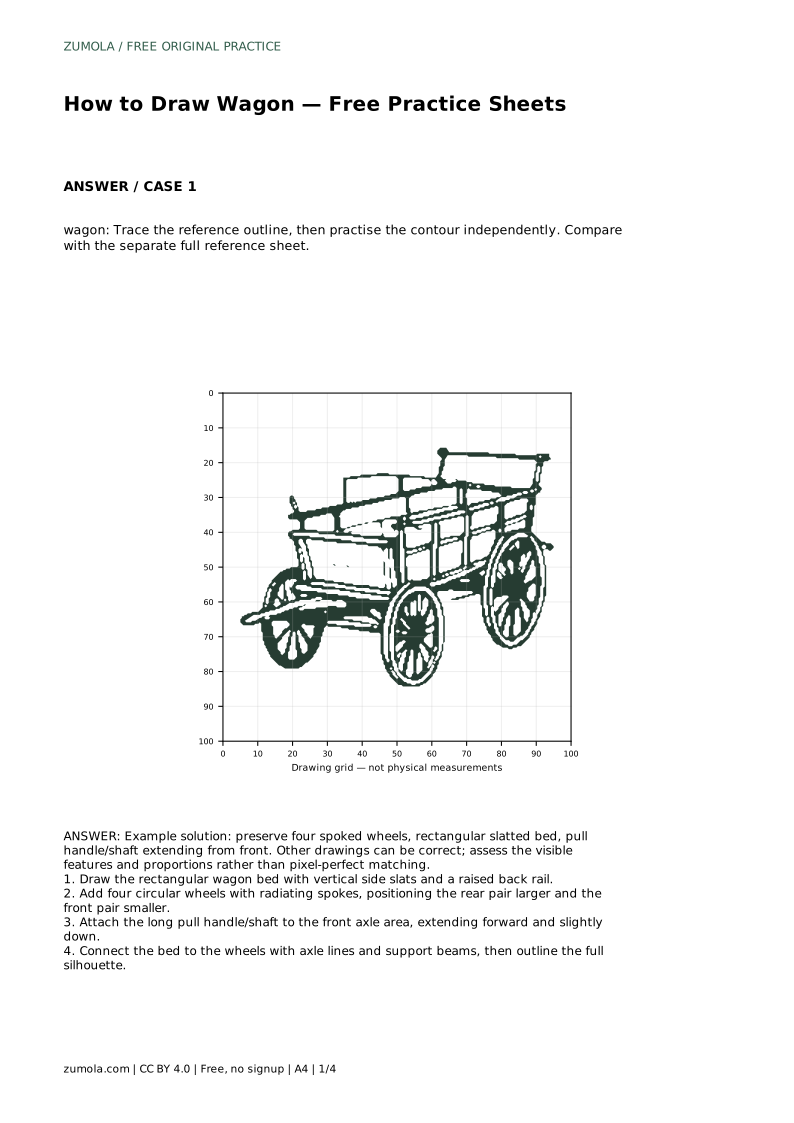
wagon: Trace the reference outline, then practise the contour independently. Compare with the separate full reference sheet.
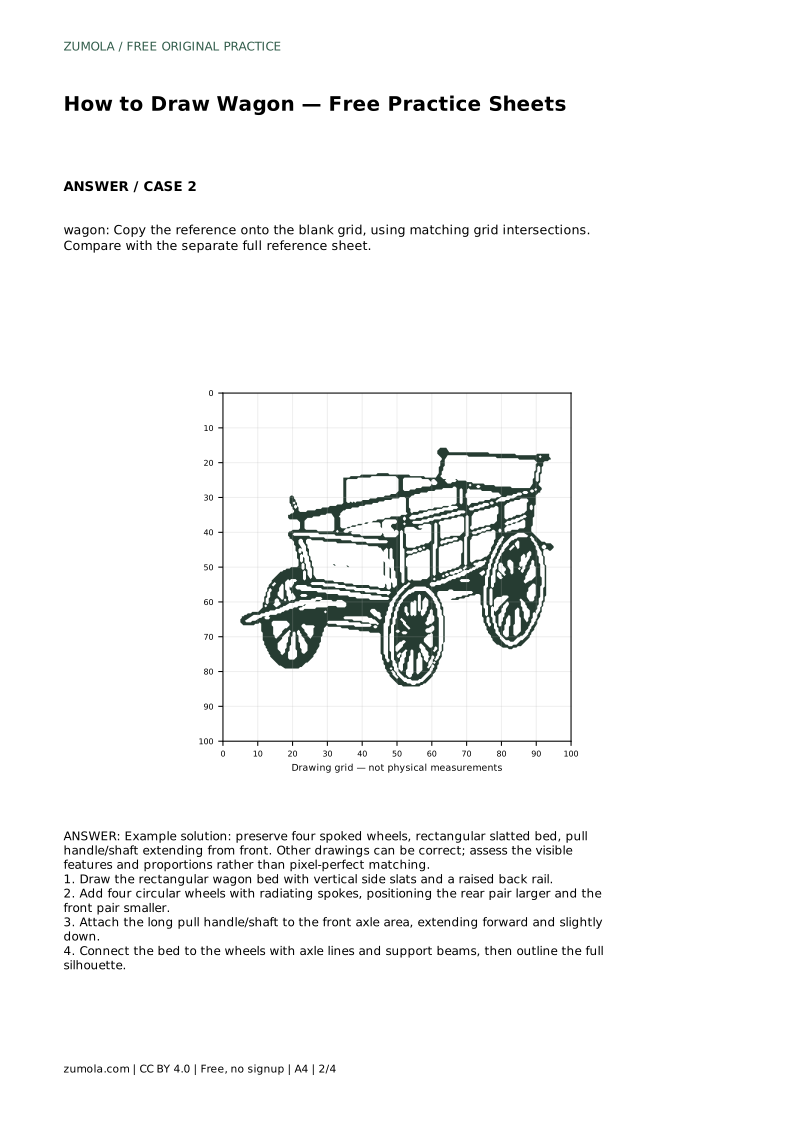
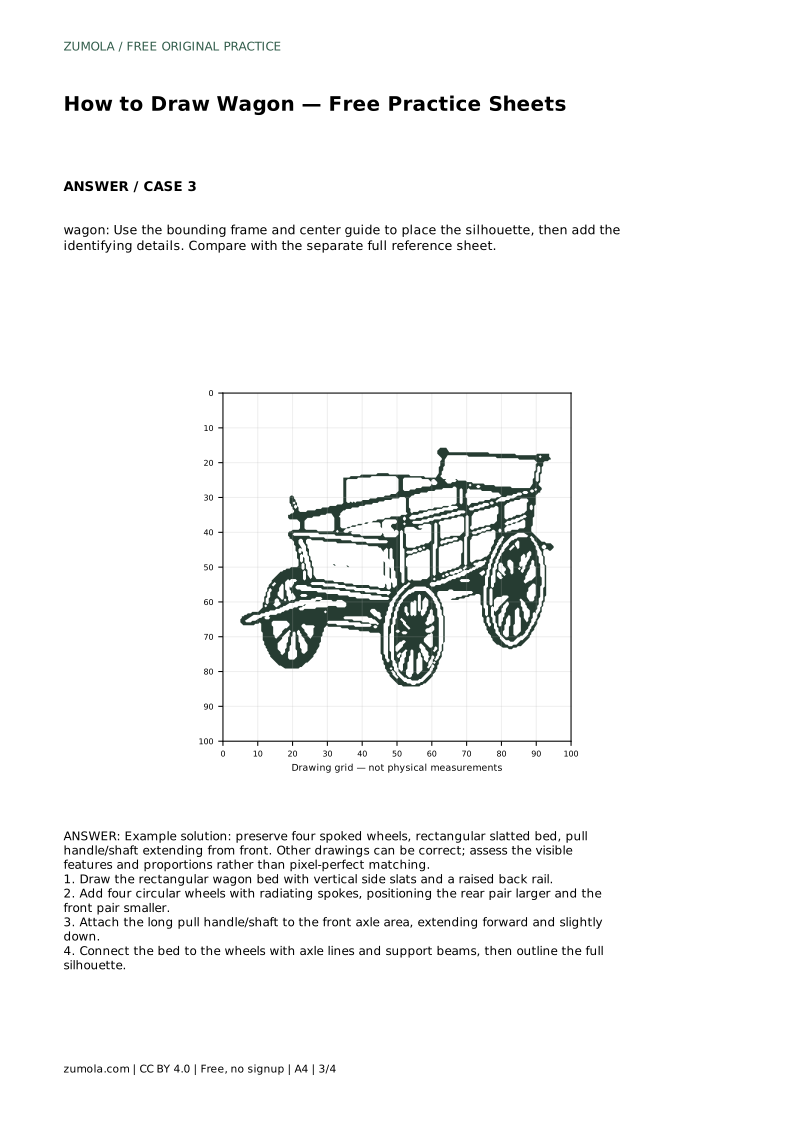
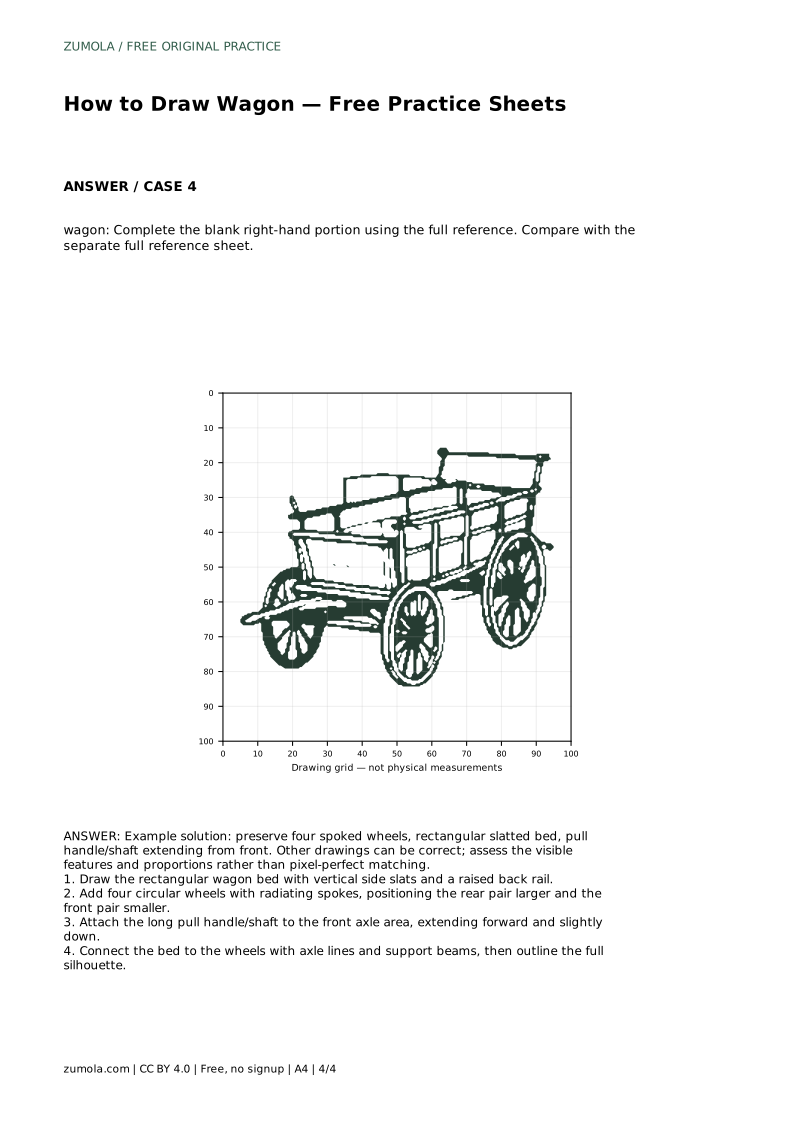
Example solution: preserve four spoked wheels, rectangular slatted bed, pull handle/shaft extending from front. Other drawings can be correct; assess the visible features and proportions rather than pixel-perfect matching. Draw the rectangular wagon bed with vertical side slats and a raised back rail. Add four circular wheels with radiating spokes, positioning the rear pair larger and the front pair smaller. Attach the long pull handle/shaft to the front axle area, extending forward and slightly down. Connect the bed to the wheels with axle lines and support beams, then outline the full silhouette.
No. Making the rear pair slightly larger and the front pair slightly smaller suggests perspective. Keep each wheel circular and its spokes evenly spaced.
That is acceptable. Assess whether the four spoked wheels, rectangular slatted bed, raised back rail, and front pull handle are visible and reasonably proportioned.
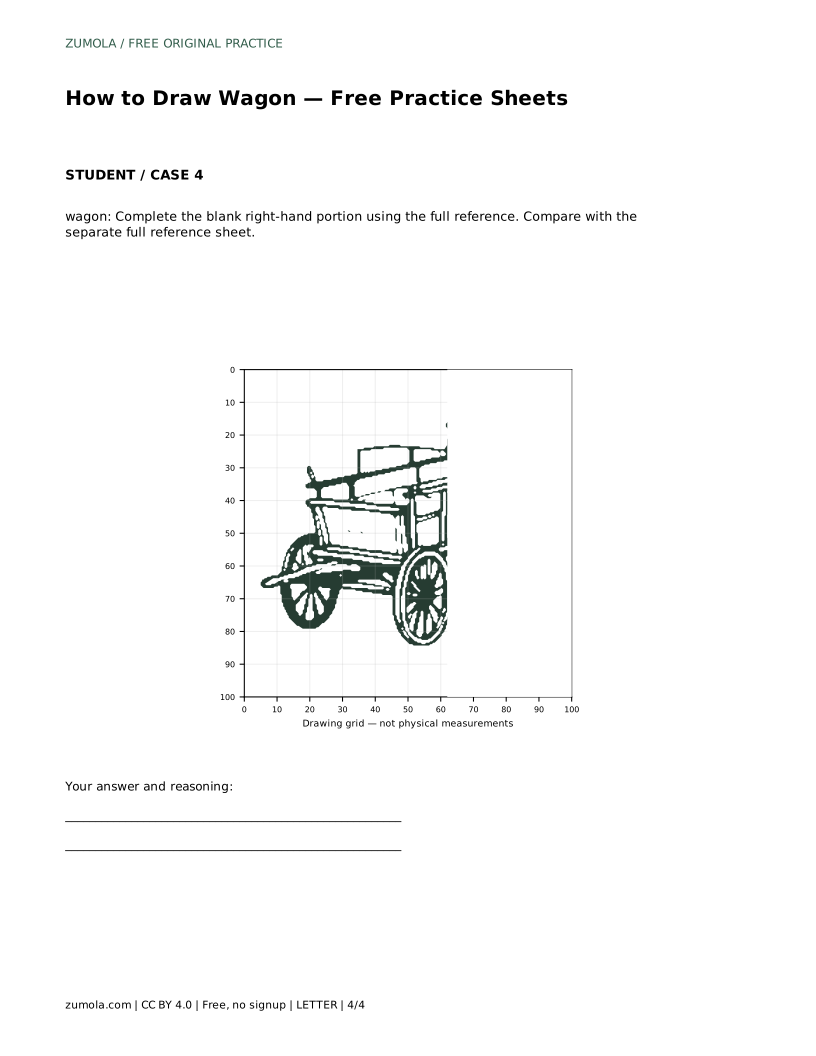
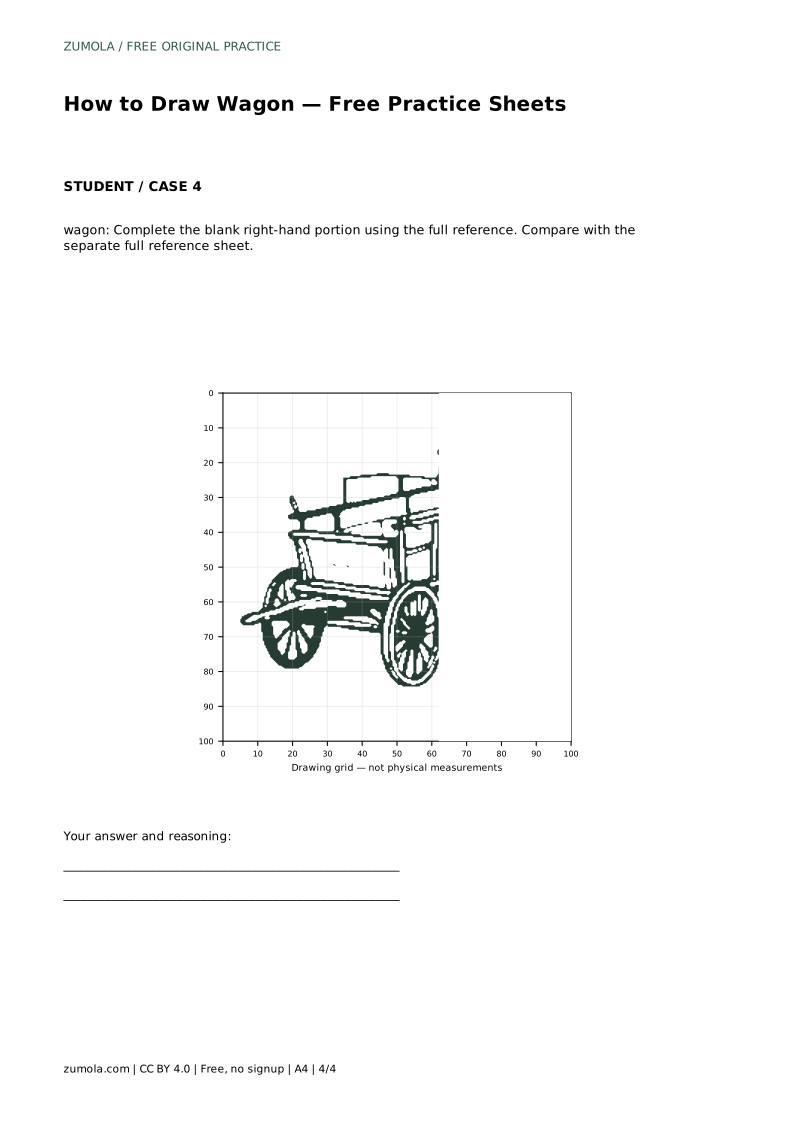
Start with tracing the reference outline if you are new to the shape, then move to the grid, bounding frame, or partial-completion sheets to practise the structure independently.
All drawing practice · Free coordinate paper
Original resources · CC BY 4.0 · Free for personal and classroom use with attribution.