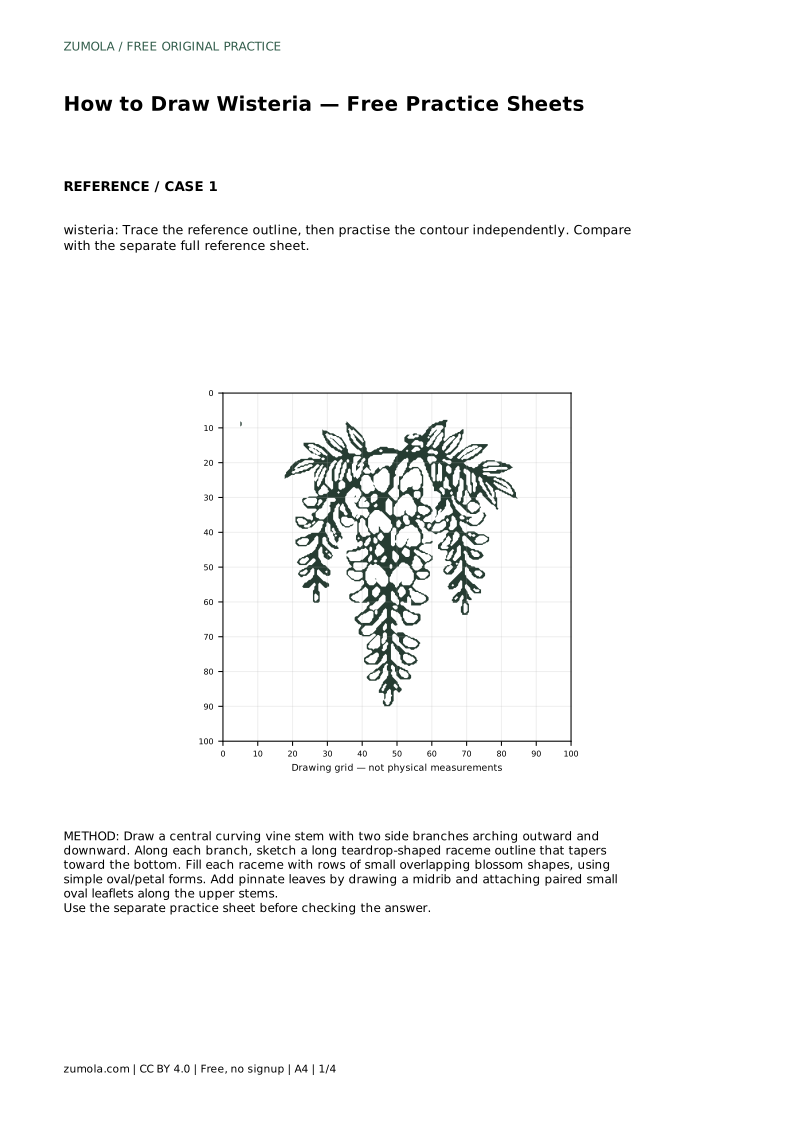
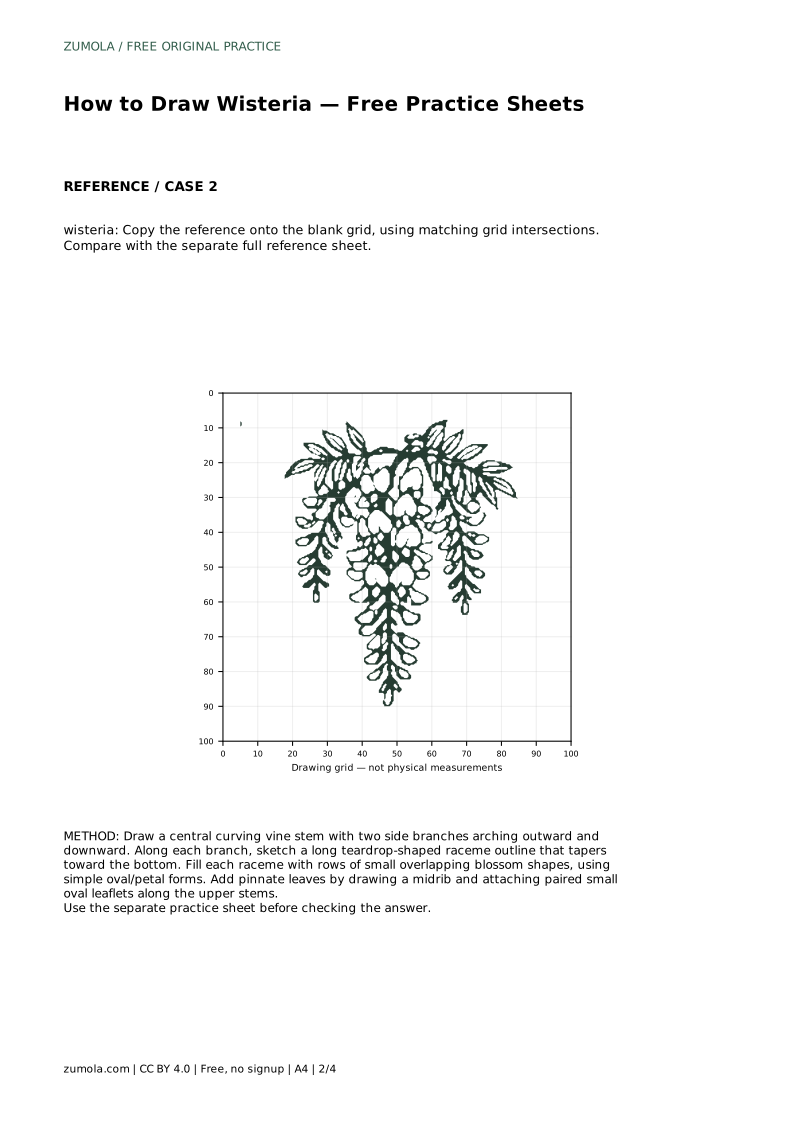
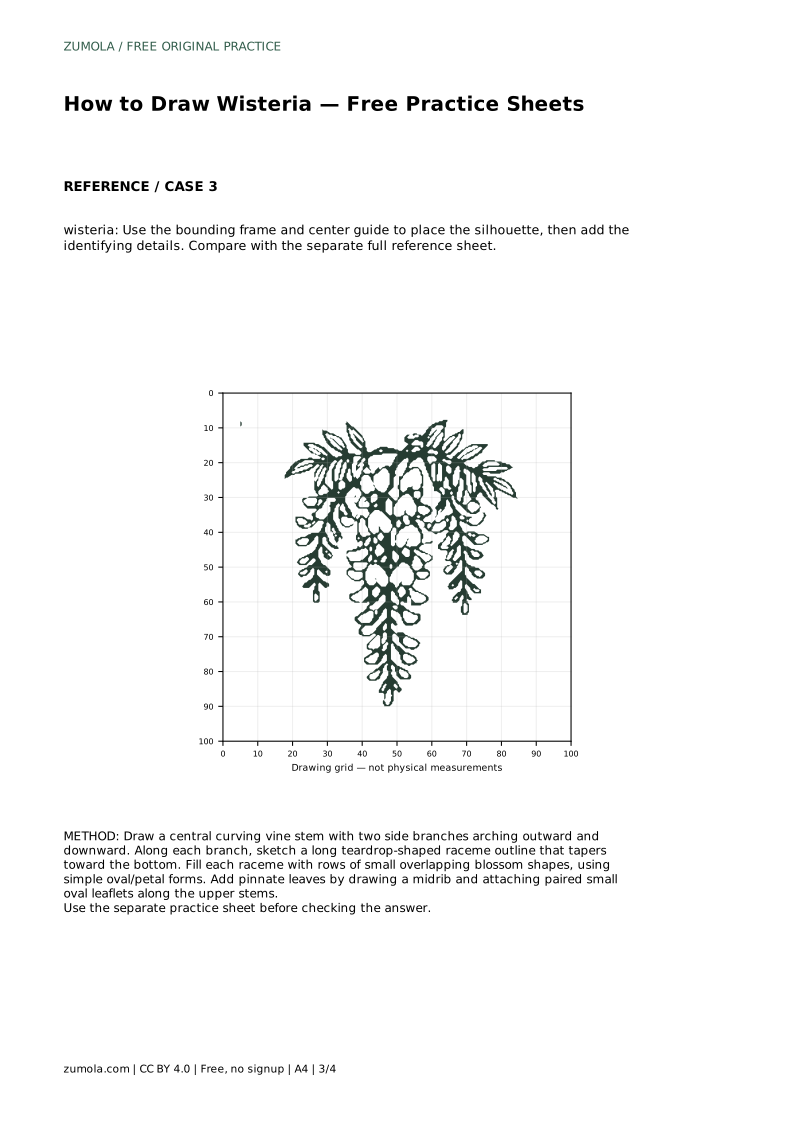
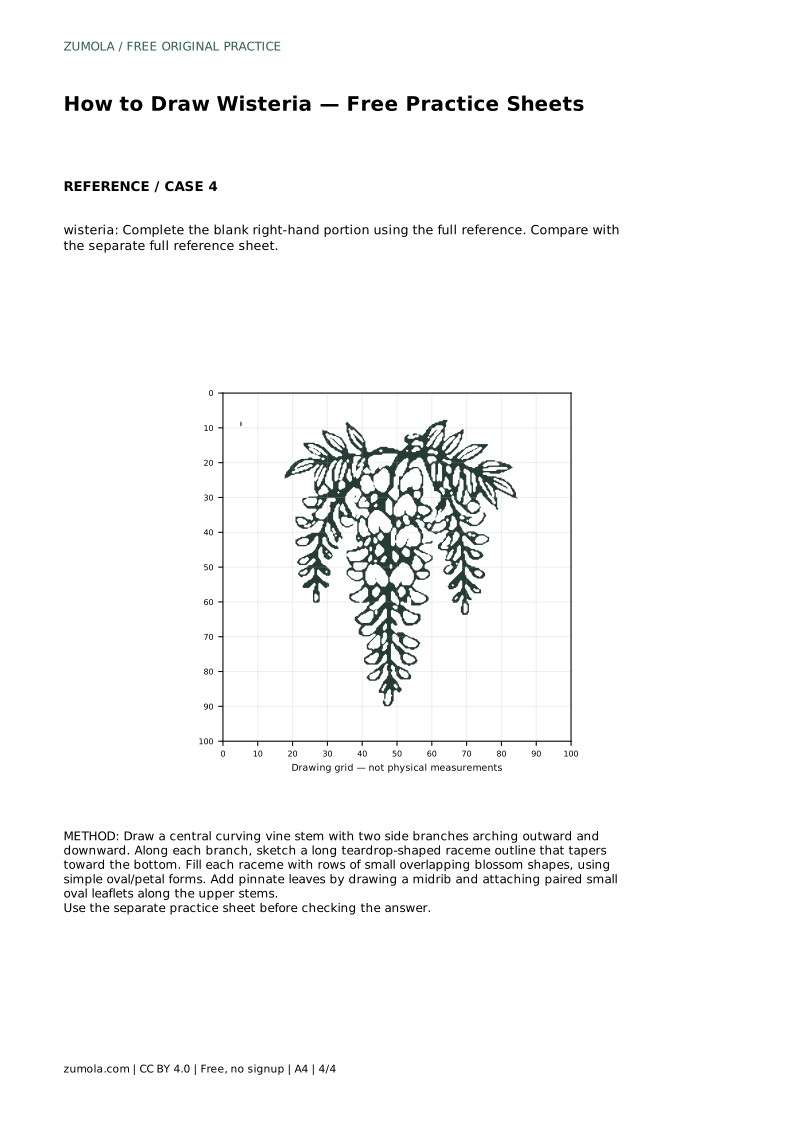
Reference diagrams
LETTER · Download PDF
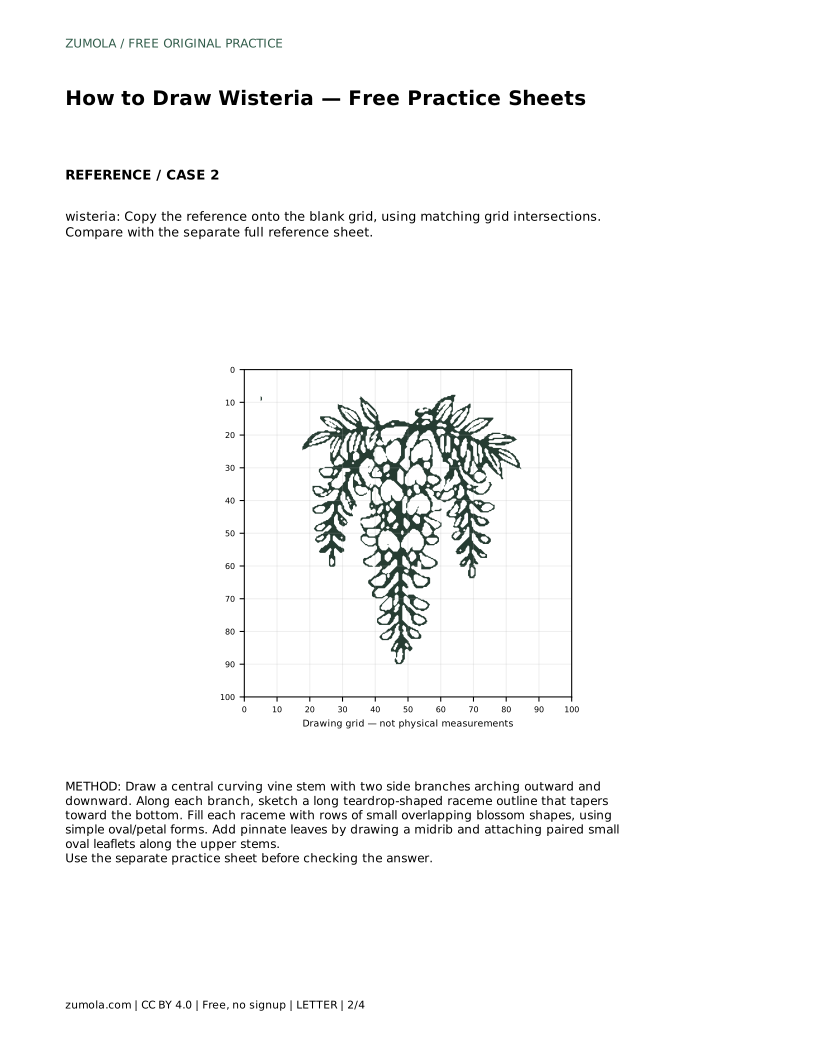
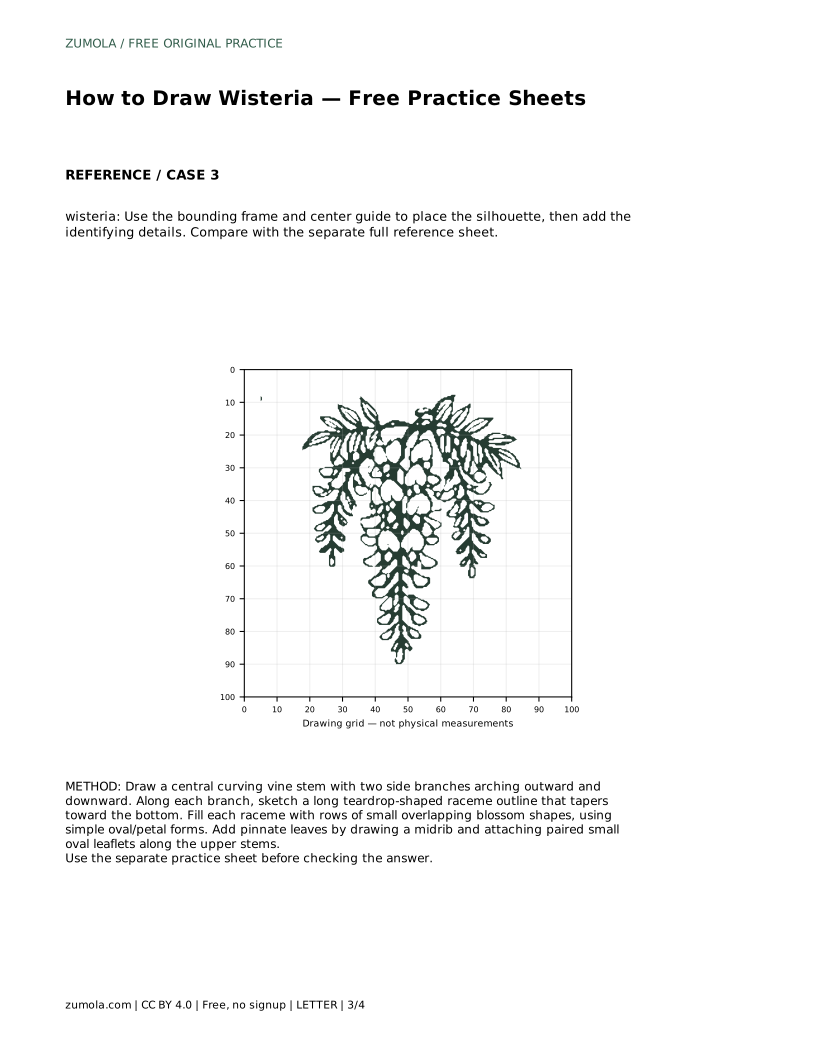
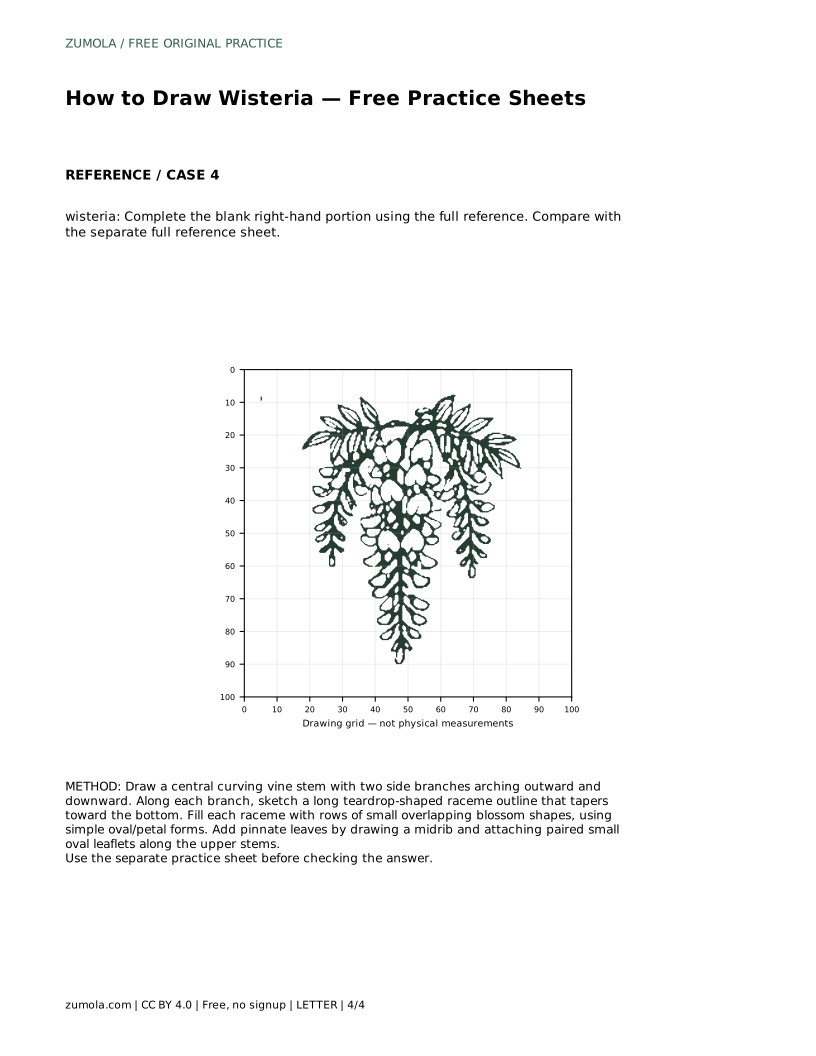
A4 · Download PDF
Free original resources
Learn to draw wisteria with drooping racemes, pinnate leaves, and twining vines. Free printable practice sheets support tracing, grids, and independent sketching.
Four original cases, with reference diagrams, practice sheets and worked answers. Everything is free; no signup required.
LETTER · Download PDF
A4 · Download PDF
LETTER · Download PDF
A4 · Download PDF
LETTER · Download PDF
A4 · Download PDF
Use A4 or US Letter to match your printer. Use the stated values and conditions to solve each exercise; diagrams are not physical measuring rulers.
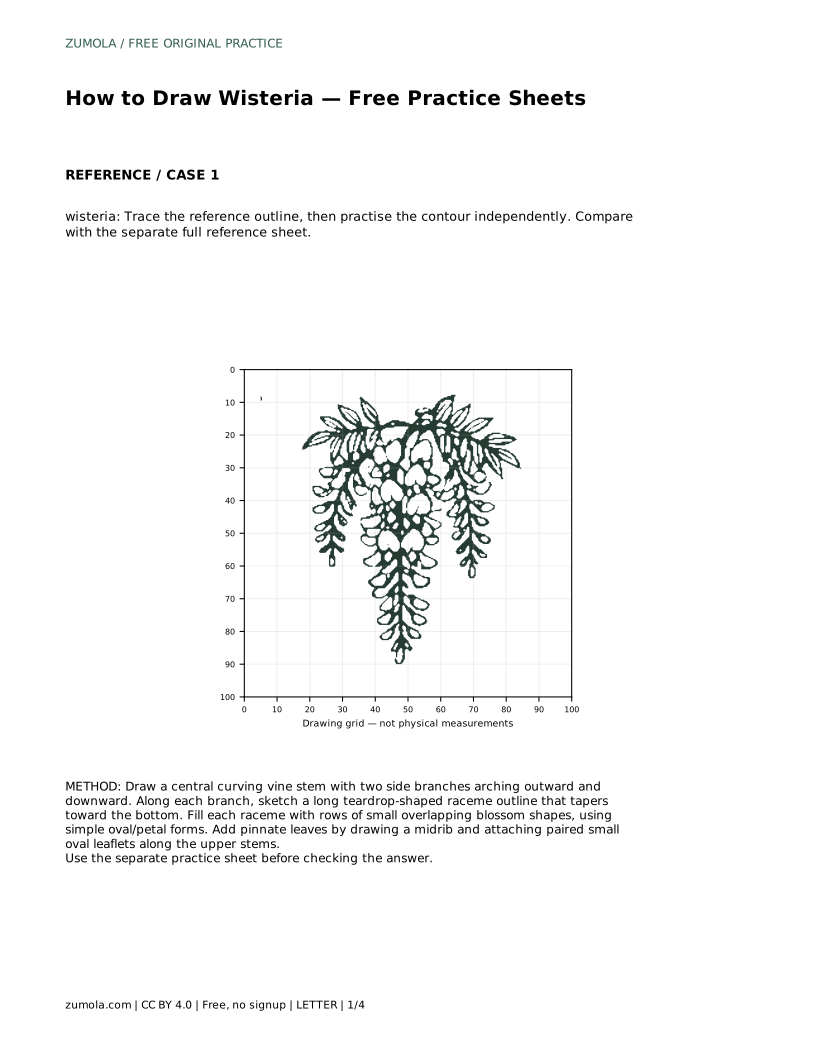
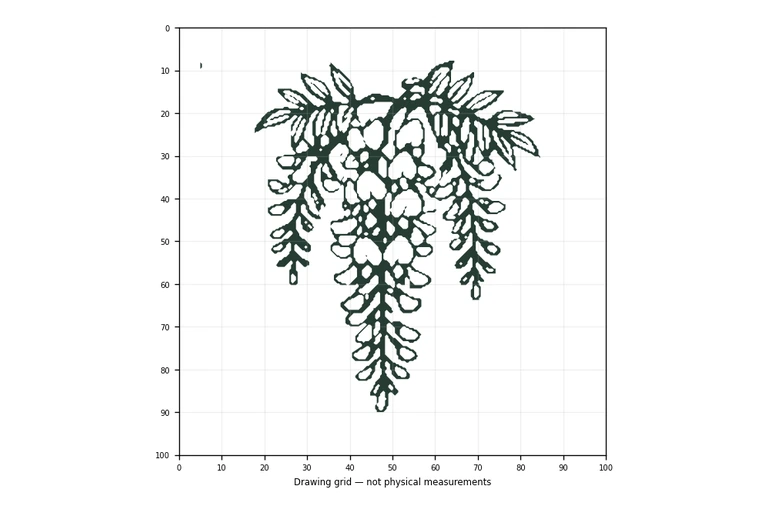
Wisteria is recognizable by its long, hanging clusters of small blossoms and its paired leaflets along curling vines. This page explains a simple drawing order: establish the vine structure, outline each drooping raceme, fill the clusters with overlapping blossom shapes, then add pinnate leaves. The free practice sheets let you trace a reference outline, copy onto a grid, use a bounding frame and center guide, or complete a partially blank drawing.
Before drawing blossoms, decide where the main vine travels across the page. A central curving stem with two side branches arching outward and downward gives the flower clusters somewhere to hang. Keep the branches thin and slightly irregular; wisteria vines twist rather than run perfectly straight. Lightly sketch this framework so it can be adjusted once the racemes are placed.
The vine is the organizing line for the whole drawing. If the branches are too short or too horizontal, the long clusters will feel cramped. Leave generous vertical space beneath each branch for the racemes to droop.
A wisteria raceme is a long teardrop shape that tapers toward the bottom. Sketch the outer outline first, then fill it with rows of small overlapping blossom forms. The blossoms near the top are usually drawn slightly larger and more open, while those near the tapered tip become smaller and closer together.
Overlap matters. Each small oval or petal shape should sit partly over the one above it, creating the layered look of a pea-like flower cluster. Work down the raceme rather than filling it randomly, so the taper stays visible.
Wisteria leaves are compound: a central midrib carries paired small oval leaflets along its length. Draw the midrib first, then attach leaflets in pairs, leaving a single leaflet at the tip if you wish. Place leaves along the upper stems so they frame the racemes without hiding them.
When the main features are in place, compare your drawing with the reference sheet. Check the number of visible racemes, the direction of the droop, and whether the leaflets read as pairs. Adjust proportions rather than erasing whole sections.
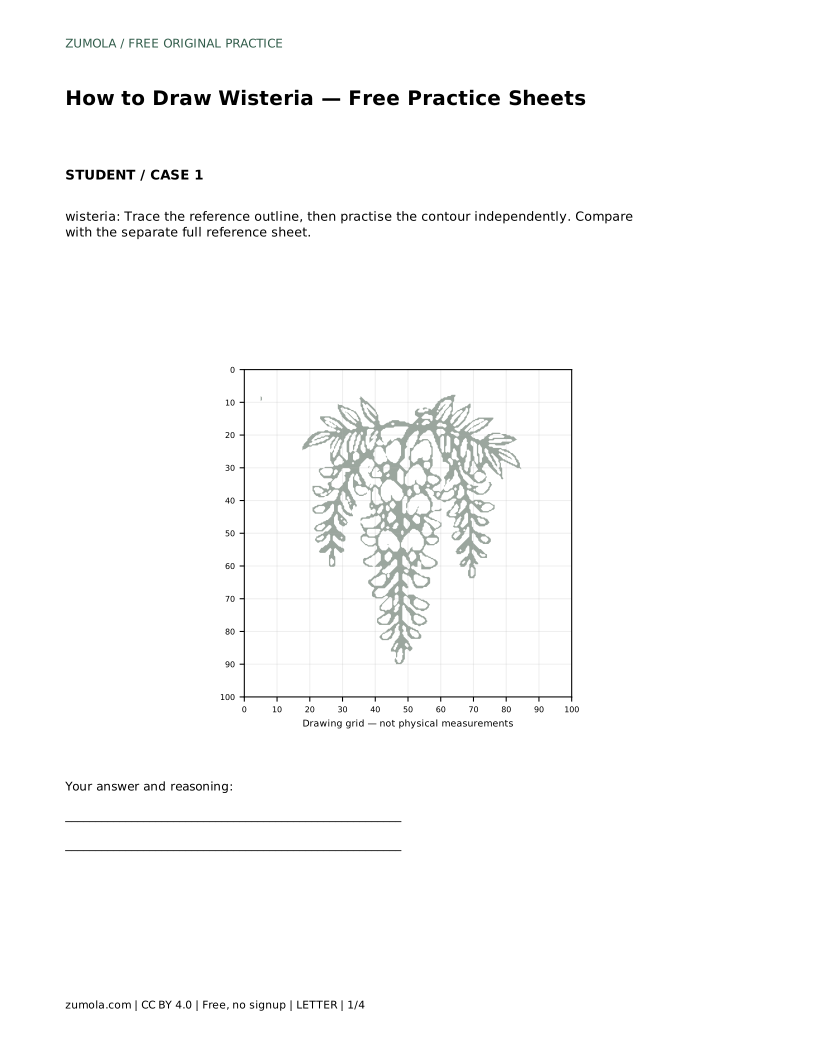
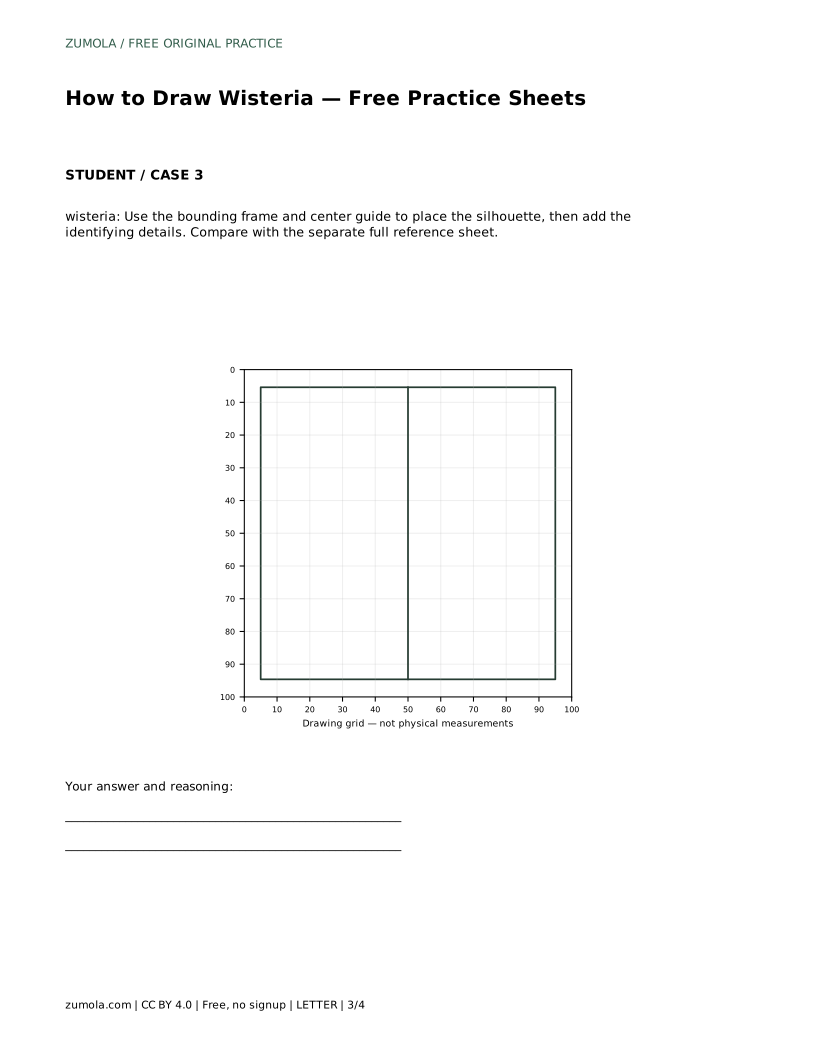
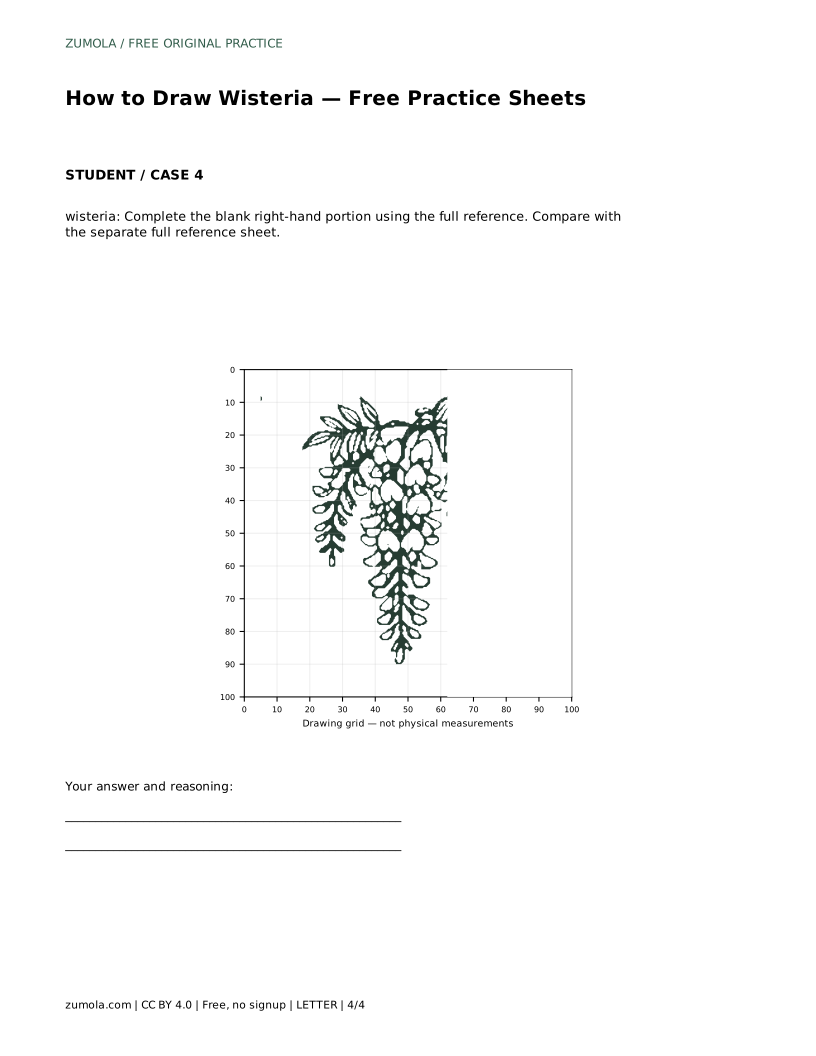
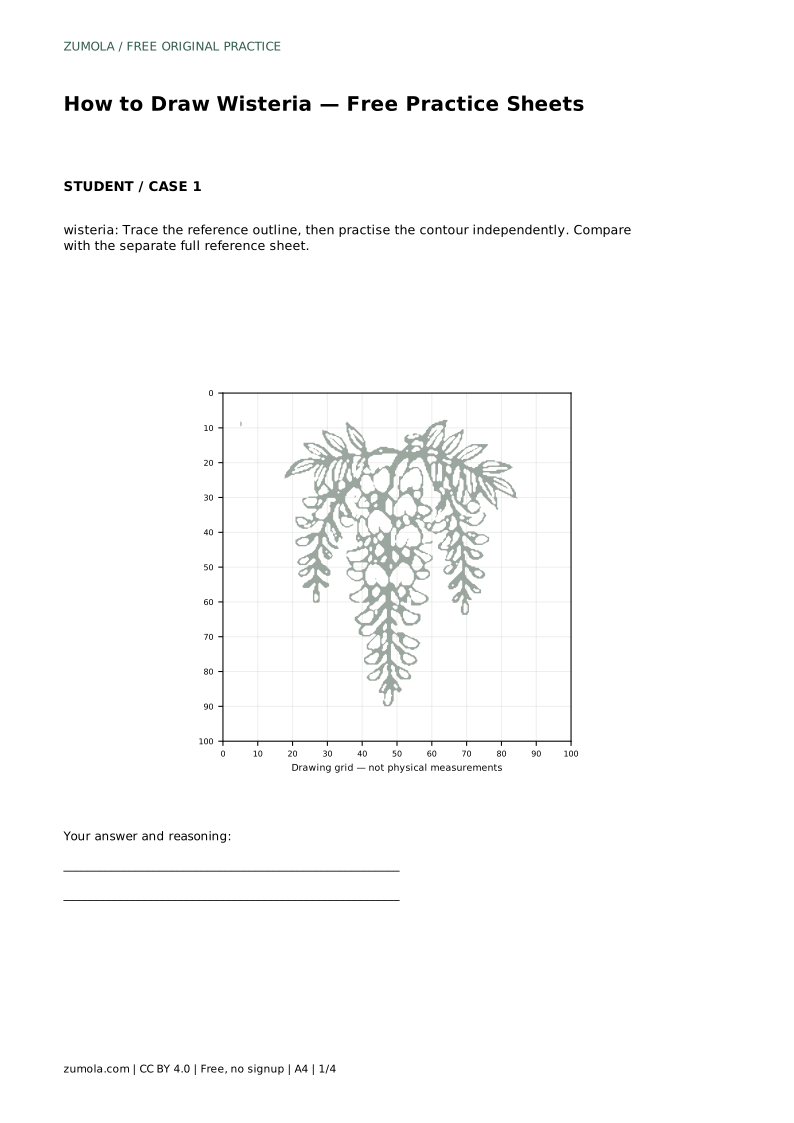
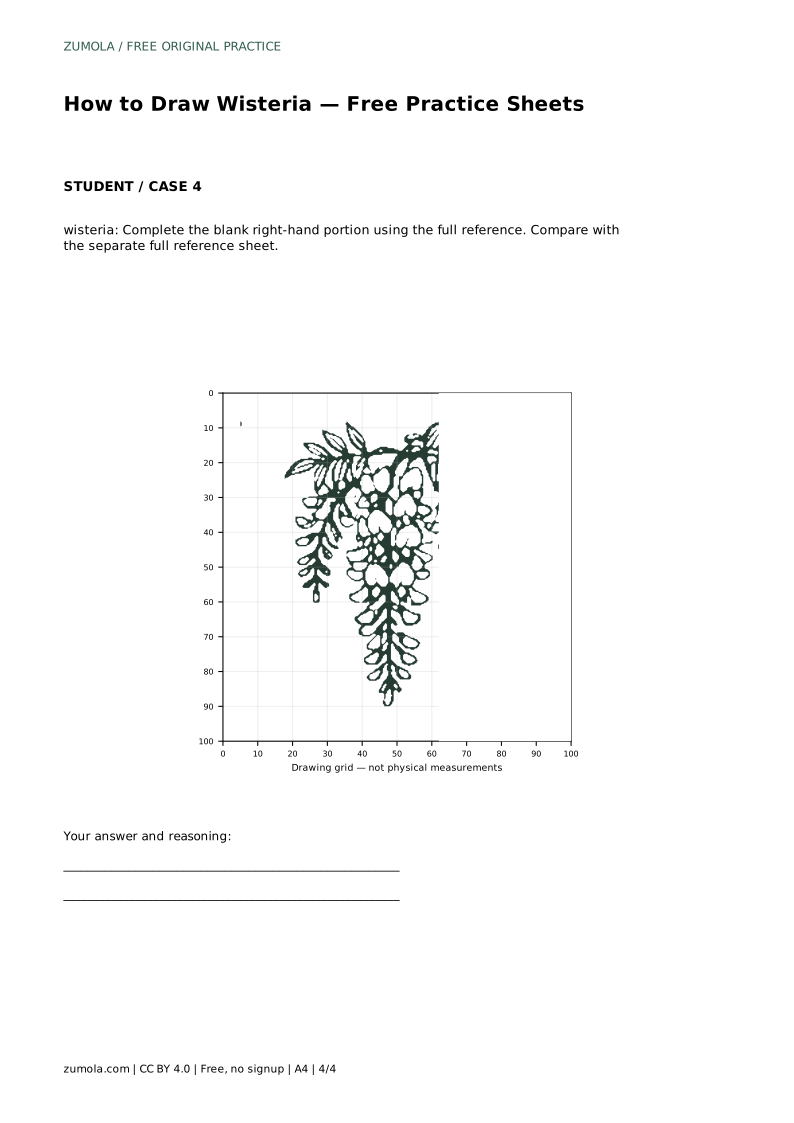
The tracing sheet asks you to follow the reference outline, then practise the contour independently. The grid sheet asks you to copy the reference onto a blank grid using matching intersections. The bounding-frame sheet uses a center guide to place the silhouette before adding details. The partial sheet asks you to complete the blank right-hand portion from the full reference.
Each variant trains a different skill: contour control, proportional placement, silhouette planning, and completing an unfinished composition. Use the variant that matches the difficulty you want to practise.
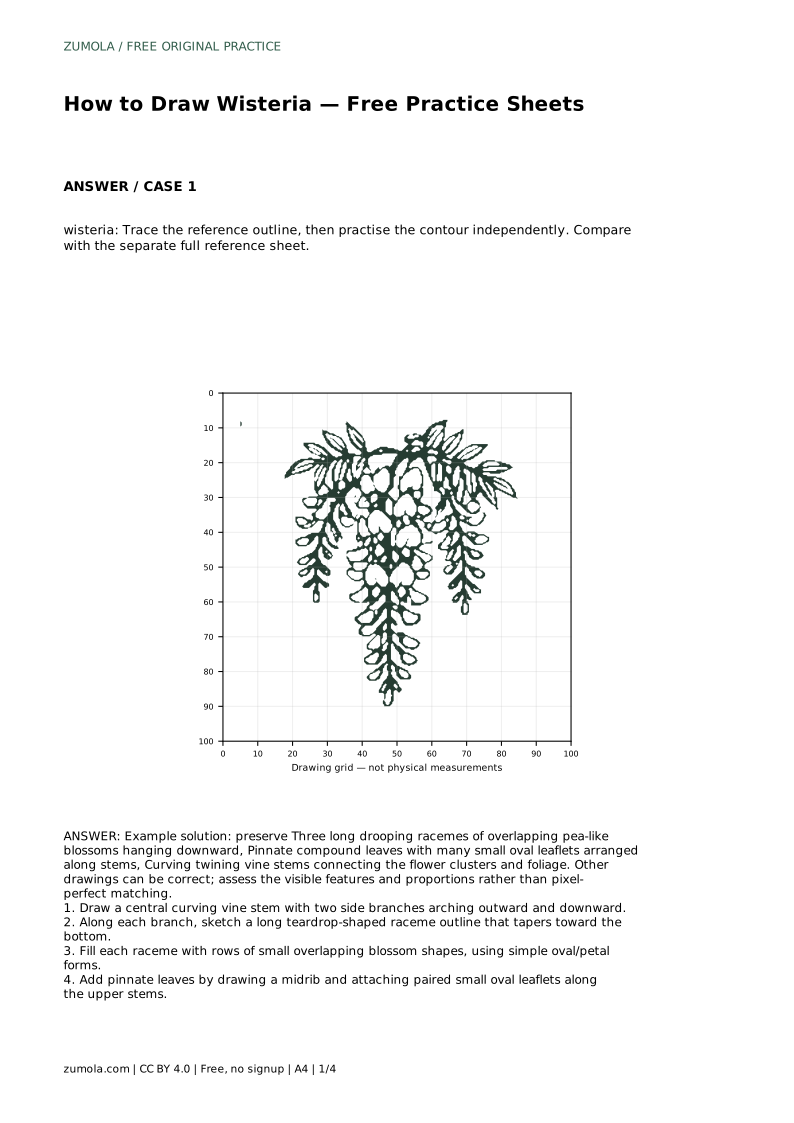
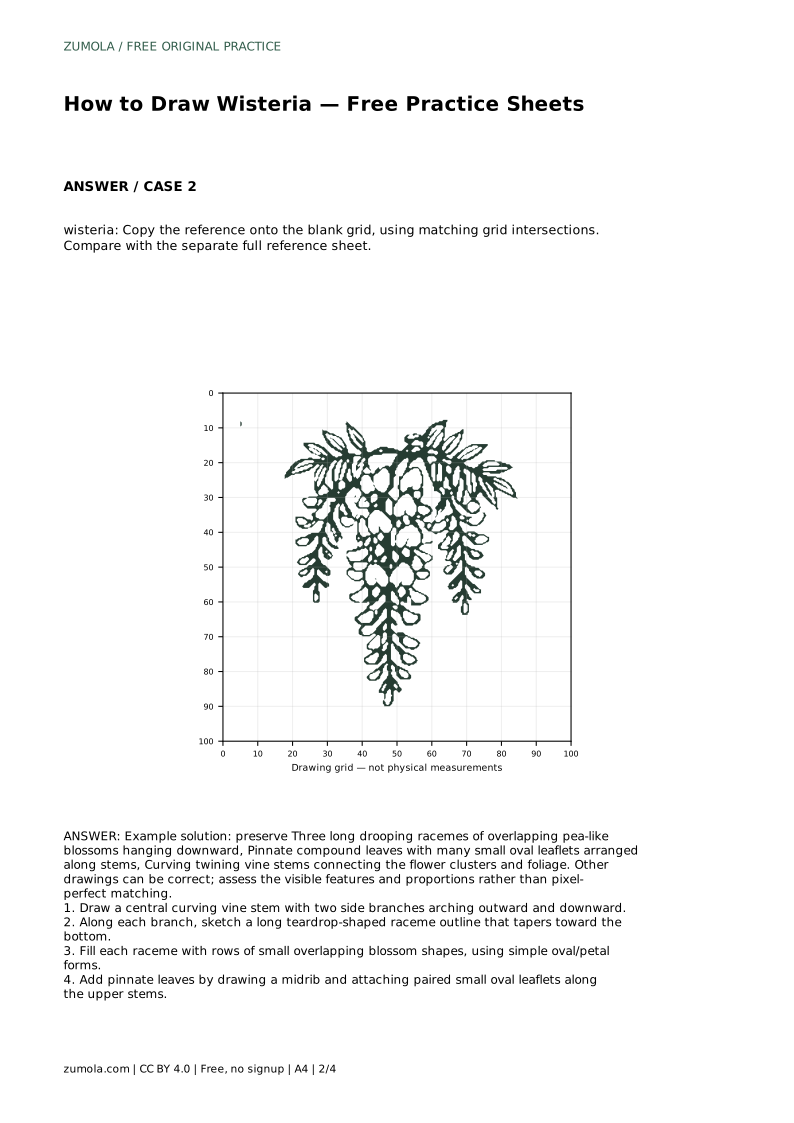
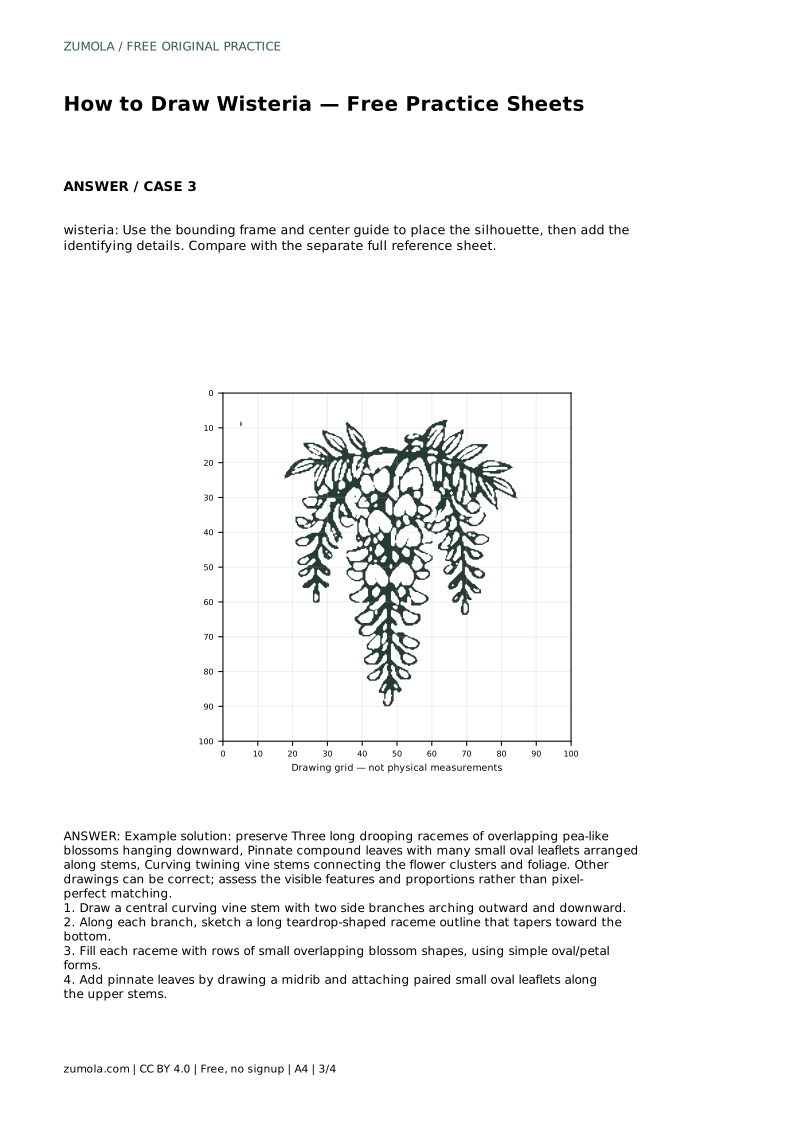
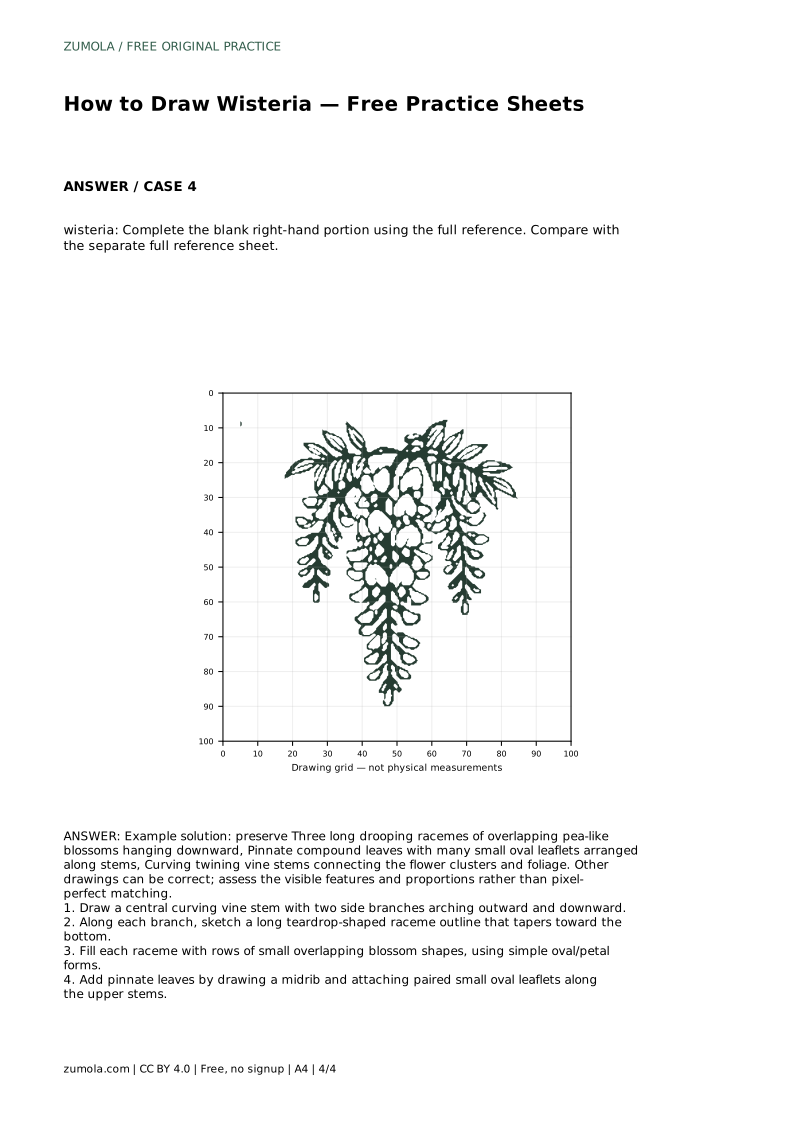
There is no single correct wisteria drawing. Assess whether the visible features are present and proportioned sensibly: three long drooping racemes of overlapping pea-like blossoms hanging downward, pinnate compound leaves with many small oval leaflets arranged along stems, and curving twining vine stems connecting the flower clusters and foliage. A drawing can vary in style and still meet these criteria.
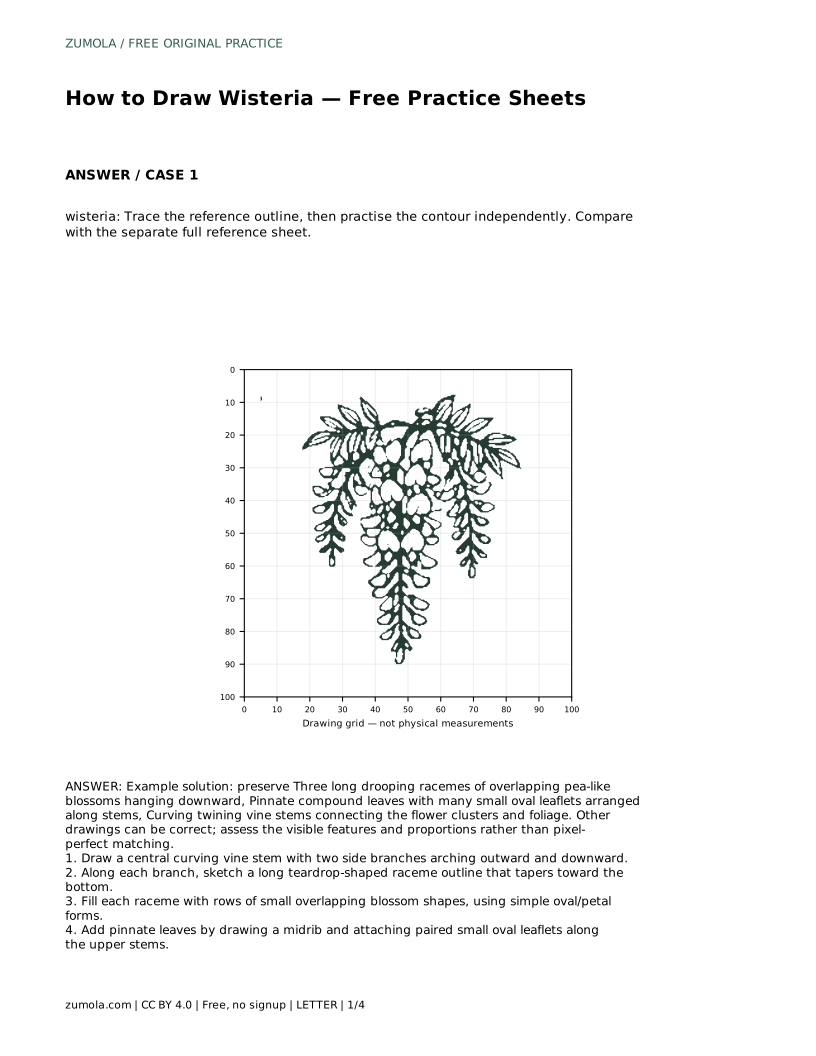
wisteria: Trace the reference outline, then practise the contour independently. Compare with the separate full reference sheet.
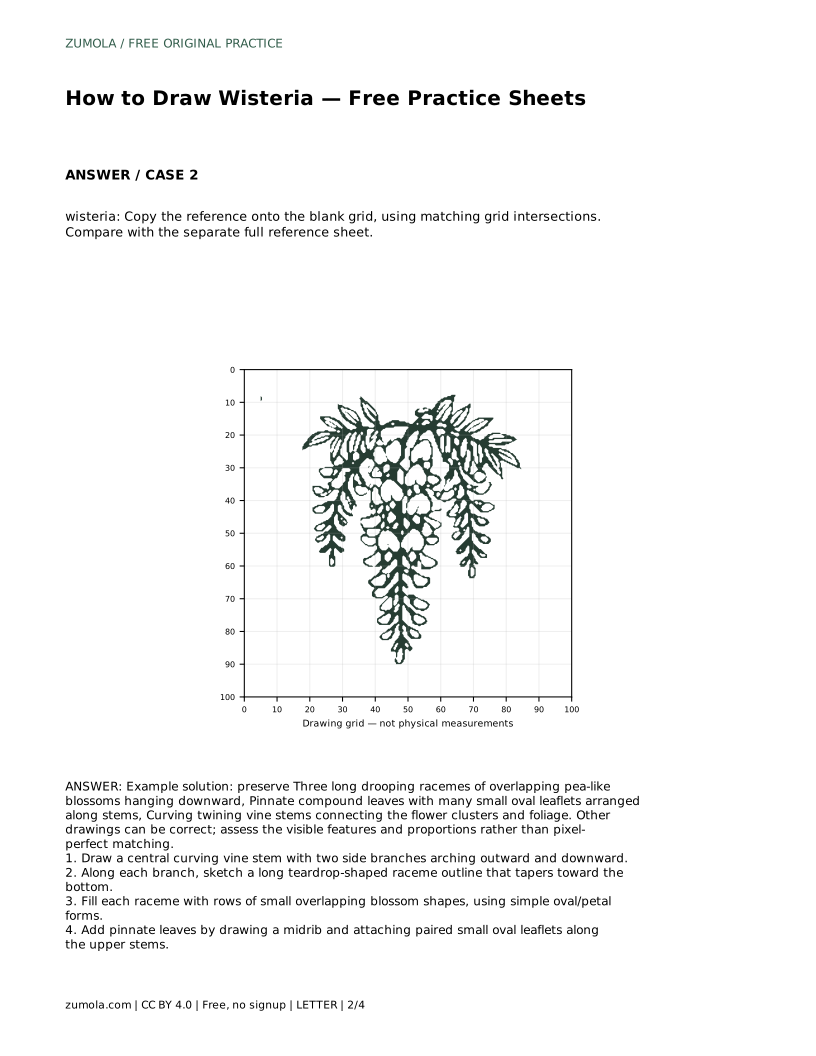
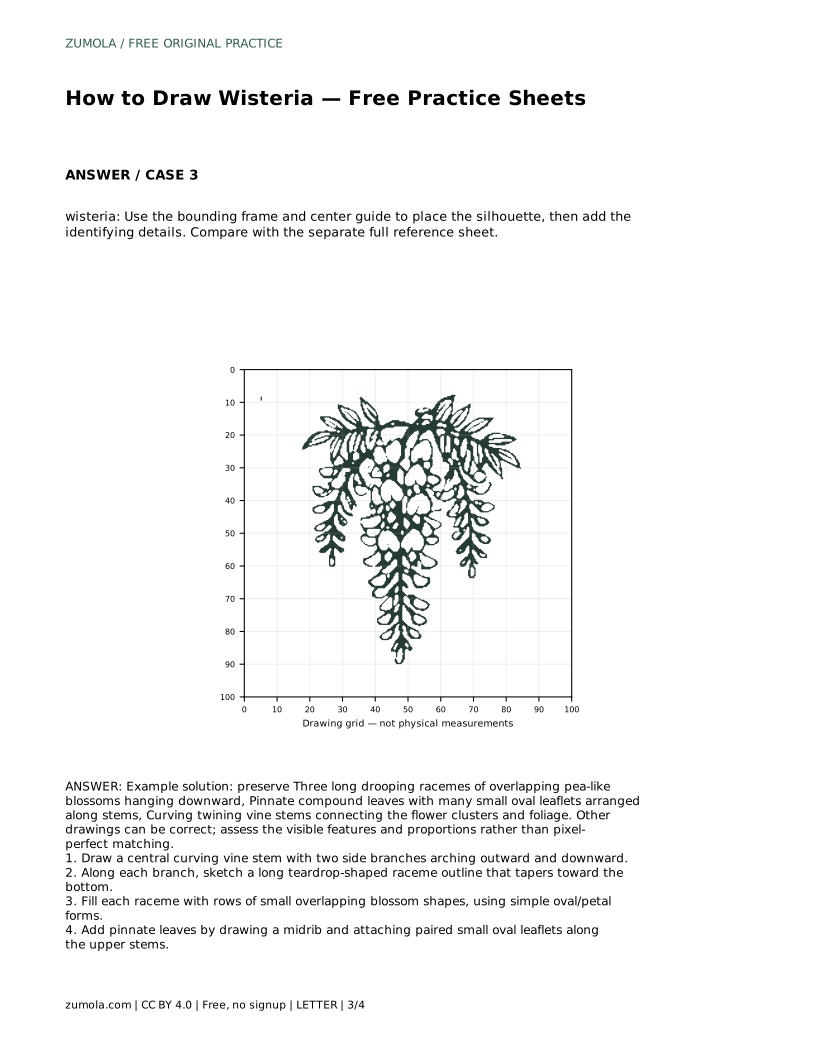
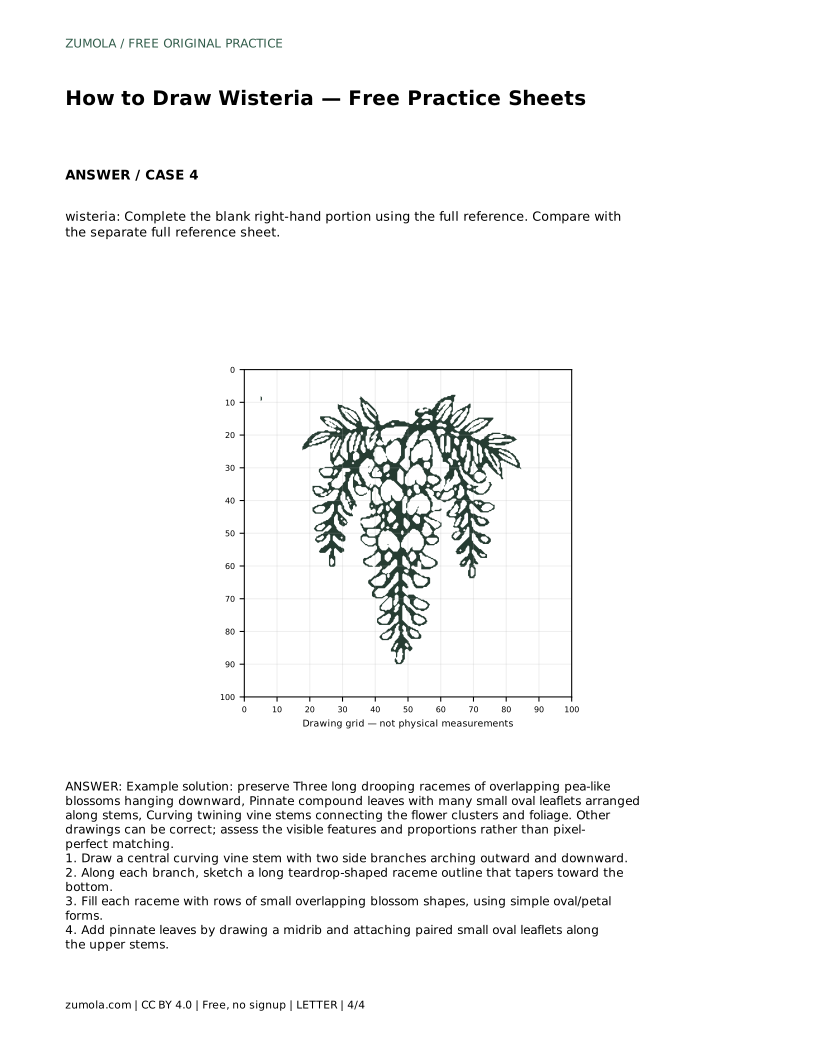
Example solution: preserve Three long drooping racemes of overlapping pea-like blossoms hanging downward, Pinnate compound leaves with many small oval leaflets arranged along stems, Curving twining vine stems connecting the flower clusters and foliage. Other drawings can be correct; assess the visible features and proportions rather than pixel-perfect matching. Draw a central curving vine stem with two side branches arching outward and downward. Along each branch, sketch a long teardrop-shaped raceme outline that tapers toward the bottom. Fill each raceme with rows of small overlapping blossom shapes, using simple oval/petal forms. Add pinnate leaves by drawing a midrib and attaching paired small oval leaflets along the upper stems.
The reference shows three long drooping racemes, but other drawings can be correct. Use three as a clear starting structure, then assess whether your clusters hang, taper, and overlap convincingly.
No. Vary the oval and petal shapes slightly while keeping the overlapping rows and downward taper. Small variations look more natural than repeated identical shapes.
Compare it with the full reference sheet and check the visible features: drooping tapered racemes, overlapping pea-like blossoms, pinnate leaves with paired leaflets, and curving vine stems. Judge proportions and features rather than pixel-perfect matching.
All drawing practice · Free coordinate paper
Original resources · CC BY 4.0 · Free for personal and classroom use with attribution.