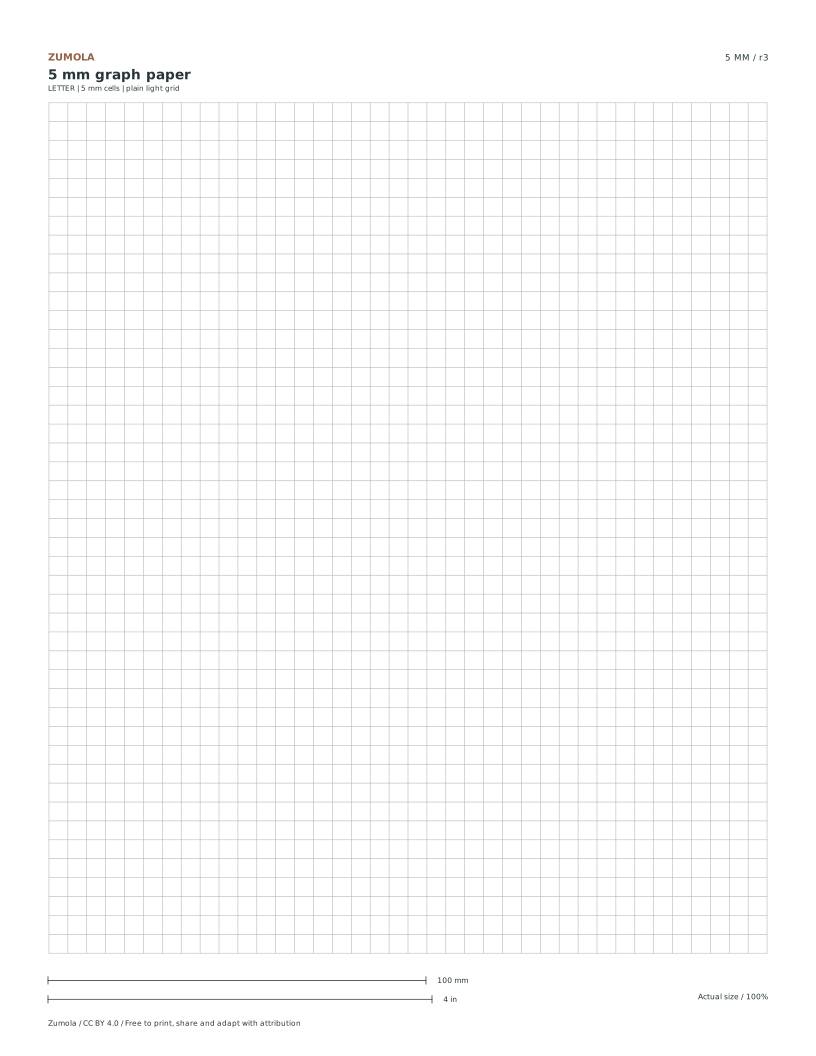
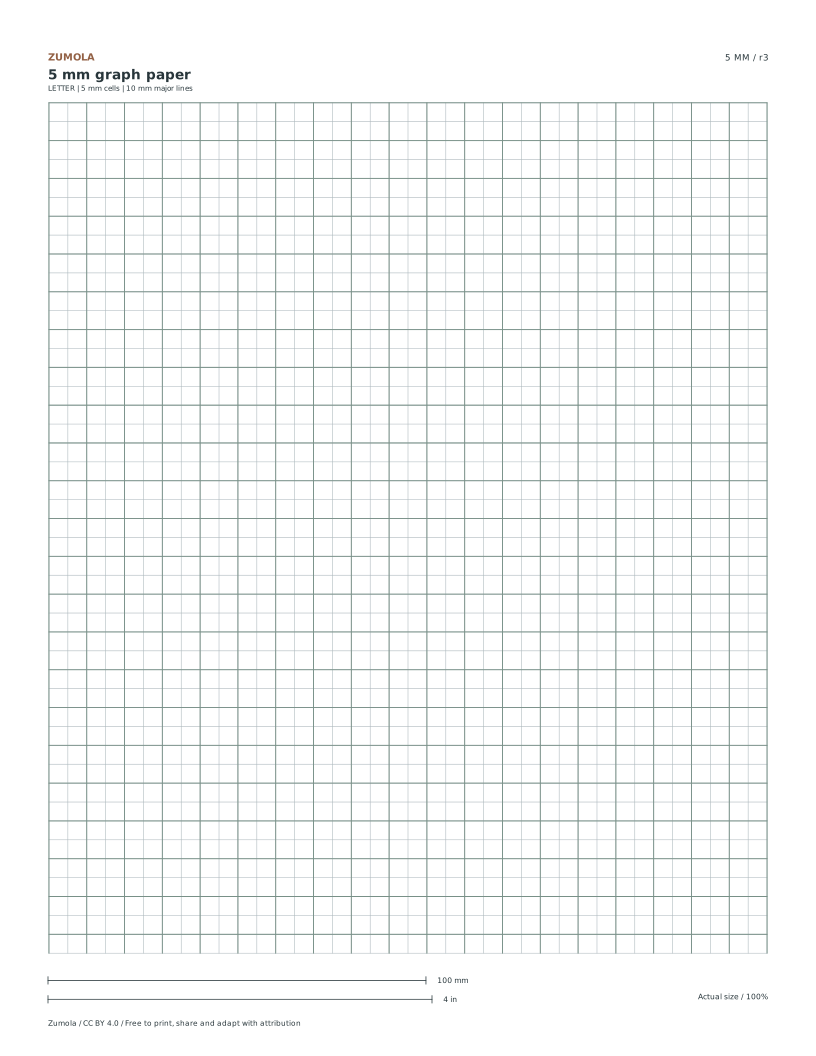
Print 5 mm squares, with an optional heavier line every 10 mm. Use the original route exercise to separate paper length, path distance and drawing scale.
Plain or 10 mm major lines. Letter & A4. Free answers.
A printable task with a way to check it
Print 5 mm squares, with an optional heavier line every 10 mm. Use the original route exercise to separate paper length, path distance and drawing scale.
Choose US Letter or A4, then download the PDF for printing or the SVG for editing. Keep the student worksheet separate from its answer or reference completion. All files, including the answers, are free without signup.
Choose your paper and download
Download paper size
Every worksheet and answer is free. No signup.
Free original resource
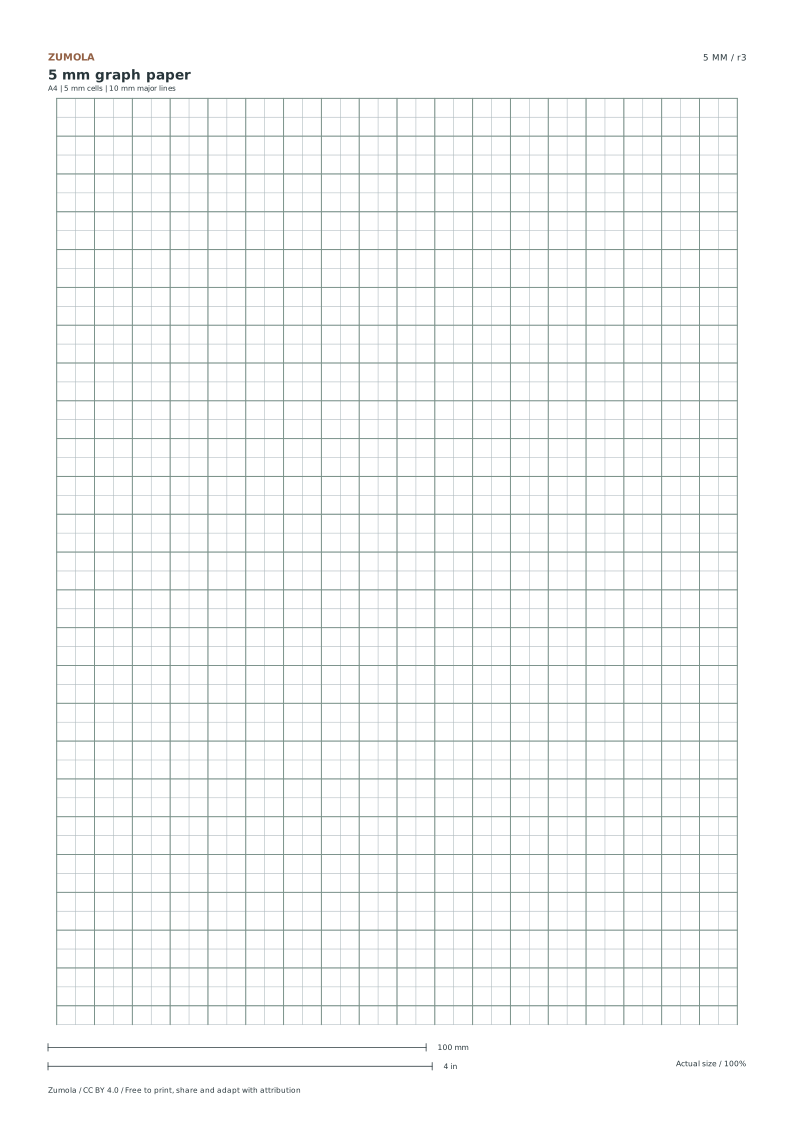
5 mm grid, plain
Original blank printable. Choose Letter or A4; print at actual size.
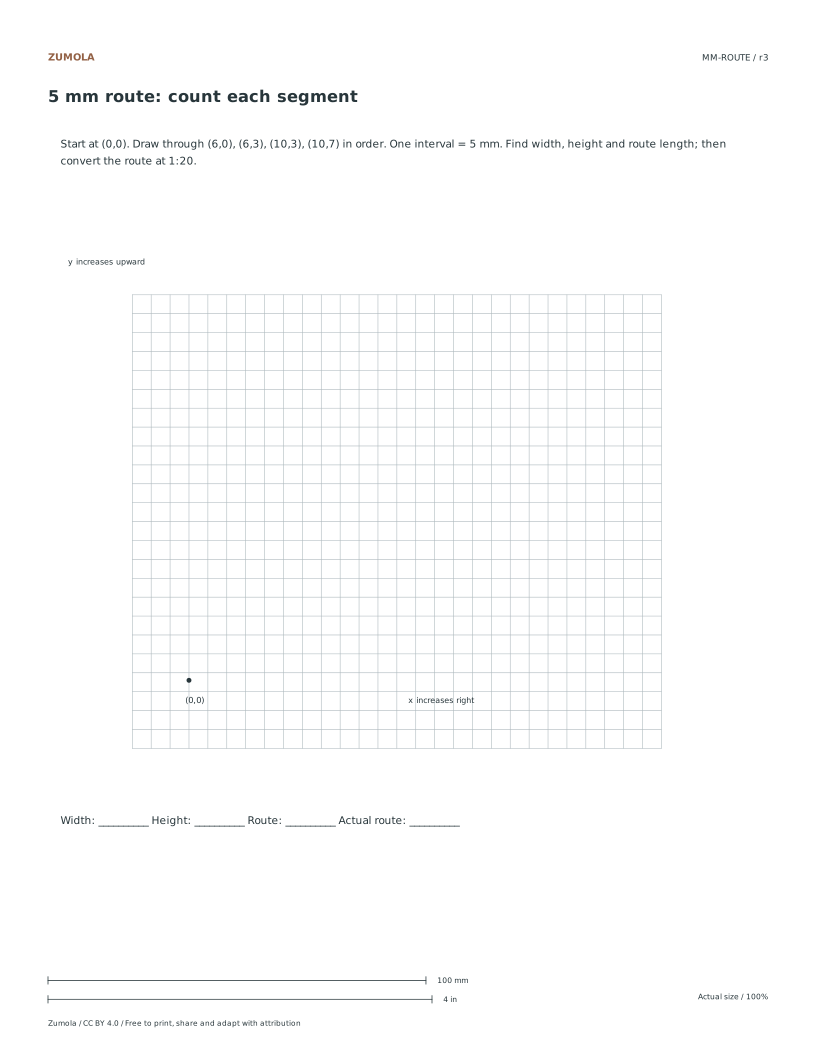
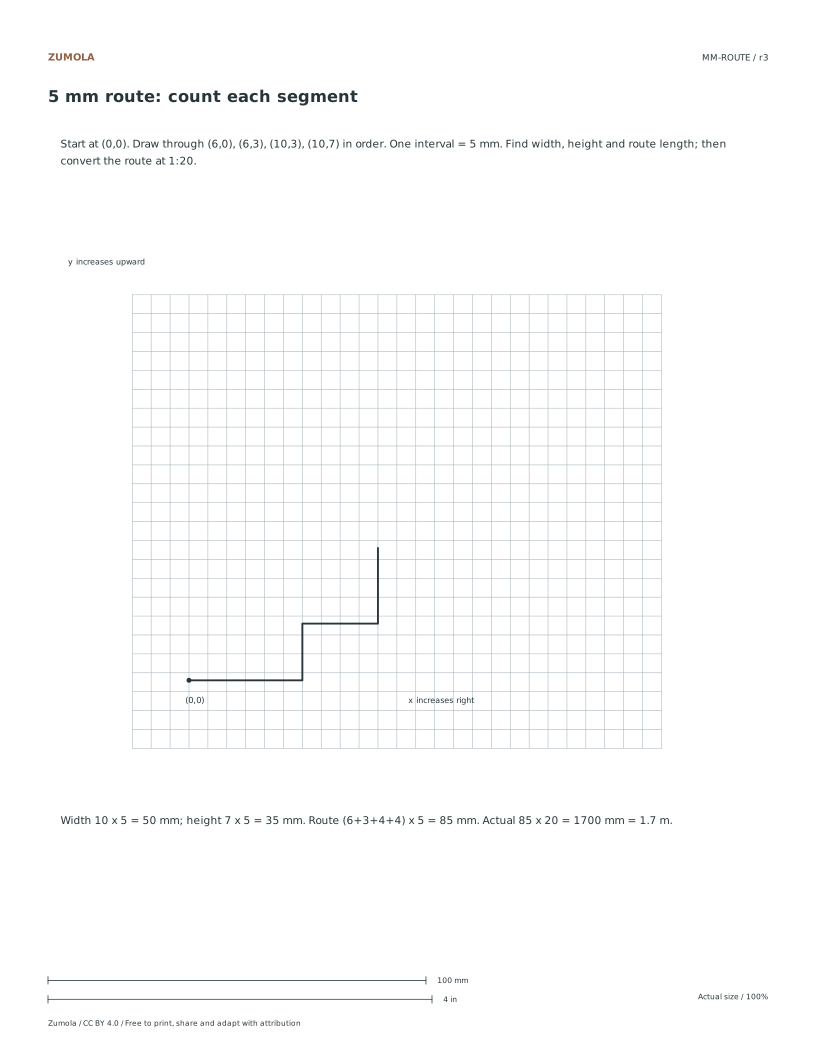
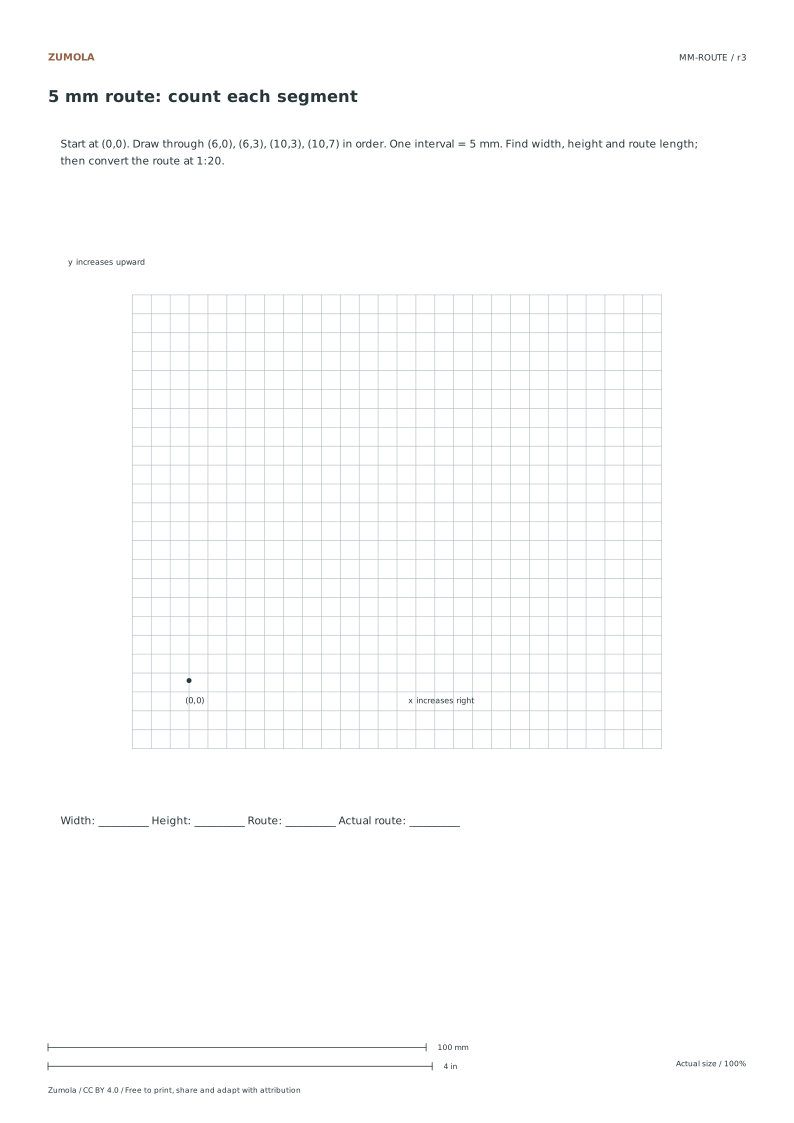
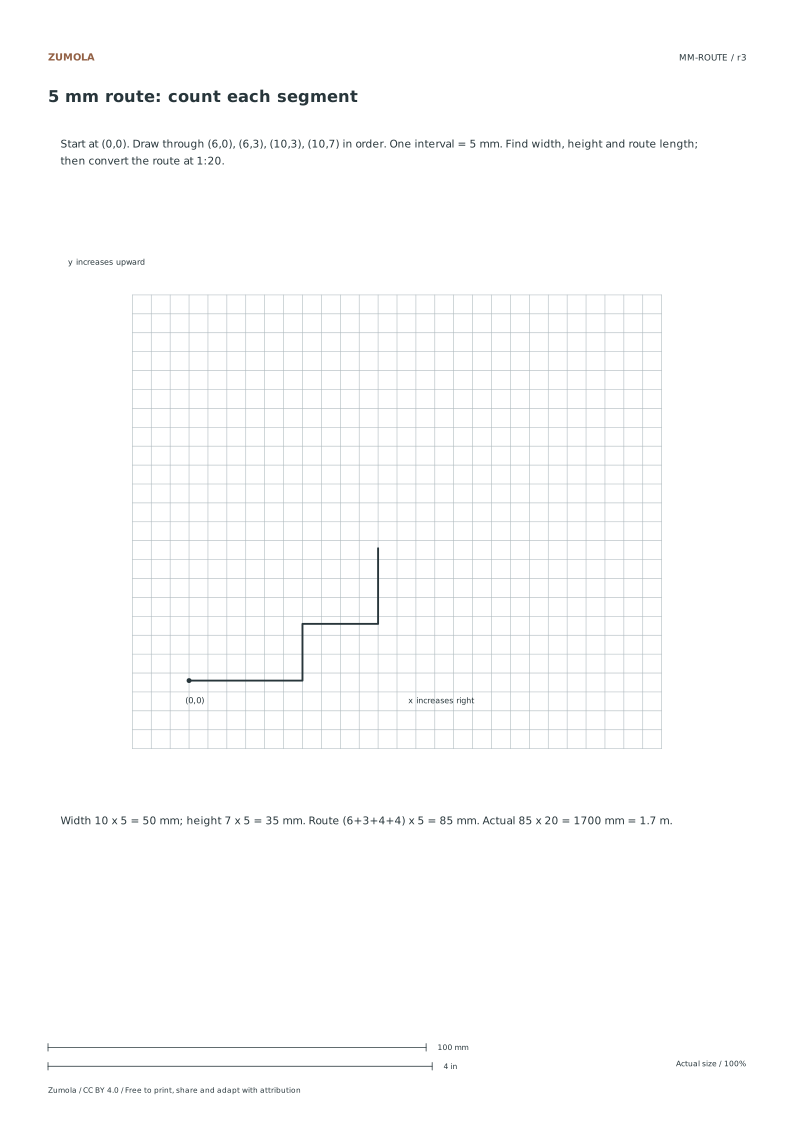
Plot (0,0) → (6,0) → (6,3) → (10,3) → (10,7), joining consecutive points. The coordinates count grid intervals, not millimeters. Its horizontal span is 10 × 5 = 50 mm; its height is 7 × 5 = 35 mm. The route has four segments of 30, 15, 20 and 20 mm, totaling 85 mm.
At the stated 1:20 drawing scale, its represented route is 85 × 20 = 1700 mm = 1.7 m. The straight start-to-finish displacement would instead be √(50² + 35²), about 61.03 mm on paper. Do not substitute that diagonal for the distance traveled along the route.
Free original resourceMM-ROUTE
5 mm route
Original practice with a separate reference answer. Choose Letter or A4.
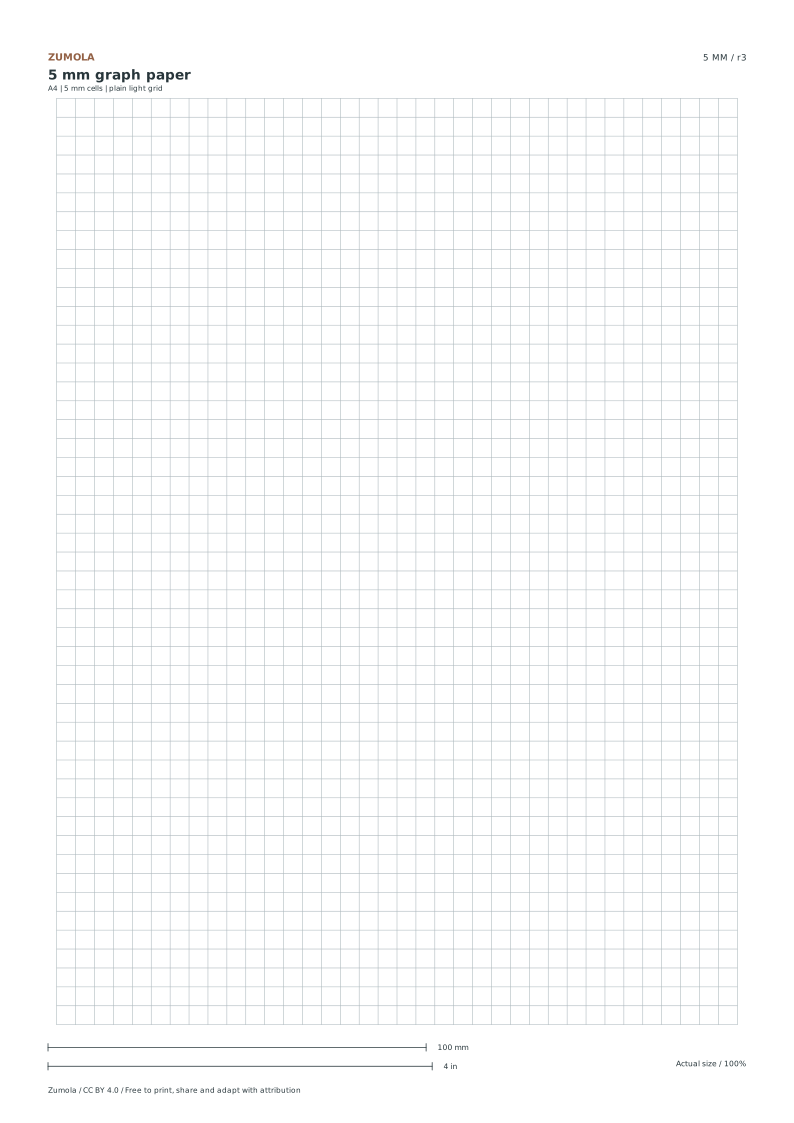
Choose plain 5 mm squares or the same grid with a heavier line every 10 mm. The files preserve a minimum 12.7 mm side inset and a 25.4 mm top and bottom region, then center complete cells in the available space. Actual ink margins therefore vary slightly with paper size. Letter contains 38 columns by 45 rows; A4 contains 36 by 49. Select the matching paper file and print at Actual size / 100%. A 5 mm interval is smaller than a quarter-inch interval of 6.35 mm; the two grids are not interchangeable for measured drawings.
Tracing the Polyline Activity Path
Follow the specified polyline coordinates starting at zero zero, moving to six zero, then six three, ten three, and finally ten seven. This sequence creates a horizontal span of 50mm and a height of 35mm. The total path length measures 85mm on the printed sheet. Note that this route length differs from the straight endpoint displacement. Use the grid lines to guide your pencil or marker along each segment precisely. This activity demonstrates path distance versus direct displacement using the fixed 5mm grid structure for consistent measurement and visual tracking of the geometric progression.
Applying Scale and Calibration Checks
Measure the 100 mm and 4 inch calibration bars with a physical ruler after printing. Check a perpendicular grid span too: ten 5 mm intervals should measure 50 mm along either axis. These checks can reveal scaling or distortion, although they do not certify every part of a printer’s output. In the activity, a stated 1:20 scale multiplies the 85 mm paper route by 20. Its represented length is 1700 mm, or 1.7 m. Keep the printed interval, drawing scale and represented length as three separate quantities.
Small checks that catch common errors
Watch for
Check instead
Assuming the grid uses quarter-inch intervals instead of the specified 5mm spacing.
Verify the grid uses exactly 5mm intervals, distinct from the 6.35mm quarter-inch standard, to ensure correct scaling.
Confusing the total path length with the straight-line distance between start and end points.
Remember the total path is 85mm, which differs from the straight endpoint displacement calculated by the coordinates.
Ignoring the calibration bars when checking print accuracy for the 1:20 scale activity.
Measure the 100mm and 4-inch bars first to confirm the print scale before tracing the 85mm route.
Print a test sheet before a full pack
Use the PDF that matches the paper loaded in your printer. Choose Actual size / 100% and turn off Fit, Shrink and browser headers. The SVG keeps millimeter dimensions, but an editor or browser can rescale it; the PDF is the simpler print path. Measure any calibration bars with a separate physical ruler when the exercise depends on printed size. A screen preview does not establish physical scale.
Packs combine the same individual pages; they are not extra different exercises. Print a student copy first and keep references nearby for review. Letter and A4 preserve the stated grid spacing or model definition while their surrounding white space can differ. Color is optional: the references also use line position, text or relative lightness to explain the result.
Useful answers
What are the exact grid dimensions for Letter and A4 sheets?
Letter sheets contain 38 columns and 45 rows, while A4 sheets provide 36 columns and 49 rows, all using 5mm intervals.
How long is the actual route at 1:20 scale?
The printed path is 85mm, which converts to 1700mm or 1.7 meters when scaled at 1:20 for the activity.
What margins surround the centered cell region?
Complete cells are centered inside a region reserved at least 12.7 mm from the sides and 25.4 mm from the top and bottom. Extra leftover space makes the final grid margins slightly larger; printer unprintable areas still vary.
Are the answers and editable files free too?
Yes. Every linked PDF, SVG, worksheet and answer is free without signup. The original Zumola resources use CC BY 4.0: credit Zumola, link the license and indicate changes. Analytics consent is not required to download or use them.
Further reading: NIST: inch and metric units. The downloadable diagrams and exercises are original Zumola work.
Your analytics choice
Optional Google Analytics helps us understand which free resources are useful. It is off until you allow it. Drawing tools and downloads work with either choice. Privacy details