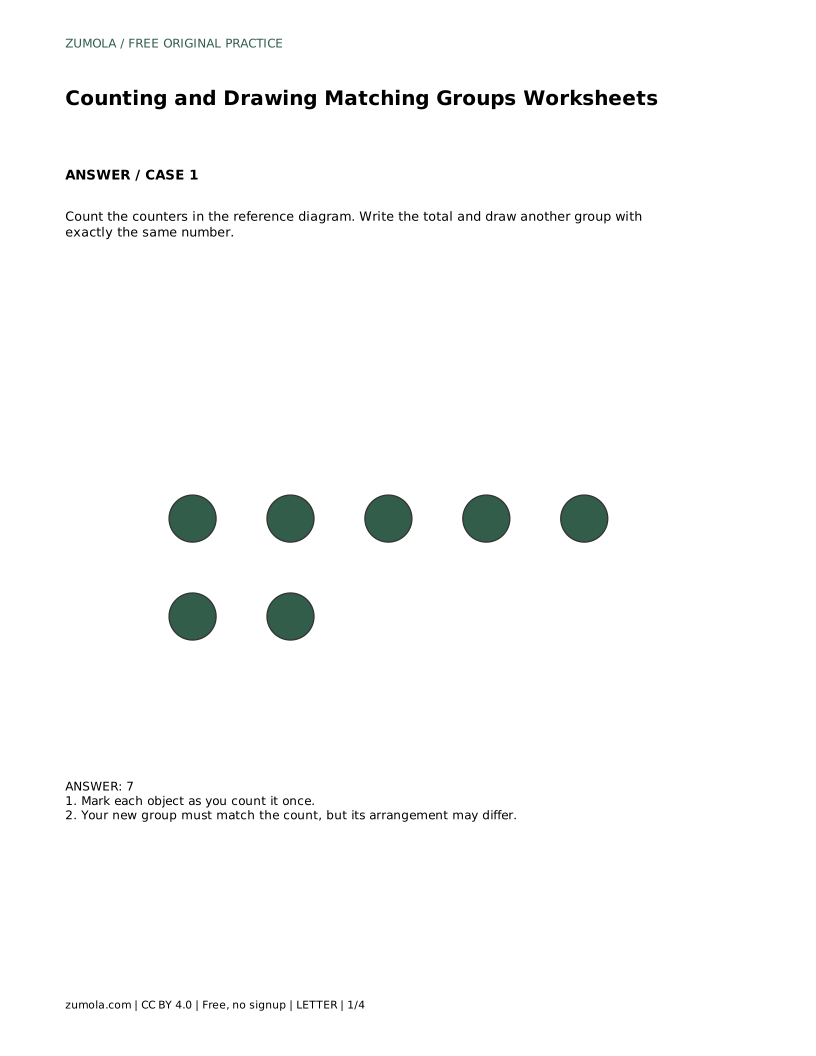
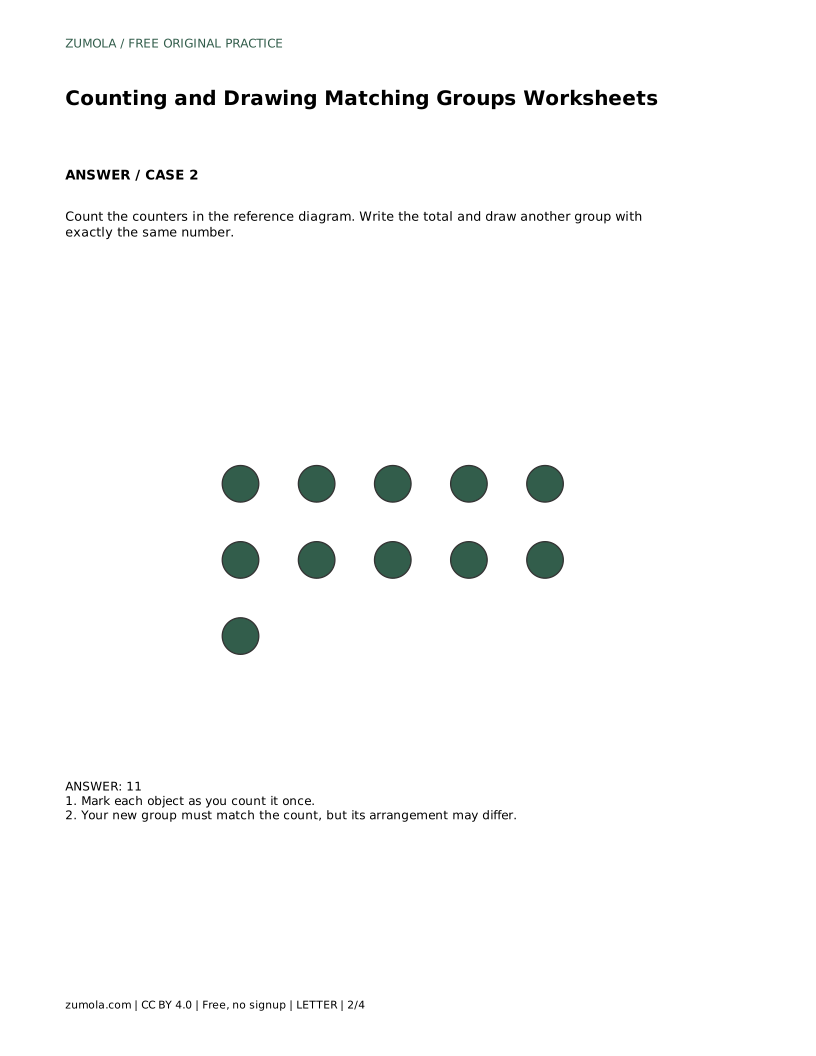
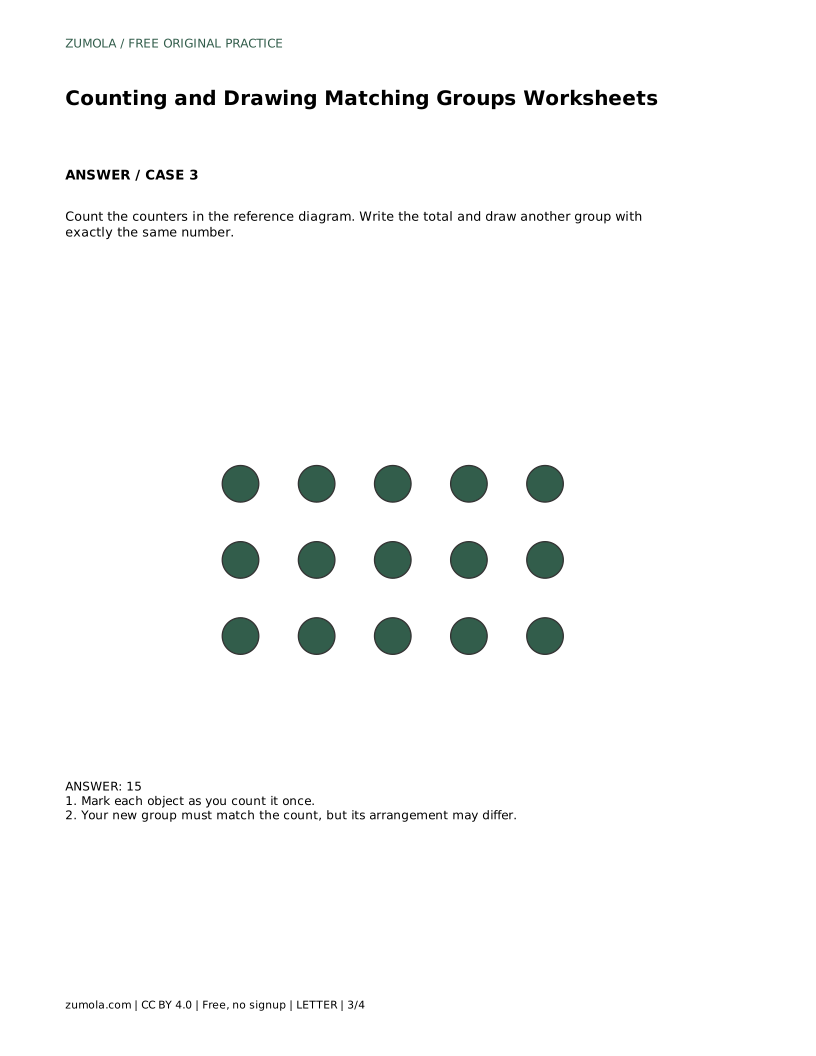
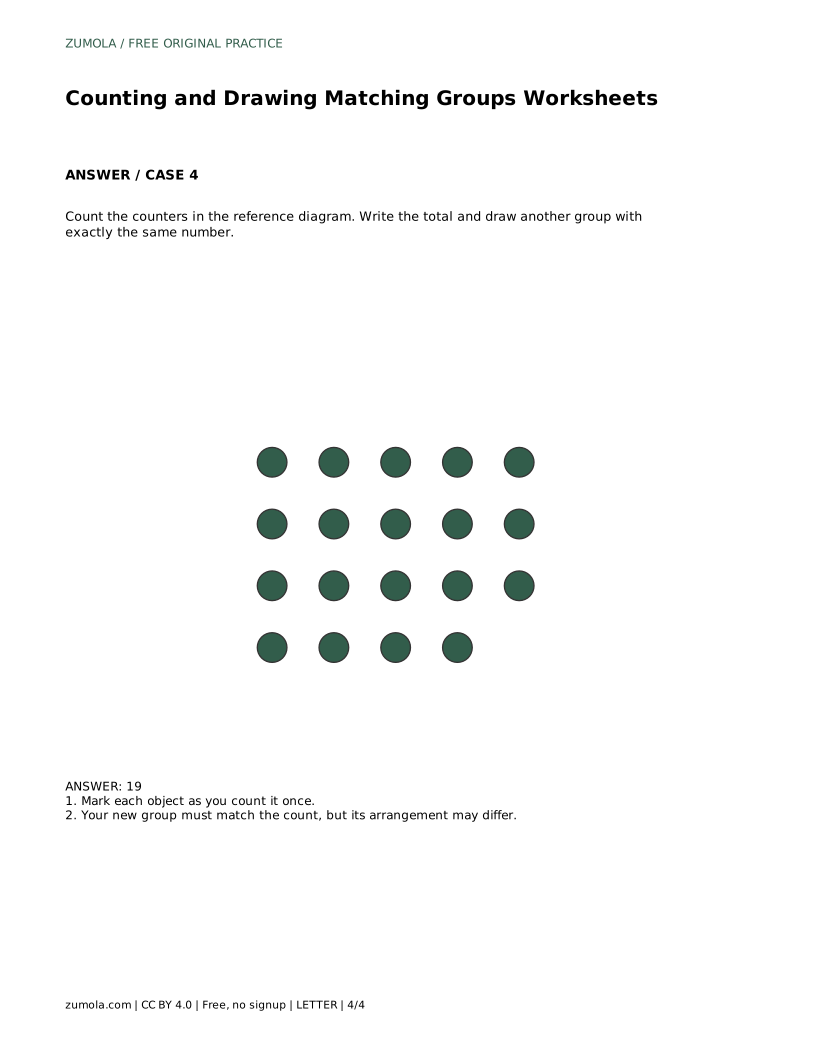
Reference diagrams
LETTER · Download PDF
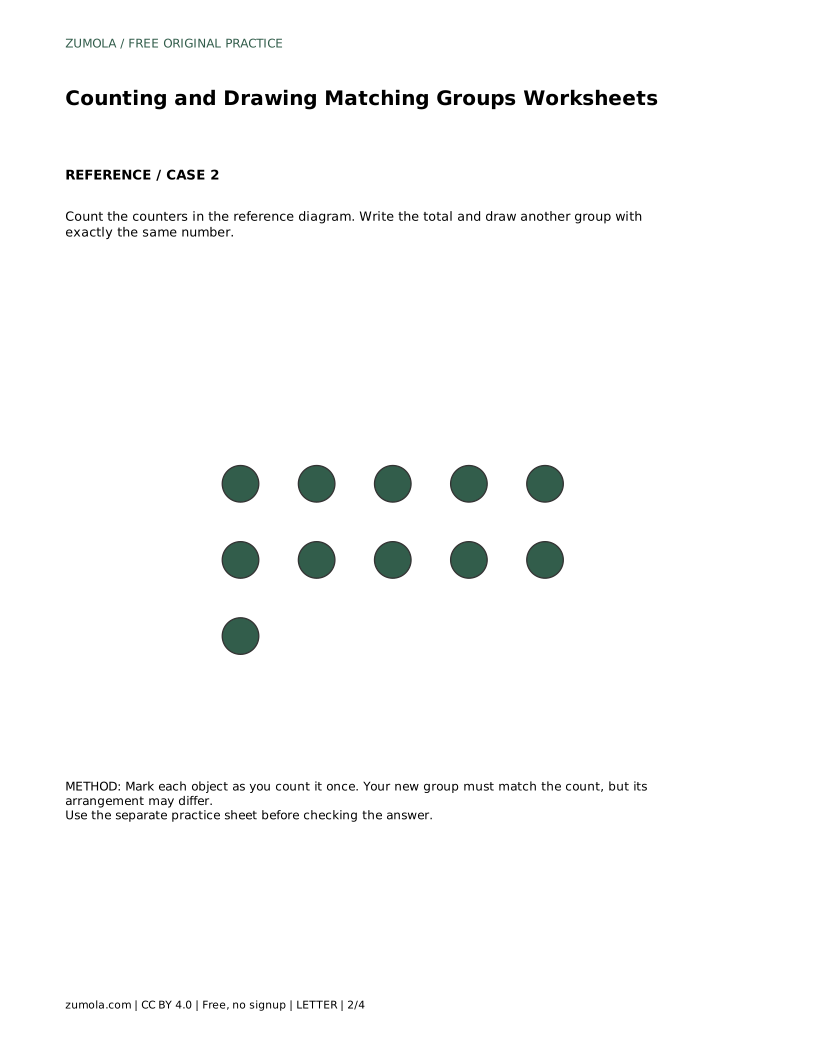
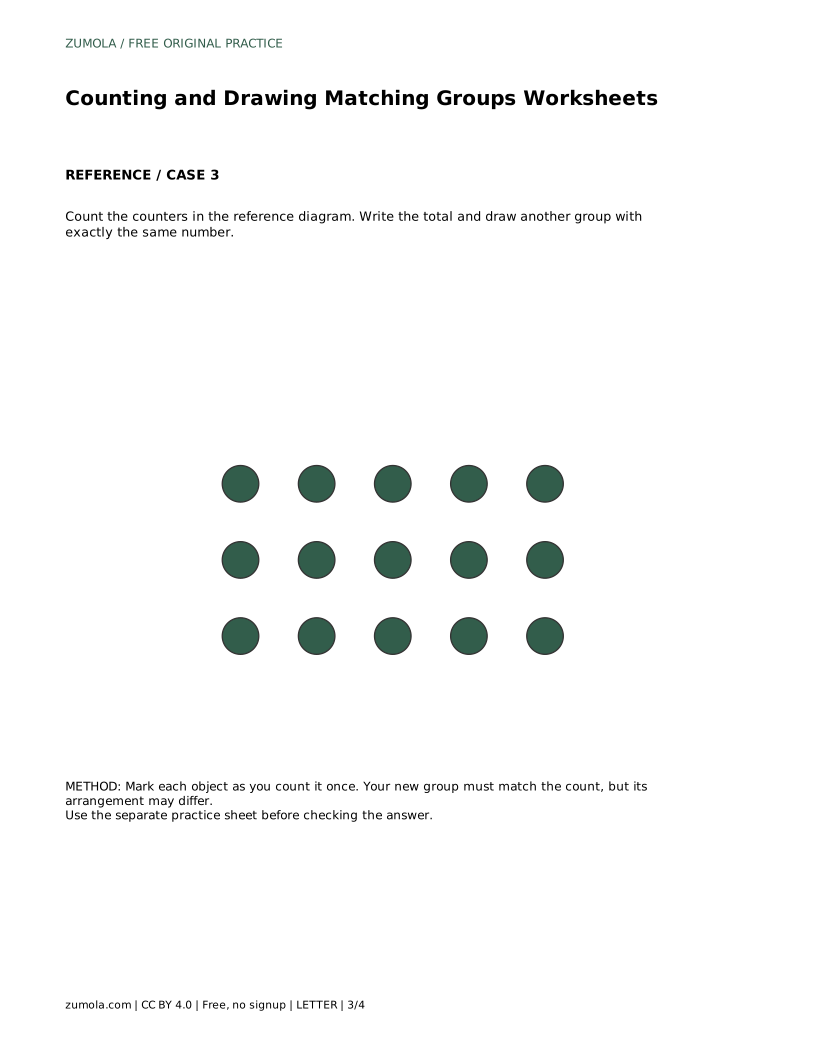
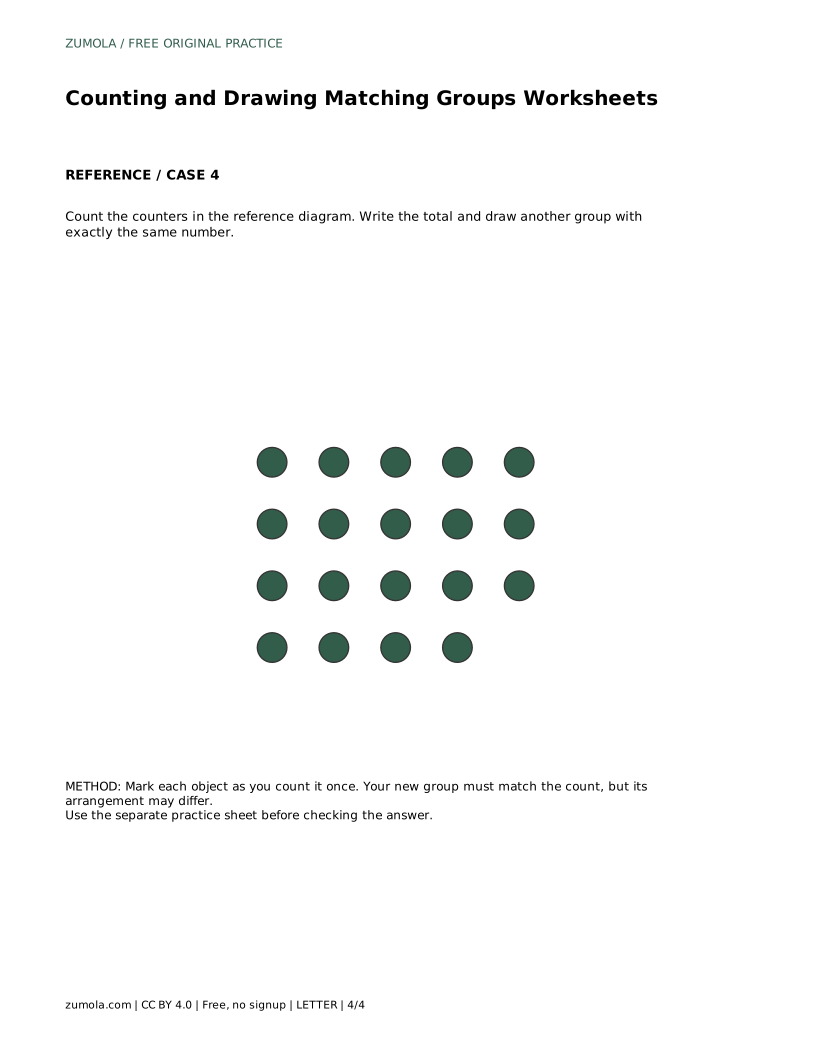
A4 · Download PDF
Free original resources
Teach children to count a reference group accurately, record the total, and draw a new group with the same number in any arrangement.
Four original cases, with reference diagrams, practice sheets and worked answers. Everything is free; no signup required.
LETTER · Download PDF
A4 · Download PDF
LETTER · Download PDF
A4 · Download PDF
LETTER · Download PDF
A4 · Download PDF
Use A4 or US Letter to match your printer. Use the stated values and conditions to solve each exercise; diagrams are not physical measuring rulers.
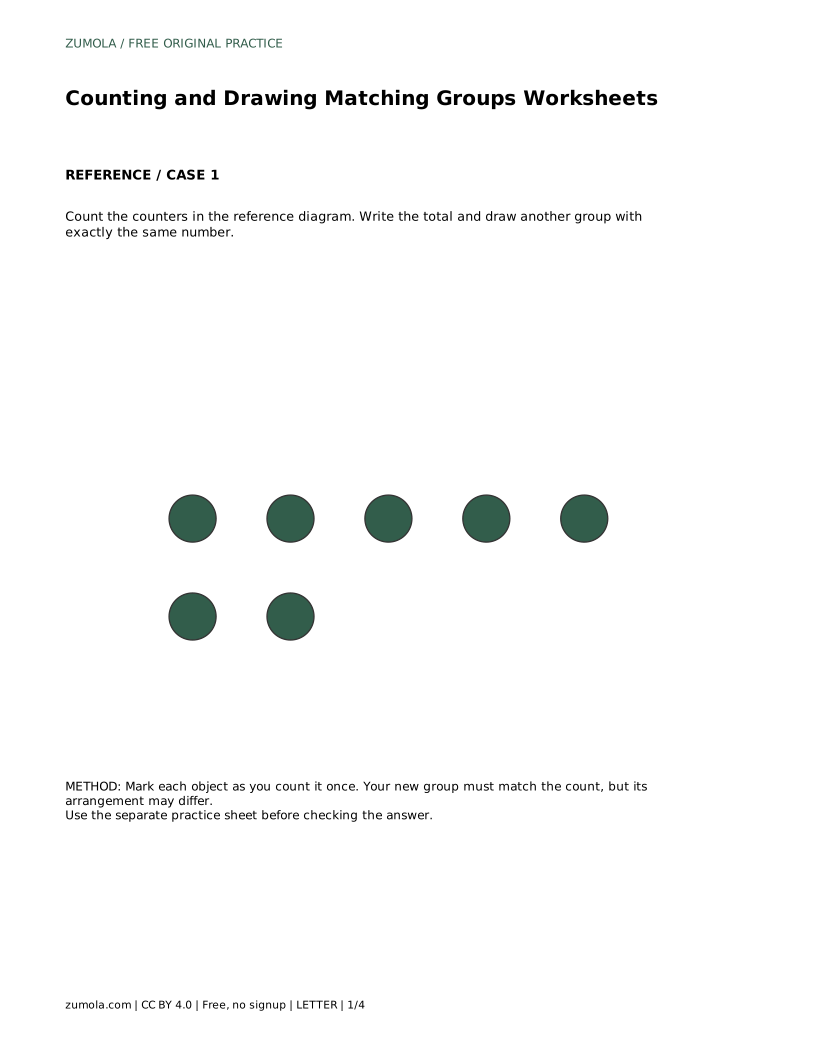
Counting and drawing matching groups combines two skills: accurate one-to-one counting and the understanding that a quantity stays the same even when objects are arranged differently. On these worksheets, a learner counts the counters in a reference diagram, writes the total, then draws a separate group containing exactly that many counters. The new group does not need to copy the original layout. This guide explains how to model the task, how to check the drawing, and how to correct the most common counting errors.
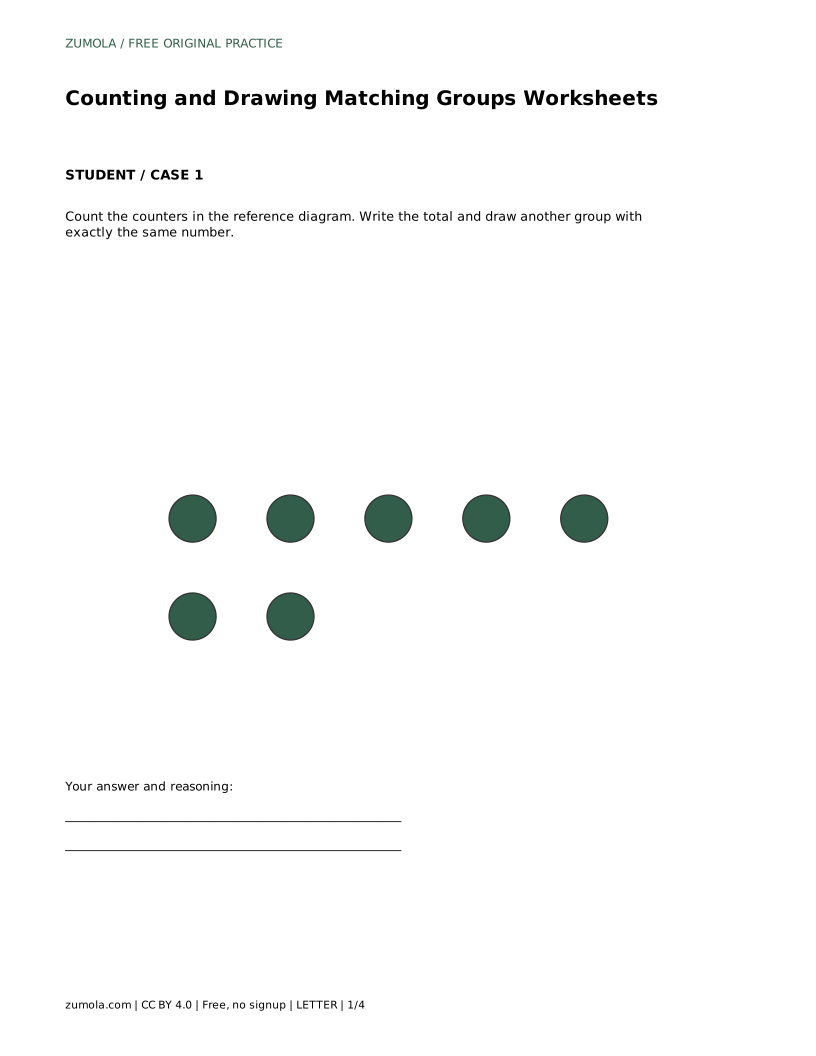
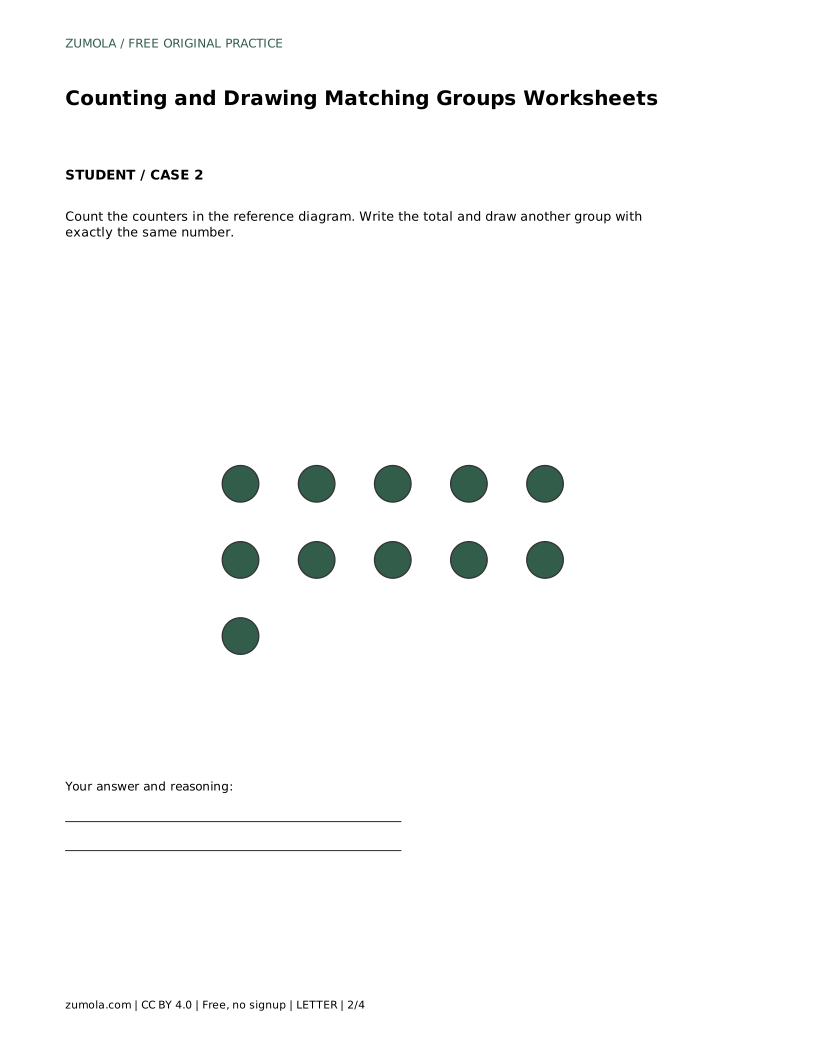
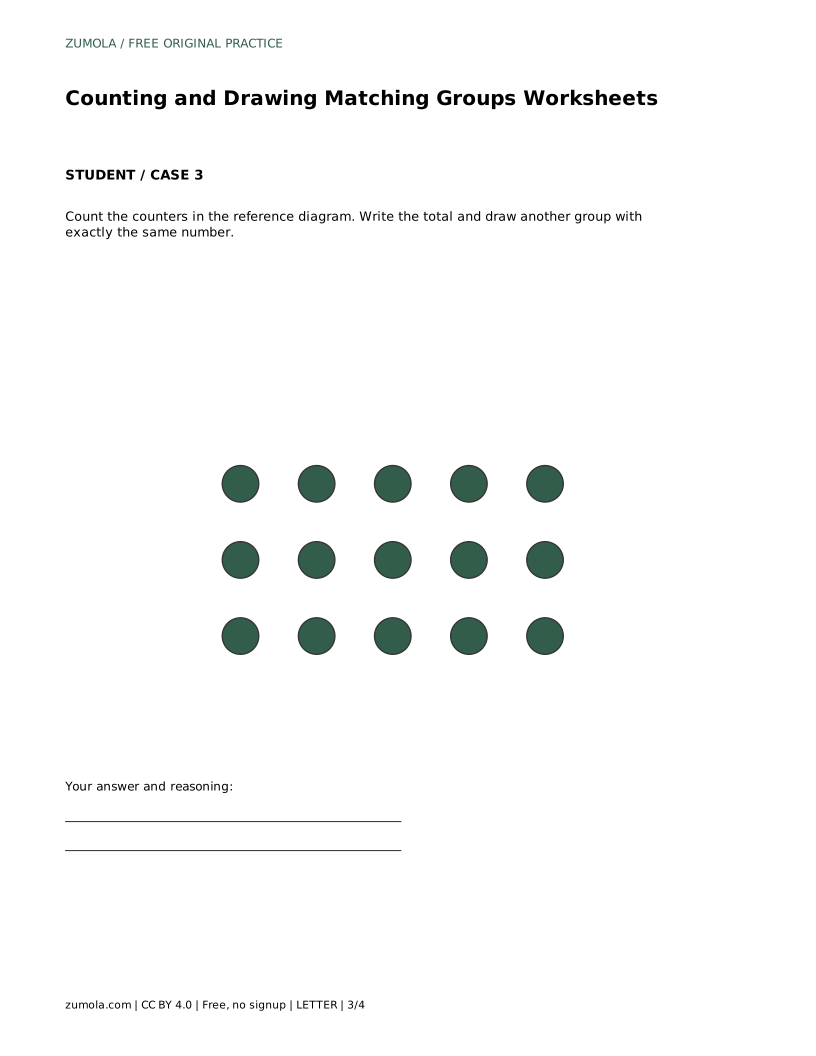
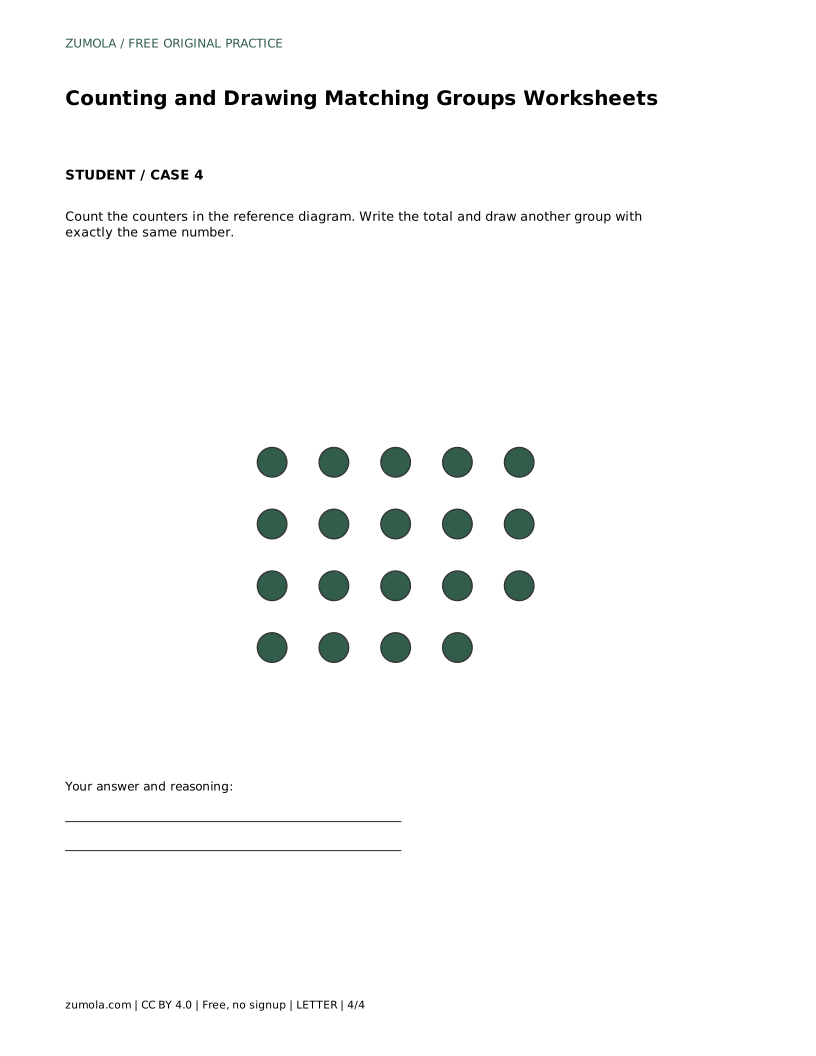
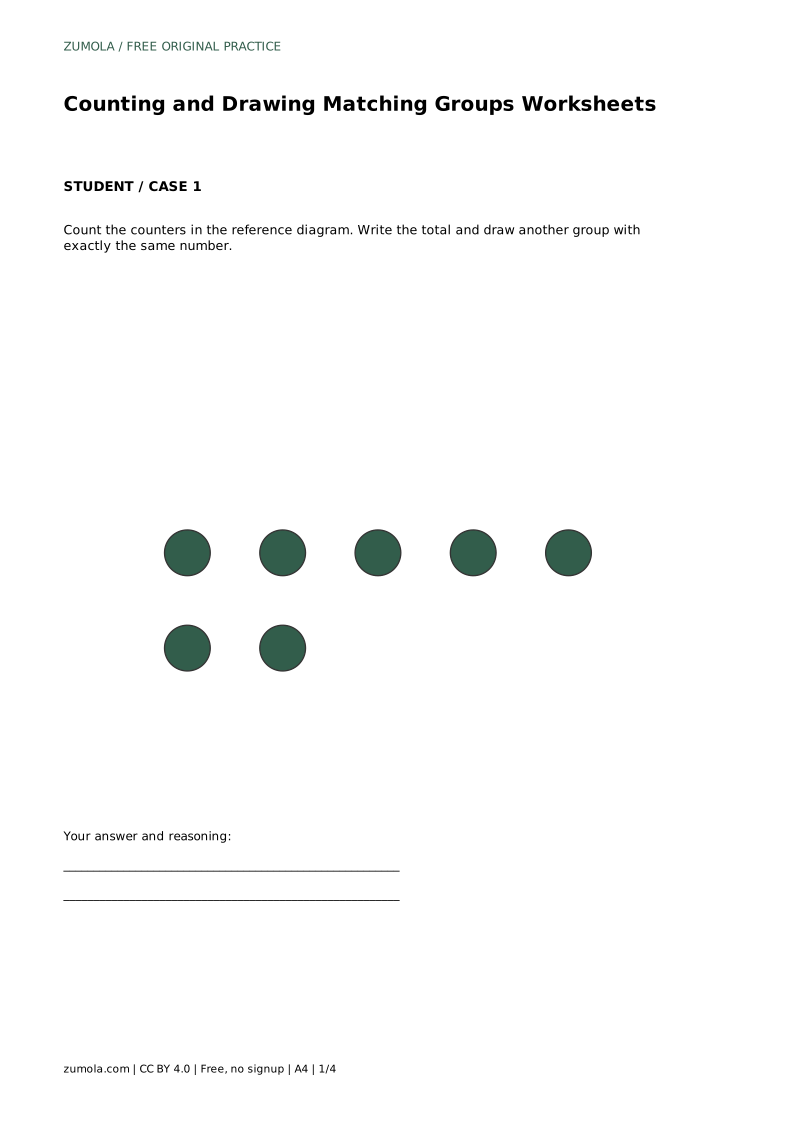
Each worksheet item shows a reference diagram of counters. The learner counts those counters once, marks each object as it is counted, and writes the total in the answer space. Then the learner draws a new group with exactly the same number of counters. The arrangement of the new group is free: a row, a cluster, pairs, or a scattered set are all acceptable provided the count matches.
The key idea is conservation of number. Moving counters apart or grouping them differently does not change how many there are. A drawing with the correct count but a different layout is a correct answer. A drawing that copies the layout but contains the wrong number is not.
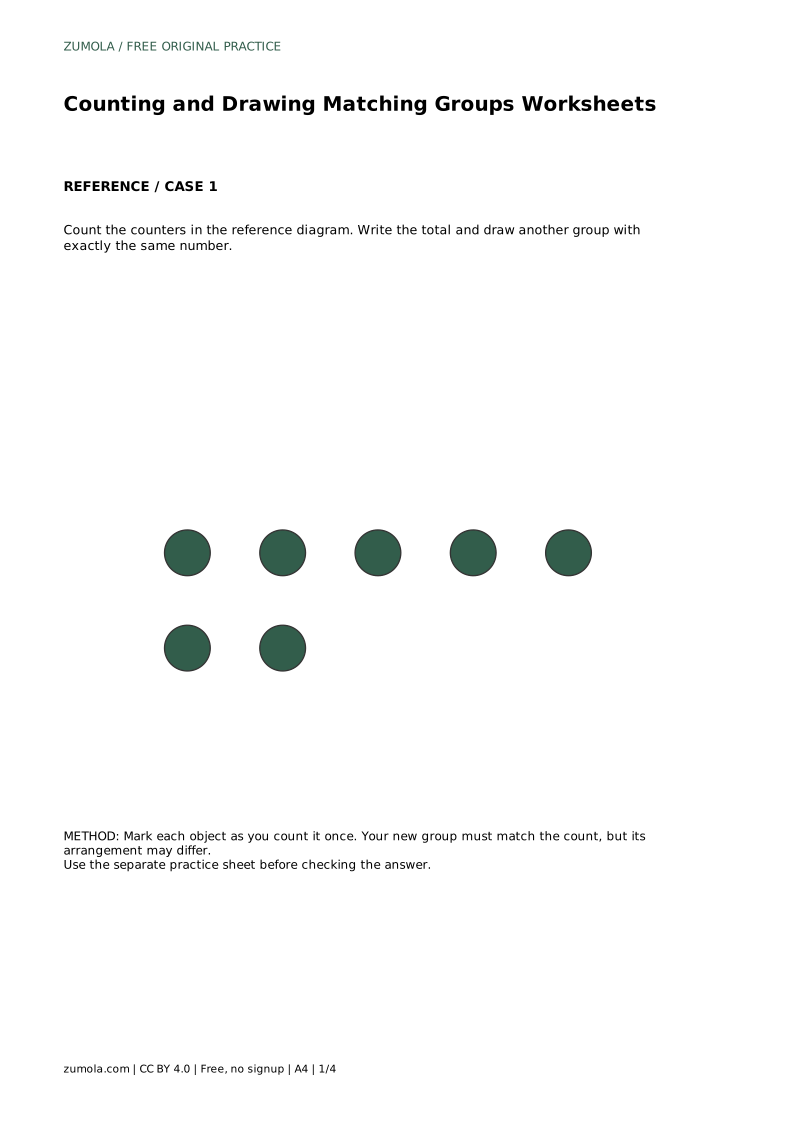
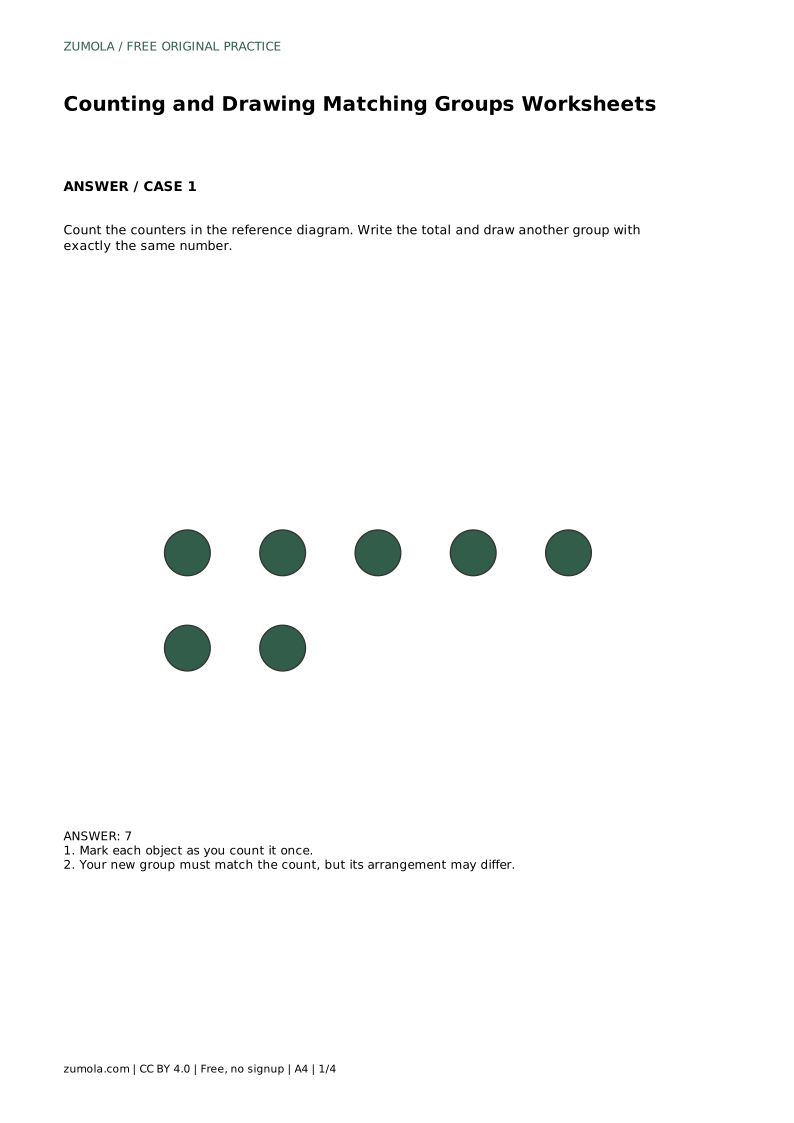
Demonstrate the routine slowly before learners work independently. Use a reference diagram with seven counters. Count them one at a time, touching or marking each: one, two, three, four, five, six, seven. Write 7. Then draw a new group of seven counters in a different arrangement, such as two rows of three plus one. Recount the new group aloud to show that the total is still seven.
Keep the reference count and the drawn count separate. Learners should not adjust the written total to match a rushed drawing. If the drawing has six counters, the correction is to add one counter, not to change the number.
A completed item has three parts to verify: the written total, the count of the drawn group, and the match between them. Recount the reference diagram using the marking method. Recount the drawing from a different starting point to catch skipped or double-counted objects. Confirm the written number equals both counts.
Arrangement is not a criterion. A drawing of seven counters in a loose cluster is as valid as seven in a neat row. What matters is that every drawn counter is distinct and countable, with no overlapping marks that make the total ambiguous.
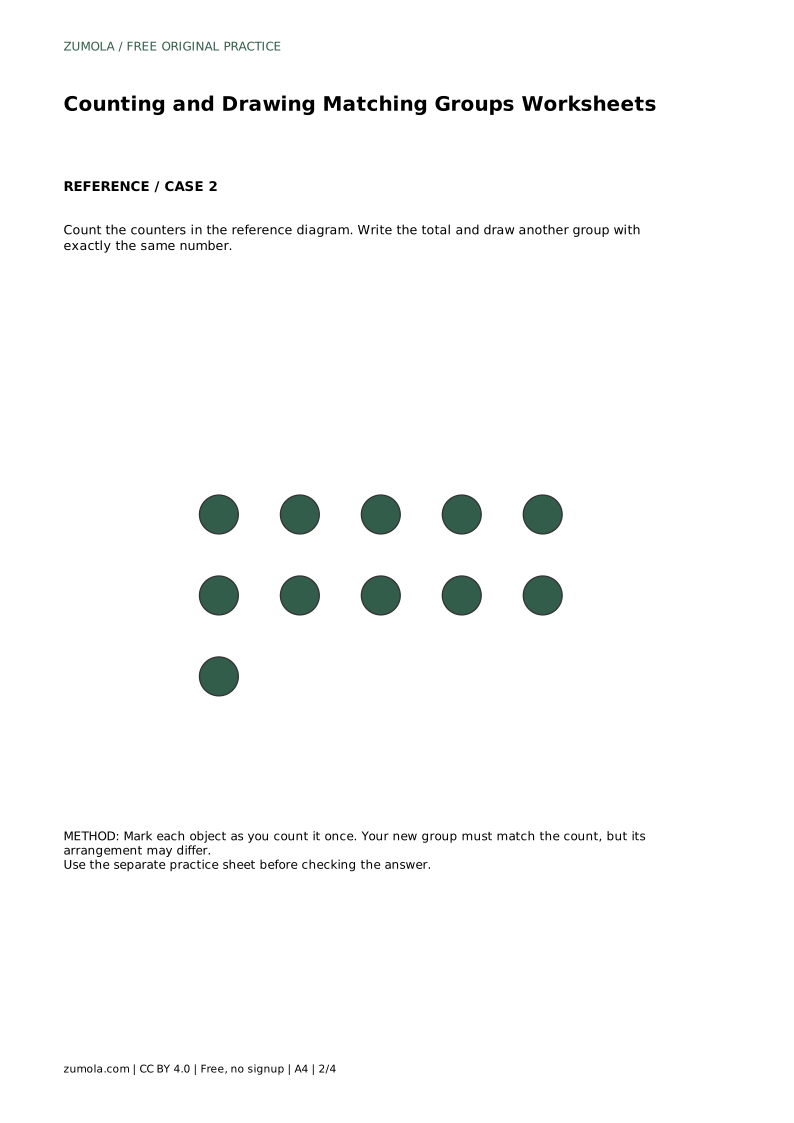
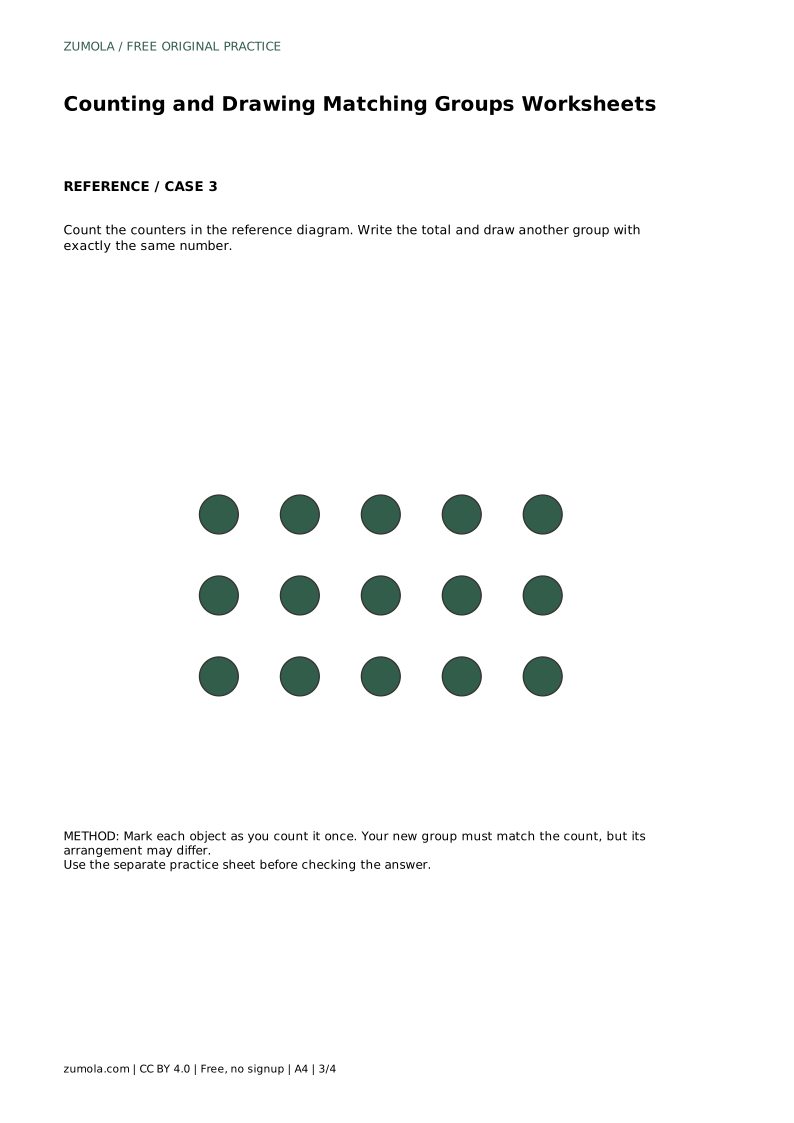
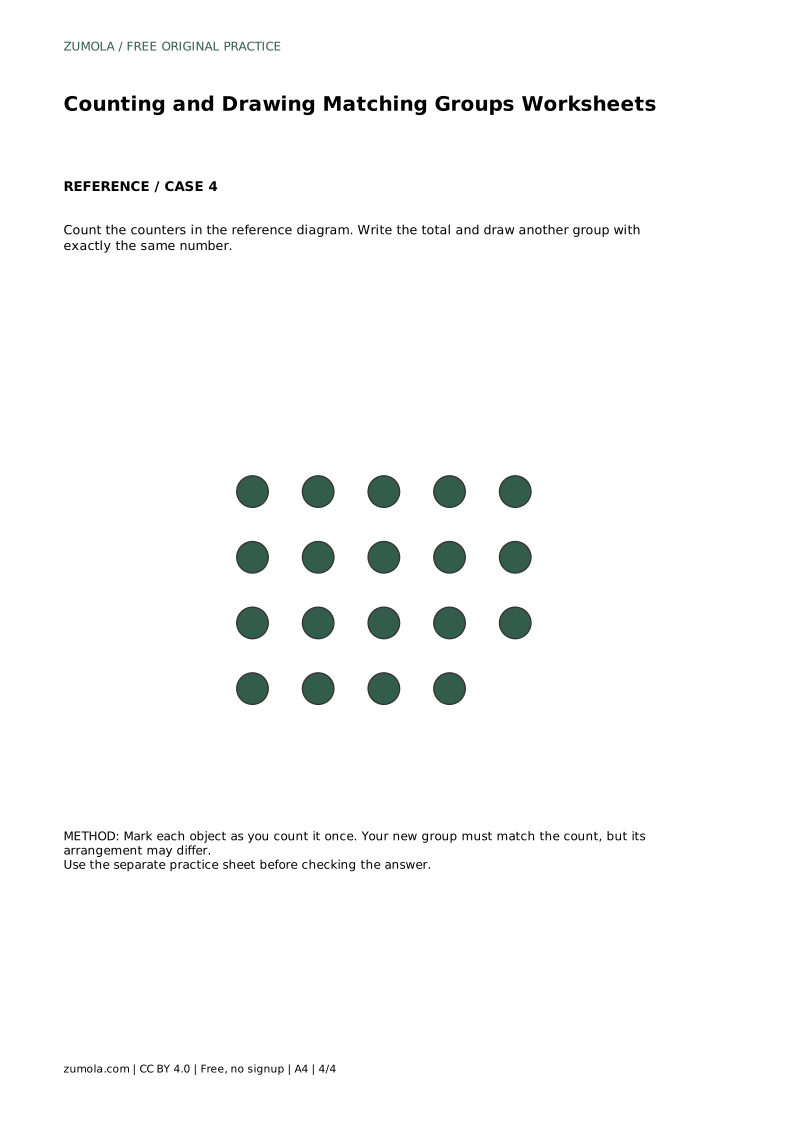
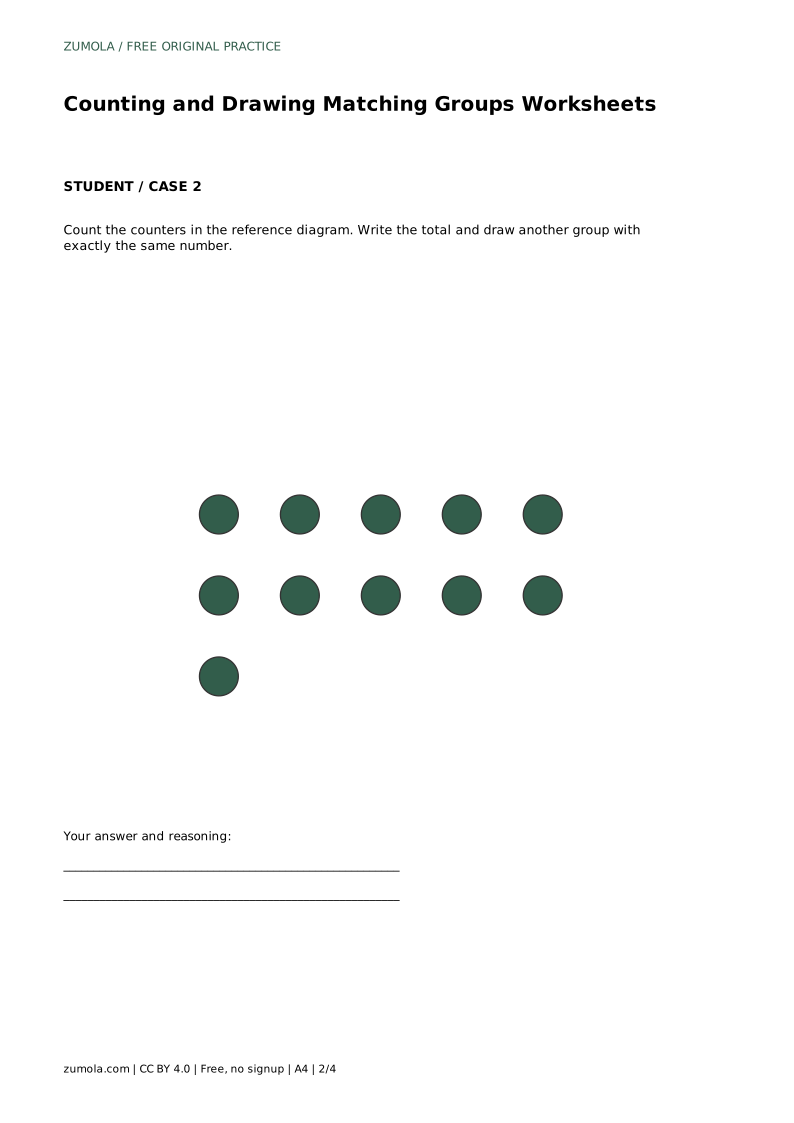
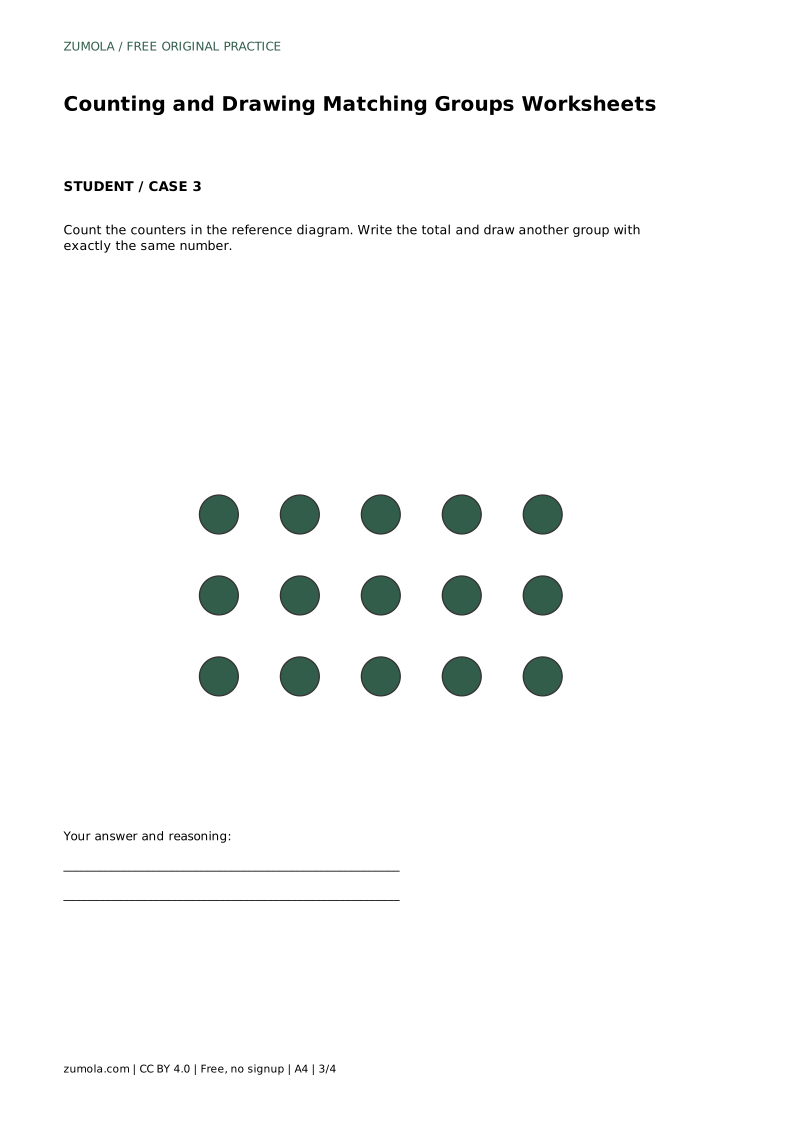
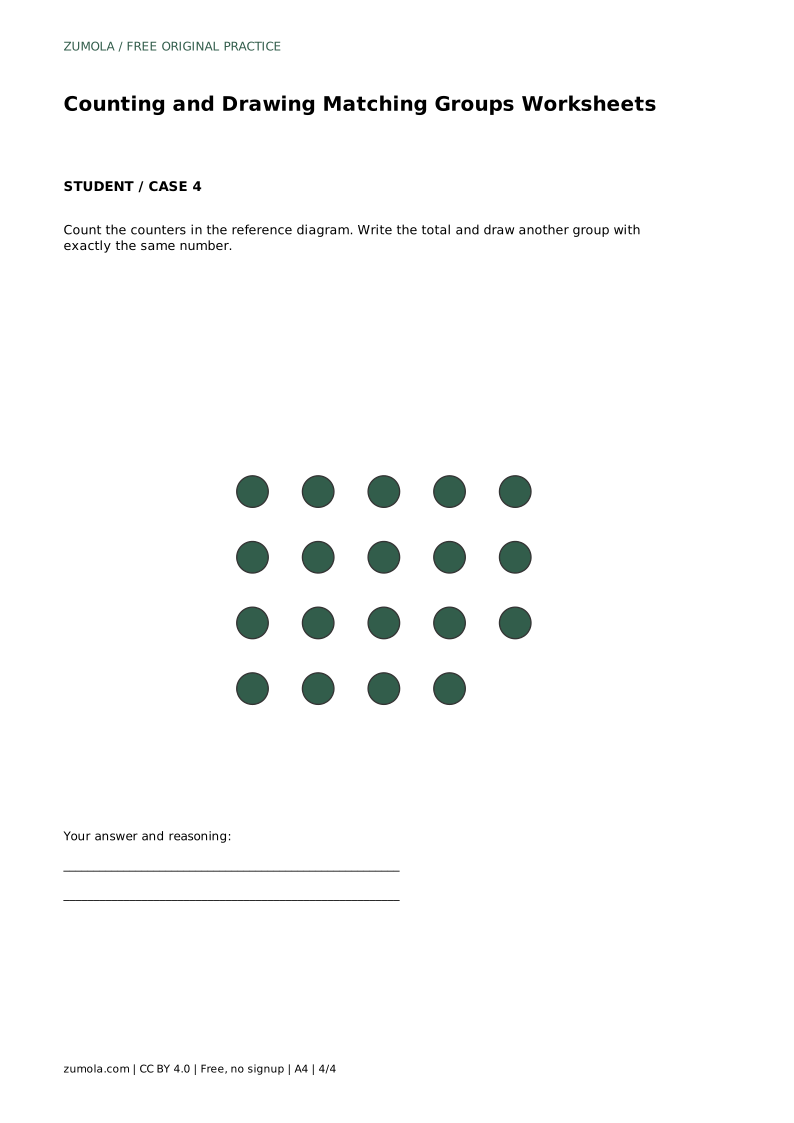
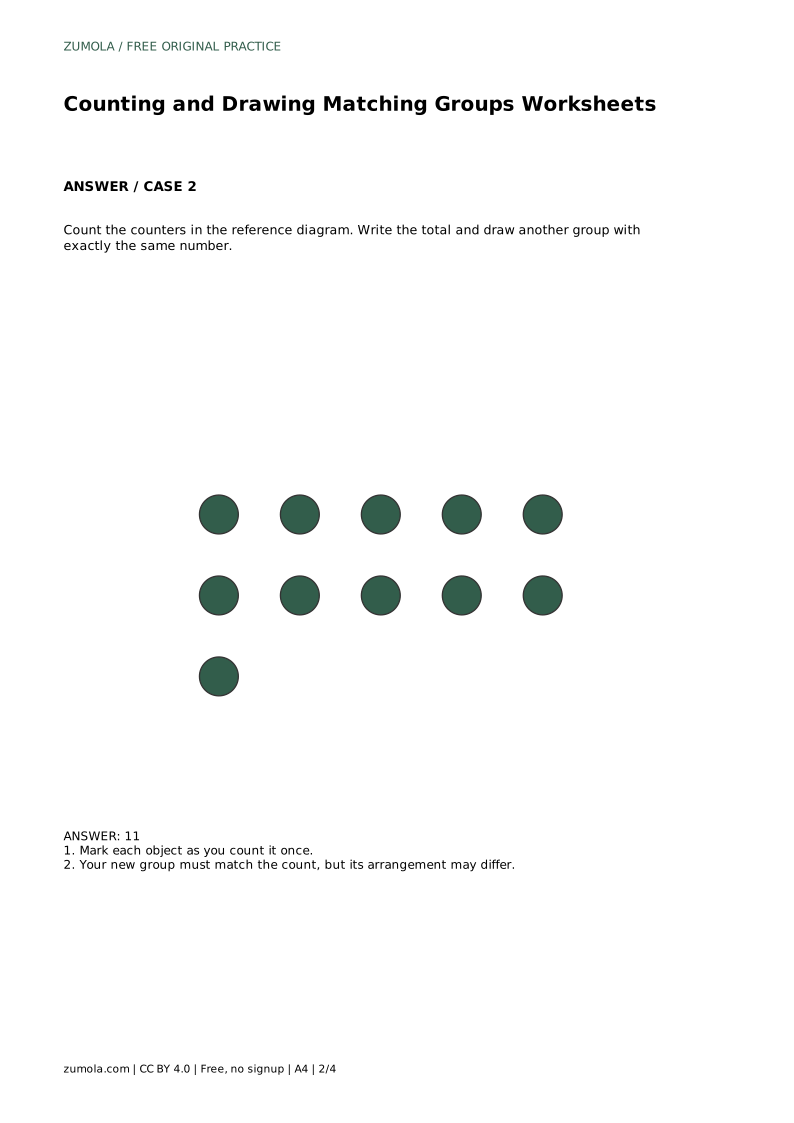
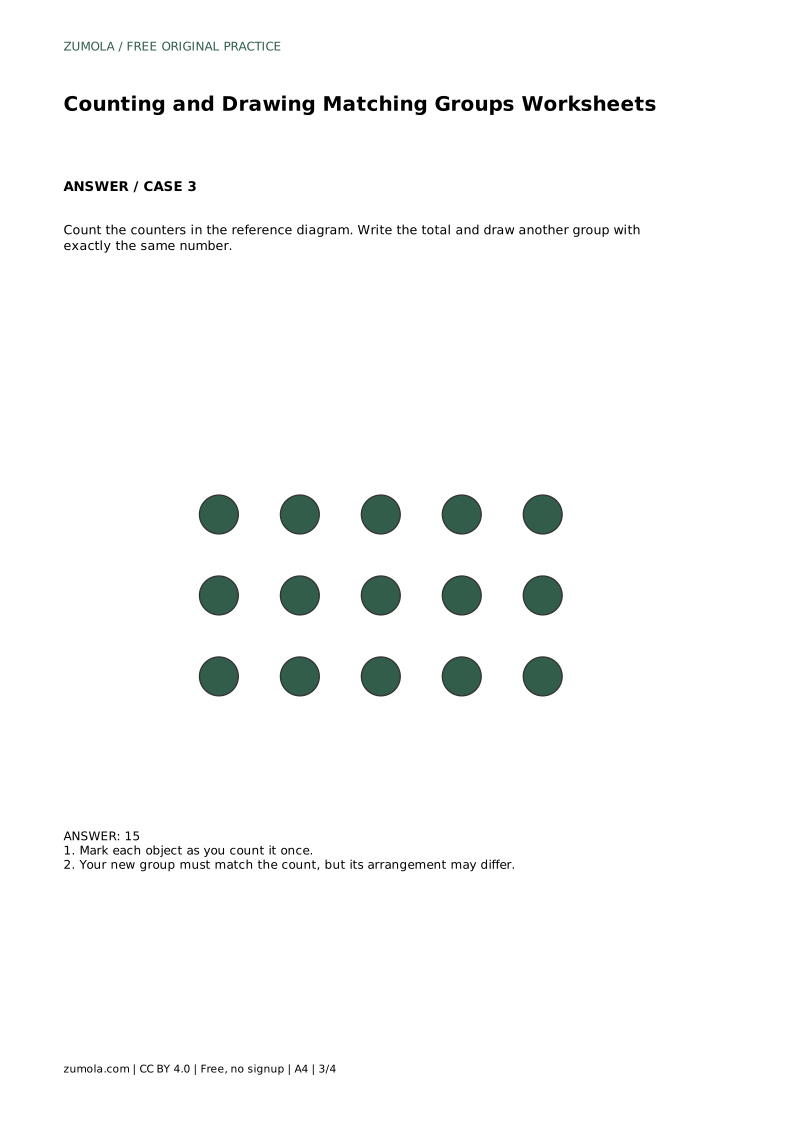
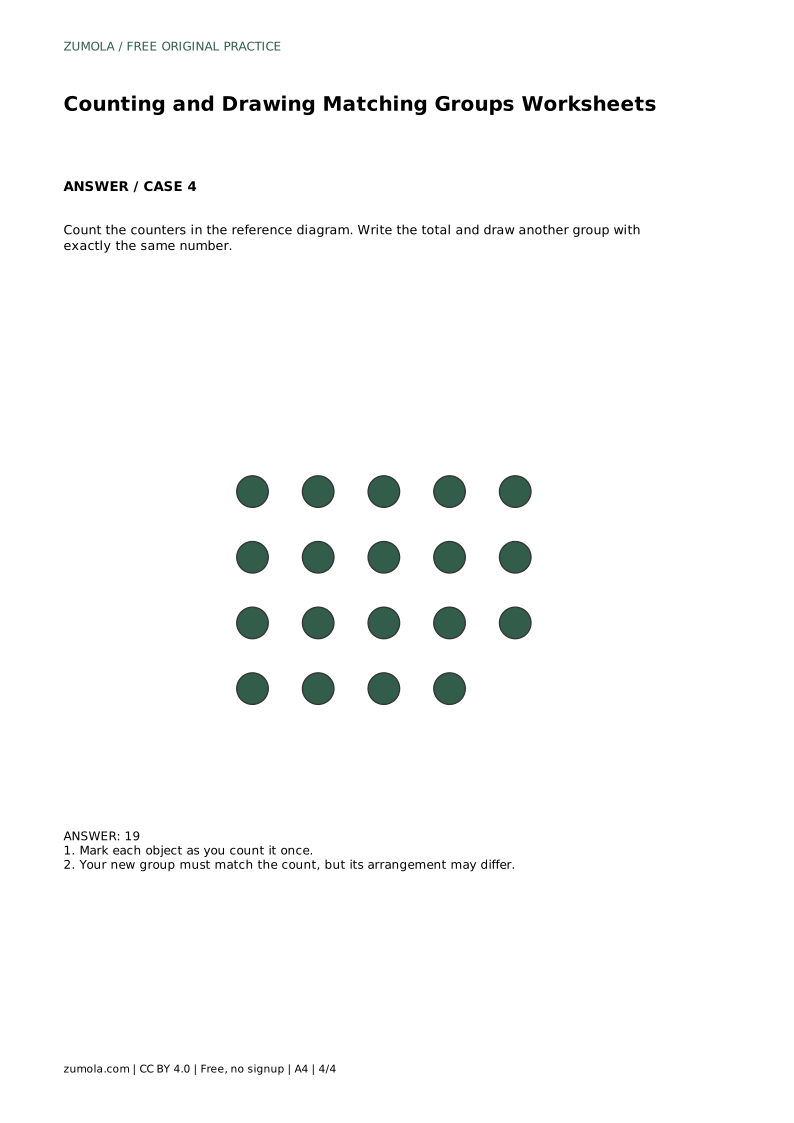
The same routine works across different totals. A reference group of eleven counters can be counted in one pass or split into a group of five and a group of six, then combined. A group of fifteen or nineteen benefits from counting in fives and keeping track of the remainder. The written total must still equal the full count, and the drawn group must contain exactly that many counters.
When totals grow, encourage learners to mark counters in small sets rather than relying on a single continuous count. This reduces lost track and makes the recount faster to verify.
Count the counters in the reference diagram. Write the total and draw another group with exactly the same number.
7 Mark each object as you count it once. Your new group must match the count, but its arrangement may differ.
No. Only the number of counters must match. The arrangement can be different, as long as every counter is distinct and countable.
Recount the reference diagram to confirm the written total, then add or remove counters in the drawing until the count matches that total.
Count in small sets, such as fives, mark each counter as it is counted, and combine the set counts to get the total.
All math worksheets · Free coordinate paper
Original resources · CC BY 4.0 · Free for personal and classroom use with attribution.