Reference diagrams
LETTER · Download PDF
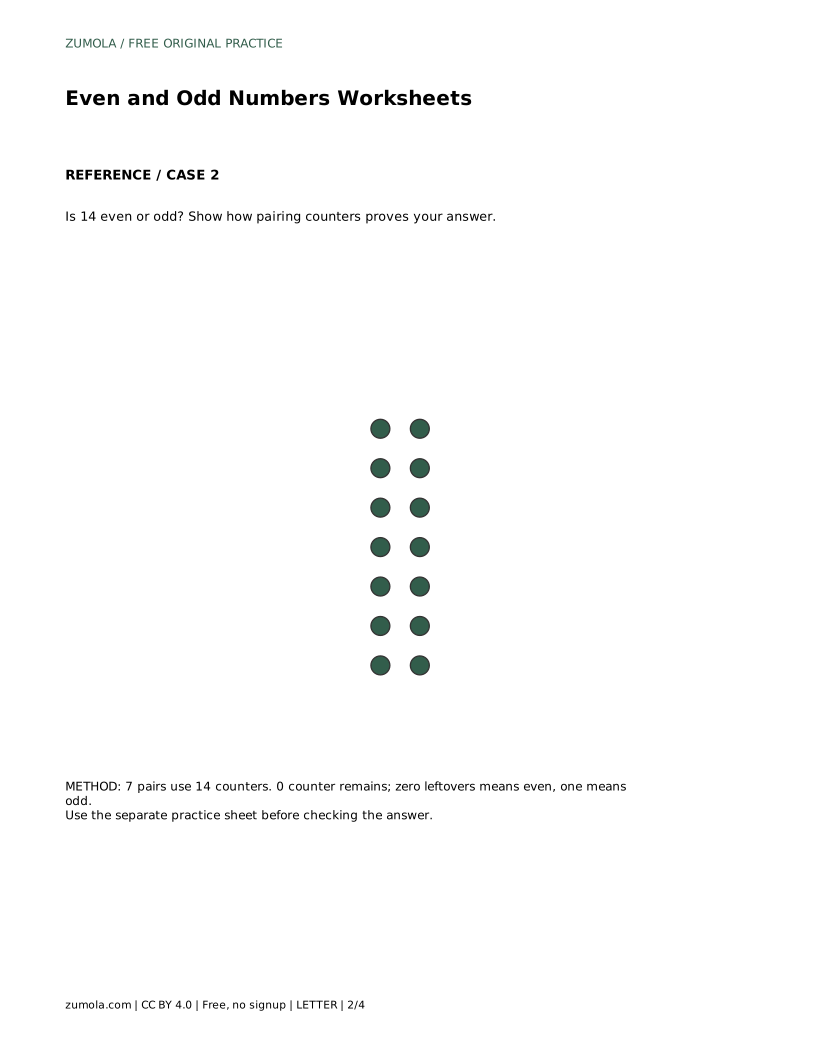
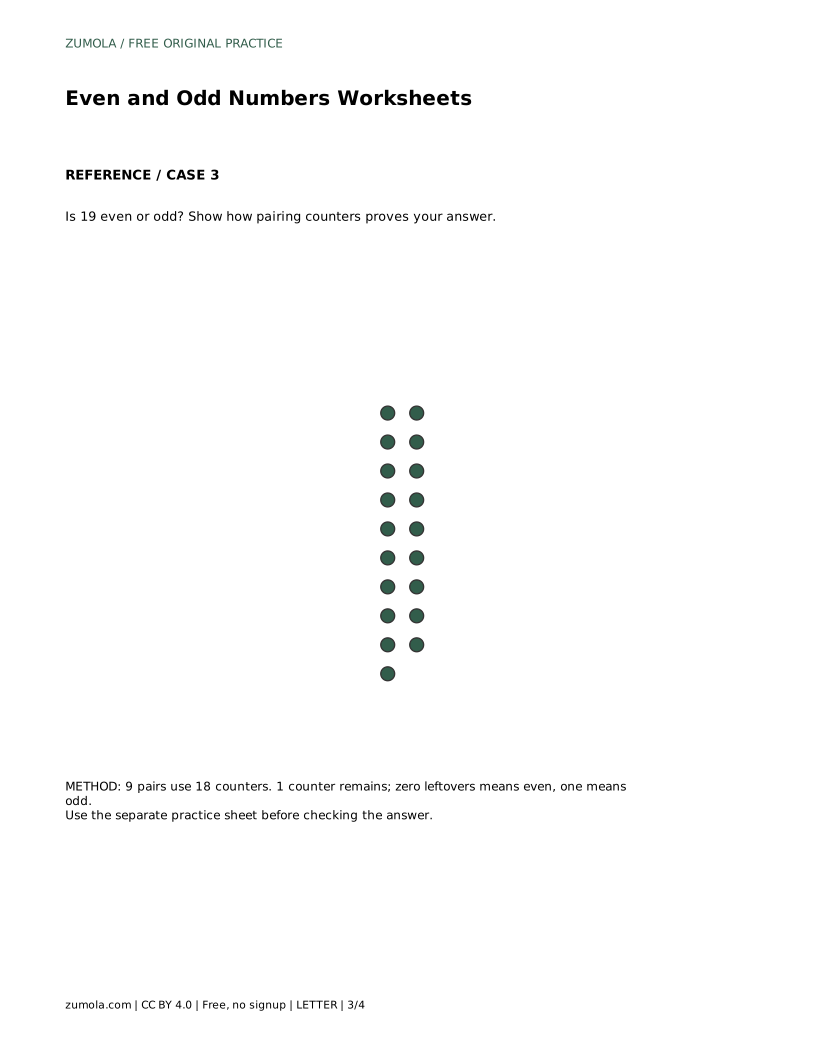
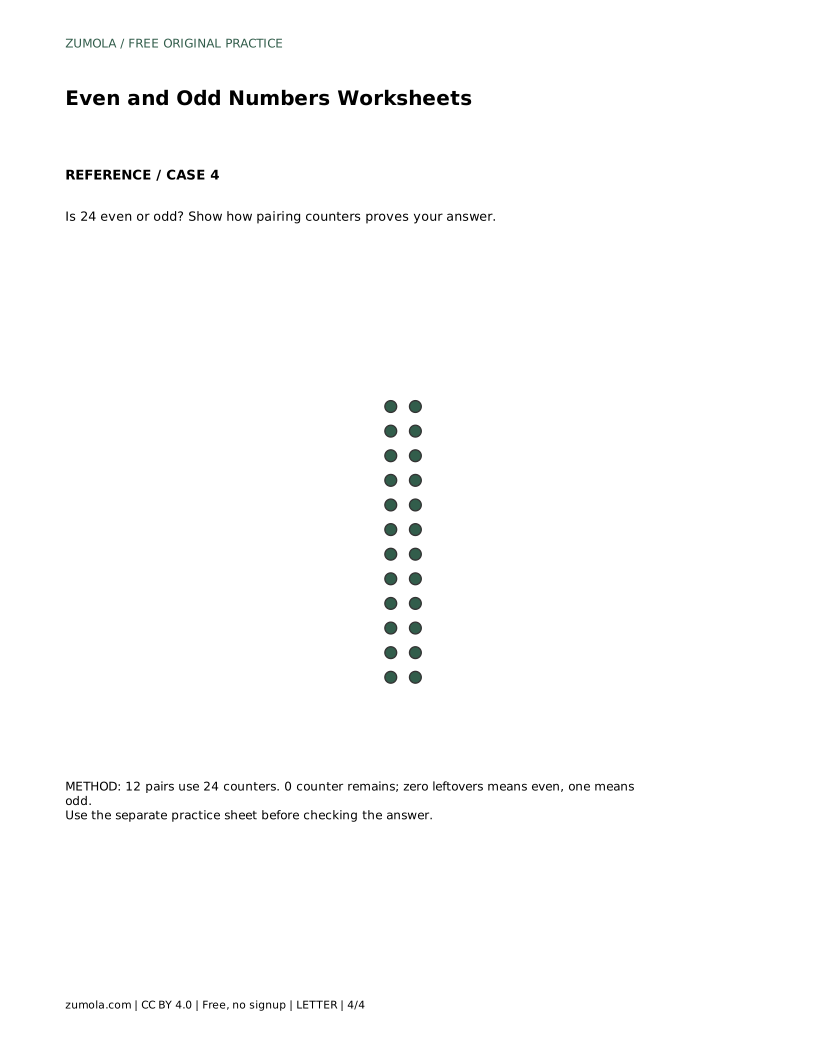
A4 · Download PDF
Free original resources
Teach even and odd numbers with pairing counters. Worksheets ask students to group objects in twos, count leftovers, and justify each answer with a written proof.
Four original cases, with reference diagrams, practice sheets and worked answers. Everything is free; no signup required.
LETTER · Download PDF
A4 · Download PDF
LETTER · Download PDF
A4 · Download PDF
LETTER · Download PDF
A4 · Download PDF
Use A4 or US Letter to match your printer. Use the stated values and conditions to solve each exercise; diagrams are not physical measuring rulers.
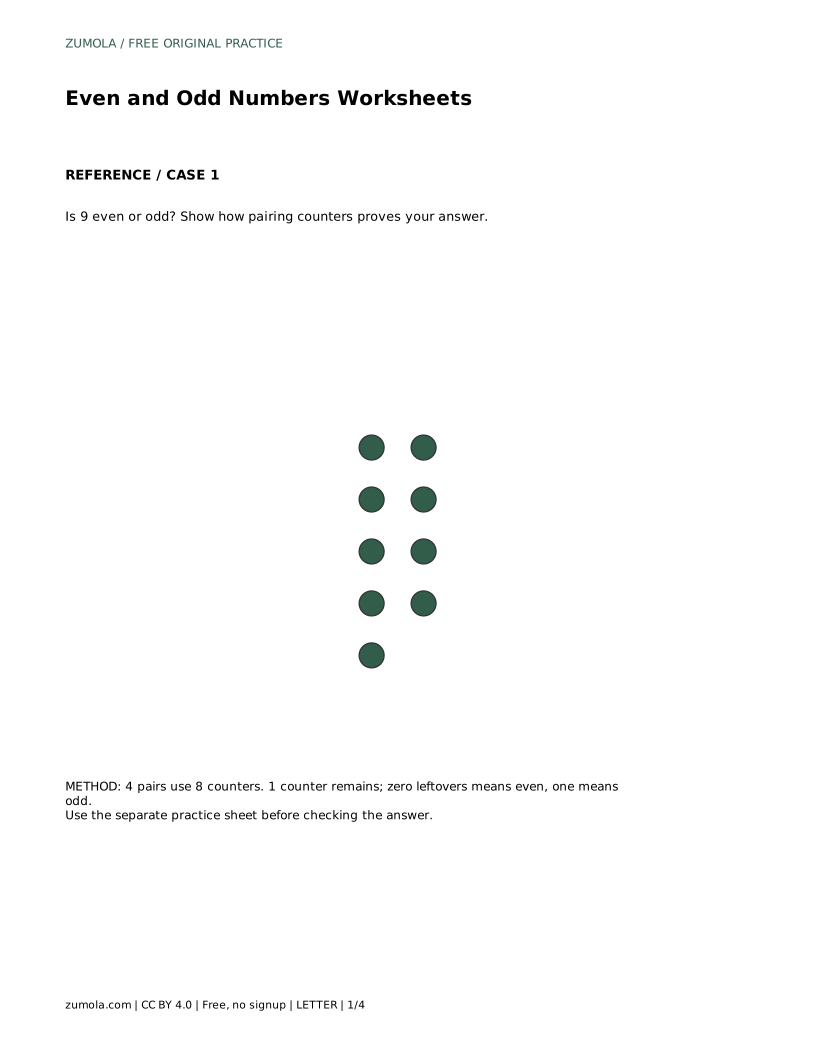

Even and odd numbers are easiest to understand when students can see the pairing. On these worksheets, learners group counters into pairs of two and check what remains. Zero leftovers means even; one leftover means odd. The goal is not guessing from the last digit but building a visible argument. Each task asks for the answer plus the pairing evidence, so students practise both the result and the reasoning behind it.
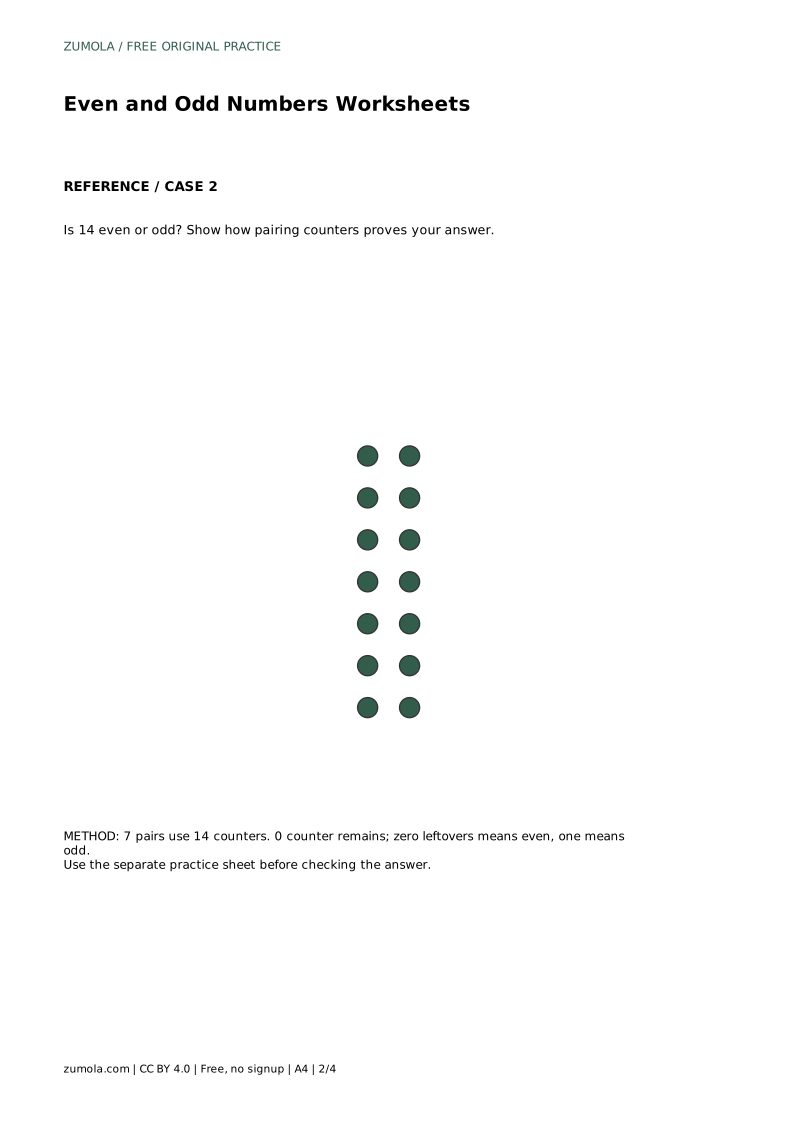
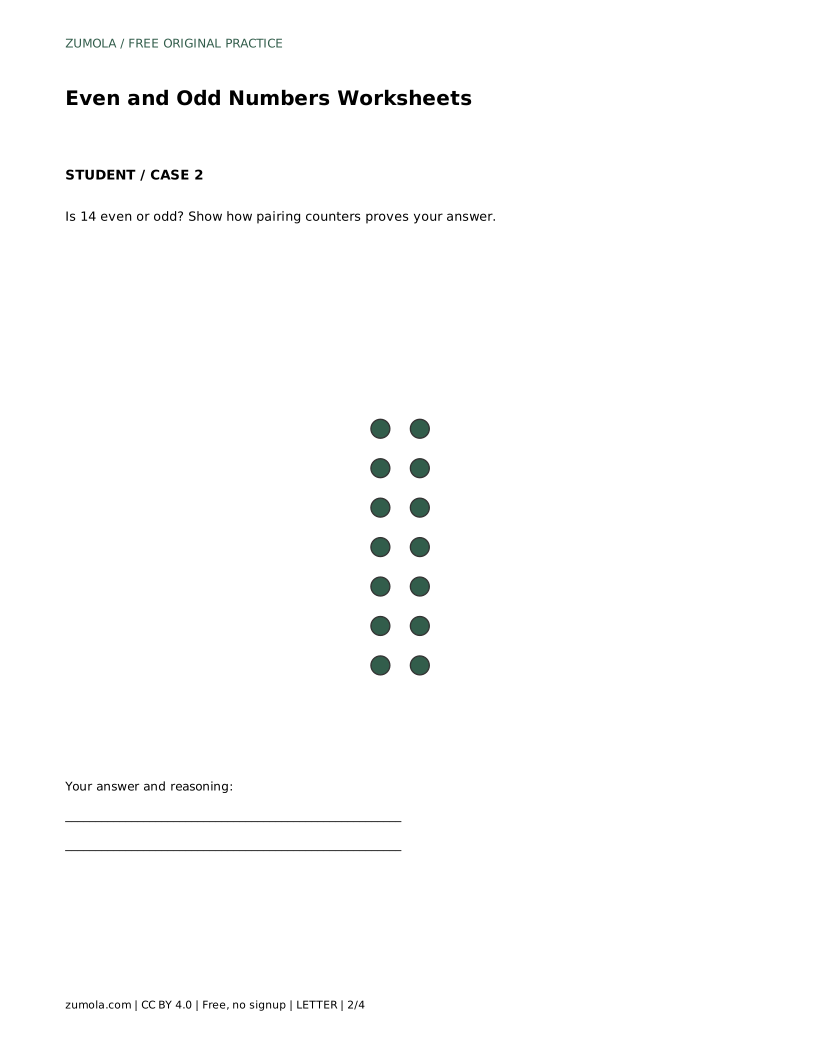
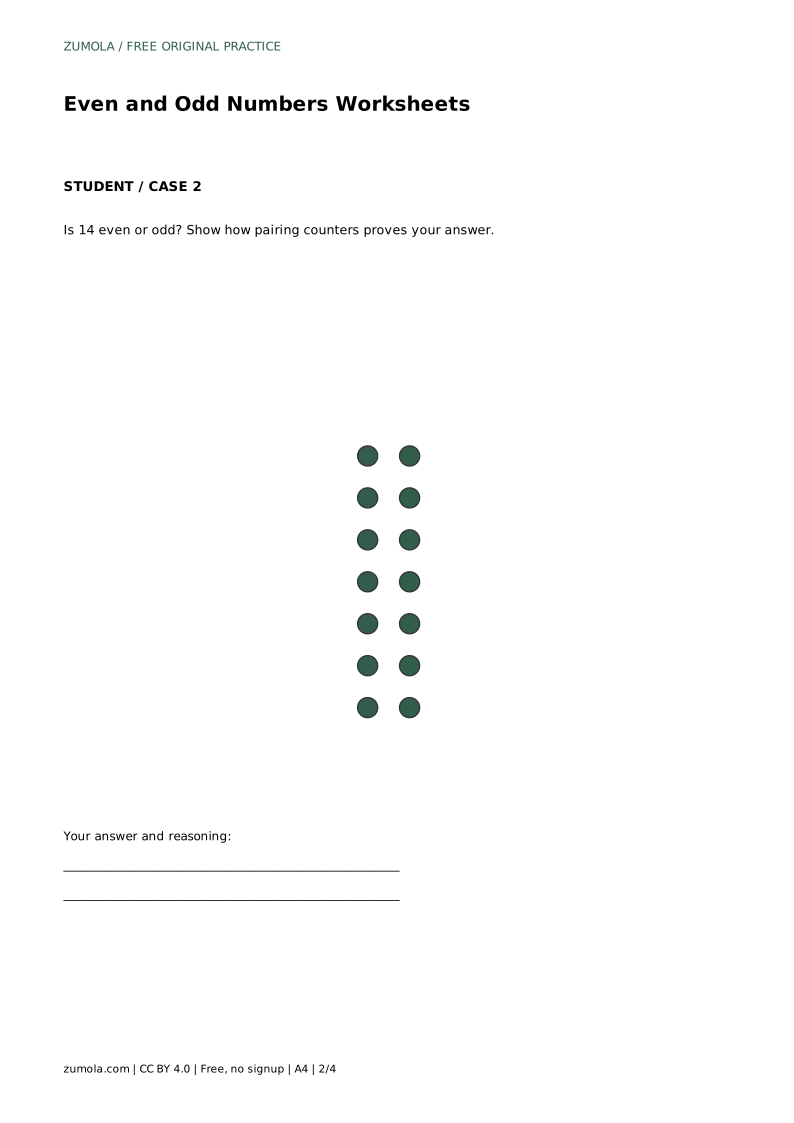
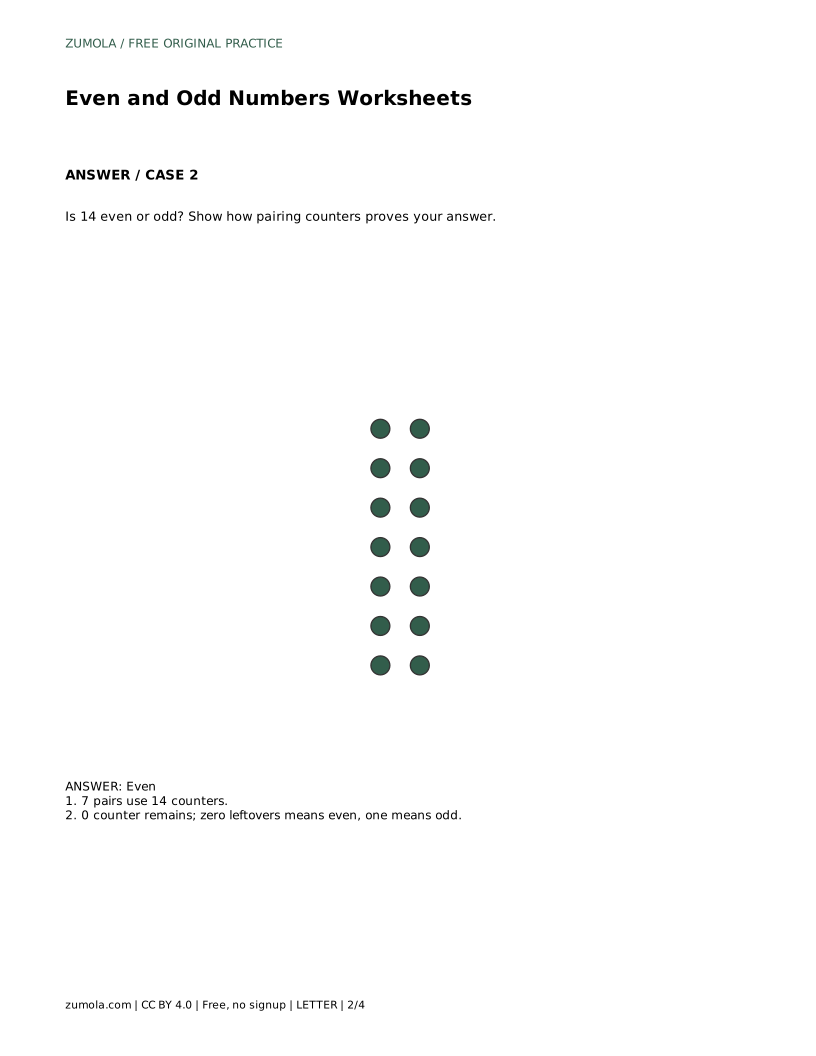
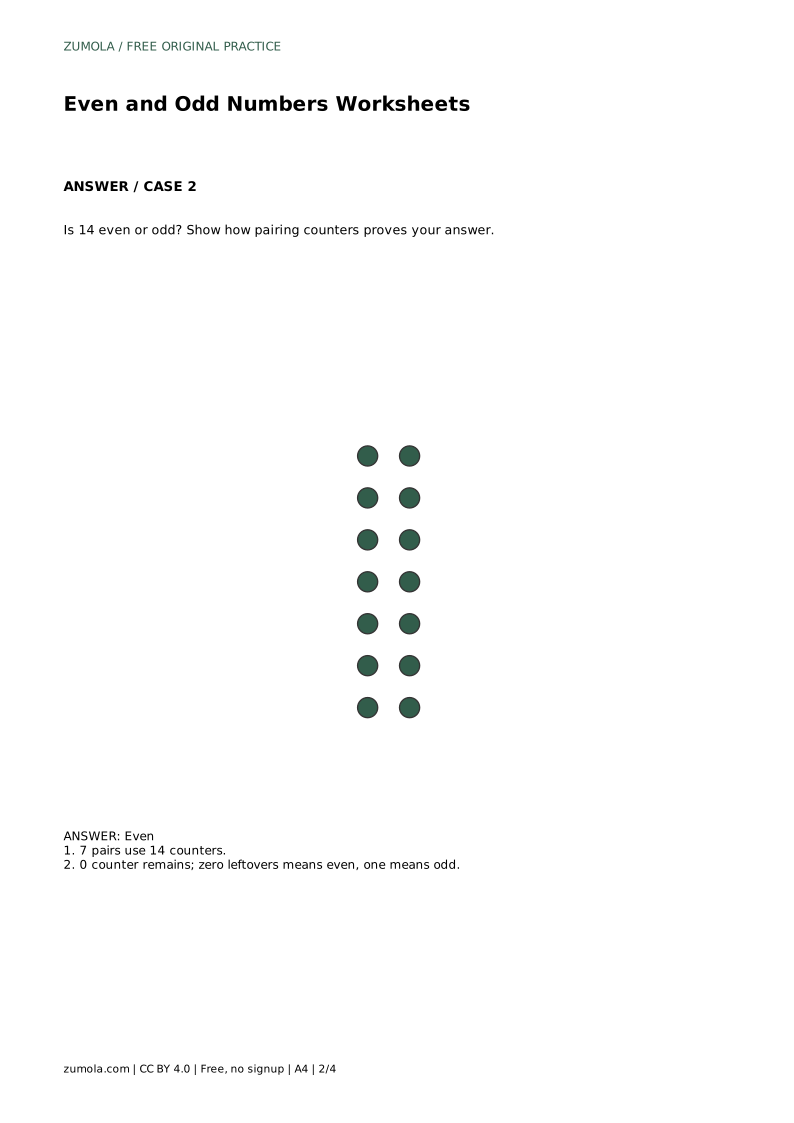
A number is even when its counters can be arranged into complete pairs with nothing left over. A number is odd when one counter remains after all possible pairs are made. This definition works for any whole number because pairing is a physical test, not a memory trick. Students should say the pair count and the leftover count out loud or in writing: for example, seven pairs use fourteen counters and leave zero, so the number is even.
Keep the language consistent. Ask for two facts every time: how many pairs were made, and how many counters remain. The leftover is always zero or one when grouping by two, which makes the check simple and reliable. Avoid shortcuts such as looking only at the final digit until students can explain why the pairing result and the digit rule agree.
A group chart shows the total and the group size of two. Students can use it to check their own pairing before writing the answer. The chart is a support, not a substitute for the reasoning: the written sentence should still name the pairs and the leftover. If the chart and the student's pairing disagree, the student should recount rather than change the answer to match the chart.
For larger totals, encourage students to mark pairs in rows so the count stays organised. Crossing off each pair as it is made reduces double-counting. The same method scales from small totals to larger ones without changing the rule.
A complete answer names the total, the number of pairs, the leftover, and the parity. This structure makes the reasoning visible and easy to check. Students who write only odd or even have not shown the proof the worksheet is asking for. Model the sentence pattern once, then let students complete it independently.
Use the same pattern across tasks so the focus stays on the mathematics rather than on changing formats. When students can write the sentence without prompting, they are ready for numbers where the pairing is less obvious and for explaining why adding one changes the parity.
Students can check parity by pairing again in a different arrangement, such as rows instead of columns. The pair count and leftover should match the first attempt. A second check catches counting slips without relying on an answer key. If the two attempts disagree, recount slowly and mark each pair once.
Teachers can also ask students to predict whether adding one counter will change the parity, then test the prediction by pairing. This connects the pairing method to a pattern students can verify themselves.
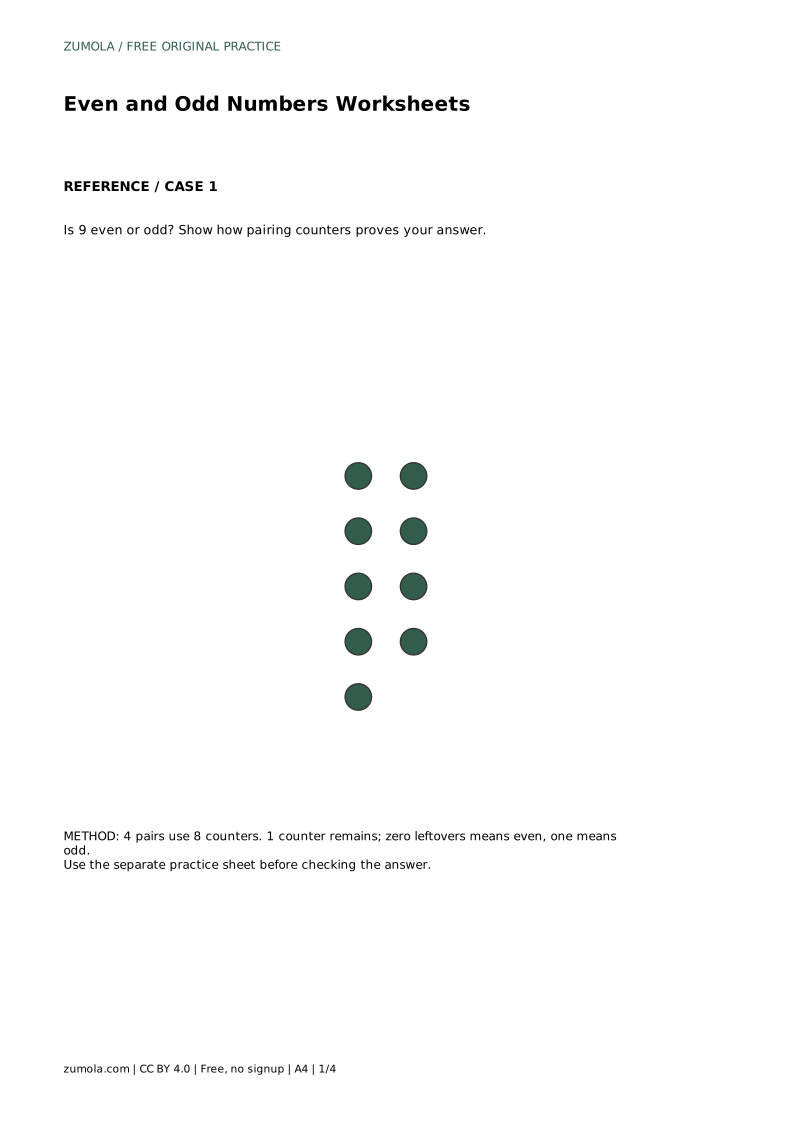
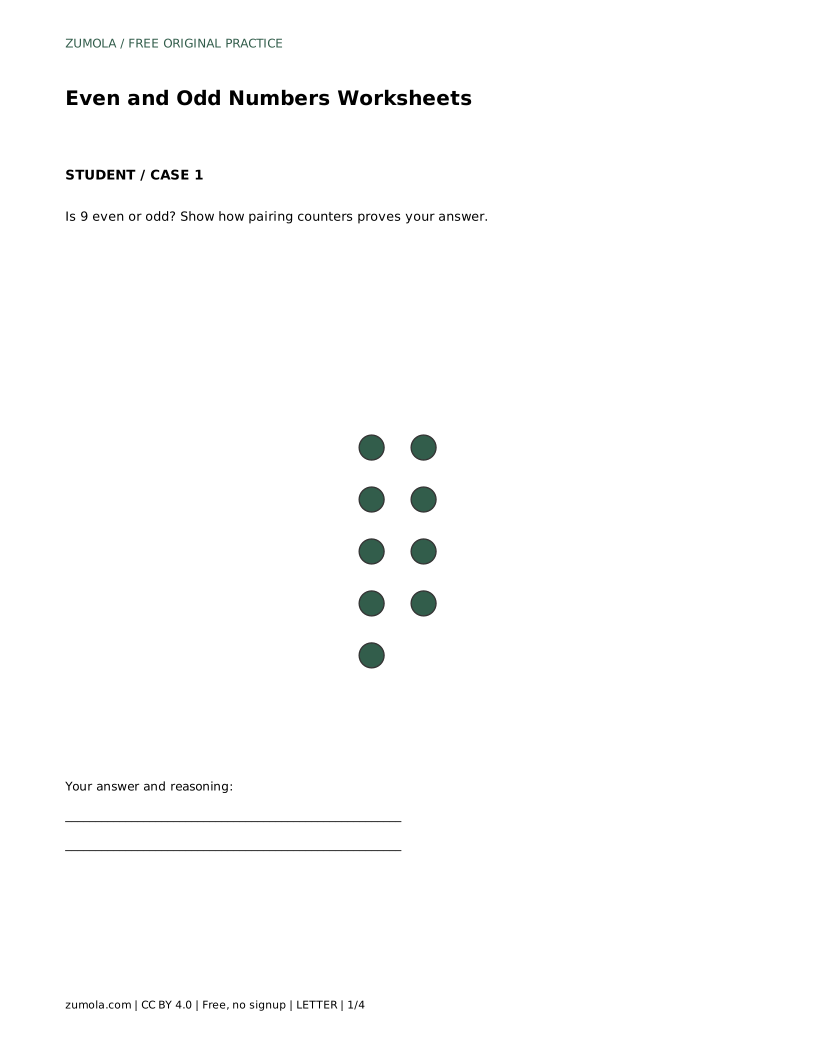
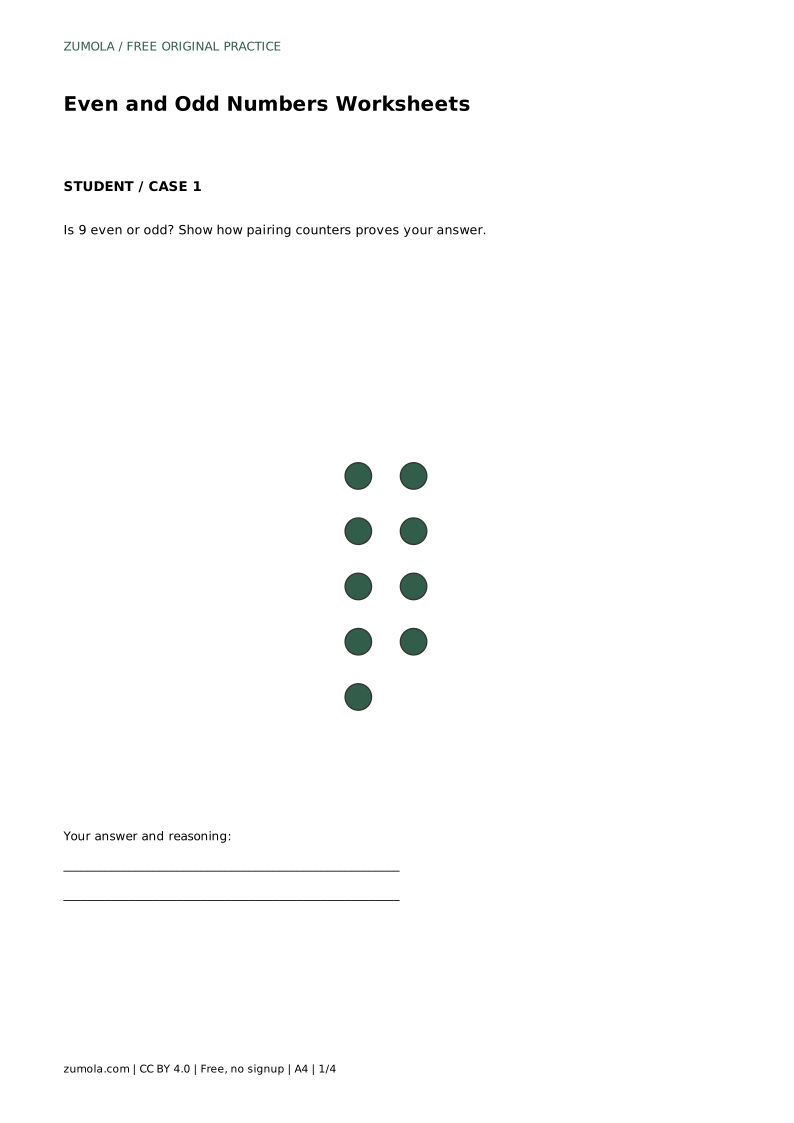
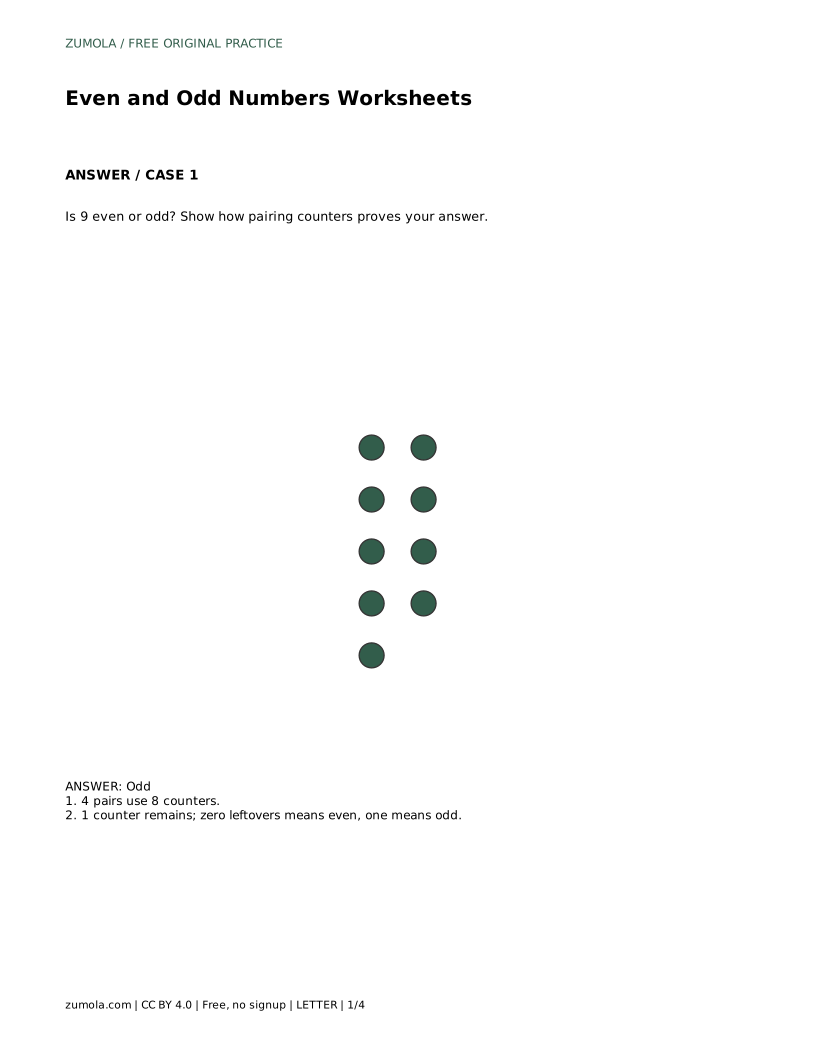
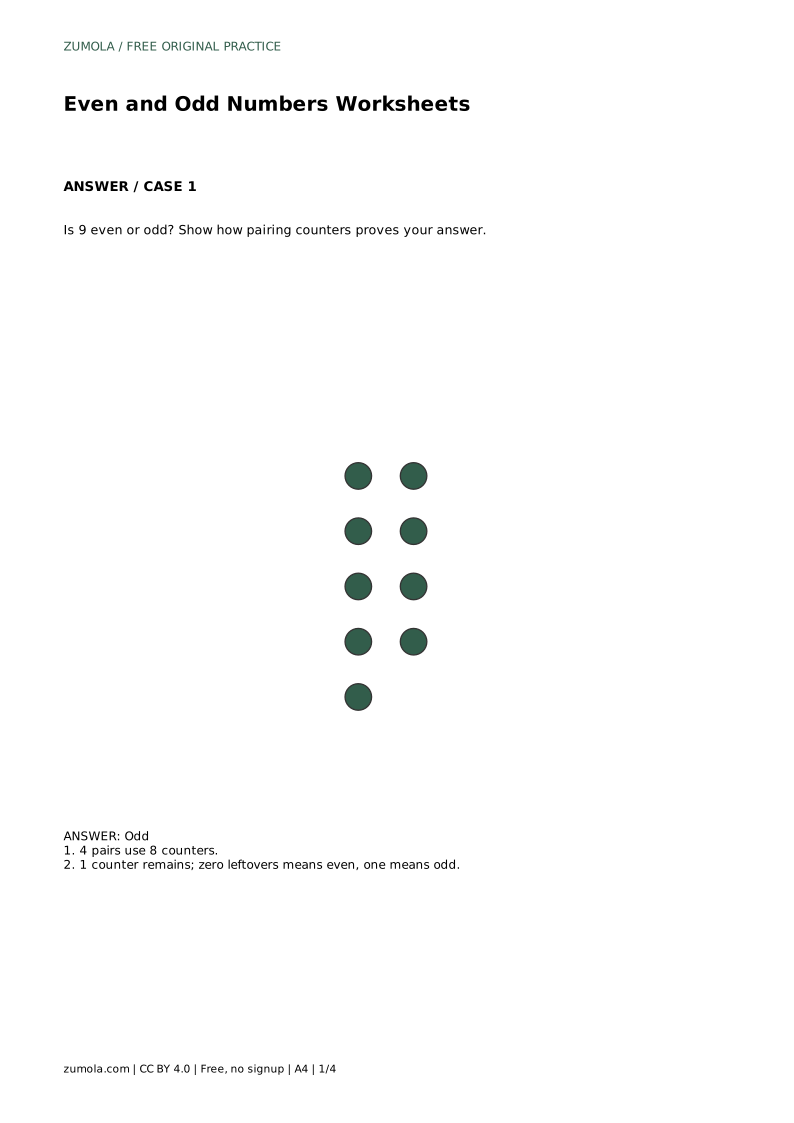
Is 9 even or odd? Show how pairing counters proves your answer.
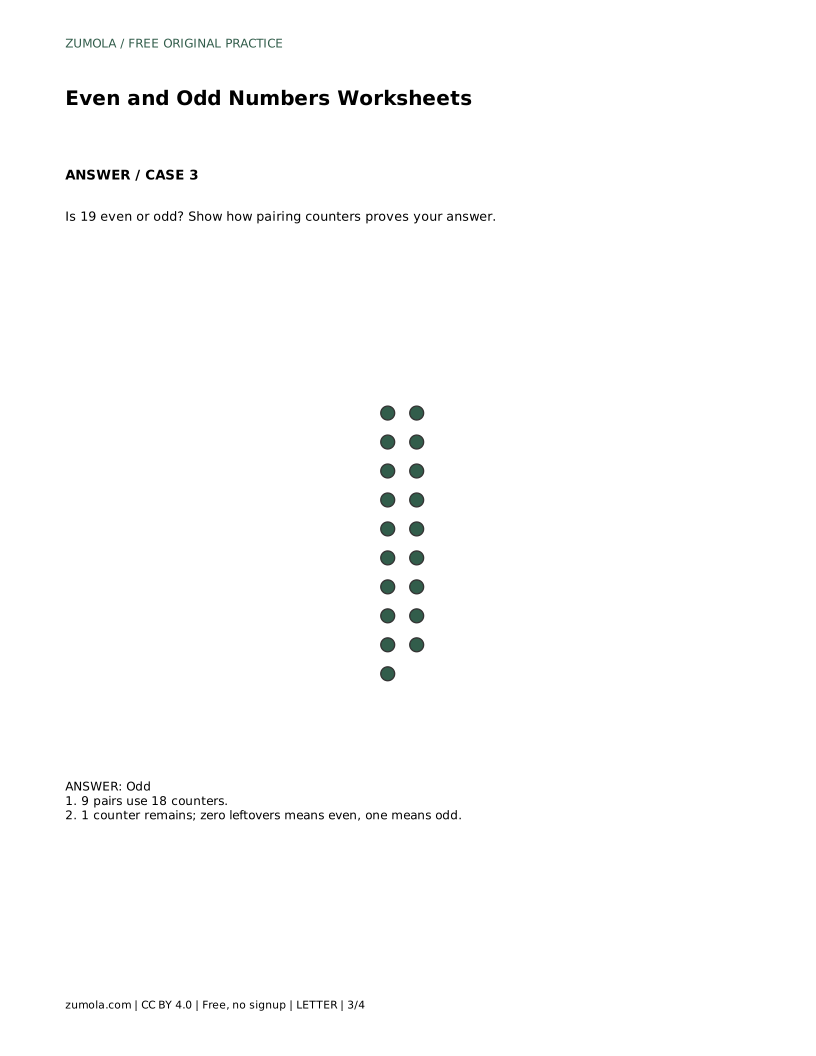
Odd 4 pairs use 8 counters. 1 counter remains; zero leftovers means even, one means odd.
The total, the number of pairs, the leftover count, and the parity, linked in one sentence.
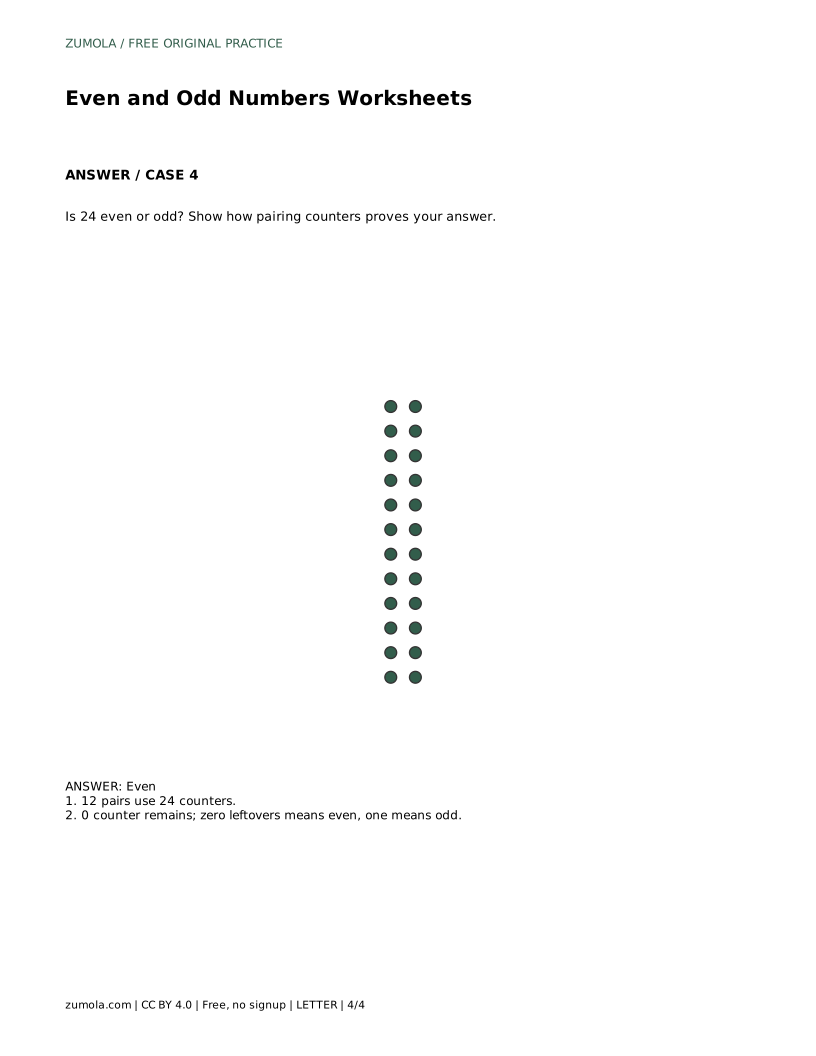
Zero is even because it makes complete pairs with no leftover.
Pairing shows why the rule works and gives students a method they can verify by counting.
All math worksheets · Free coordinate paper
Original resources · CC BY 4.0 · Free for personal and classroom use with attribution.