Reference diagrams
LETTER · Download PDF
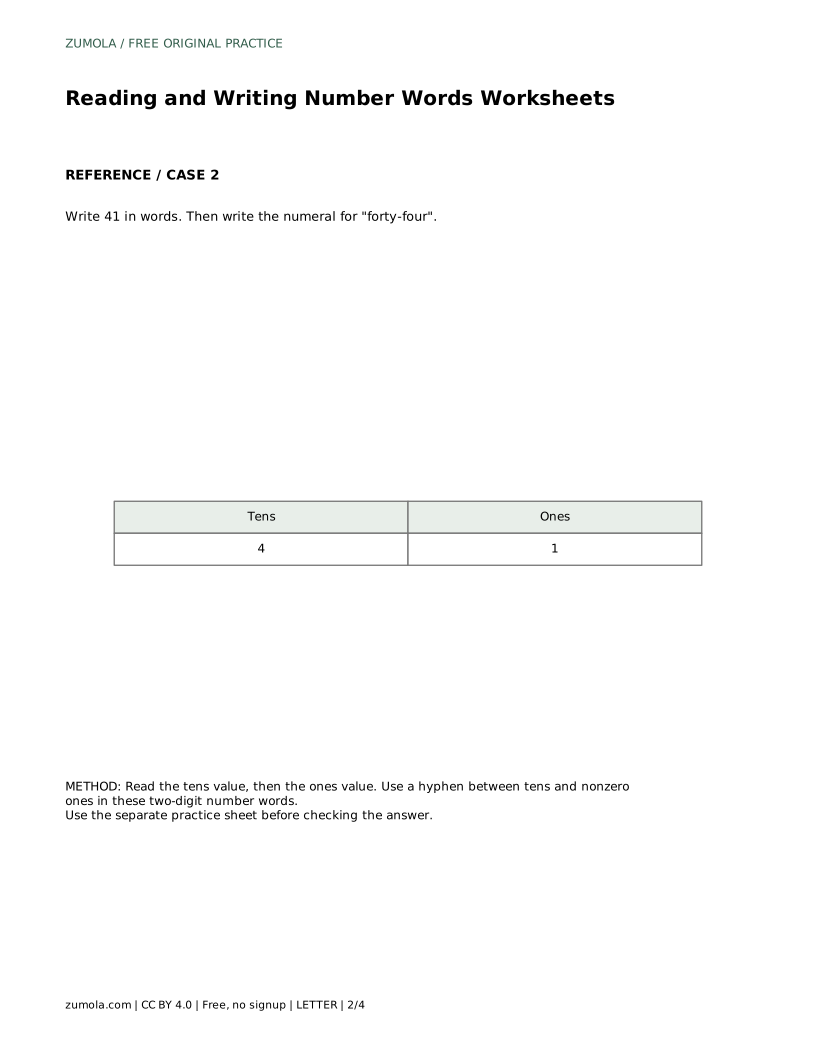
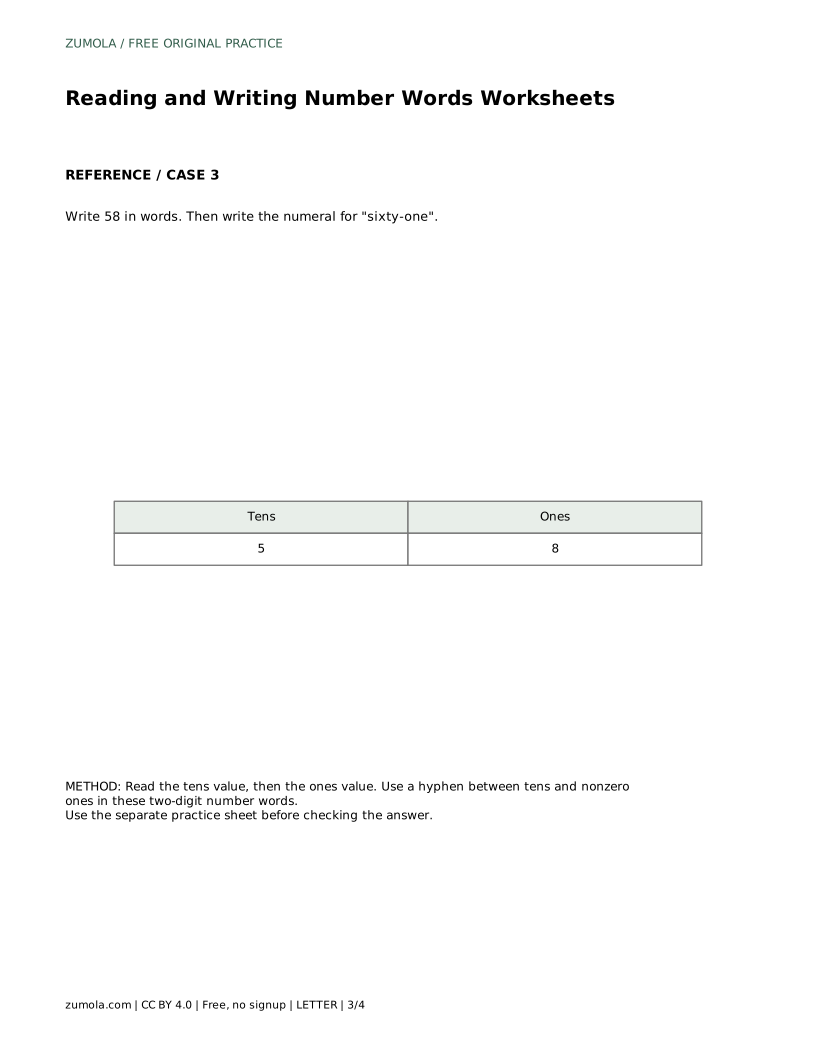
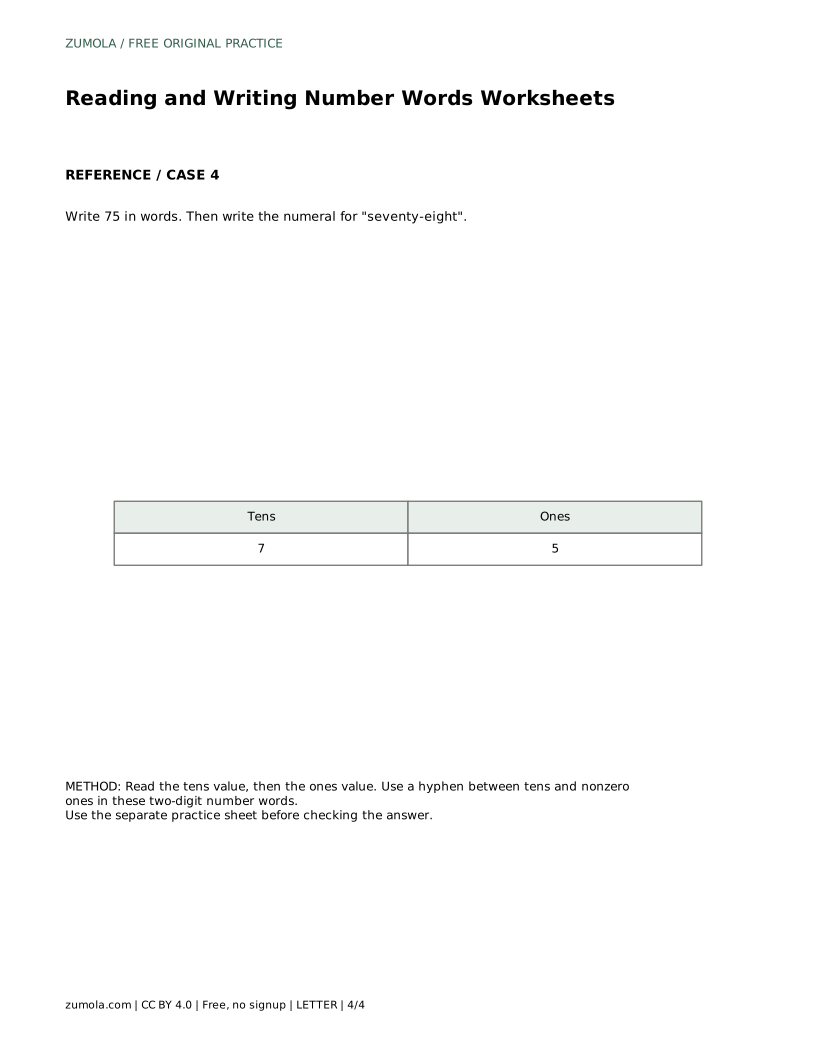
A4 · Download PDF
Free original resources
Teach students to read and write two-digit number words, match numerals to words, and use hyphens correctly with printable count-and-match worksheets.
Four original cases, with reference diagrams, practice sheets and worked answers. Everything is free; no signup required.
LETTER · Download PDF
A4 · Download PDF
LETTER · Download PDF
A4 · Download PDF
LETTER · Download PDF
A4 · Download PDF
Use A4 or US Letter to match your printer. Use the stated values and conditions to solve each exercise; diagrams are not physical measuring rulers.
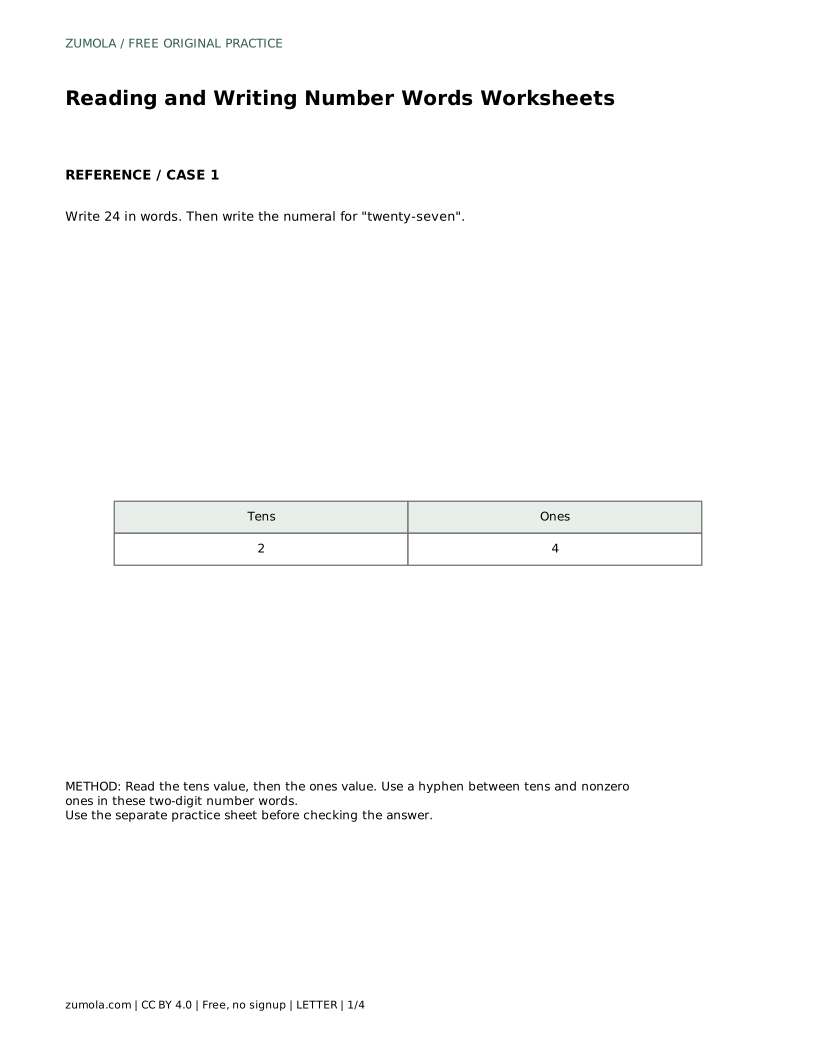

Two-digit number words connect place value to spelling. A learner reads the tens digit, names its word form, then reads the ones digit and joins the parts. This page explains that routine, shows where hyphens belong, and gives a concrete worked example. It supports printable count-and-match worksheets where students pair numerals with words, but the teaching method here stands on its own and can be used with any paper sheet you have checked for correct scale.
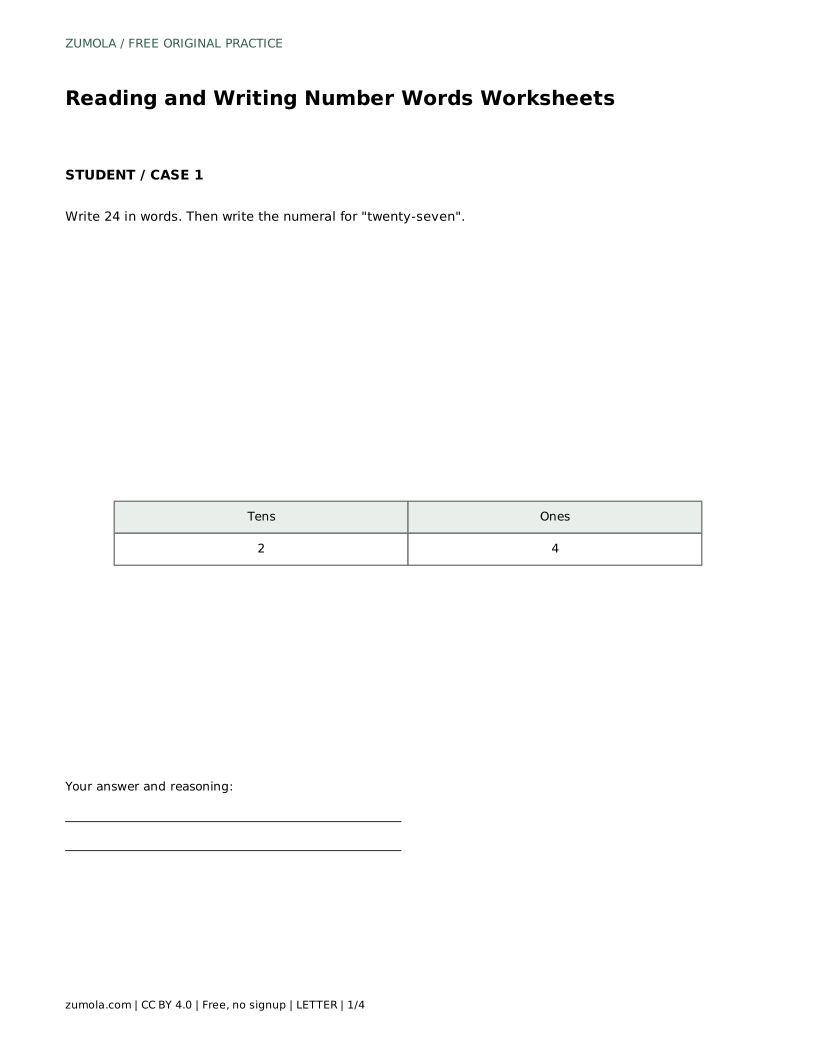
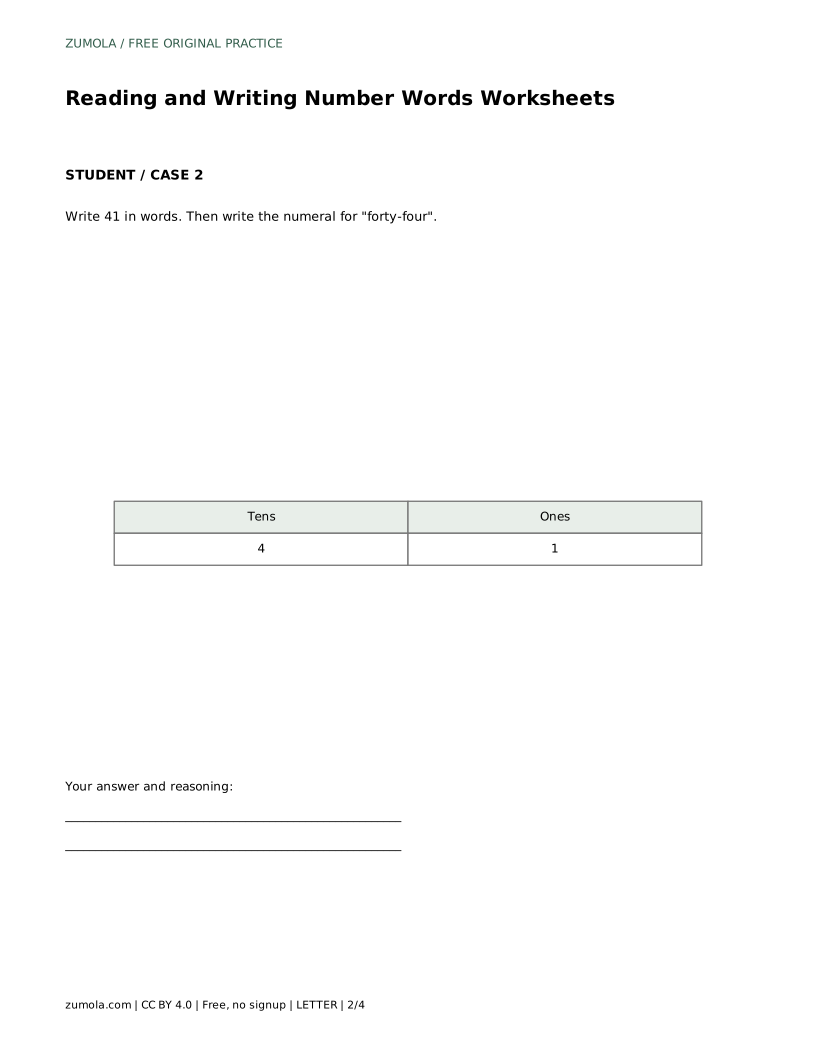
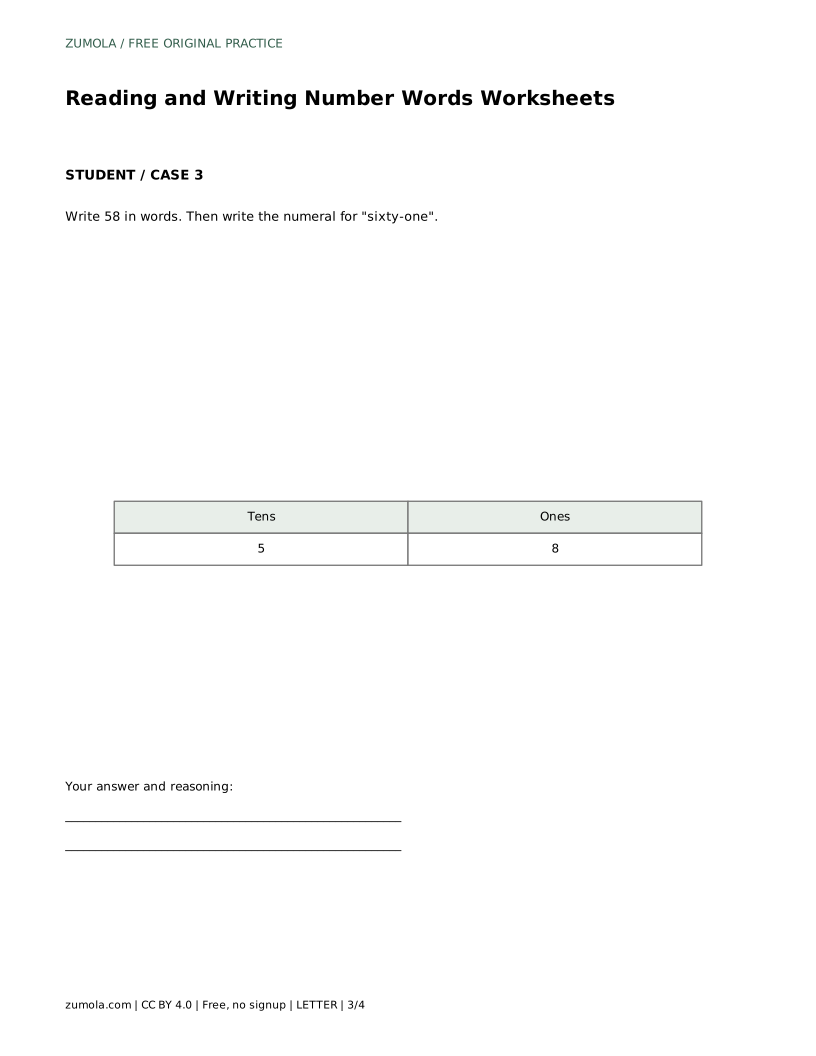
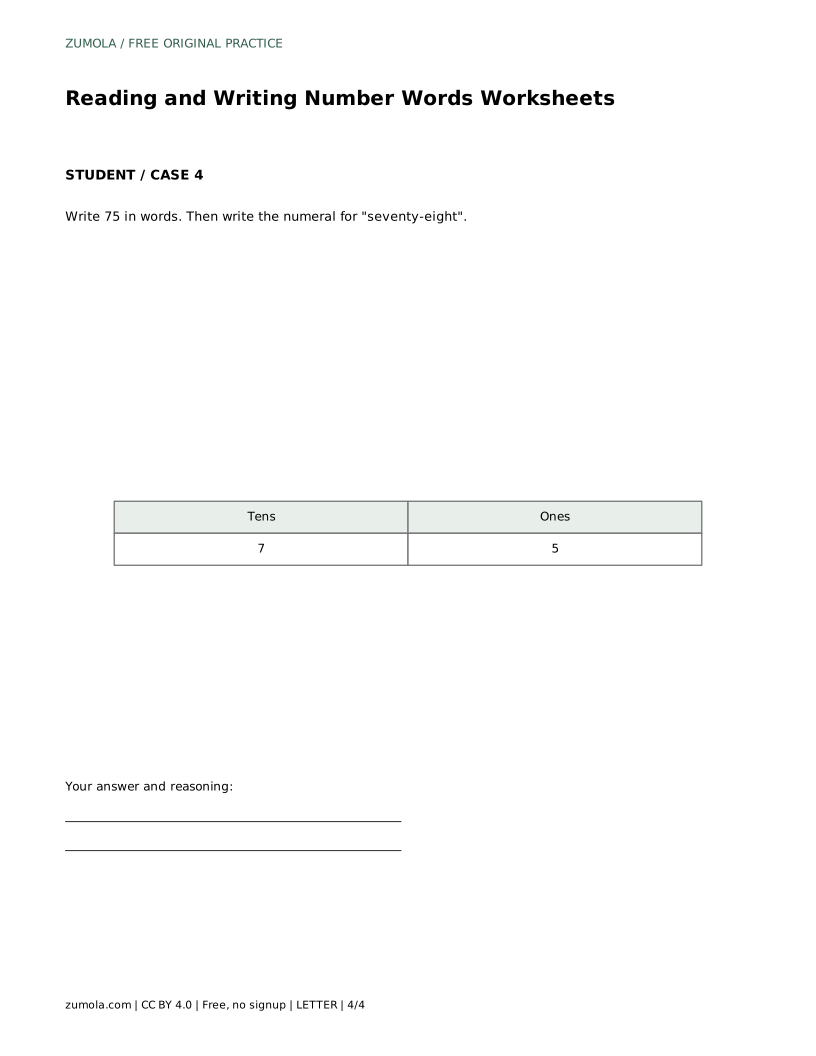
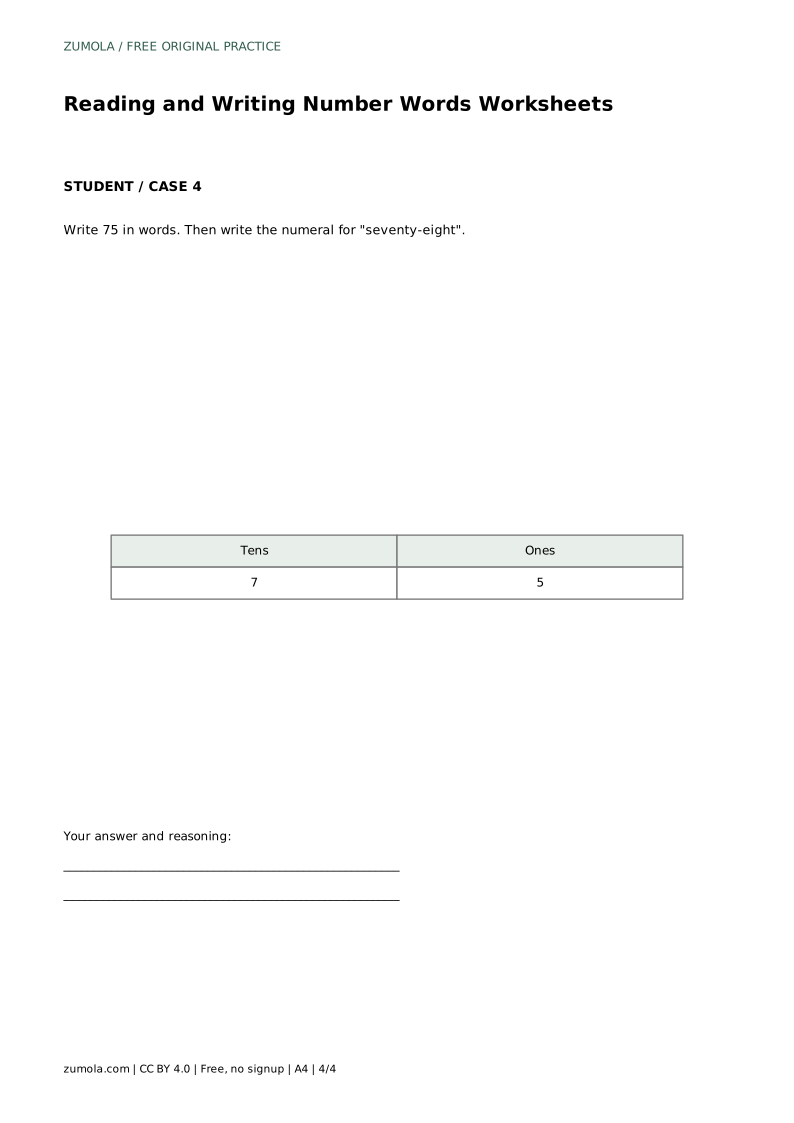
Every two-digit whole number from 21 to 99 has a tens part and a ones part. The tens part comes from the tens digit: 2 becomes twenty, 4 becomes forty, 5 becomes fifty, 7 becomes seventy. The ones part comes from the ones digit: 4 becomes four, 1 becomes one, 8 becomes eight. Put the tens word first, then the ones word.
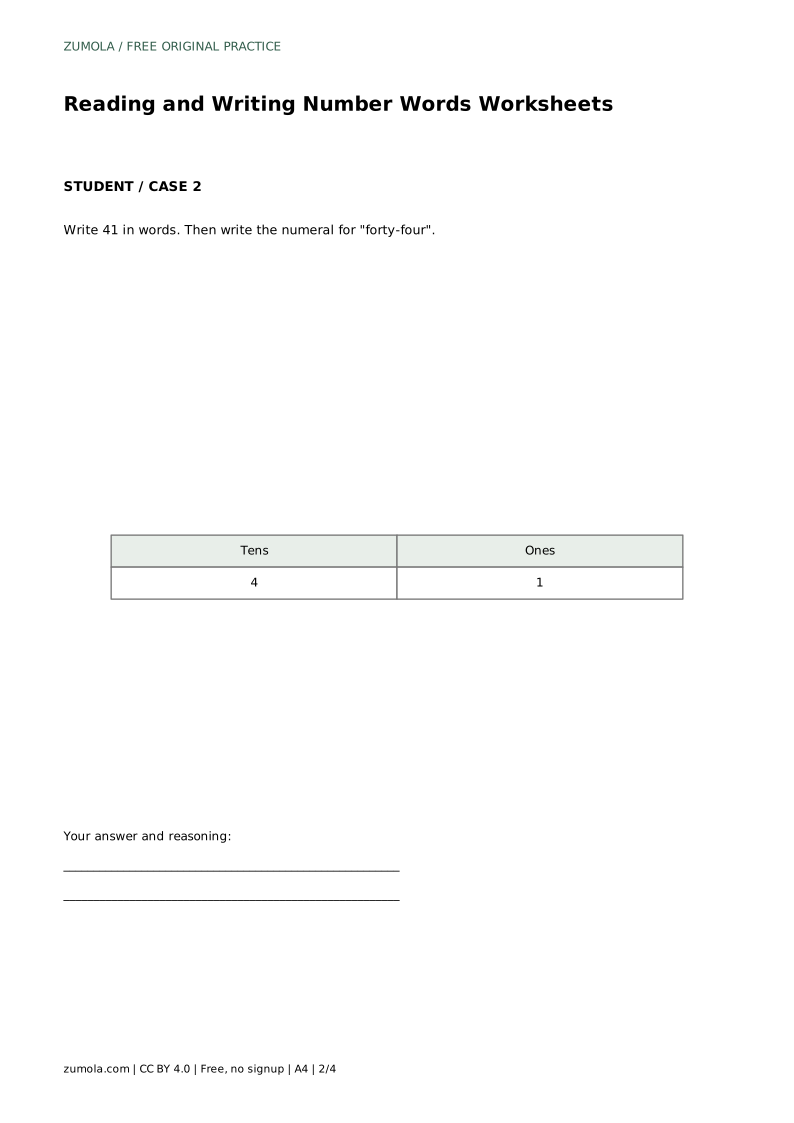
When the ones digit is not zero, join the two words with a hyphen. So 24 is twenty-four, not twenty four. When the ones digit is zero, the number word is just the tens word: 40 is forty, 50 is fifty. Numbers 10 through 19 have their own words (ten, eleven, twelve, thirteen, fourteen, fifteen, sixteen, seventeen, eighteen, nineteen) and do not follow the tens-plus-ones pattern in the same way.
Reading works in reverse. When you see a hyphenated word such as twenty-seven, split it at the hyphen. The first part gives the tens digit (twenty means 2 tens), the second gives the ones digit (seven means 7 ones). That gives 27.
A count-and-match task asks the student to connect a numeral to its word form, or a word form to a numeral. The reliable method is to decode one side fully before searching the other. Do not guess by shape or first letter alone, because several words begin with the same letters (fourteen and forty, for example).
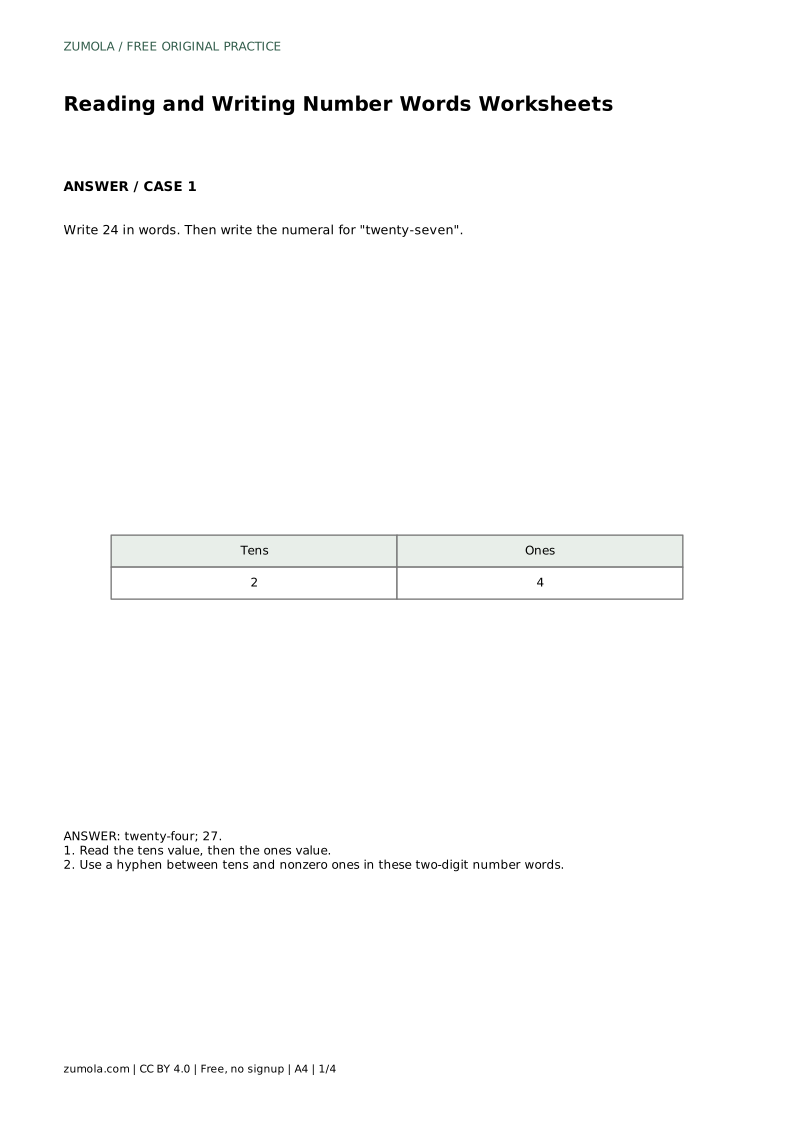
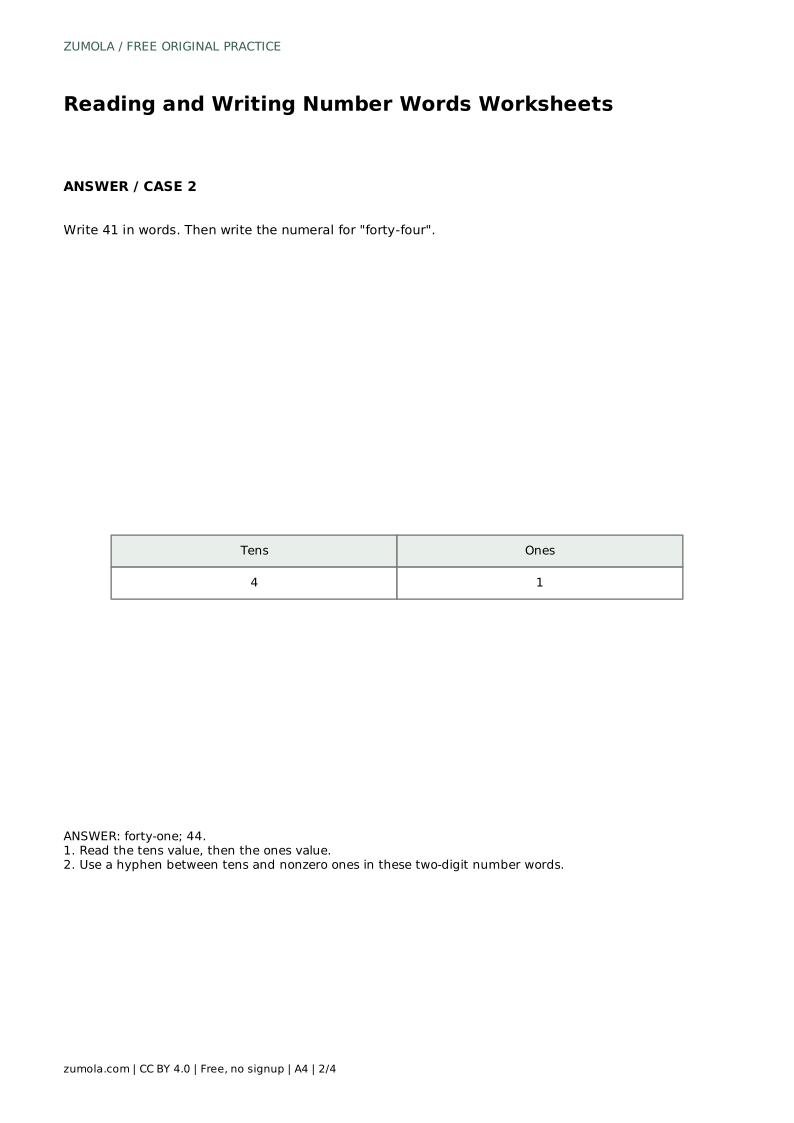
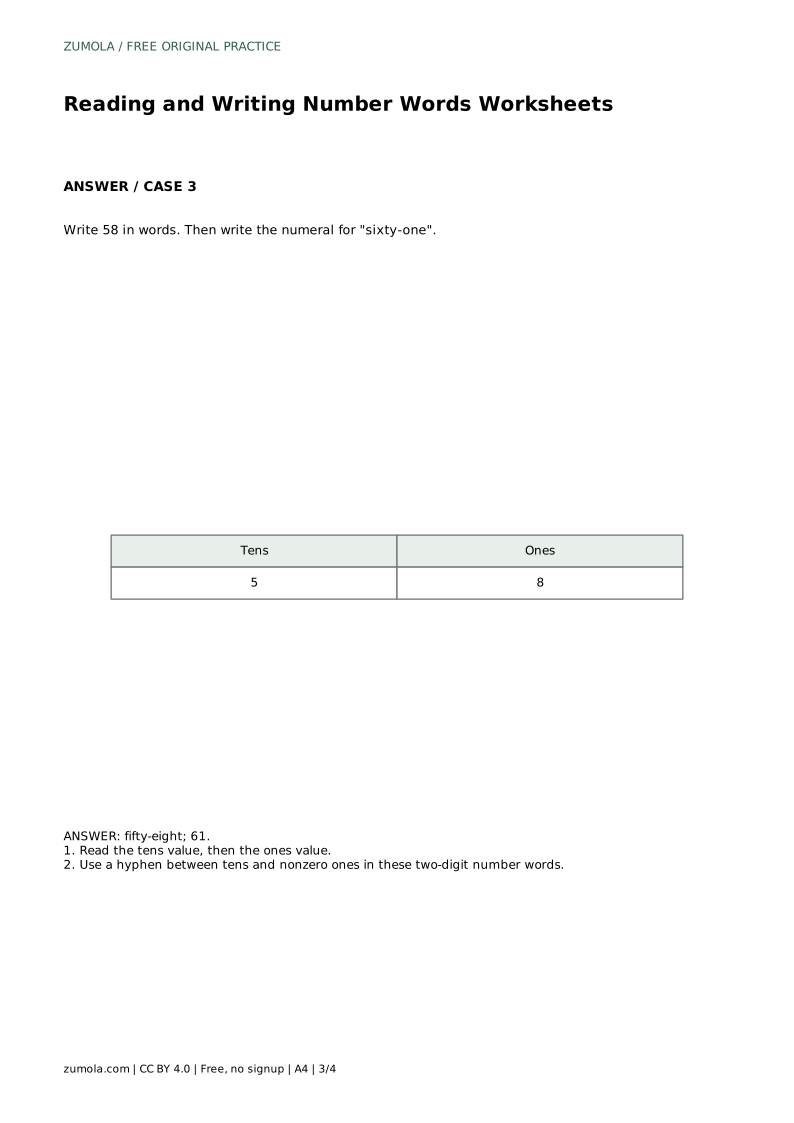
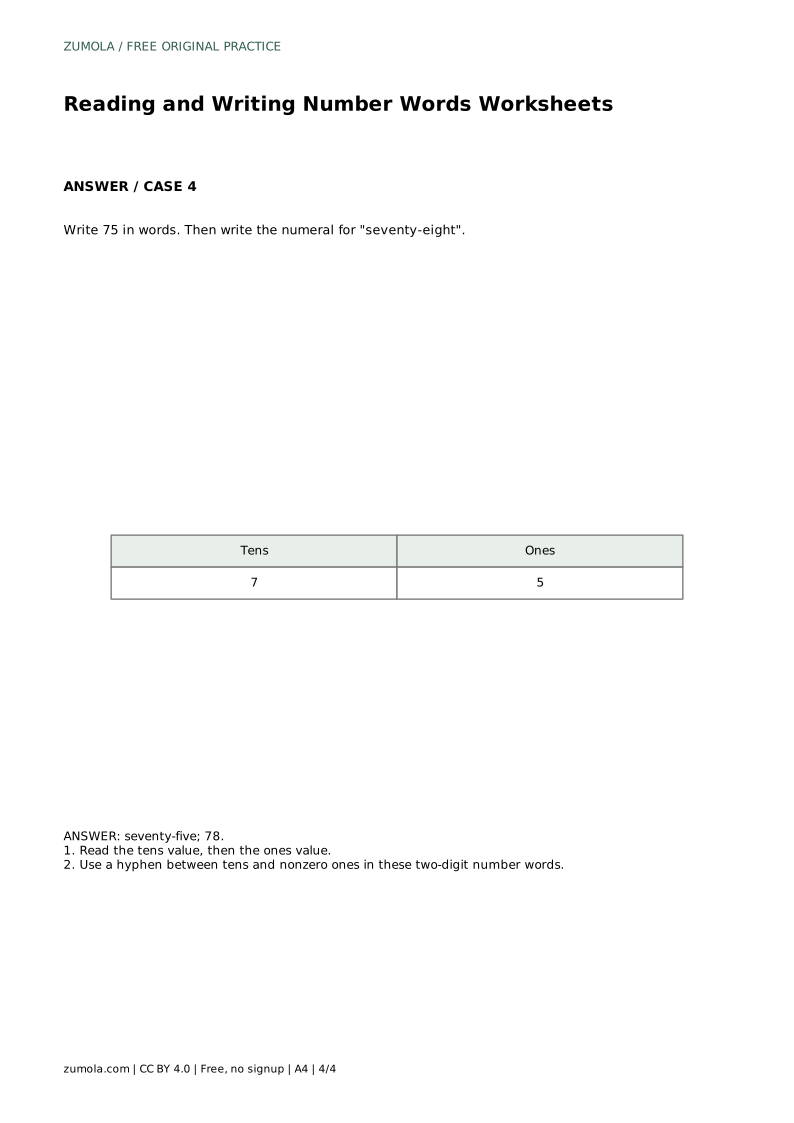
For each item, write the tens digit and ones digit in a small table before matching. This makes the comparison visible and reduces careless pairing. If a word has no hyphen and ends in -ty, the ones digit is zero. If it has a hyphen, the part after the hyphen is the ones digit.
A quick self-check is to reverse the process. If you wrote twenty-four for 24, read twenty-four back: twenty is 2 tens, four is 4 ones, so 24. If the reverse reading does not return the original number, the word form is wrong.
Watch for the teens. Fourteen is 14, not 40. Forty is 40, not 14. The ending -teen signals a number between 13 and 19; the ending -ty signals a multiple of ten. This single distinction prevents many matching errors.
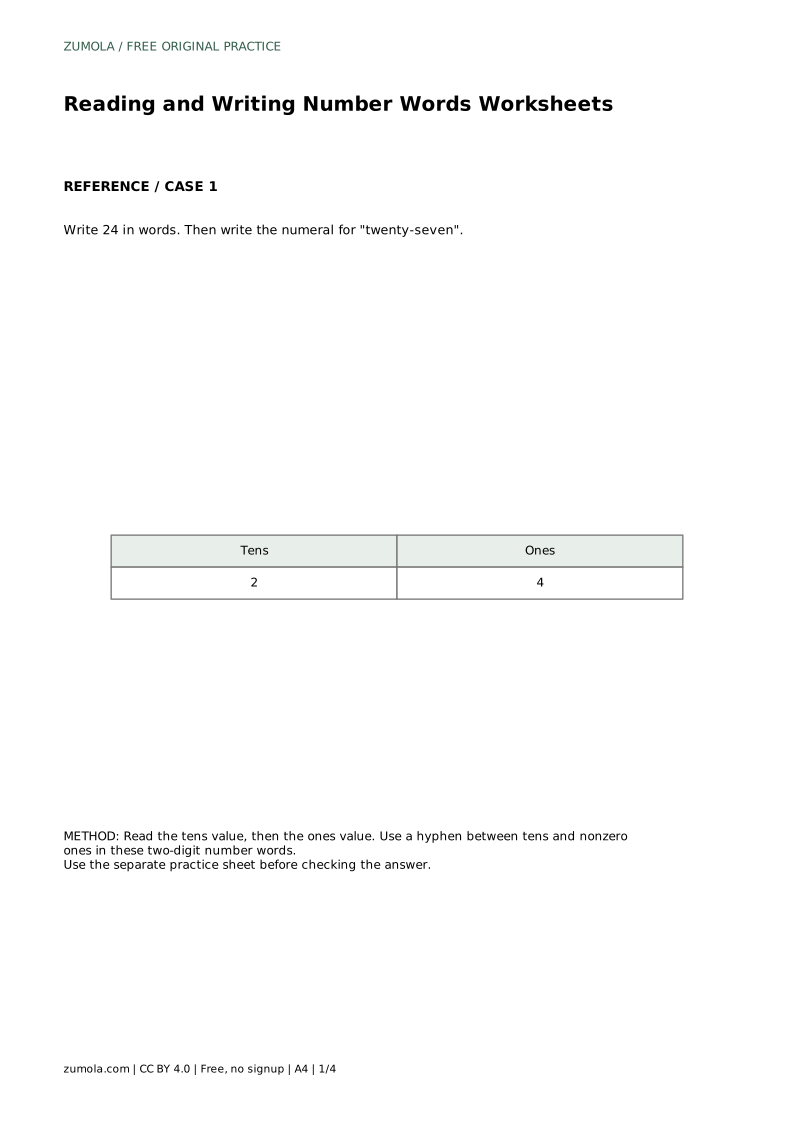
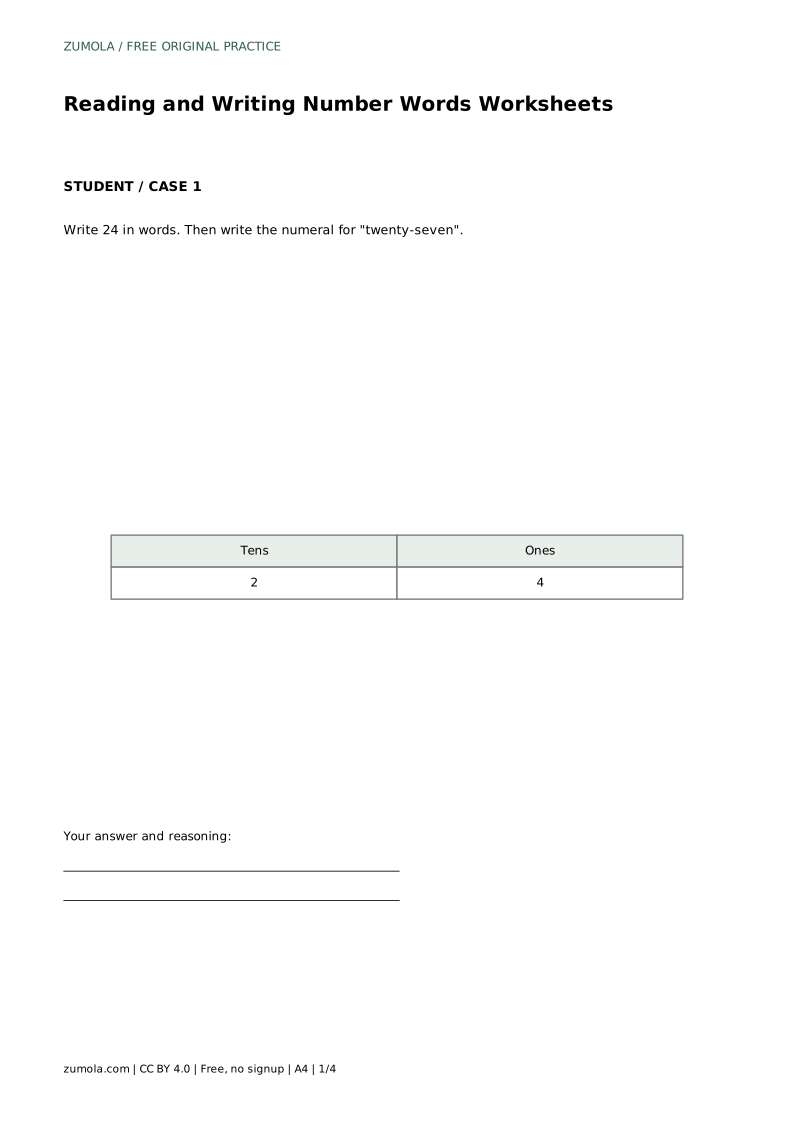
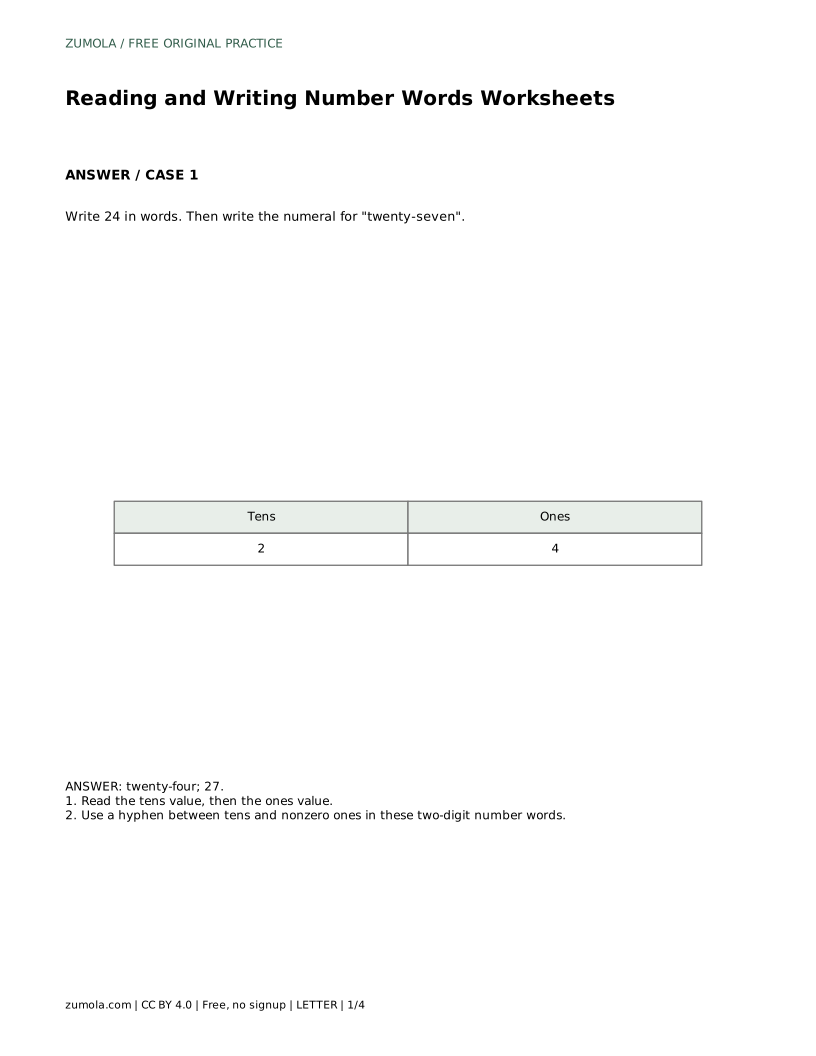
Write 24 in words. Then write the numeral for "twenty-seven".
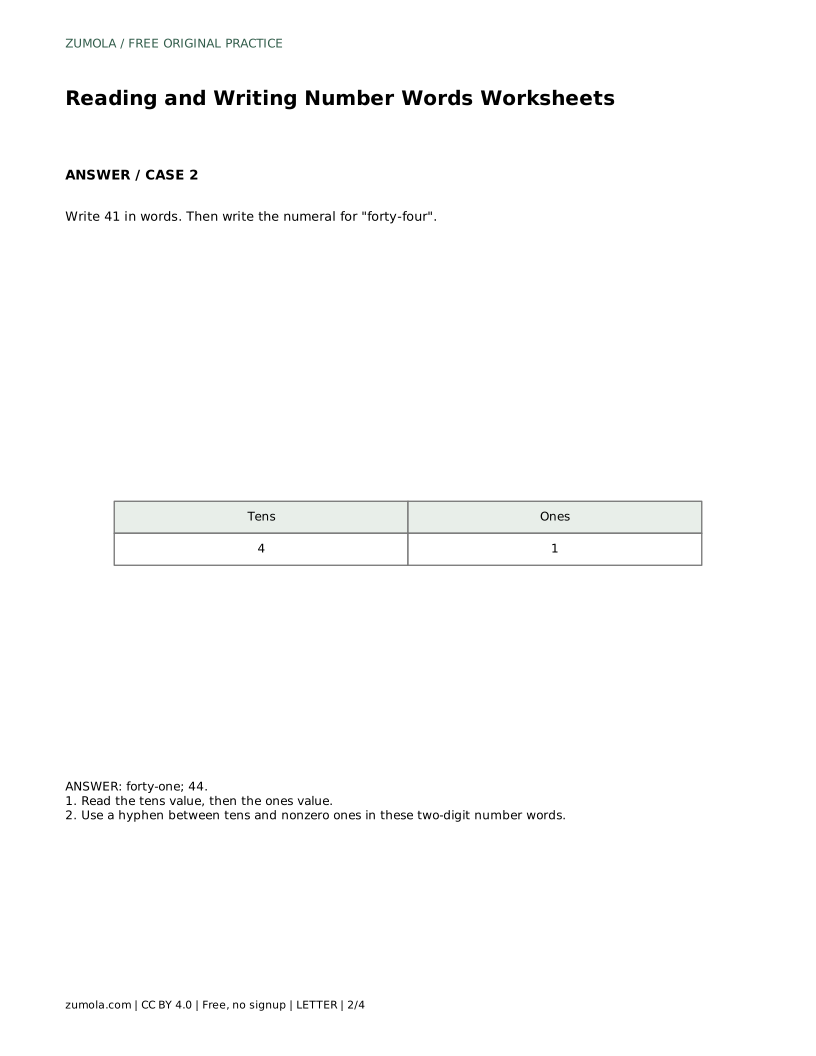
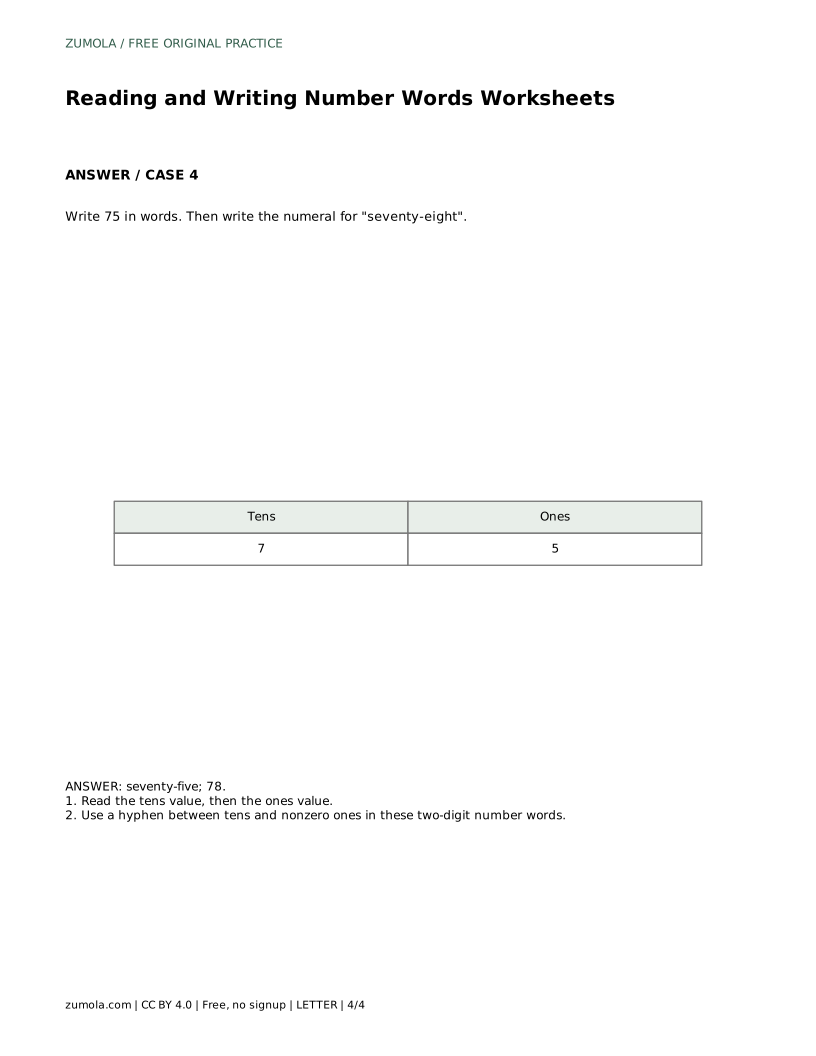
twenty-four; 27. Read the tens value, then the ones value. Use a hyphen between tens and nonzero ones in these two-digit number words.
No. Use a hyphen only when the ones digit is 1 through 9, as in twenty-four. Multiples of ten such as forty have no hyphen.
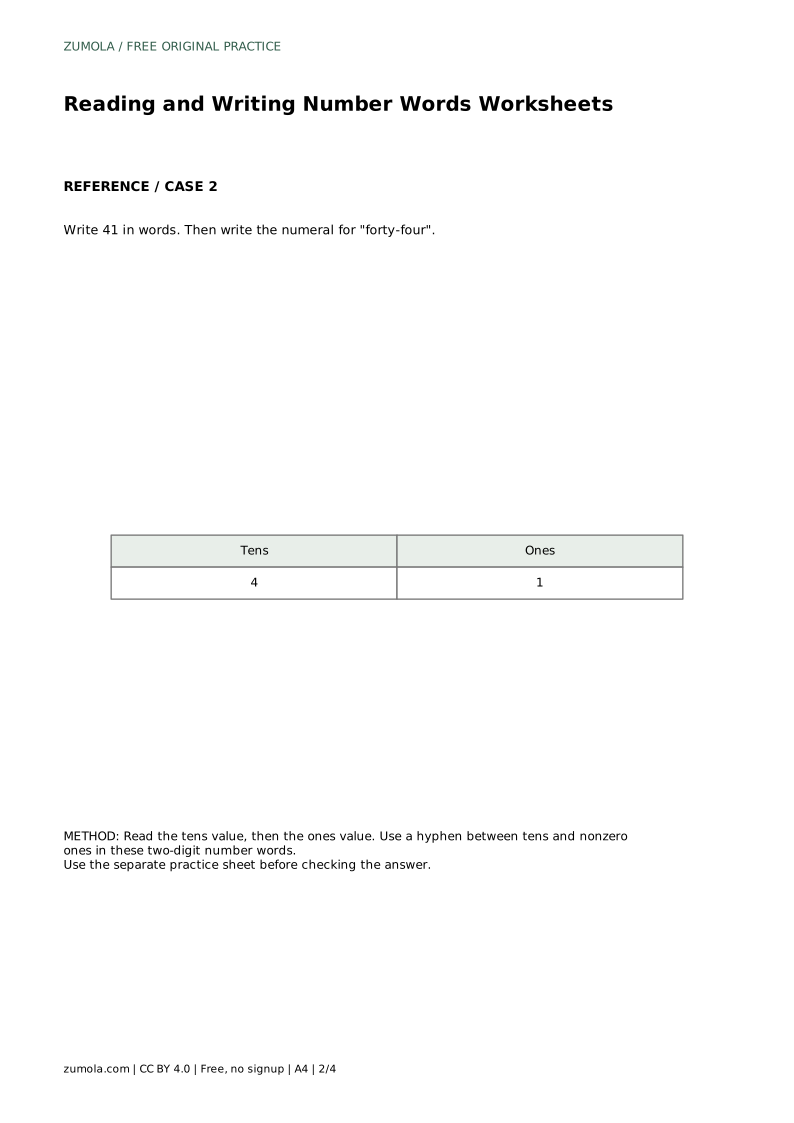
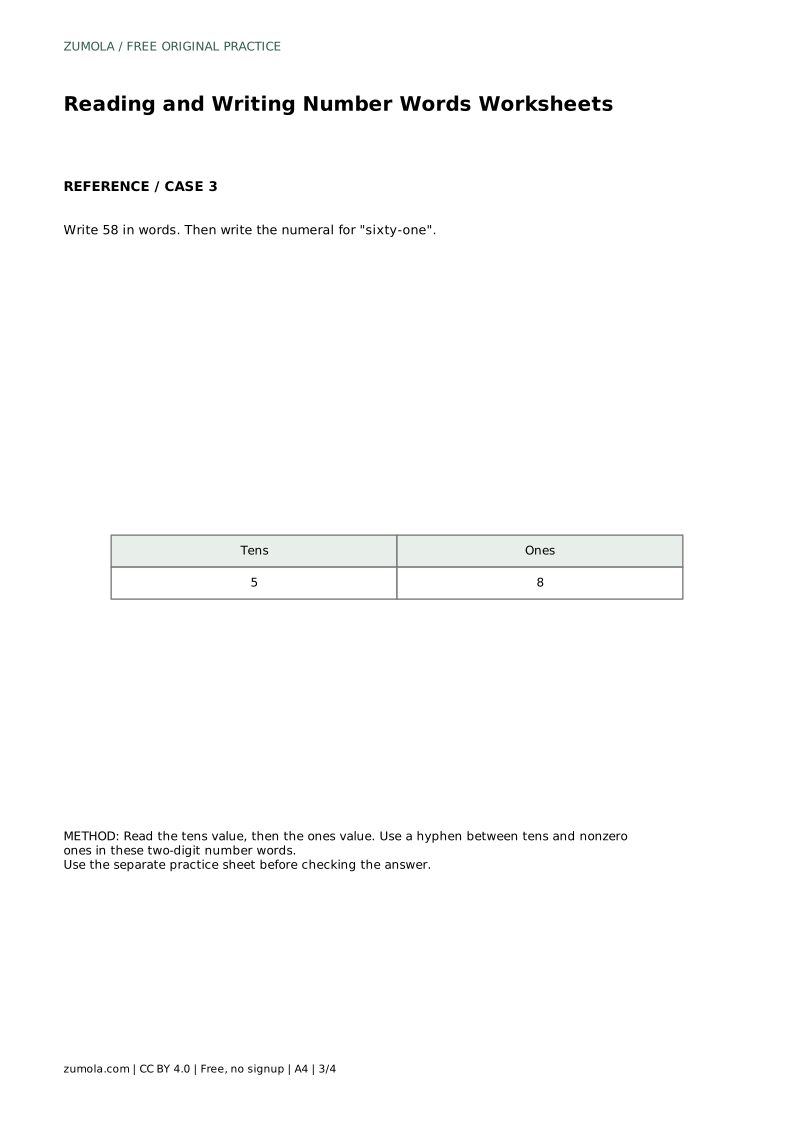
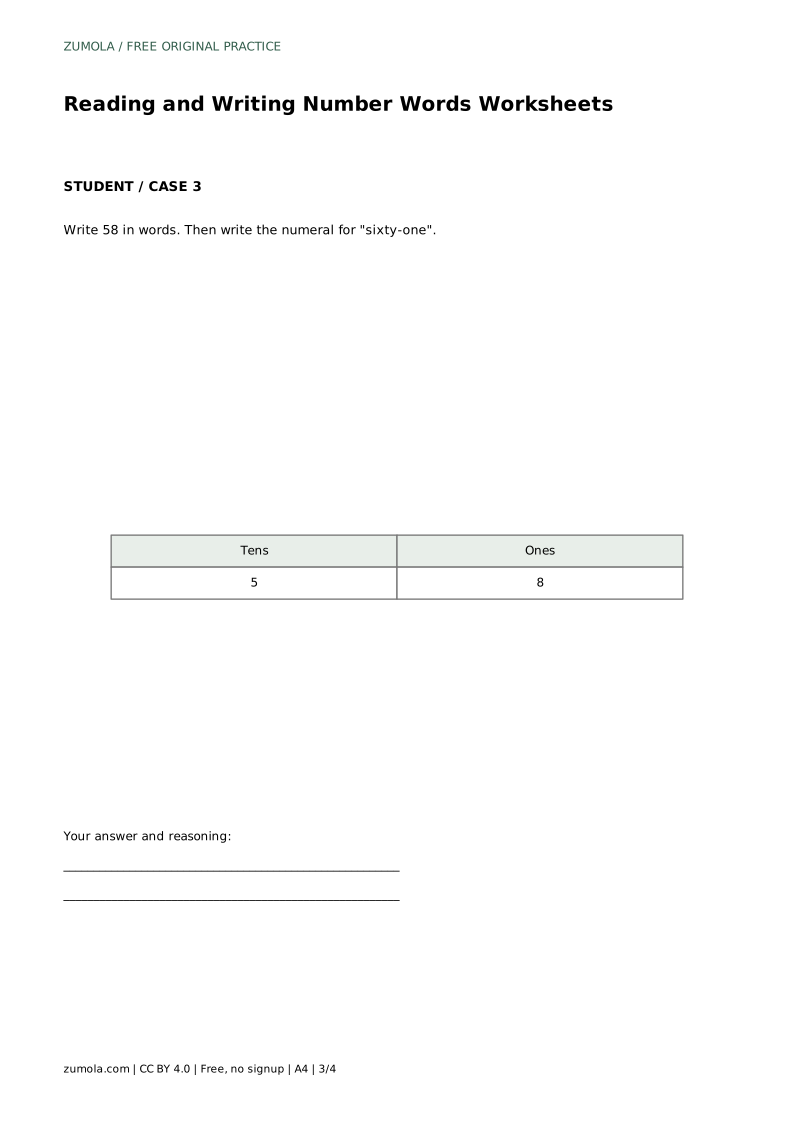
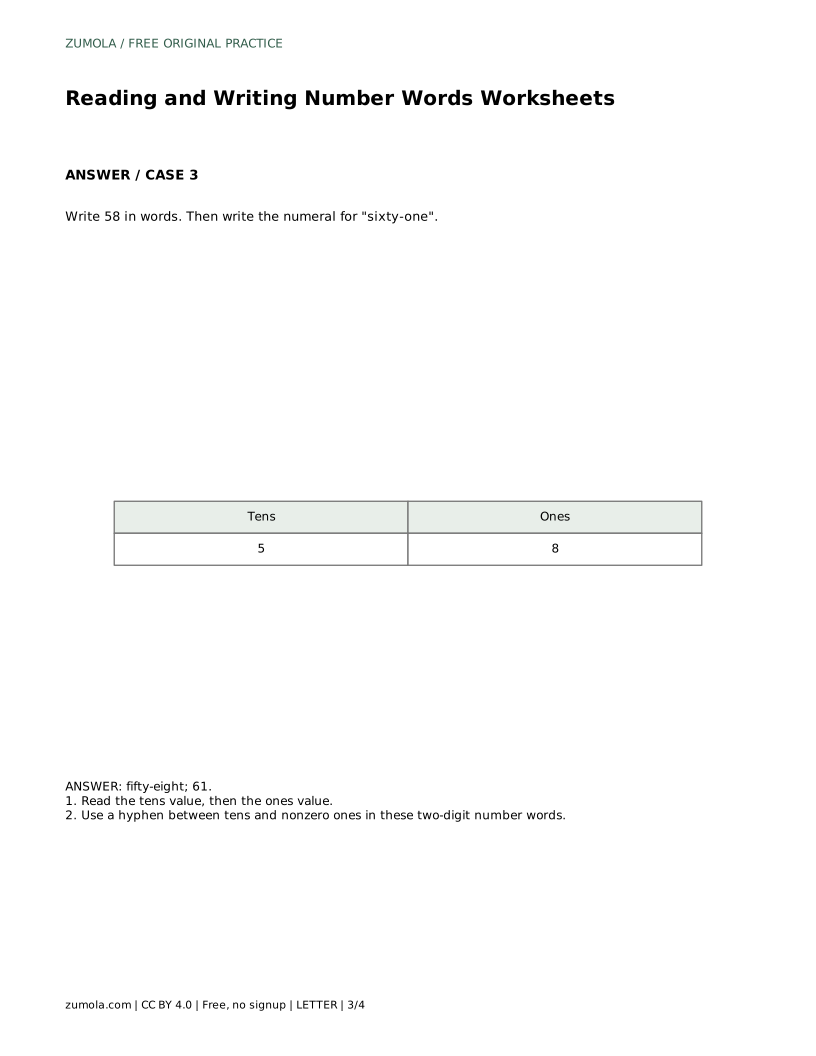
Split at the hyphen: sixty means 6 tens, one means 1 one, giving 61.
They have their own words and do not follow the tens-plus-ones pattern, so learn them as a separate group.
All math worksheets · Free coordinate paper
Original resources · CC BY 4.0 · Free for personal and classroom use with attribution.