Reference diagrams
LETTER · Download PDF
A4 · Download PDF
Free original resources
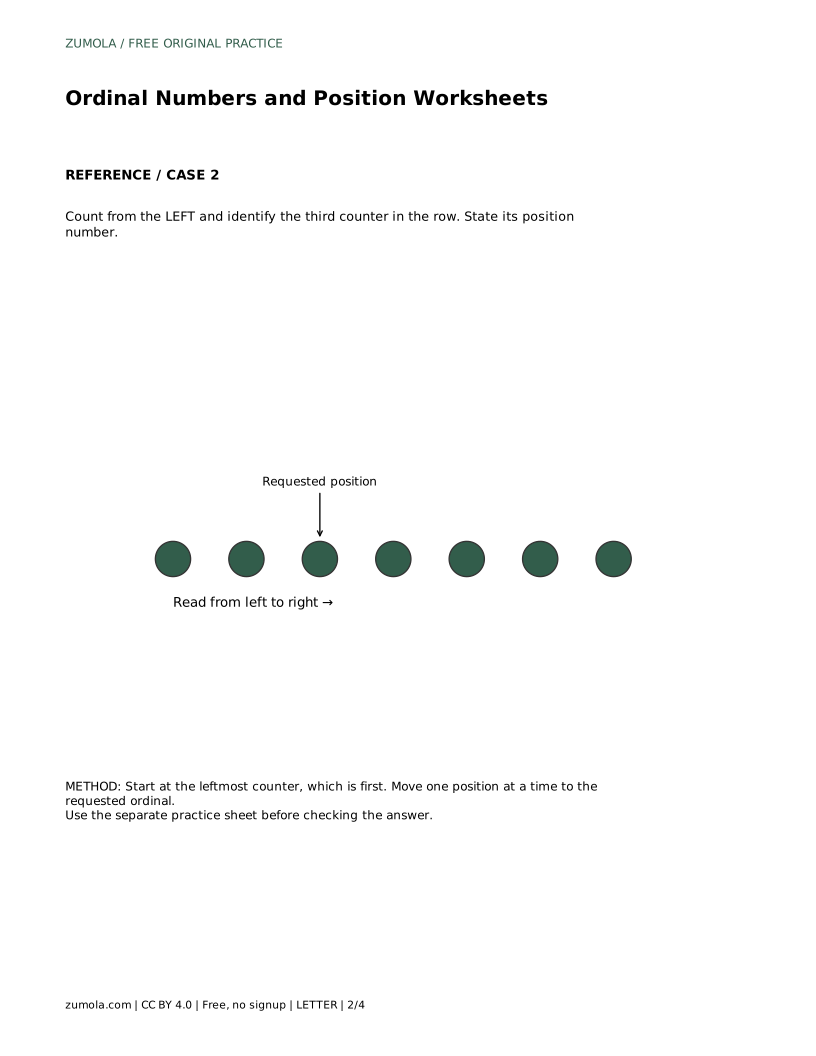
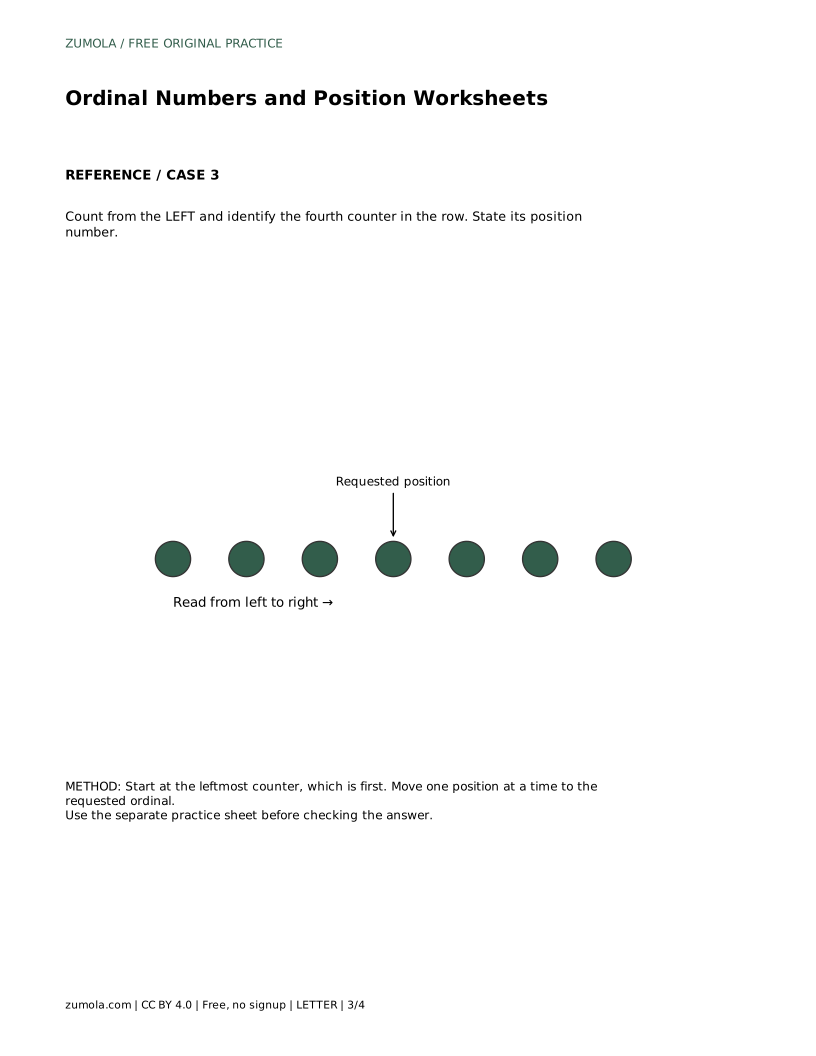
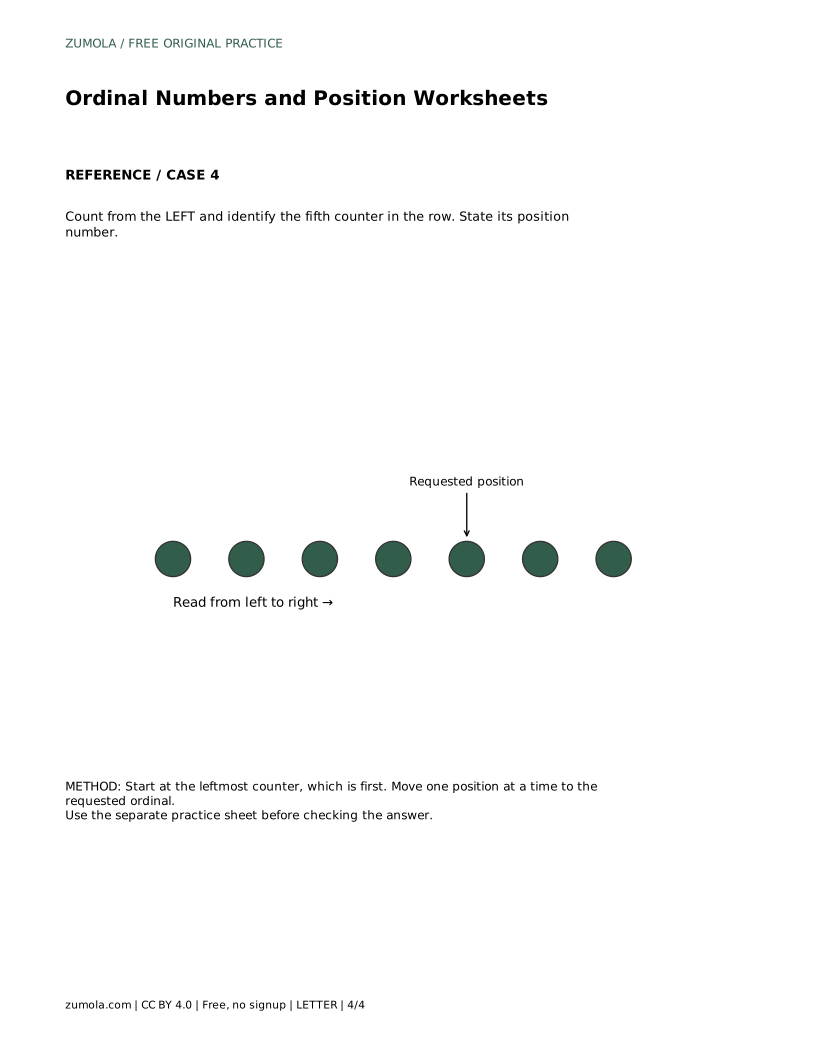
Teach ordinal position with rows of counters. Children count from the left, name first through seventh, and match each ordinal word to its position number.
Four original cases, with reference diagrams, practice sheets and worked answers. Everything is free; no signup required.
LETTER · Download PDF
A4 · Download PDF
LETTER · Download PDF
A4 · Download PDF
LETTER · Download PDF
A4 · Download PDF
Use A4 or US Letter to match your printer. Use the stated values and conditions to solve each exercise; diagrams are not physical measuring rulers.
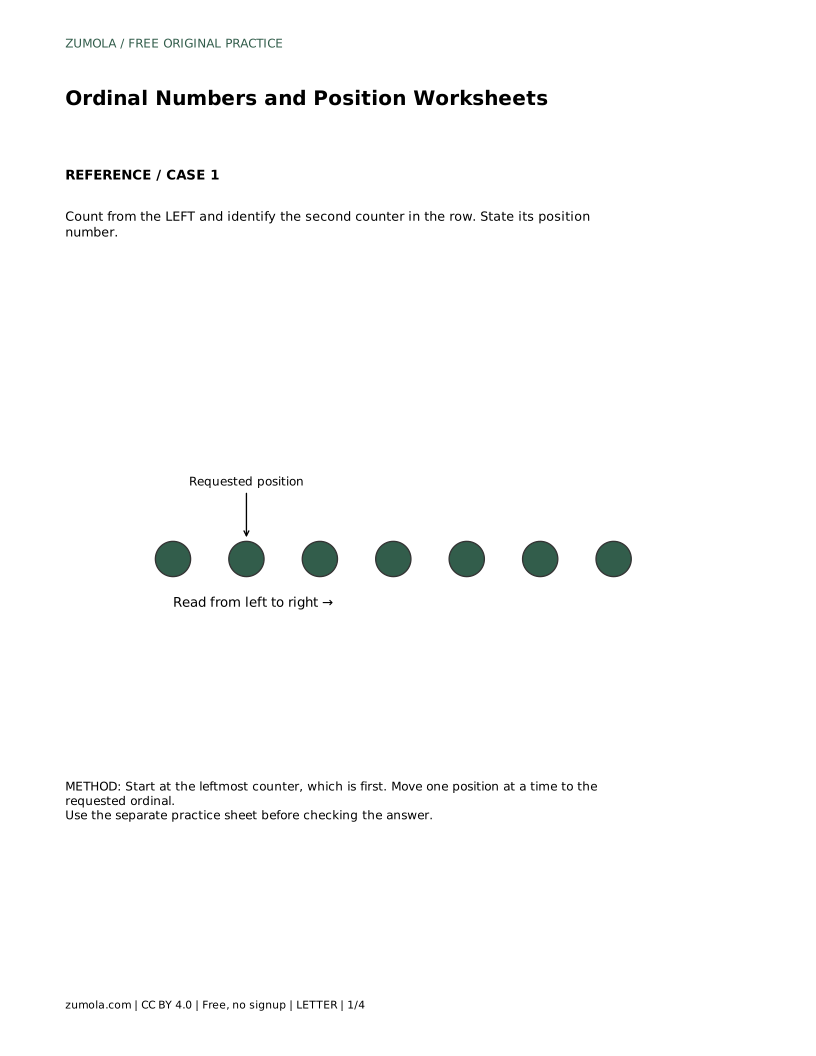
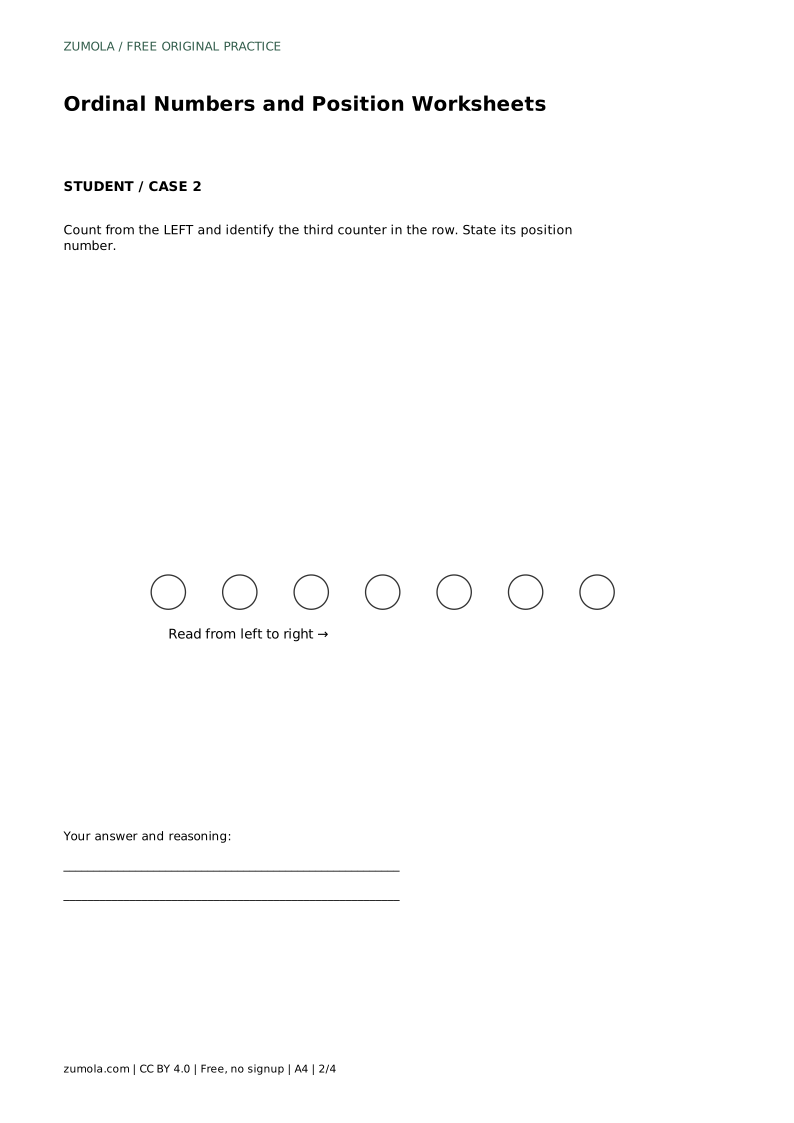
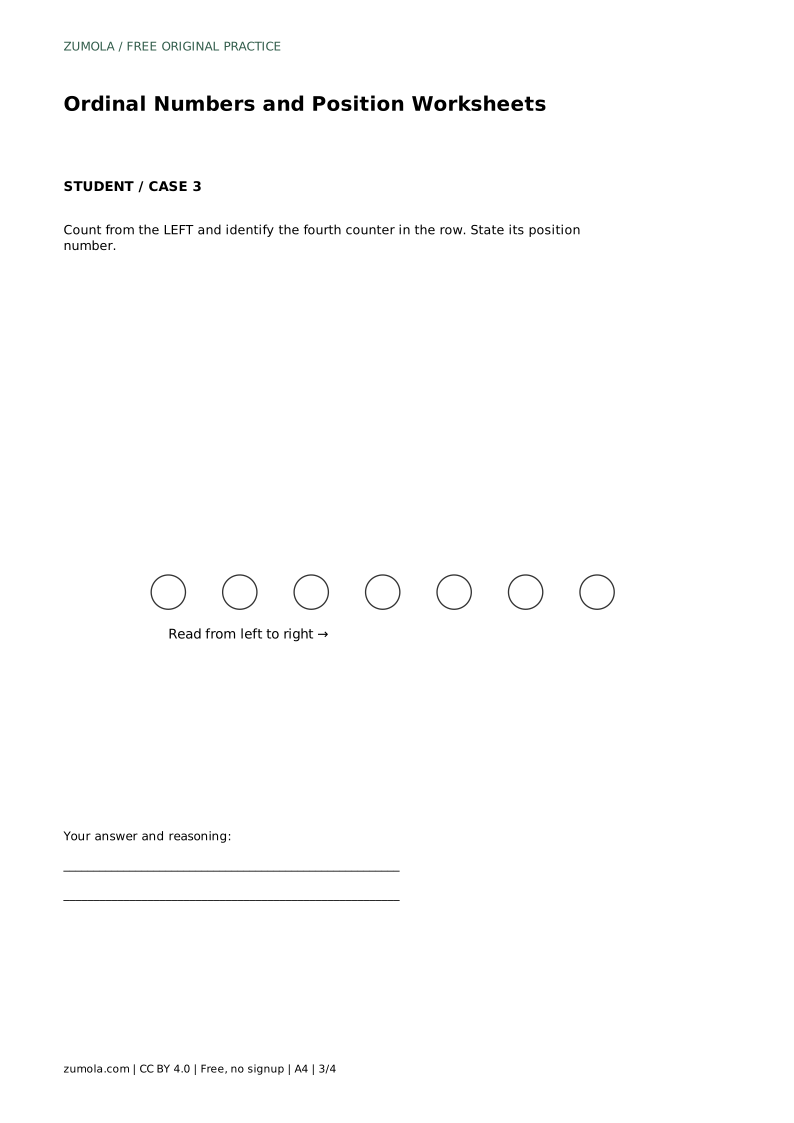
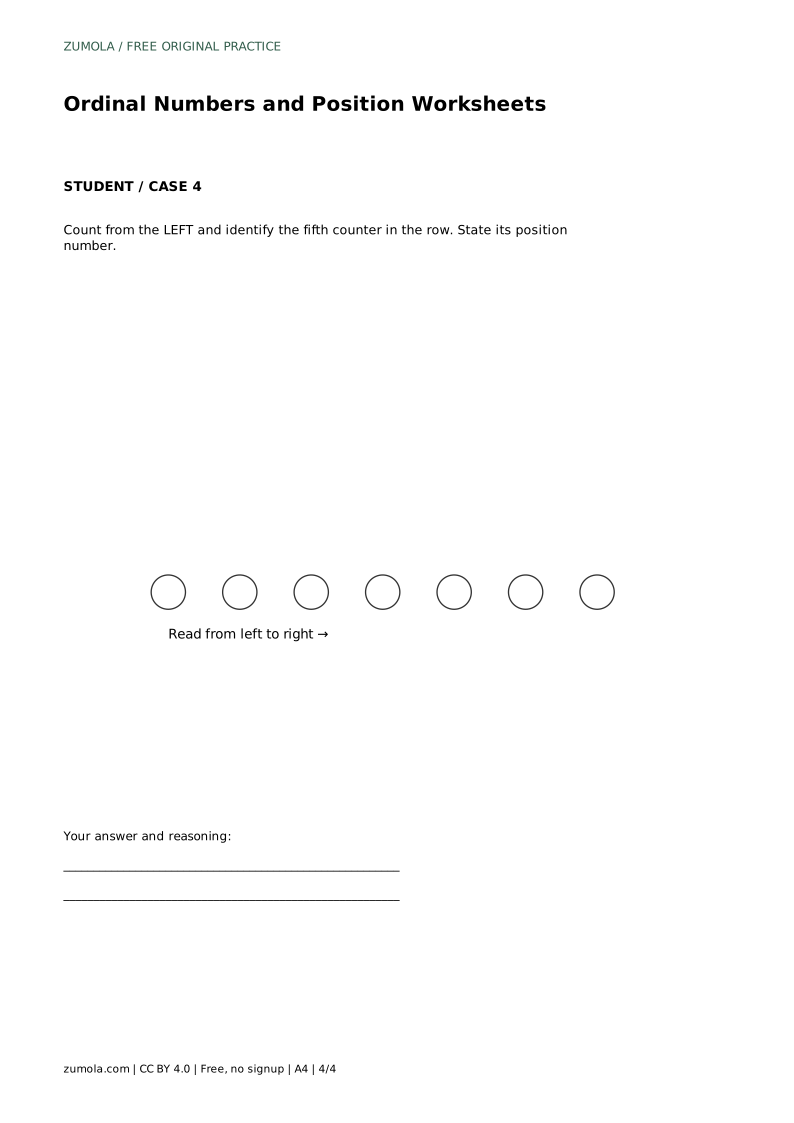
Ordinal numbers name a position in a line, not a quantity. A row of seven counters gives children a clear, countable line where the leftmost counter is always first. These worksheets ask learners to count from the left, move one position at a time, and state the position number for a named ordinal such as second, third, fourth or fifth. The direction matters: counting from the right would give a different answer, so every task states its starting side.
An ordinal number answers the question where, while a counting number answers how many. In a row of seven counters, the counter at position 3 is the third counter, and there are still seven counters in the whole row. Saying third does not mean there are three counters; it means you reach that counter after counting first, second, third from the chosen end.
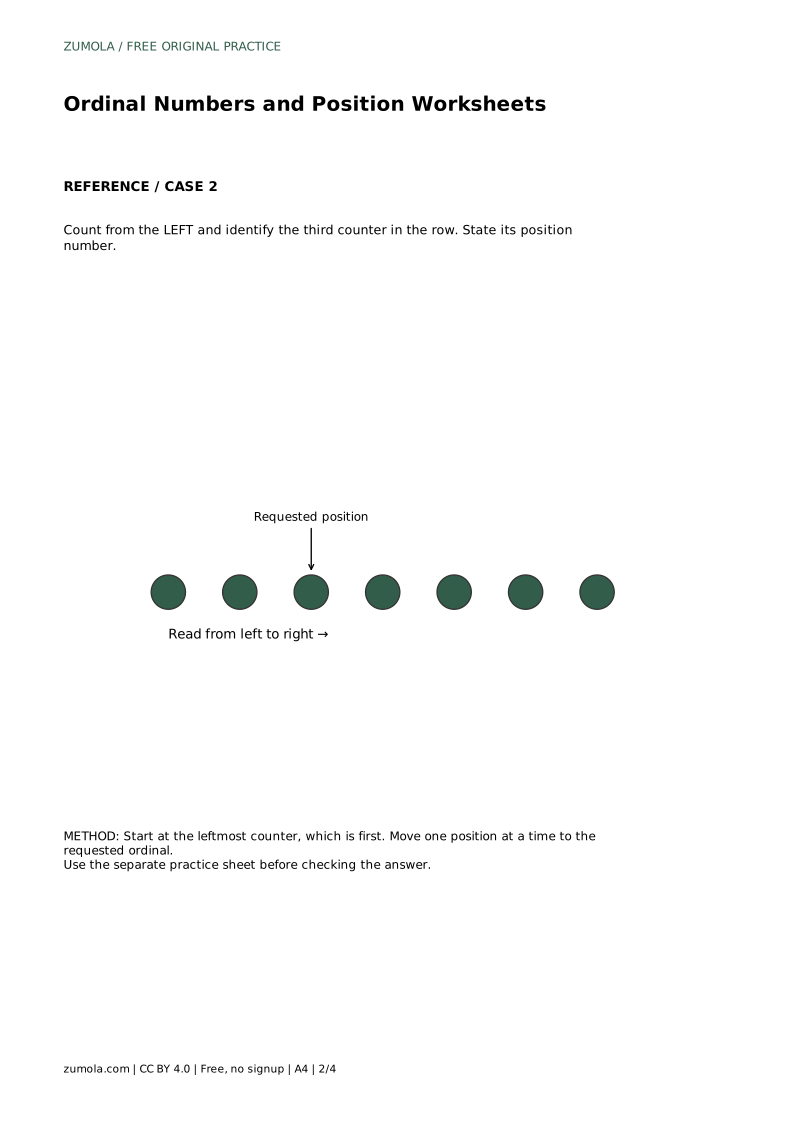
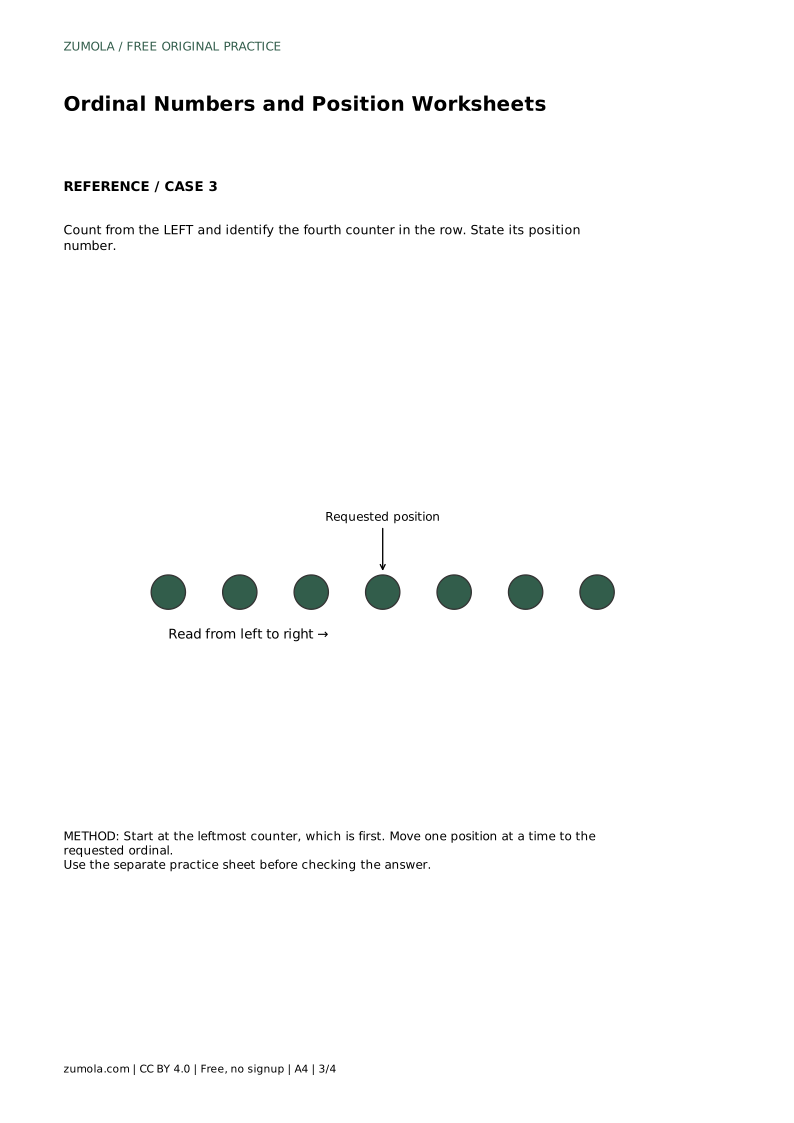
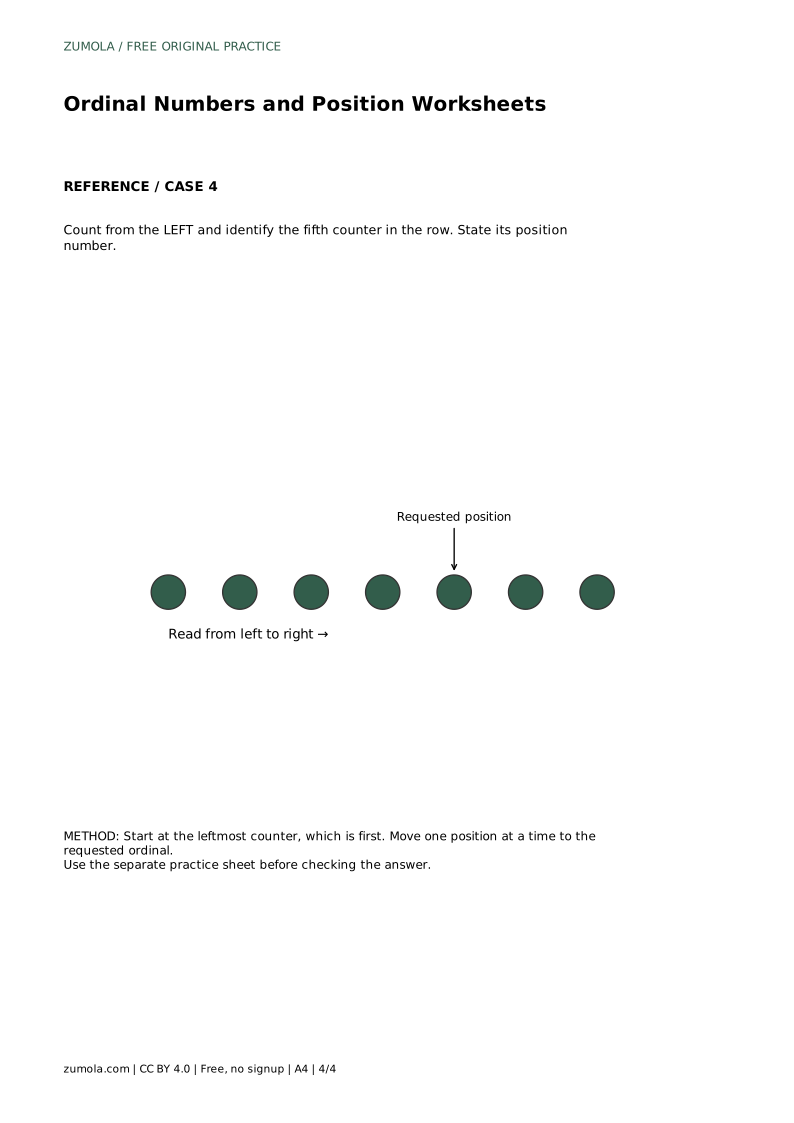
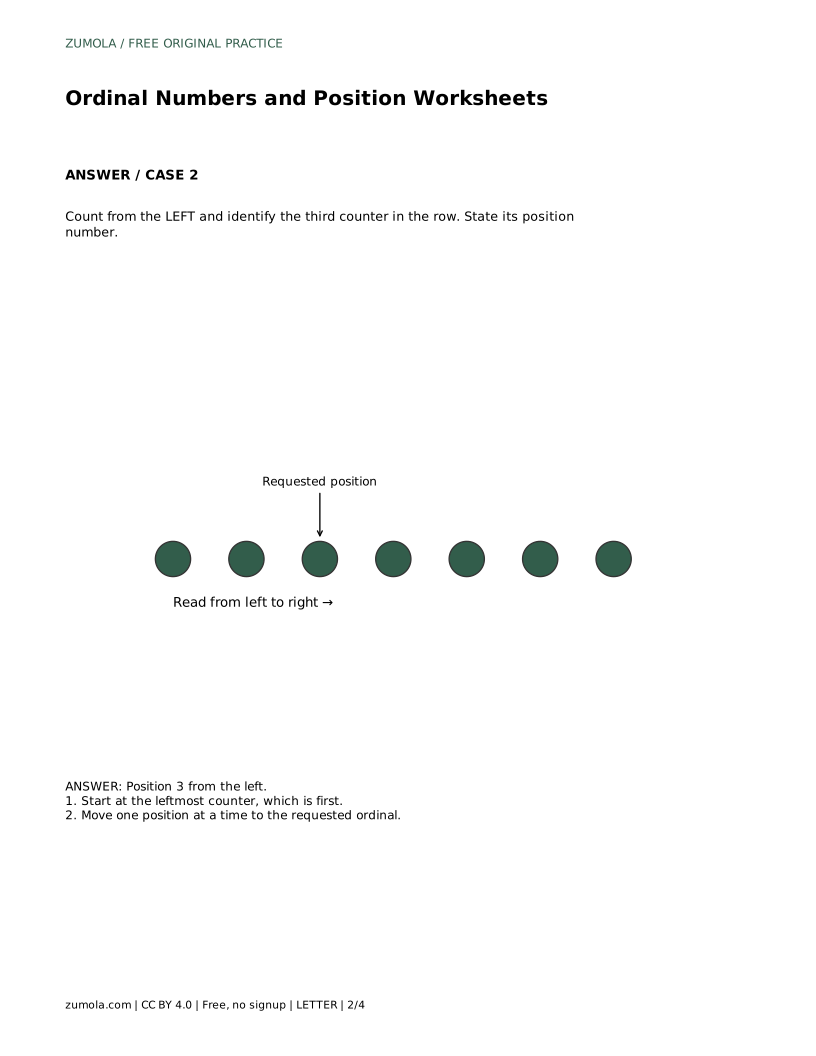
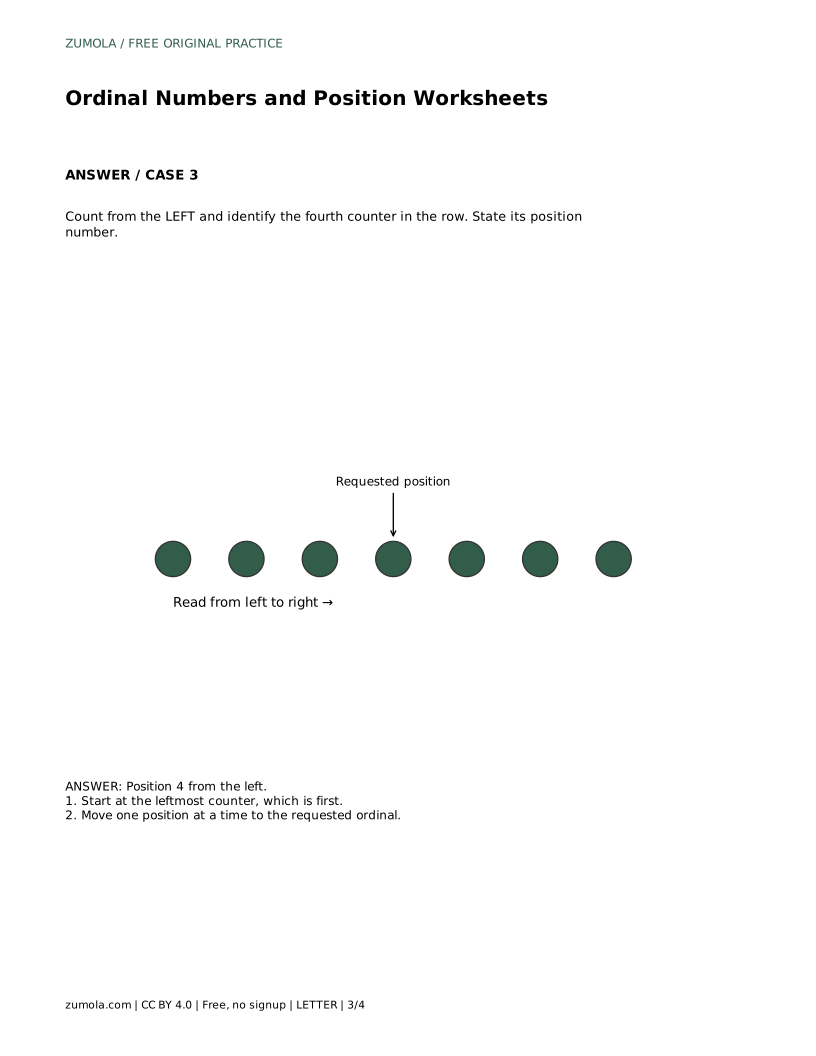
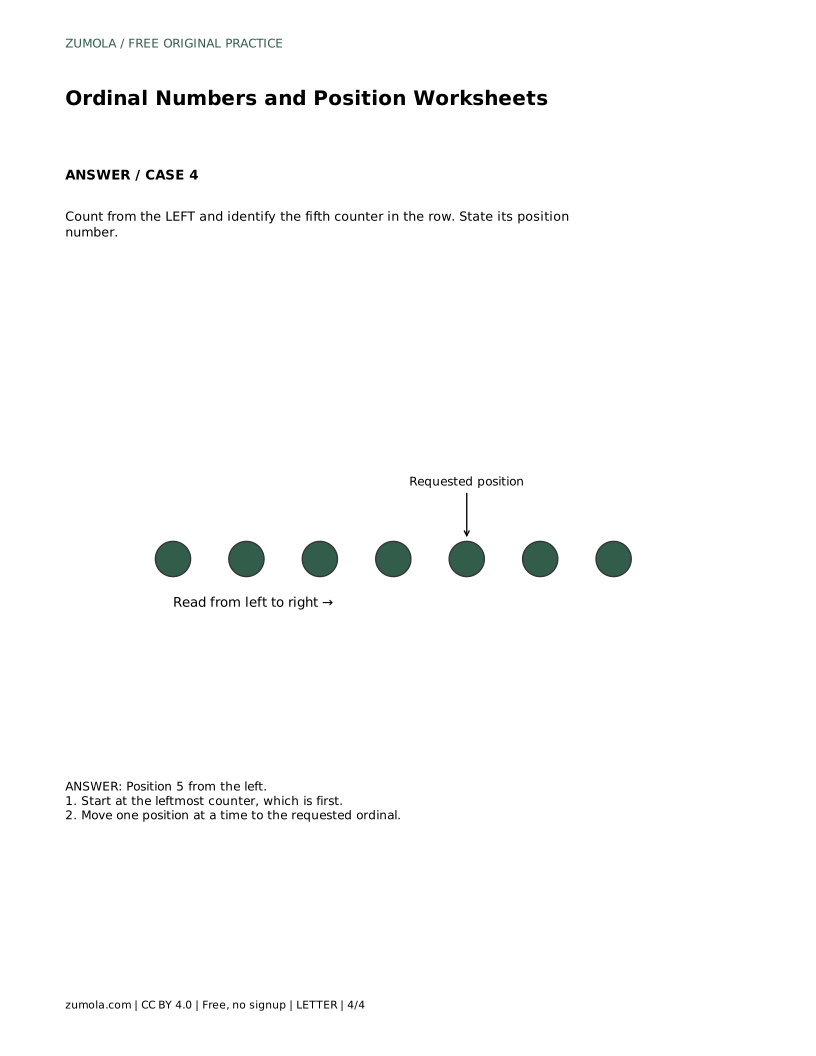
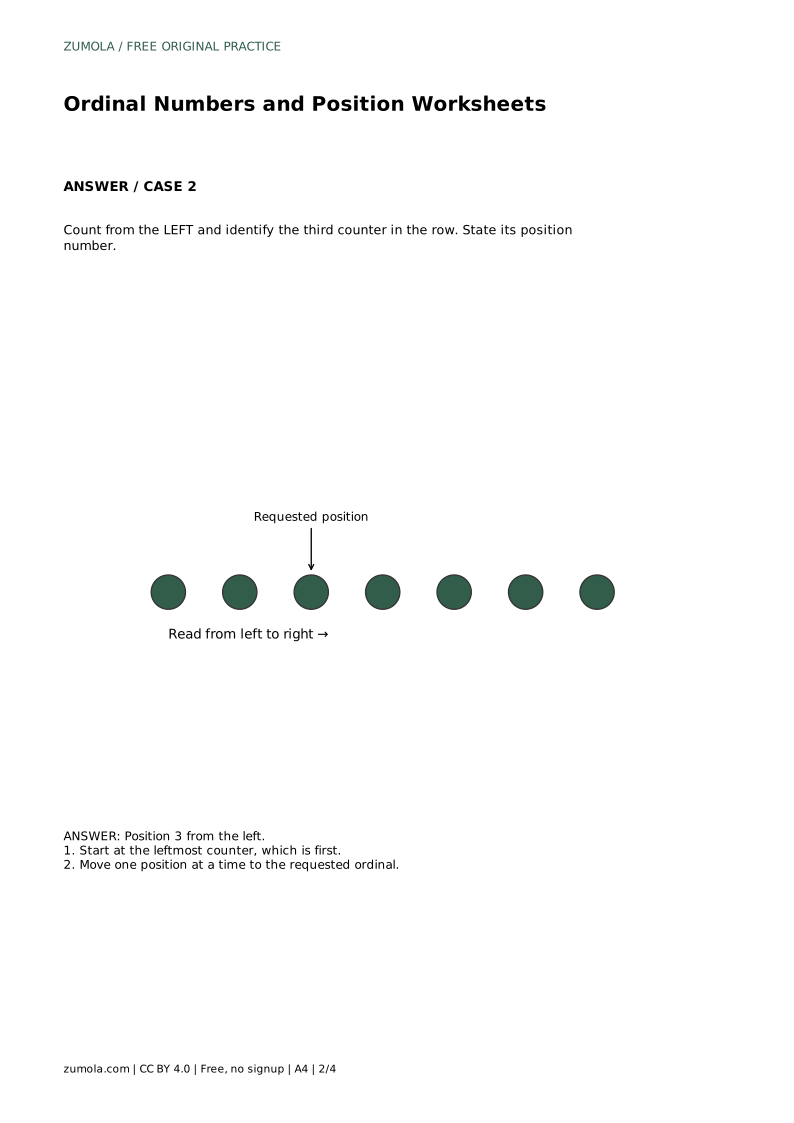
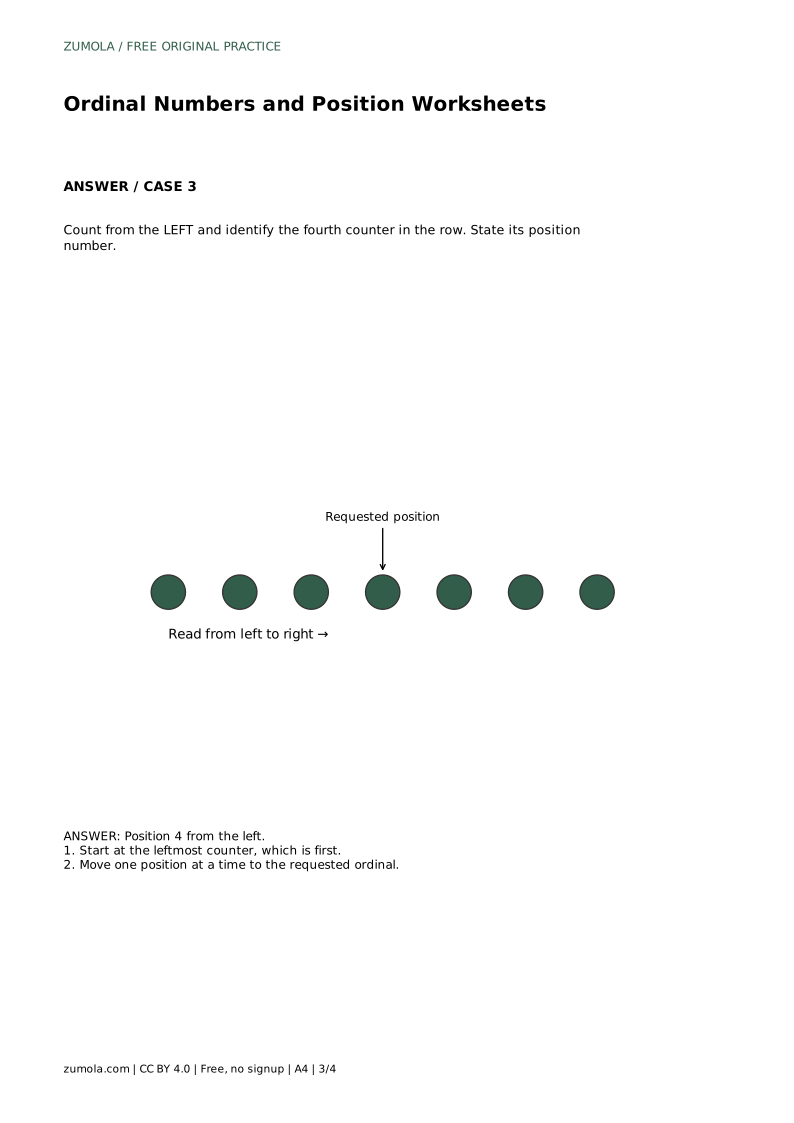
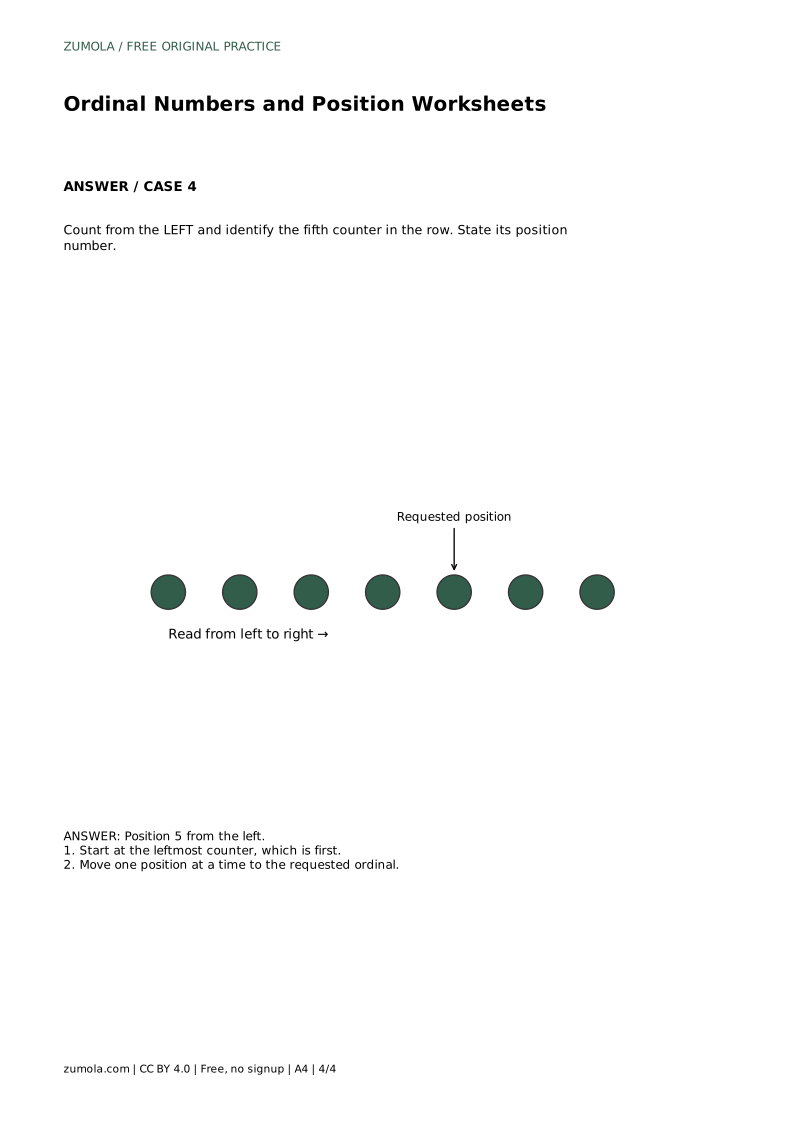
Position words pair with position numbers: first with 1, second with 2, third with 3, fourth with 4, fifth with 5, sixth with 6, seventh with 7. Keep the pair visible on the page so children connect the word to the numeral rather than memorising one without the other.
Direction is part of the instruction. The same counter can be third from the left and fifth from the right in a seven-counter row. Always read the stated starting side before counting, and say the side aloud as you begin.
Children often skip a counter when counting quickly, especially in longer rows. Moving one position per spoken ordinal keeps the count honest. If the finger jumps two counters, the spoken word and the position no longer match, and the answer drifts by one or more places.
A useful check is to count again from the same side and see whether the finger lands on the same counter. A second check is to count from the opposite side and confirm the position changes, which shows the child is tracking direction rather than guessing.
For rows longer than seven, the same method extends: eighth, ninth, tenth, and so on. The pattern of word endings is irregular in English, so pair each new word with its numeral on the sheet rather than assuming children will generalise the ending.
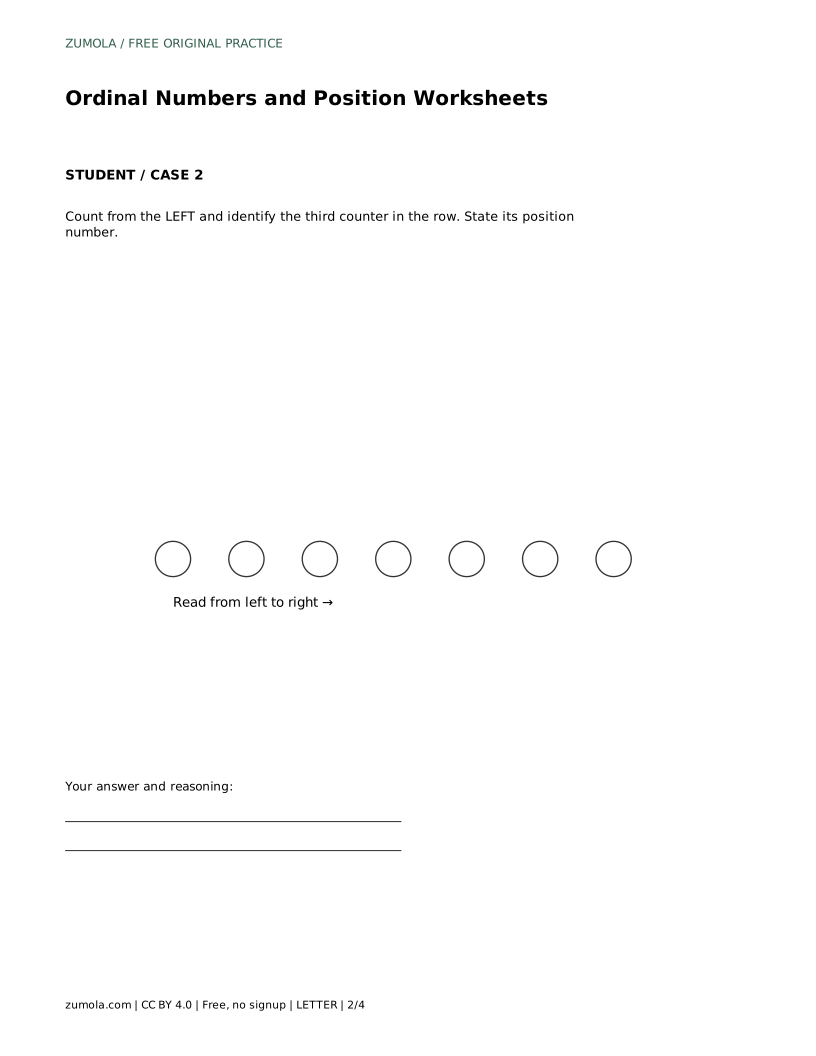
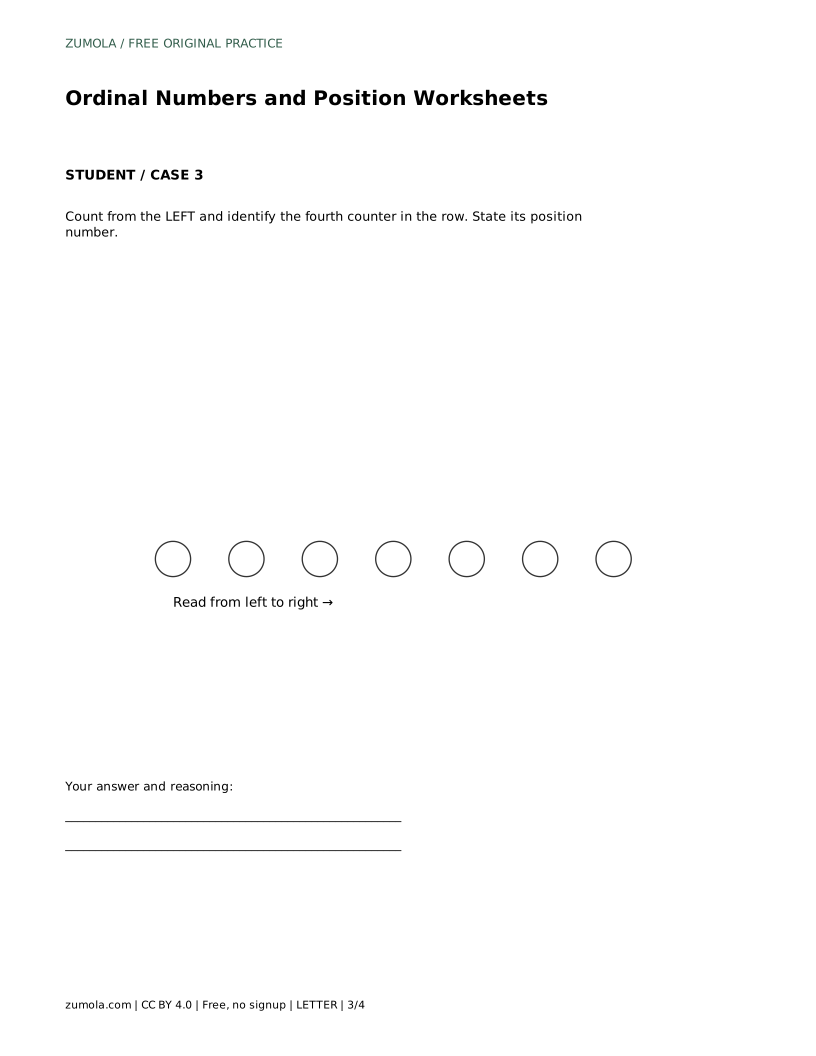
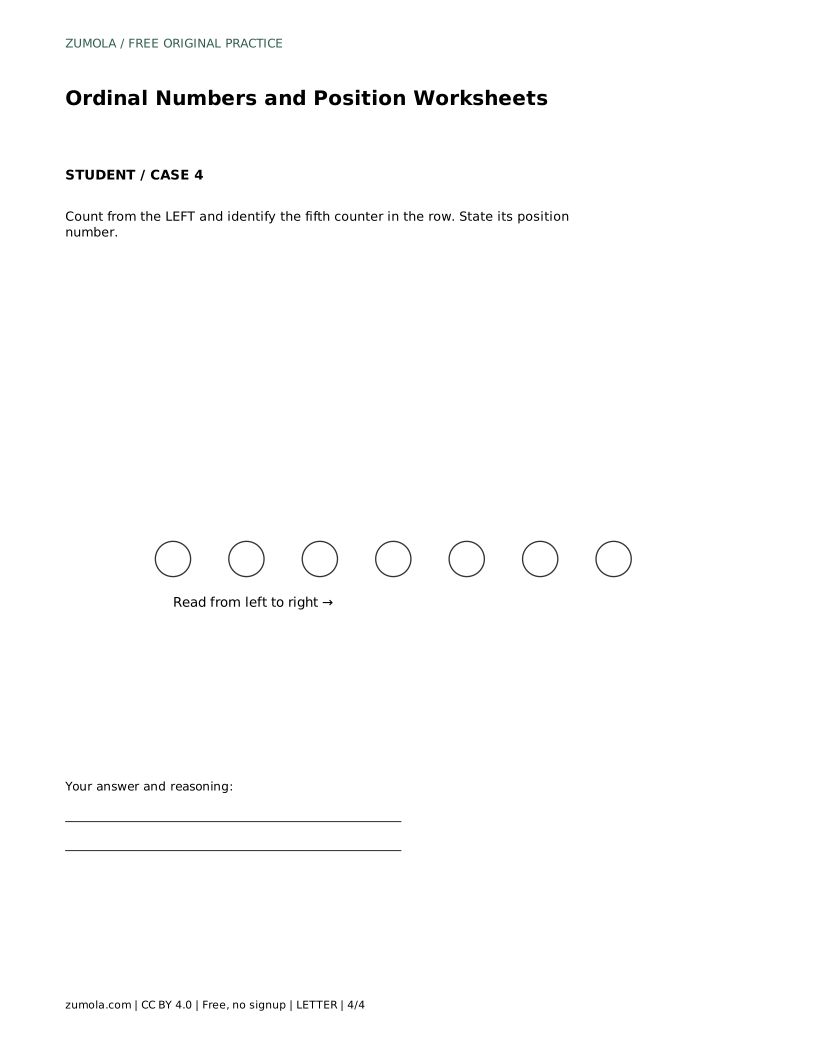
Each task names a direction and an ordinal word, and the child marks or writes the position number of that counter. Keep the row visible while answering so the child can point and count rather than recall from memory.
Answers should include both the position number and the ordinal word, for example position 2 and second. Accept a correctly marked counter with a clear label as equivalent to a written sentence, provided the direction matches the instruction.
Most errors come from direction, skipping, or confusing quantity with position. A child who counts from the right when the task says left will usually be off by a consistent amount, which is easy to spot and correct by rereading the direction.
A child who says there are three counters when asked for the third has mixed quantity with position. Ask how many counters are in the whole row, then ask which counter is third, so the two ideas separate.
Off-by-one errors often appear when the child starts counting at zero or begins with the second counter as first. Restart at the leftmost counter and say first clearly before moving.
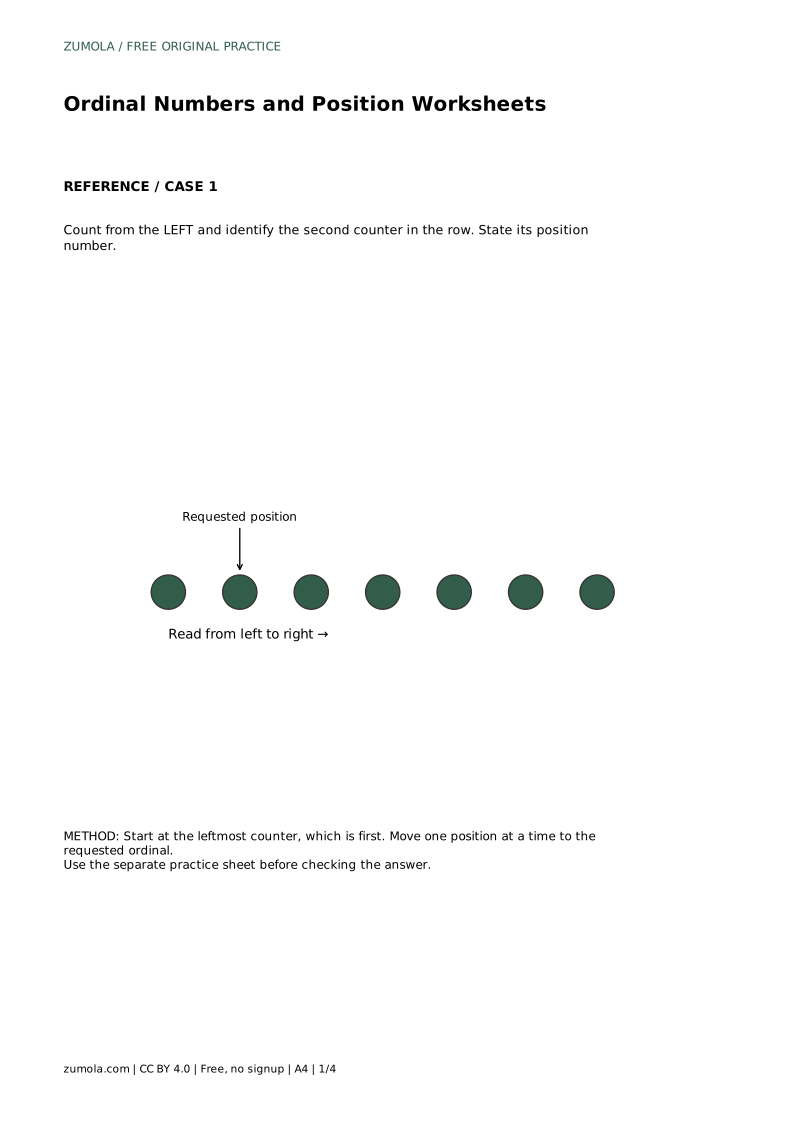
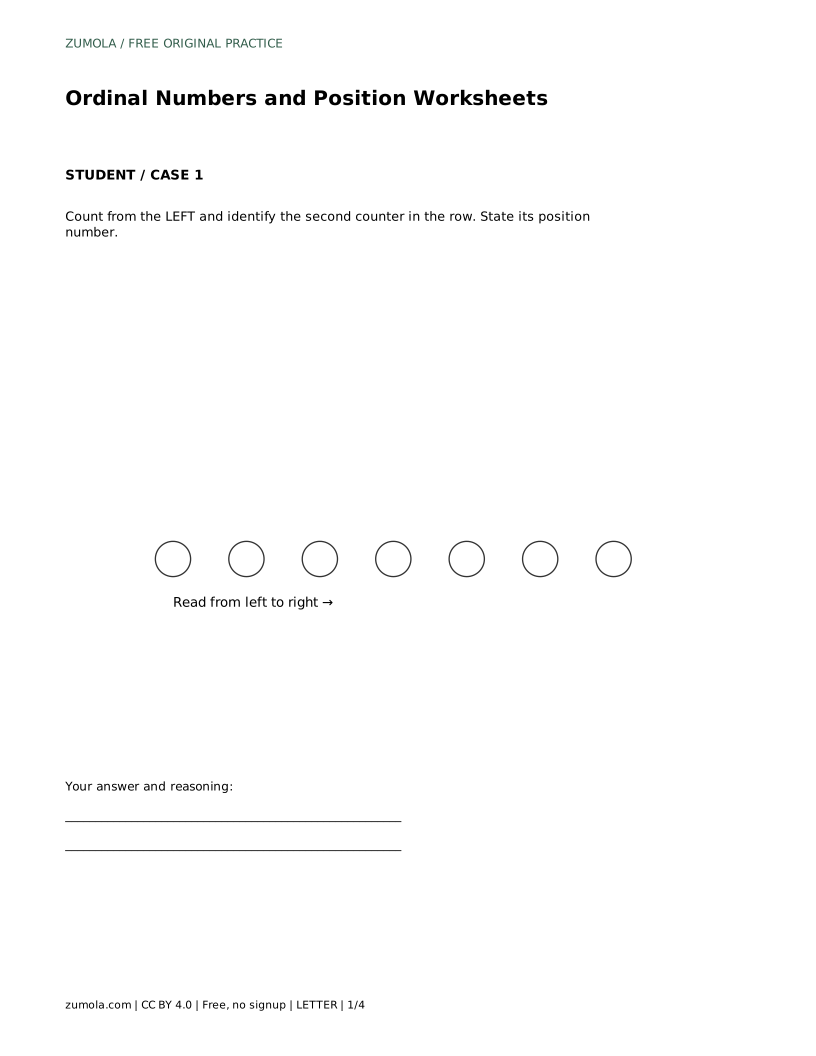
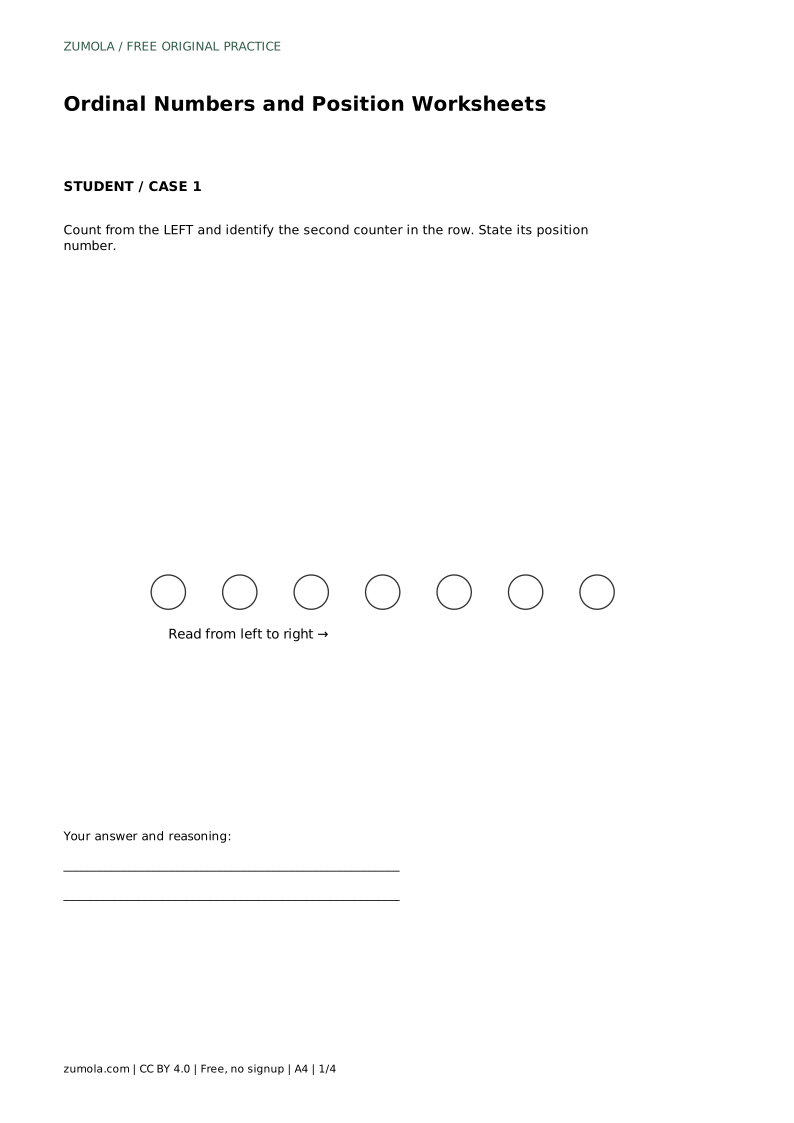
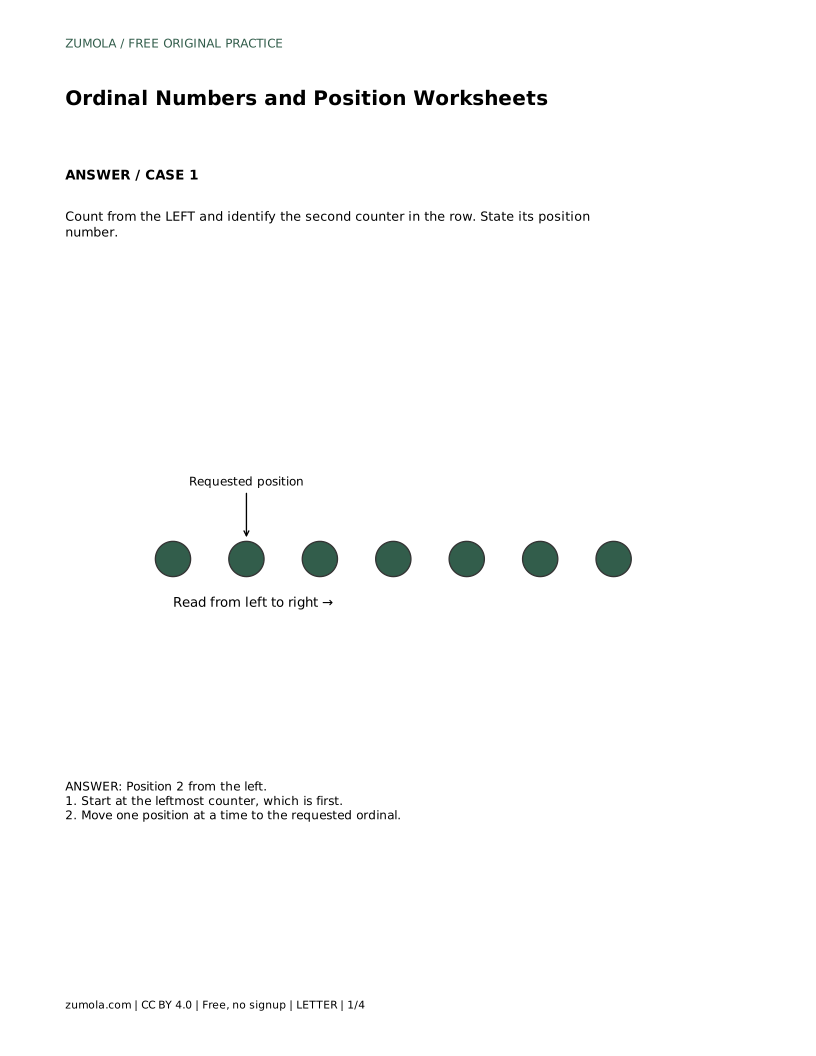
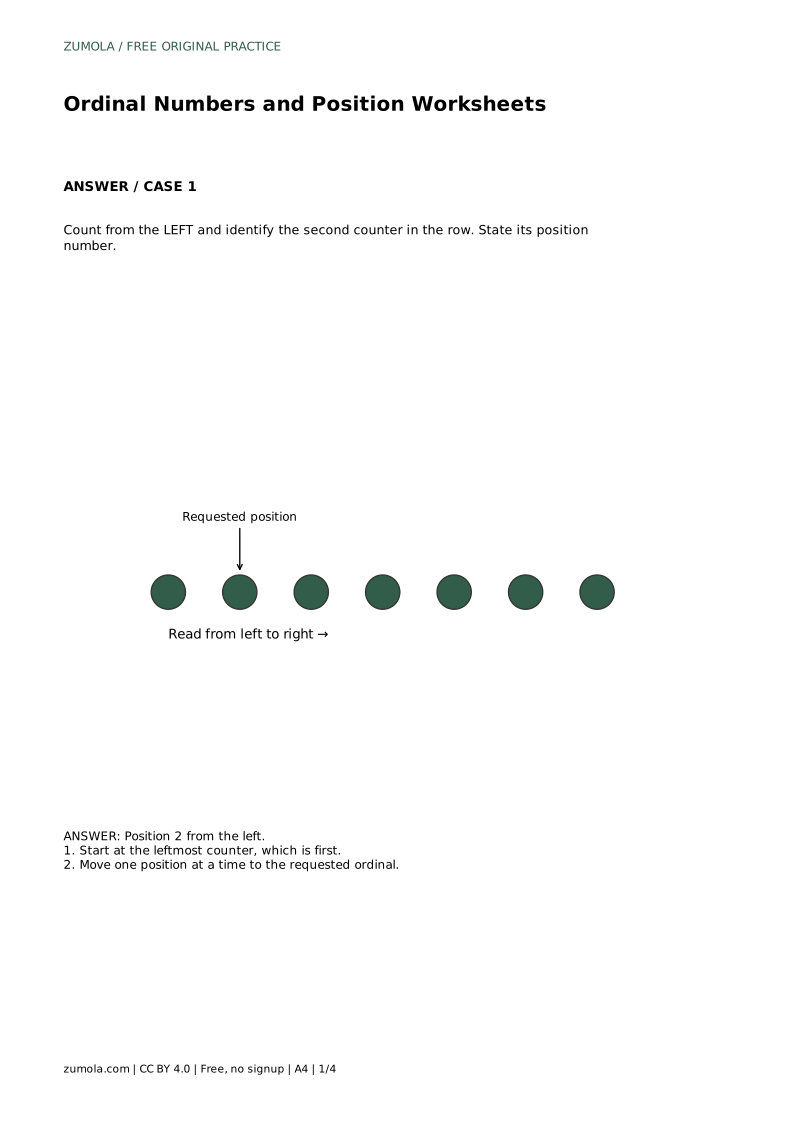
Count from the LEFT and identify the second counter in the row. State its position number.
Position 2 from the left. Start at the leftmost counter, which is first. Move one position at a time to the requested ordinal.
Yes. In a seven-counter row, the same counter can be third from the left and fifth from the right, so always count from the side named in the task.
Both, paired together, such as 2 and second. The pair builds the link between numeral and position word.
Choose A4 or US Letter to match the paper loaded in your printer. The diagrams support mathematical reasoning rather than physical measurement.
All math worksheets · Free coordinate paper
Original resources · CC BY 4.0 · Free for personal and classroom use with attribution.