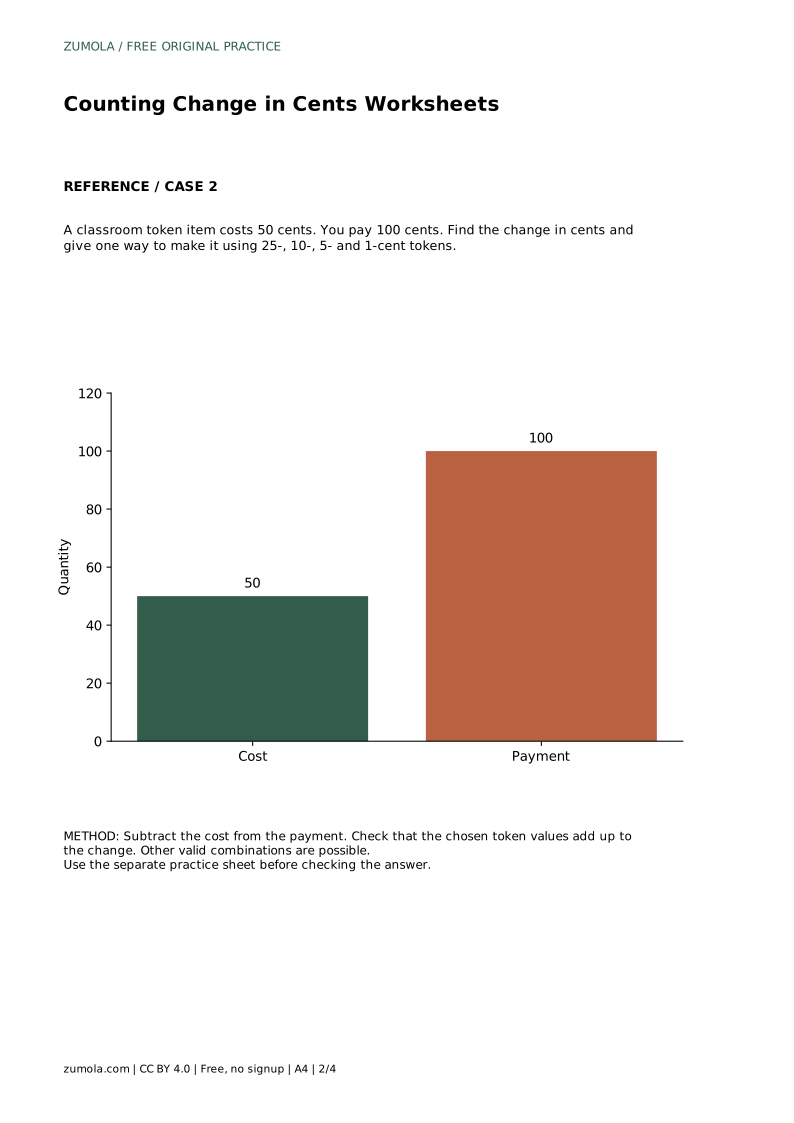
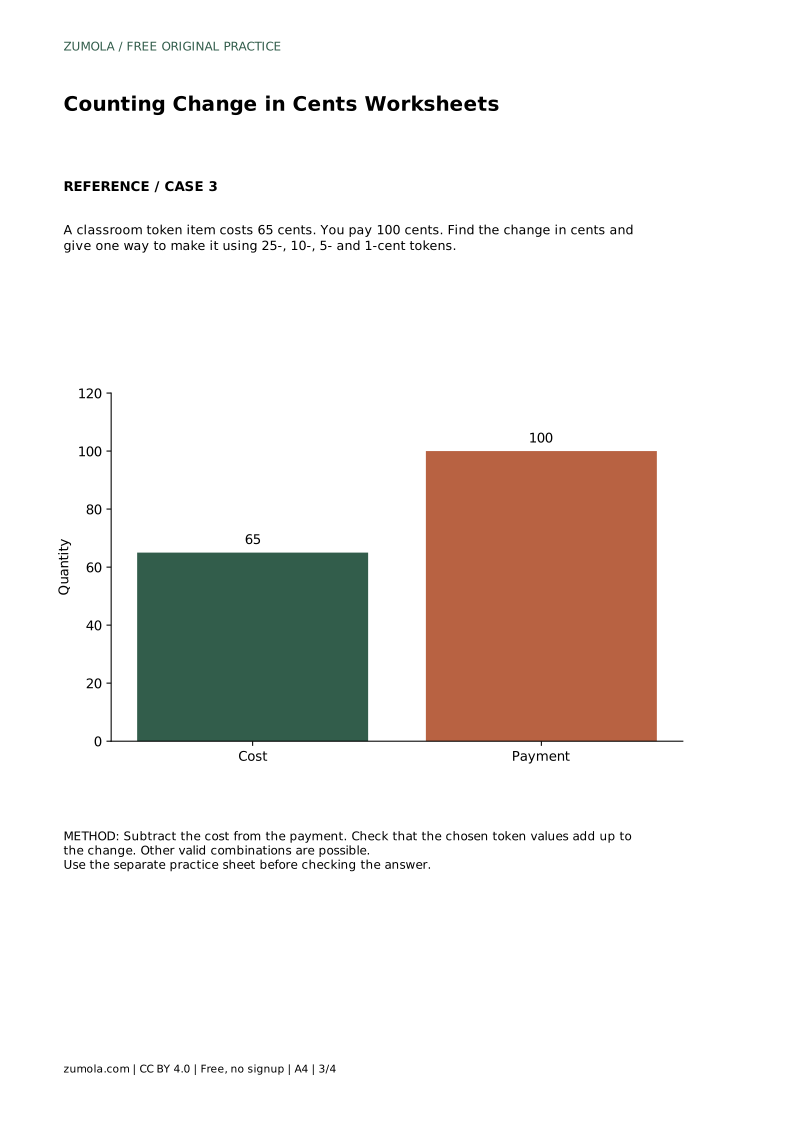
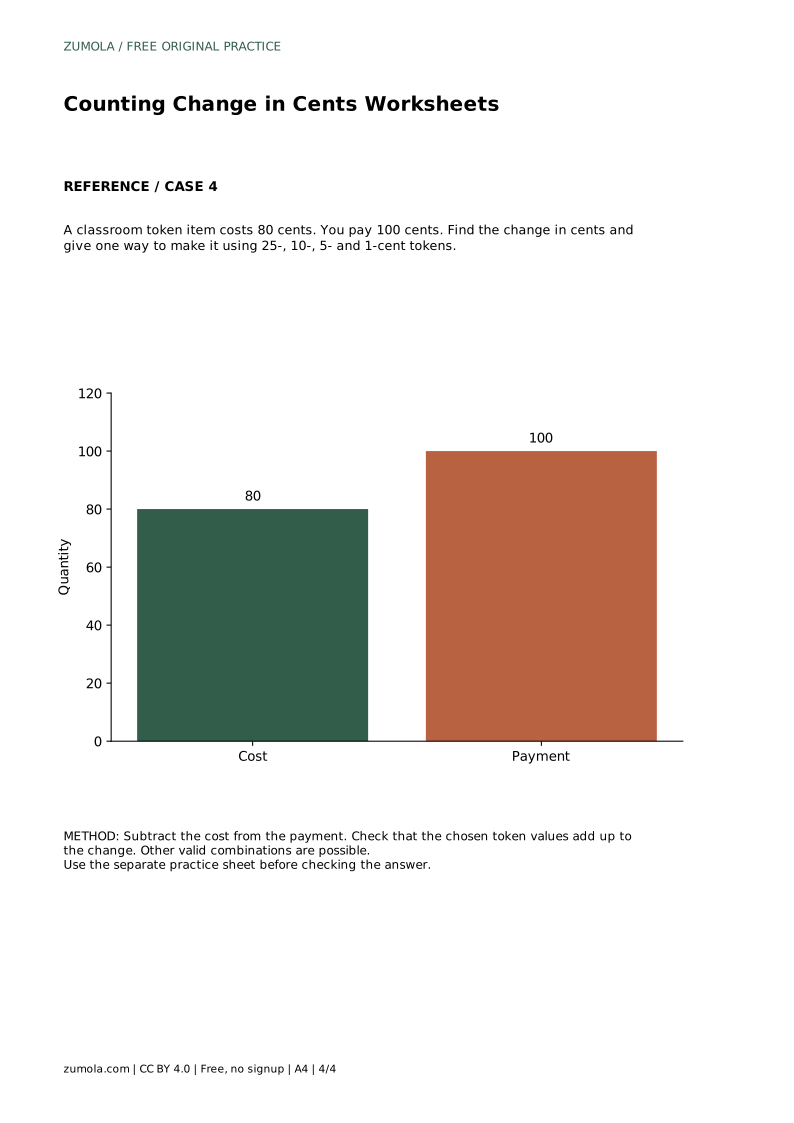
Reference diagrams
LETTER · Download PDF
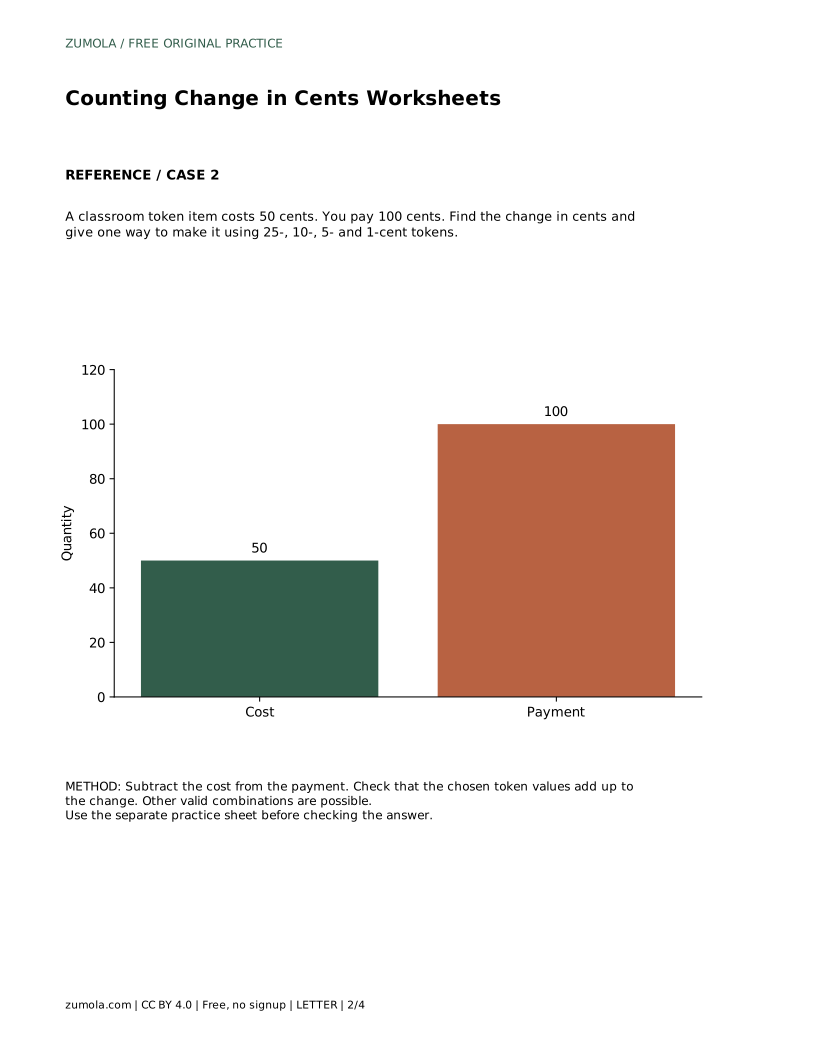
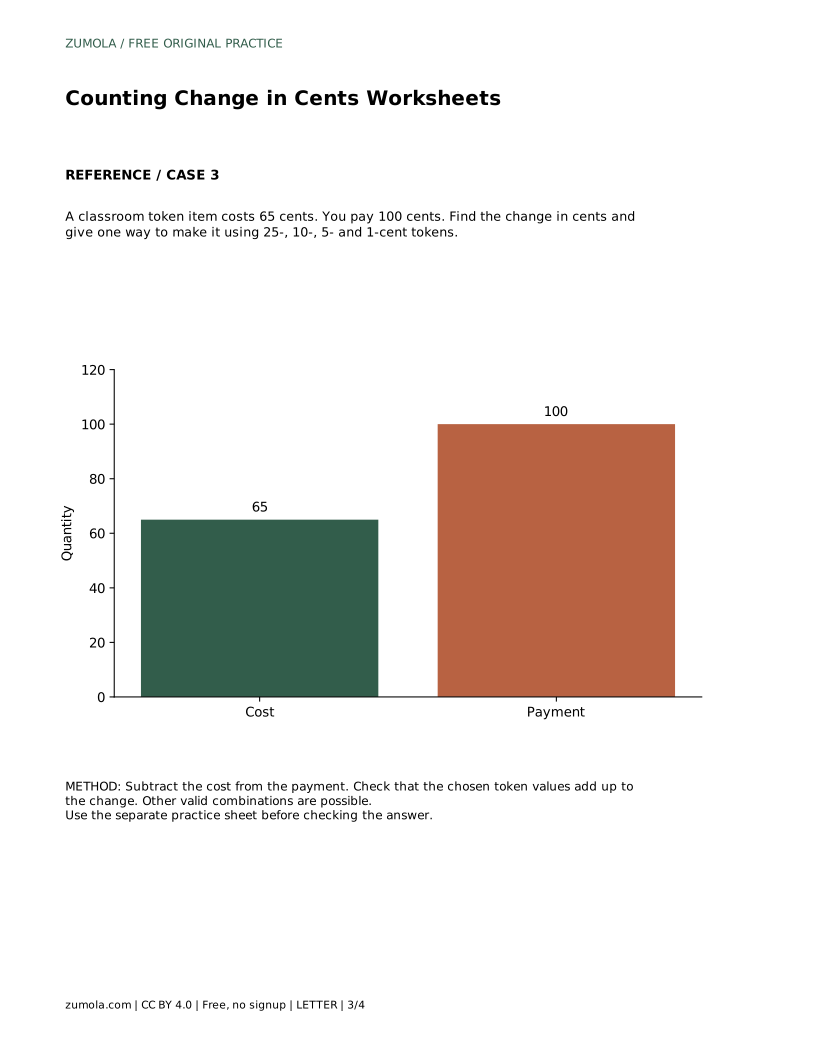
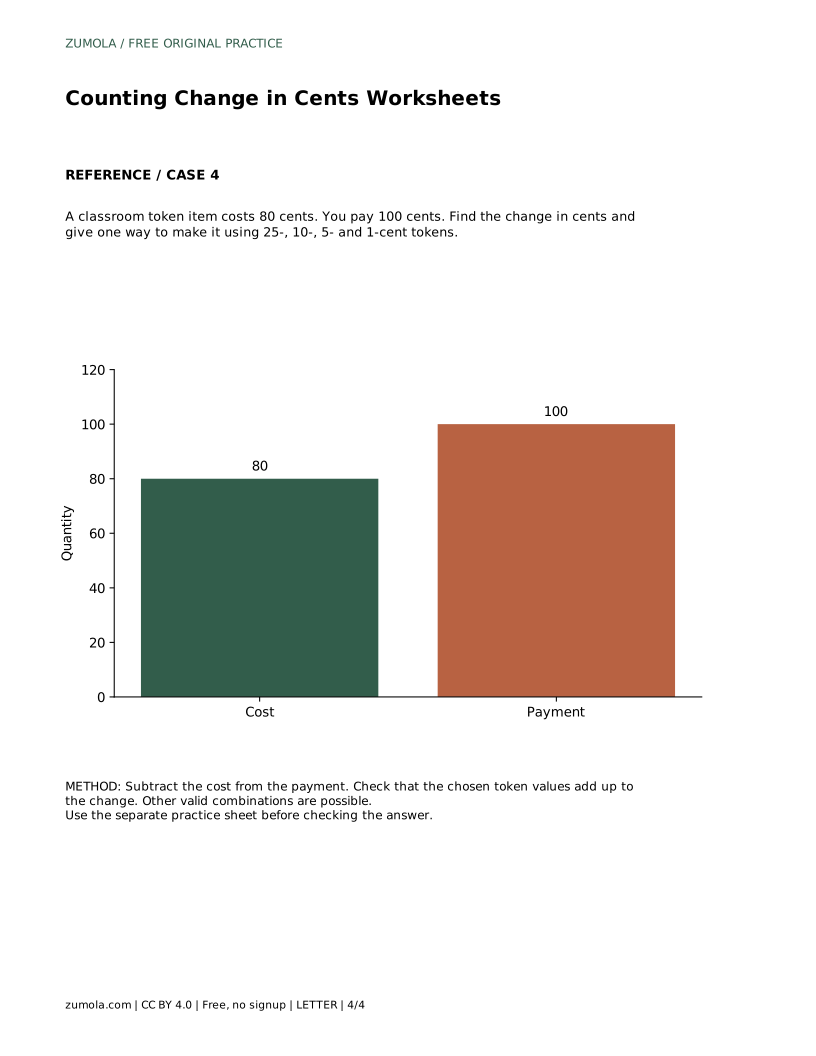
A4 · Download PDF
Free original resources
Teach change-making in cents: subtract cost from payment, then build the change with 25-, 10-, 5- and 1-cent tokens. Includes a worked example and rubric.
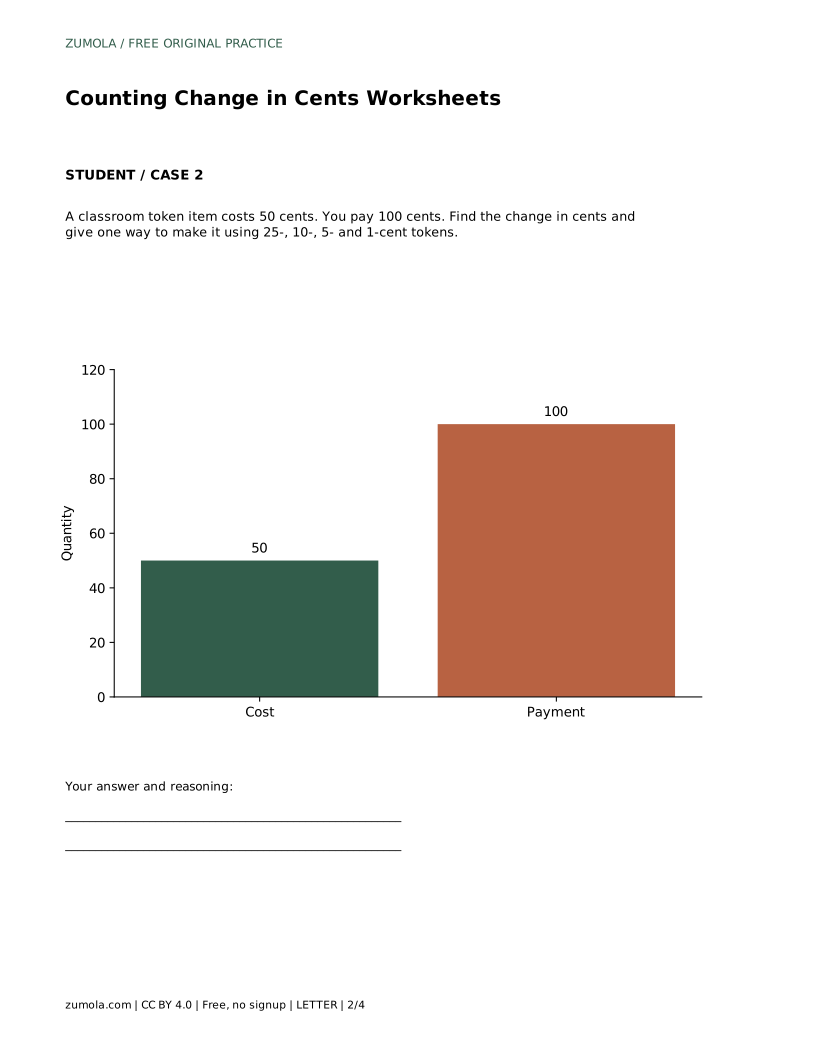
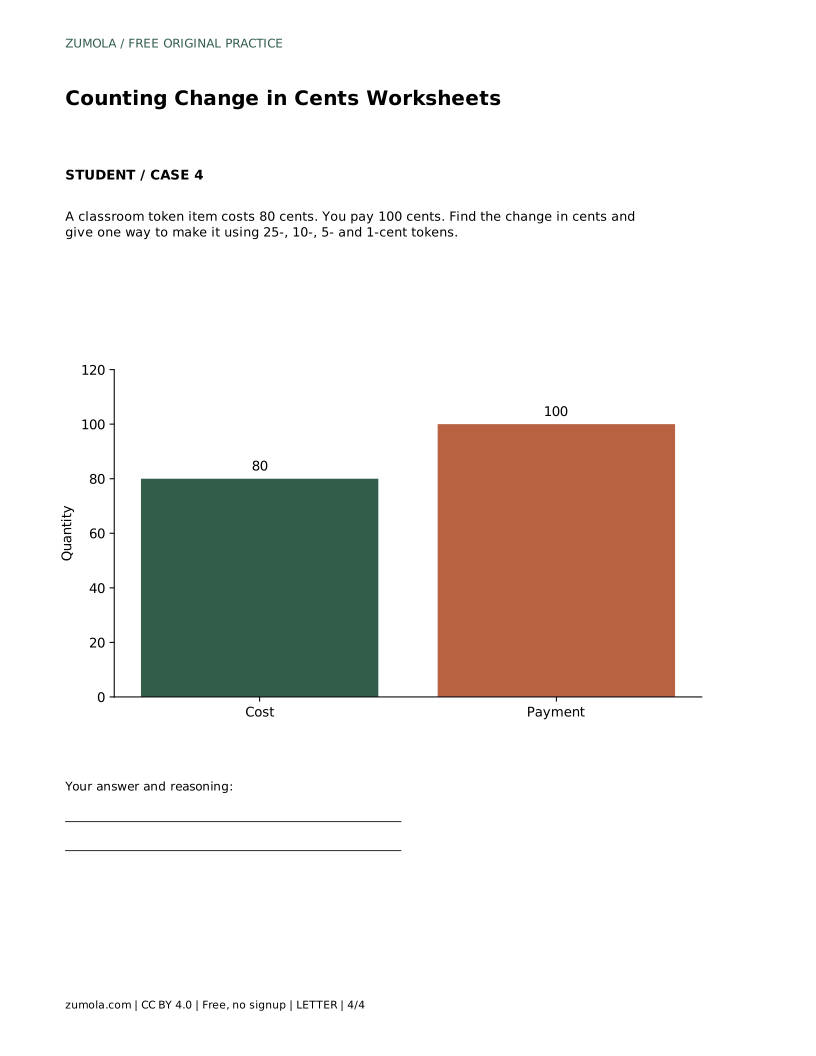
Four original cases, with reference diagrams, practice sheets and worked answers. Everything is free; no signup required.
LETTER · Download PDF
A4 · Download PDF
LETTER · Download PDF
A4 · Download PDF
LETTER · Download PDF
A4 · Download PDF
Use A4 or US Letter to match your printer. Use the stated values and conditions to solve each exercise; diagrams are not physical measuring rulers.
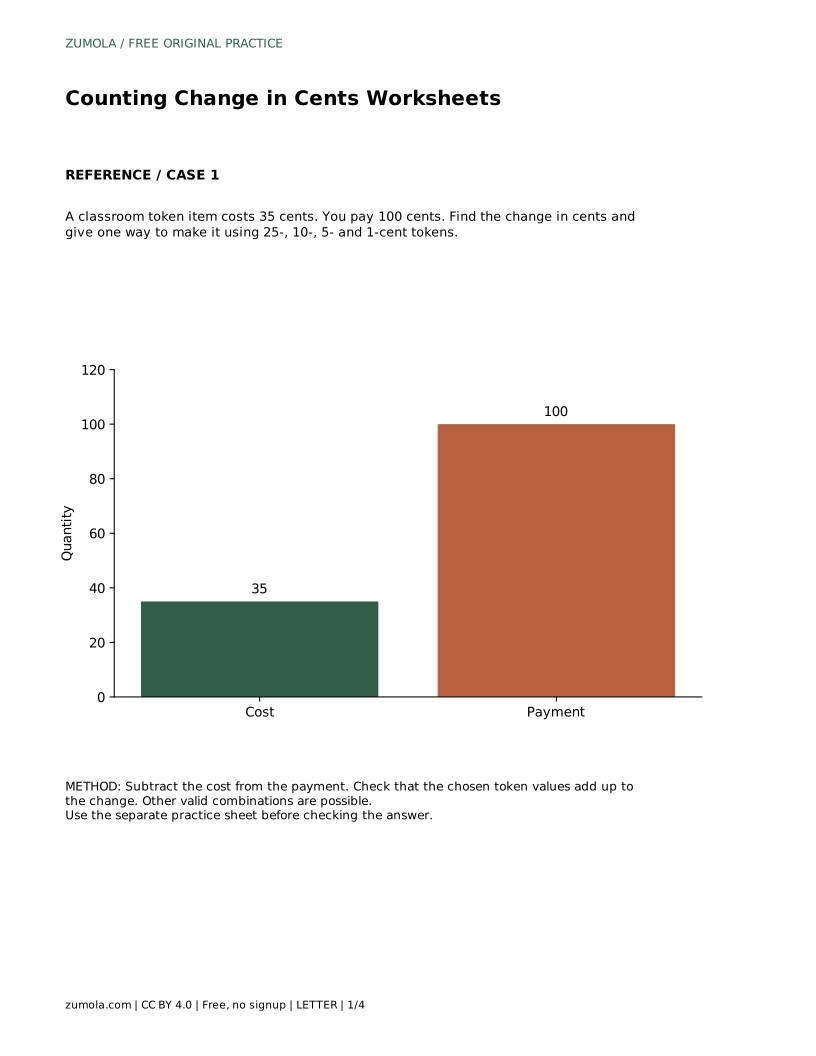
Making change is a two-part skill: first find how much money comes back, then show that amount with tokens or coins. These worksheets keep every amount in cents so learners focus on subtraction and on combining values, not on decimal notation. Each task gives a cost and a payment, usually 100 cents. Students subtract to find the change, then choose token values that add to it. Because several token combinations can equal the same amount, the goal is a correct total, not one secret answer.
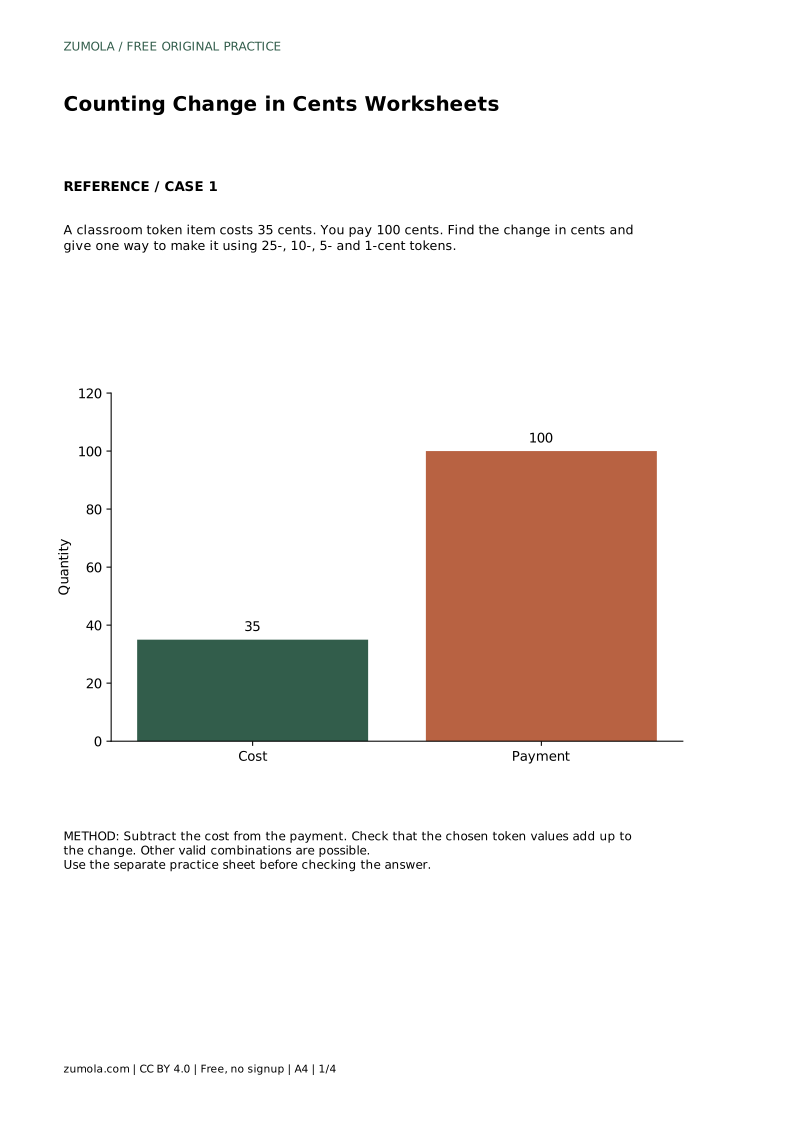
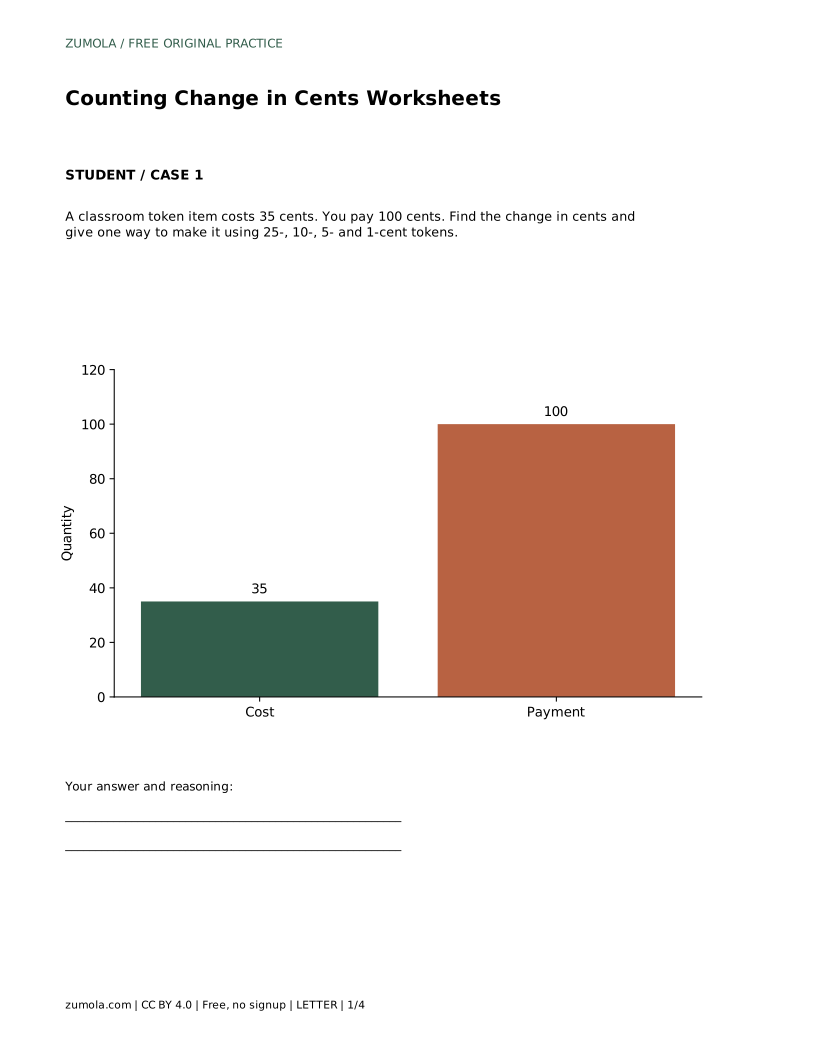
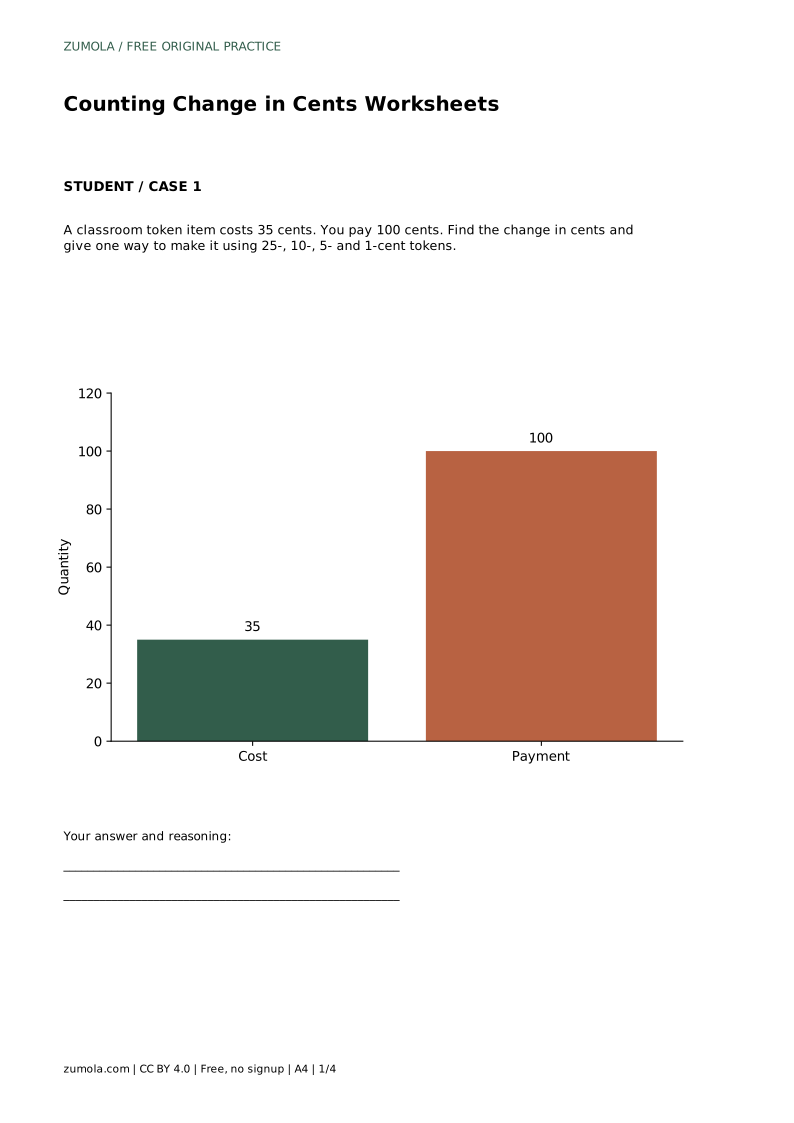
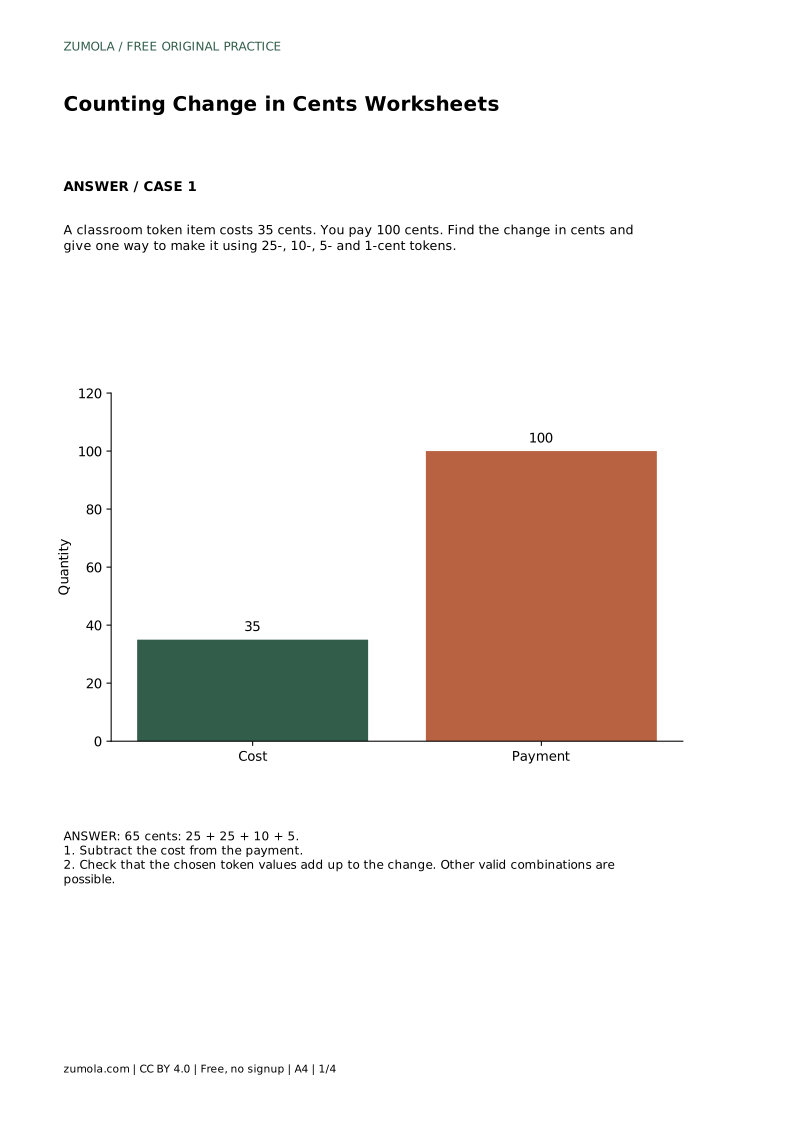
Every making-change task begins with one subtraction: change equals payment minus cost. If an item costs 35 cents and the payment is 100 cents, the change is 100 - 35 = 65 cents. Write the subtraction first, before touching any tokens. This separates the arithmetic from the building step and makes errors easier to spot.
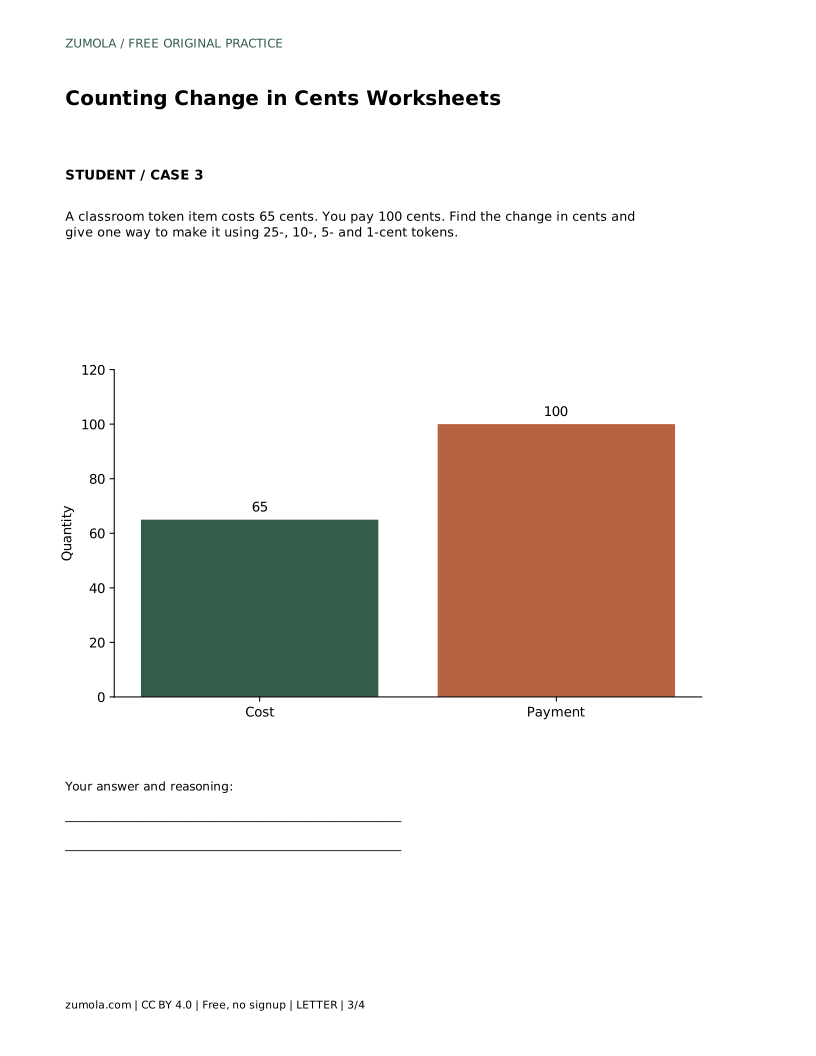
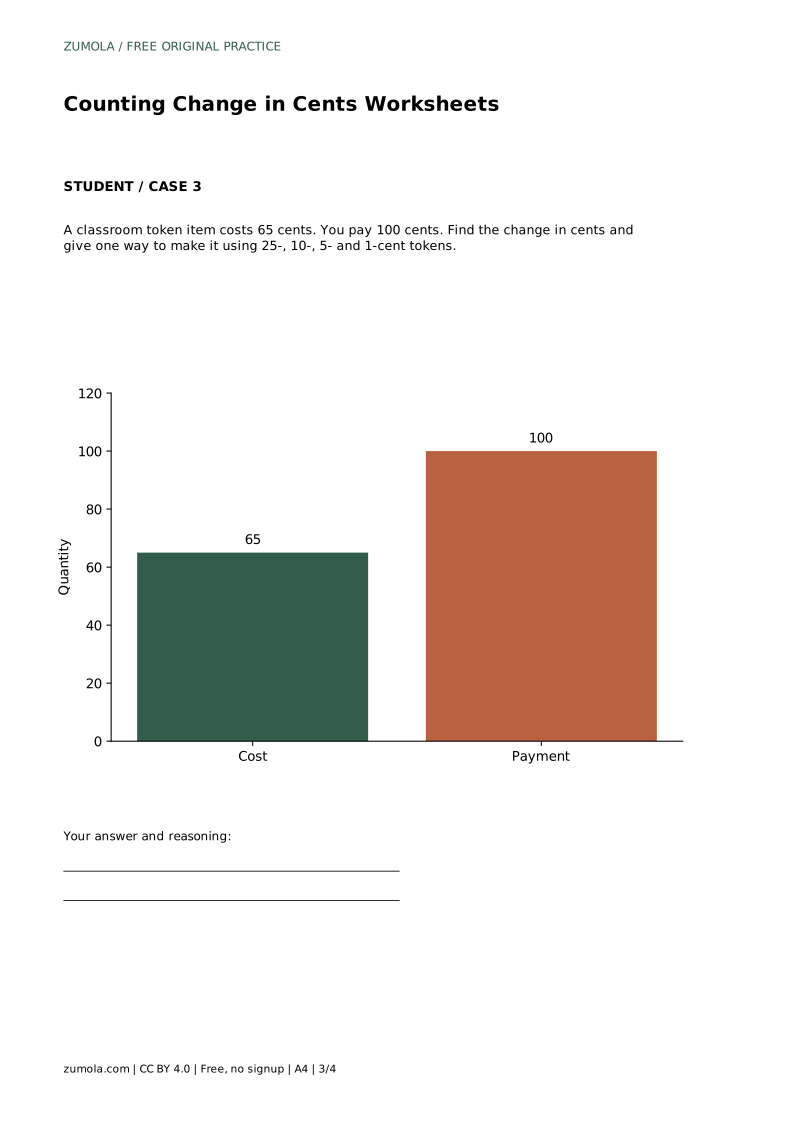
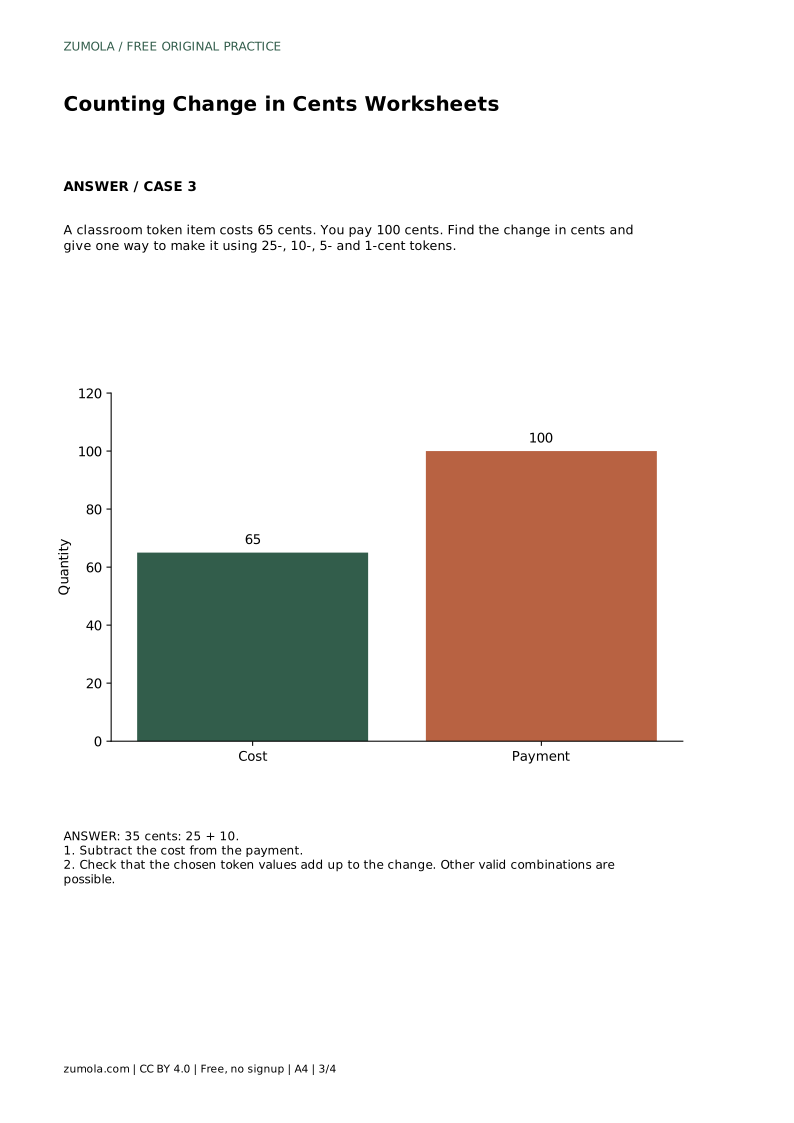
Next, represent the change with available token values. The token set here is 25, 10, 5 and 1 cents. Work from larger values to smaller ones: take as many 25-cent tokens as fit without going over, then 10s, then 5s, then 1s. For 65 cents, two 25s make 50, one 10 makes 60, and one 5 makes 65. Always add the chosen values back up and compare the total to the change you calculated.
Token combinations are not unique. The same change amount can be built in different ways, and both can be correct if the totals match. For 65 cents, 25 + 25 + 10 + 5 works, and so does 25 + 10 + 10 + 10 + 10. A worksheet should therefore check the total, not demand one fixed arrangement.
This is also why a rubric suits these pages better than a single answer key. A student who reaches the right change but builds it with more tokens than necessary has still met the core skill; a separate criterion can reward using fewer tokens. Keep the arithmetic check strict and the construction check flexible.
Leave space beside each problem for the subtraction sentence and a small token sketch. Students who write the subtraction first tend to build the change more accurately than those who start drawing tokens immediately.
Ask students to state the change in words before building it: for example, sixty-five cents. Naming the amount helps them notice when a token total is close but not equal. Then have them count the tokens aloud in groups of 25, 10, 5 and 1.
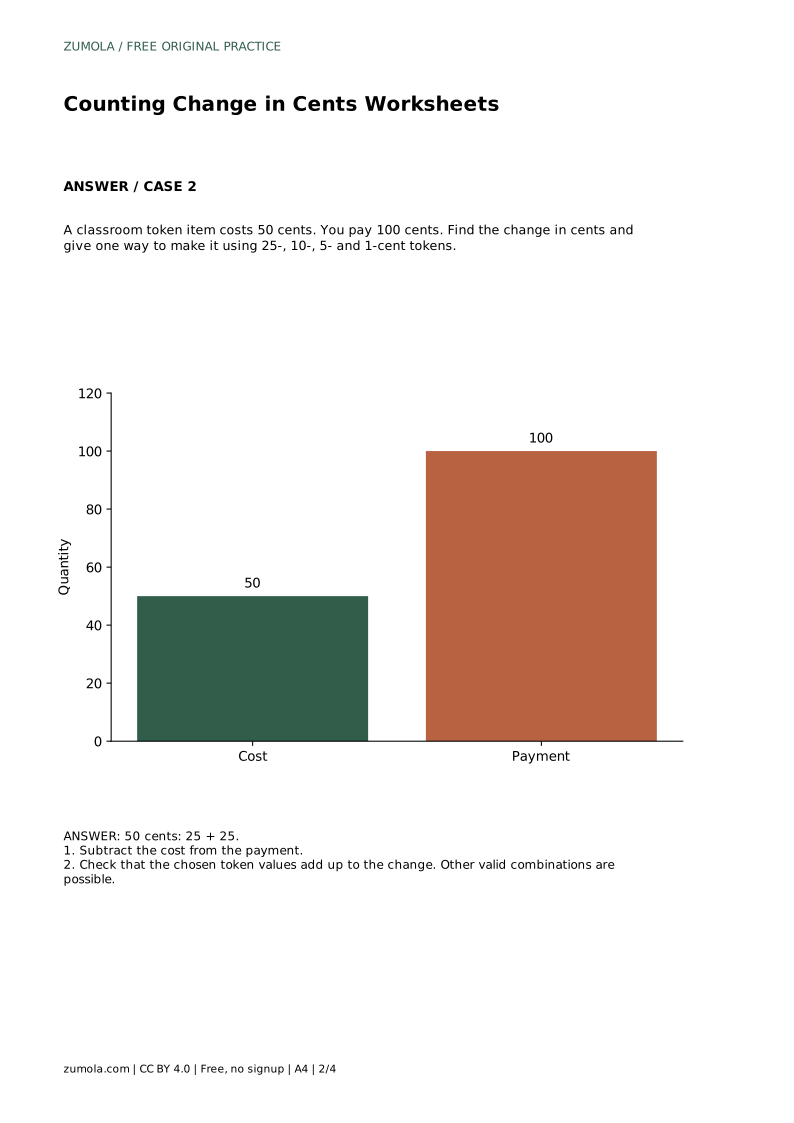
When the payment is exactly 100 cents, the subtraction is straightforward, but do not assume every task uses 100. If a payment is 75 cents and the cost is 40 cents, the change is 35 cents, and the same token-building method applies. Keep the payment and cost units in cents throughout.
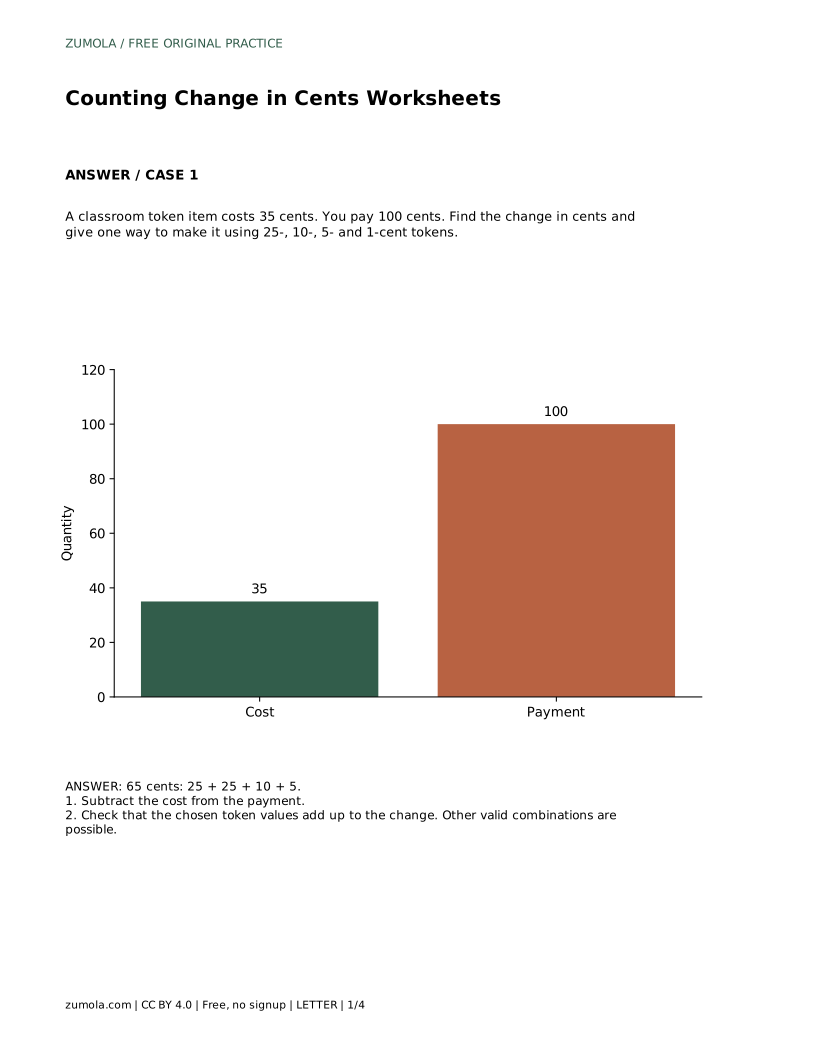
A classroom token item costs 35 cents. You pay 100 cents. Find the change in cents and give one way to make it using 25-, 10-, 5- and 1-cent tokens.
65 cents: 25 + 25 + 10 + 5. Subtract the cost from the payment. Check that the chosen token values add up to the change. Other valid combinations are possible.
No. Some tasks use other payments. The method is the same: subtract the cost from the payment, then build the change with the available token values.
The change is still correct if the total matches. Note efficiency separately; do not treat extra tokens as an arithmetic error.
These worksheets stay in cents to keep the focus on subtraction and token values. Convert to dollars only as a separate extension.
All math worksheets · Free coordinate paper
Original resources · CC BY 4.0 · Free for personal and classroom use with attribution.