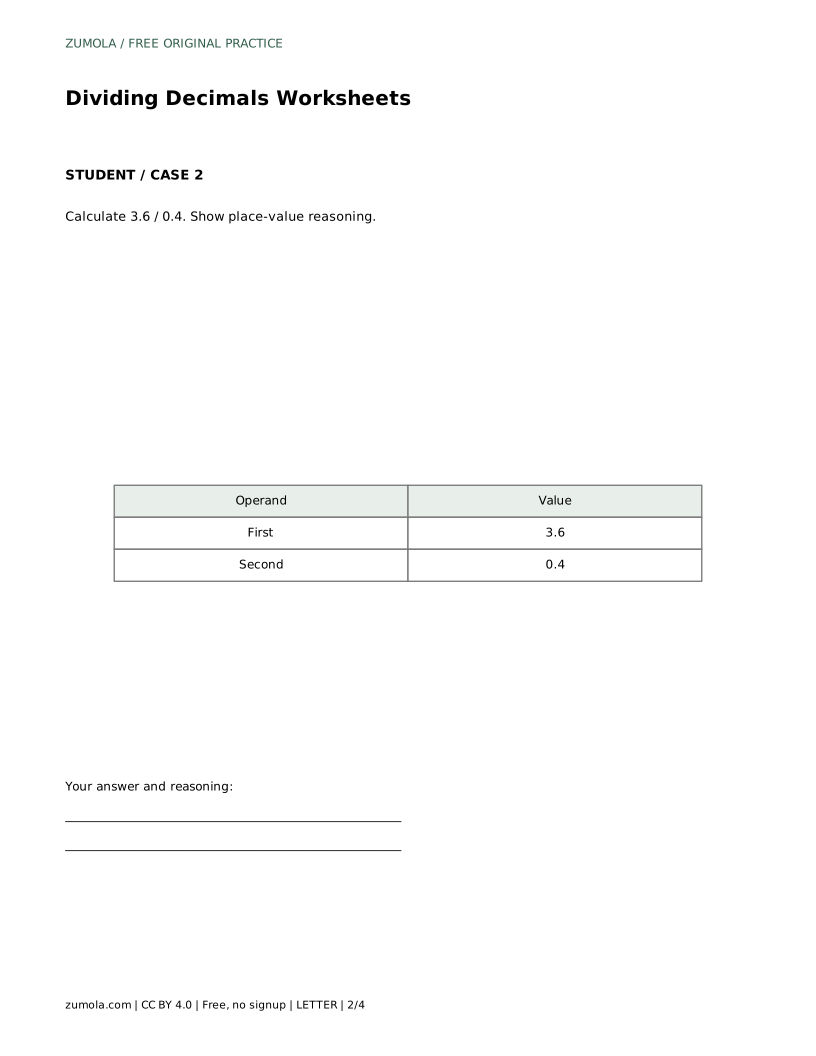
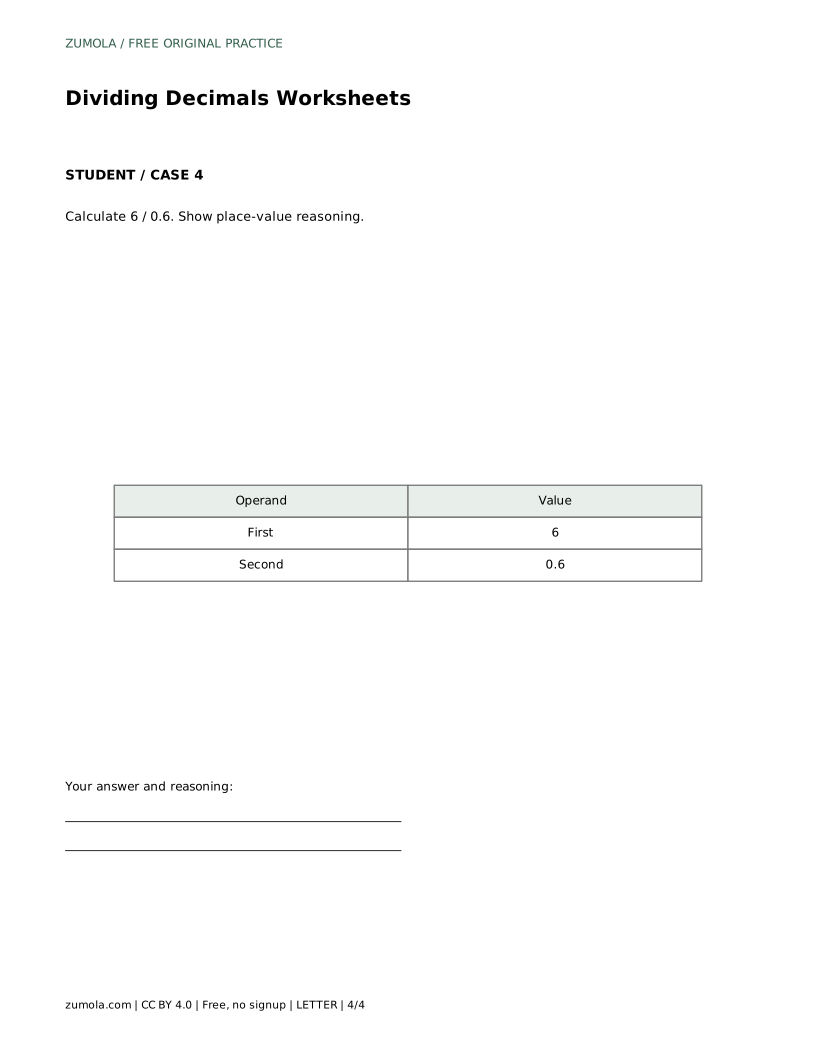
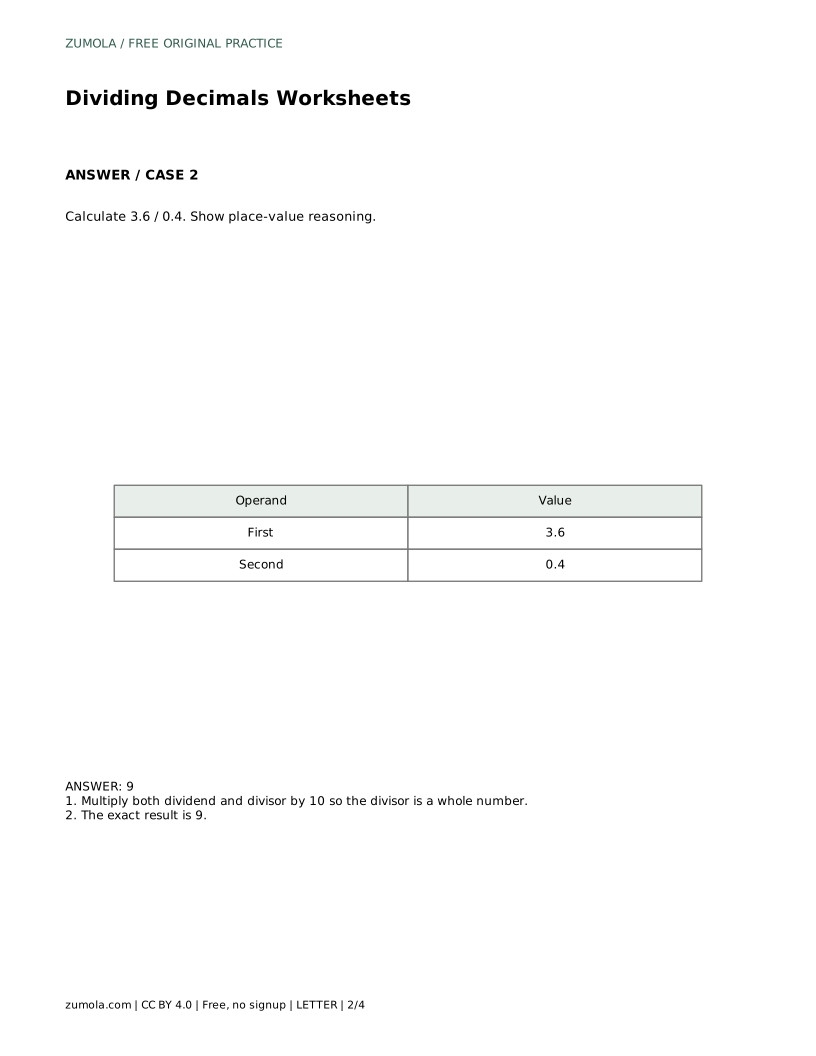
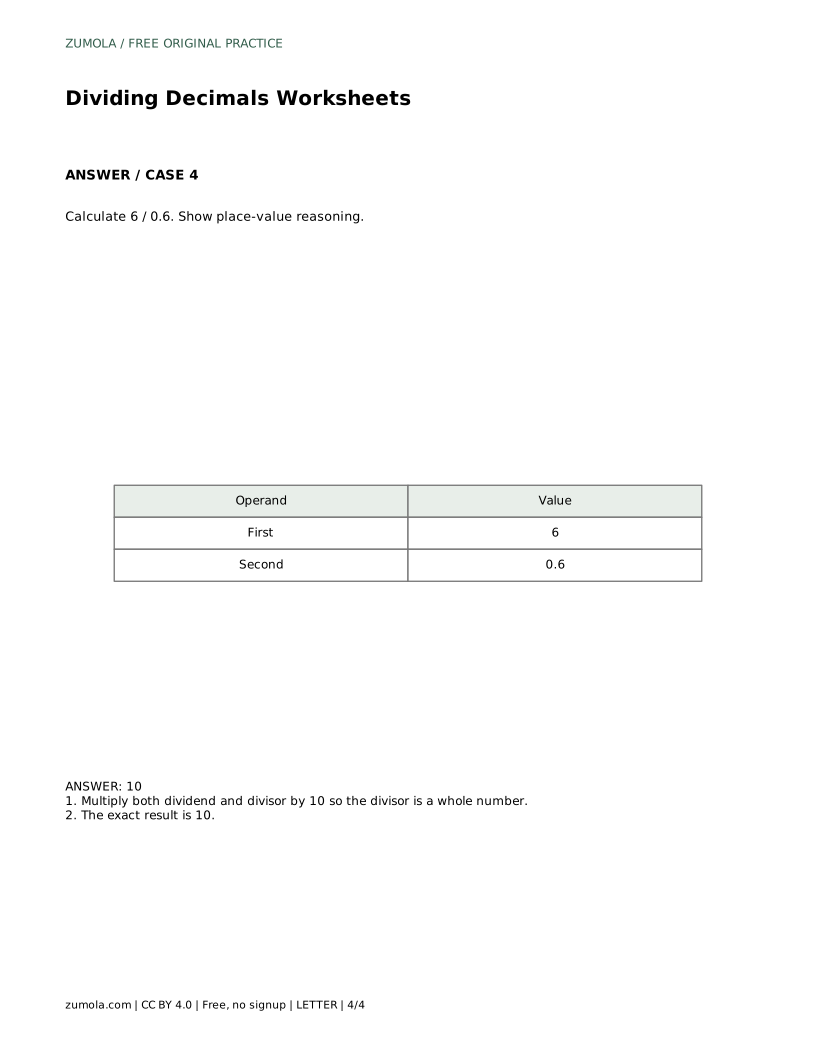
Reference diagrams
LETTER · Download PDF
A4 · Download PDF
Free original resources
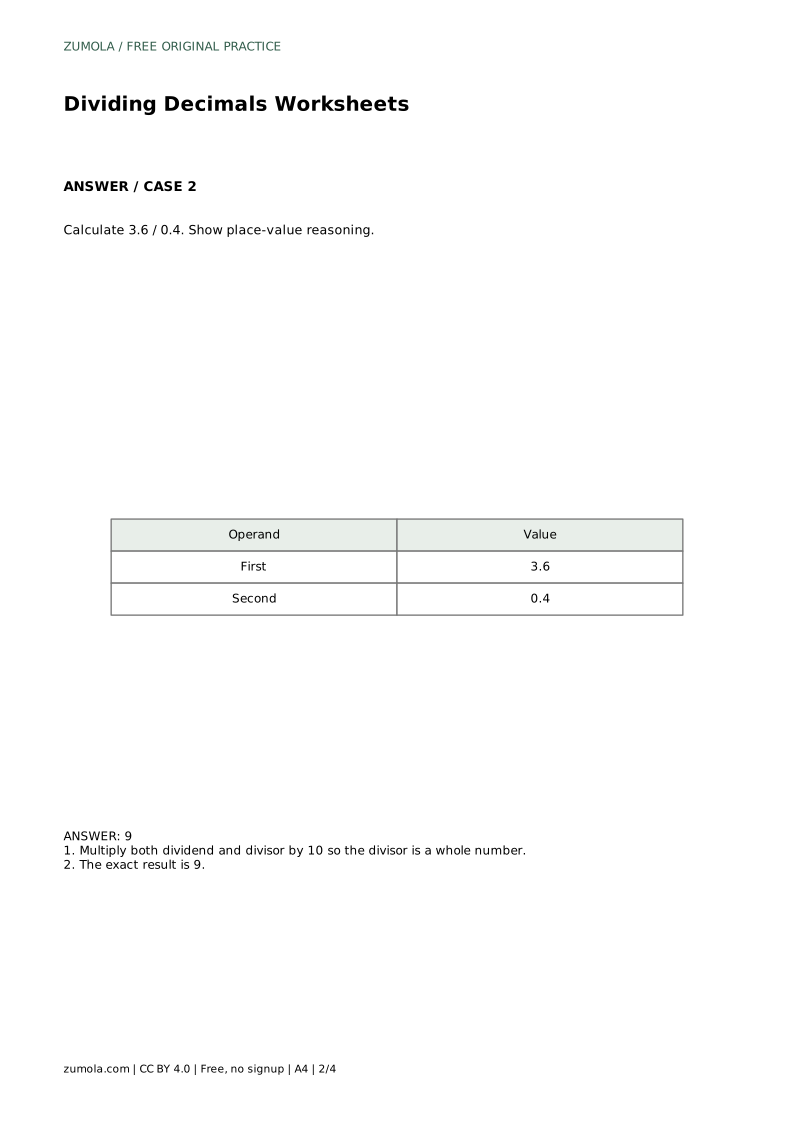
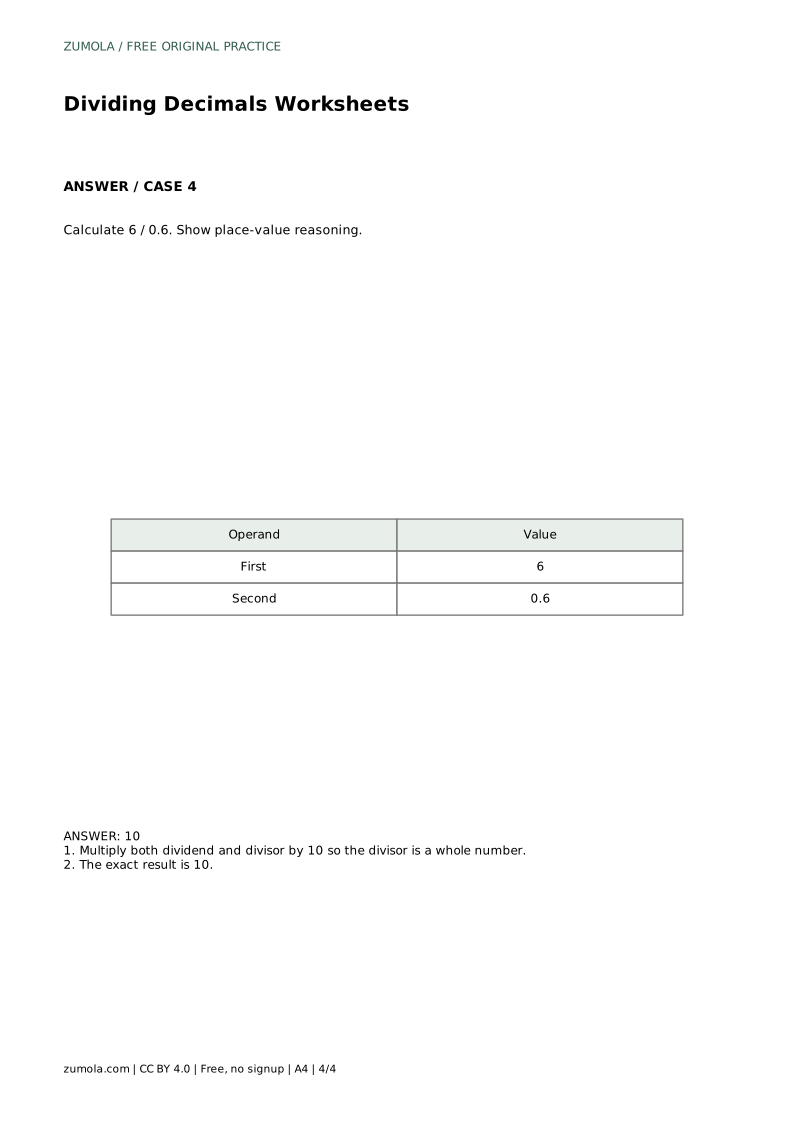
Teach decimal division by scaling both numbers to whole numbers. Graph paper keeps columns aligned so place value stays visible through every step.
Four original cases, with reference diagrams, practice sheets and worked answers. Everything is free; no signup required.
LETTER · Download PDF
A4 · Download PDF
LETTER · Download PDF
A4 · Download PDF
LETTER · Download PDF
A4 · Download PDF
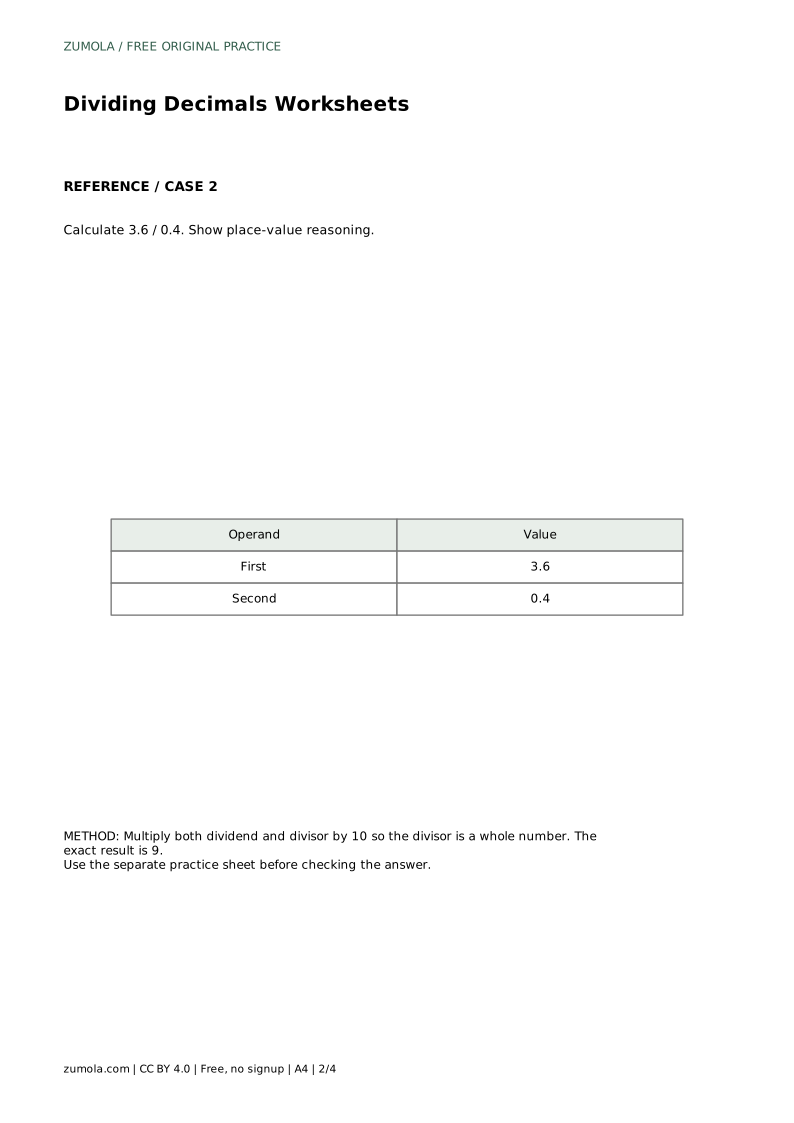
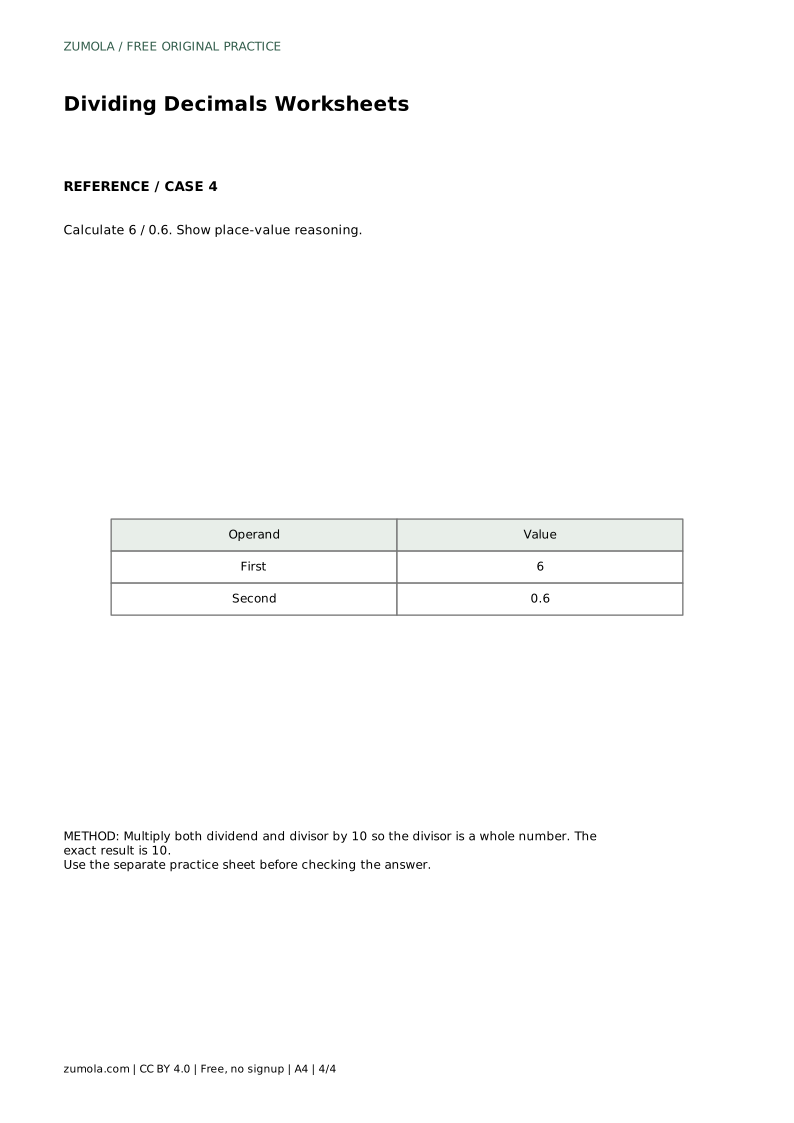
Use A4 or US Letter to match your printer. Use the stated values and conditions to solve each exercise; diagrams are not physical measuring rulers.
Dividing a decimal by a decimal looks harder than it is. The key idea is that a division statement keeps the same answer when you multiply both the dividend and the divisor by the same power of ten. Graph paper helps because each digit sits in its own column, so shifting a decimal point becomes a visible move rather than a guess. This page walks through that reasoning with small, checkable examples.
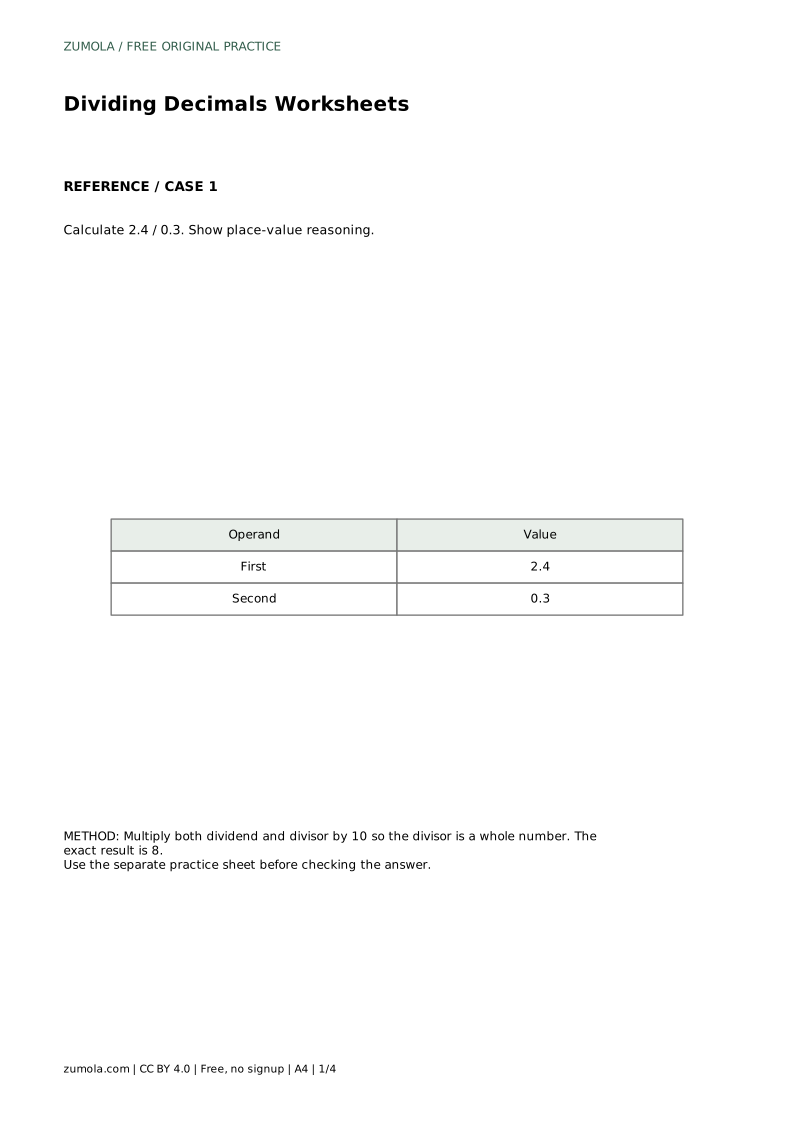
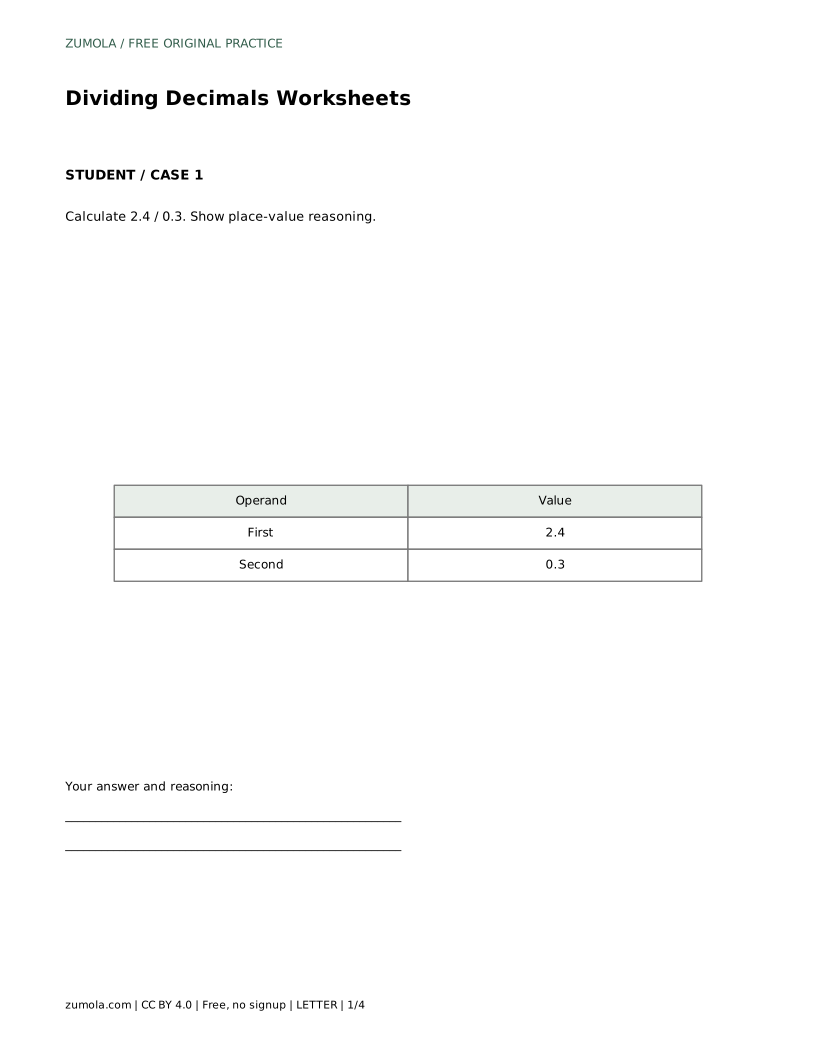
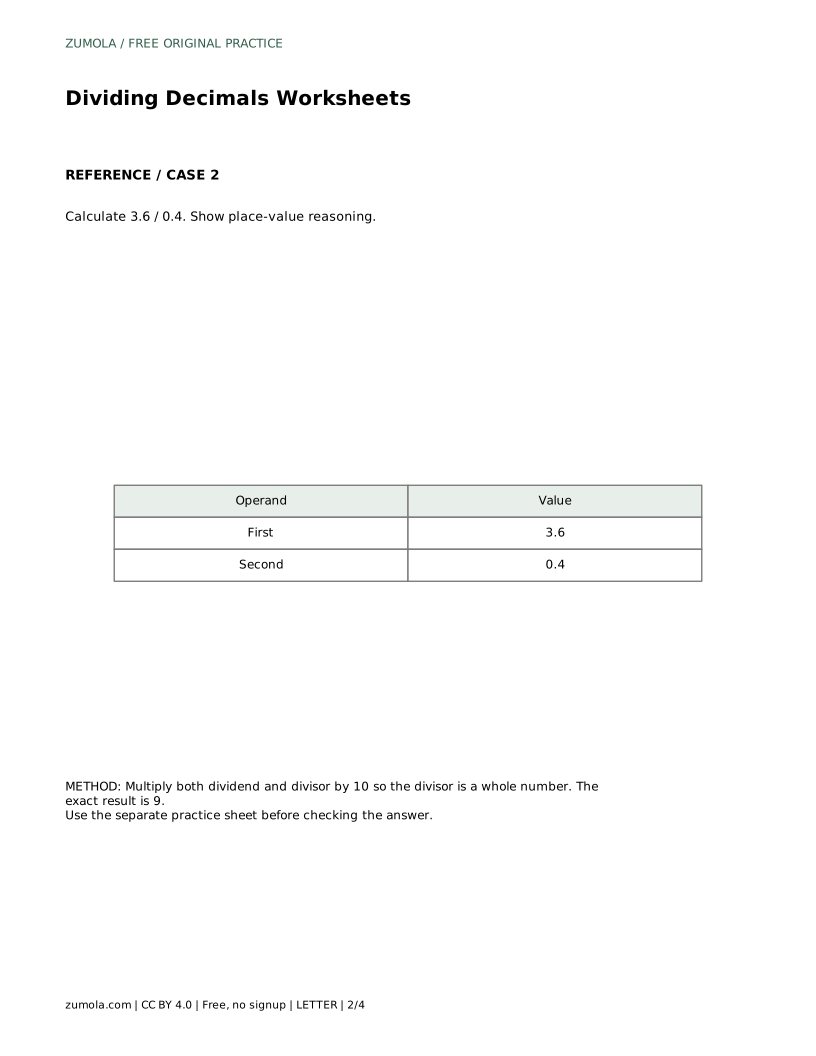
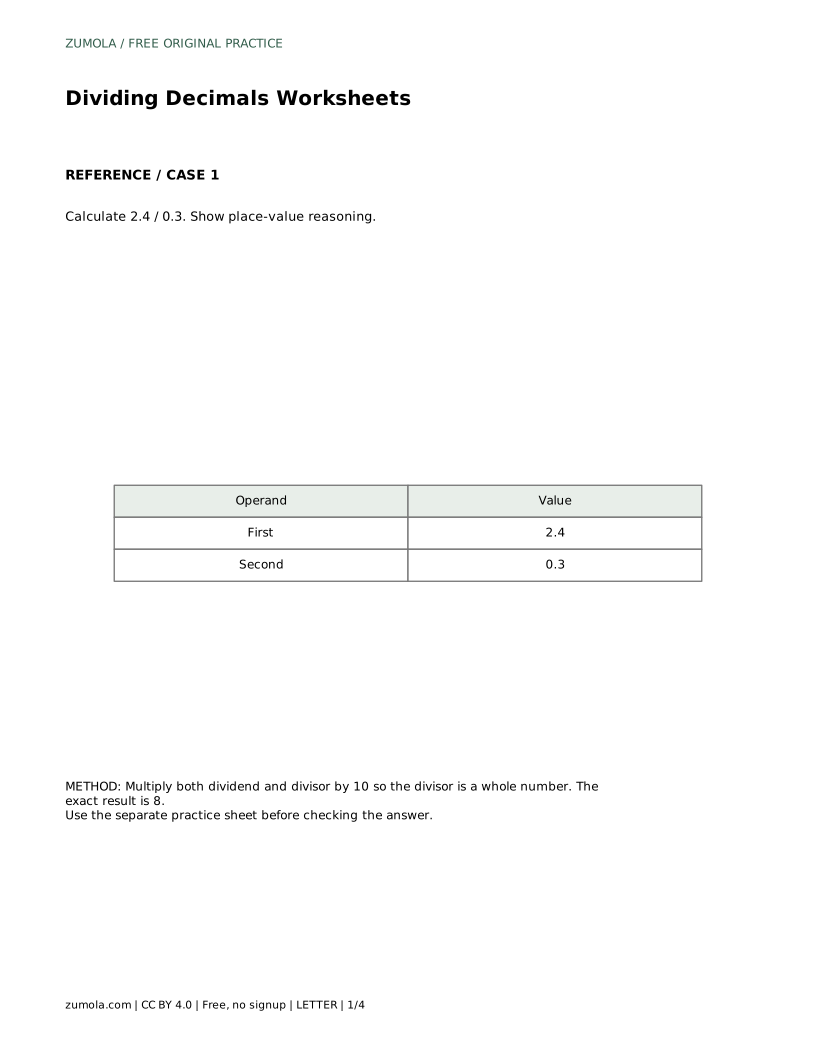
Division asks how many groups of the divisor fit into the dividend. If you make both numbers ten times larger, each group is ten times larger and the dividend holds ten times as much, so the count of groups is unchanged. That is why 2.4 divided by 0.3 equals 24 divided by 3.
On graph paper, write each number so digits line up by place value. Multiplying by 10 shifts every digit one column left. Do it to both numbers and the divisor becomes a whole number, which is easier to divide.
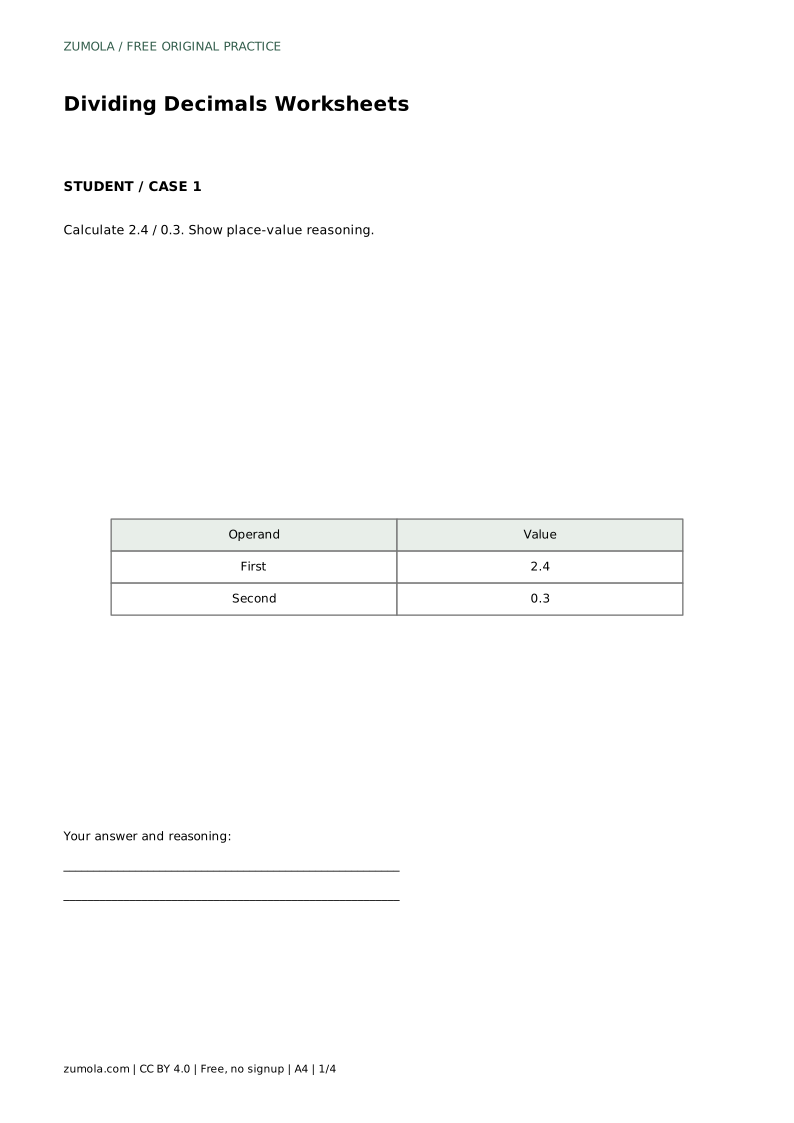
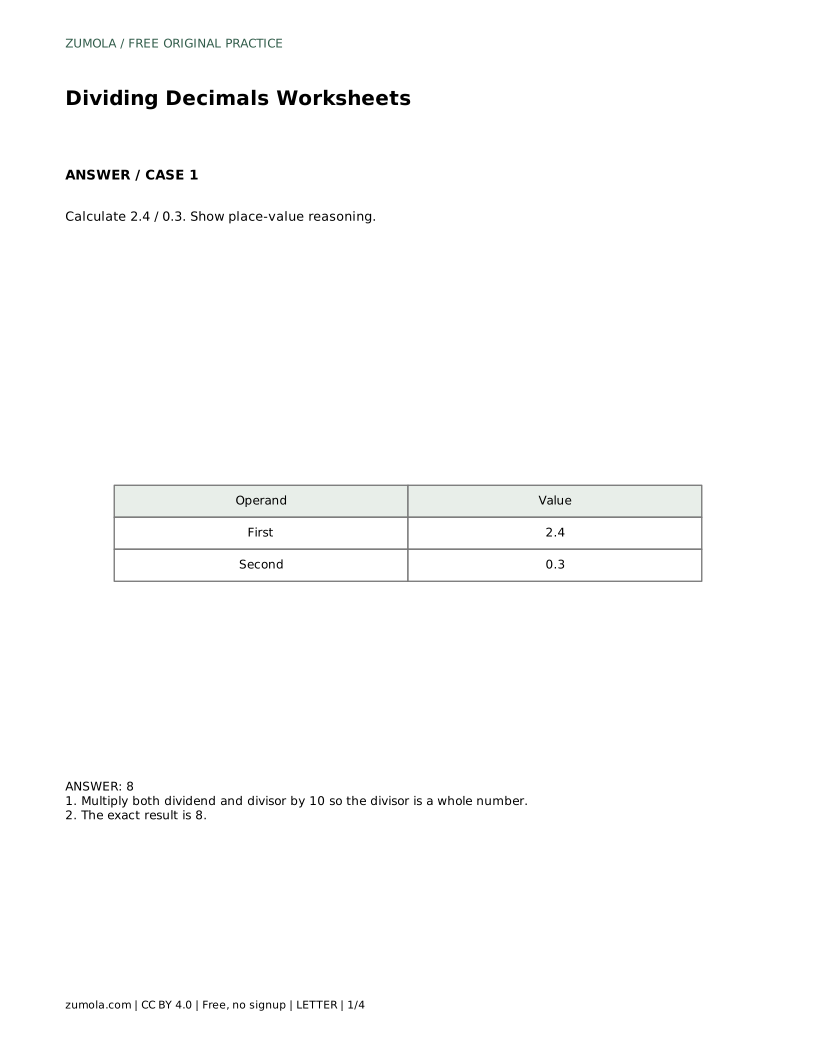
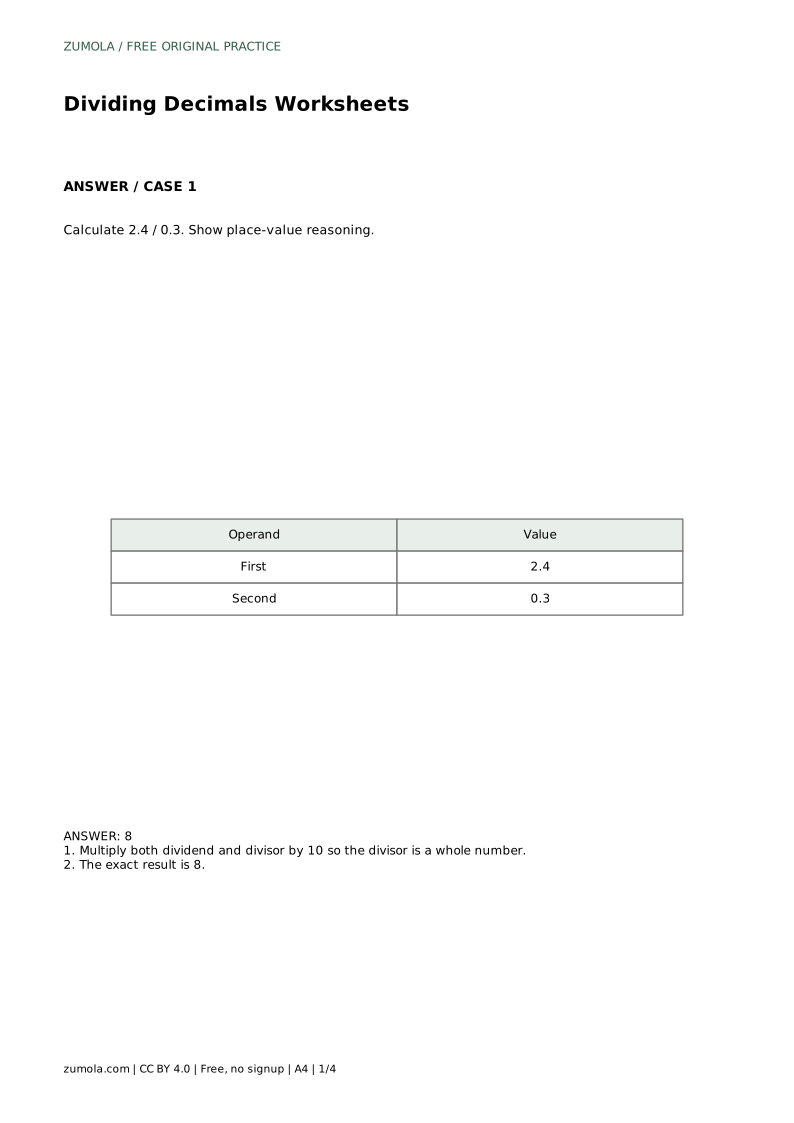
The divisor 0.3 has one decimal place, so multiply both numbers by 10. The dividend 2.4 becomes 24 and the divisor 0.3 becomes 3. Now divide 24 by 3, which is 8.
Check the result: 8 times 0.3 equals 2.4, so the answer is consistent. The exact result is 8.
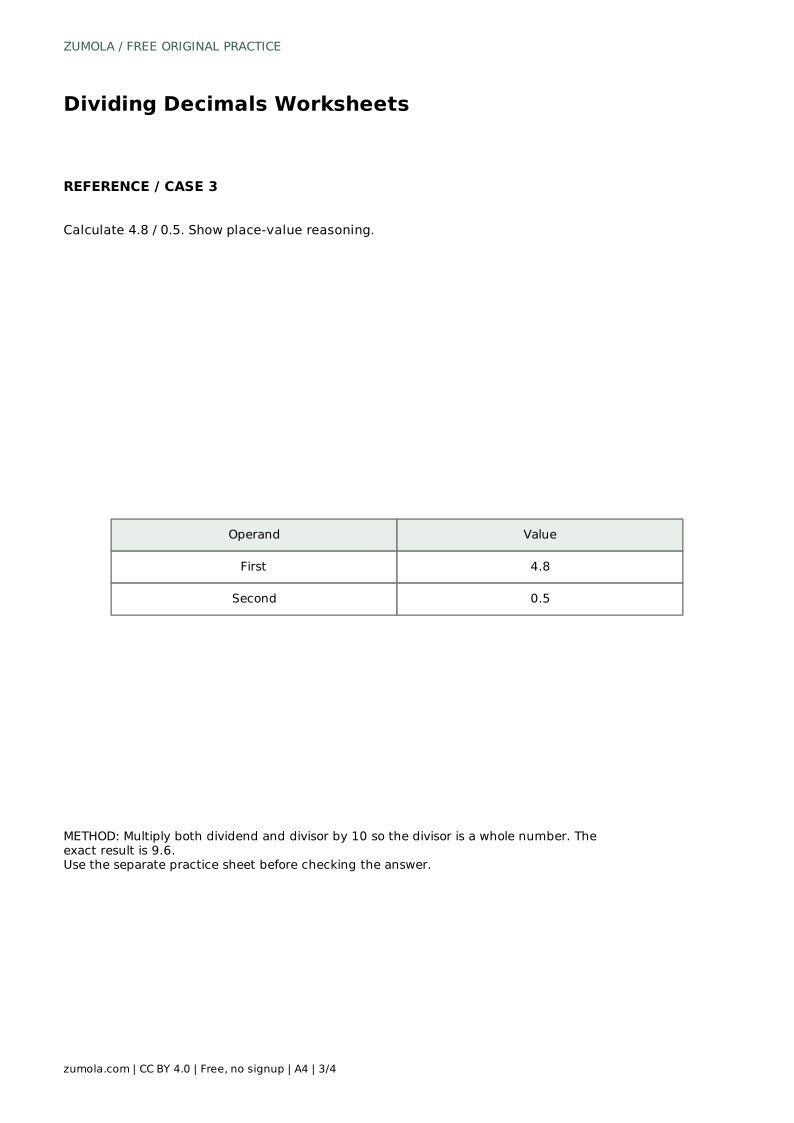
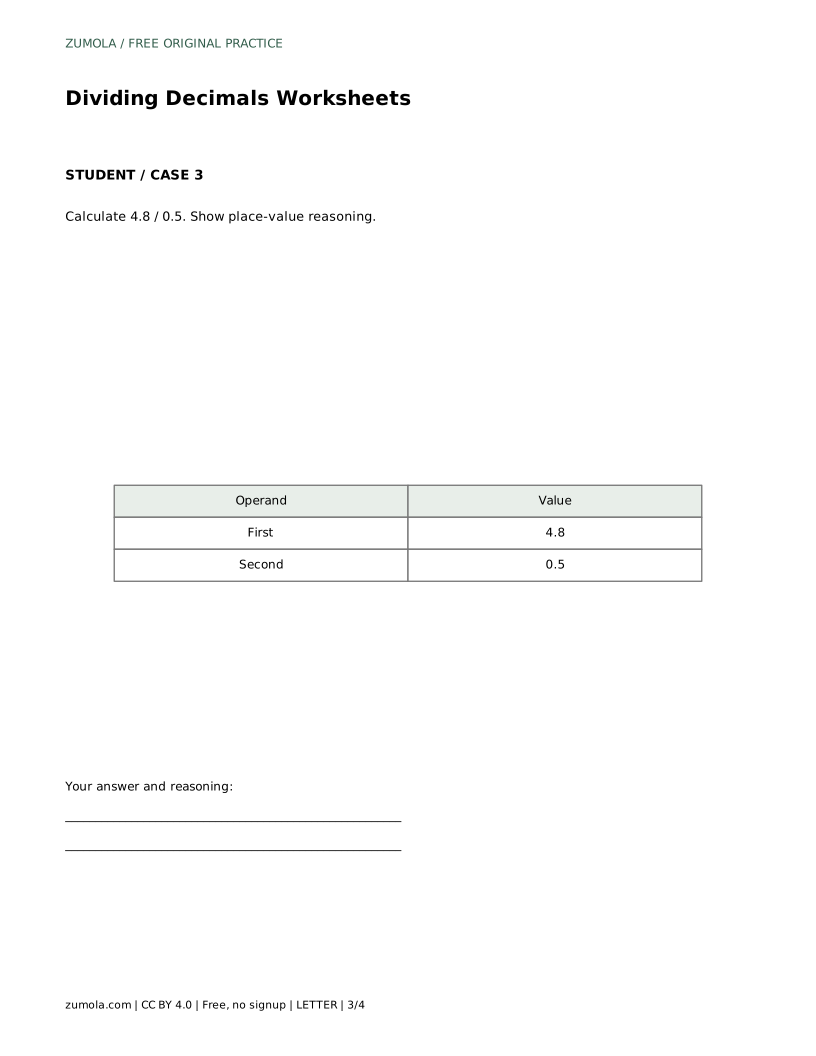
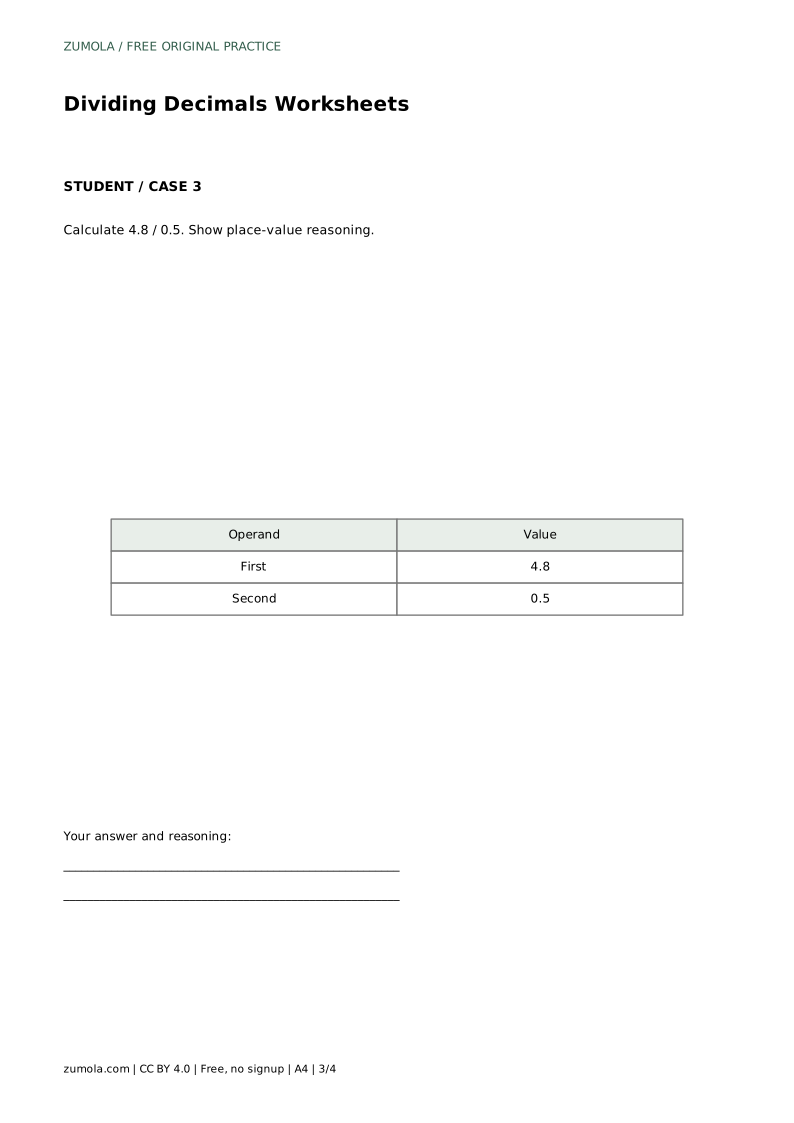
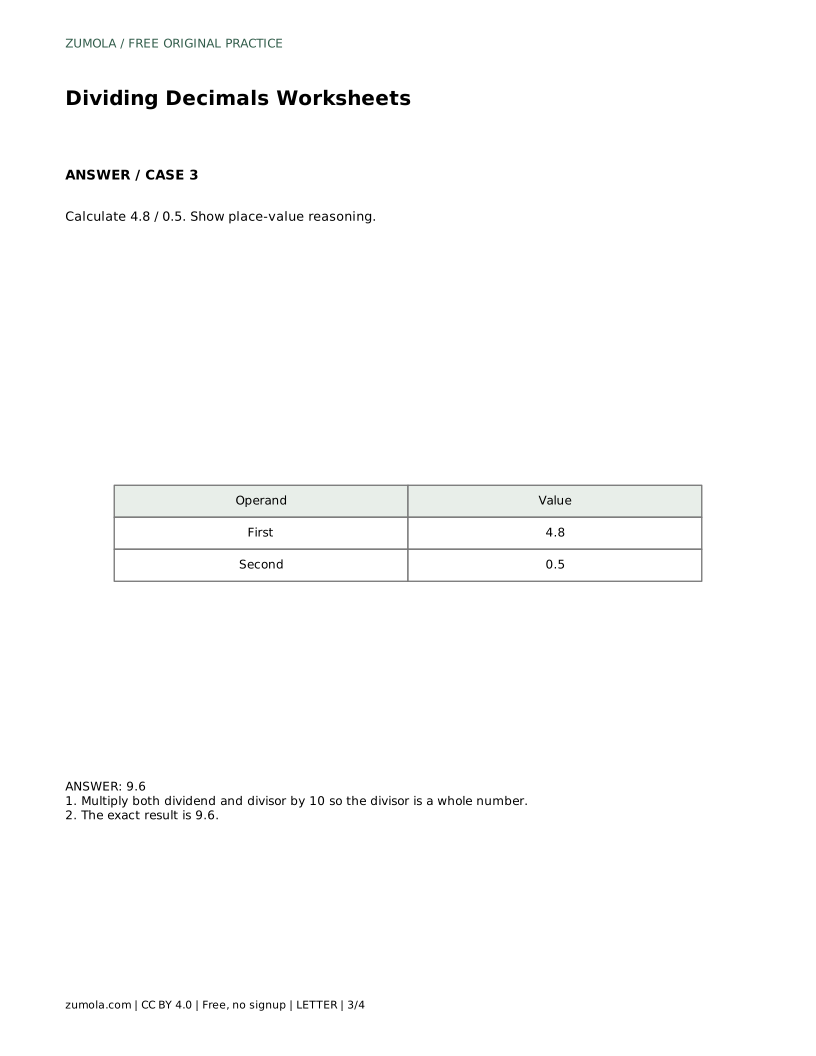
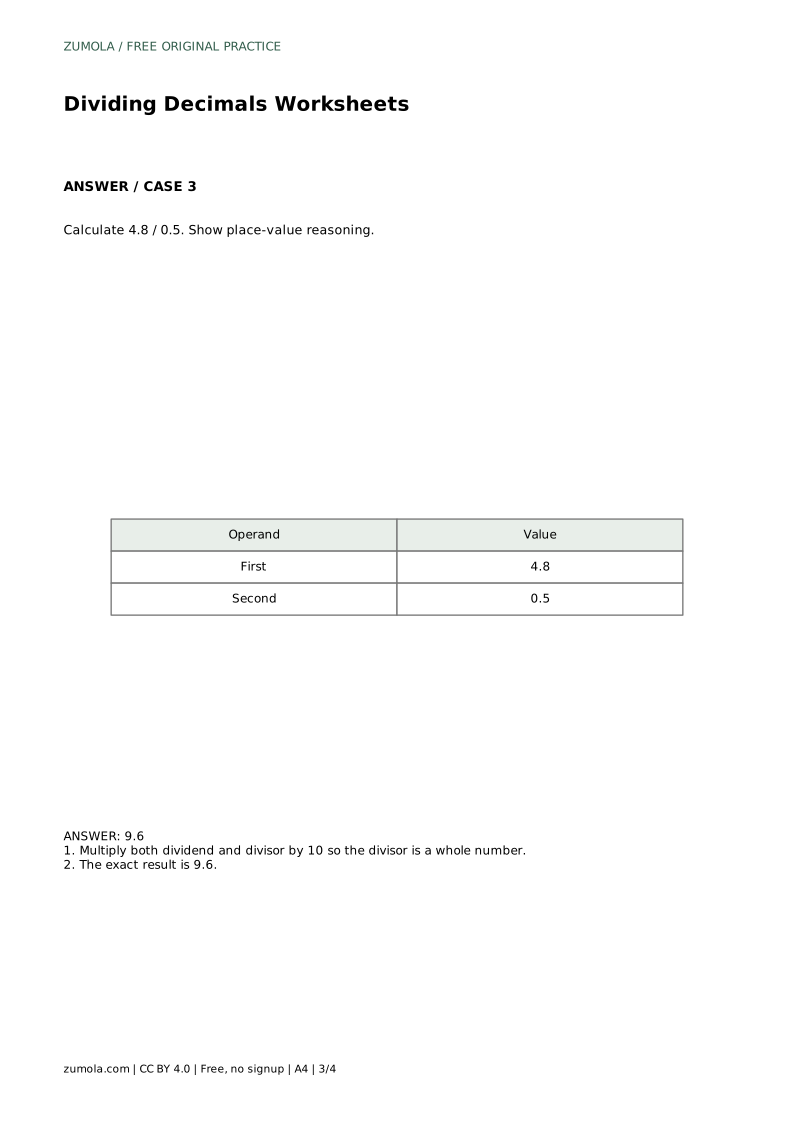
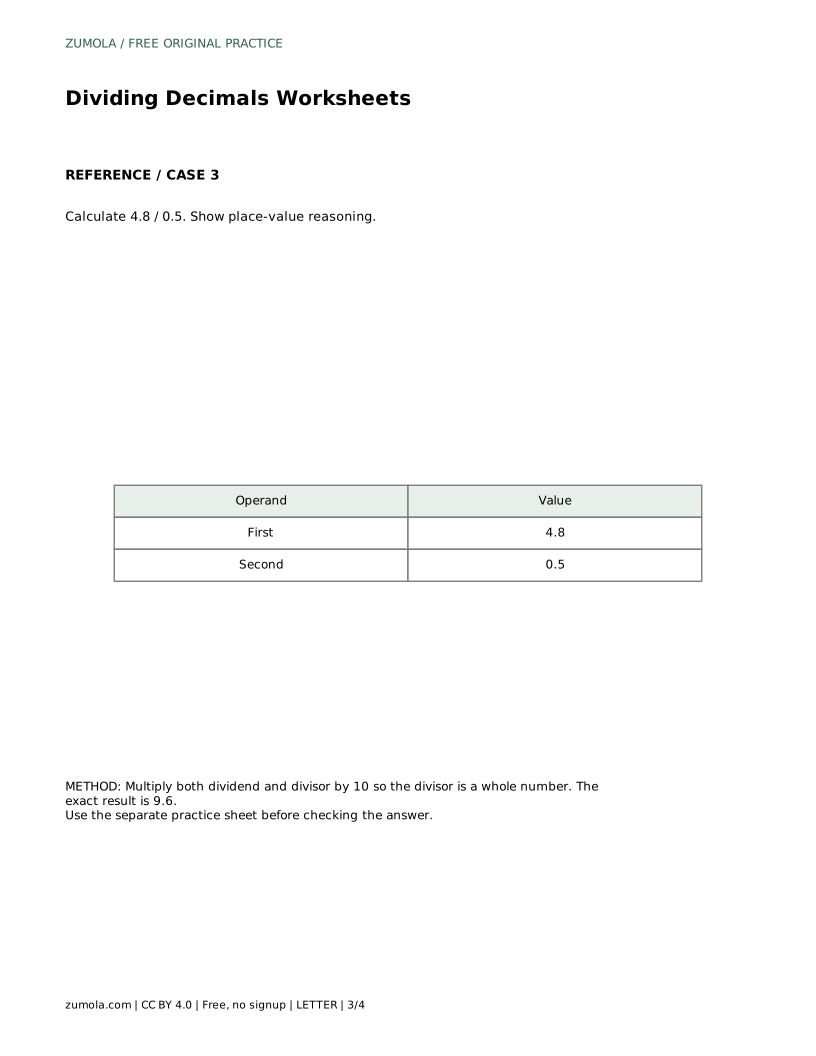
Scaling does not guarantee a whole-number quotient. For 4.8 divided by 0.5, multiply both by 10 to get 48 divided by 5, which is 9.6. The decimal point in the answer belongs where the division places it, not where the original numbers had theirs.
Keep the grid columns steady as you divide. If a remainder appears, continue into the next column and record the decimal point in the quotient directly above its position in the dividend.
Every division can be checked by multiplication. Multiply your quotient by the original divisor and compare with the original dividend. If they match, the scaling was applied correctly.
Use small numbers first so the arithmetic is easy to verify by hand, then move to longer decimals once the column habit is steady.
Calculate 2.4 / 0.3. Show place-value reasoning.
8 Multiply both dividend and divisor by 10 so the divisor is a whole number. The exact result is 8.
No. Scaling both dividend and divisor by the same factor keeps the quotient unchanged.
Multiply both numbers by 100 so the divisor becomes a whole number, then divide.
Yes. For example, 4.8 divided by 0.5 equals 9.6 after scaling to 48 divided by 5.
All math worksheets · Free coordinate paper
Original resources · CC BY 4.0 · Free for personal and classroom use with attribution.