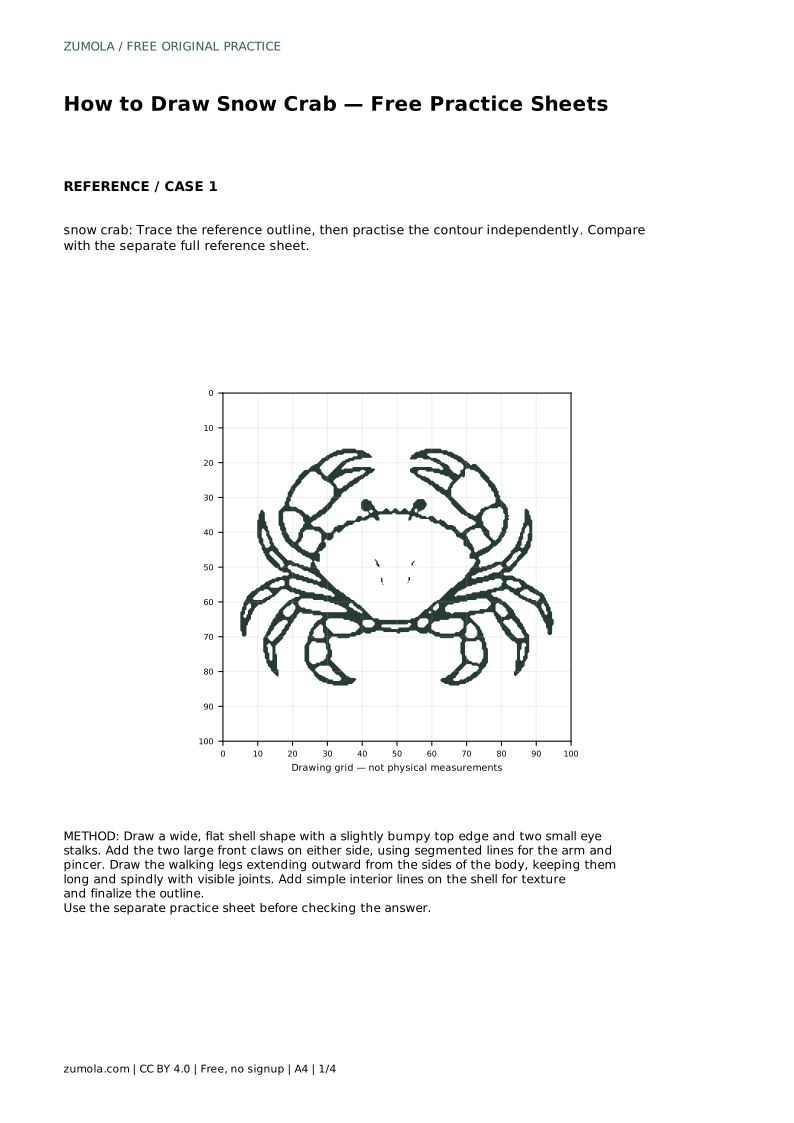
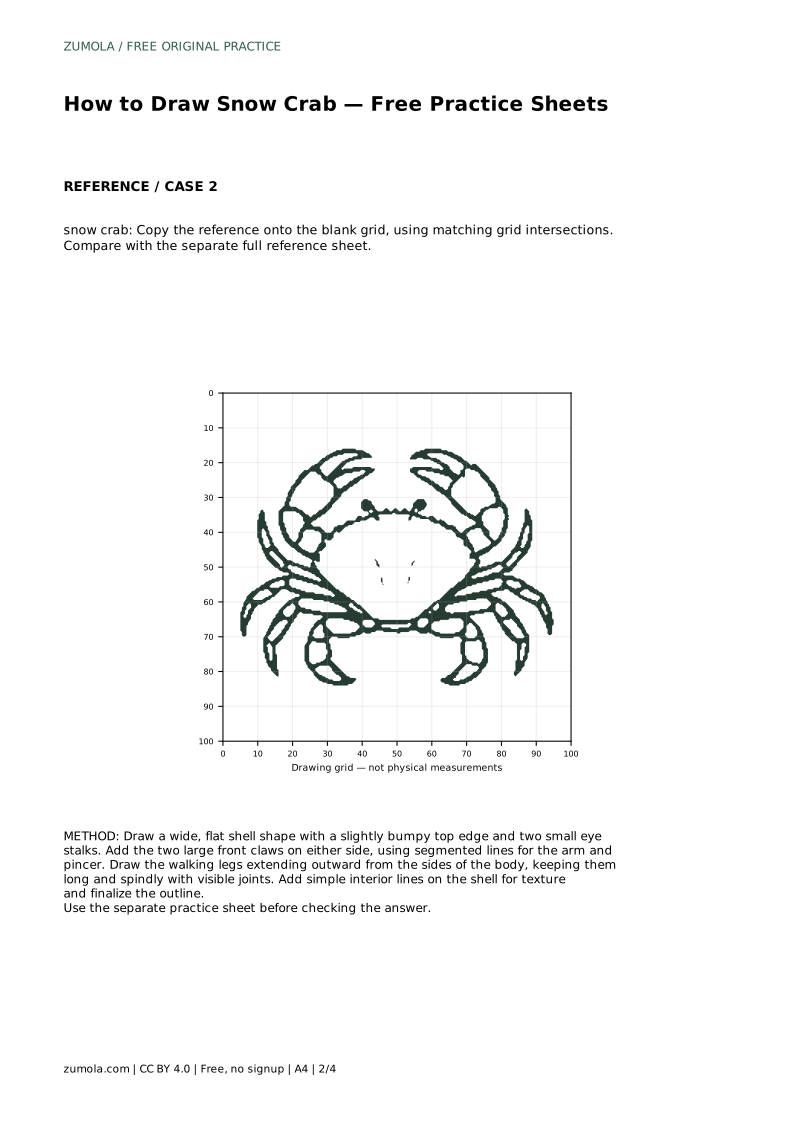
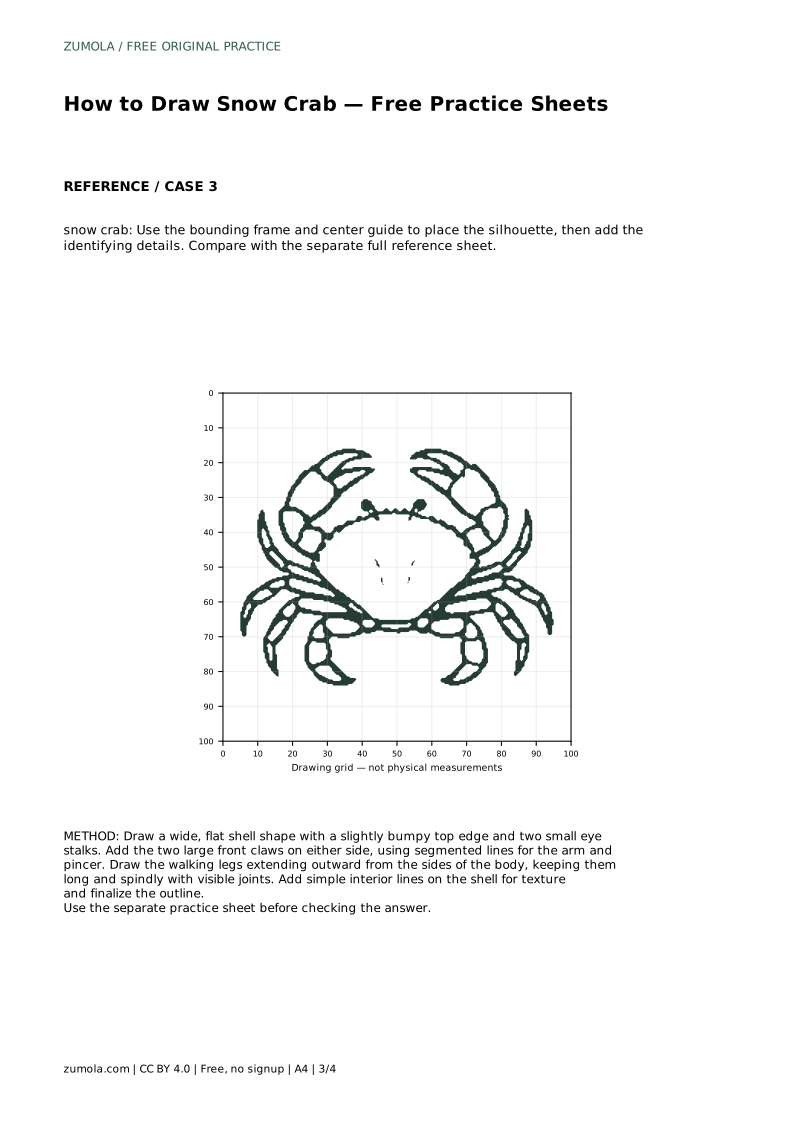
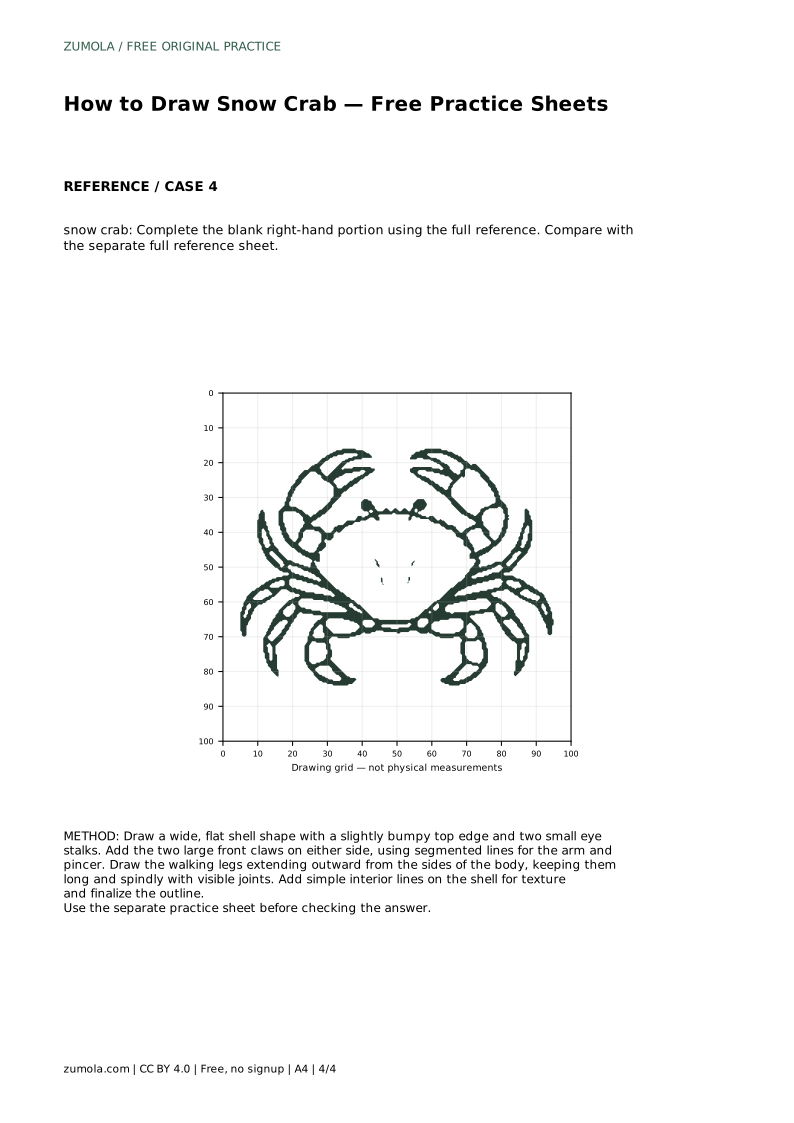
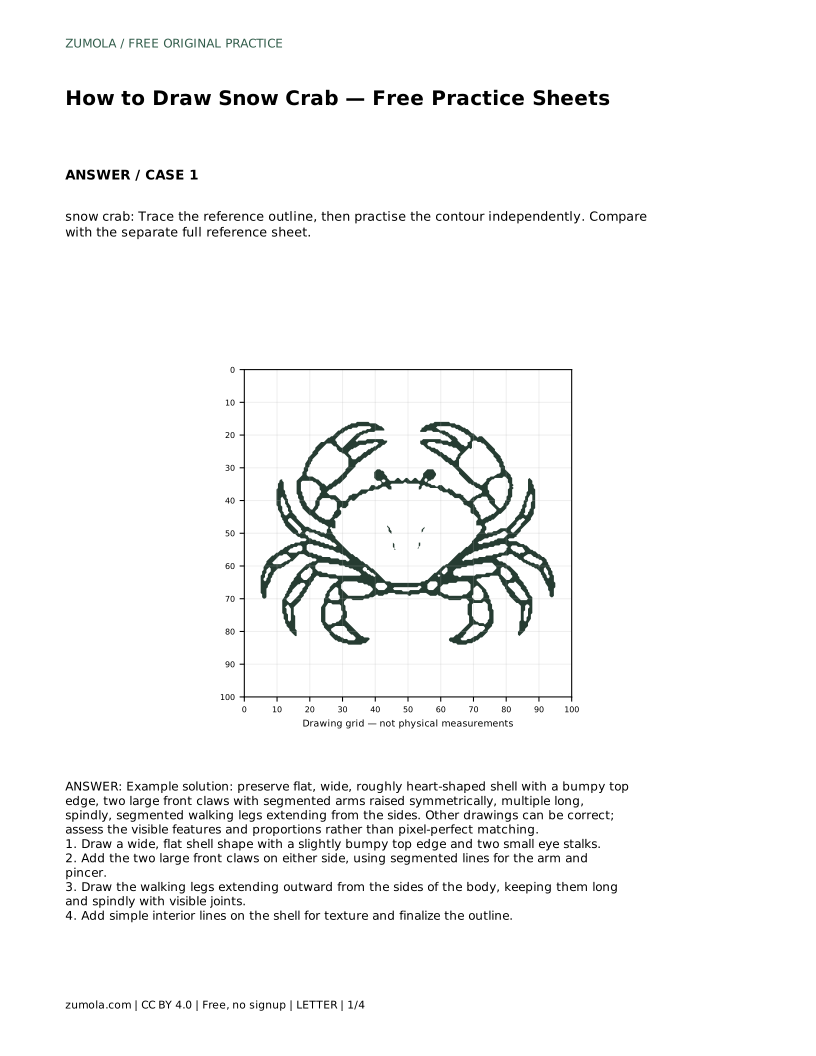
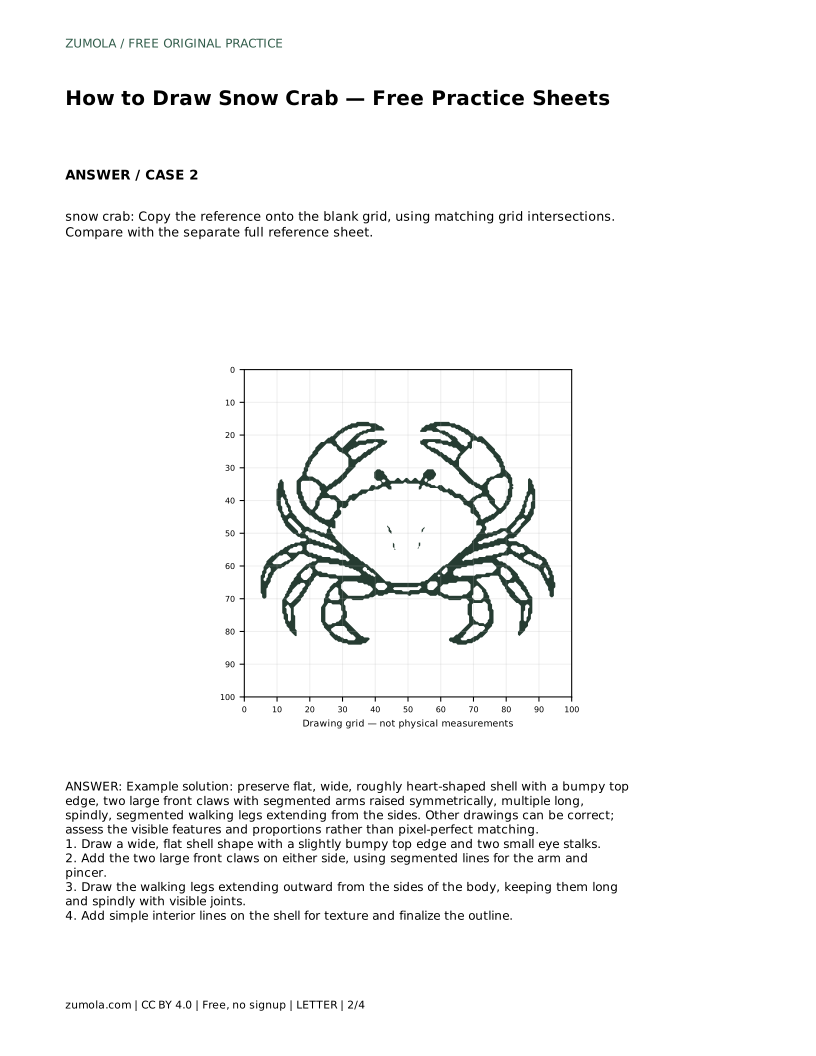
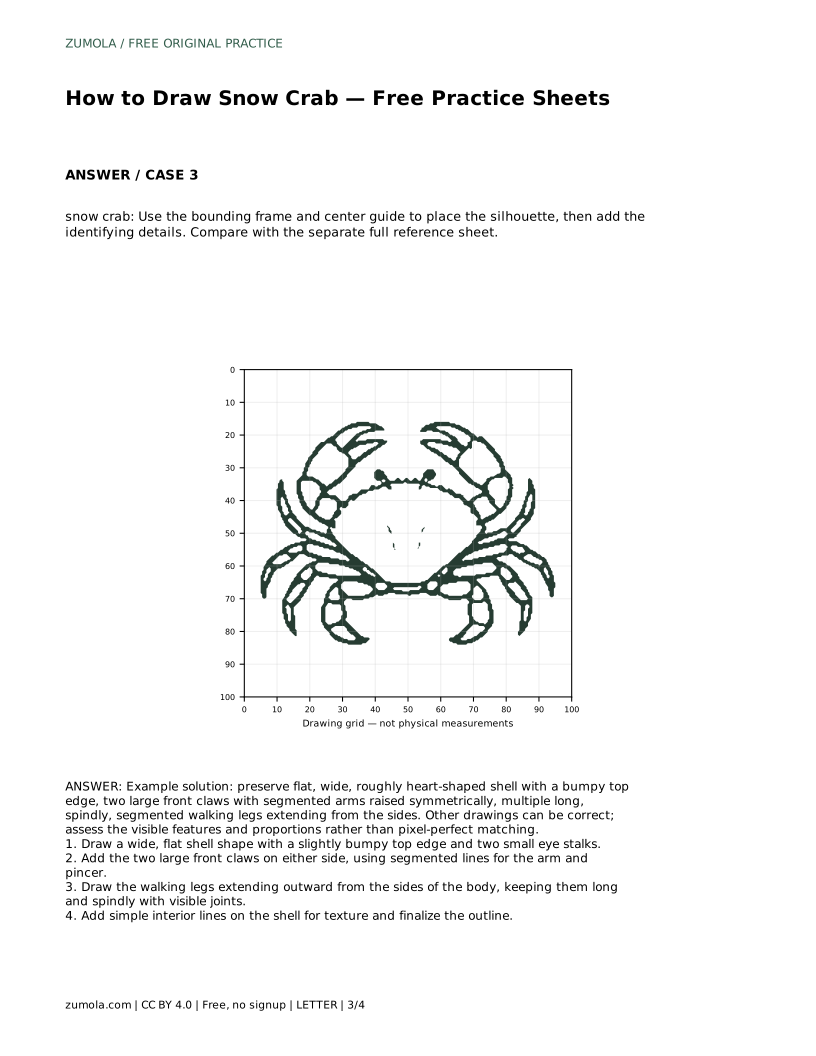
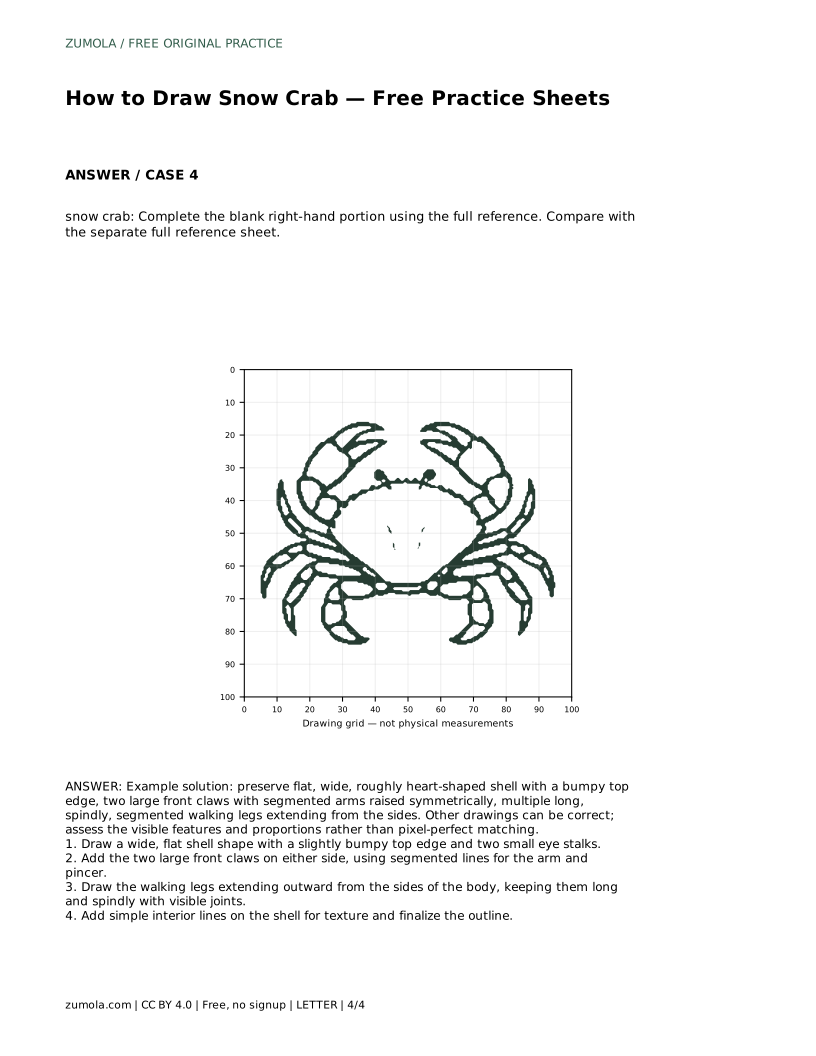
Reference diagrams
LETTER · Download PDF
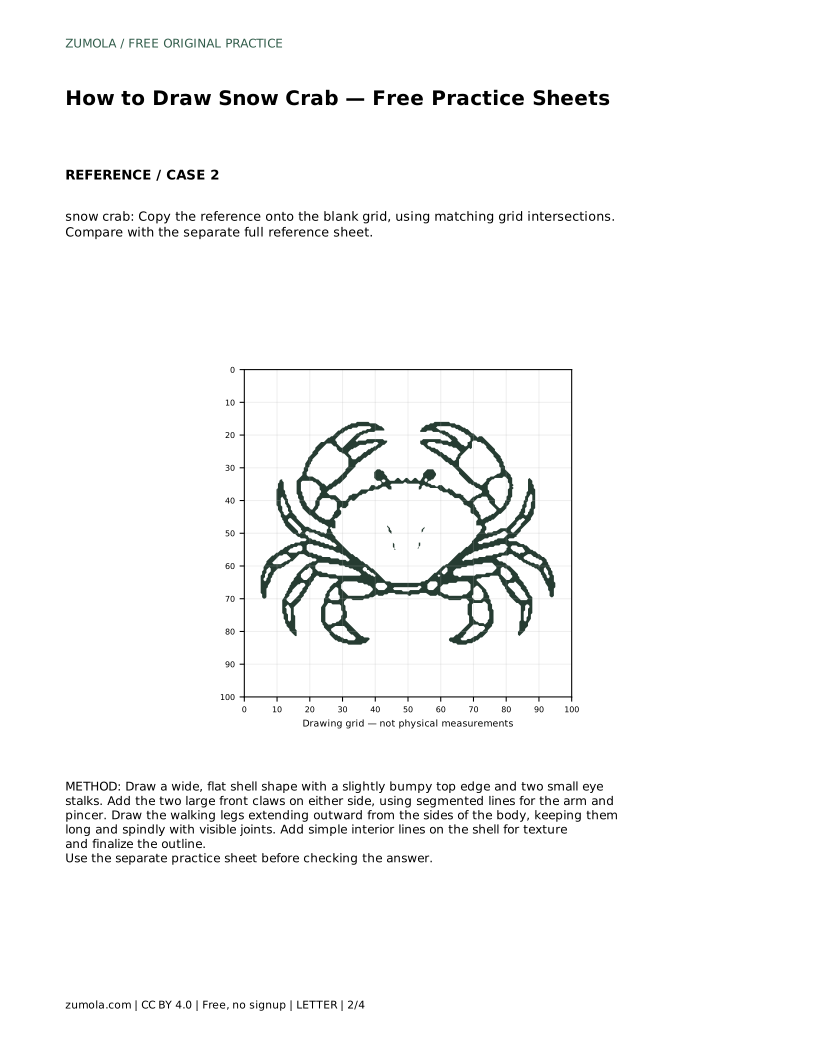
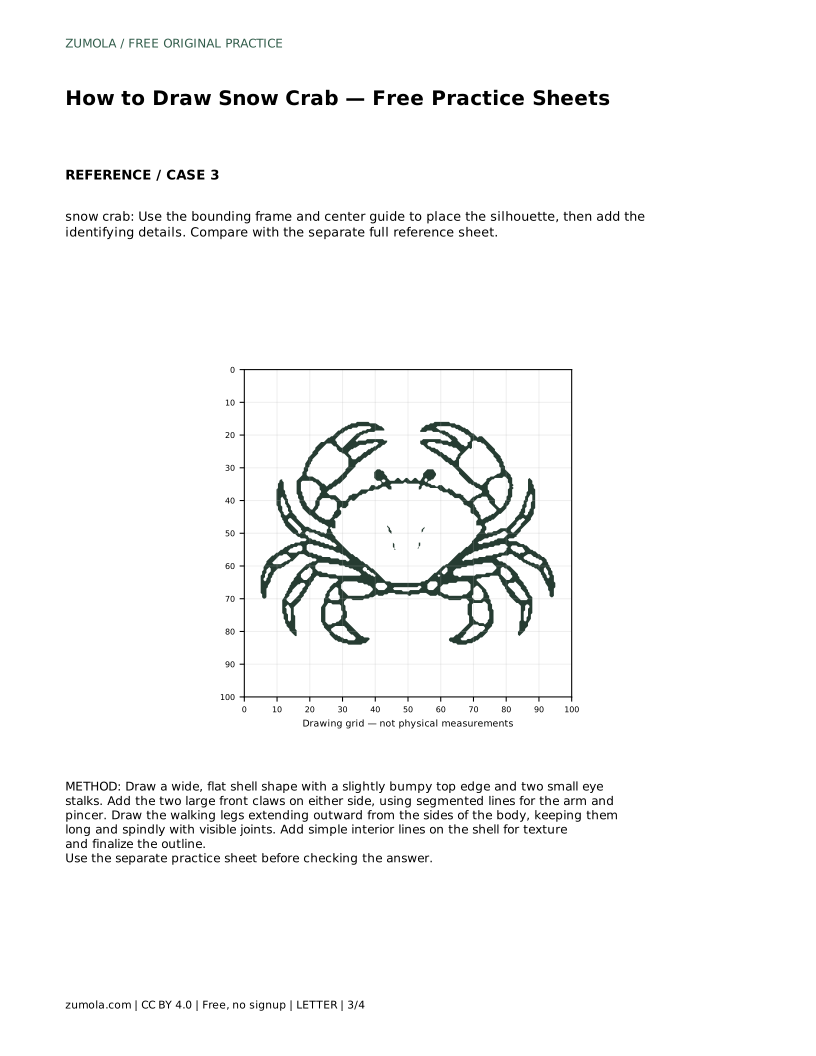
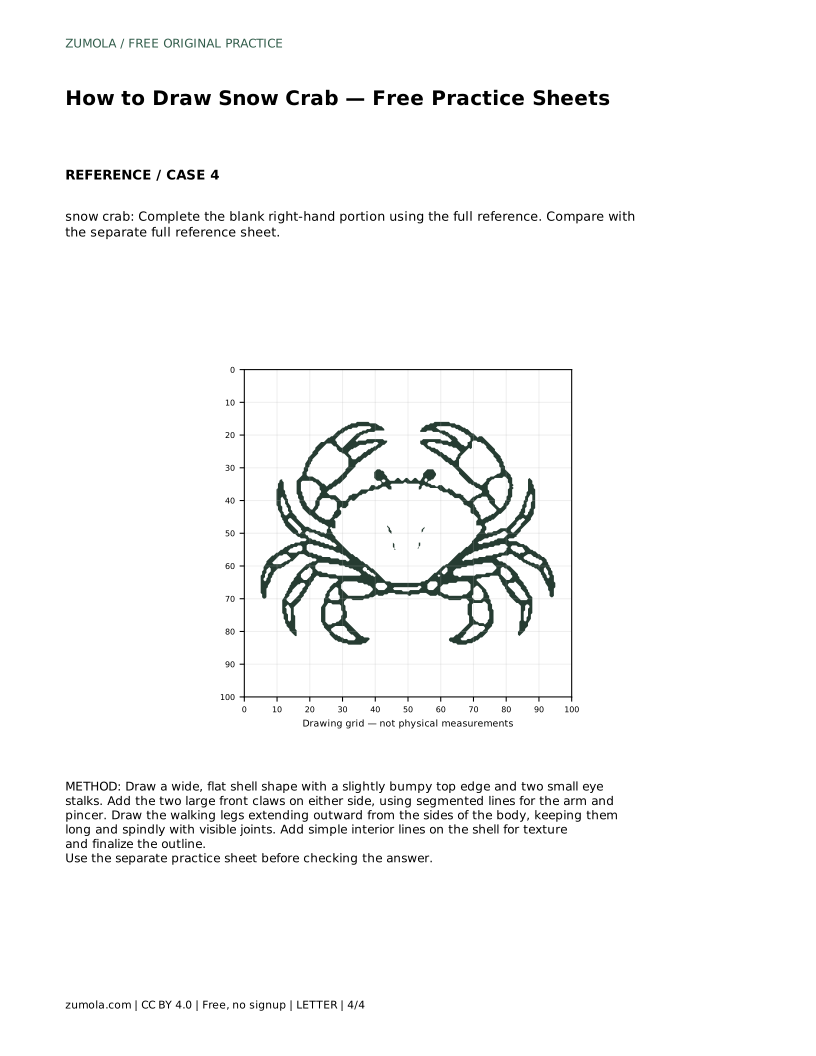
A4 · Download PDF
Free original resources
Learn to draw a snow crab by building a wide, bumpy shell, two segmented front claws, and long spindly walking legs. Includes a worked example and rubric.
Four original cases, with reference diagrams, practice sheets and worked answers. Everything is free; no signup required.
LETTER · Download PDF
A4 · Download PDF
LETTER · Download PDF
A4 · Download PDF
LETTER · Download PDF
A4 · Download PDF
Use A4 or US Letter to match your printer. Use the stated values and conditions to solve each exercise; diagrams are not physical measuring rulers.
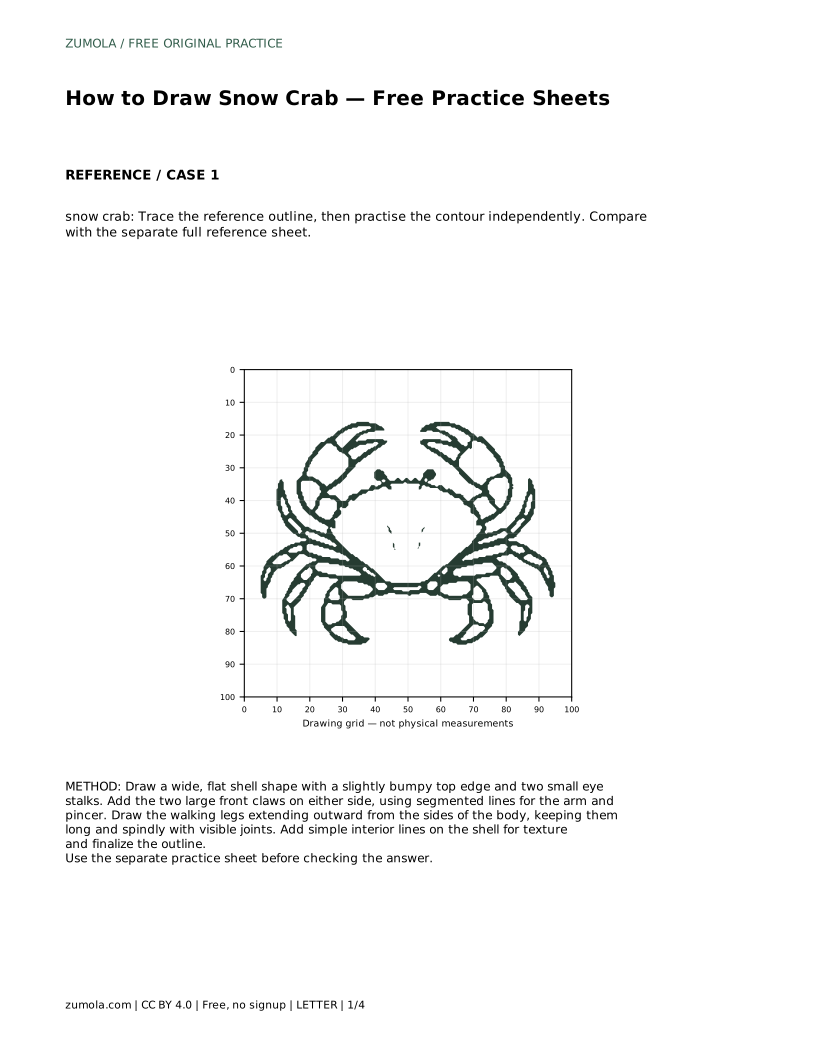
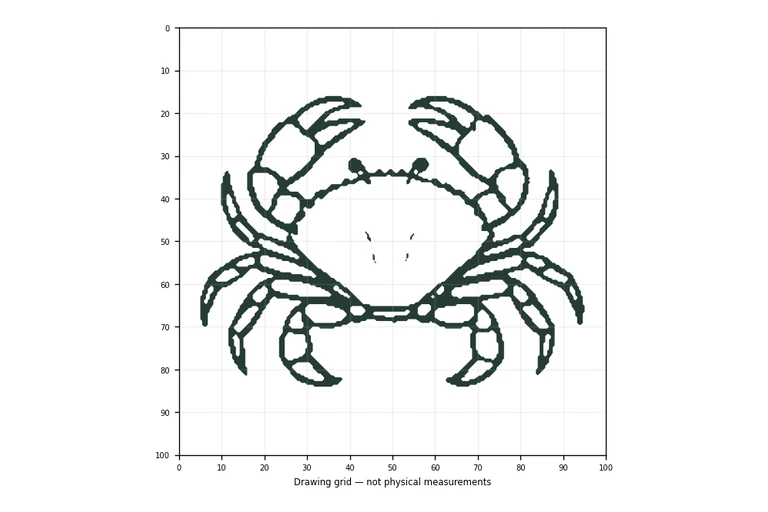
A snow crab drawing depends on a few clear features: a flat, wide shell that is roughly heart-shaped, a bumpy top edge, two large front claws on segmented arms, and several long, spindly walking legs. This page explains how to build those parts in order, then how to judge your drawing by visible features and proportions rather than by exact matching.
Begin with the body because every other part attaches to it. Draw a wide, flat shell that is broader than it is tall and roughly heart-shaped. Keep the top edge slightly bumpy rather than a smooth arc; those small irregularities are part of what makes the shell read as a crab rather than a generic oval. Add two small eye stalks near the front of the shell. Place them close together and keep them short, so the shell remains the dominant shape.
Check the proportions before adding legs. The shell should look wide and low, not round and tall. If your first outline feels too circular, flatten it and widen the sides. A light sketch line helps here, because the legs will extend far beyond the body and you want room on the page.
The two large front claws sit on either side of the shell and are raised symmetrically in the reference. Build each arm from short segments rather than one continuous curve, so the joints are visible. End each arm with a pincer: a wider base that narrows toward the tip, with a small gap or split suggesting the two parts of the claw.
Symmetry here is a guide, not a rule. The left and right claws should be similar in size and height, but small differences are normal in a hand drawing. What matters is that both claws are clearly larger than the walking legs and clearly attached to the body through segmented arms.
The walking legs extend outward from the sides of the body. Keep them long and spindly, with visible joints, and let them spread wider than the claws. Draw each leg as a series of short segments that change direction slightly at each joint, which gives the spindly look. Work from the body outward so every leg stays connected to the shell.
Once the legs are placed, add simple interior lines on the shell for texture. Keep these lines light and sparse; they suggest surface detail without turning the shell into a pattern. Finally, go over the outline to make the shell, claws, and legs read as one connected animal.
Art has multiple valid outcomes, so compare your drawing to the reference by checking features rather than by matching every line. Ask whether the shell is wide and flat with a bumpy top edge, whether two large front claws sit on segmented arms, and whether multiple long, spindly, segmented walking legs extend from the sides. If those features are present and the proportions feel balanced, the drawing is working, even if it differs from the reference in small ways.
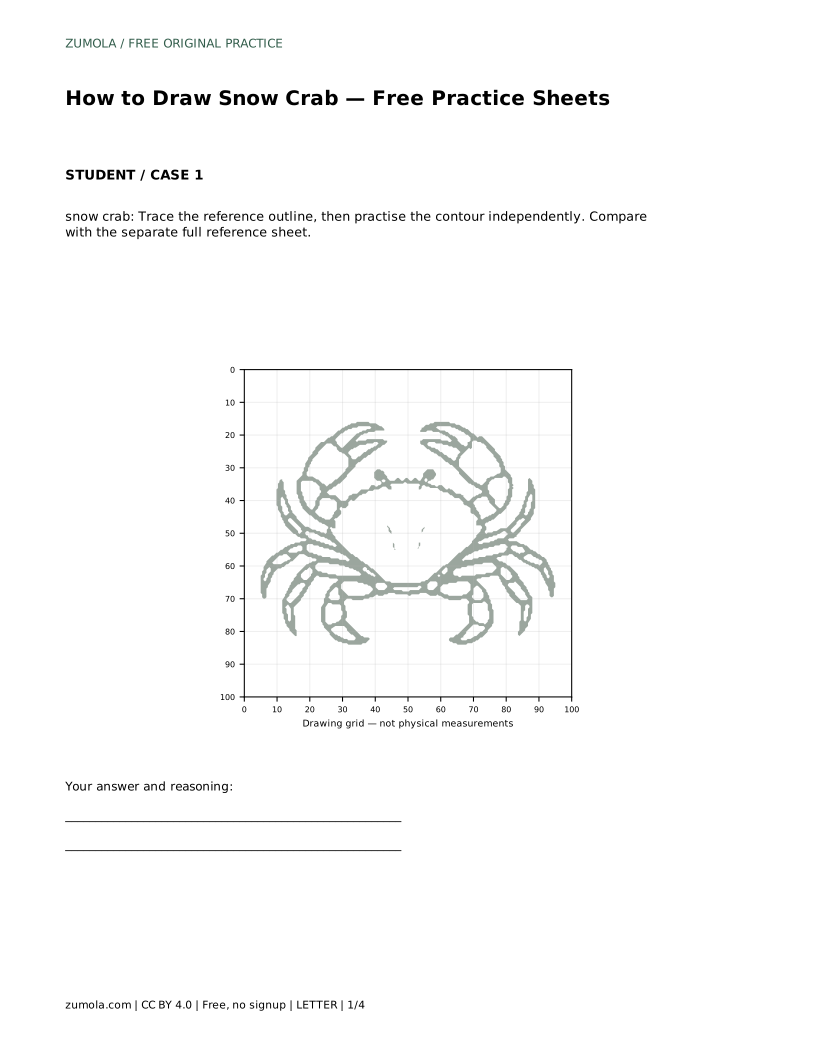
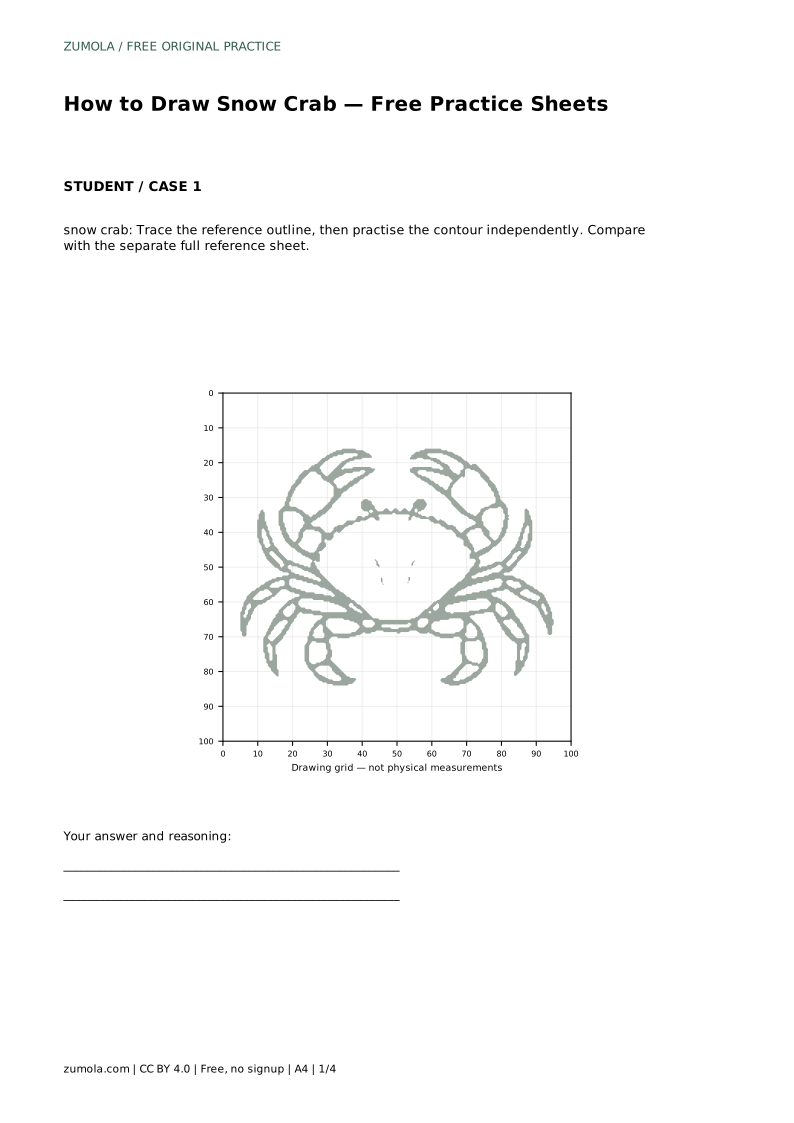
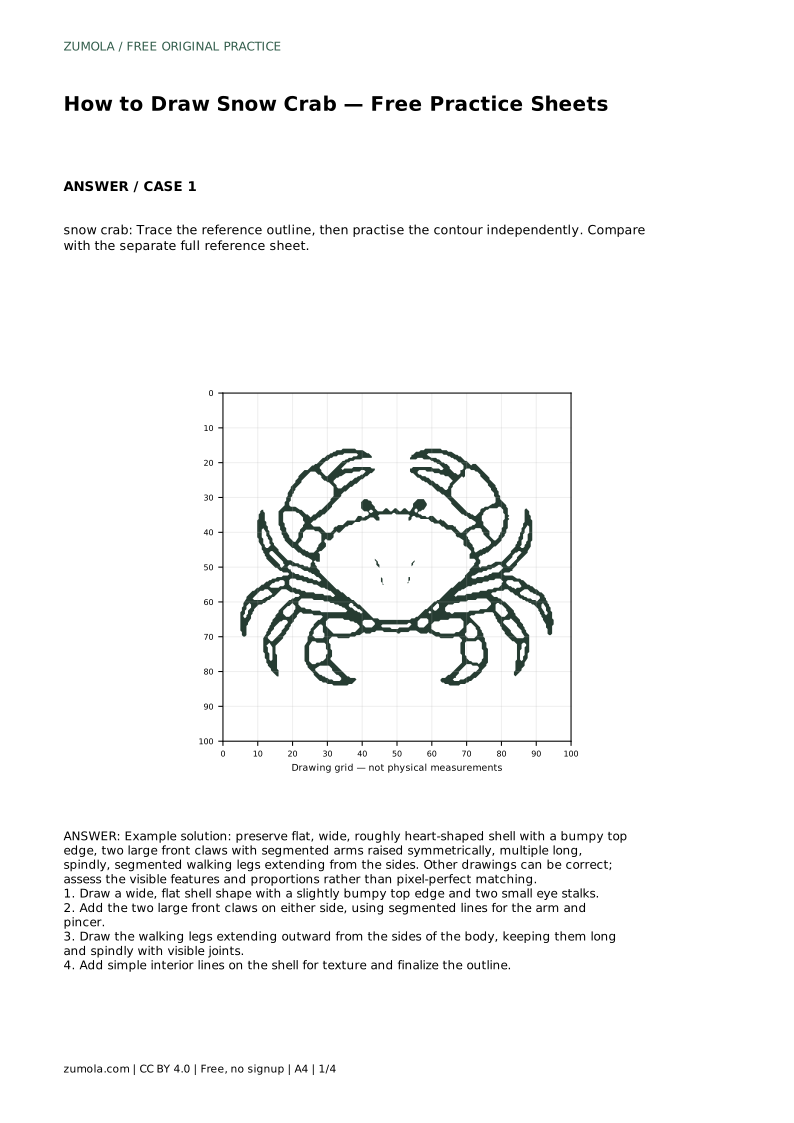
snow crab: Trace the reference outline, then practise the contour independently. Compare with the separate full reference sheet.
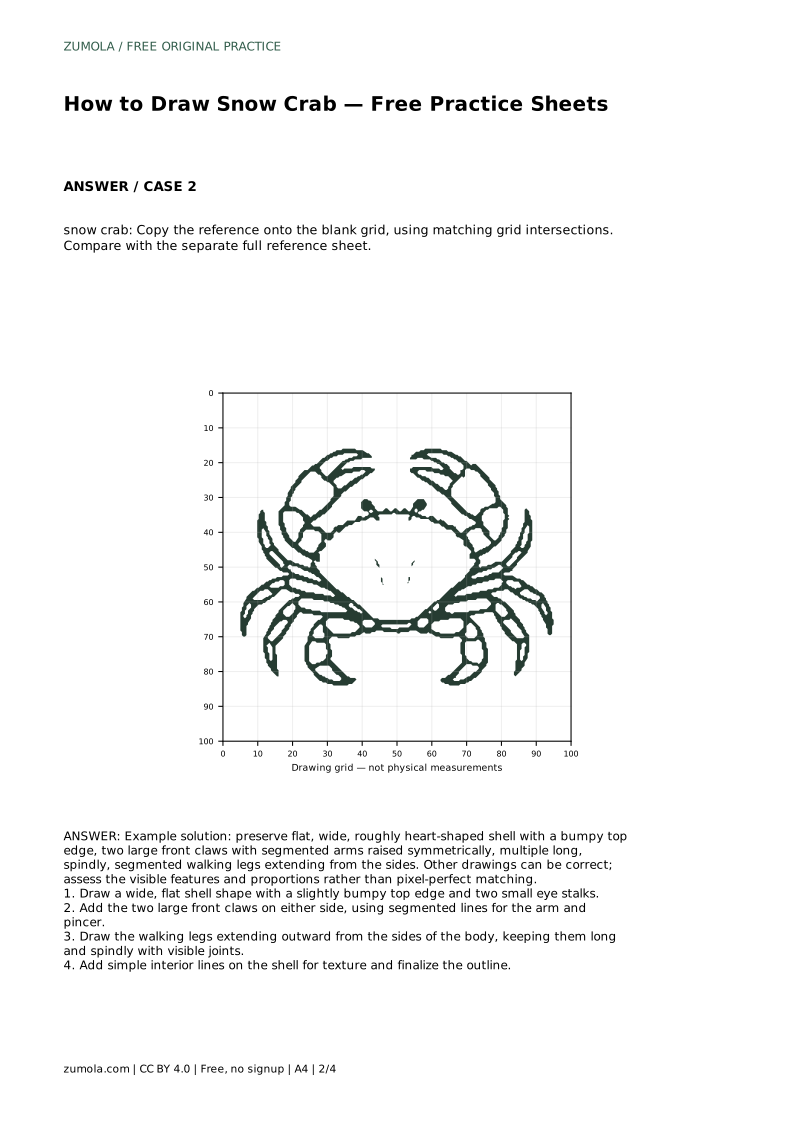
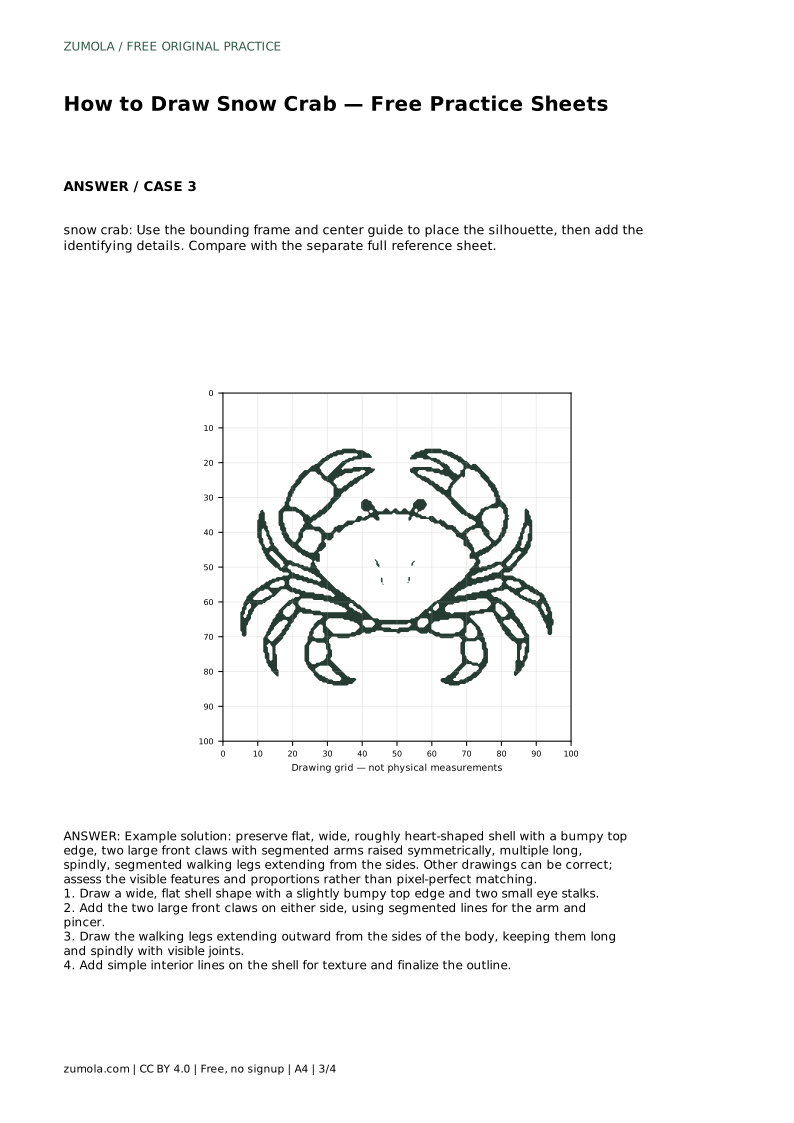
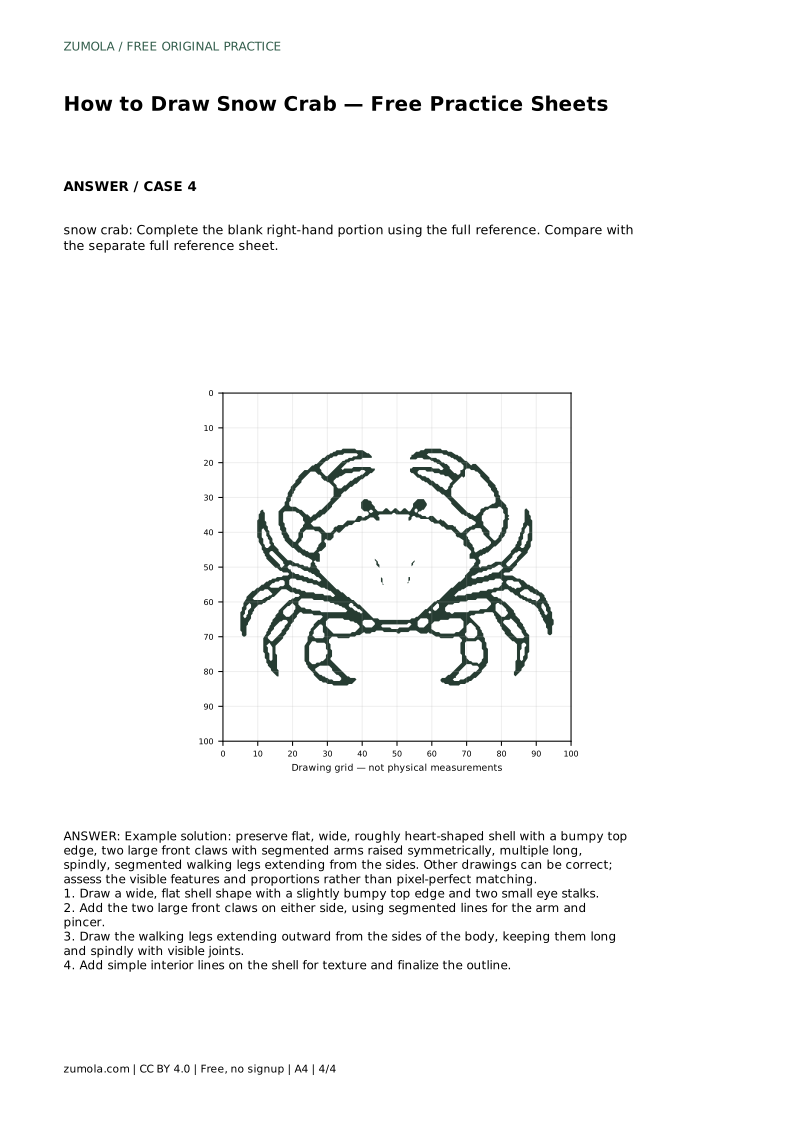
Example solution: preserve flat, wide, roughly heart-shaped shell with a bumpy top edge, two large front claws with segmented arms raised symmetrically, multiple long, spindly, segmented walking legs extending from the sides. Other drawings can be correct; assess the visible features and proportions rather than pixel-perfect matching. Draw a wide, flat shell shape with a slightly bumpy top edge and two small eye stalks. Add the two large front claws on either side, using segmented lines for the arm and pincer. Draw the walking legs extending outward from the sides of the body, keeping them long and spindly with visible joints. Add simple interior lines on the shell for texture and finalize the outline.
Draw multiple long, spindly legs extending from the sides of the body. The exact count is less important than keeping them long, jointed, and clearly attached to the shell.
No. They should be similar in size and height, but small differences are normal. Focus on making both claws larger than the walking legs and attached through segmented arms.
The combination of a wide, flat, roughly heart-shaped shell with a bumpy top edge, two large segmented front claws, and multiple long, spindly walking legs.
All drawing practice · Free coordinate paper
Original resources · CC BY 4.0 · Free for personal and classroom use with attribution.