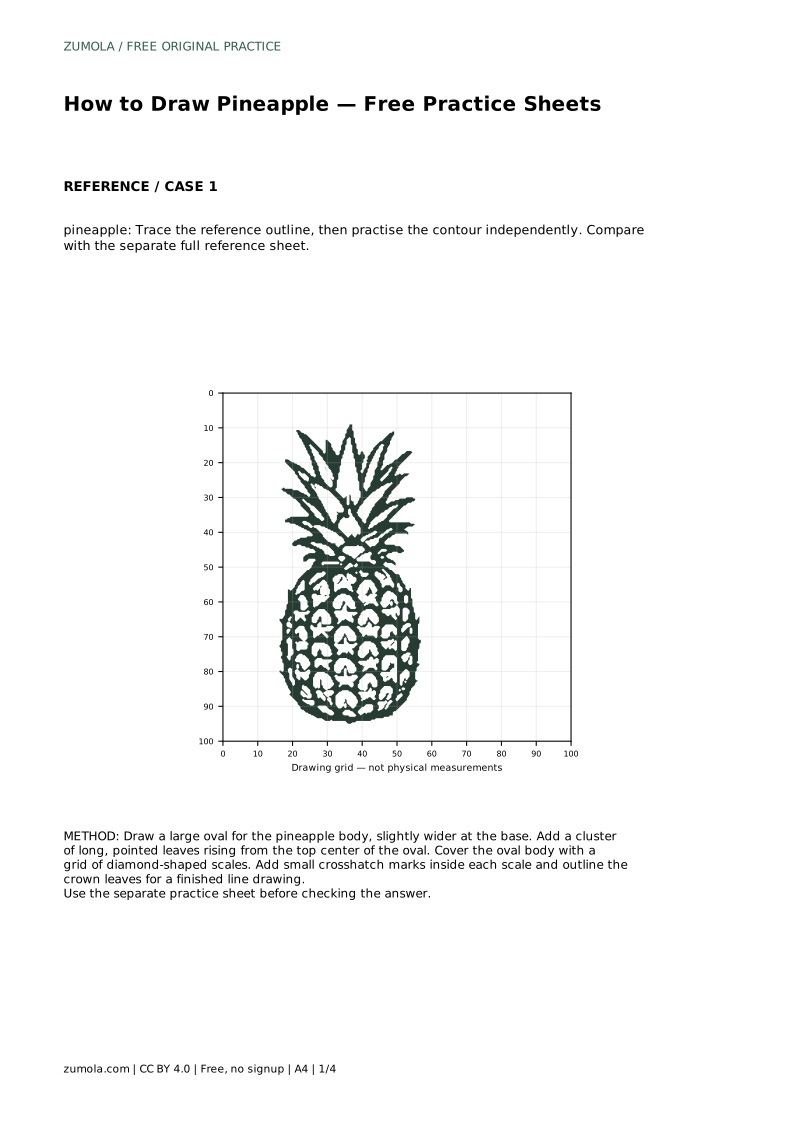
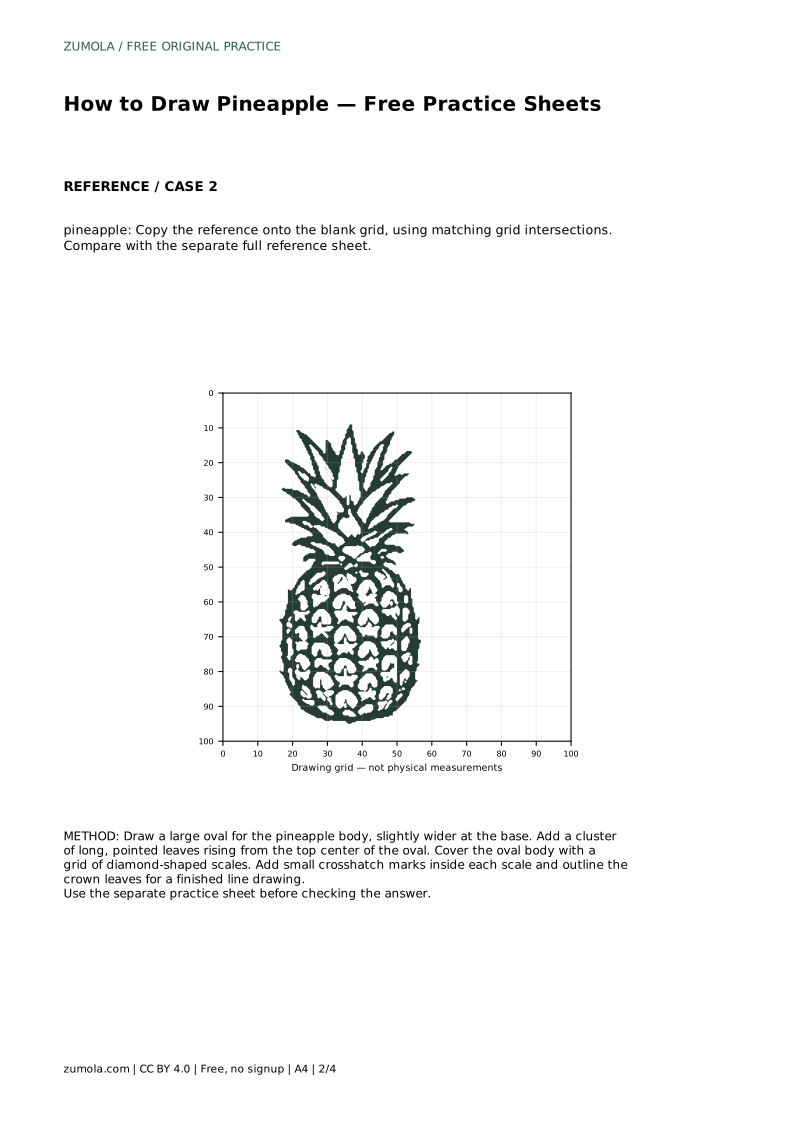
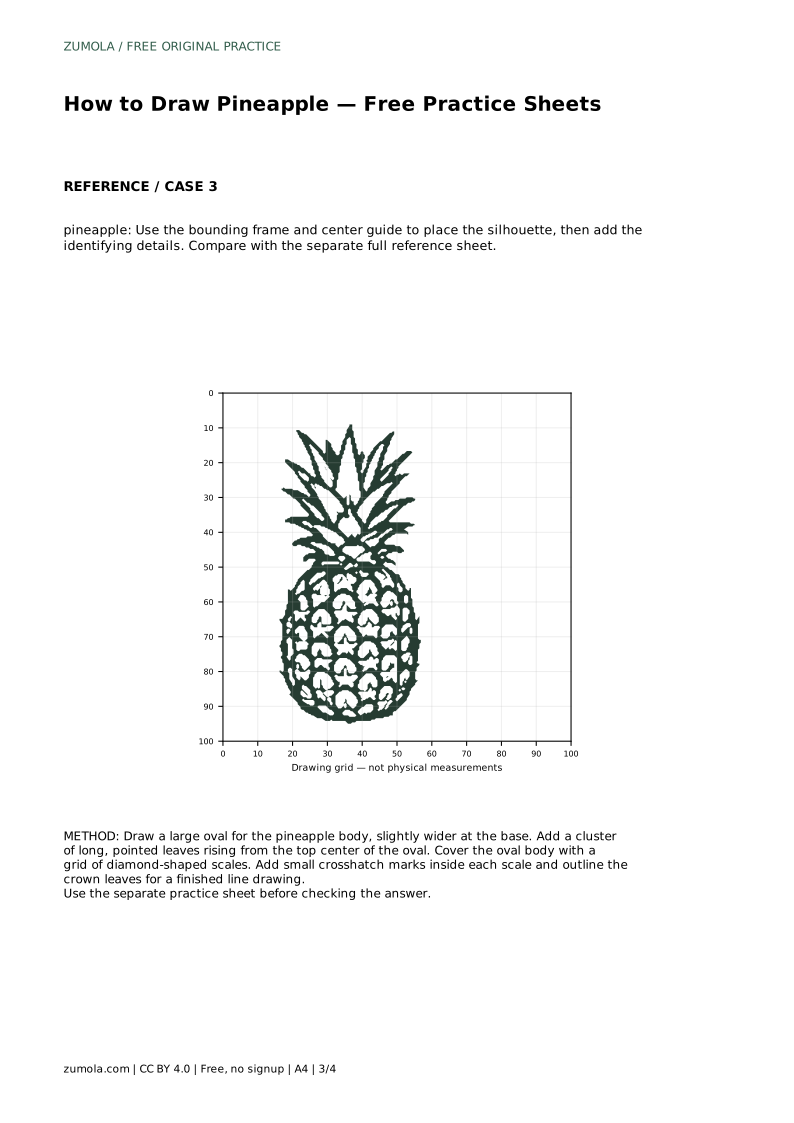
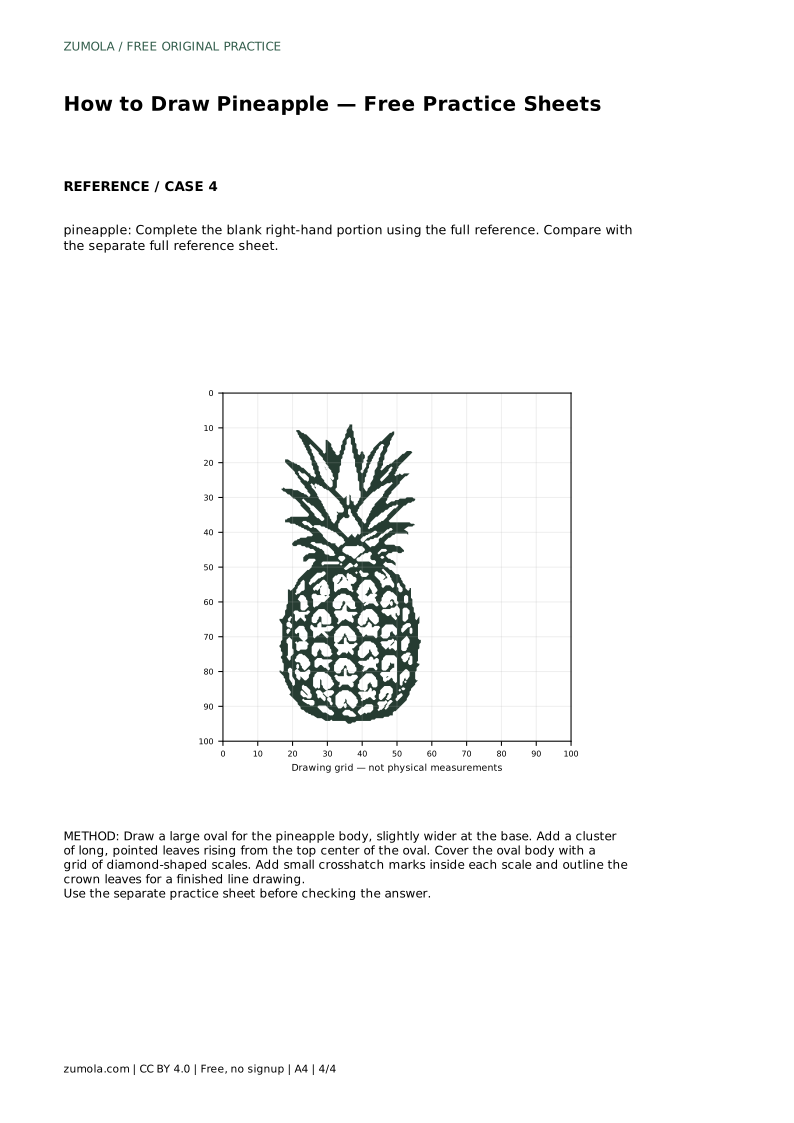
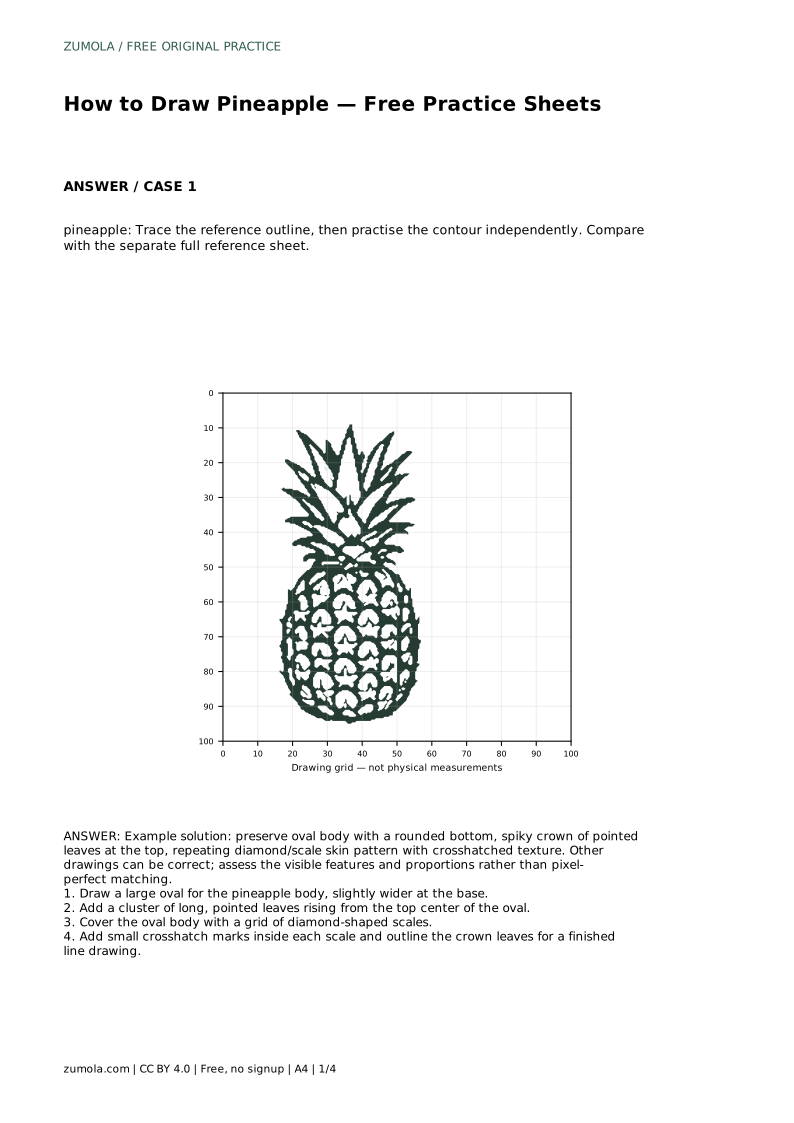
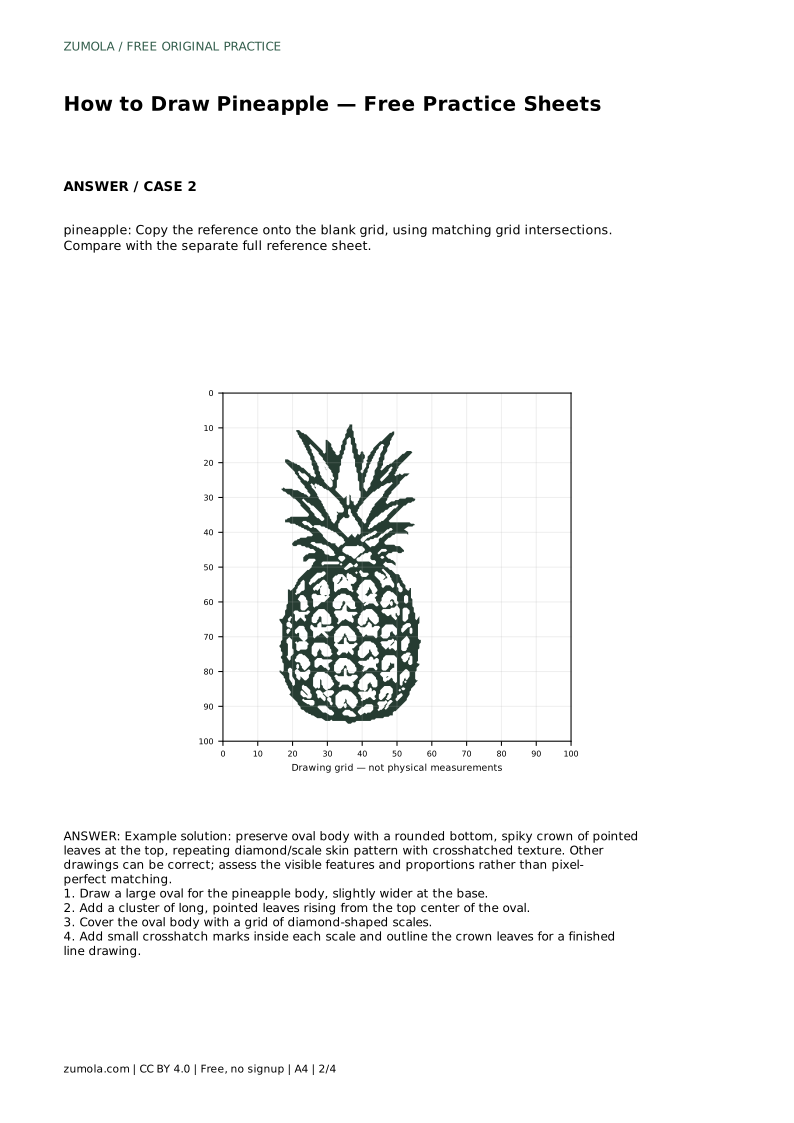
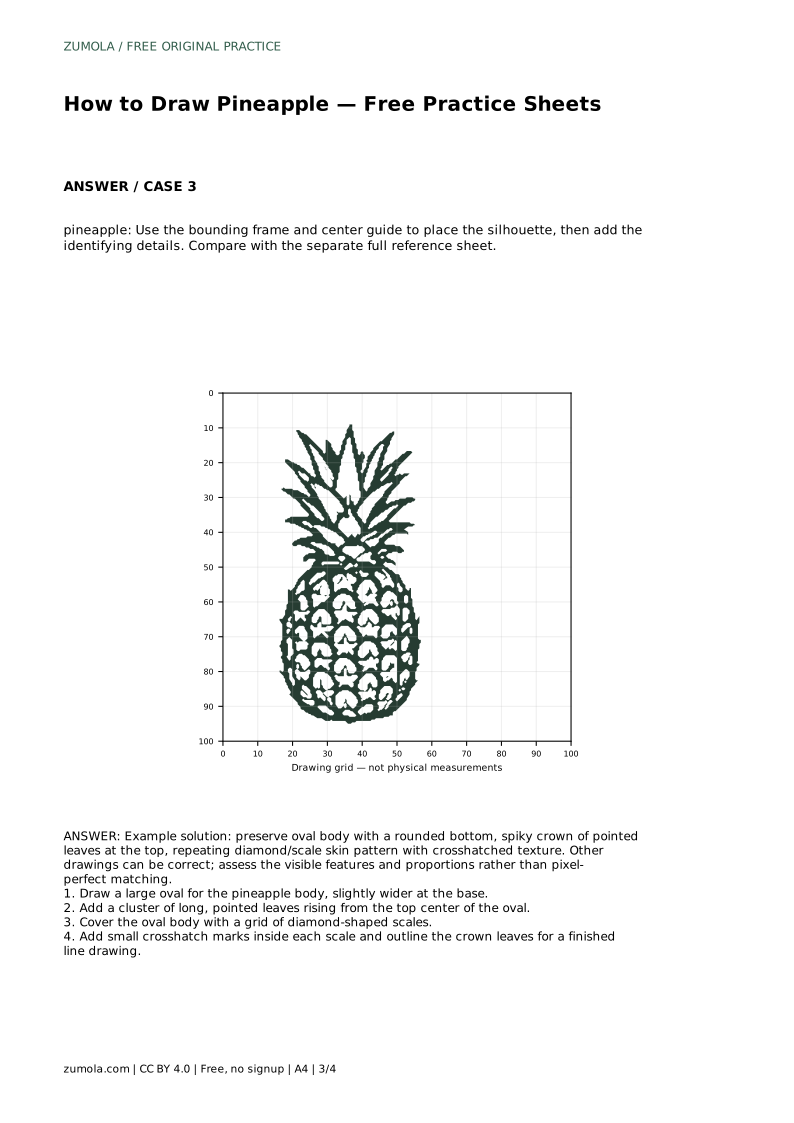
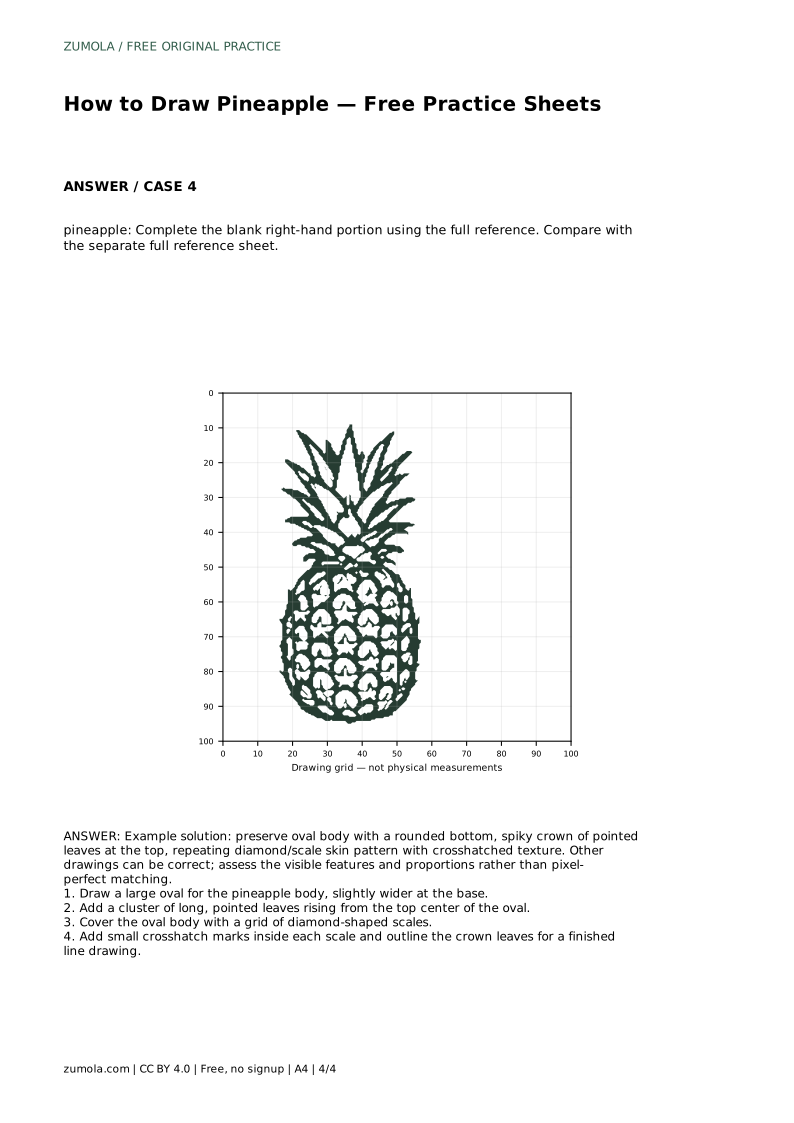
Reference diagrams
LETTER · Download PDF
A4 · Download PDF
Free original resources
Learn to draw a pineapple by building its oval body, pointed leaf crown, and diamond scale pattern. Free practice sheets support tracing, grids, and guided outlines.
Four original cases, with reference diagrams, practice sheets and worked answers. Everything is free; no signup required.
LETTER · Download PDF
A4 · Download PDF
LETTER · Download PDF
A4 · Download PDF
LETTER · Download PDF
A4 · Download PDF
Use A4 or US Letter to match your printer. Use the stated values and conditions to solve each exercise; diagrams are not physical measuring rulers.
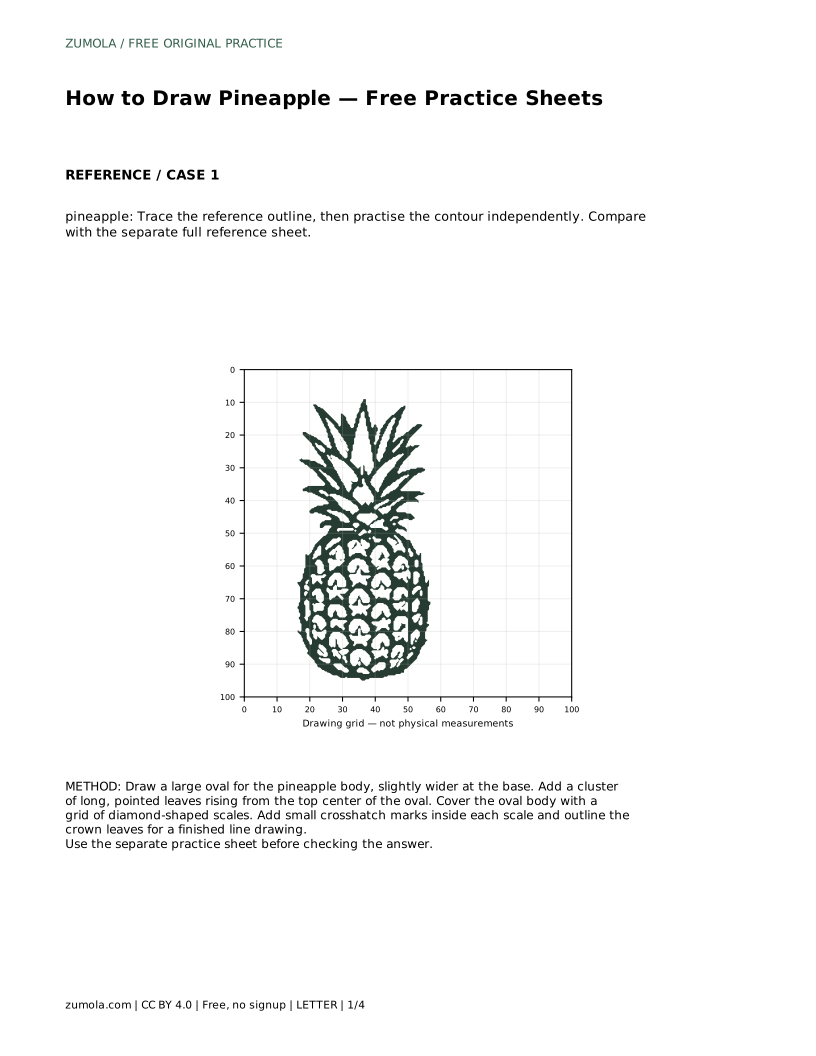
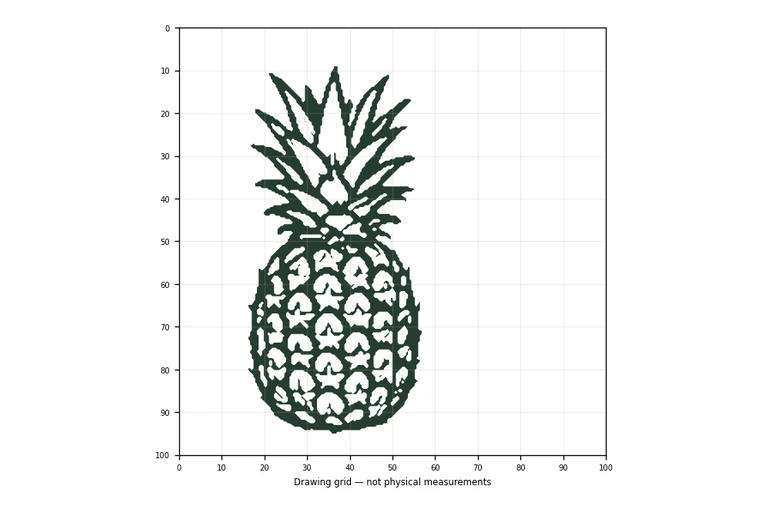
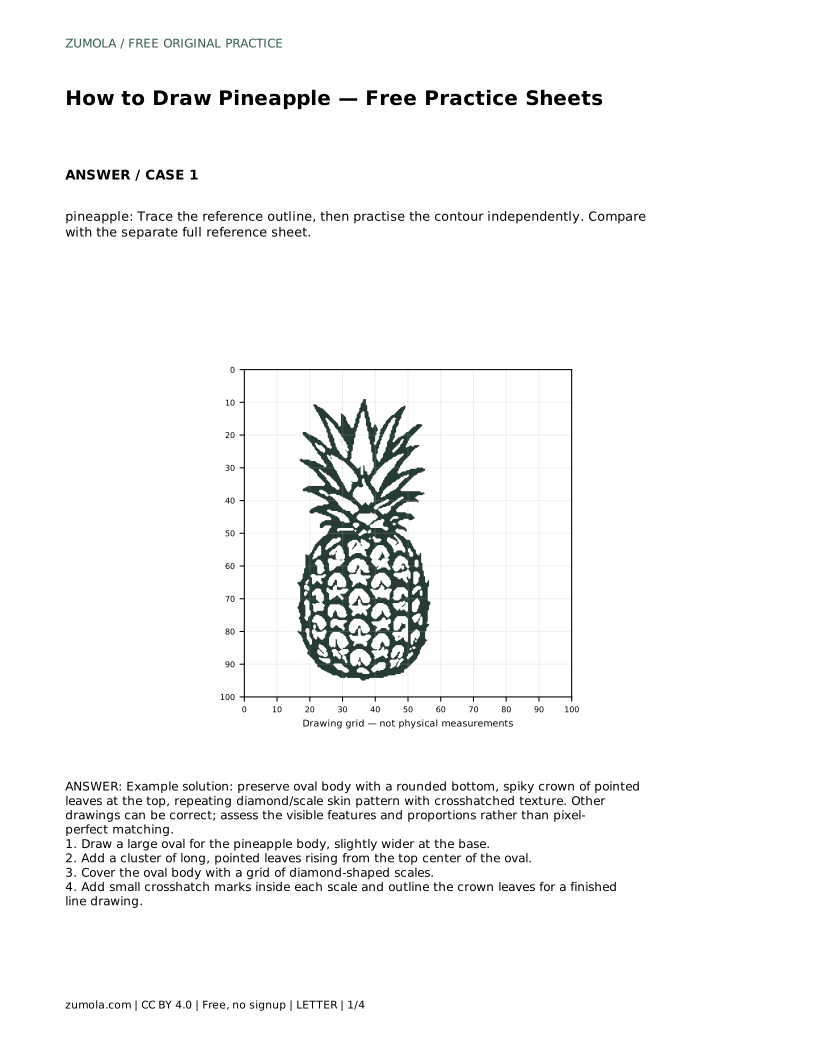
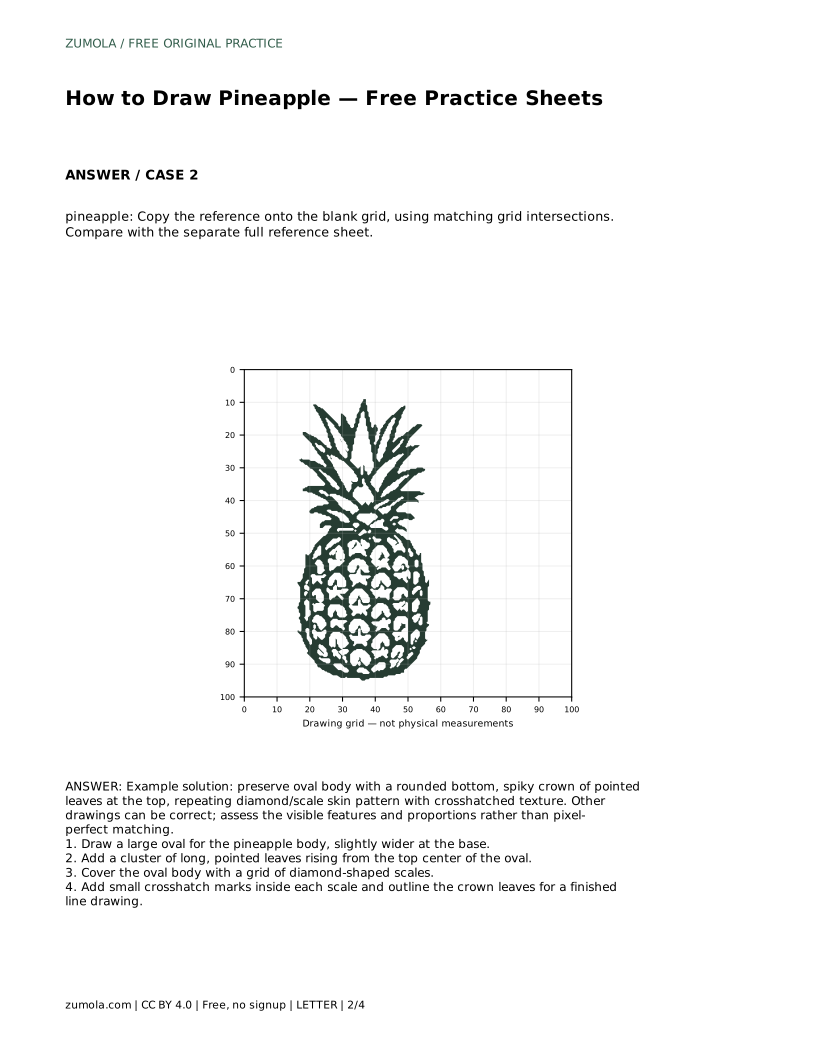
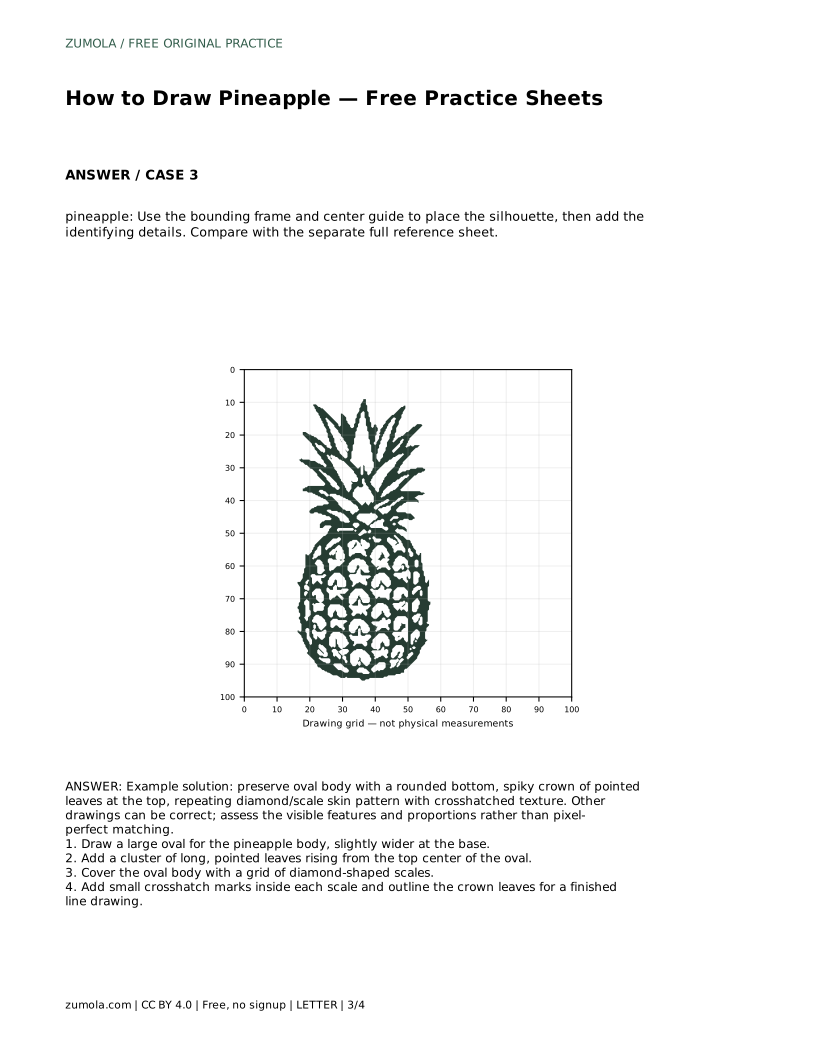
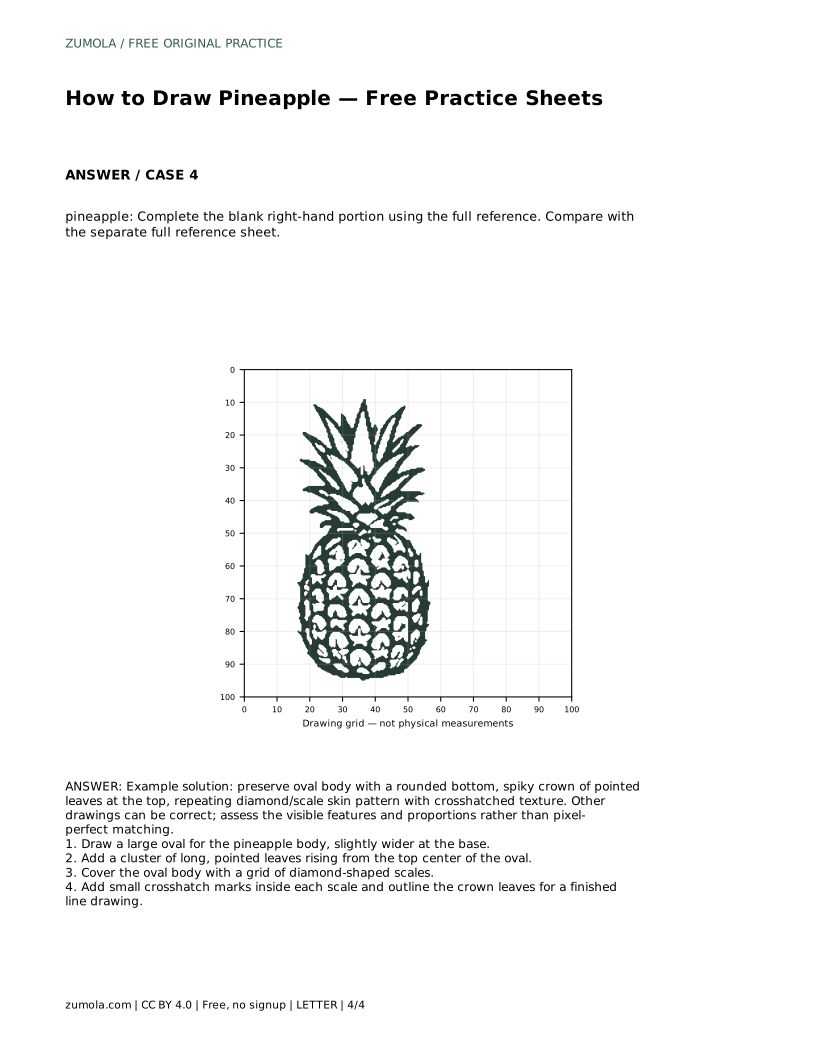
A pineapple is easy to recognise but surprisingly demanding to draw well. The body is a rounded oval, the crown is a fan of pointed leaves, and the skin is a repeating diamond pattern. This page explains how those parts fit together, then shows how to practise them on free printable sheets. The goal is not a pixel-perfect copy. Different drawings can all be correct when the visible features and proportions hold together.
Begin with the largest shape: a tall oval for the fruit body. Make it slightly wider near the base so the pineapple looks grounded rather than floating. Keep the outline smooth and closed; a wobbly edge is harder to correct once the scale pattern is added.
Next, place the crown. Draw a cluster of long, pointed leaves rising from the top centre of the oval. Leaves should fan outward at different angles, with some shorter and some longer. Overlap them slightly so the crown reads as a single leafy mass rather than separate spikes.
The skin pattern is a grid of diamond-shaped scales. Imagine diagonal lines crossing the body in two directions, then draw the diamonds where those lines meet. Keep the diamonds roughly the same size across the middle of the body and let them shrink slightly near the curved edges, because the surface is turning away from you.
Work in light pencil first. A few guide diagonals are enough to keep the rows aligned. Once the diamonds look even, darken the outlines. Small crosshatch marks inside each scale suggest texture without turning the drawing into a solid dark mass.
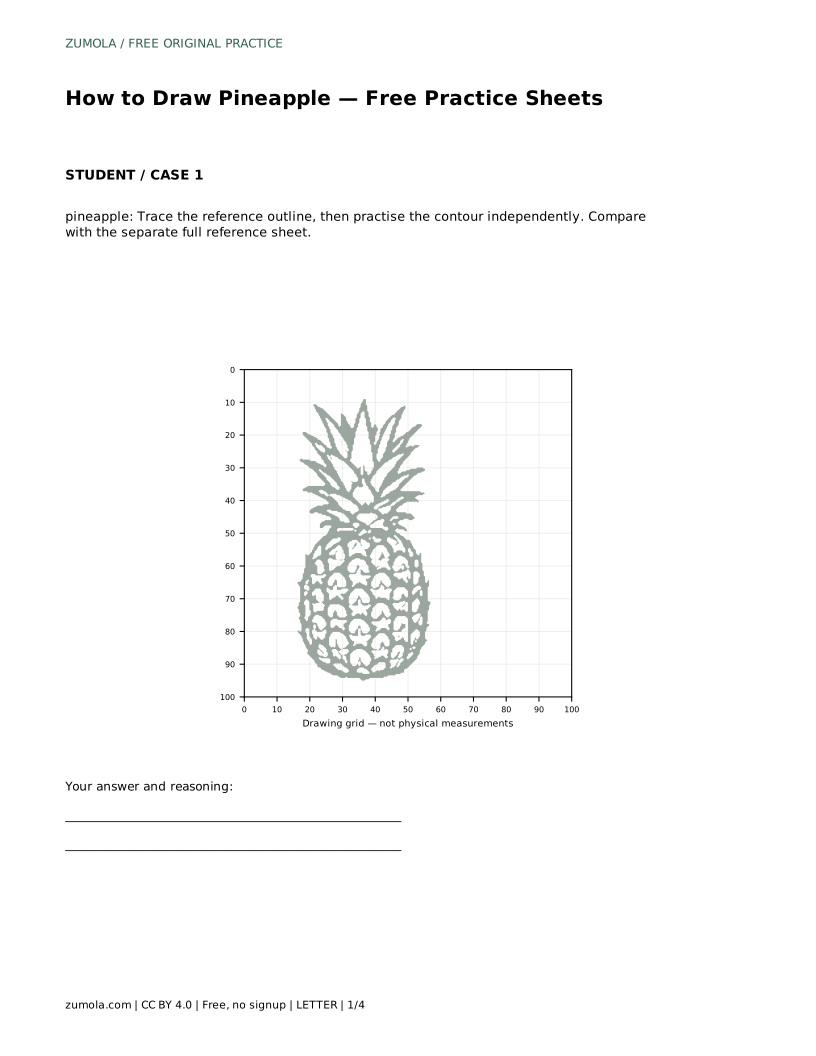
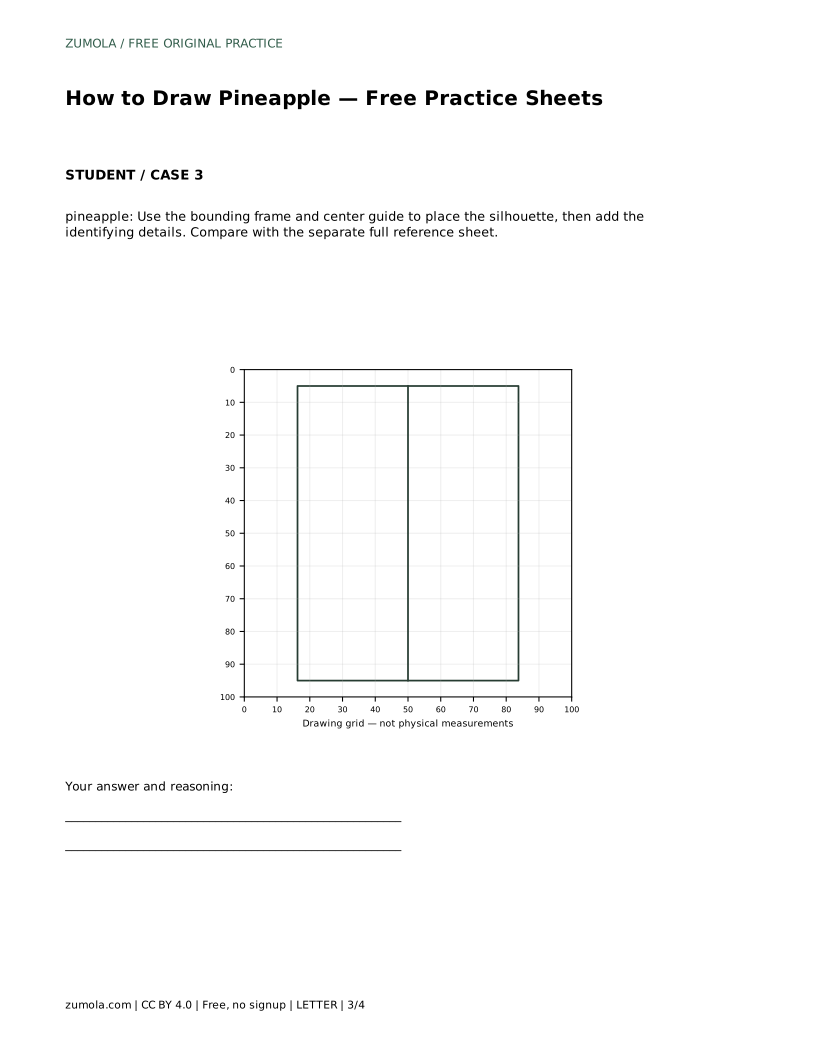
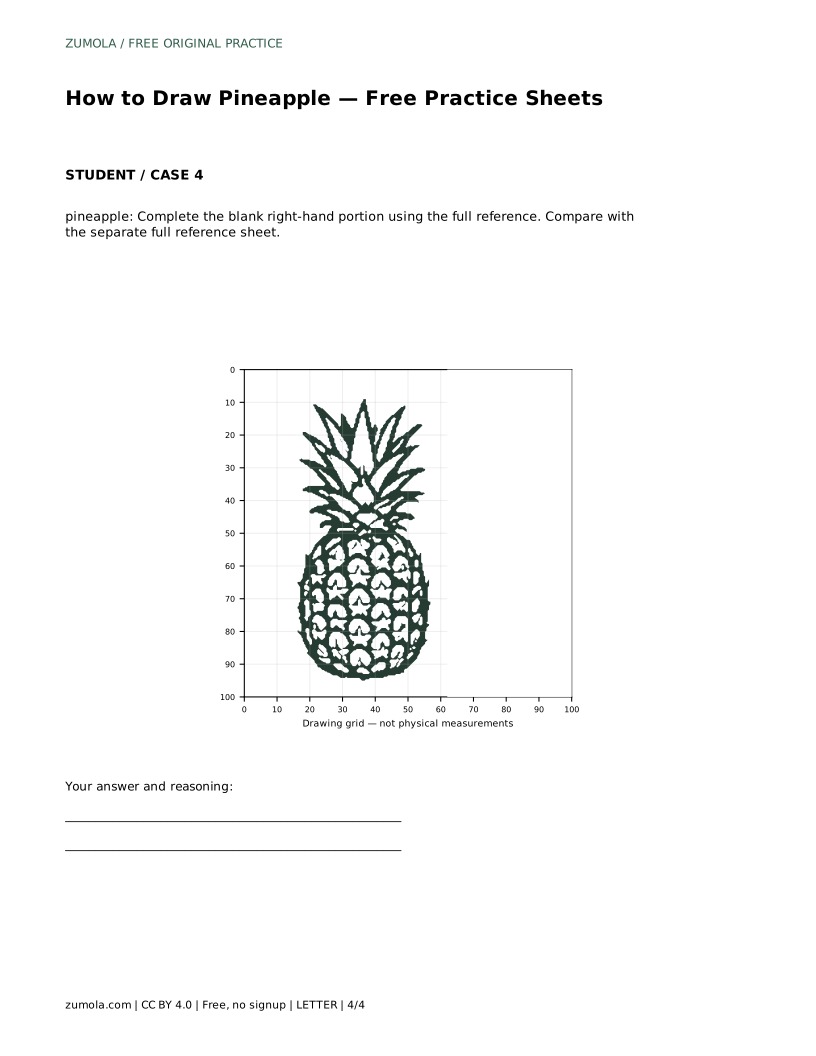
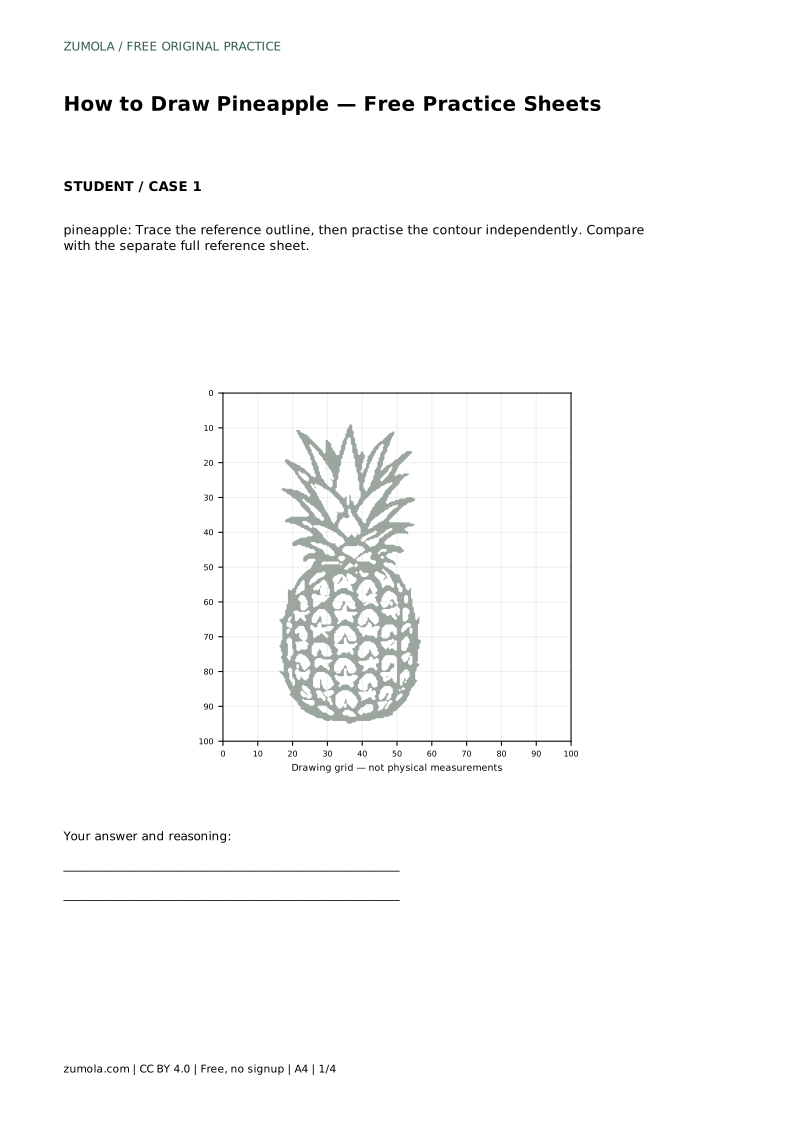
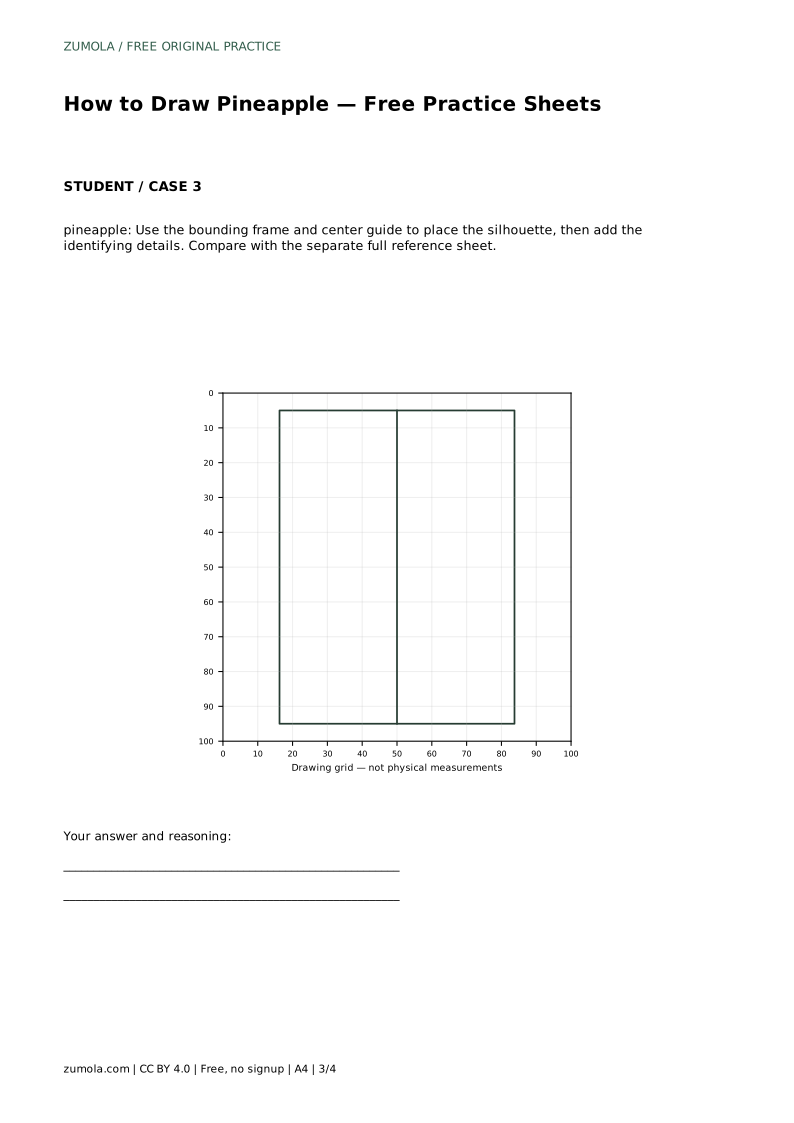
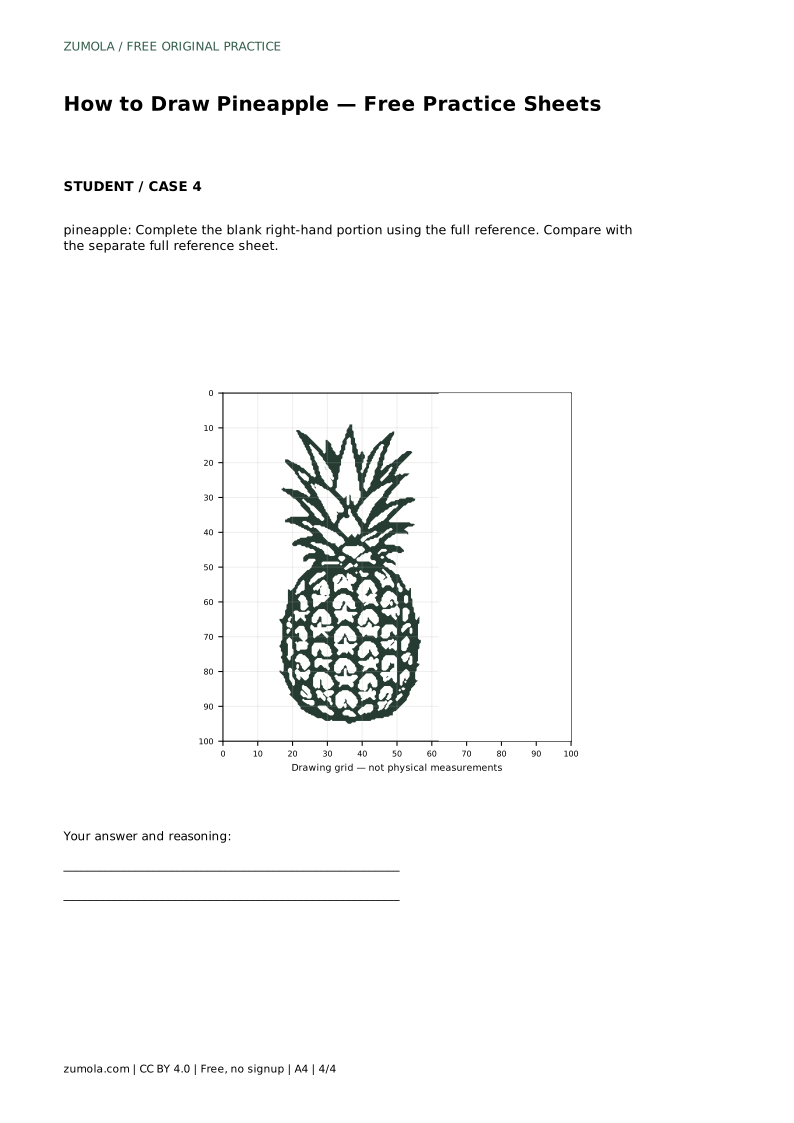
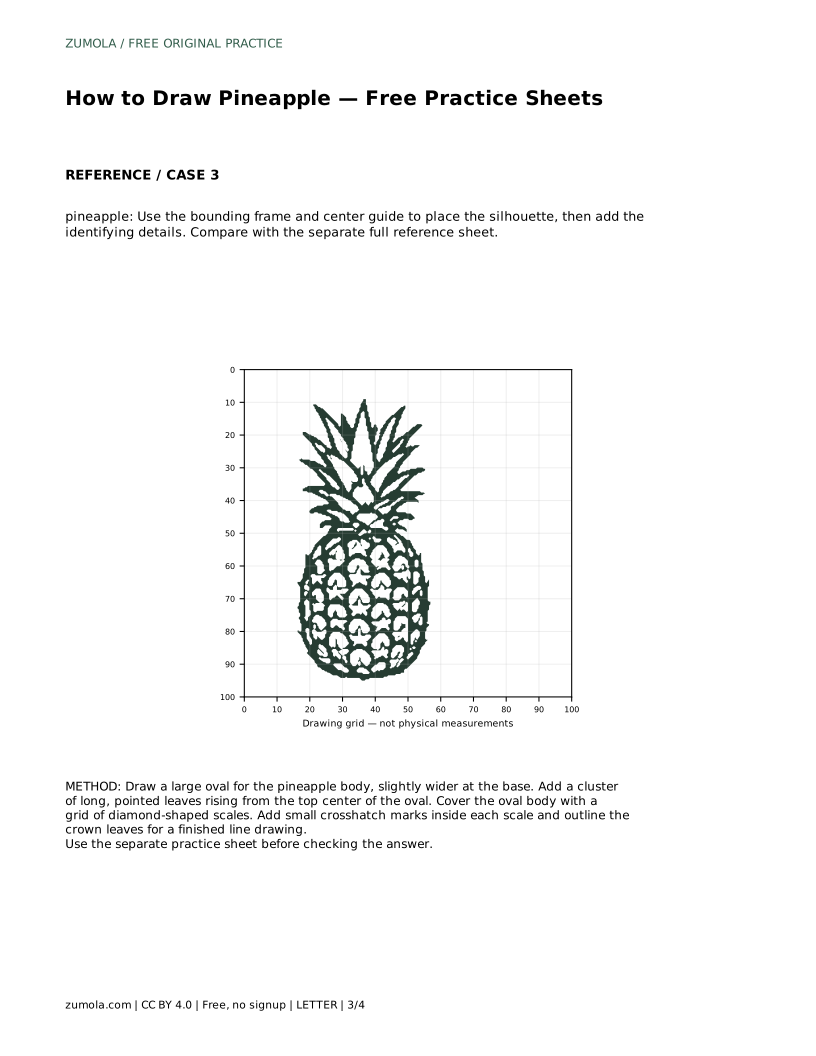
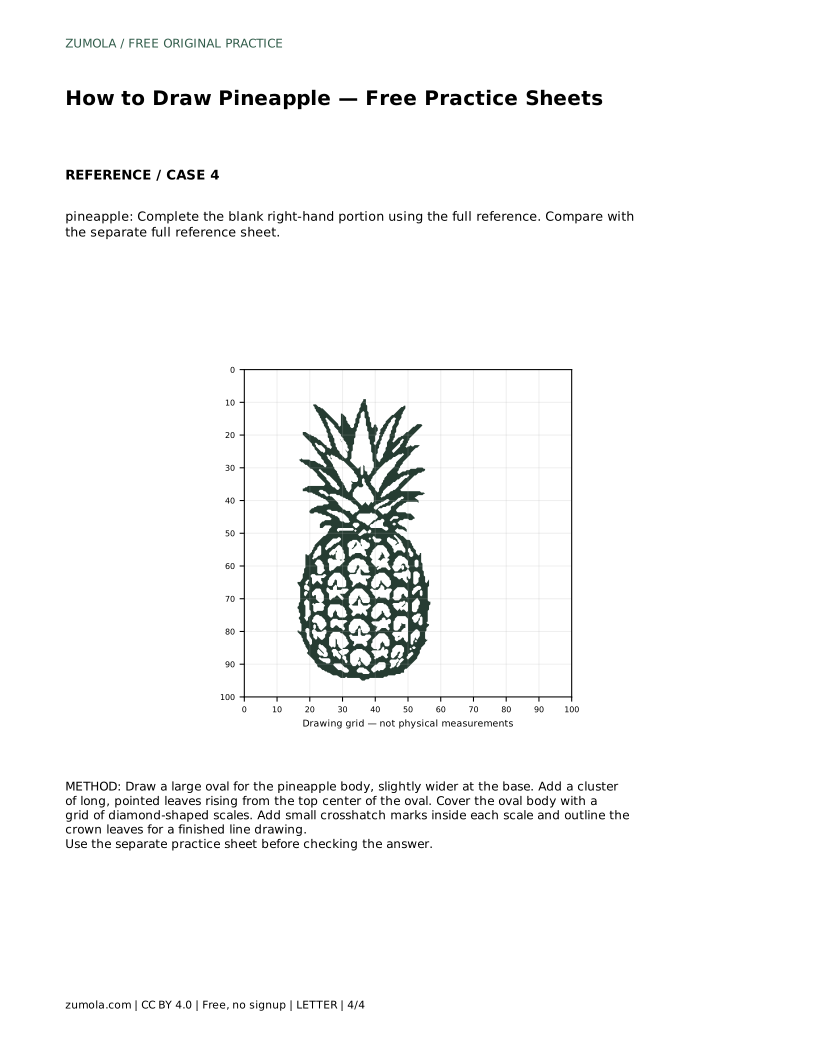
The printable sheets offer different levels of support. One asks you to trace the reference outline, then practise the contour independently. Another uses a blank grid so you copy the reference at matching intersections. A third provides a bounding frame and centre guide to place the silhouette before adding details. A fourth leaves the right-hand portion blank for completion from the full reference.
Each sheet is paired with a separate full reference sheet, so compare your drawing against that rather than against a remembered version. When comparing, check the oval body with its rounded bottom, the spiky crown of pointed leaves at the top, and the repeating diamond pattern with crosshatched texture. Treat these as features to assess, not as an exact answer key.
Because art has multiple valid outcomes, judge the drawing by visible features and proportions. A pineapple can be wider, narrower, or have a differently shaped crown and still be correct. What matters is that the body reads as an oval with a rounded bottom, the crown reads as pointed leaves, and the skin reads as a repeating diamond pattern.
Use the rubric below to review your work. If one criterion is weak, redraw only that part rather than starting over. This keeps practice focused and makes improvement visible from one attempt to the next.
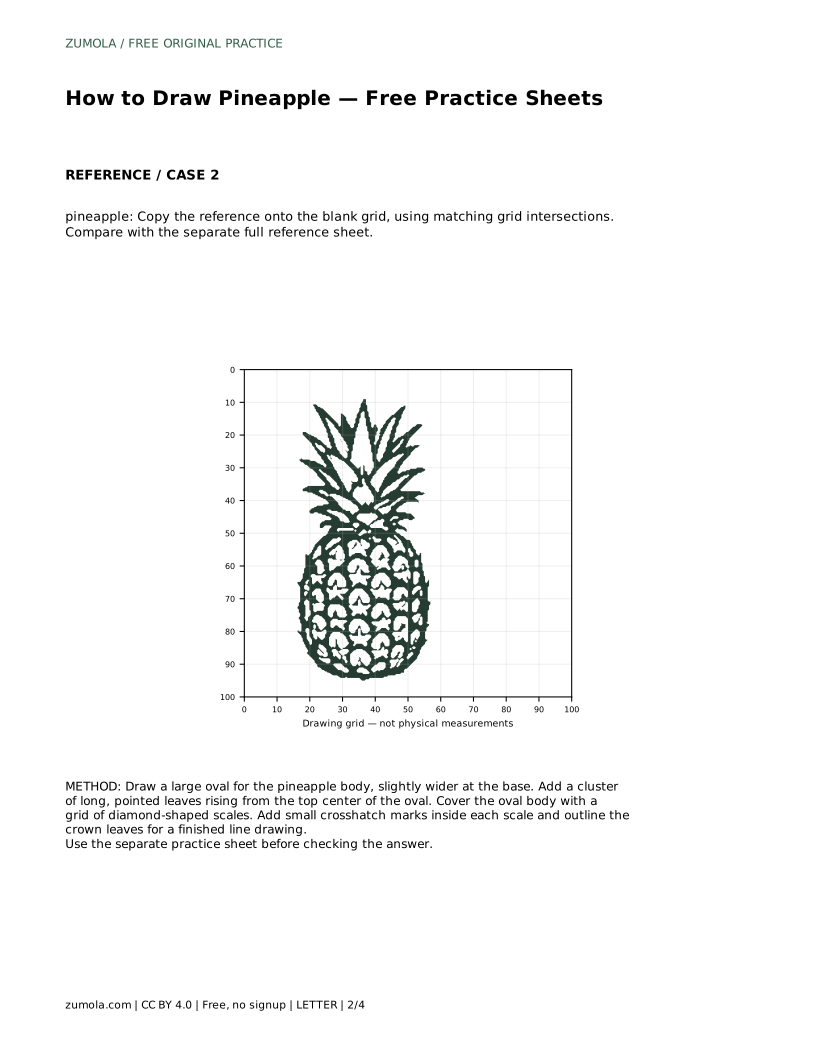
pineapple: Trace the reference outline, then practise the contour independently. Compare with the separate full reference sheet.
Example solution: preserve oval body with a rounded bottom, spiky crown of pointed leaves at the top, repeating diamond/scale skin pattern with crosshatched texture. Other drawings can be correct; assess the visible features and proportions rather than pixel-perfect matching. Draw a large oval for the pineapple body, slightly wider at the base. Add a cluster of long, pointed leaves rising from the top center of the oval. Cover the oval body with a grid of diamond-shaped scales. Add small crosshatch marks inside each scale and outline the crown leaves for a finished line drawing.
No. Other drawings can be correct. Assess the visible features and proportions rather than pixel-perfect matching.
Start with the tracing sheet if you are new to the shape. Move to the grid or bounding-frame sheet once the outline feels familiar.
The diamonds should repeat at a similar size across the middle and shrink slightly near the curved edges, with the outlines still visible after crosshatching.
All drawing practice · Free coordinate paper
Original resources · CC BY 4.0 · Free for personal and classroom use with attribution.