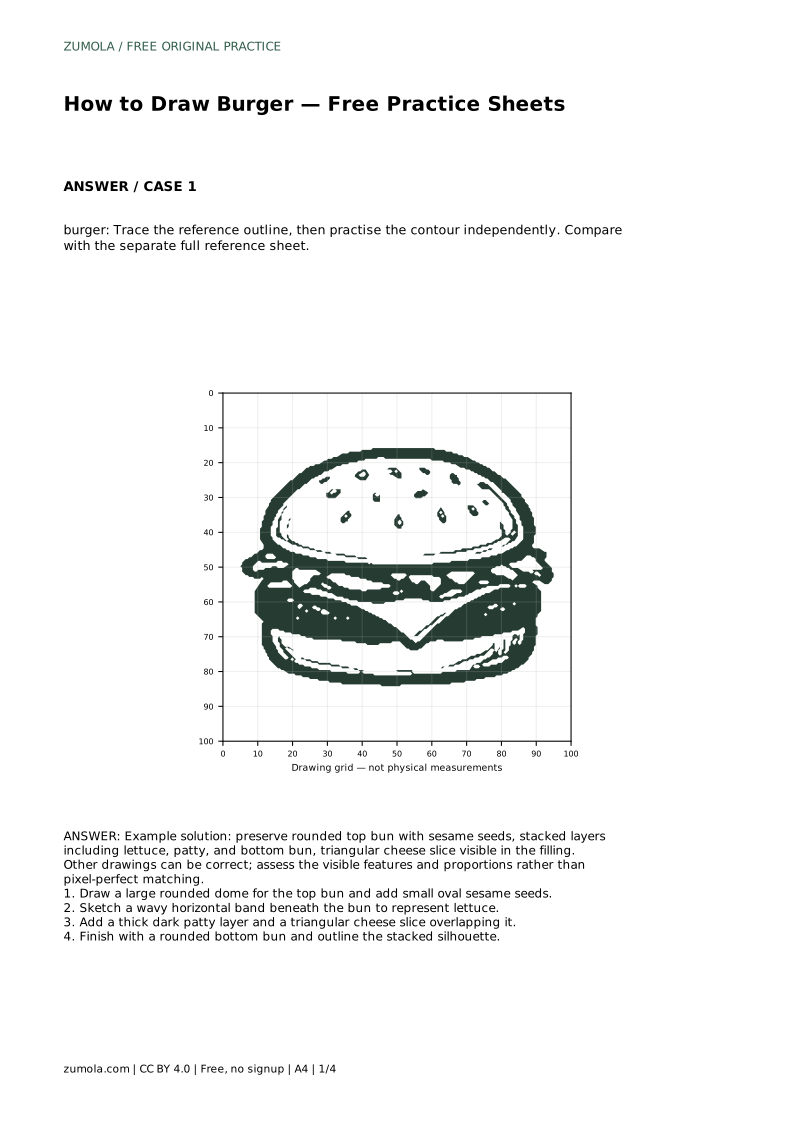
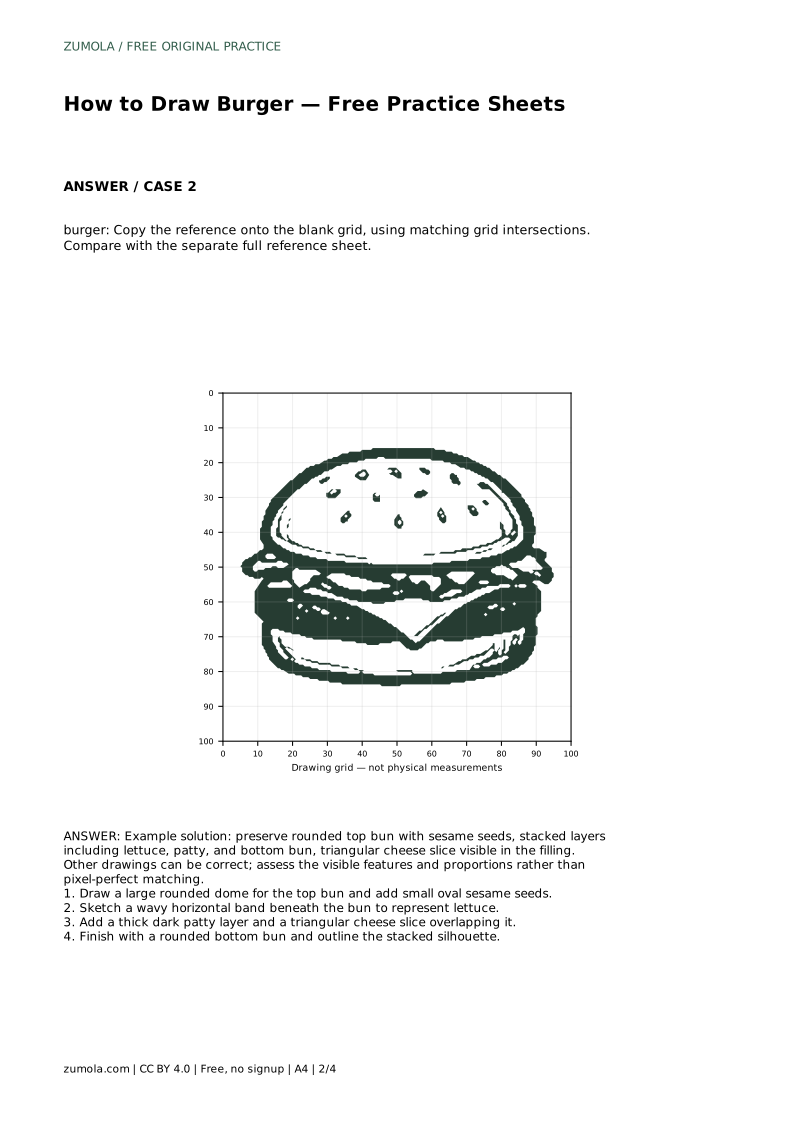
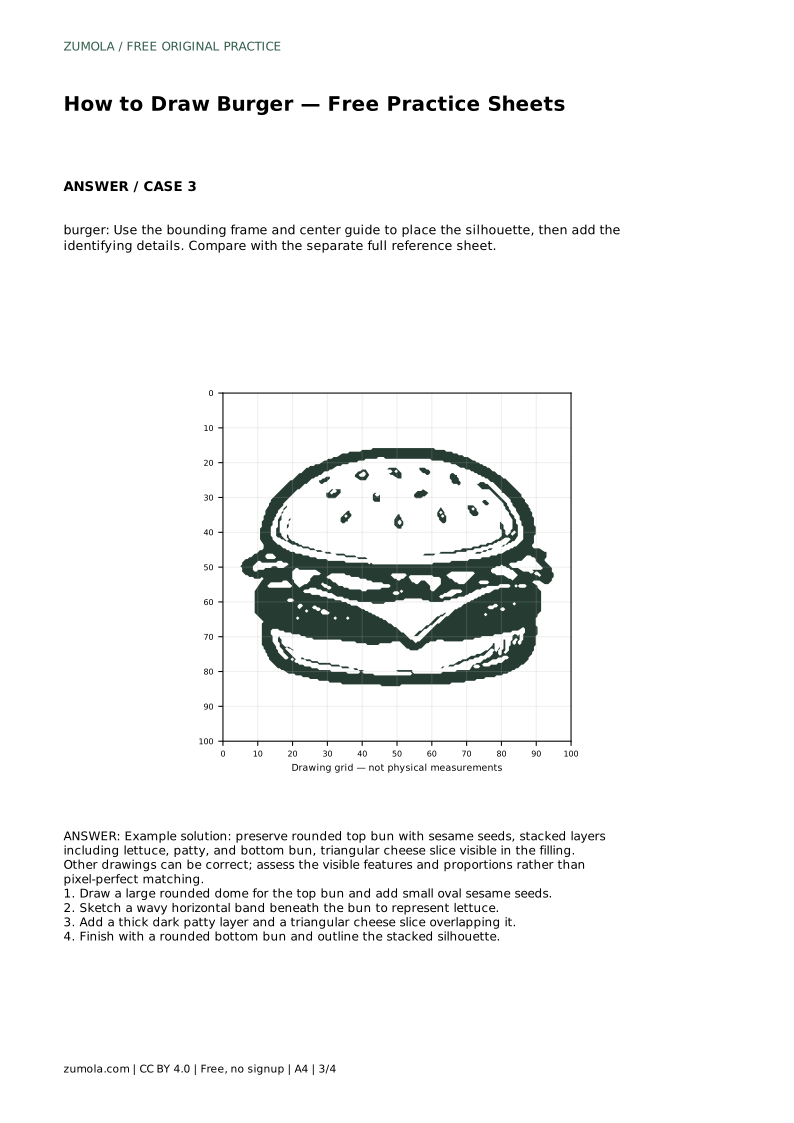
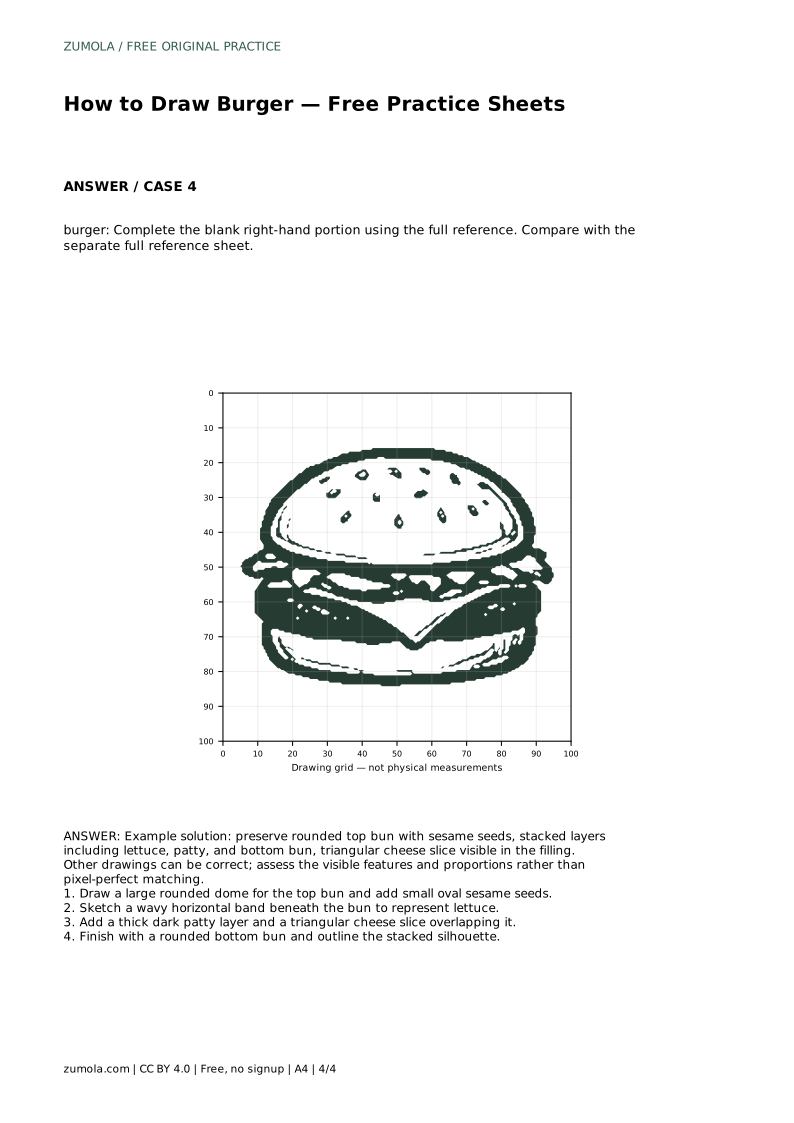
Reference diagrams
LETTER · Download PDF
A4 · Download PDF
Free original resources
Learn to draw a realistic burger with a rounded sesame bun, wavy lettuce, thick patty, and visible cheese slice. Practice with tracing, grid, and frame sheets.
Four original cases, with reference diagrams, practice sheets and worked answers. Everything is free; no signup required.
LETTER · Download PDF
A4 · Download PDF
LETTER · Download PDF
A4 · Download PDF
LETTER · Download PDF
A4 · Download PDF
Use A4 or US Letter to match your printer. Use the stated values and conditions to solve each exercise; diagrams are not physical measuring rulers.
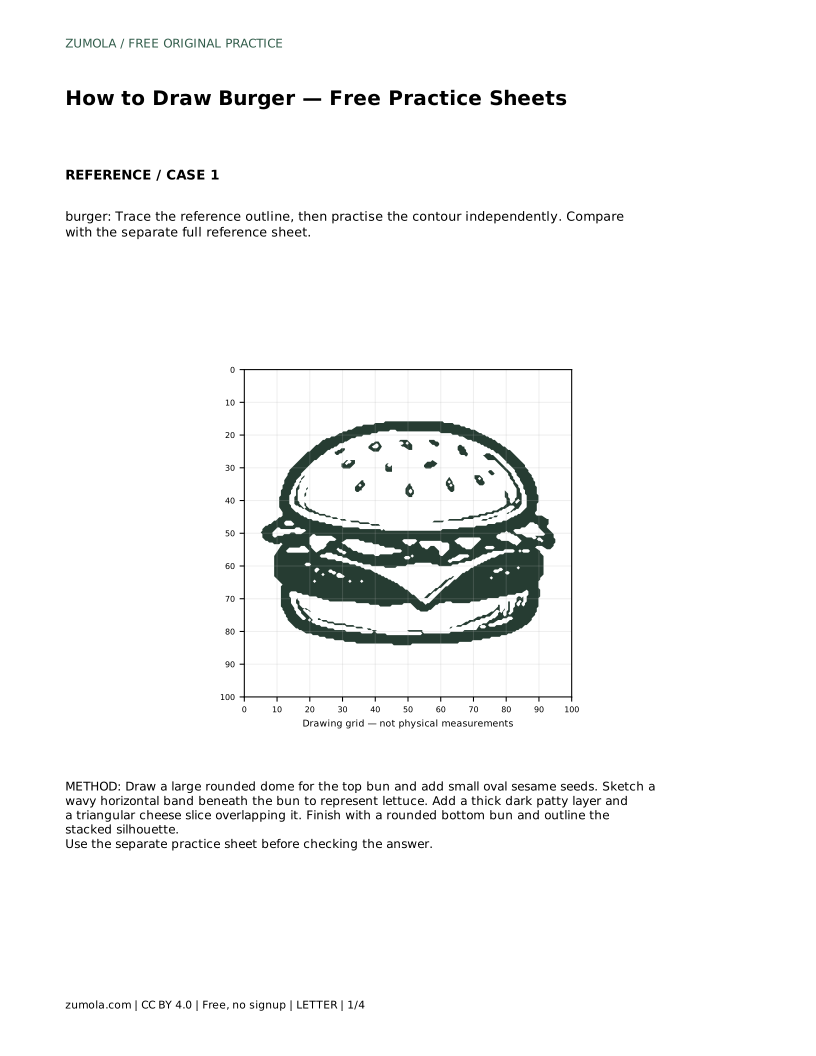
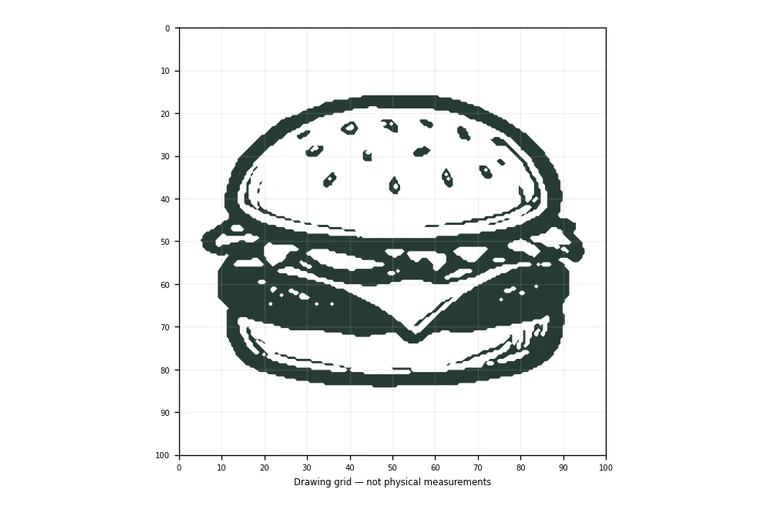
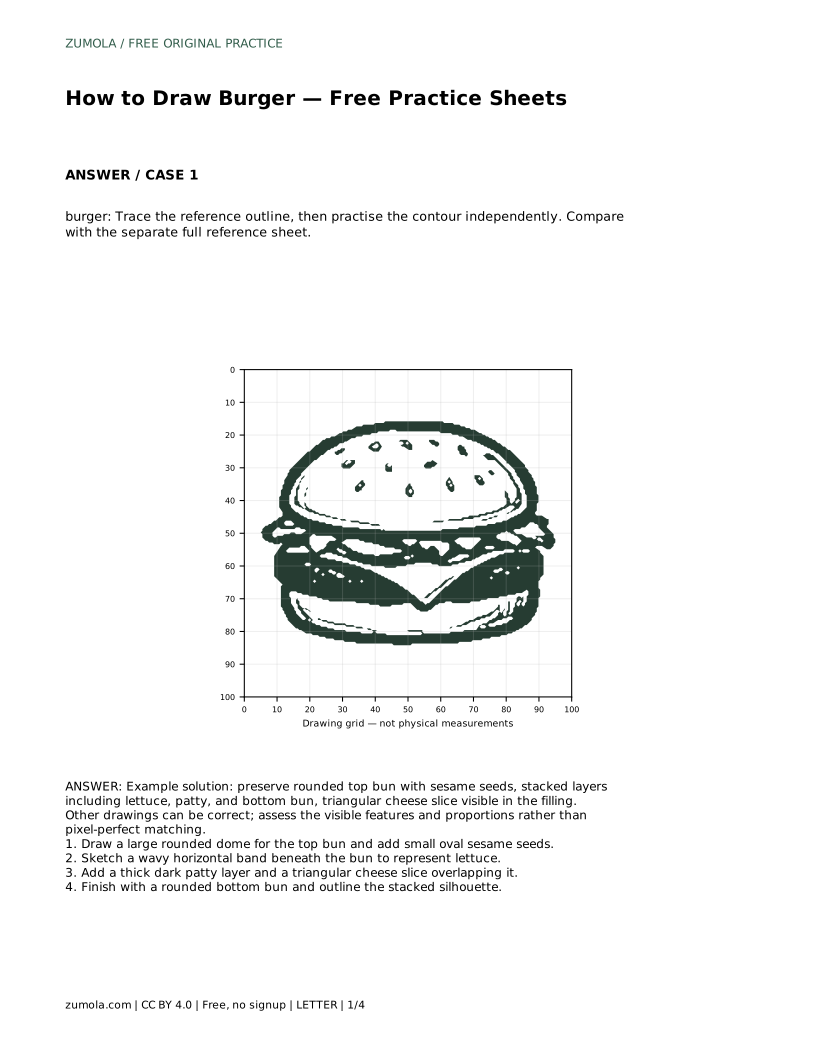
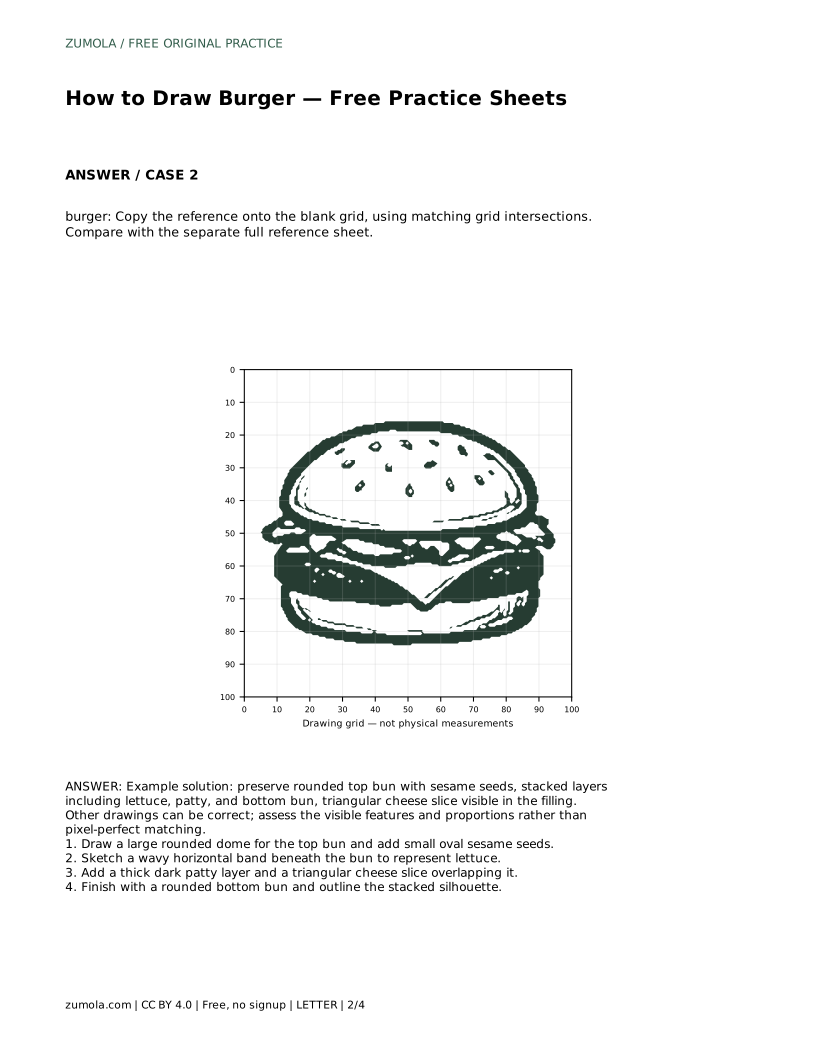
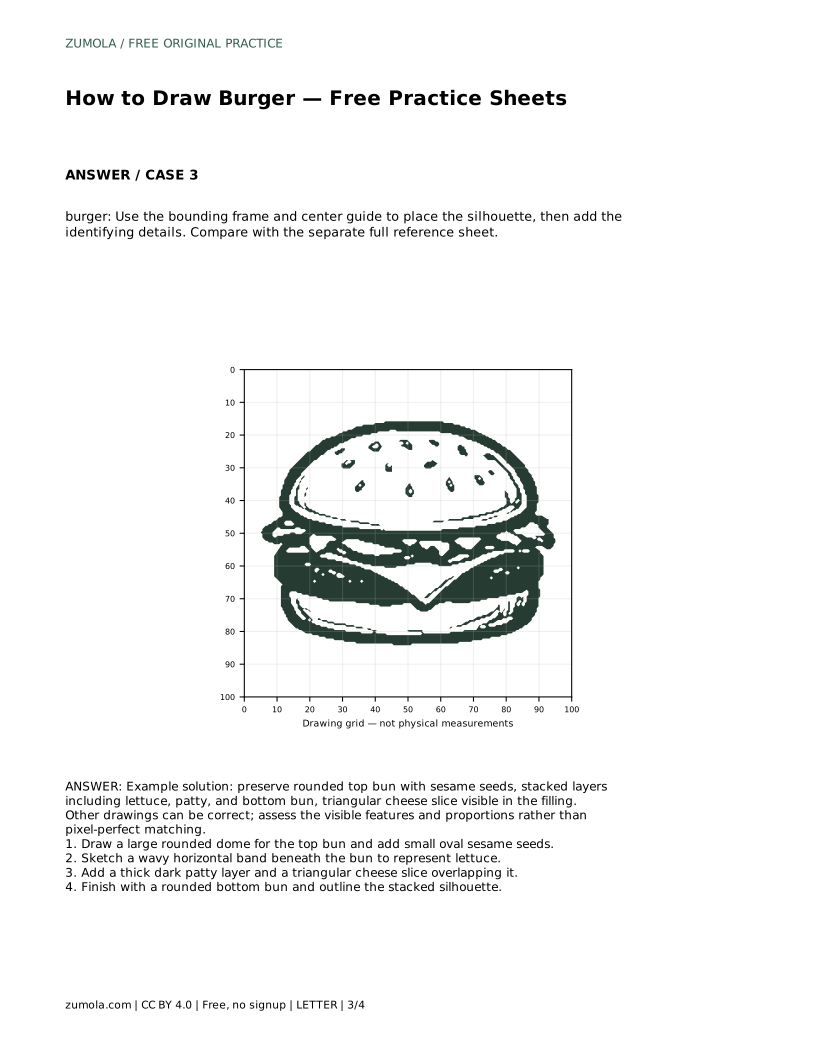
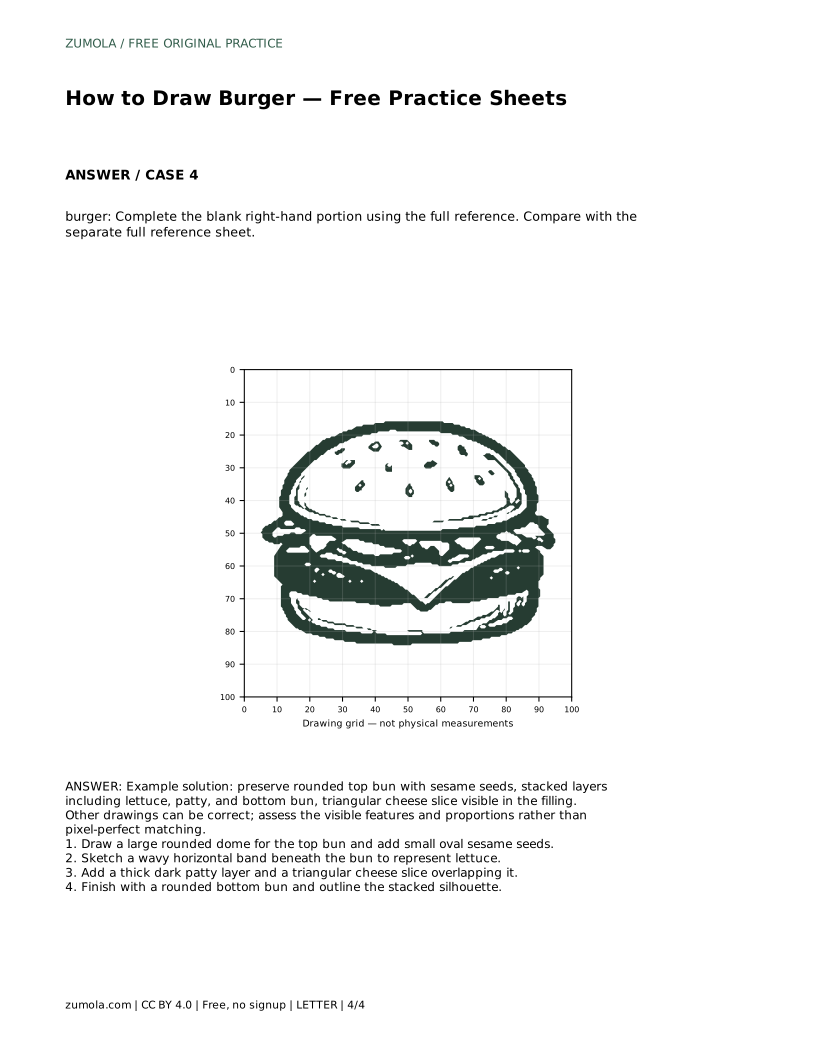
A realistic burger drawing depends on a believable stack: a domed top bun, a ruffled lettuce layer, a thick patty, a cheese slice that peeks out, and a rounded bottom bun. This page explains how to build that stack in order, then how to use the practice sheets to strengthen your line control and proportion judgment. The goal is a recognizable, well-proportioned burger, not a pixel-perfect copy.
Start with the largest shape: the top bun. Draw a wide, rounded dome that is slightly flattened at the crown rather than a perfect half-circle. Keep the base of the dome gently curved so the bun sits on the filling instead of floating above it. Add sesame seeds as small ovals scattered across the dome, varying their angle and spacing so they look placed rather than stamped.
Work downward in layers. Beneath the bun, sketch a wavy horizontal band for lettuce, letting the ruffles dip and rise unevenly. Under that, draw a thick patty with a slightly irregular edge. Add a triangular cheese slice that overlaps the patty and hangs past the stack on one side. Finish with a rounded bottom bun, then check that the whole silhouette reads as one stacked object.
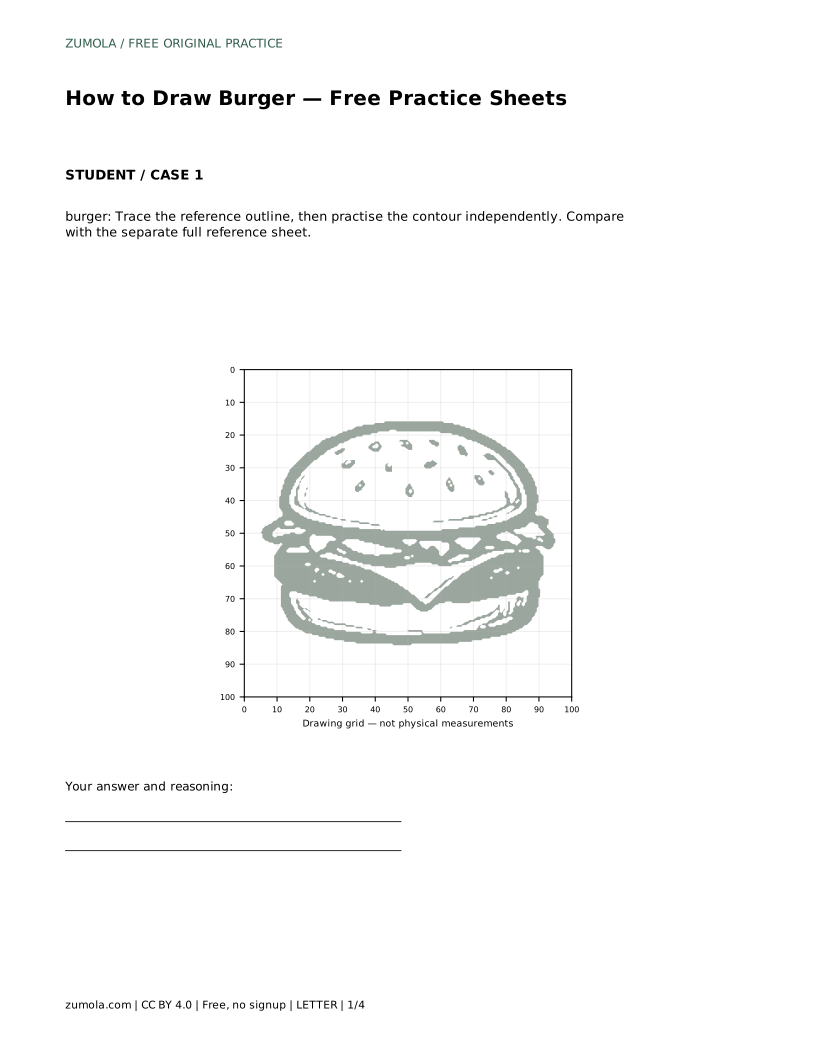
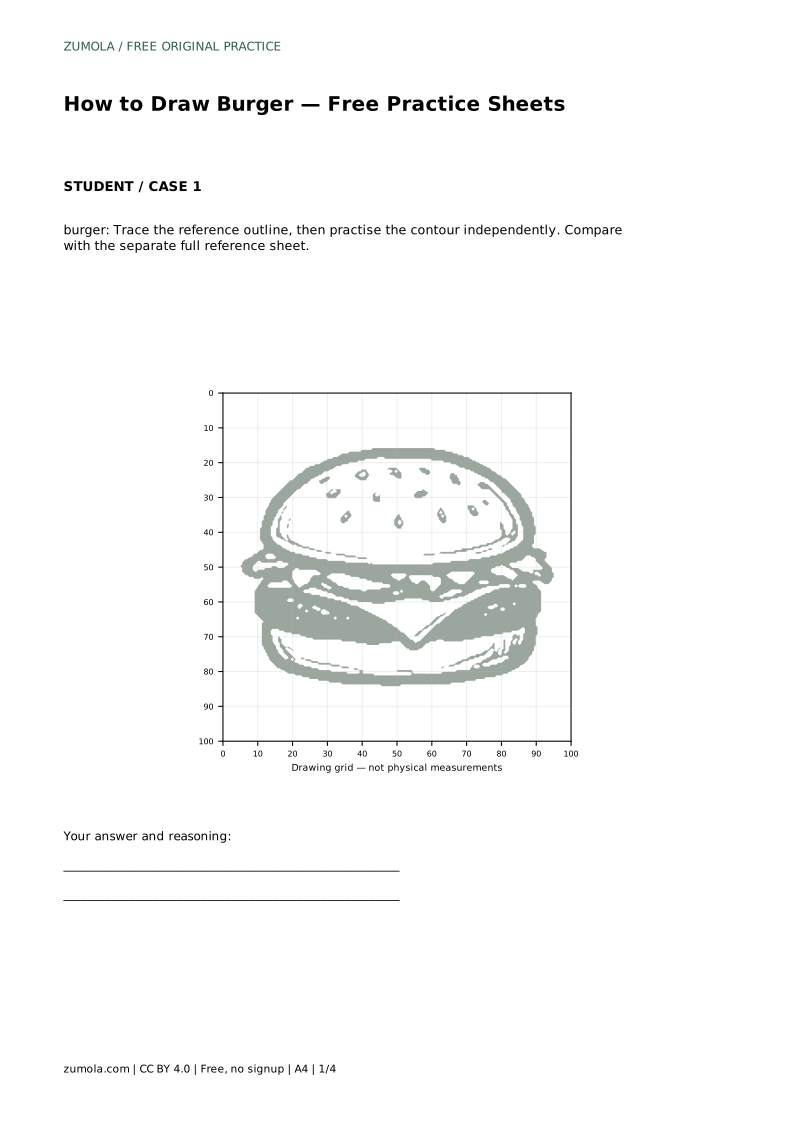
The tracing sheet asks you to follow the reference outline first, then repeat the contour on your own. Tracing builds the muscle memory of the stack order; the independent pass shows whether you can reproduce the proportions without guidance. Compare your result with the separate full reference sheet rather than judging it in isolation.
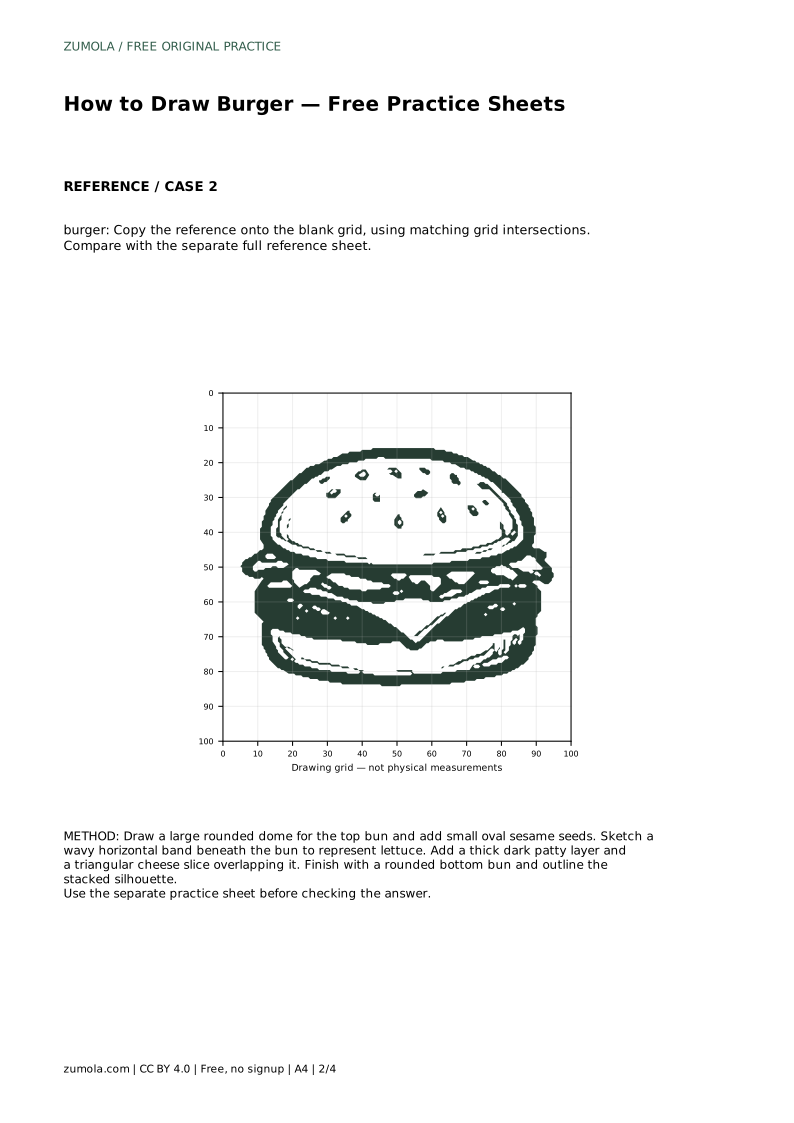
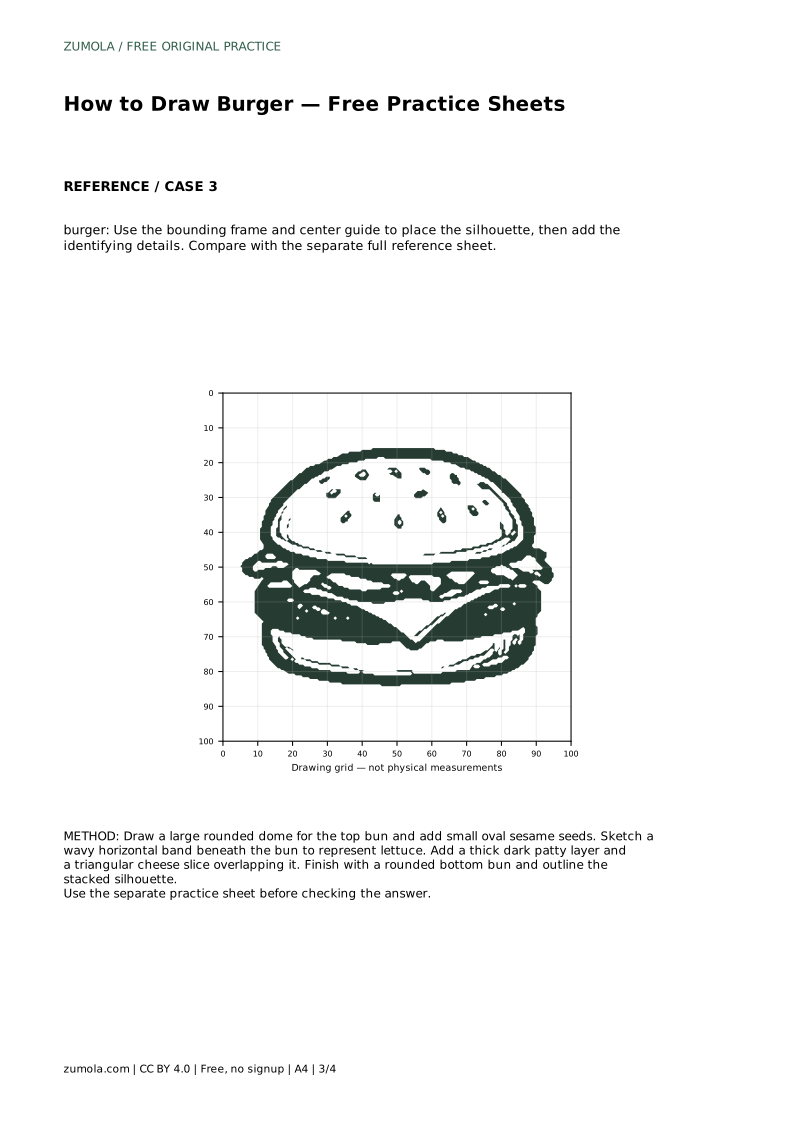
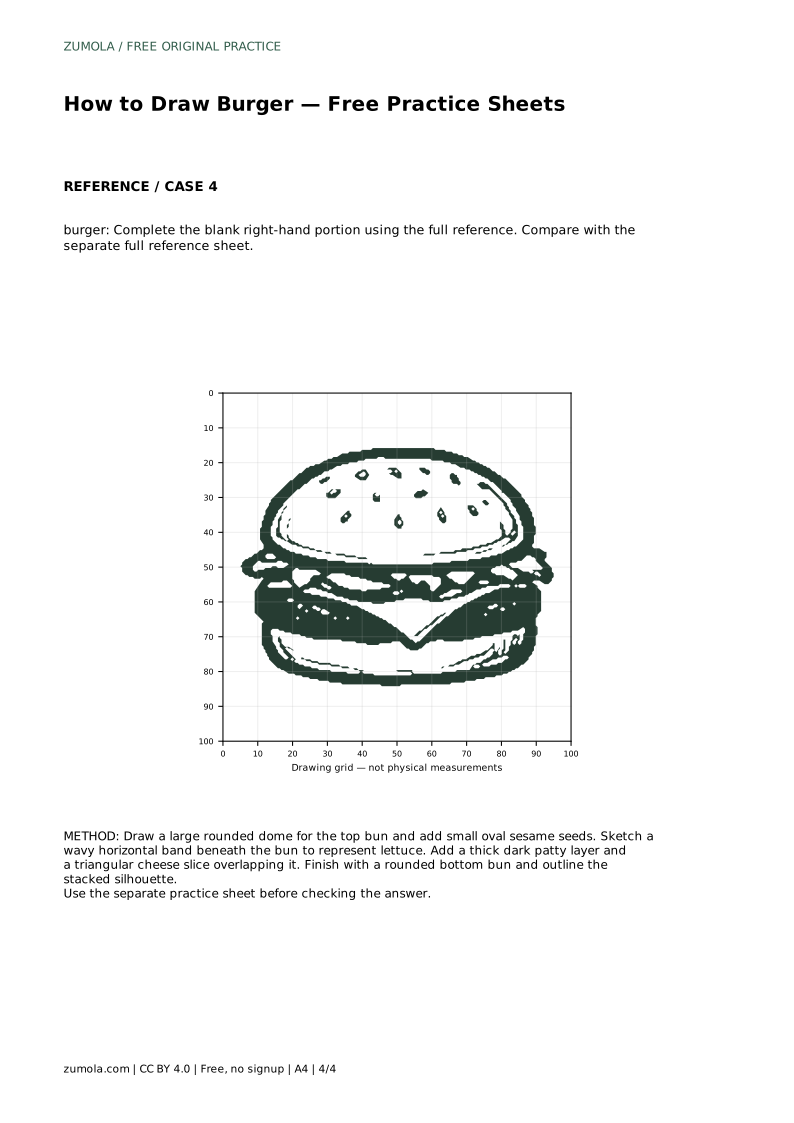
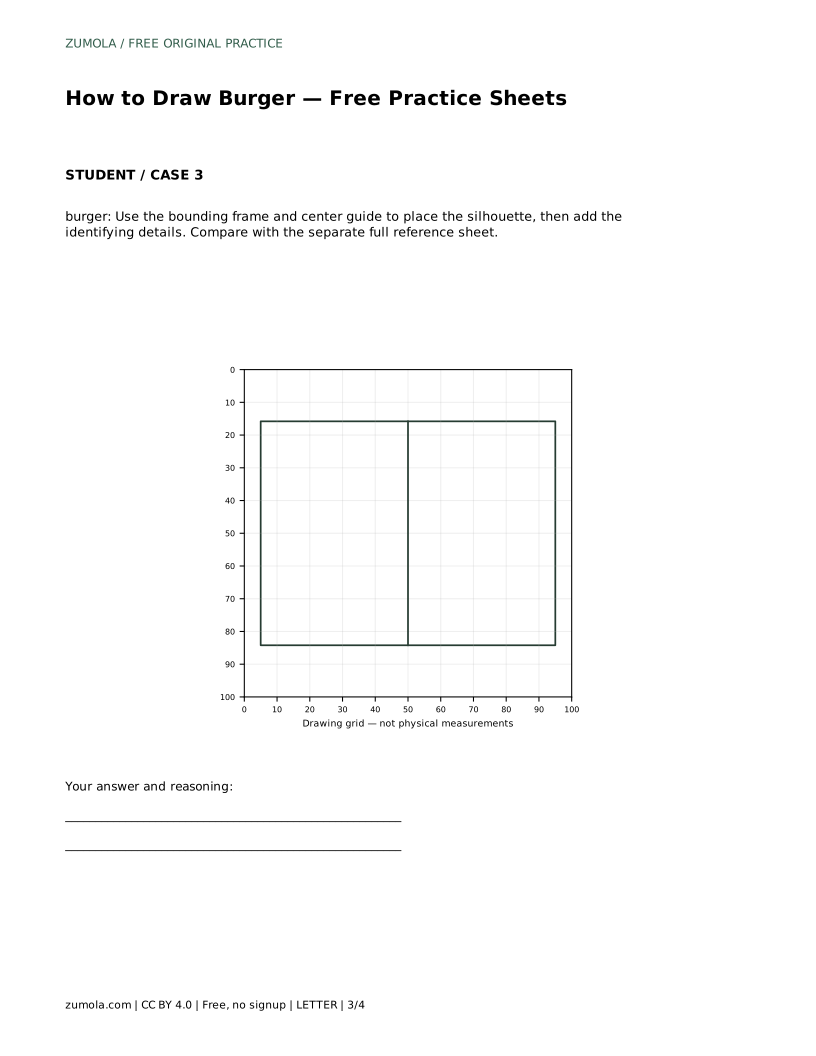
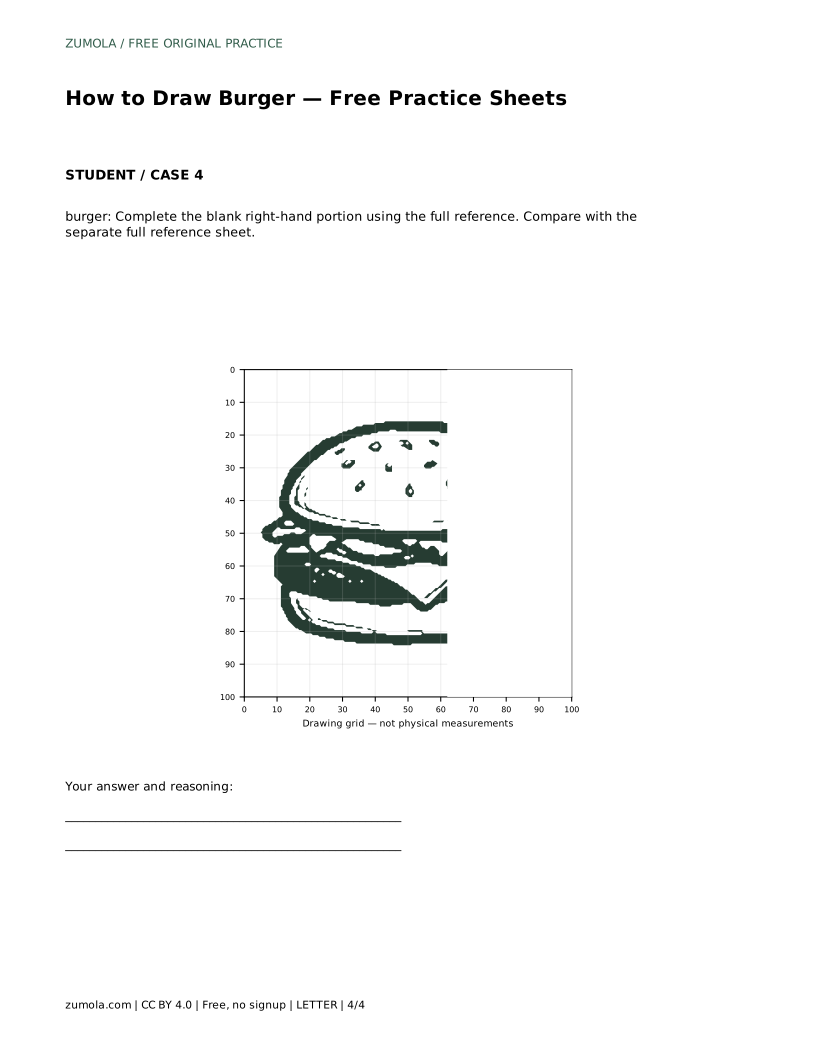
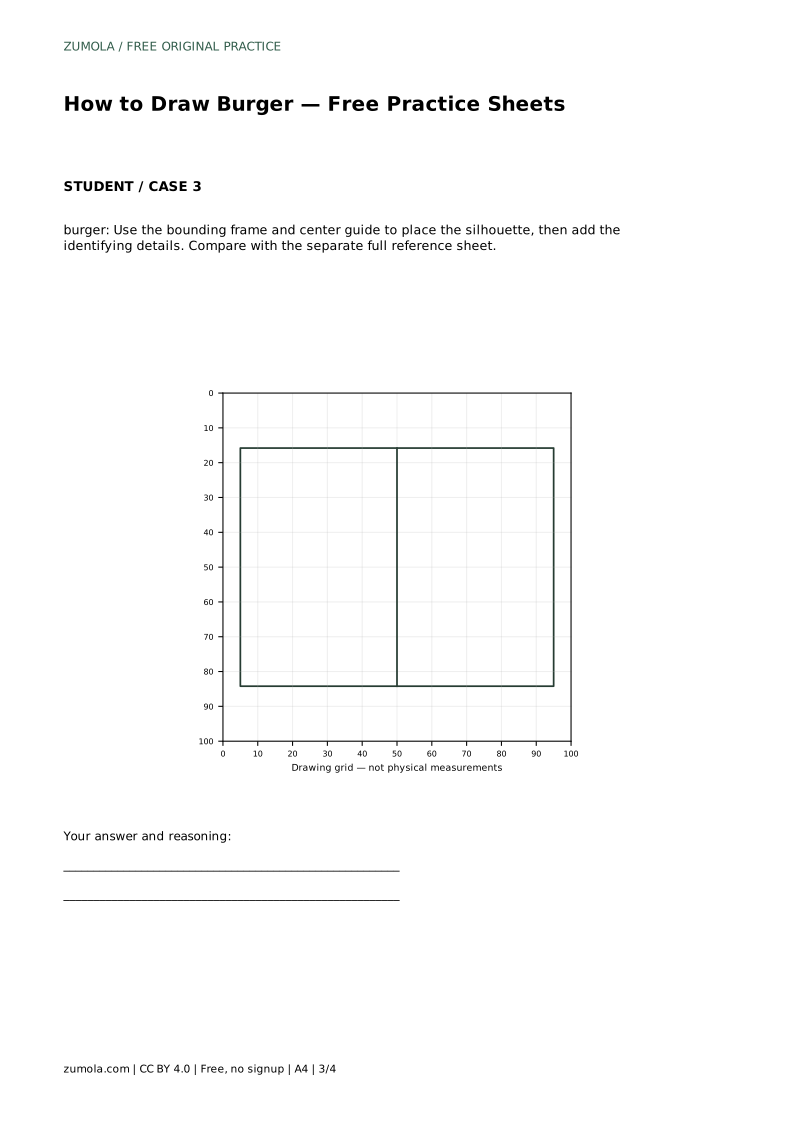
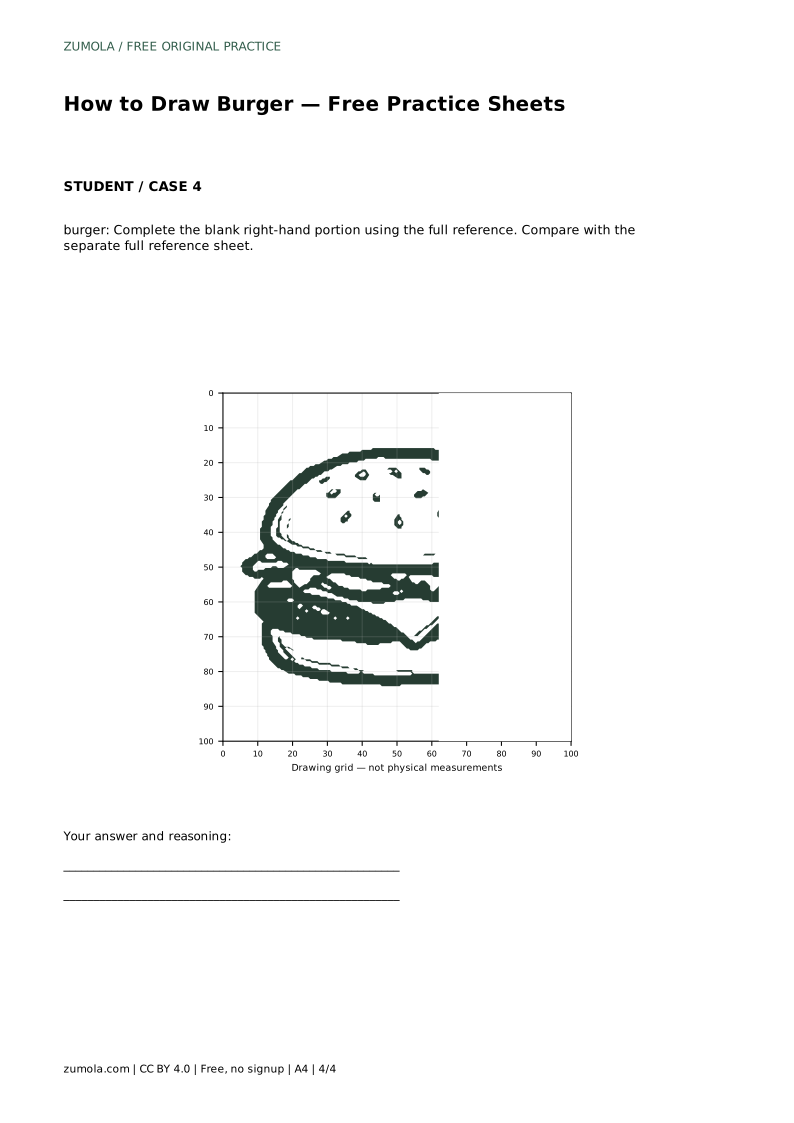
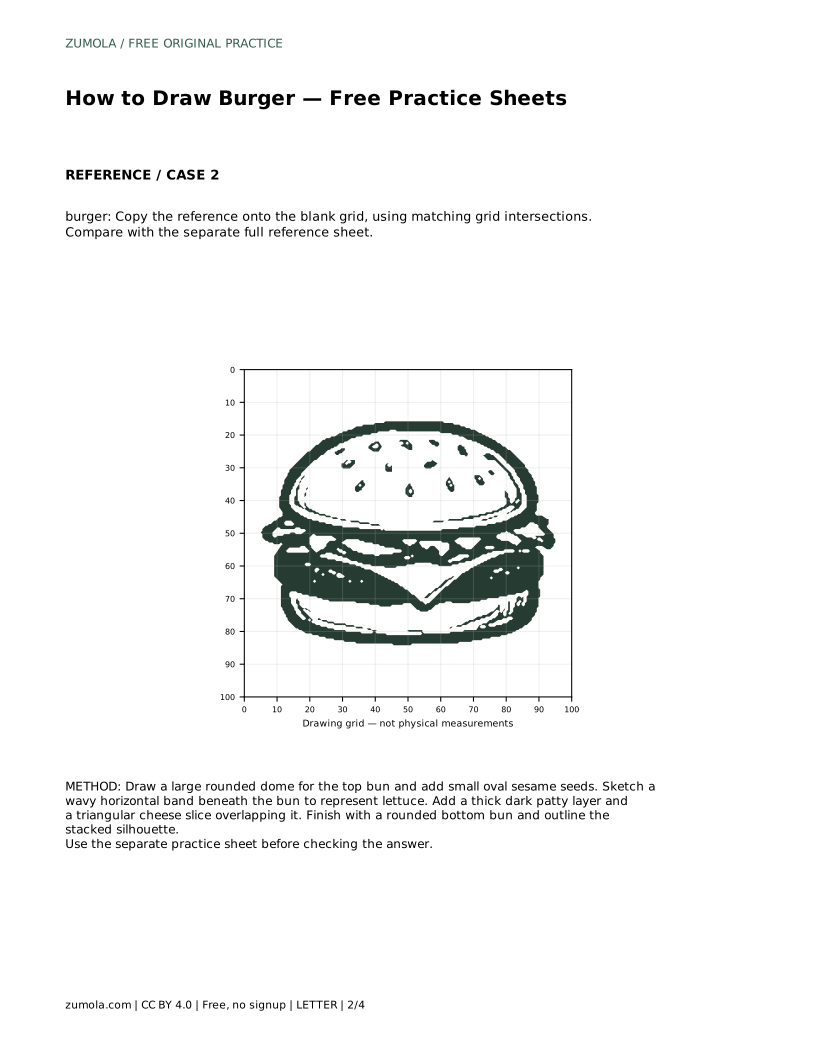
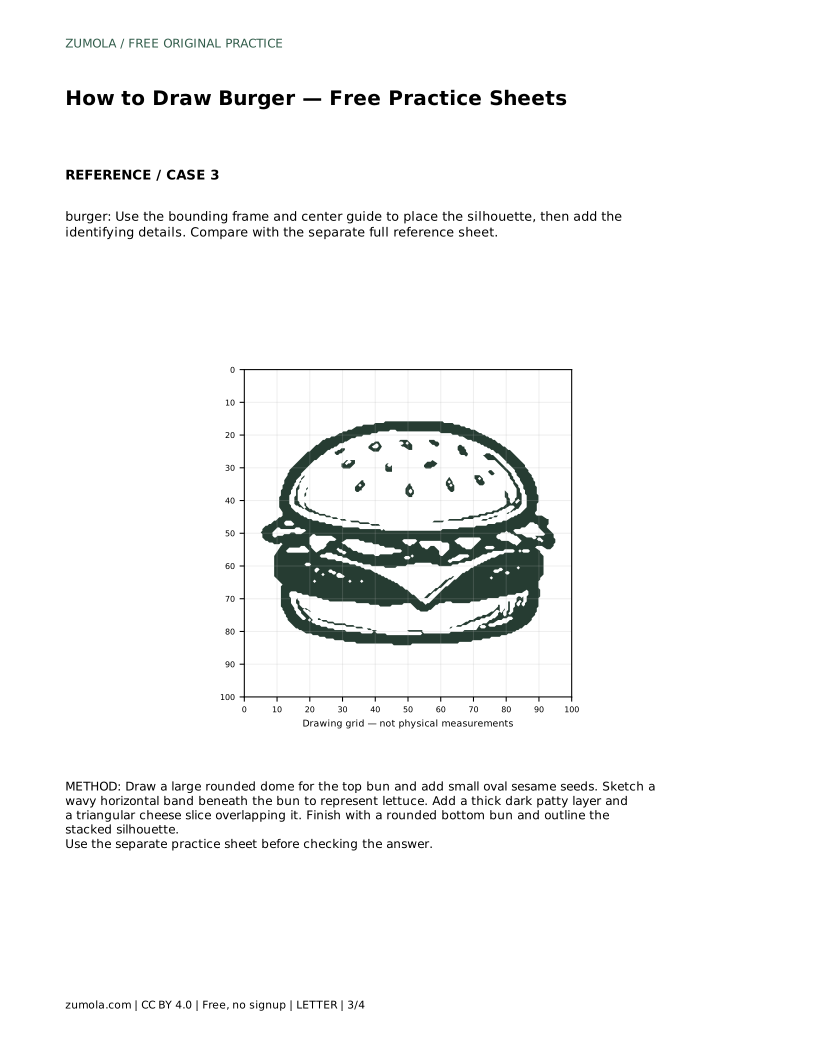
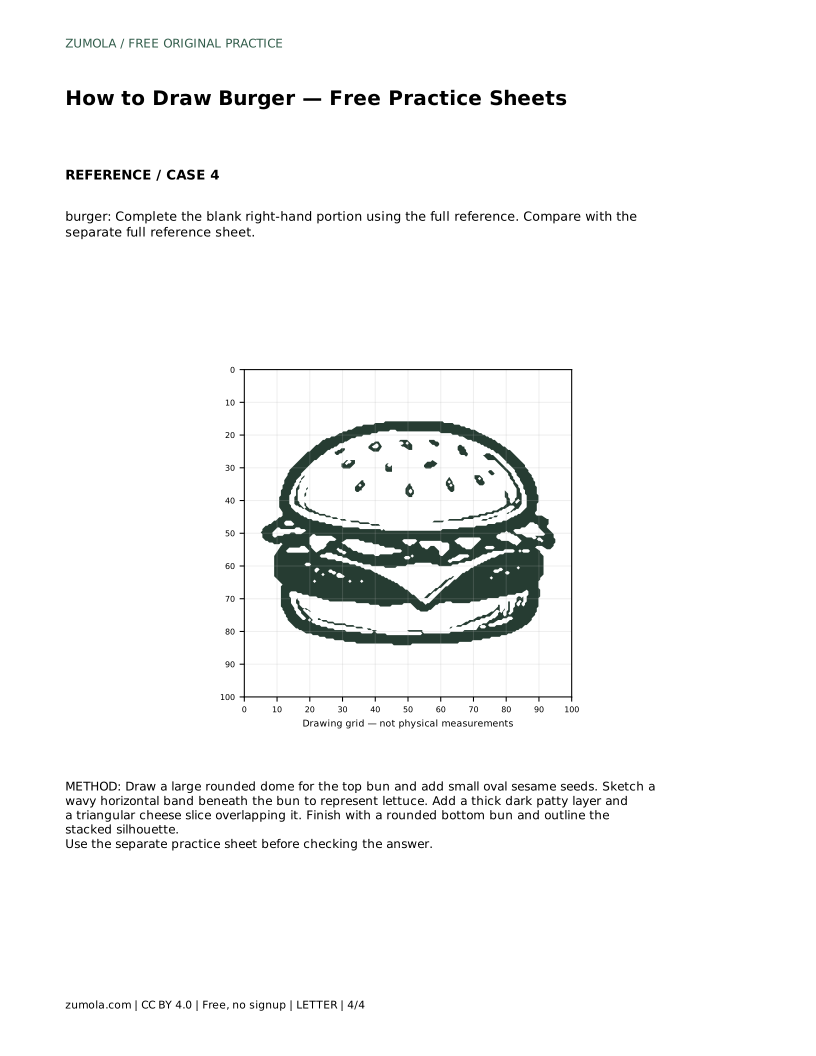
The grid sheet asks you to copy the reference onto a blank grid, matching where lines cross grid intersections. This trains placement: the top bun's widest point, the lettuce band's height, and the cheese triangle's position all become coordinates you can check. The bounding-frame sheet works differently, giving you a center guide and outer frame so you place the silhouette first and add identifying details afterward. The partial sheet leaves the right-hand portion blank, so you complete the missing side using the full reference.
A common proportion error is making the top bun too tall, which turns the burger into a dome on a thin base. Compare the bun's height with the patty's thickness; in most references the patty is the densest band. Another check is the lettuce: if its ruffles are too regular, the drawing looks like a ribbon rather than leaves. Vary the wave amplitude along the band.
Layer order matters for realism. The cheese should sit between the patty and the lettuce or bun, with its triangle edge visible where it overlaps. Seeds belong only on the top bun. Keep the bottom bun shallower than the top bun so the stack feels weighted rather than symmetrical.
Because a burger can be drawn many valid ways, judge your work against visible features and proportions rather than an exact match. Ask whether the top bun is domed and seeded, whether the lettuce reads as a wavy band, whether the patty is thick, whether a triangular cheese slice is visible, and whether the bottom bun closes the stack. A drawing that changes seed count or lettuce shape can still be correct.
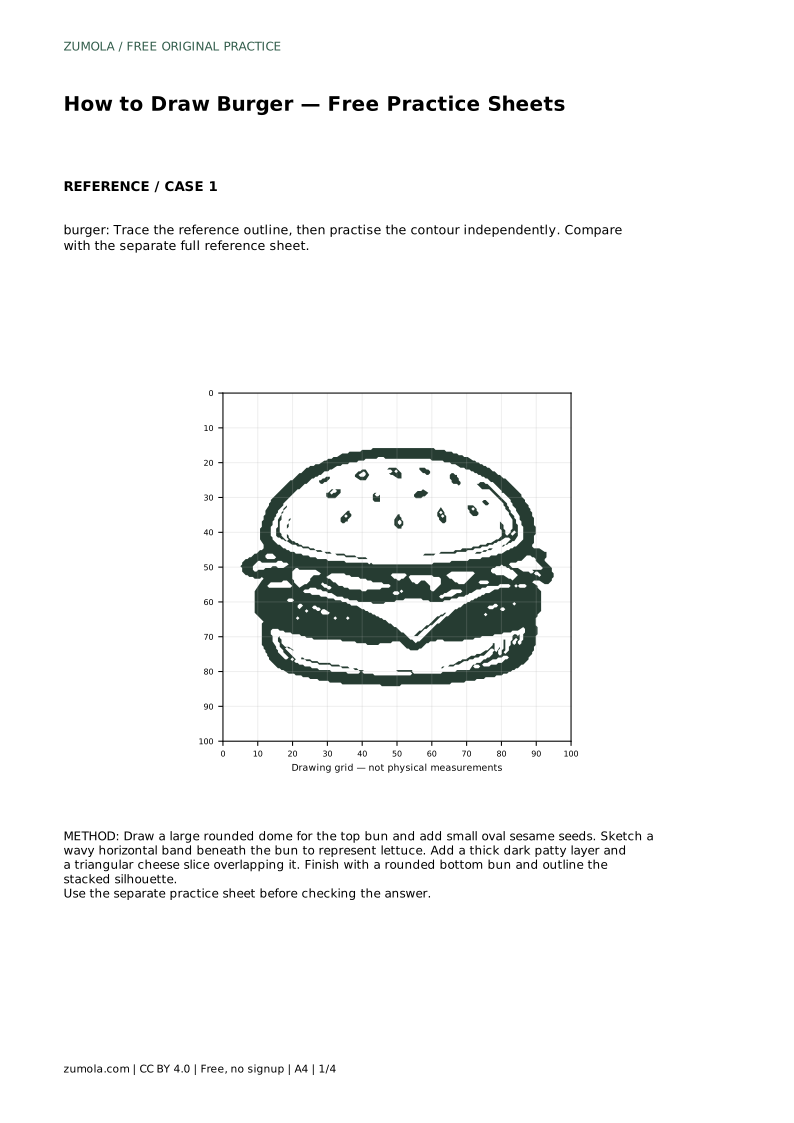
burger: Trace the reference outline, then practise the contour independently. Compare with the separate full reference sheet.
Example solution: preserve rounded top bun with sesame seeds, stacked layers including lettuce, patty, and bottom bun, triangular cheese slice visible in the filling. Other drawings can be correct; assess the visible features and proportions rather than pixel-perfect matching. Draw a large rounded dome for the top bun and add small oval sesame seeds. Sketch a wavy horizontal band beneath the bun to represent lettuce. Add a thick dark patty layer and a triangular cheese slice overlapping it. Finish with a rounded bottom bun and outline the stacked silhouette.
No. Preserve the identifying features and proportions, but seed placement, lettuce shape, and cheese angle can vary and still be correct.
Start with the tracing sheet to learn the stack order, then move to the grid or frame sheet to practice placement without tracing.
Check that the layers stack in a believable order, the patty is the thickest band, and the cheese and lettuce create visible edges rather than flat stripes.
All drawing practice · Free coordinate paper
Original resources · CC BY 4.0 · Free for personal and classroom use with attribution.