Reference diagrams
LETTER · Download PDF
A4 · Download PDF
Free original resources
Learn to draw a bowl of mac and cheese with a clear rim, curved side wall, and densely overlapping elbow macaroni. Includes a tracing-to-independent practice method.
Four original cases, with reference diagrams, practice sheets and worked answers. Everything is free; no signup required.
LETTER · Download PDF
A4 · Download PDF
LETTER · Download PDF
A4 · Download PDF
LETTER · Download PDF
A4 · Download PDF
Use A4 or US Letter to match your printer. Use the stated values and conditions to solve each exercise; diagrams are not physical measuring rulers.
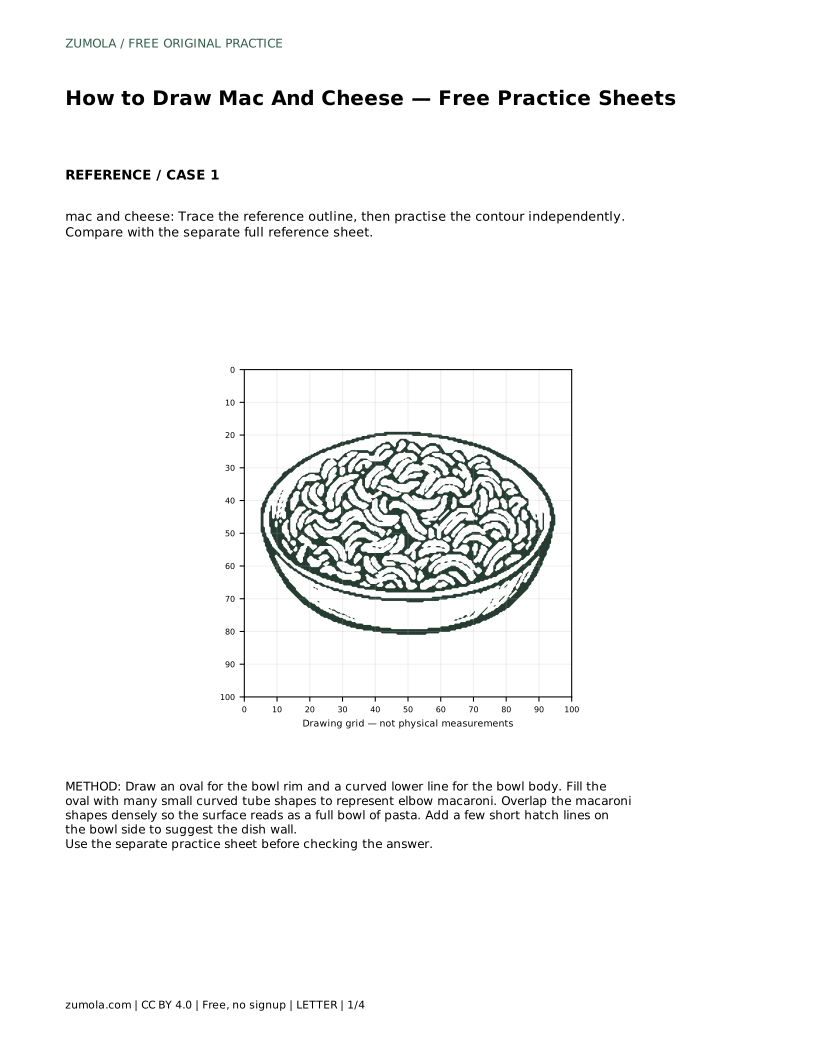
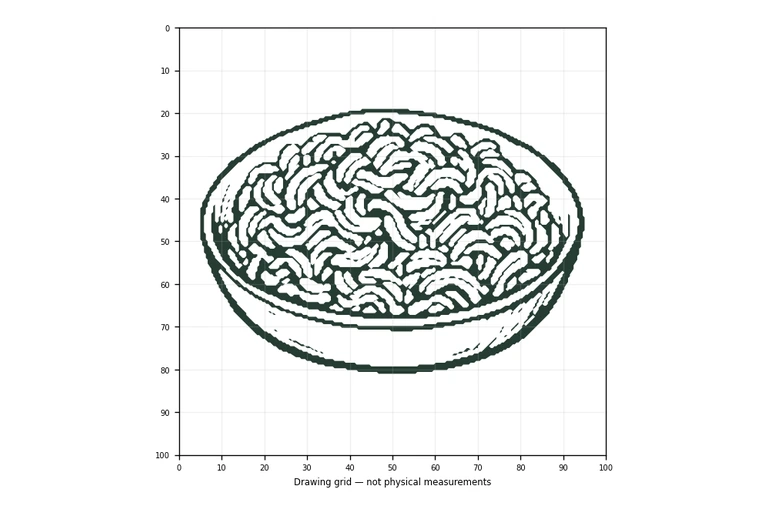
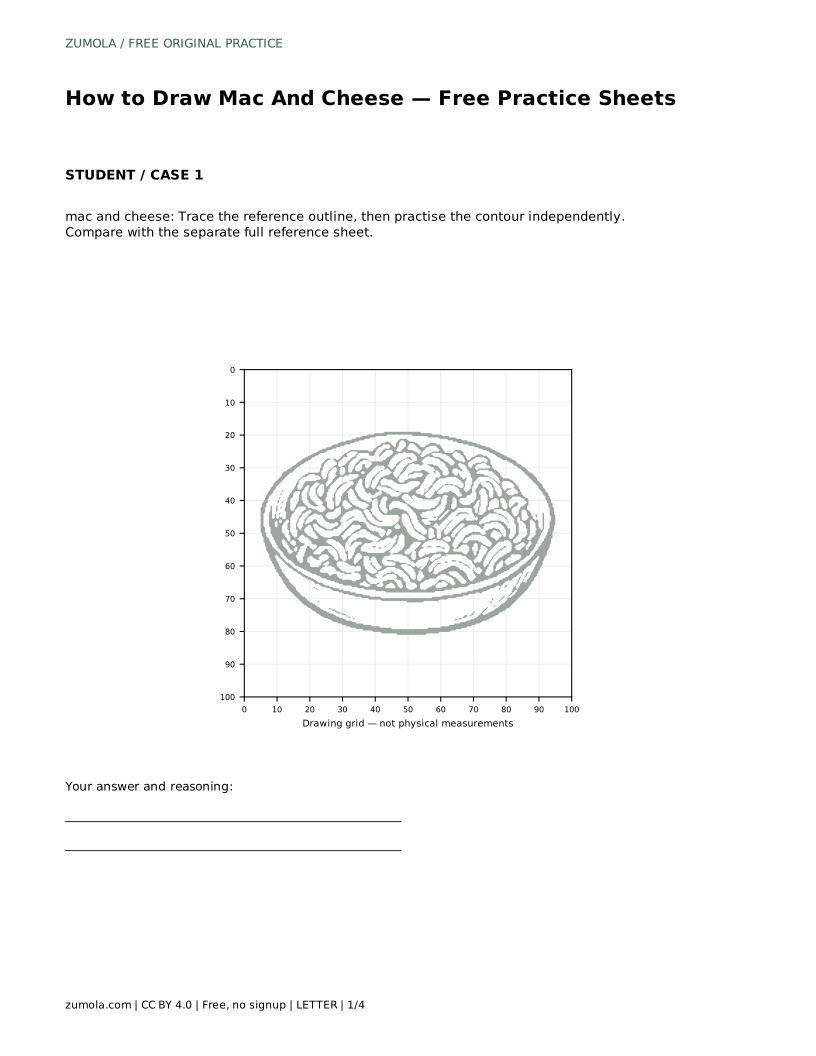
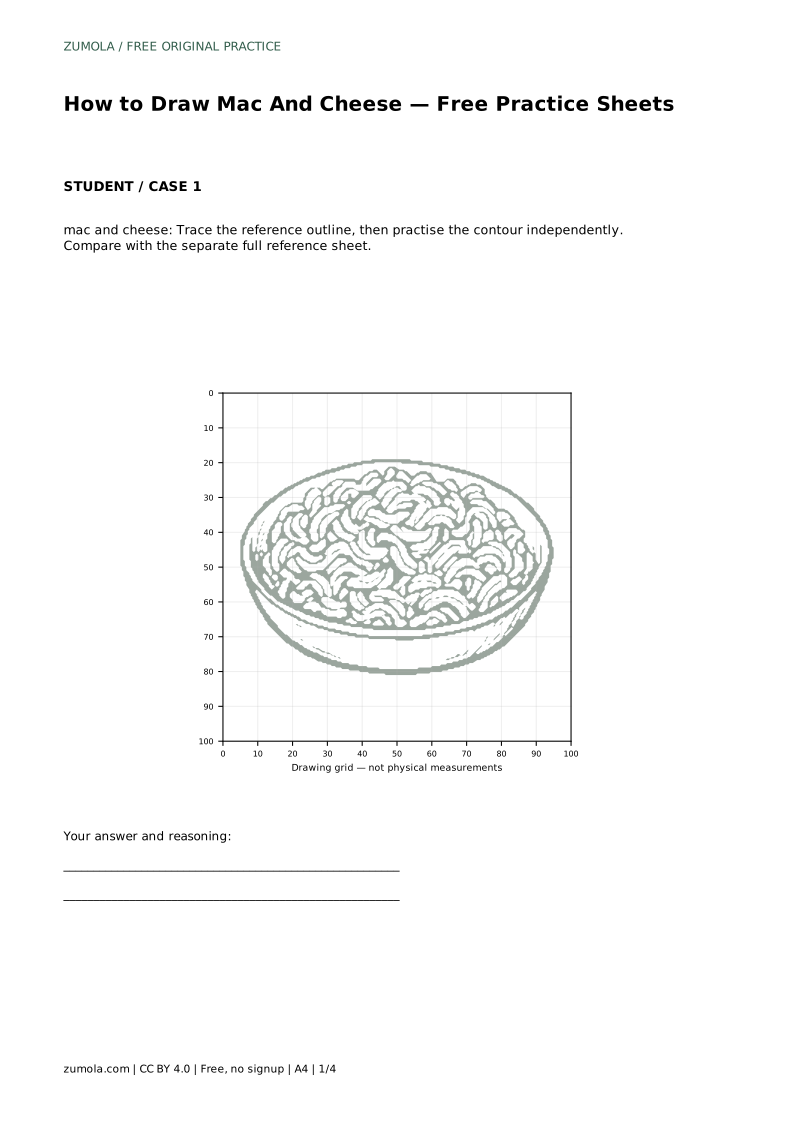
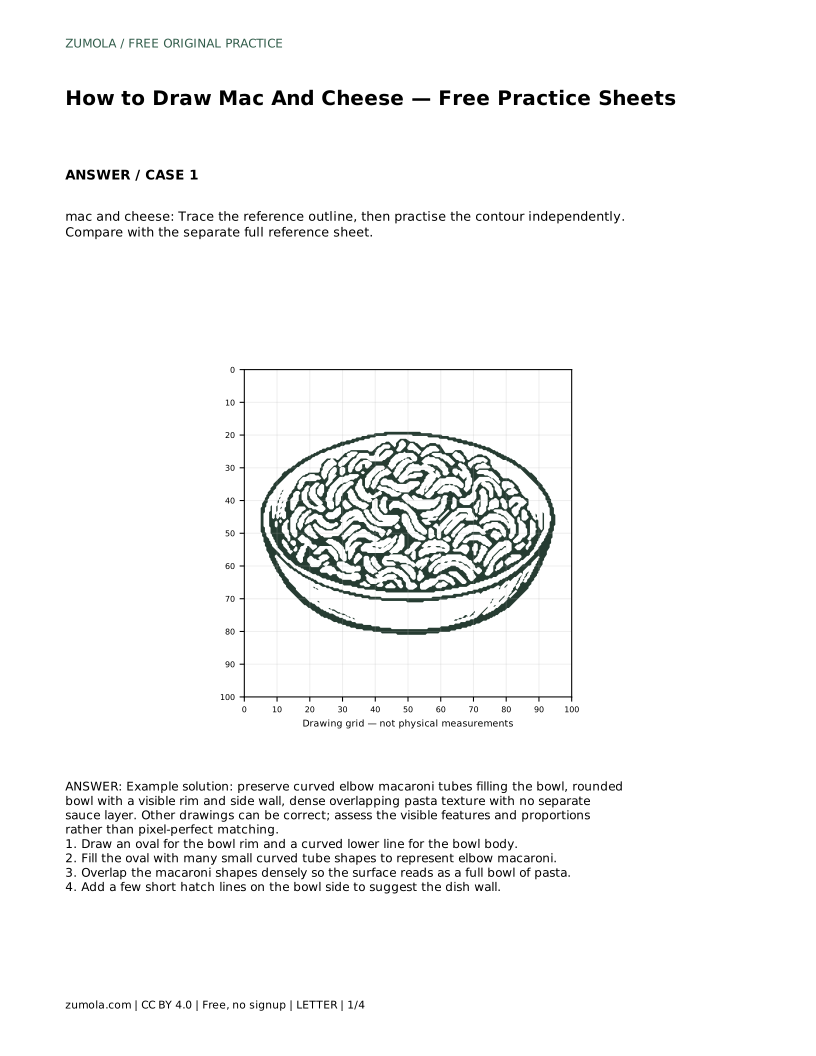
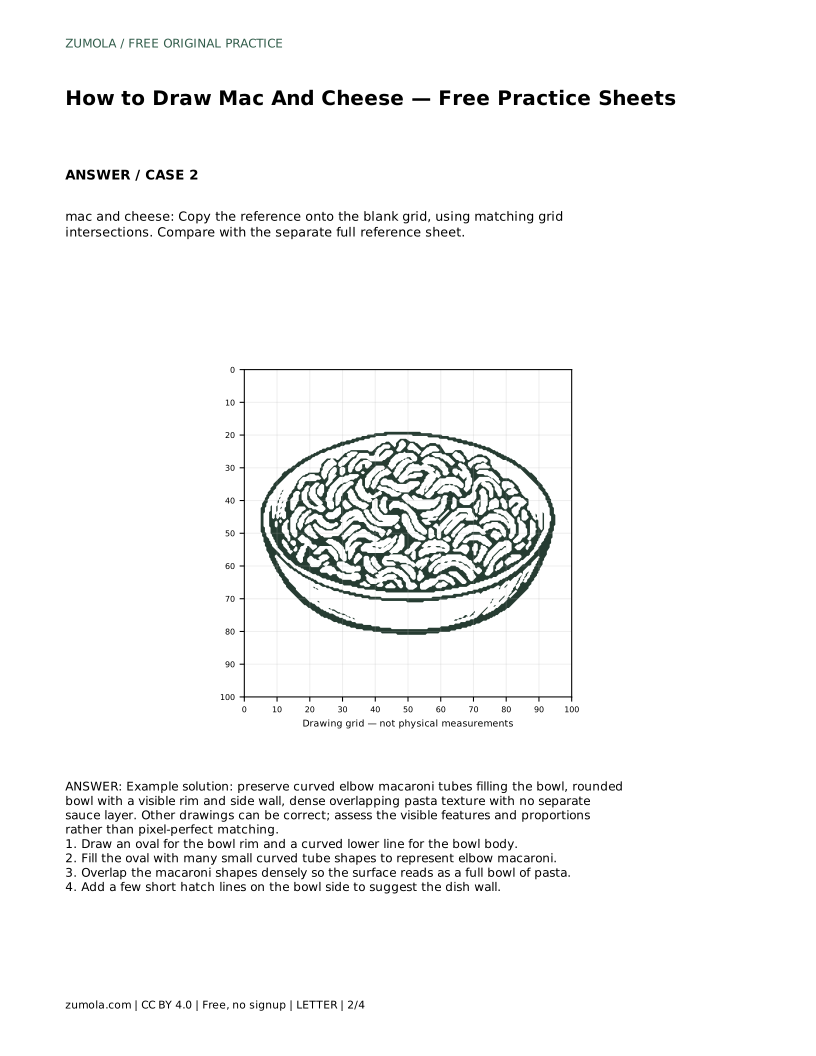
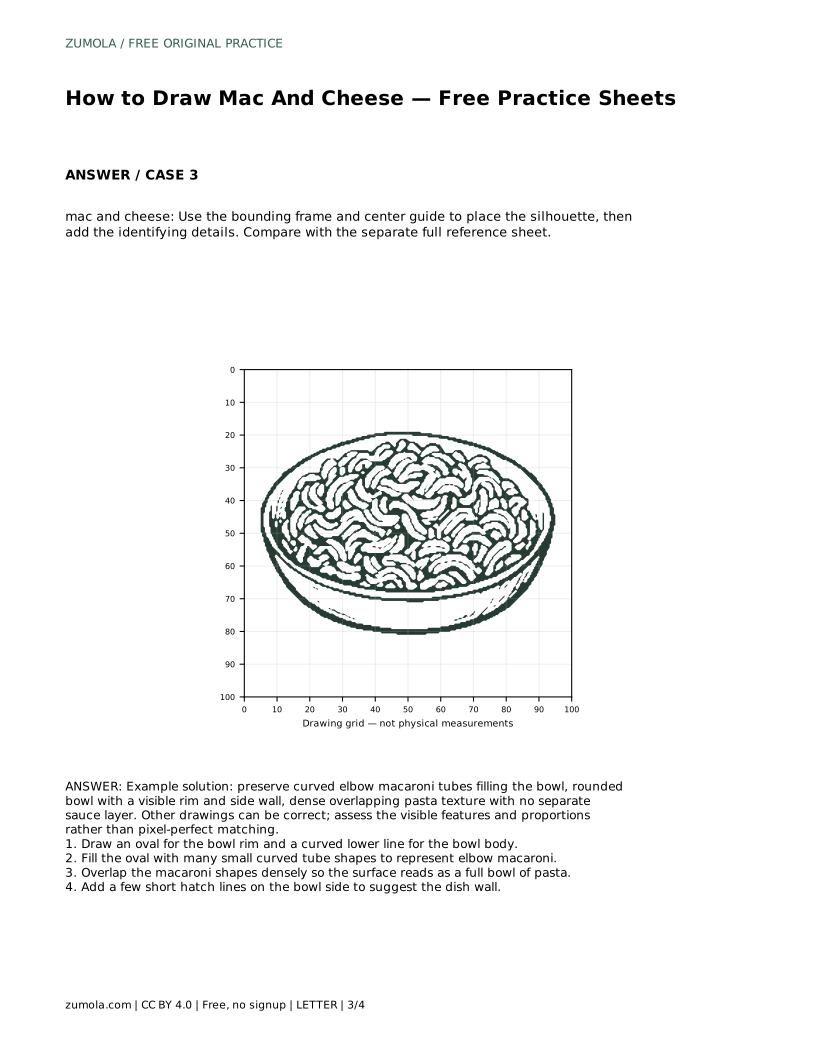
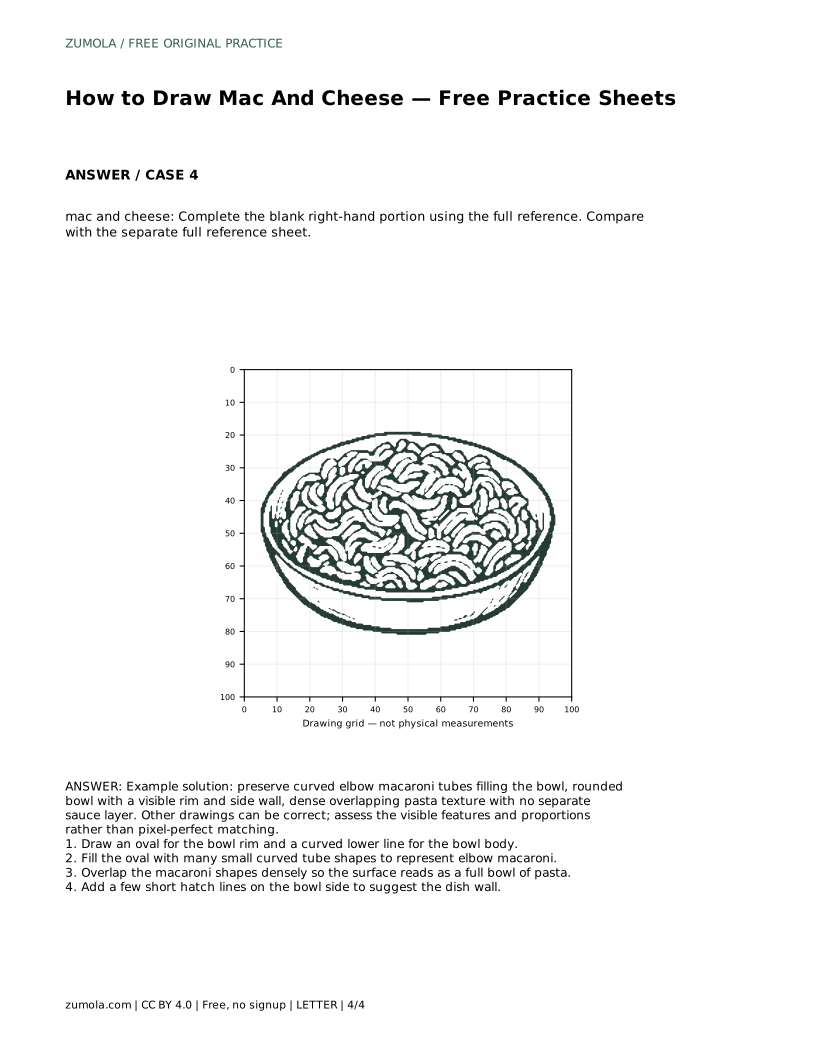
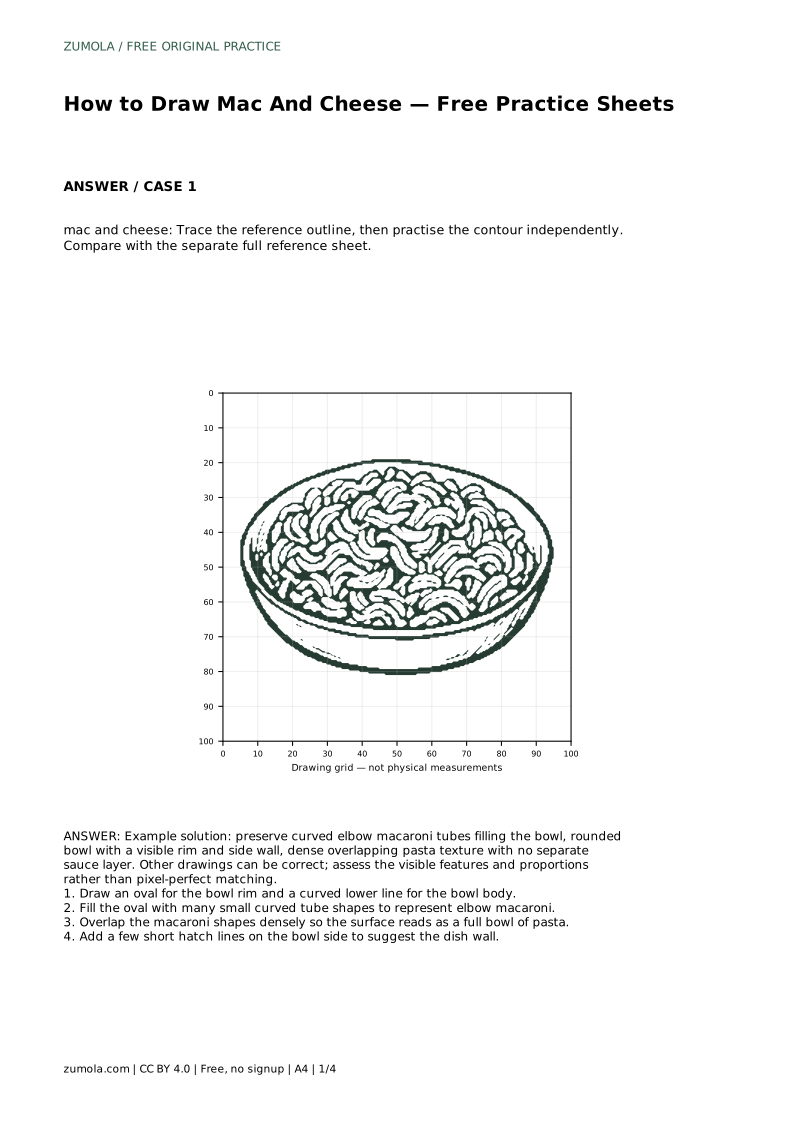
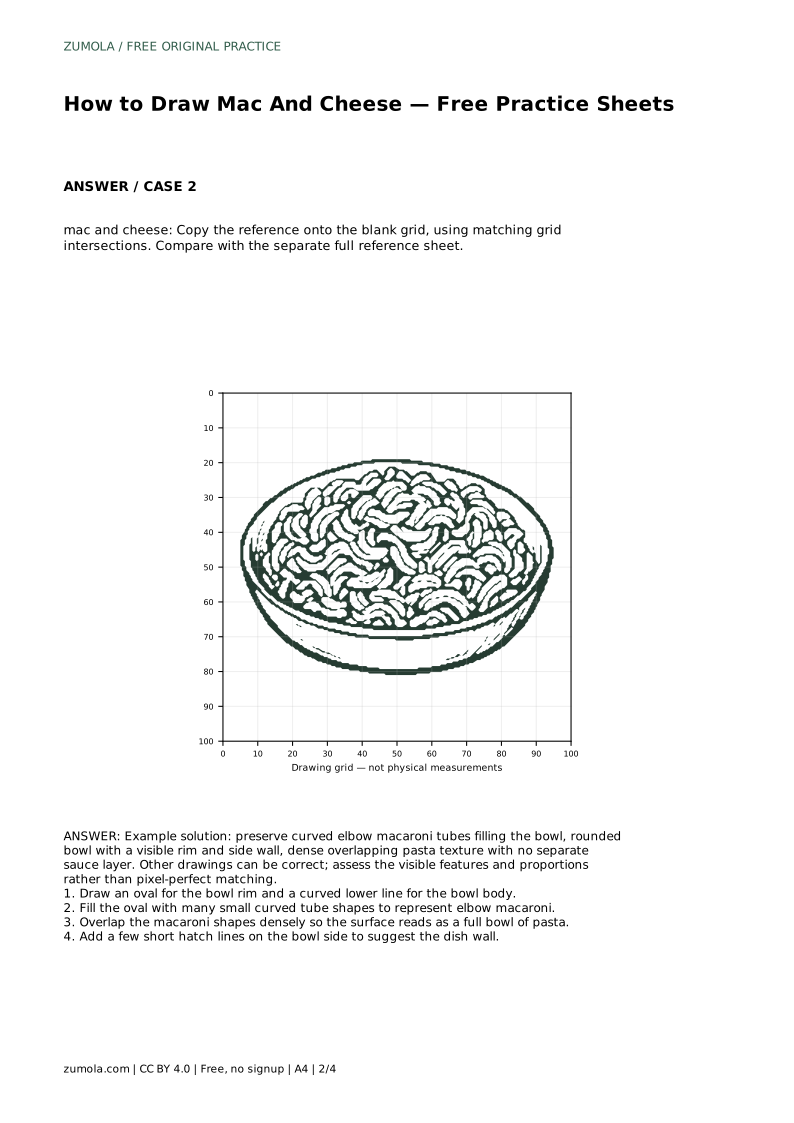
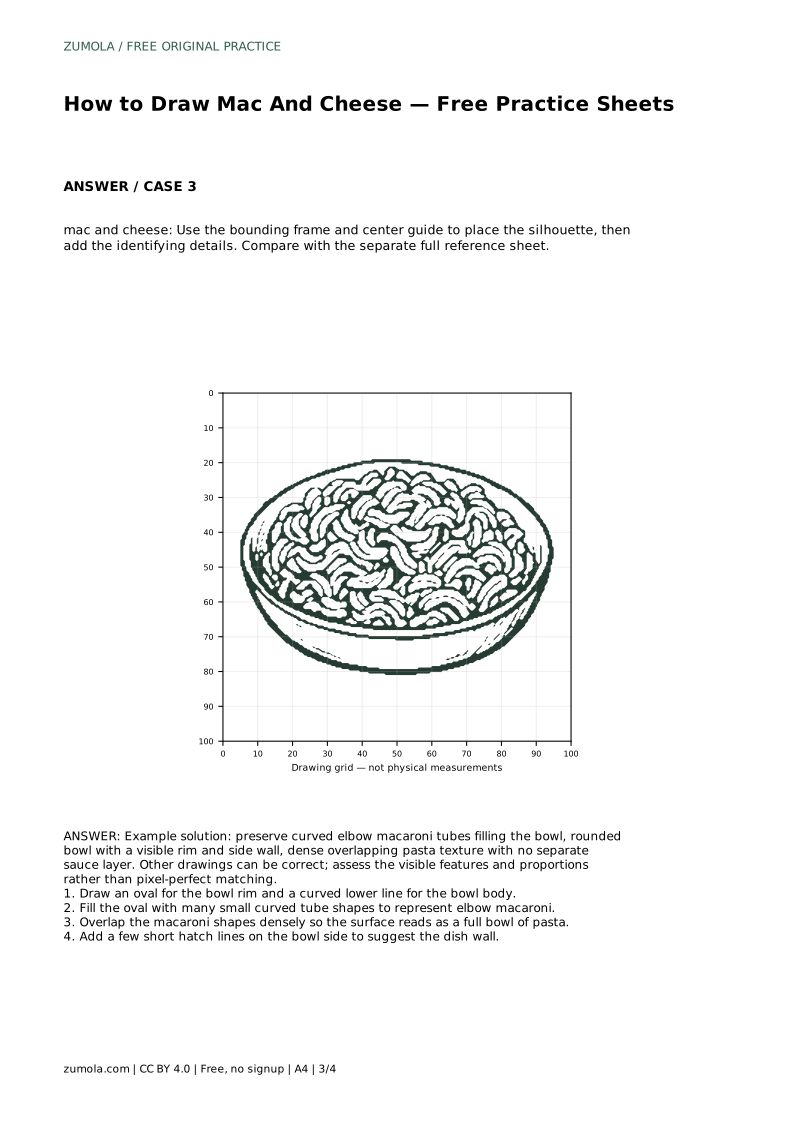
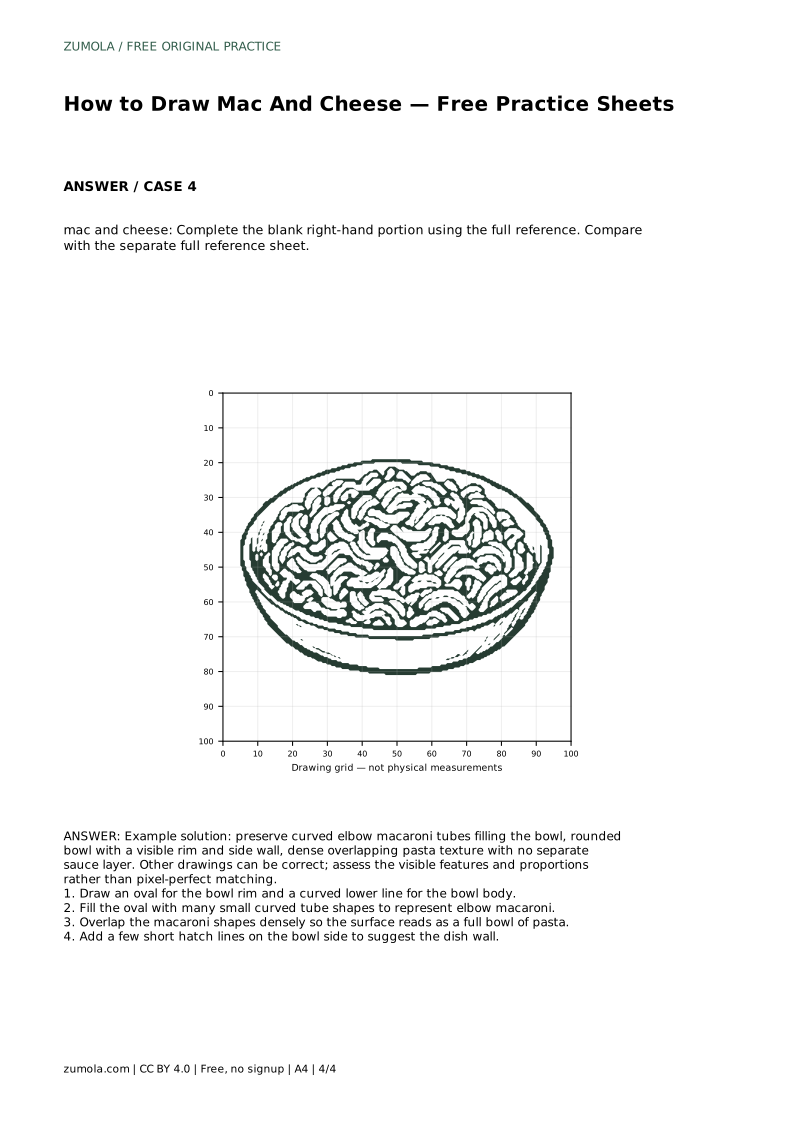
A bowl of mac and cheese is mostly a study in two shapes: a rounded bowl and many small curved tubes packed together. The drawing works when the rim reads as an oval, the side wall curves below it, and the pasta fills the opening with visible overlap. This page explains a tracing-first practice method, then shows how to draw the same features without a guide.
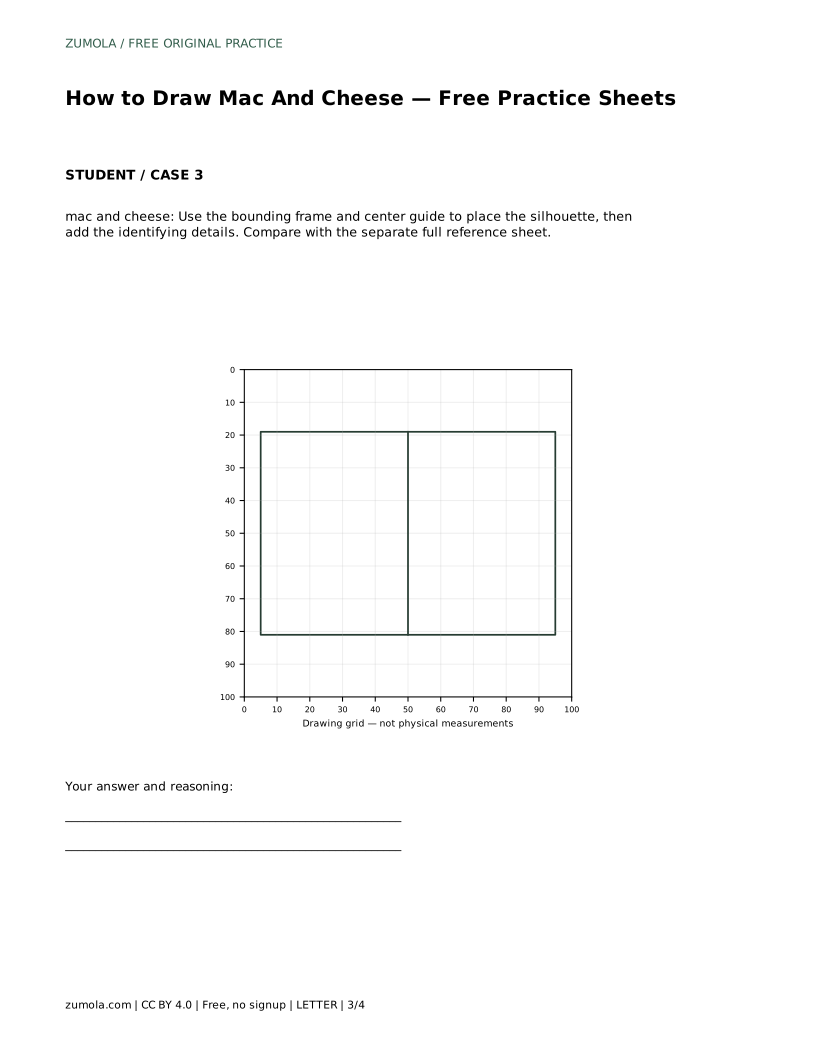
Begin by placing the bowl. Draw an oval for the rim; this oval is the opening of the bowl seen at a slight angle, so it should be wider than it is tall. From the left and right ends of the oval, draw a curved lower line that dips down and returns to the other side. That lower curve is the bowl body, and the space between the oval and the lower curve is the visible side wall.
Keep the rim and body connected at both ends. If the lower curve starts inside the oval or floats below it, the bowl will look broken rather than rounded. A shallow bowl is fine, but the side wall must remain visible so the dish reads as a container holding food.
Elbow macaroni are short, curved tubes. Inside the rim oval, draw many small curved shapes rather than one smooth surface. Each piece can be a narrow U or a bent rectangle with rounded ends. Vary their direction slightly so the surface looks packed rather than patterned.
Overlap matters more than count. Let some pieces sit partly behind others, and leave small gaps only where the pasta would naturally meet. The goal is a dense, bumpy texture that fills the oval. Avoid drawing a separate smooth sauce layer over the pasta; the sauce is implied by the pieces sitting close together, not by a flat coating.
Add a few short hatch lines on the bowl side to suggest the dish wall. Keep these lines light and parallel, following the curve of the bowl. They describe the surface, not the food, so they should not cross into the pasta area.
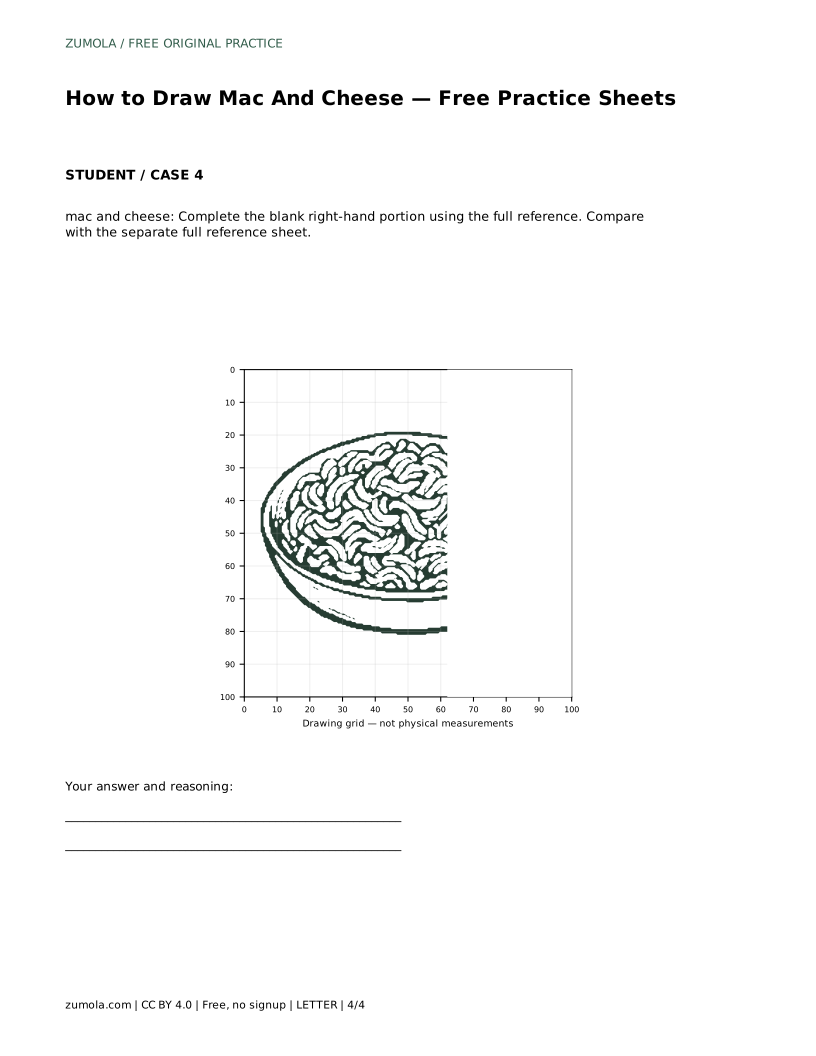
Compare your drawing with the reference by checking features, not by matching every line. The bowl should have a visible rim and side wall, the pasta should fill the opening with curved tubes, and the pieces should overlap densely. Different arrangements of macaroni can still be correct.
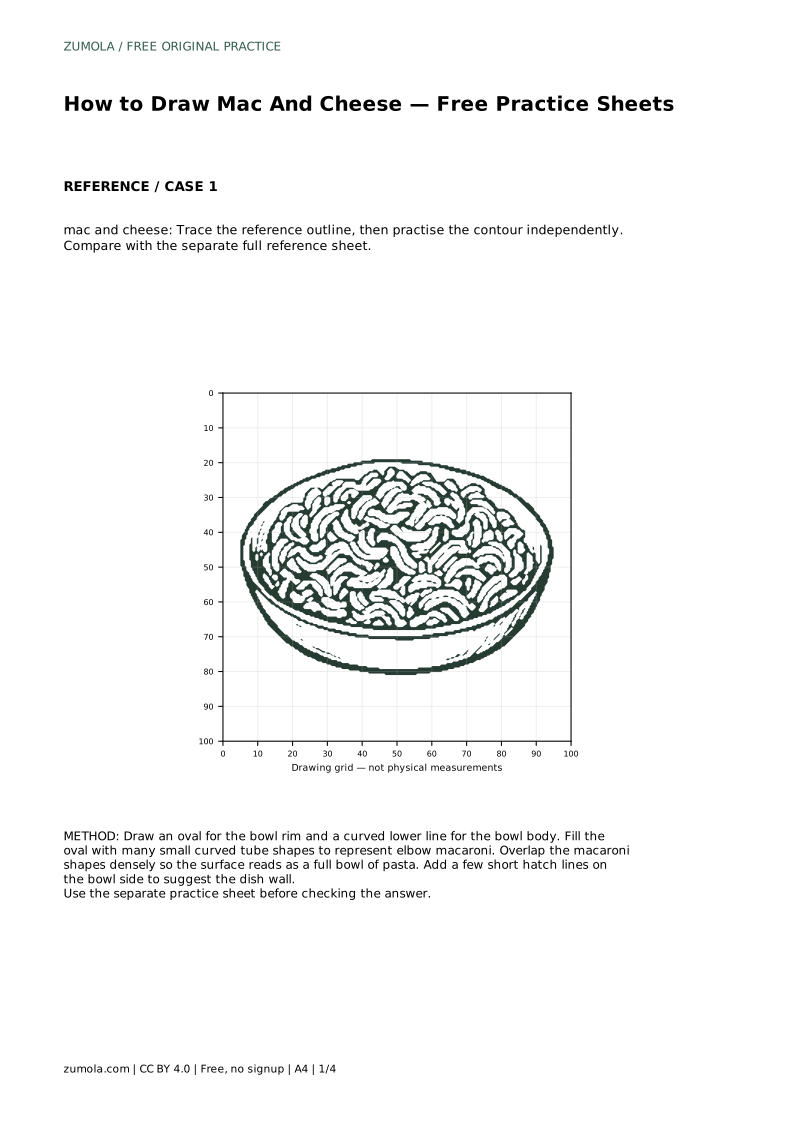
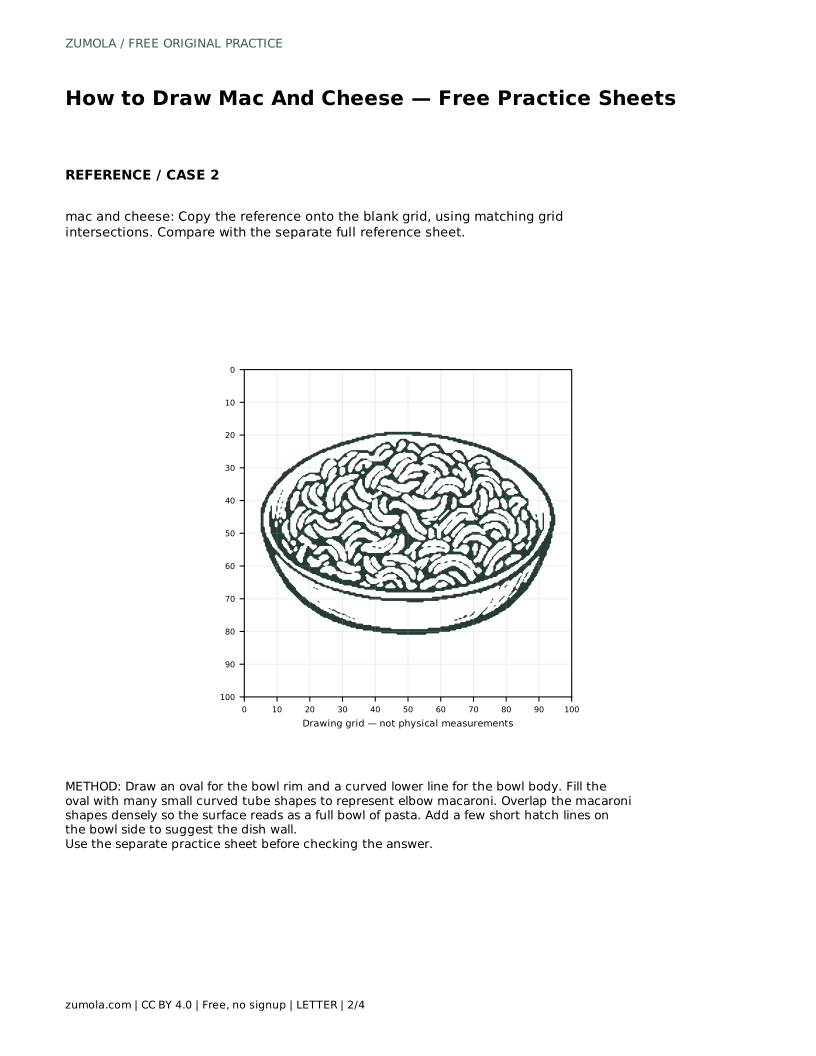
mac and cheese: Trace the reference outline, then practise the contour independently. Compare with the separate full reference sheet.
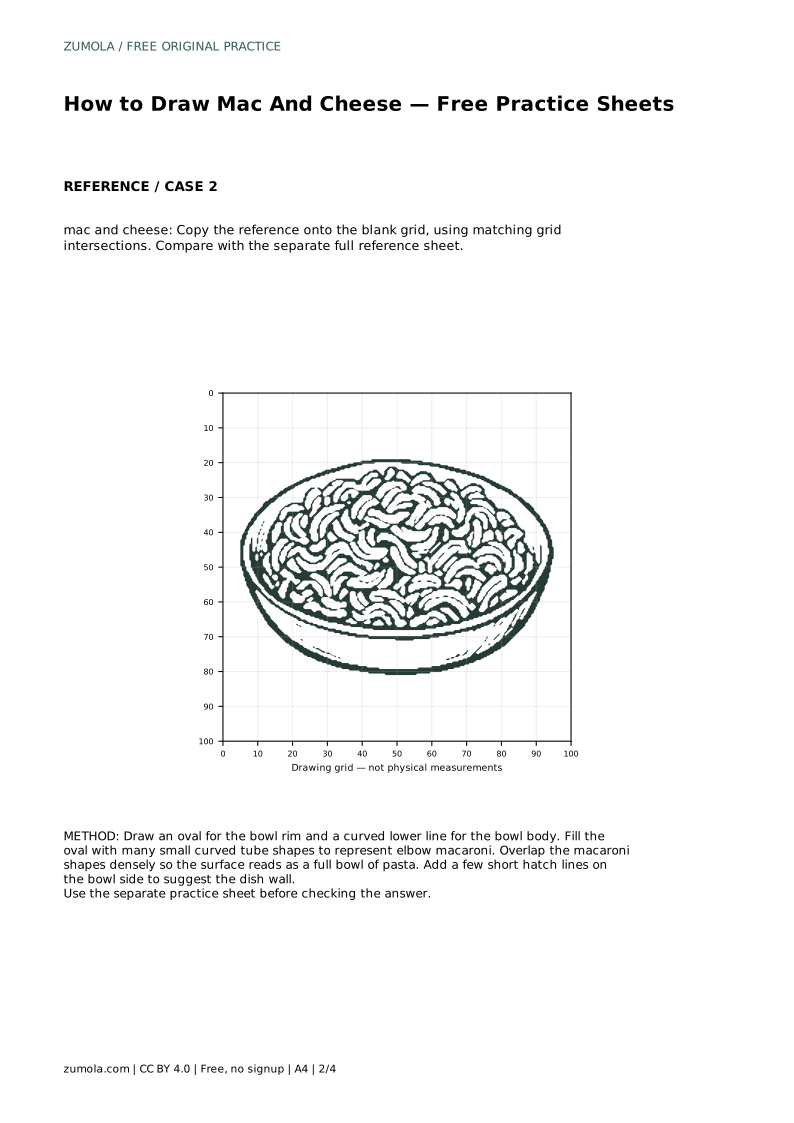
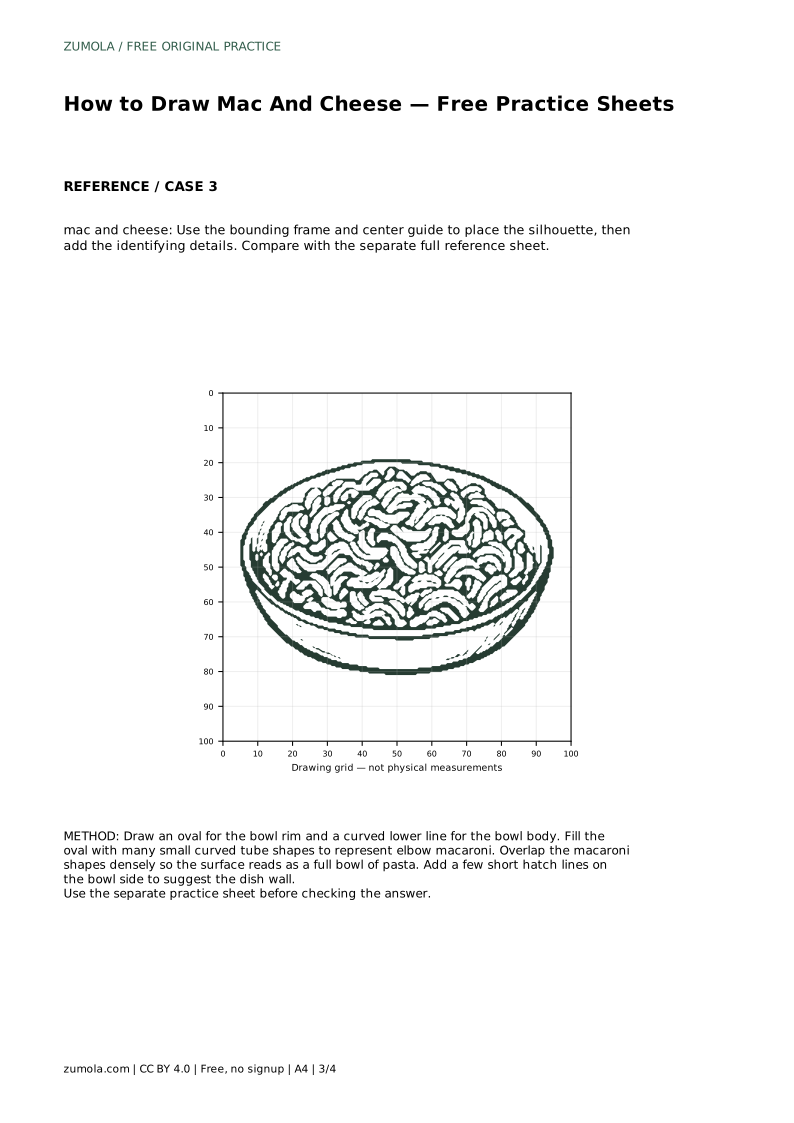
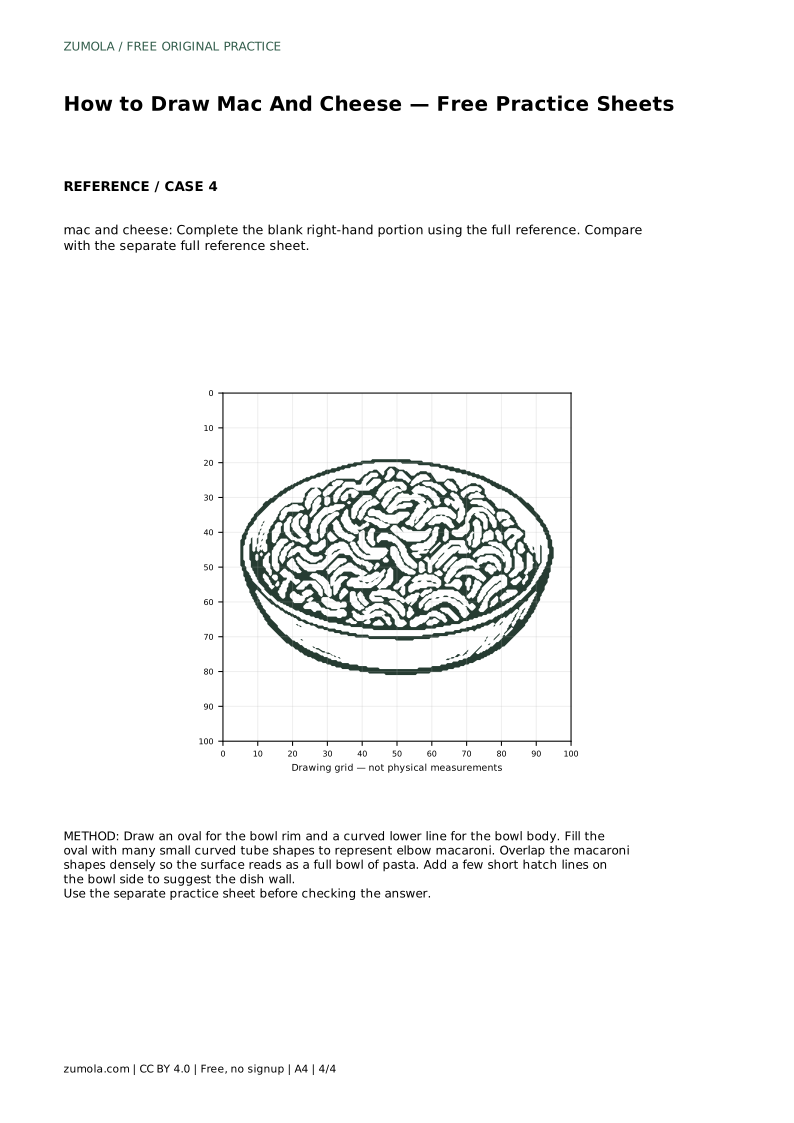
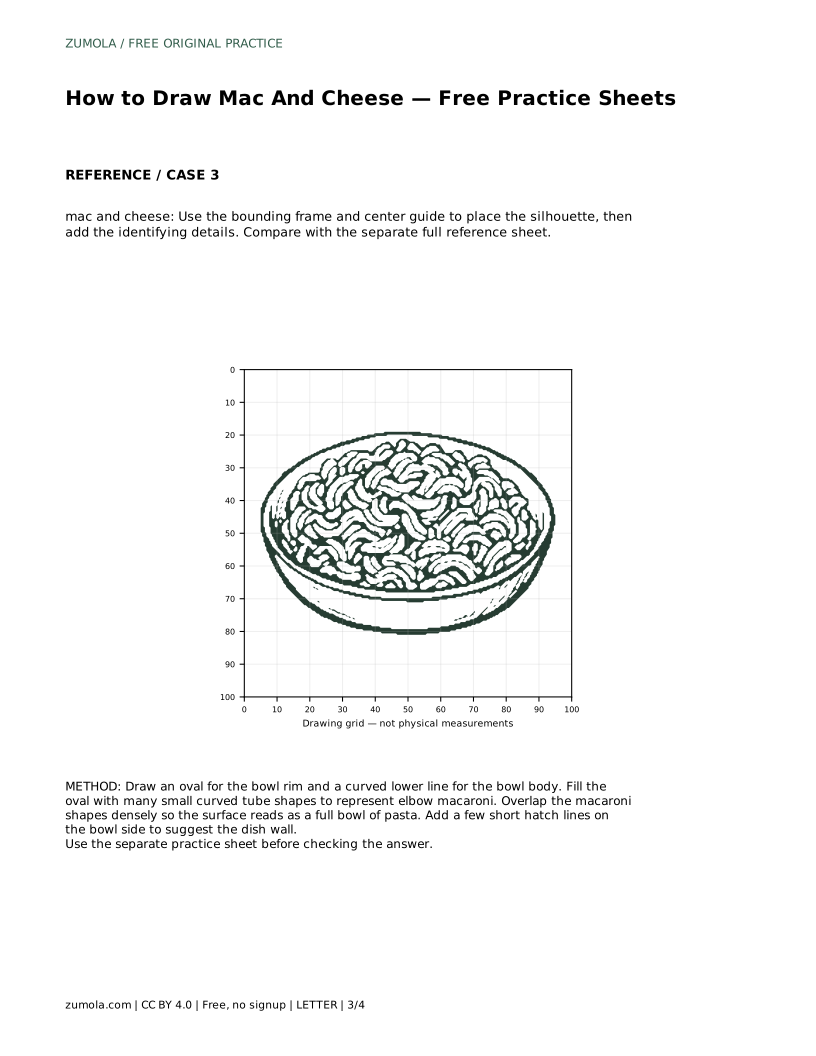
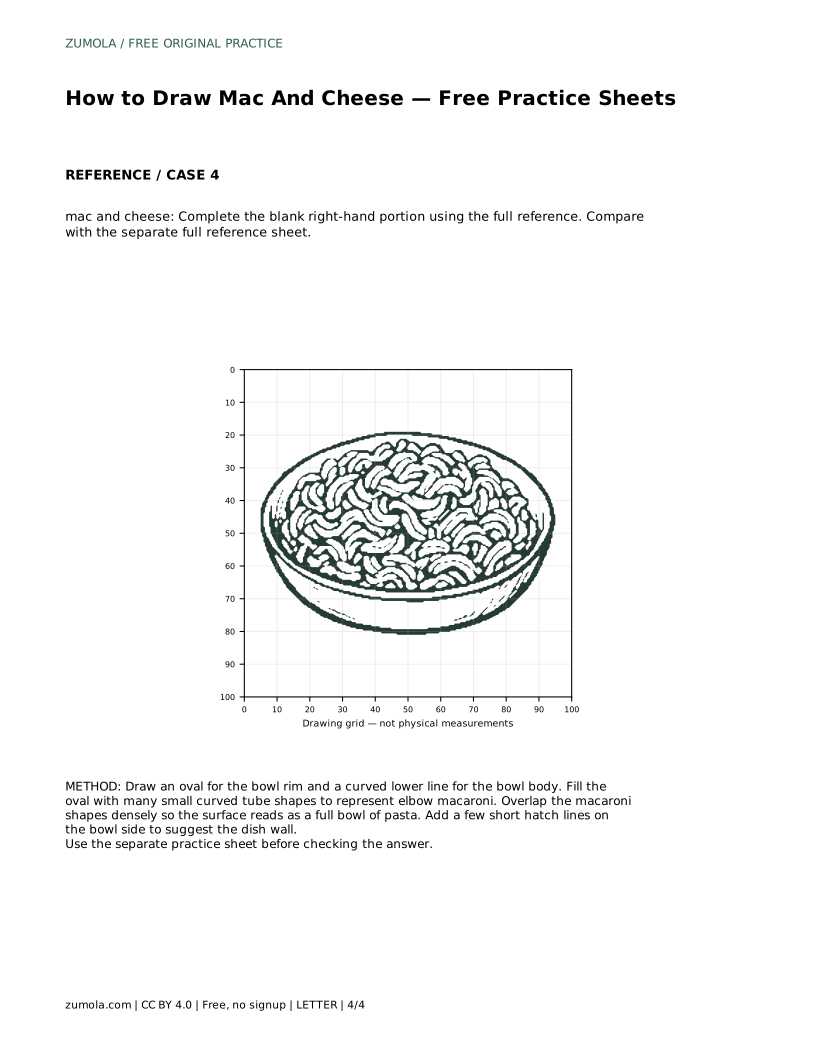
Example solution: preserve curved elbow macaroni tubes filling the bowl, rounded bowl with a visible rim and side wall, dense overlapping pasta texture with no separate sauce layer. Other drawings can be correct; assess the visible features and proportions rather than pixel-perfect matching. Draw an oval for the bowl rim and a curved lower line for the bowl body. Fill the oval with many small curved tube shapes to represent elbow macaroni. Overlap the macaroni shapes densely so the surface reads as a full bowl of pasta. Add a few short hatch lines on the bowl side to suggest the dish wall.
No. Draw enough distinct curved pieces to make the texture read as packed pasta, then let overlaps suggest the rest.
Yes, as long as the rim is a clear oval and the side wall is visible below it. The bowl should still read as a container holding the pasta.
Check the visible features: rounded bowl, visible rim, curved side wall, curved tube shapes, and dense overlap. Use the rubric rather than comparing line for line.
All drawing practice · Free coordinate paper
Original resources · CC BY 4.0 · Free for personal and classroom use with attribution.