Reference diagrams
LETTER · Download PDF
A4 · Download PDF
Free original resources
Learn to draw a park bench by building a flat seat, three-board backrest and four legs. Trace, grid-copy or complete a half-sheet, then check proportions with a rubric.
Four original cases, with reference diagrams, practice sheets and worked answers. Everything is free; no signup required.
LETTER · Download PDF
A4 · Download PDF
LETTER · Download PDF
A4 · Download PDF
LETTER · Download PDF
A4 · Download PDF
Use A4 or US Letter to match your printer. Use the stated values and conditions to solve each exercise; diagrams are not physical measuring rulers.
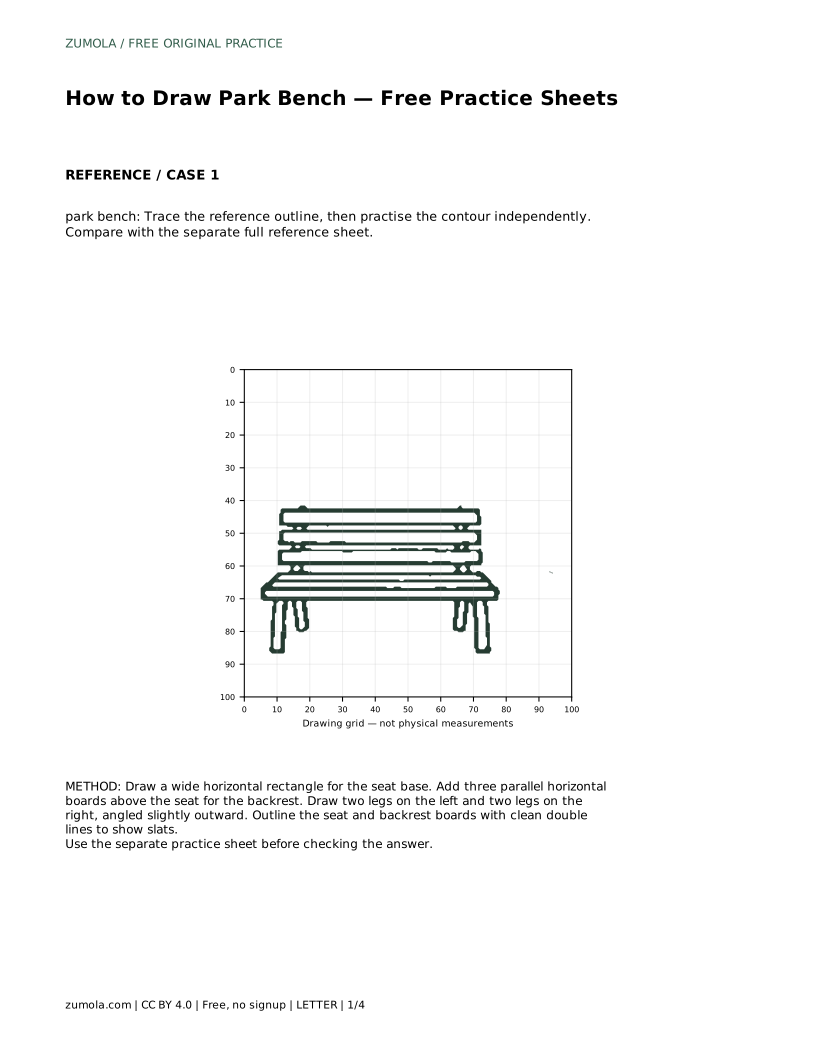
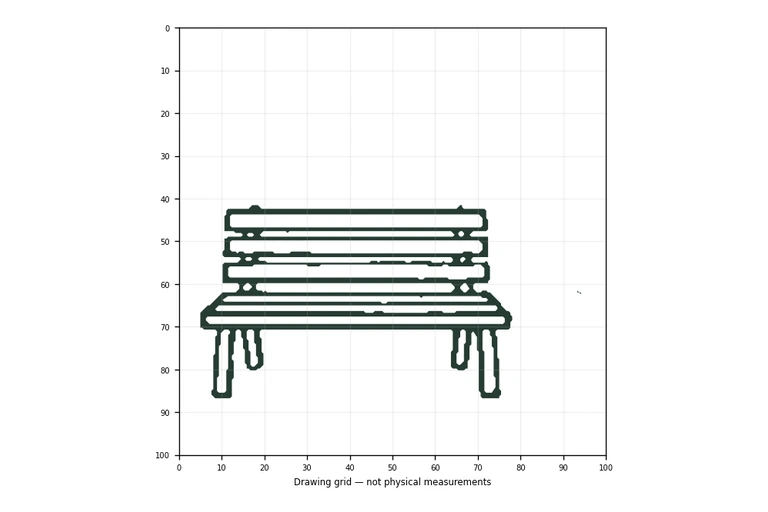
A park bench is mostly straight lines, which makes it a good subject for practising proportion and spacing. The drawing works when the seat reads as a wide horizontal surface, the backrest shows three parallel boards, and four legs sit in two pairs. This page explains how to build those parts in order, then how to use trace, grid-copy and partial-reference sheets to practise the same structure without copying blindly.
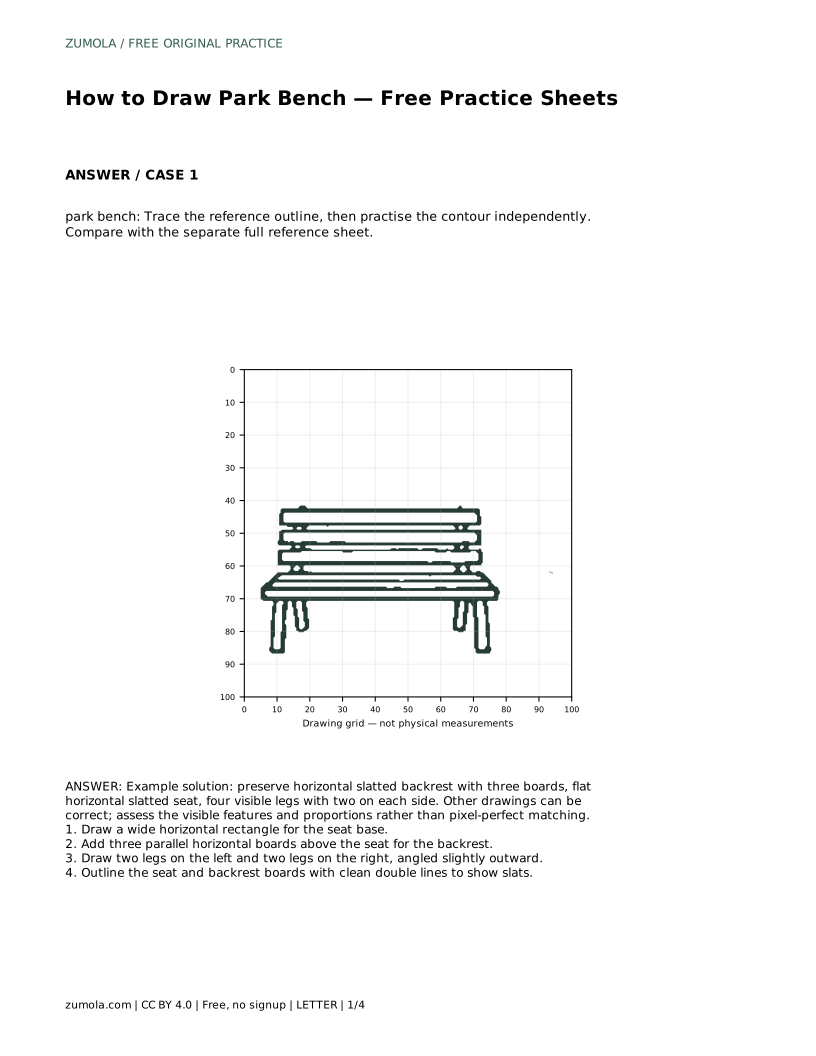
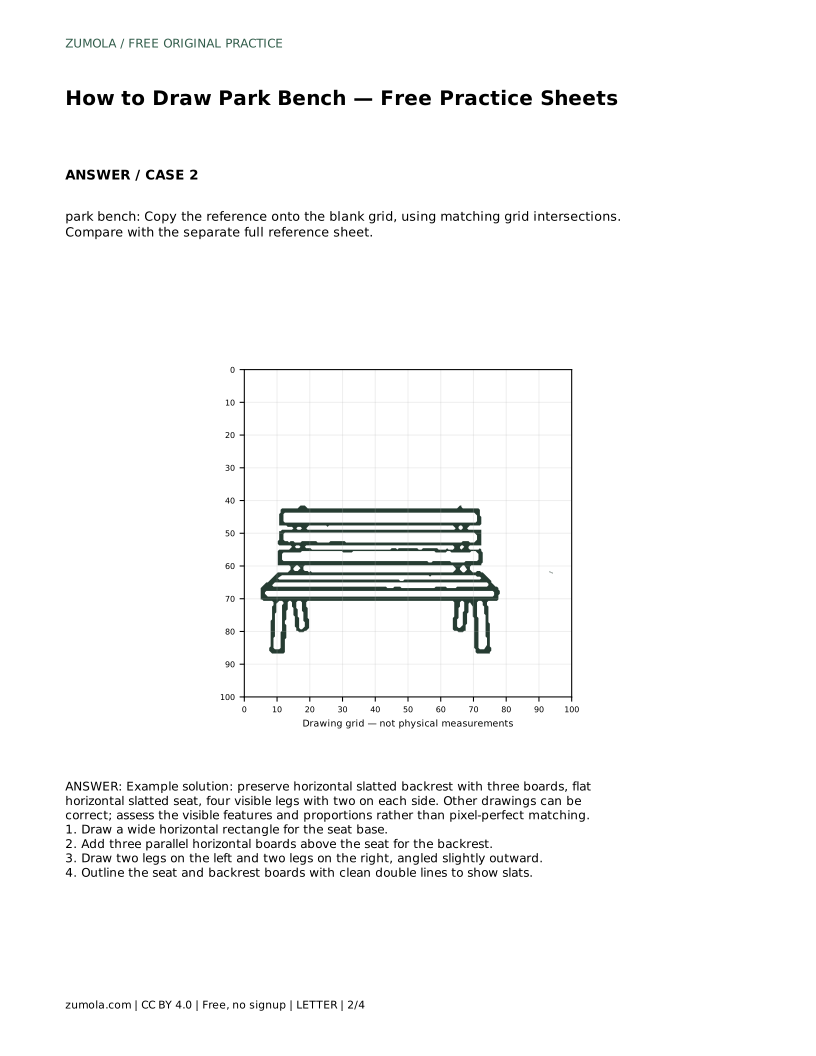
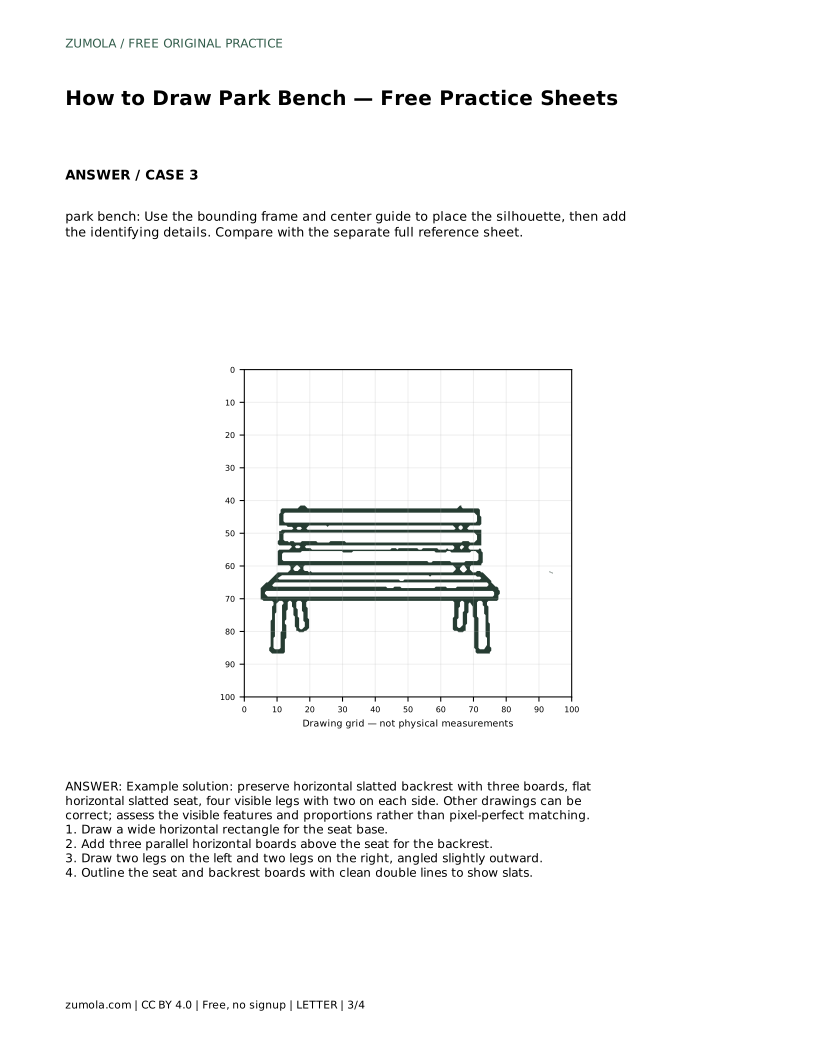
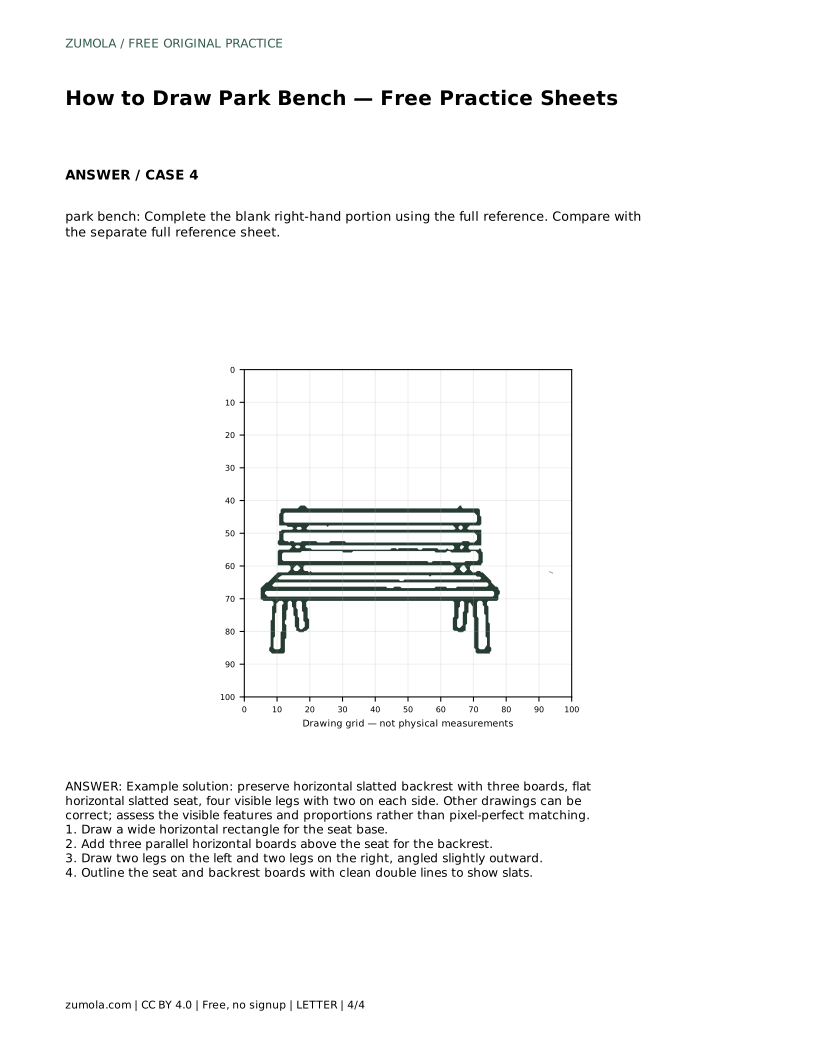
Start with the seat because it sets the bench's width and height. Draw a wide horizontal rectangle for the seat base. Keep its top edge level; a bench seat in a simple front or slight three-quarter view reads as a flat horizontal band. Next, add three parallel horizontal boards above the seat for the backrest. Space them evenly and keep them parallel to the seat, since the backrest is the bench's strongest repeated pattern.
Then draw two legs on the left and two on the right, angled slightly outward. The outward angle gives stability and separates a bench from a table. Finally, outline the seat and backrest boards with clean double lines to show slats. Double lines matter: a single line looks like a solid plank, while two close parallel lines suggest separate boards with gaps. Check that the backrest boards stay horizontal and that the leg pairs mirror each other.
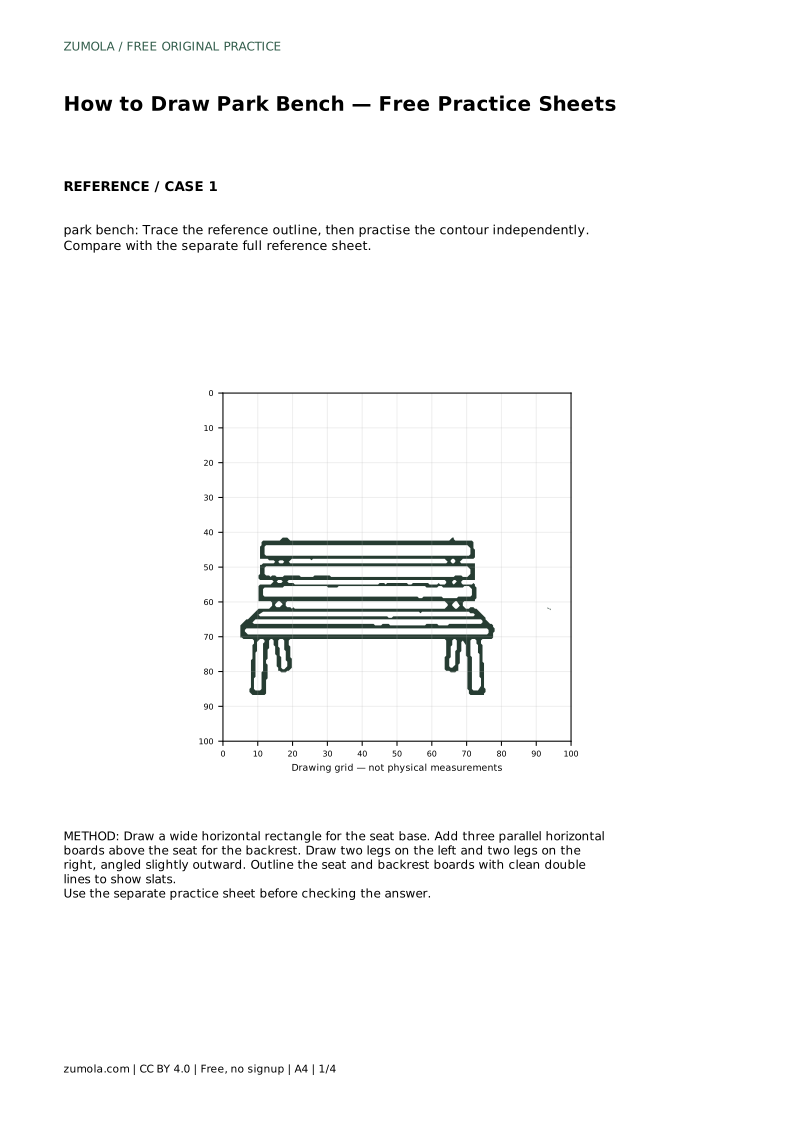
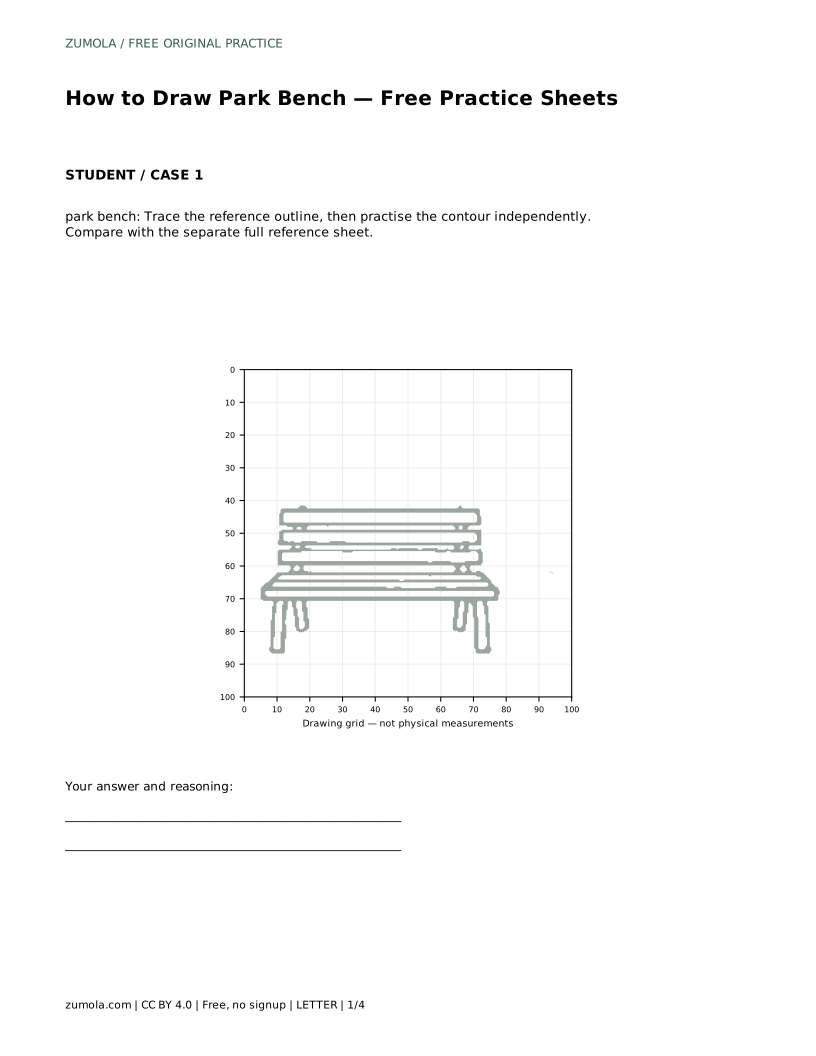
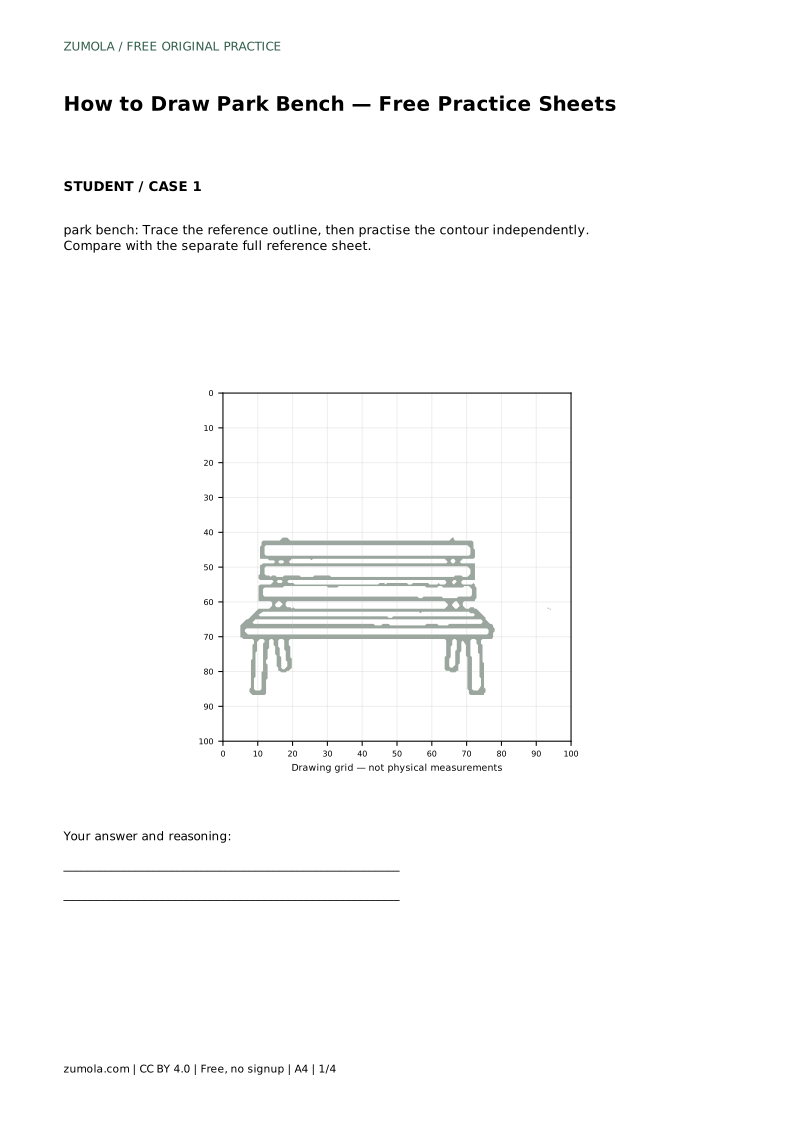
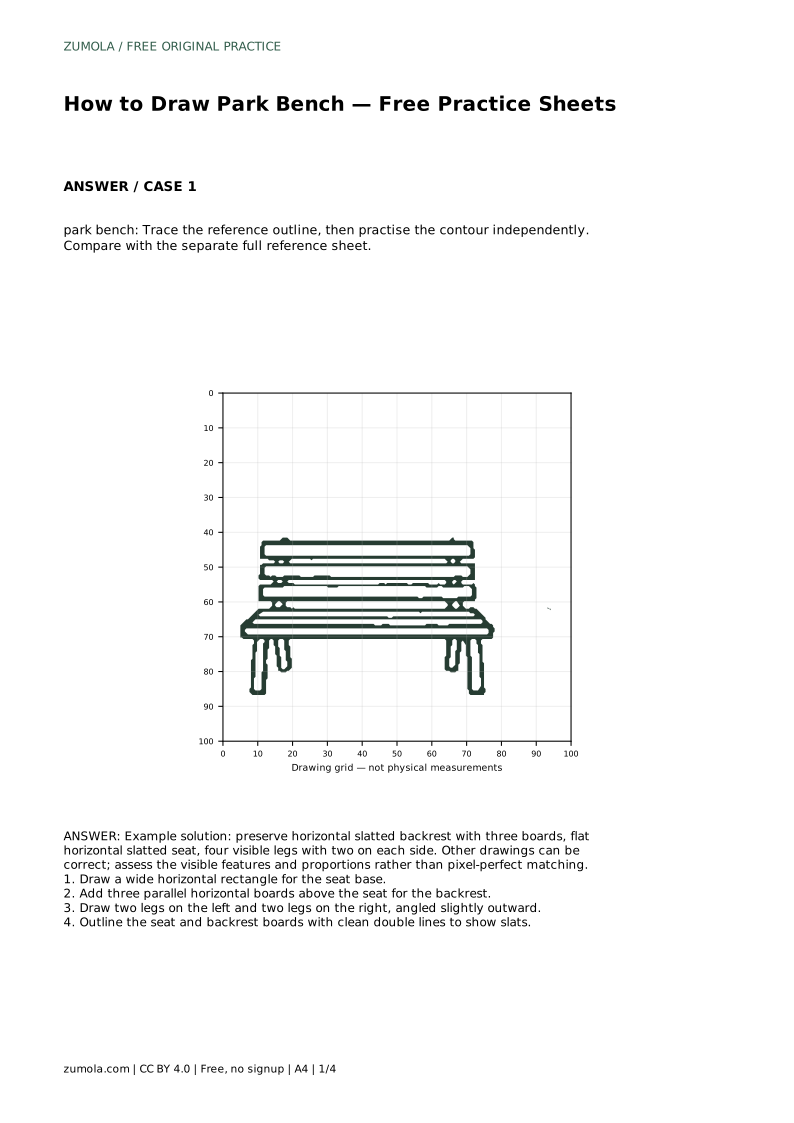
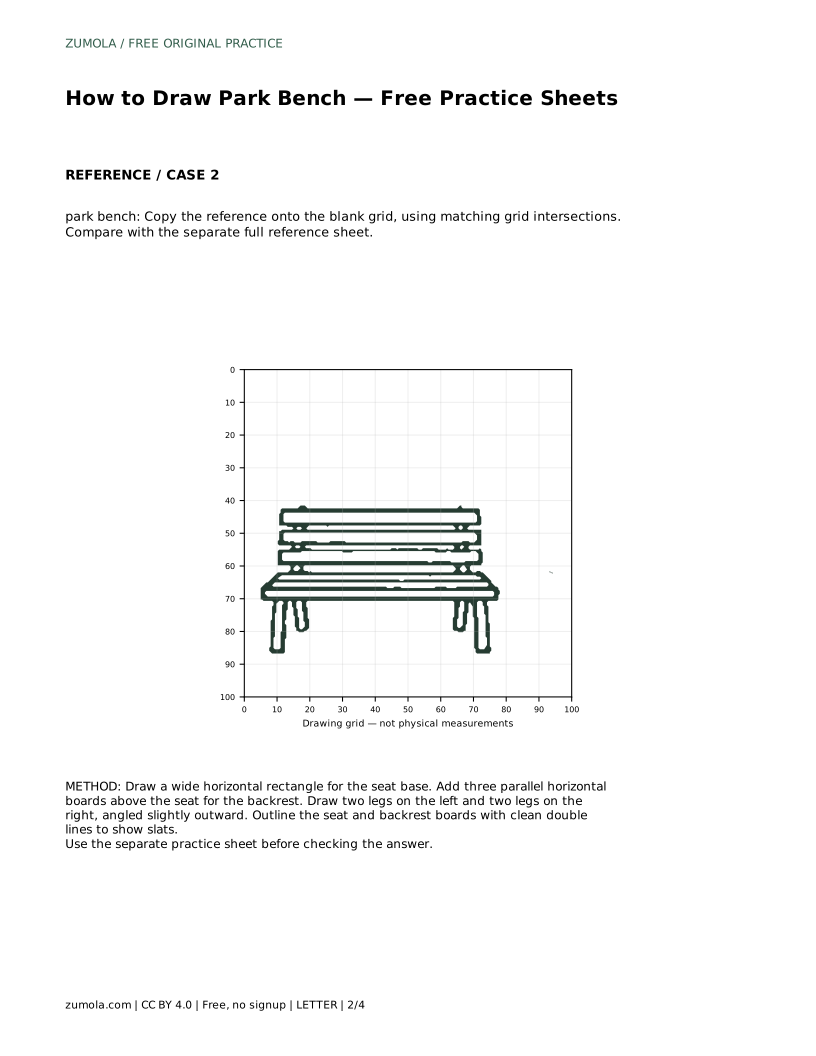
On a trace sheet, follow the reference outline first, then redraw the contour on blank paper without looking at the reference. Compare your free drawing with the separate full reference sheet and note which feature drifted: seat width, board spacing or leg angle.
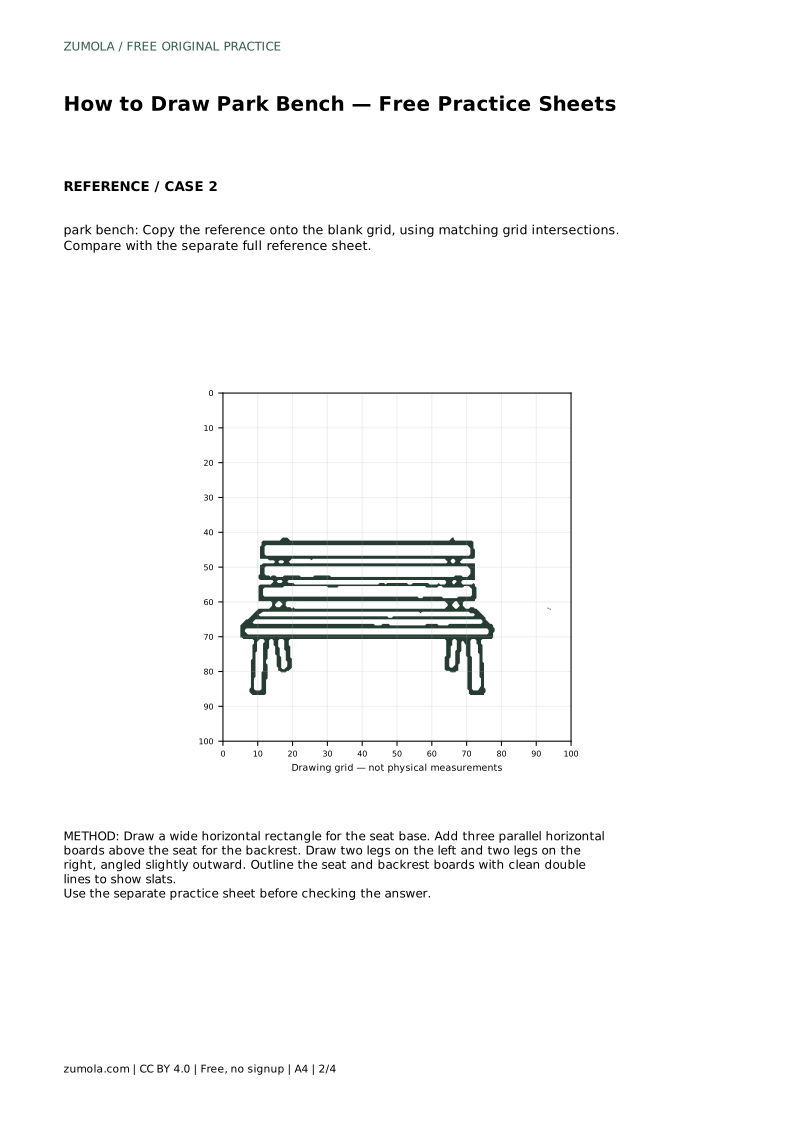
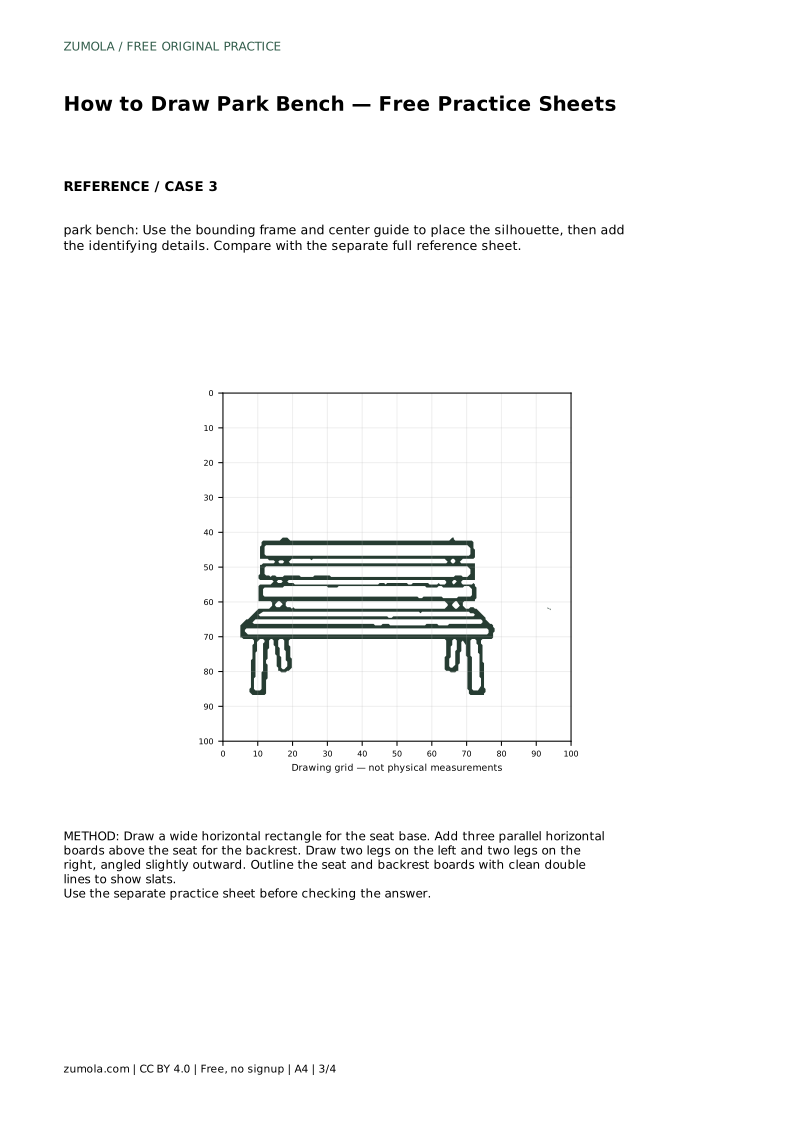
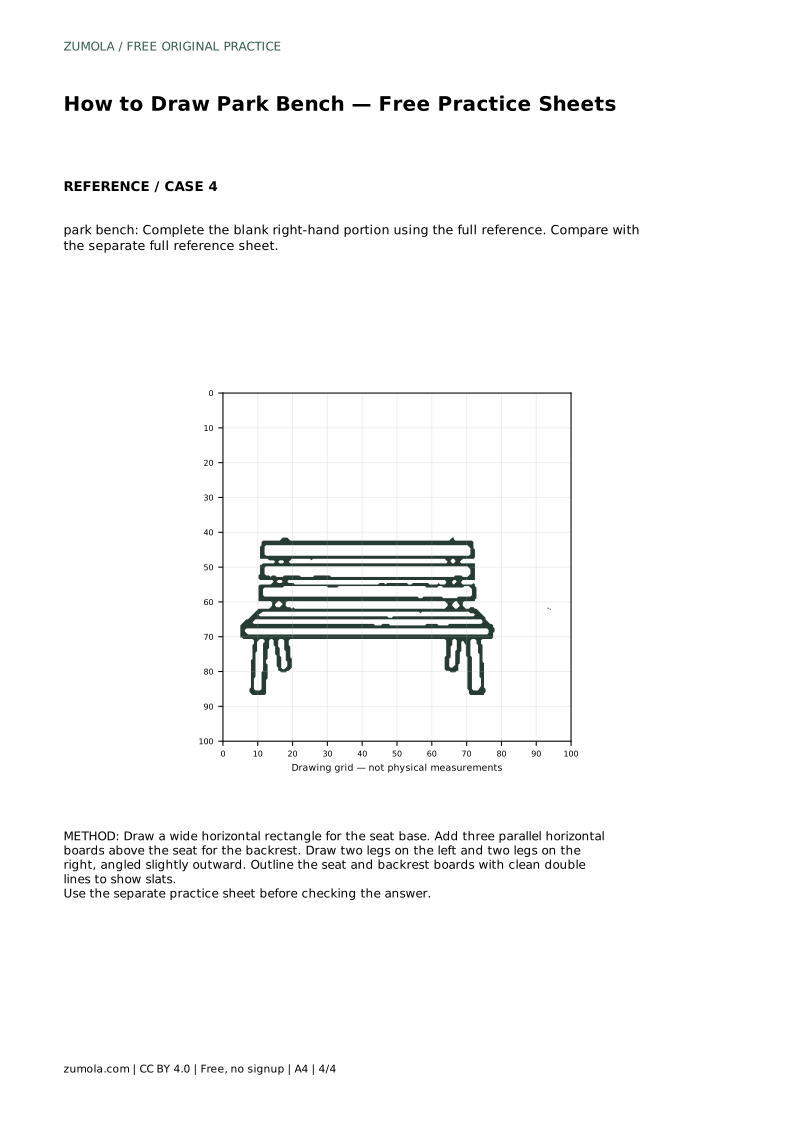
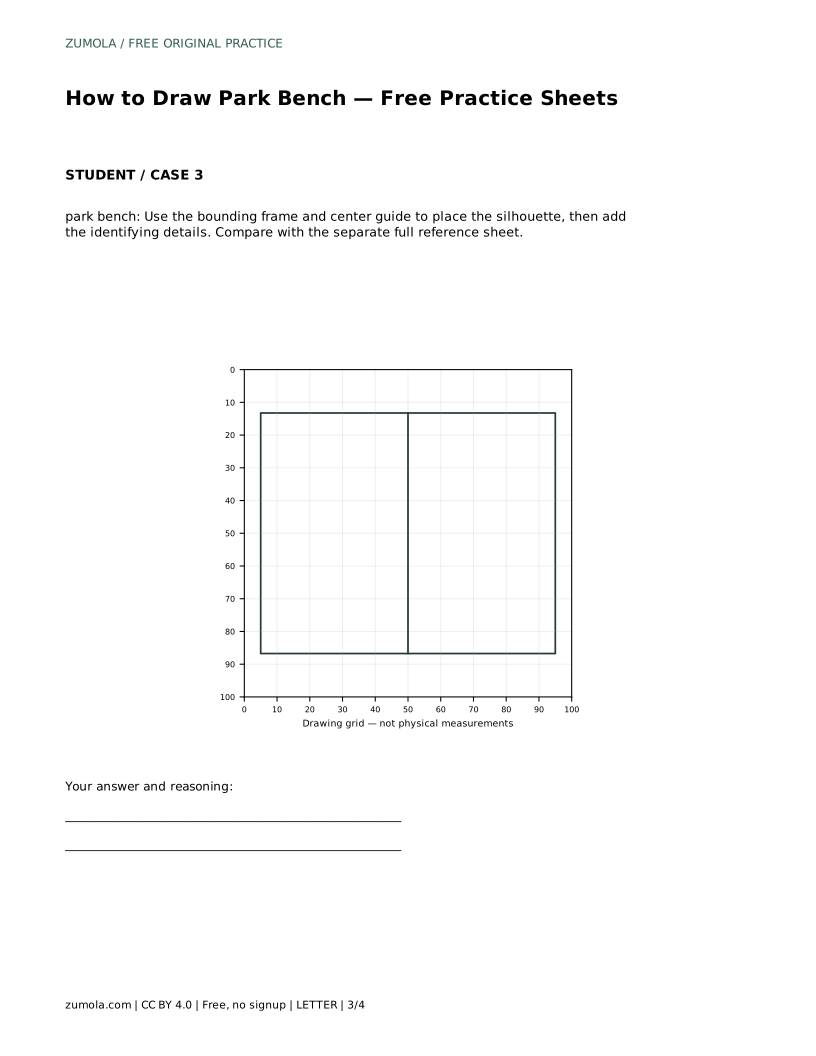
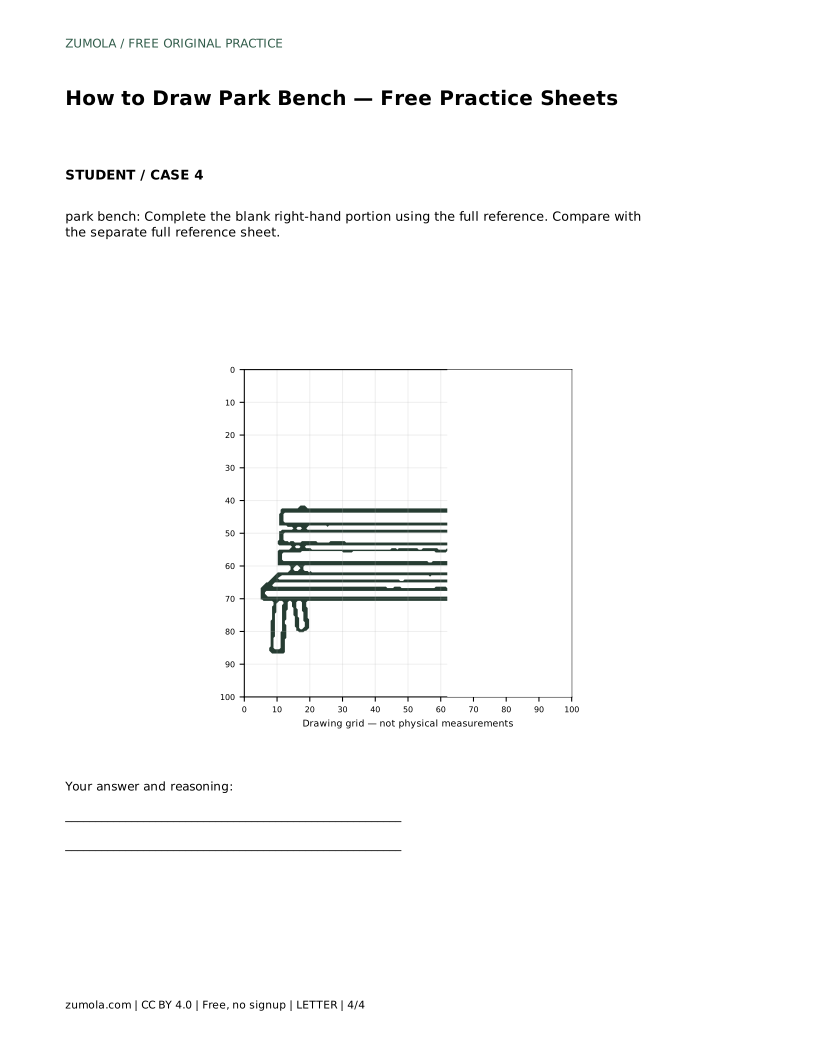
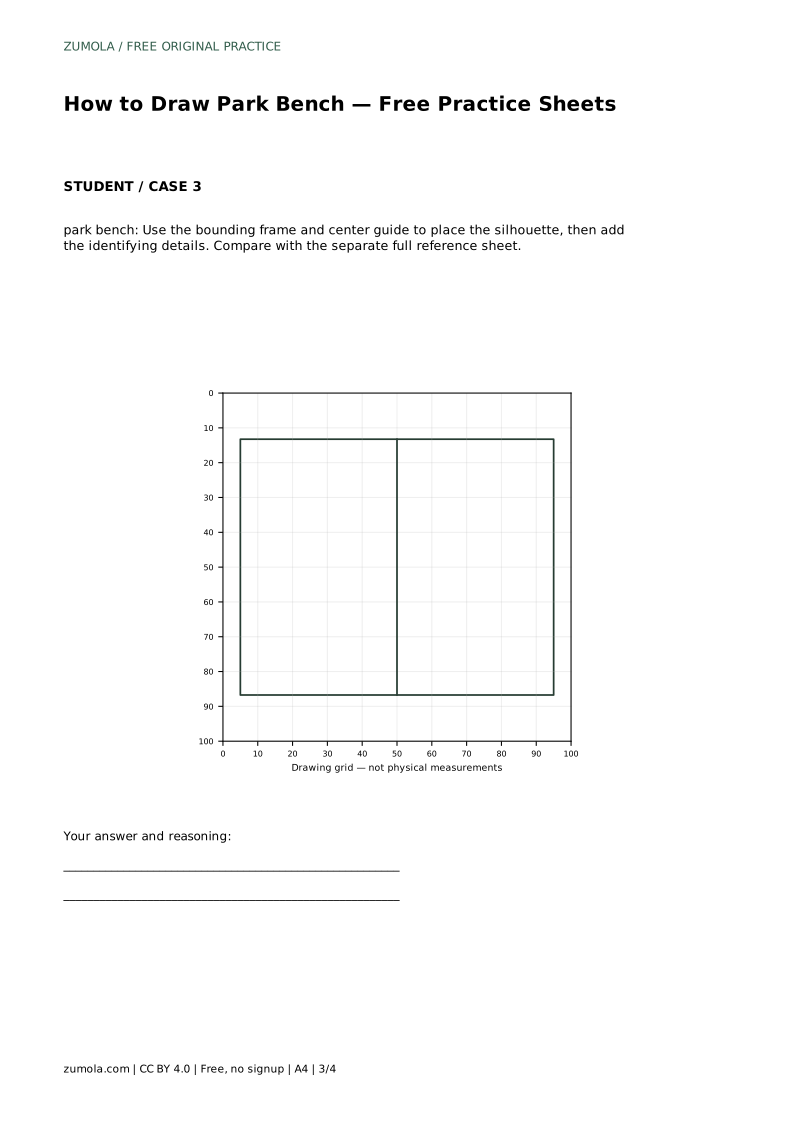
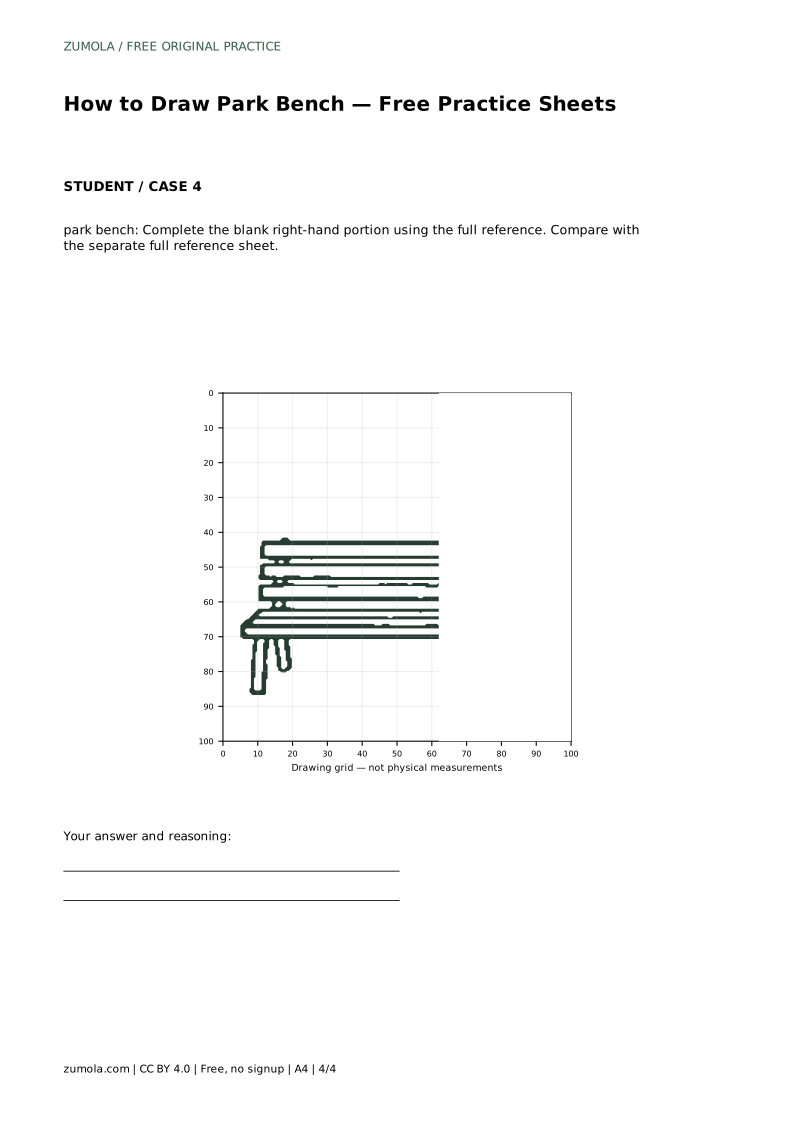
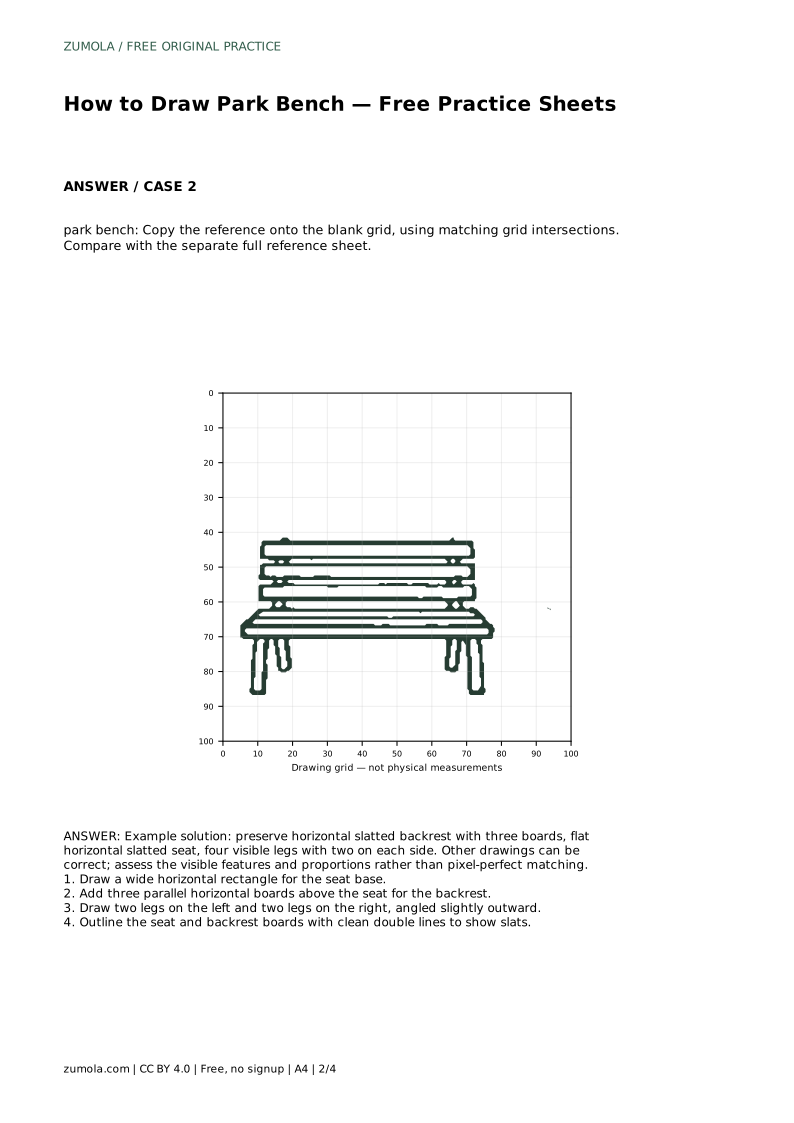
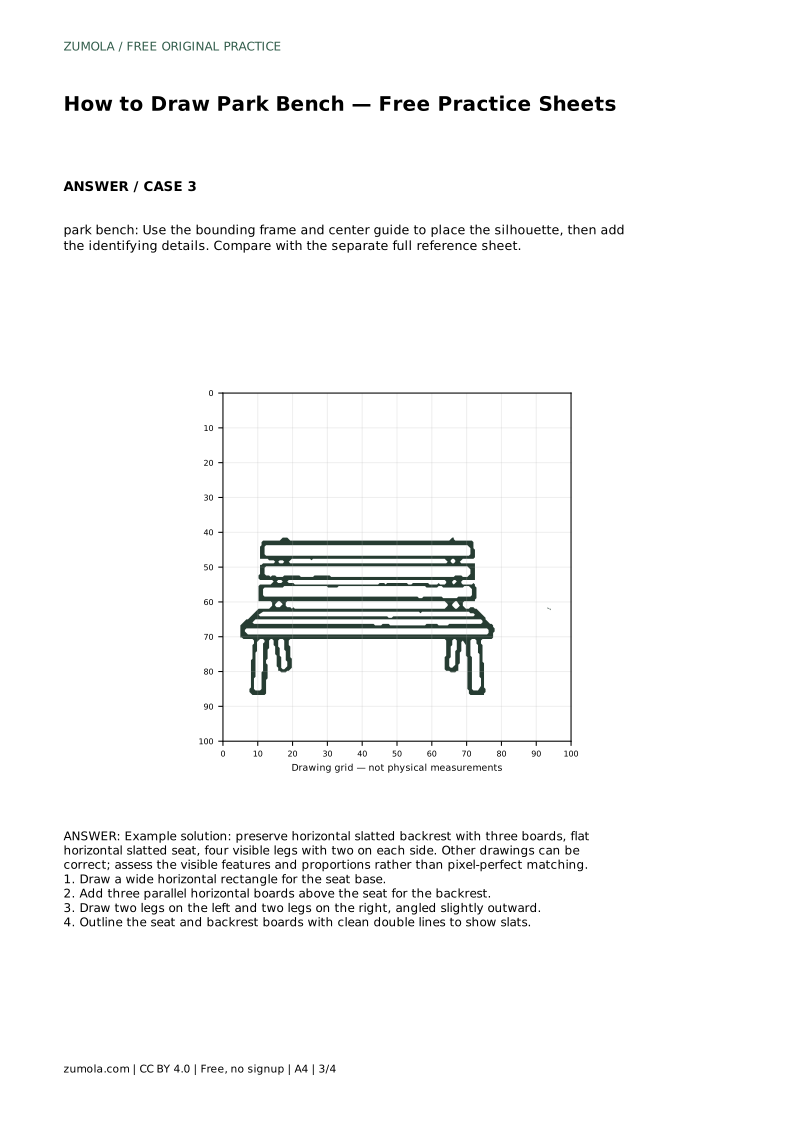
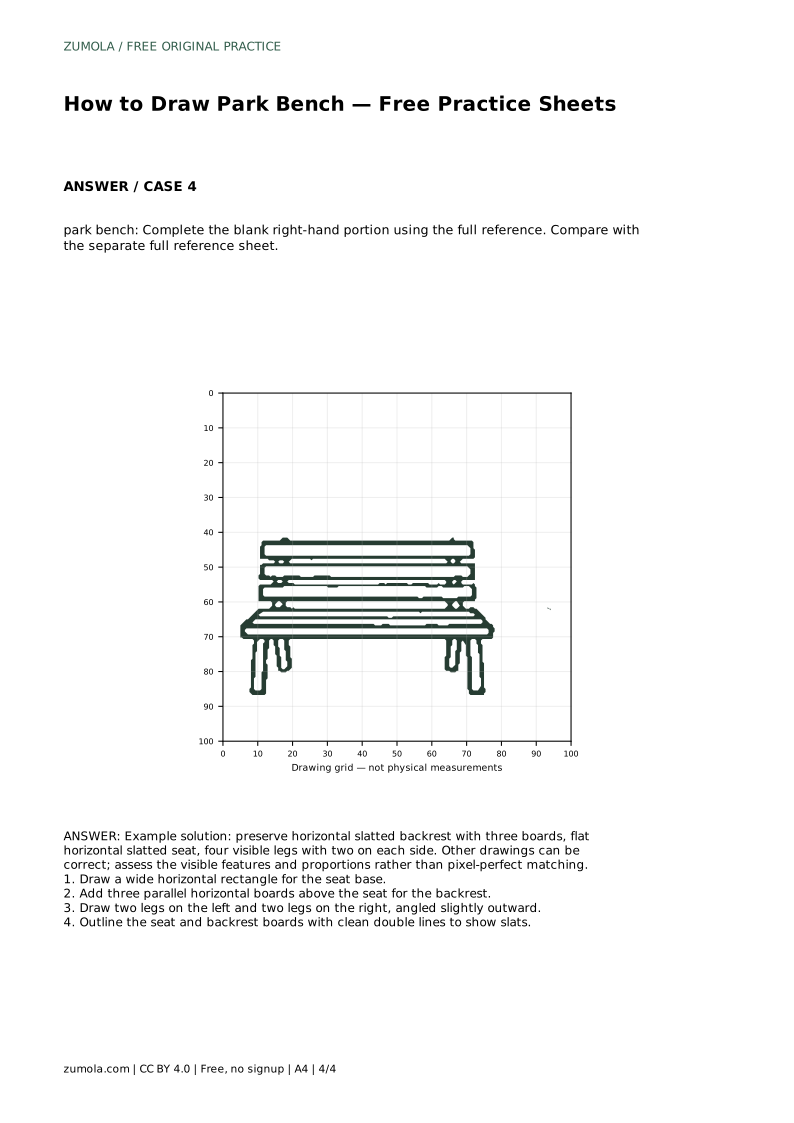
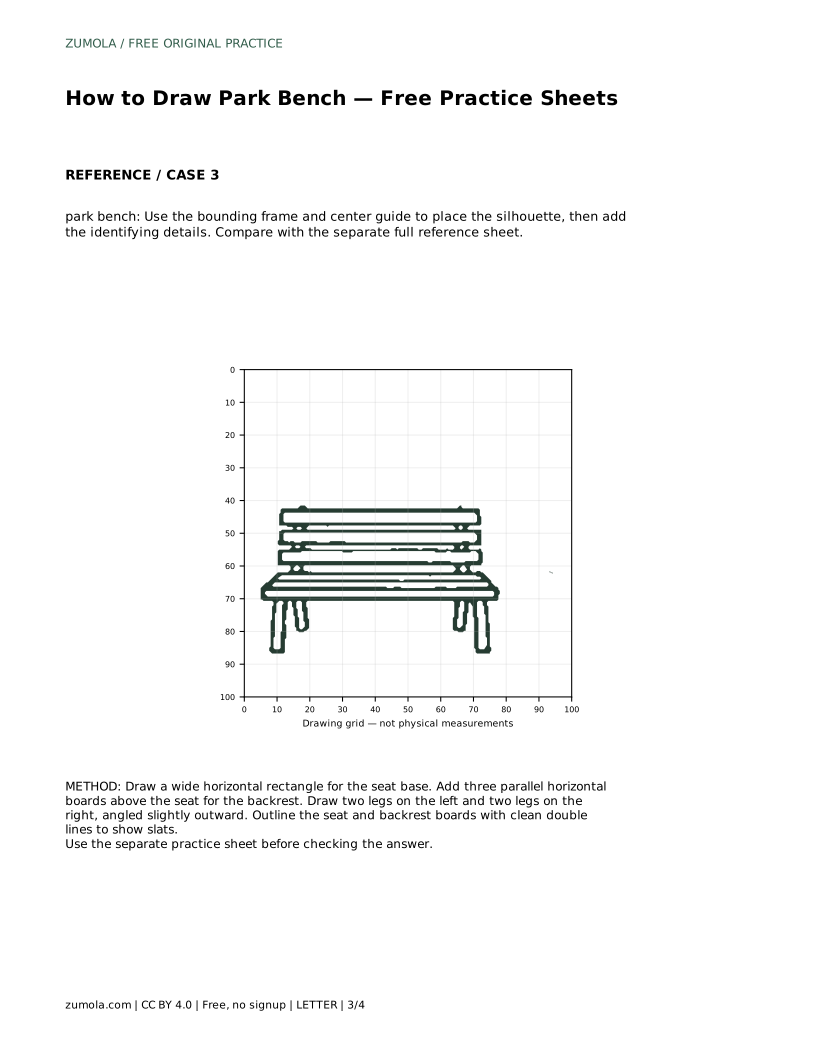
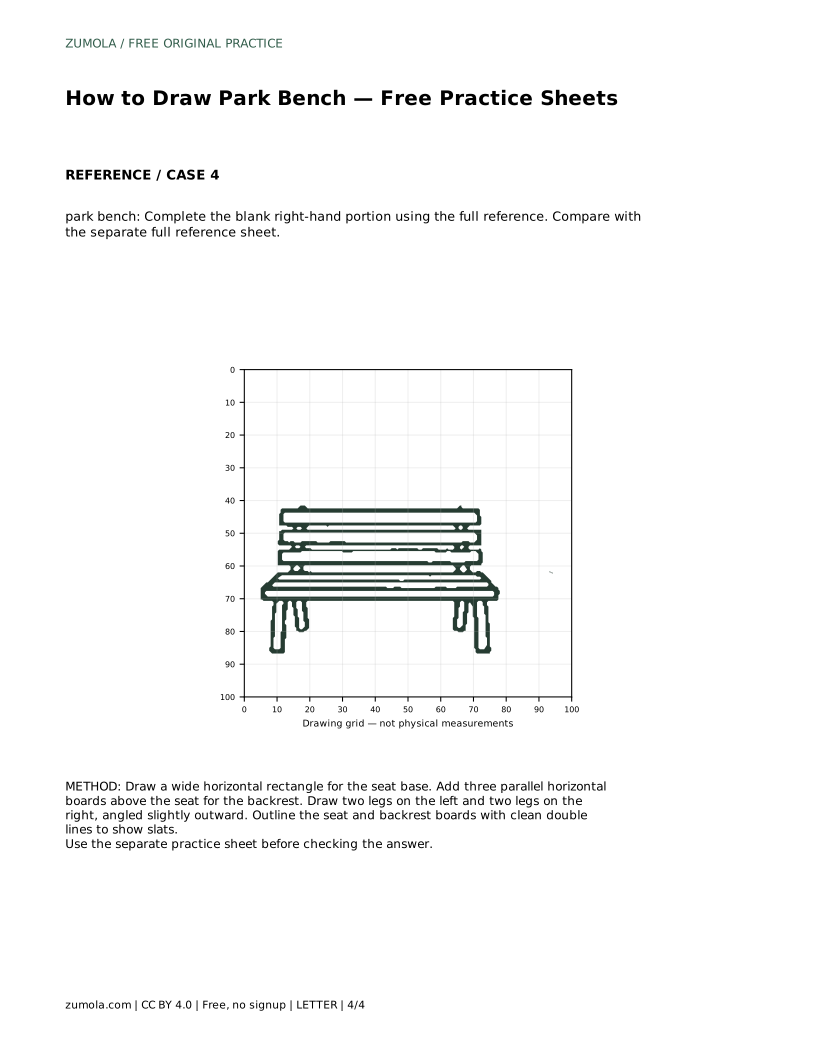
On a grid sheet, copy the reference onto the blank grid using matching grid intersections. Place the seat's corners and the backrest's top edge at intersections before adding slats and legs. On a bounding-frame sheet, use the frame and centre guide to place the silhouette first, then add the identifying details. On a half-completed sheet, finish the blank right-hand portion using the full reference, matching the existing left side's spacing and leg angle.
A bench drawing can be correct in more than one way. A slightly different leg angle or seat depth is fine if the visible features still read clearly. Judge the drawing by whether the backrest has three parallel boards, the seat is flat and horizontal, and four legs appear as two pairs. Proportion matters more than pixel-perfect matching: the seat should be wider than it is deep, and the backrest should not tower over the seat.
park bench: Trace the reference outline, then practise the contour independently. Compare with the separate full reference sheet.
Example solution: preserve horizontal slatted backrest with three boards, flat horizontal slatted seat, four visible legs with two on each side. Other drawings can be correct; assess the visible features and proportions rather than pixel-perfect matching. Draw a wide horizontal rectangle for the seat base. Add three parallel horizontal boards above the seat for the backrest. Draw two legs on the left and two legs on the right, angled slightly outward. Outline the seat and backrest boards with clean double lines to show slats.
No. Other drawings can be correct. Assess the visible features and proportions rather than pixel-perfect matching.
Three parallel horizontal boards above the seat, spaced evenly.
Legs that angle inward or sit too close together. Angle each pair slightly outward and keep the left and right pairs mirrored.
All drawing practice · Free coordinate paper
Original resources · CC BY 4.0 · Free for personal and classroom use with attribution.