Reference diagrams
LETTER · Download PDF
A4 · Download PDF
Free original resources
Learn to draw a doll with a bobbed hairstyle, rounded collar, A-line dress, simple arms and boots. Trace, grid, frame and partial-reference practice sheets support the same figure.
Four original cases, with reference diagrams, practice sheets and worked answers. Everything is free; no signup required.
LETTER · Download PDF
A4 · Download PDF
LETTER · Download PDF
A4 · Download PDF
LETTER · Download PDF
A4 · Download PDF
Use A4 or US Letter to match your printer. Use the stated values and conditions to solve each exercise; diagrams are not physical measuring rulers.
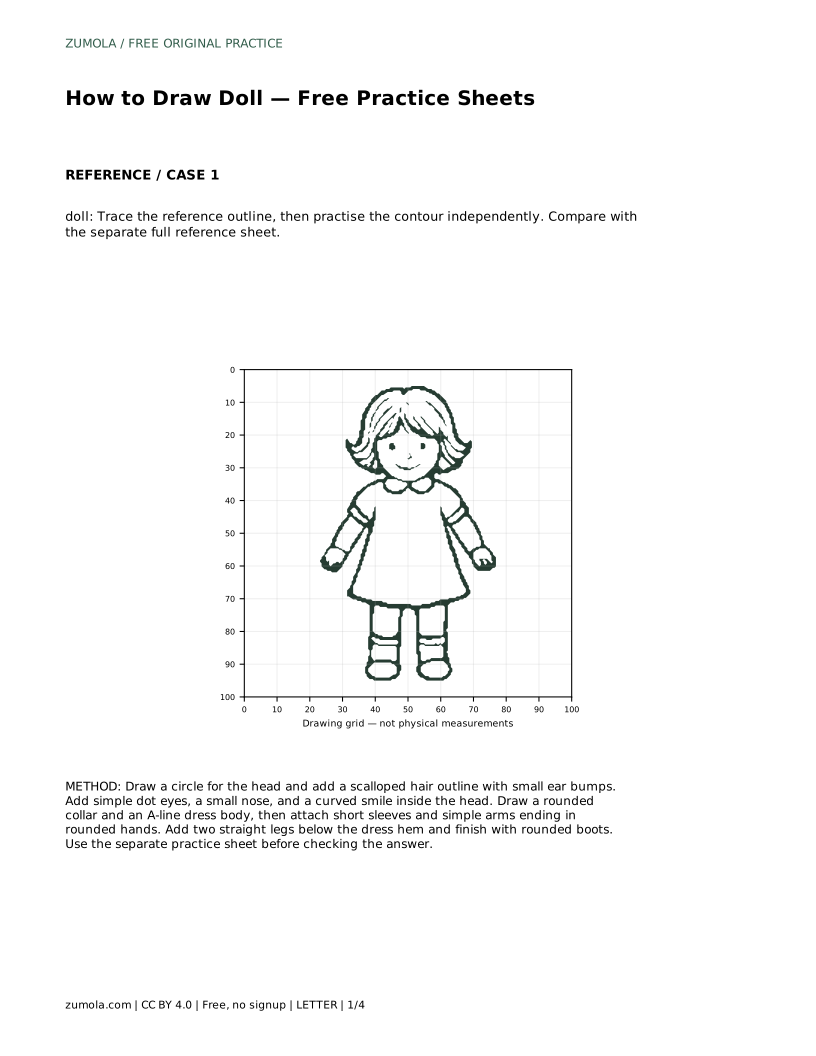
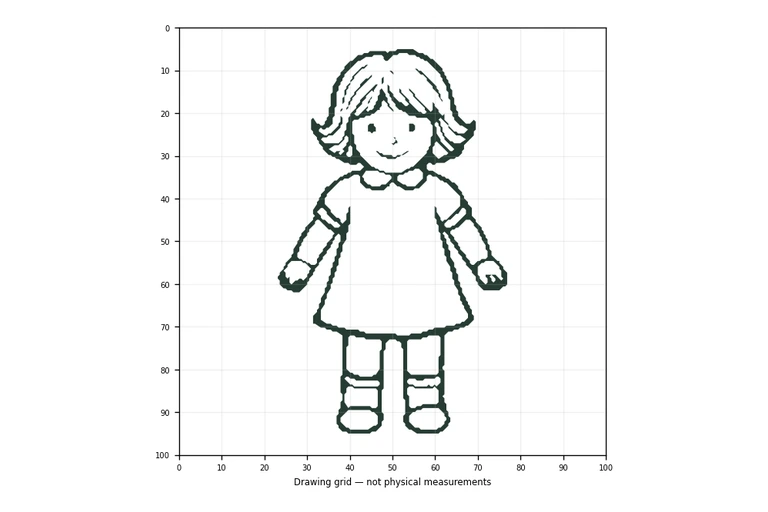
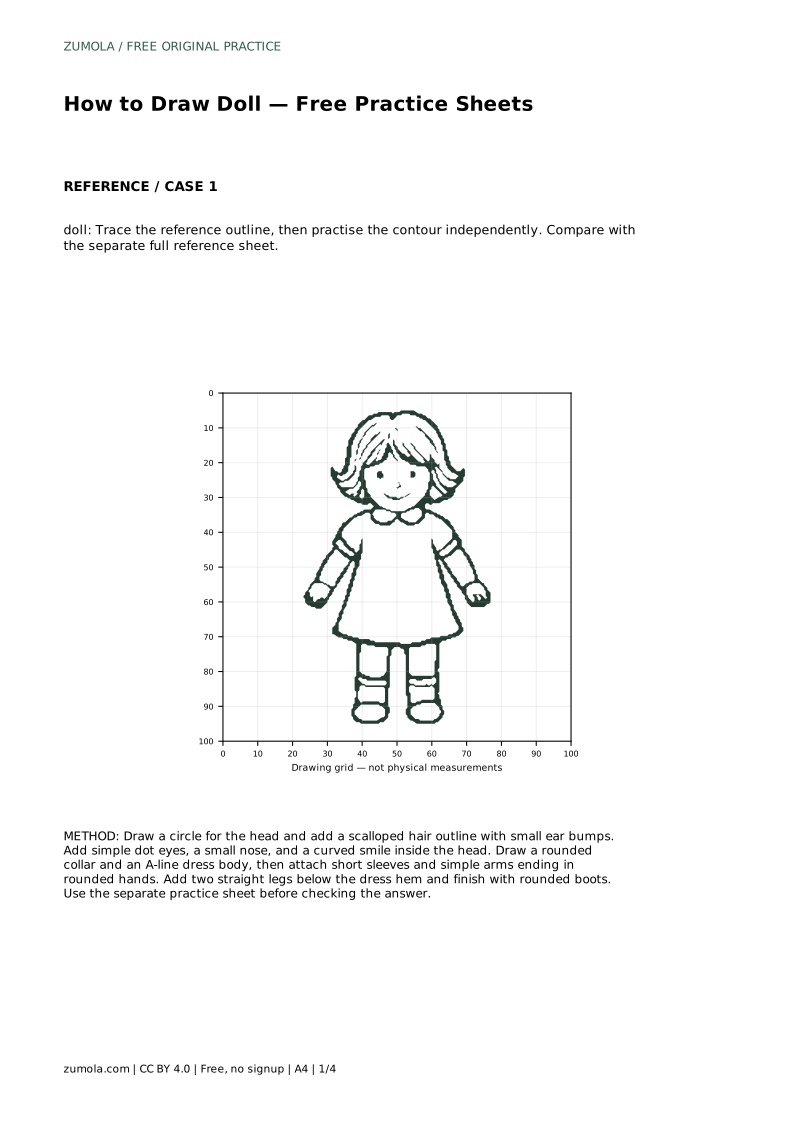
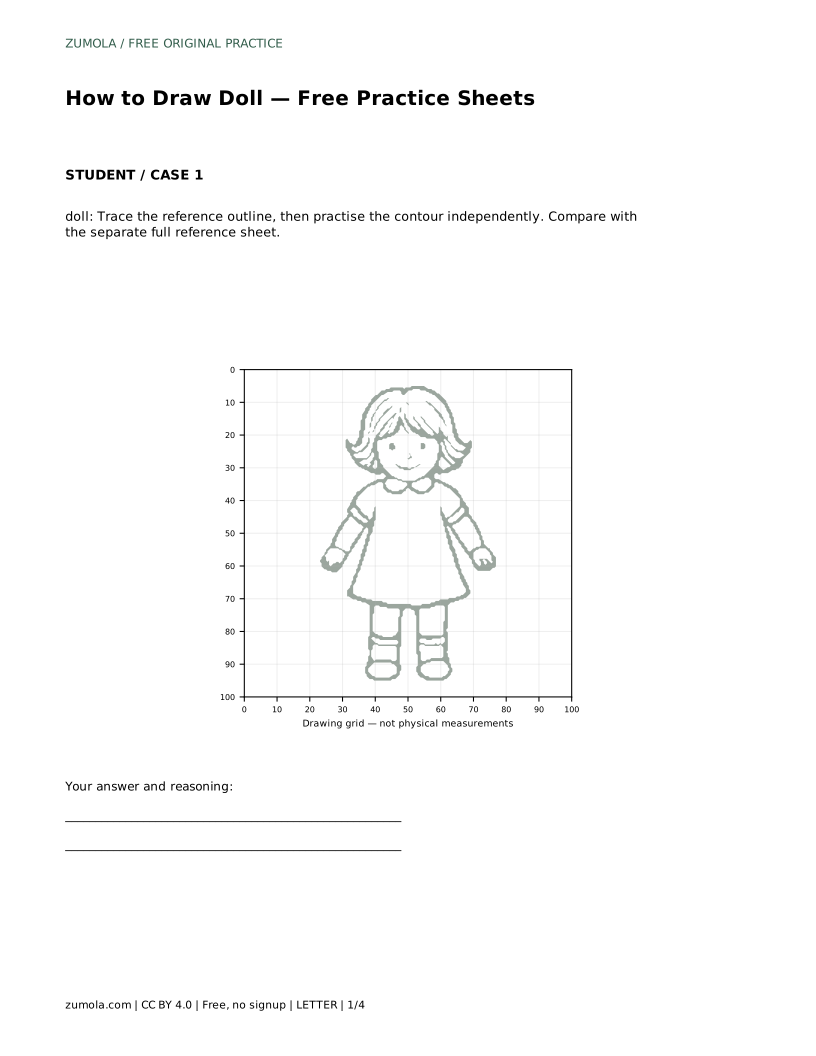
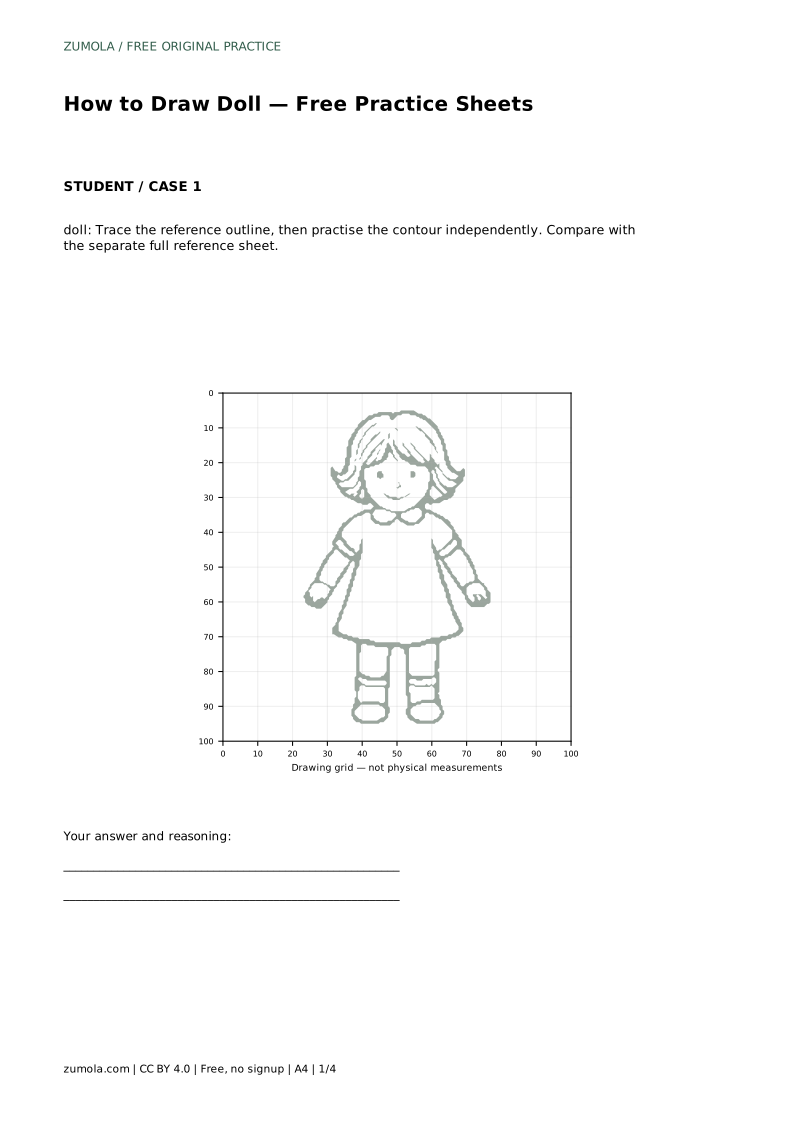
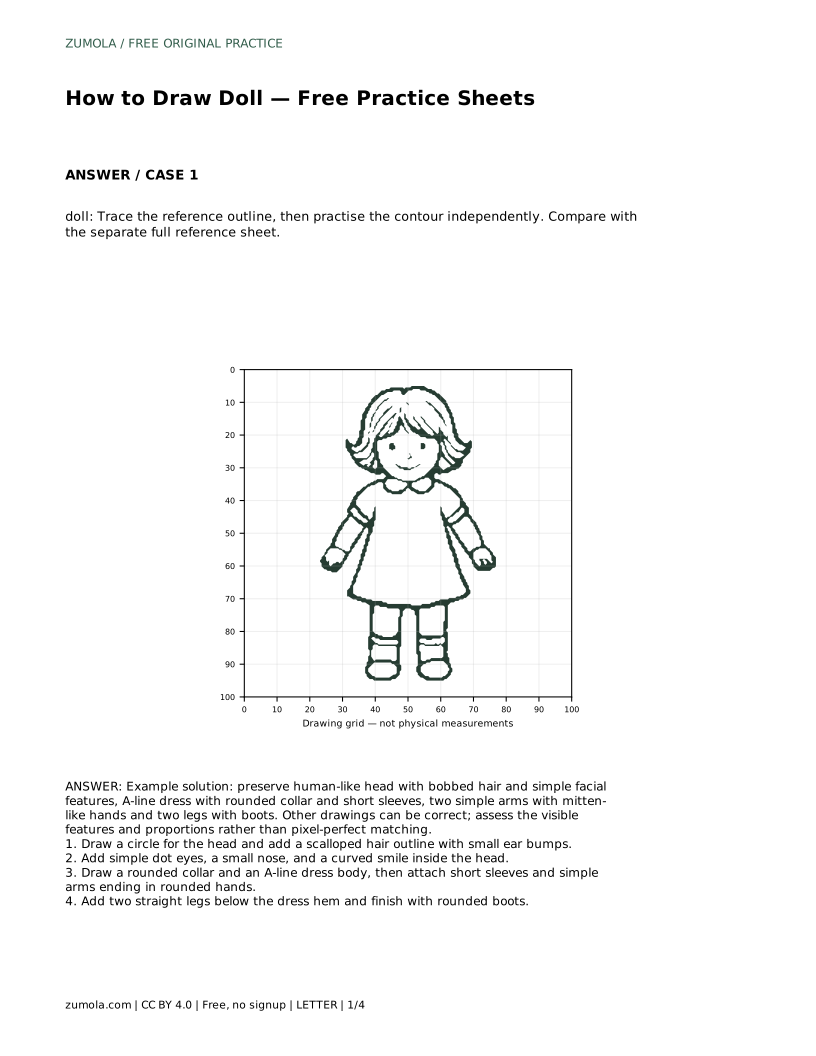
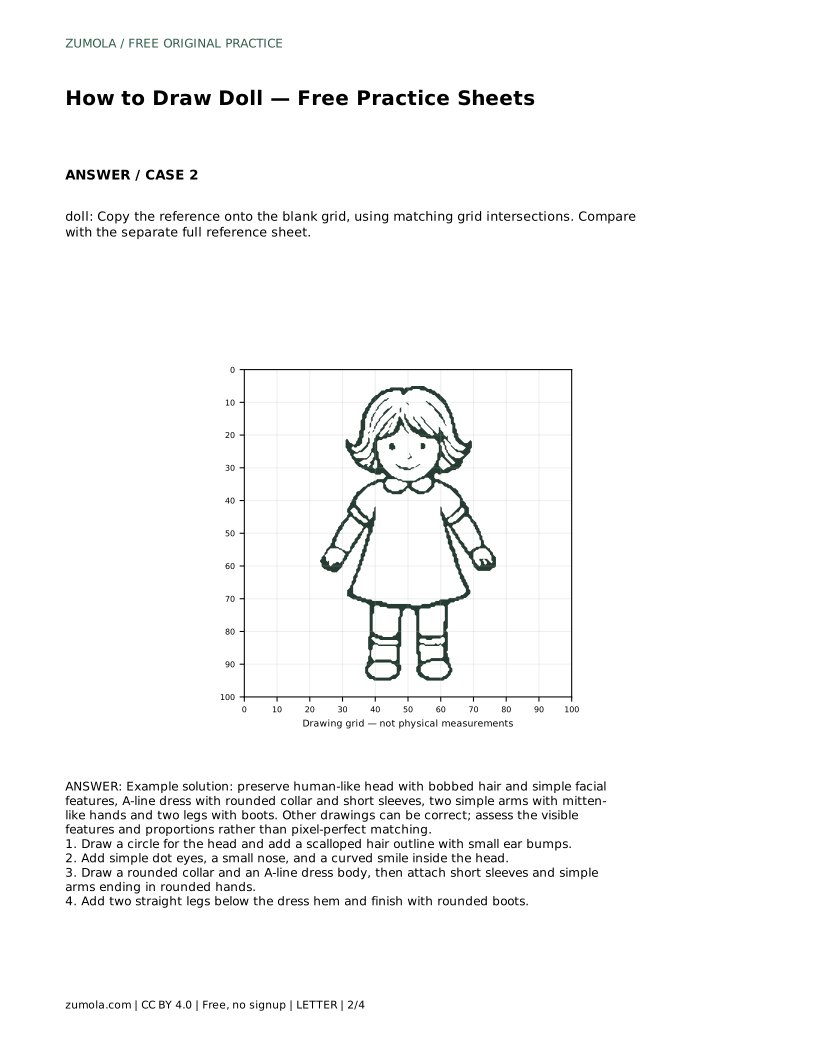
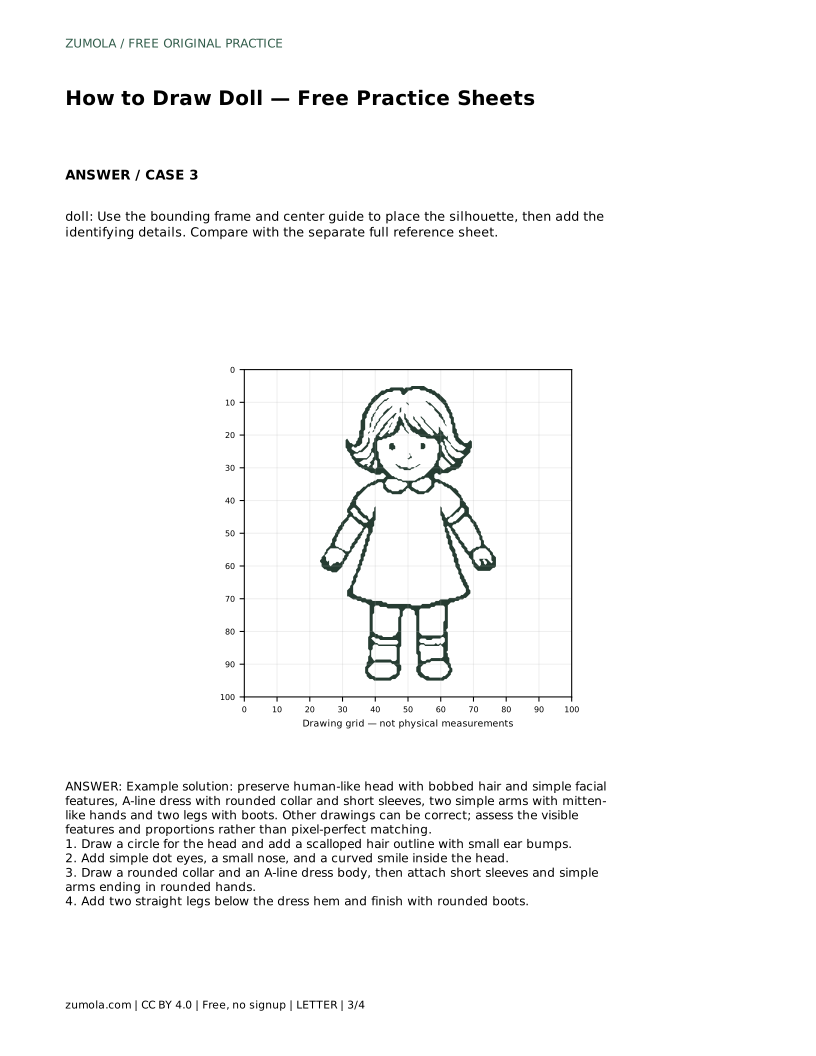
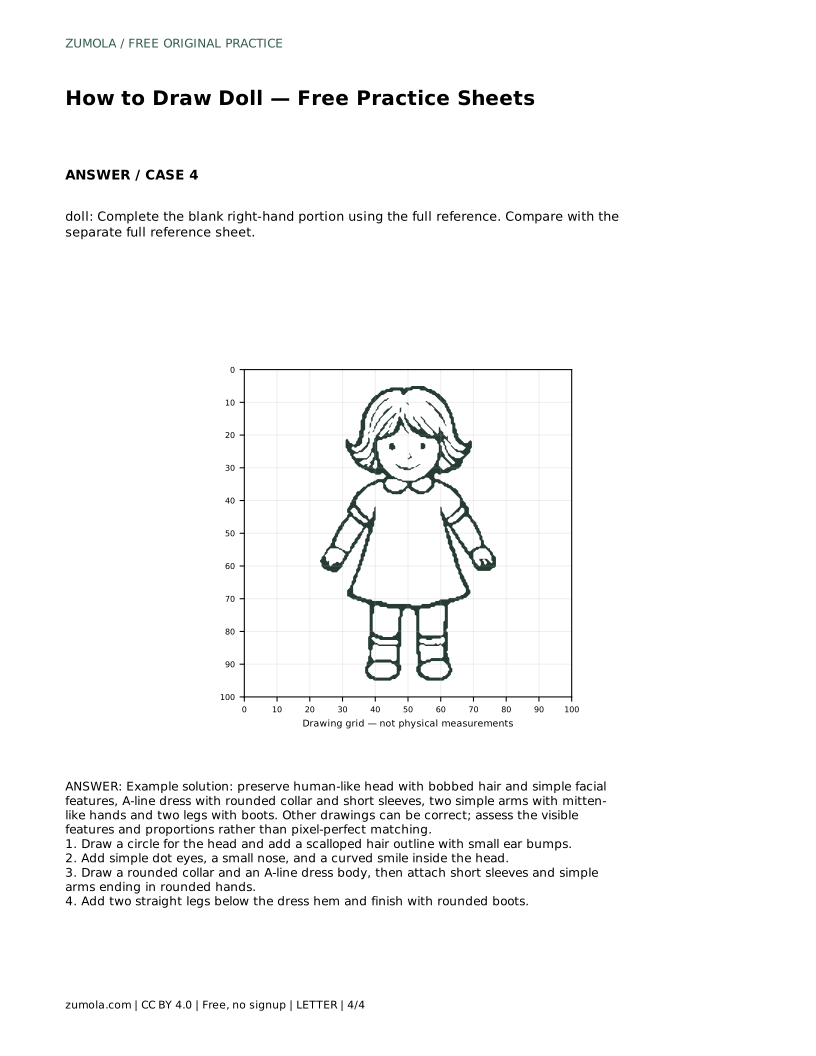
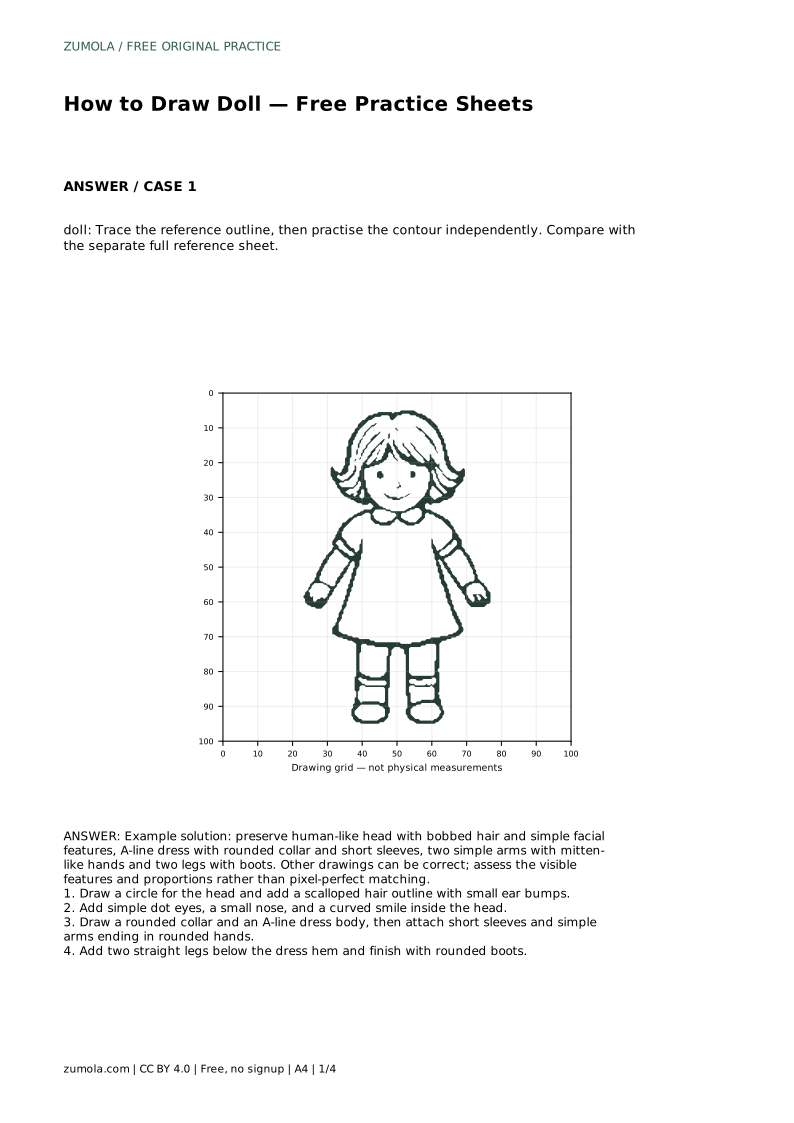
Drawing a doll is mostly a matter of arranging simple shapes in a believable order. This page shows one clear method: a round head with bobbed hair, a small face, a rounded collar, an A-line dress, short sleeves, simple arms with mitten-like hands, two legs and rounded boots. The practice sheets let you trace the outline first, then try the contour independently, so you can compare your result with the full reference.
Begin with a circle for the head. Keep it large enough that the facial features have room, because a doll's head is usually a little wider in proportion to the body than an adult figure's. Add a scalloped hair outline around the top and sides of the circle, with small ear bumps at about the middle height of the head. The bobbed shape should sit close to the head rather than flare outward.
Inside the head, place two dot eyes, a small nose and a curved smile. Keep the features centered and spaced evenly. Simple marks are enough; the goal is a readable doll face, not a detailed portrait.
Below the head, draw a rounded collar that follows the curve of the neck area. From the collar, extend an A-line dress body: narrow at the top and wider at the hem, with straight or gently curved sides. Attach short sleeves at the shoulders, then draw simple arms that end in rounded, mitten-like hands. Keep both arms similar in length so the figure looks balanced.
The dress is the main body shape, so check that its top meets the collar and its hem sits below the waist area. A-line means the hem is wider than the shoulders, which gives the doll a stable, upright look.
Draw two straight legs below the dress hem, spaced evenly apart. Finish each leg with a rounded boot. The legs should be short relative to the dress, which keeps the figure looking like a doll rather than a tall person. Check that the head, dress and legs stack in a clear vertical order without gaps or overlaps.
When you compare with the full reference sheet, look at the visible features and their proportions rather than expecting a pixel-perfect match. Different line weights, hair curves and dress widths can all be correct as long as the identifying features are present.
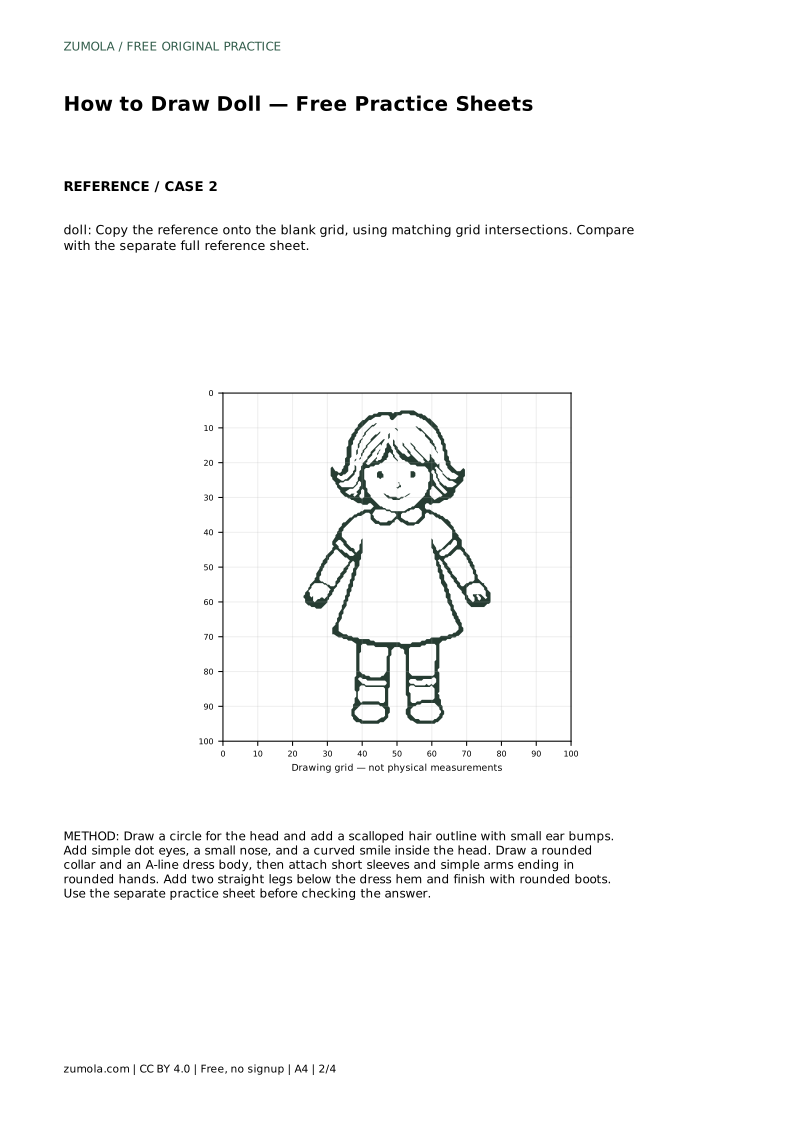
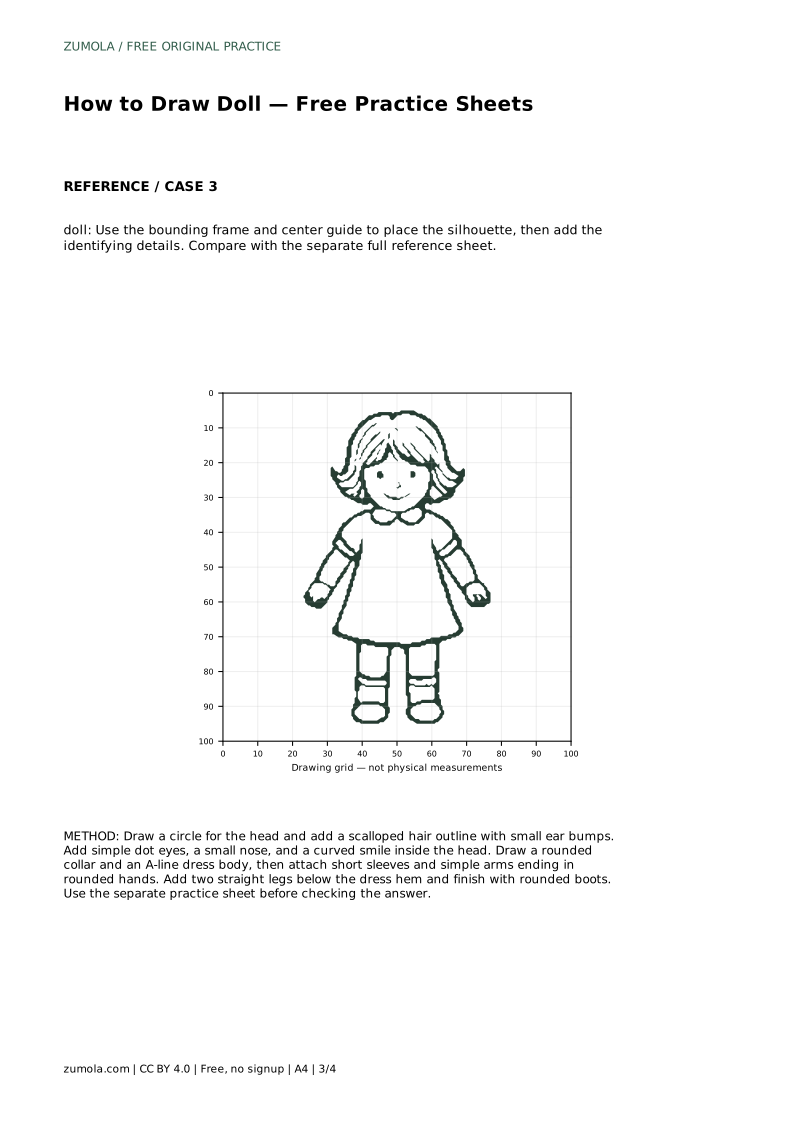
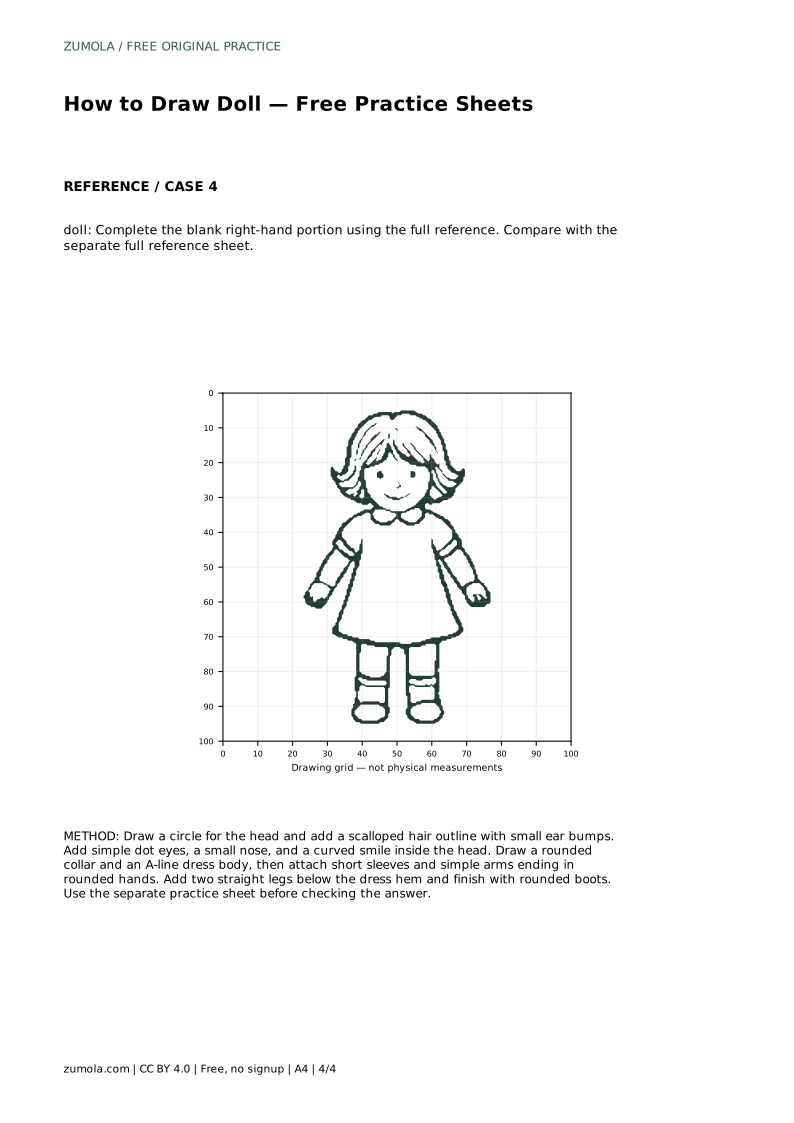
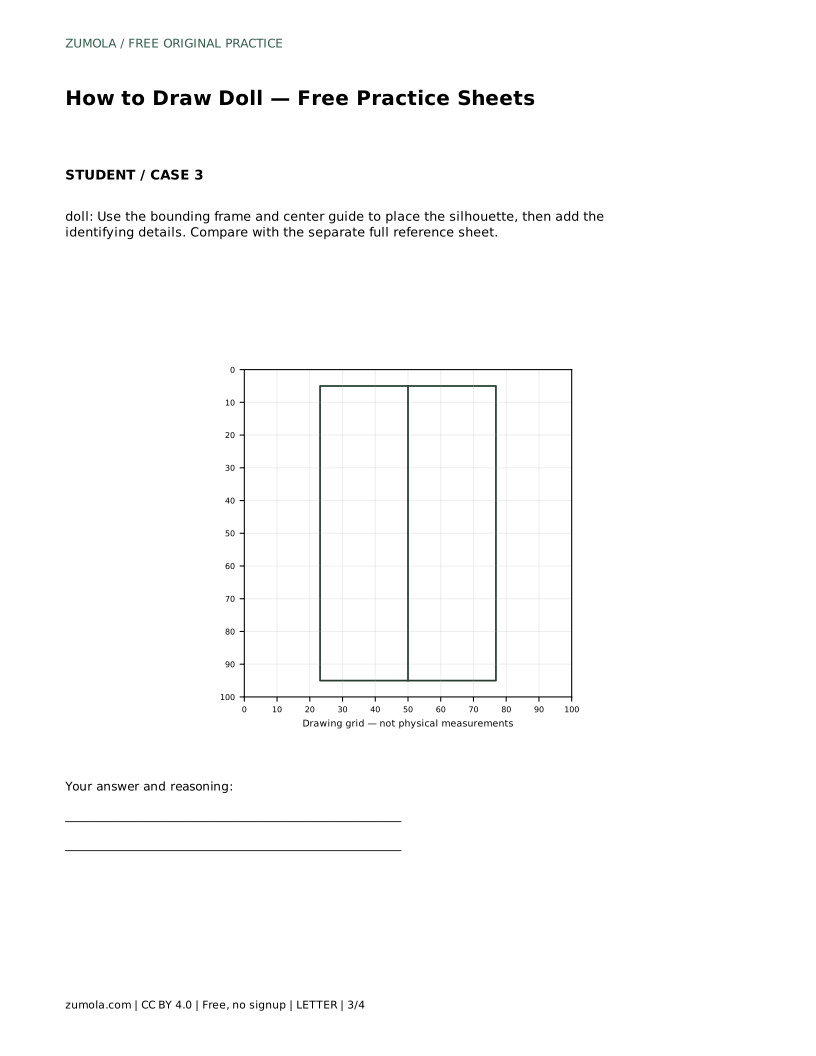
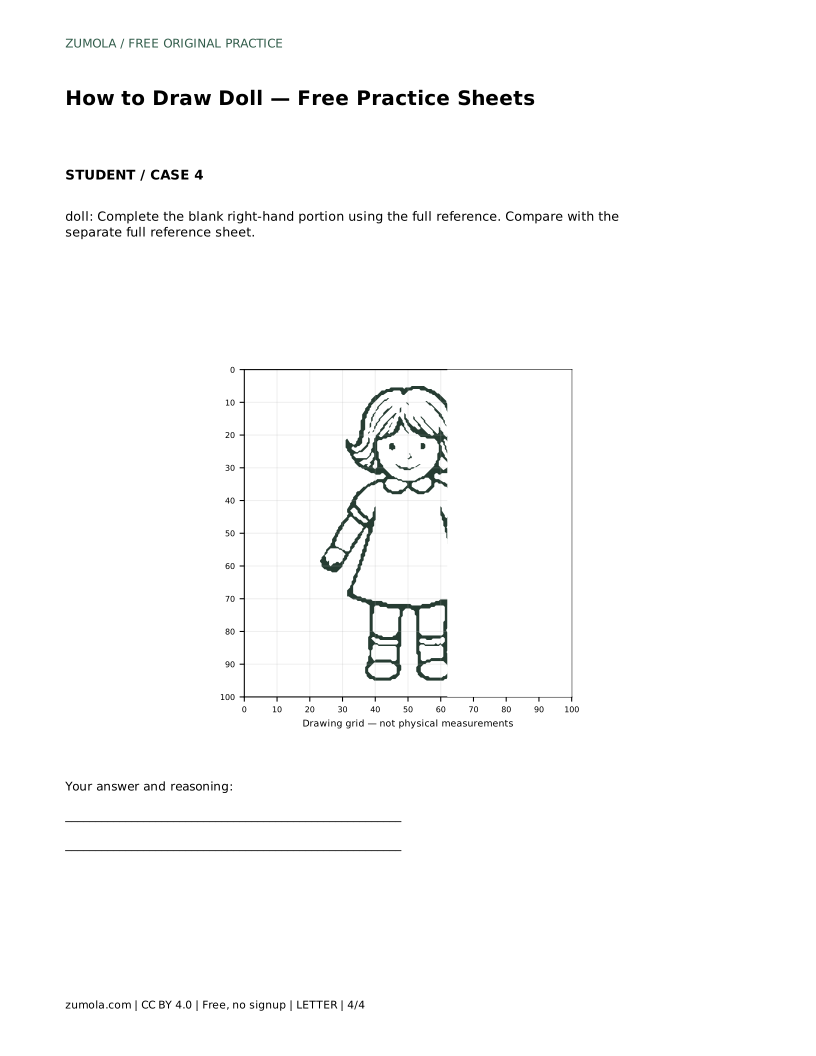
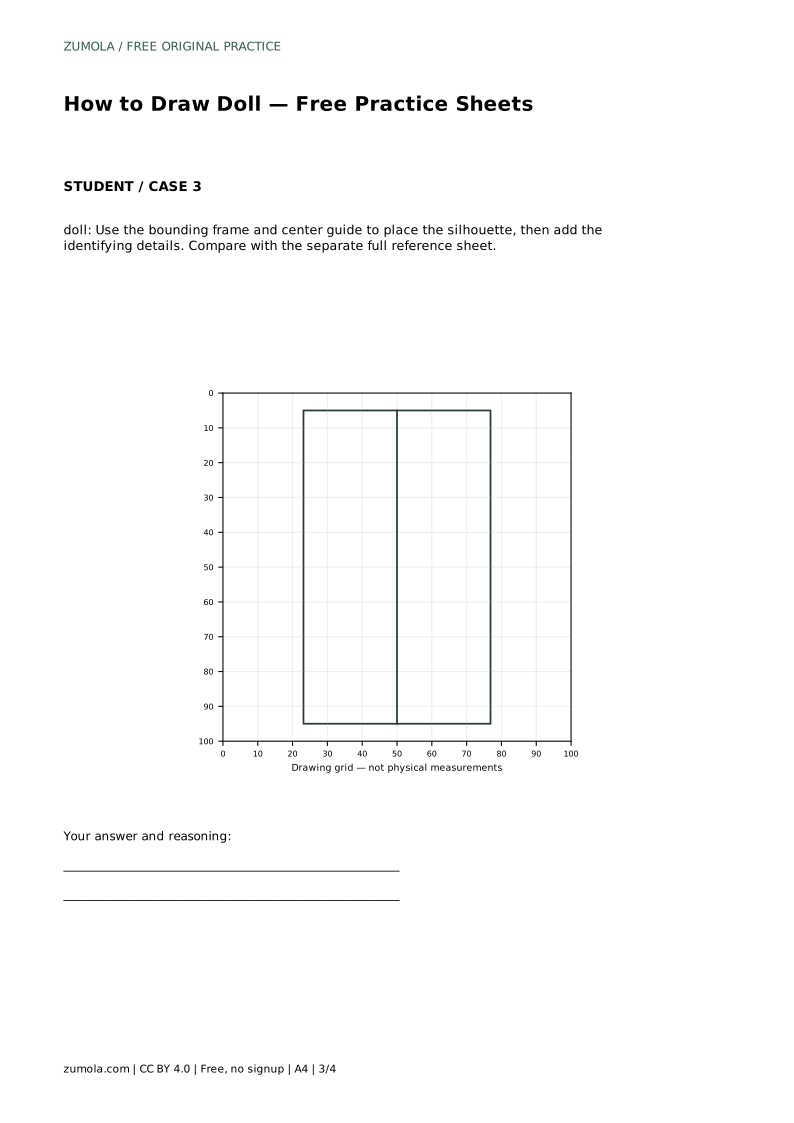
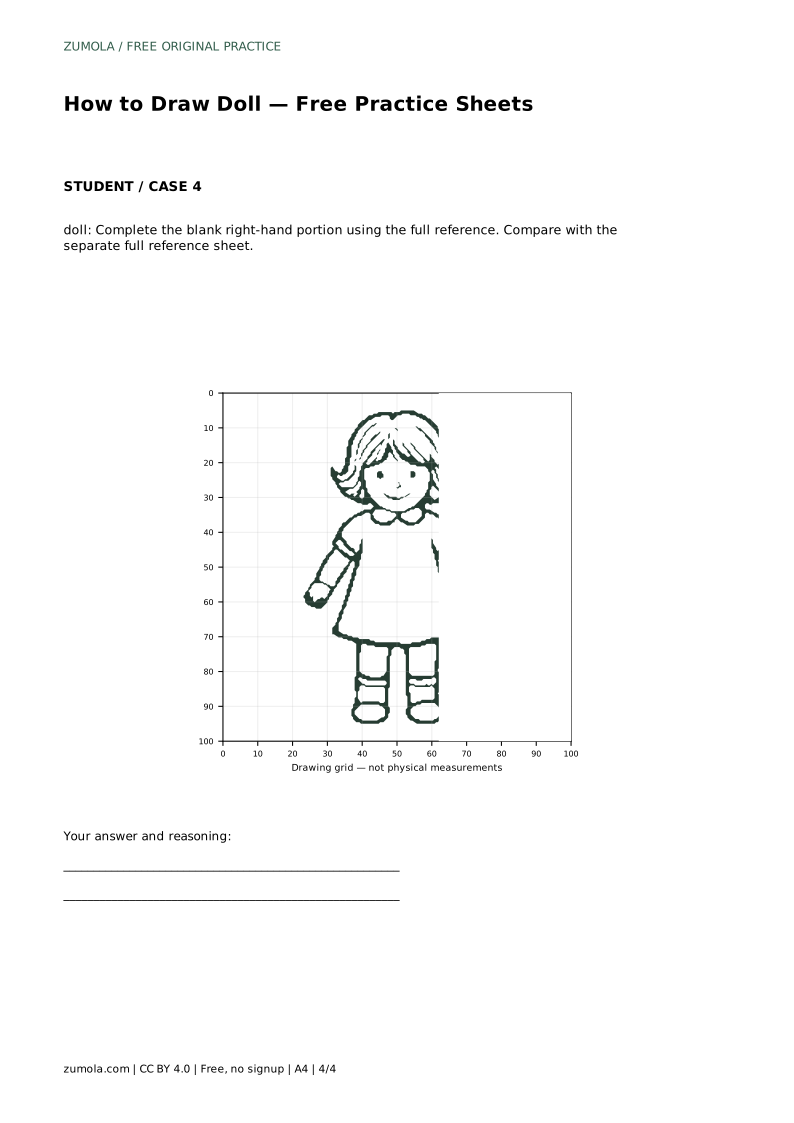
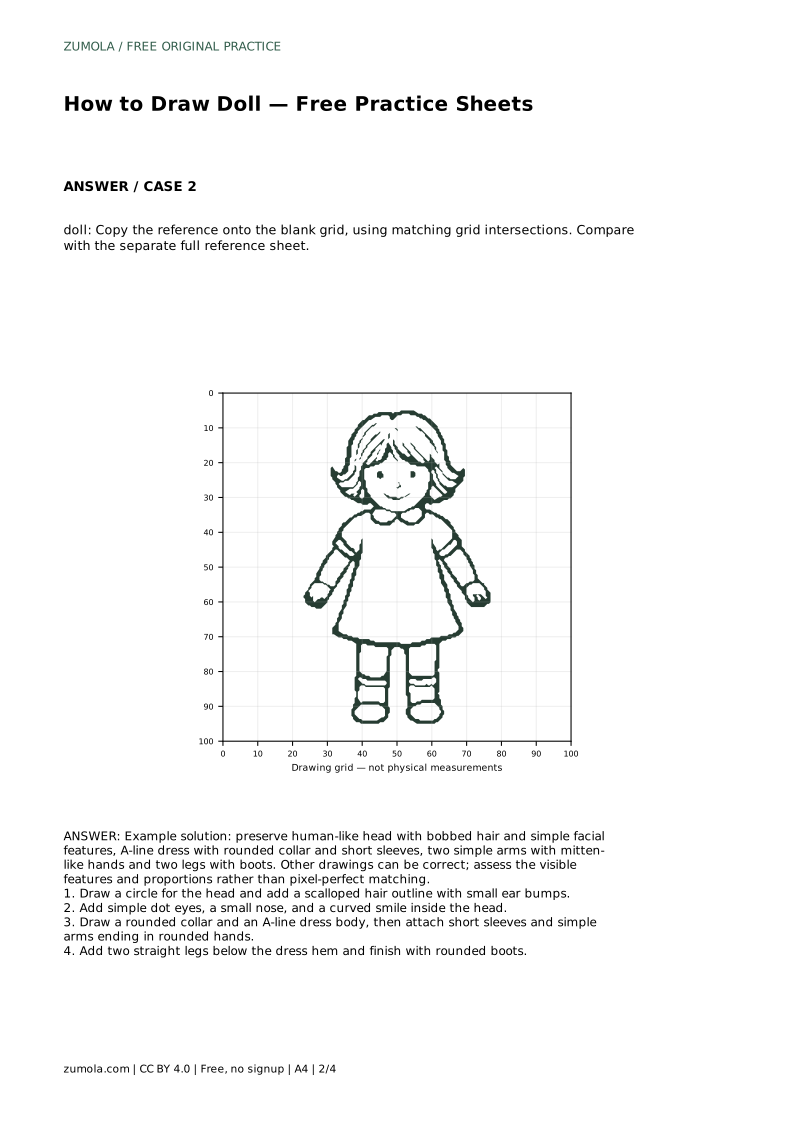
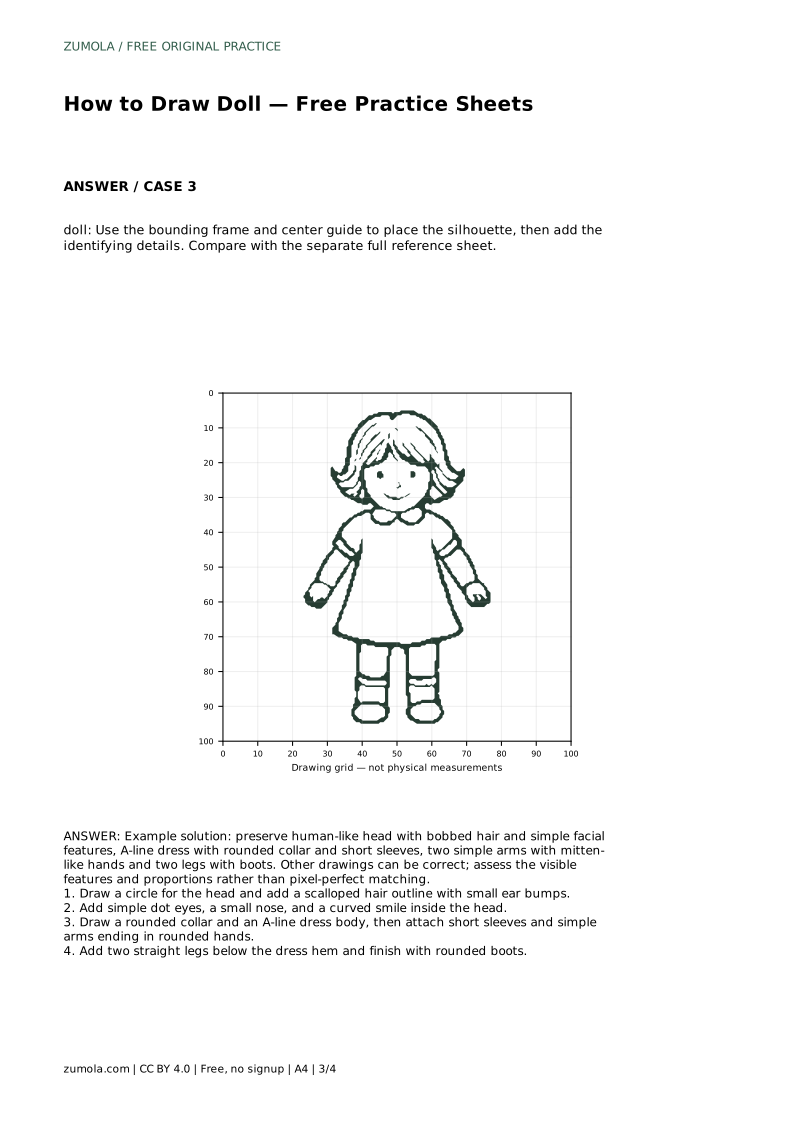
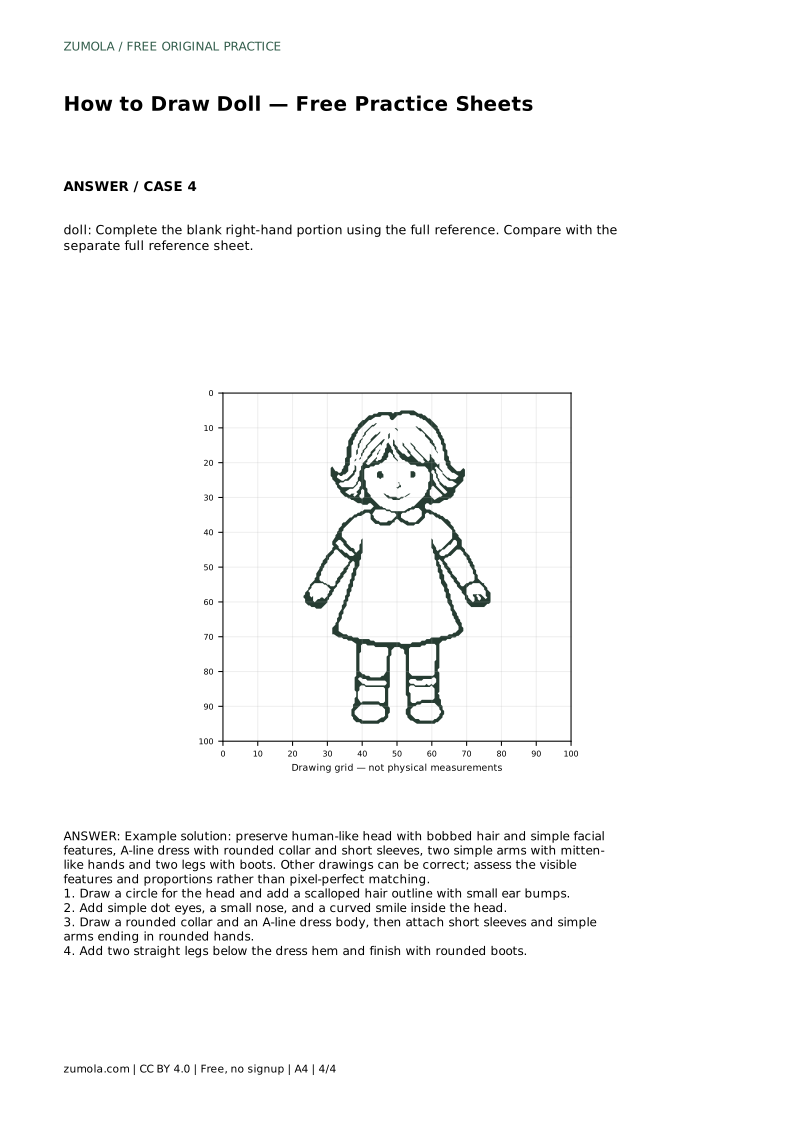
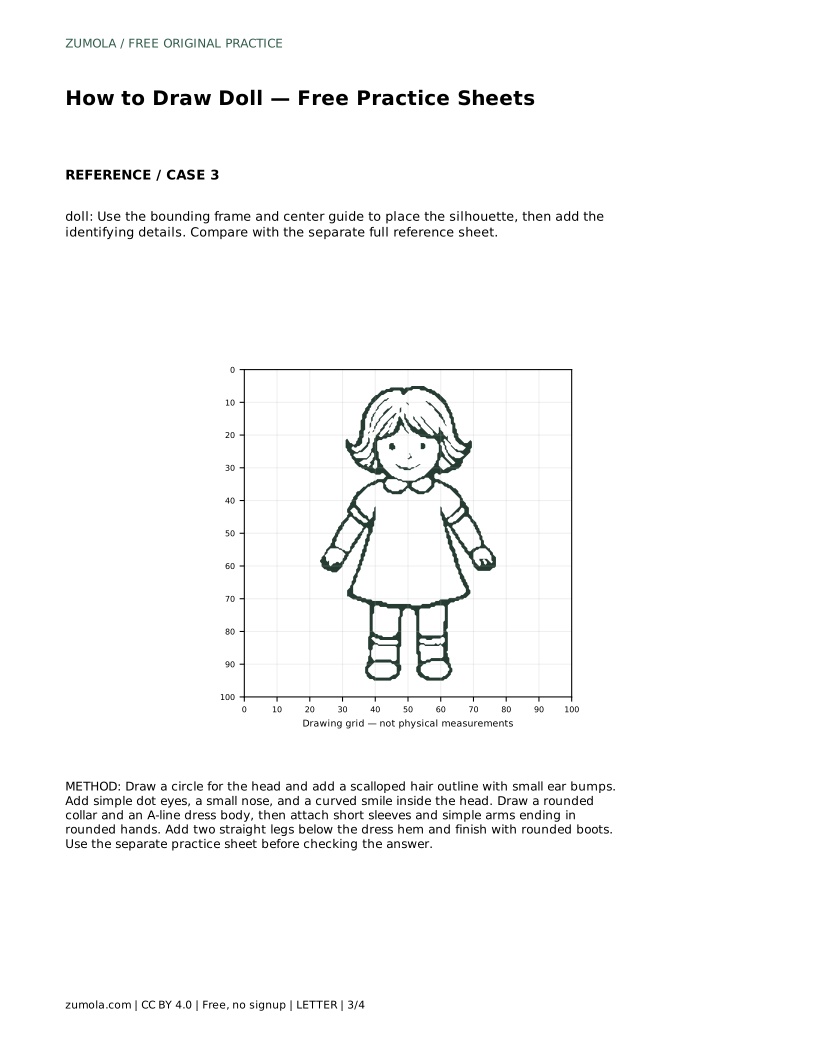
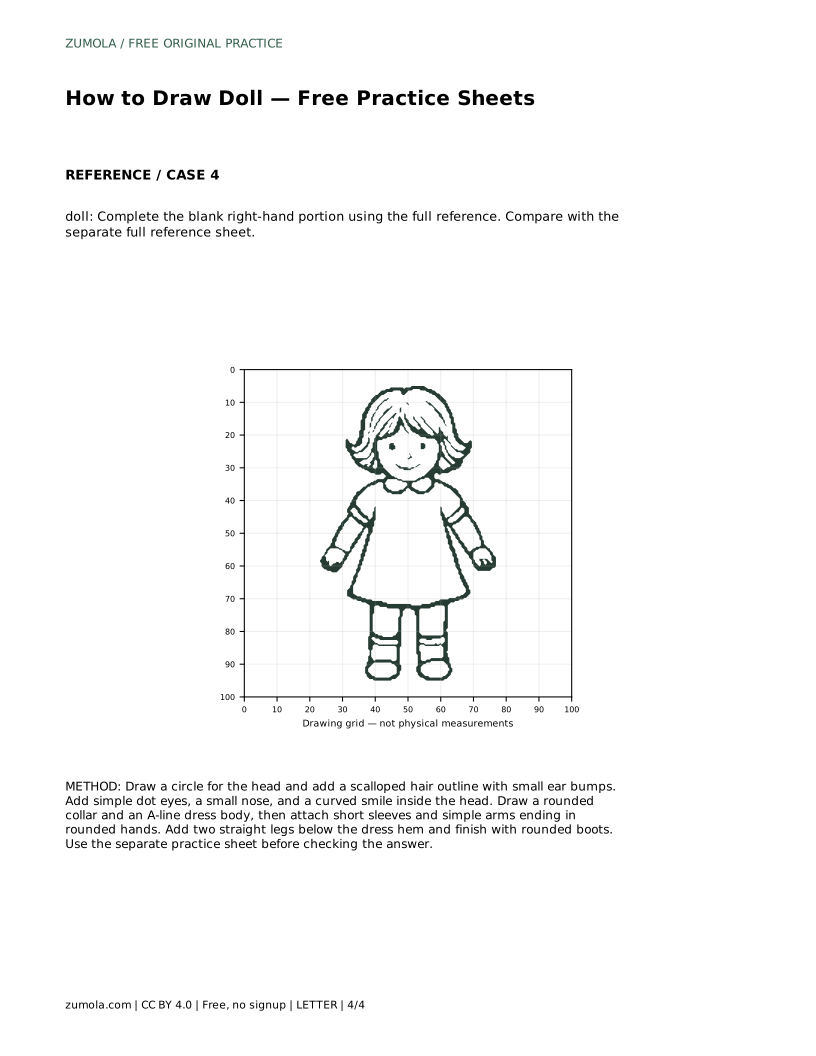
The trace sheet asks you to follow the reference outline, then practise the contour independently. The grid sheet asks you to copy the reference onto a blank grid using matching intersections. The frame sheet gives a bounding frame and center guide for placing the silhouette before adding details. The partial sheet asks you to complete the blank right-hand portion using the full reference.
Each format targets a different skill: tracing builds familiarity, the grid supports placement, the frame supports overall proportion, and the partial sheet tests recall. Use the full reference sheet separately for comparison after each attempt.
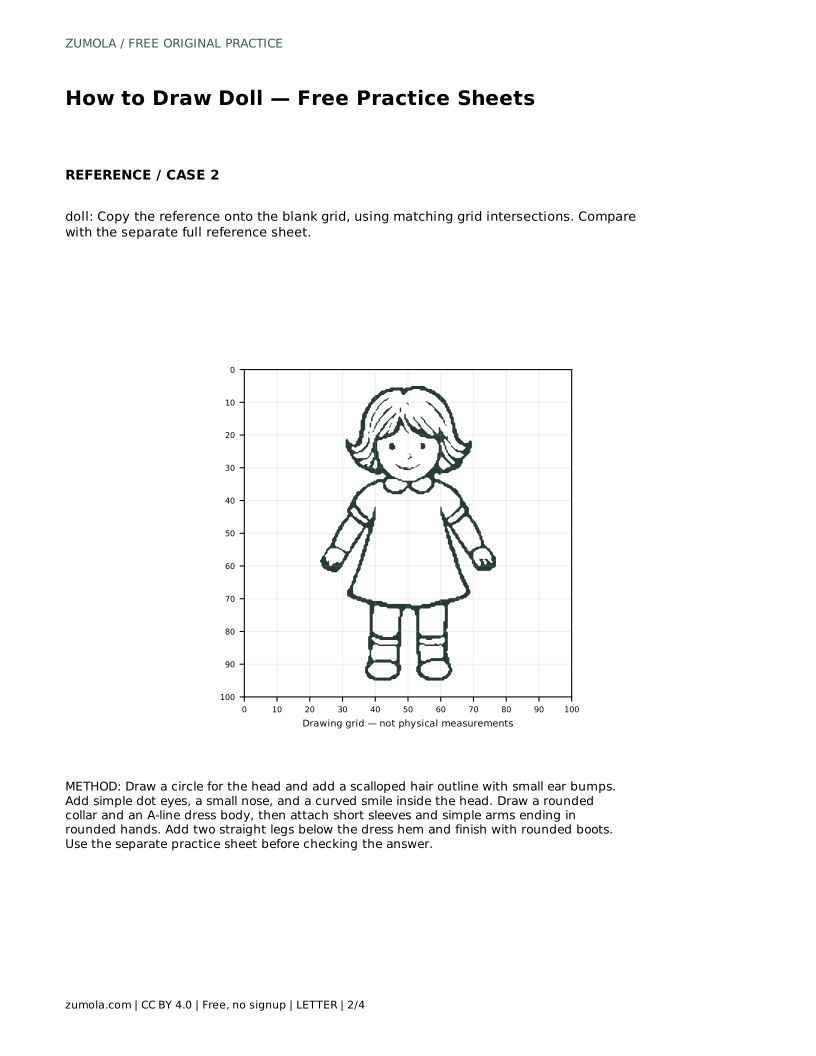
doll: Trace the reference outline, then practise the contour independently. Compare with the separate full reference sheet.
Example solution: preserve human-like head with bobbed hair and simple facial features, A-line dress with rounded collar and short sleeves, two simple arms with mitten-like hands and two legs with boots. Other drawings can be correct; assess the visible features and proportions rather than pixel-perfect matching. Draw a circle for the head and add a scalloped hair outline with small ear bumps. Add simple dot eyes, a small nose, and a curved smile inside the head. Draw a rounded collar and an A-line dress body, then attach short sleeves and simple arms ending in rounded hands. Add two straight legs below the dress hem and finish with rounded boots.
No. Other drawings can be correct. Assess the visible features and proportions, such as the bobbed hair, rounded collar, A-line dress, simple arms and boots, rather than pixel-perfect matching.
Start with the trace sheet to learn the outline, then move to the grid or frame sheet for placement, and finish with the partial sheet to test what you remember.
Two simple arms with mitten-like hands and two legs with boots, placed evenly on either side of the dress.
All drawing practice · Free coordinate paper
Original resources · CC BY 4.0 · Free for personal and classroom use with attribution.