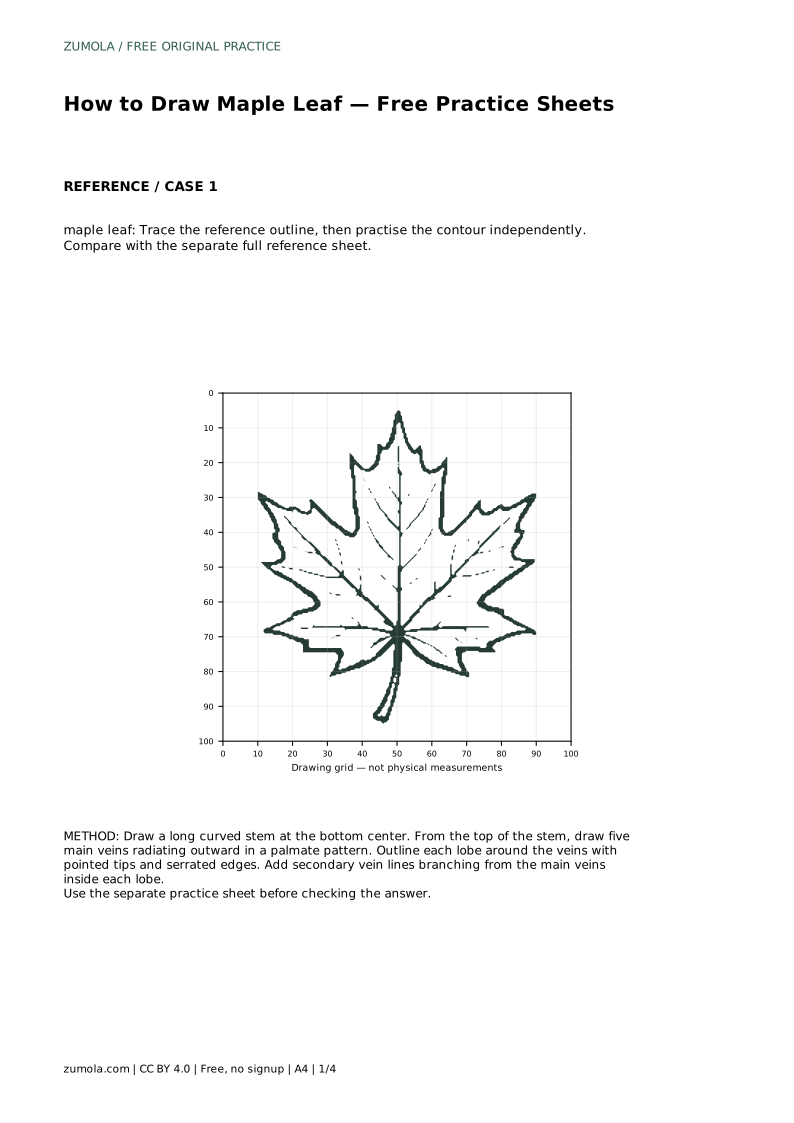
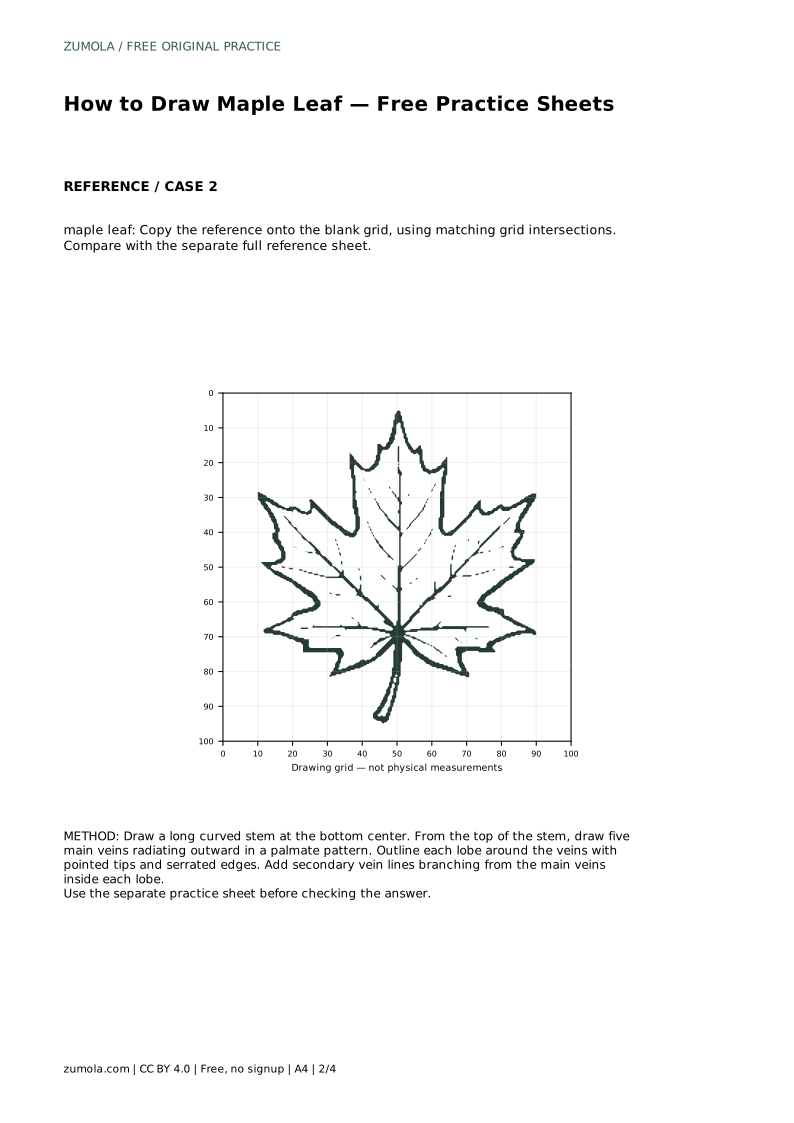
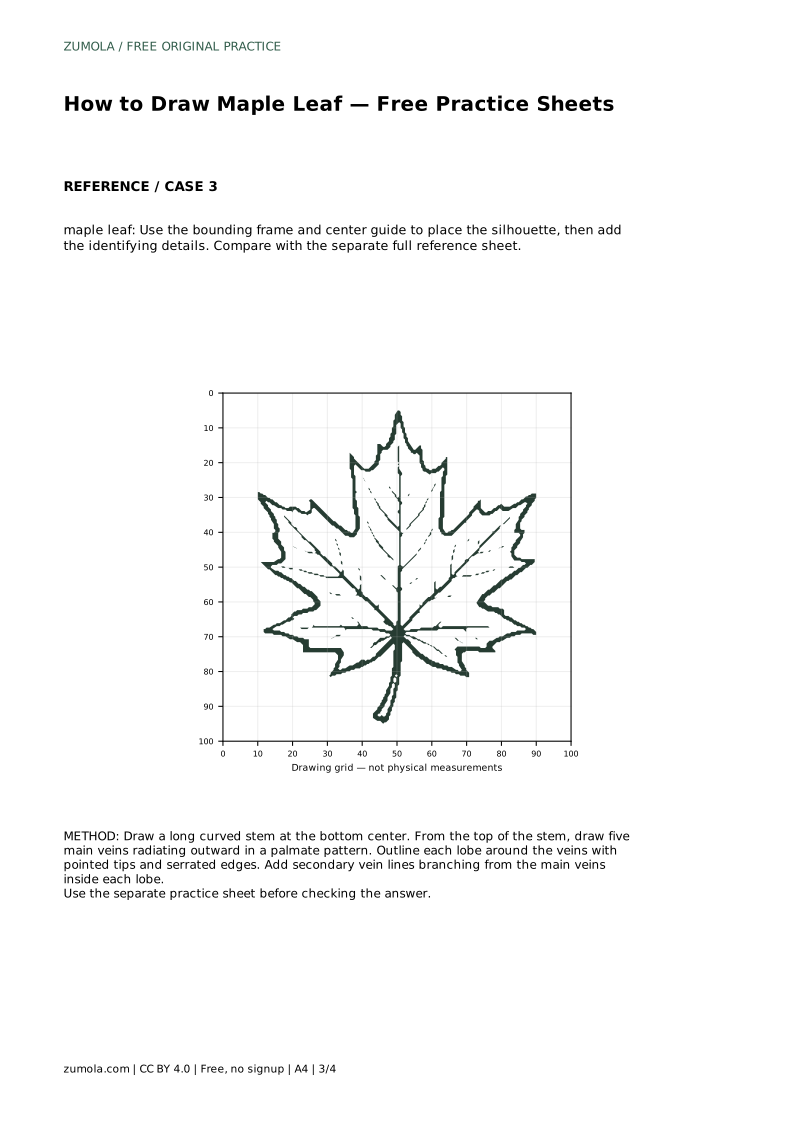
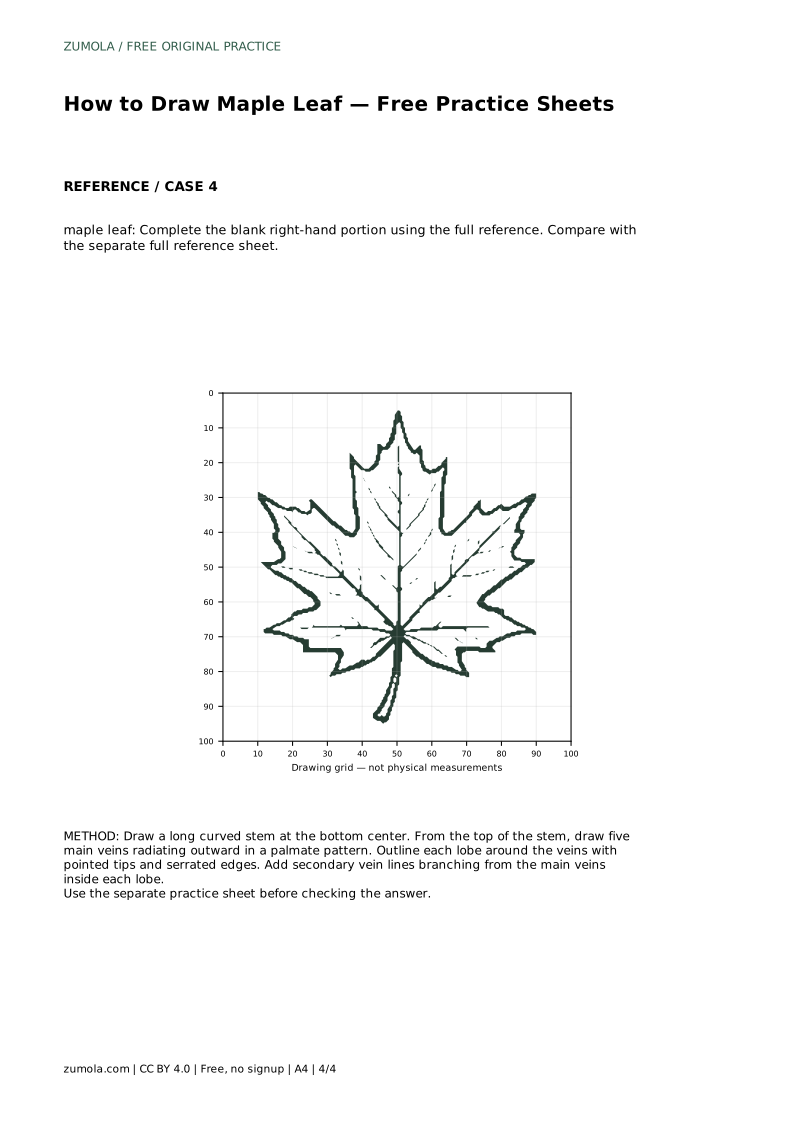
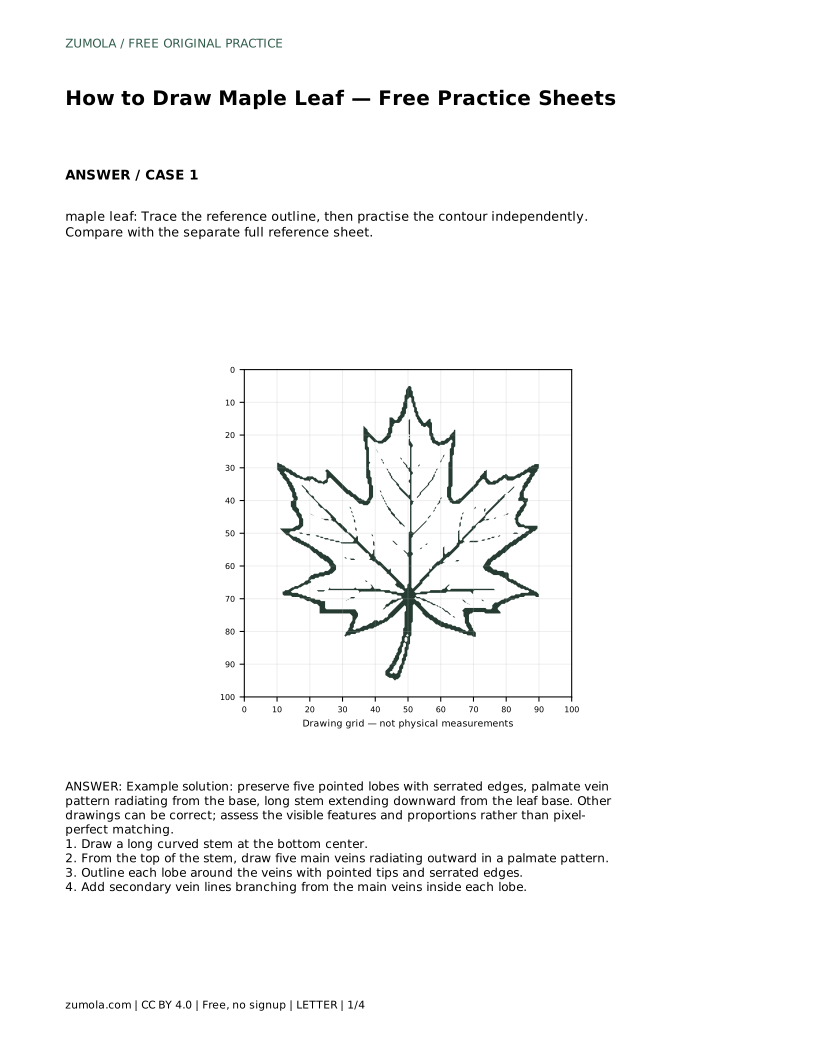
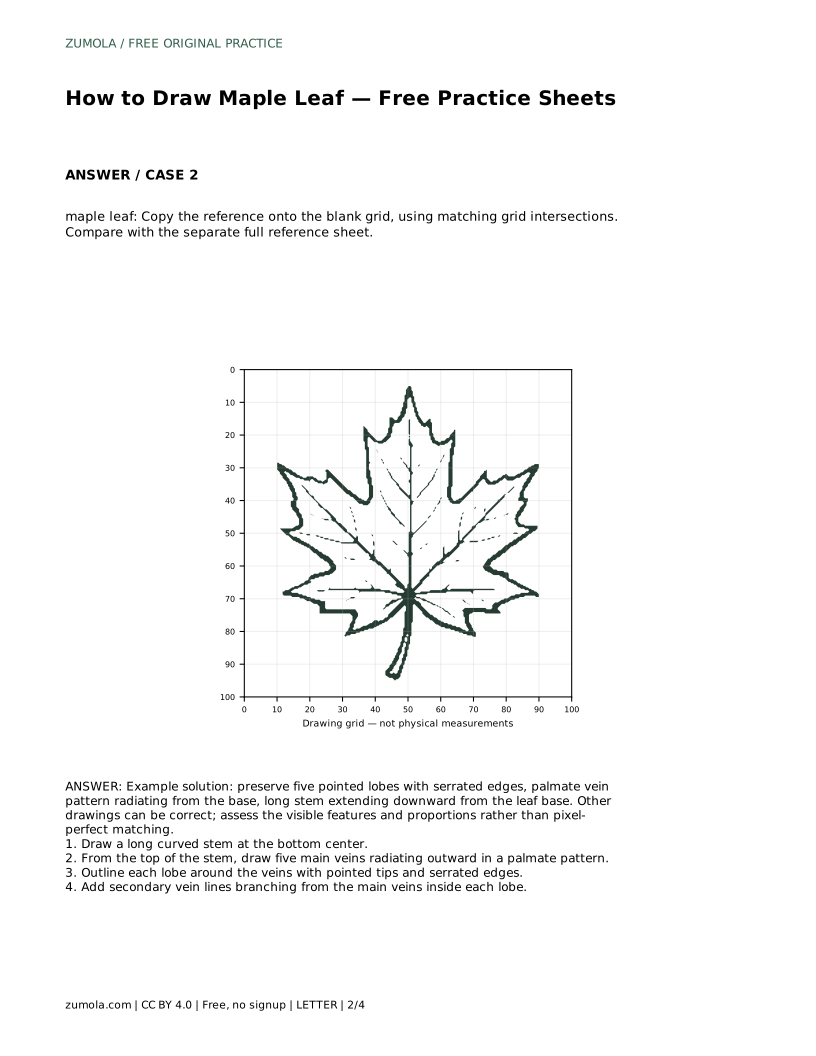
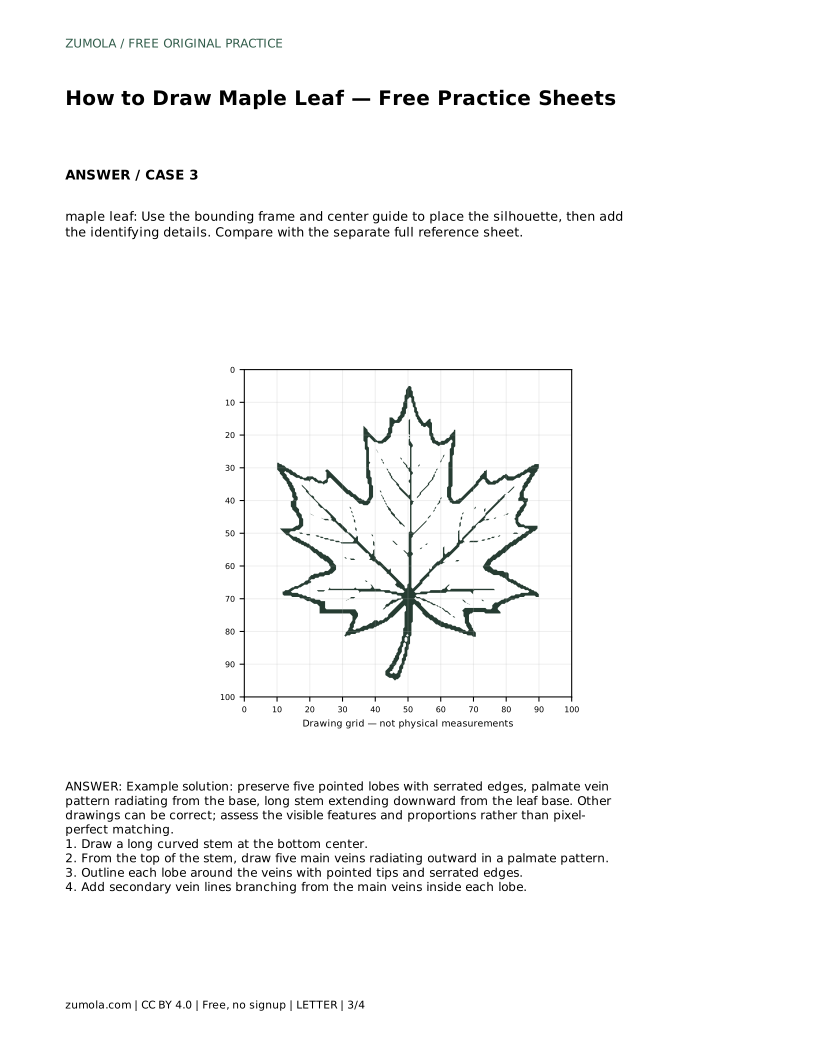
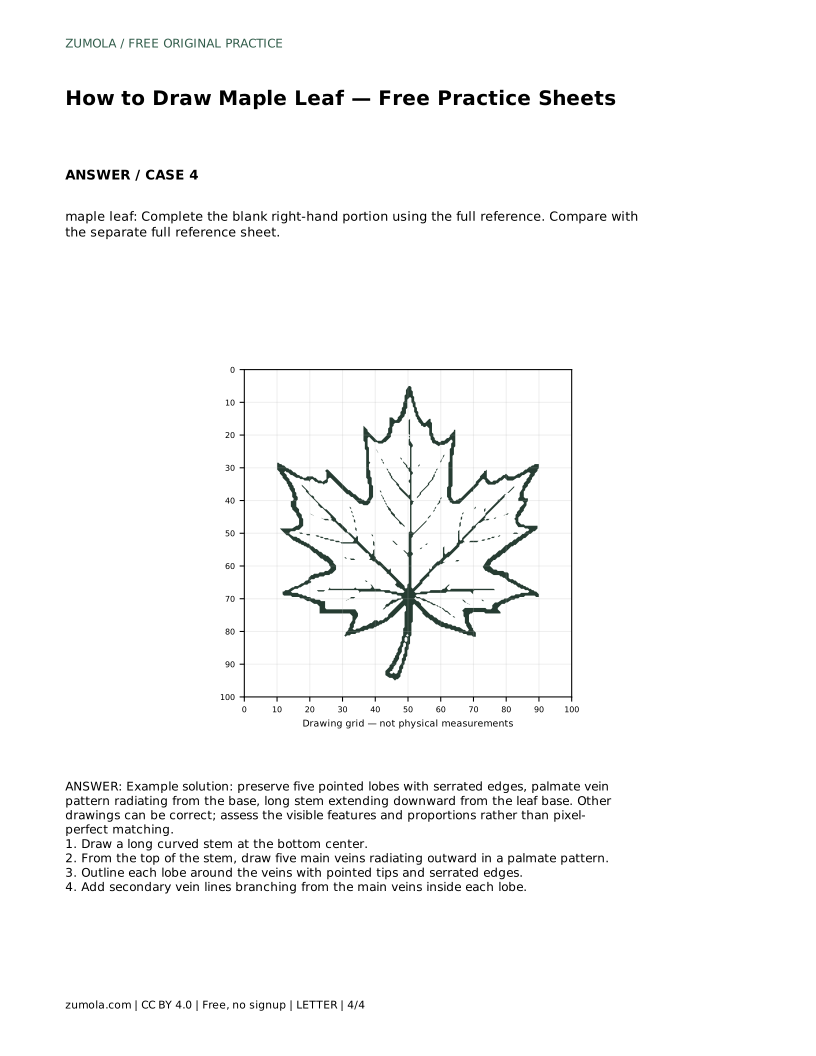
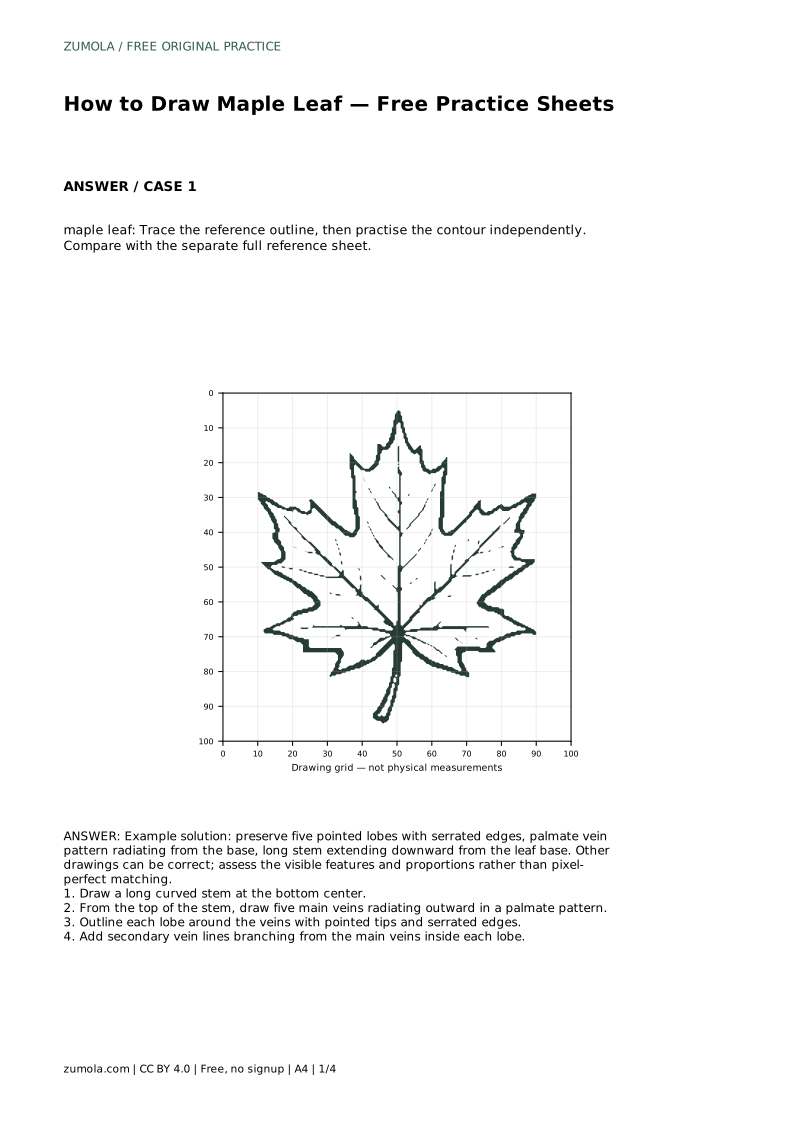
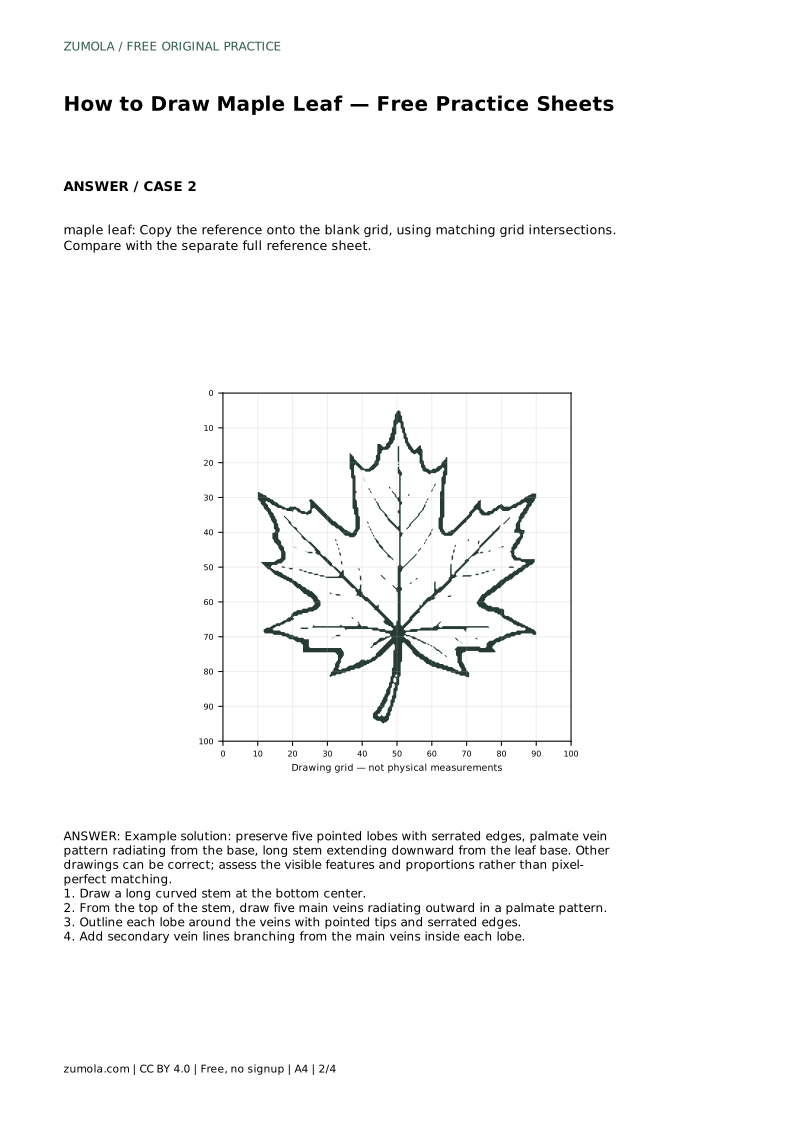
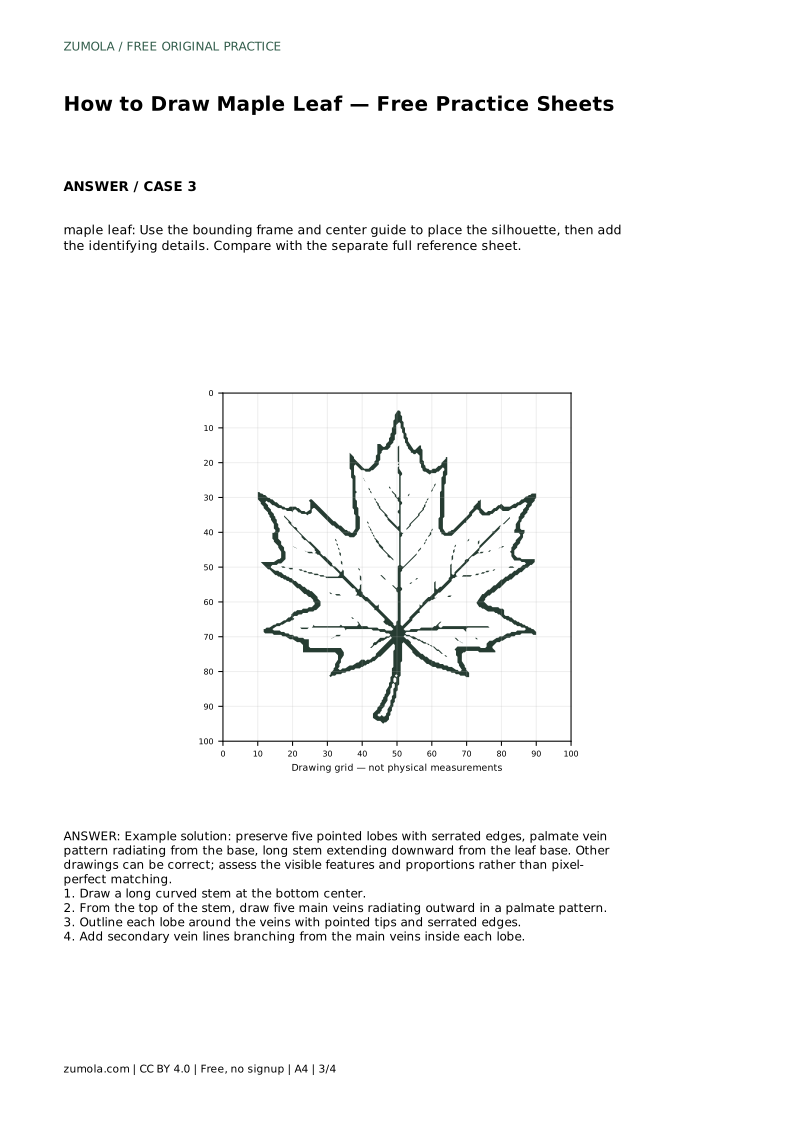
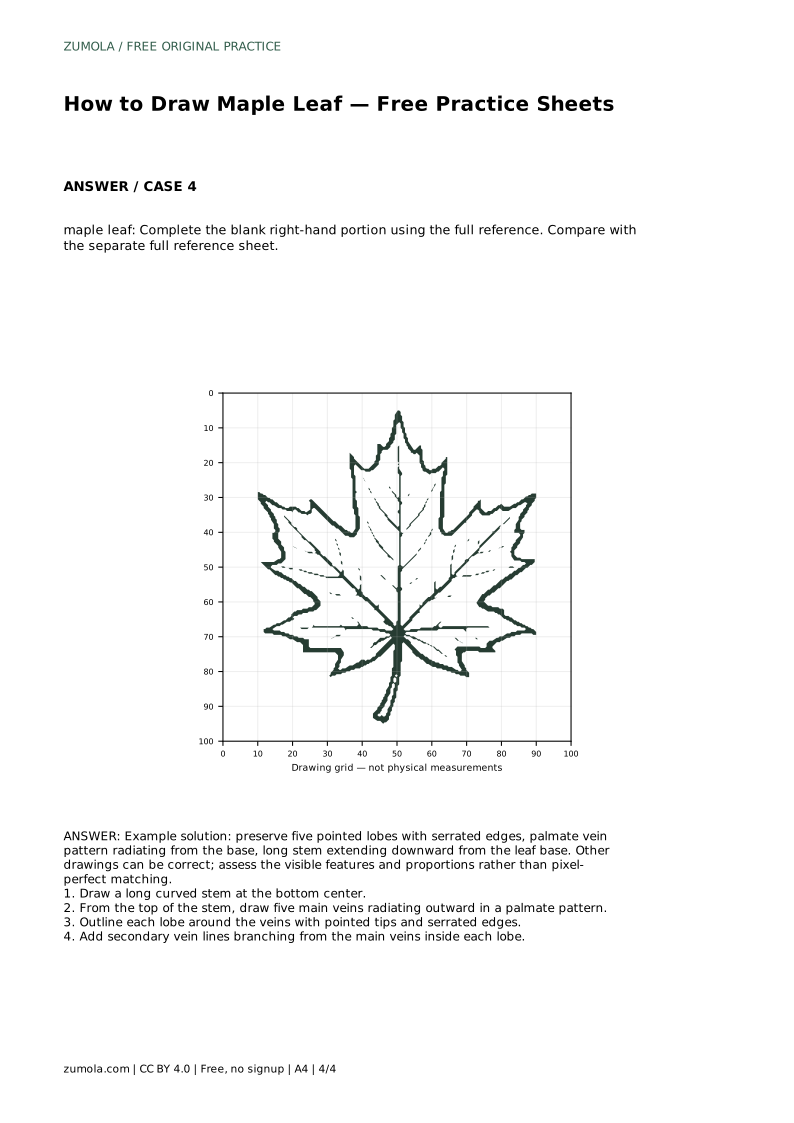
Reference diagrams
LETTER · Download PDF
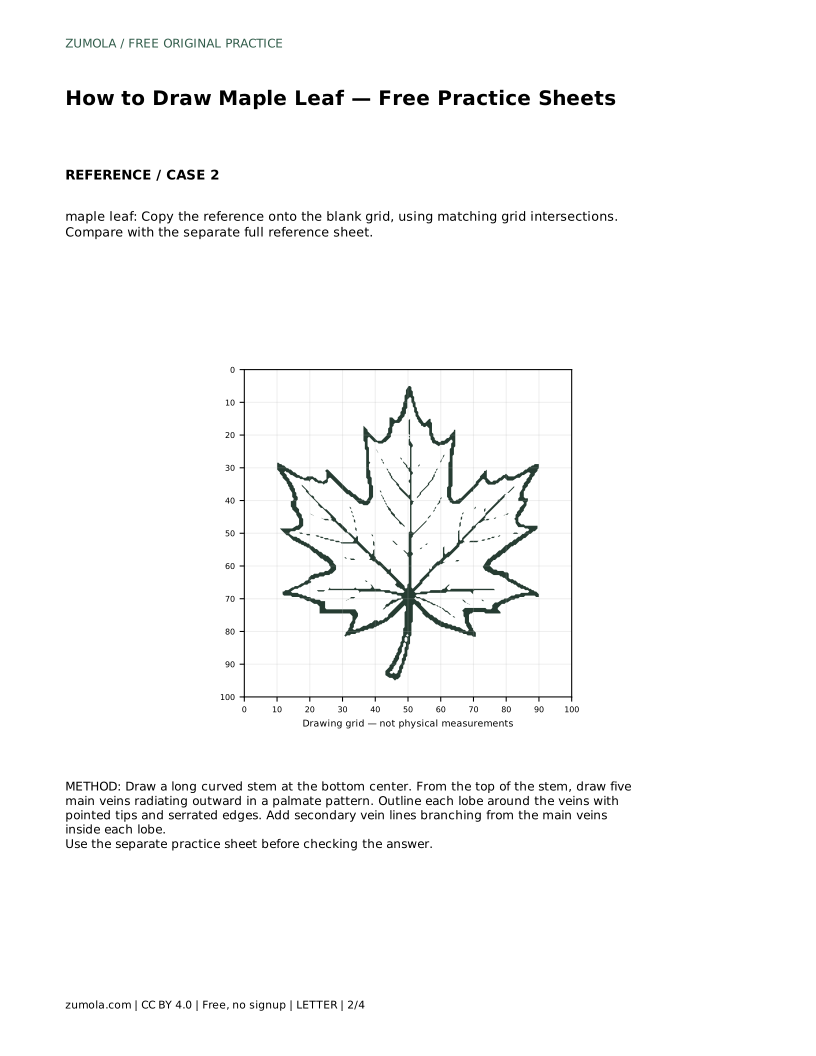
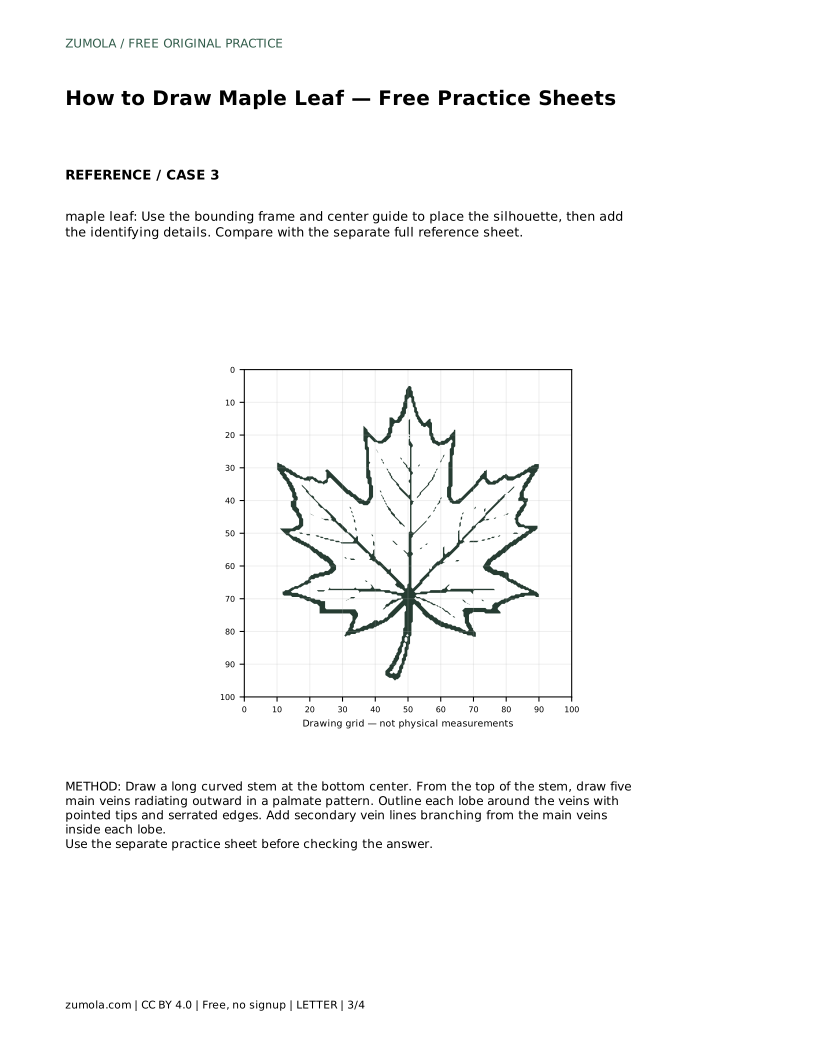
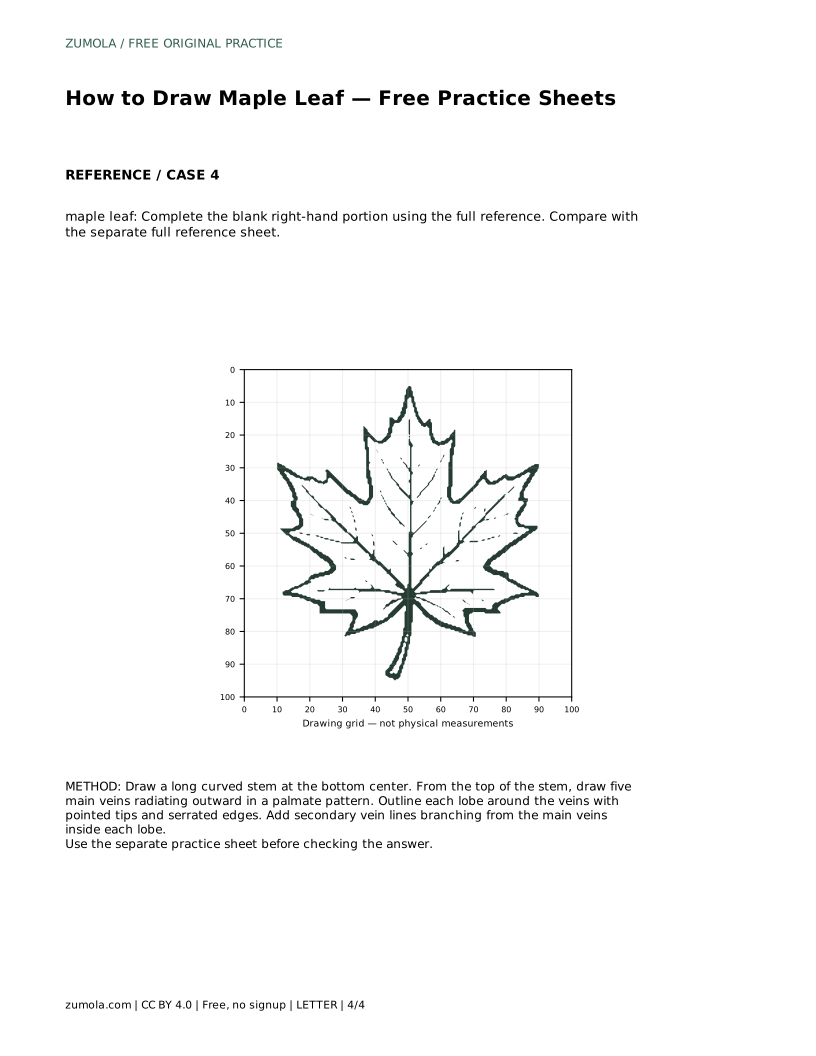
A4 · Download PDF
Free original resources
Learn to draw a maple leaf with five pointed lobes, serrated edges, palmate veins, and a long stem. Trace, grid, and complete-the-half practice methods explained.
Four original cases, with reference diagrams, practice sheets and worked answers. Everything is free; no signup required.
LETTER · Download PDF
A4 · Download PDF
LETTER · Download PDF
A4 · Download PDF
LETTER · Download PDF
A4 · Download PDF
Use A4 or US Letter to match your printer. Use the stated values and conditions to solve each exercise; diagrams are not physical measuring rulers.
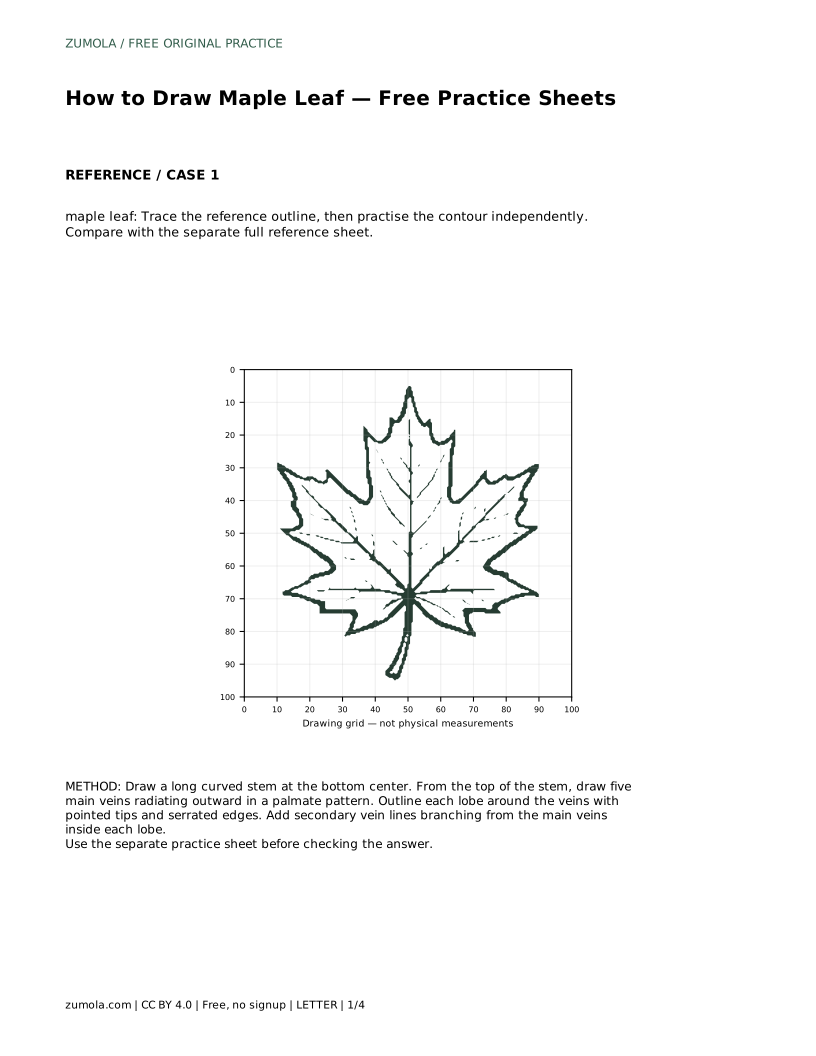
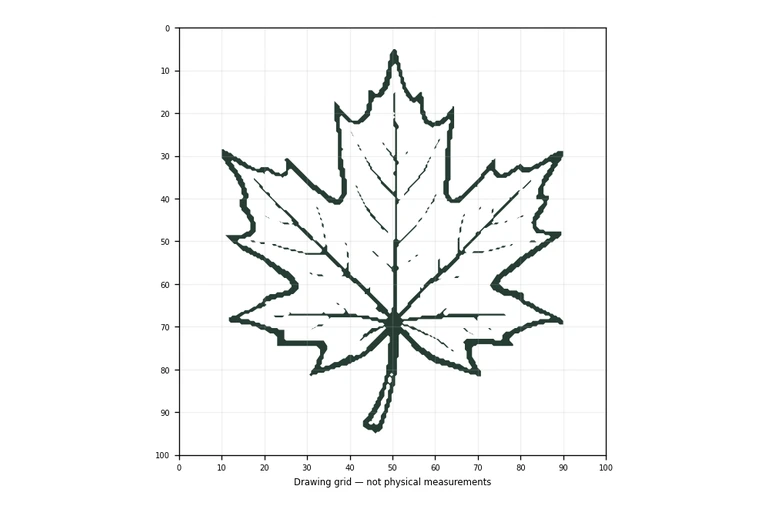
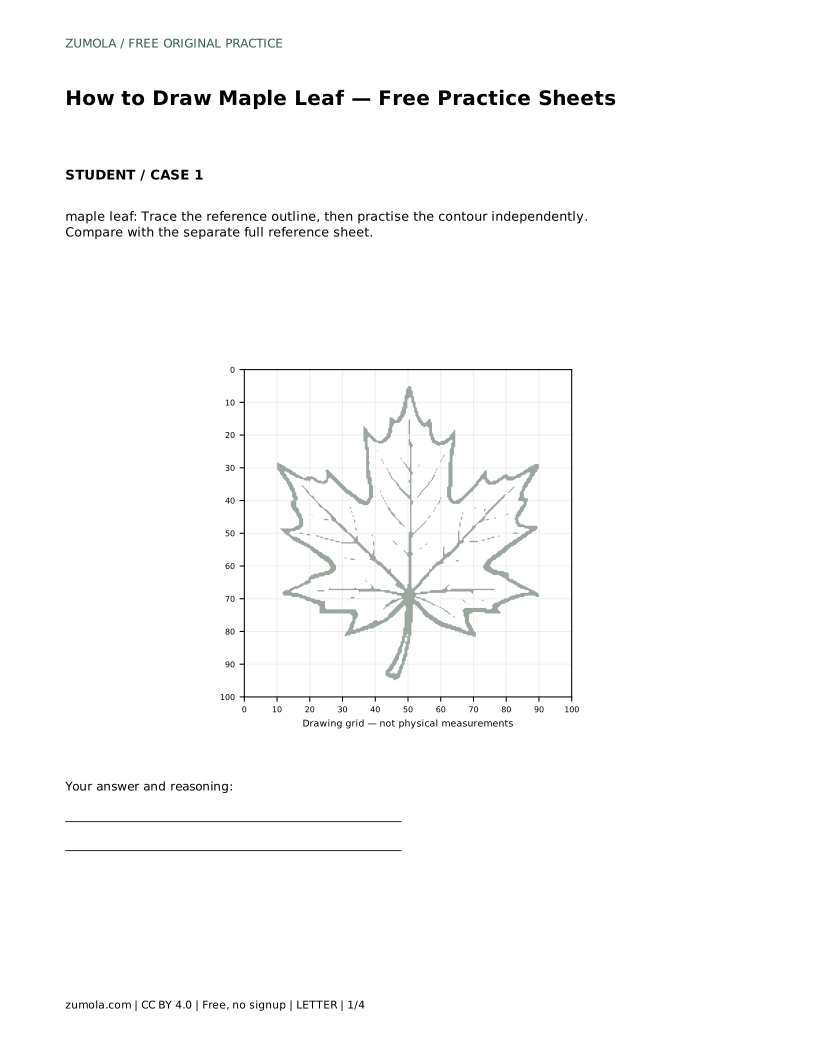
A maple leaf is recognizable by its five pointed lobes spreading from a single base, its serrated edges, and a long stem below. This page explains how to build that shape step by step, then how to use tracing, grid, bounding-frame, and half-completion practice sheets to strengthen the same skill. Drawings will vary; judge your work by visible features and proportions, not by pixel-perfect matching.
Start with structure rather than outline. The stem anchors the drawing at the bottom center, and the veins set the direction of each lobe before any edge is drawn. Because maple leaves are palmate, the main veins radiate from one point at the top of the stem rather than running along a single central axis.
Once the five main veins are placed, each lobe is outlined around its vein, ending in a point. Serrations belong on the lobe edges, and secondary veins branch inside each lobe. Keep the stem long and slightly curved so the leaf reads as hanging rather than sitting flat.
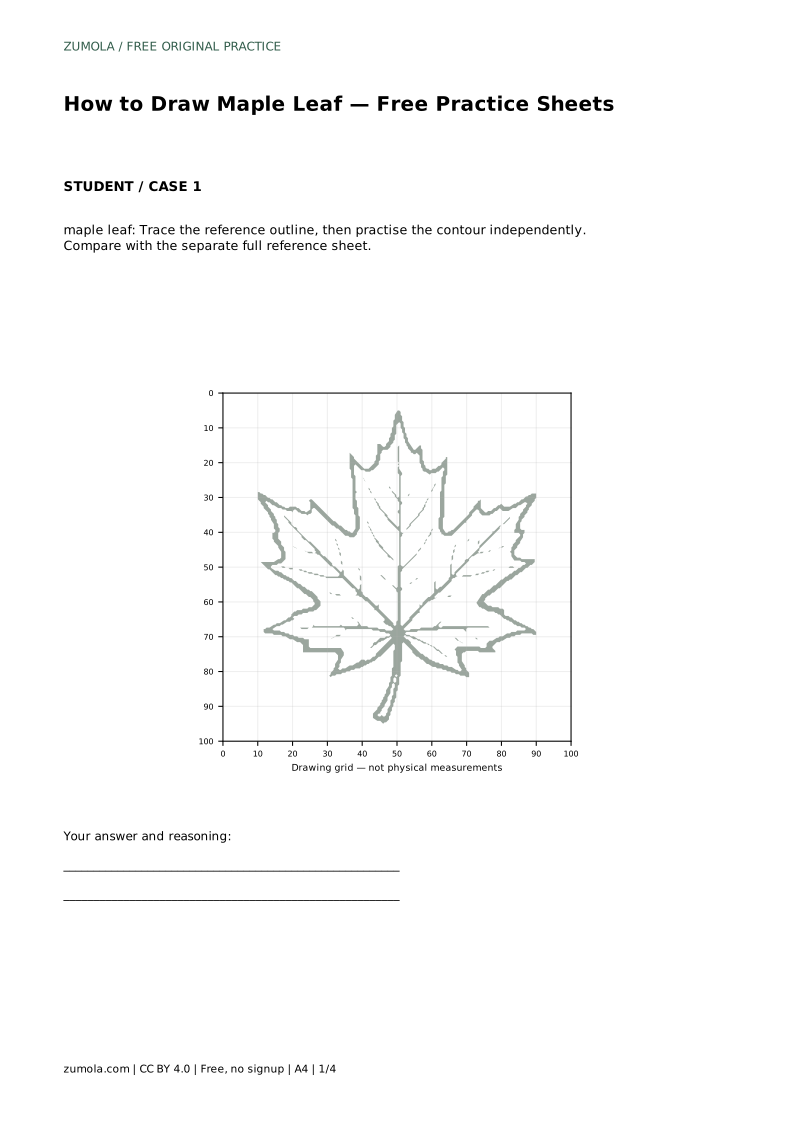
Each sheet isolates a different part of the same skill. Tracing the reference outline builds familiarity with the contour; redrawing it independently afterward shows whether that contour is remembered. The grid version asks you to copy the reference onto a blank grid by matching grid intersections, which trains placement and proportion.
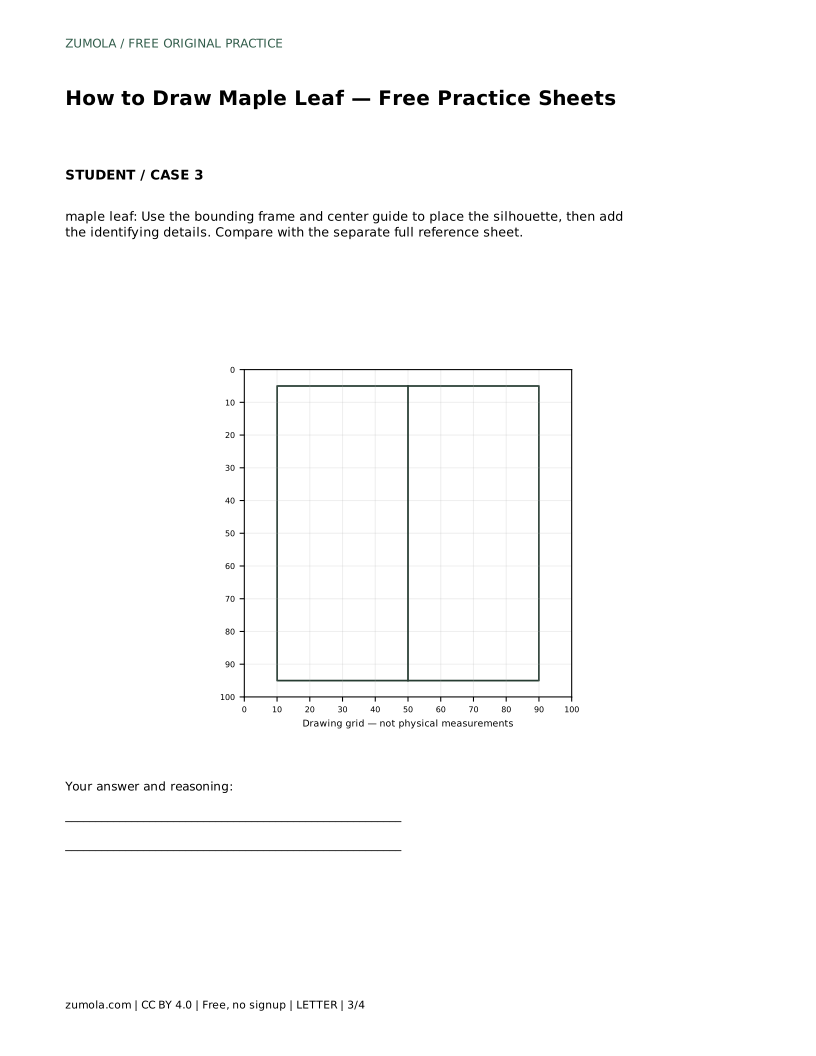
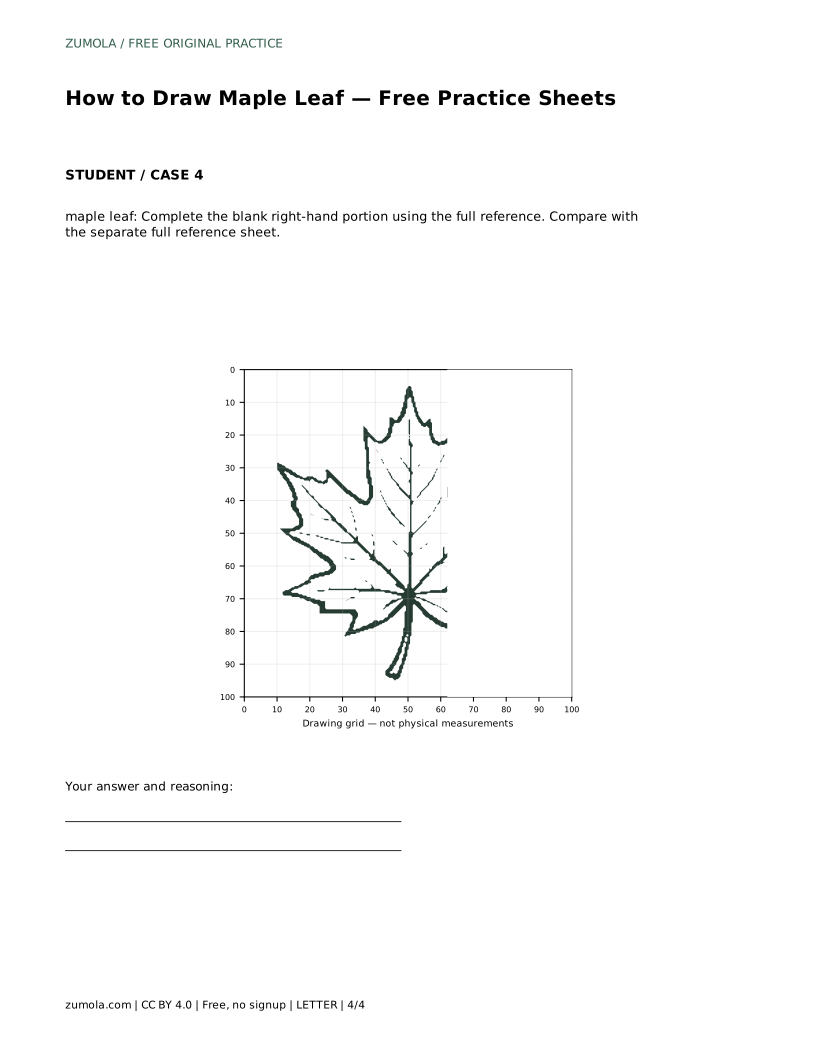
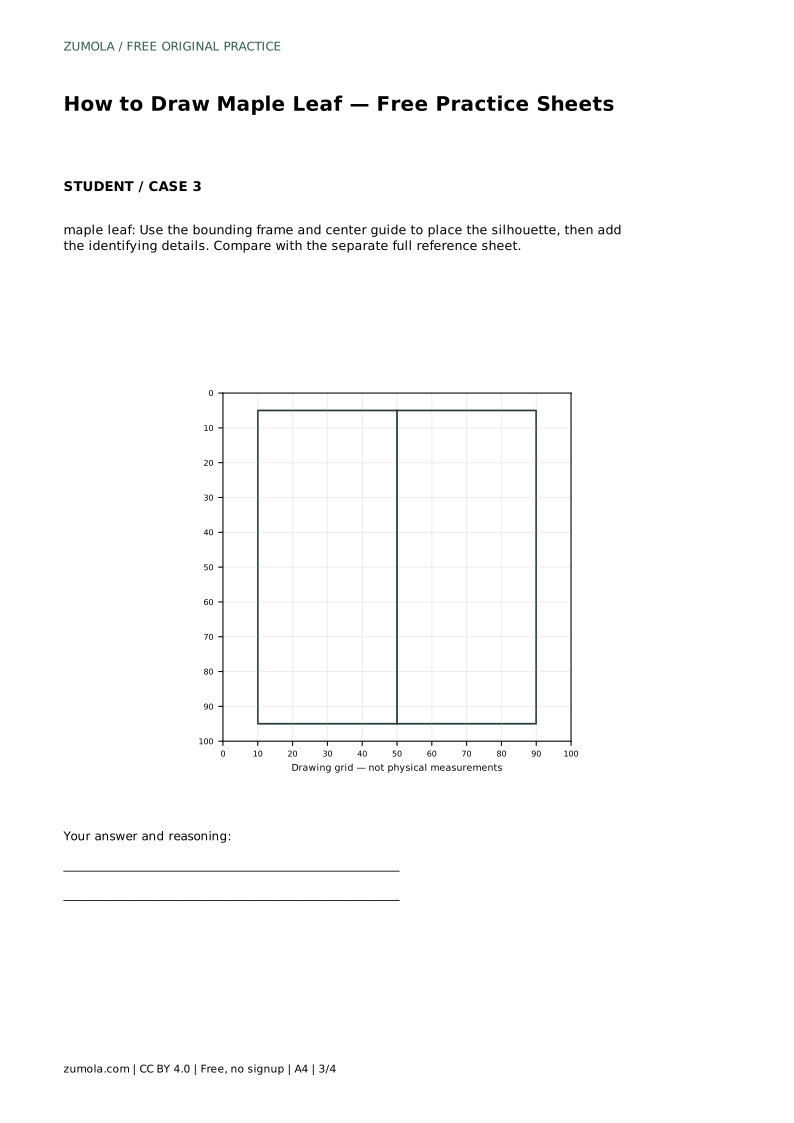
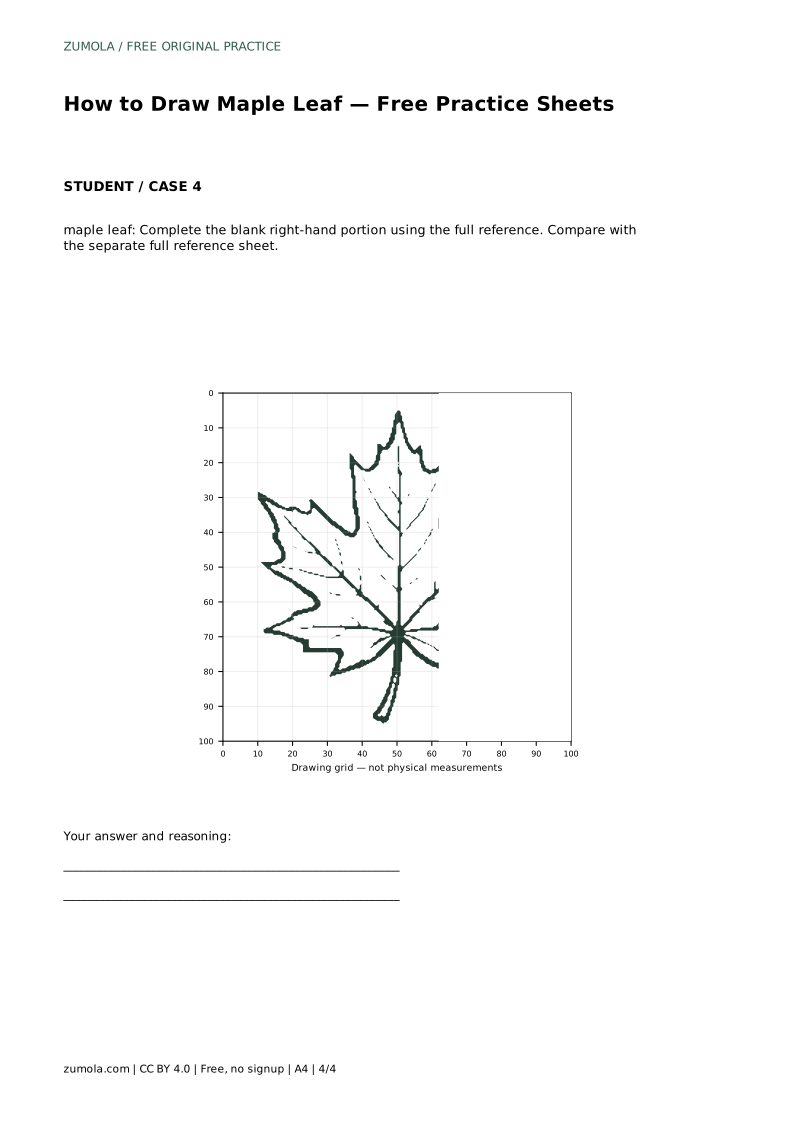
The bounding-frame sheet gives a center guide and outer frame so you can place the silhouette first and add identifying details second. The half-completion sheet supplies one side and asks you to finish the blank right-hand portion from the full reference. In every format, compare your result with the separate full reference sheet rather than with your memory of it.
Count the lobes: five pointed lobes is the target for these sheets. Confirm the veins radiate from the base in a palmate pattern, that serrations appear along lobe edges, and that the stem extends downward from the leaf base. Check that lobe sizes are balanced around the center rather than one lobe dominating.
Proportion matters more than exact line placement. A leaf with five clear lobes, correct vein origin, and a long stem will read correctly even if its outline differs from the reference. Use the rubric below to assess your own sheet honestly.
Prompt: Trace the reference outline, then practise the contour independently. Compare with the separate full reference sheet.
A correct result preserves five pointed lobes with serrated edges, a palmate vein pattern radiating from the base, and a long stem extending downward from the leaf base. Other drawings can be correct; assess the visible features and proportions rather than pixel-perfect matching.
maple leaf: Trace the reference outline, then practise the contour independently. Compare with the separate full reference sheet.
Example solution: preserve five pointed lobes with serrated edges, palmate vein pattern radiating from the base, long stem extending downward from the leaf base. Other drawings can be correct; assess the visible features and proportions rather than pixel-perfect matching. Draw a long curved stem at the bottom center. From the top of the stem, draw five main veins radiating outward in a palmate pattern. Outline each lobe around the veins with pointed tips and serrated edges. Add secondary vein lines branching from the main veins inside each lobe.
These practice sheets target five pointed lobes. Count them after drawing and check that each lobe ends in a point.
All five main veins radiate from one point at the top of the stem, which is the palmate pattern. Secondary veins branch inside each lobe from those main veins.
No. Other drawings can be correct. Assess visible features and proportions, such as five lobes, palmate veins, serrated edges, and a long downward stem.
All drawing practice · Free coordinate paper
Original resources · CC BY 4.0 · Free for personal and classroom use with attribution.