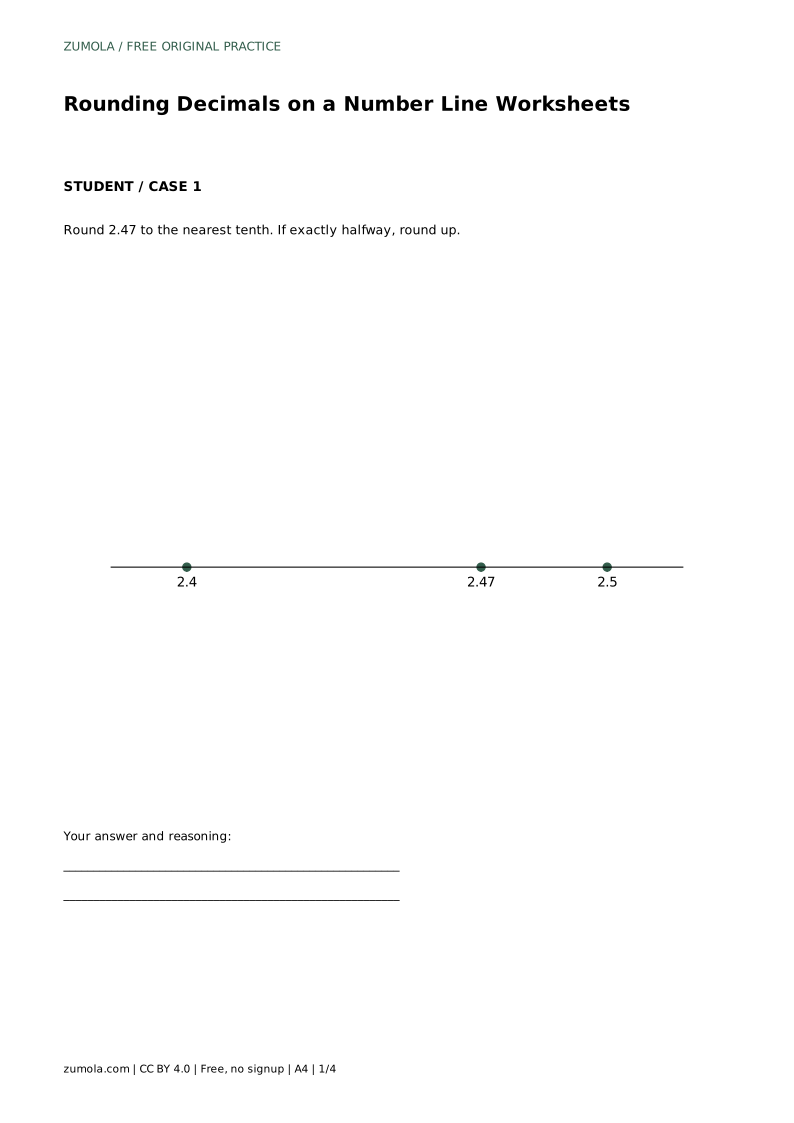
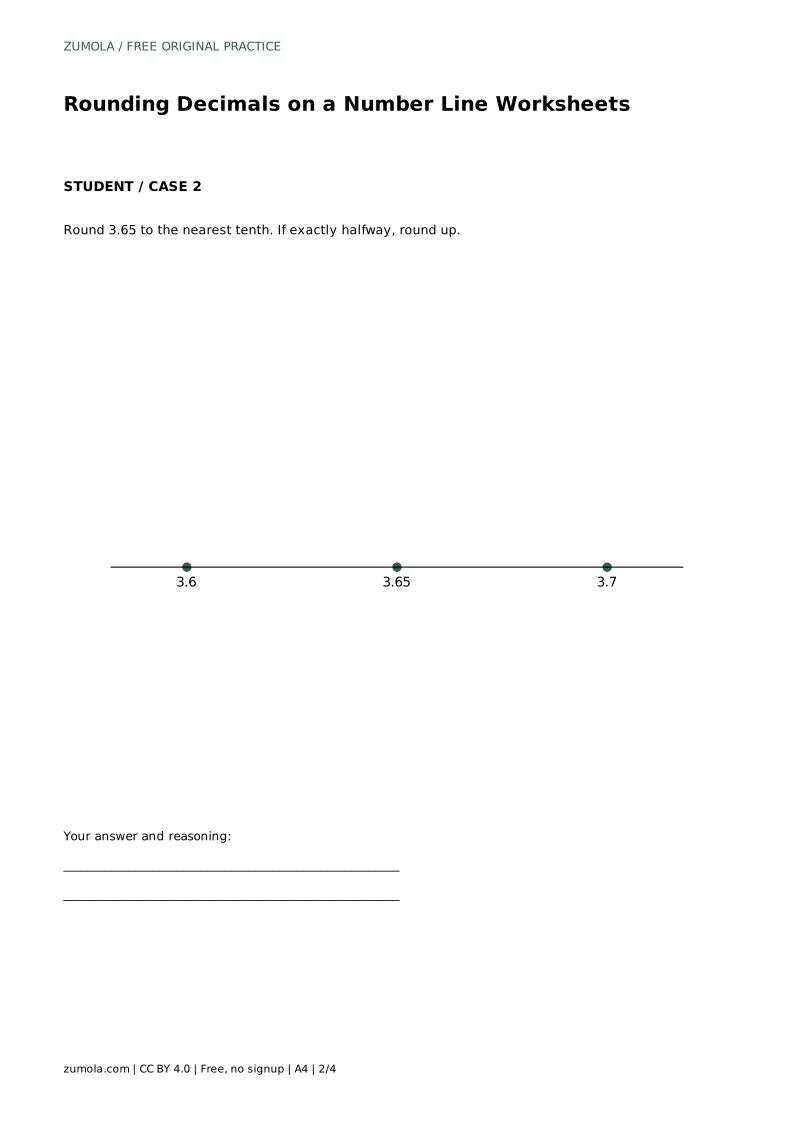
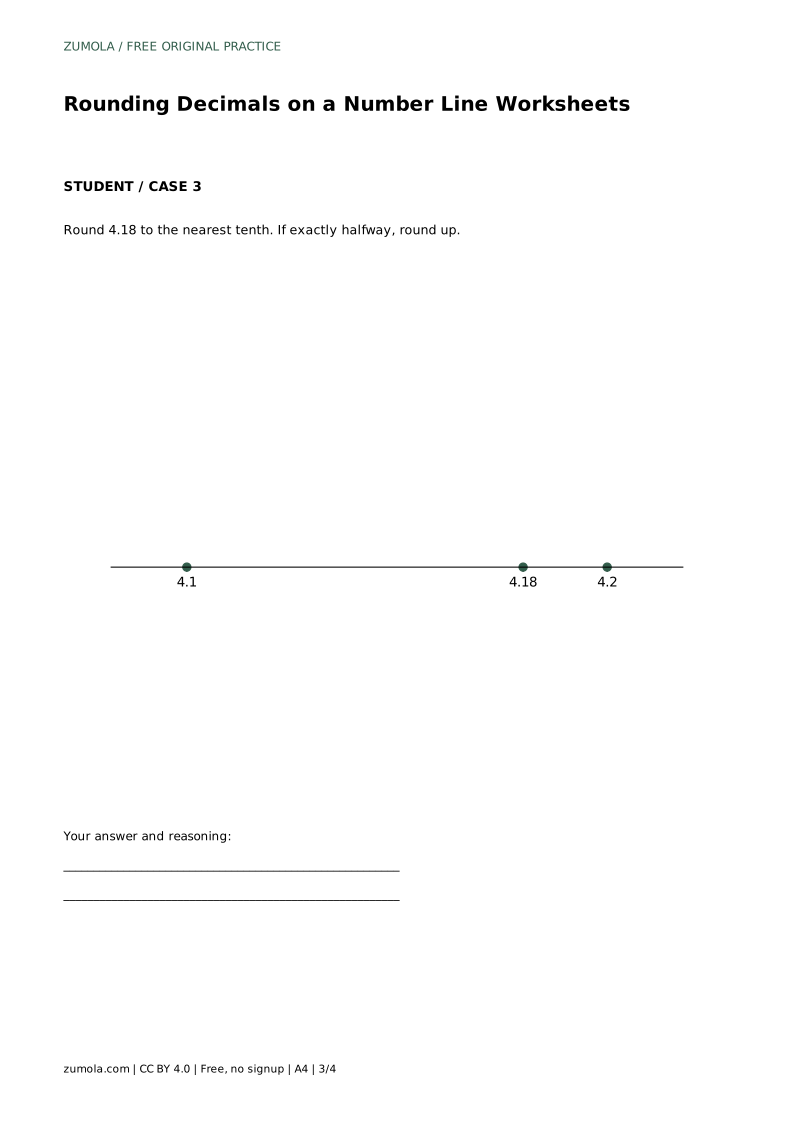
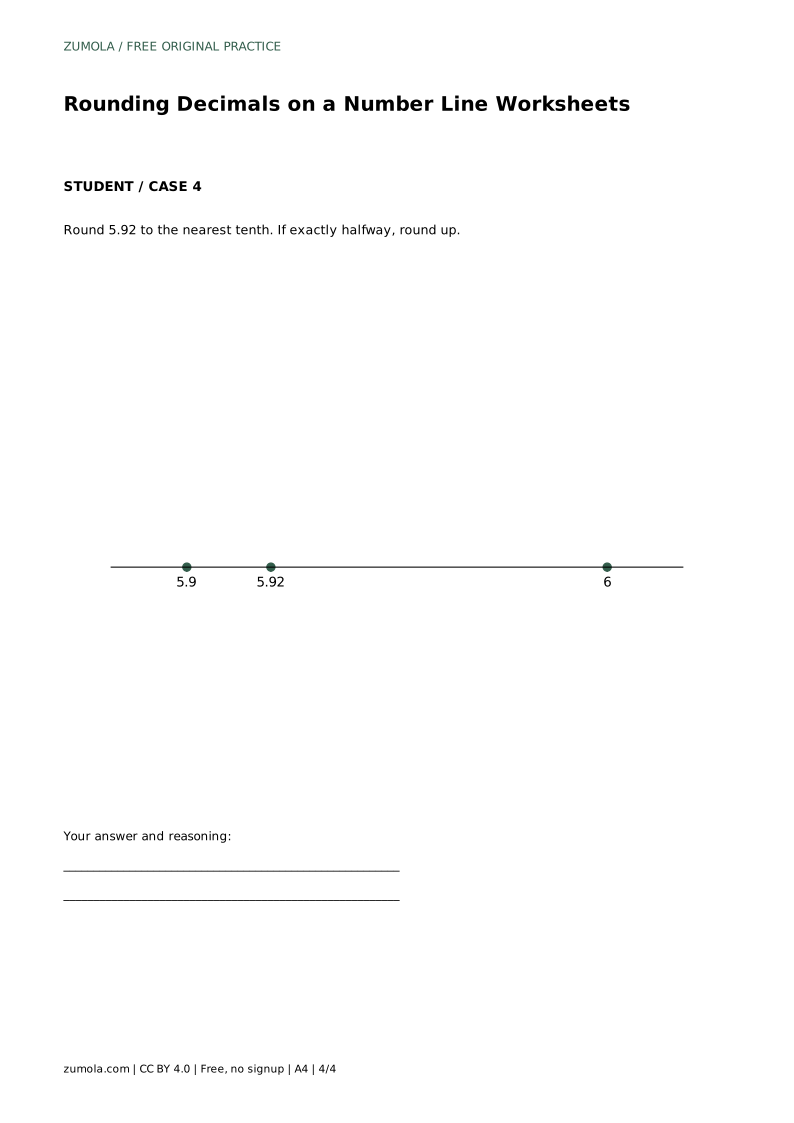
Reference diagrams
LETTER · Download PDF
A4 · Download PDF
Free original resources
Teach rounding decimals to the nearest tenth with number lines. Includes a worked example, placement steps, a marking rubric, and common error fixes.
Four original cases, with reference diagrams, practice sheets and worked answers. Everything is free; no signup required.
LETTER · Download PDF
A4 · Download PDF
LETTER · Download PDF
A4 · Download PDF
LETTER · Download PDF
A4 · Download PDF
Use A4 or US Letter to match your printer. Use the stated values and conditions to solve each exercise; diagrams are not physical measuring rulers.
Rounding a decimal to the nearest tenth means choosing the tenth that is closest to it. A number line makes that choice visible: mark the decimal between two adjacent tenths, then decide which endpoint is nearer. This page explains the method for rounding to the nearest tenth, using hundredths as the deciding digit, and shows how to handle an exact halfway value under a stated round-up rule.
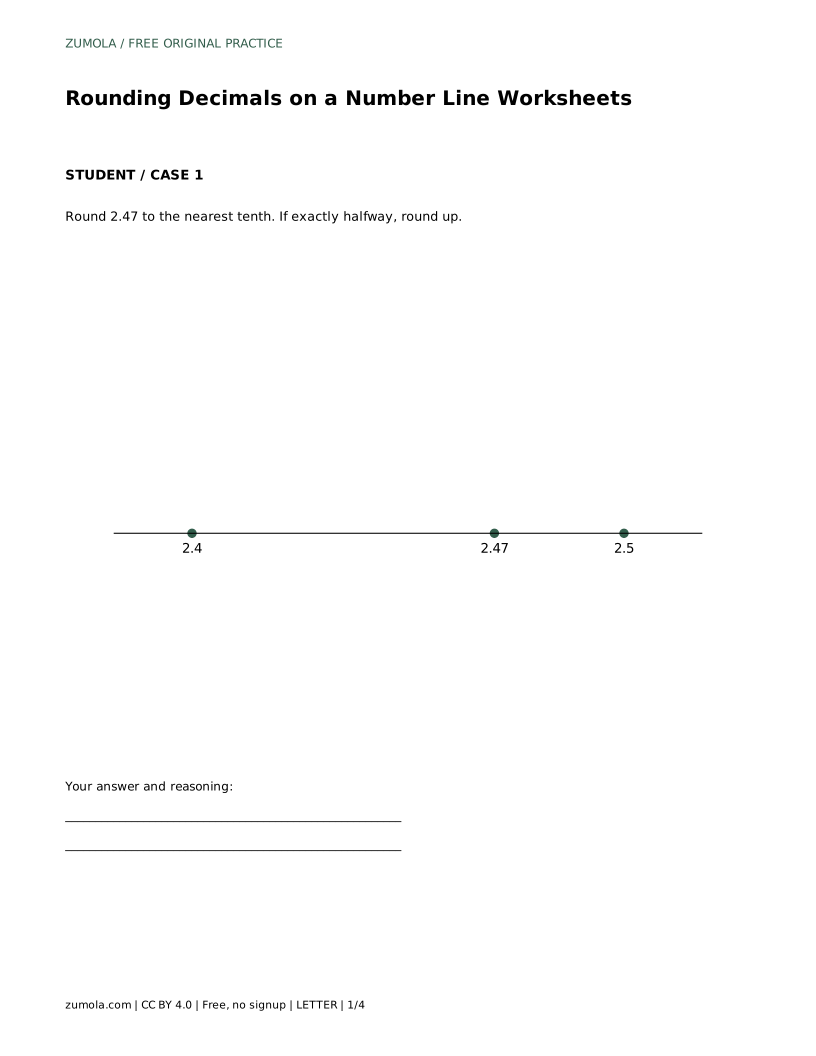
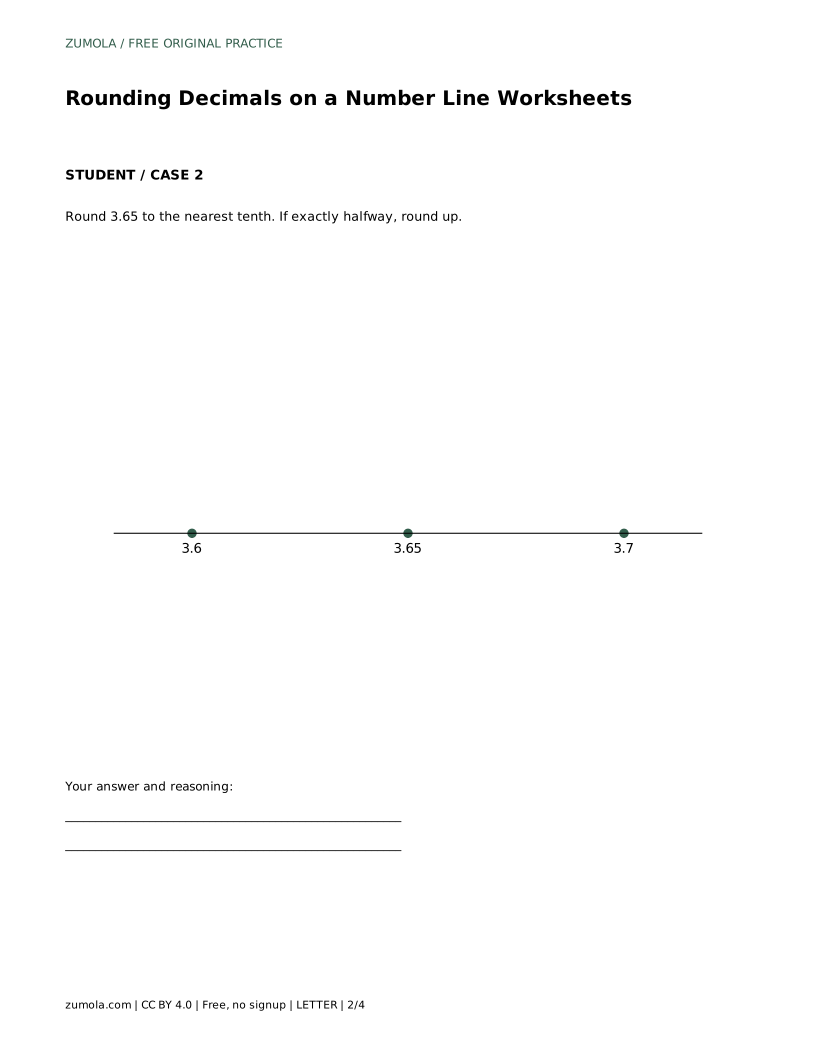
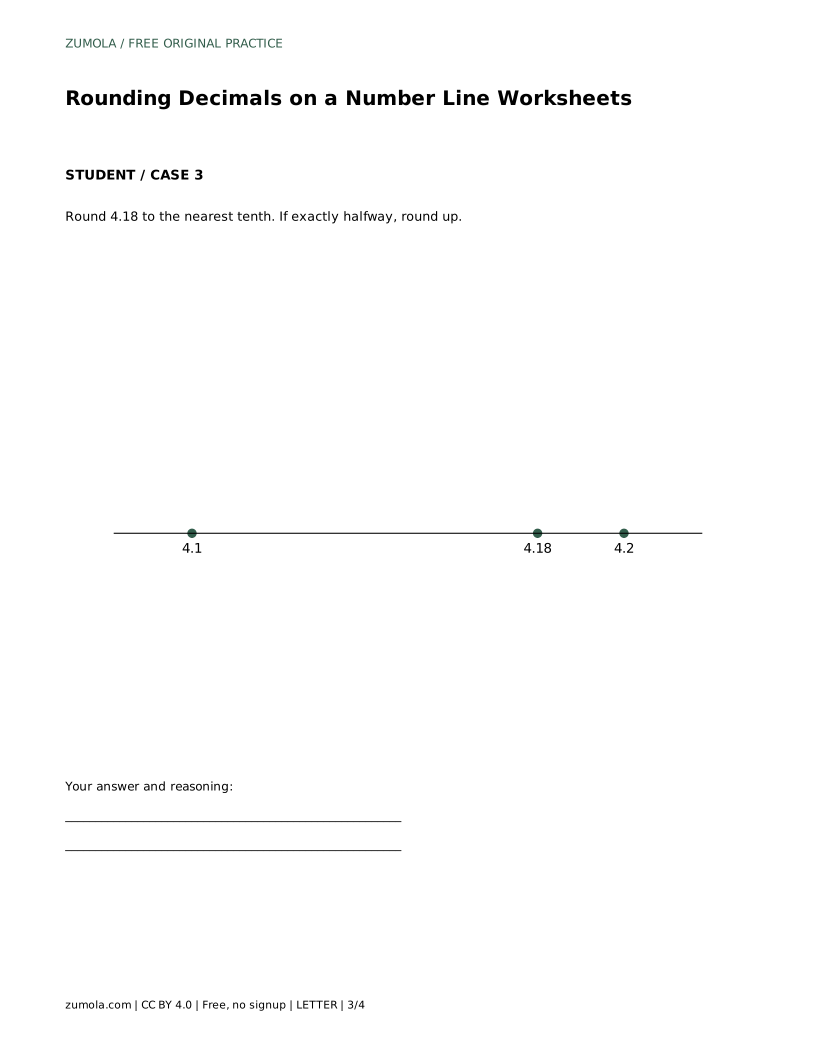
Place value rules can feel like memorized tricks. A number line turns rounding into a distance question. Every decimal sits somewhere between two neighboring tenths, such as 2.4 and 2.5. The closer endpoint is the rounded value. When the decimal is exactly halfway, the rule you are given decides the direction; here the rule is round up.
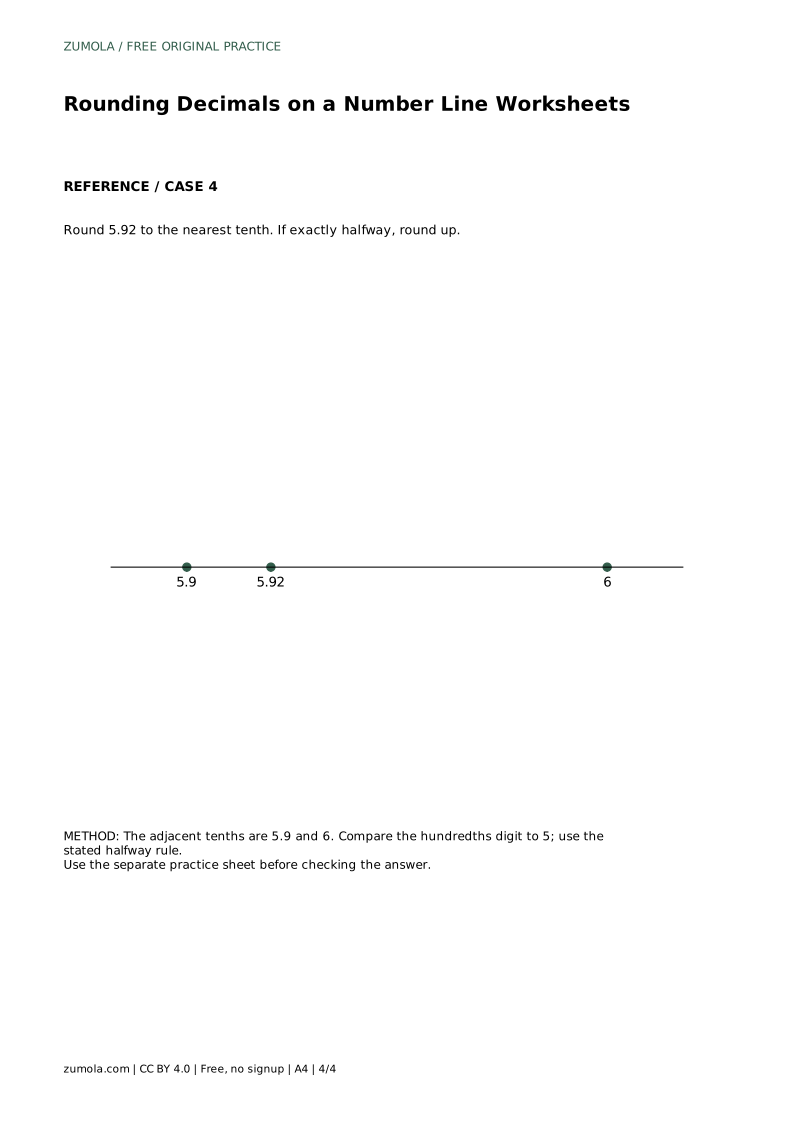
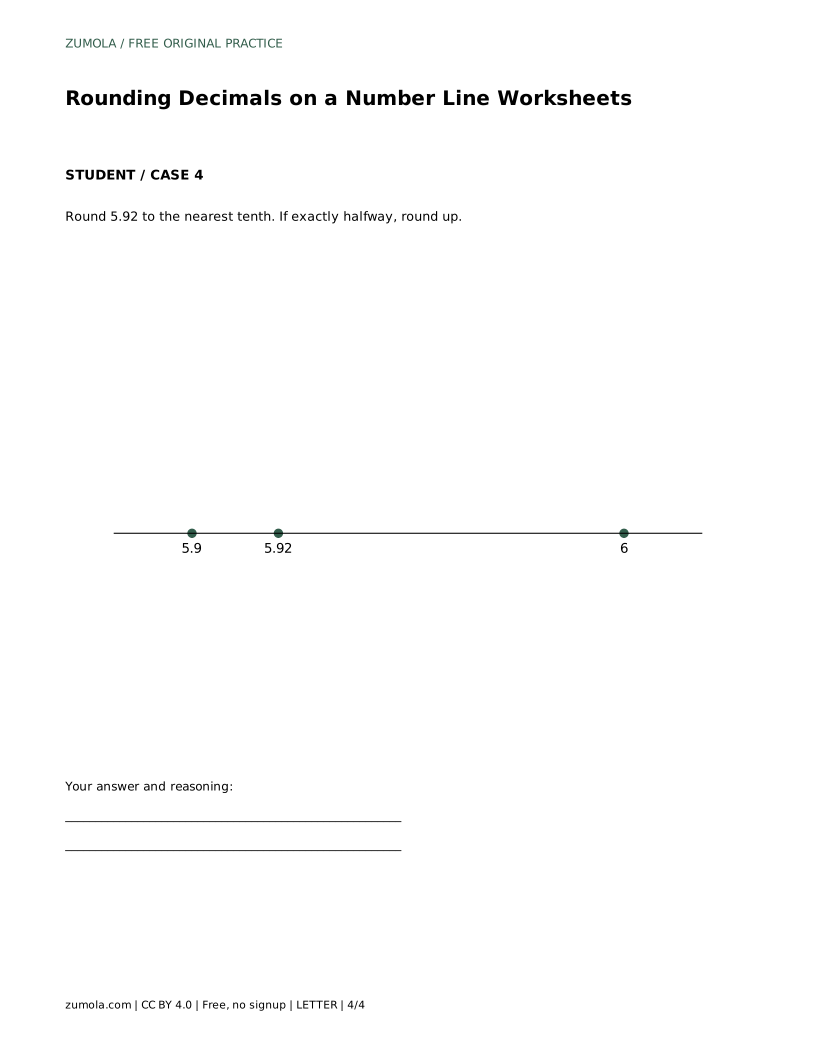
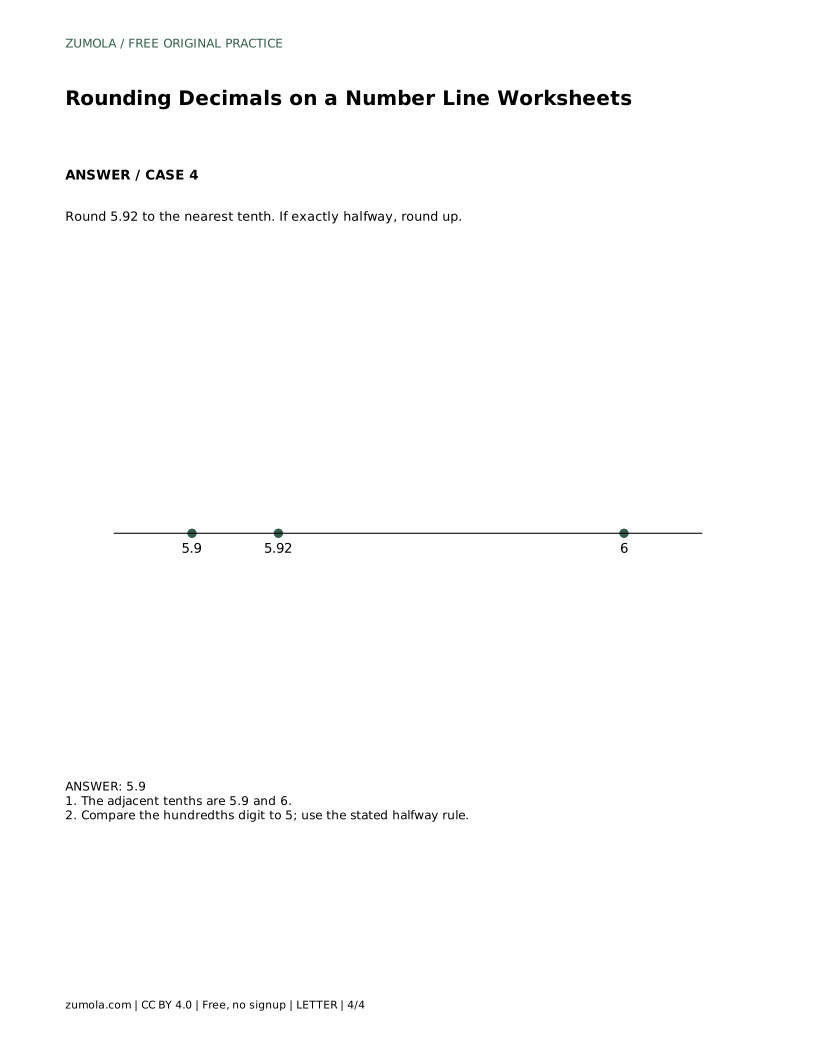
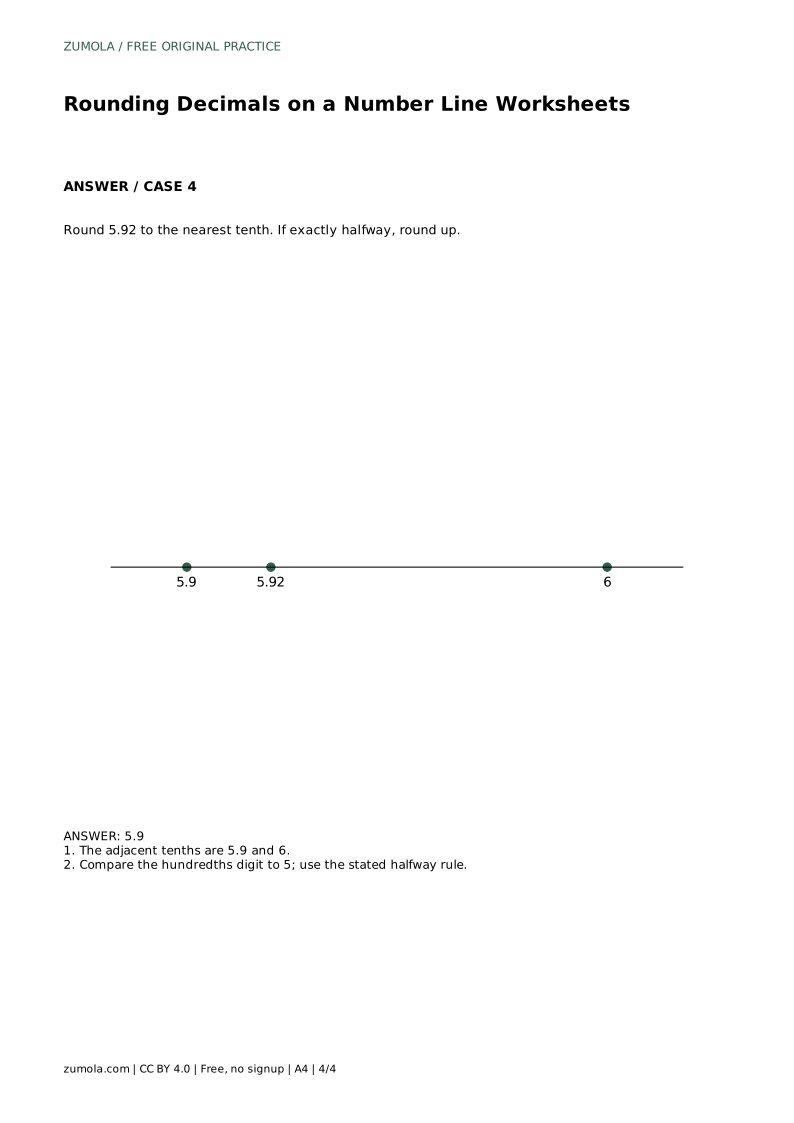
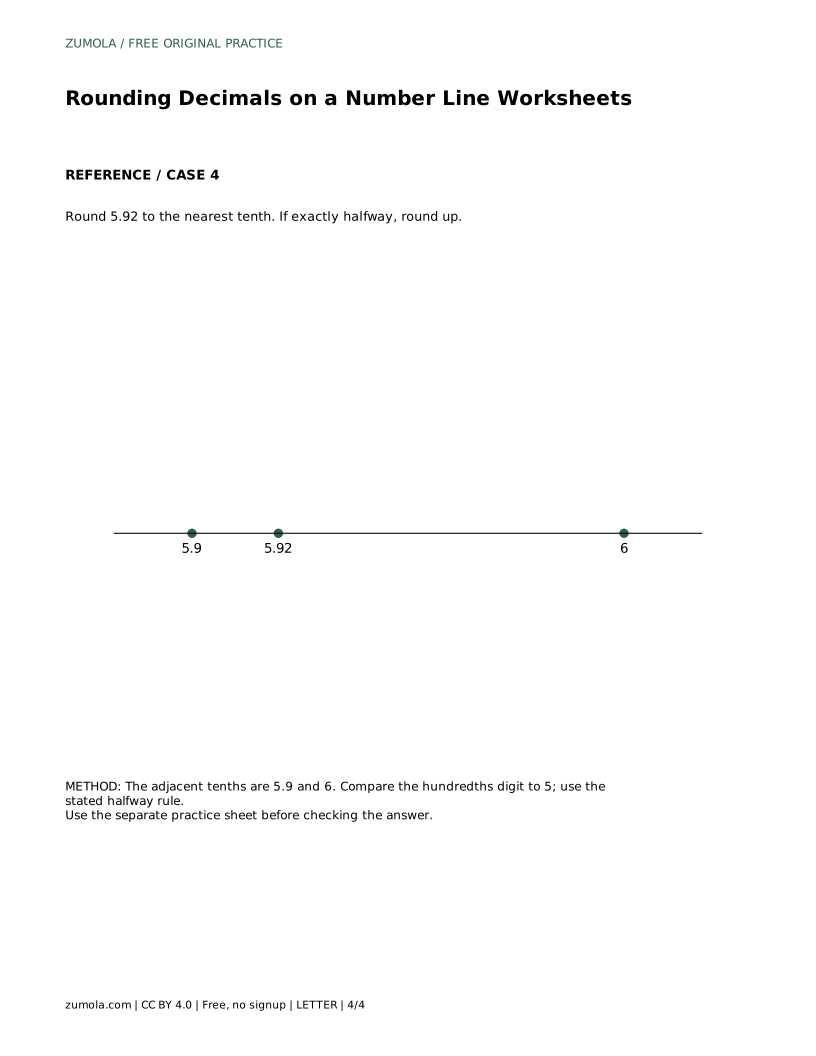
The number line also exposes a common trap. A value like 5.92 is close to 6, but its adjacent tenths are 5.9 and 6.0. Marking it near the right end of that interval shows it is nearer to 5.9, not 6.0, because 5.92 is only 0.02 above 5.9 but 0.08 below 6.0.
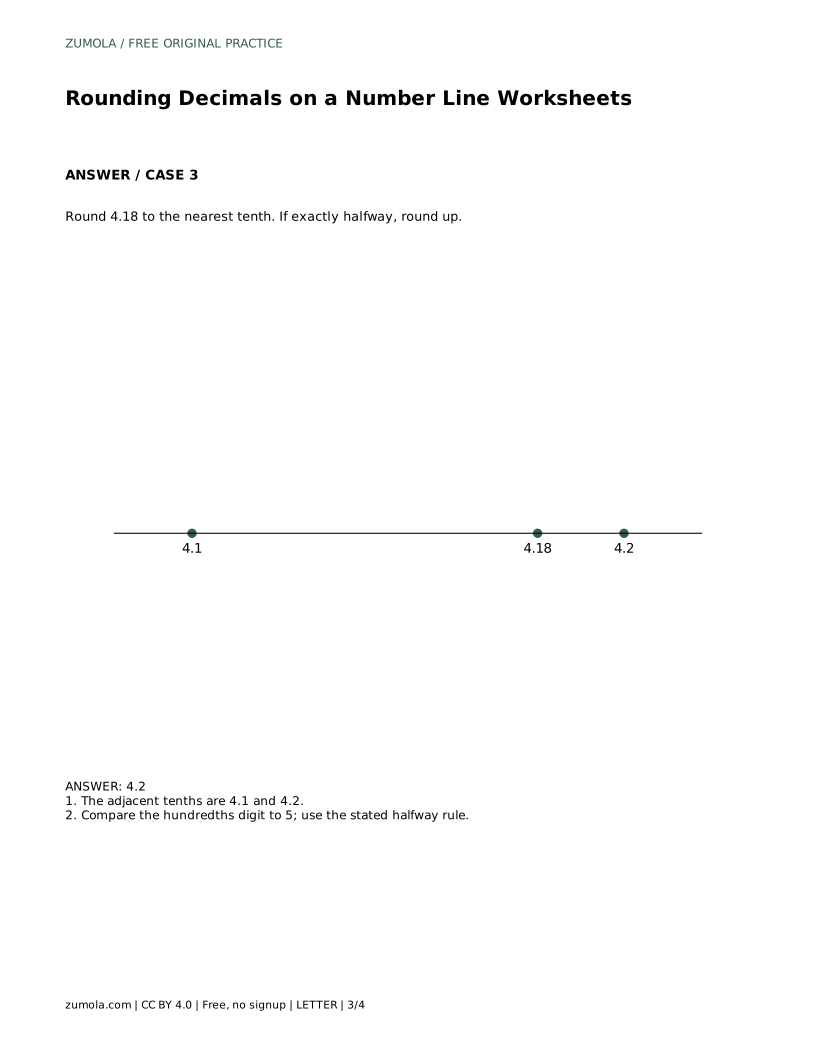
When rounding to the nearest tenth, the hundredths digit tells you which side of the midpoint the number falls on. If the hundredths digit is less than 5, the decimal is below the midpoint and rounds to the lower tenth. If it is 5 or more, the decimal is at or above the midpoint and rounds to the upper tenth under the round-up rule.
This check works because each tenth interval spans 0.1, and its midpoint is 0.05 above the lower tenth. A hundredths digit of 5 means the number is exactly at that midpoint only when no thousandths or smaller digits push it further. For values with more decimal places, compare the full remainder to 0.05 rather than looking at one digit alone.
Number-line rounding tasks have several valid presentations: students may draw the line horizontally, mark tick marks evenly, or annotate distances. Judge the reasoning rather than the decoration. A correct response identifies the bracketing tenths, places the decimal sensibly between them, states which endpoint is nearer, and writes the rounded value with the correct number of decimal places.
Because artwork and layout vary, use consistent criteria across a set of sheets. Note whether the student treated an exact halfway case according to the stated rule, since a different rule would produce a different answer.
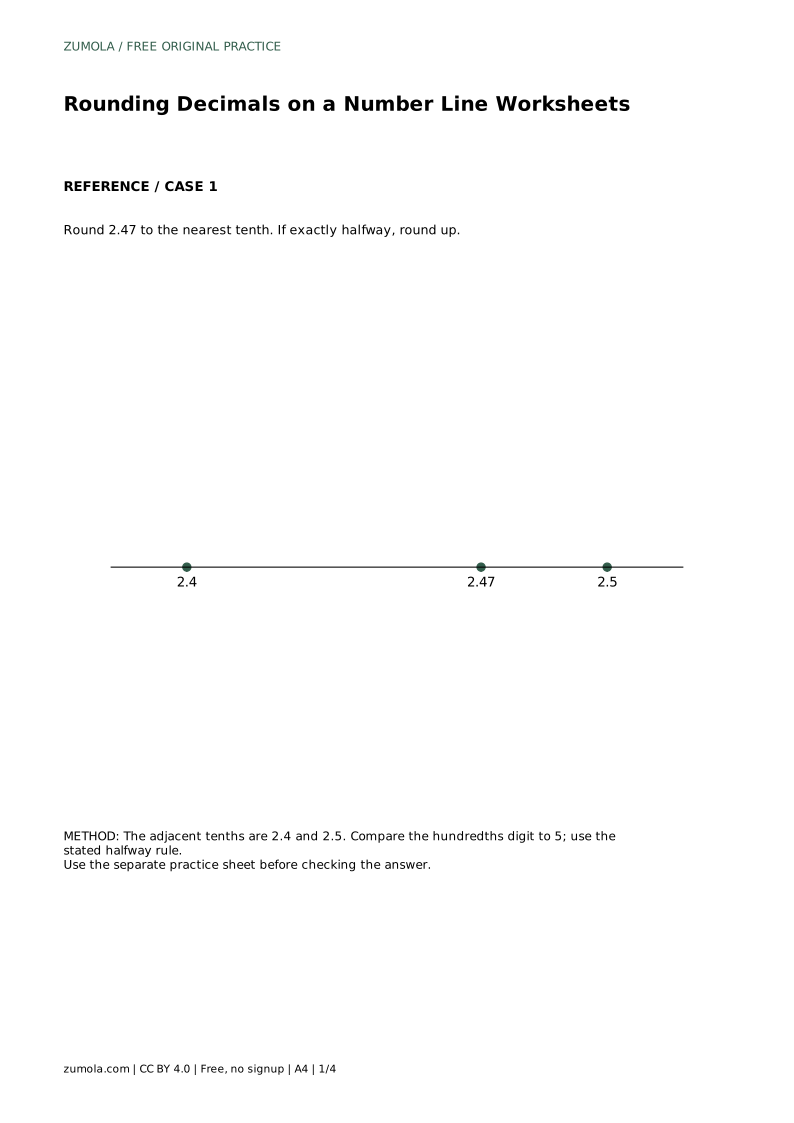
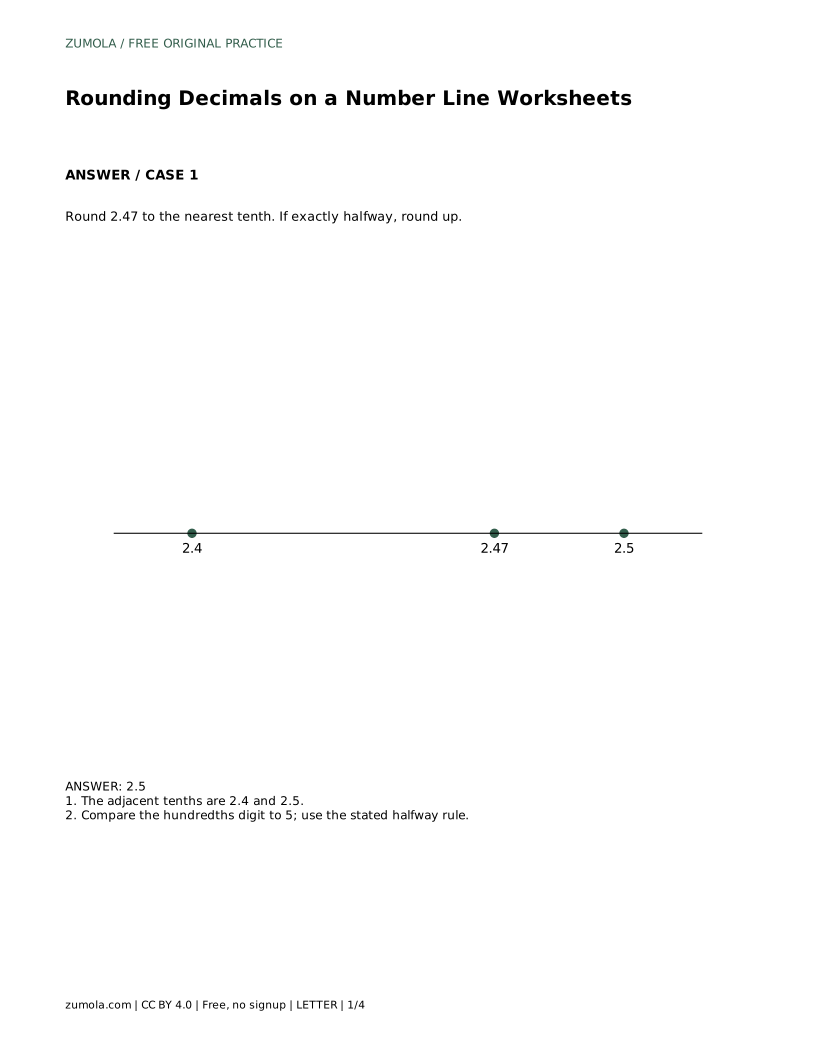
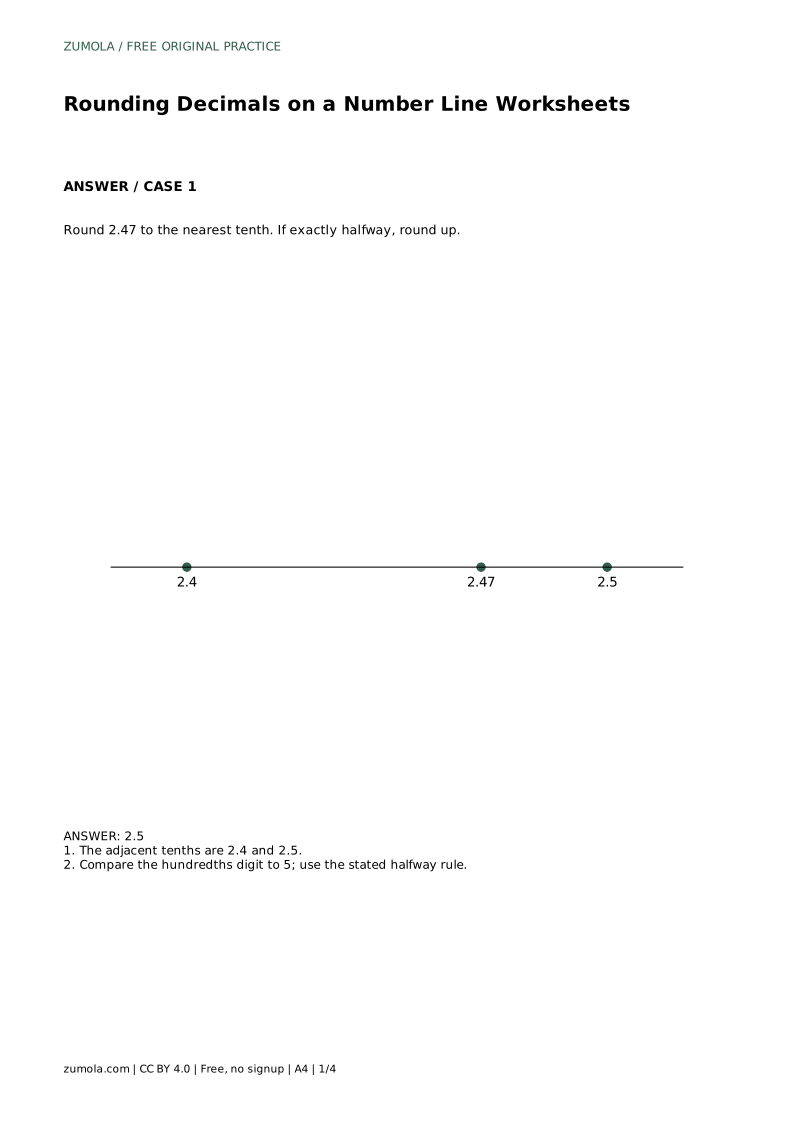
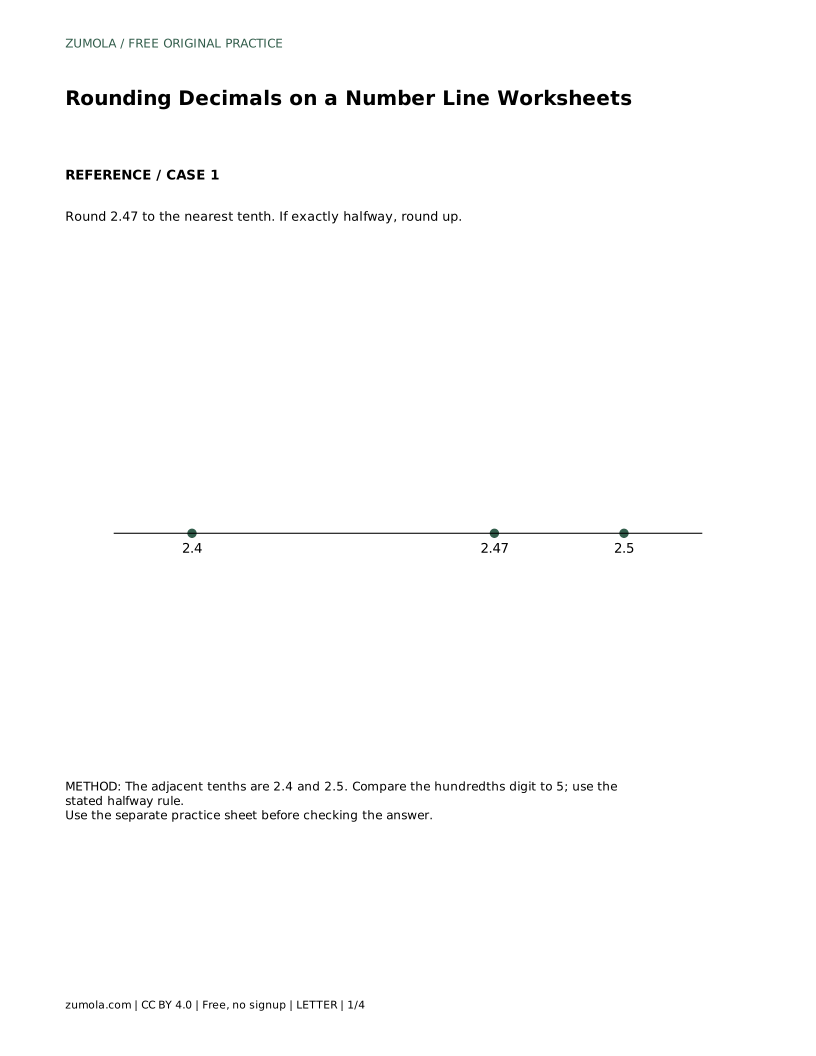
Round 2.47 to the nearest tenth. If exactly halfway, round up.
2.5 The adjacent tenths are 2.4 and 2.5. Compare the hundredths digit to 5; use the stated halfway rule.
It means replacing the decimal with the closer of the two tenths on either side of it, such as choosing between 2.4 and 2.5. The result has one digit after the decimal point.
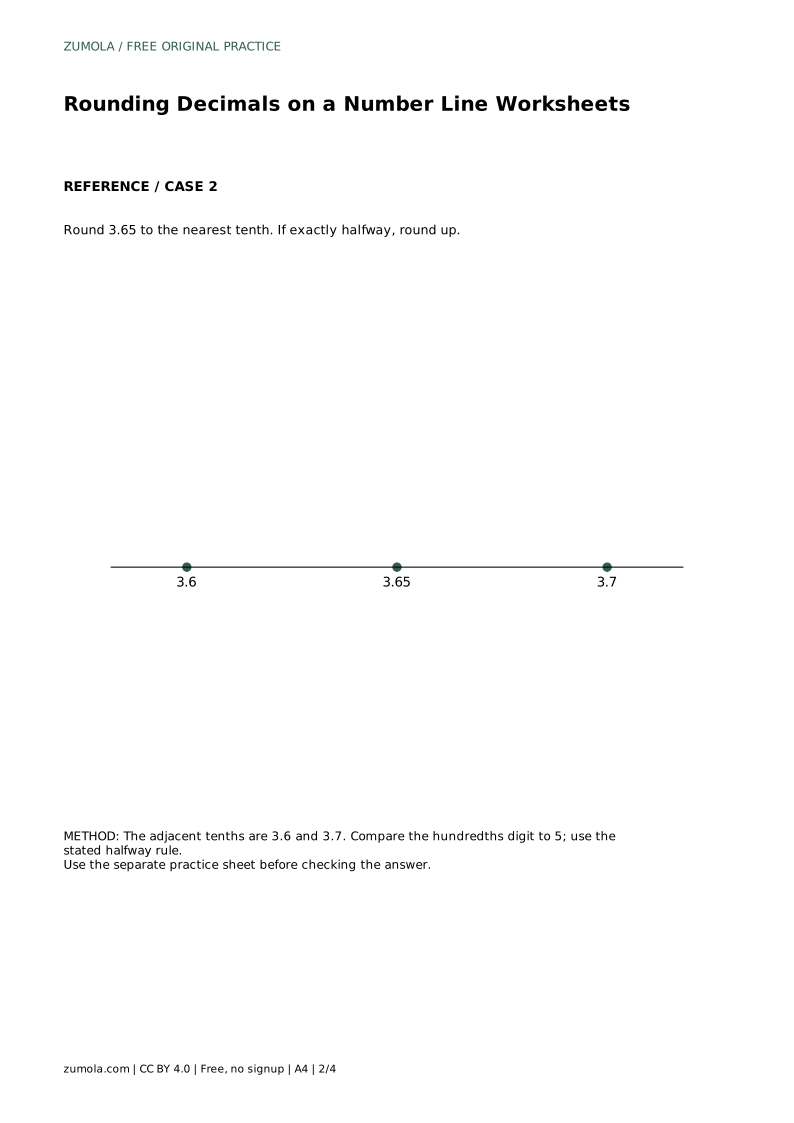
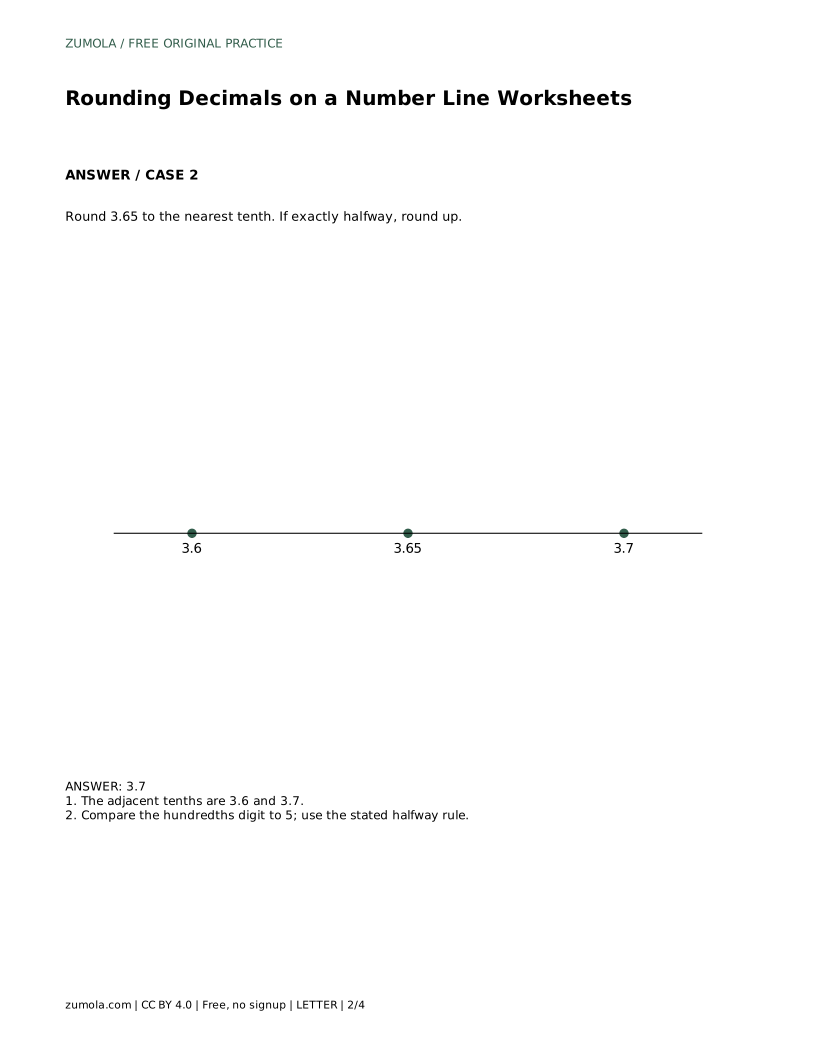
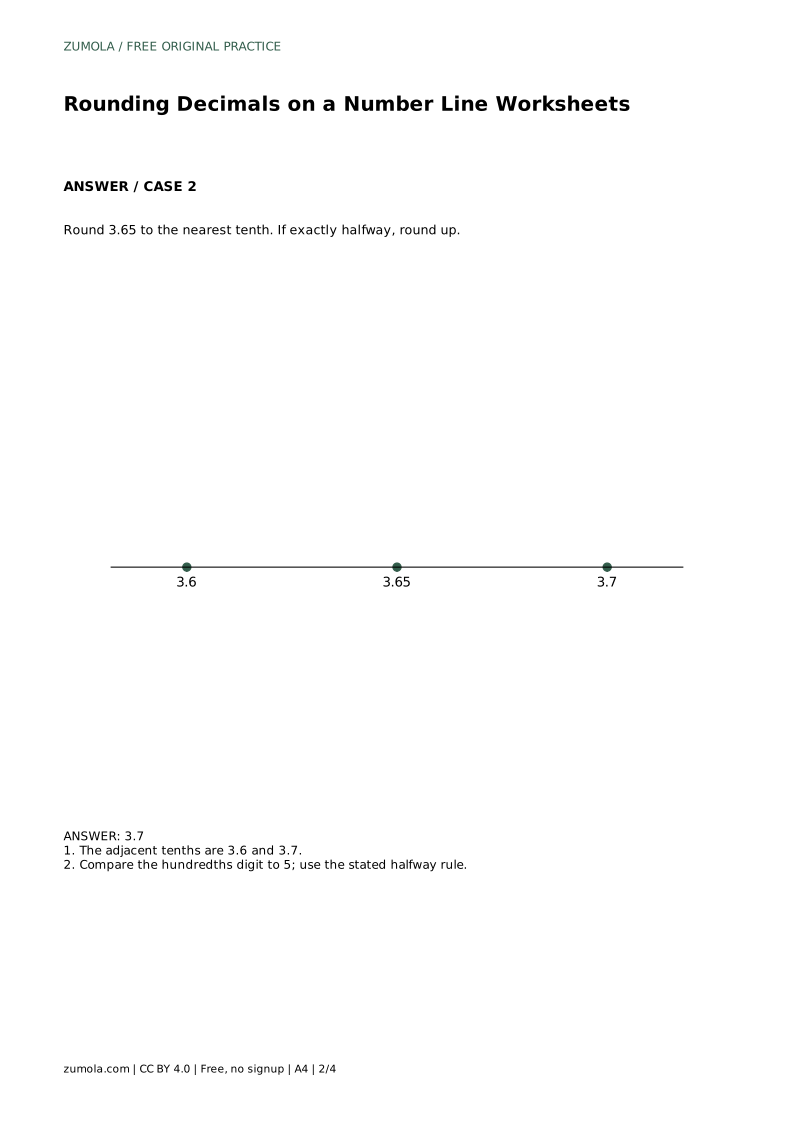
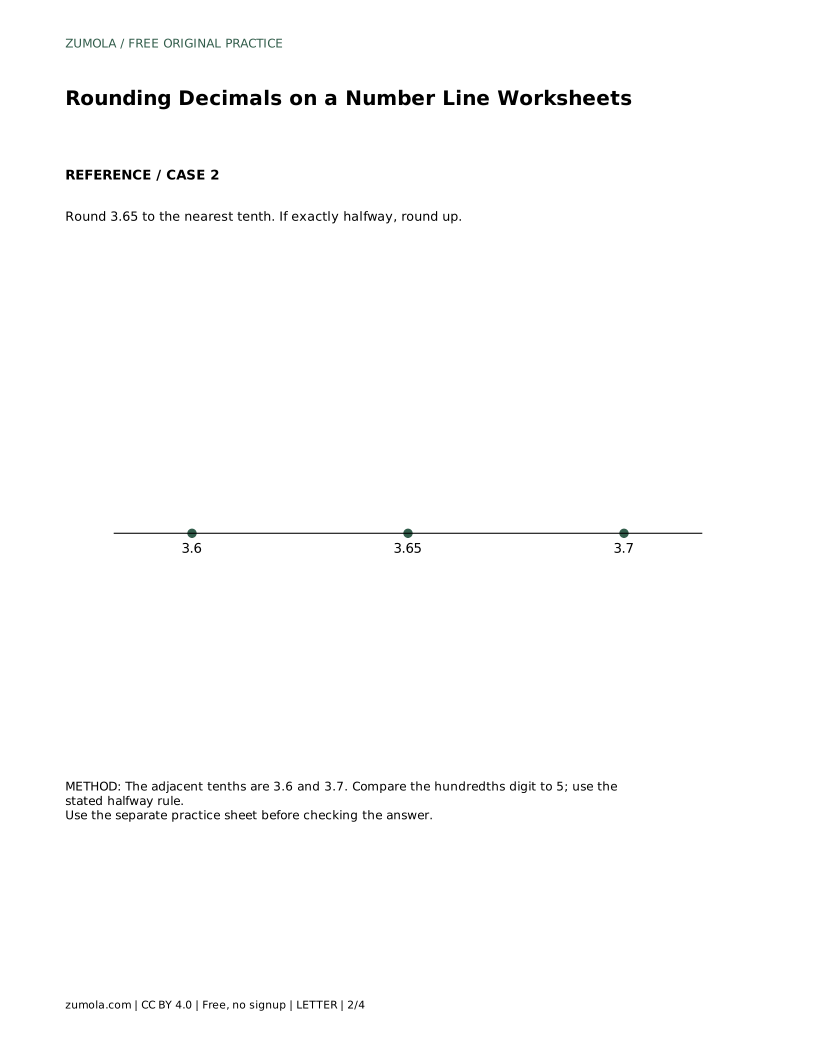
Use the rule stated on the sheet. Under the round-up rule used here, an exact halfway value goes to the upper tenth, so 3.65 rounds to 3.7.
No. A sensible sketch that places the decimal between the correct endpoints and shows which is nearer is enough to demonstrate the reasoning.
All math worksheets · Free coordinate paper
Original resources · CC BY 4.0 · Free for personal and classroom use with attribution.