Reference diagrams
LETTER · Download PDF
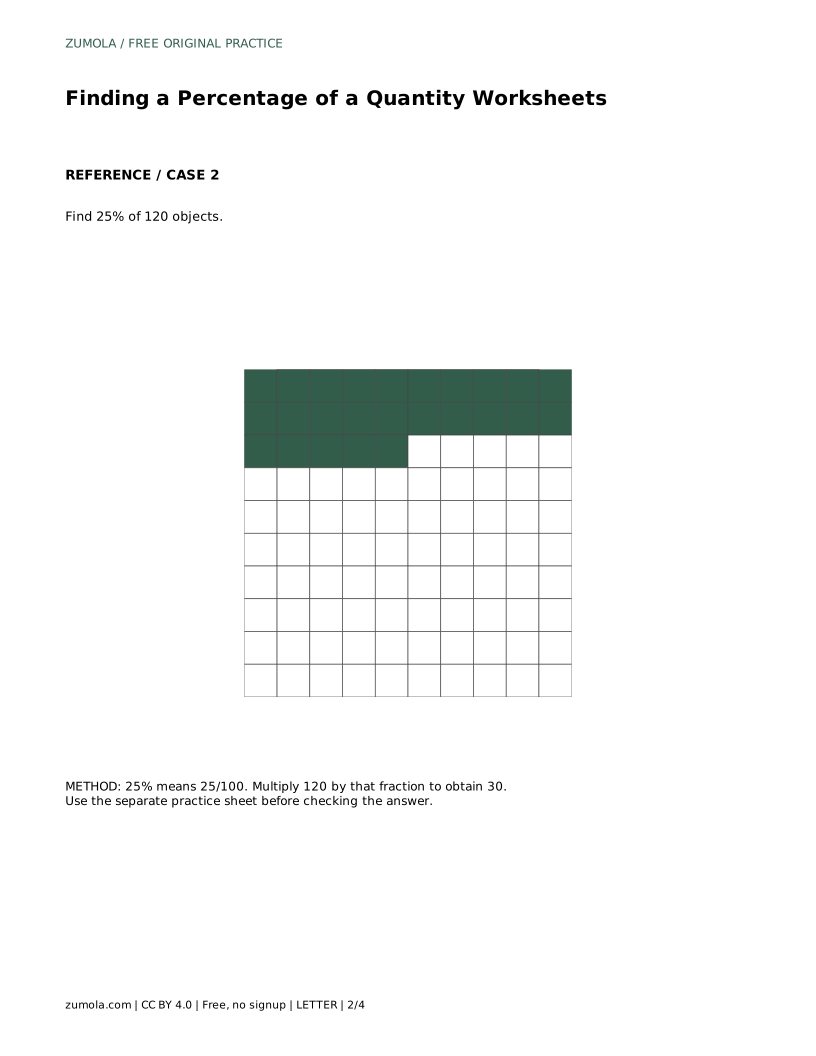
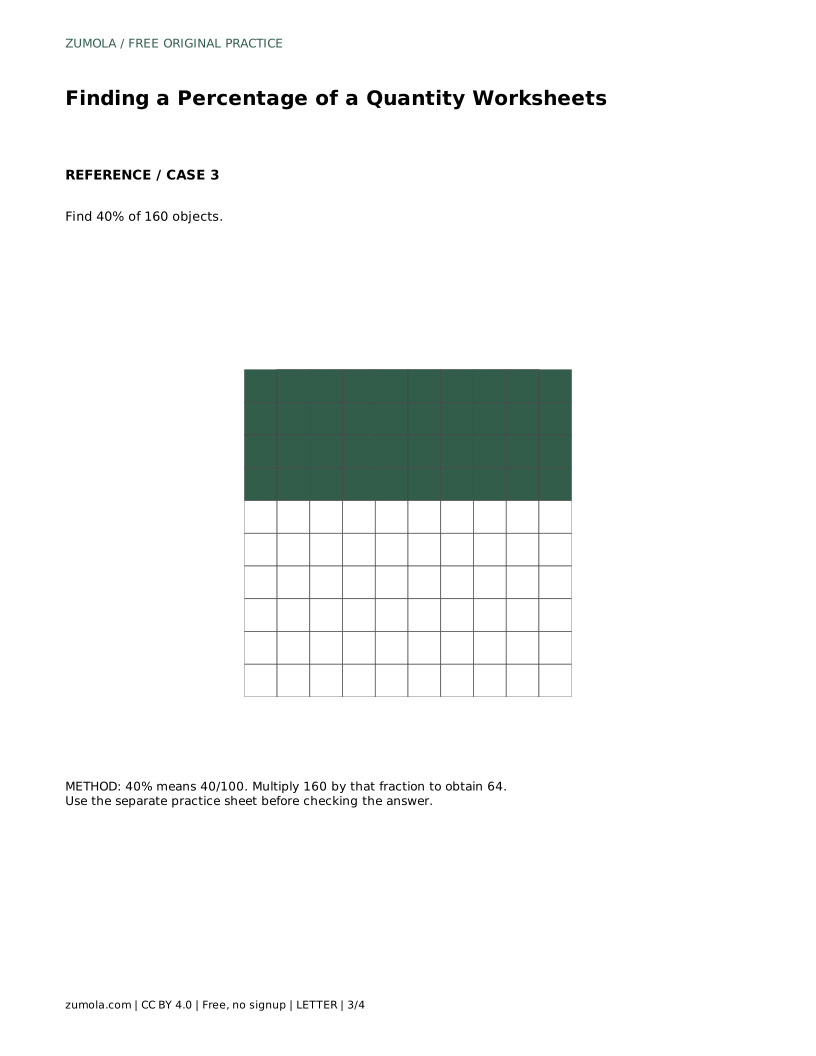
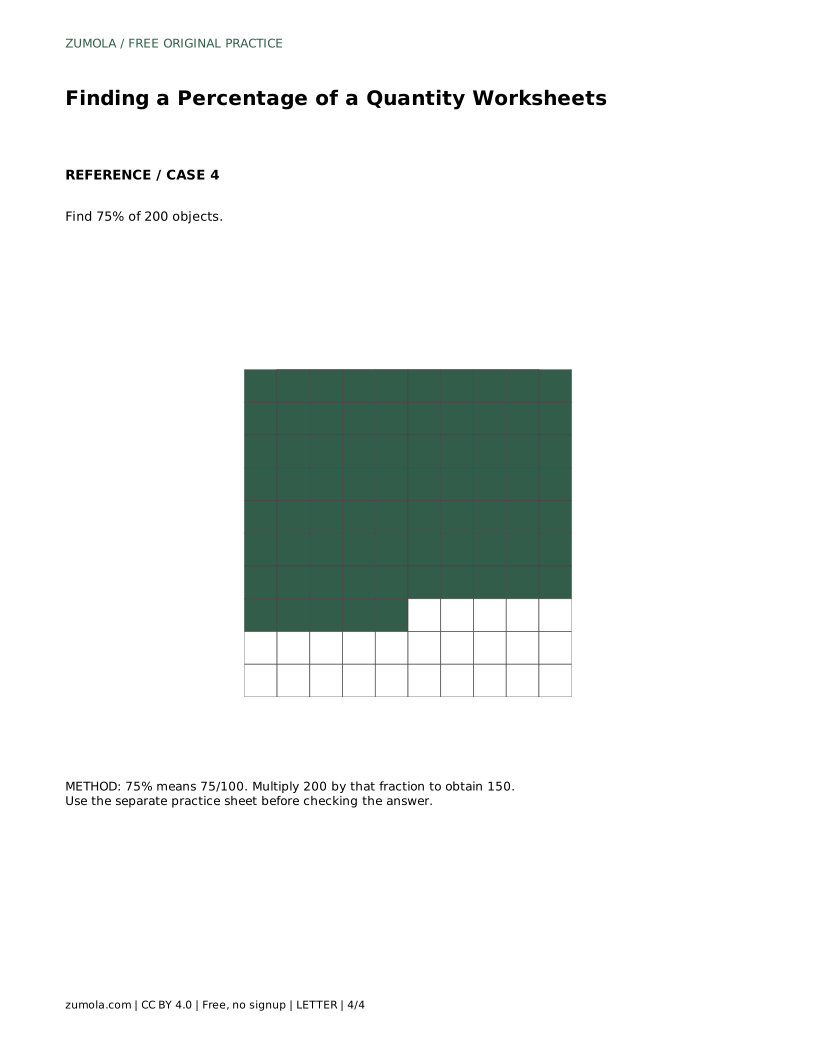
A4 · Download PDF
Free original resources
Teach students to find a percentage of a quantity by converting the percent to a fraction of one hundred and multiplying. Includes a worked example, rubric, and common-error fixes.
Four original cases, with reference diagrams, practice sheets and worked answers. Everything is free; no signup required.
LETTER · Download PDF
A4 · Download PDF
LETTER · Download PDF
A4 · Download PDF
LETTER · Download PDF
A4 · Download PDF
Use A4 or US Letter to match your printer. Use the stated values and conditions to solve each exercise; diagrams are not physical measuring rulers.
A percent of a quantity worksheet asks one focused question: given a whole amount and a percent, how much is that percent? The reliable method is to treat the percent as a fraction out of one hundred, then multiply by the quantity. This page explains that reasoning step by step, shows a fully worked case, and gives a rubric you can use to judge student work fairly, since different valid routes can reach the same answer.
The word percent means per hundred. So 15% is the same as 15/100, and 40% is 40/100. Once a percent is written as a fraction with denominator 100, finding that percent of a quantity becomes ordinary multiplication: multiply the quantity by the fraction.
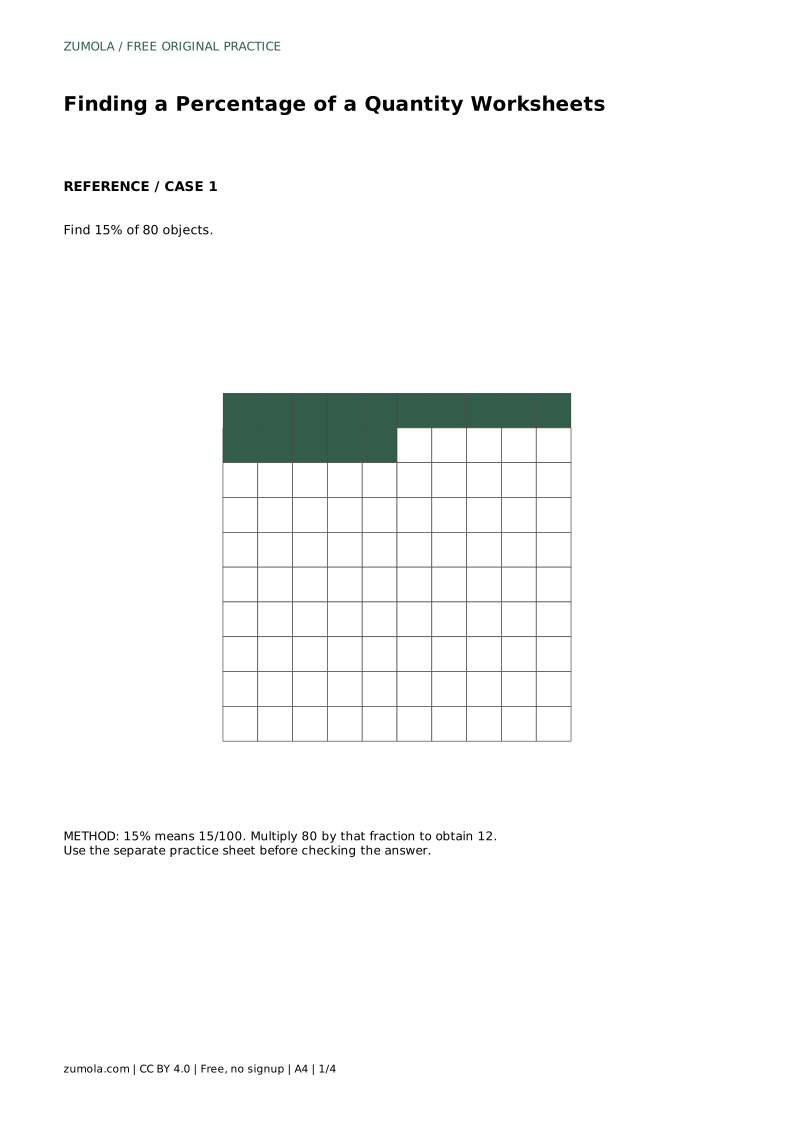
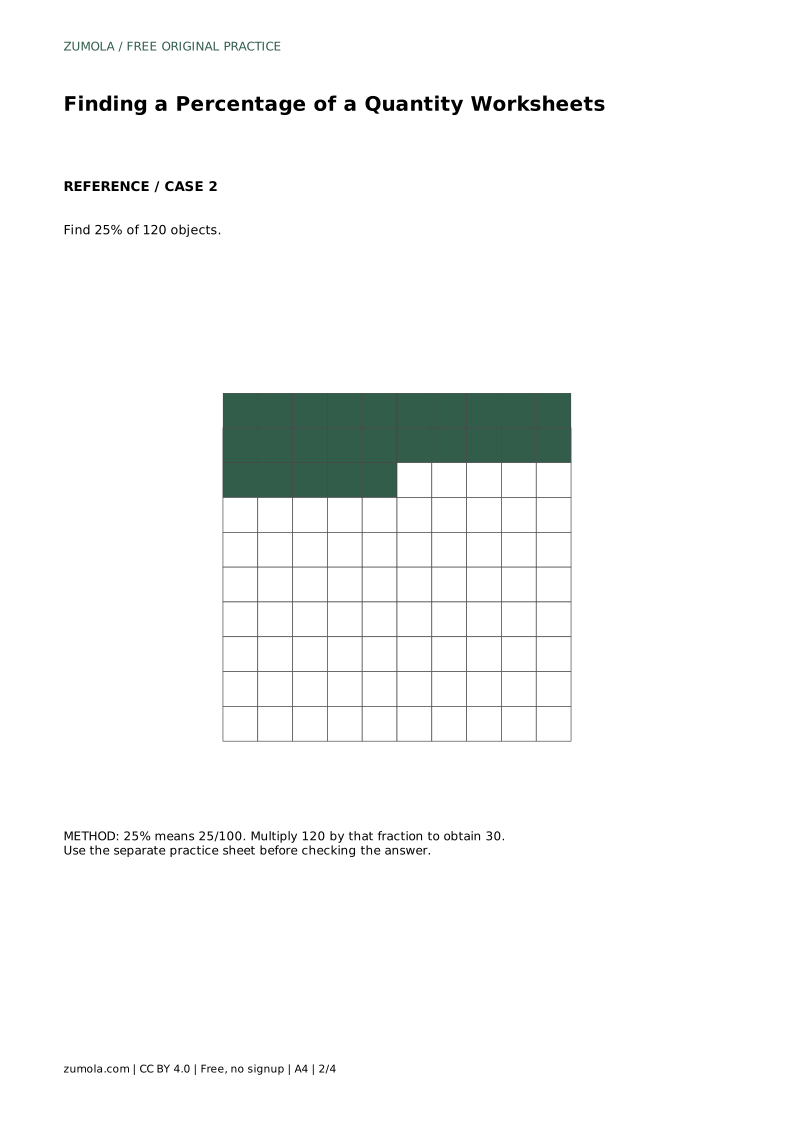
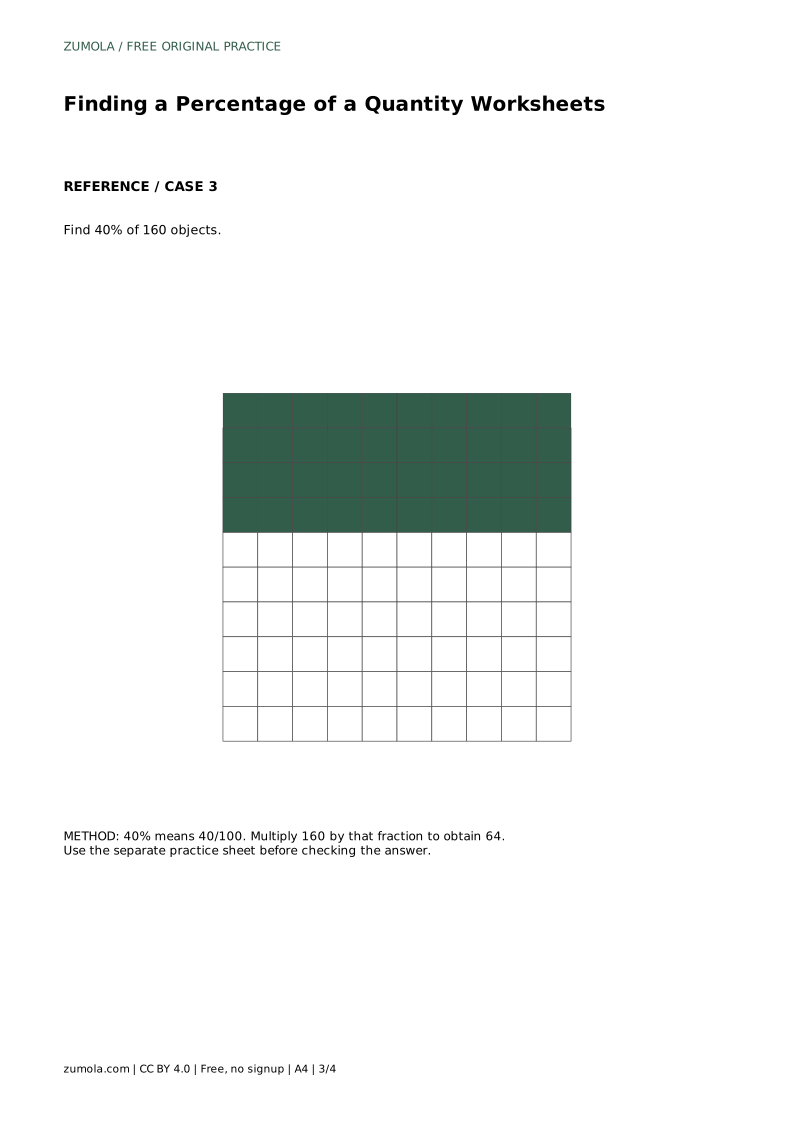
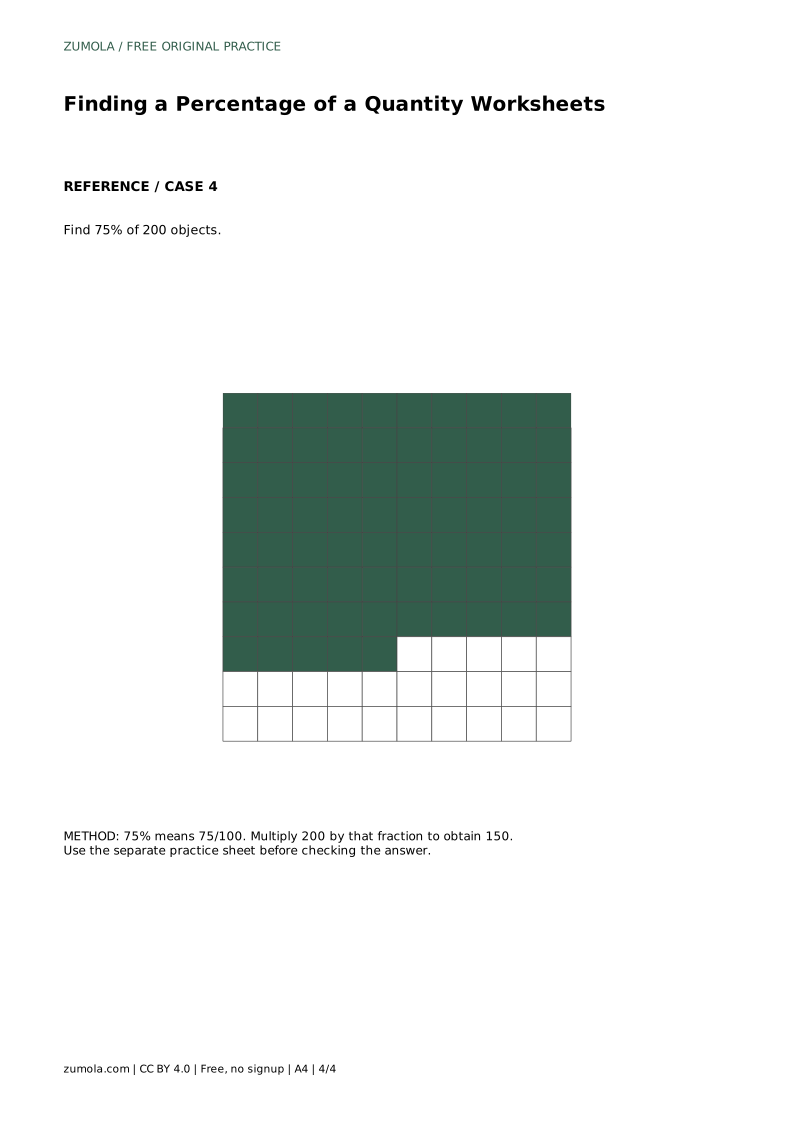
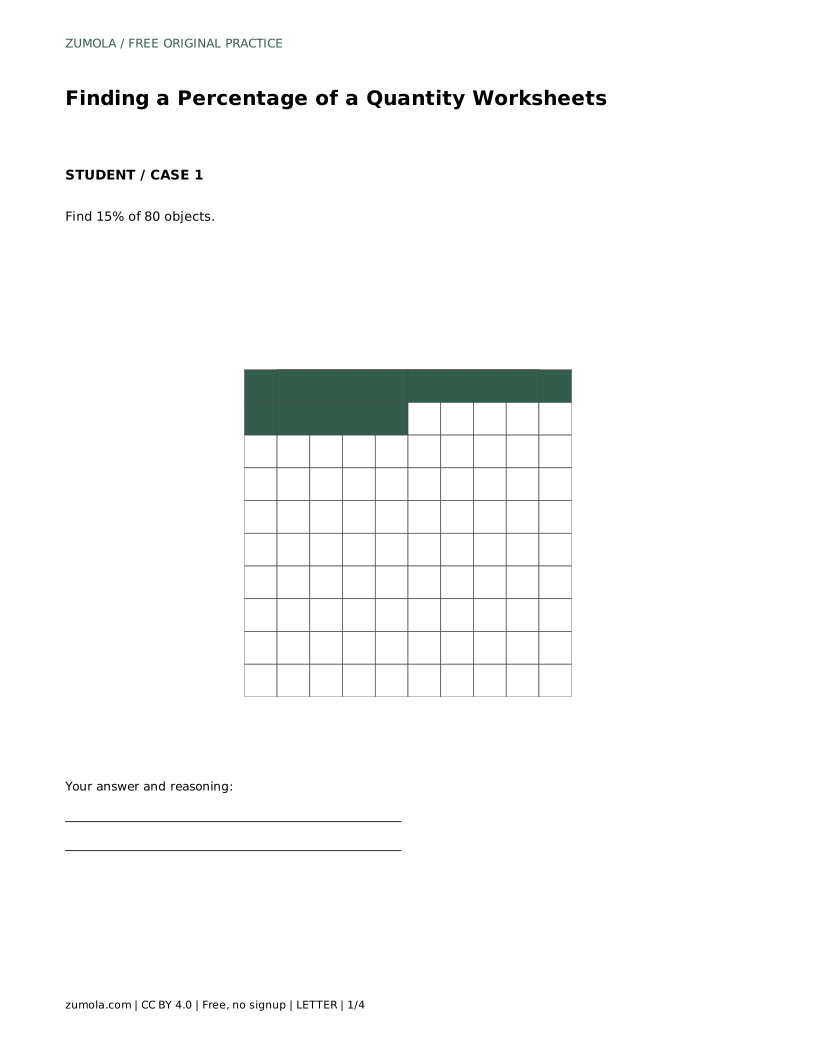
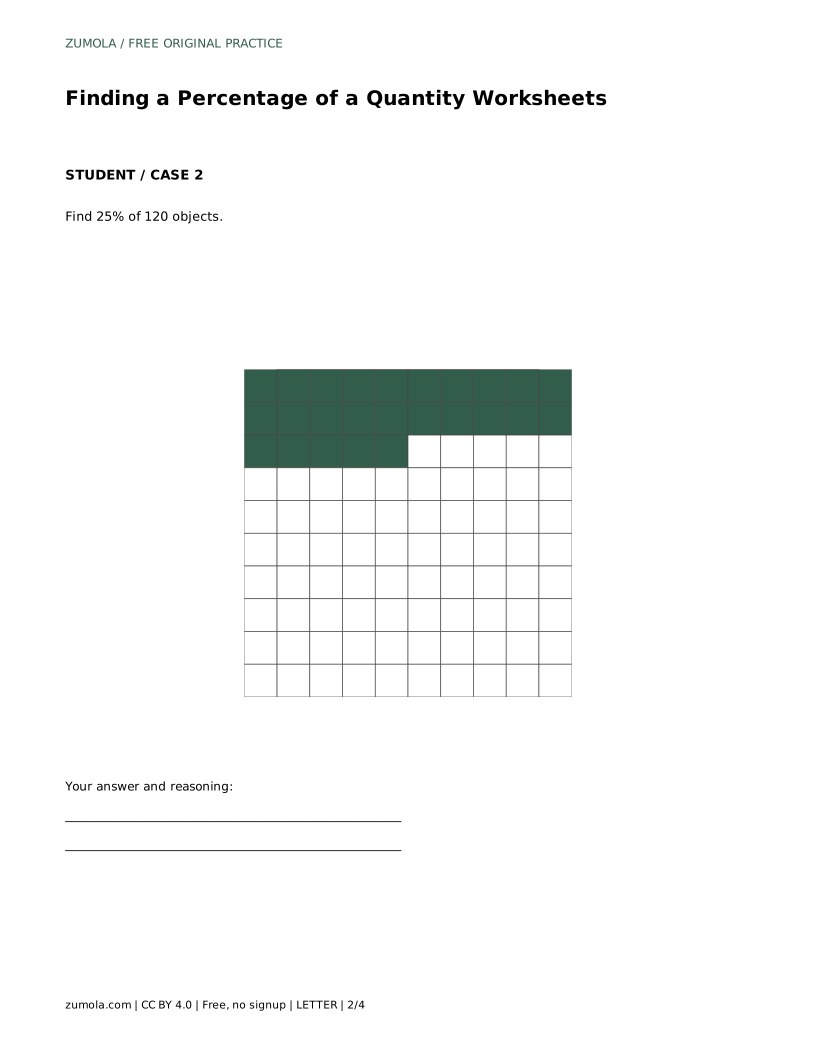
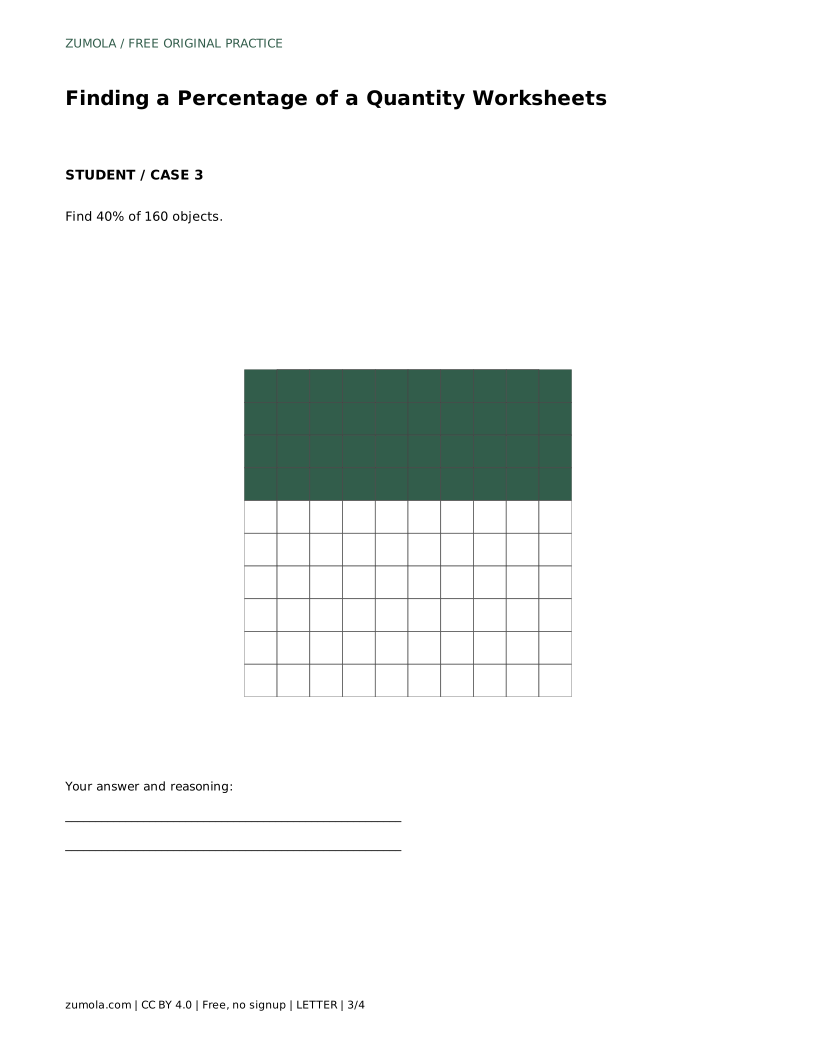
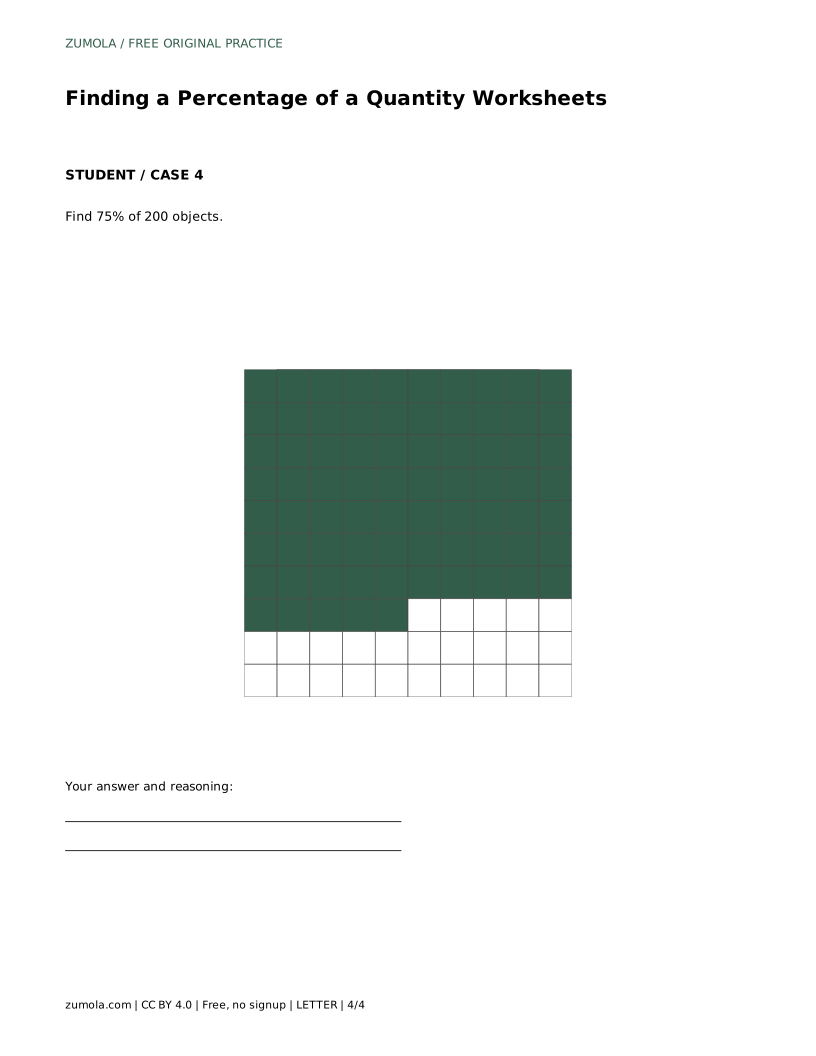
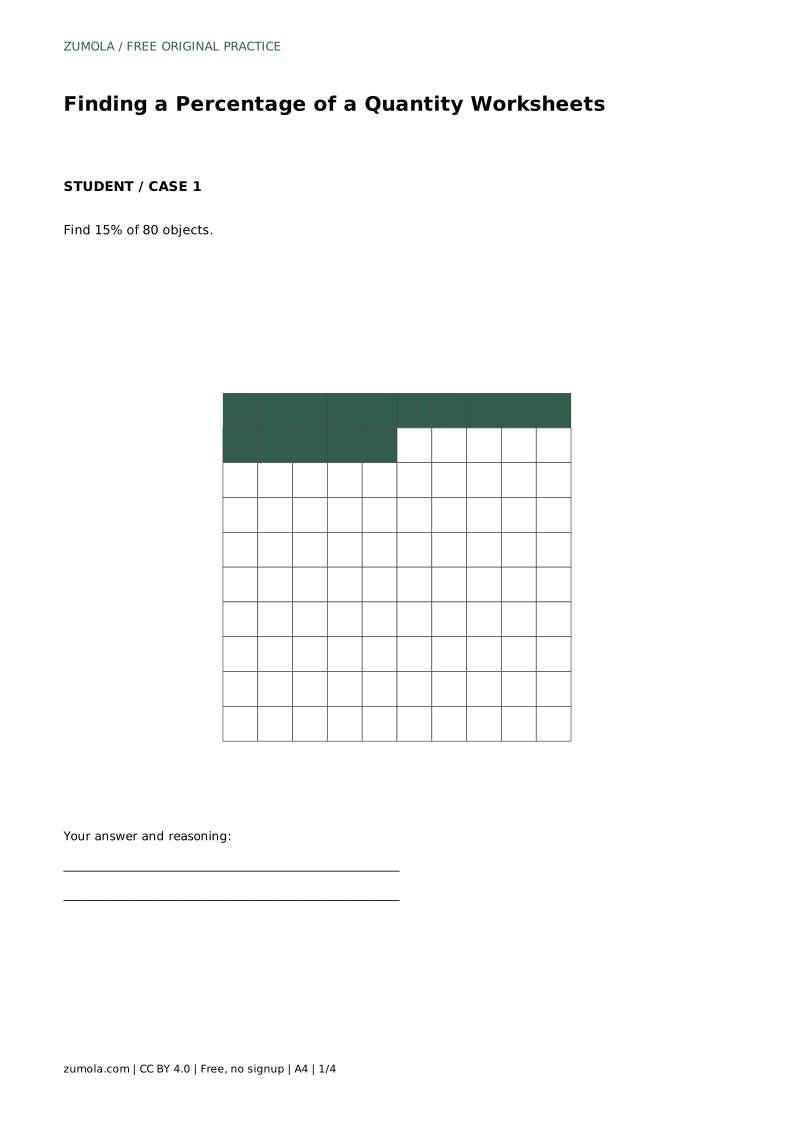
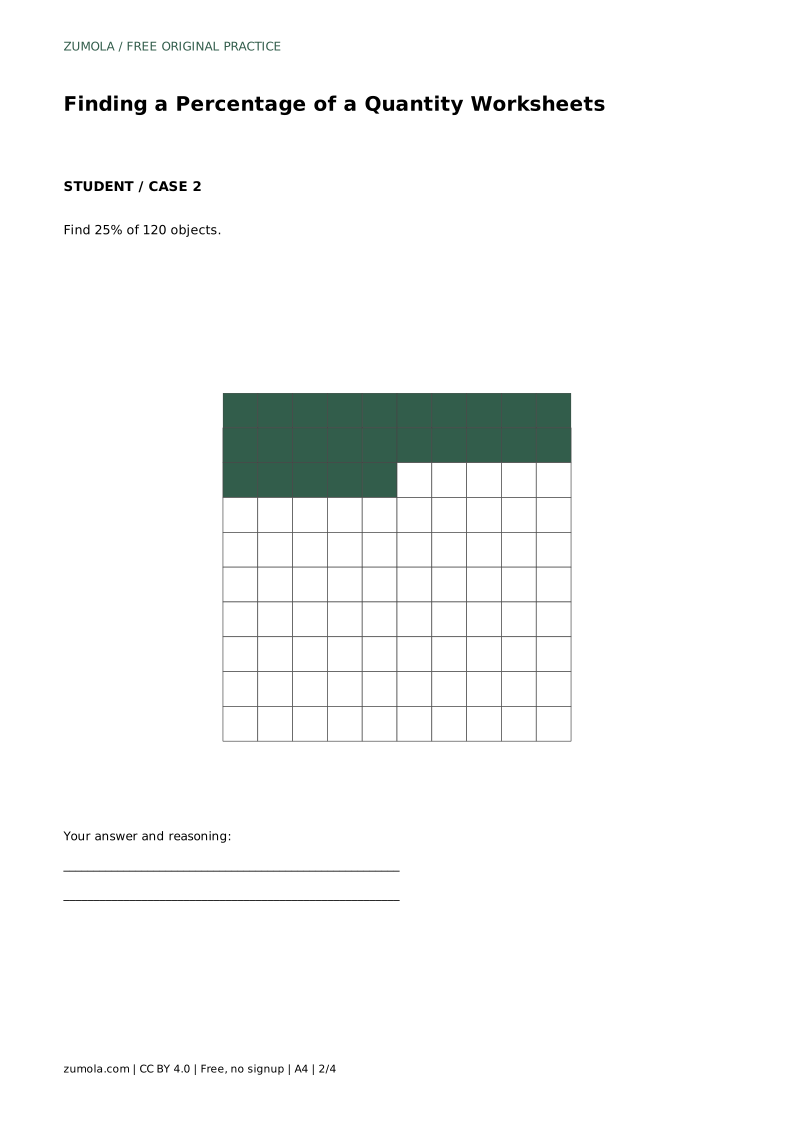
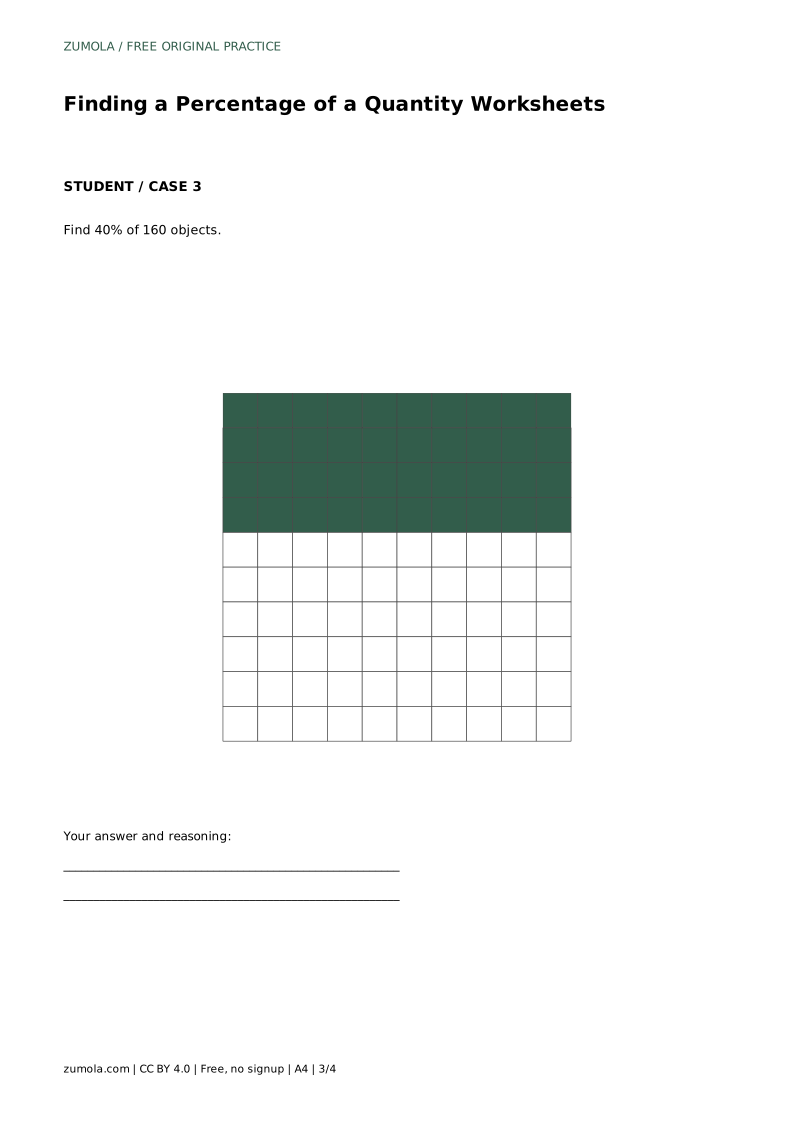
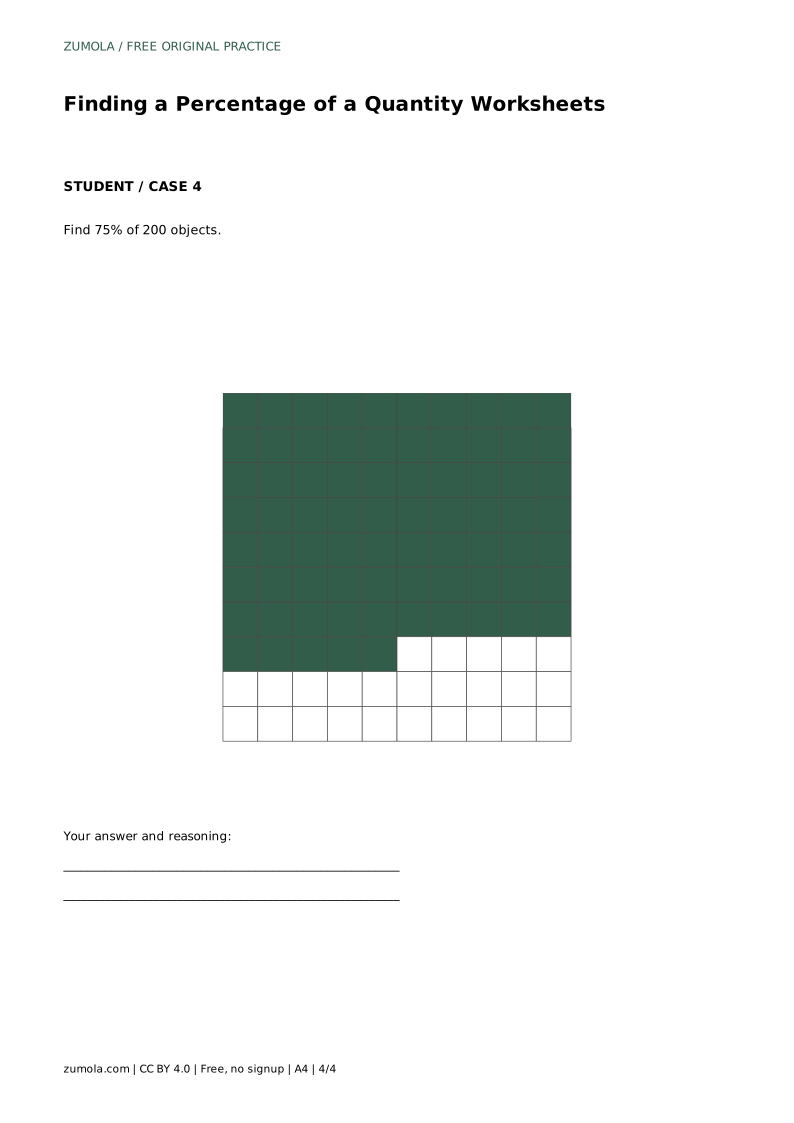
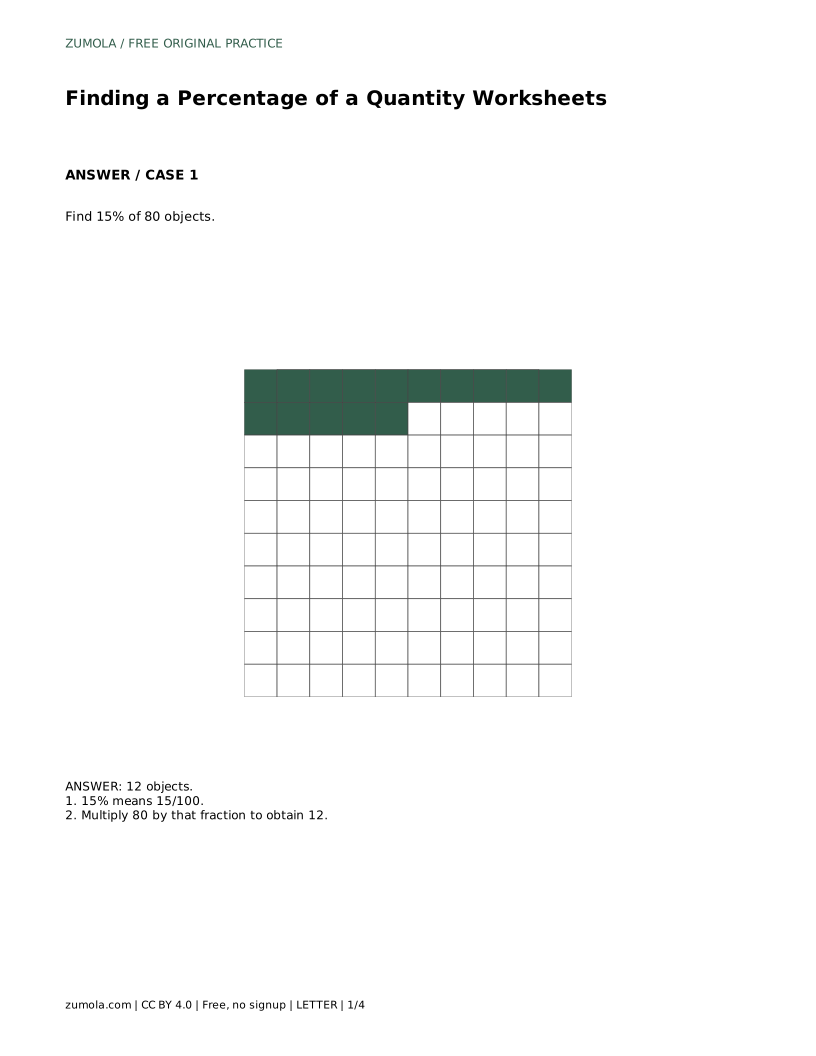
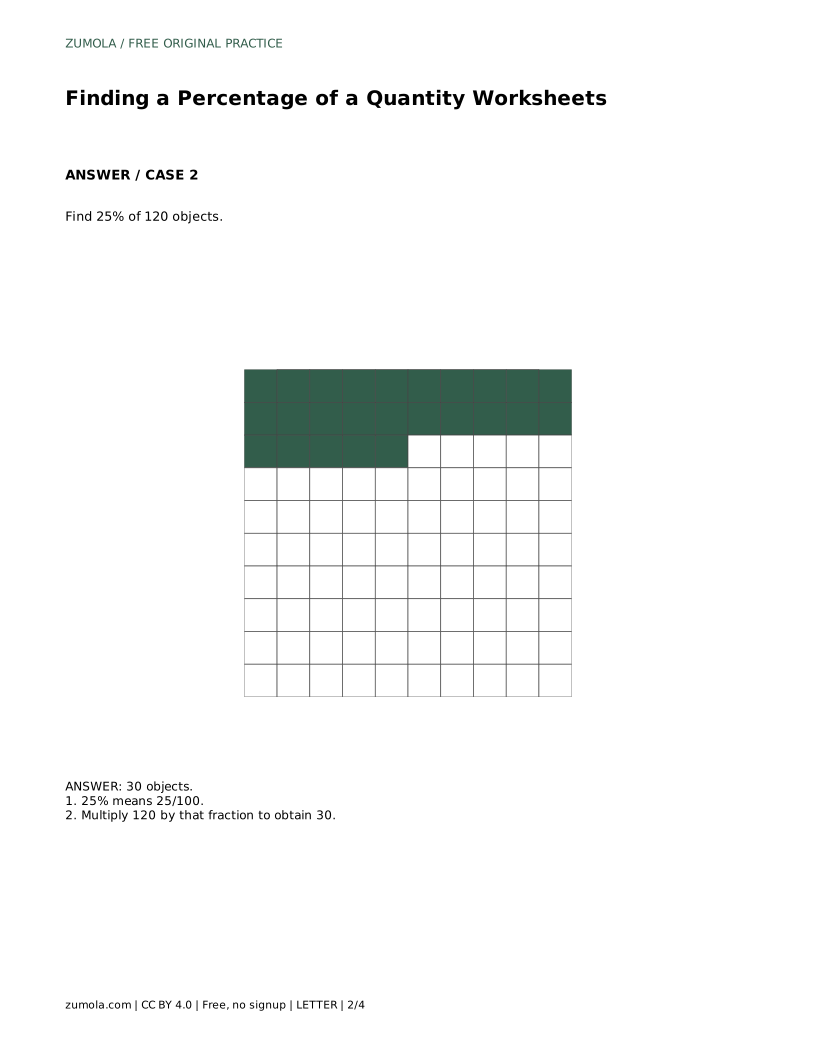
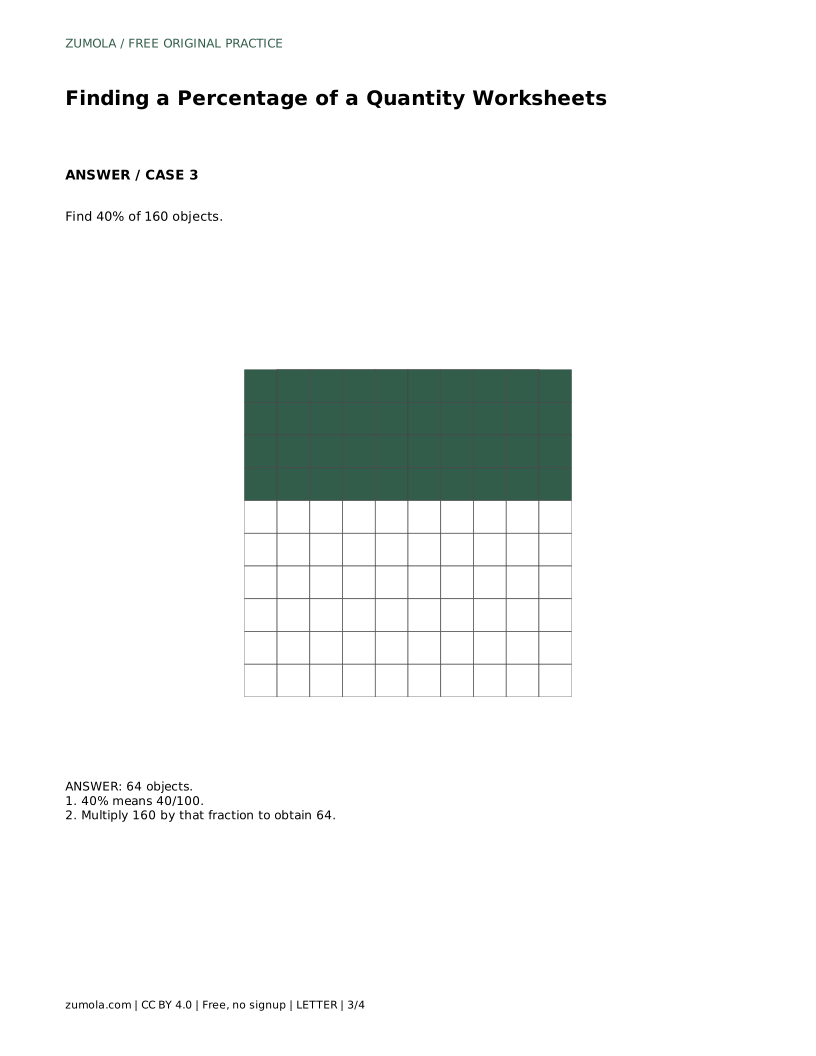
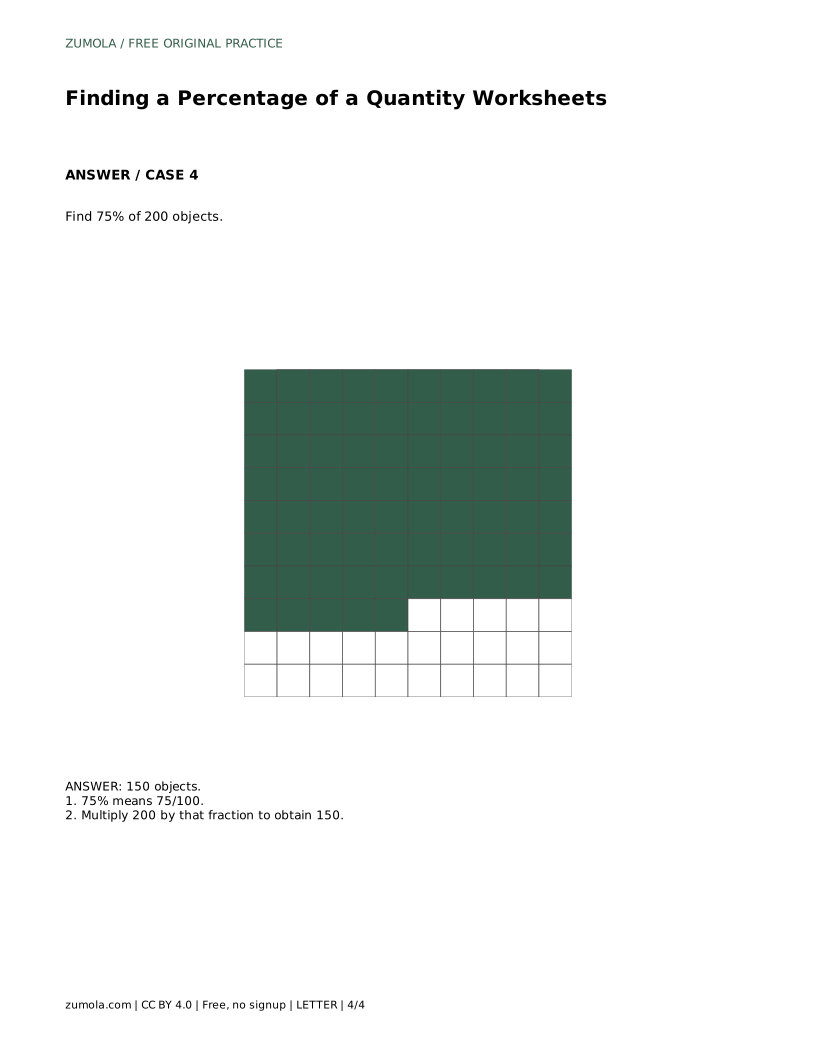
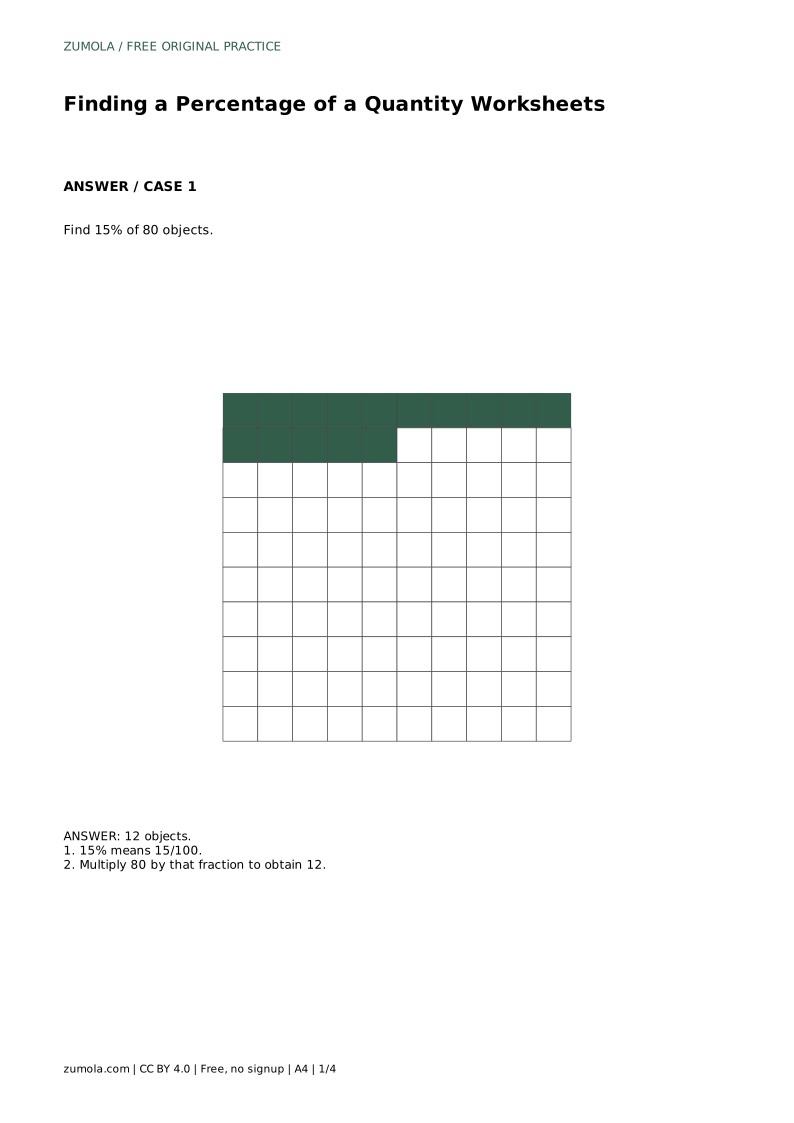
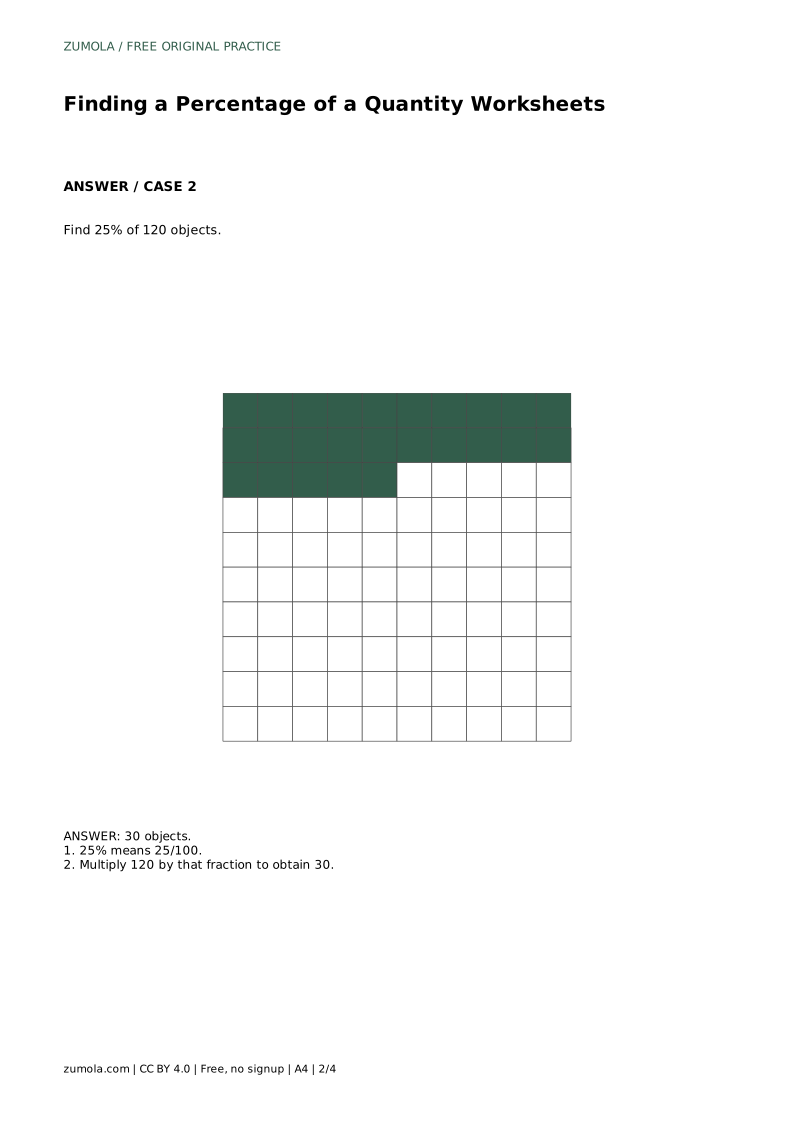
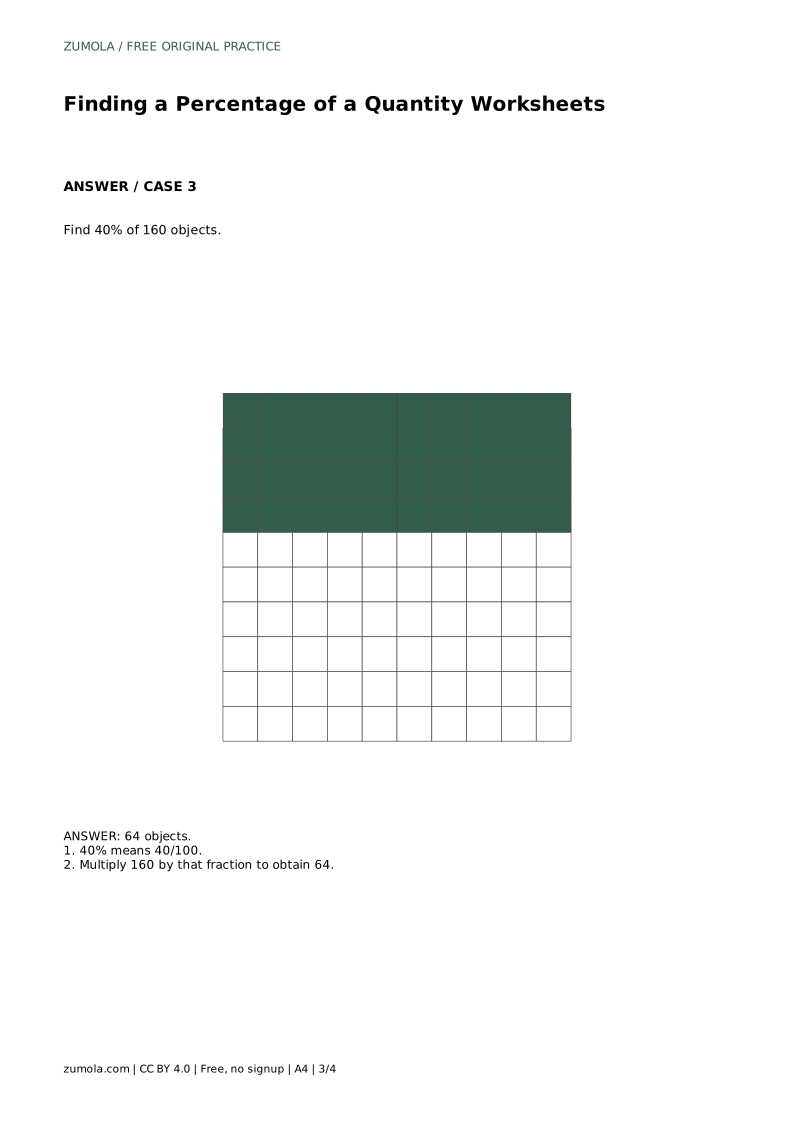
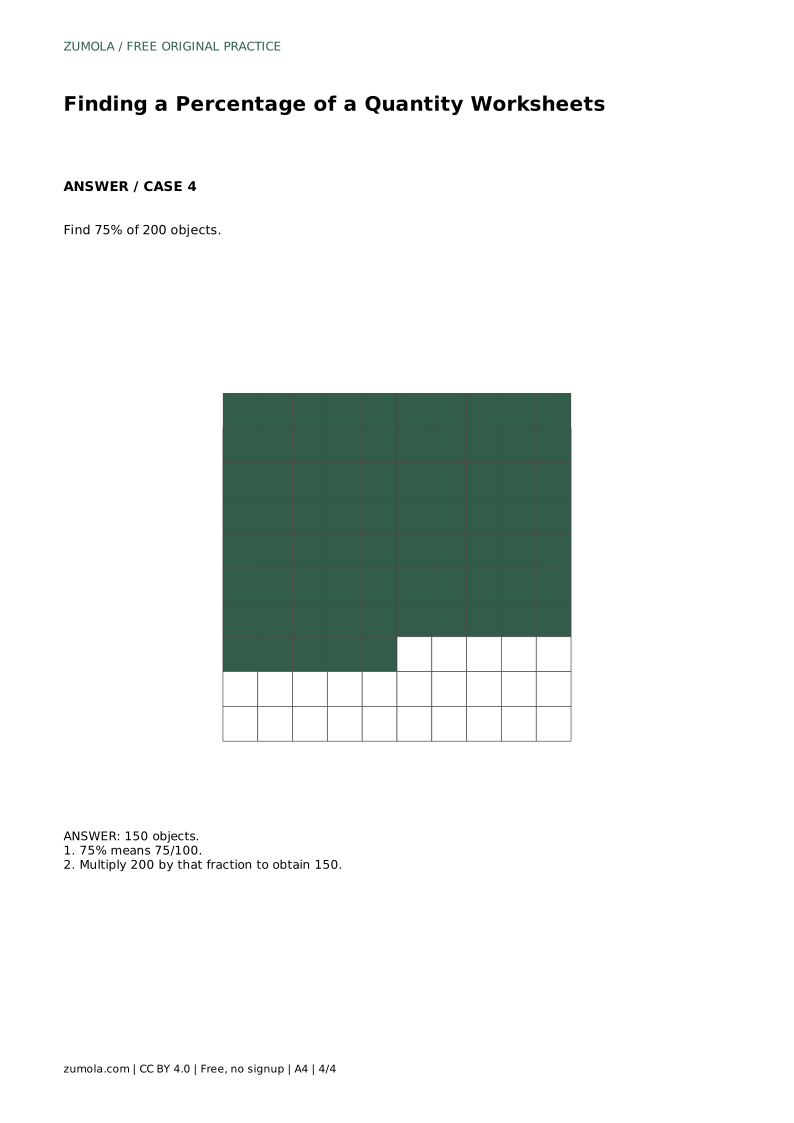
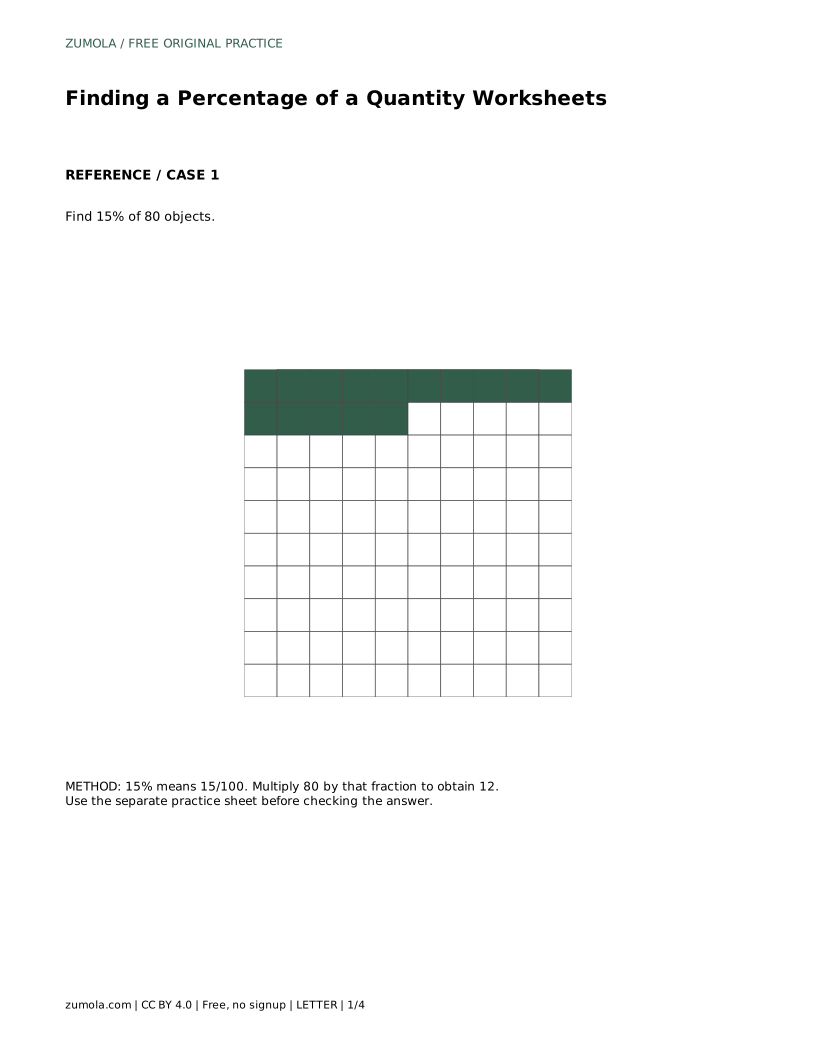
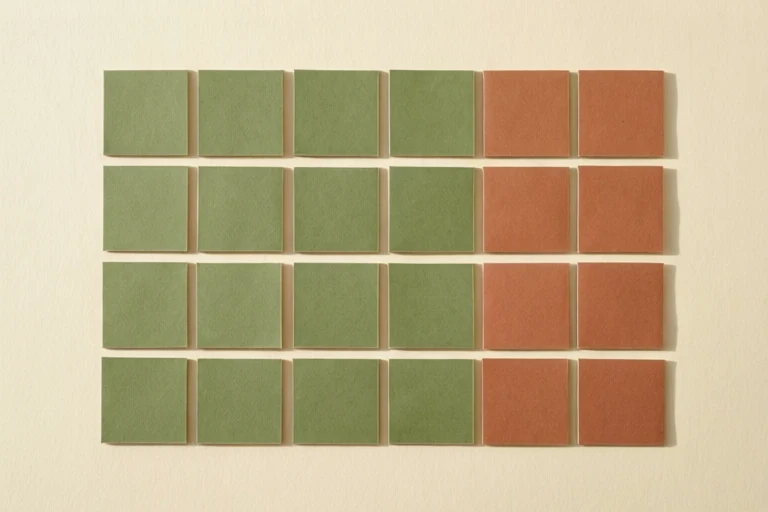
A hundred chart makes this concrete. If the chart represents the whole quantity, shading 15 of its 100 squares shows 15% of the whole. The shaded portion is the answer, provided the whole quantity is understood as the full chart. Keep the whole quantity explicit: 15% of 80 objects is not the same as 15% of 100 objects.
Take 15% of 80 objects. First rewrite 15% as 15/100. Then multiply 80 by 15/100. One route is to divide 80 by 100 to get 0.8, then multiply by 15 to get 12. Another route is to multiply 80 by 15 to get 1200, then divide by 100 to get 12. Both routes are valid because multiplication and division commute here.
The answer is 12 objects. A quick reasonableness check: 15% is less than 20%, and 20% of 80 is 16, so 12 is plausible. Students should always compare the result to the whole; a percent below 100 must give a part smaller than the quantity.
Worksheets on this skill should vary the percent and the quantity while keeping the operation identical. Some items may use percents like 25%, 40%, or 75%, which have friendly fraction equivalents, but do not assume every item simplifies neatly. The method stays the same regardless of whether the numbers are tidy.
This page addresses only finding a percent of a known quantity. It does not cover finding what percent one number is of another, or finding the whole when a percent is known. Mixing those tasks too early causes confusion about which number is the whole. Keep each worksheet focused on one operation so students build a clear mental model before combining skills.
Find 15% of 80 objects.
12 objects. 15% means 15/100. Multiply 80 by that fraction to obtain 12.
It equals 12 objects. Write 15% as 15/100, then multiply 80 by 15/100 to get 12.
Either order works because the operations commute. Dividing 80 by 100 gives 0.8, and multiplying by 15 gives 12; multiplying first gives 1200, and dividing by 100 gives 12.
A hundred chart shows the whole as 100 equal parts, so shading 15 squares represents 15% of the whole and makes the fraction-of-one-hundred idea visible.
All math worksheets · Free coordinate paper
Original resources · CC BY 4.0 · Free for personal and classroom use with attribution.