Reference diagrams
LETTER · Download PDF
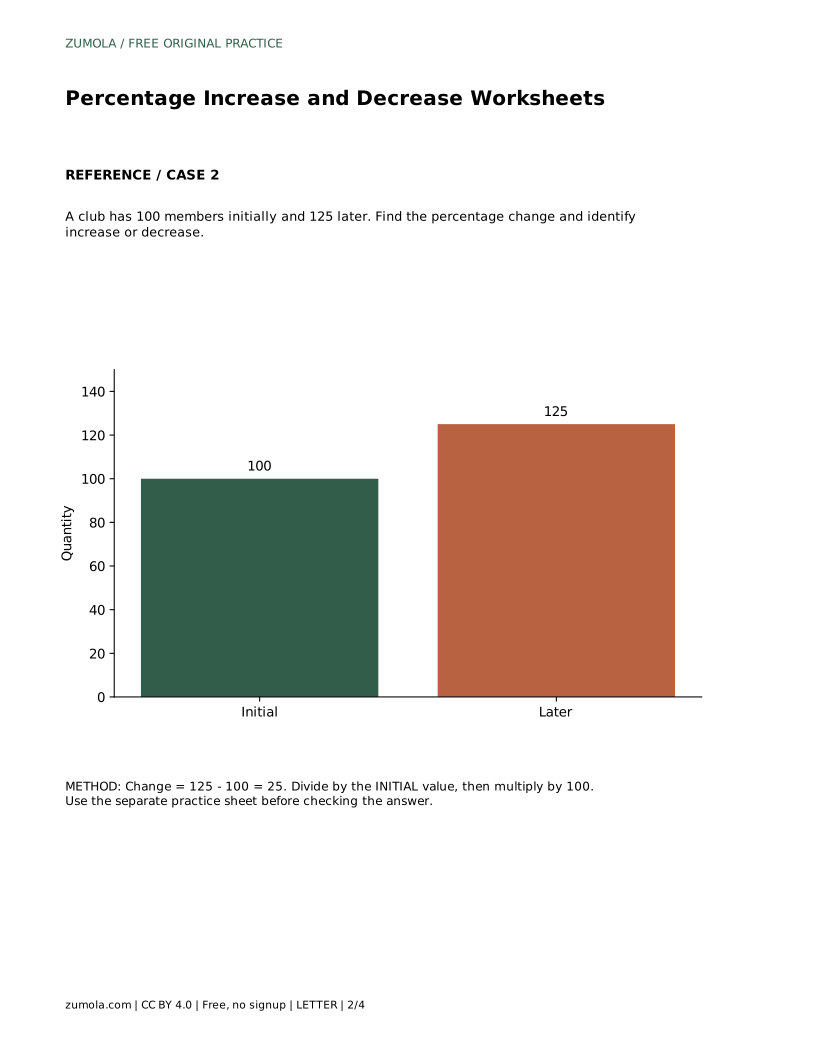
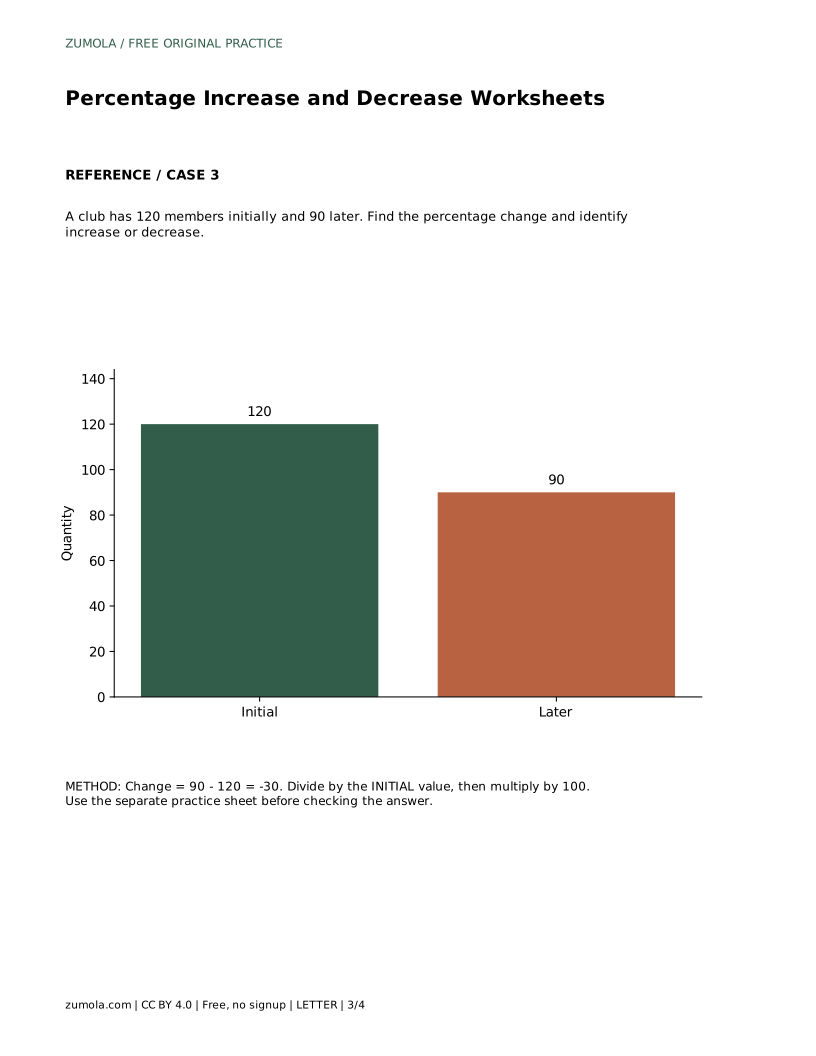
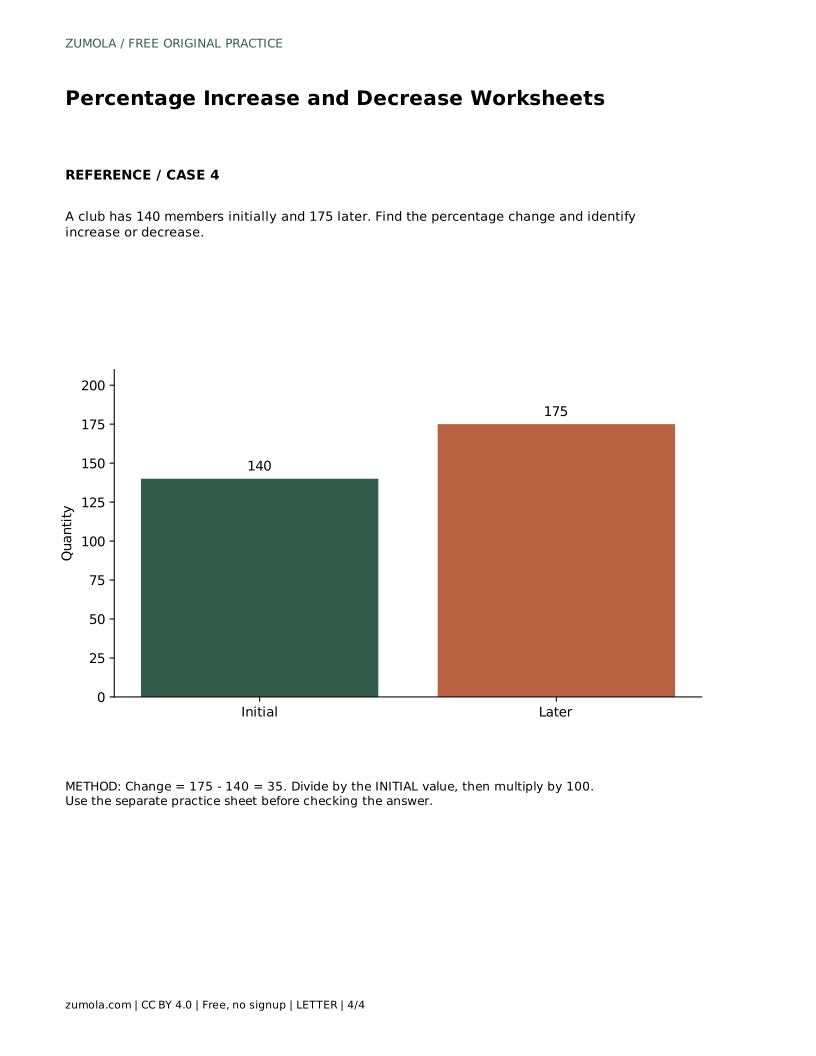
A4 · Download PDF
Free original resources
Teach percent change with printable worksheets. Students subtract initial from later, divide by the initial value, and label the result as an increase or decrease.
Four original cases, with reference diagrams, practice sheets and worked answers. Everything is free; no signup required.
LETTER · Download PDF
A4 · Download PDF
LETTER · Download PDF
A4 · Download PDF
LETTER · Download PDF
A4 · Download PDF
Use A4 or US Letter to match your printer. Use the stated values and conditions to solve each exercise; diagrams are not physical measuring rulers.
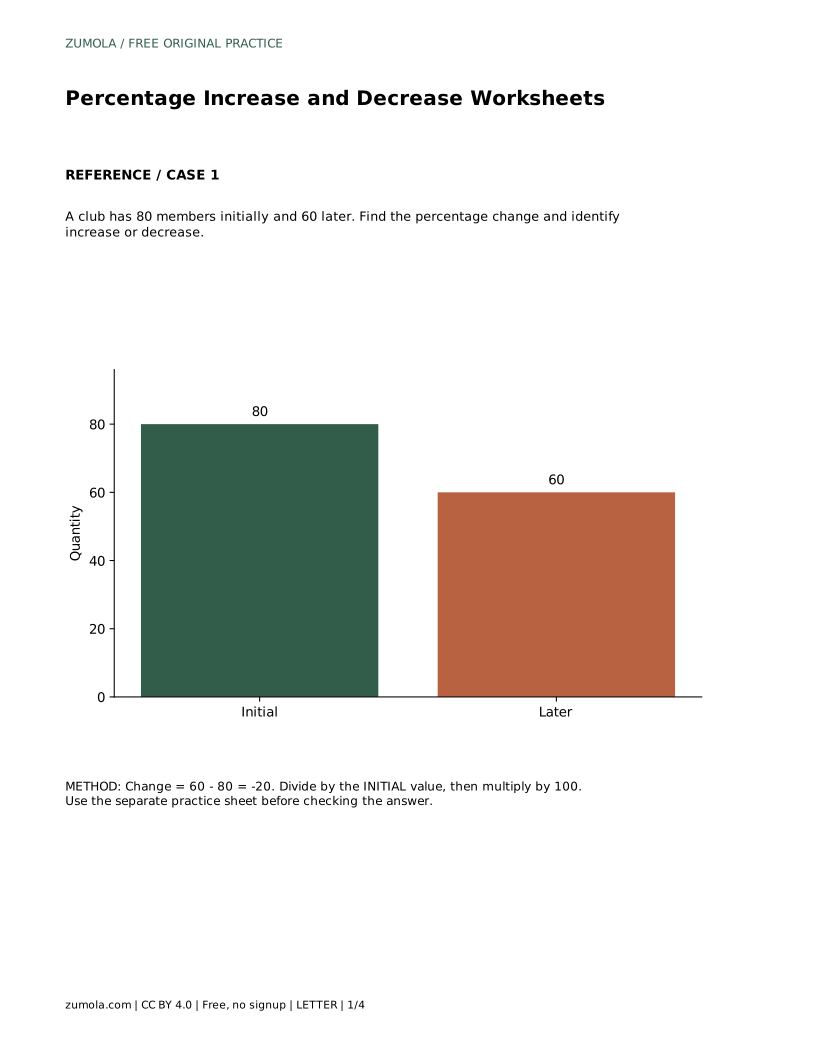
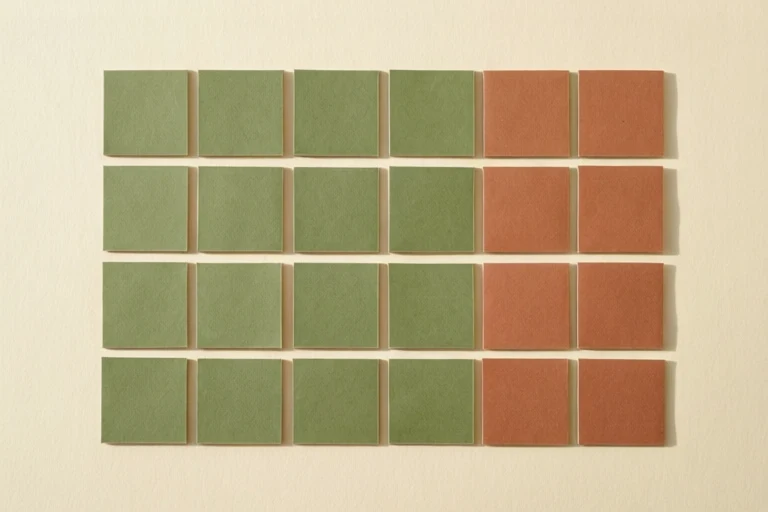
Percent change compares a later amount with the amount you started from. The initial value is the anchor, so it always goes in the denominator. These worksheets give students structured practice at finding the difference, dividing by the initial value, multiplying by 100, and stating whether the result is an increase or a decrease. A bar sketch of the two amounts helps students see the direction before they calculate.
Percent change answers one question: how large is the difference compared with where we started? Begin by subtracting the initial value from the later value. A positive difference means the quantity grew; a negative difference means it shrank. Then divide that difference by the initial value, not the later one, and multiply by 100 to express the result as a percent.
Keep the sign until the final step. A result of -25 means a 25% decrease, while +25 means a 25% increase. Writing the sign and the word together prevents the common slip of reporting a decrease as a positive percent. Because the denominator is the initial value, the same absolute change can produce different percentages when starting amounts differ.
A simple bar sketch with one bar for the initial amount and one for the later amount makes direction visible. If the later bar is shorter, expect a decrease; if taller, expect an increase. The bars do not give the percentage by themselves, but they catch sign errors early.
Students should label each bar with its number and note which is the starting point. The starting bar is the reference for the whole calculation. Comparing two bars of equal height gives a change of zero, which is neither an increase nor a decrease.
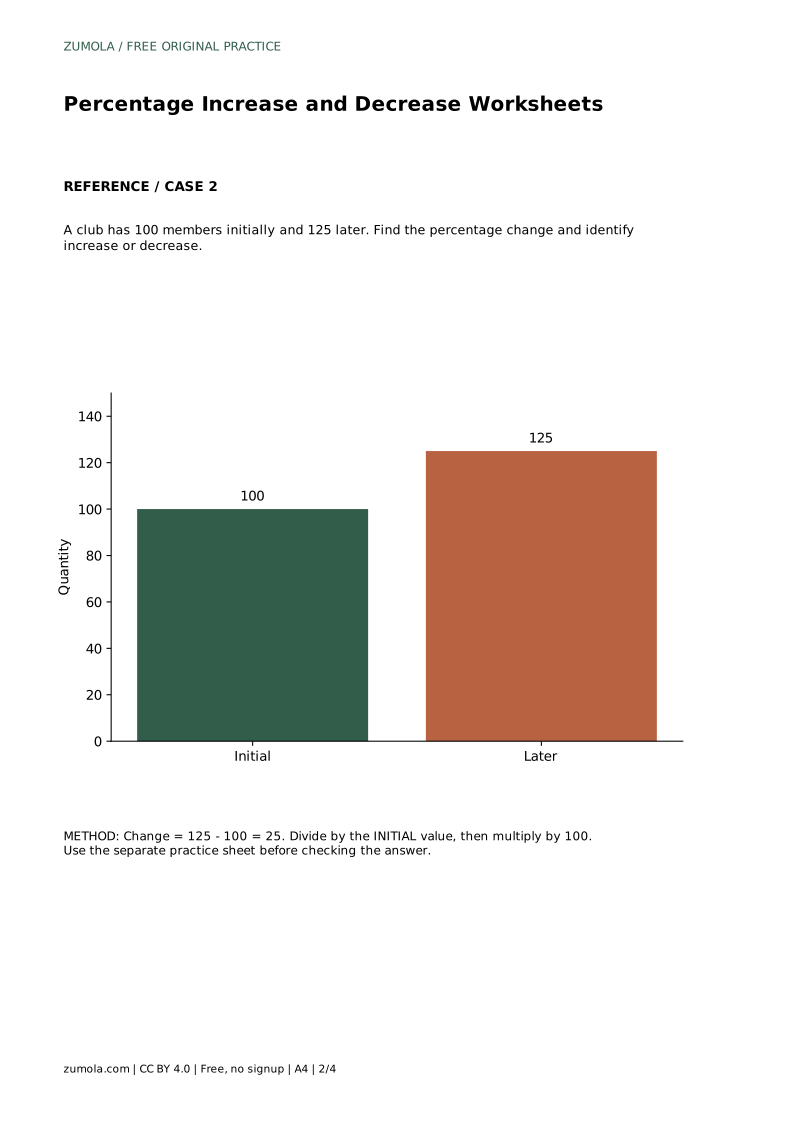
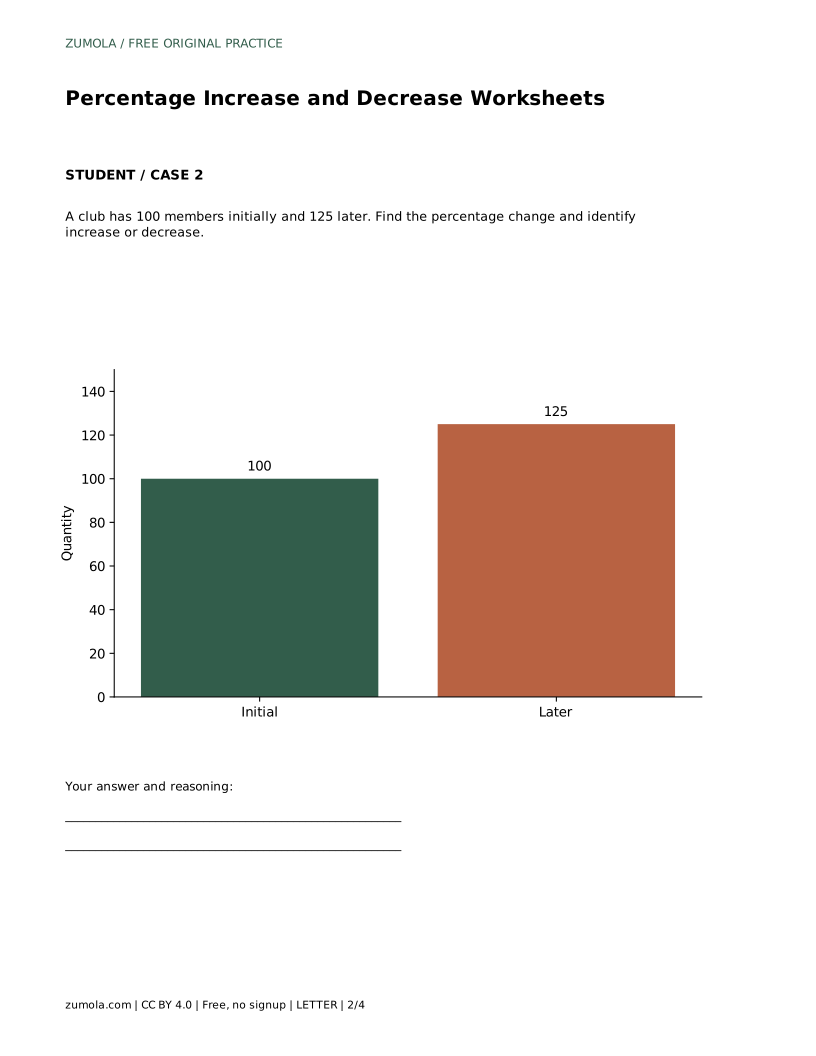
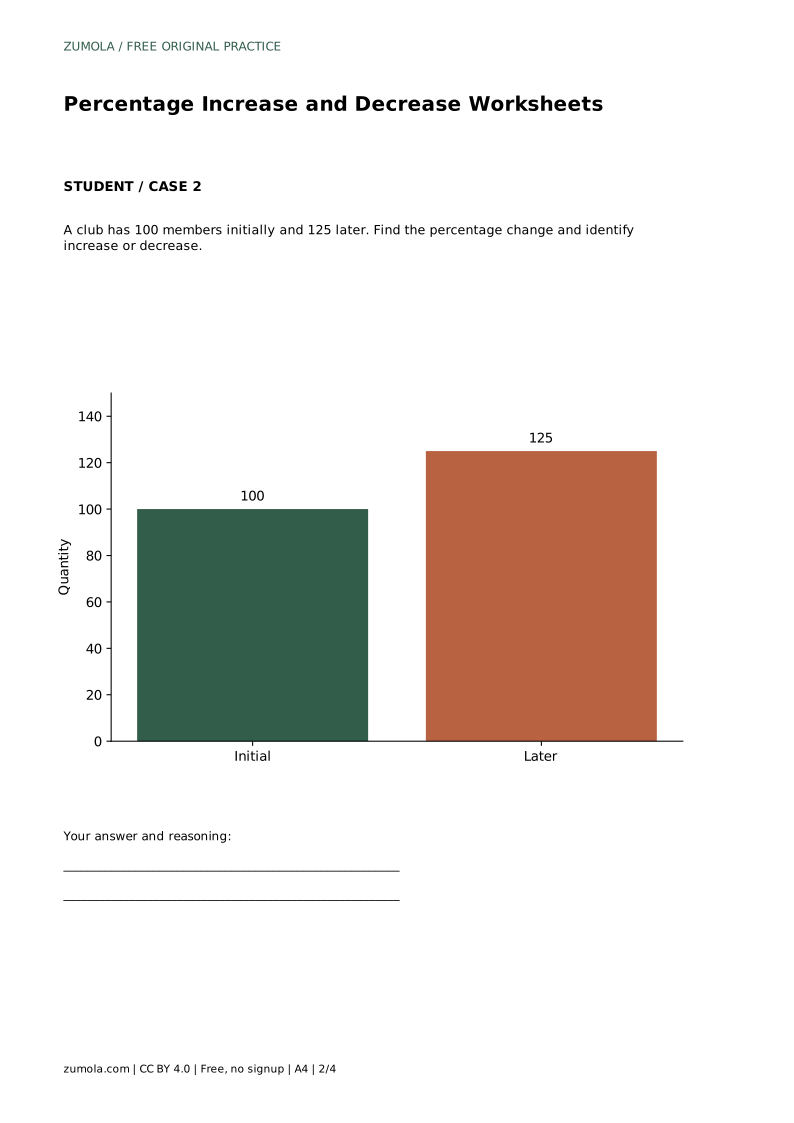
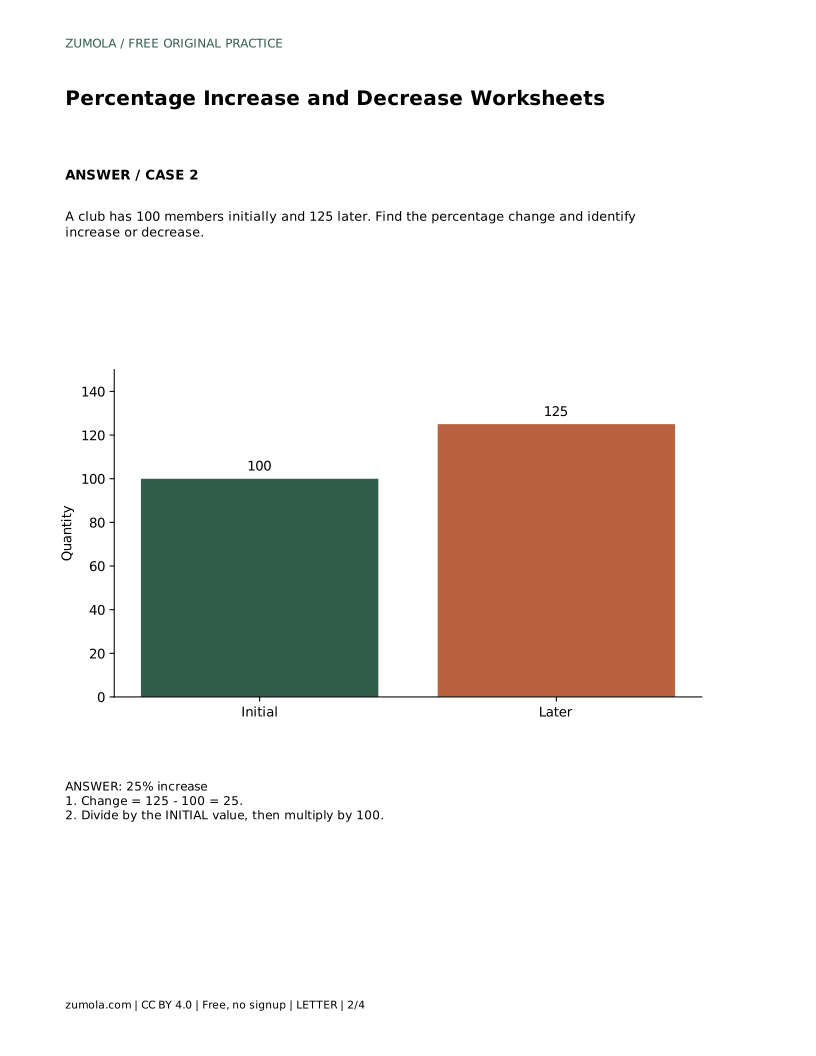
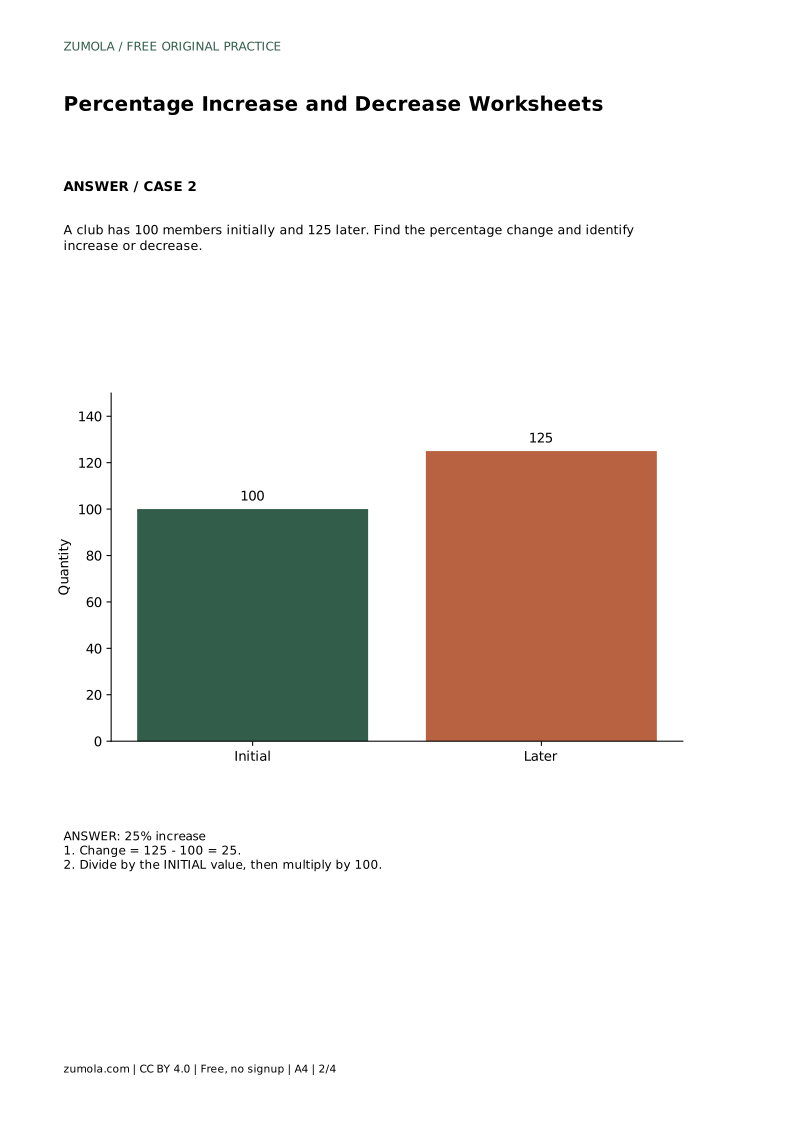
A quick reverse check confirms the work. If the answer is a 25% increase from 100, then 25% of 100 is 25, and 100 plus 25 equals 125, matching the later value. For a decrease, subtract the percentage of the initial value from the initial value.
This check also exposes the classic error of dividing by the later value. Dividing by the wrong base gives a different percentage that will not reverse correctly. Always rebuild the later value from the initial value and the stated percent.
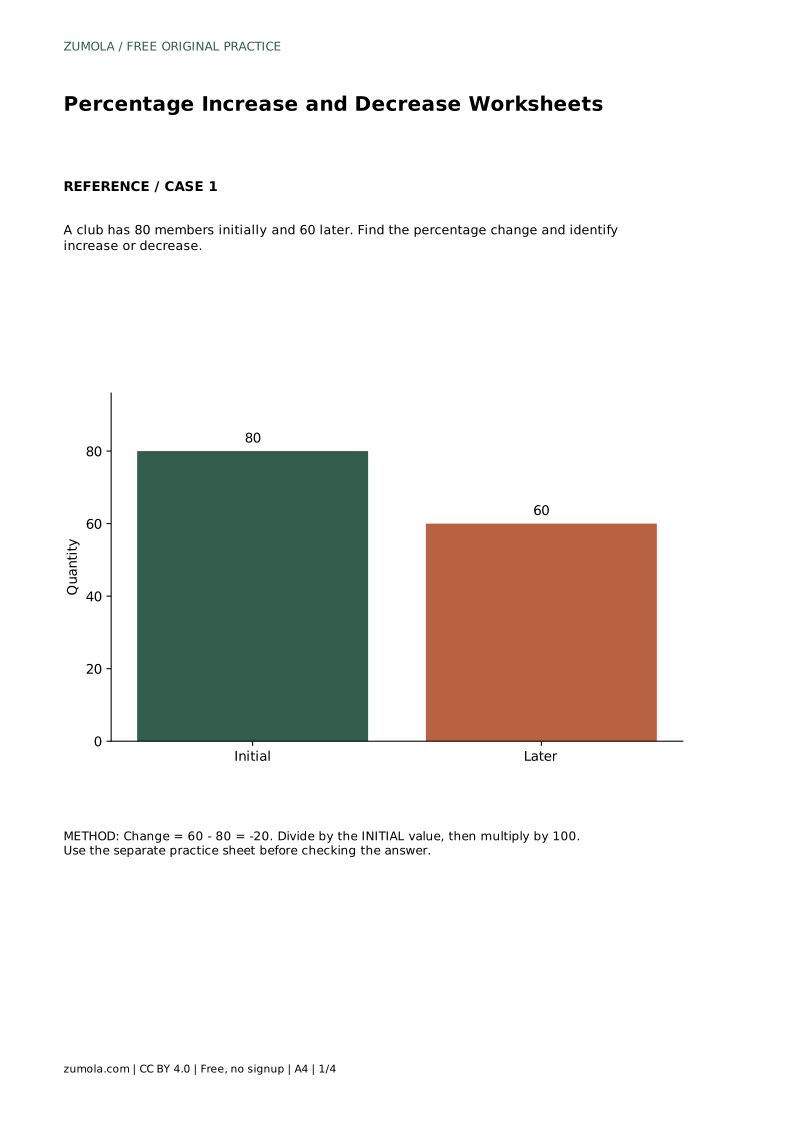
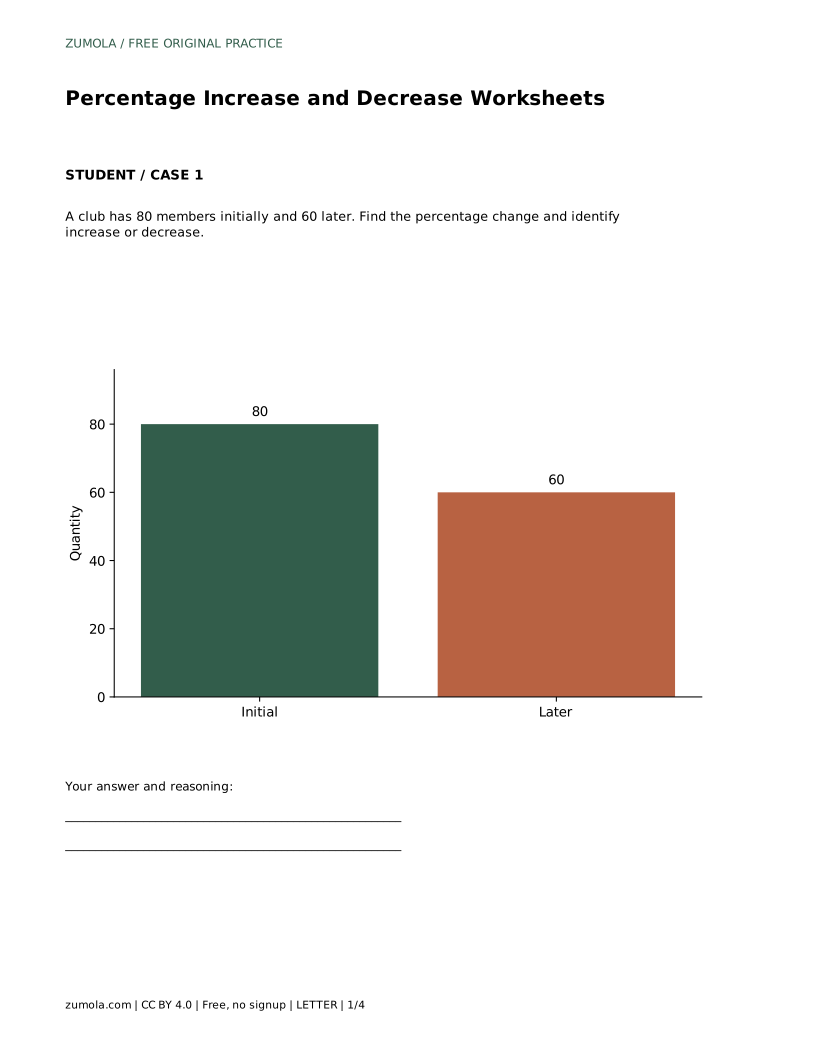
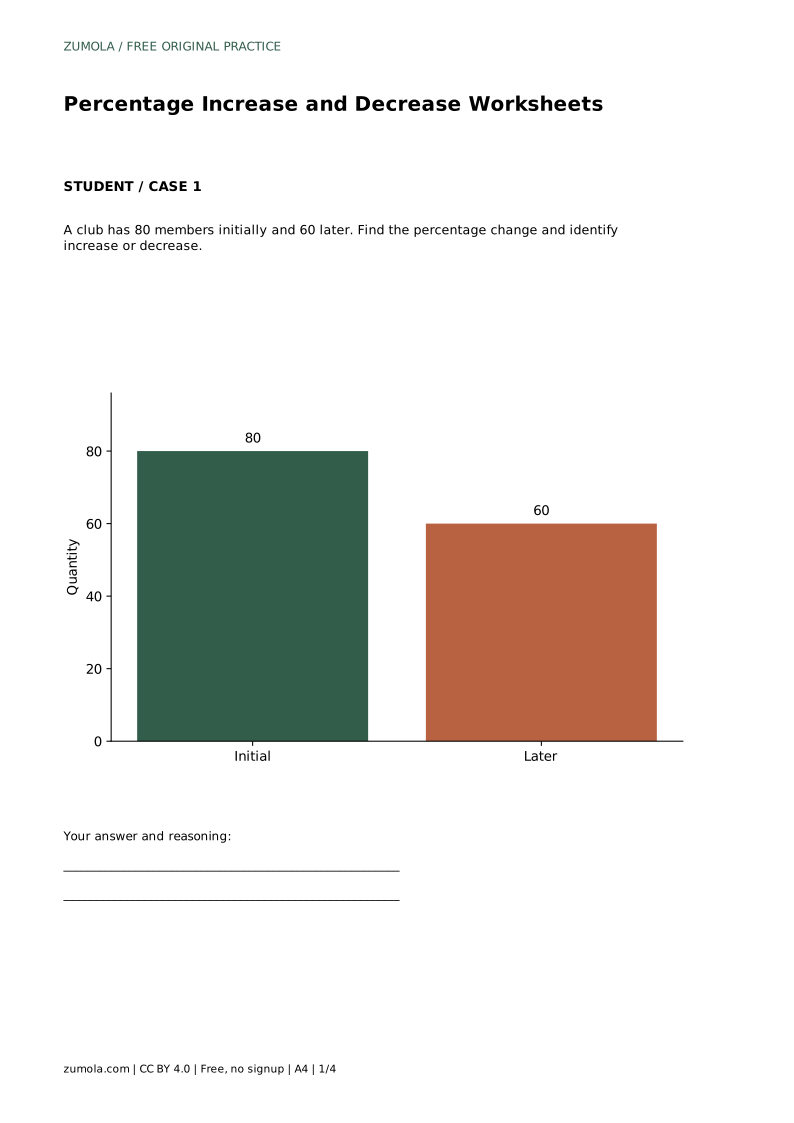
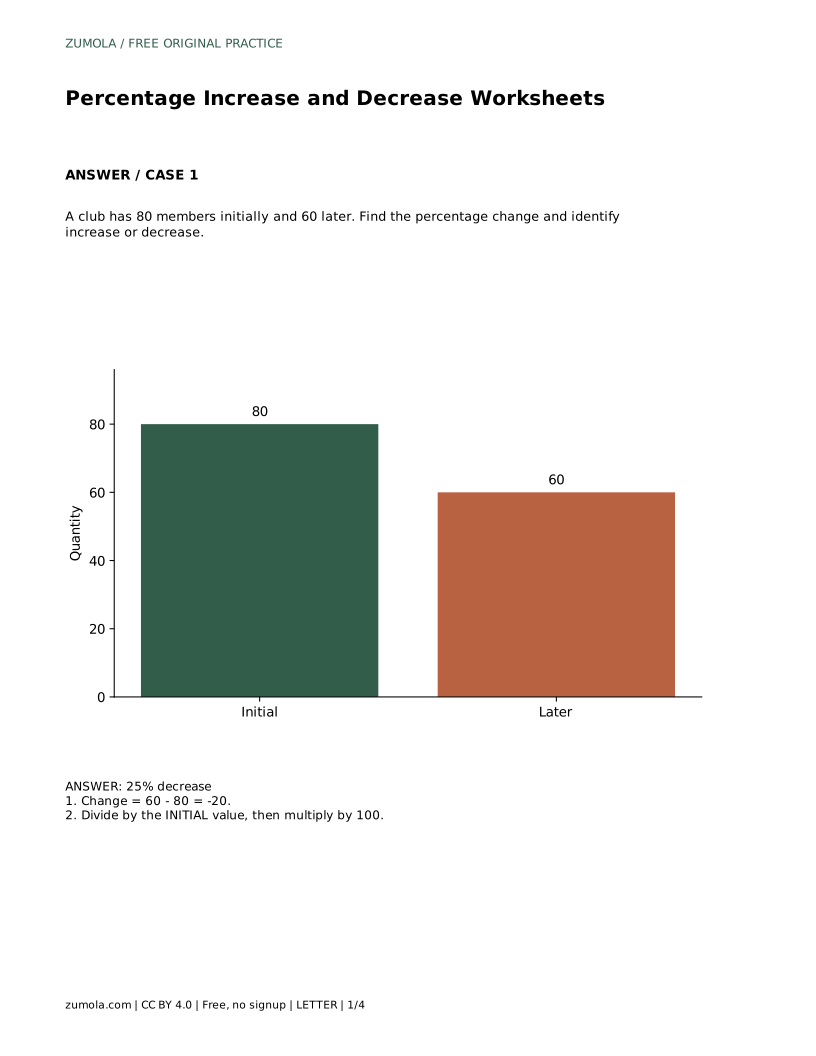
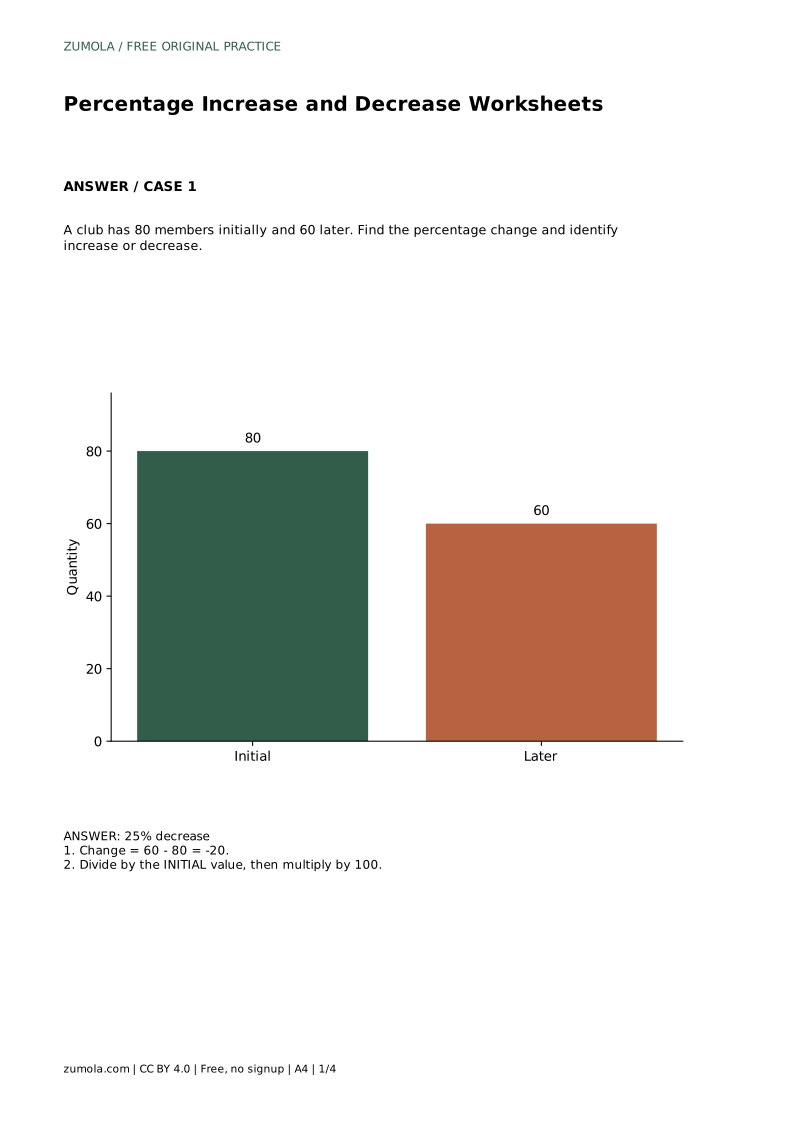
A club has 80 members initially and 60 later. Find the percentage change and identify increase or decrease.
25% decrease Change = 60 - 80 = -20. Divide by the INITIAL value, then multiply by 100.
The initial value, because percent change measures the difference relative to where the quantity started.
It means the quantity decreased. A result of -25 corresponds to a 25% decrease.
The change is zero, so the percent change is 0%, which is neither an increase nor a decrease.
All math worksheets · Free coordinate paper
Original resources · CC BY 4.0 · Free for personal and classroom use with attribution.