Reference diagrams
LETTER · Download PDF
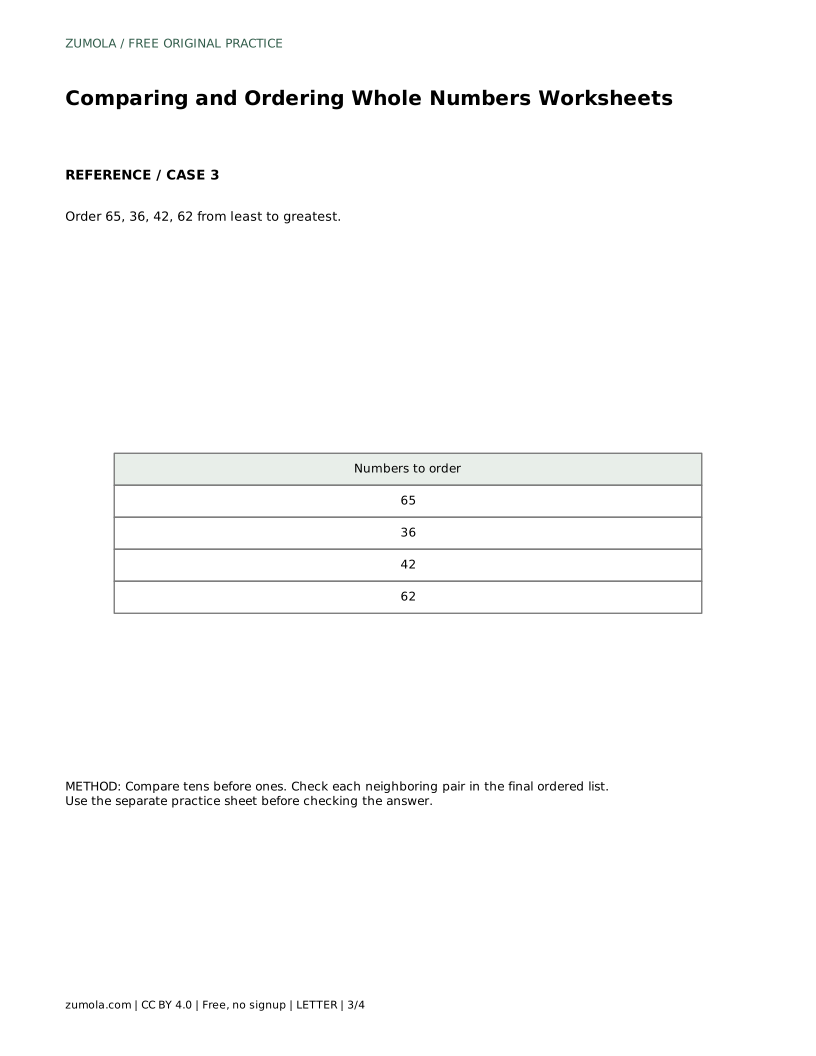
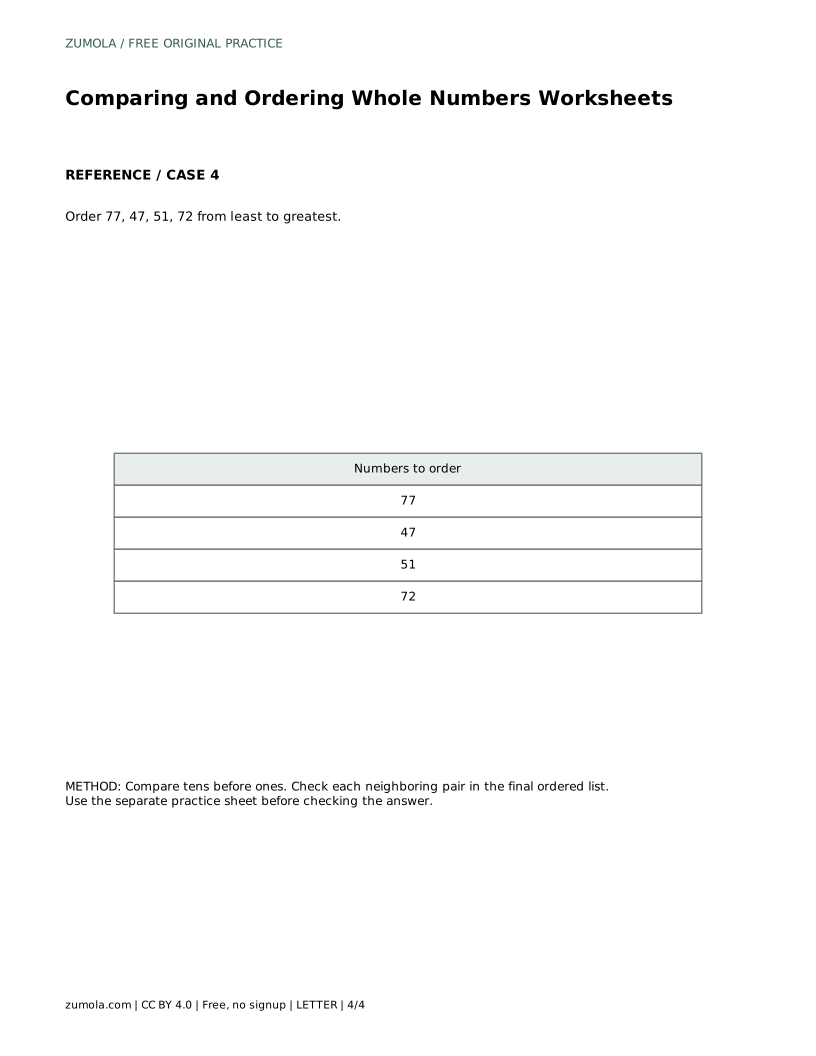
A4 · Download PDF
Free original resources
Teach students to order two-digit whole numbers from least to greatest by comparing tens first, then ones, with a worked example, rubric, and common-error fixes.
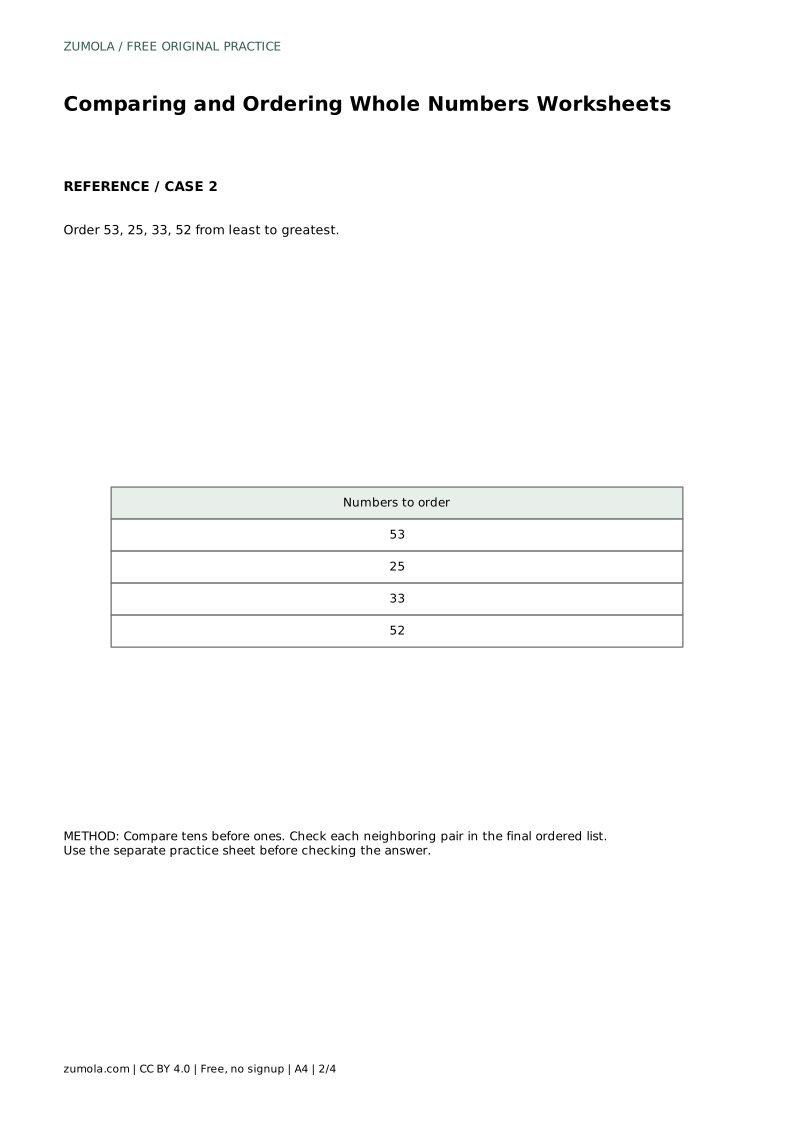
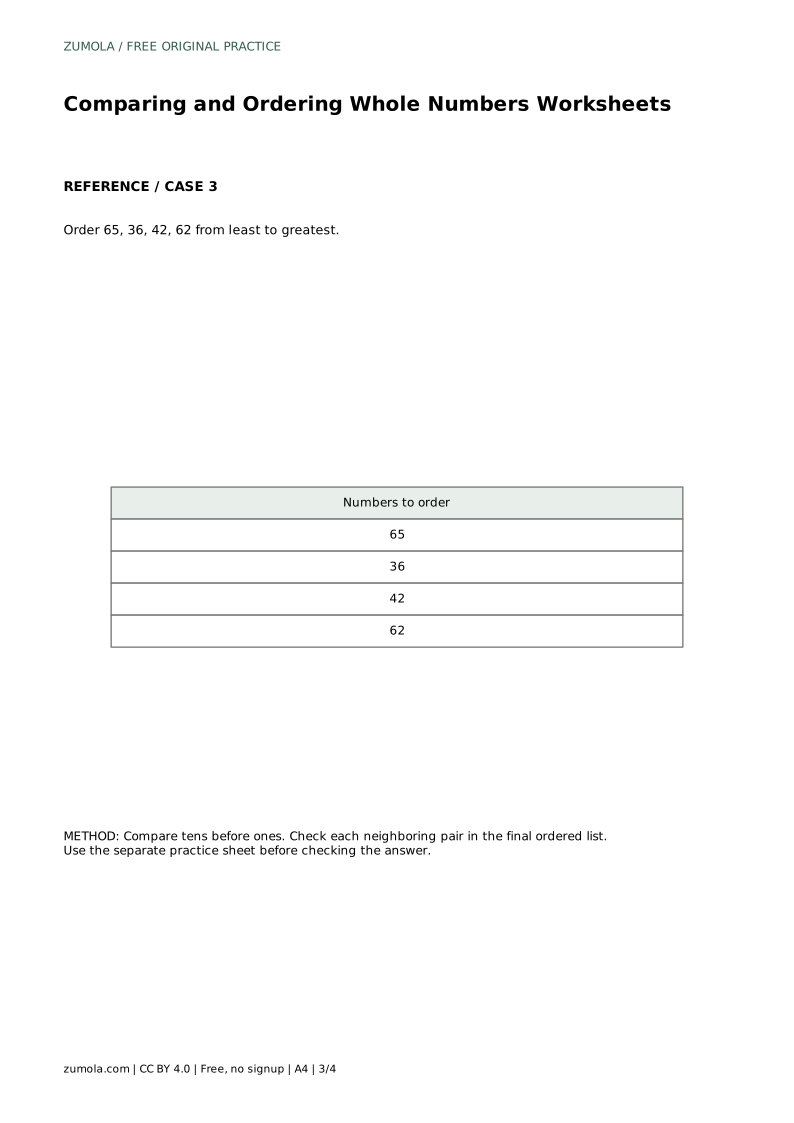
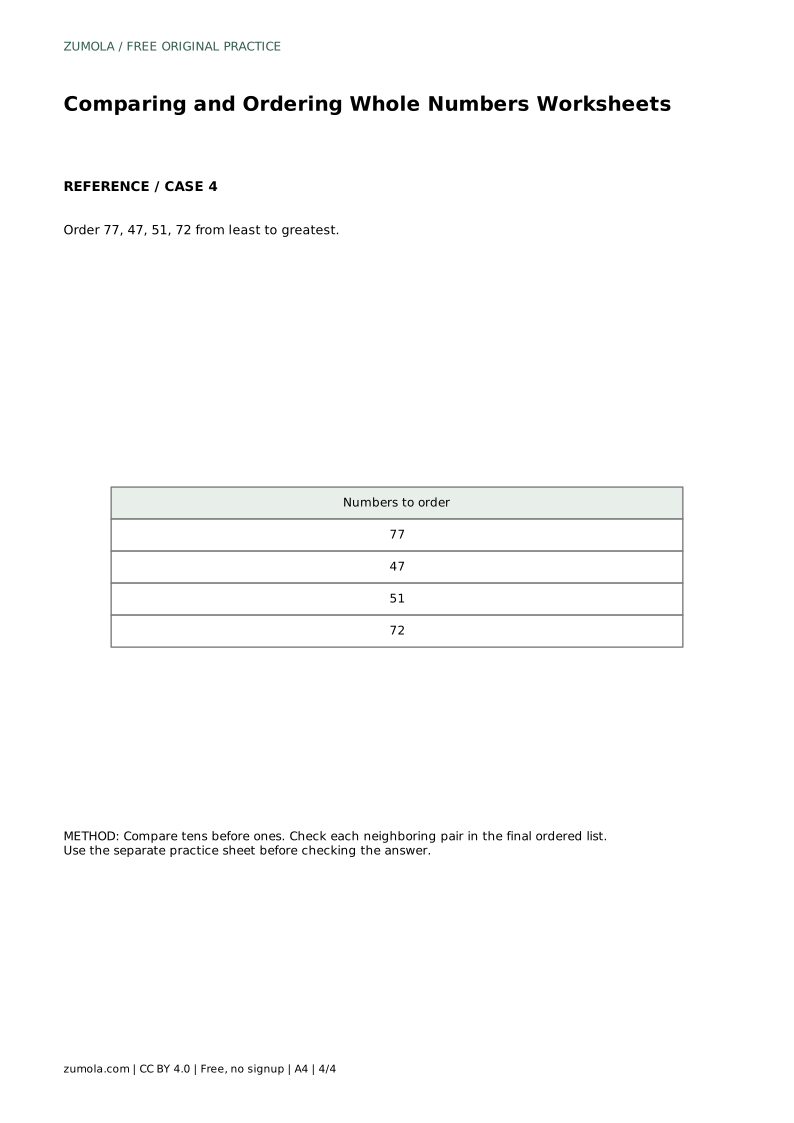
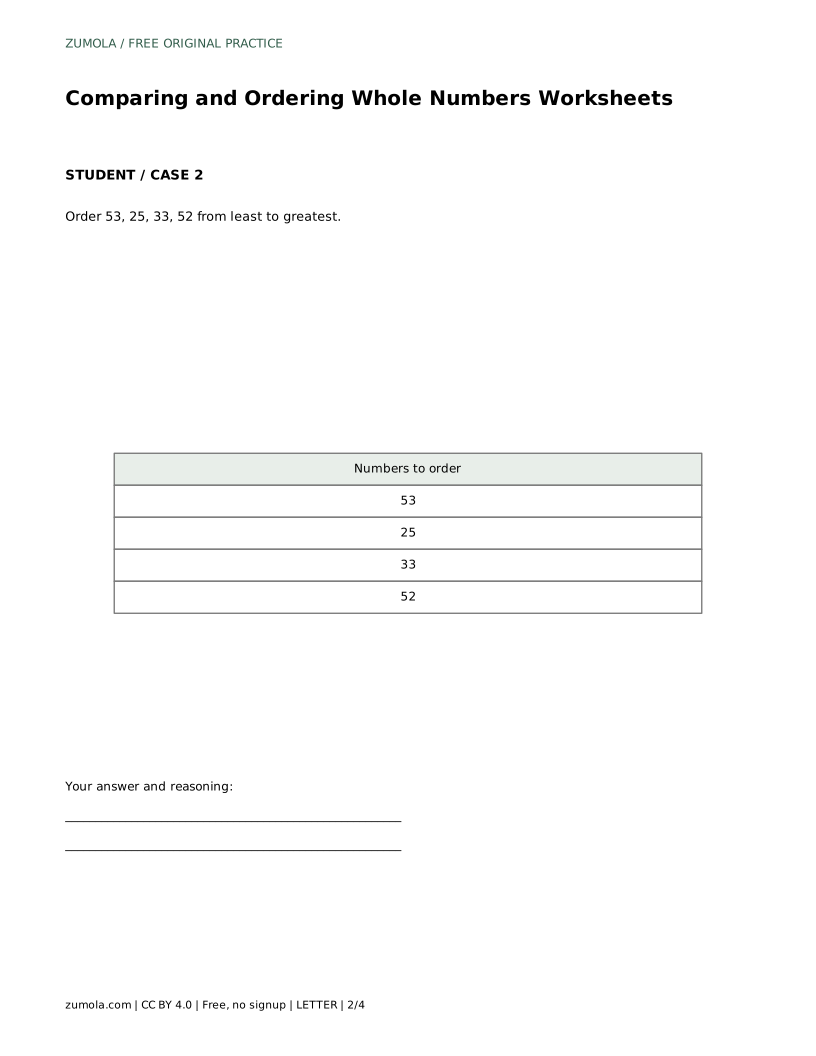
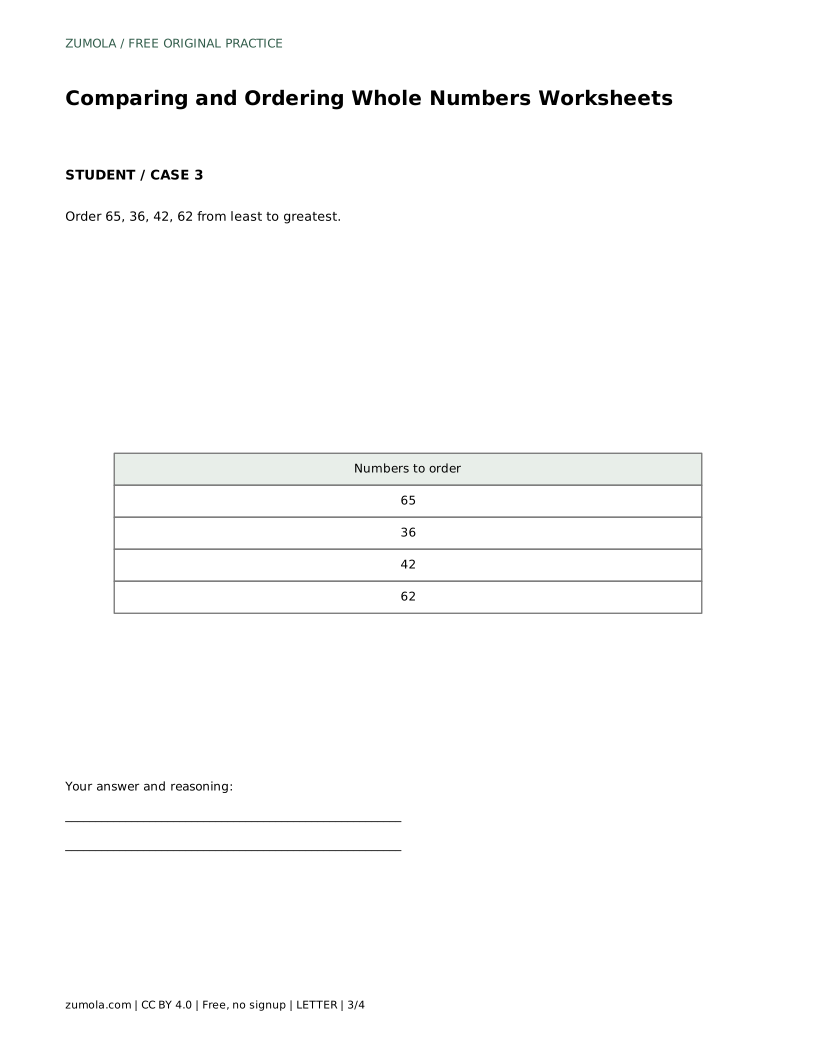
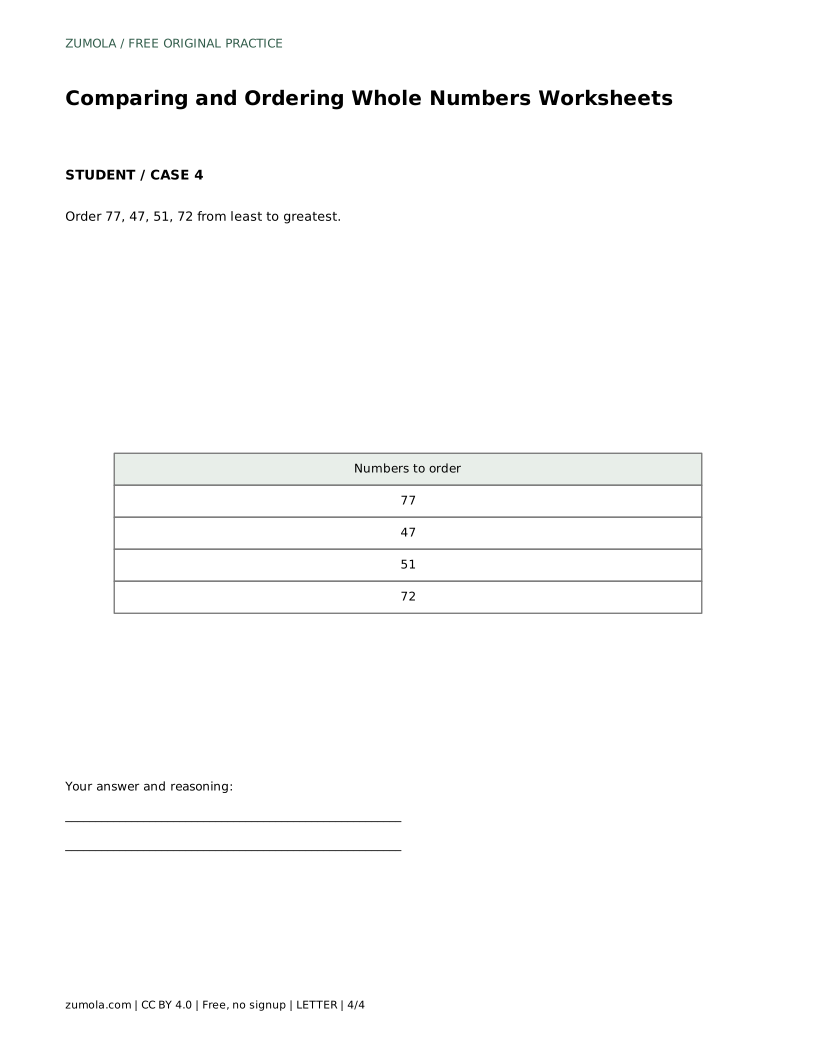
Four original cases, with reference diagrams, practice sheets and worked answers. Everything is free; no signup required.
LETTER · Download PDF
A4 · Download PDF
LETTER · Download PDF
A4 · Download PDF
LETTER · Download PDF
A4 · Download PDF
Use A4 or US Letter to match your printer. Use the stated values and conditions to solve each exercise; diagrams are not physical measuring rulers.
Ordering whole numbers is a place-value skill, not a guessing game. When students compare two-digit numbers, the tens digit carries more weight than the ones digit, so 41 is greater than 14 even though 4 and 1 appear in both. These printable worksheets give children repeated, calm practice at arranging short lists from least to greatest and checking their work by comparing neighboring pairs.
A two-digit number is built from tens and ones. In 41, there are four tens and one one. In 14, there is one ten and four ones. Four tens is more than one ten, so 41 is larger regardless of the ones digits. Students who compare digit by digit from the left, as they read, naturally get this right. Students who scan for the biggest-looking digit can be misled by a large ones digit.
Keep the language concrete: say 'four tens' and 'one ten' rather than only reading the numerals aloud. This anchors the comparison in quantity, not appearance. Once tens differ, the decision is finished; the ones digit only matters when the tens digits are equal.
A finished list should be verified, not simply admired. The reliable check is to compare each neighboring pair: the left number must be smaller than the right number. If any pair fails, the list is wrong somewhere, and students can hunt for the misplaced number rather than starting over.
This check also catches the most common slip: placing a number correctly at one end but forgetting it in the middle. Reading the list aloud in order gives a second, independent confirmation.
For variety, ask students to also state which number is greatest and which is least, or to rewrite the list from greatest to least as a follow-up. These extensions use the same comparison reasoning and do not introduce new concepts.
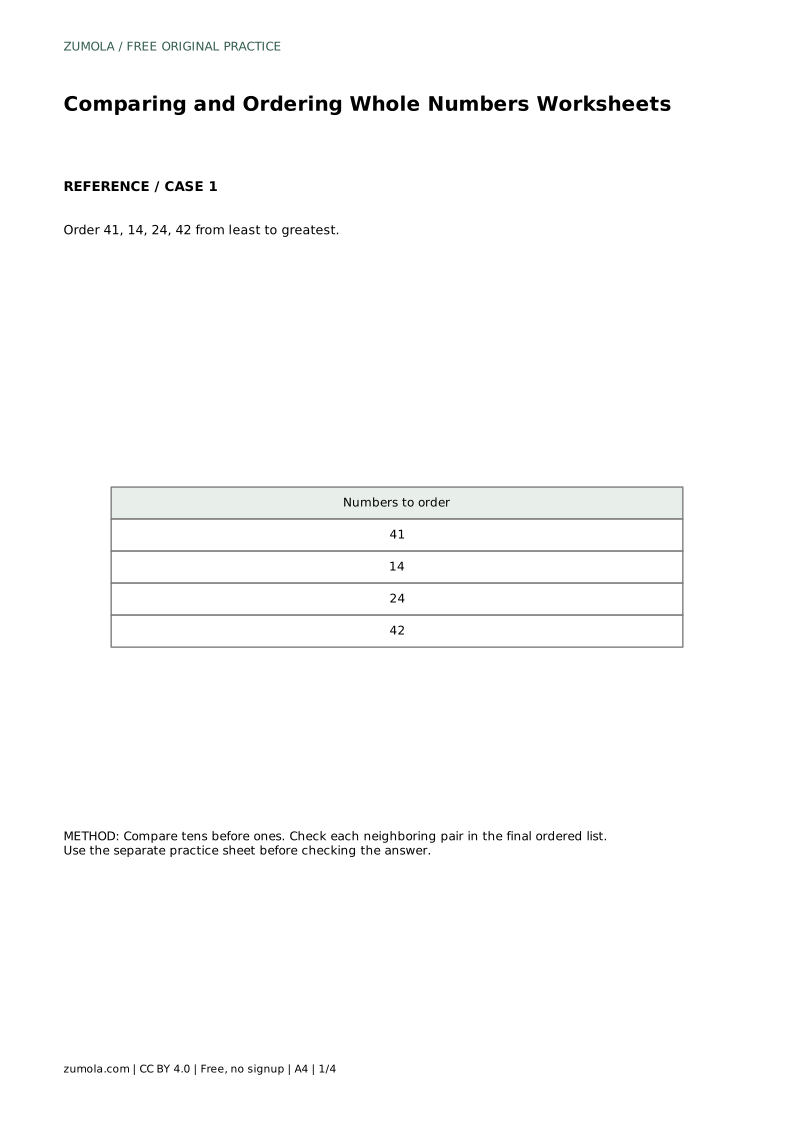
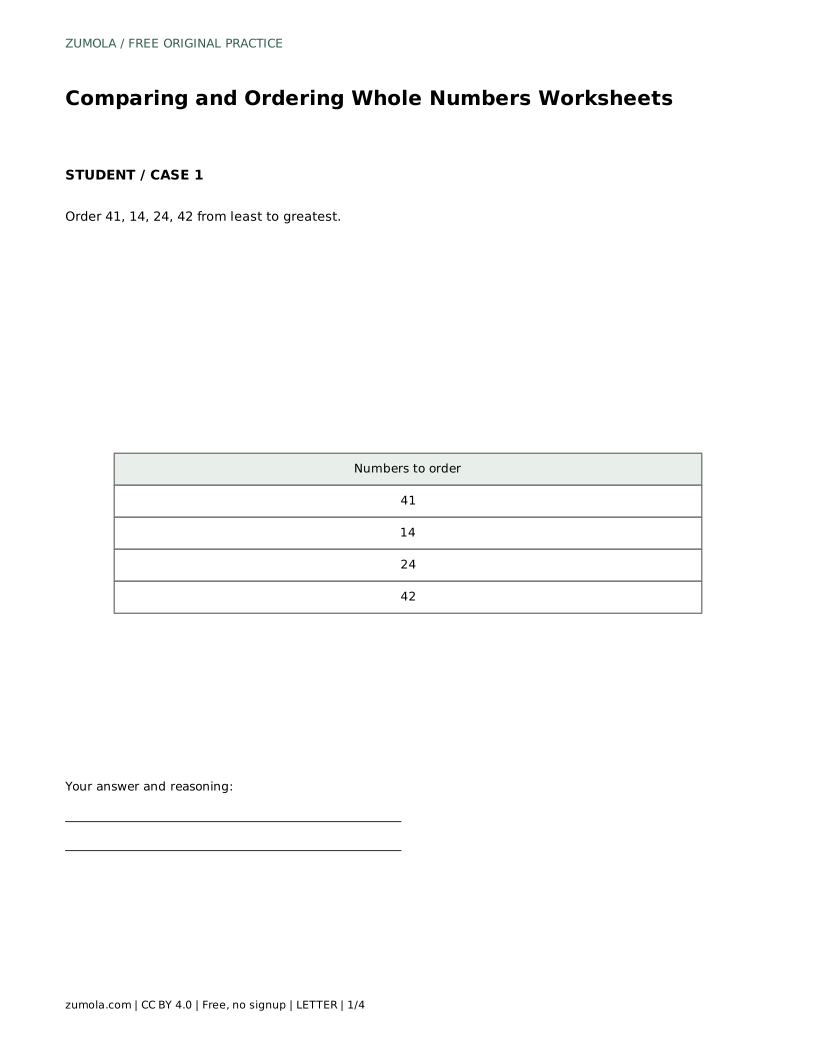
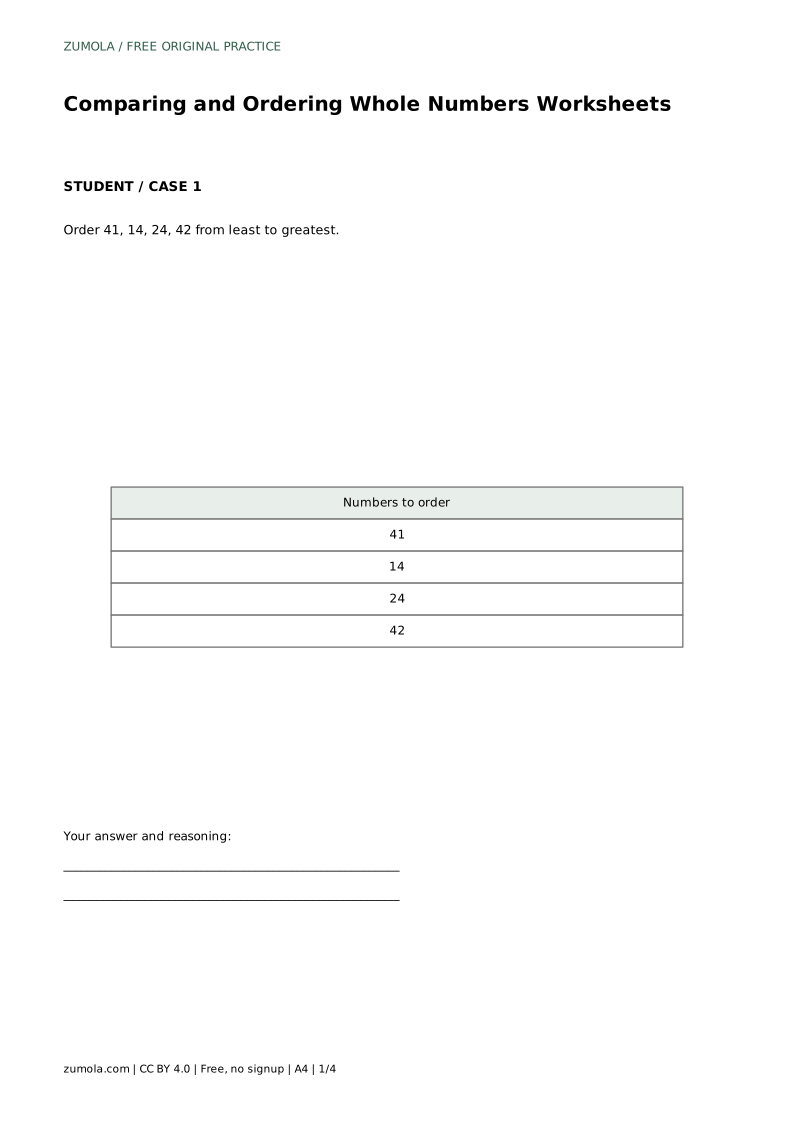
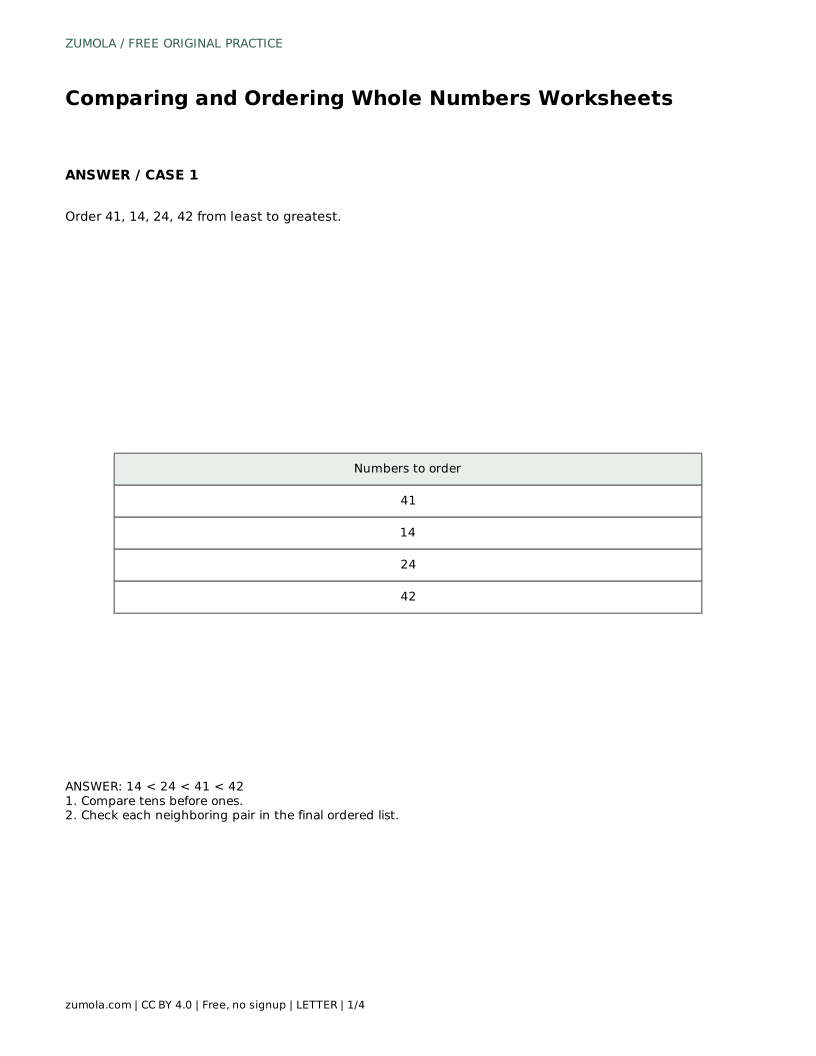
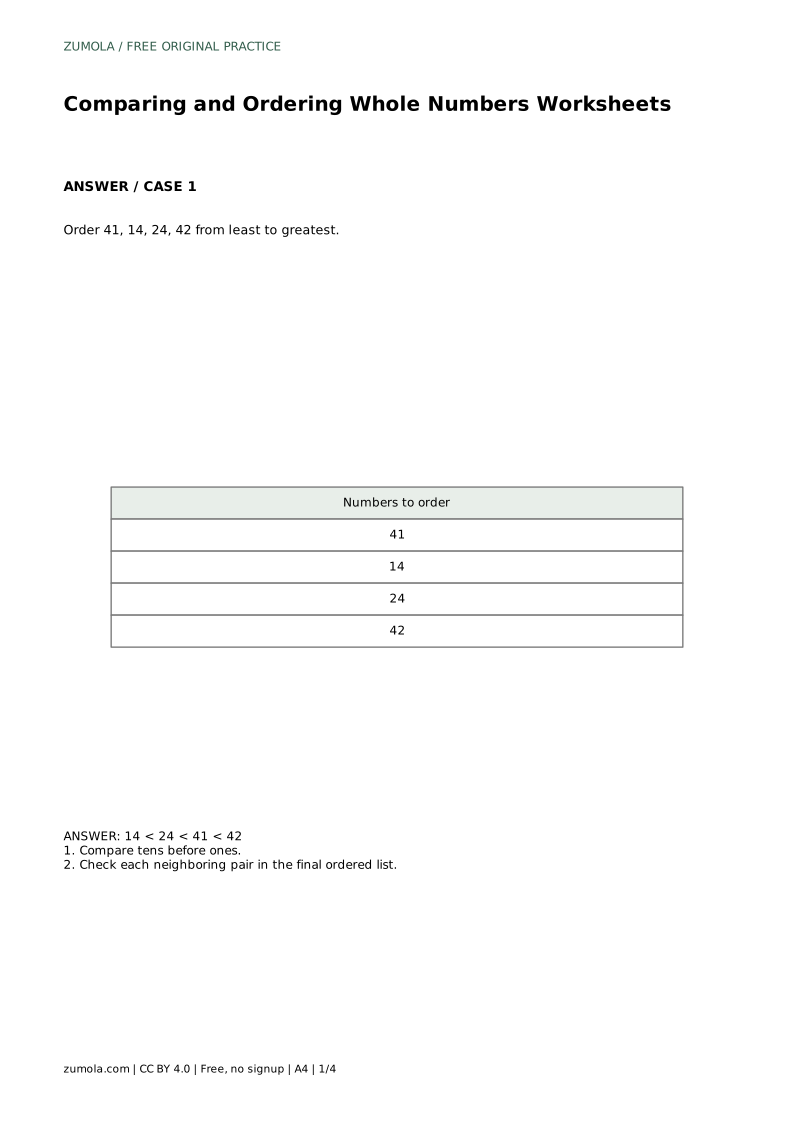
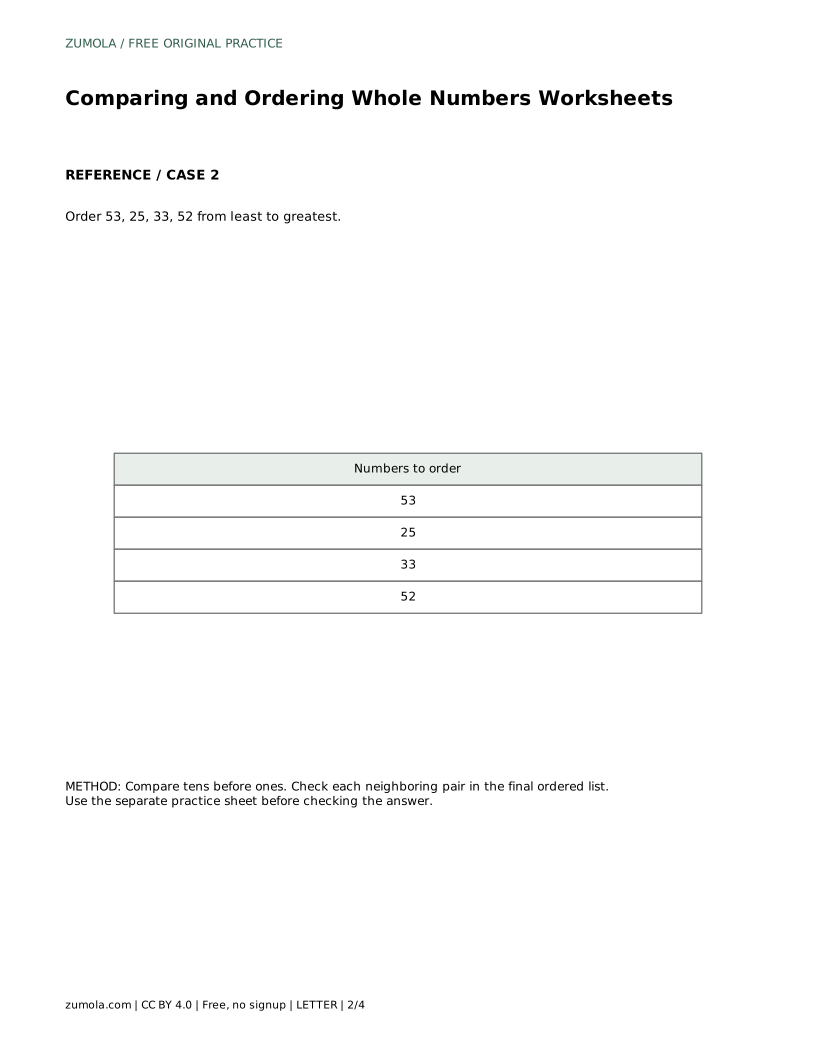
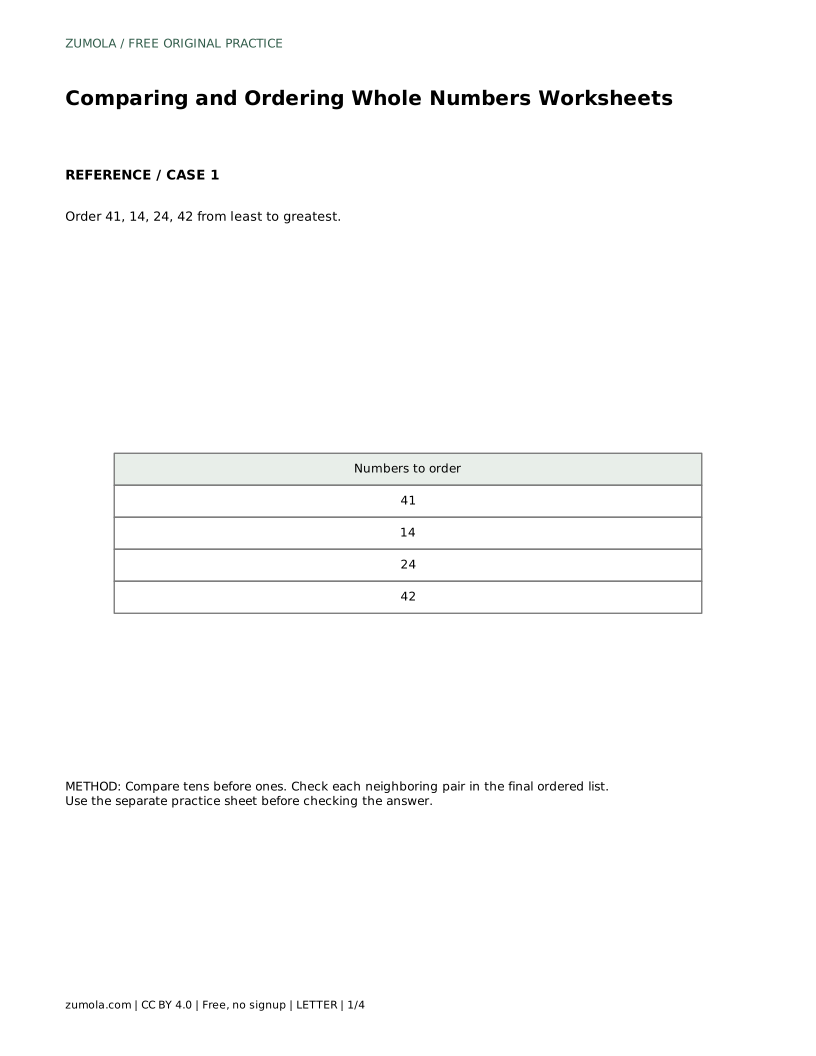
Order 41, 14, 24, 42 from least to greatest.
14 < 24 < 41 < 42 Compare tens before ones. Check each neighboring pair in the final ordered list.
The smallest number comes first and the largest comes last, with every number in between larger than the one before it.
No. Compare tens first; only compare ones digits when the tens digits are the same.
Check each neighboring pair: every number on the left must be smaller than the number on its right.
All math worksheets · Free coordinate paper
Original resources · CC BY 4.0 · Free for personal and classroom use with attribution.