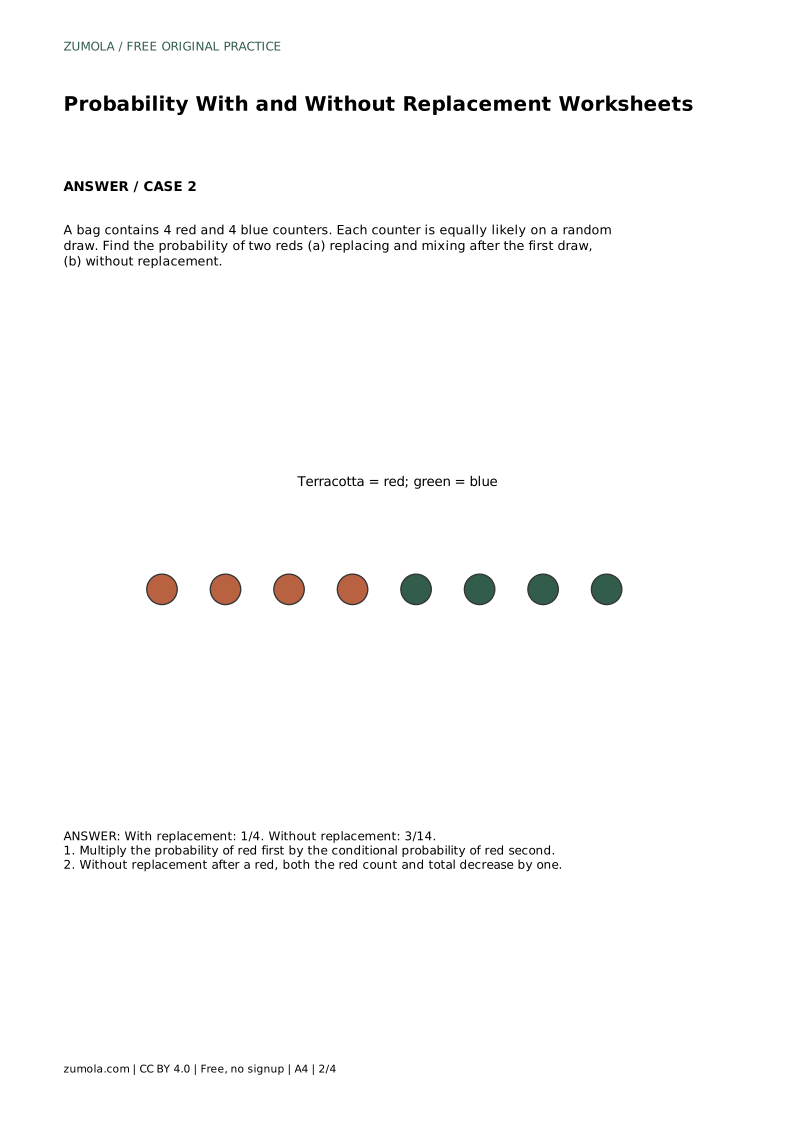
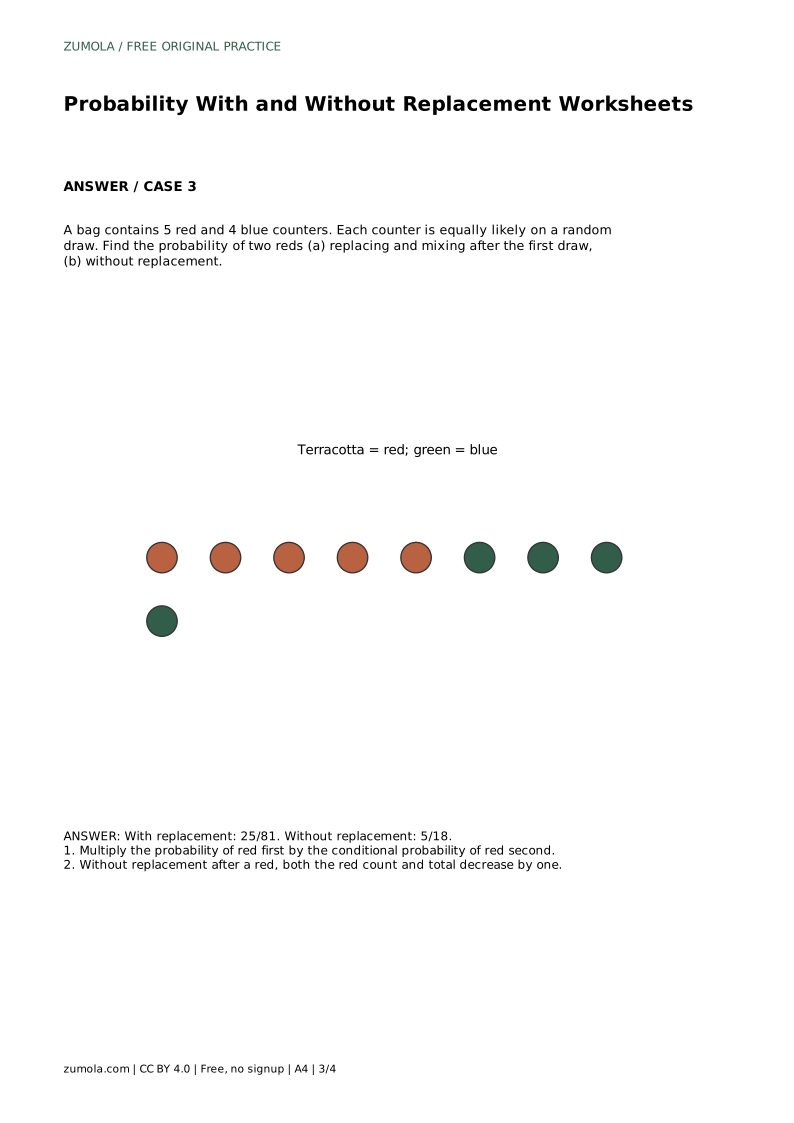
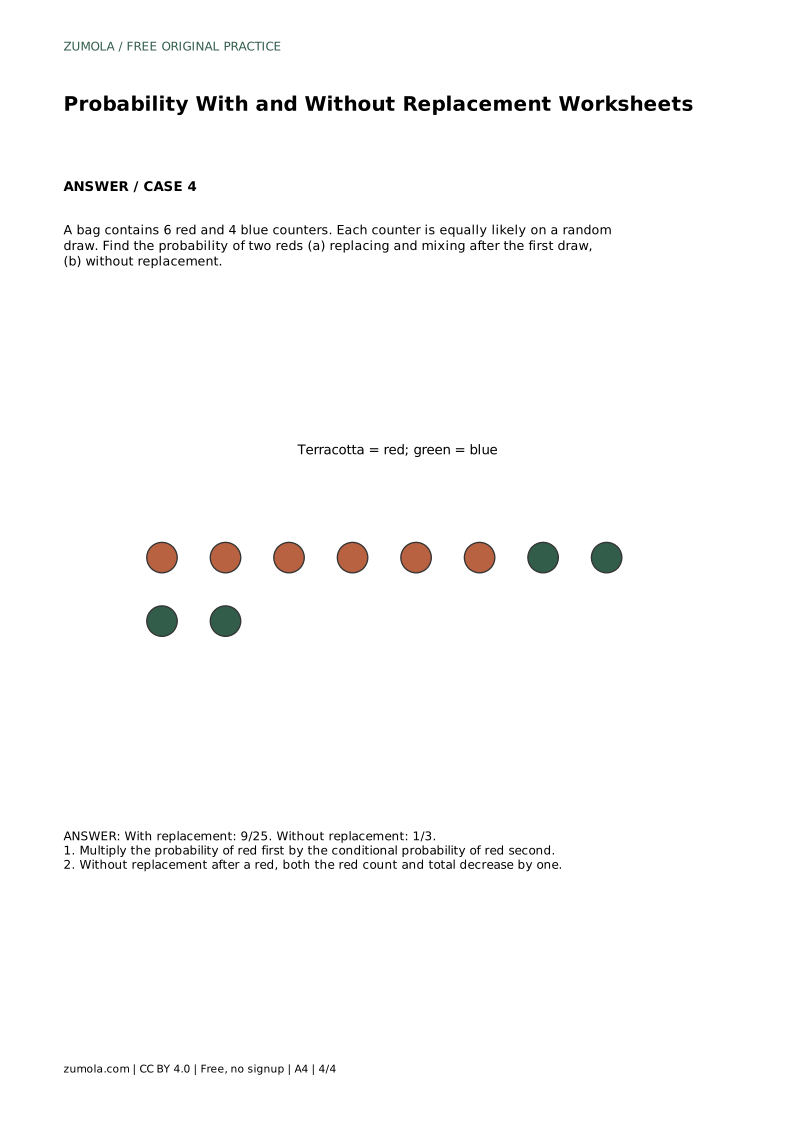
Reference diagrams
LETTER · Download PDF
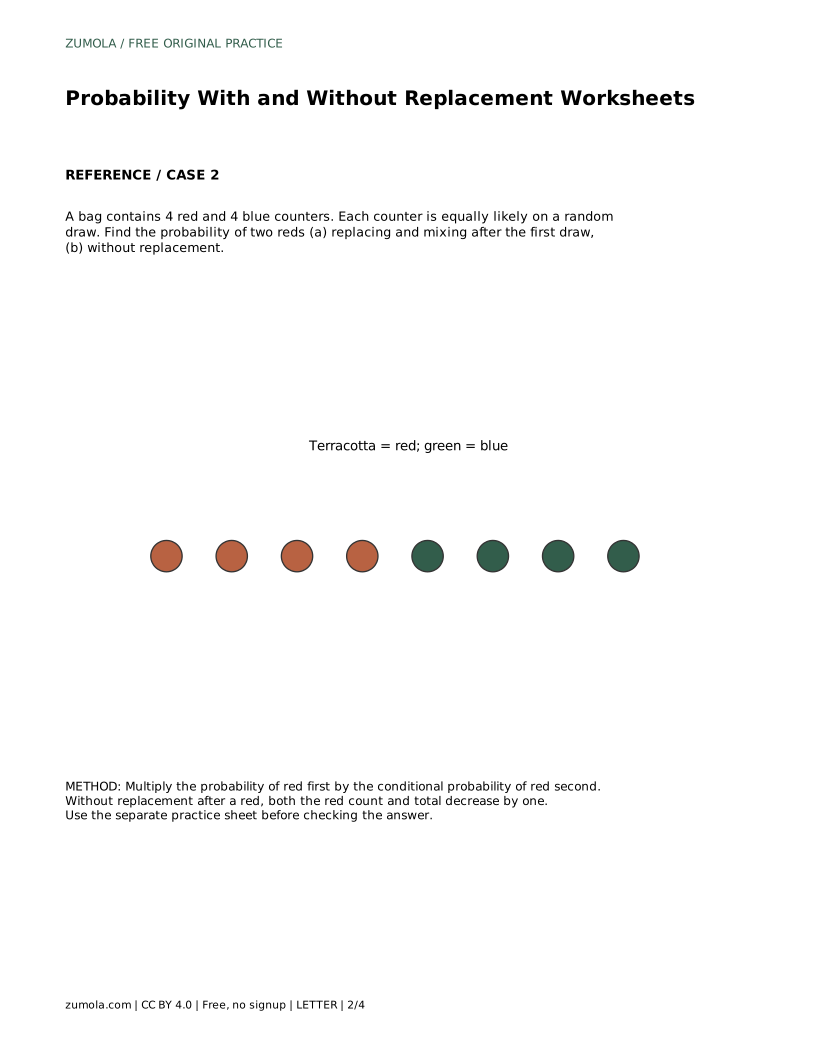
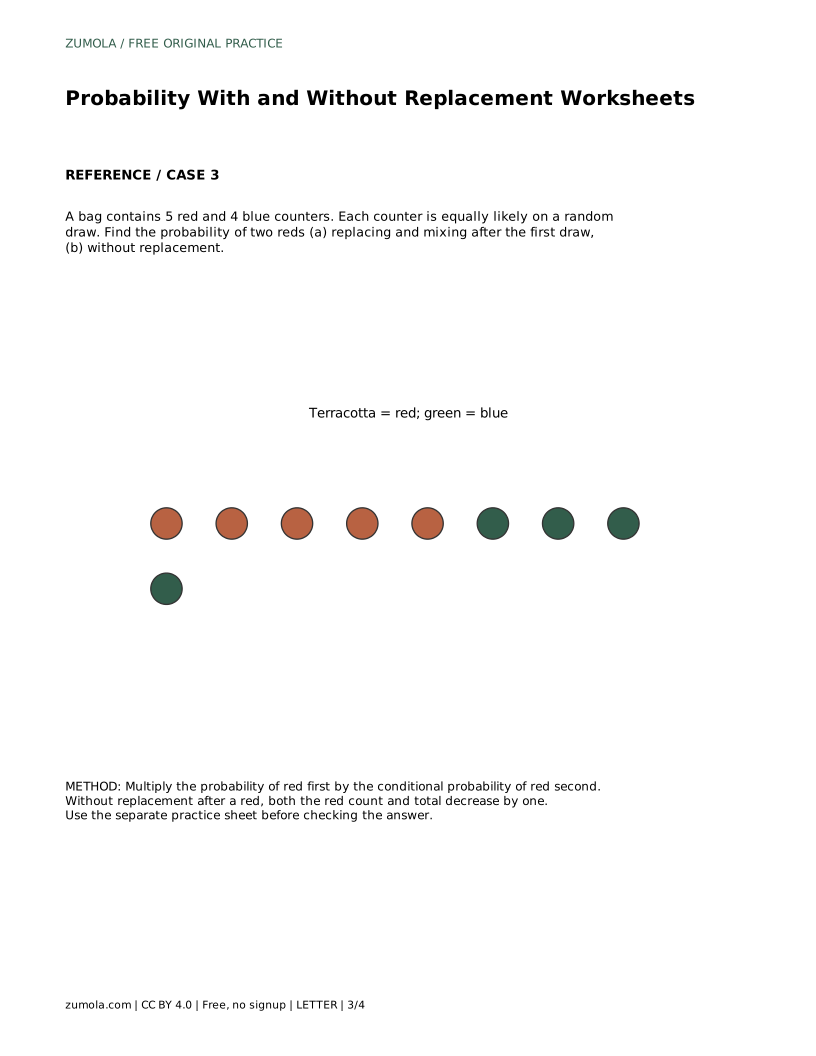
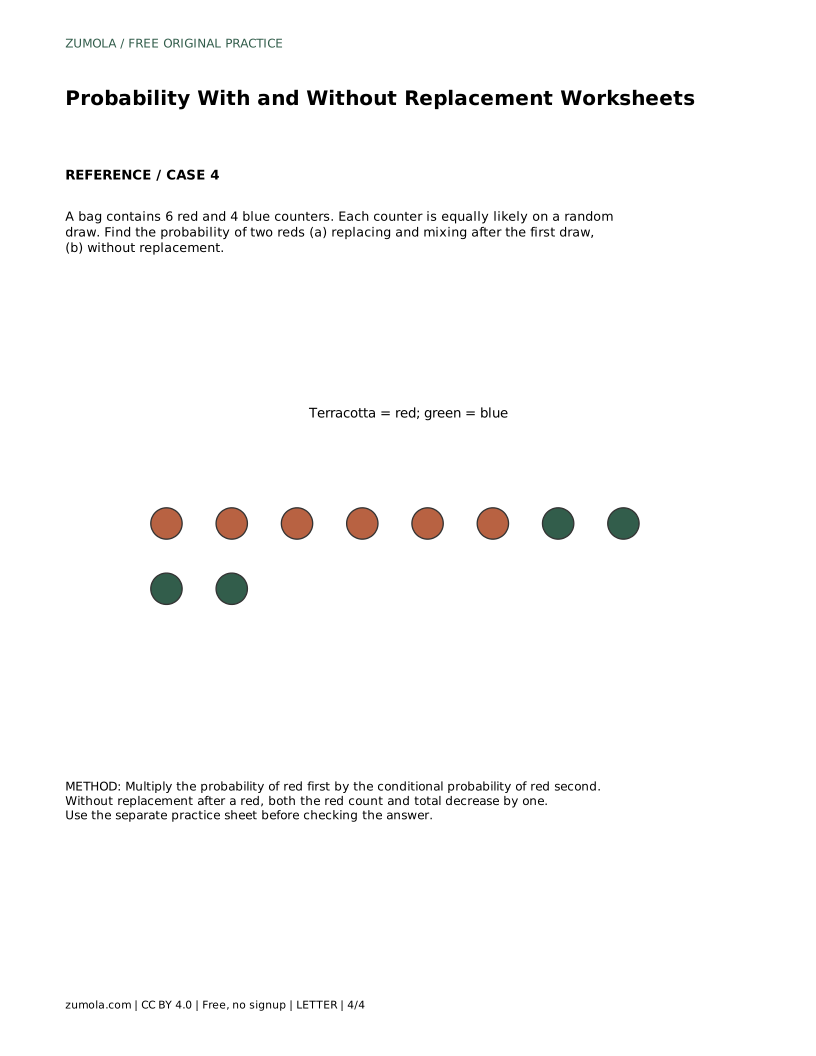
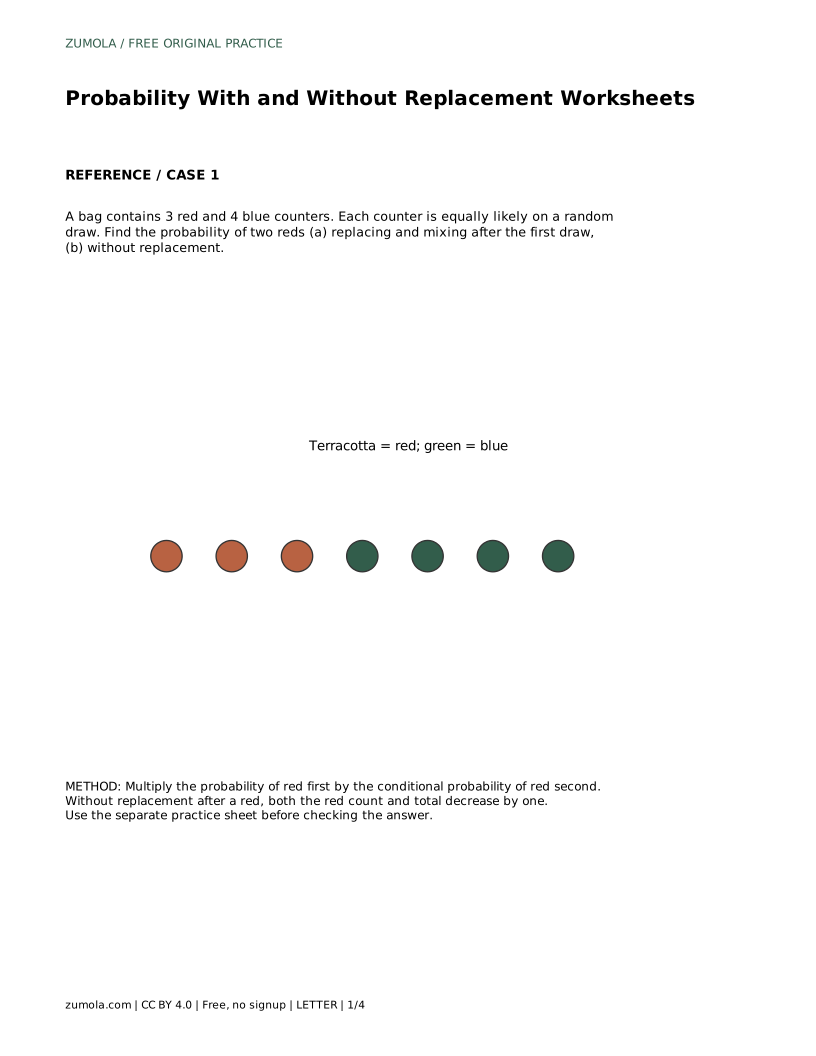
A4 · Download PDF
Free original resources
Teach two-draw probability with and without replacement: multiply first-draw probability by the conditional second-draw probability, adjusting counts after a kept draw.
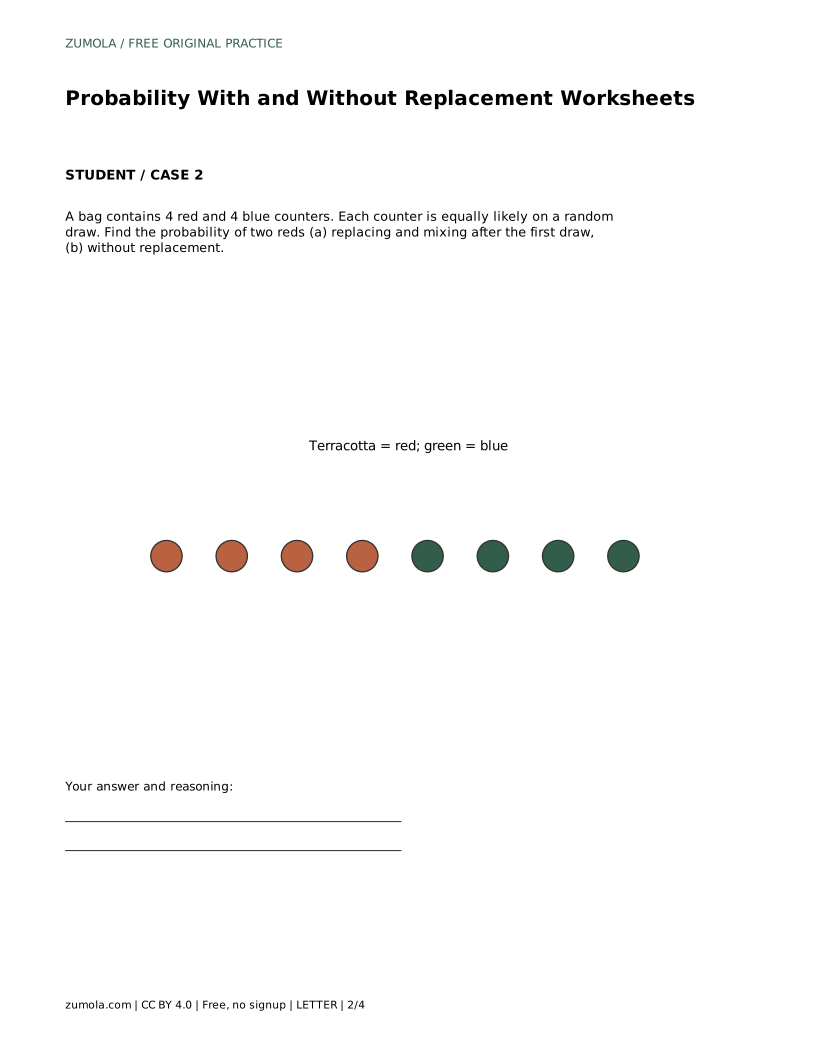
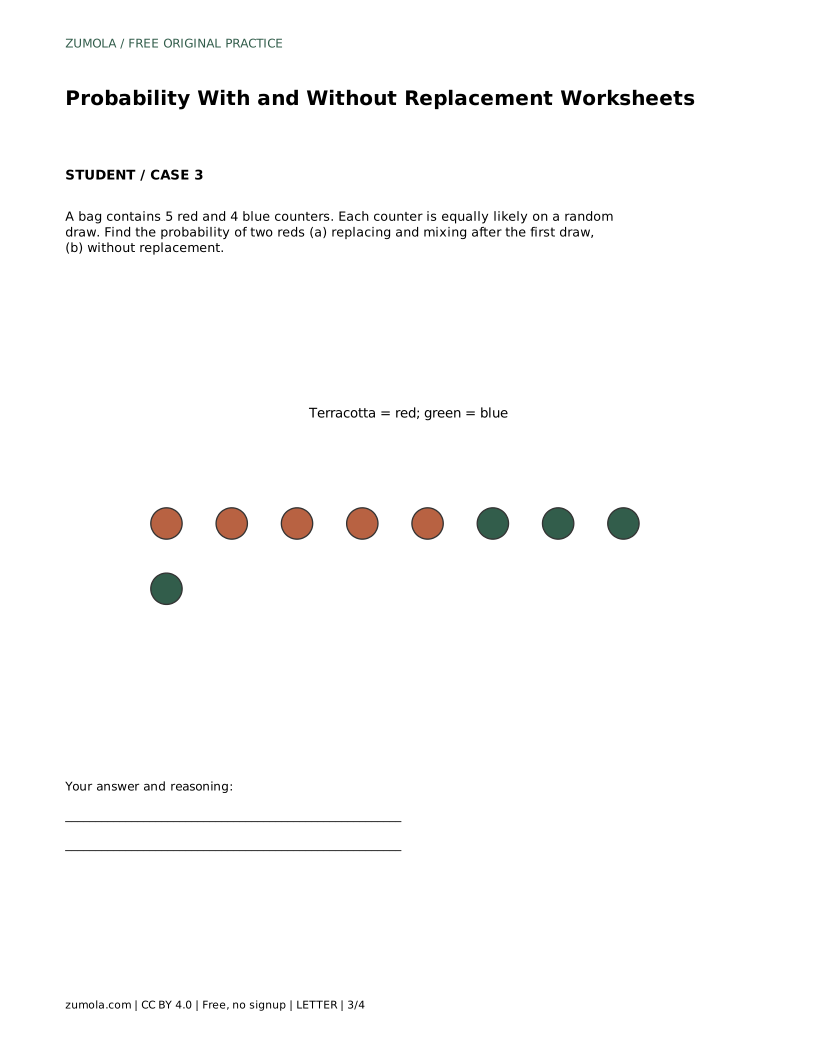
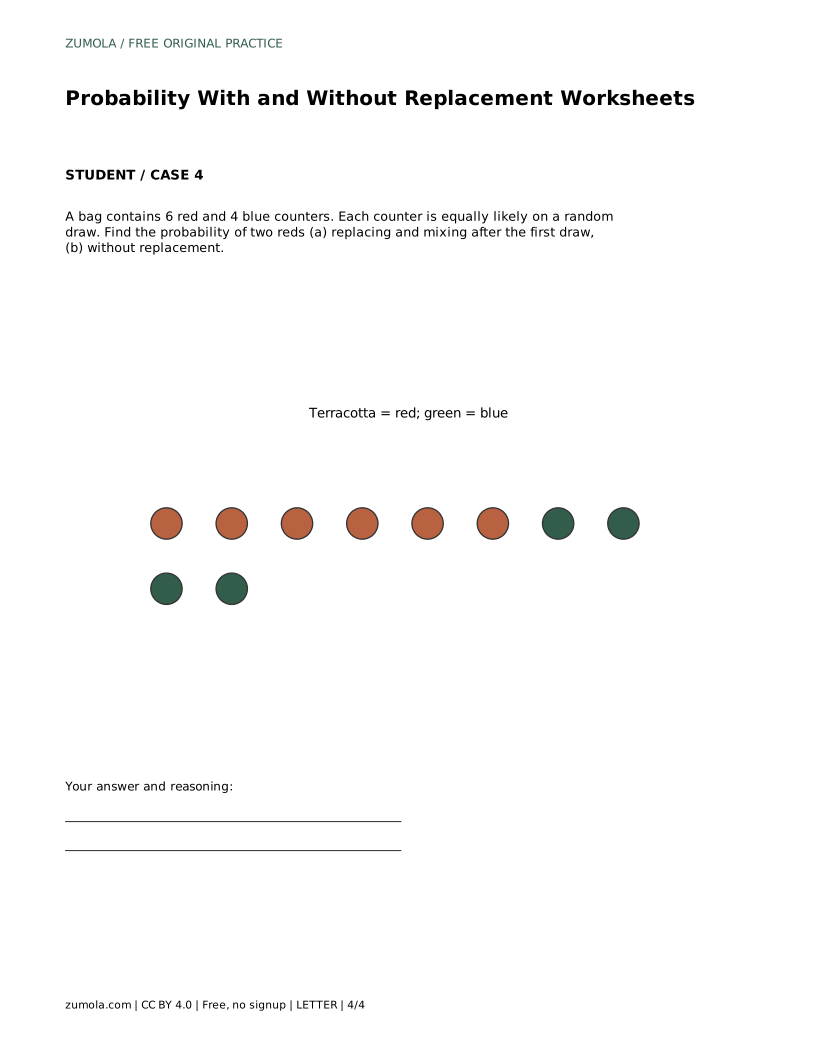
Four original cases, with reference diagrams, practice sheets and worked answers. Everything is free; no signup required.
LETTER · Download PDF
A4 · Download PDF
LETTER · Download PDF
A4 · Download PDF
LETTER · Download PDF
A4 · Download PDF
Use A4 or US Letter to match your printer. Use the stated values and conditions to solve each exercise; diagrams are not physical measuring rulers.
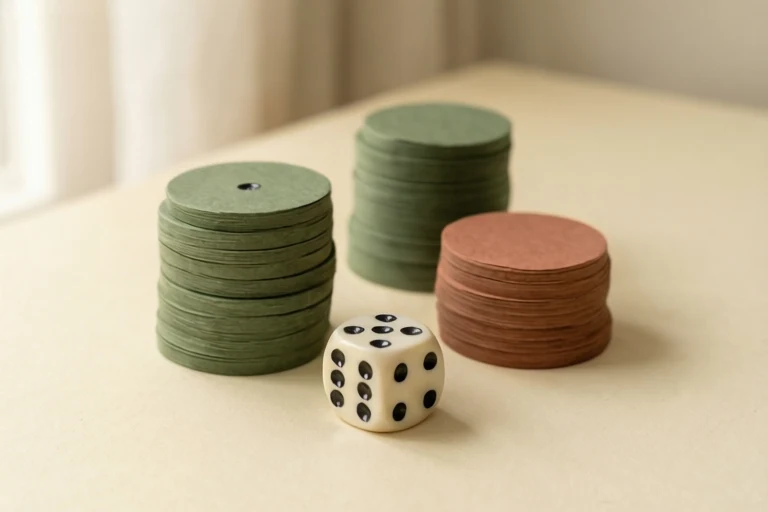
Two-draw probability questions ask for the chance of a pair of outcomes, such as two red counters from the same bag. The key decision is whether the first counter goes back before the second draw. With replacement, the bag returns to its starting composition, so both draws use the same fraction. Without replacement, the first counter stays out, so both the matching colour count and the total count fall by one. This page shows how to set up both cases, multiply correctly, and check that each fraction describes the bag at the moment of that draw.
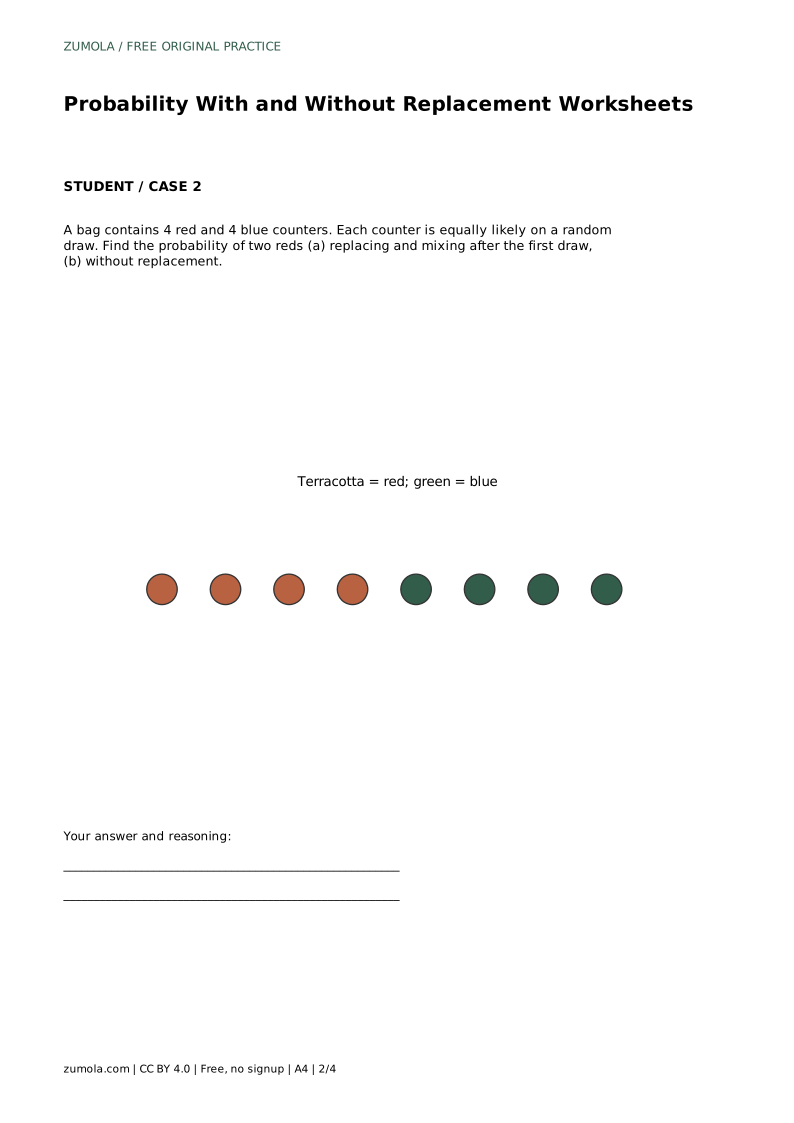
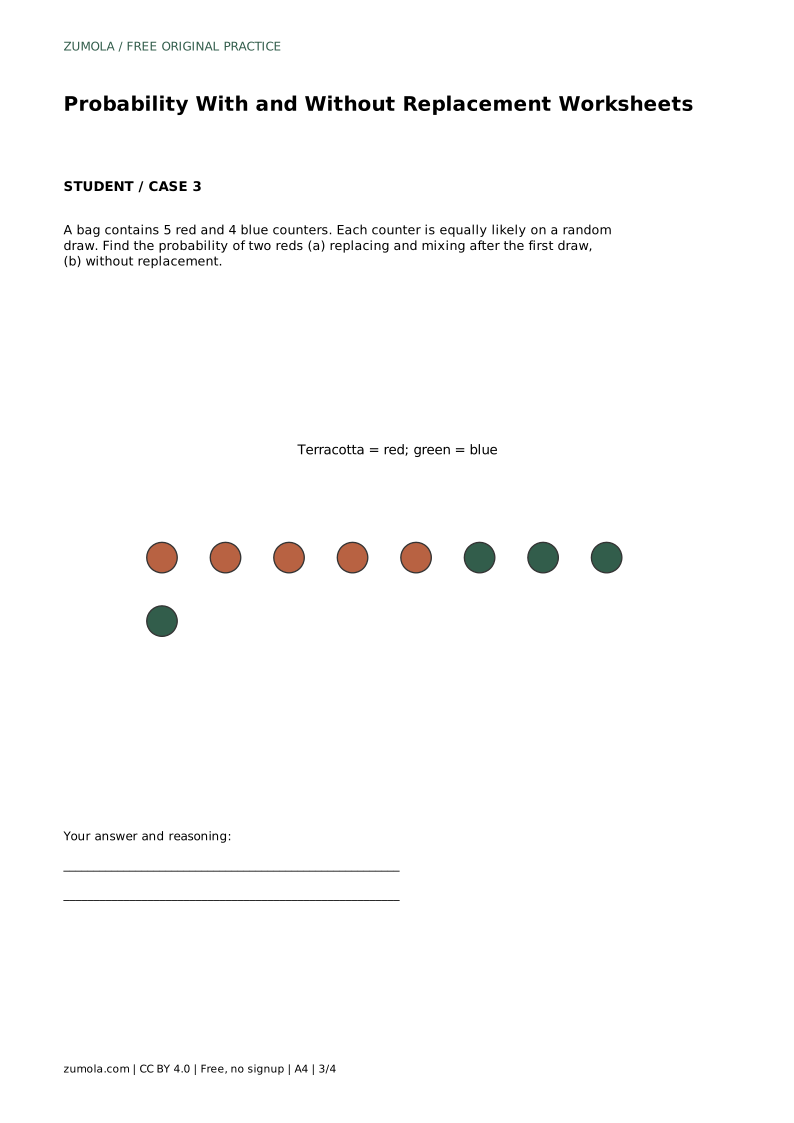
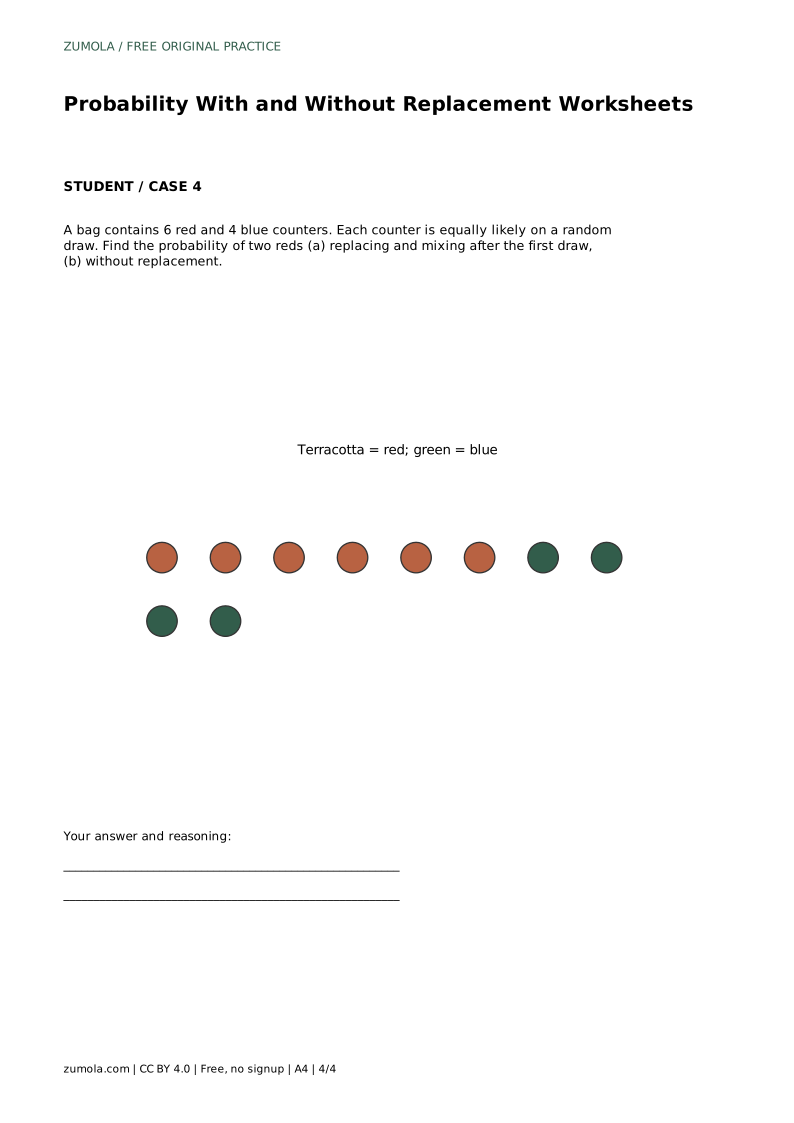
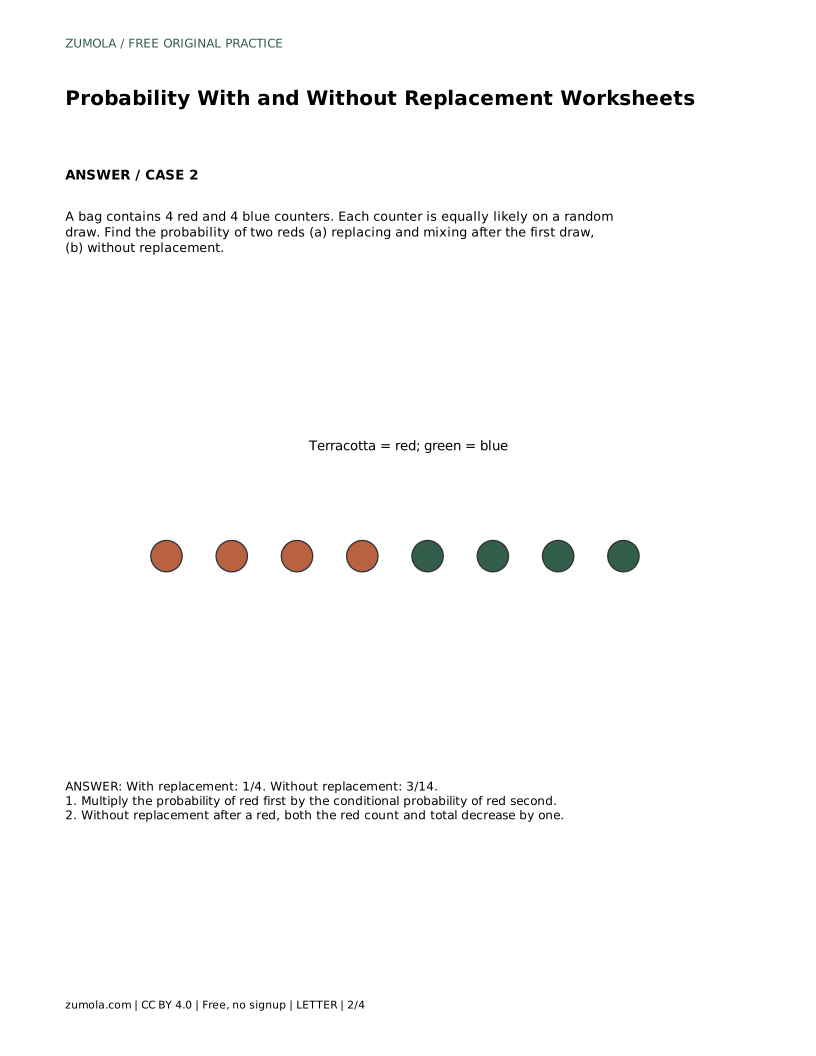
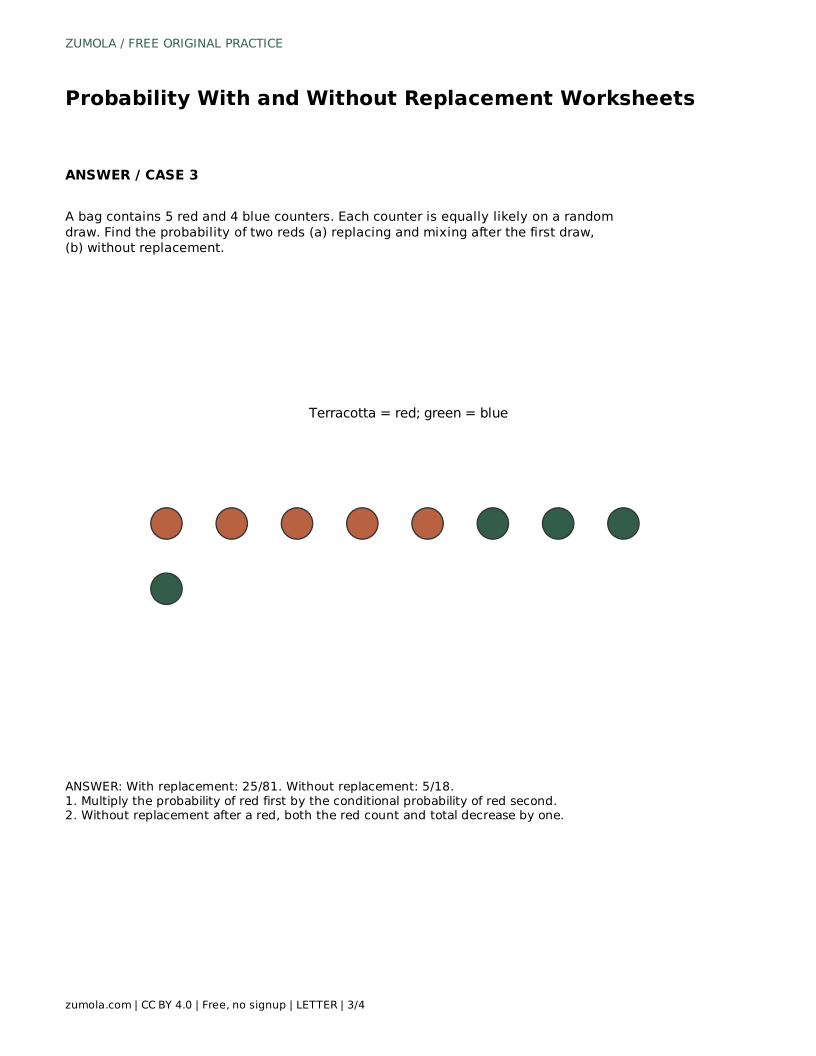
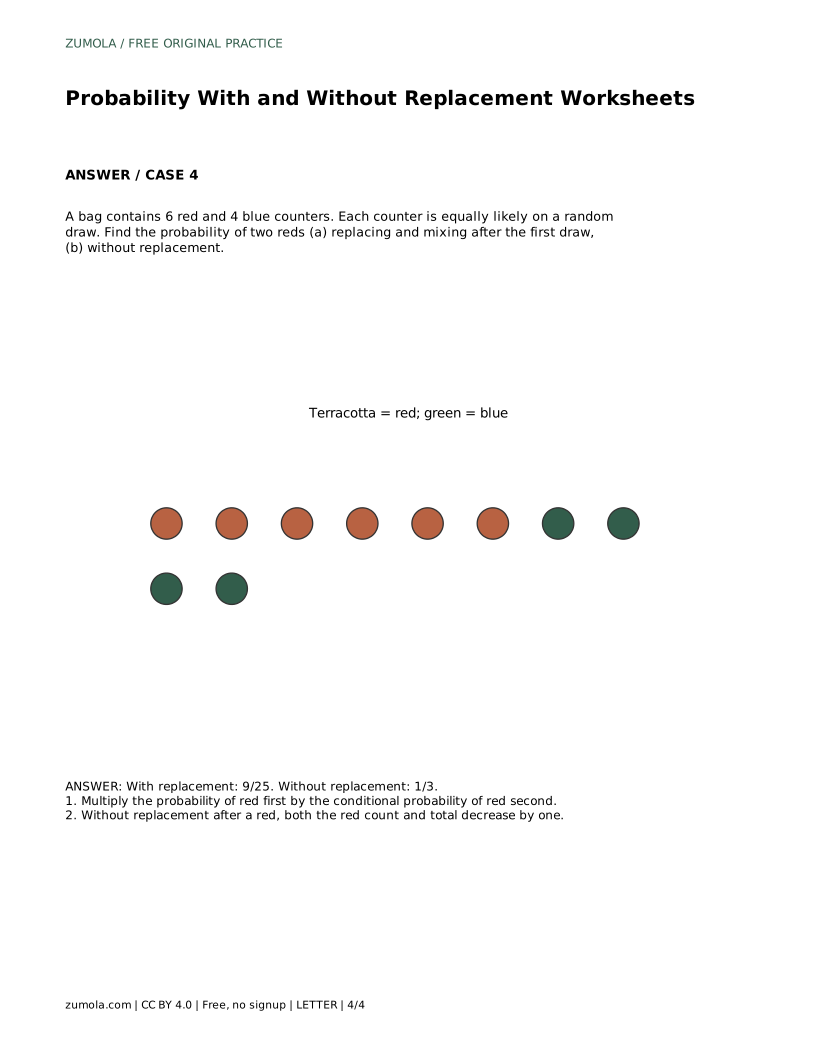
Write the bag contents before drawing: red count, blue count, and total. The probability of red on the first draw is red divided by total. For the second draw, ask what the bag contains now. With replacement, the drawn counter is returned and mixed, so the second fraction is identical to the first. Without replacement, the drawn counter is absent, so if it was red, red falls by one and total falls by one. Multiply the two fractions, then simplify. Keep the fractions as probabilities of a single draw rather than combining counts loosely.
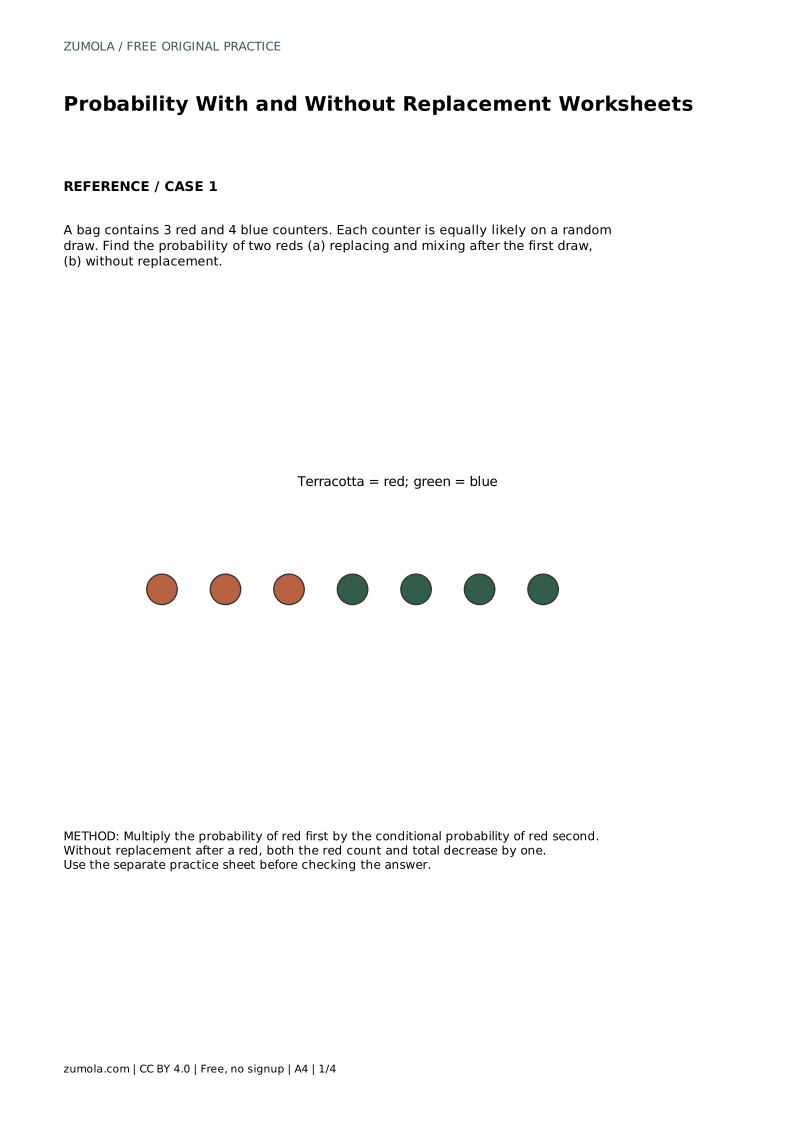
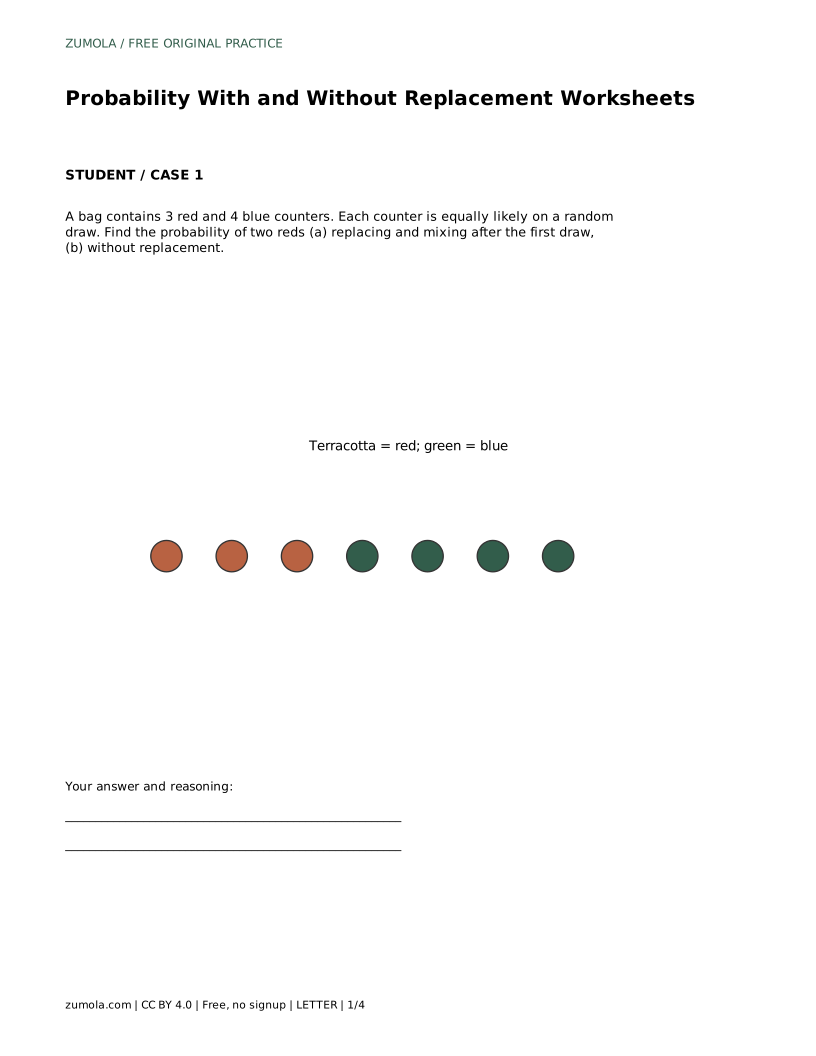
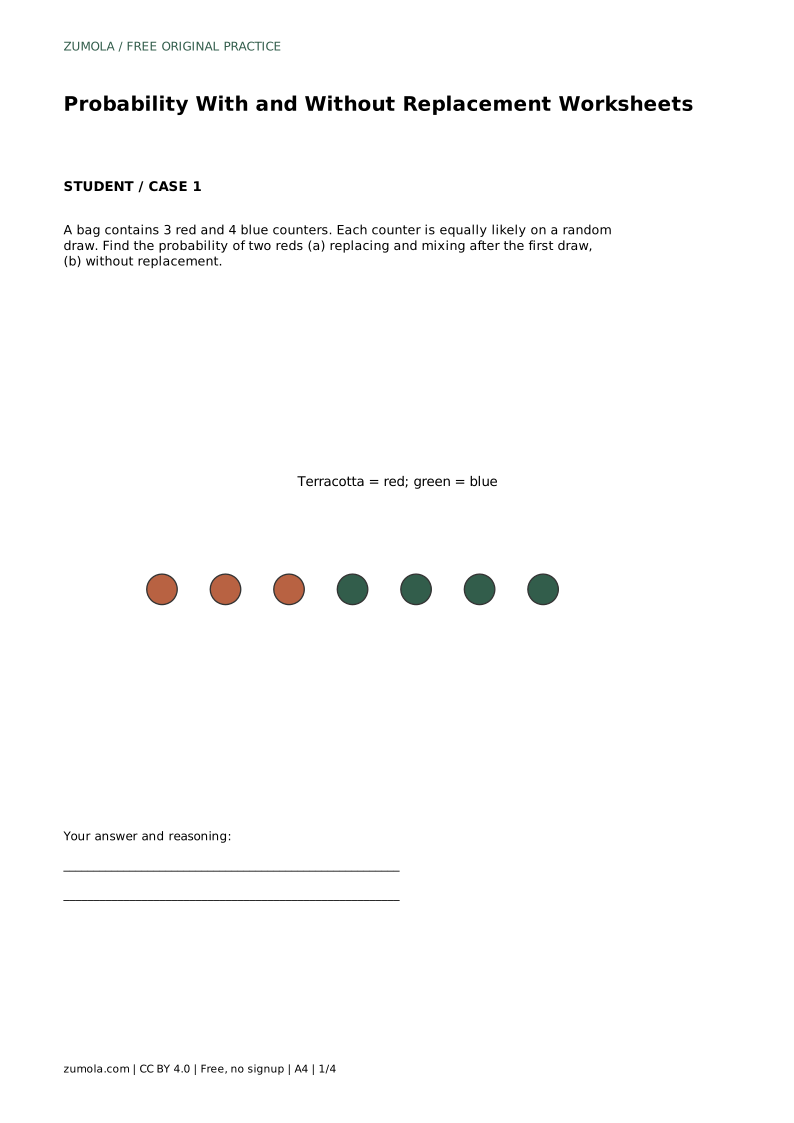
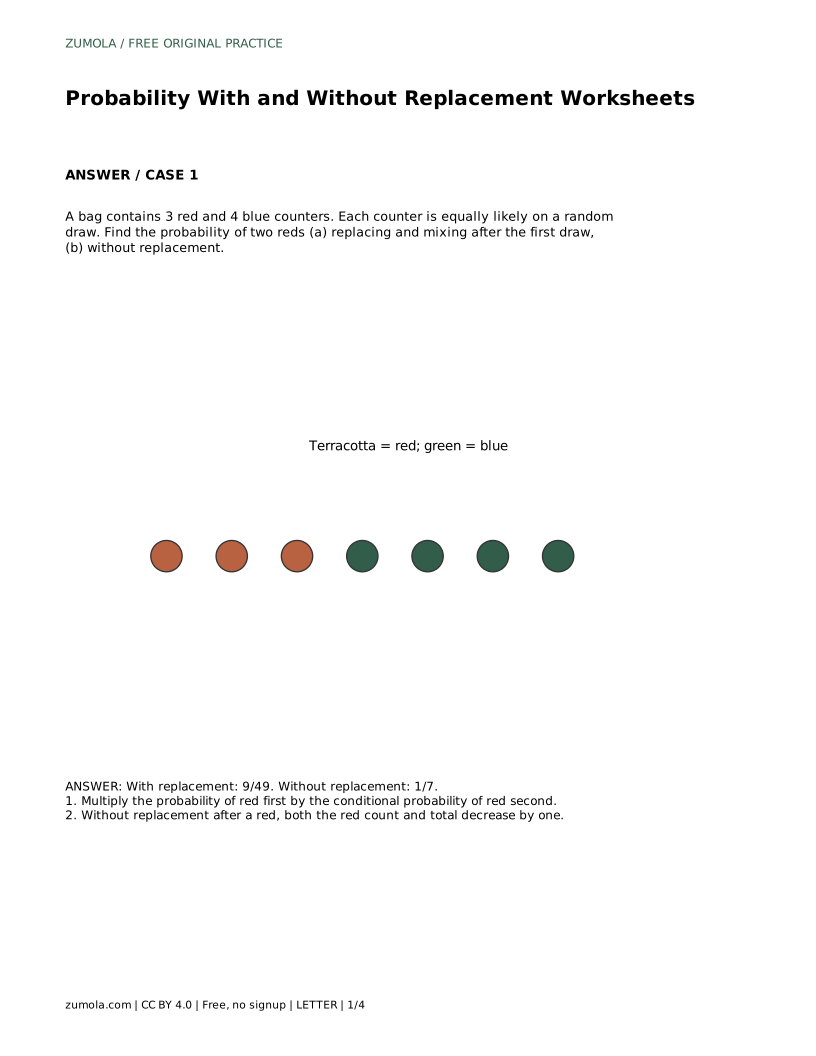
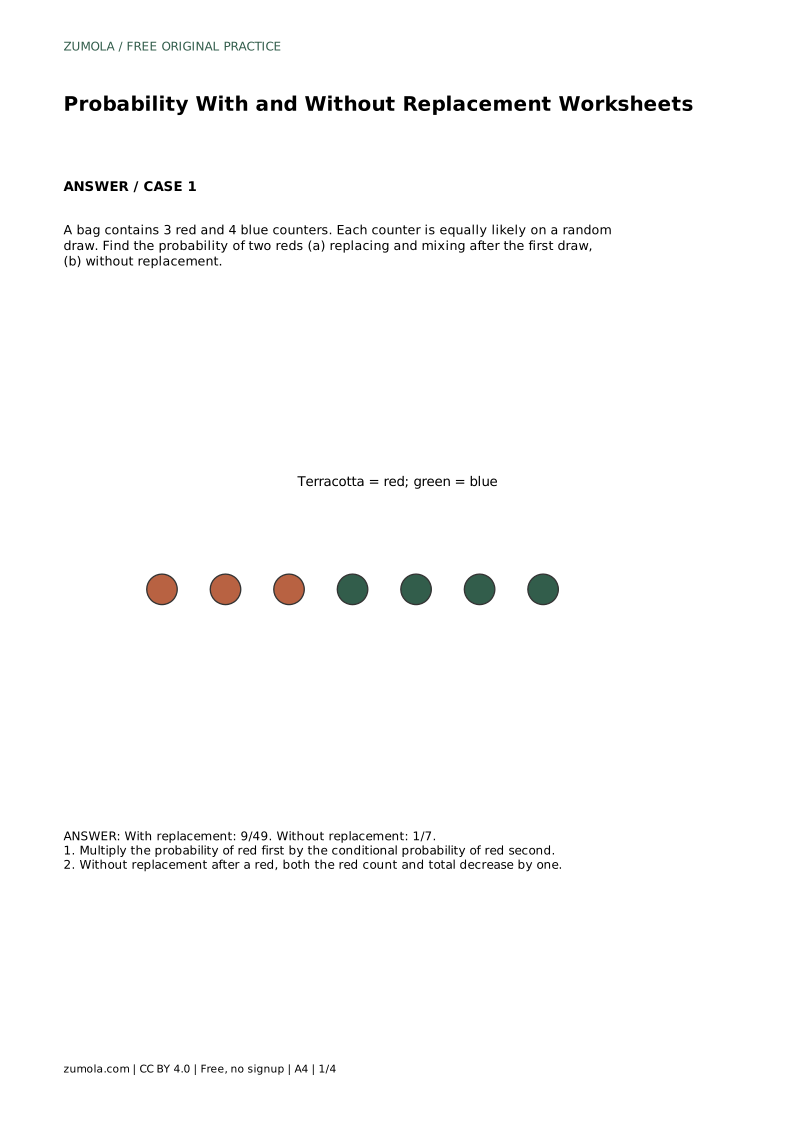
Replacement means the first counter is put back and the contents are mixed, so the second draw faces the same composition as the first. For 3 red and 4 blue counters, red is 3/7 on the first draw and still 3/7 on the second. The probability of two reds is 3/7 times 3/7, which is 9/49. The two draws are independent in this case because the first result does not change the second fraction. State the replacement condition explicitly in your working so the repeated fraction is justified.
Without replacement means the first counter stays out. If the first draw is red, the bag now has one fewer red and one fewer counter overall. For 3 red and 4 blue, the first fraction is 3/7. After a red is kept, red is 2 and total is 6, so the second fraction is 2/6. Multiply 3/7 by 2/6 to get 6/42, which simplifies to 1/7. The second fraction is conditional: it describes the bag only after a red first draw. Always subtract one from both the matching colour count and the total, not from the total alone.
For the same starting bag, the without-replacement answer for two reds is usually smaller than the with-replacement answer, because removing a red makes the second red less likely. In the 3 red, 4 blue case, 9/49 is about 0.18 and 1/7 is about 0.14, which fits that pattern. Check each fraction is between 0 and 1, and that the second fraction uses the bag after the first draw. If you are asked for two blues instead, the same structure applies but the blue count and total change after a blue is kept.
A bag contains 3 red and 4 blue counters. Each counter is equally likely on a random draw. Find the probability of two reds (a) replacing and mixing after the first draw, (b) without replacement.
With replacement: 9/49. Without replacement: 1/7. Multiply the probability of red first by the conditional probability of red second. Without replacement after a red, both the red count and total decrease by one.
For two reds, both orders give red, so the single product covers the event. For mixed colours, you would add the red-then-blue and blue-then-red products, each built from the correct bag state.
Keeping a red removes a red from the bag, so the second red fraction is lower than the first. That lowers the product compared with replacement, where the fraction repeats.
The second fraction would use one fewer blue and one fewer total. The method is the same, but the numbers differ because a different colour was removed.
All math worksheets · Free coordinate paper
Original resources · CC BY 4.0 · Free for personal and classroom use with attribution.