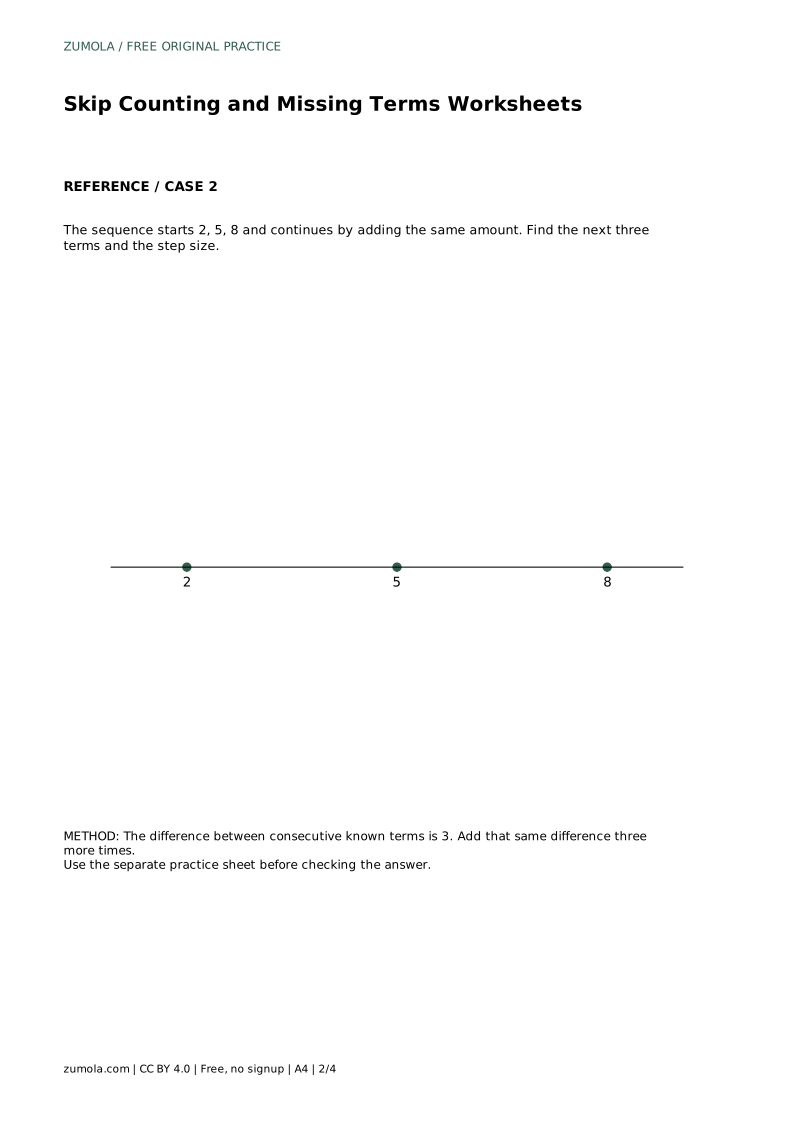
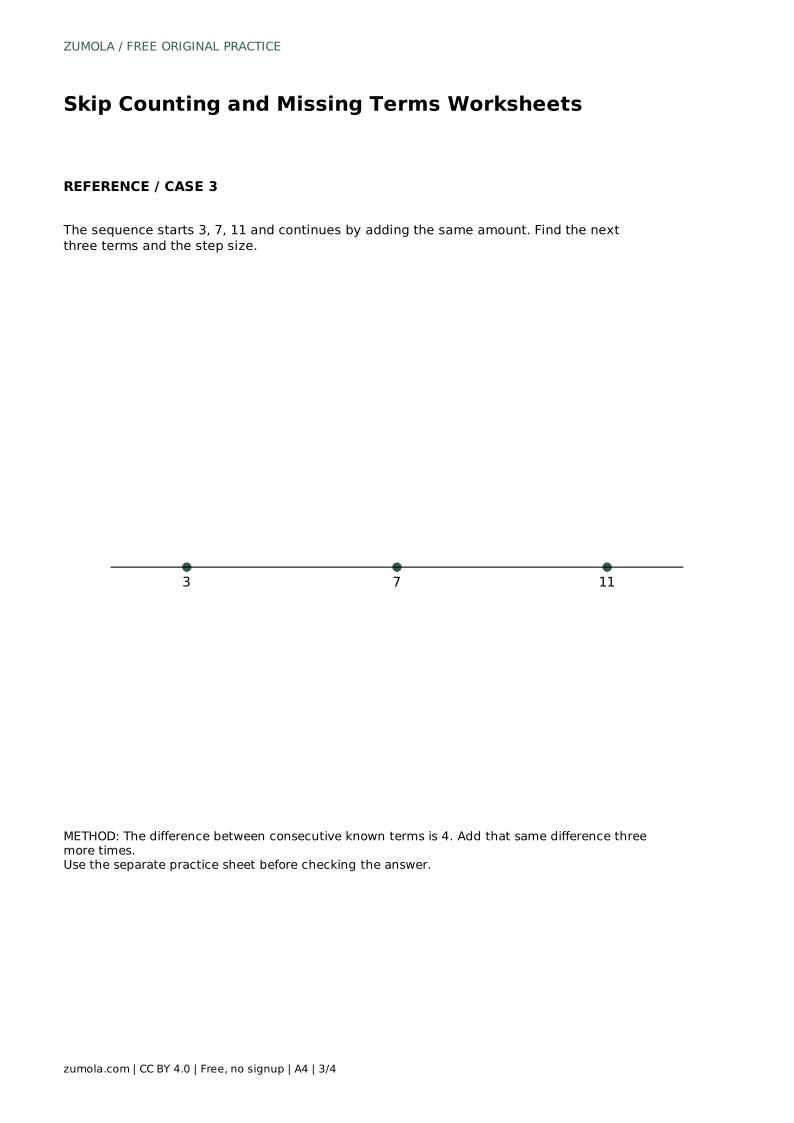
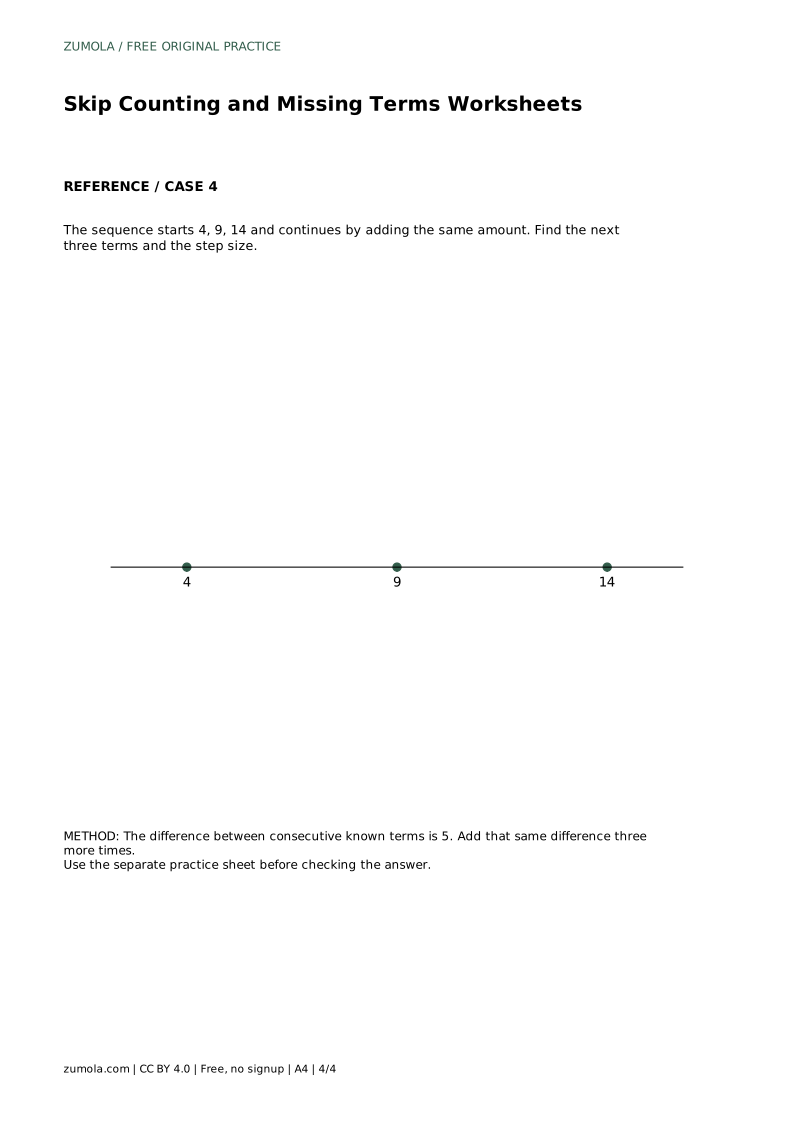
Reference diagrams
LETTER · Download PDF
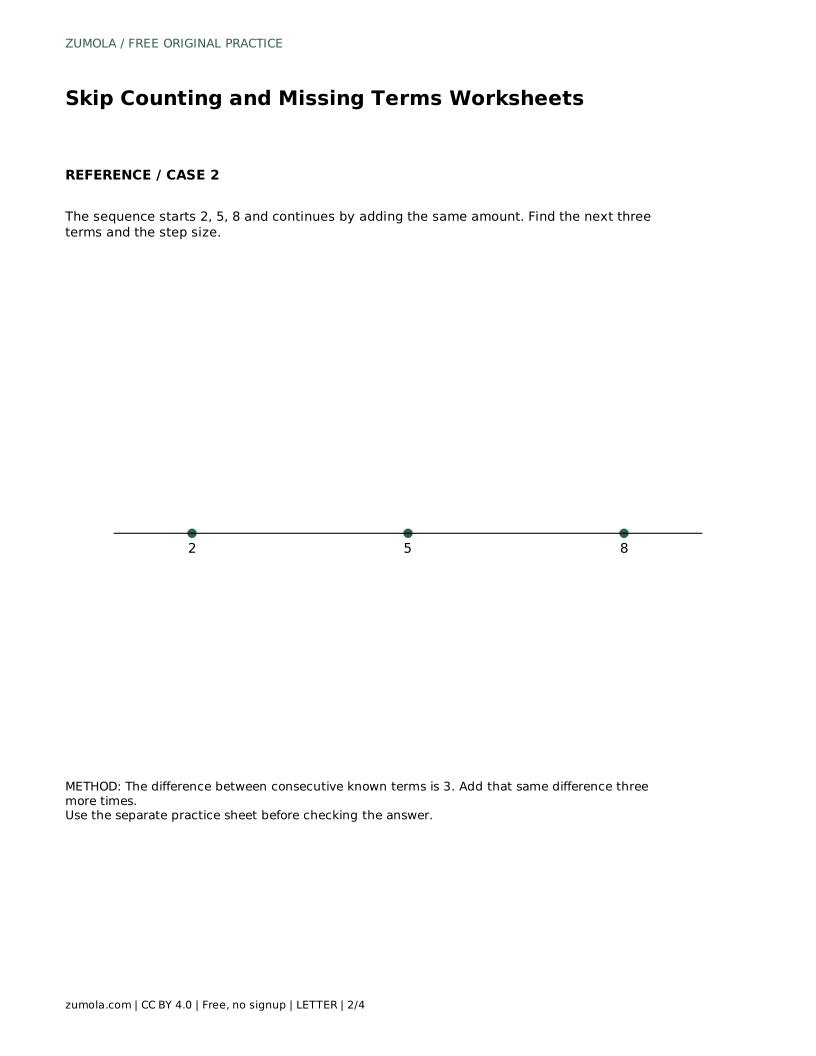
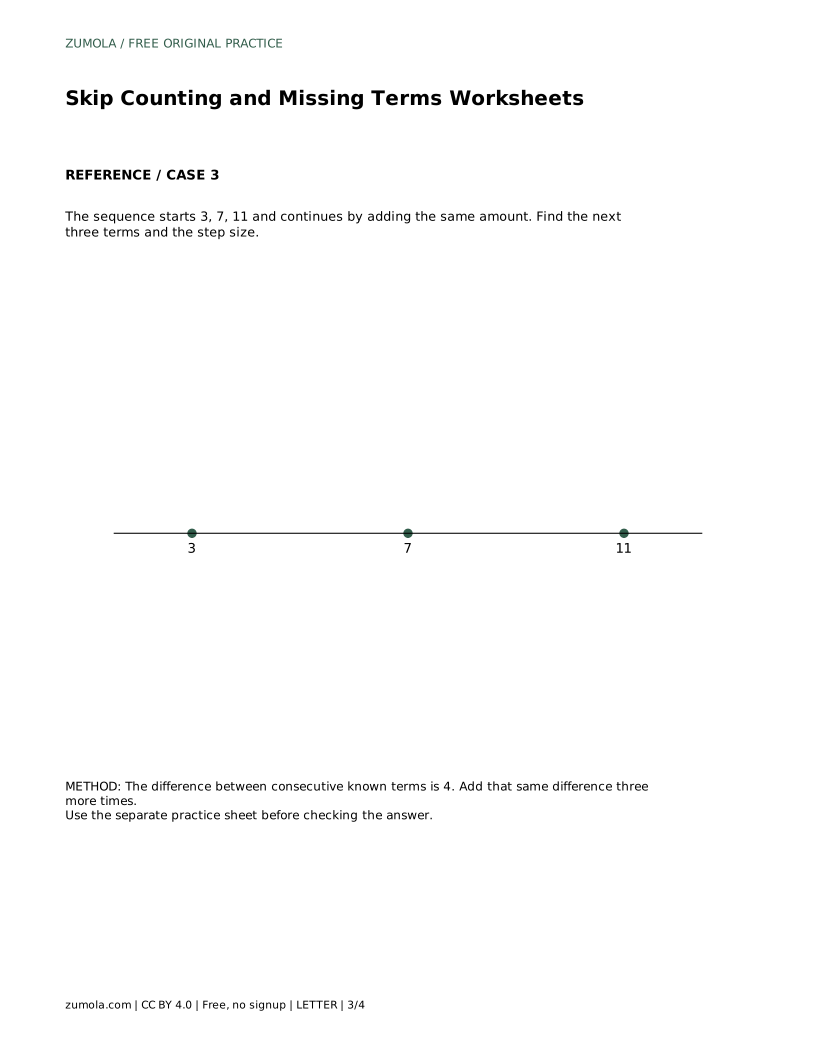
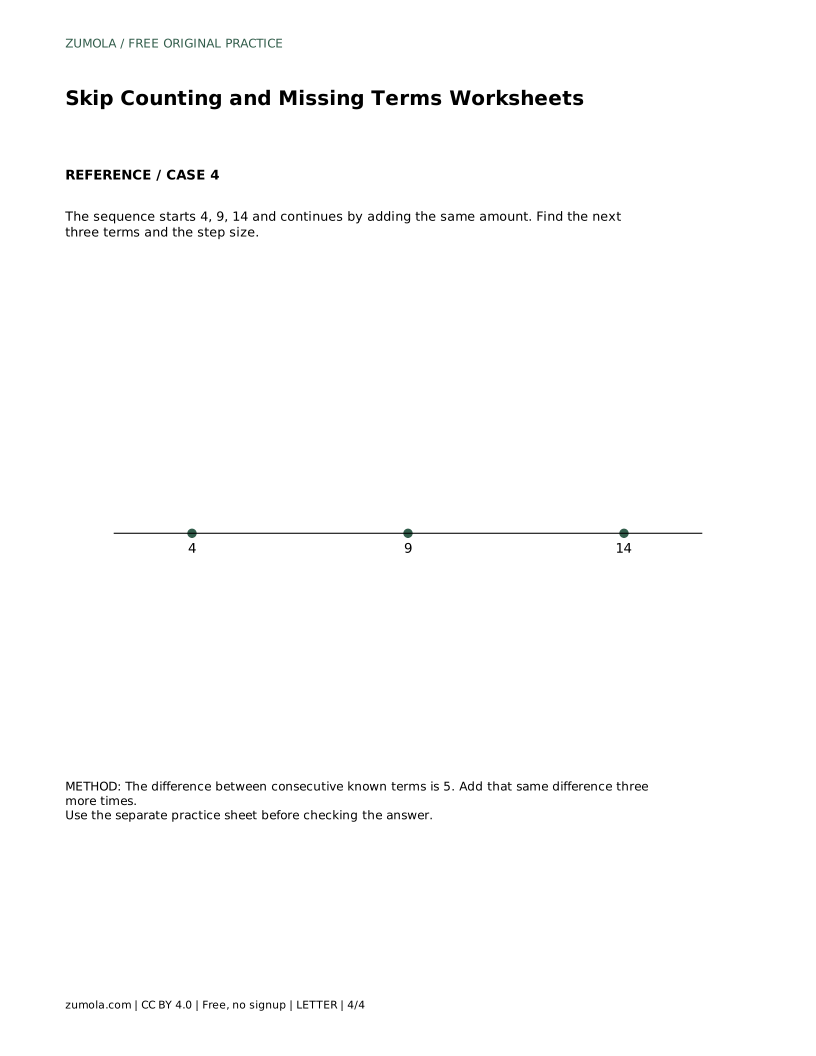
A4 · Download PDF
Free original resources
Learn to find the step size in a skip-counting sequence and use it to predict the next three terms. Includes a worked example, common mistakes, and a rubric.
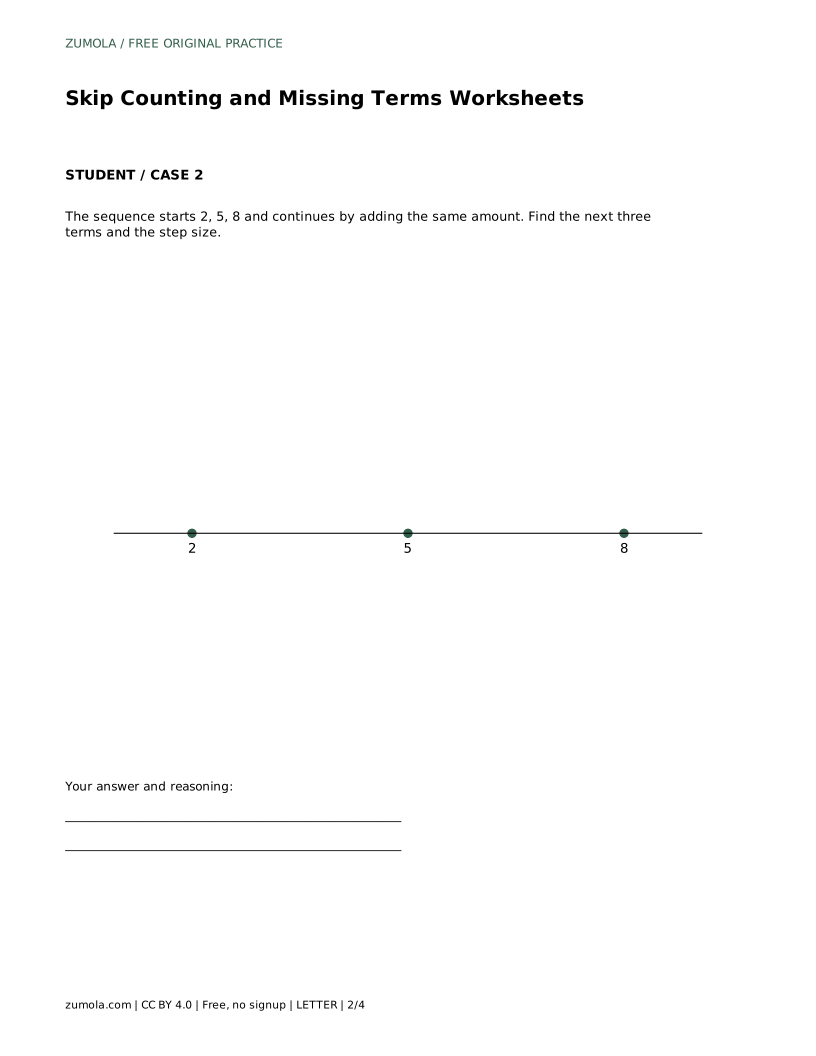
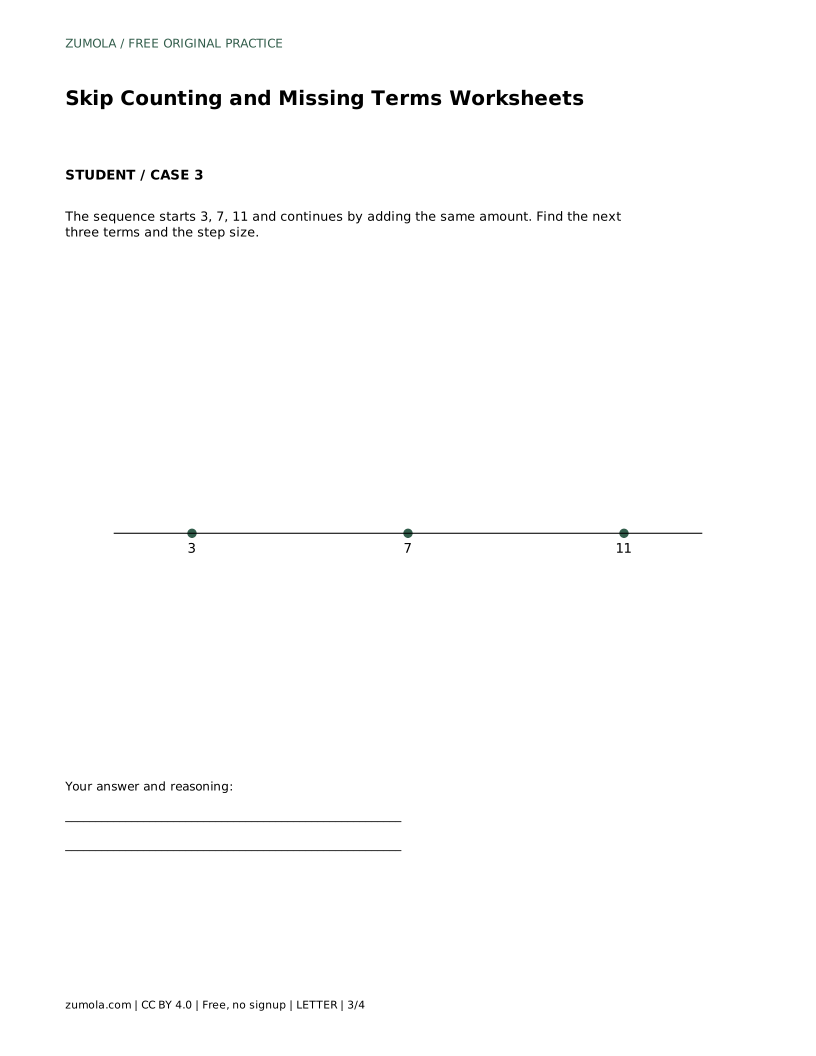
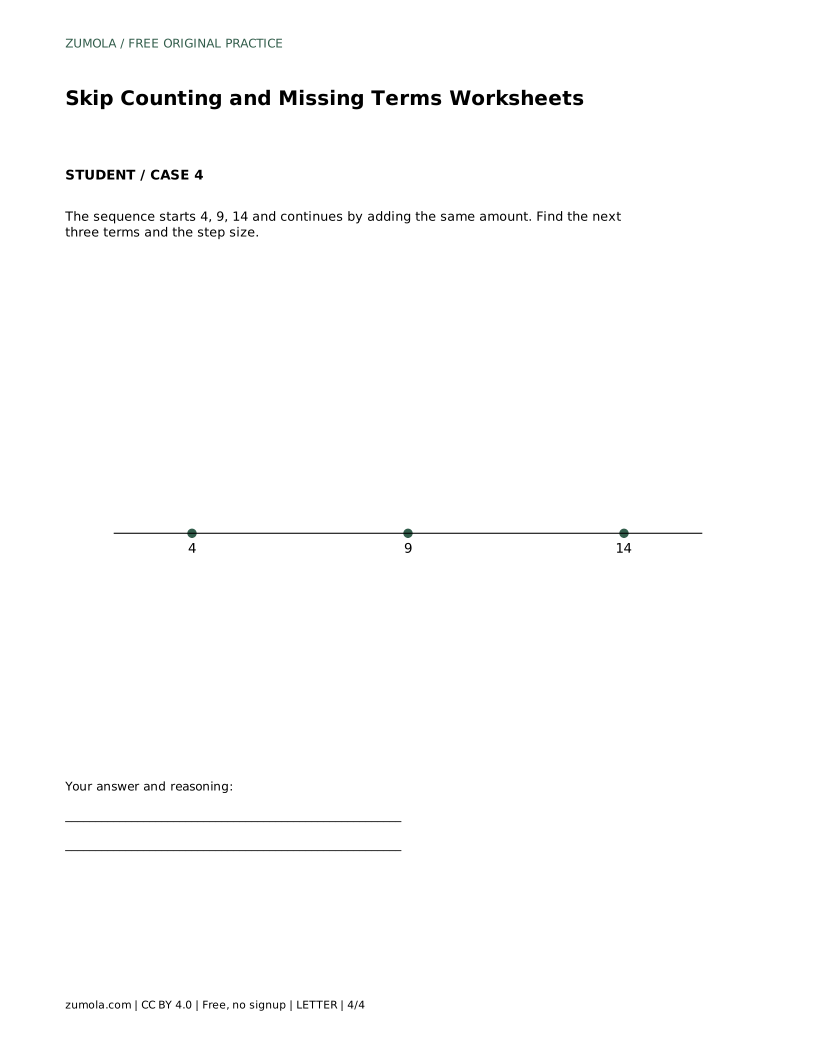
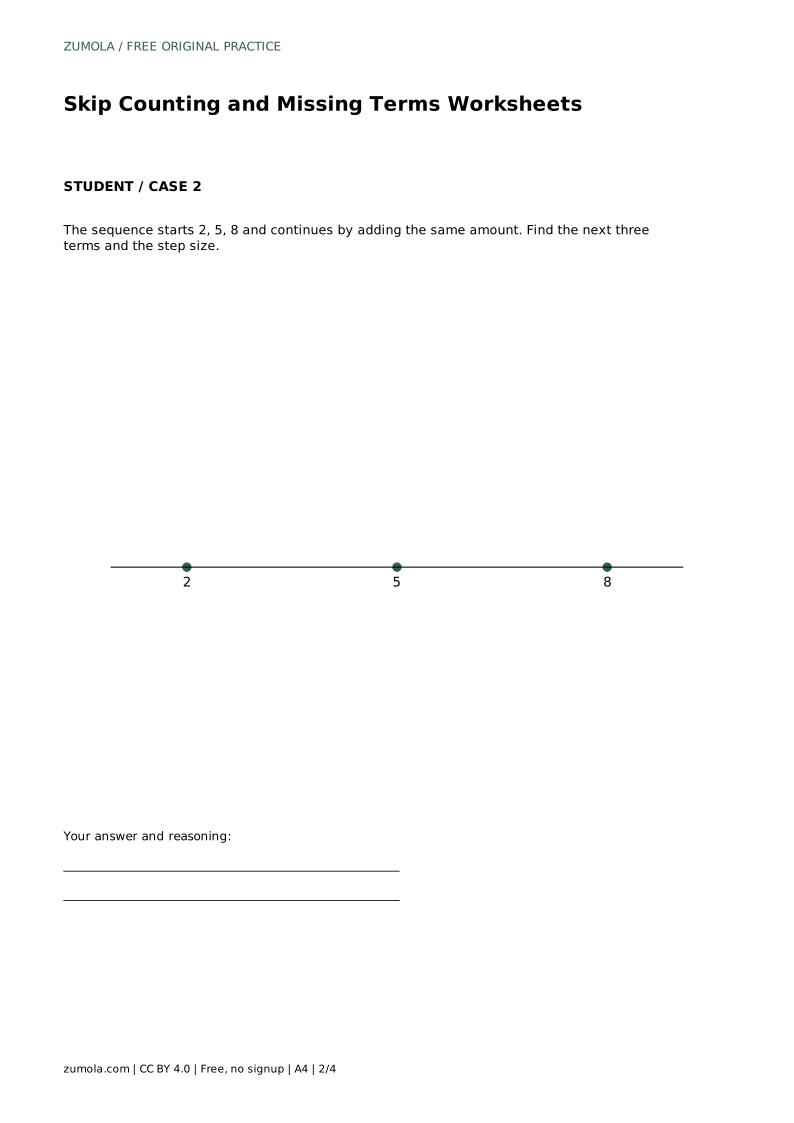
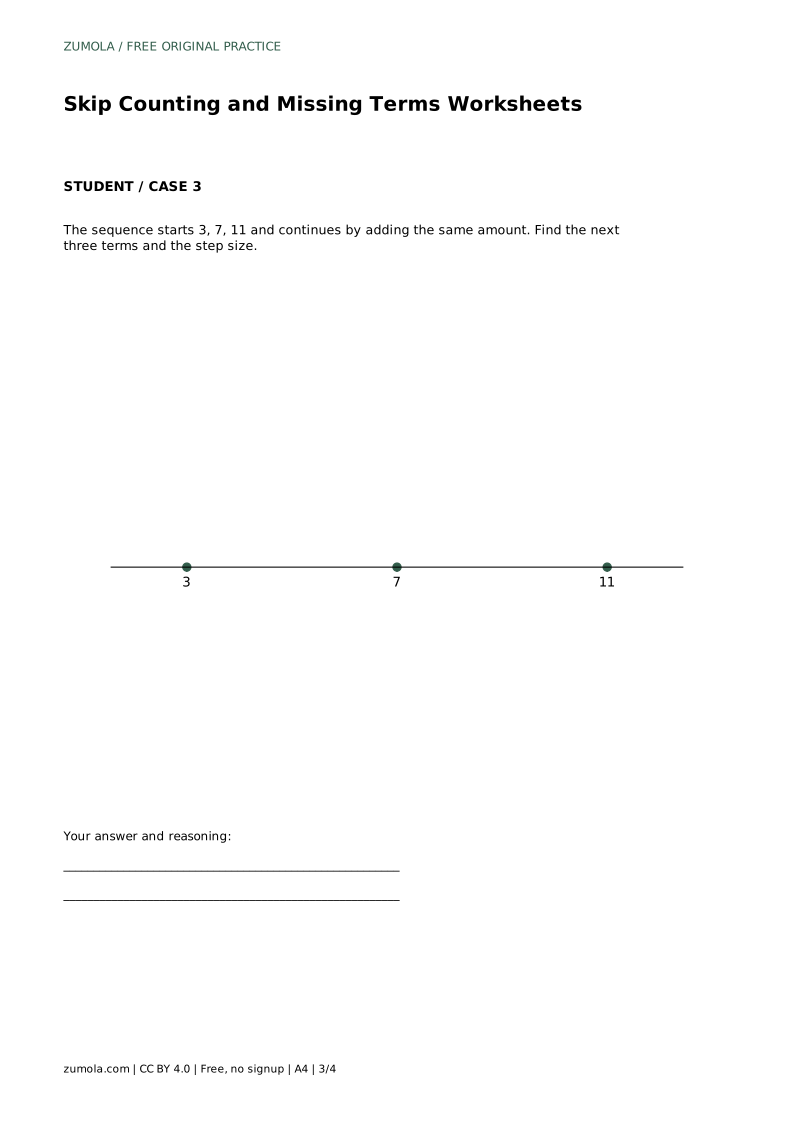
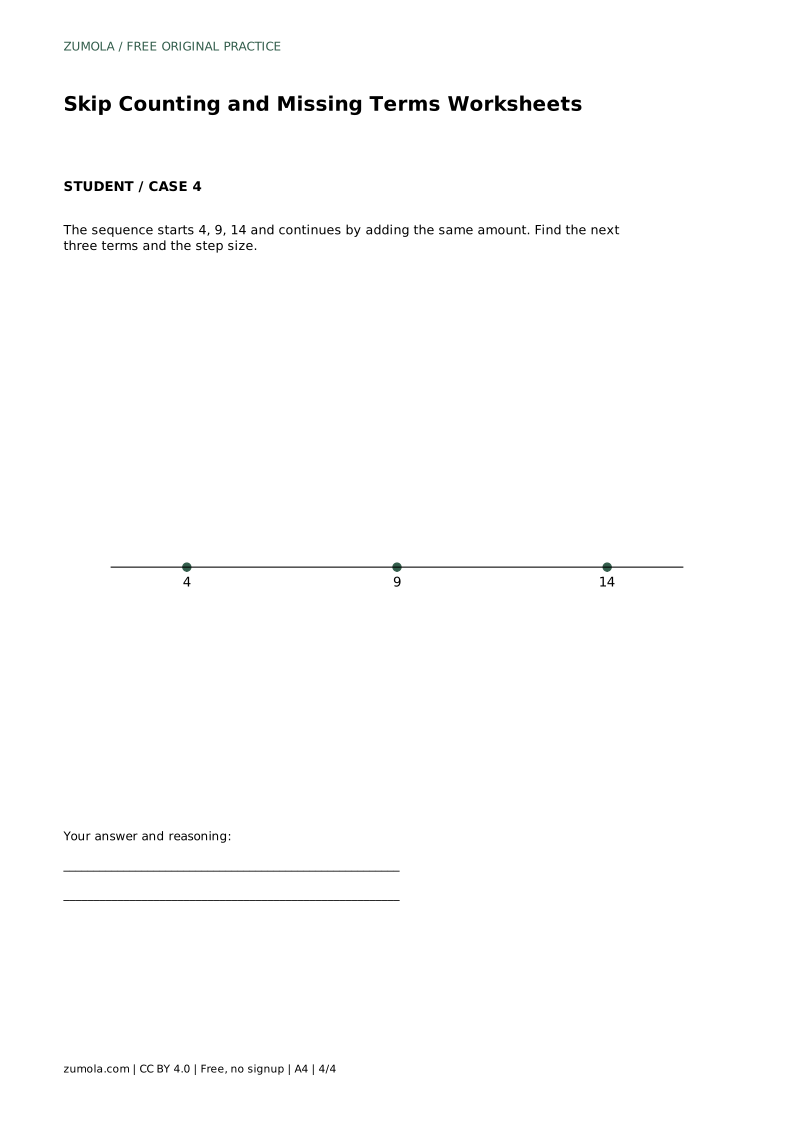
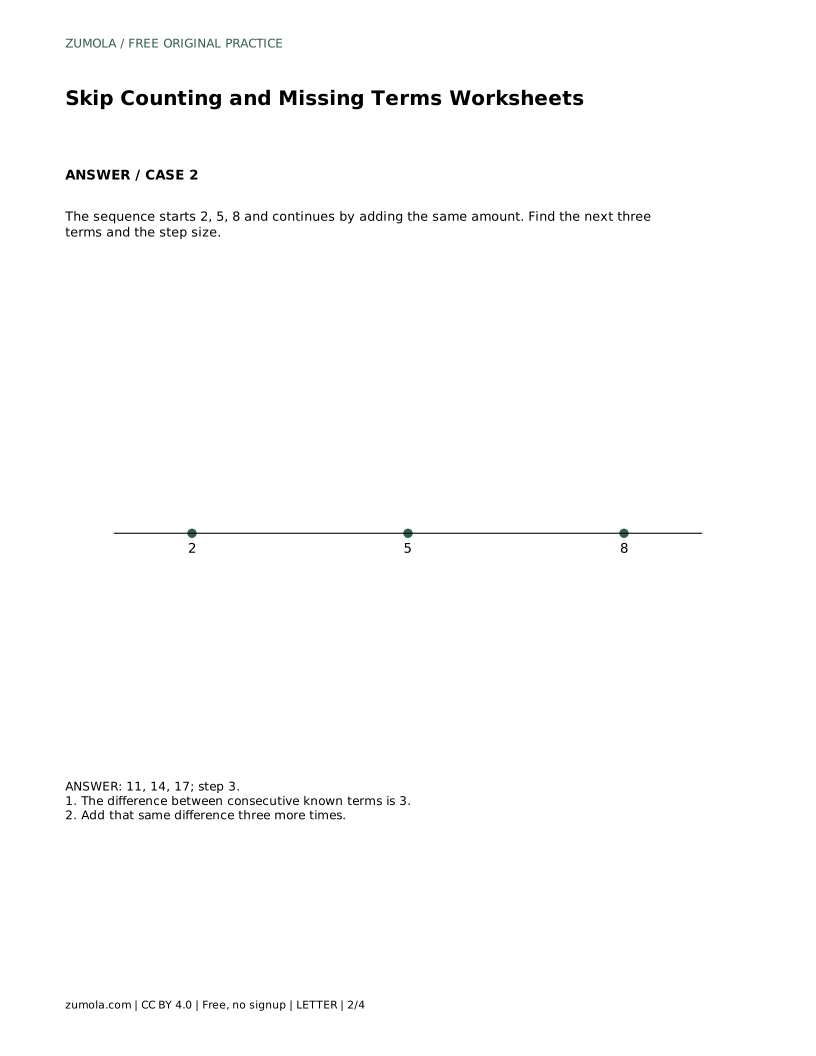
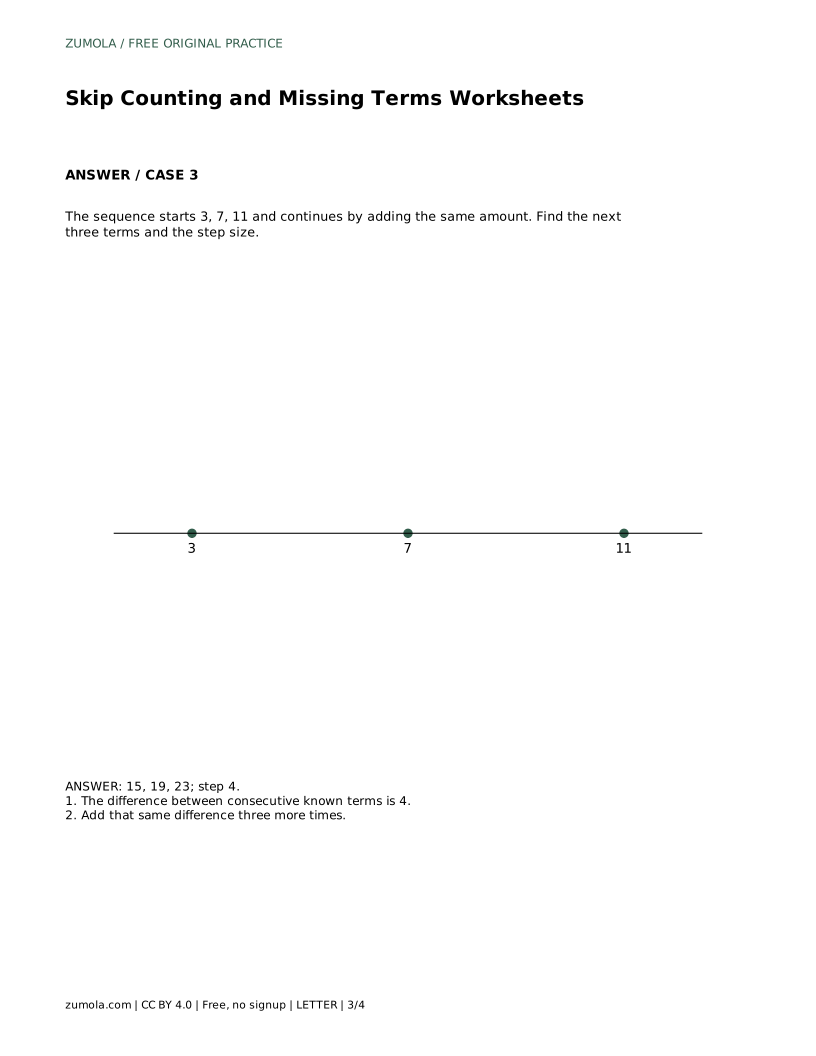
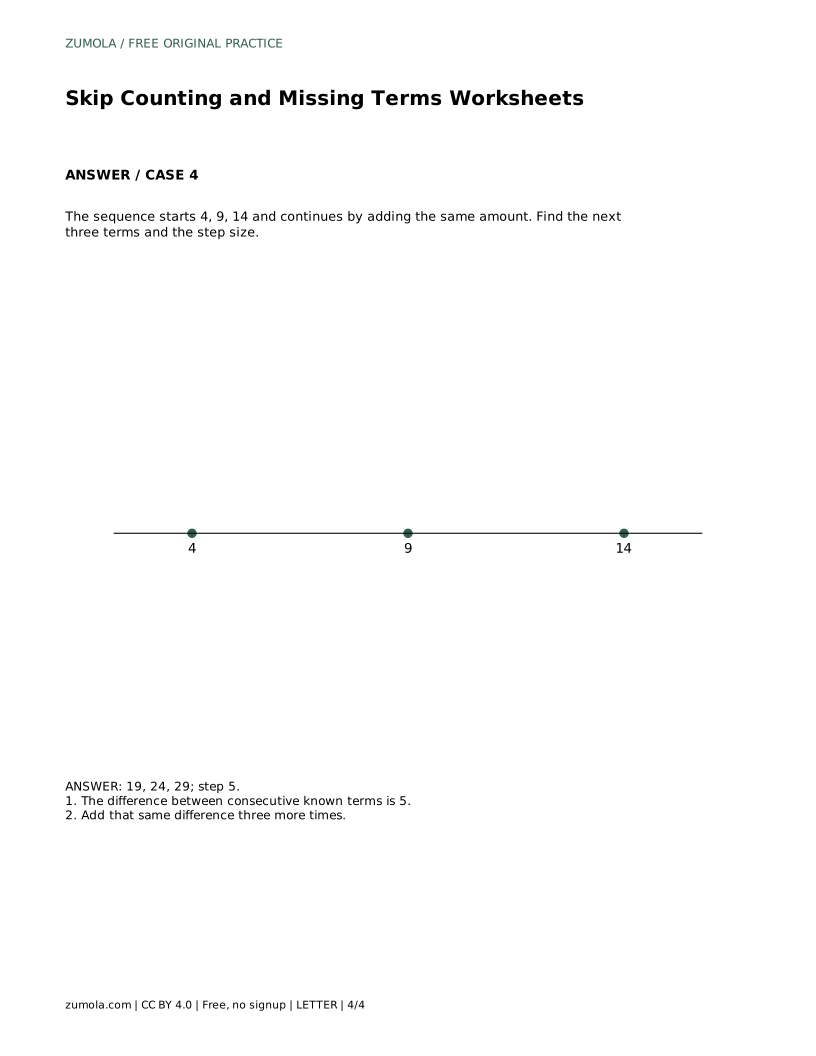
Four original cases, with reference diagrams, practice sheets and worked answers. Everything is free; no signup required.
LETTER · Download PDF
A4 · Download PDF
LETTER · Download PDF
A4 · Download PDF
LETTER · Download PDF
A4 · Download PDF
Use A4 or US Letter to match your printer. Use the stated values and conditions to solve each exercise; diagrams are not physical measuring rulers.
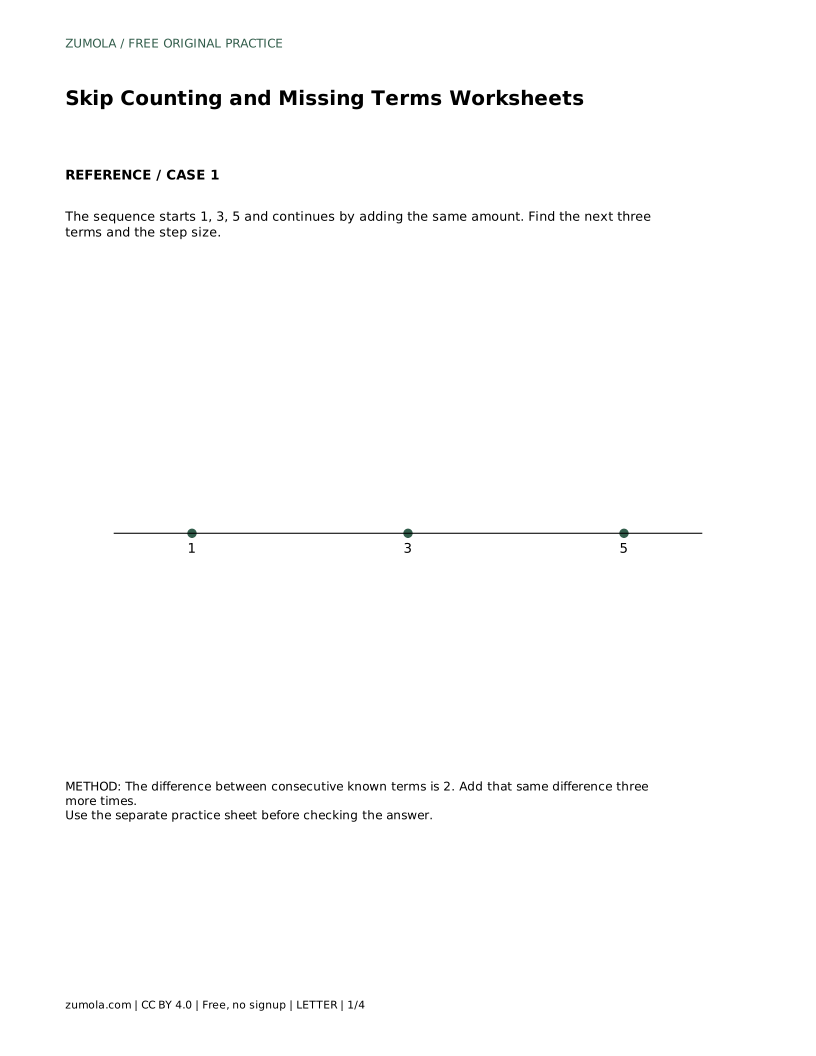

Skip counting sequences follow a constant step: each term is the previous term plus the same number. When you see a short list like 1, 3, 5, you can find the step by subtracting consecutive terms, then add that step repeatedly to extend the sequence. This page teaches that method with clear steps, a worked example, and guidance on avoiding common errors. It focuses on sequences that start with three known terms and continue by adding the same amount each time.
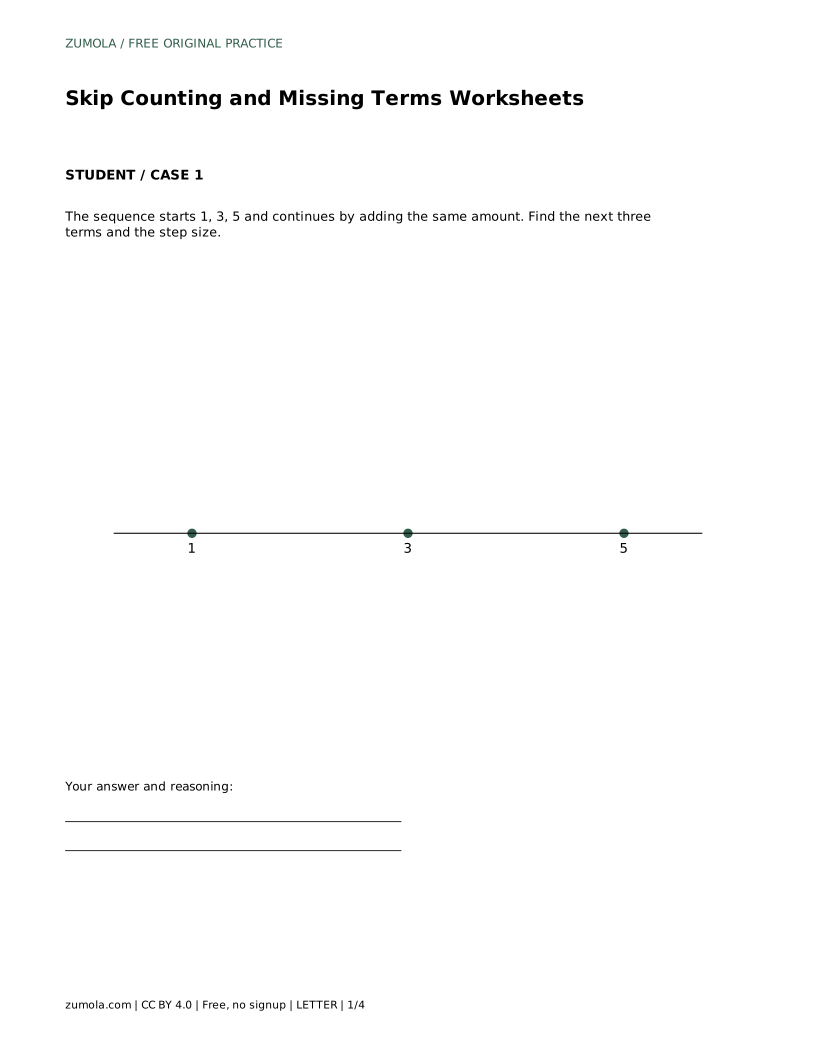
In a skip-counting sequence, the difference between any two consecutive terms is the same. To find the step, subtract the first term from the second, or the second from the third. For example, in 1, 3, 5, the difference between 1 and 3 is 2, and between 3 and 5 is also 2, so the step is 2.
Always check more than one pair of consecutive terms. If the differences are not equal, the sequence is not a constant-step skip-counting sequence, and this method does not apply. The known terms must be in order and evenly spaced.
Once you know the step, add it to the last known term to get the next term. Then add the step again to that result, and again for each additional term you need. This repeated addition is the core of skip counting.
Keep the step constant. Do not switch to a different difference partway through. The number of new terms you add depends on how many missing terms the task asks for; here we find three new terms.
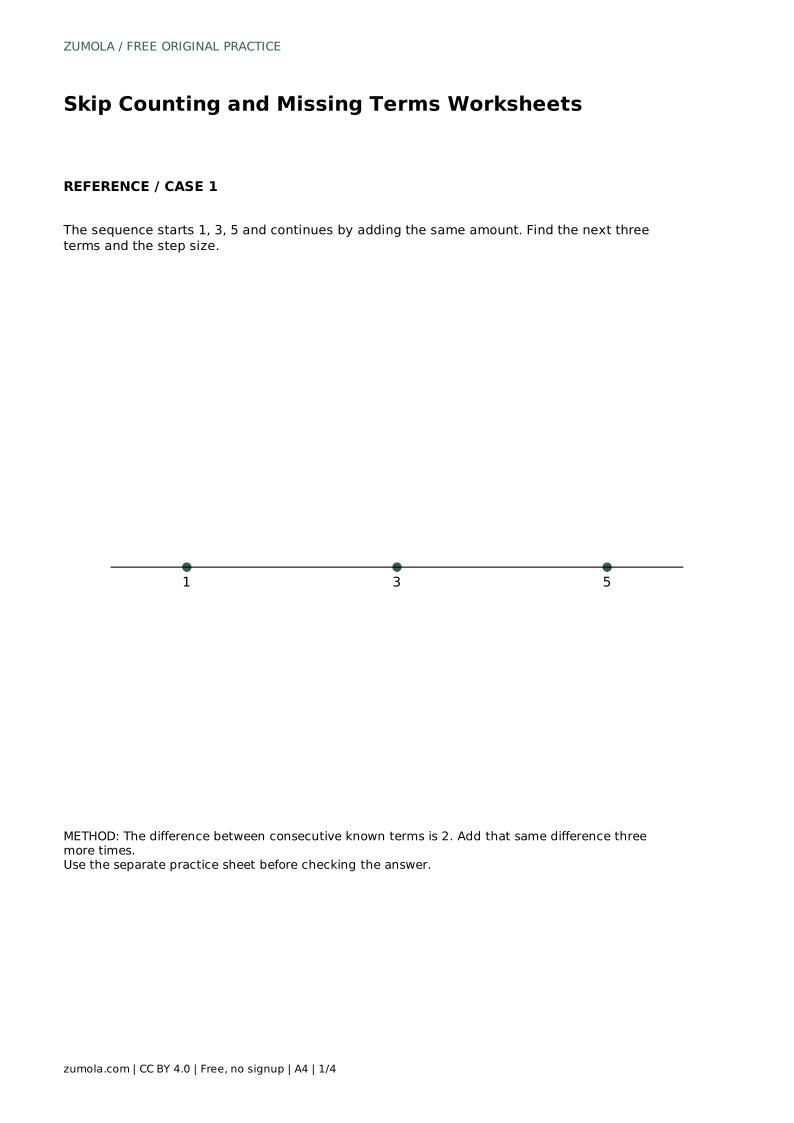
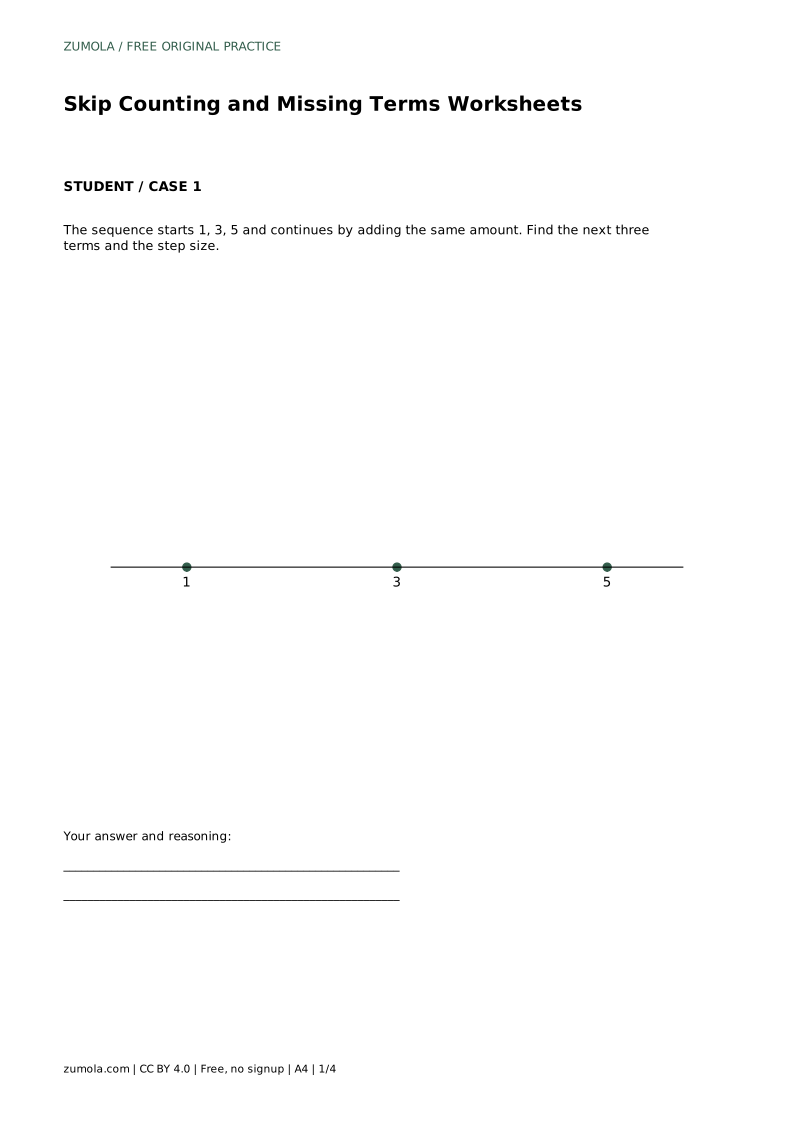
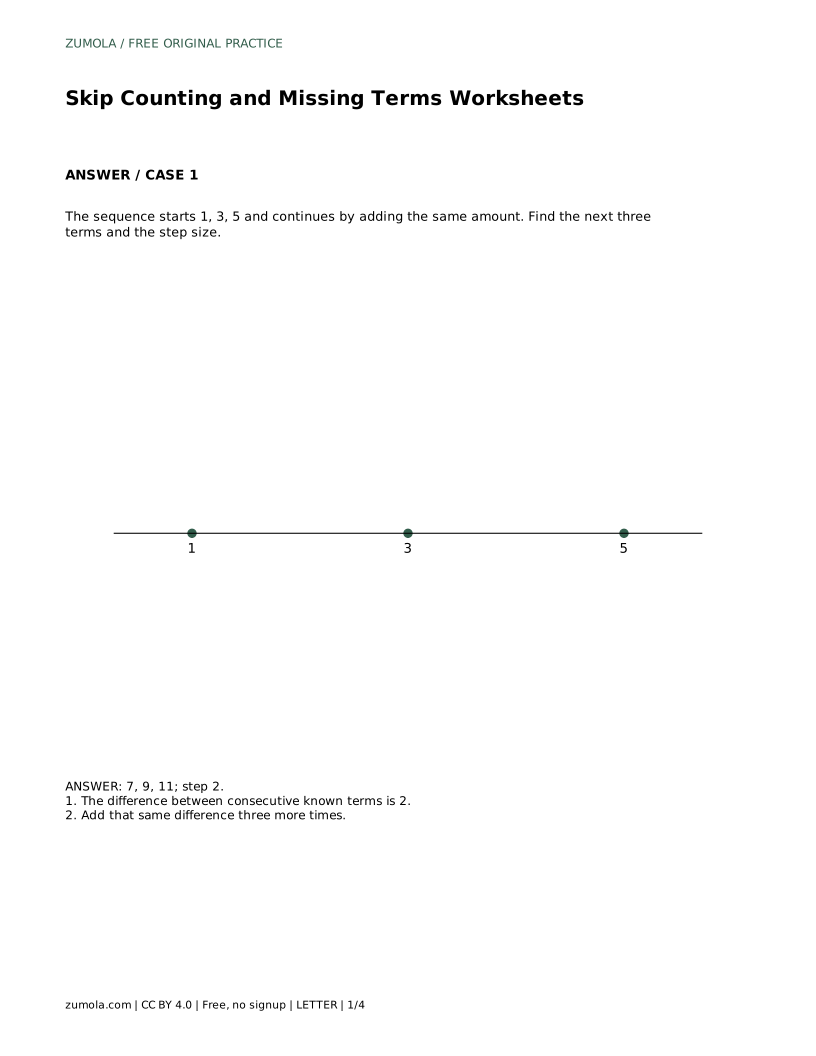
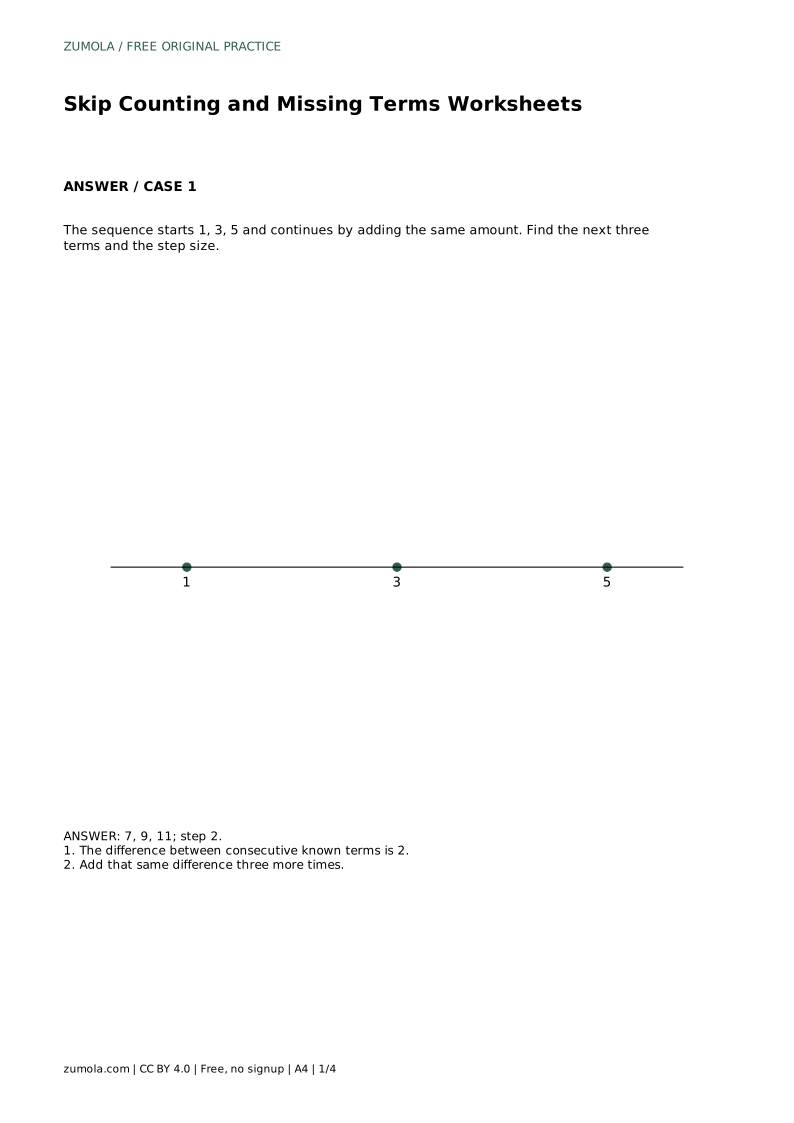
The sequence starts 1, 3, 5 and continues by adding the same amount. Find the next three terms and the step size.
The difference between consecutive known terms is 2. Add that same difference three more times: 5 + 2 = 7, 7 + 2 = 9, 9 + 2 = 11. The next three terms are 7, 9, 11, and the step size is 2.
The sequence starts 1, 3, 5 and continues by adding the same amount. Find the next three terms and the step size.
7, 9, 11; step 2. The difference between consecutive known terms is 2. Add that same difference three more times.
Then the sequence does not have a constant step, so this skip-counting method does not apply. Do not force a single step; the task requires a constant amount added each time.
Find exactly the number the task asks for. In the worked example, the task asks for the next three terms, so you add the step three times after the last known term.
A step of zero would repeat the same term, which is not skip counting in the usual sense. A negative step would decrease each term. This page focuses on positive steps, as in the examples.
All math worksheets · Free coordinate paper
Original resources · CC BY 4.0 · Free for personal and classroom use with attribution.