Reference diagrams
LETTER · Download PDF
A4 · Download PDF
Free original resources
Learn to draw a poison dart frog with a compact body, rounded toe pads, and dark blotch patterns. Trace, grid, and complete practice sheets build contour confidence.
Four original cases, with reference diagrams, practice sheets and worked answers. Everything is free; no signup required.
LETTER · Download PDF
A4 · Download PDF
LETTER · Download PDF
A4 · Download PDF
LETTER · Download PDF
A4 · Download PDF
Use A4 or US Letter to match your printer. Use the stated values and conditions to solve each exercise; diagrams are not physical measuring rulers.
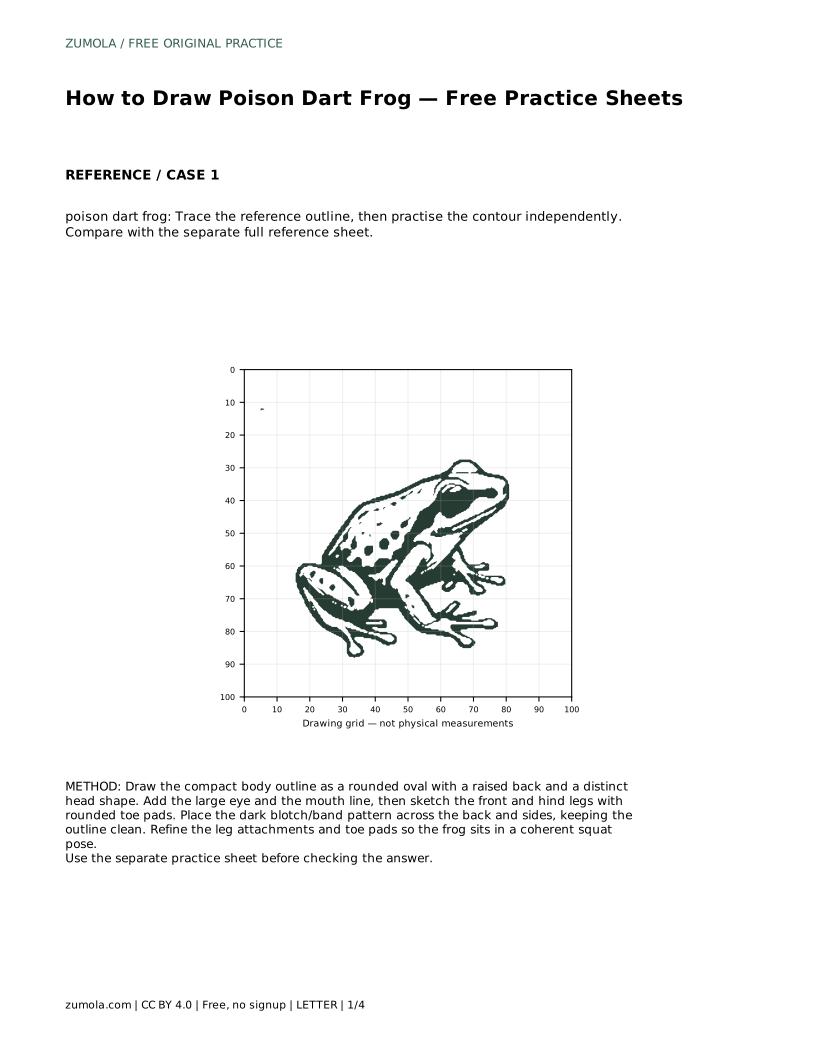
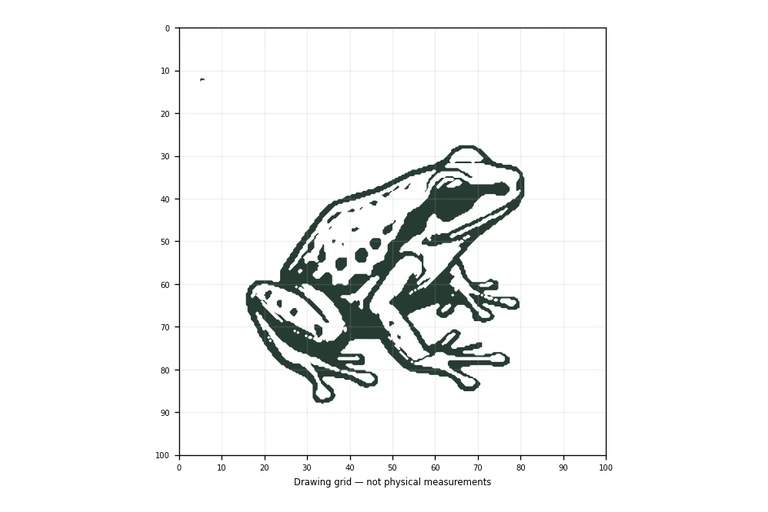
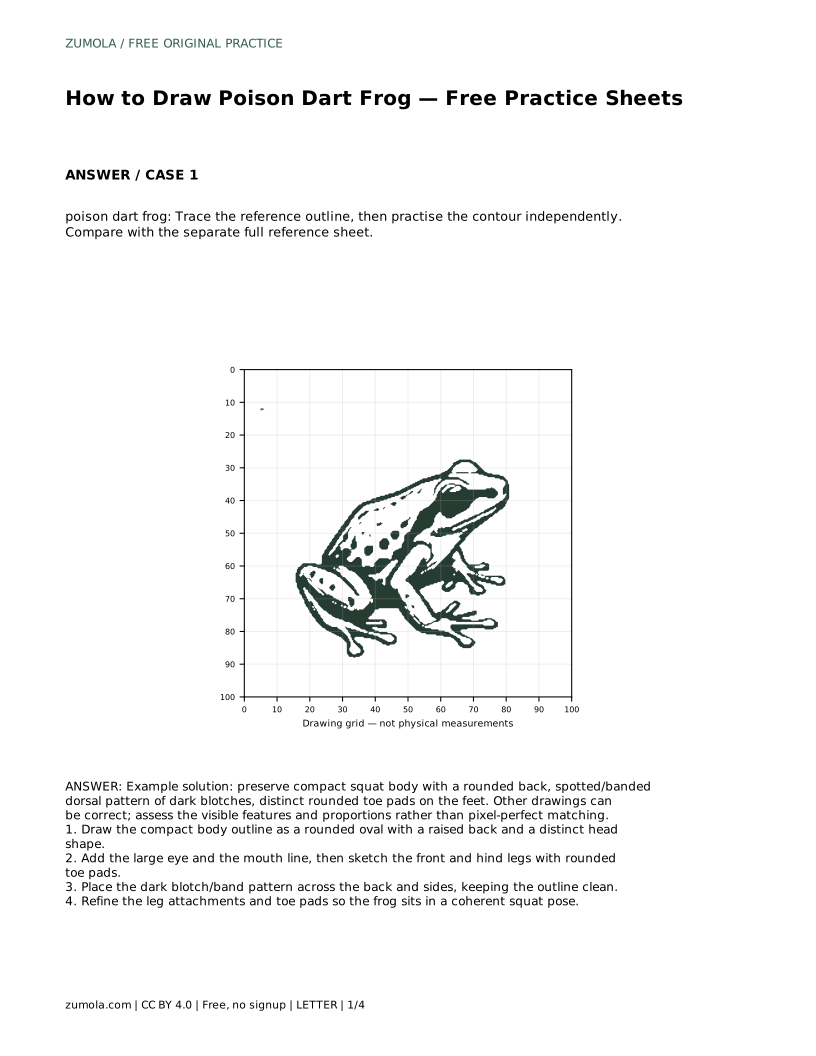
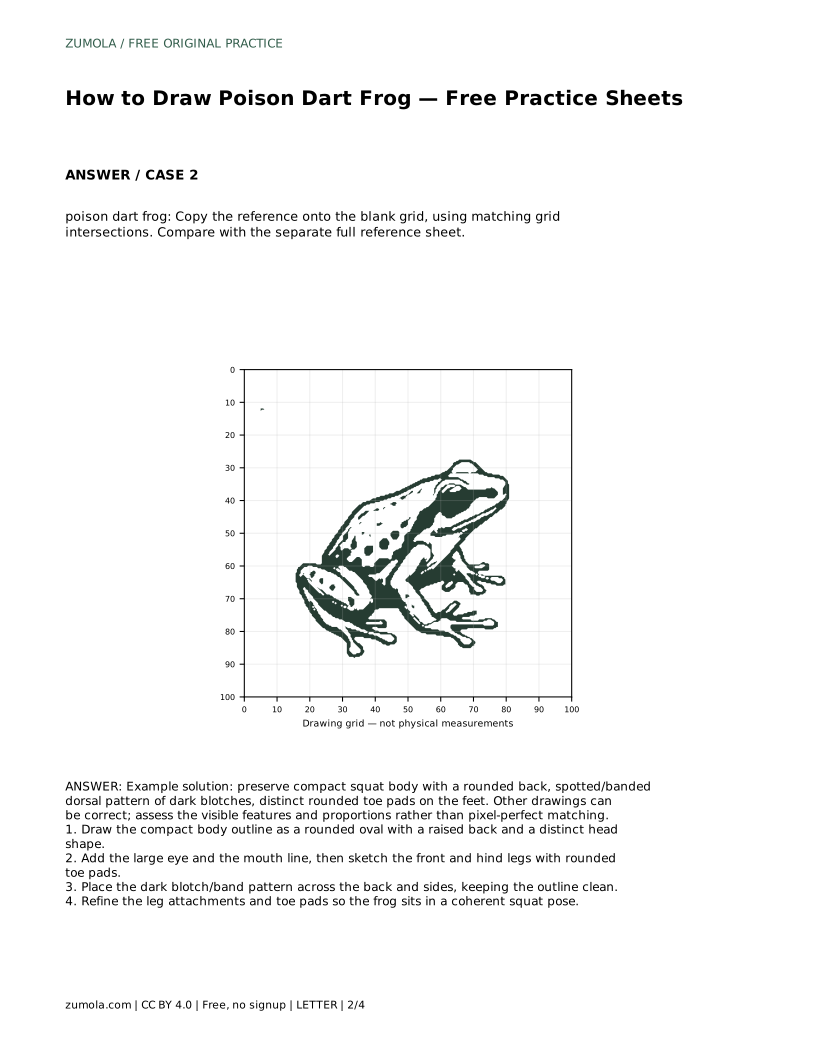
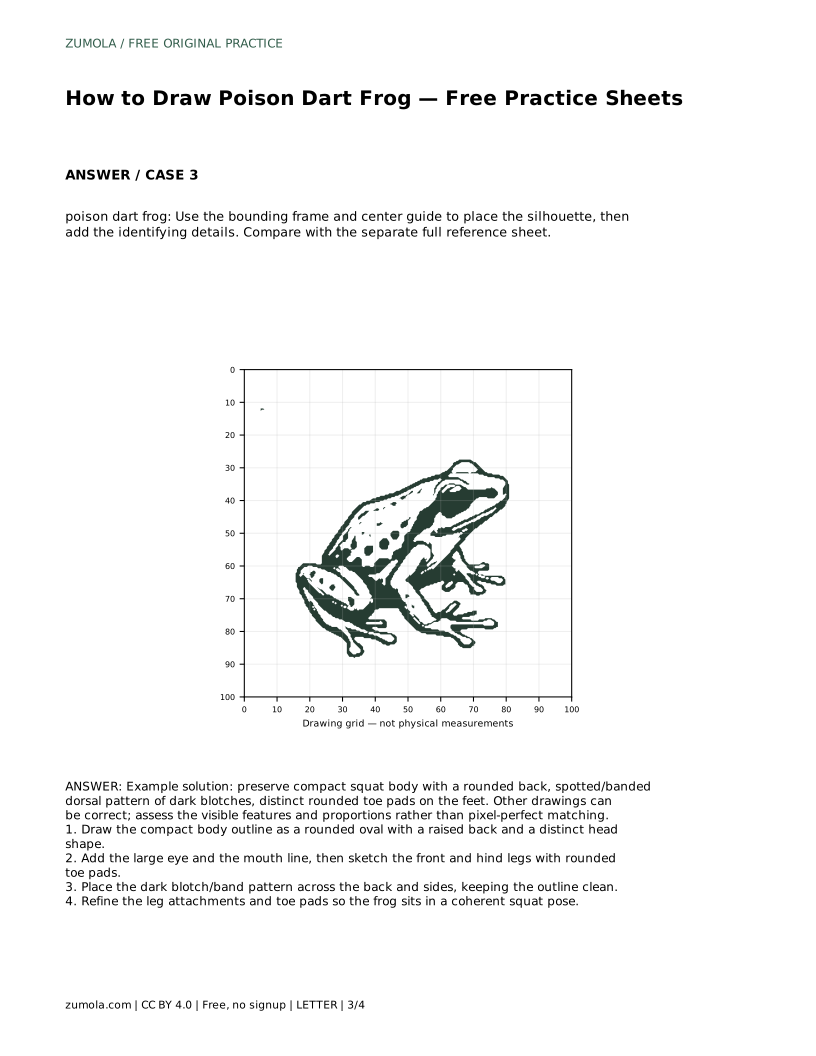
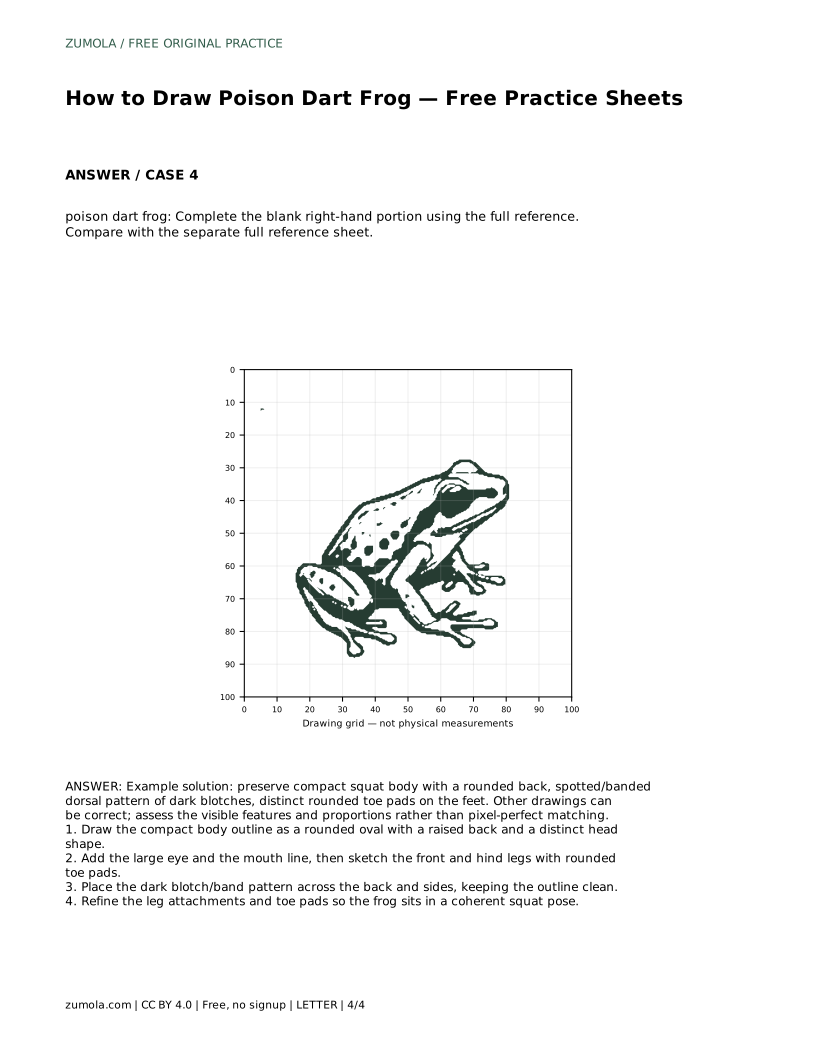
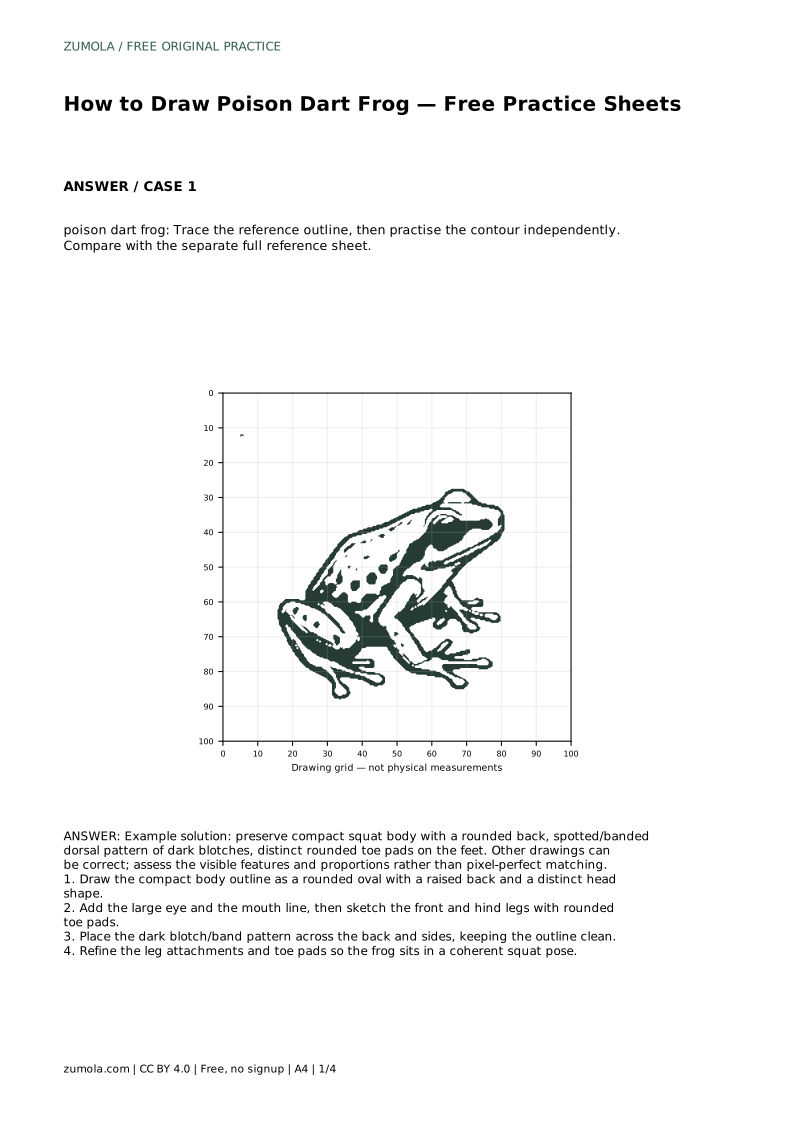
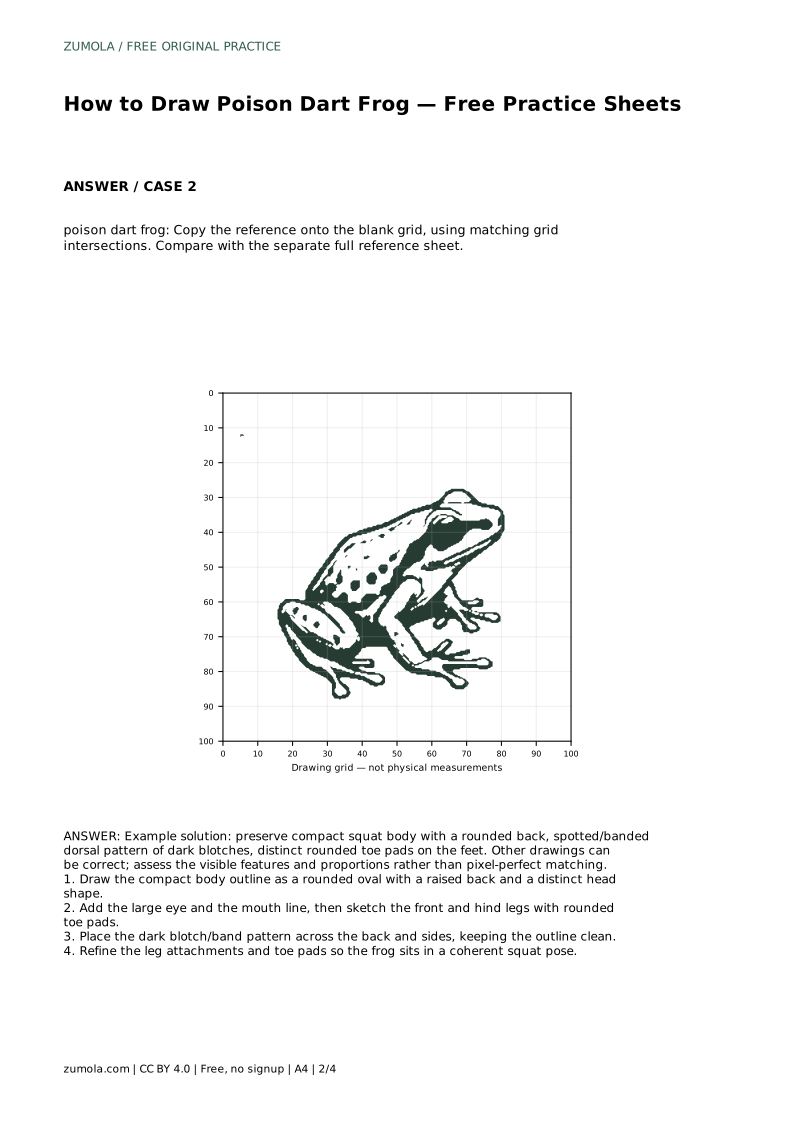
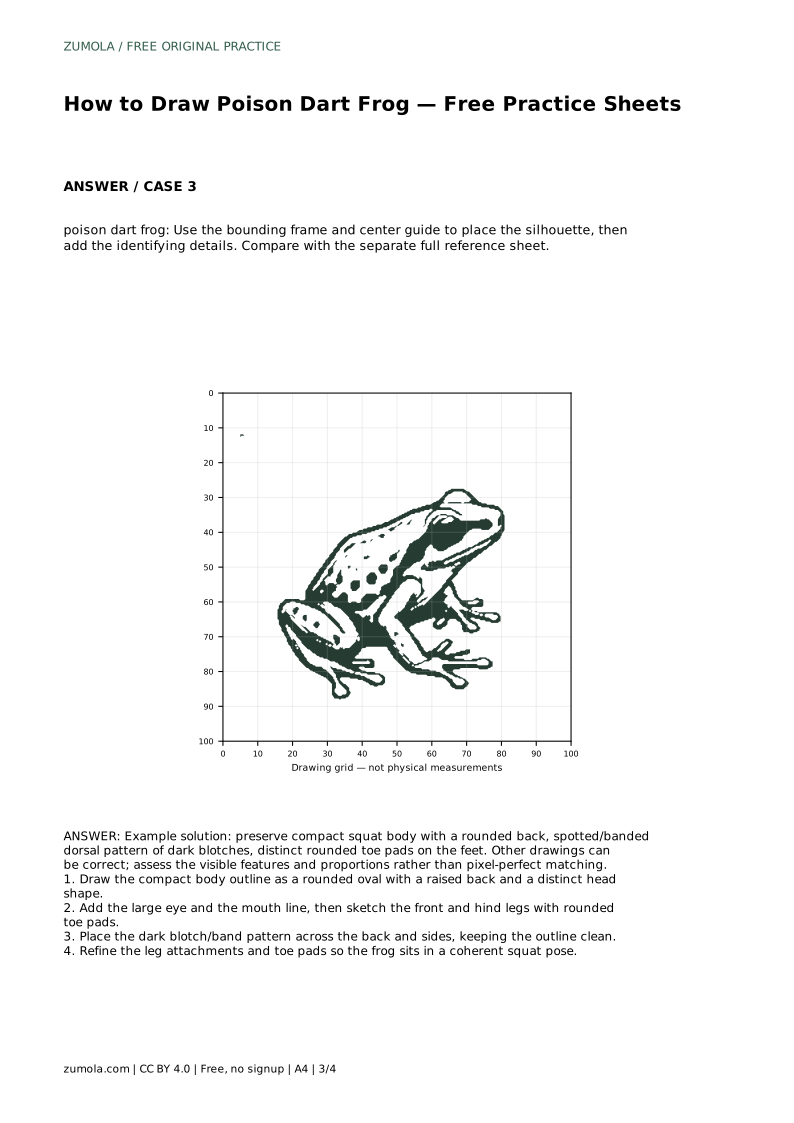
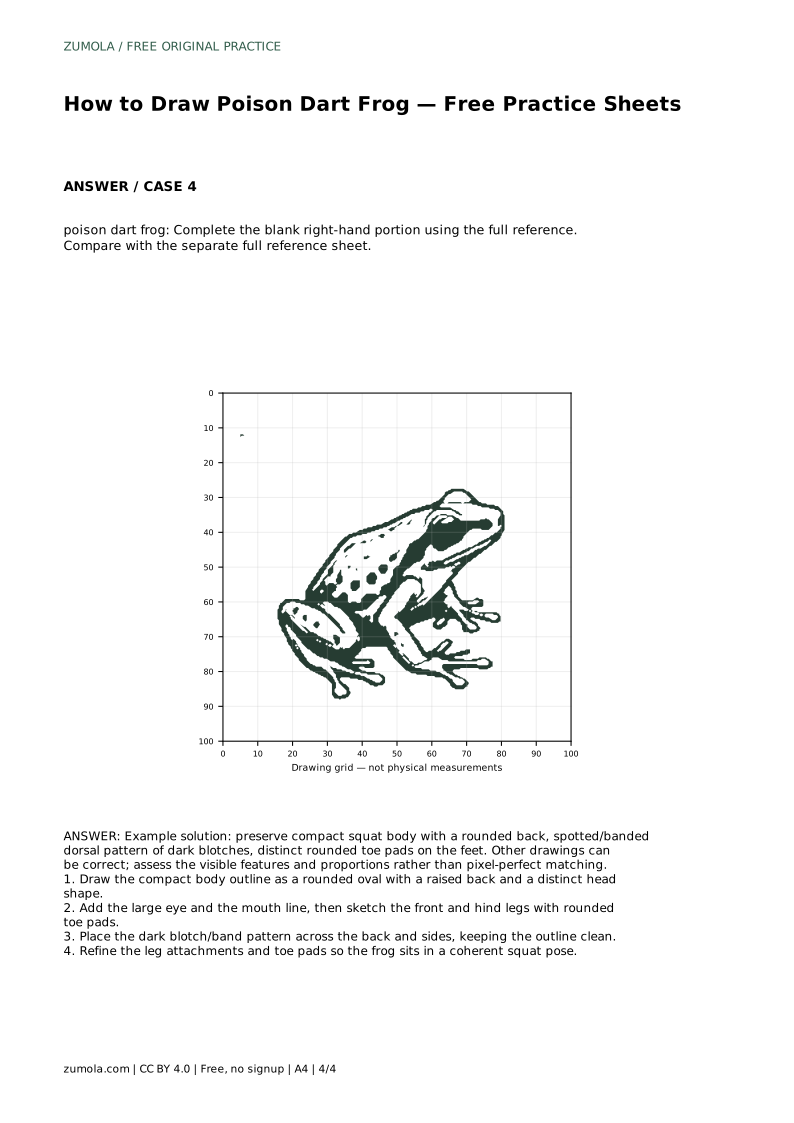
A poison dart frog drawing depends on a few clear features: a compact, squat body with a raised rounded back, a distinct head, large eyes, and feet with rounded toe pads. The dark blotches or bands across the back and sides give the frog its recognizable pattern. This page explains how to build those features in order, then how to use tracing, grid, and partial-outline practice sheets to strengthen your contour control. The goal is a coherent frog shape, not a pixel-perfect copy.
Begin with the overall shape before any pattern. A poison dart frog reads as compact and low, so draw a rounded oval for the body with a gently raised back. Add a distinct head shape at the front rather than letting the head merge into the body. Keep the outline light so you can adjust proportions as the legs appear.
Check the silhouette from a short distance. If the body looks long or narrow, widen it. If the back looks flat, lift the curve slightly. A convincing squat pose comes from this base shape, so spend time here before adding detail.
Place the large eye on the side of the head and draw a simple mouth line. Then sketch the front and hind legs. The hind legs fold close to the body in a squat pose, while the front legs support the chest. Give each foot rounded toe pads, which are a key identifying feature.
Refine where the legs attach to the body. The attachments should look connected, not pasted on. Keep the toe pads rounded and distinct rather than pointed. If a leg looks too thin, thicken it slightly to match the compact body.
The dorsal pattern of dark blotches or bands sits across the back and sides. Place the pattern after the outline is settled so the blotches follow the body's curve. Keep the outline clean by leaving a small gap between the pattern and the edge where appropriate.
Vary the blotch sizes and spacing so the pattern looks natural rather than mechanical. The pattern should read as part of the frog's surface, not as separate shapes floating on top.
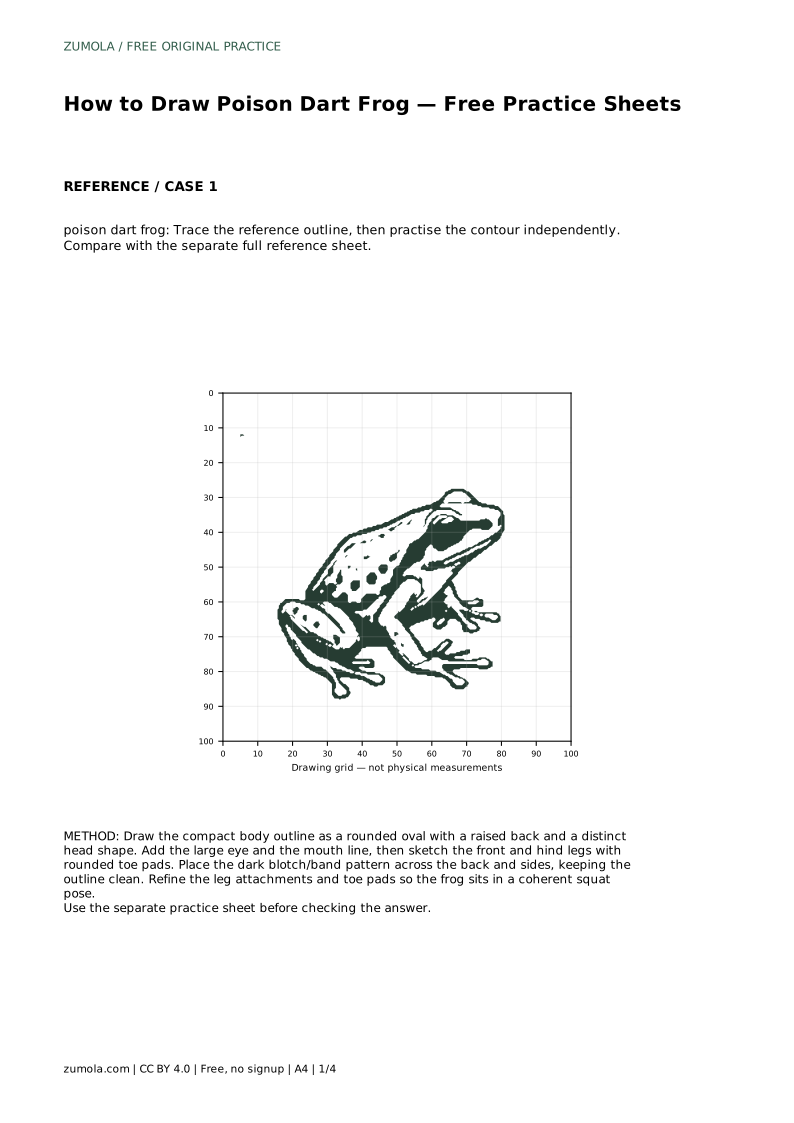
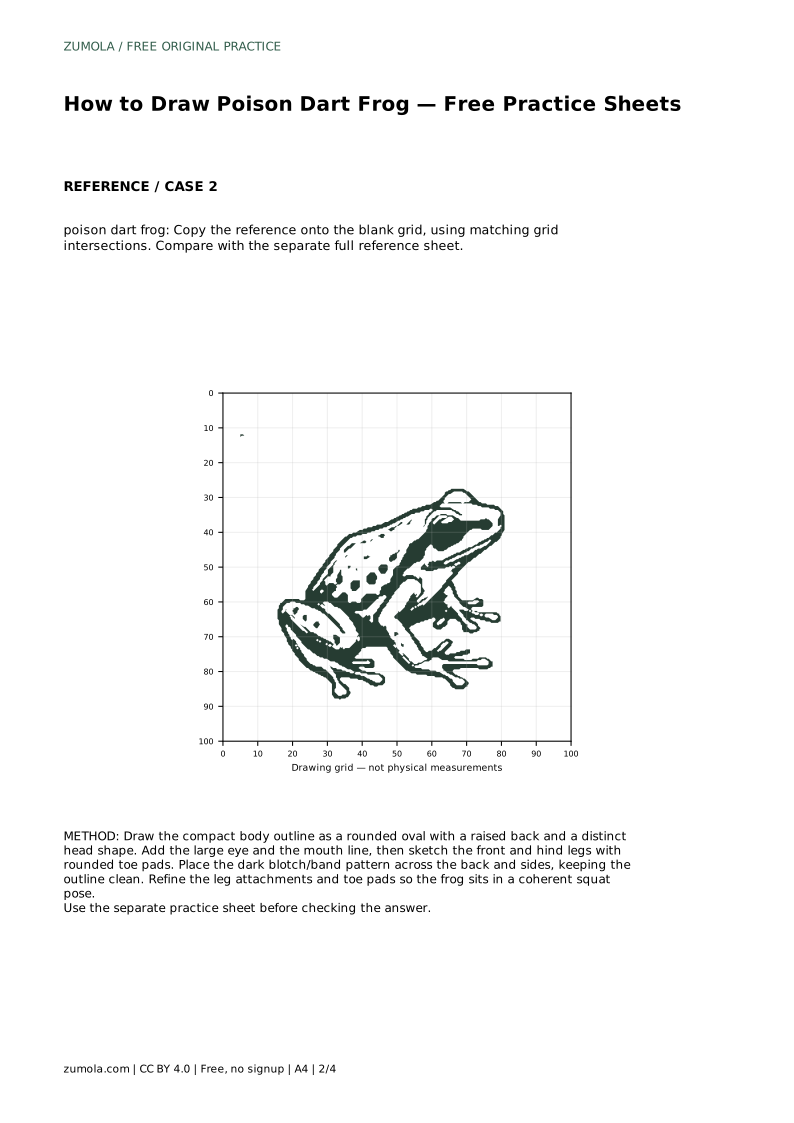
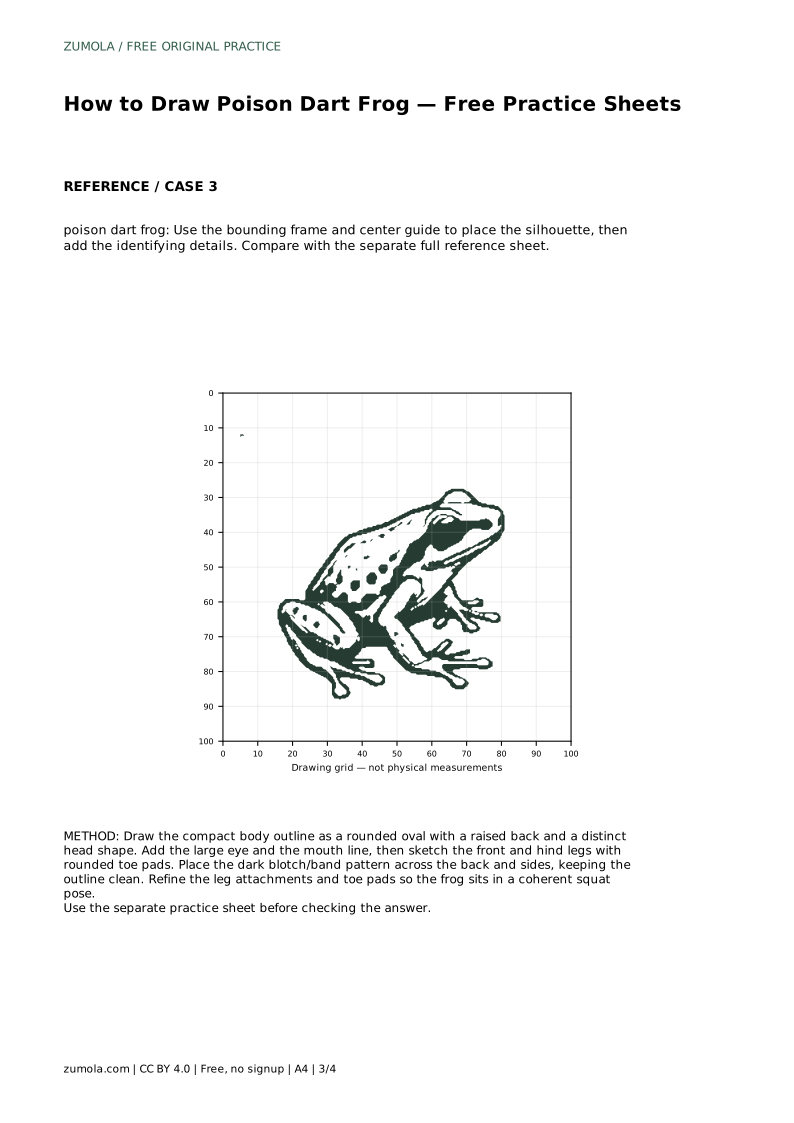
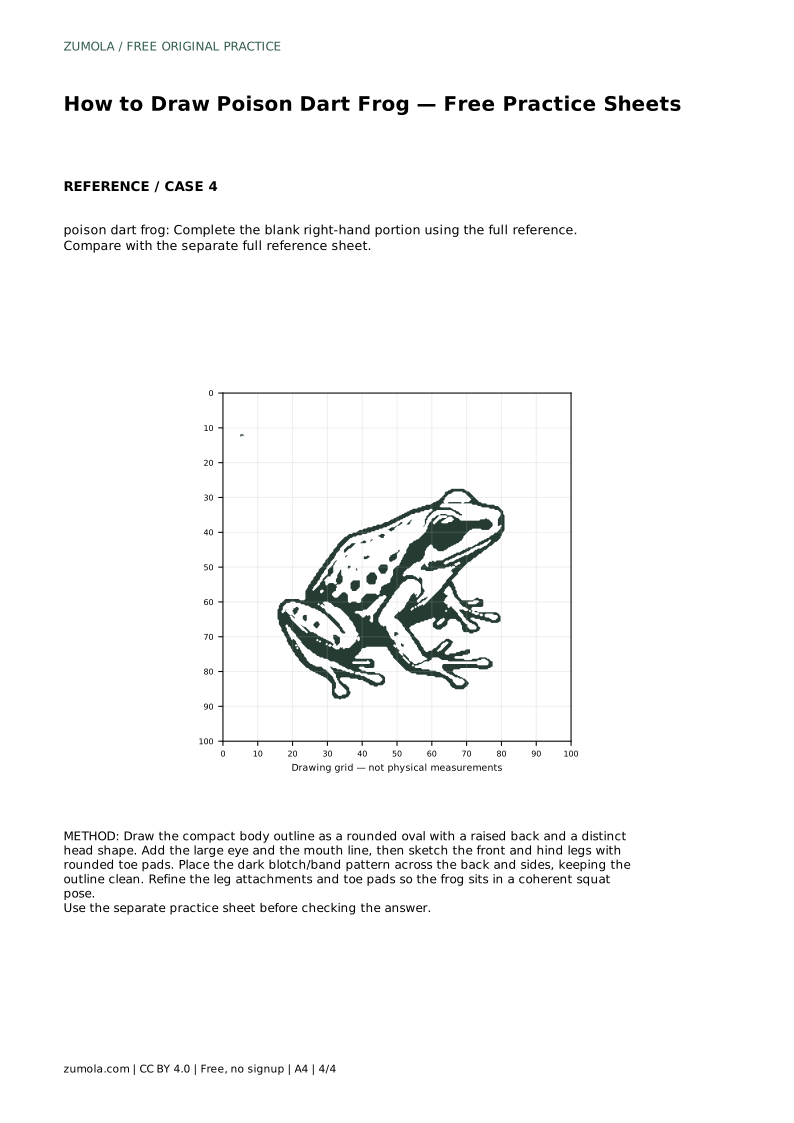
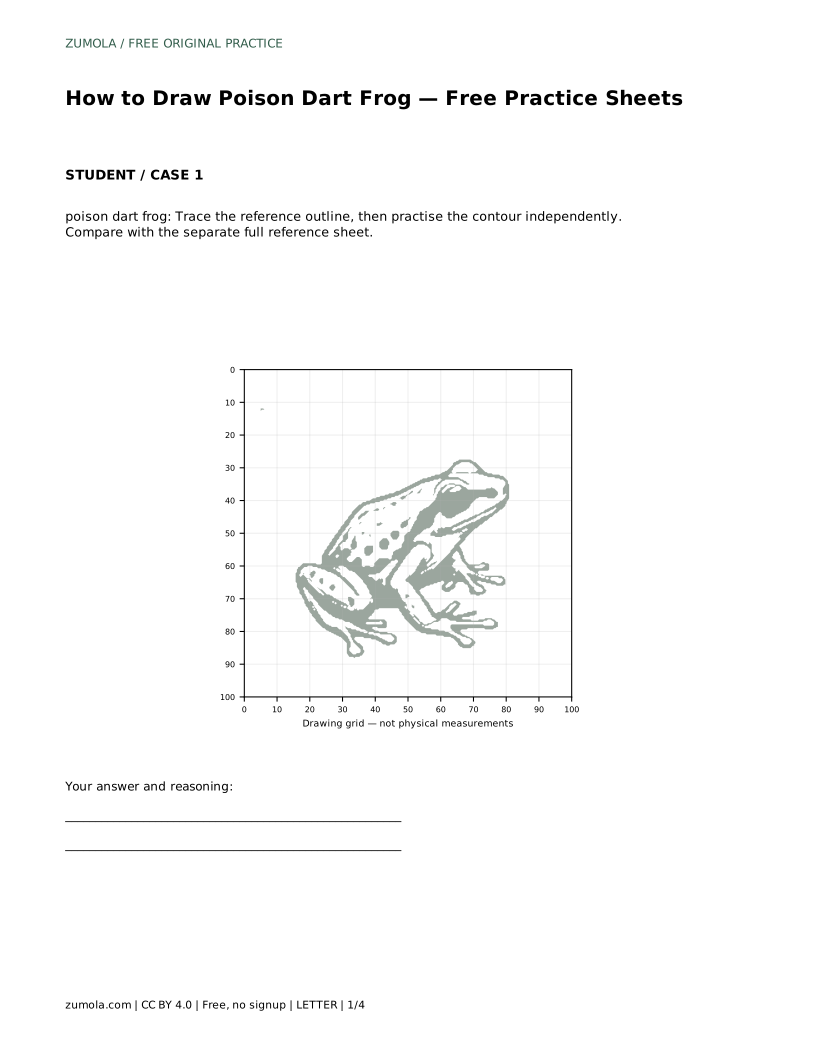
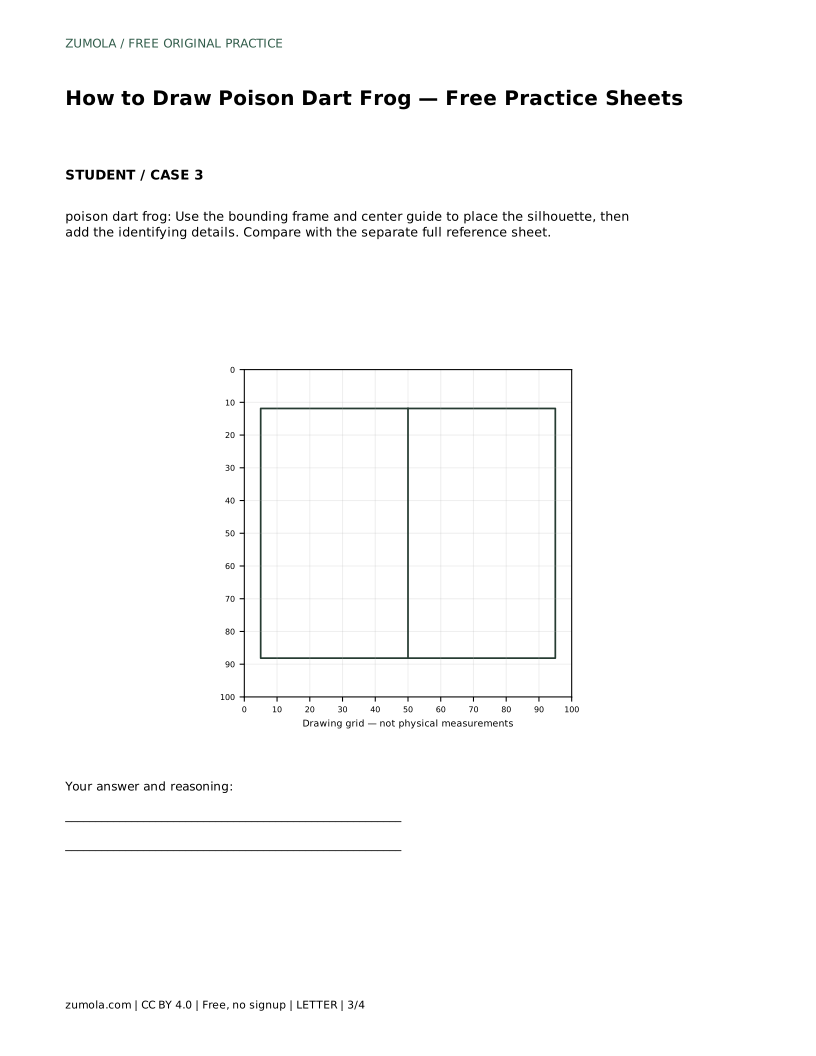
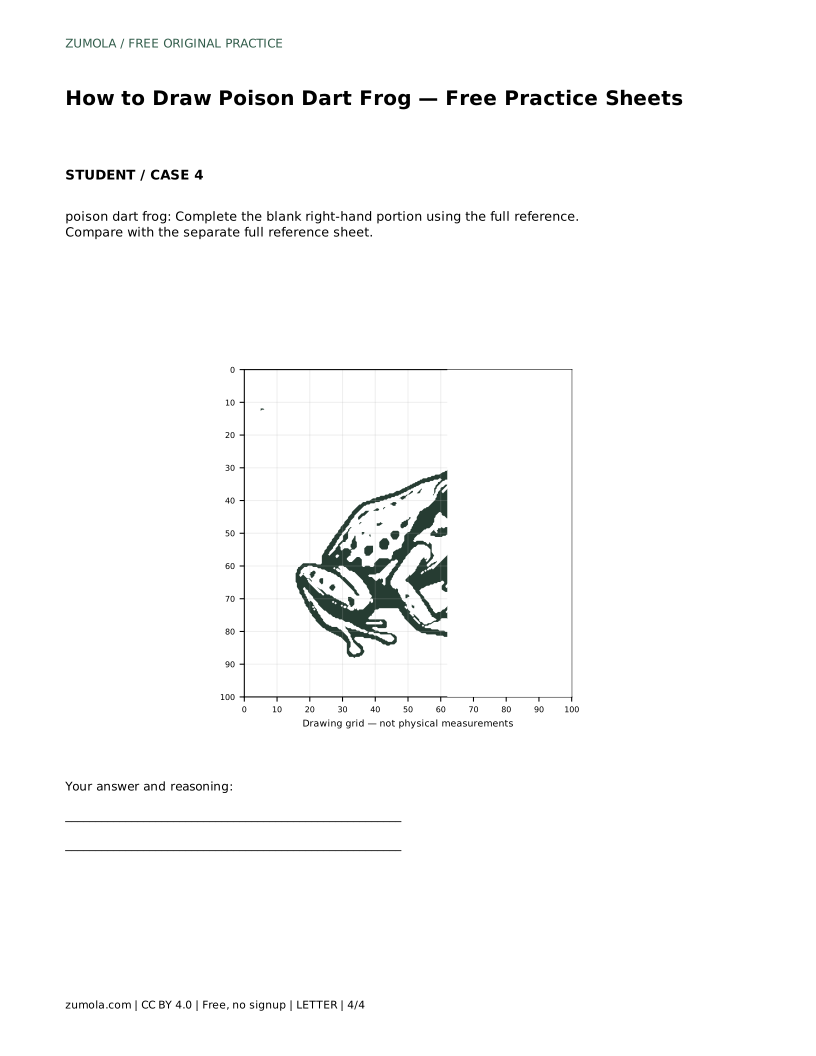
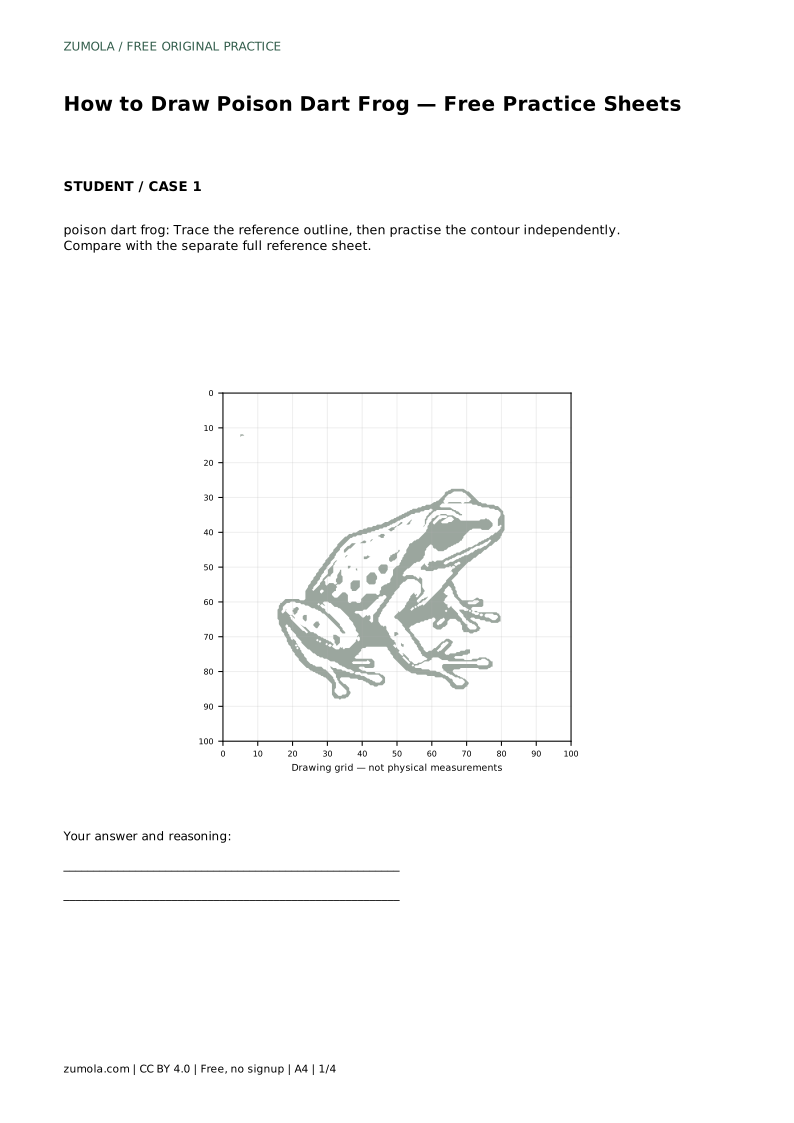
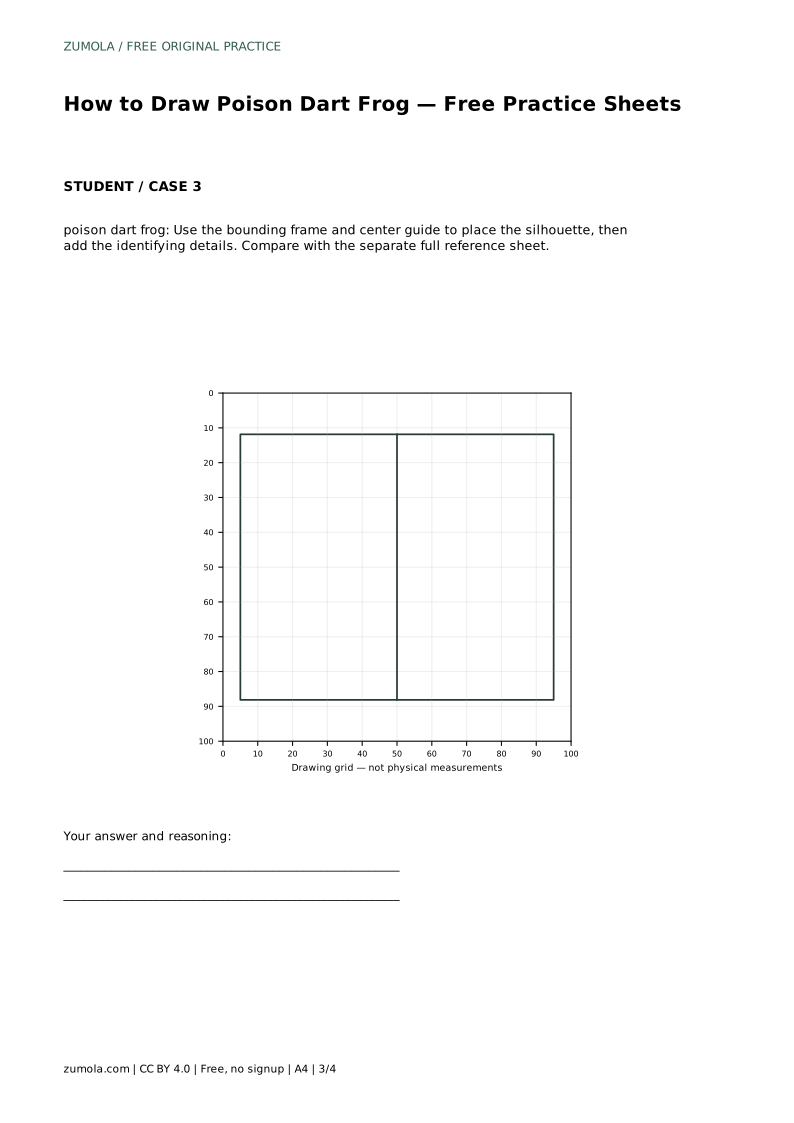
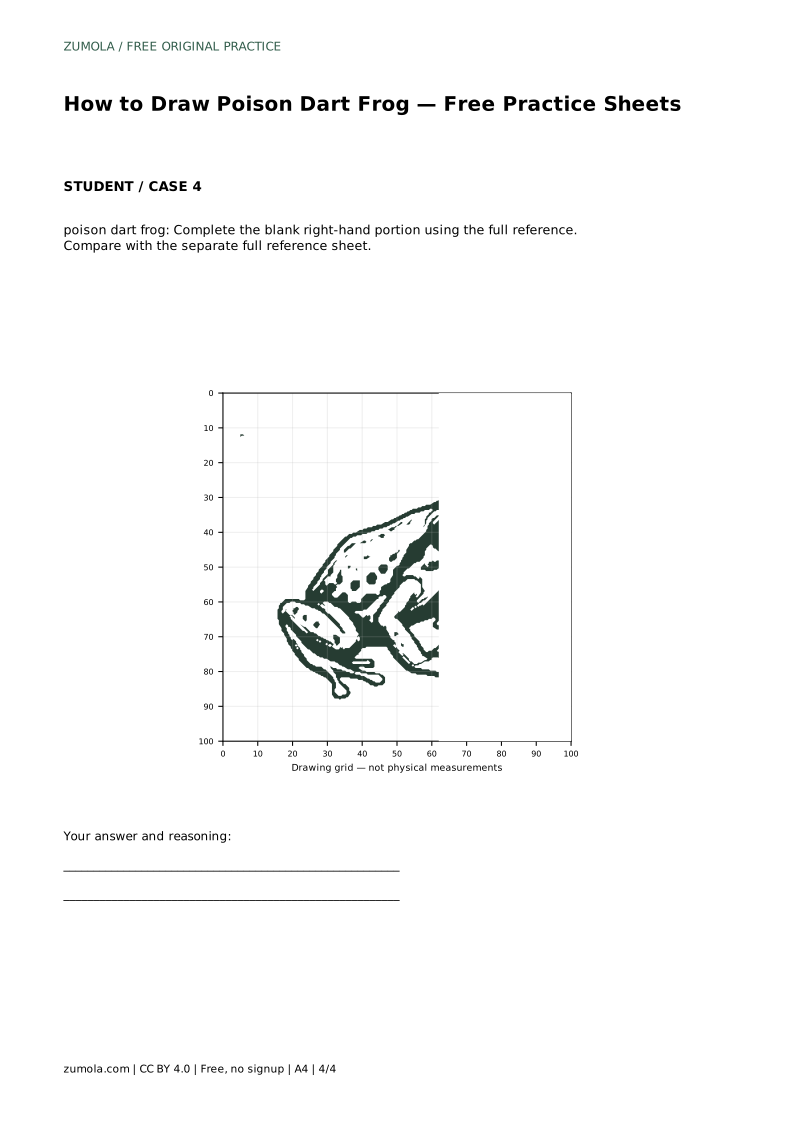
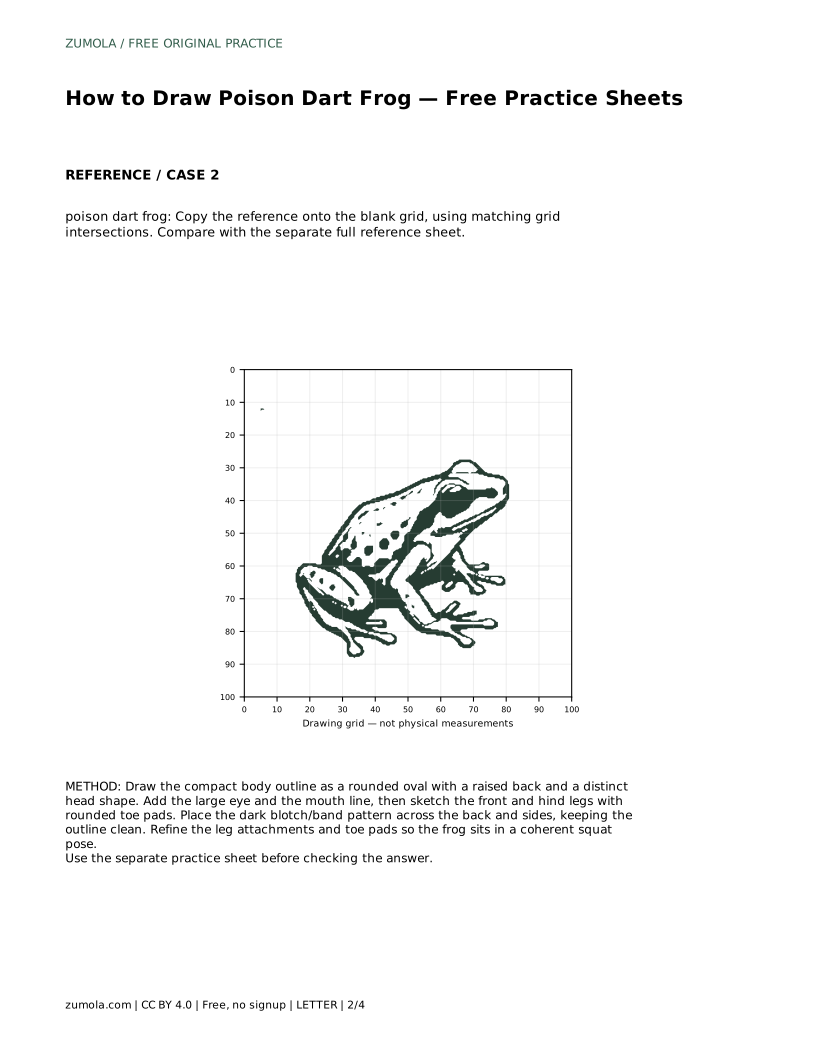
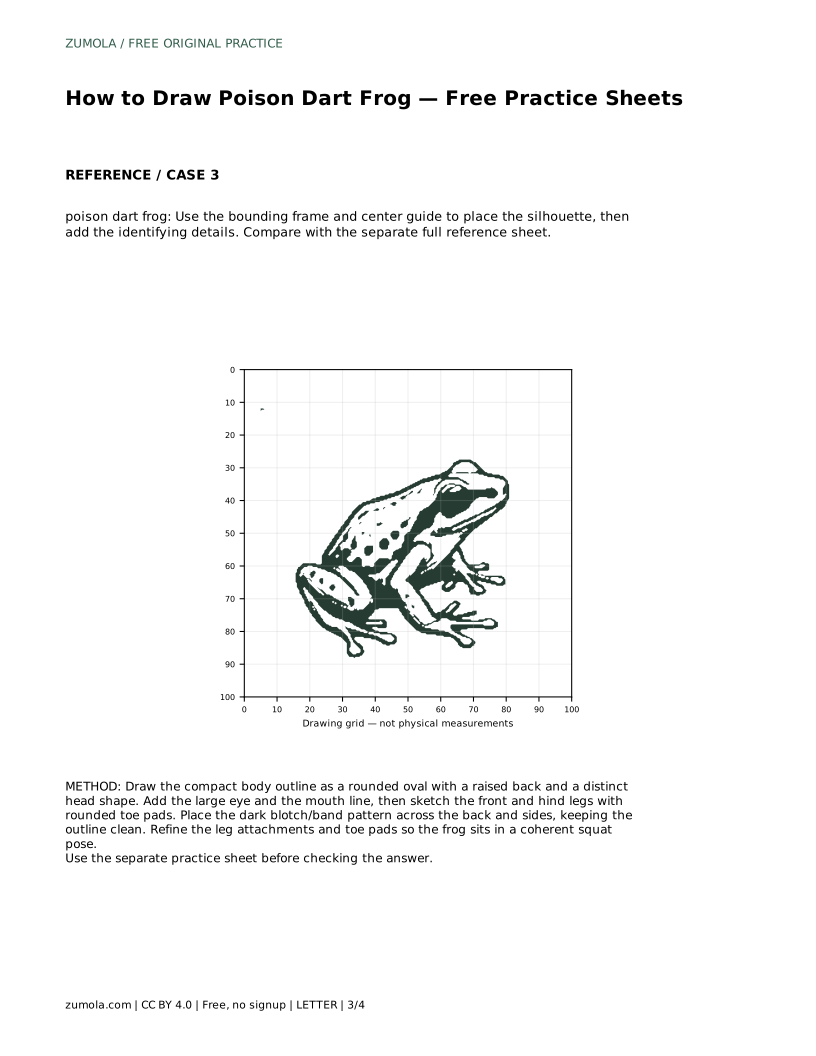
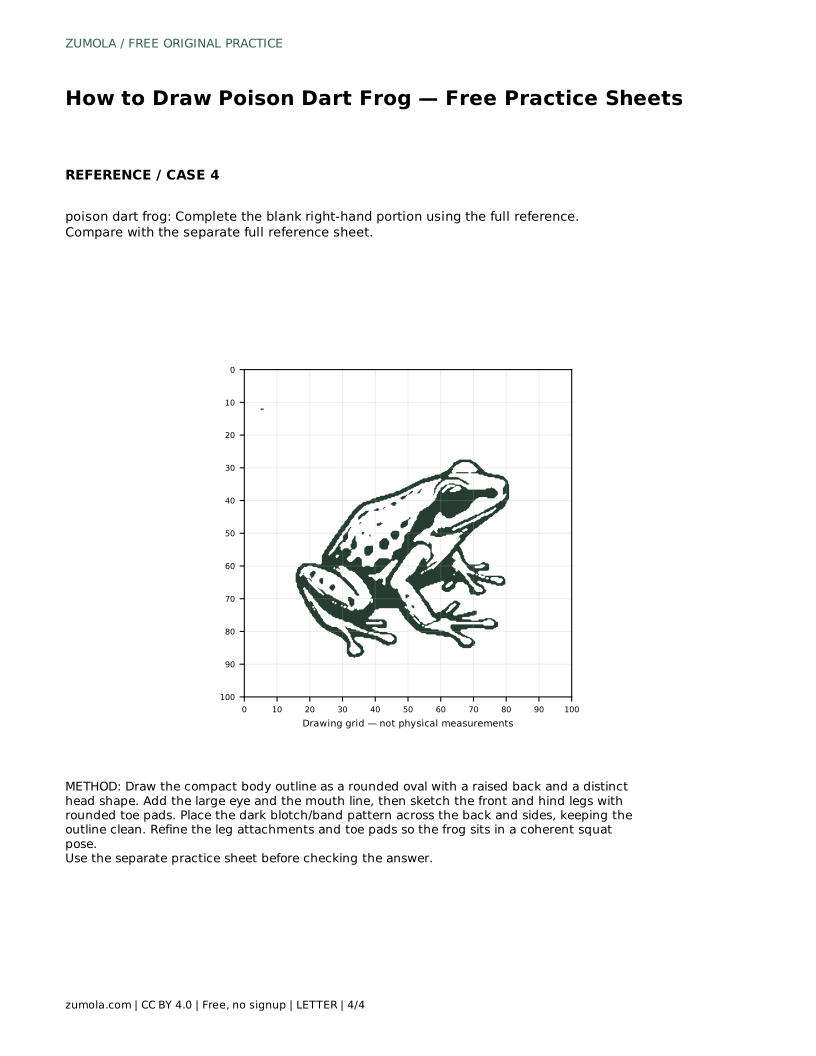
The trace sheet lets you follow the reference outline first, then practise the contour independently. Compare your result with the separate full reference sheet. The grid sheet asks you to copy the reference onto the blank grid using matching intersections, which trains placement and proportion. The bounding-frame sheet uses a center guide to position the silhouette before adding details. The partial sheet asks you to complete the blank right-hand portion using the full reference.
Each sheet targets a different skill, so treat them as separate exercises. On the trace sheet, focus on smooth contour lines. On the grid sheet, focus on where features land relative to grid lines. On the partial sheet, focus on matching the existing half's proportions.
Art has multiple valid outcomes, so assess visible features and proportions rather than exact matching. A correct drawing preserves the compact squat body, the rounded back, the dark blotch pattern, and the rounded toe pads. Use the rubric below to check your work.
poison dart frog: Trace the reference outline, then practise the contour independently. Compare with the separate full reference sheet.
Example solution: preserve compact squat body with a rounded back, spotted/banded dorsal pattern of dark blotches, distinct rounded toe pads on the feet. Other drawings can be correct; assess the visible features and proportions rather than pixel-perfect matching. Draw the compact body outline as a rounded oval with a raised back and a distinct head shape. Add the large eye and the mouth line, then sketch the front and hind legs with rounded toe pads. Place the dark blotch/band pattern across the back and sides, keeping the outline clean. Refine the leg attachments and toe pads so the frog sits in a coherent squat pose.
No. Multiple drawings can be correct. Assess the visible features and proportions, such as the compact body, rounded toe pads, and dark blotch pattern, rather than pixel-perfect matching.
Draw the body silhouette first, then the eye, mouth, and legs with toe pads, and finally the dark blotch pattern across the back and sides.
Complete the blank right-hand portion using the full reference, matching the proportions of the existing half.
All drawing practice · Free coordinate paper
Original resources · CC BY 4.0 · Free for personal and classroom use with attribution.