Reference diagrams
LETTER · Download PDF
A4 · Download PDF
Free original resources
Learn to draw a crown with a curved band, five peaks, tip orbs, and an arched top. Trace, grid, and complete-the-drawing practice sheets support careful observation.
Four original cases, with reference diagrams, practice sheets and worked answers. Everything is free; no signup required.
LETTER · Download PDF
A4 · Download PDF
LETTER · Download PDF
A4 · Download PDF
LETTER · Download PDF
A4 · Download PDF
Use A4 or US Letter to match your printer. Use the stated values and conditions to solve each exercise; diagrams are not physical measuring rulers.
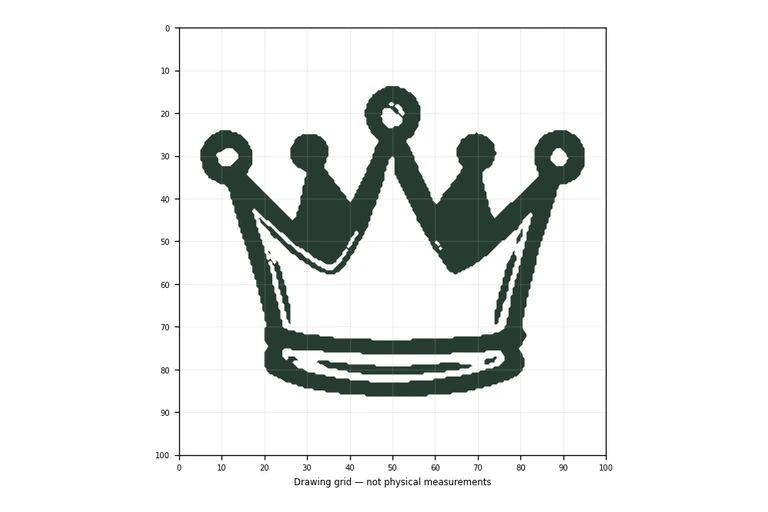
A crown is a useful drawing subject because its structure is easy to read: a wide band, a row of pointed peaks, small round ornaments, and often an arched top. The practice sheets on this page ask you to study those parts and then reproduce them with attention to proportion. This guide explains the order to draw them, how to compare your work with the reference, and what to check before calling the drawing finished.
Start with the band, because it sets the width and the slight curve of the whole crown. Draw it as a wide shape with a double outline, meaning an outer edge and an inner edge running roughly parallel. The gap between those lines becomes the front face of the band where jewel details can sit. Keep the curve gentle; a crown band usually bows slightly rather than forming a deep arc.
Next, add five upward-pointing triangular peaks along the top edge of the band. Make the center peak the tallest and let the peaks on either side step down in height. The outer peaks should sit near the ends of the band. Check that the spaces between peaks are reasonably even, since uneven spacing is one of the first things a viewer notices.
Small circles, often called orbs, sit on the tips of the outer and center peaks. Draw them lightly at first so you can adjust their size. They should look attached to the points rather than floating above them. The two remaining peaks can stay plain or carry smaller details, depending on the reference you are copying.
Many crown designs also include an arched top rising between the peaks, with a central orb where the arch meets. Treat the arch as a smooth curve that starts from the band area and lifts toward the middle. If your reference shows an arch, place it after the peaks so you can judge how much space remains above the band.
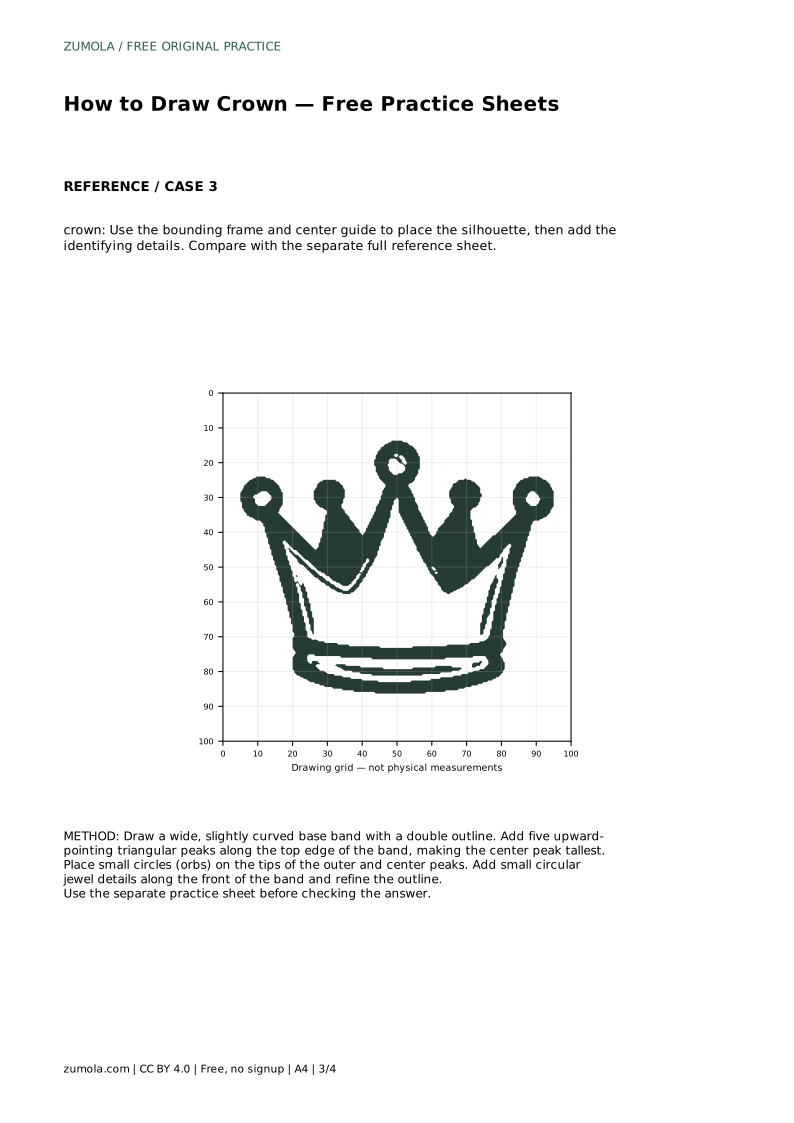
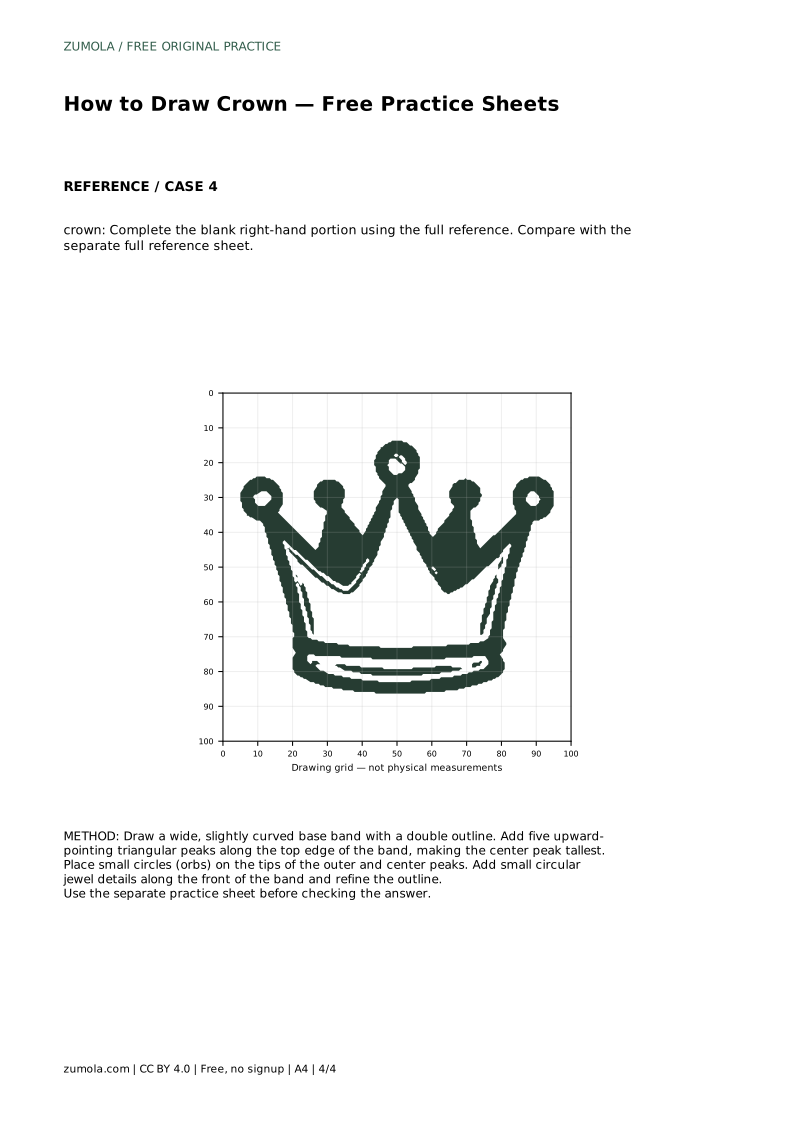
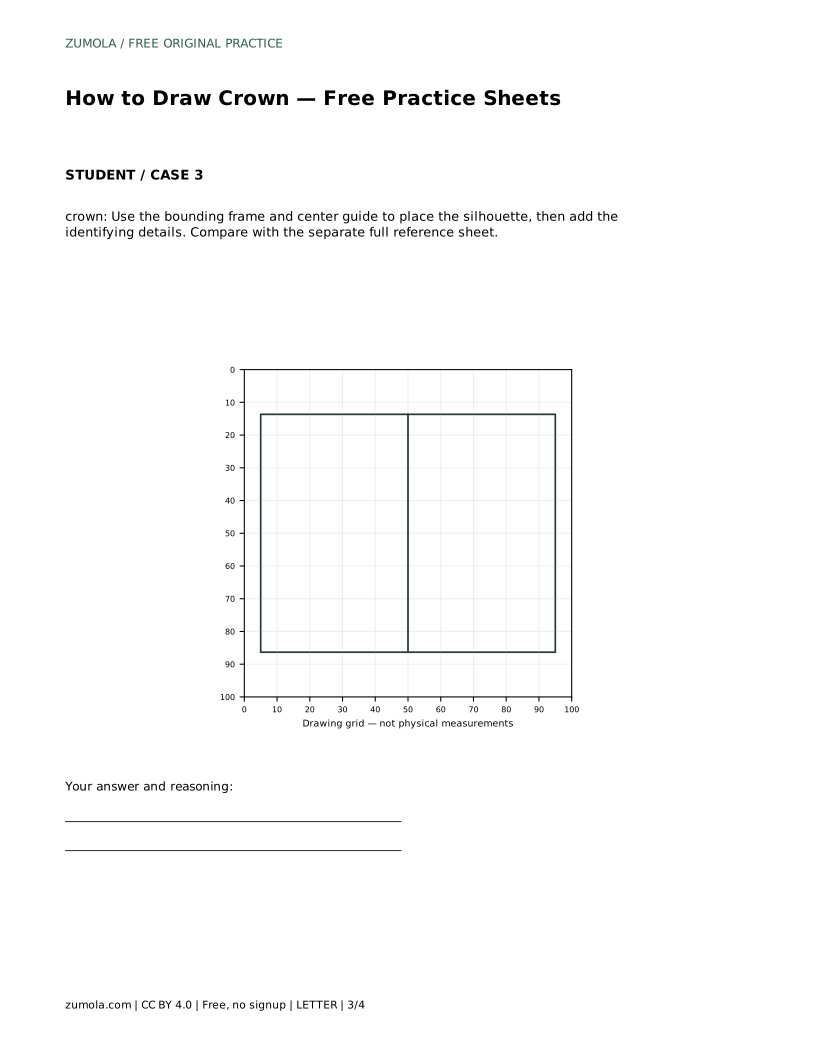
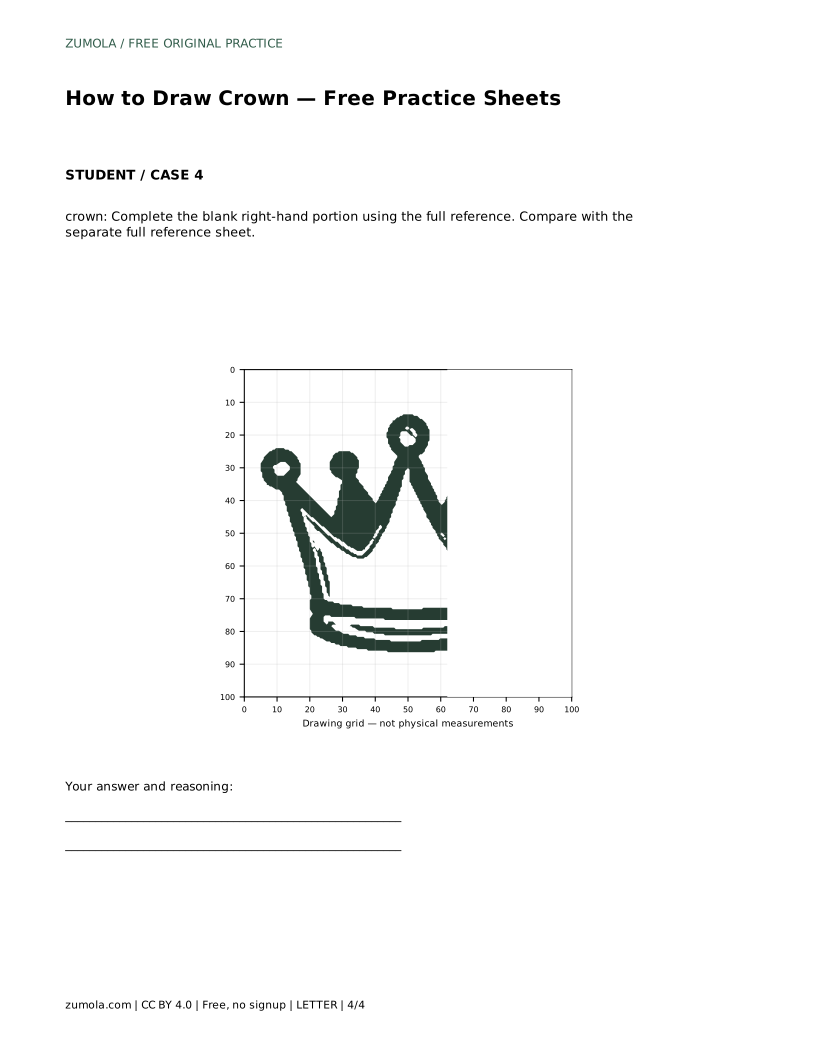
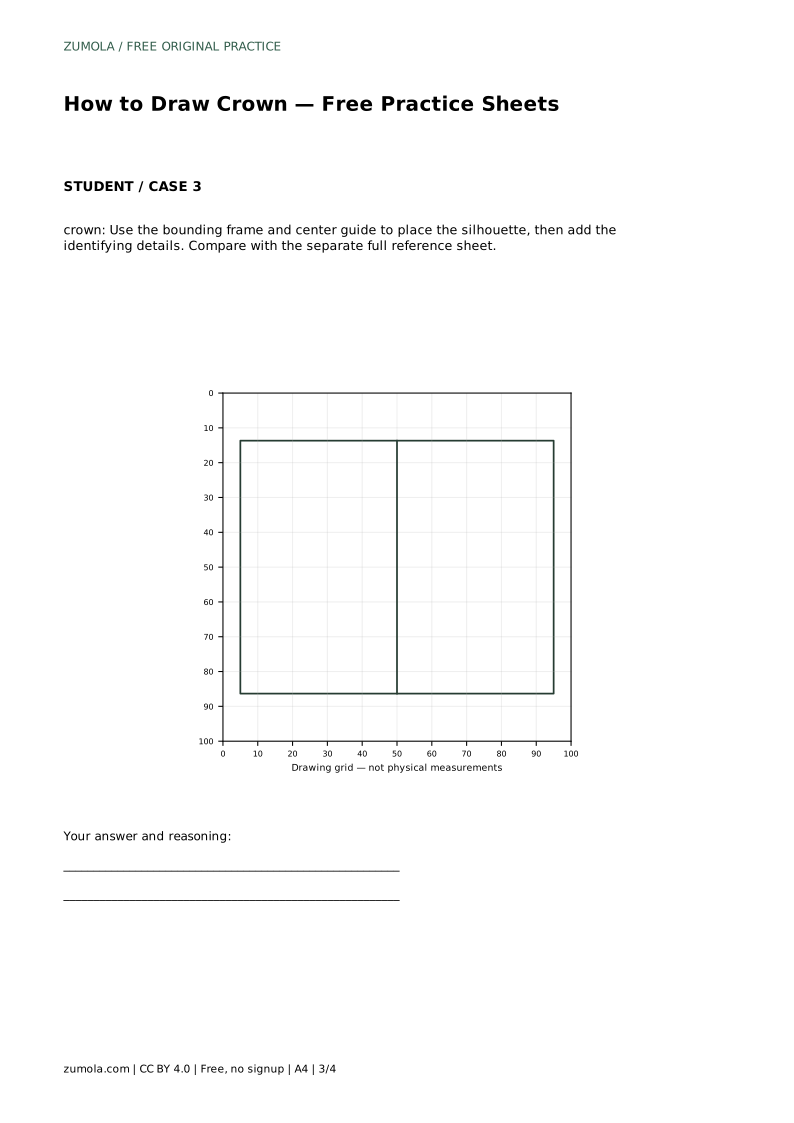
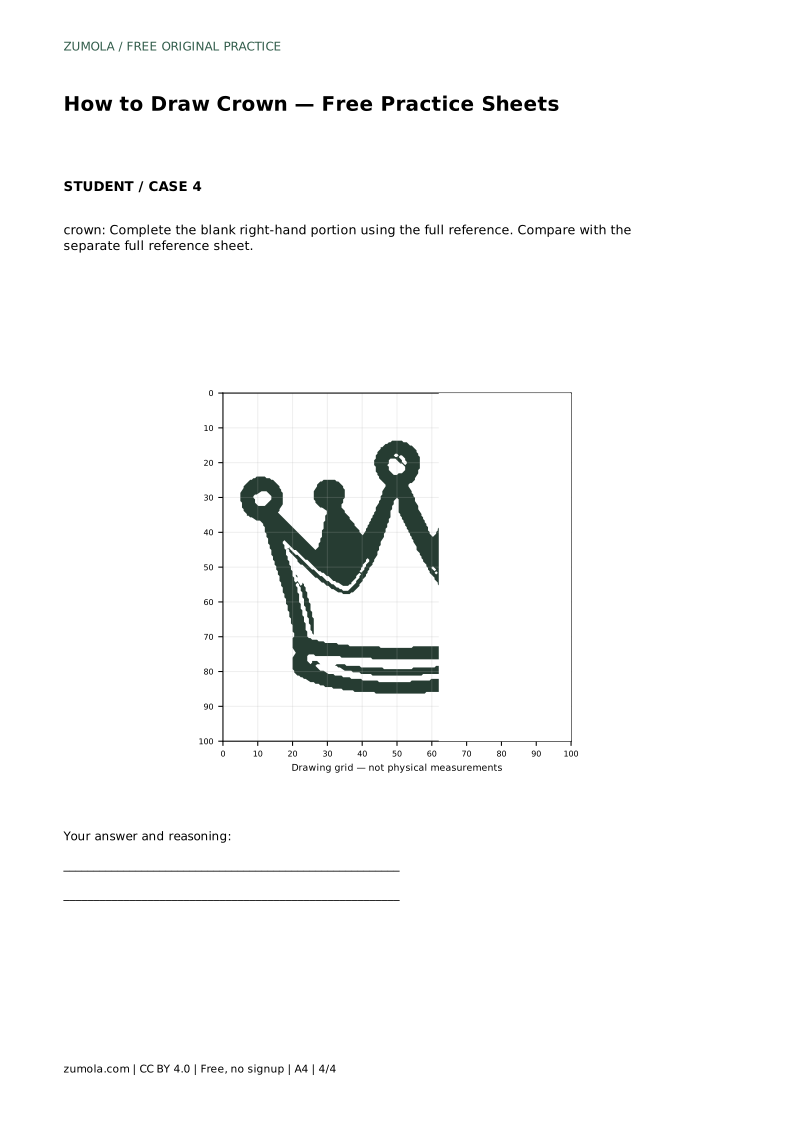
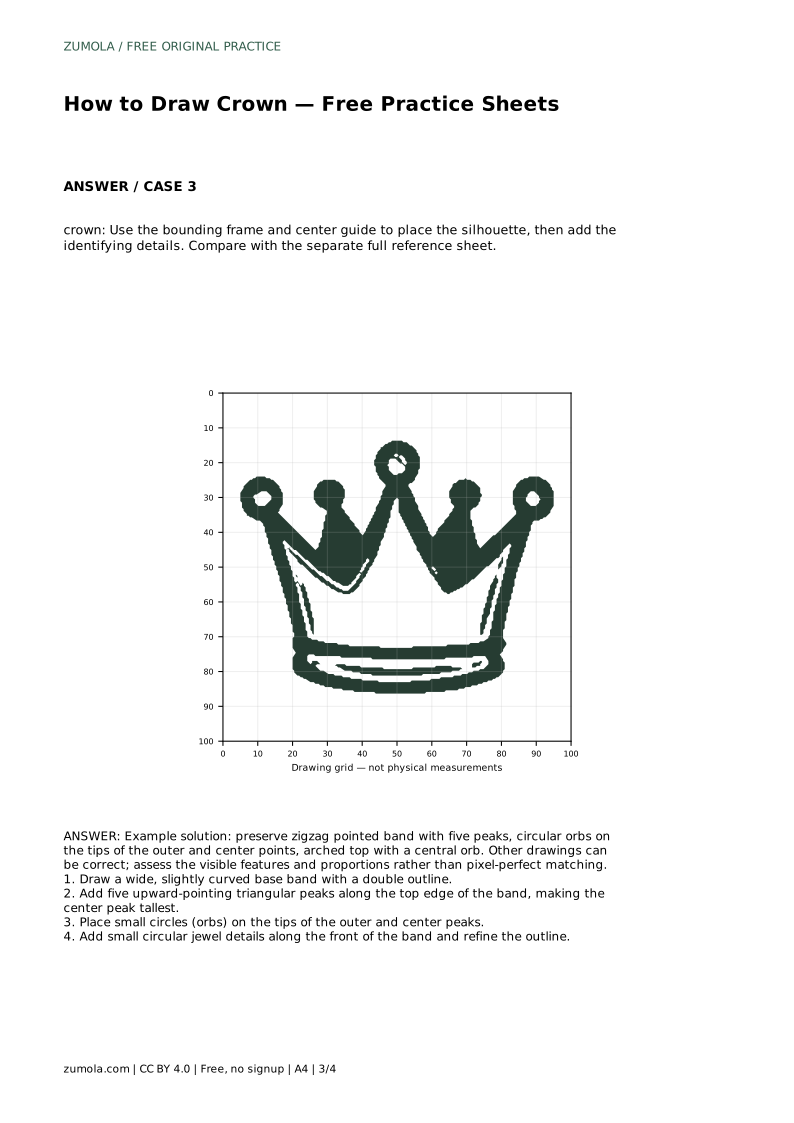
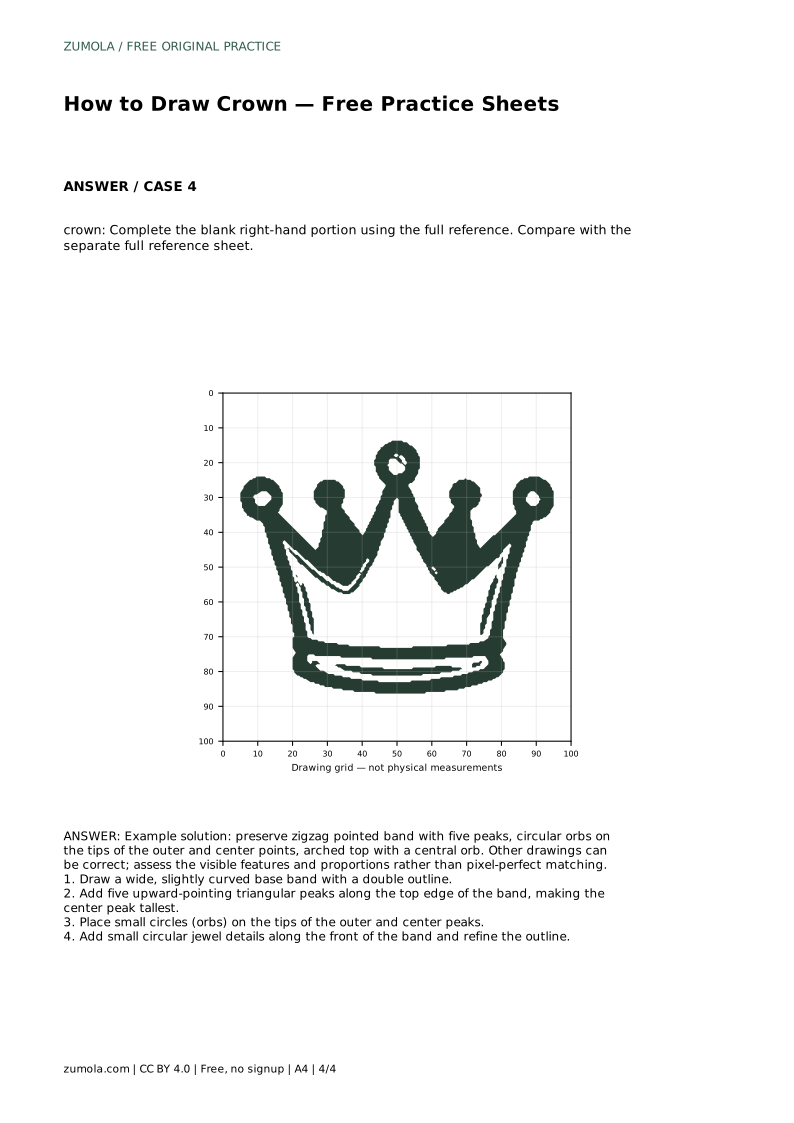
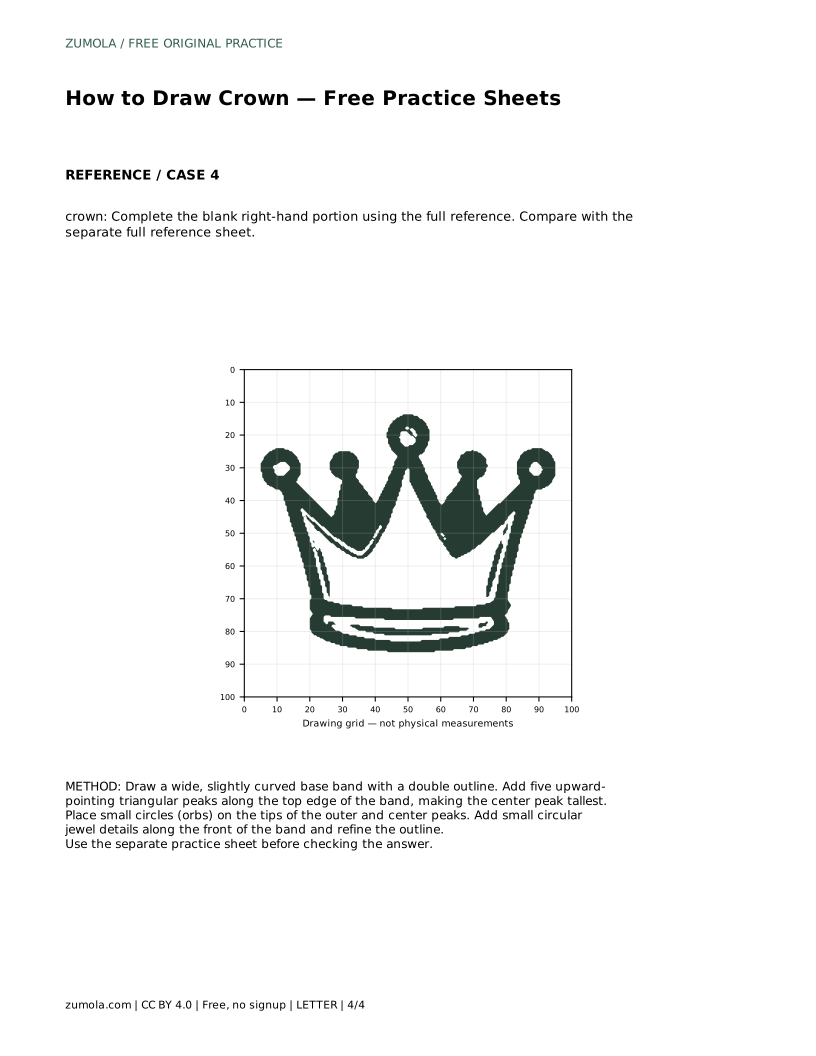
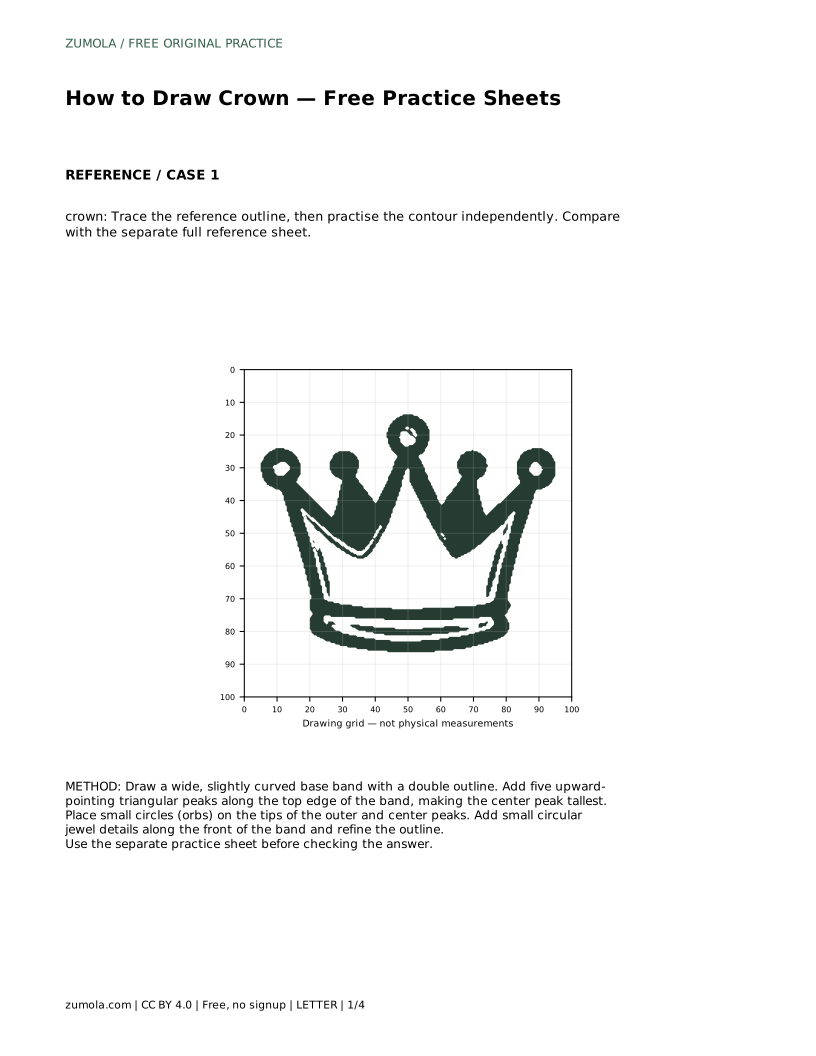
The practice sheets use different supports: tracing the outline, copying onto a blank grid, placing the silhouette with a bounding frame and center guide, or completing a blank right-hand portion. Each support changes how much guidance you receive, but the comparison method stays the same. Look at the reference as a whole first, then check one feature at a time.
Ask whether the band is wide enough, whether five peaks are present, whether the center peak is tallest, and whether the orbs sit on the correct tips. Then check the arch and the jewel details. A drawing can differ in small ways and still be correct, so judge the visible features and proportions rather than expecting a pixel-perfect match.
Once the structure matches, tidy the outline. Strengthen the final lines and erase construction marks lightly. Keep the double outline of the band clear, since it separates the band from the peaks. Add jewel details in a simple, repeated pattern so they read as decoration rather than clutter.
Finish by stepping back and viewing the drawing at arm's length. Problems with proportion are easier to see from a distance than up close. If something looks off, adjust the band width or peak heights rather than redrawing everything.
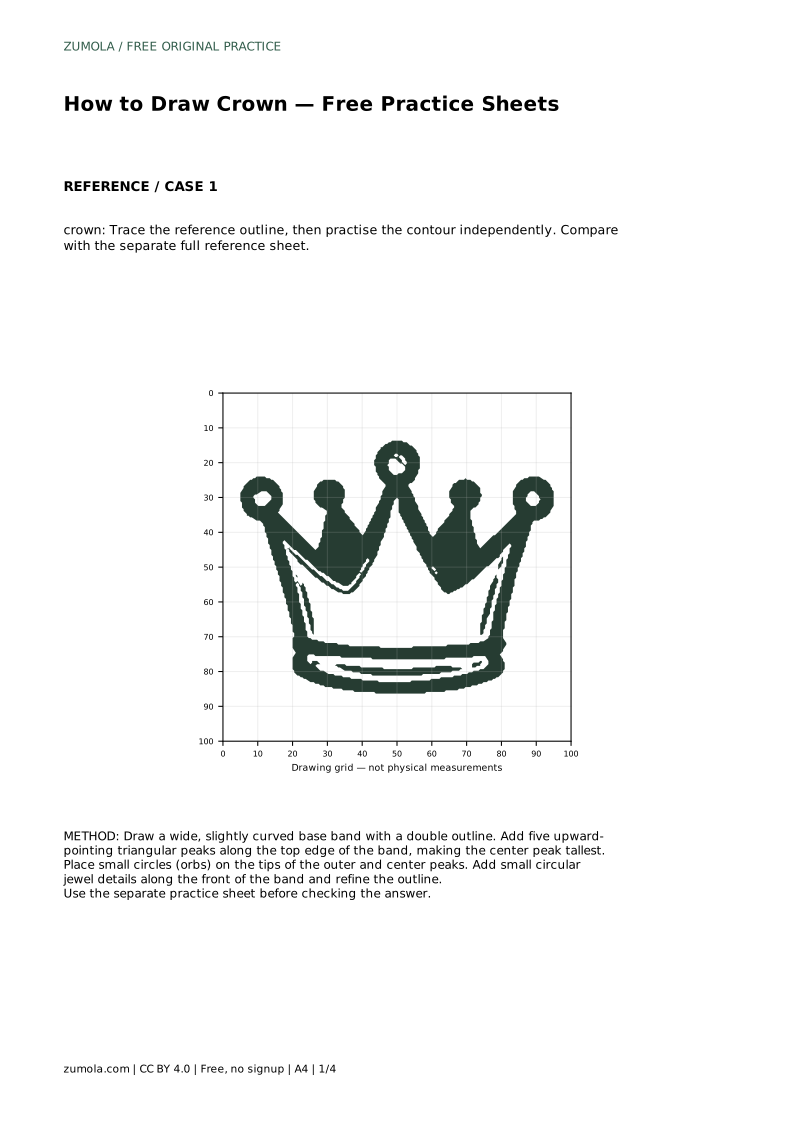
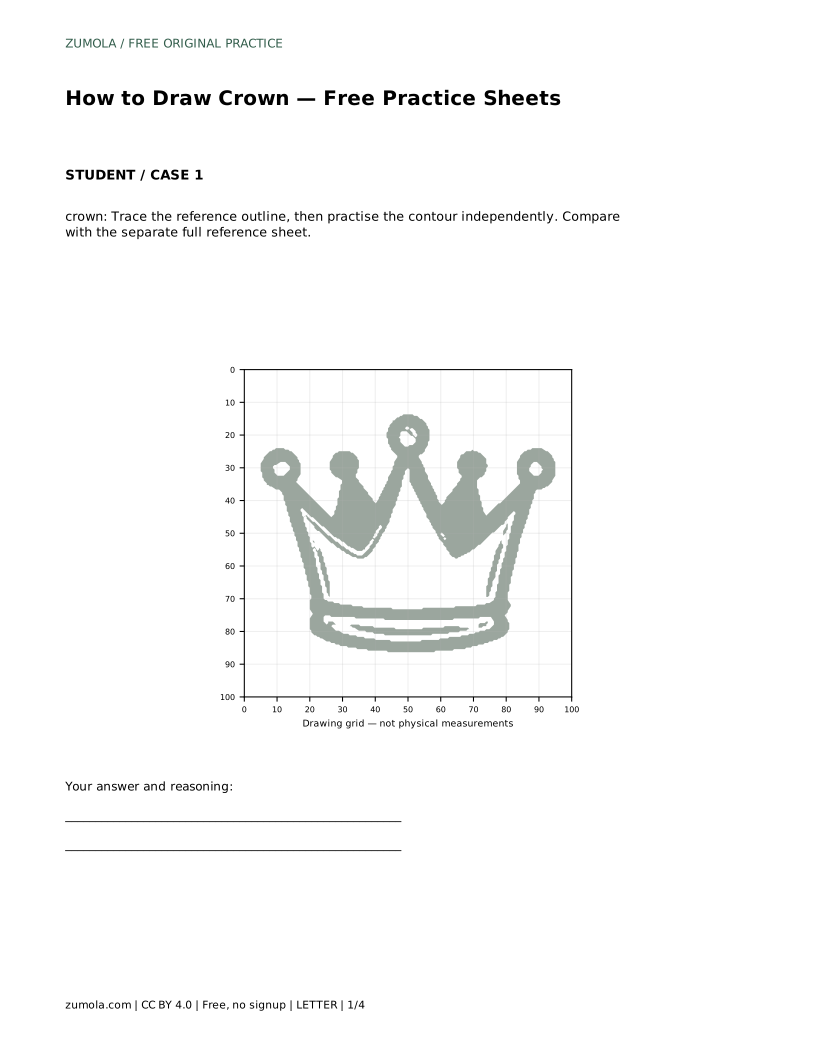
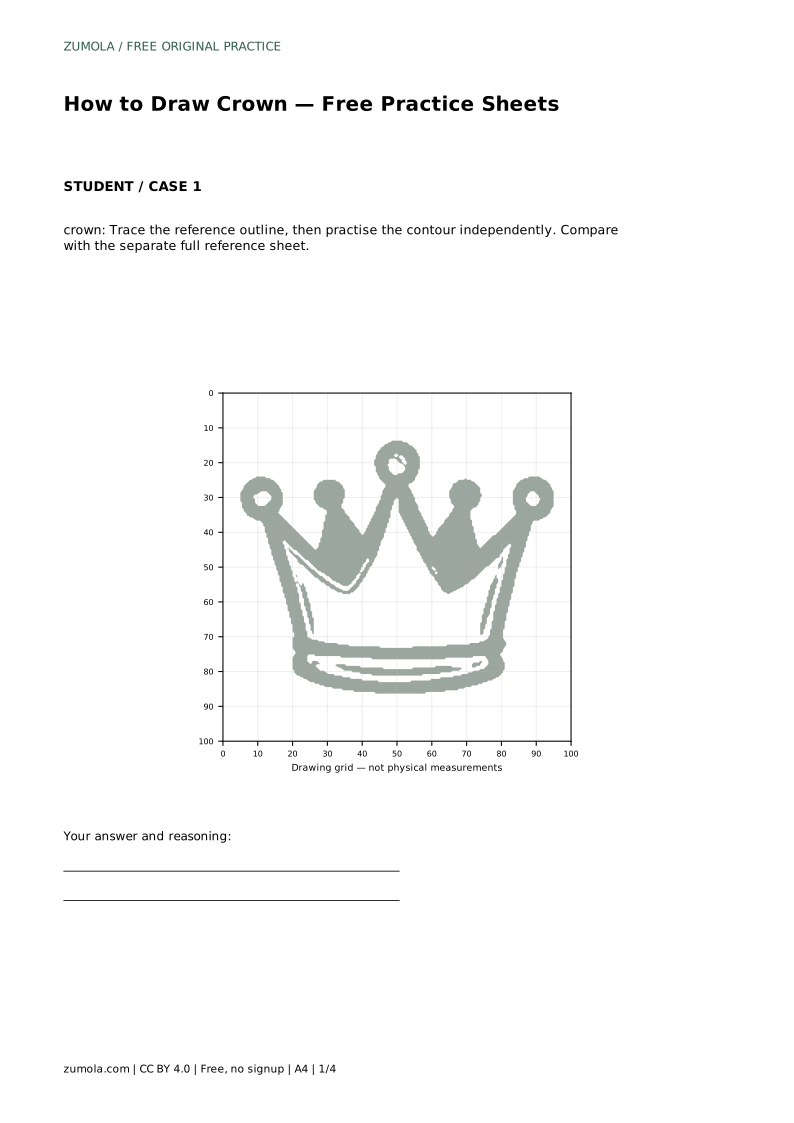
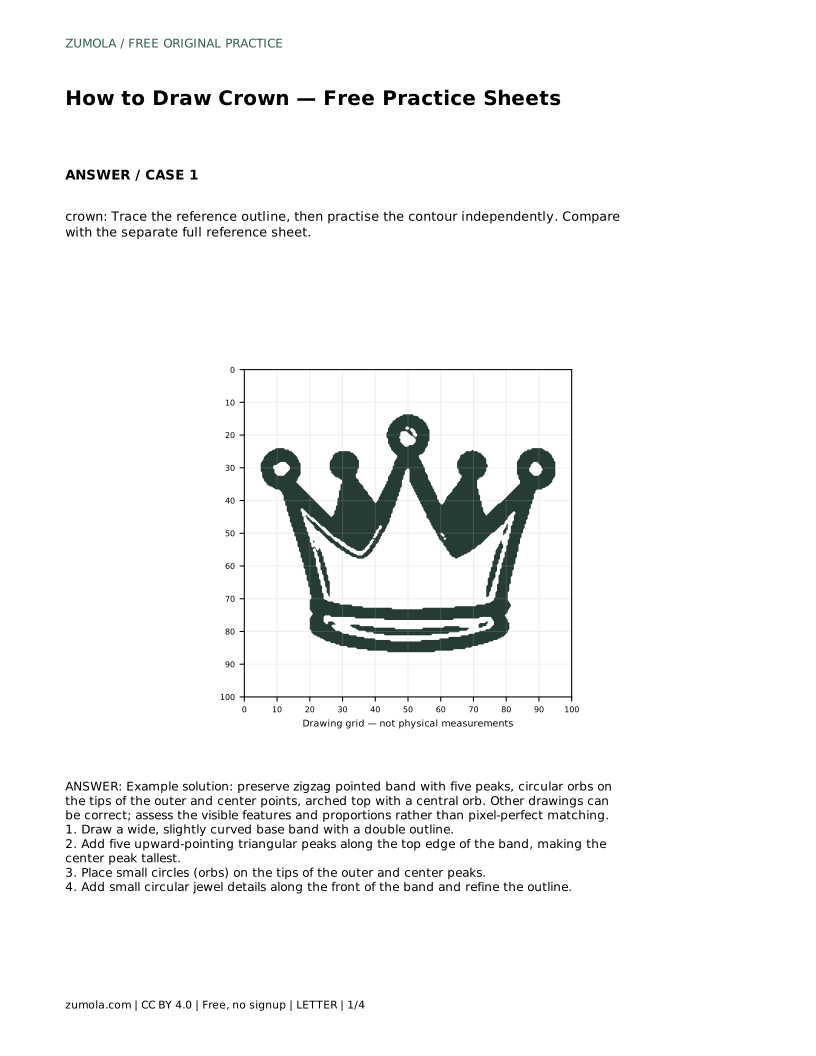
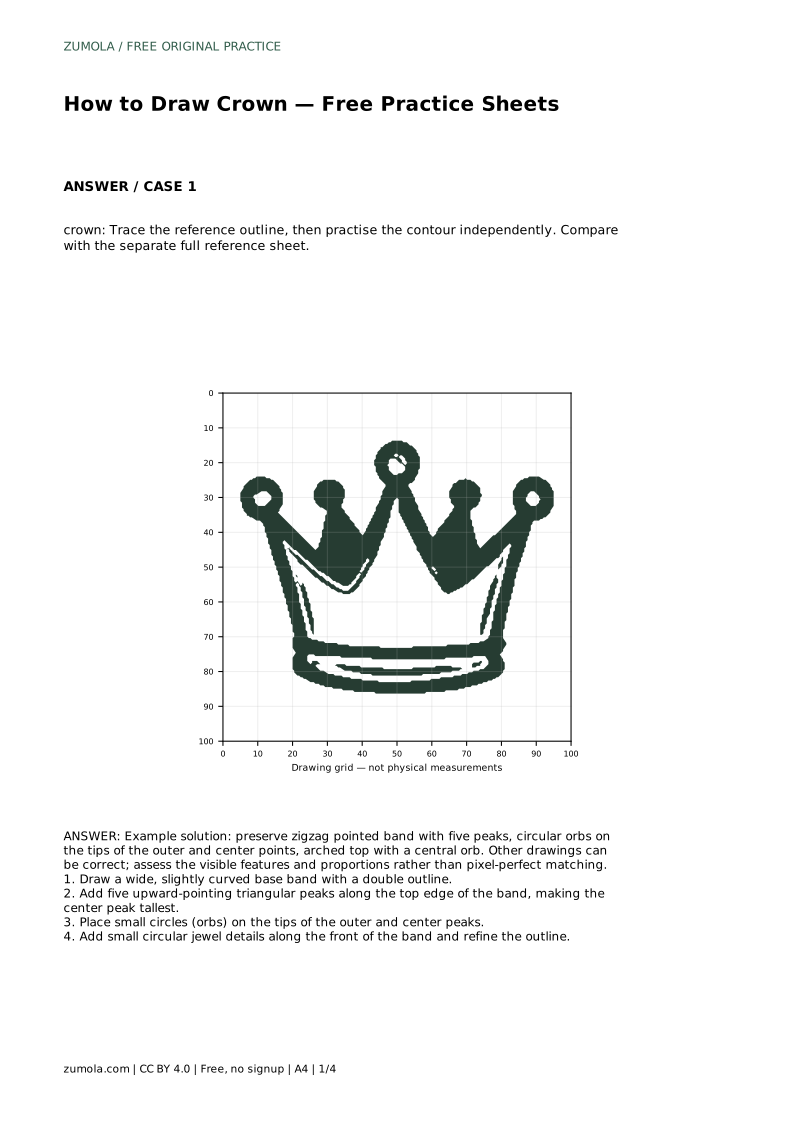
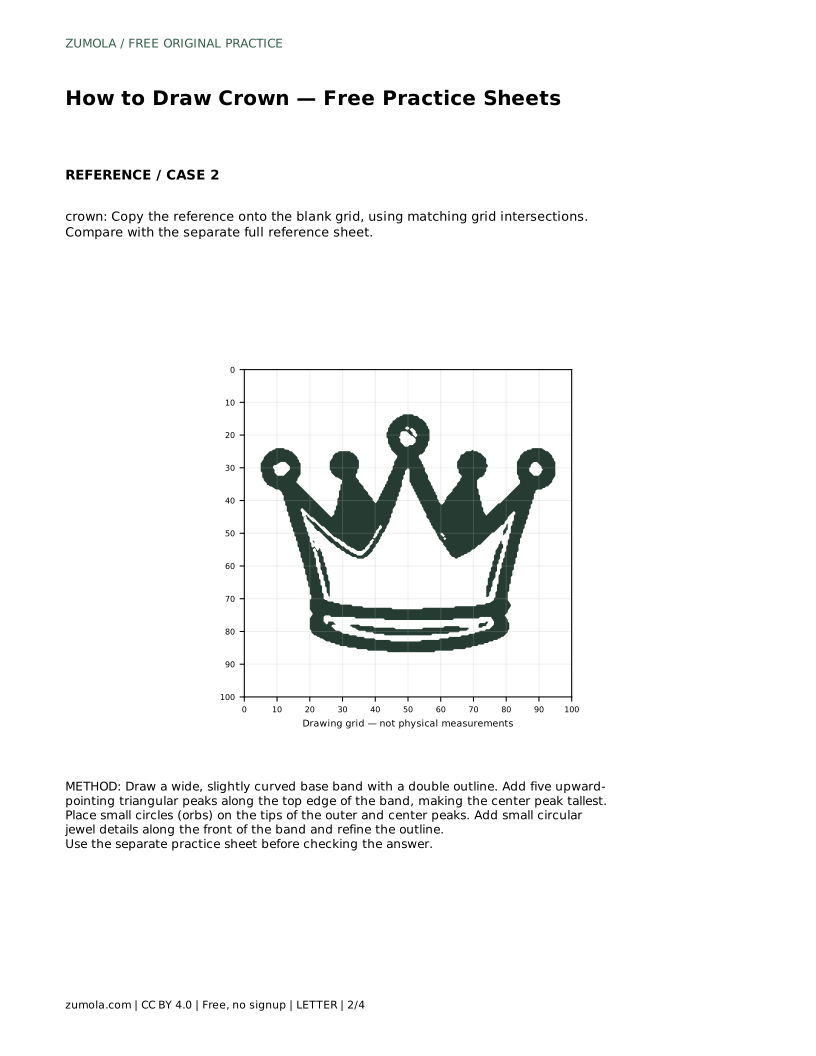
crown: Trace the reference outline, then practise the contour independently. Compare with the separate full reference sheet.
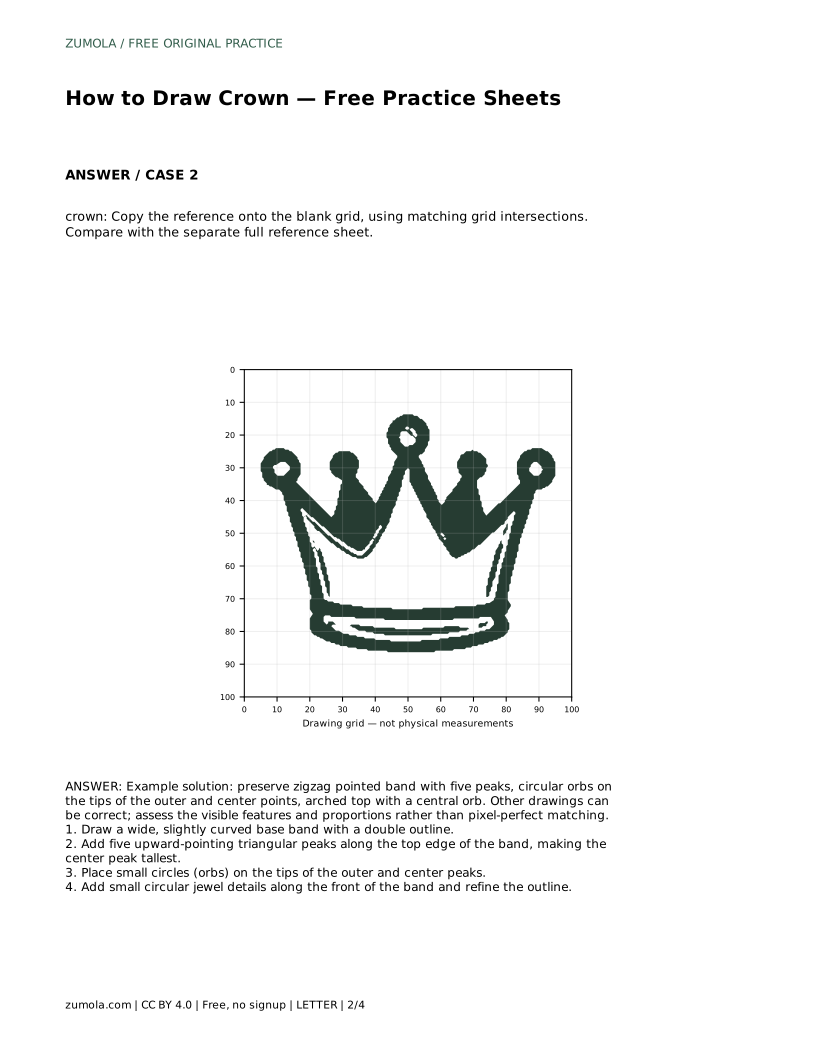
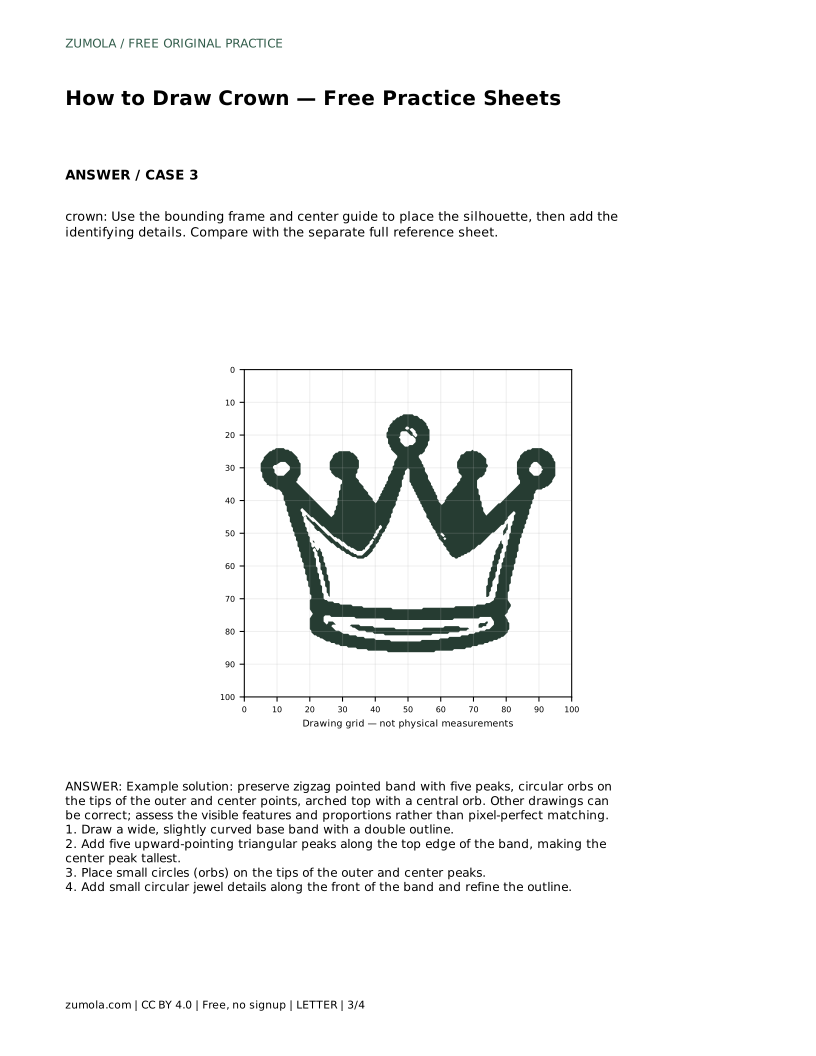
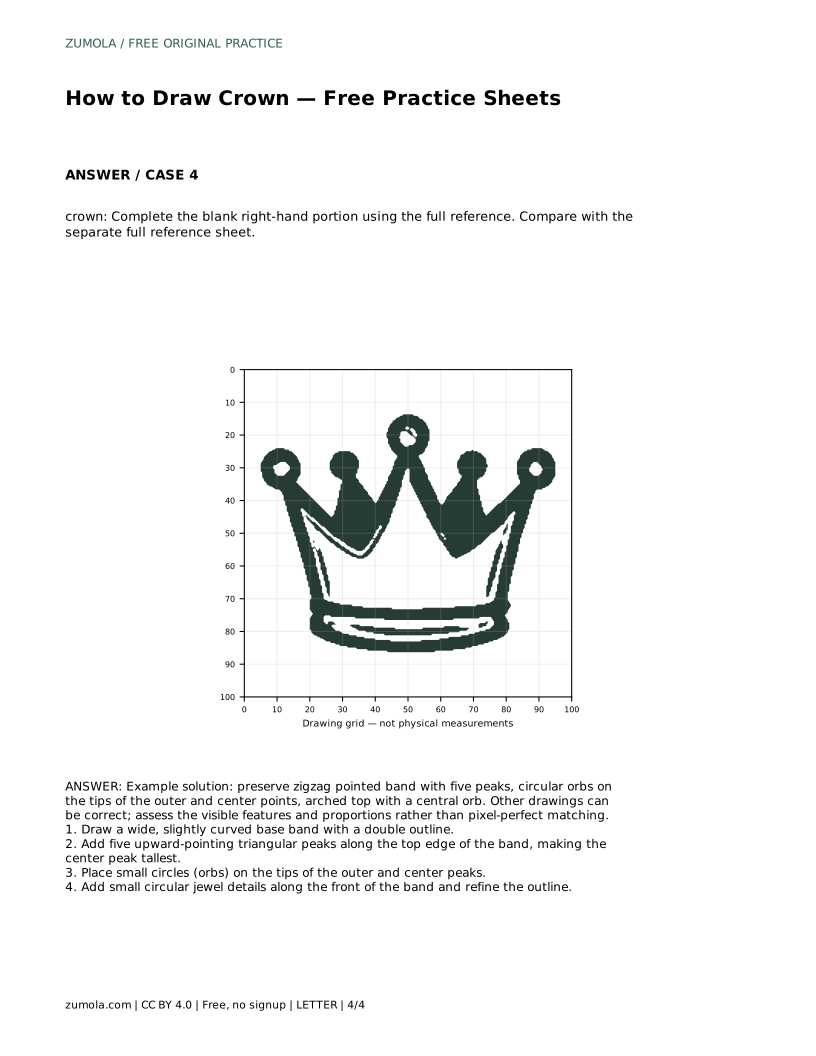
Example solution: preserve zigzag pointed band with five peaks, circular orbs on the tips of the outer and center points, arched top with a central orb. Other drawings can be correct; assess the visible features and proportions rather than pixel-perfect matching. Draw a wide, slightly curved base band with a double outline. Add five upward-pointing triangular peaks along the top edge of the band, making the center peak tallest. Place small circles (orbs) on the tips of the outer and center peaks. Add small circular jewel details along the front of the band and refine the outline.
Follow the reference you are copying. The practice sheets show five peaks with the center one tallest, but other crown designs use different counts. What matters is matching the reference's structure and proportions.
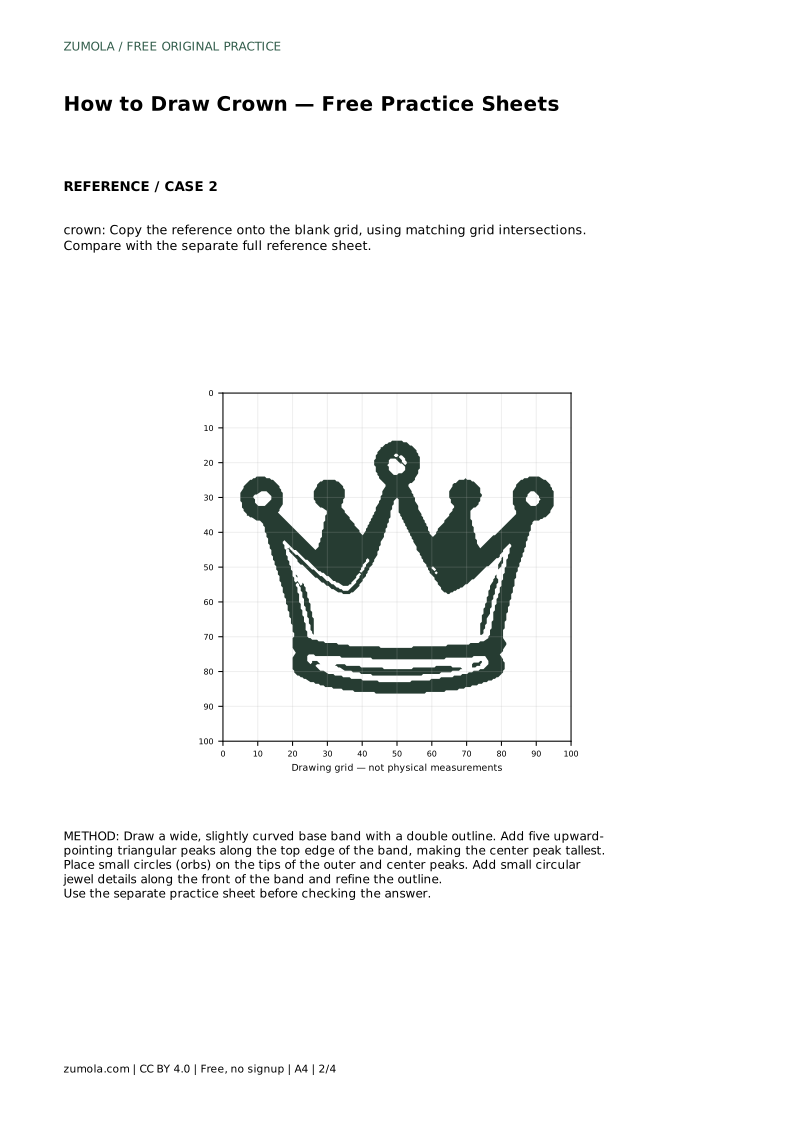
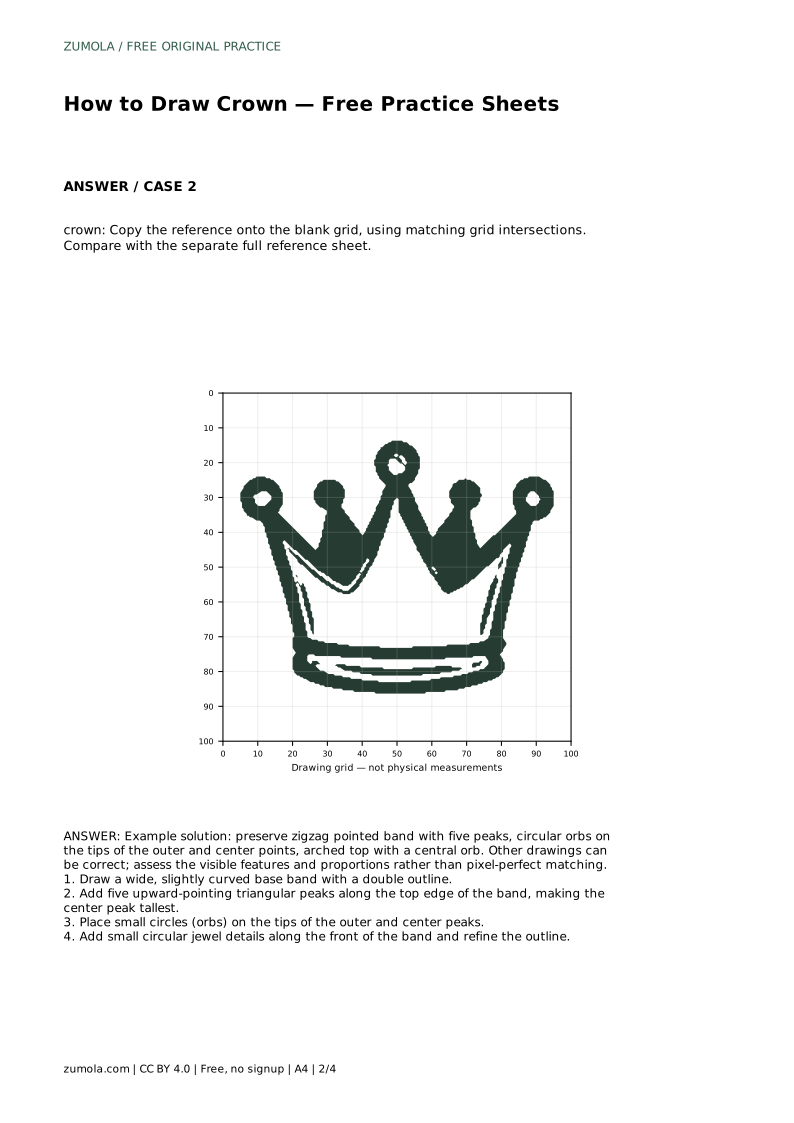
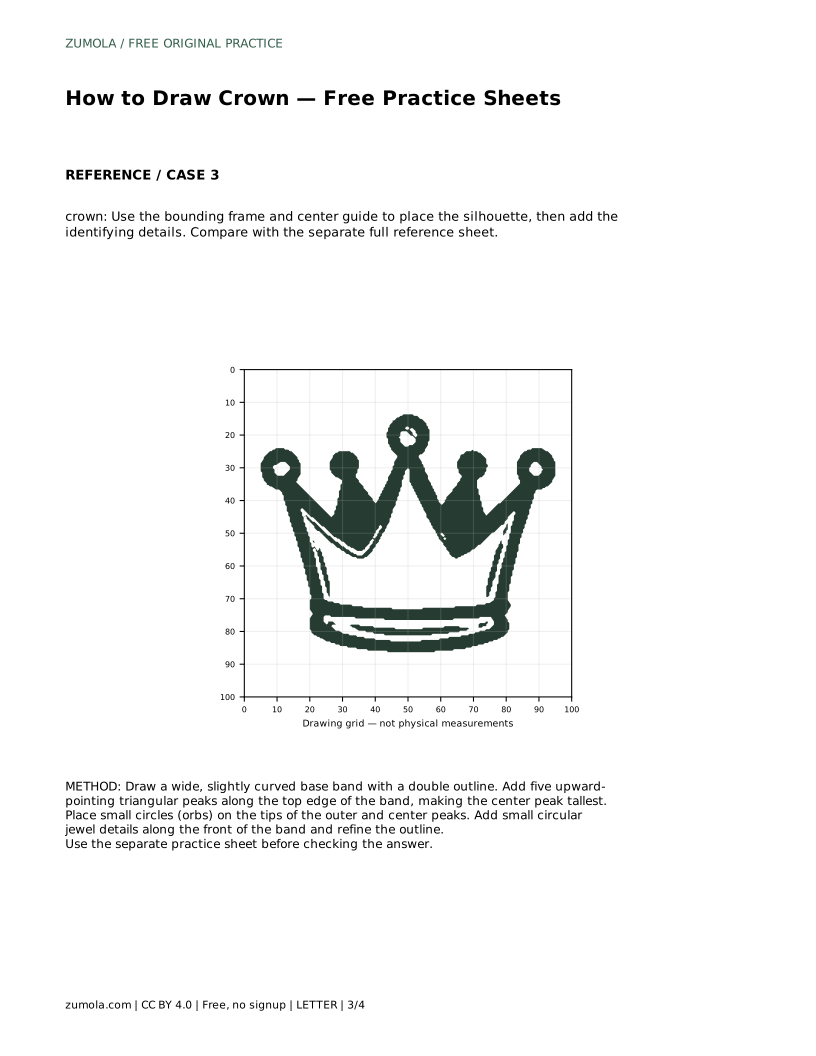
Yes. The grid sheet is a separate practice option. Use matching grid intersections to place the band, peaks, and orbs, then compare your result with the full reference sheet.
Check the visible features: a wide curved band with a double outline, five peaks with the center tallest, orbs on the outer and center tips, and the arched top with a central orb if shown. Small differences are acceptable.
All drawing practice · Free coordinate paper
Original resources · CC BY 4.0 · Free for personal and classroom use with attribution.