Reference diagrams
LETTER · Download PDF
A4 · Download PDF
Free original resources
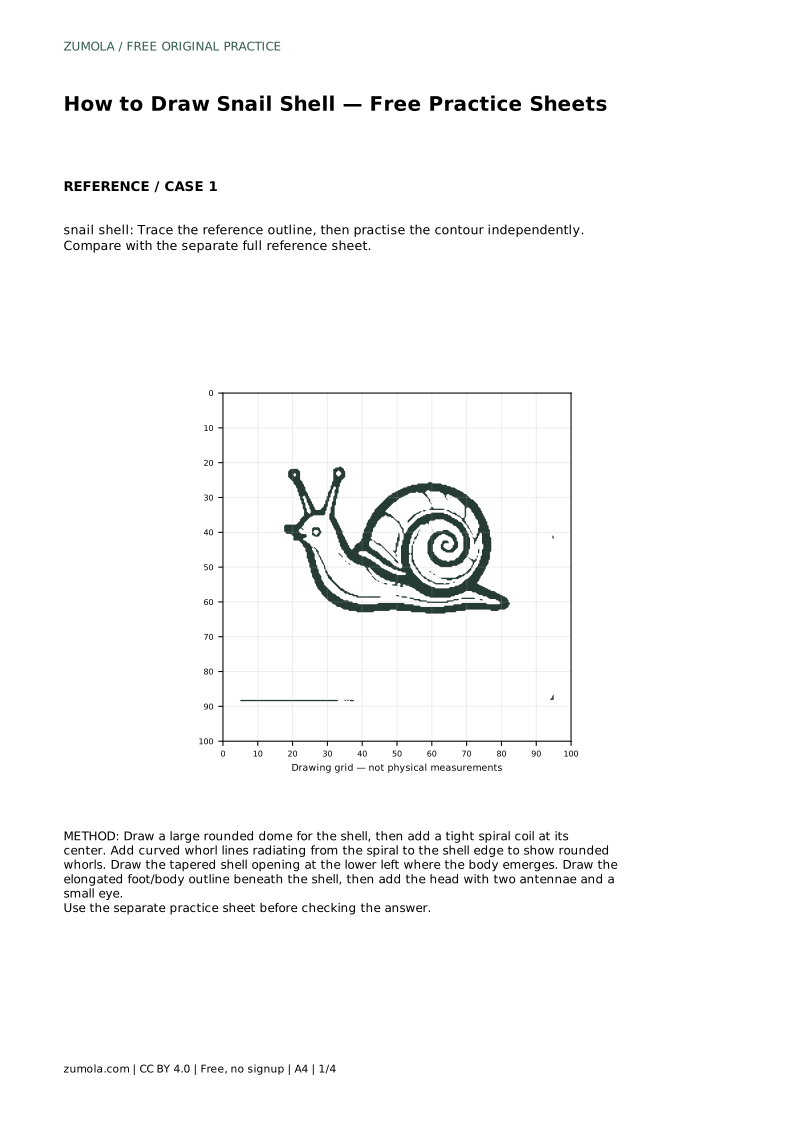
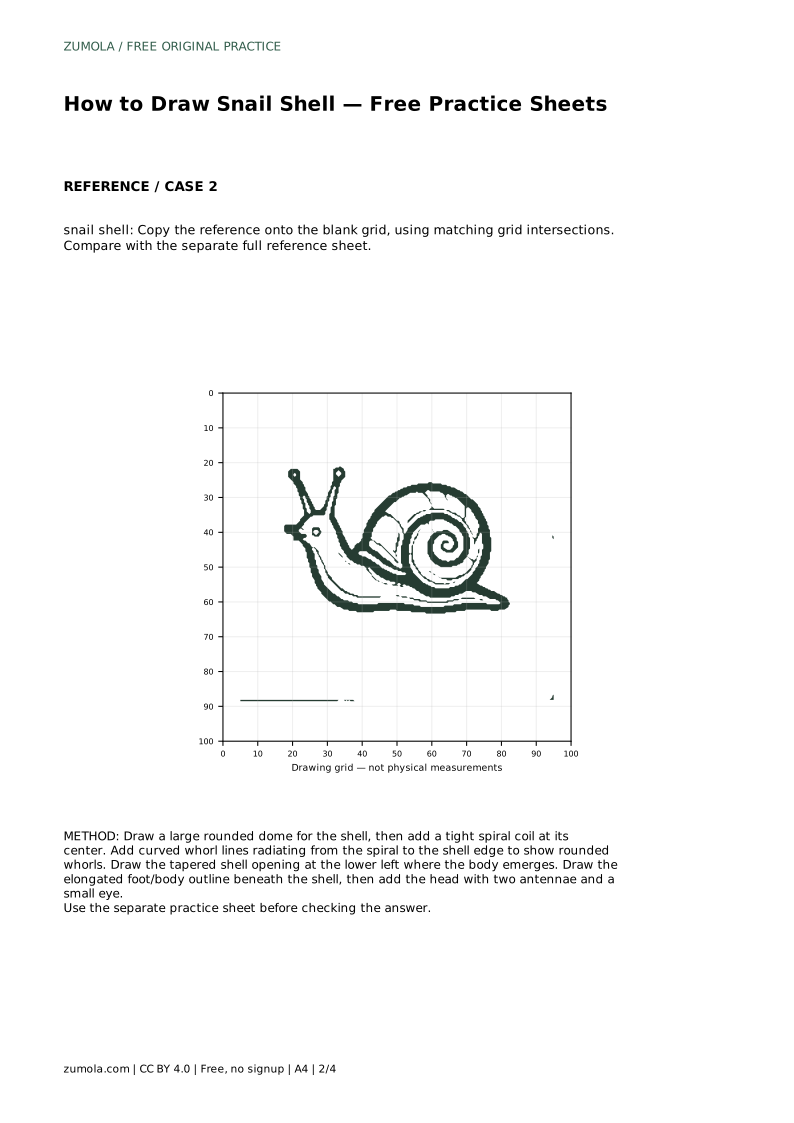
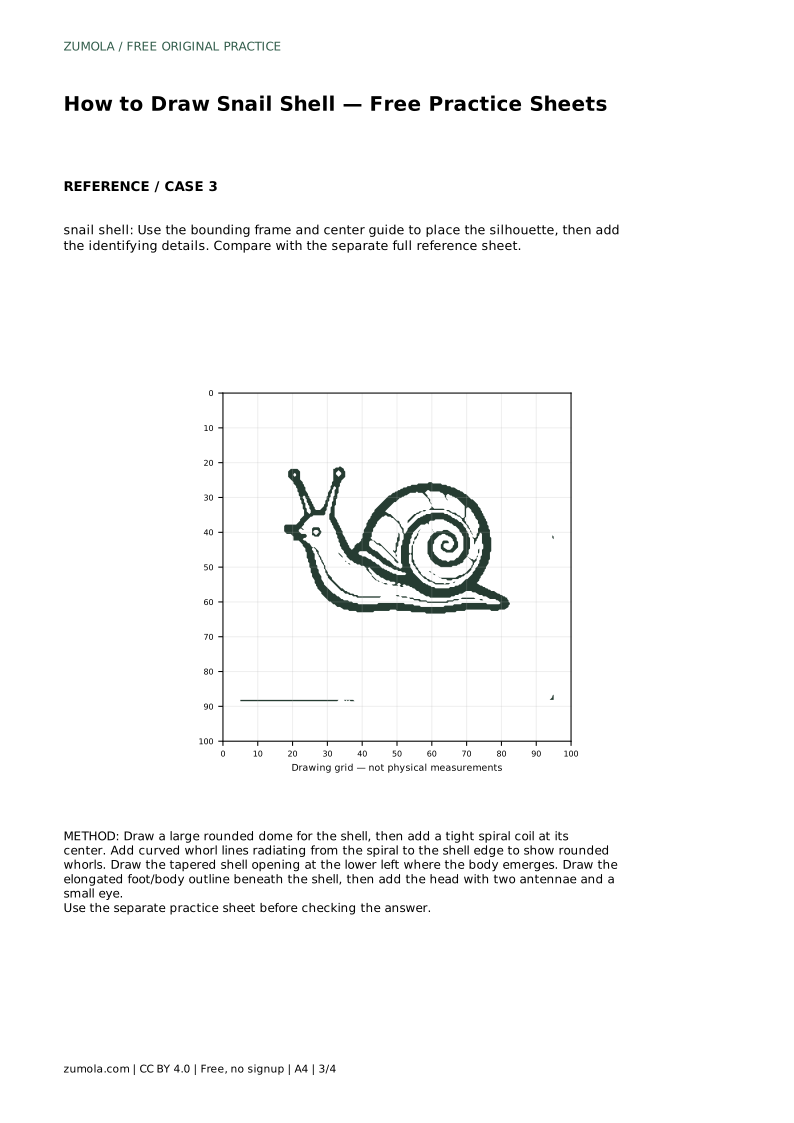
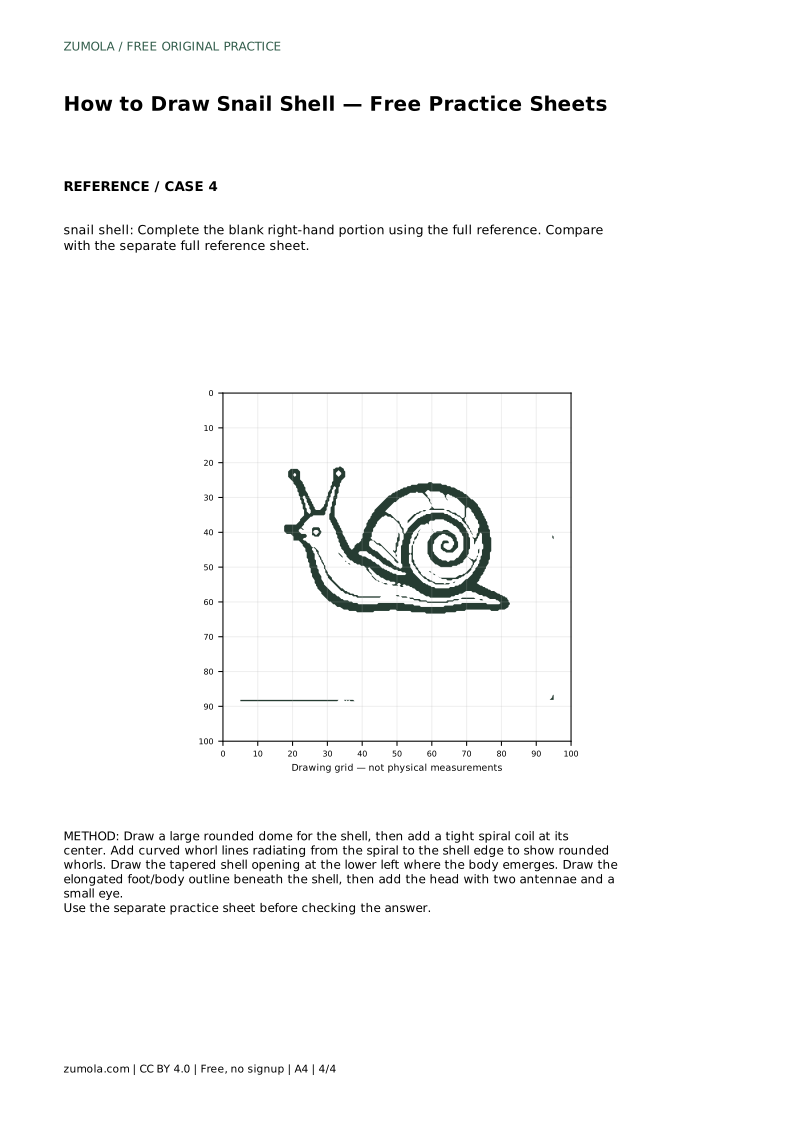
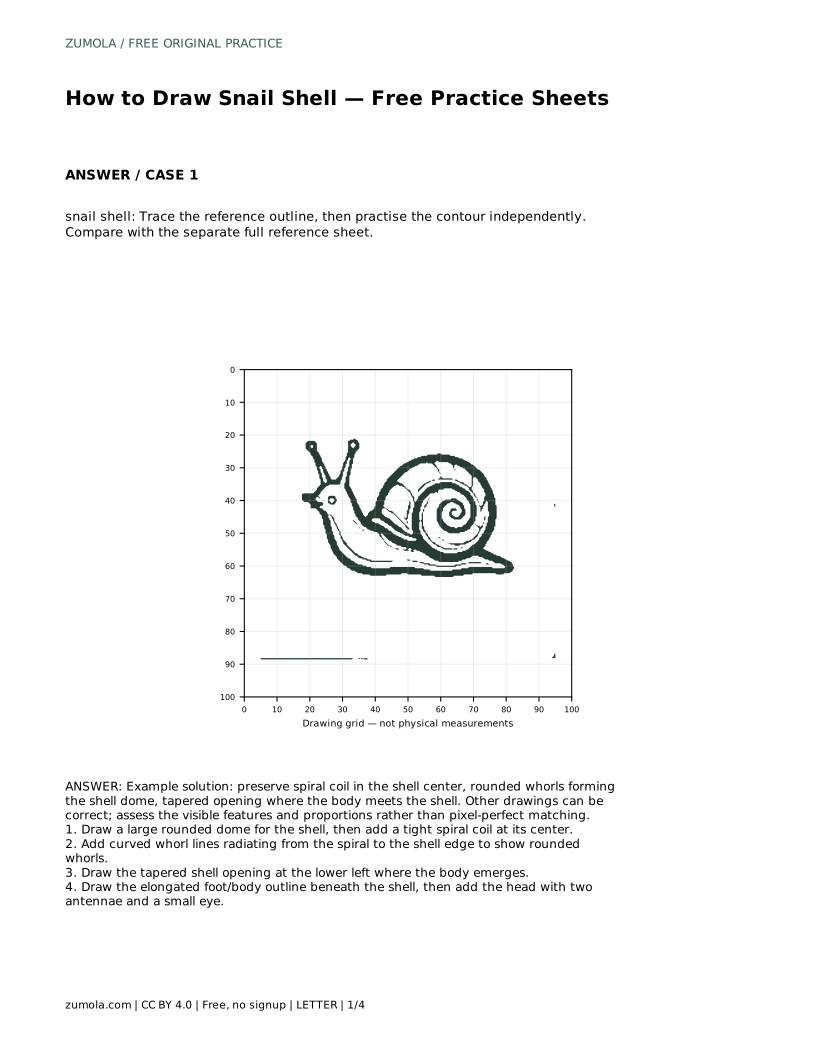
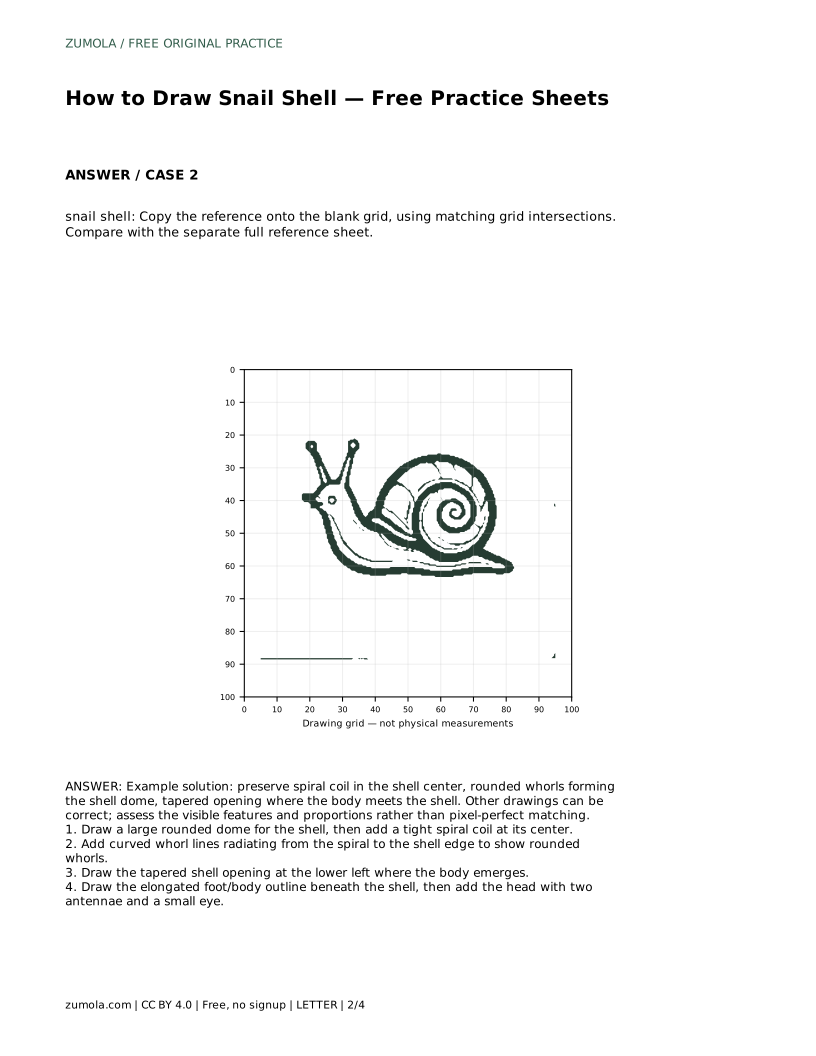
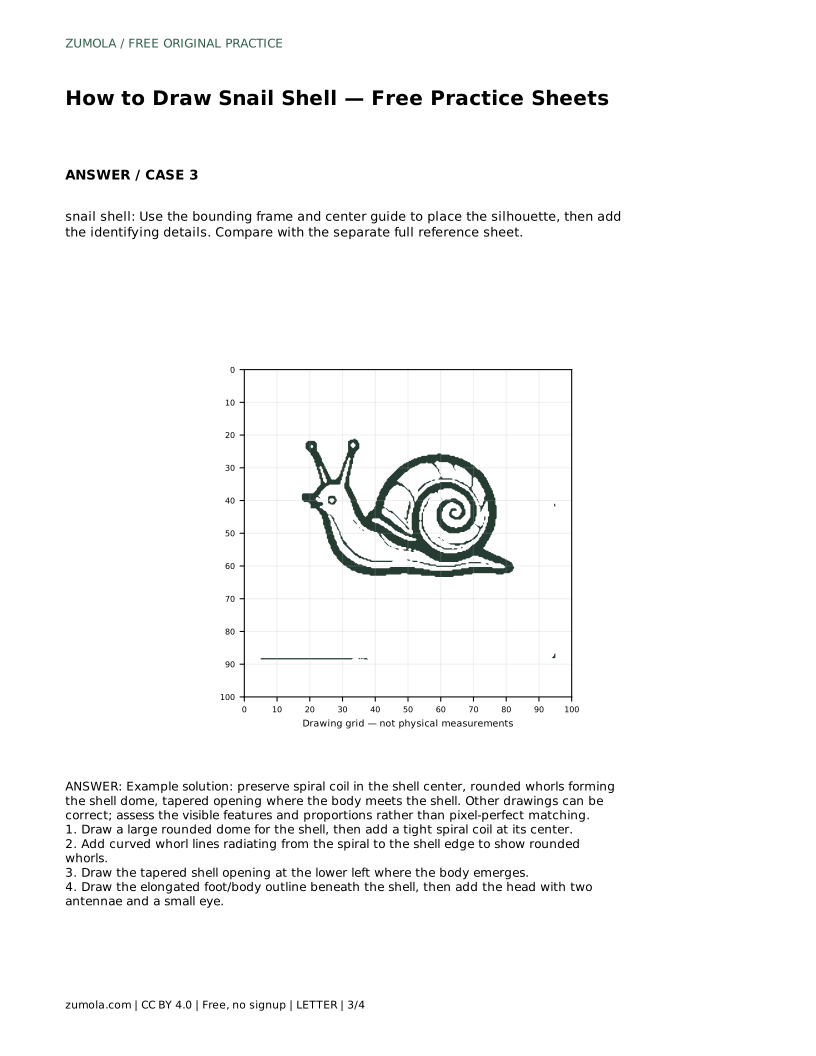
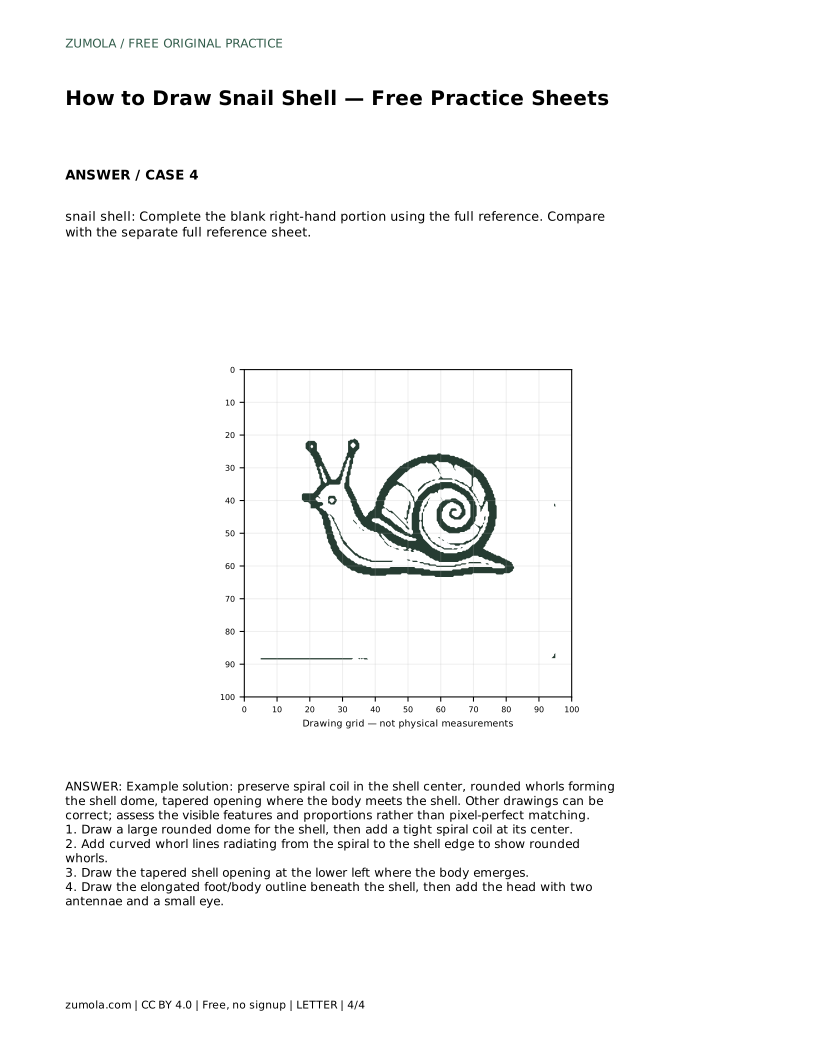
Learn to draw a snail shell by building a rounded dome, a tight central spiral, curved whorl lines, and a tapered opening where the body emerges.
Four original cases, with reference diagrams, practice sheets and worked answers. Everything is free; no signup required.
LETTER · Download PDF
A4 · Download PDF
LETTER · Download PDF
A4 · Download PDF
LETTER · Download PDF
A4 · Download PDF
Use A4 or US Letter to match your printer. Use the stated values and conditions to solve each exercise; diagrams are not physical measuring rulers.
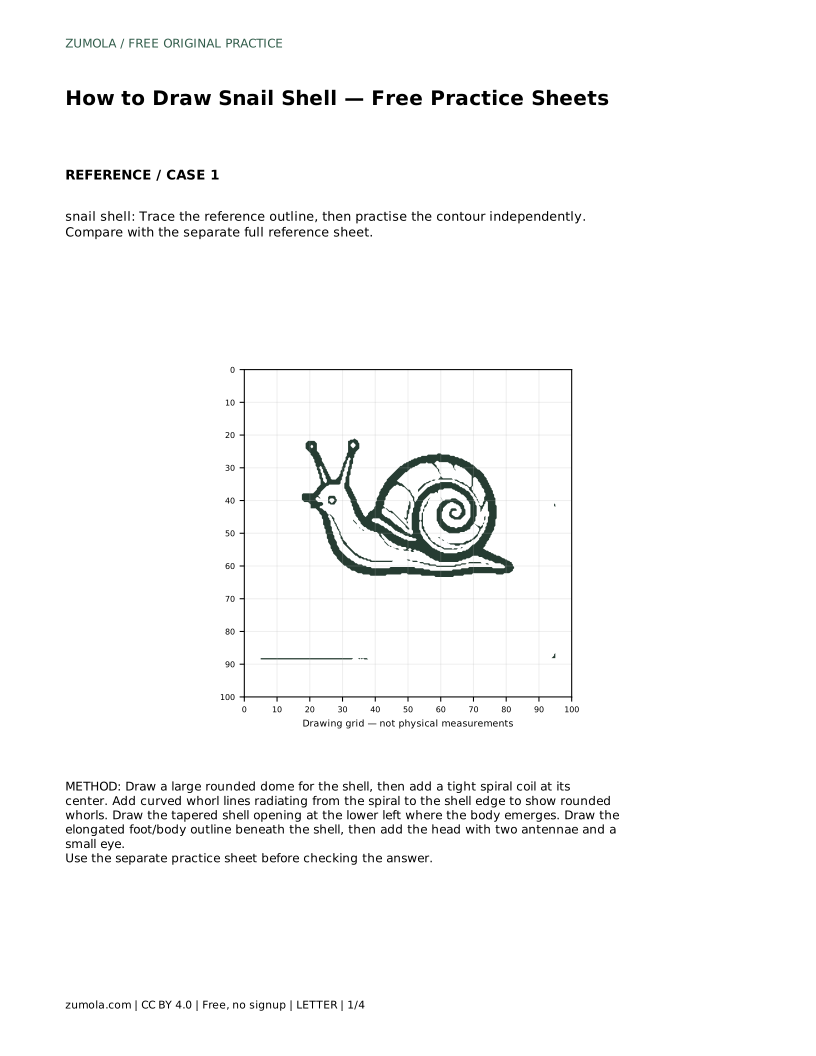
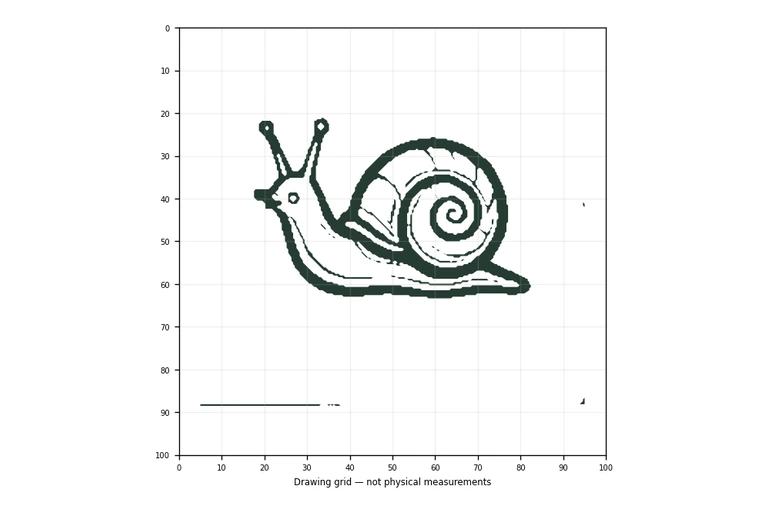
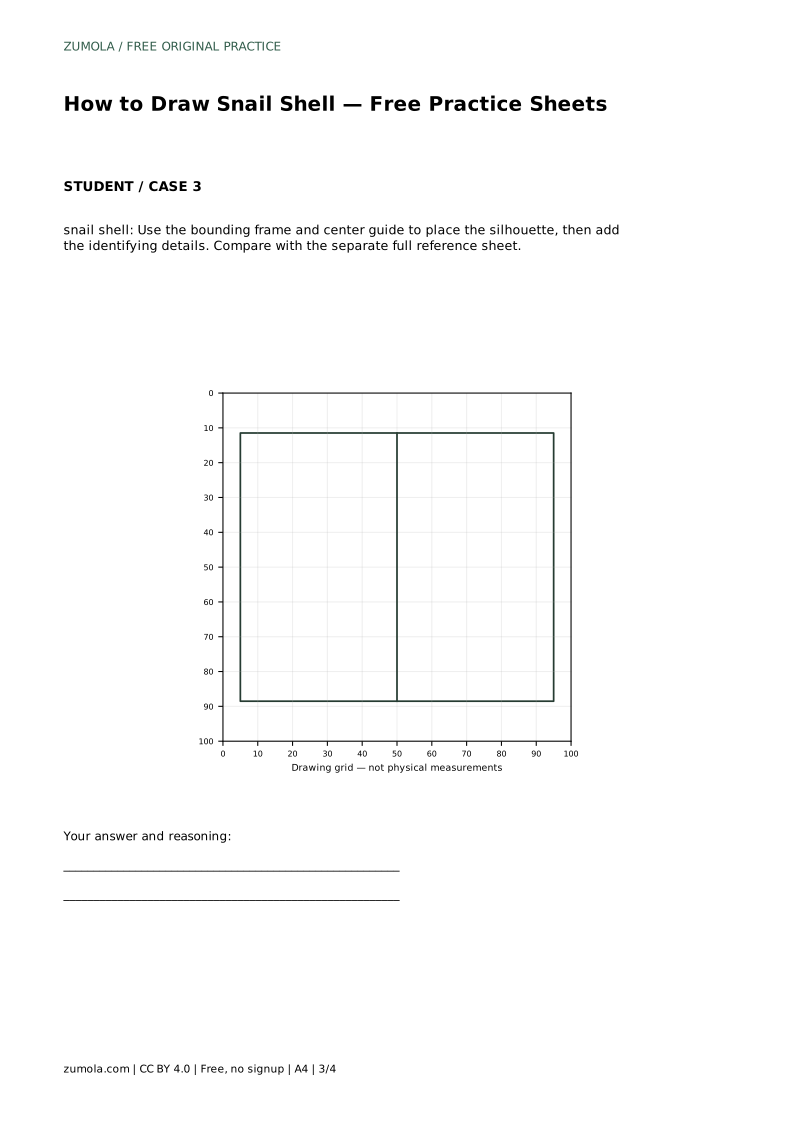
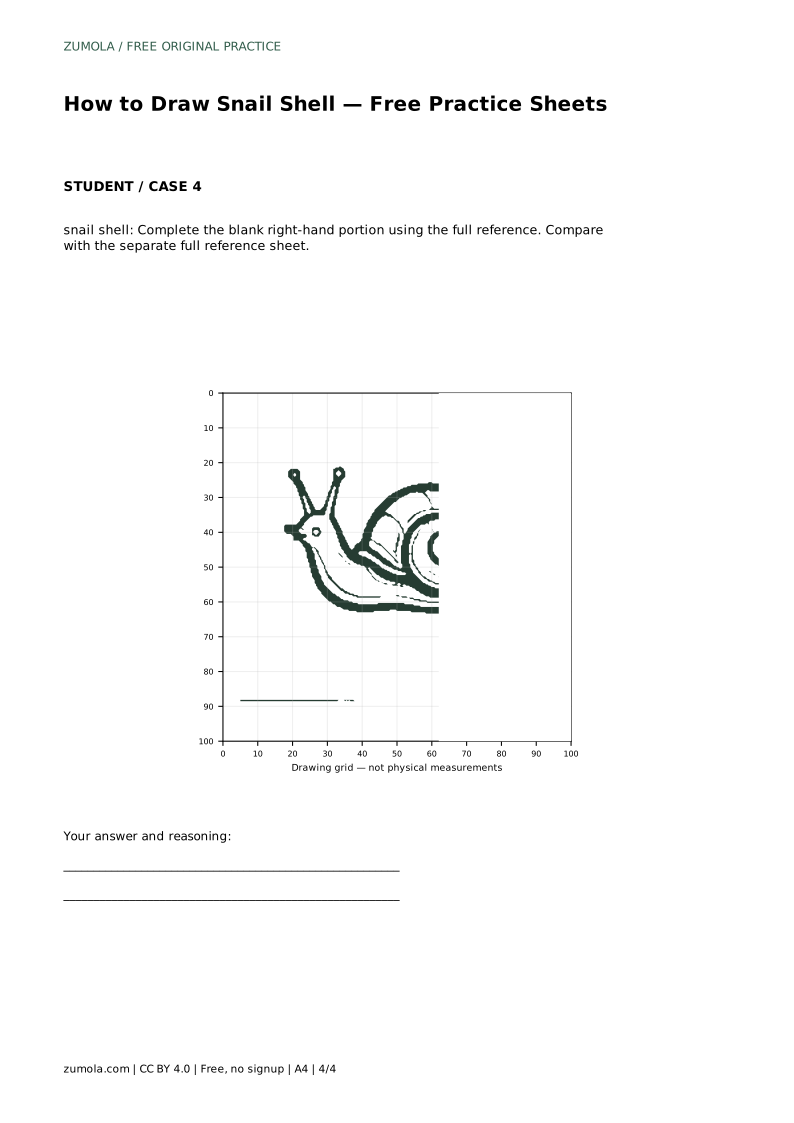
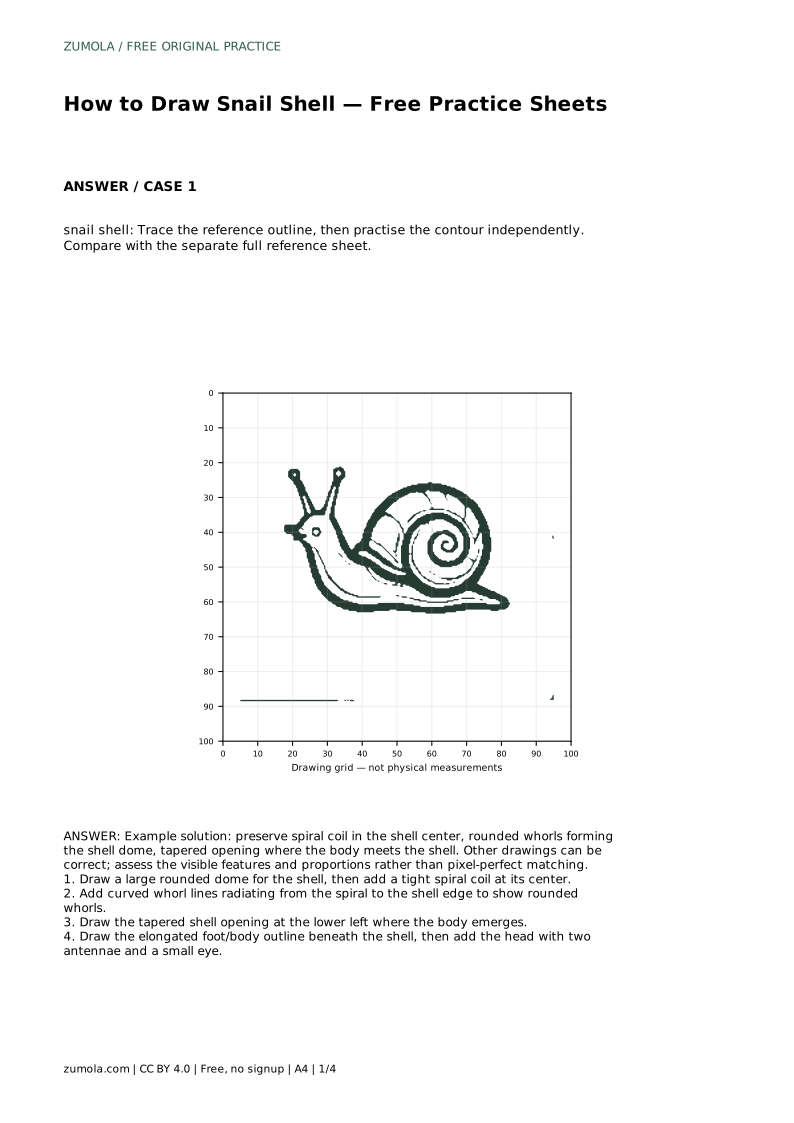
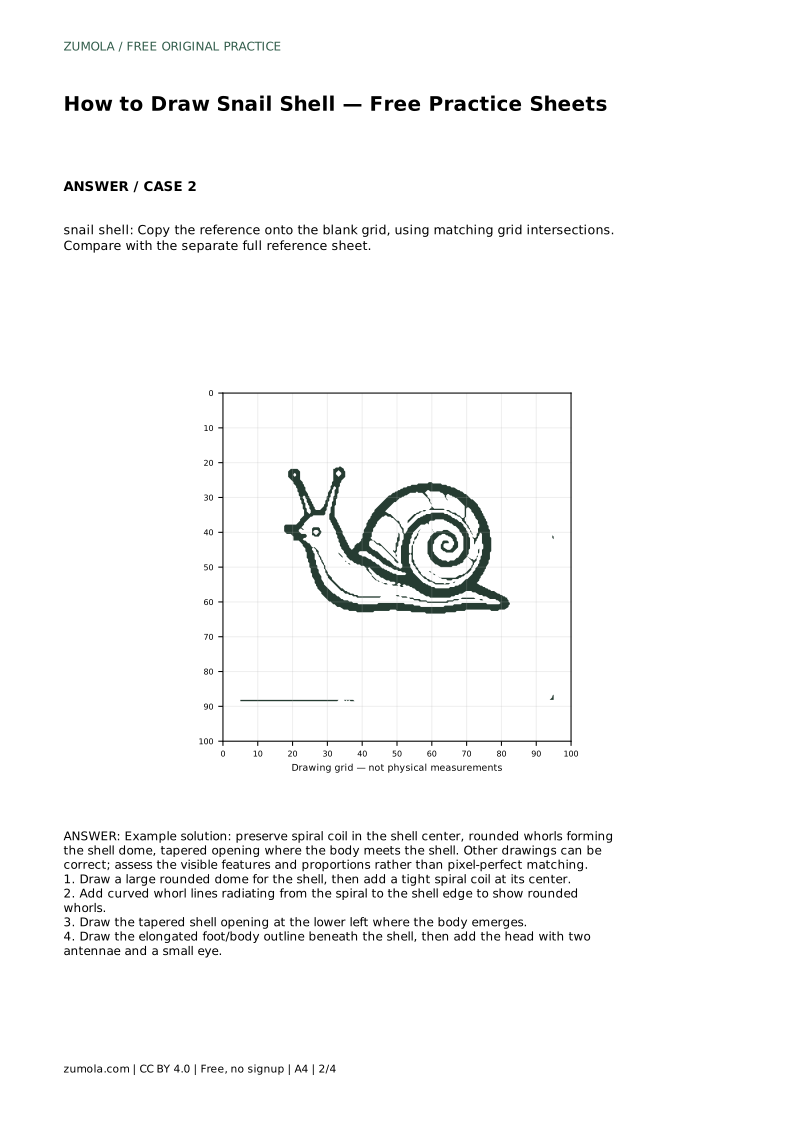
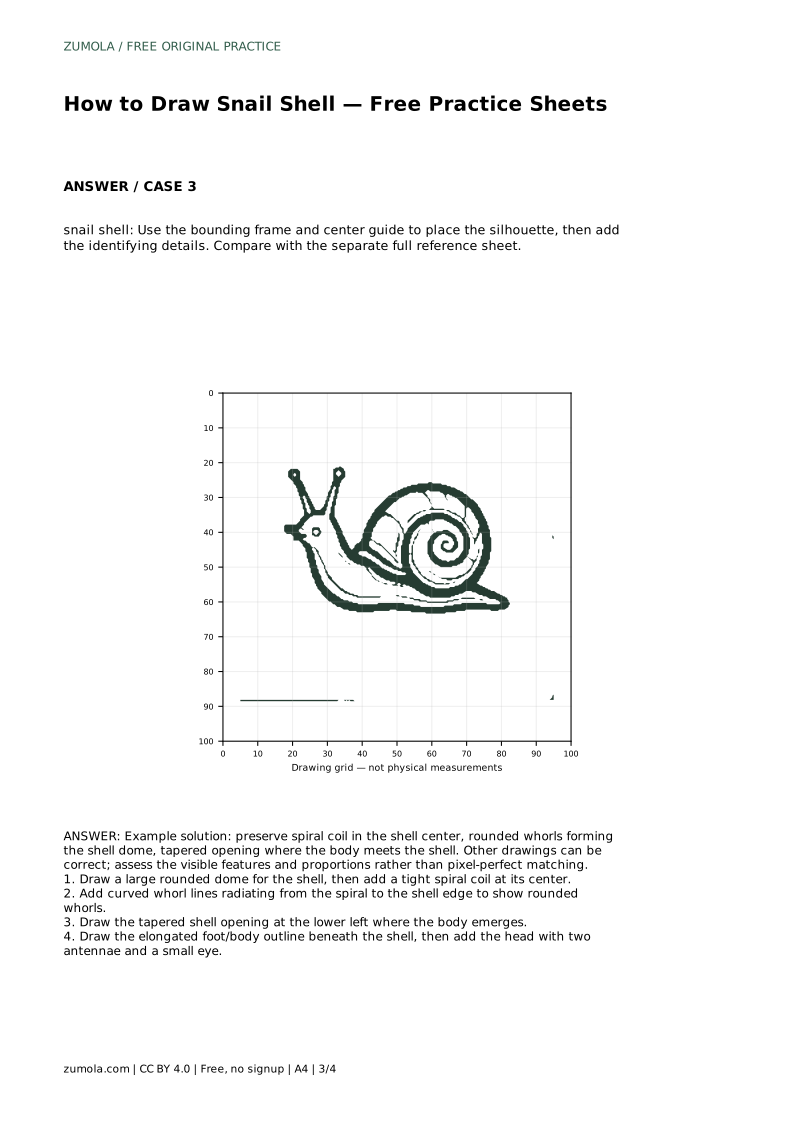
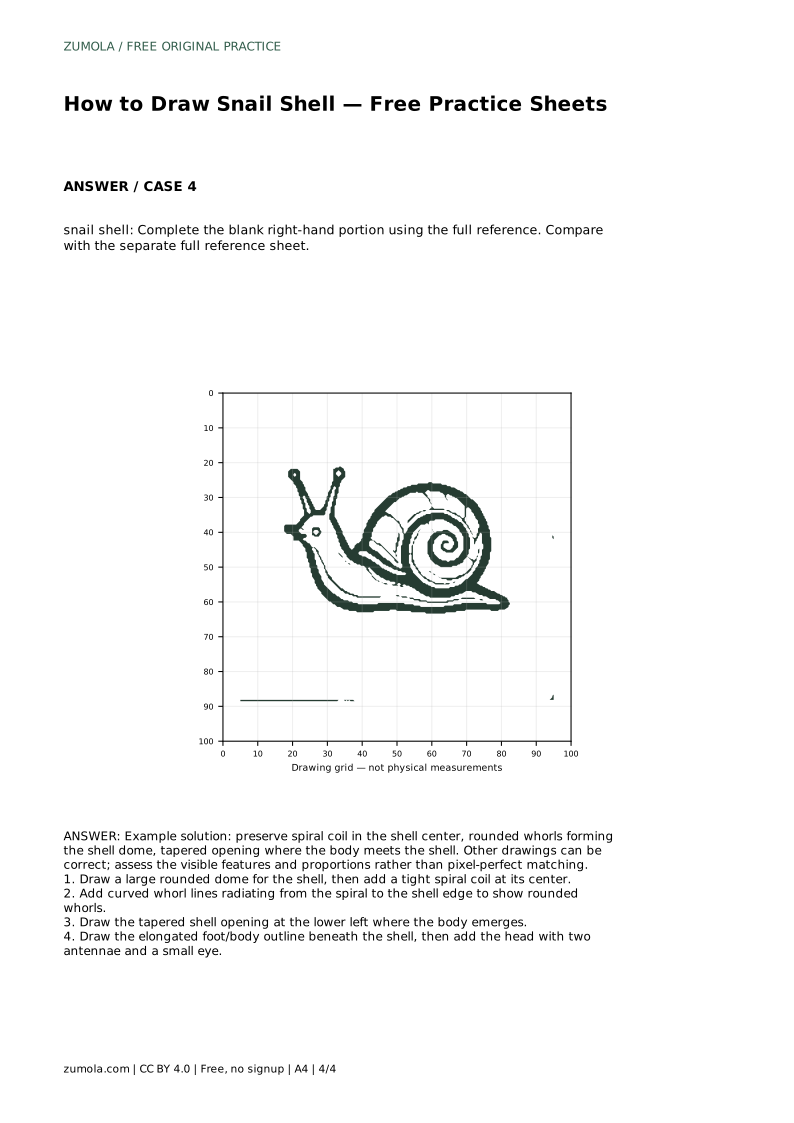
A snail shell is easiest to draw when you treat it as a dome with a spiral at its center and curved lines that wrap around the form. This page explains the order of construction, how to keep the whorls rounded, and where the opening meets the body. Practice sheets let you trace a reference outline, work on a grid, use a bounding frame and center guide, or complete a partly blank drawing.
Begin with the largest simple shape: a rounded dome that holds the whole shell. Keep the outline smooth and slightly wider than tall if your reference shows a broad shell. Inside the dome, place a small tight spiral near the center. Draw it as a continuous curl that gets slightly larger with each turn, rather than a set of separate circles. The spiral is the visual anchor of the shell, so its position matters more than its exact number of turns.
Once the spiral sits comfortably inside the dome, check the space around it. There should be room for curved lines to travel from the spiral outward to the shell edge. If the spiral is too close to one side, the whorls will look cramped on that side and stretched on the other.
Whorls are the rounded ridges that wrap around the shell. Draw them as curved lines radiating from the central spiral toward the shell edge. Each line should follow the dome's curve instead of running straight across it. Space the lines so the whorls read as rounded bands, not flat stripes. Near the spiral the lines can sit closer together; toward the outer edge they can spread slightly.
Work lightly at first. If a whorl line crowds the spiral or crosses another line awkwardly, adjust it before darkening. The goal is a shell that looks coiled and rounded, not a set of decorative arcs placed at random.
The shell opening is the tapered gap at the lower left where the body emerges. Draw it as a narrowing shape that connects the shell dome to the body below. The opening should look like a passage into the shell, so its edges can curve inward slightly. Avoid making it a perfect circle; a tapered opening better matches the way the body meets the shell.
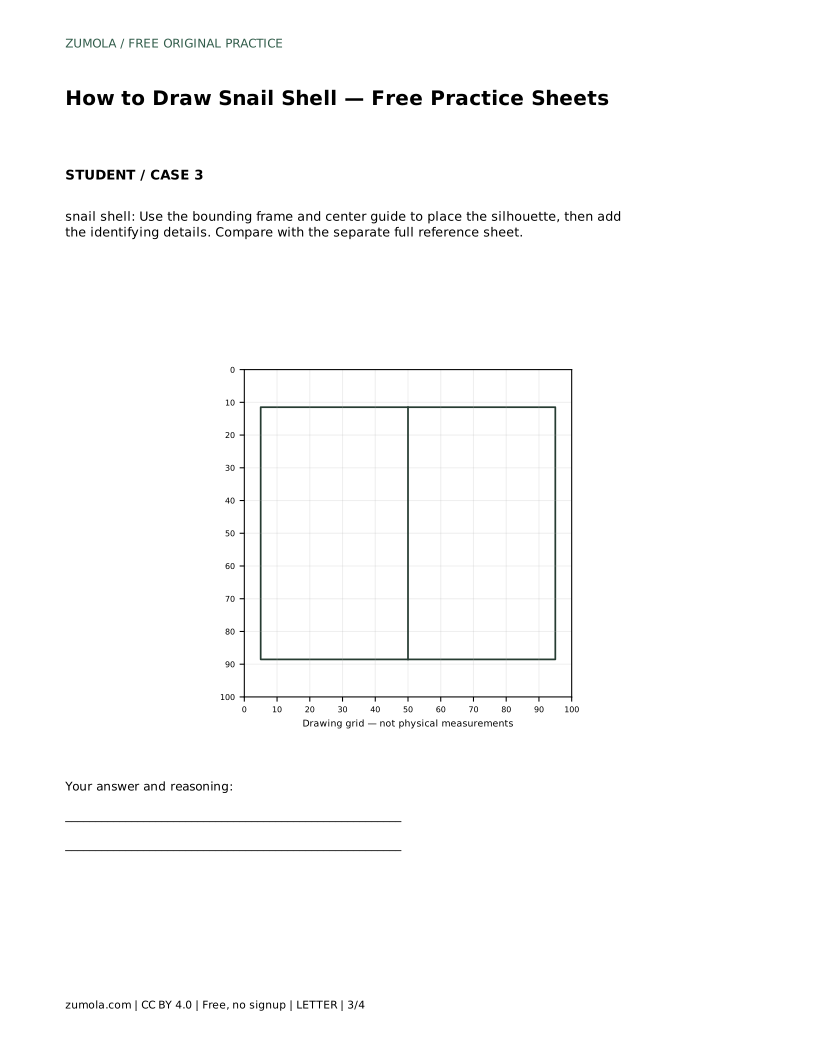
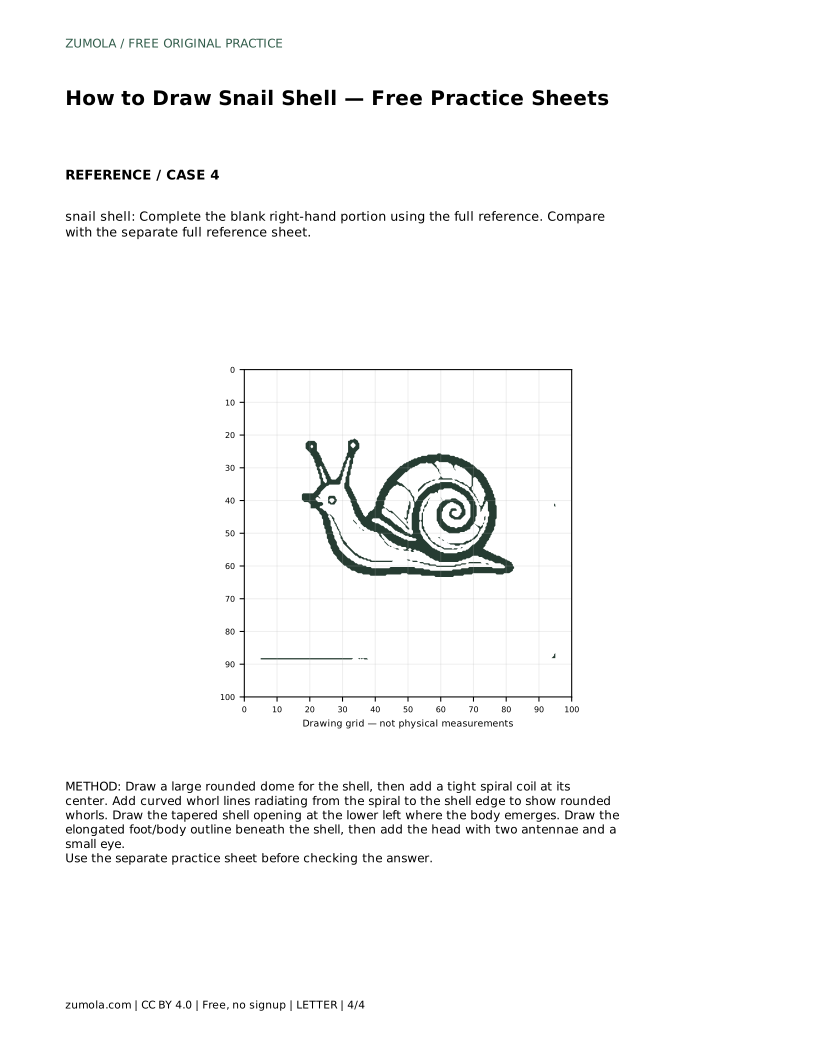
Beneath the shell, draw the elongated foot and body outline. Add the head with two antennae and a small eye. Keep the body proportional to the shell: a shell that is too small for the body looks unbalanced, and a body that is too large overwhelms the dome. Compare your drawing with the separate full reference sheet to check the overall silhouette.
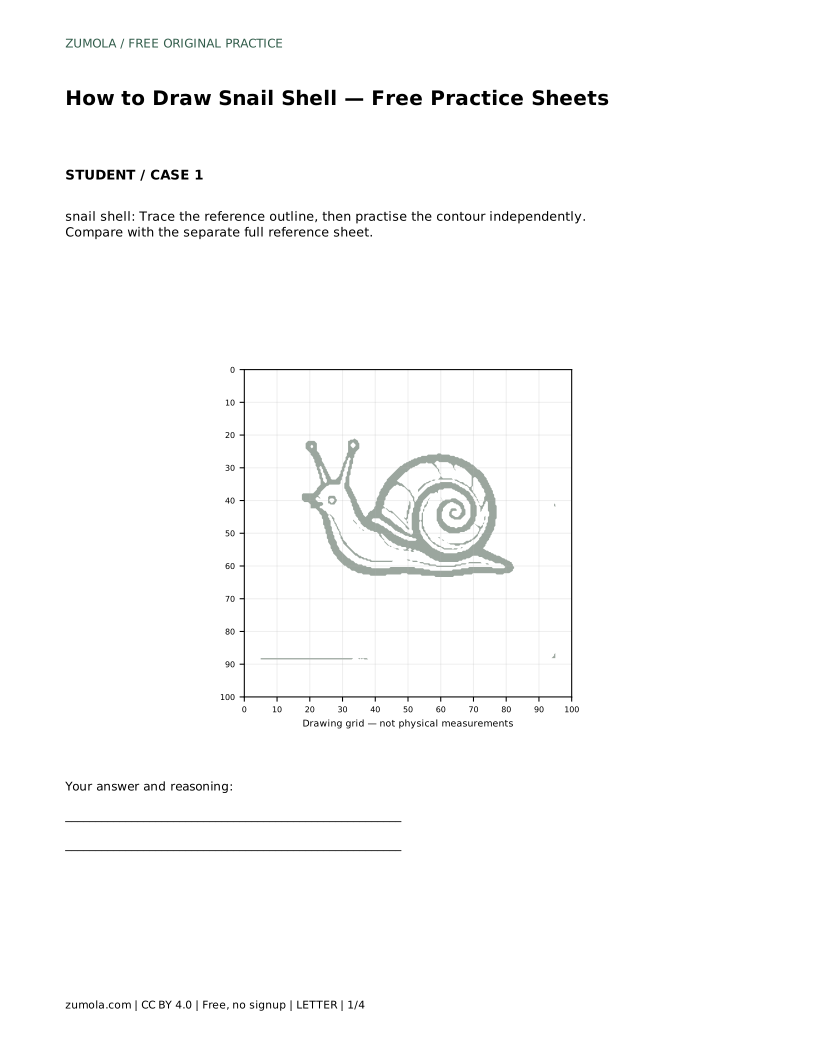
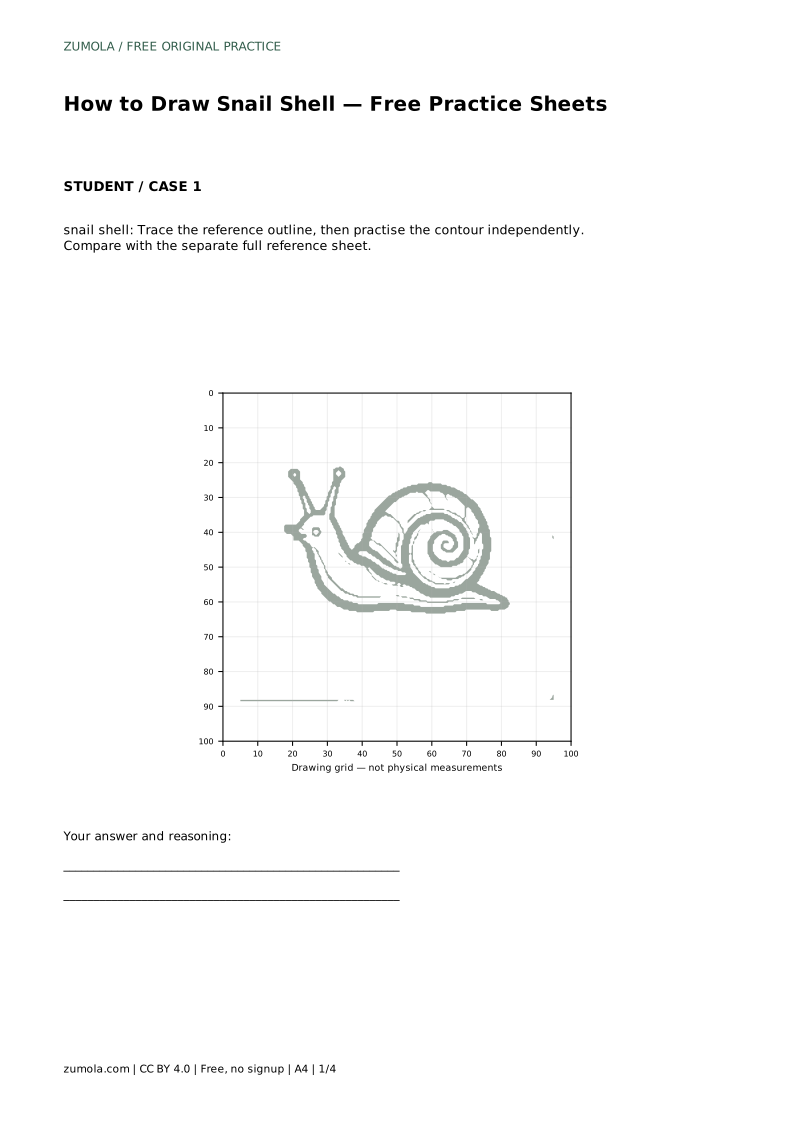
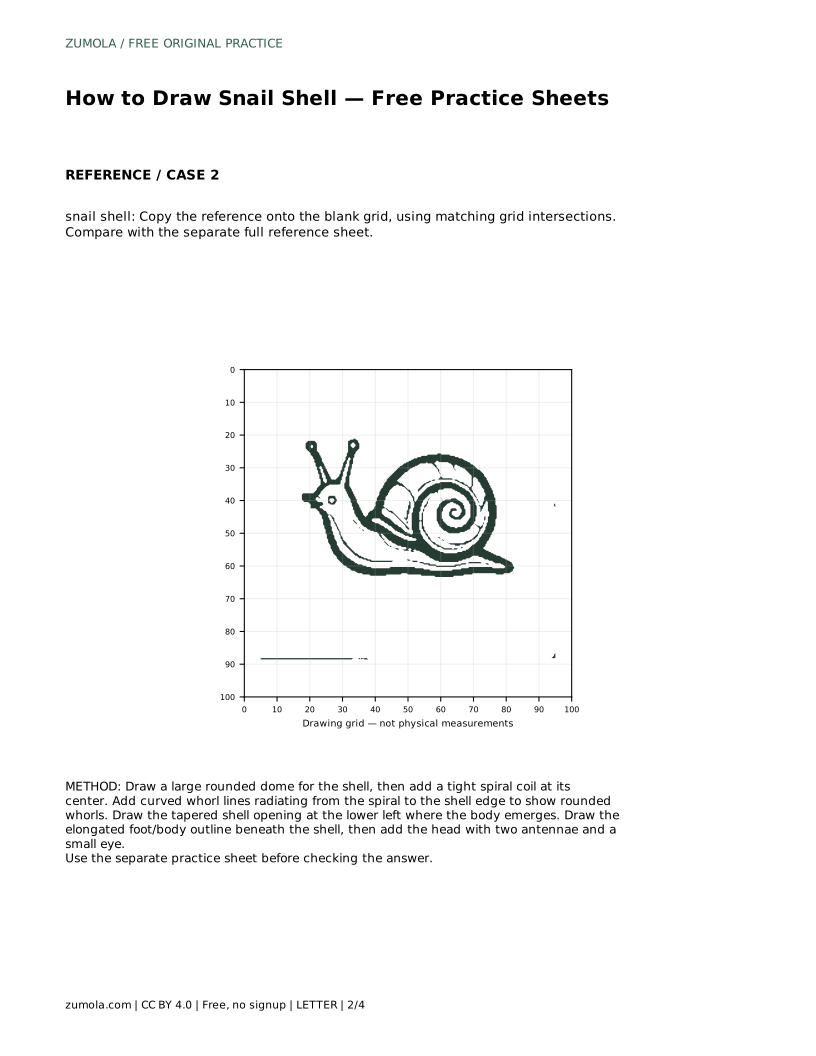
snail shell: Trace the reference outline, then practise the contour independently. Compare with the separate full reference sheet.
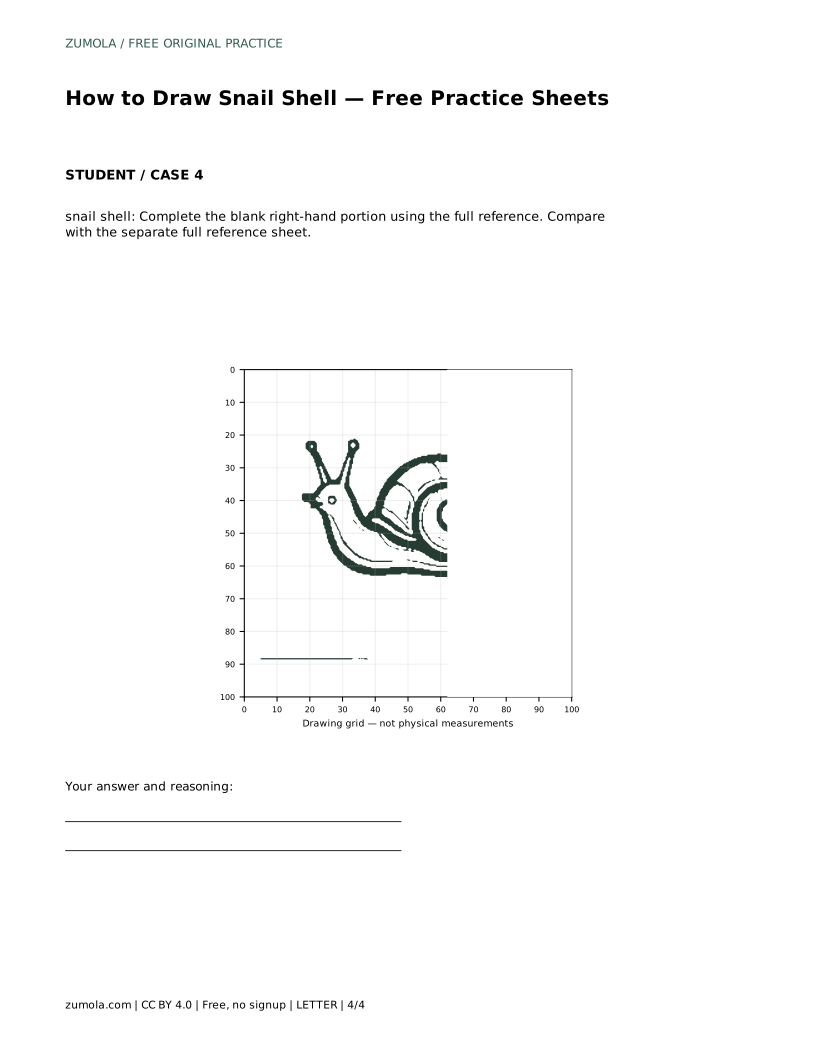
Example solution: preserve spiral coil in the shell center, rounded whorls forming the shell dome, tapered opening where the body meets the shell. Other drawings can be correct; assess the visible features and proportions rather than pixel-perfect matching. Draw a large rounded dome for the shell, then add a tight spiral coil at its center. Add curved whorl lines radiating from the spiral to the shell edge to show rounded whorls. Draw the tapered shell opening at the lower left where the body emerges. Draw the elongated foot/body outline beneath the shell, then add the head with two antennae and a small eye.
No. The number of whorl lines can vary. What matters is that the lines curve around the dome and stay rounded rather than flat.
Place the tapered opening at the lower left where the body emerges, as shown in the reference. Its exact size can vary, but it should connect the dome to the body.
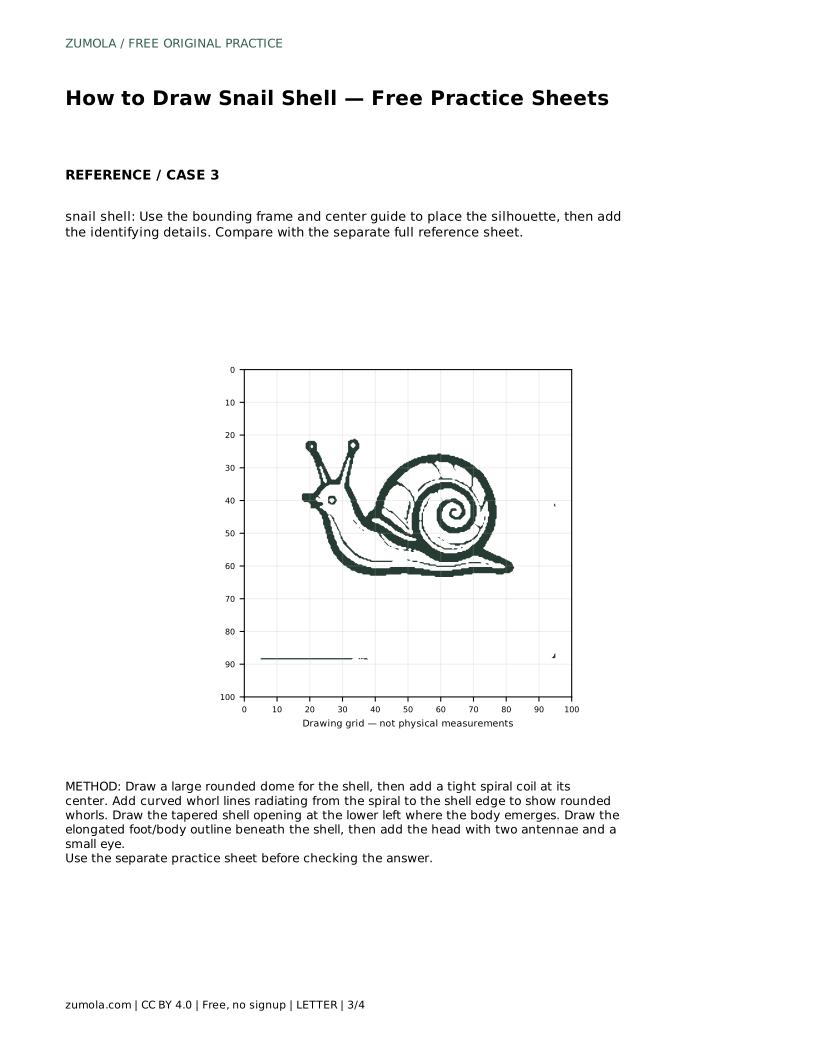
Yes. The grid sheet lets you copy the reference onto a blank grid using matching intersections, which helps you place the dome, spiral, and opening before adding details.
All drawing practice · Free coordinate paper
Original resources · CC BY 4.0 · Free for personal and classroom use with attribution.