Reference diagrams
LETTER · Download PDF
A4 · Download PDF
Free original resources
Learn to draw a football goal by building the rectangular front frame, angled side supports and base line, then adding a simple net pattern.
Four original cases, with reference diagrams, practice sheets and worked answers. Everything is free; no signup required.
LETTER · Download PDF
A4 · Download PDF
LETTER · Download PDF
A4 · Download PDF
LETTER · Download PDF
A4 · Download PDF
Use A4 or US Letter to match your printer. Use the stated values and conditions to solve each exercise; diagrams are not physical measuring rulers.
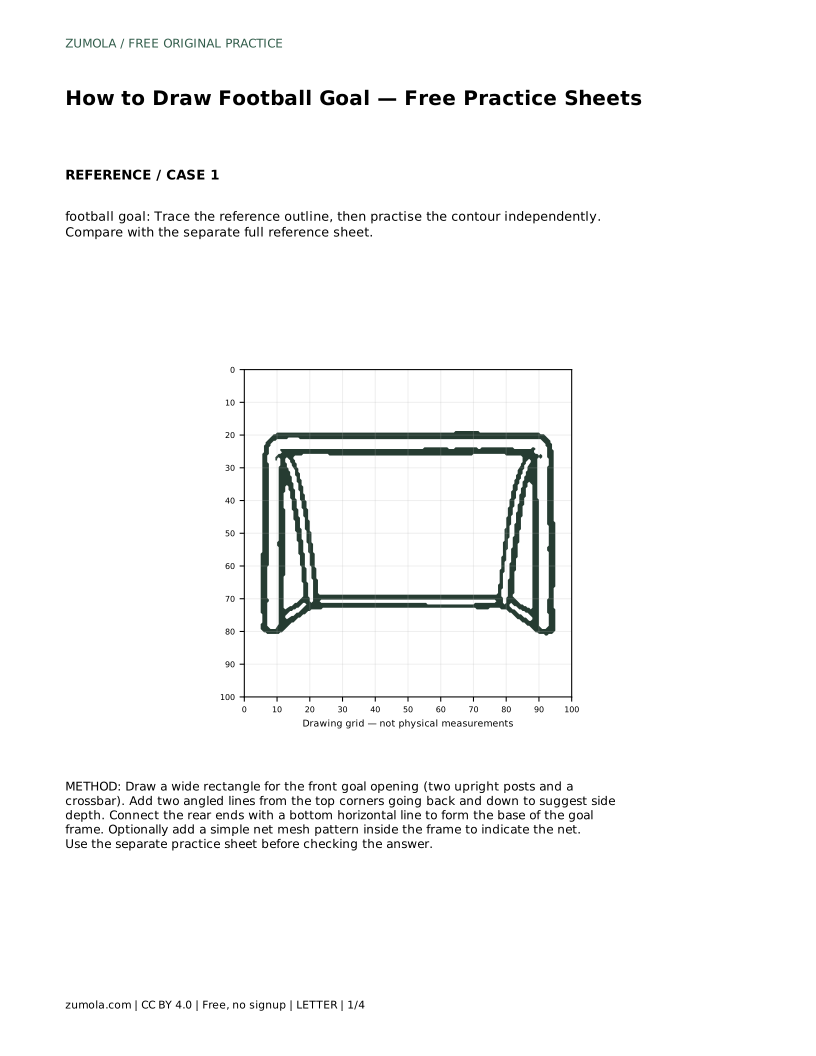
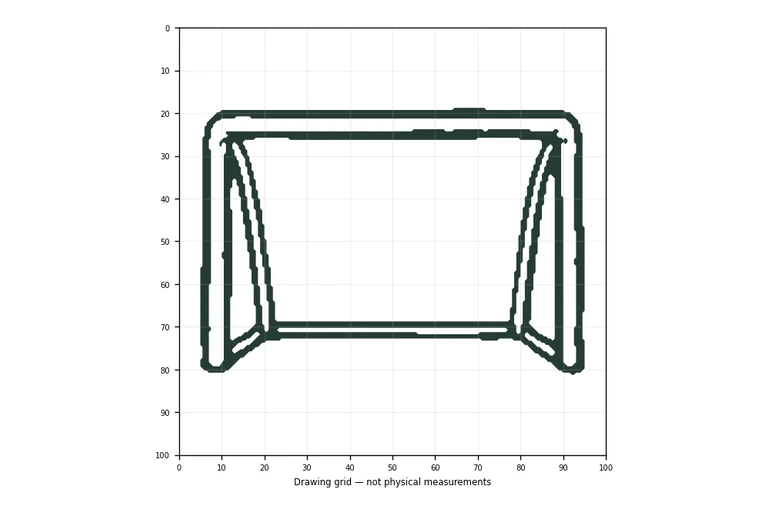
A football goal drawing works when the front opening and the depth behind it agree. Start with a wide rectangle for the two upright posts and crossbar, then angle the side supports back and connect them along the ground. That order keeps the frame readable before any net lines are added. The practice sheets let you trace, copy onto a grid, place the shape with a bounding frame, or complete a partly drawn goal, so you can choose the support that matches your current confidence.
The front of the goal is the clearest shape: a wide rectangle open at the bottom. Draw two upright posts of equal height and join their tops with a horizontal crossbar. Keep the posts vertical and the crossbar level so the opening reads as a goal rather than a doorway or a box. Width and height can vary between drawings, but the two posts should match each other and the crossbar should span the full distance between them.
Place the rectangle where the goal will sit on the page. Leaving room behind the frame matters, because the side supports need space to angle backward. If the front frame fills the whole sheet, the depth has nowhere to go.
Depth is what separates a goal from a flat rectangle. From each top corner of the front frame, draw a line angling back and down. These lines represent the side support frames running away from the viewer. They should lean in a consistent direction and finish at a similar height, suggesting a rear edge behind the front opening.
Connect the rear ends of those angled lines with a bottom horizontal line. This base line closes the open box-like depth and makes the structure look grounded. Keep the base line roughly parallel to the crossbar so the goal does not appear twisted. The result is a front frame plus a receding frame, joined into one believable structure.
A net is optional, but a simple mesh pattern helps the drawing read as a goal. Add light lines running roughly vertically and horizontally inside the frame, following the direction of the side depth rather than sitting flat against the front. Keep the mesh sparse and even; dense scribbling hides the frame you just built.
Because art has multiple valid outcomes, judge the drawing by visible features and proportions rather than an exact match. A correct goal shows a rectangular front frame, angled side supports, an open box-like depth and a base line connecting the rear supports. Net lines are a bonus, not a requirement.
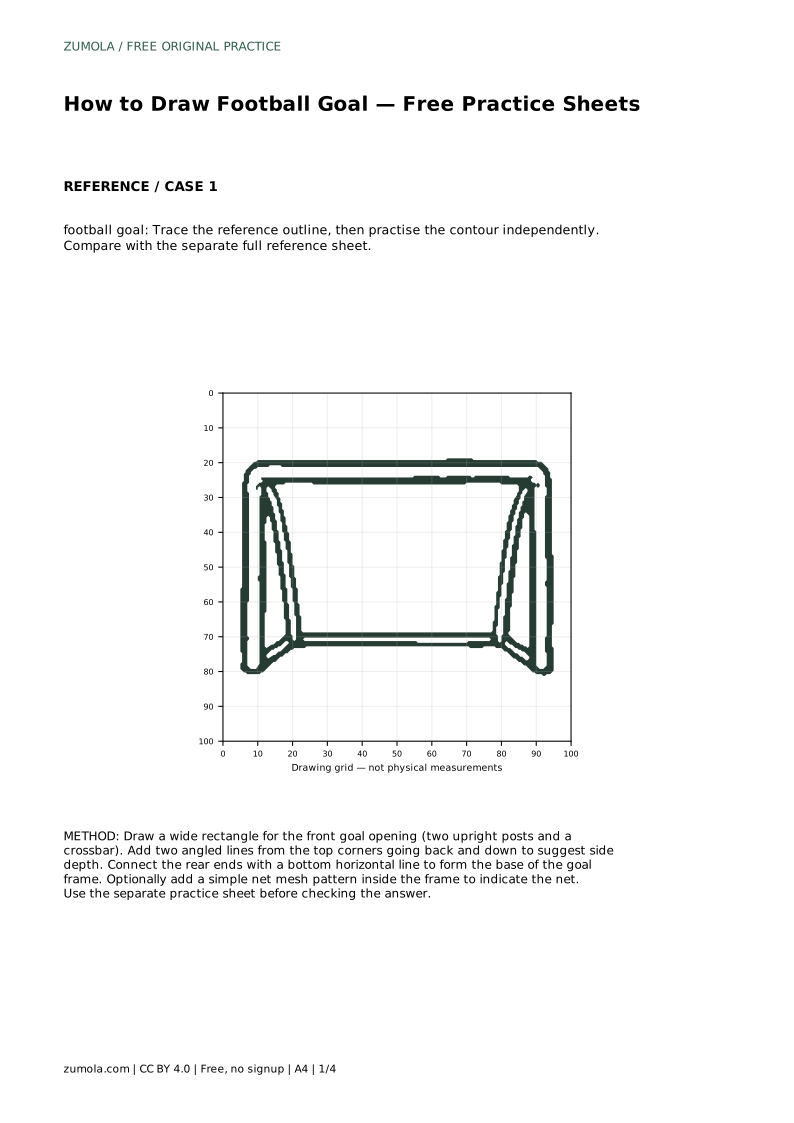
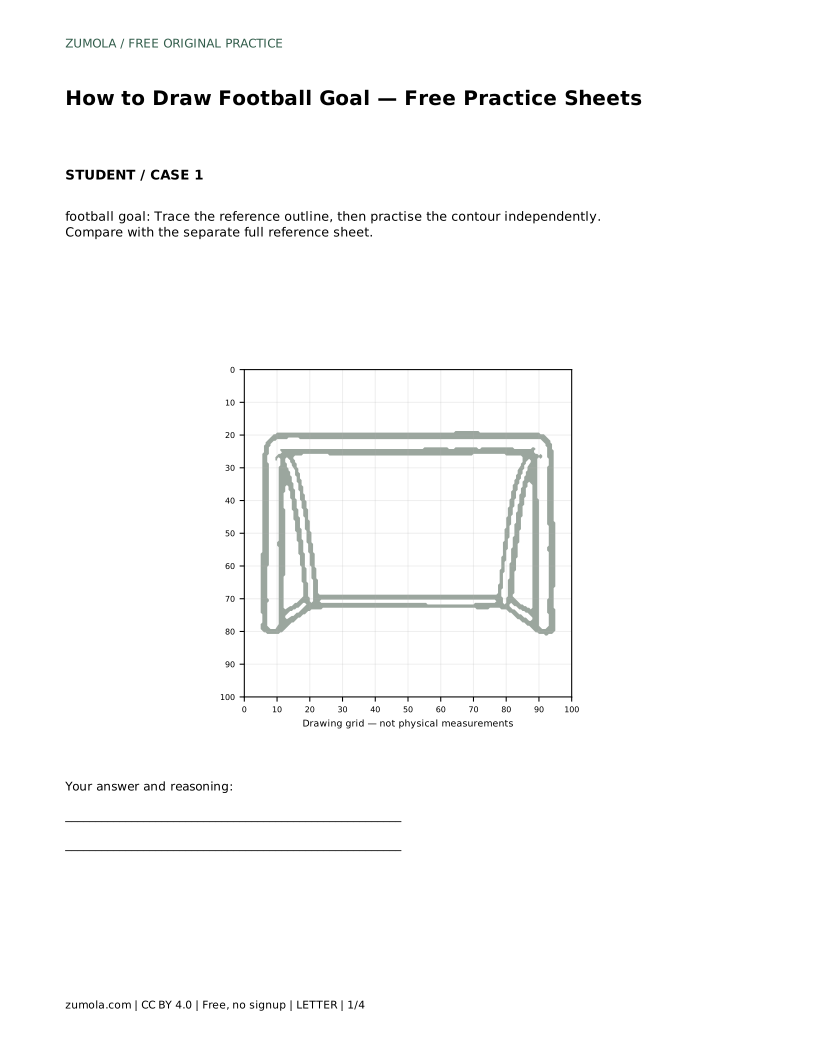
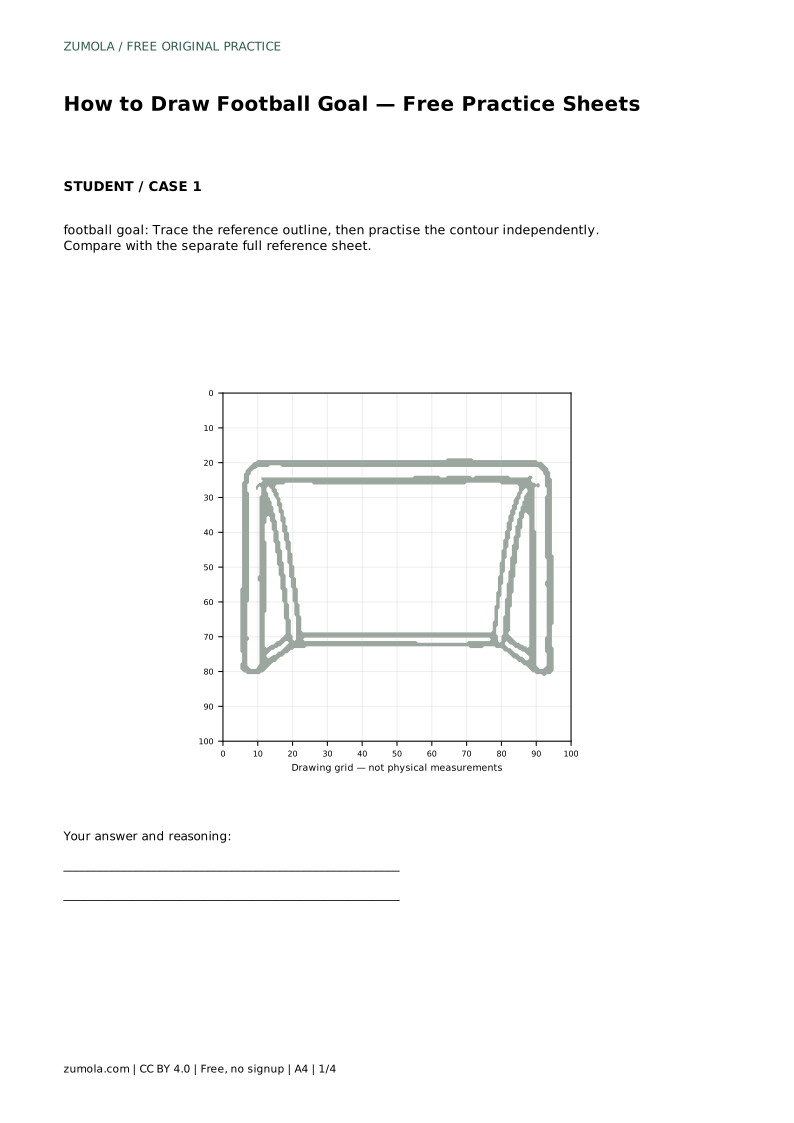
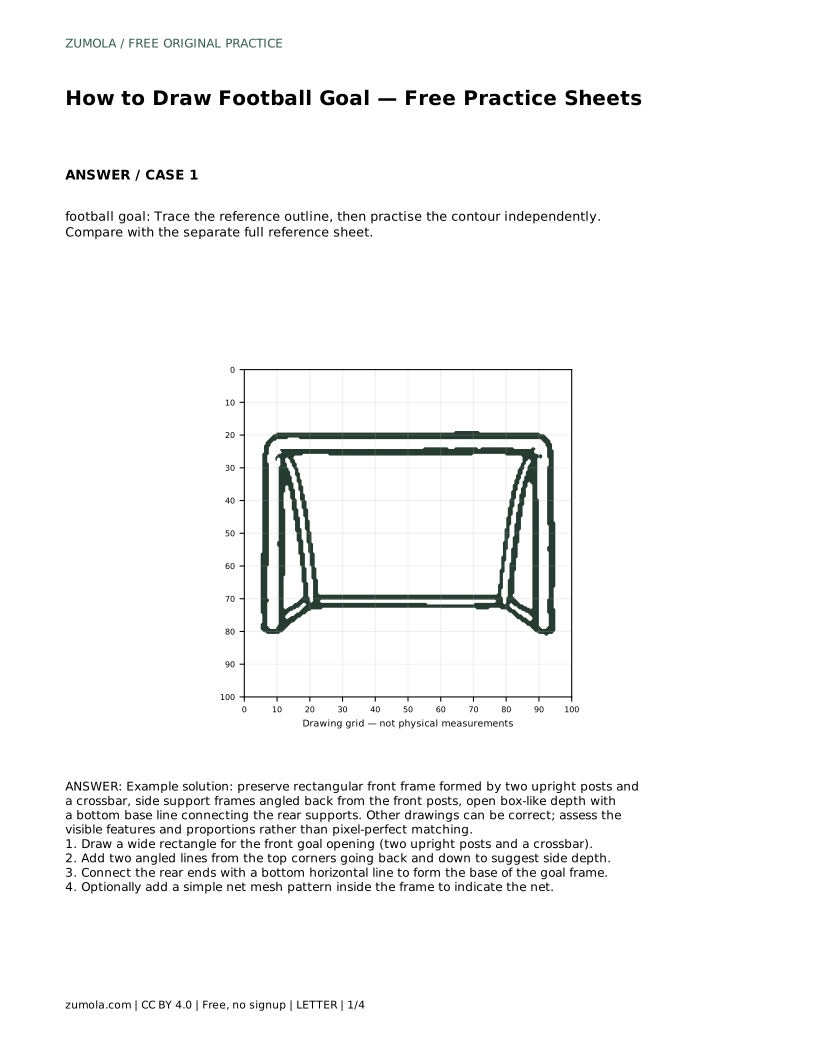
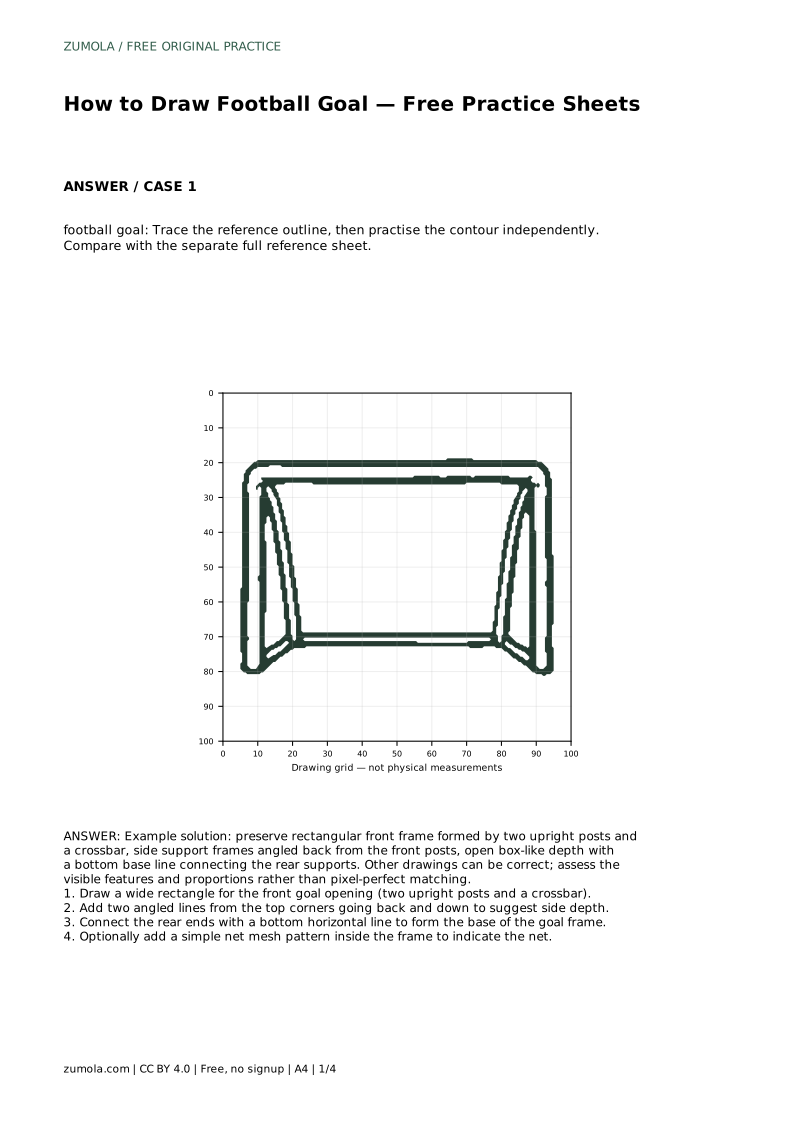
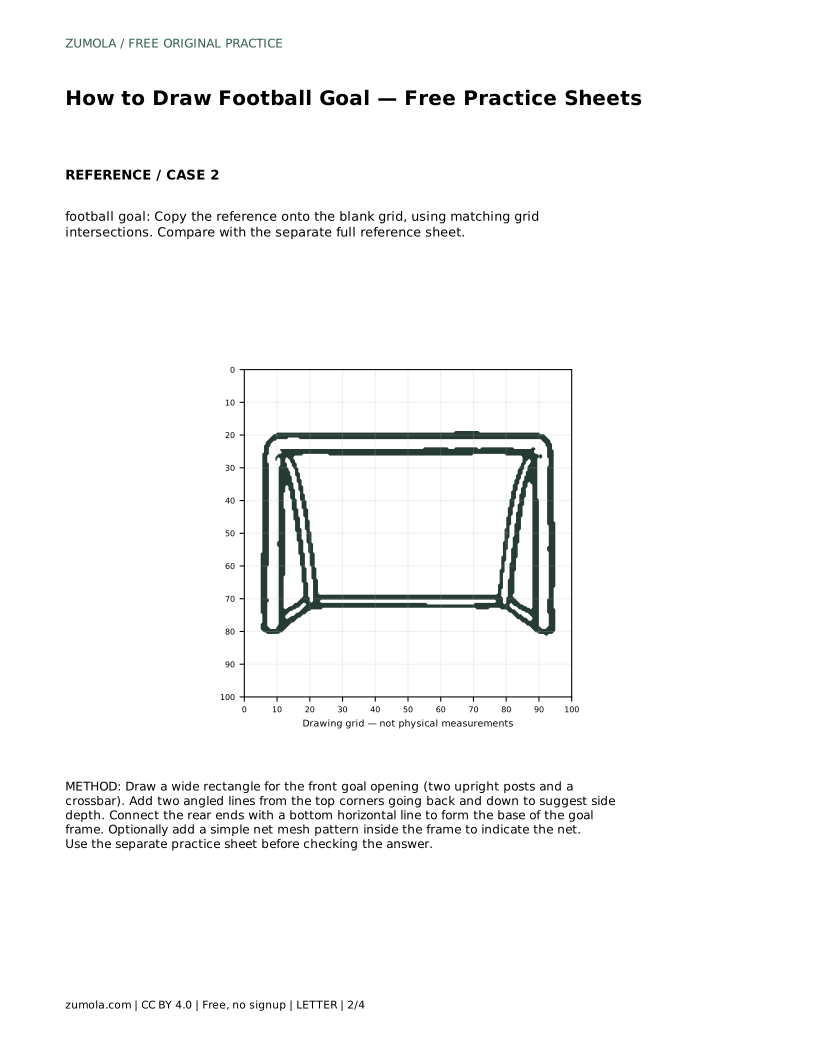
football goal: Trace the reference outline, then practise the contour independently. Compare with the separate full reference sheet.
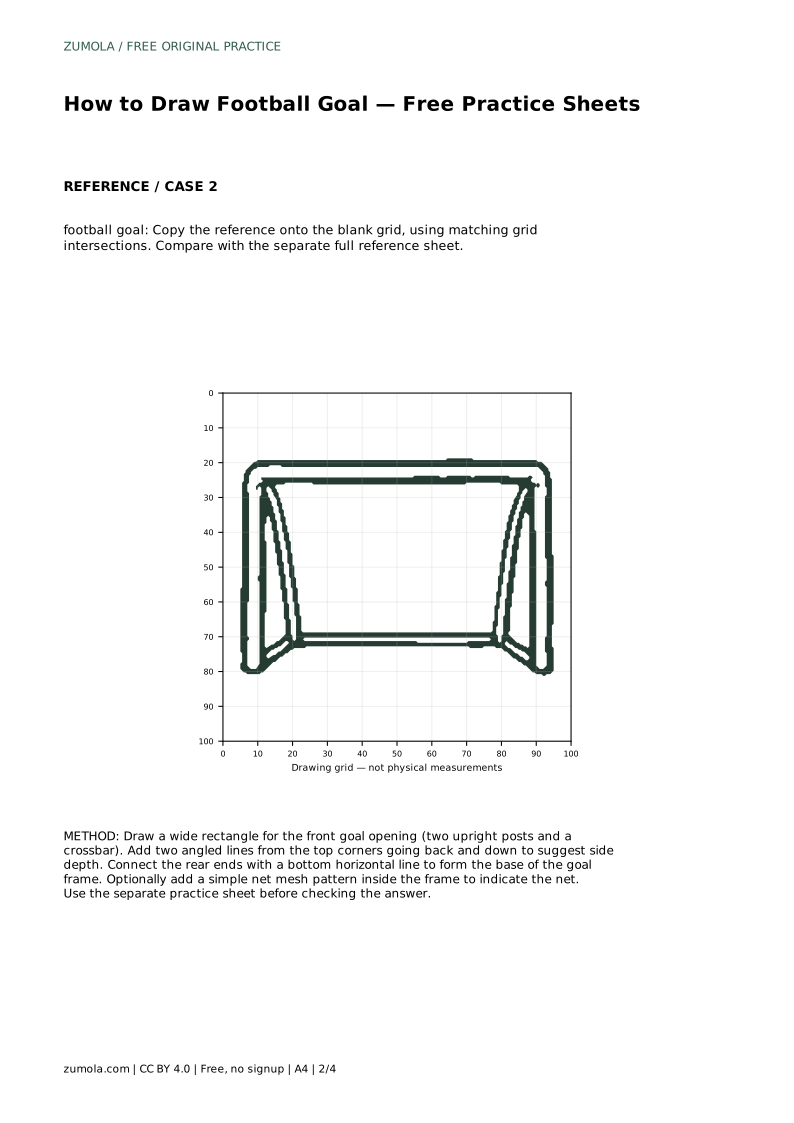
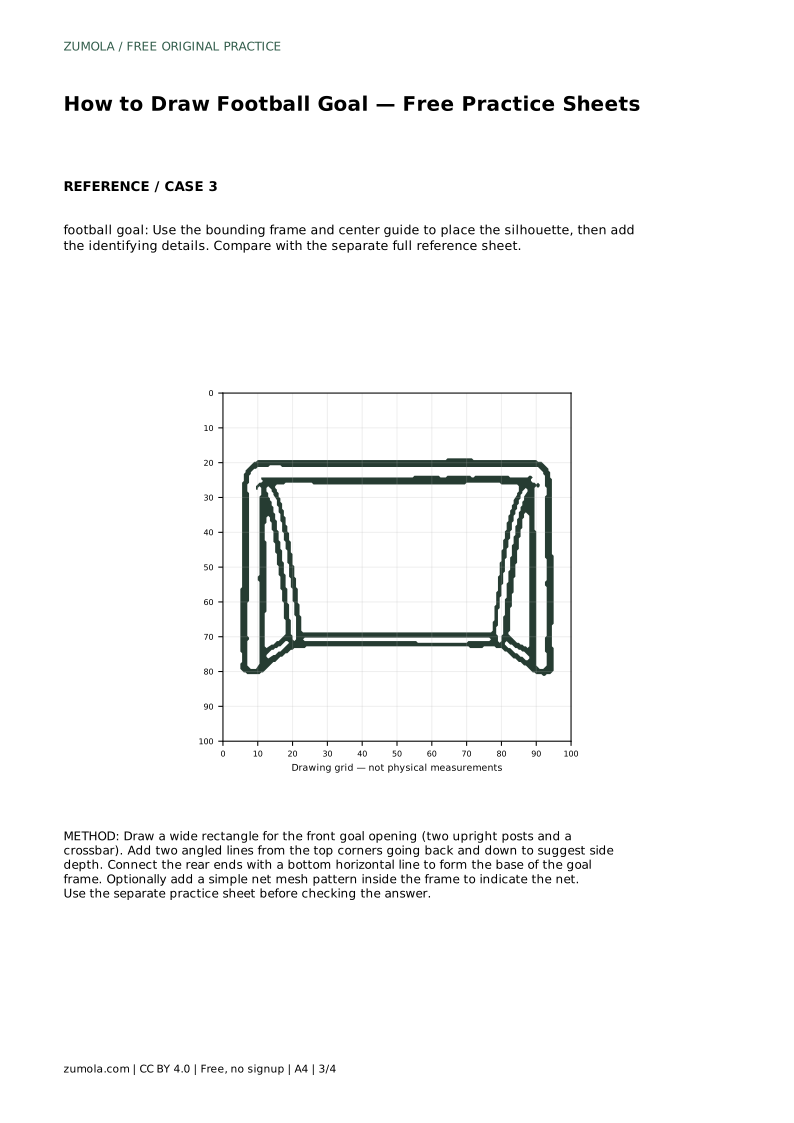
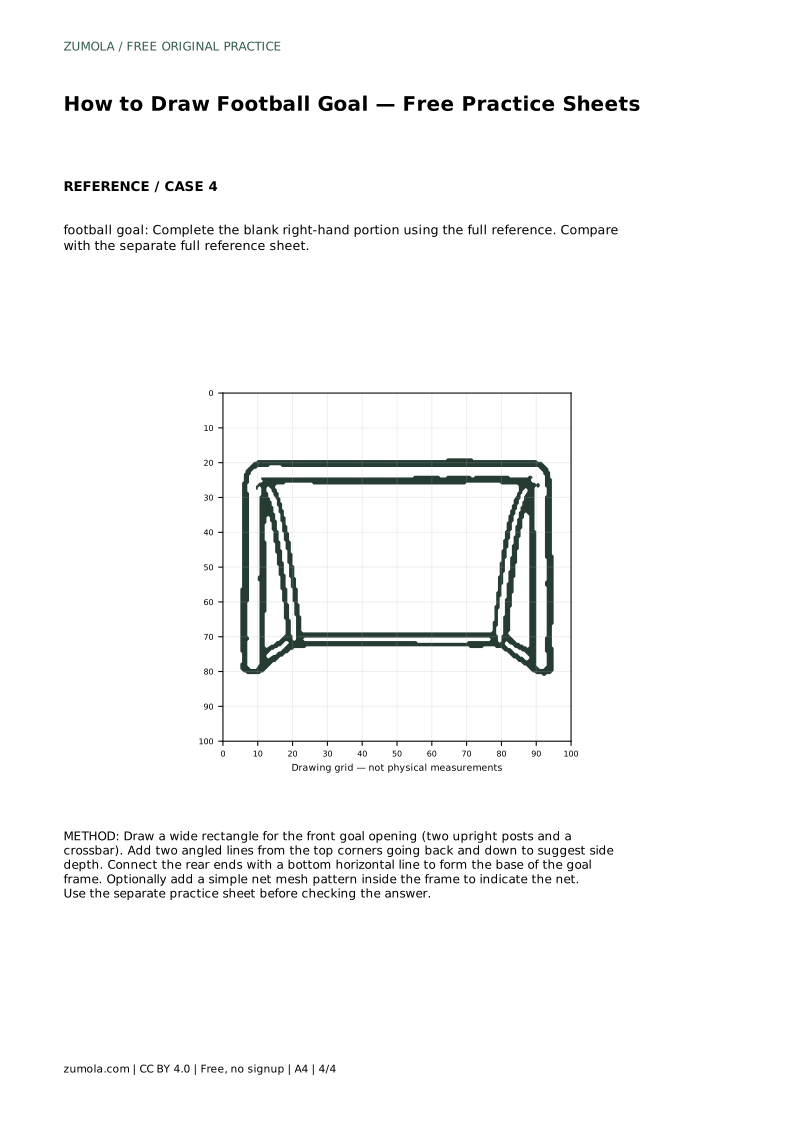
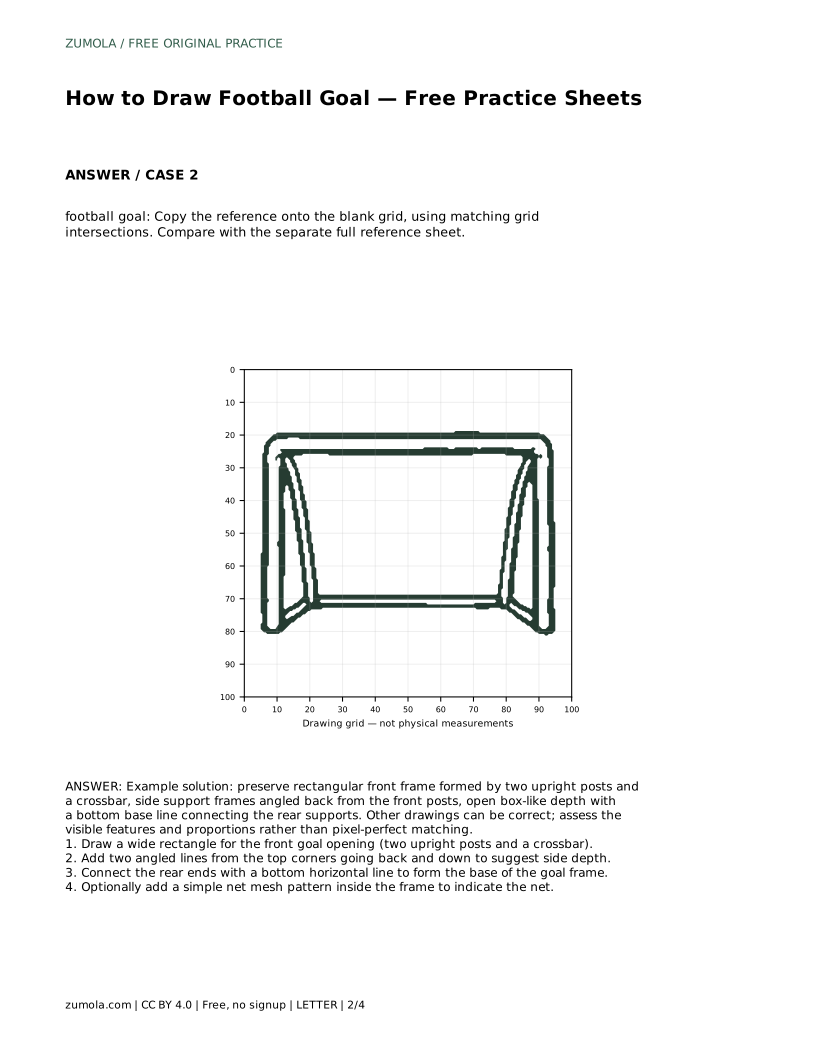
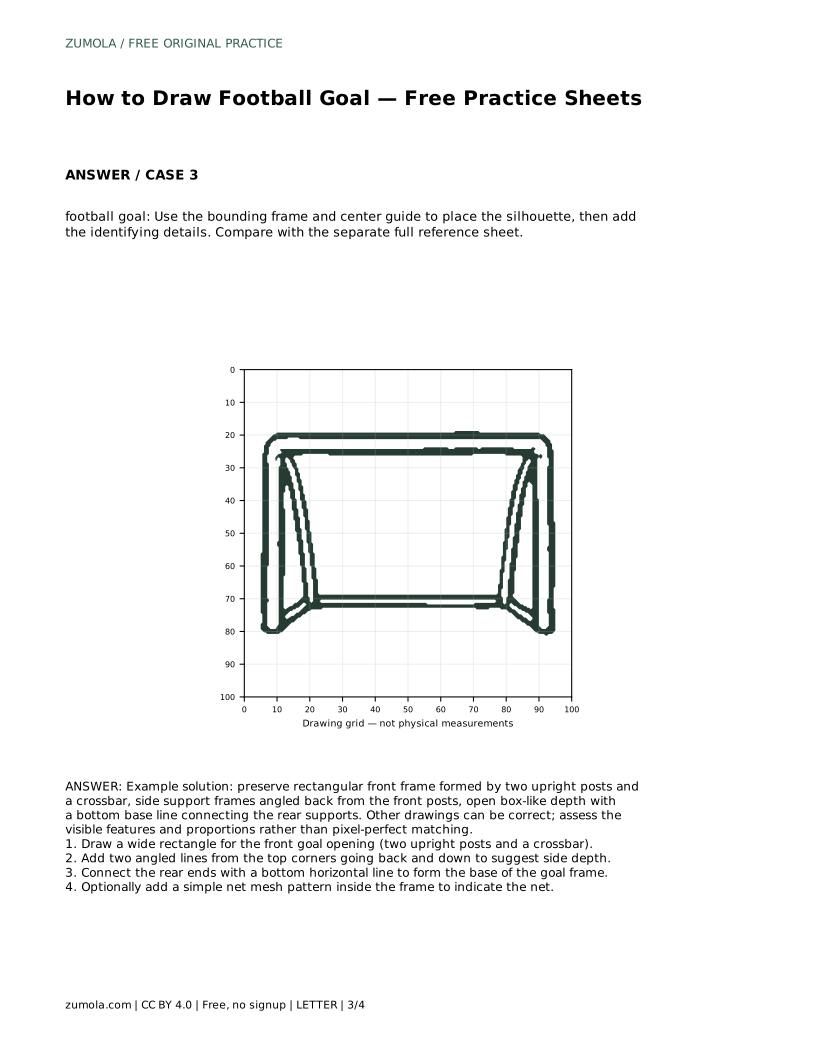
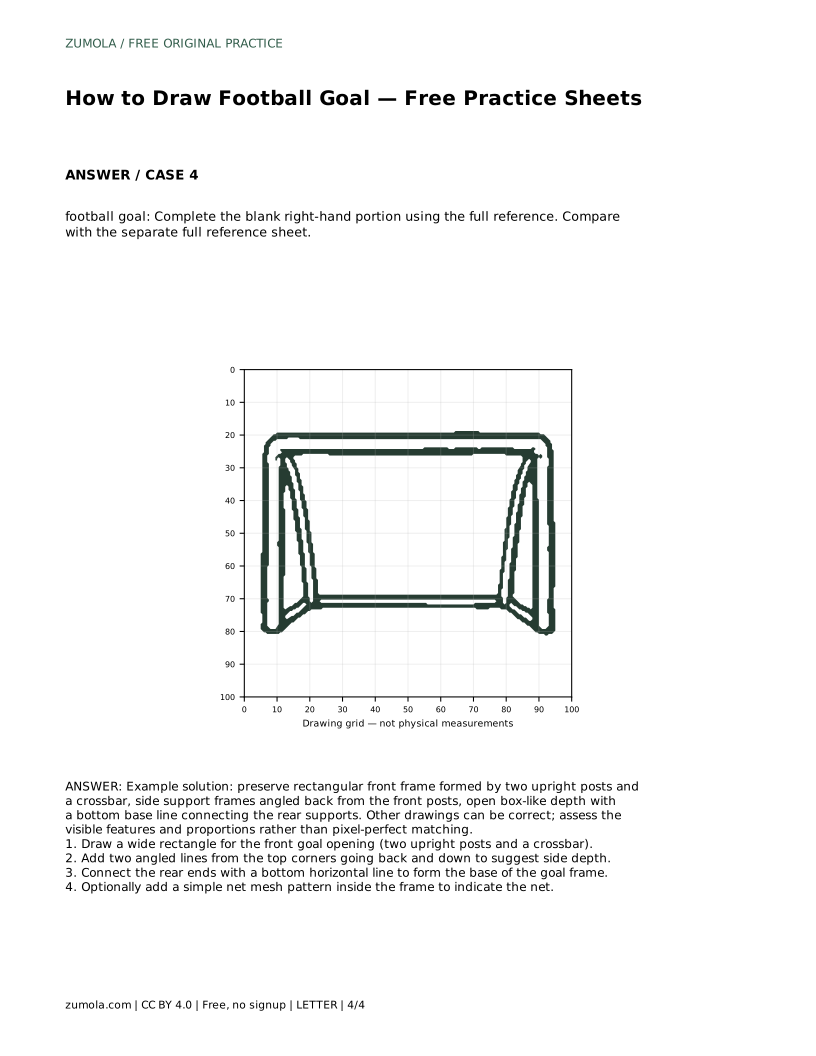
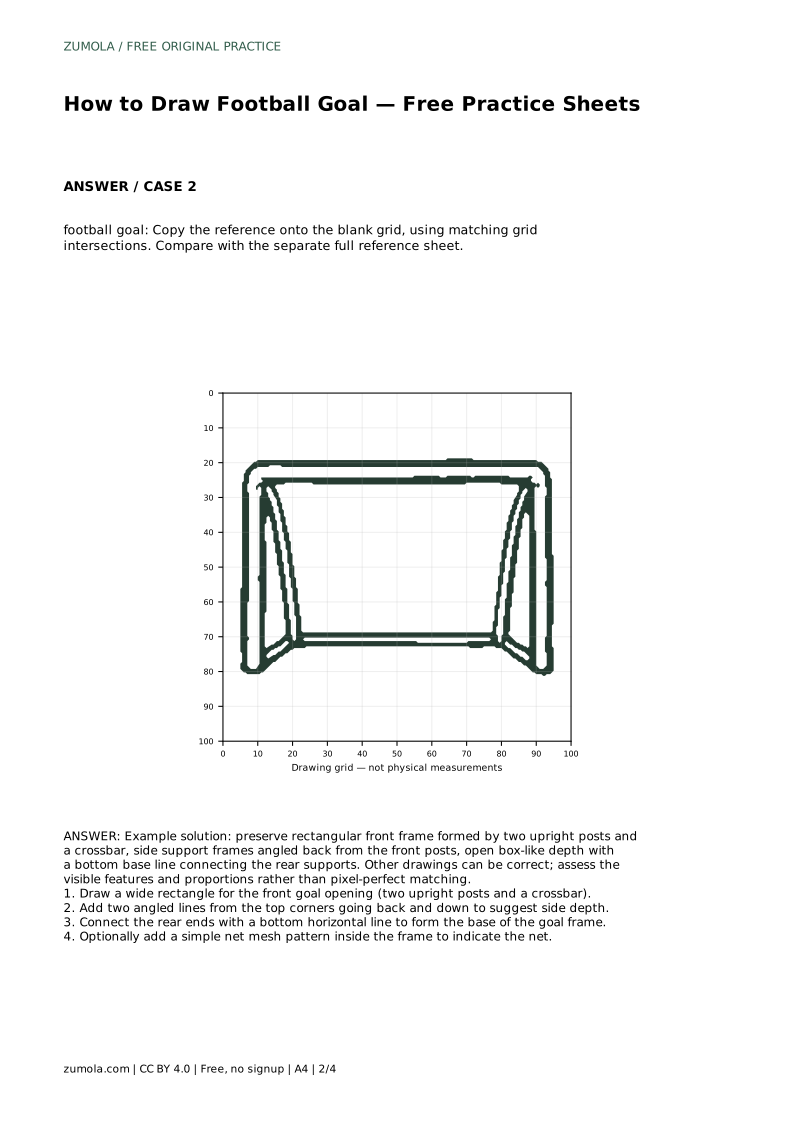
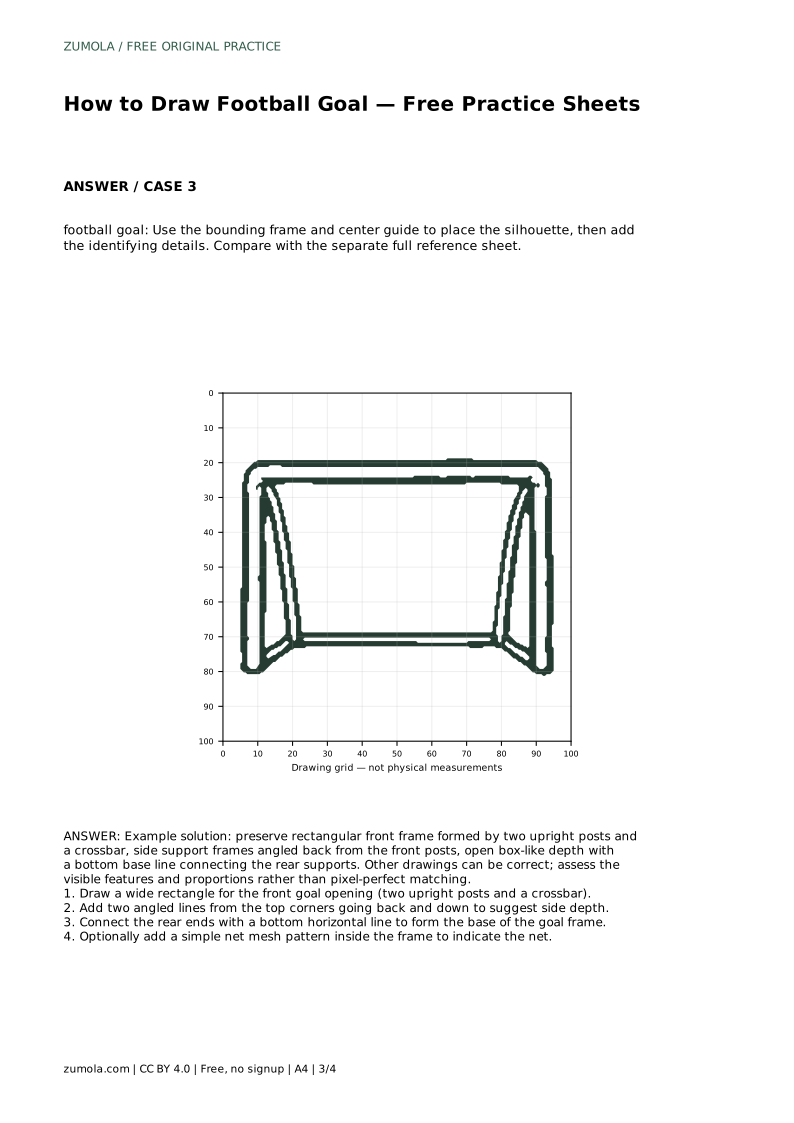
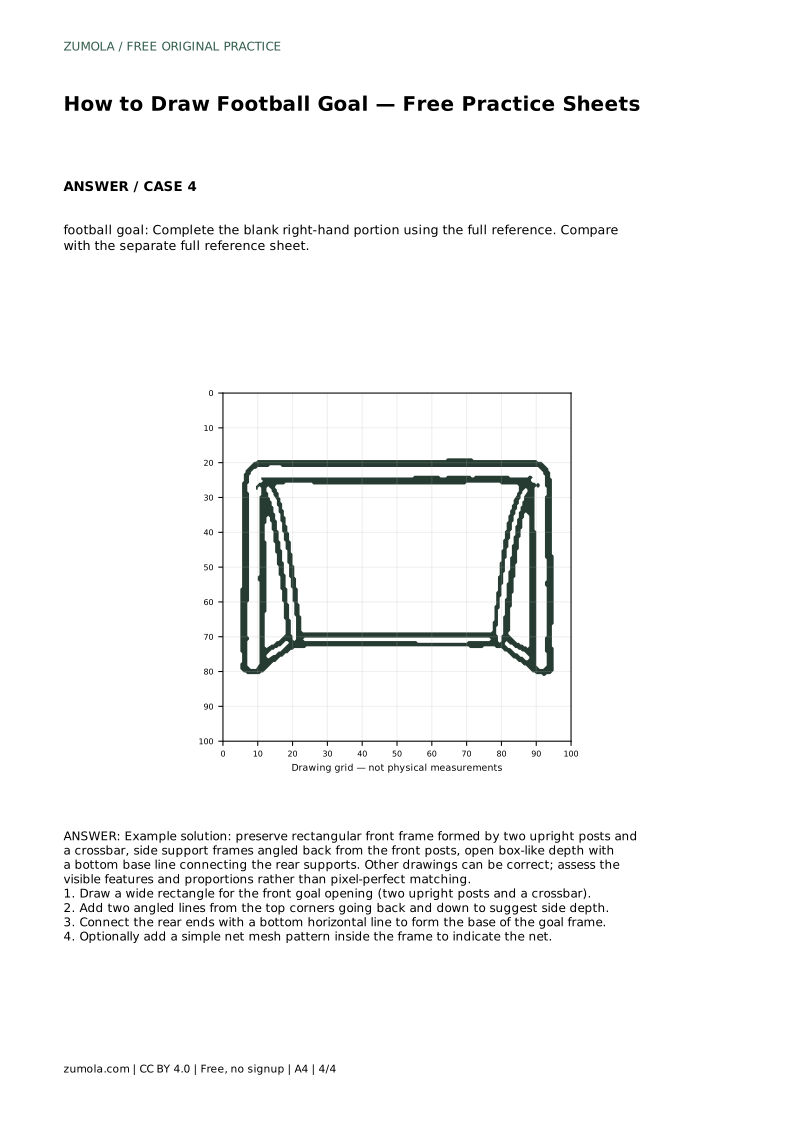
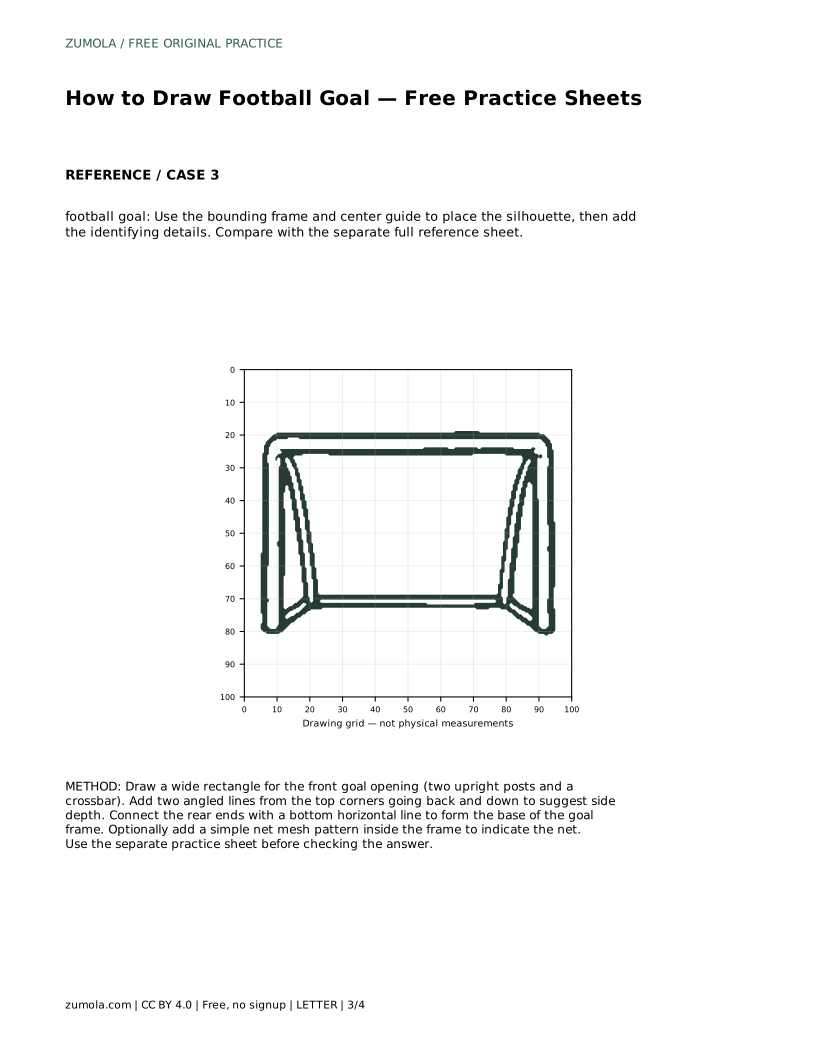
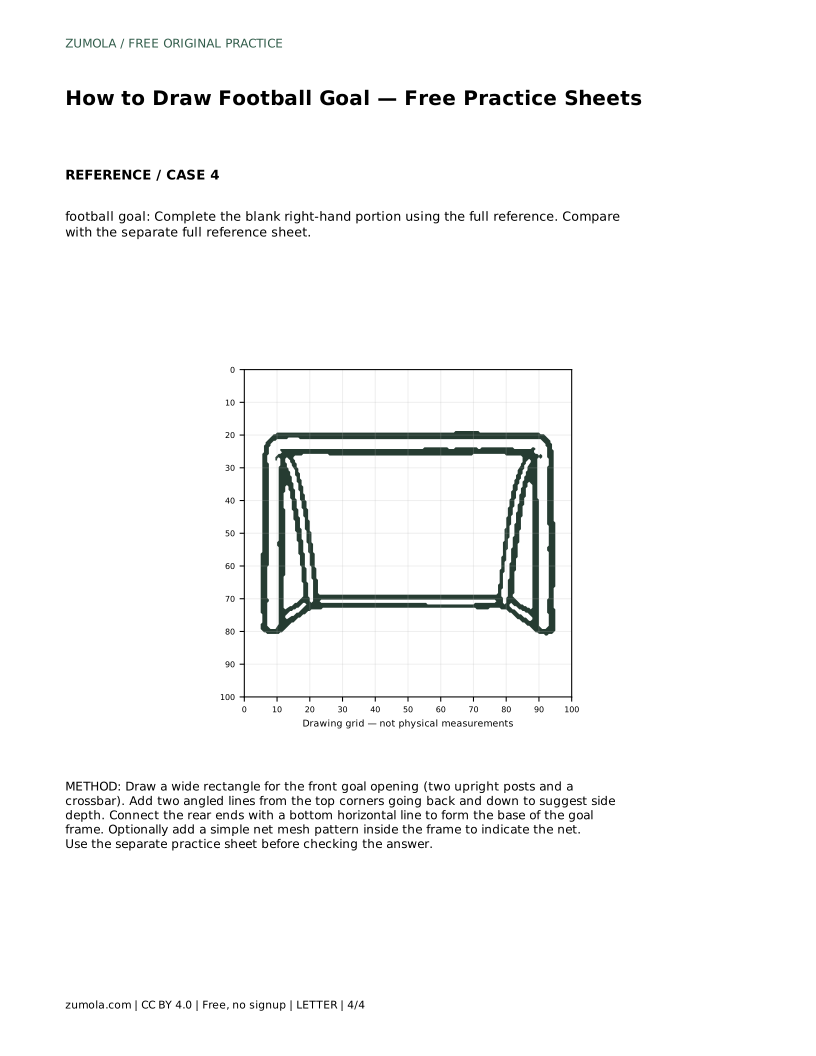
Example solution: preserve rectangular front frame formed by two upright posts and a crossbar, side support frames angled back from the front posts, open box-like depth with a bottom base line connecting the rear supports. Other drawings can be correct; assess the visible features and proportions rather than pixel-perfect matching. Draw a wide rectangle for the front goal opening (two upright posts and a crossbar). Add two angled lines from the top corners going back and down to suggest side depth. Connect the rear ends with a bottom horizontal line to form the base of the goal frame. Optionally add a simple net mesh pattern inside the frame to indicate the net.
No. The frame and depth are the essential features; a simple net pattern is optional and should stay light.
Yes. The front frame, angled side supports and base line can be adjusted for other viewpoints, but keep the depth consistent.
Look for a rectangular front opening, two angled side supports, a base line joining the rear ends, and proportions that stay consistent.
All drawing practice · Free coordinate paper
Original resources · CC BY 4.0 · Free for personal and classroom use with attribution.