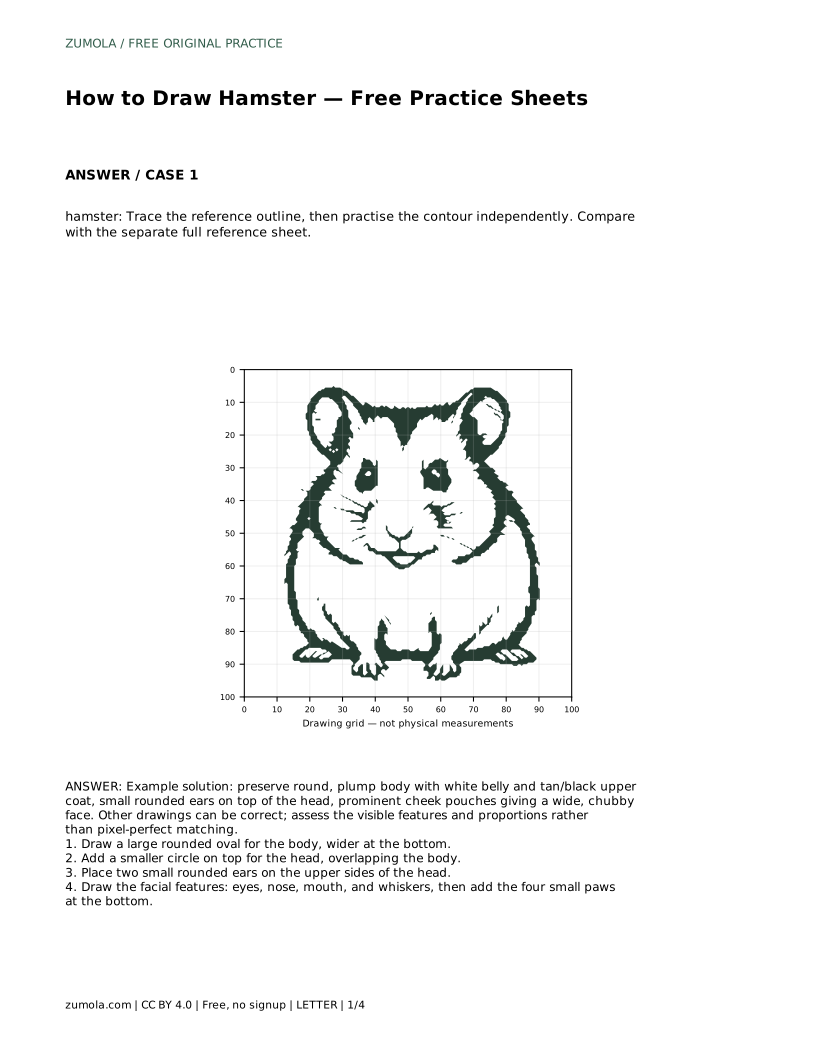
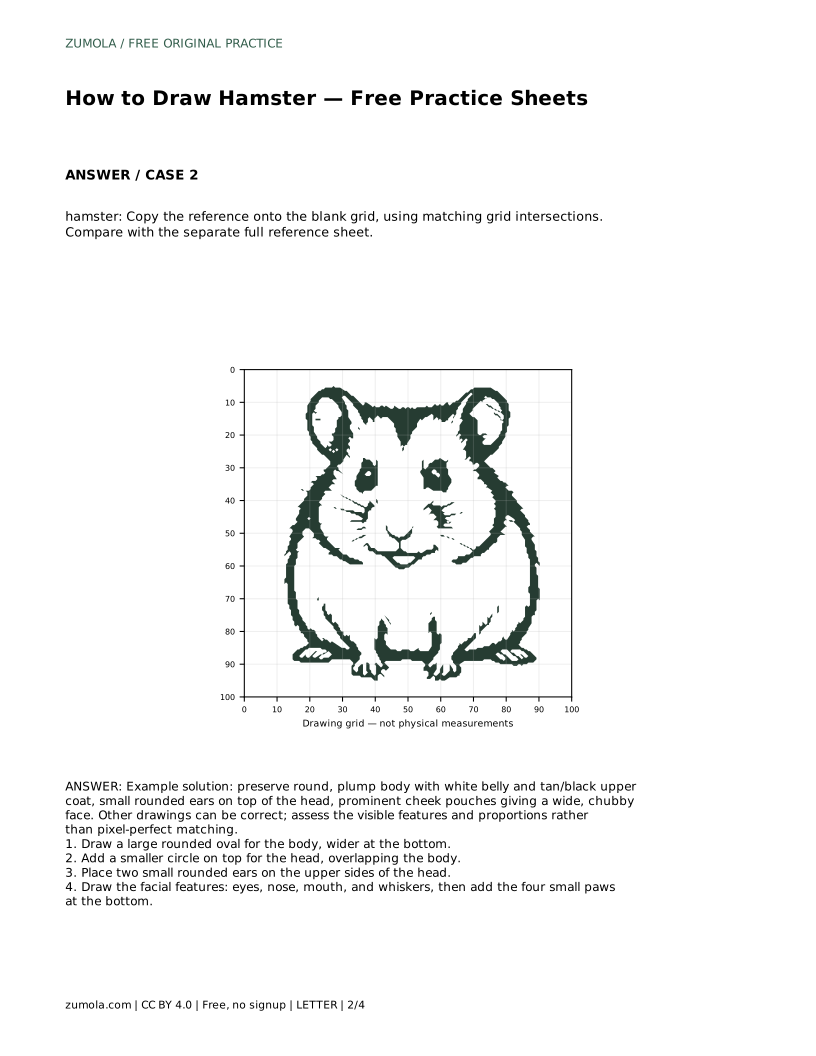
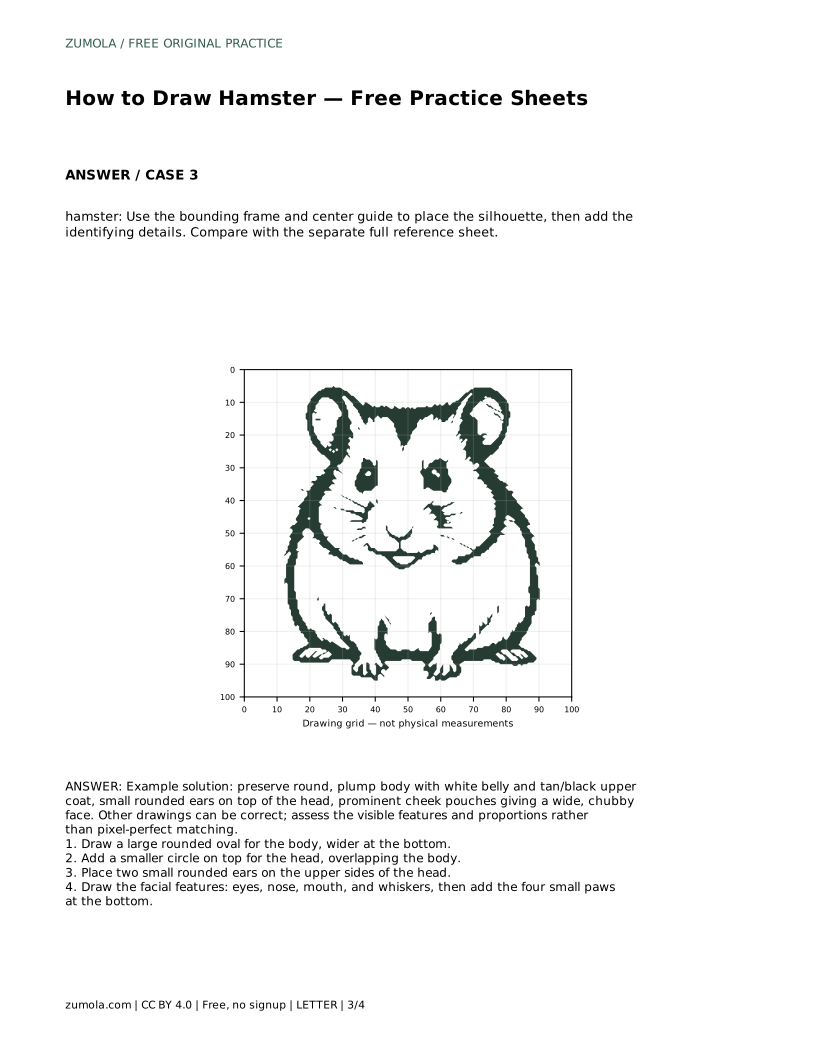
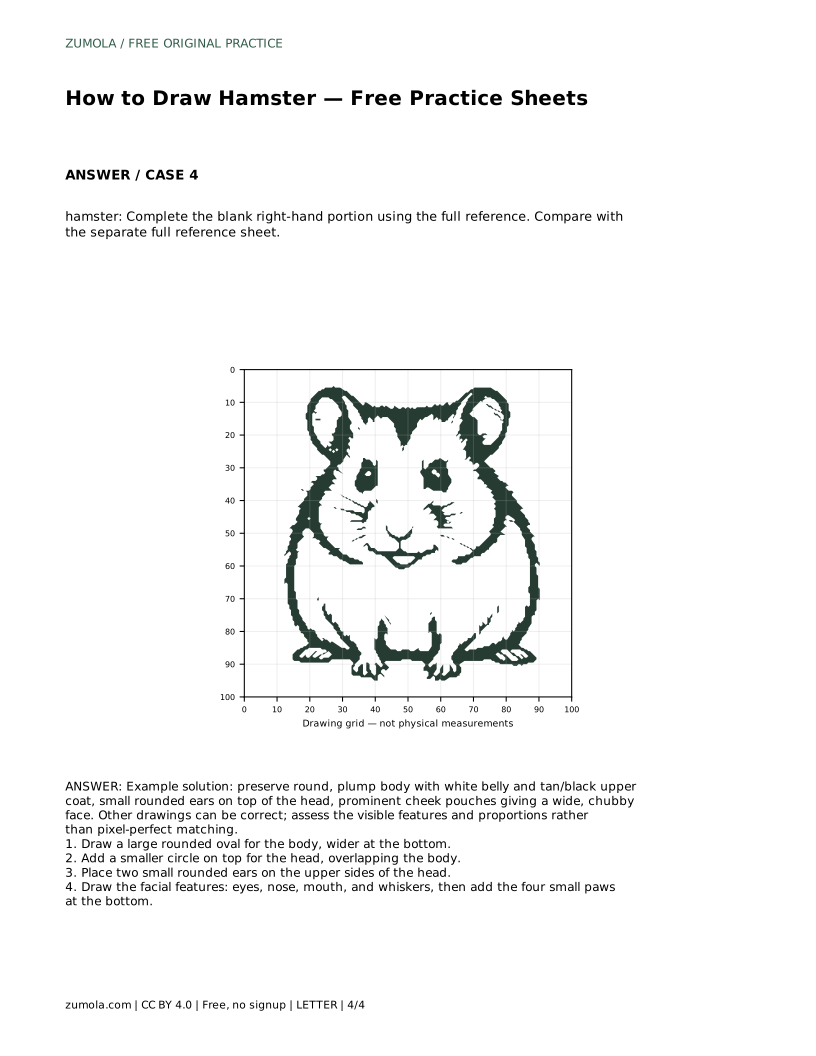
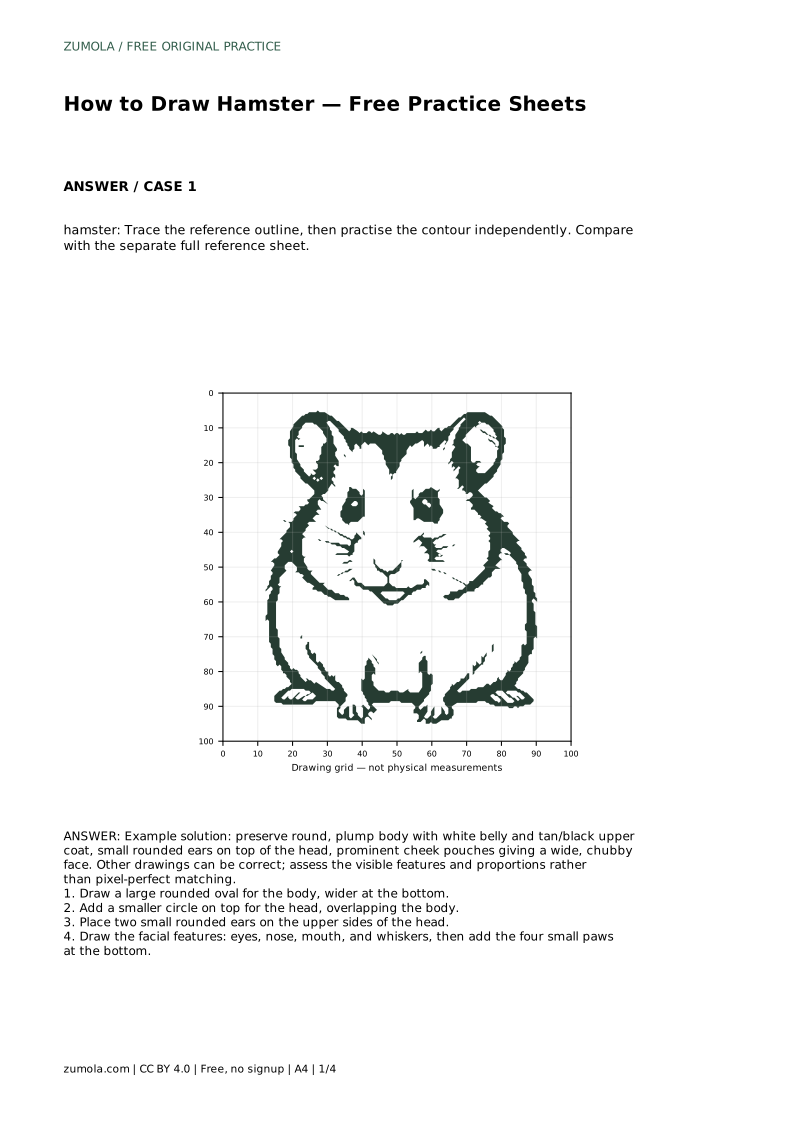
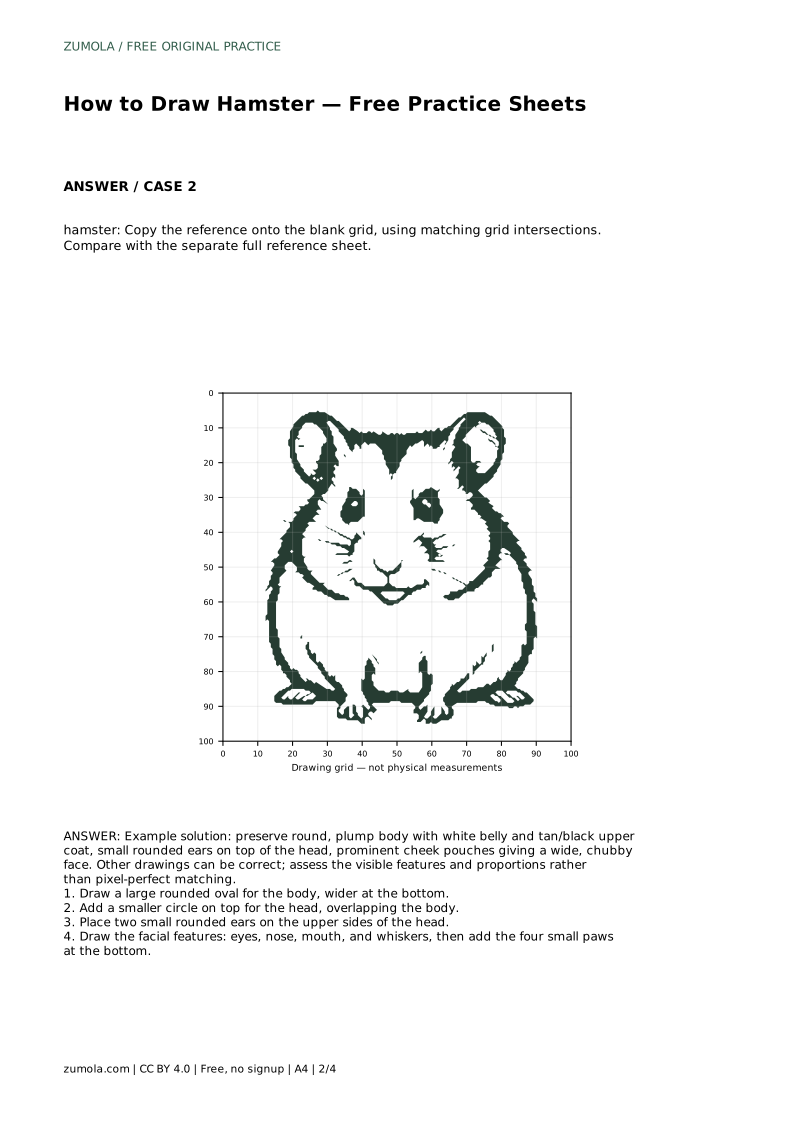
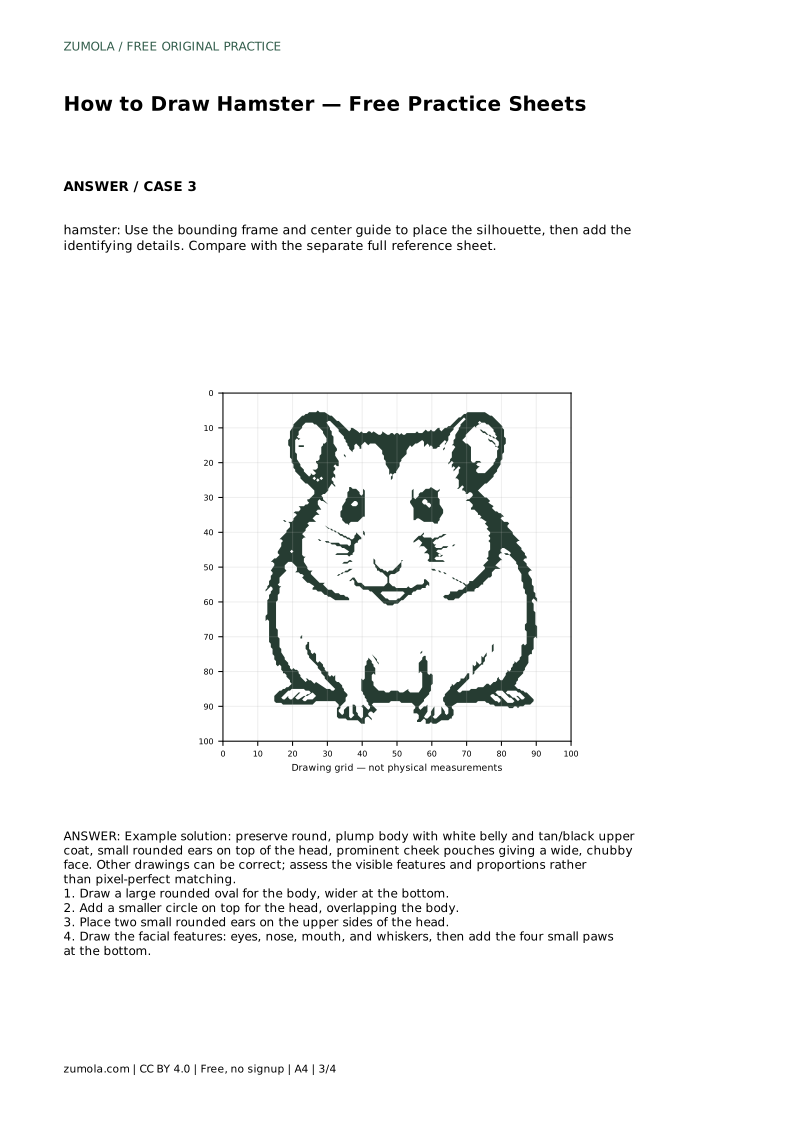
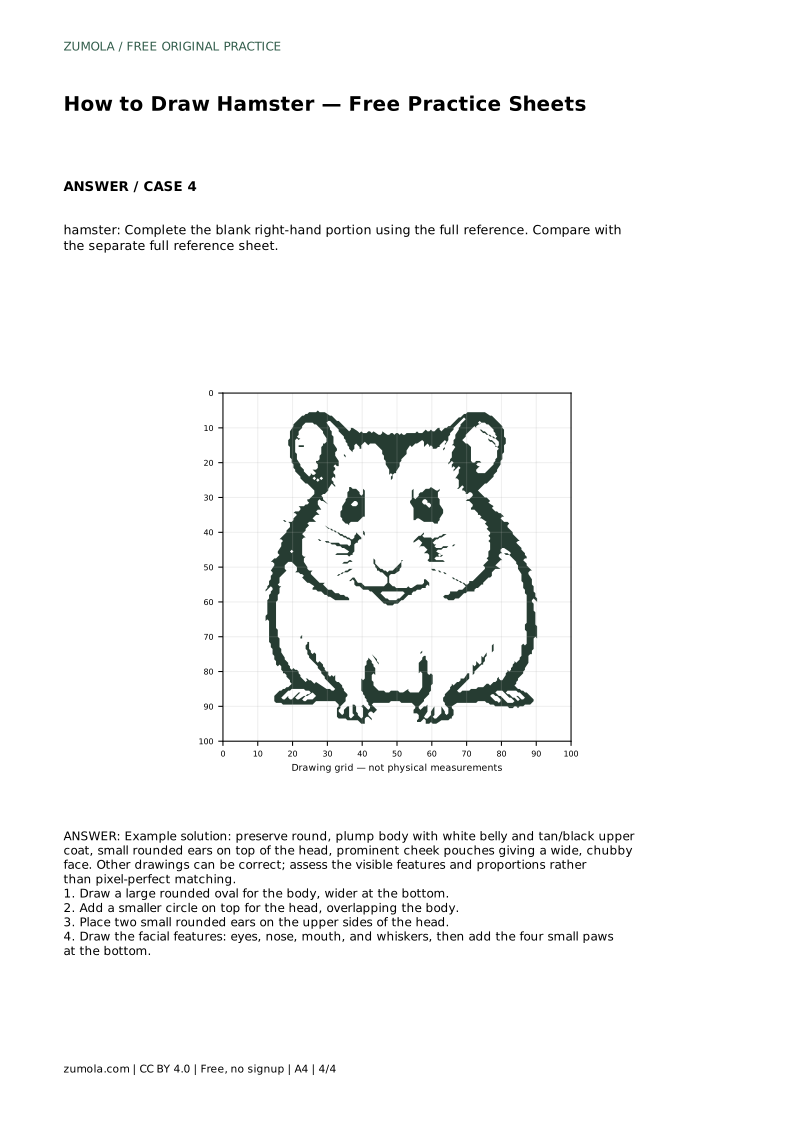
Reference diagrams
LETTER · Download PDF
A4 · Download PDF
Free original resources
Learn to draw a silly hamster by tracing a reference outline, then working independently. Practise the round body, cheek pouches, ears and paws with free sheets.
Four original cases, with reference diagrams, practice sheets and worked answers. Everything is free; no signup required.
LETTER · Download PDF
A4 · Download PDF
LETTER · Download PDF
A4 · Download PDF
LETTER · Download PDF
A4 · Download PDF
Use A4 or US Letter to match your printer. Use the stated values and conditions to solve each exercise; diagrams are not physical measuring rulers.
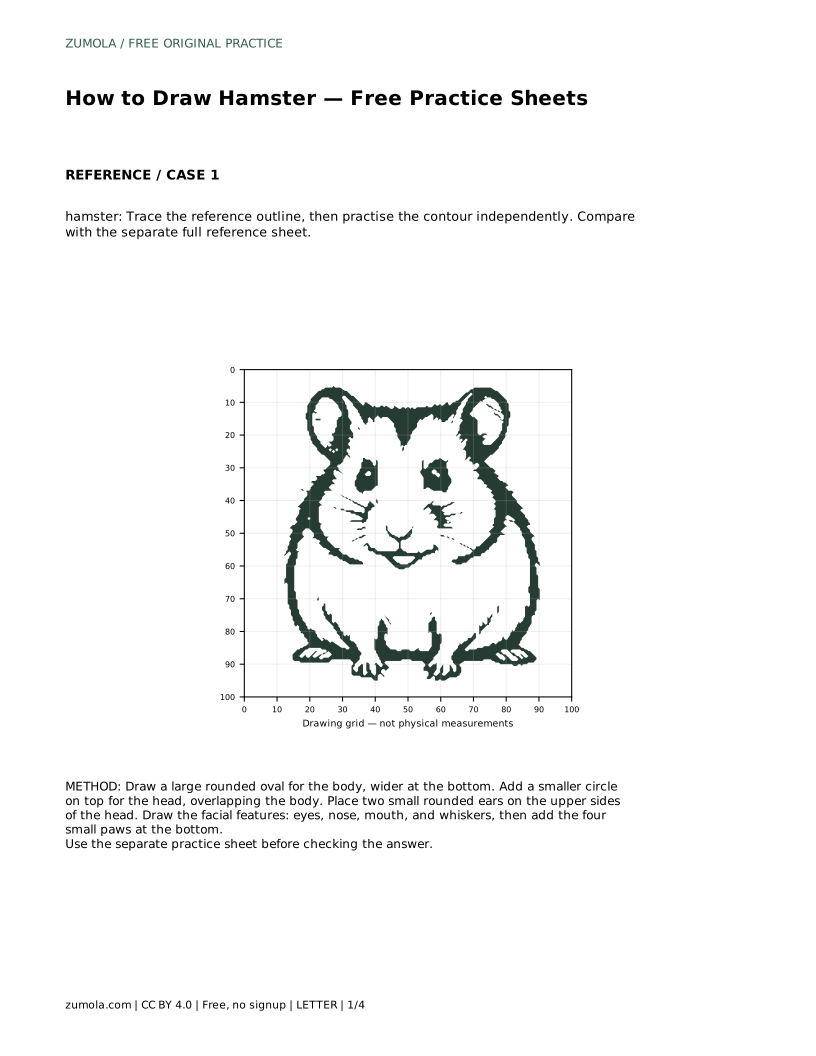
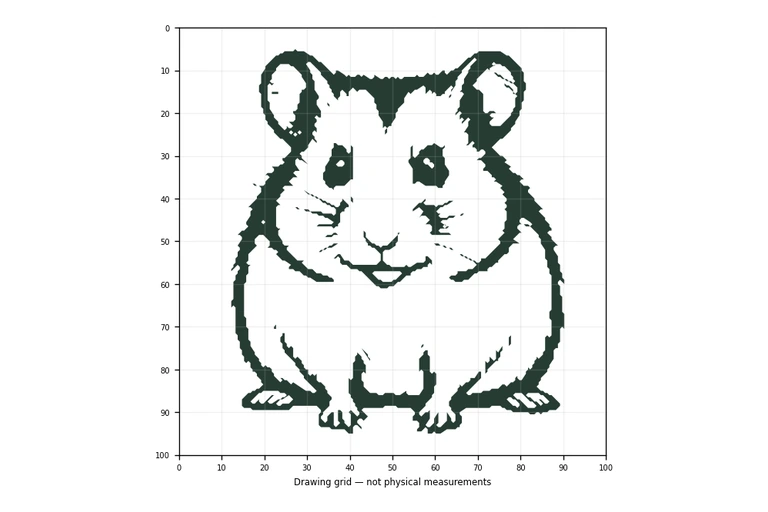
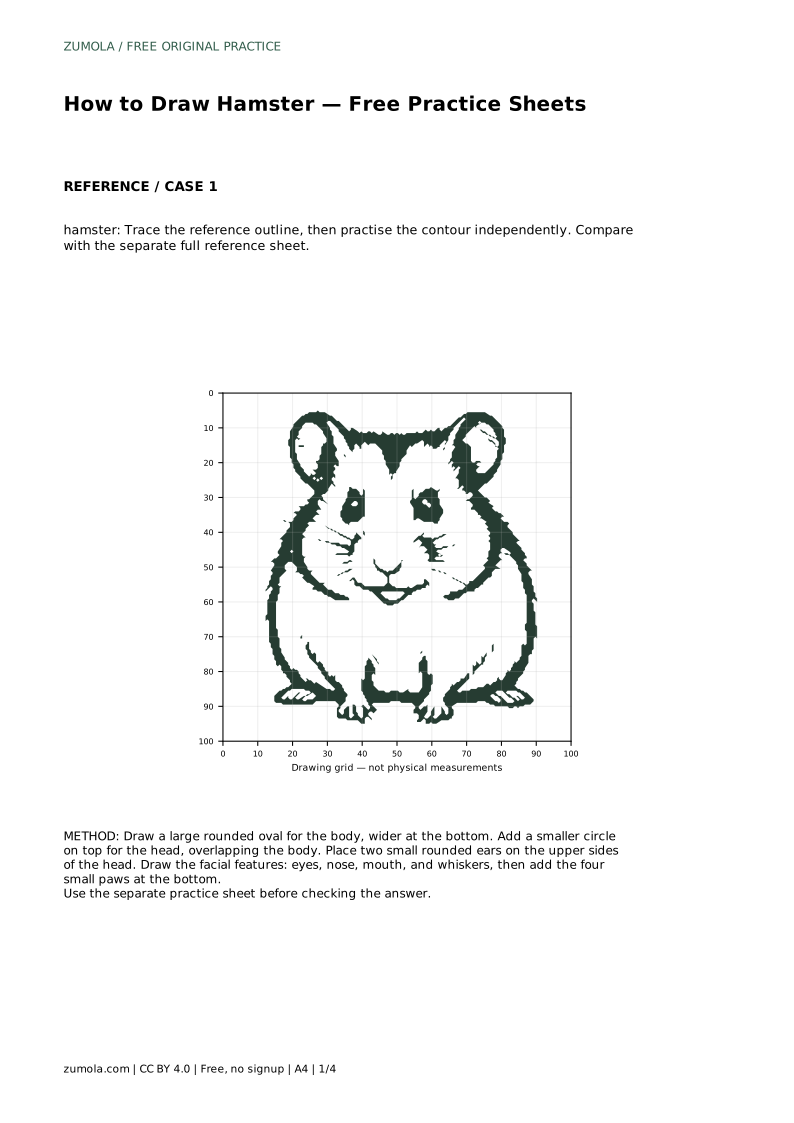
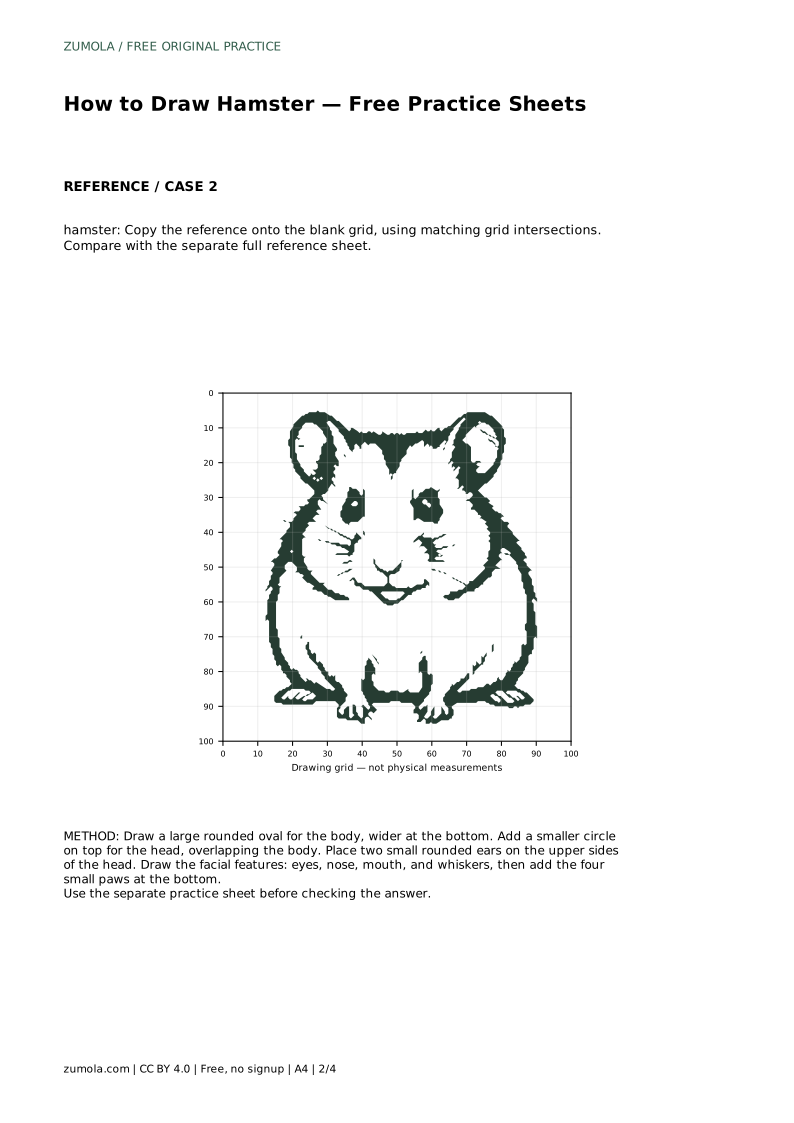
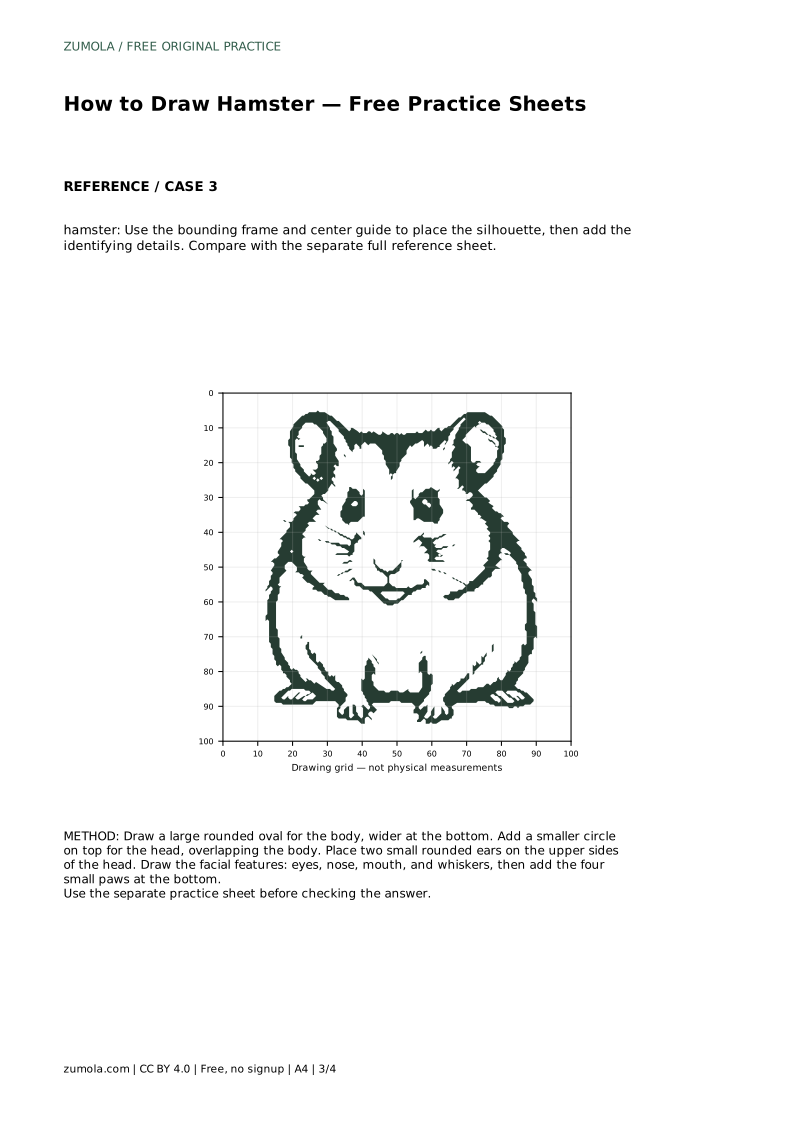
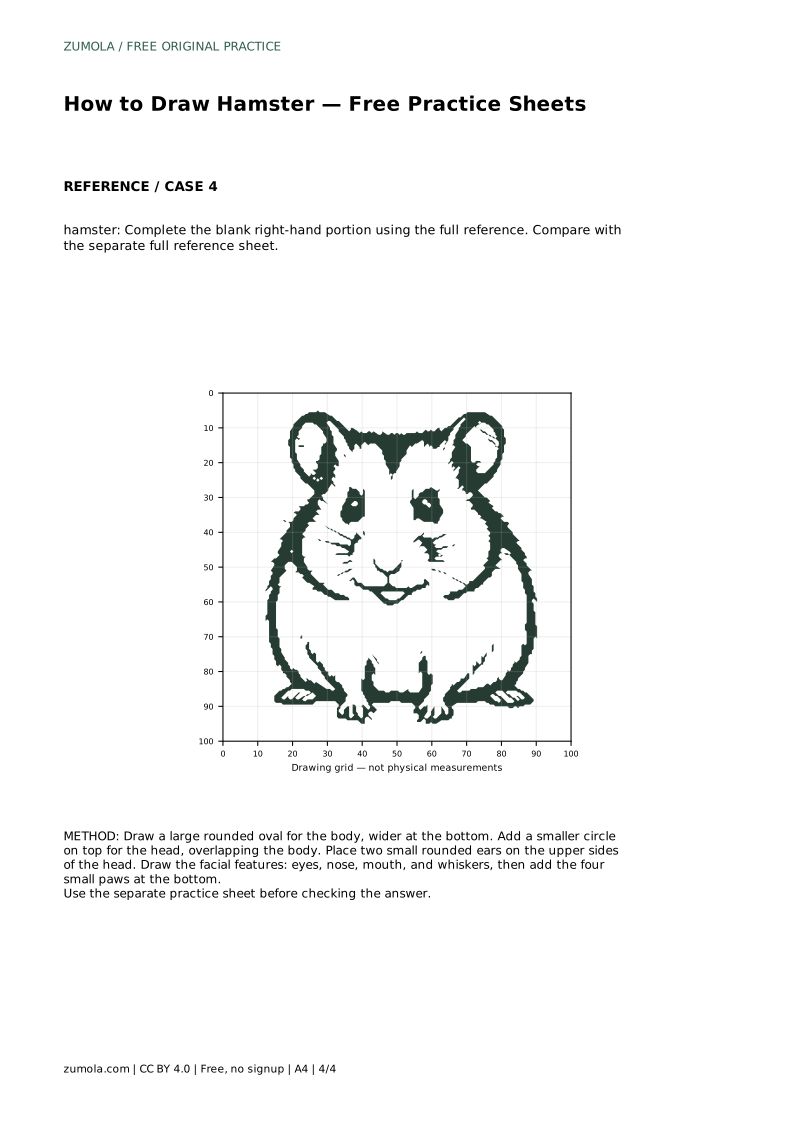
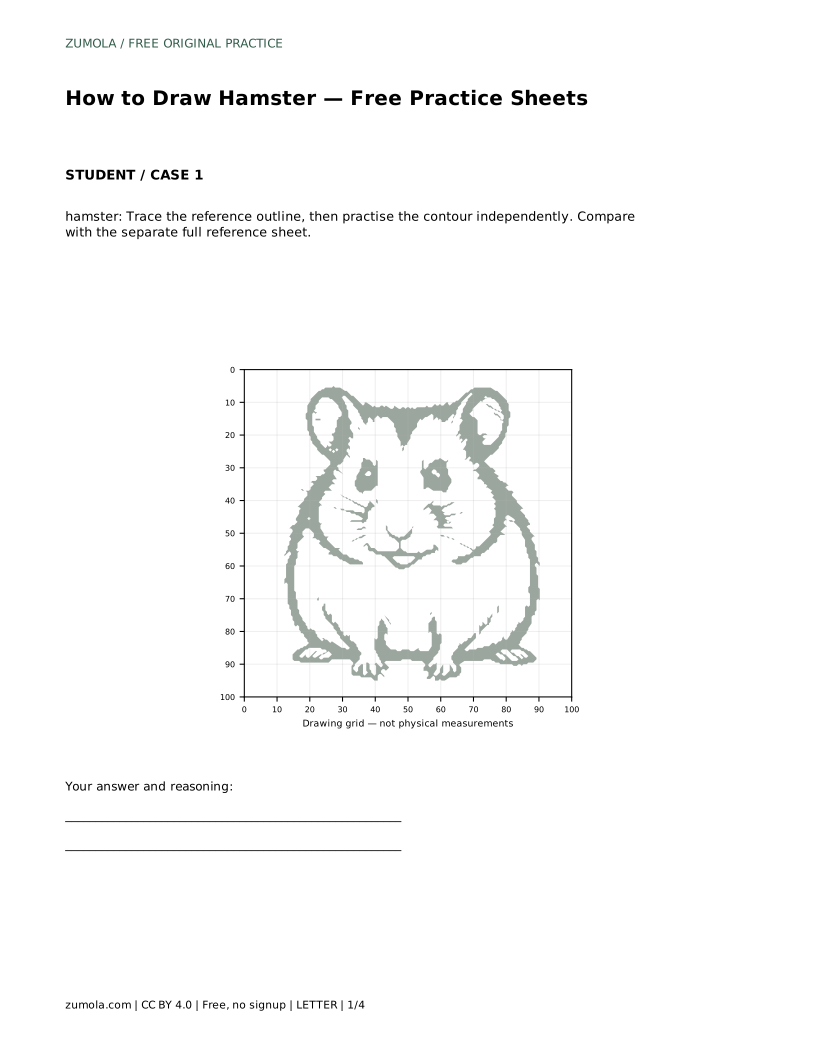
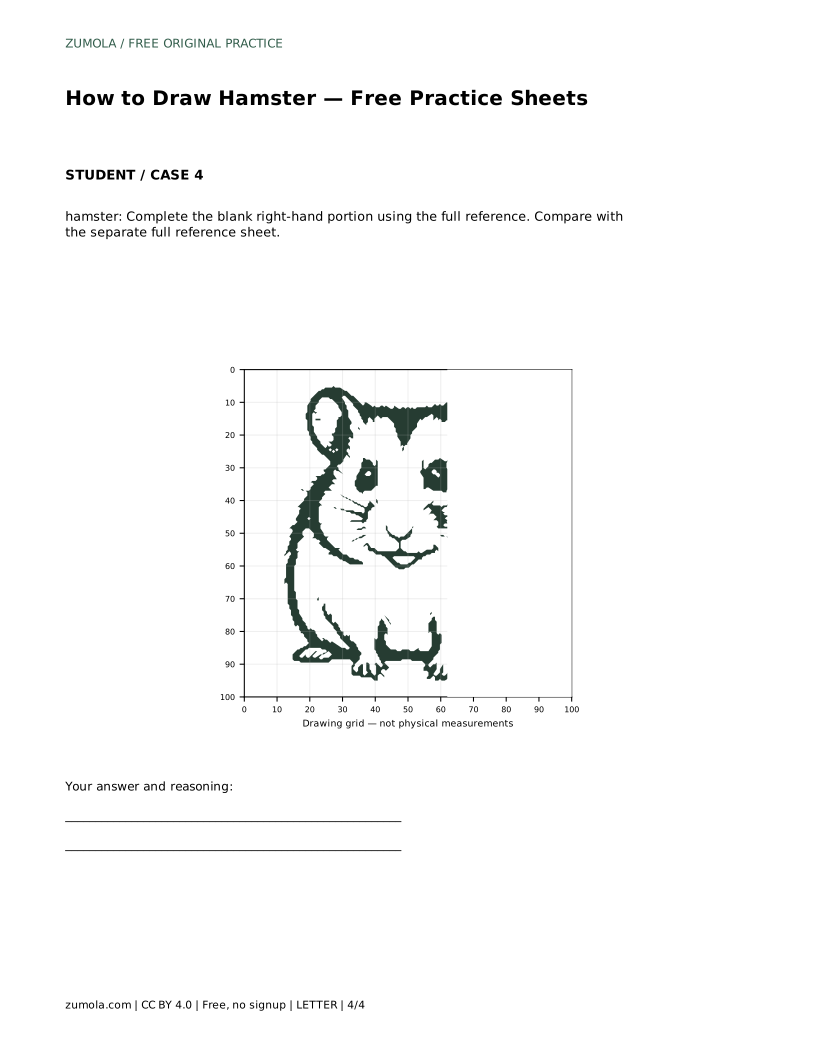
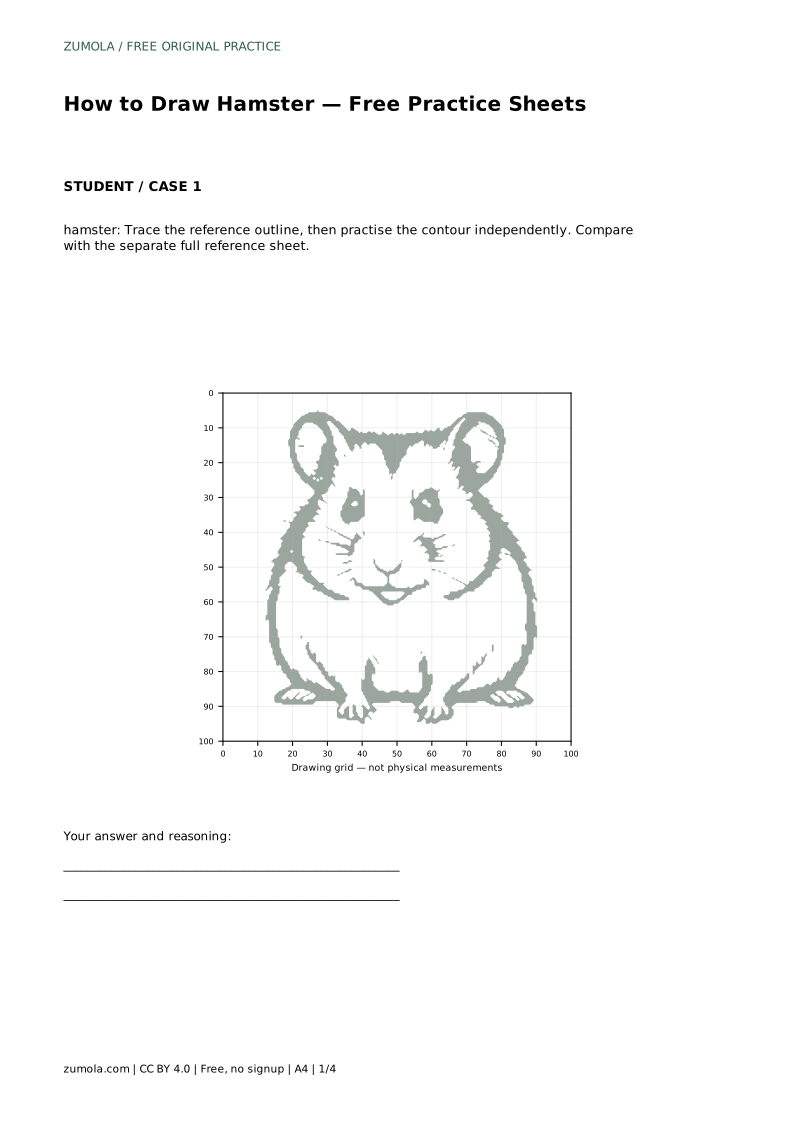
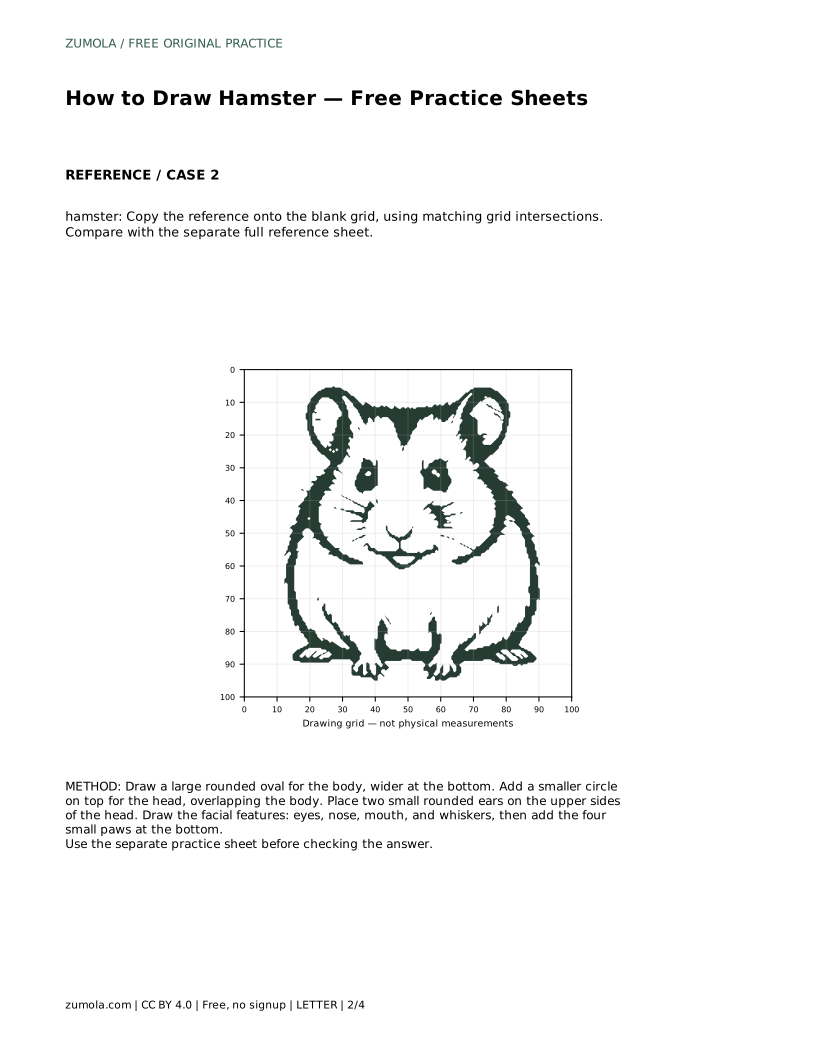
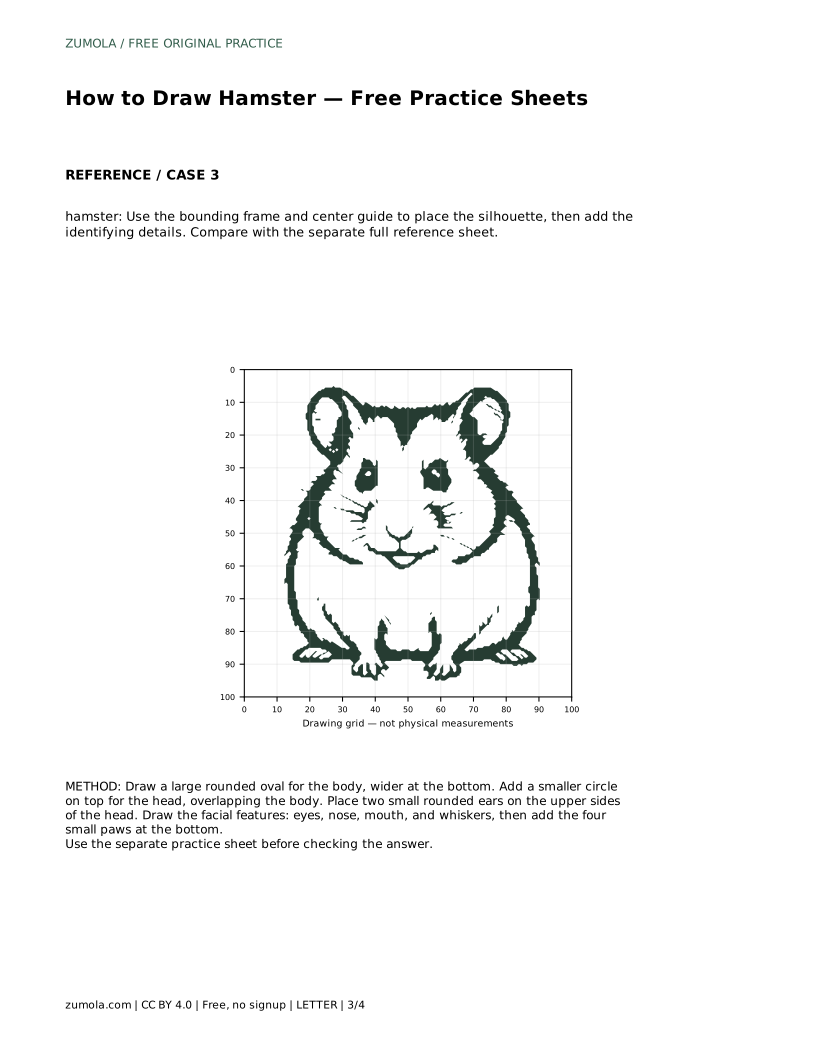
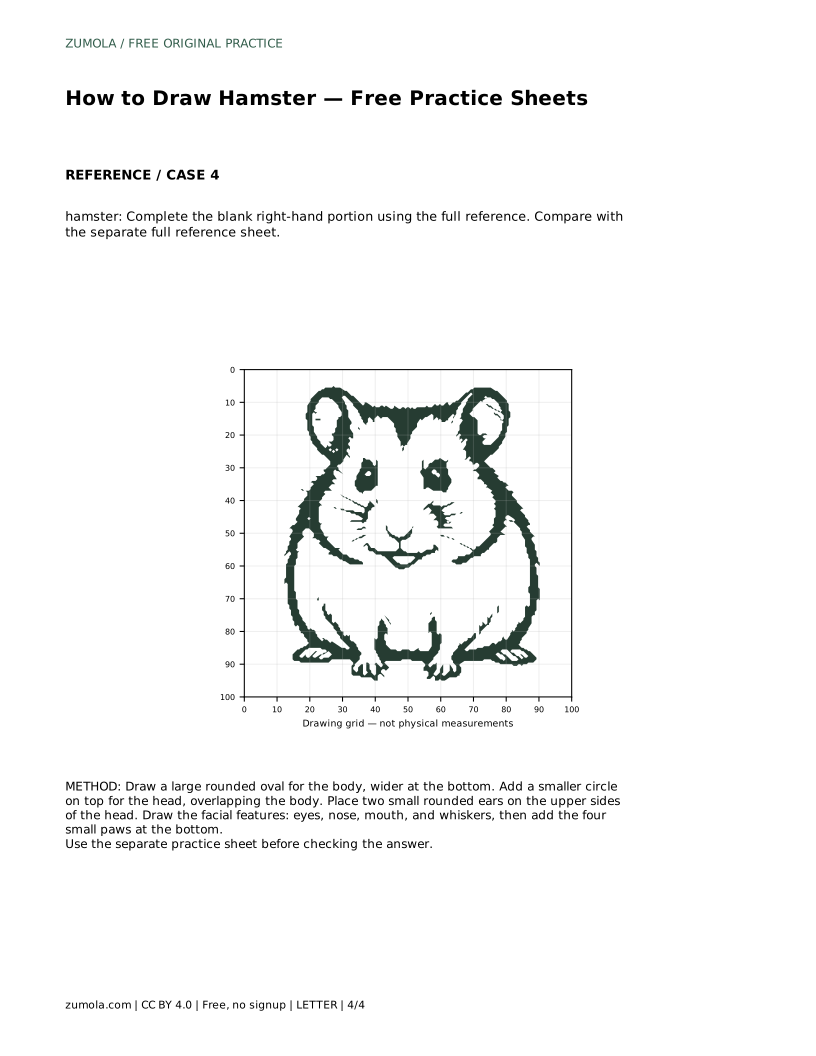
A silly hamster drawing depends on a few clear shapes: a plump, rounded body, a wide chubby face built around prominent cheek pouches, and small rounded ears sitting on top of the head. This page shows you how to trace a reference outline first, then practise the same contour independently. Compare your finished drawing with the separate full reference sheet, and judge it by visible features and proportions rather than pixel-perfect matching.
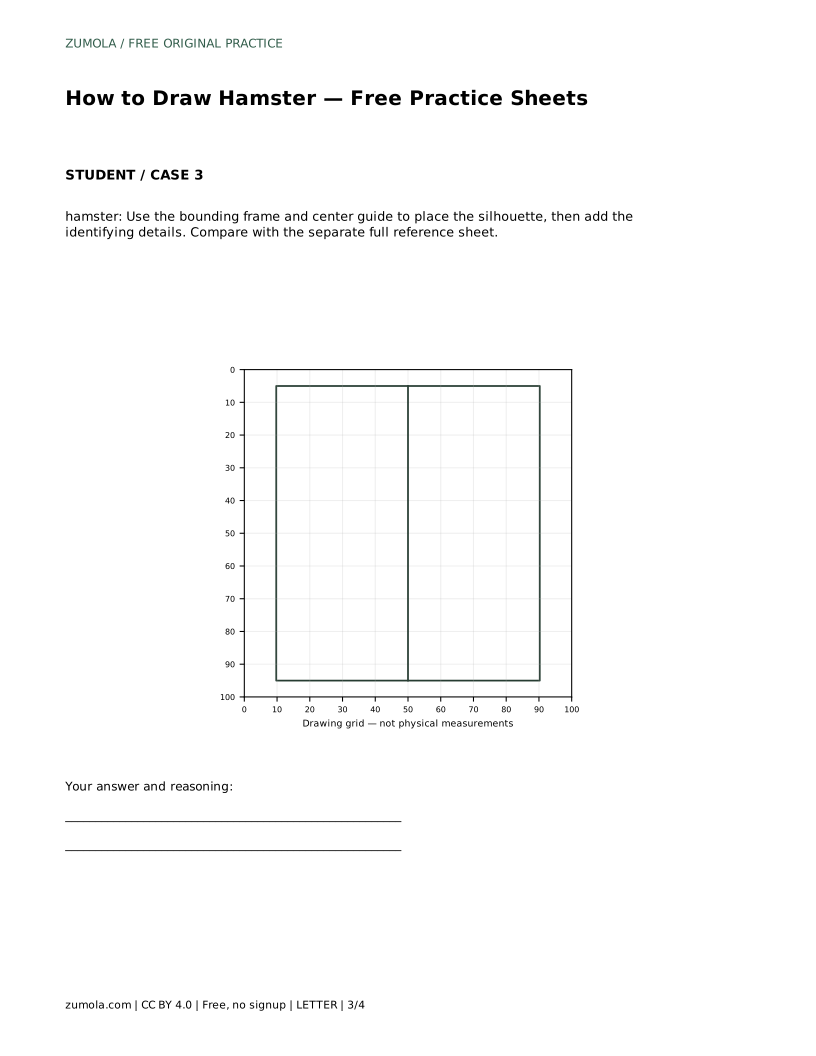
Begin by drawing a large rounded oval for the body, making it wider at the bottom so the hamster looks plump and grounded. Add a smaller circle on top for the head, overlapping the body slightly. The overlap matters: it keeps the head attached to the body rather than floating above it. Keep both shapes soft and rounded, because a silly hamster reads as chubby rather than angular.
Once the two main shapes sit together, check the balance. The head should feel wide relative to the body, since the cheek pouches will widen the face later. If the head looks narrow, adjust the circle before adding details.
Place two small rounded ears on the upper sides of the head. Keep them small and close to the top, because oversized ears change the hamster's silhouette. Next, draw the facial features: eyes, nose, mouth and whiskers. Let the cheek pouches push the face outward so it looks wide and chubby. The eyes can sit slightly apart to leave room for that width.
Finish with four small paws at the bottom of the body. Keep them simple and short. The overall goal is a round, plump body with a white belly and a tan or black upper coat, small rounded ears on top of the head, and prominent cheek pouches giving a wide, chubby face.
Trace the reference outline first to learn where each shape sits. Then practise the contour independently on a blank sheet, without looking at the outline while you draw. When you finish, compare your drawing with the separate full reference sheet.
Other drawings can be correct. Assess the visible features and proportions rather than pixel-perfect matching. Ask whether the body is round and plump, whether the ears sit on top of the head, and whether the cheek pouches make the face look wide.
hamster: Trace the reference outline, then practise the contour independently. Compare with the separate full reference sheet.
Example solution: preserve round, plump body with white belly and tan/black upper coat, small rounded ears on top of the head, prominent cheek pouches giving a wide, chubby face. Other drawings can be correct; assess the visible features and proportions rather than pixel-perfect matching. Draw a large rounded oval for the body, wider at the bottom. Add a smaller circle on top for the head, overlapping the body. Place two small rounded ears on the upper sides of the head. Draw the facial features: eyes, nose, mouth, and whiskers, then add the four small paws at the bottom.
No. Other drawings can be correct. Judge your work by the visible features and proportions, such as the round body, small ears on top of the head and wide cheek pouches.
Start with the body oval, add the overlapping head circle, place the ears, then draw the facial features and finish with the four small paws.
The body oval is probably too narrow or the cheek pouches are missing. Widen the lower body and push the face outward around the cheeks.
All drawing practice · Free coordinate paper
Original resources · CC BY 4.0 · Free for personal and classroom use with attribution.