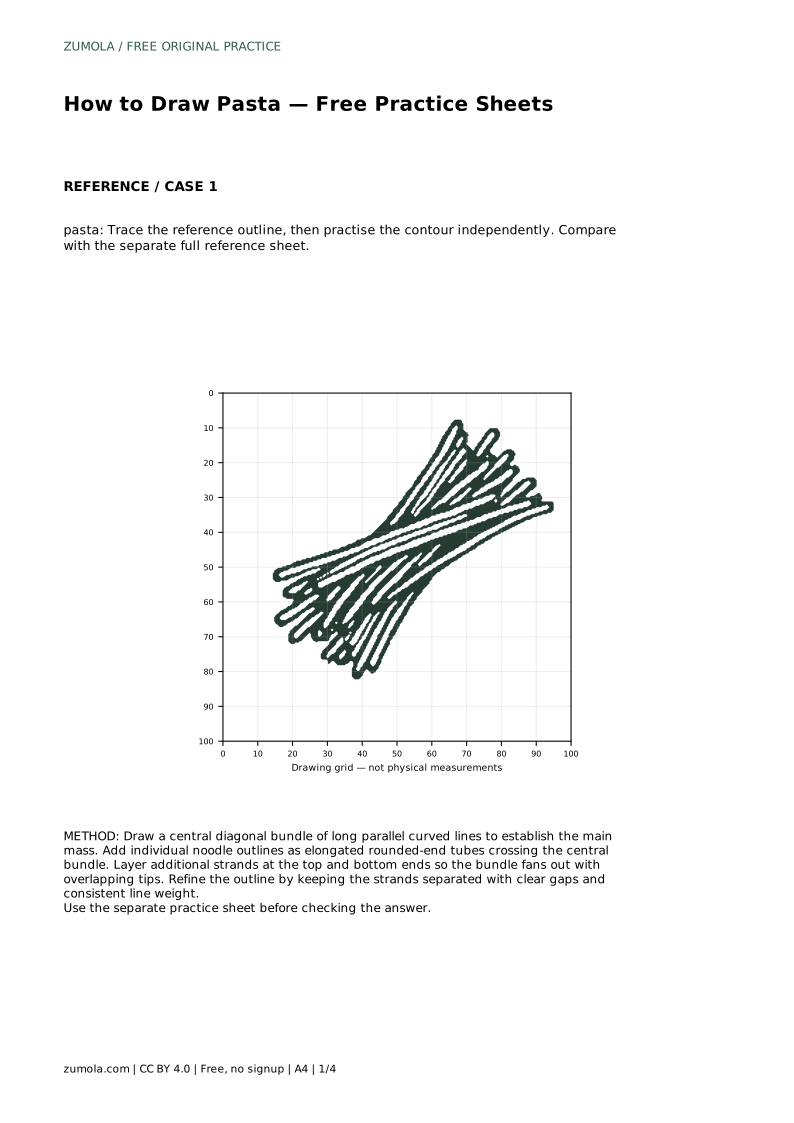
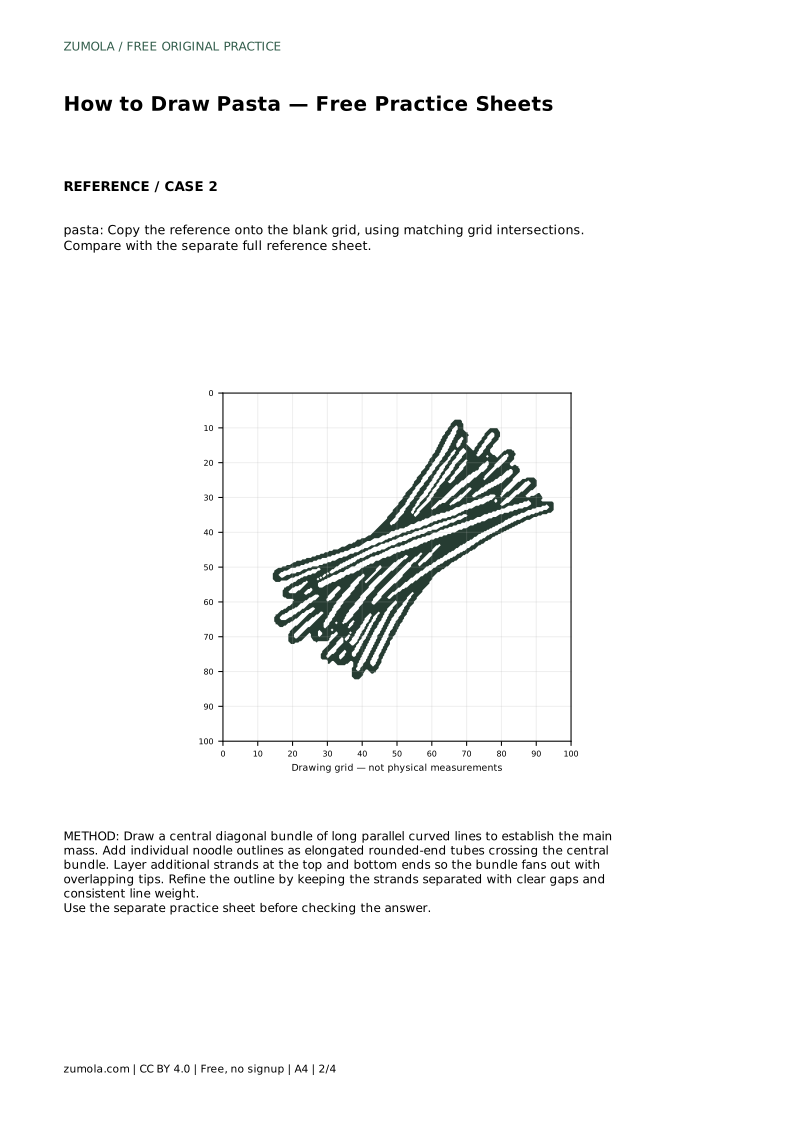
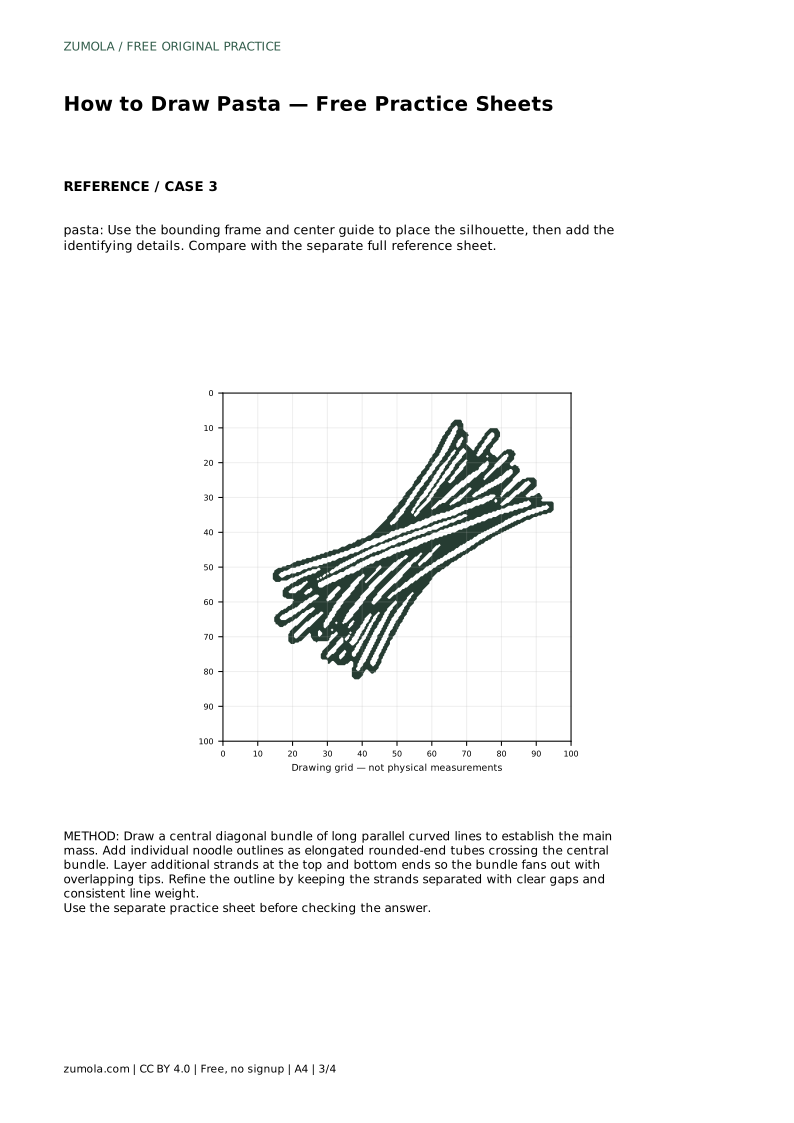
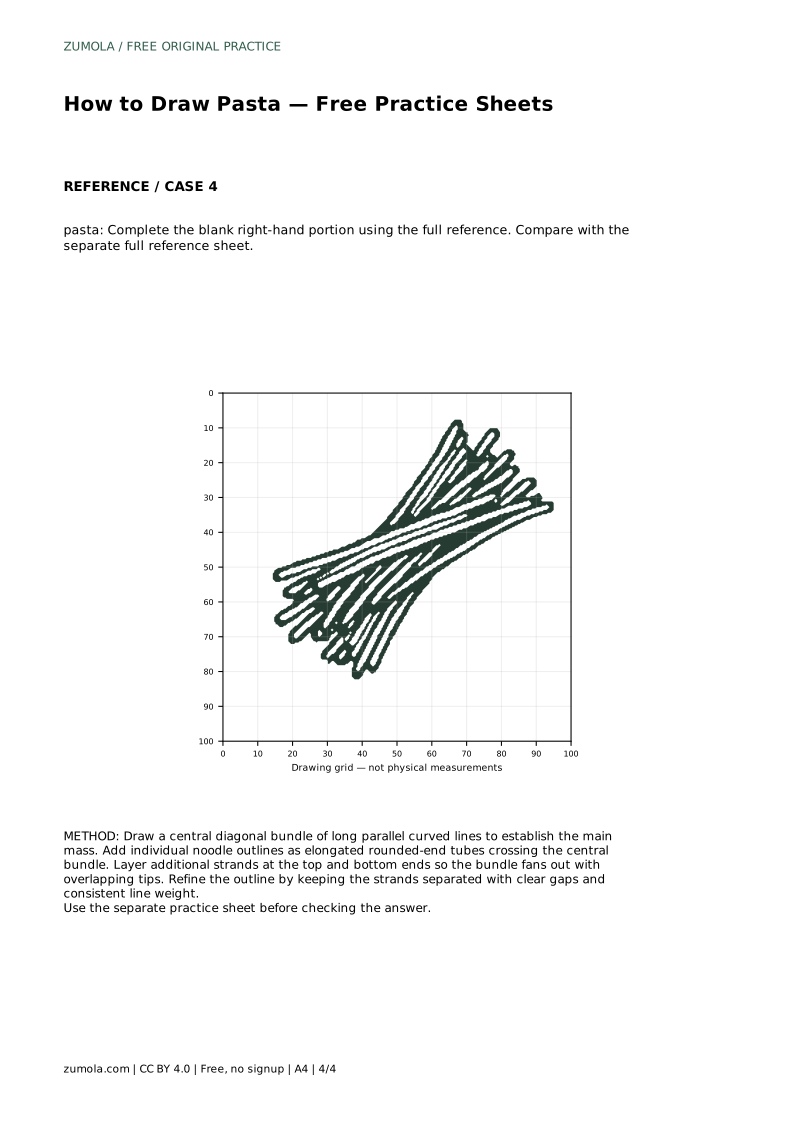
Reference diagrams
LETTER · Download PDF
A4 · Download PDF
Free original resources
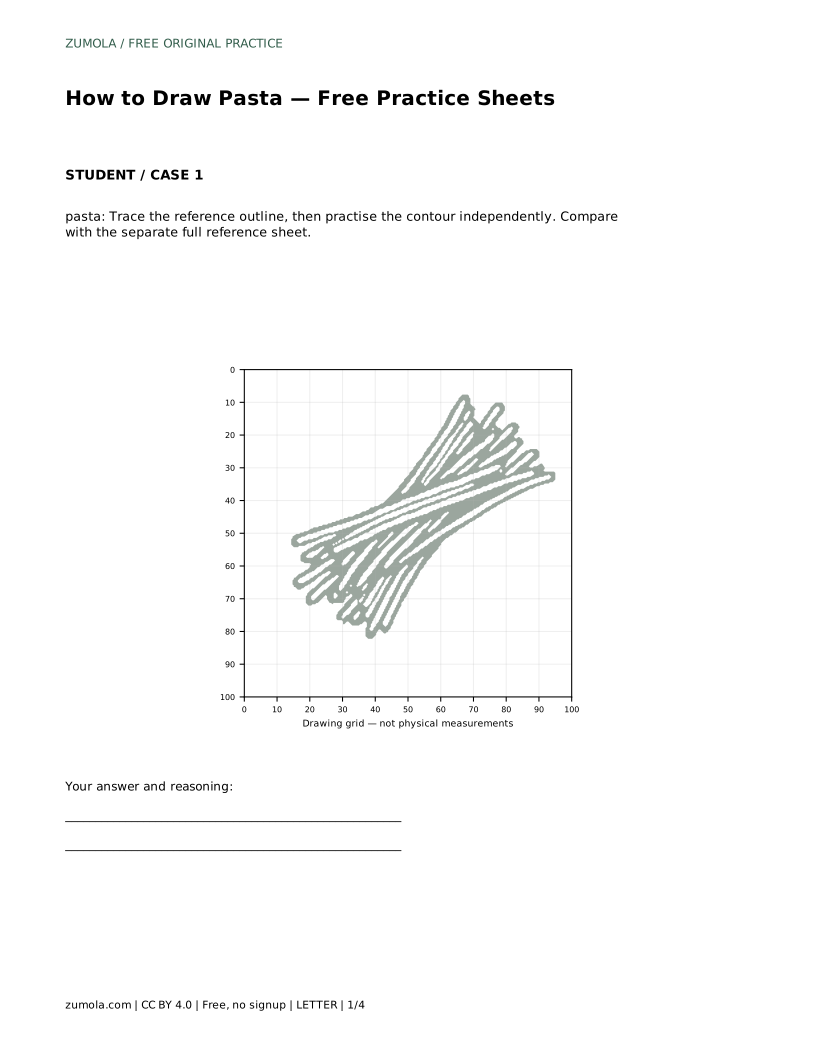
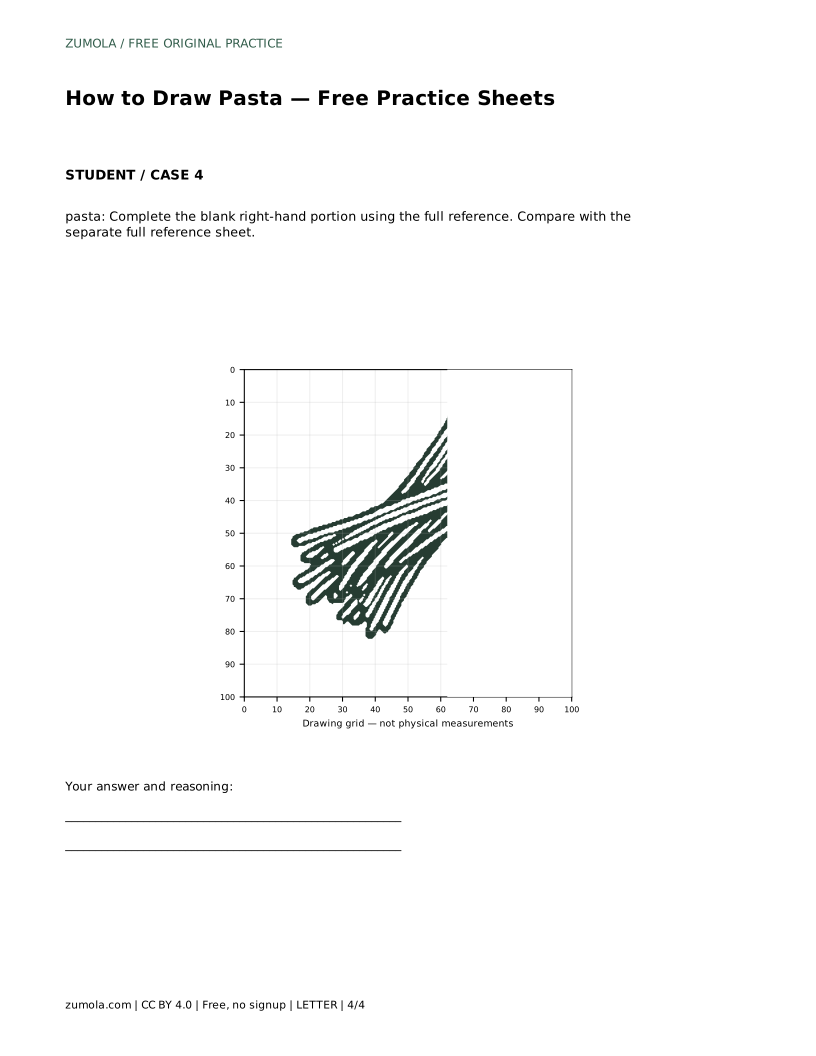
Learn to draw pasta as a diagonal bundle of long, thin, curved strands with rounded ends, overlapping tips, and clear gaps between noodles.
Four original cases, with reference diagrams, practice sheets and worked answers. Everything is free; no signup required.
LETTER · Download PDF
A4 · Download PDF
LETTER · Download PDF
A4 · Download PDF
LETTER · Download PDF
A4 · Download PDF
Use A4 or US Letter to match your printer. Use the stated values and conditions to solve each exercise; diagrams are not physical measuring rulers.
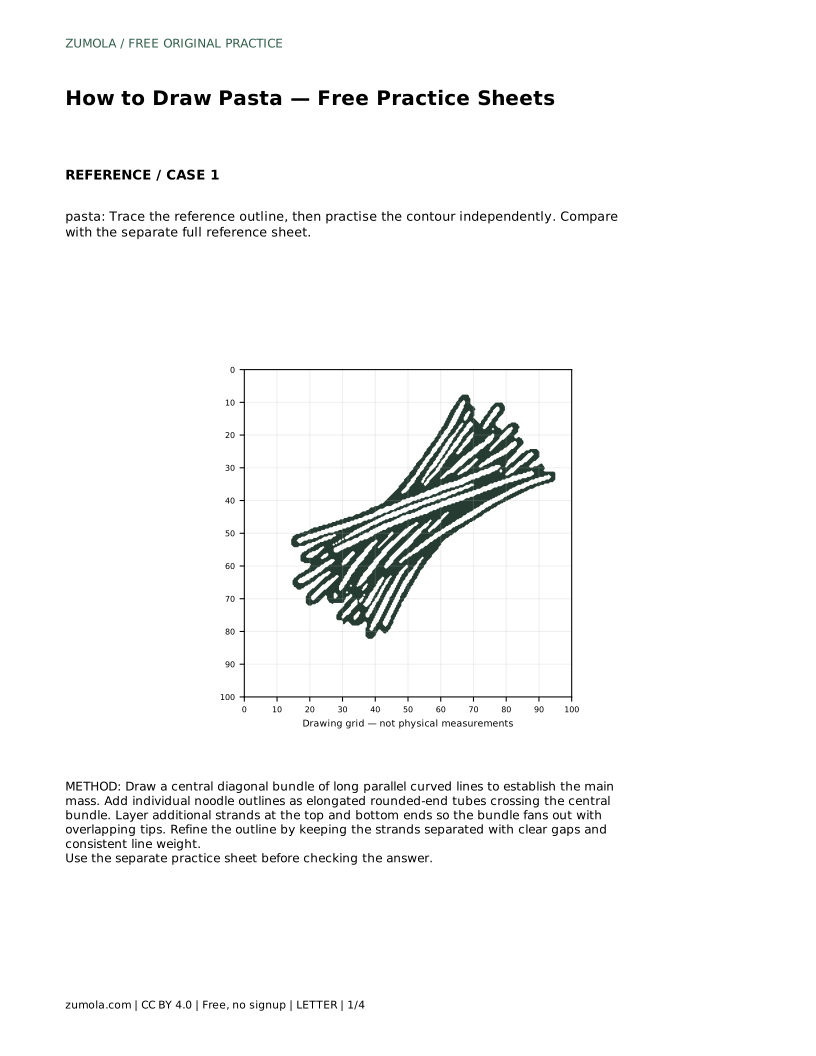
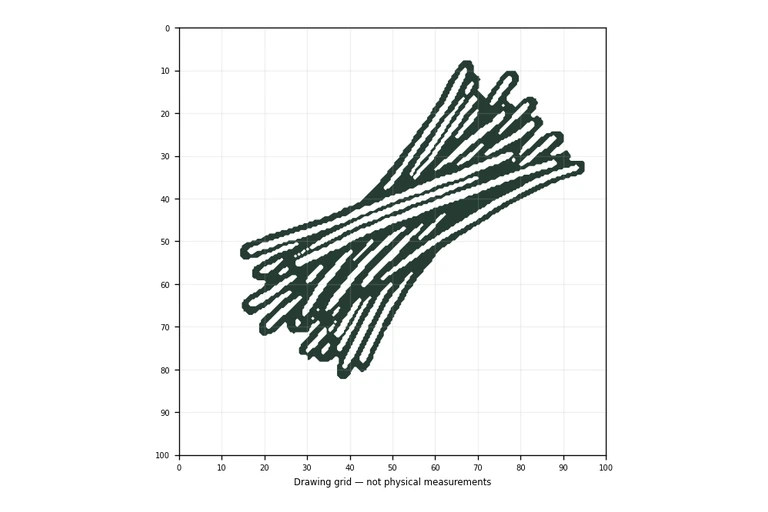
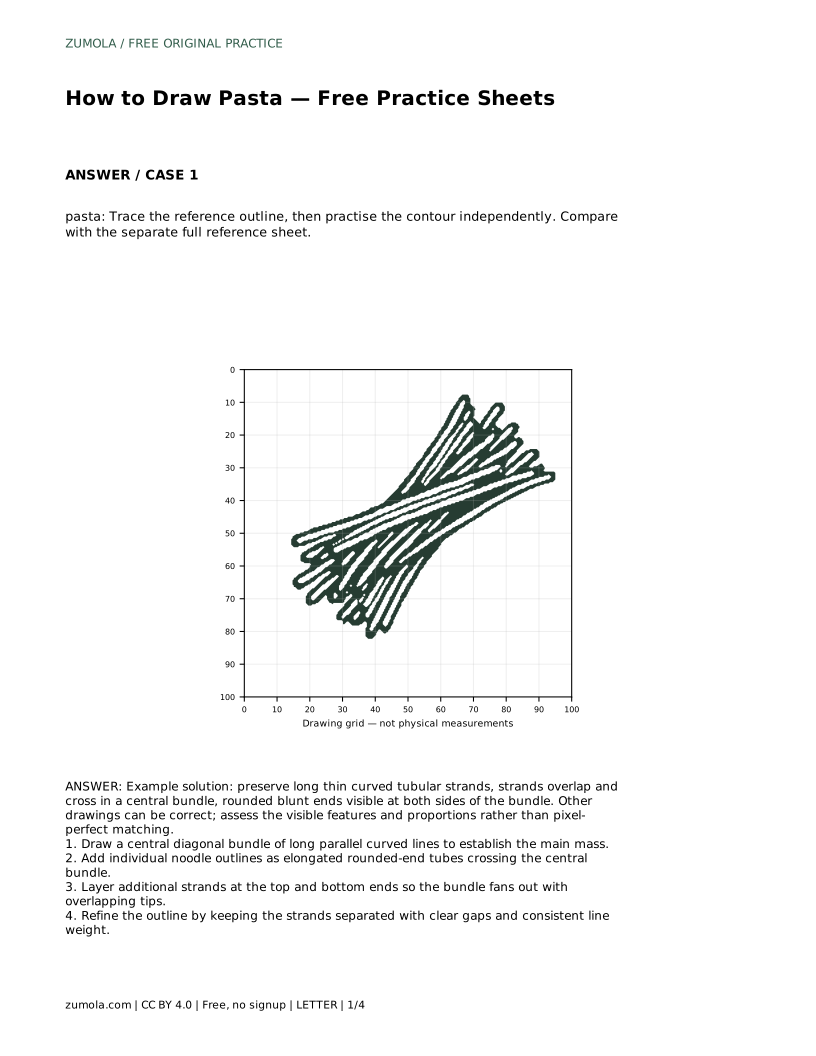
Drawing pasta is mostly a problem of arranging long, thin shapes so they read as a single bundle rather than a tangle. The key features are curved tubular strands, a central mass that runs diagonally, overlapping tips at both ends, and rounded blunt ends. This page explains how to build those features step by step, then how to judge your drawing by visible qualities rather than exact matching.
Begin by deciding where the bundle sits on the page. A diagonal direction usually reads clearly because the strands run across the frame instead of sitting flat. Draw a few long, gently parallel curved lines to establish the central mass. These lines are not the final noodles; they mark the direction and width of the bundle so later strands have somewhere to belong.
Keep the curves smooth and shallow. Pasta strands bend rather than zigzag, so a steady arc looks more convincing than a series of sharp turns. Leave space above and below the central lines for the tips that will fan out later.
Once the mass is placed, draw individual noodles as elongated tubes with rounded ends. Each strand should have two roughly parallel sides and a blunt, curved end rather than a sharp point. Vary the length slightly so the bundle does not look mechanical, but keep the strands thin and long to preserve the pasta character.
Where strands cross, show one line passing over another. A small gap or a clean break in the lower line makes the overlap readable. Avoid letting every strand merge into one outline; the drawing should still show separate noodles within the group.
At the top and bottom of the bundle, layer additional strands so the tips spread outward. These overlapping ends give the drawing its sense of volume. Place a few tips in front of the main mass and a few behind it, and keep the rounded ends visible on both sides of the bundle.
Refine the outline last. Check that the strands remain separated by clear gaps and that the curves stay smooth. If two noodles sit too close, widen the gap slightly rather than adding detail. The goal is a readable bundle, not a dense knot.
Pasta drawings have many valid outcomes, so compare your work with the reference by checking features rather than matching every line. Look for long thin curved strands, a central overlapping bundle, rounded blunt ends, and visible tips at both sides. Proportions matter more than pixel-perfect placement.
If a feature is missing, adjust that feature directly. A drawing with clear strands and readable overlaps can be correct even when the exact curves differ from the reference.
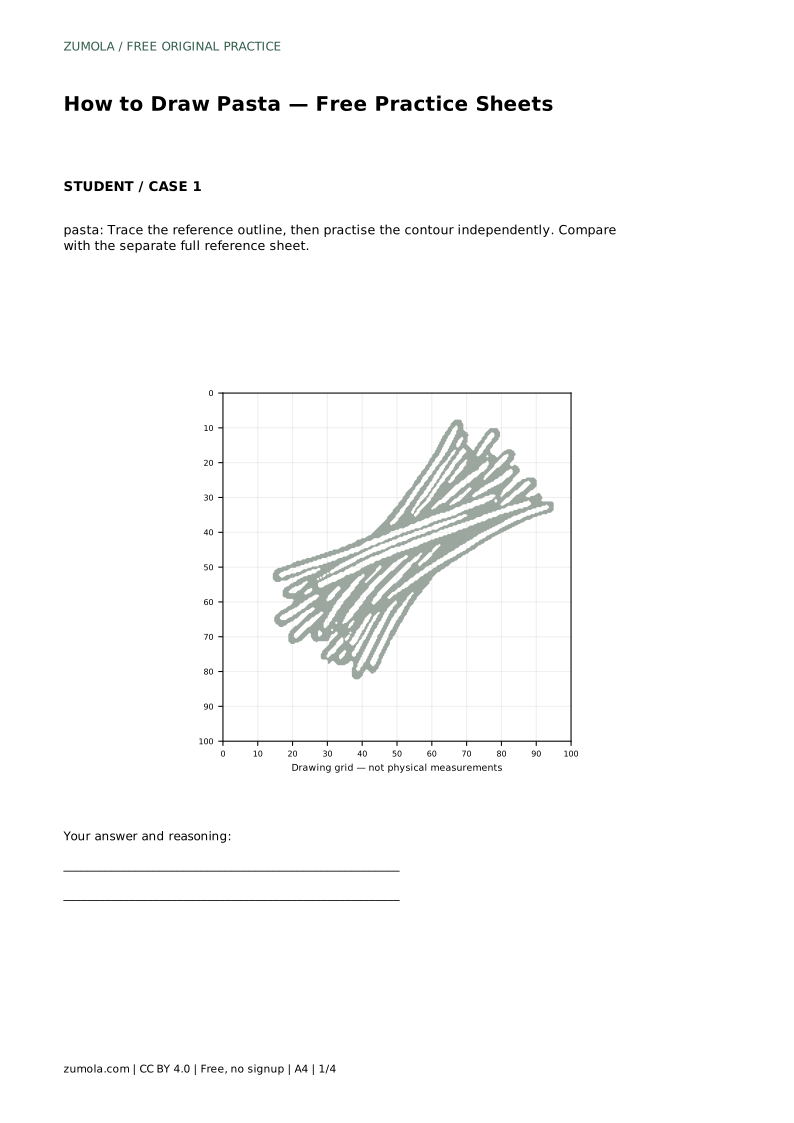
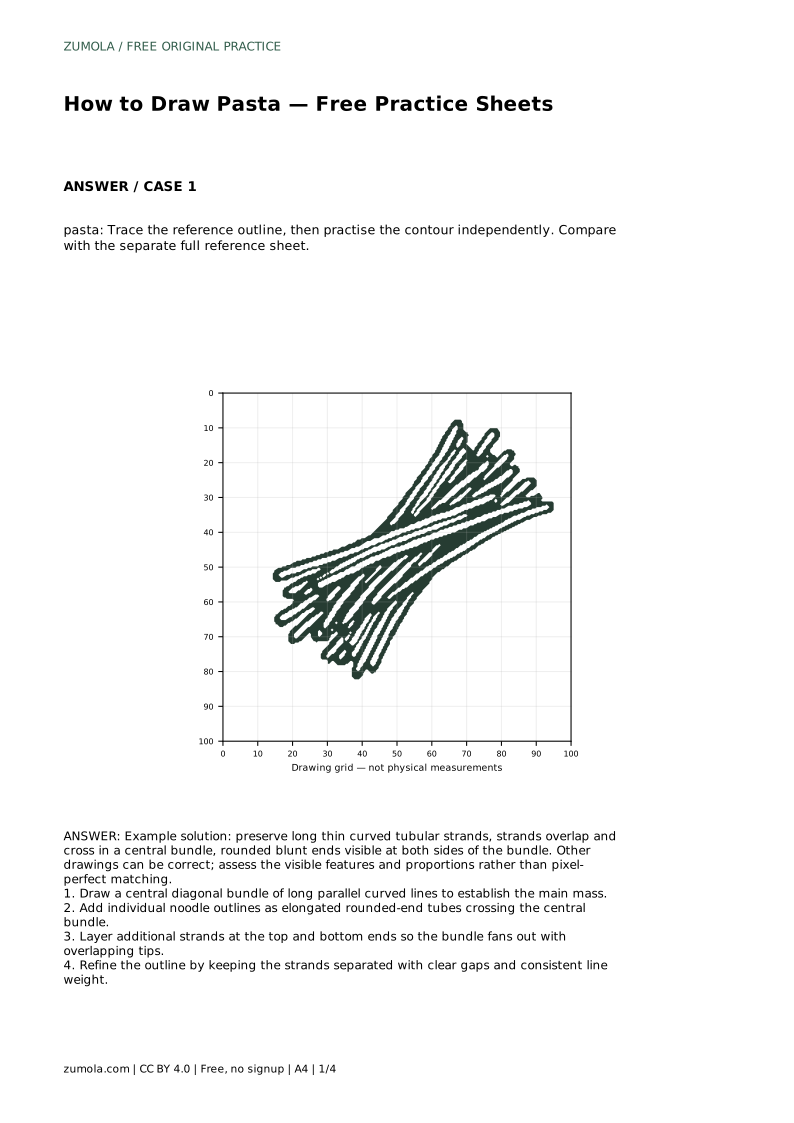
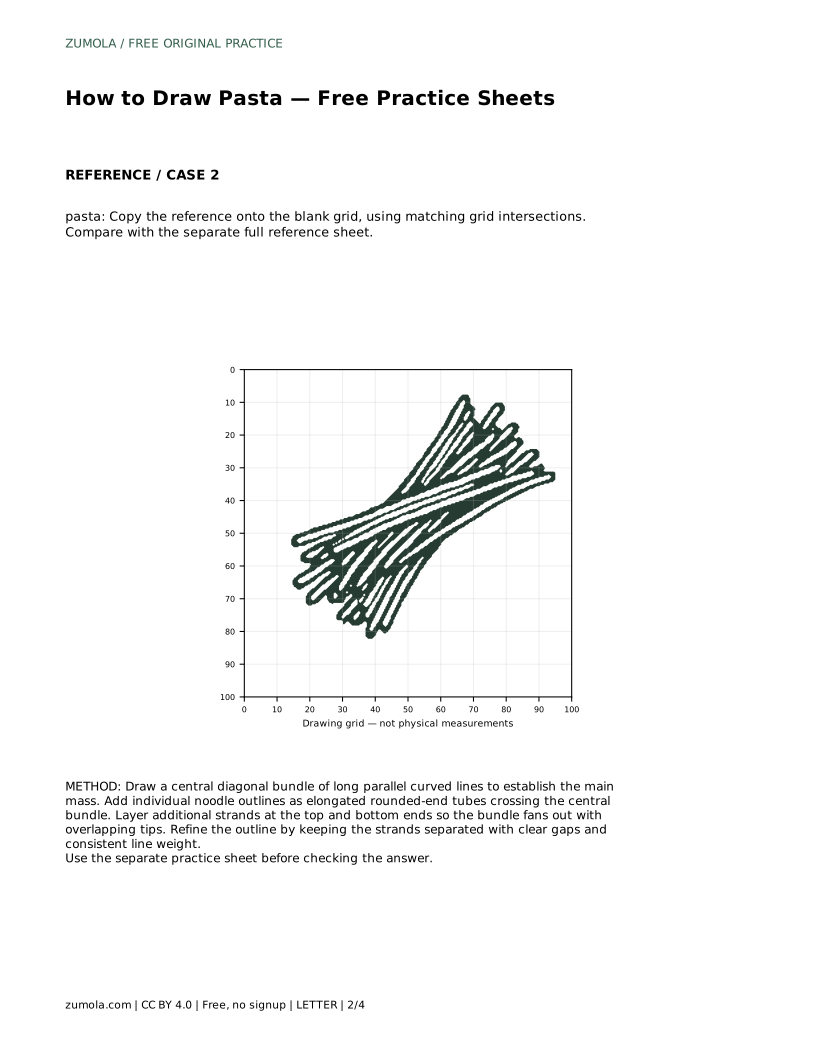
pasta: Trace the reference outline, then practise the contour independently. Compare with the separate full reference sheet.
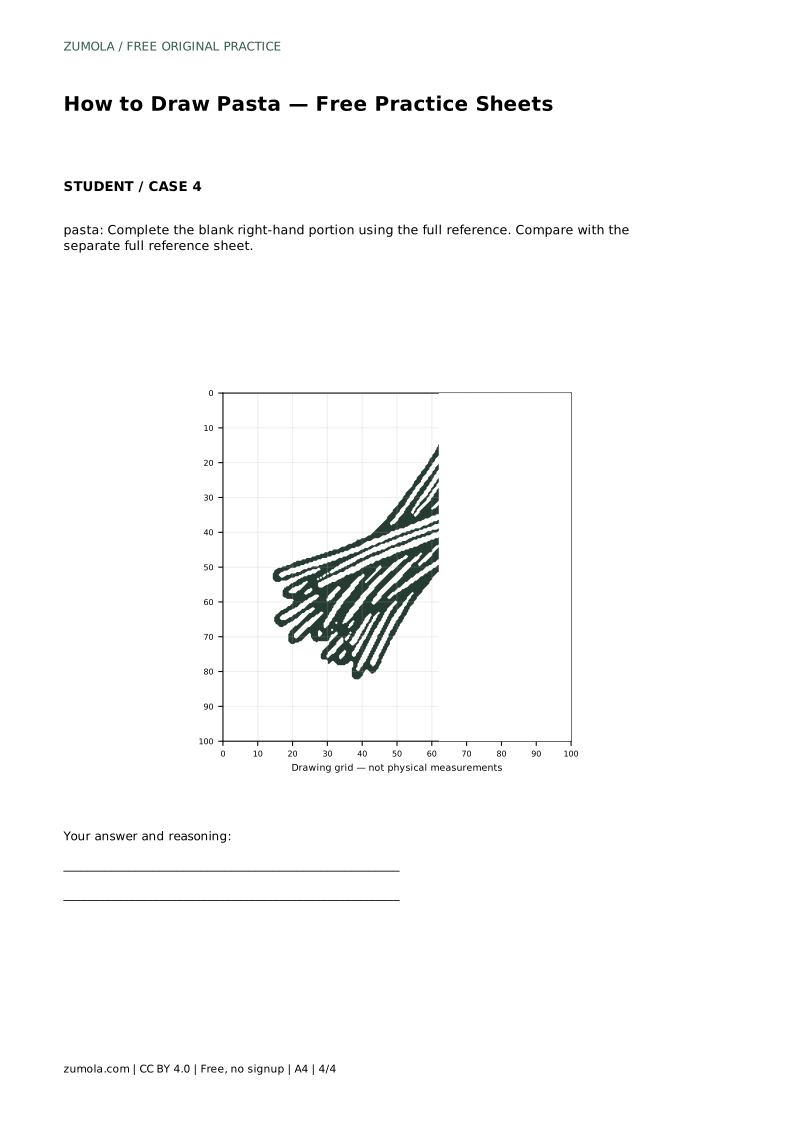
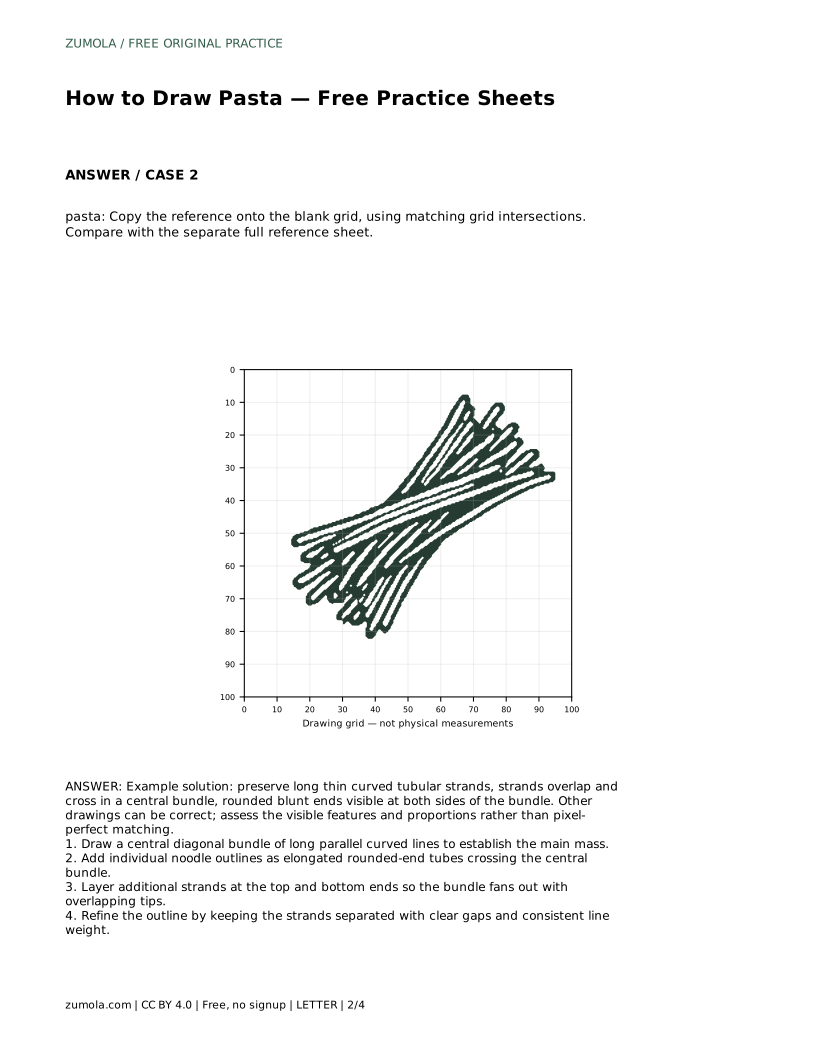
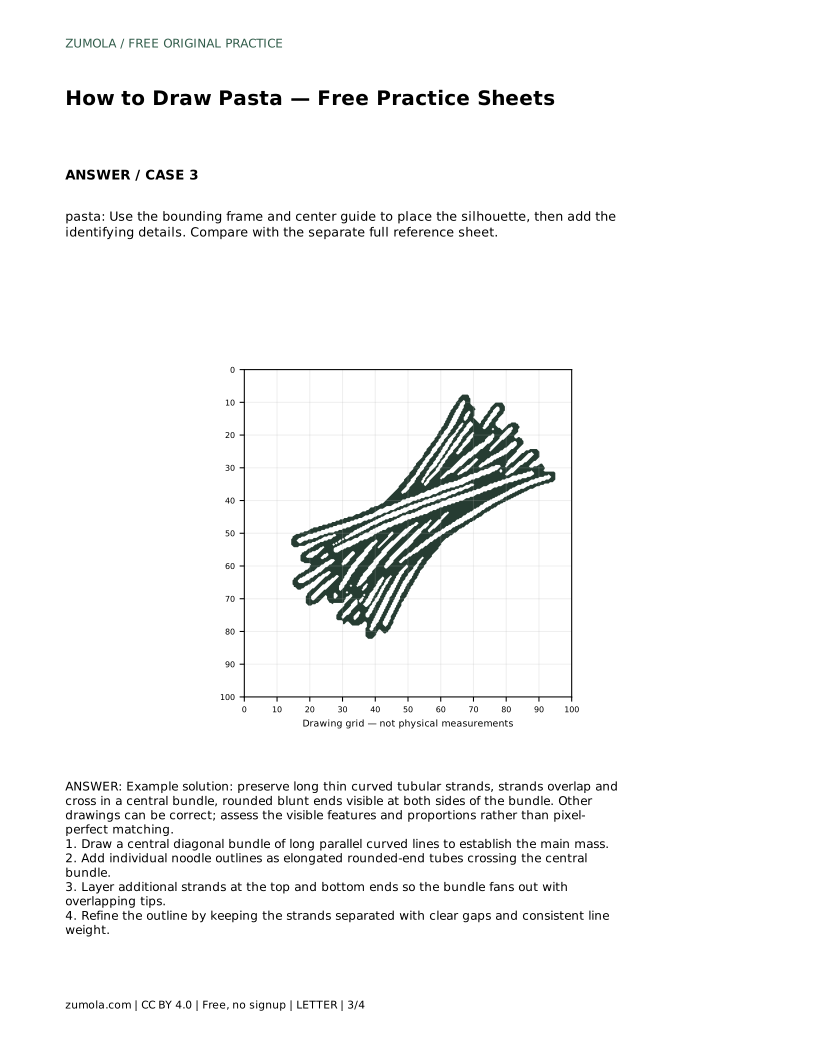
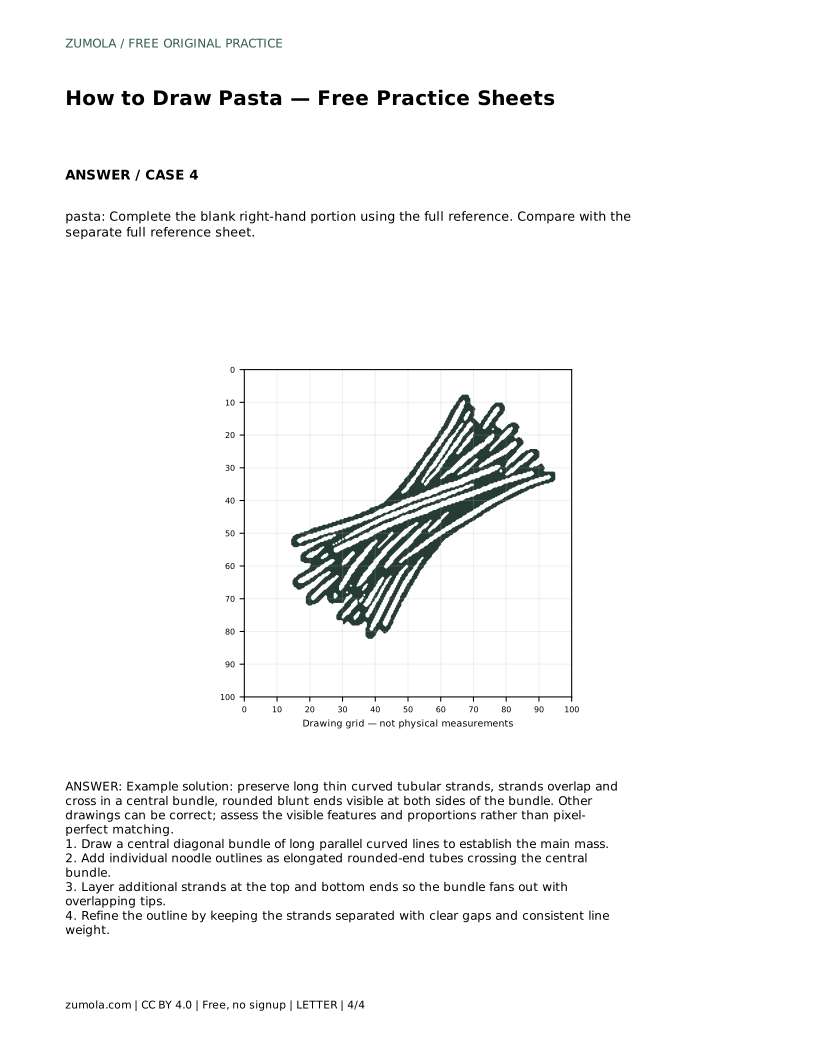
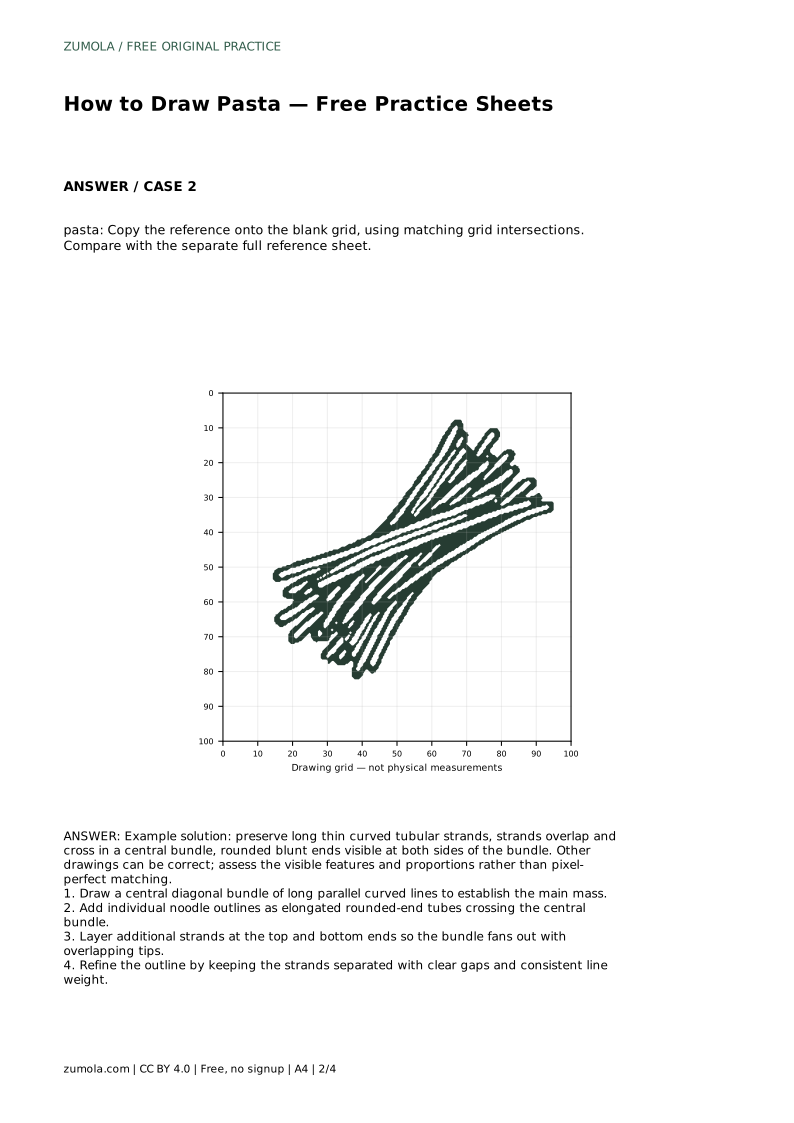
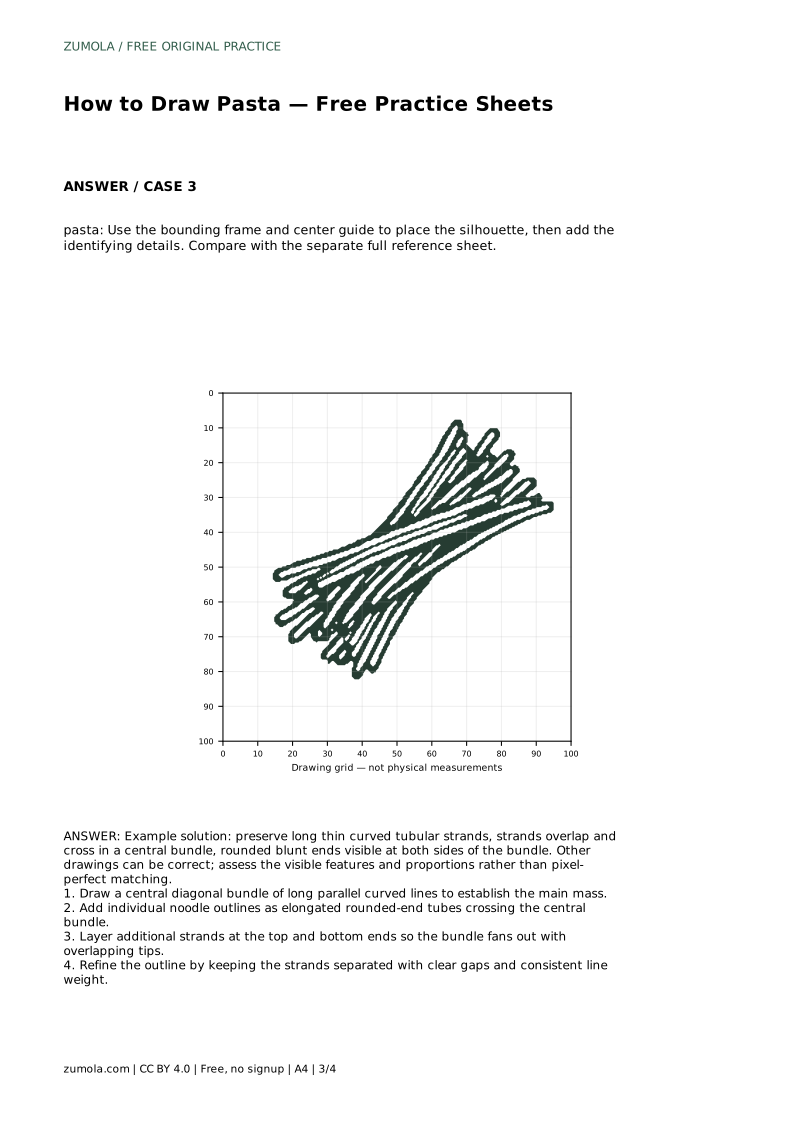
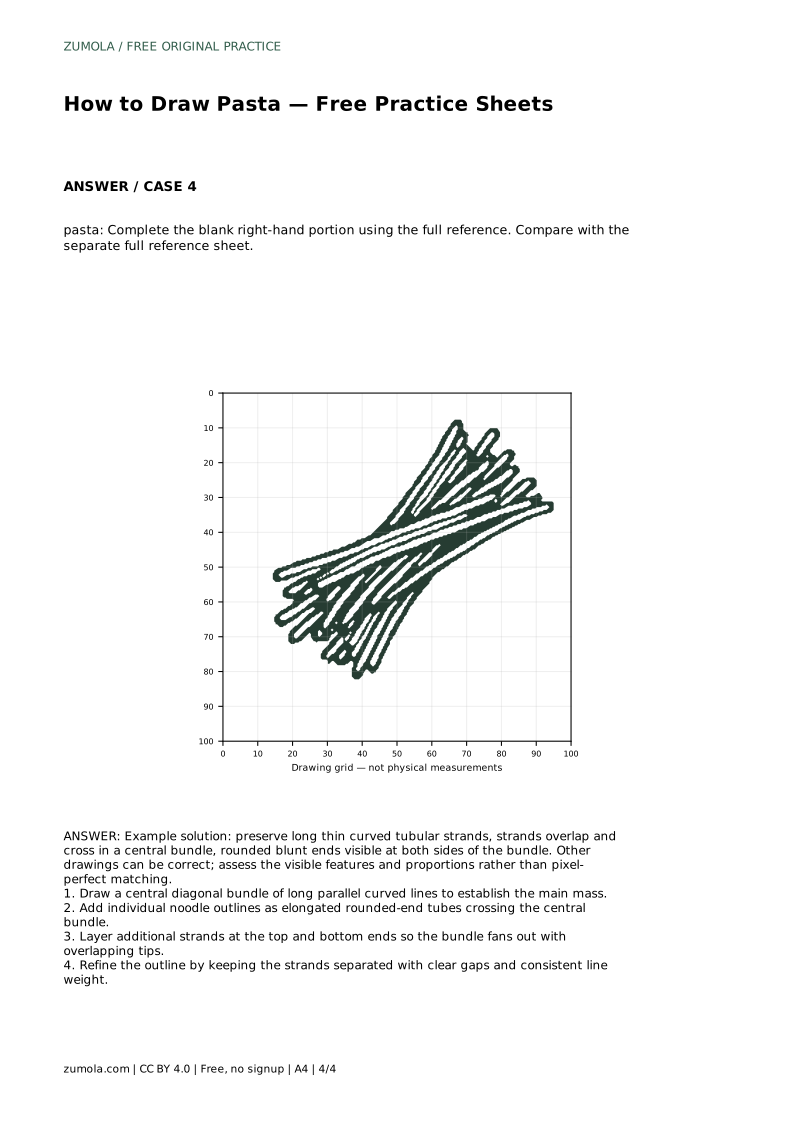
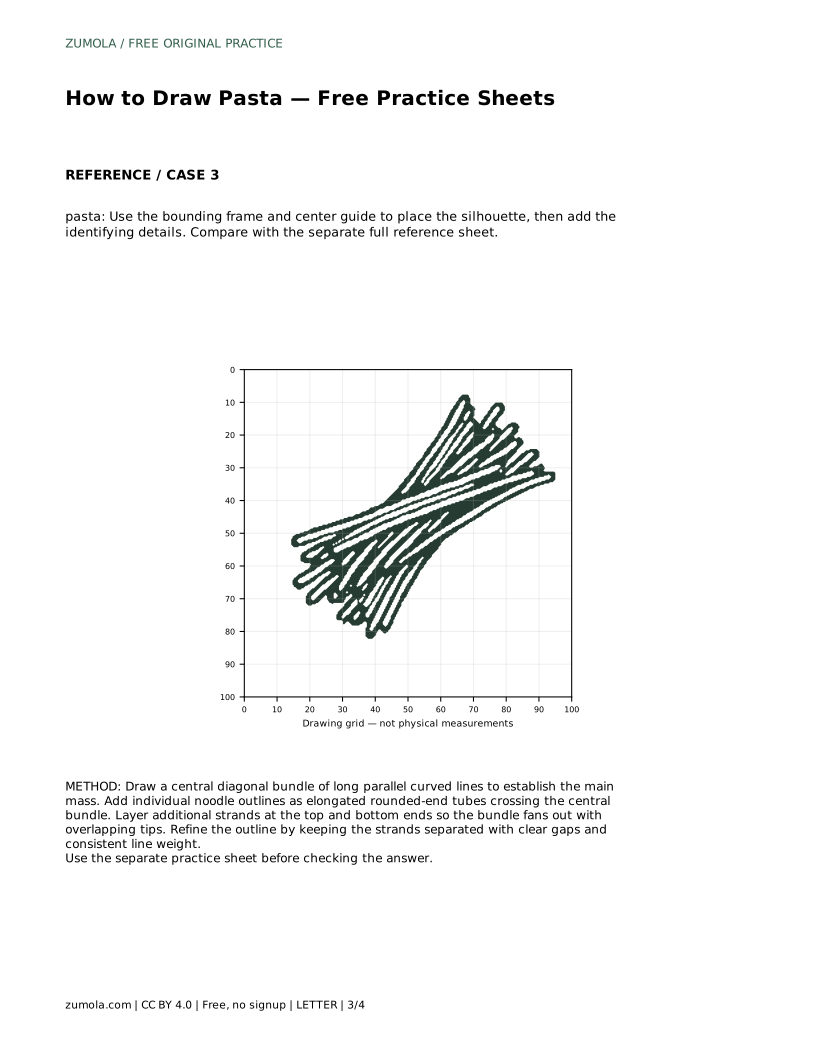
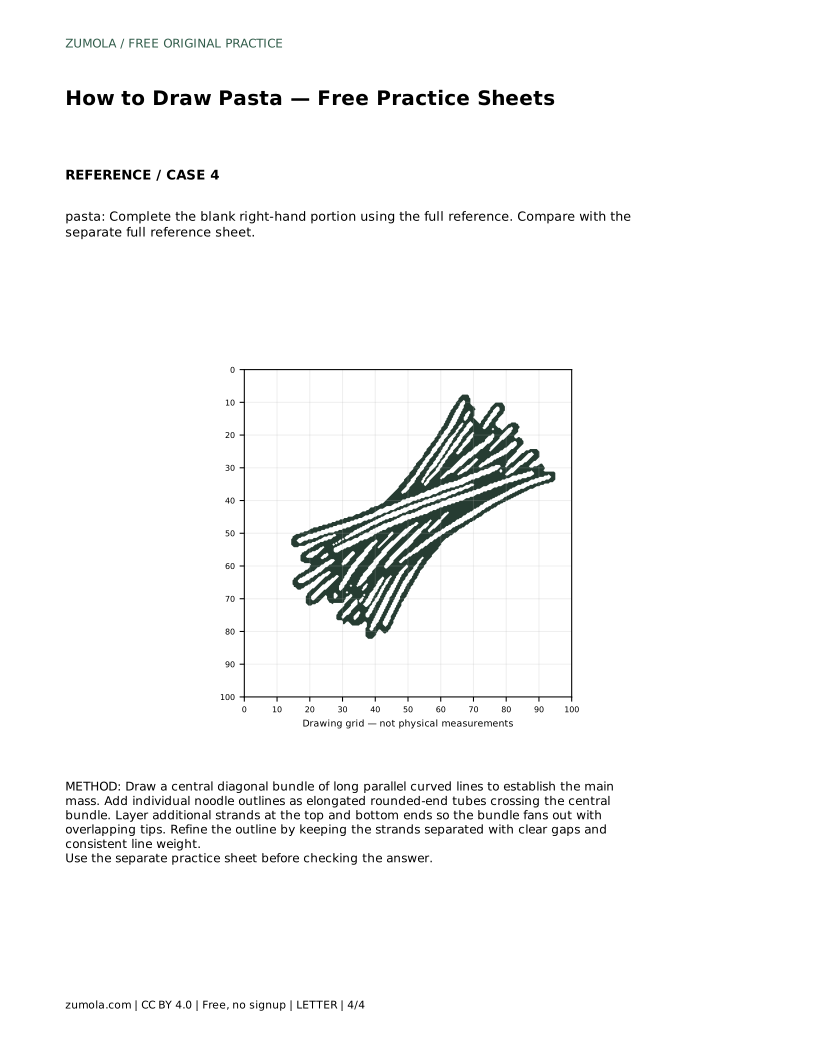
Example solution: preserve long thin curved tubular strands, strands overlap and cross in a central bundle, rounded blunt ends visible at both sides of the bundle. Other drawings can be correct; assess the visible features and proportions rather than pixel-perfect matching. Draw a central diagonal bundle of long parallel curved lines to establish the main mass. Add individual noodle outlines as elongated rounded-end tubes crossing the central bundle. Layer additional strands at the top and bottom ends so the bundle fans out with overlapping tips. Refine the outline by keeping the strands separated with clear gaps and consistent line weight.
There is no fixed count. Use enough strands to show overlap and fanning tips while keeping each noodle readable.
Either can work. A diagonal bundle usually reads clearly because the strands cross the frame rather than sitting flat.
That is acceptable. Assess the visible features and proportions, such as curved strands, overlaps, and rounded ends, rather than exact line placement.
All drawing practice · Free coordinate paper
Original resources · CC BY 4.0 · Free for personal and classroom use with attribution.