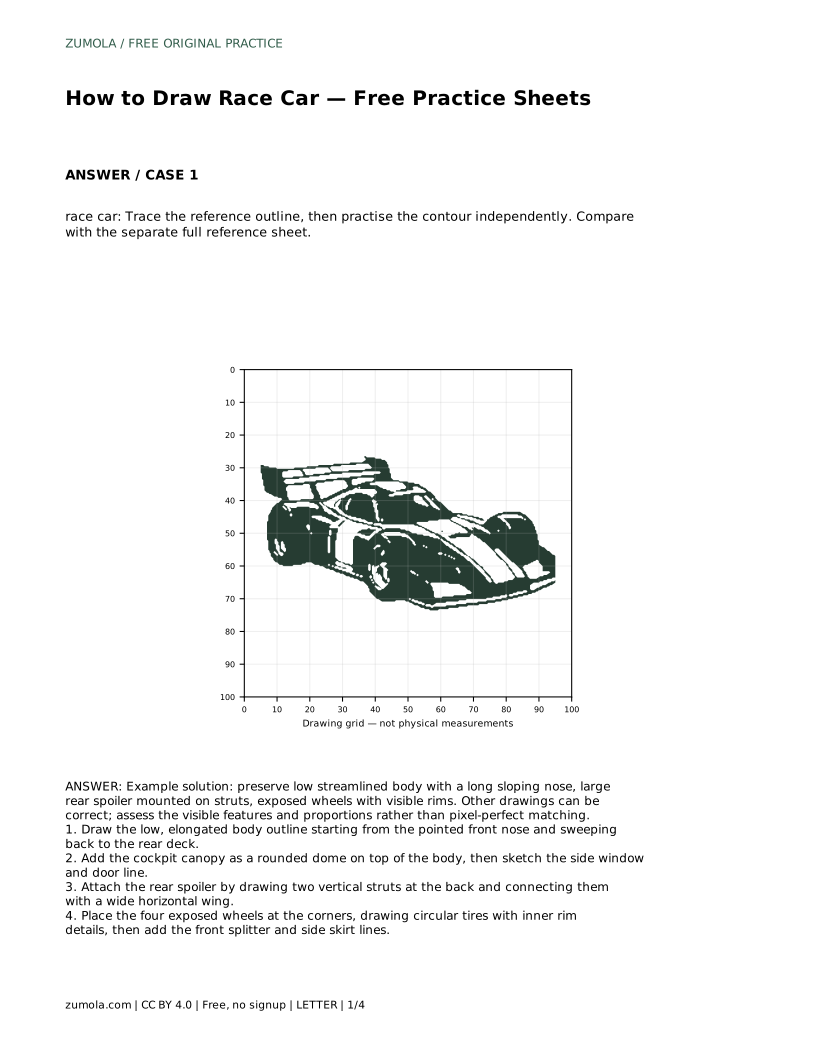
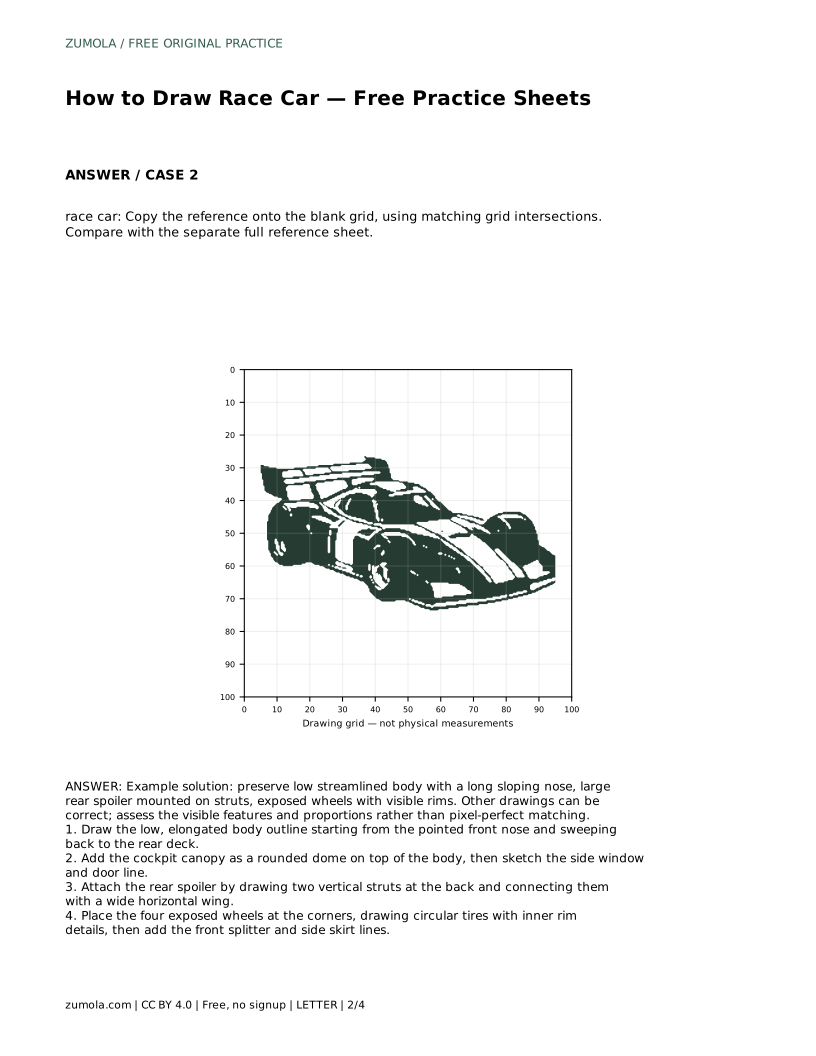
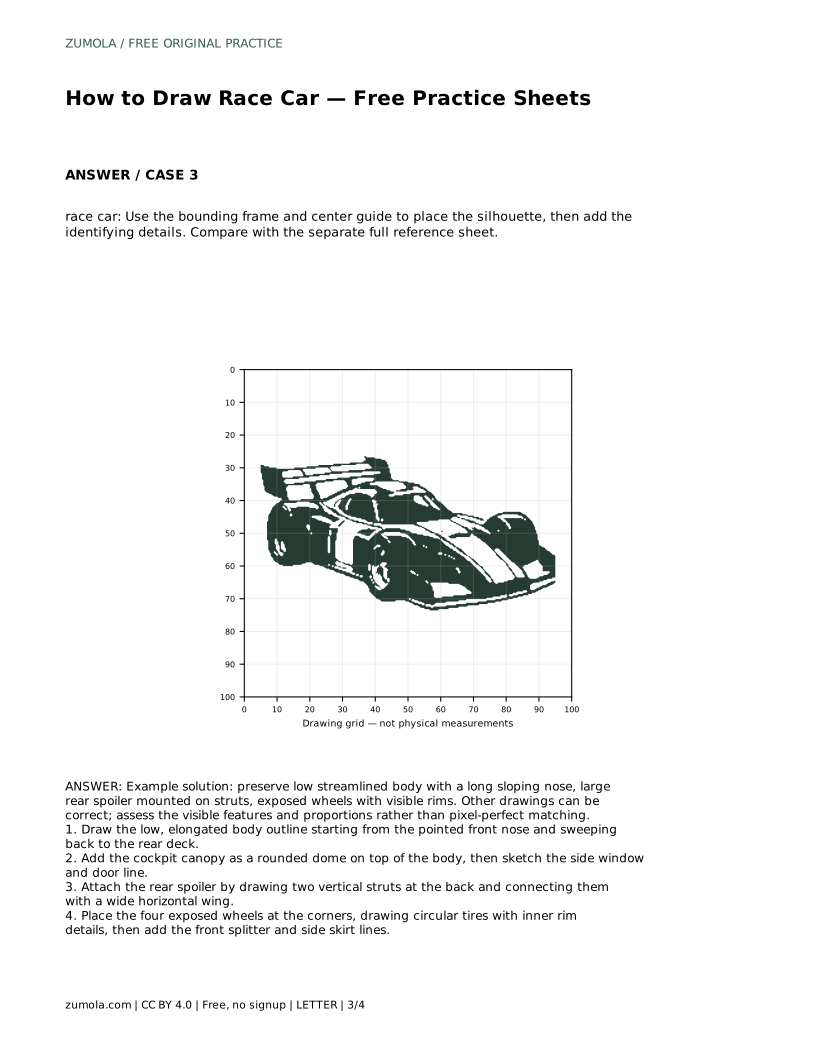
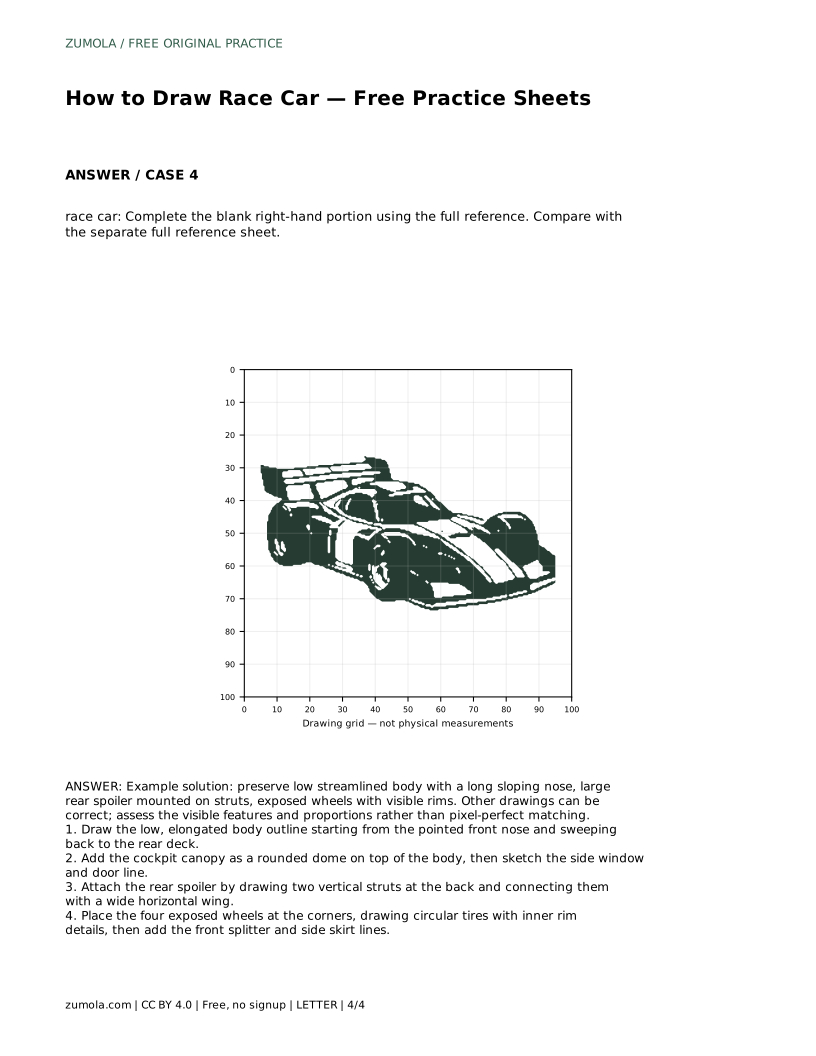
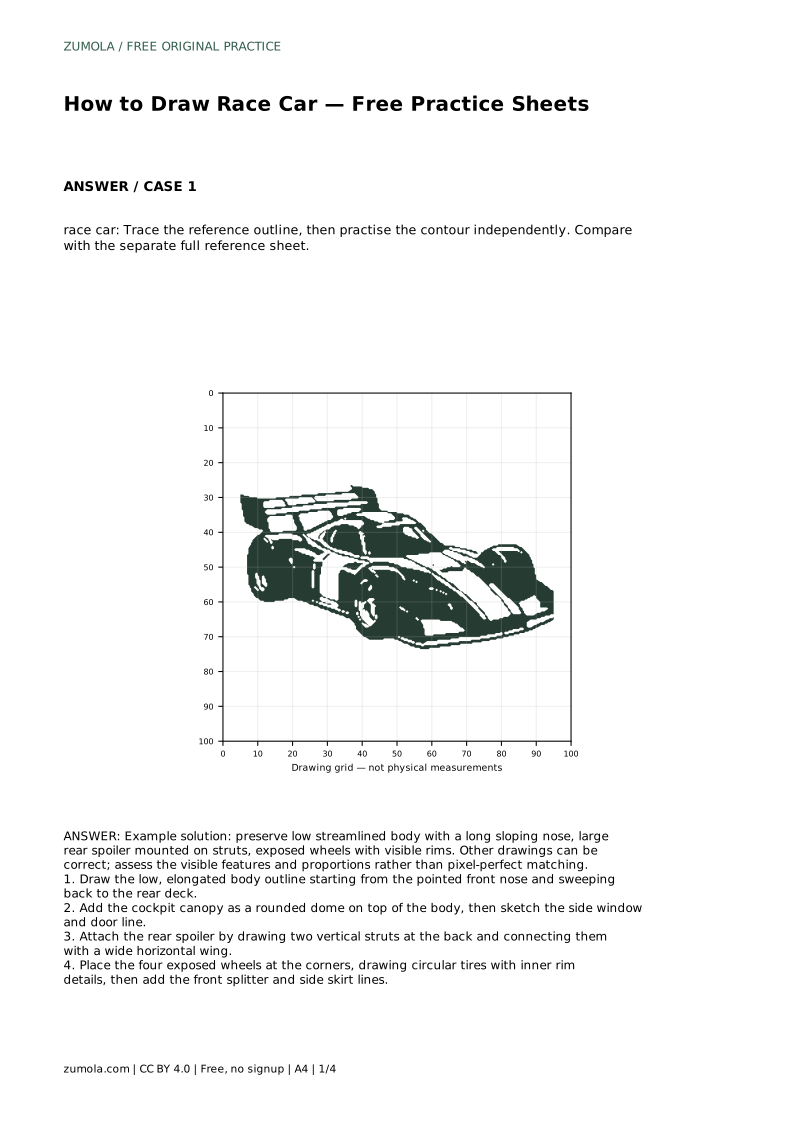
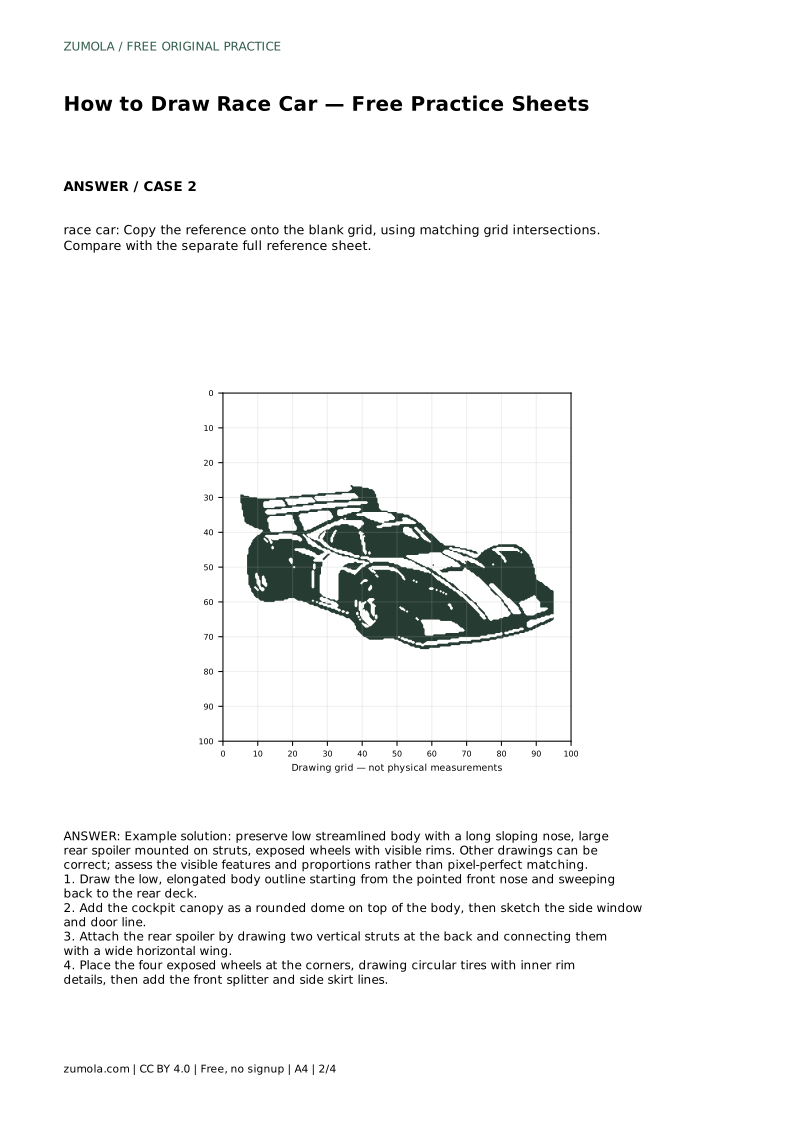
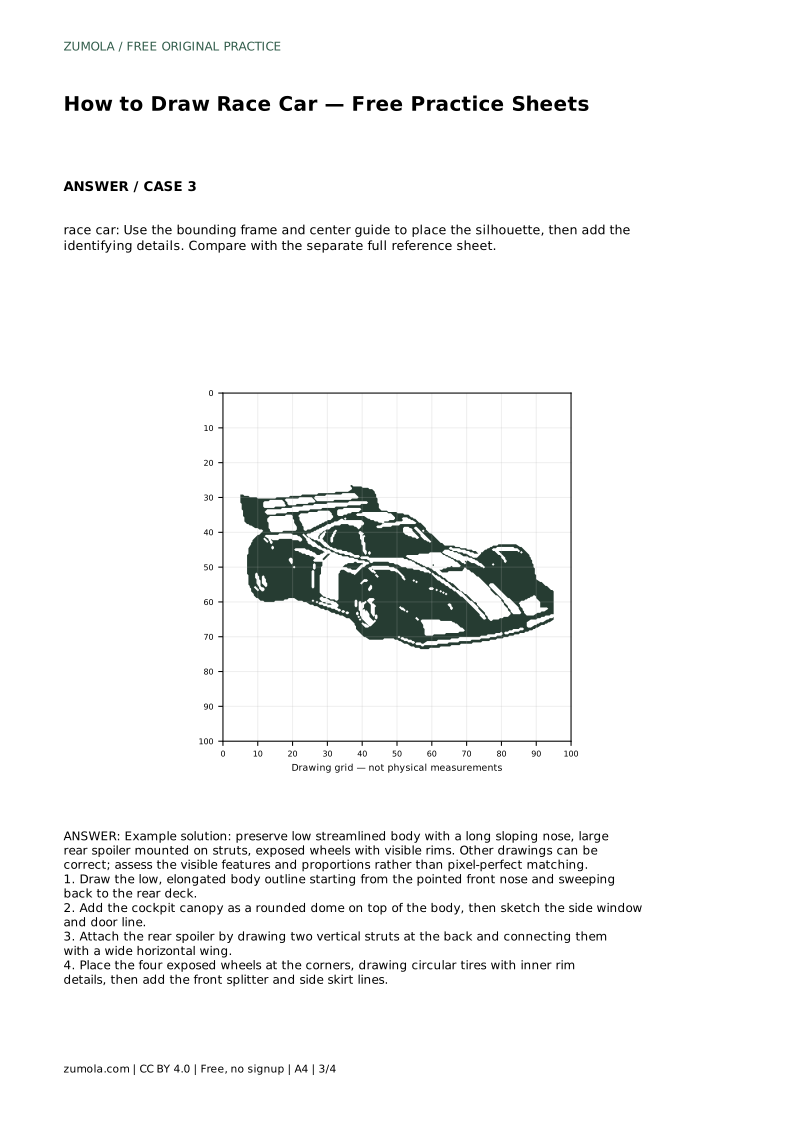
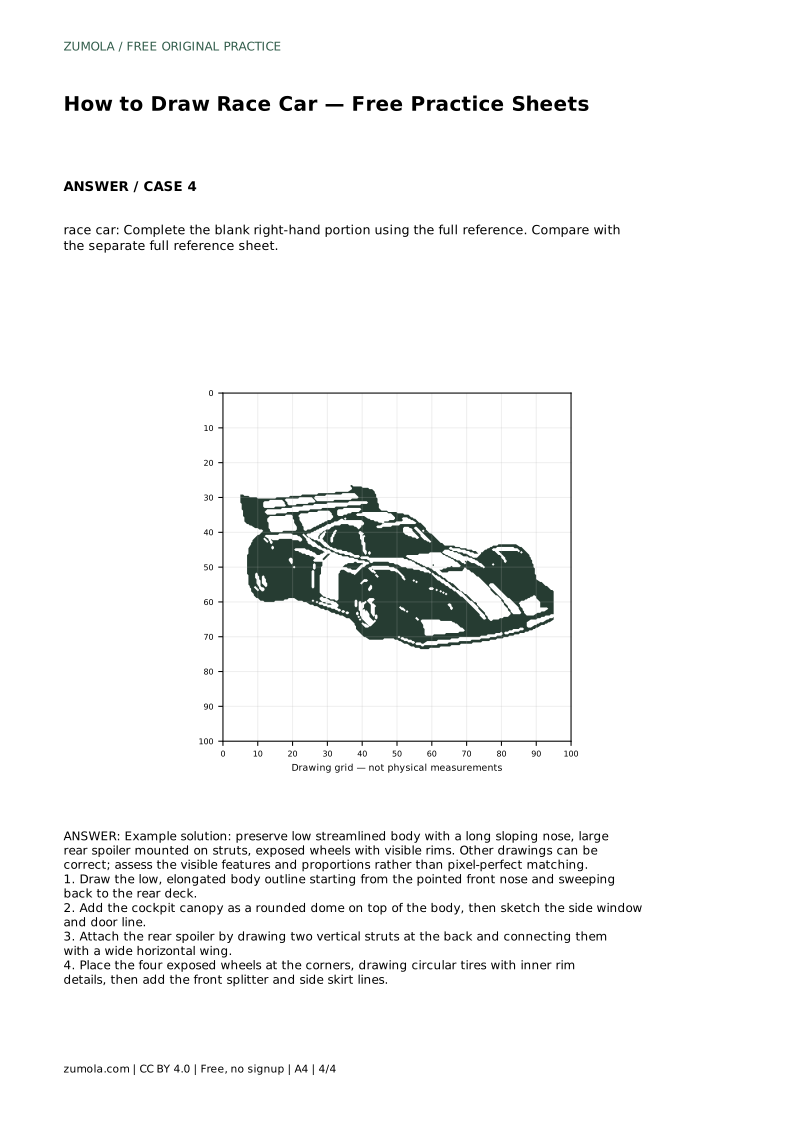
Reference diagrams
LETTER · Download PDF
A4 · Download PDF
Free original resources
Learn to draw a low, streamlined race car with a sloping nose, cockpit canopy, rear spoiler, and exposed wheels. Free printable practice sheets support each stage.
Four original cases, with reference diagrams, practice sheets and worked answers. Everything is free; no signup required.
LETTER · Download PDF
A4 · Download PDF
LETTER · Download PDF
A4 · Download PDF
LETTER · Download PDF
A4 · Download PDF
Use A4 or US Letter to match your printer. Use the stated values and conditions to solve each exercise; diagrams are not physical measuring rulers.
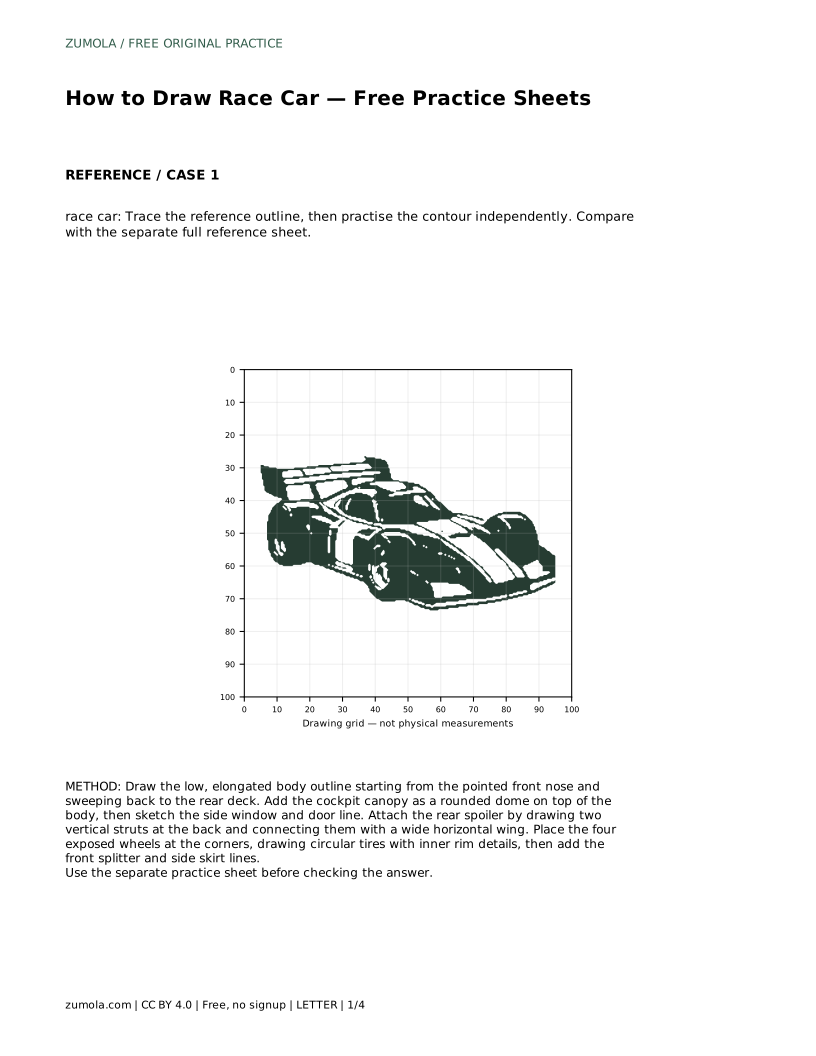
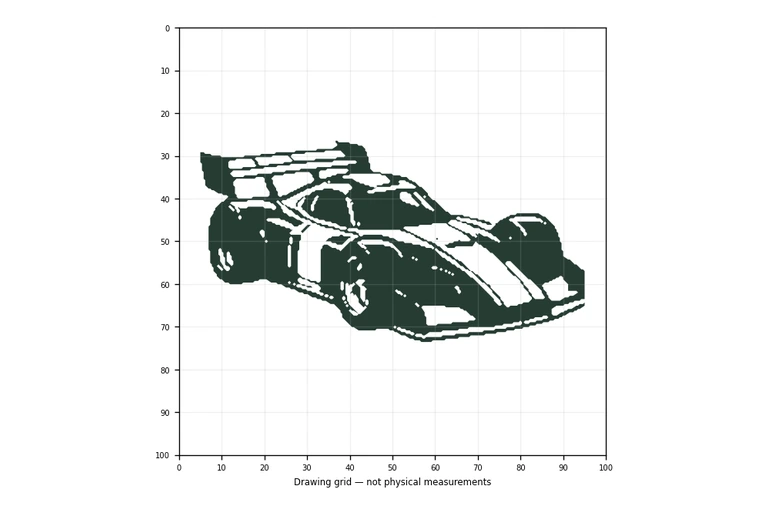
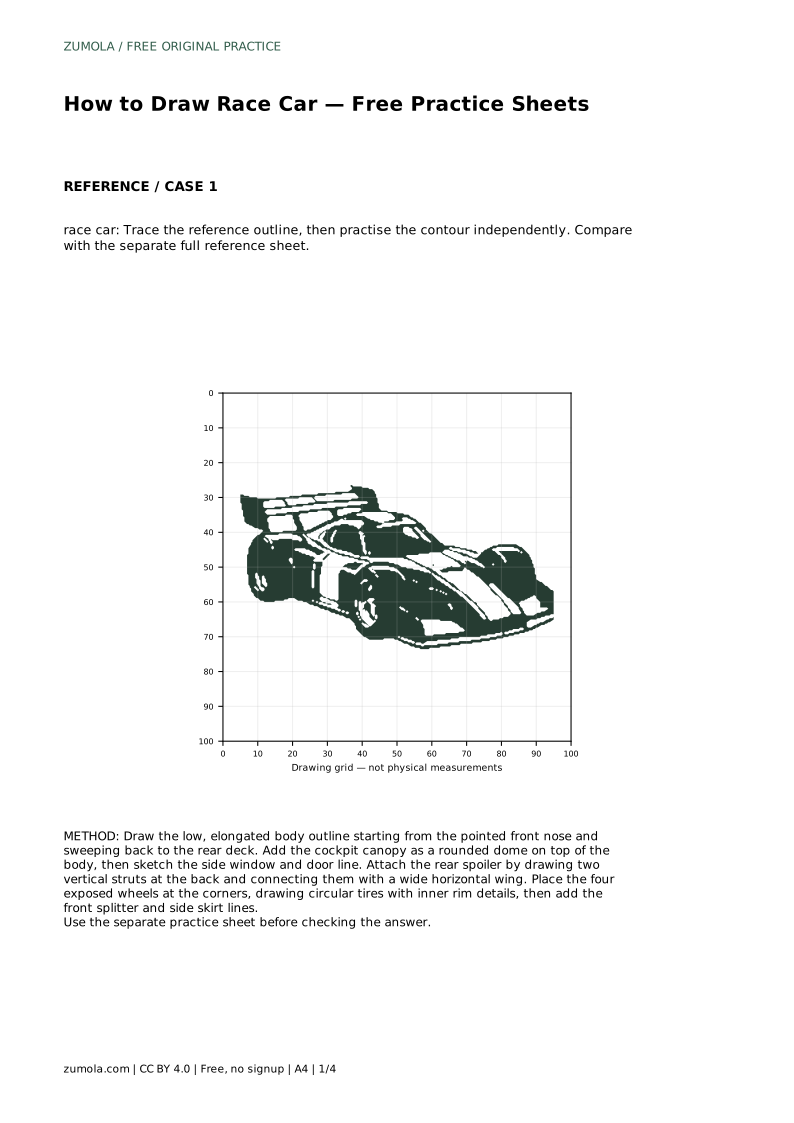
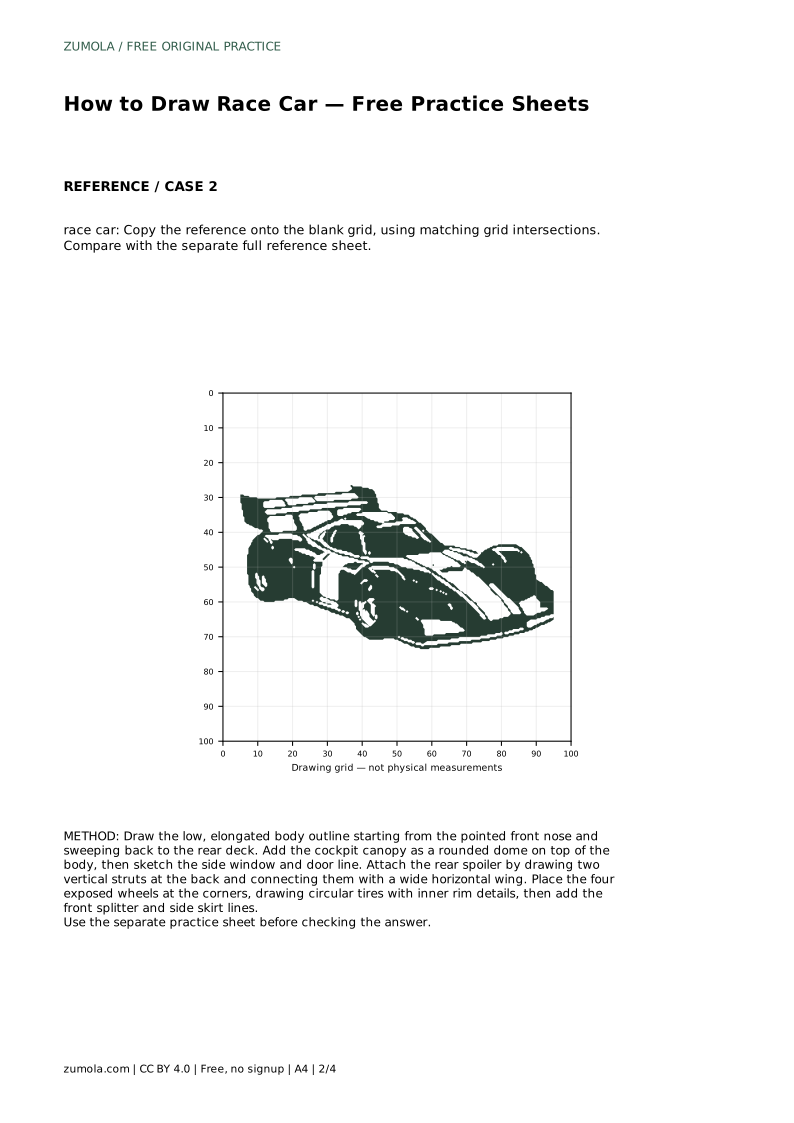
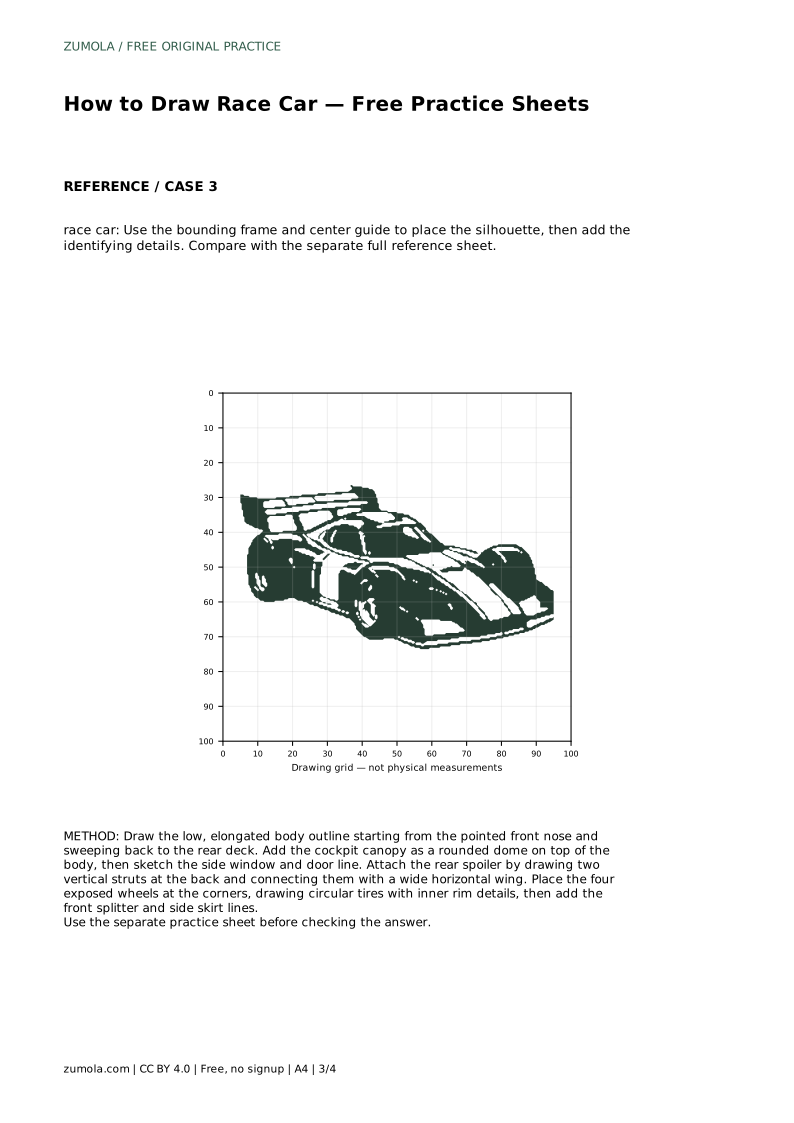
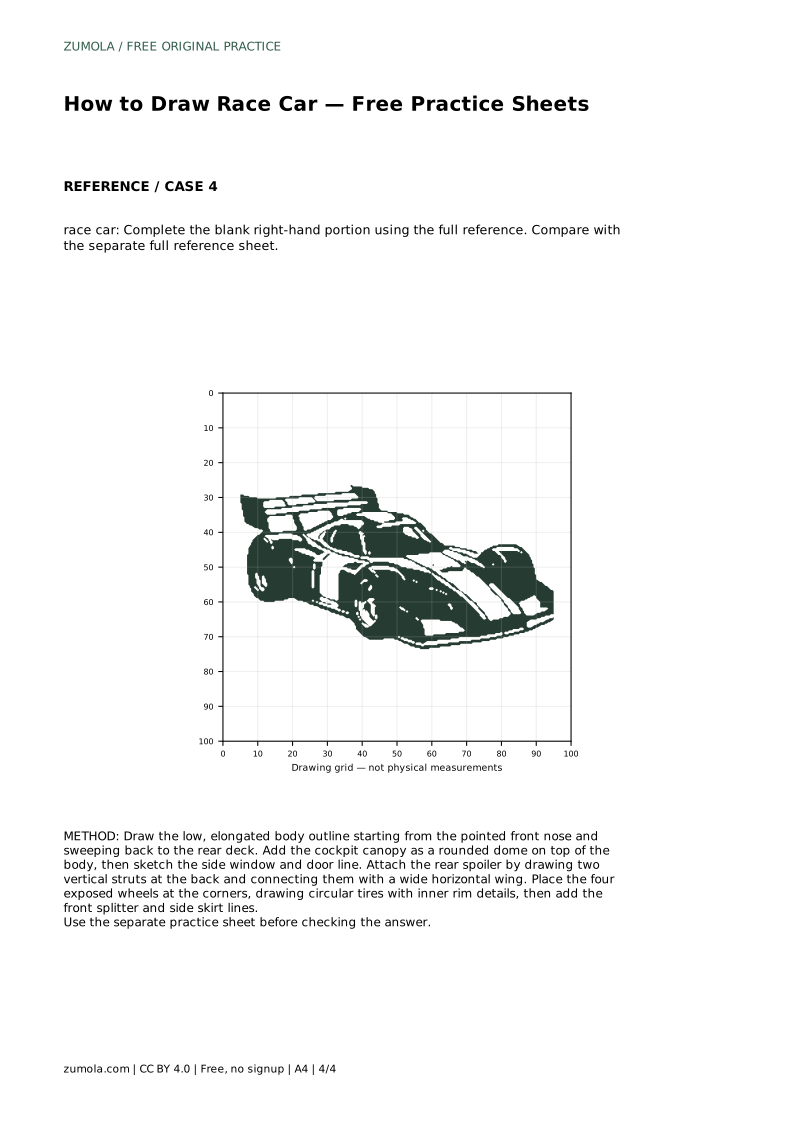
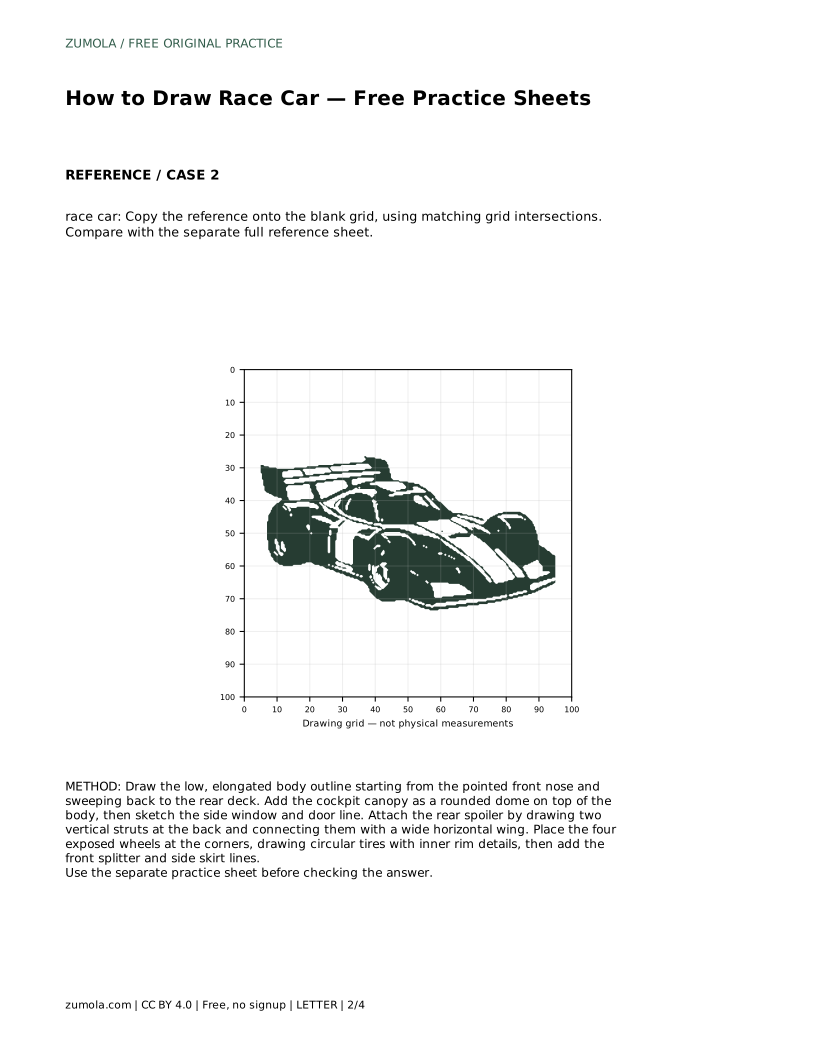
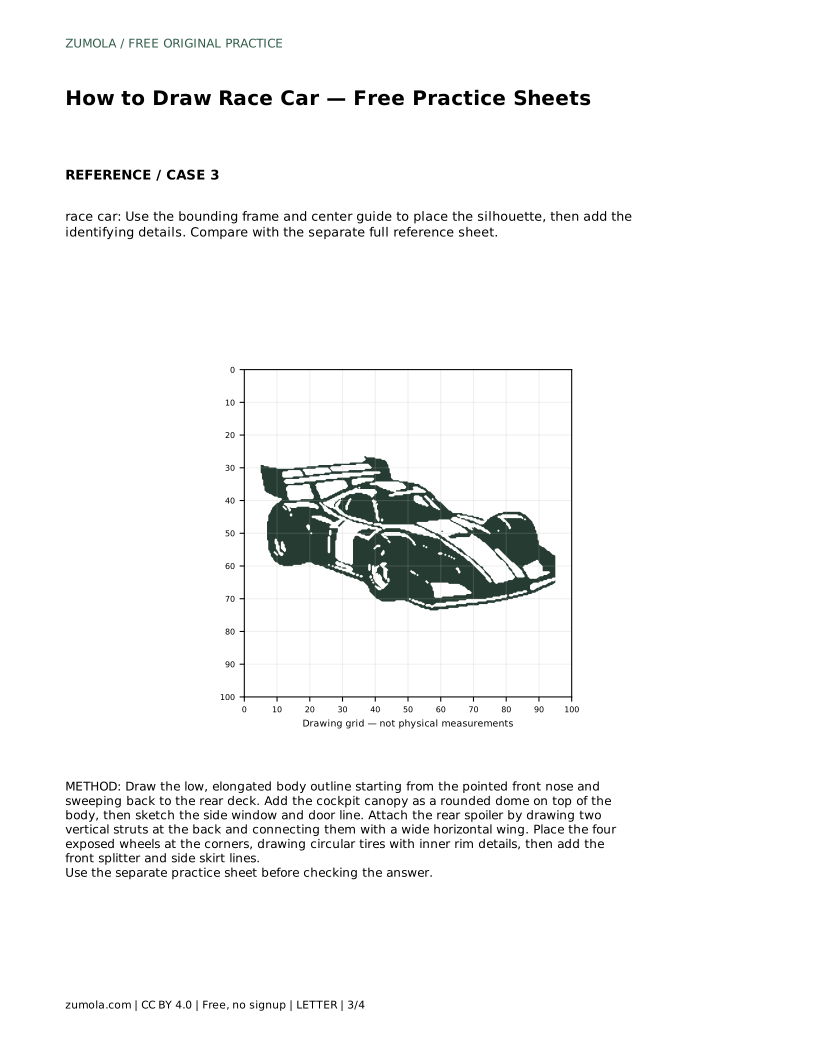
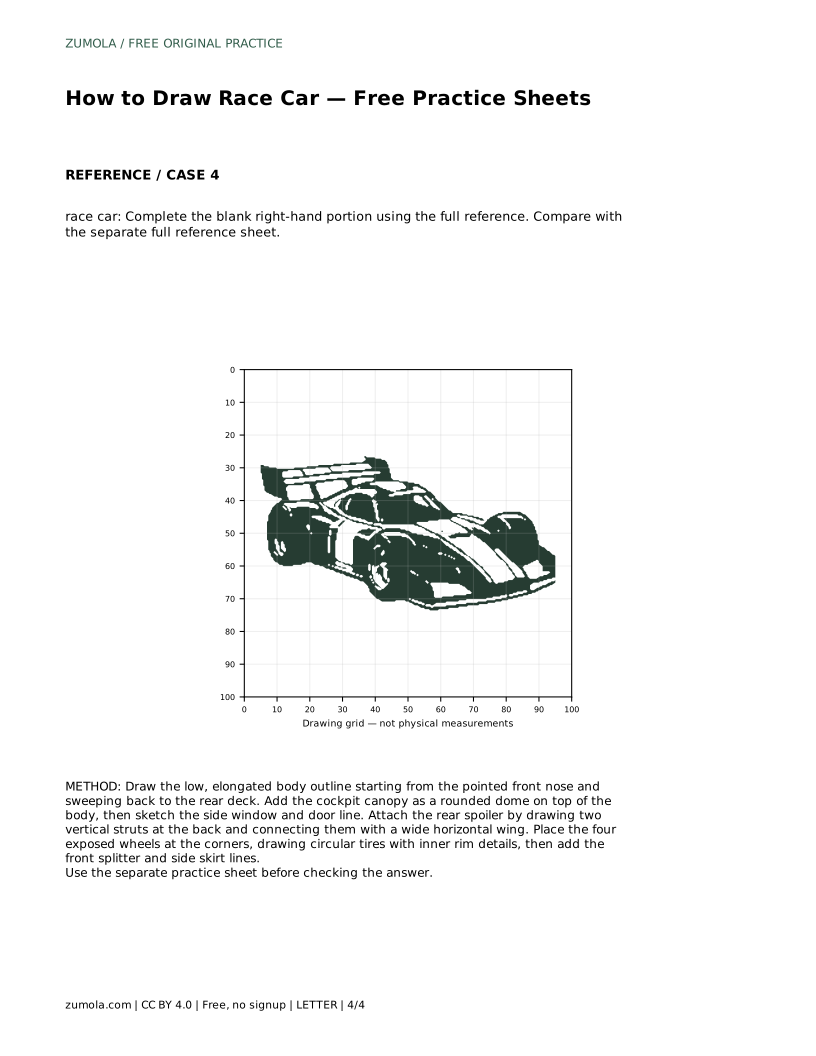
A race car is a good subject for learning to combine a long body shape with a few strong identifying details. This guide shows how to build the outline from the pointed nose to the rear deck, then add the cockpit, spoiler, and wheels in a sensible order. The printable practice sheets let you trace a reference outline first, then try the contour independently, so you can compare your drawing with the full reference sheet.
Begin with the overall shape rather than small details. A race car reads as low and elongated: the front nose is pointed and slopes gently upward toward the cockpit, and the body continues back to a rear deck. Keep the roofline low so the car looks streamlined. Draw lightly at first, because the body outline will be adjusted as you place the wheels and spoiler.
Work from the front to the back in one continuous sweep where possible. A single flowing contour helps the car look fast and unified. If the line wobbles, redraw it rather than patching it with short strokes.
The cockpit canopy sits on top of the body as a rounded dome. Place it slightly behind the midpoint so the long nose stays visible. Add a side window and a door line to suggest the cabin without overcomplicating the shape.
The rear spoiler is one of the clearest race car signals. Draw two vertical struts at the back of the body, then connect them with a wide horizontal wing. Keep the wing roughly parallel to the ground so it looks mounted rather than tilted at random.
Race cars often show exposed wheels, so draw four circular tires at the corners of the body. Add an inner rim circle to each tire so the wheel reads as a wheel rather than a plain disc. Keep the front and rear wheels similar in size unless your reference shows otherwise.
Finish with the front splitter and side skirt lines. These low horizontal details help the car look grounded. Compare your drawing with the full reference sheet and adjust proportions rather than chasing a pixel-perfect match.
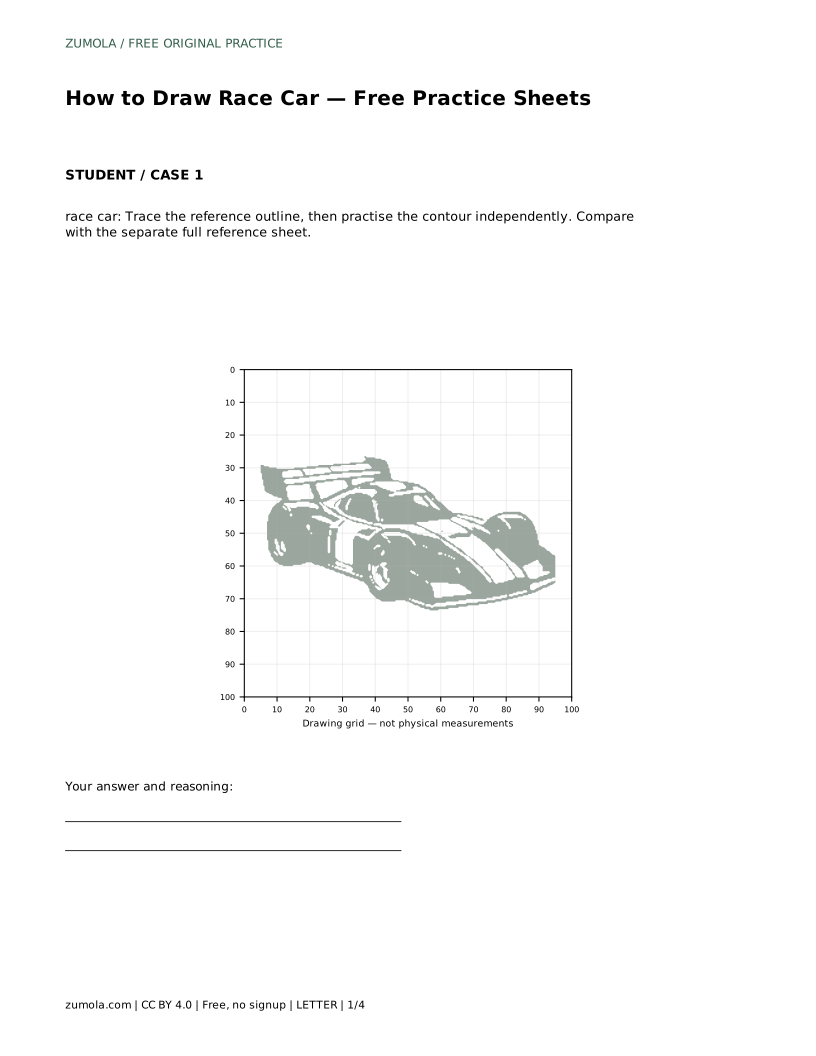
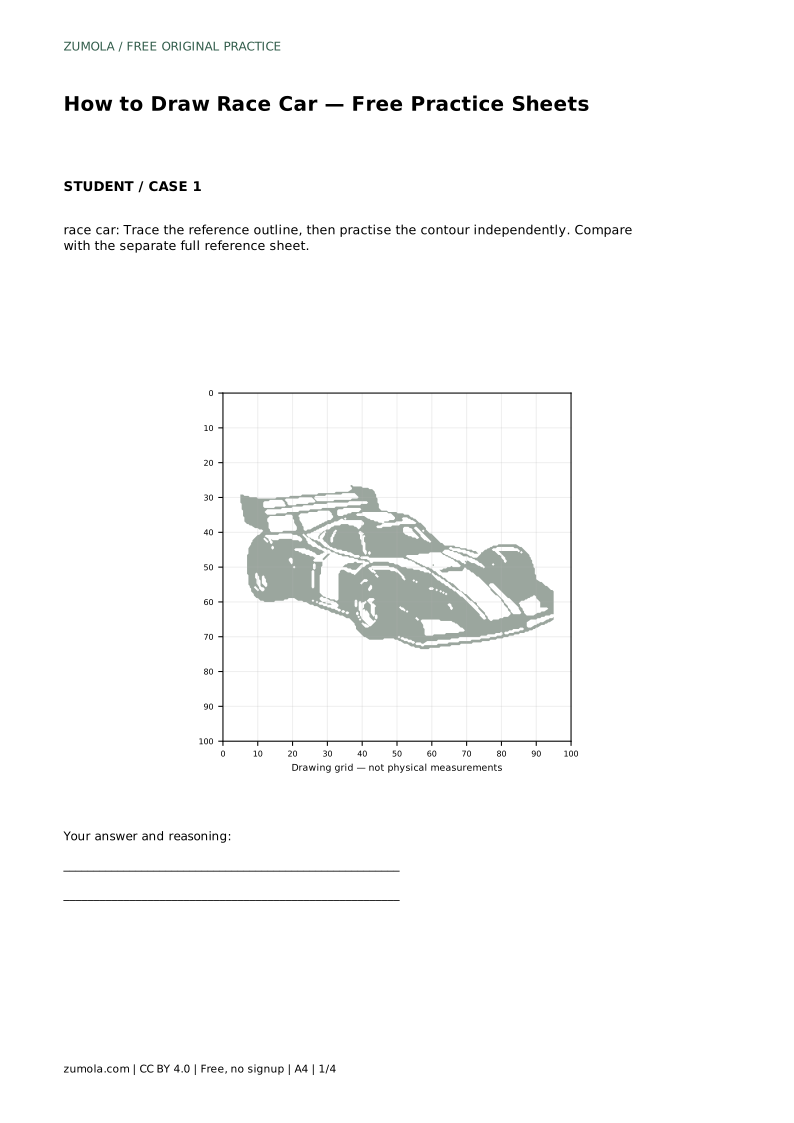
race car: Trace the reference outline, then practise the contour independently. Compare with the separate full reference sheet.
Example solution: preserve low streamlined body with a long sloping nose, large rear spoiler mounted on struts, exposed wheels with visible rims. Other drawings can be correct; assess the visible features and proportions rather than pixel-perfect matching. Draw the low, elongated body outline starting from the pointed front nose and sweeping back to the rear deck. Add the cockpit canopy as a rounded dome on top of the body, then sketch the side window and door line. Attach the rear spoiler by drawing two vertical struts at the back and connecting them with a wide horizontal wing. Place the four exposed wheels at the corners, drawing circular tires with inner rim details, then add the front splitter and side skirt lines.
No. Several drawings can be correct. Assess whether the low body, sloping nose, canopy, mounted spoiler, and exposed wheels with rims are visible and reasonably proportioned.
Start with the tracing sheet to learn the contour, then move to the independent contour practice and compare with the full reference sheet.
Draw four exposed wheels at the corners of the body, each with an inner rim circle.
All drawing practice · Free coordinate paper
Original resources · CC BY 4.0 · Free for personal and classroom use with attribution.