Reference diagrams
LETTER · Download PDF
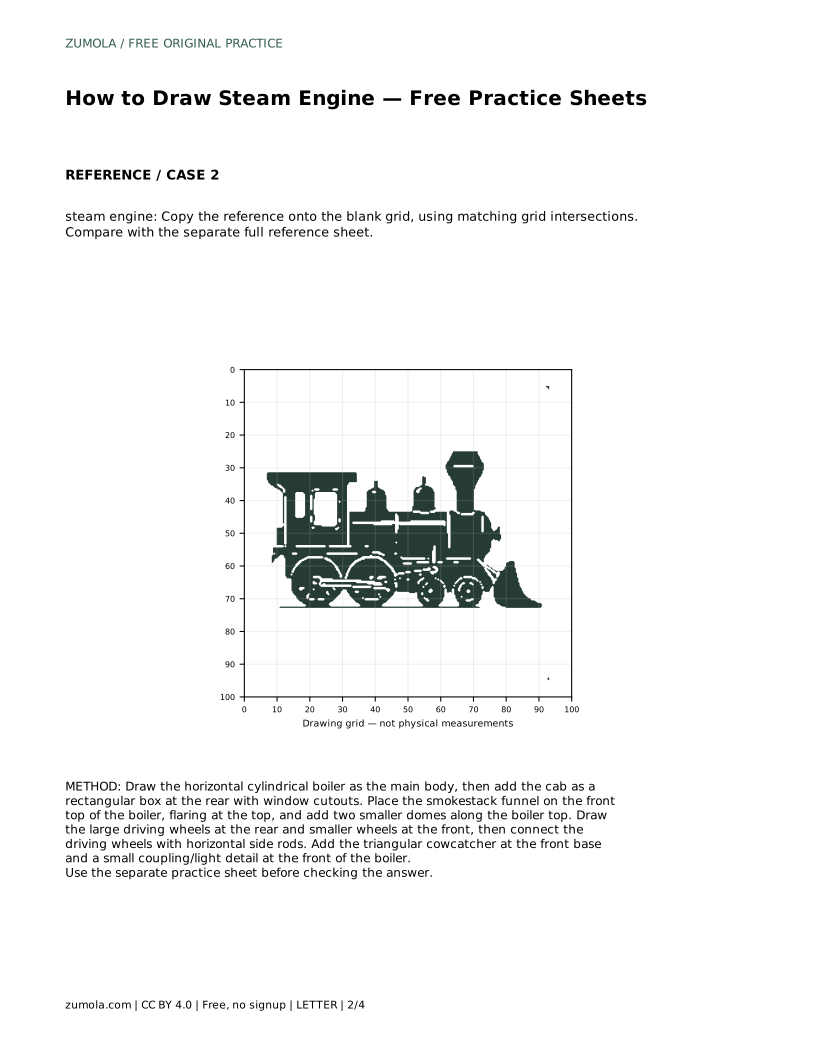
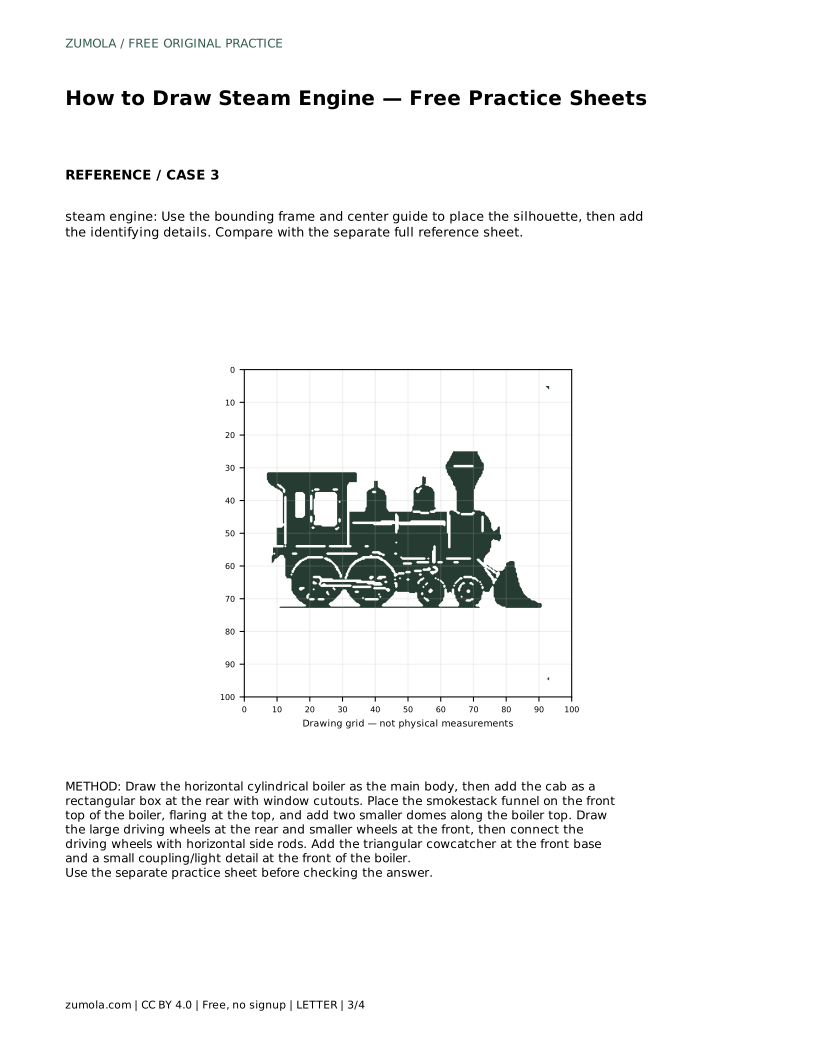
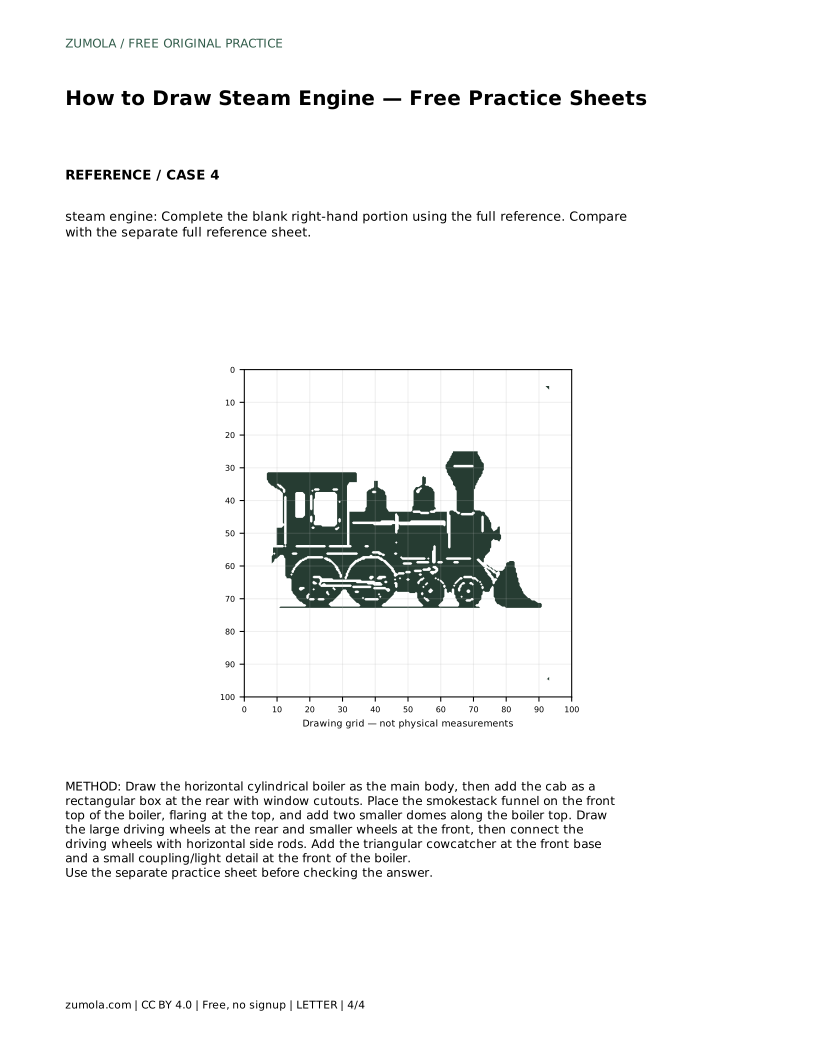
A4 · Download PDF
Free original resources
Learn to draw a steam engine by building the boiler, cab, funnel, domes, wheels, side rods, and cowcatcher in a clear order, then check proportions with a rubric.
Four original cases, with reference diagrams, practice sheets and worked answers. Everything is free; no signup required.
LETTER · Download PDF
A4 · Download PDF
LETTER · Download PDF
A4 · Download PDF
LETTER · Download PDF
A4 · Download PDF
Use A4 or US Letter to match your printer. Use the stated values and conditions to solve each exercise; diagrams are not physical measuring rulers.
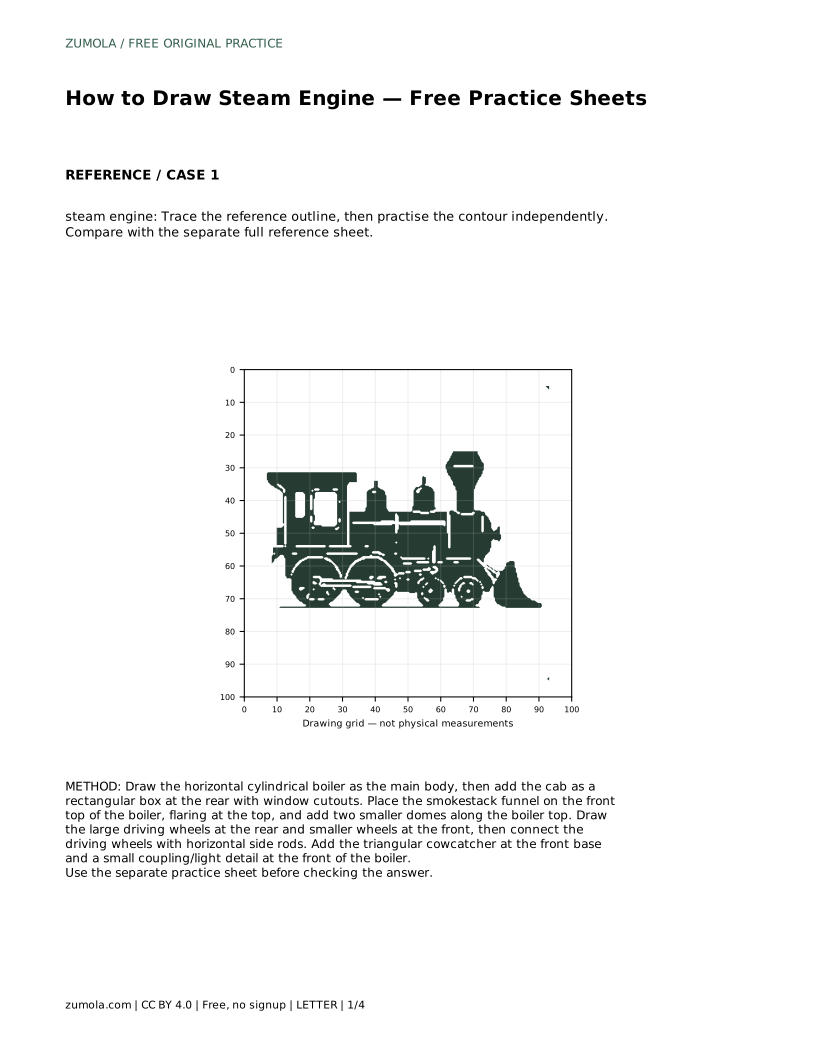
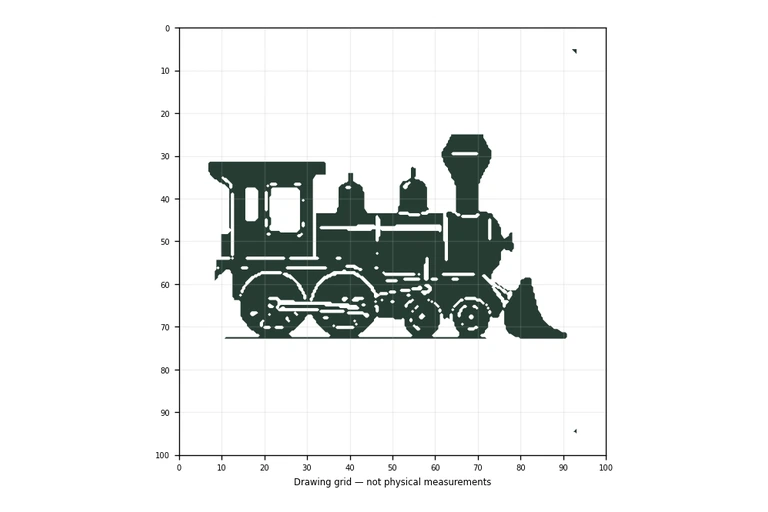
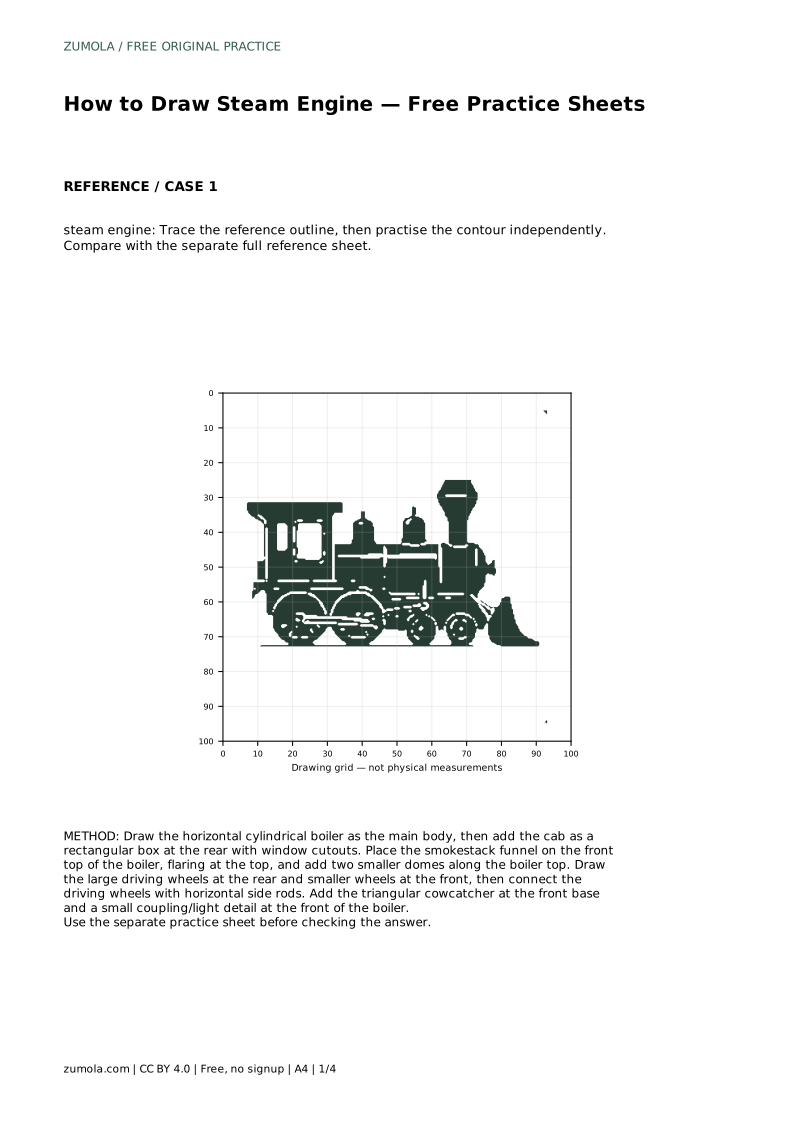
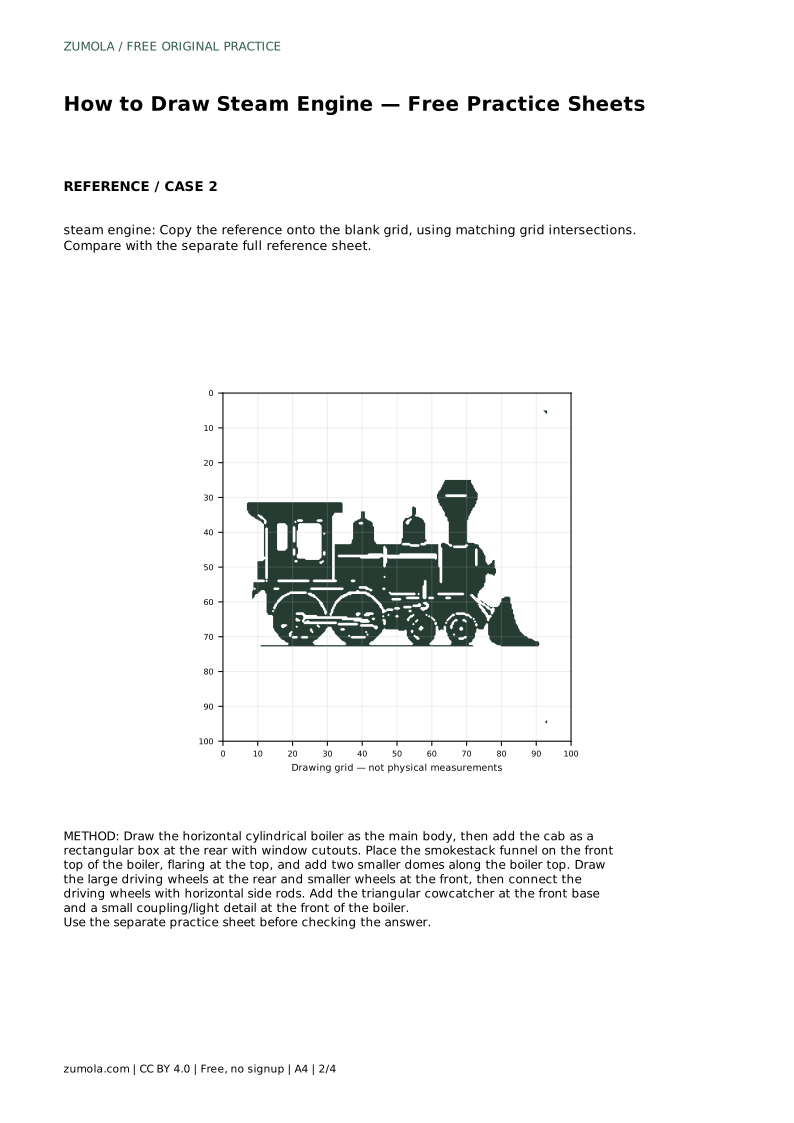
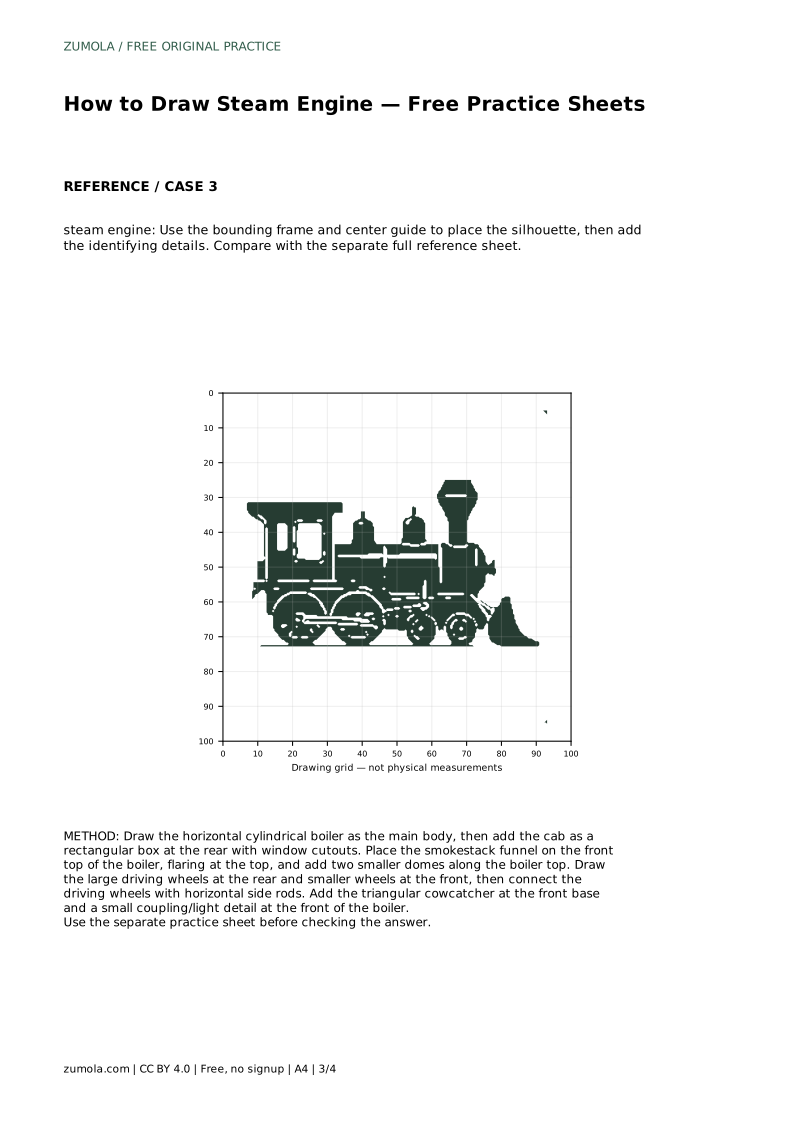
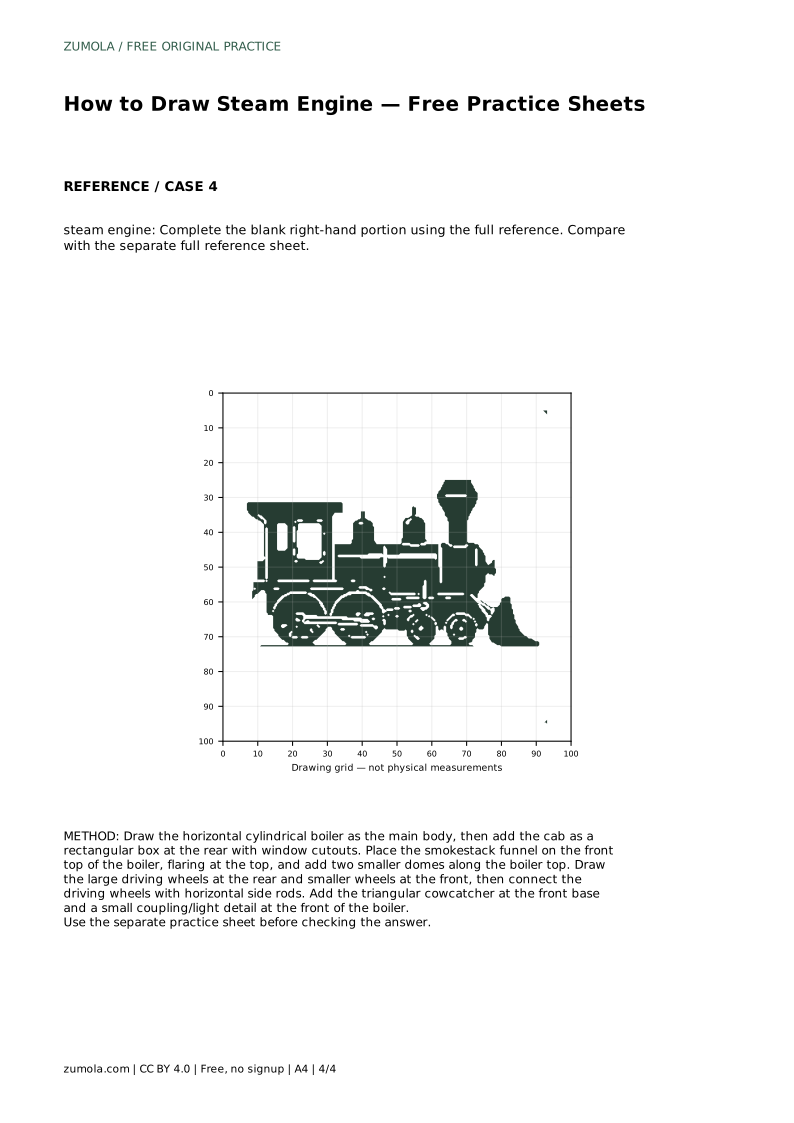
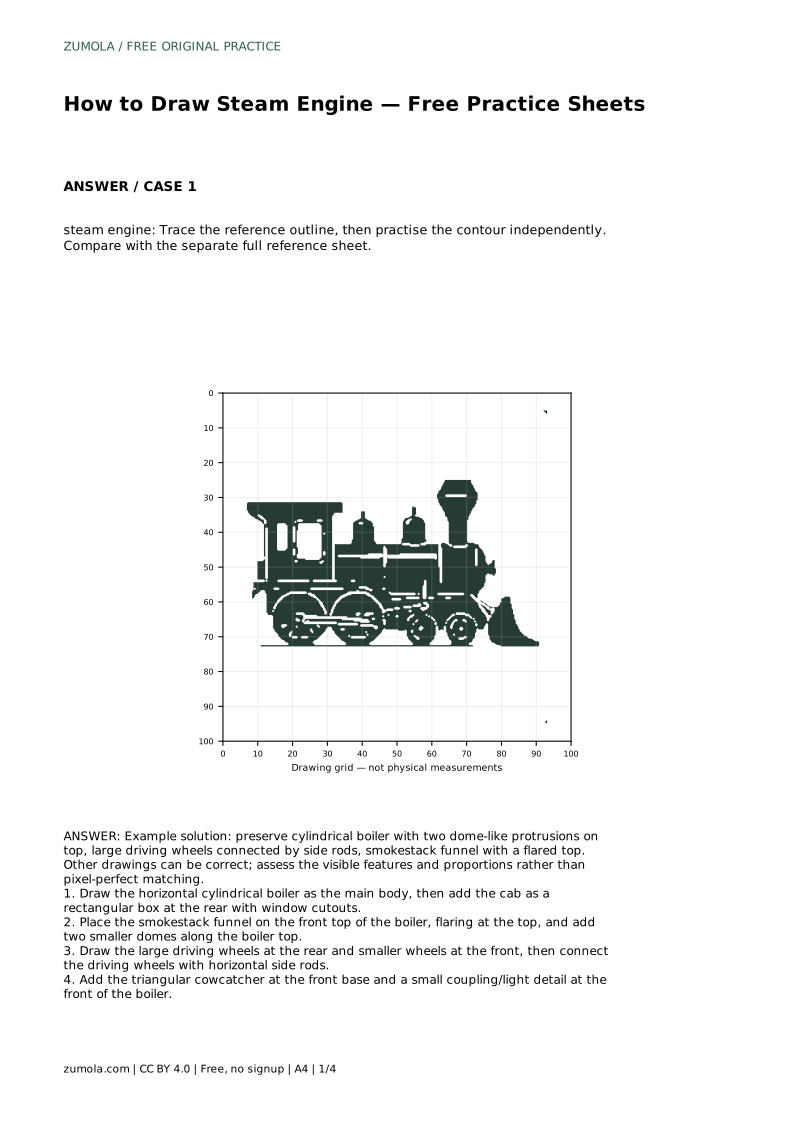
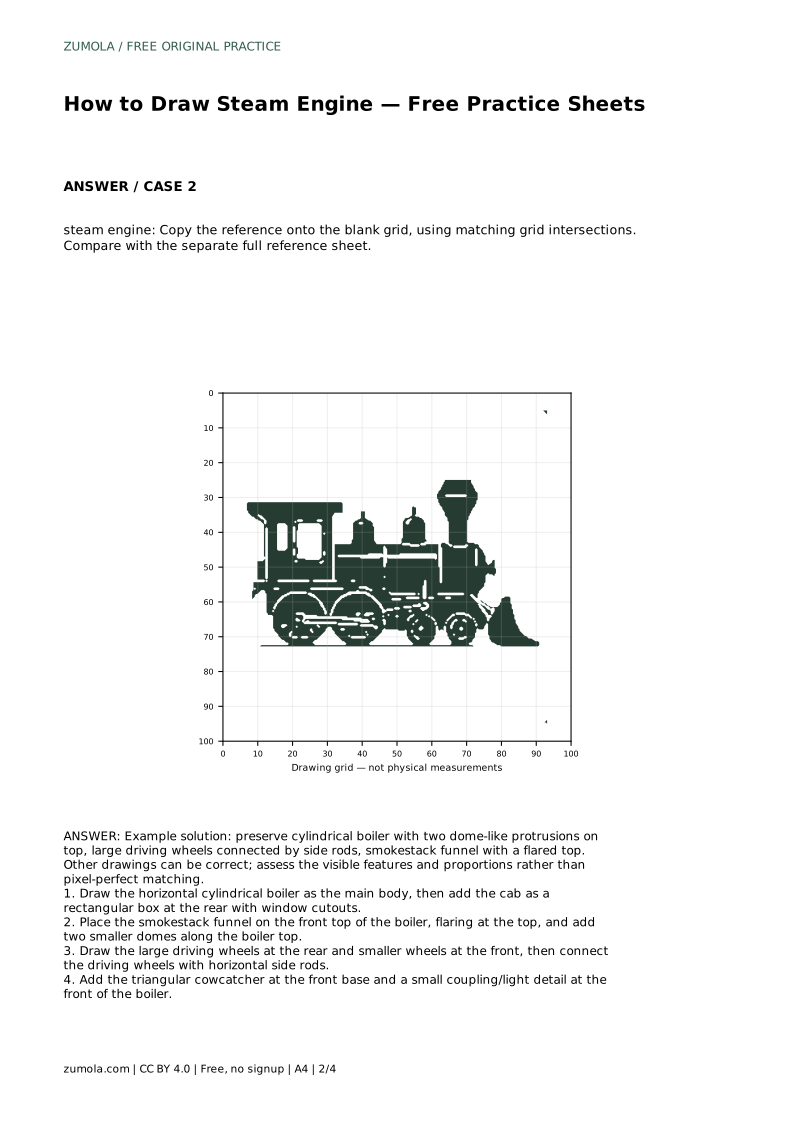
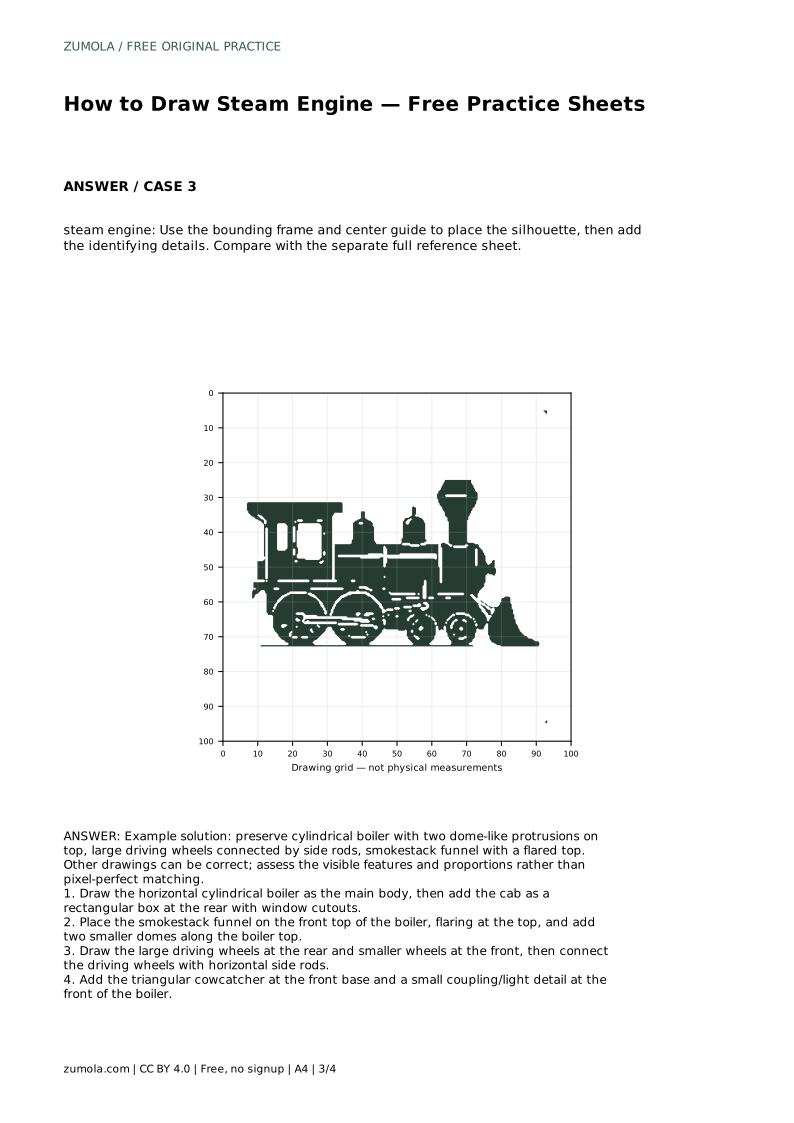
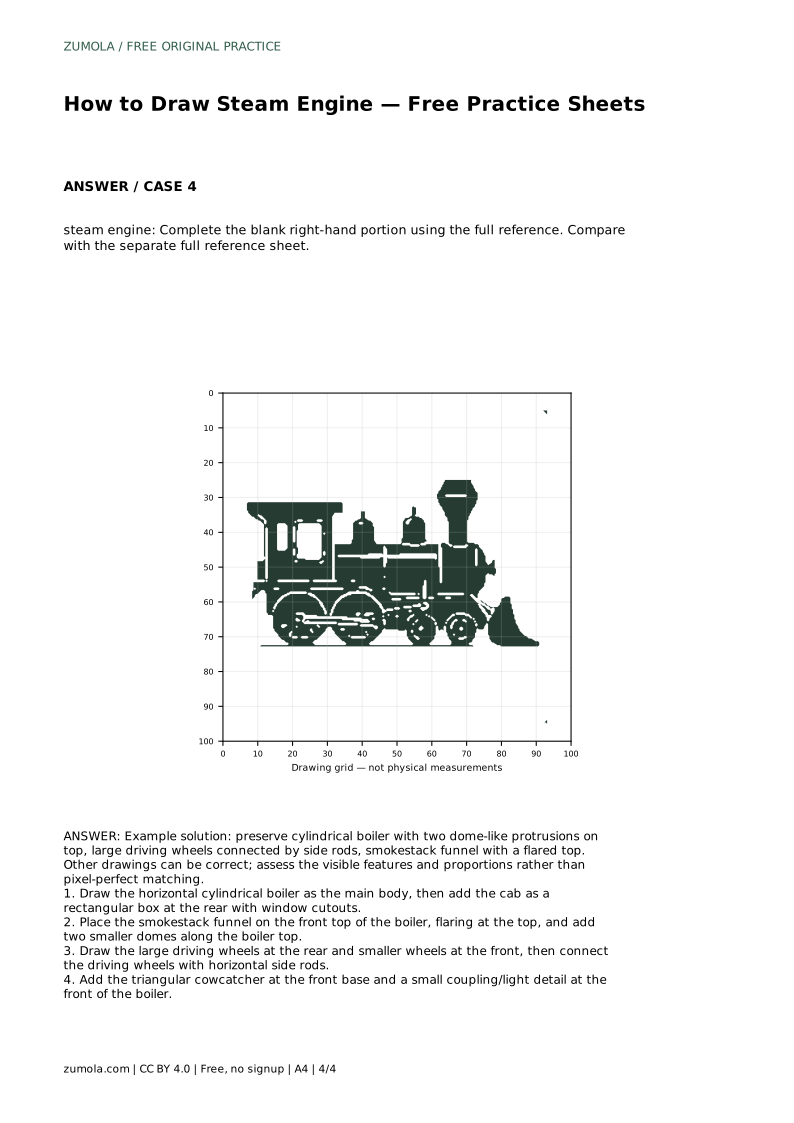
A steam engine drawing becomes manageable when you treat it as a set of connected shapes rather than one complicated outline. Start with the long horizontal boiler, attach the cab at the rear, then place the funnel and domes on top. Wheels and side rods come next, followed by the cowcatcher and small front details. The practice sheets let you trace, copy onto a grid, place a silhouette inside a guide frame, or complete a partly drawn engine.
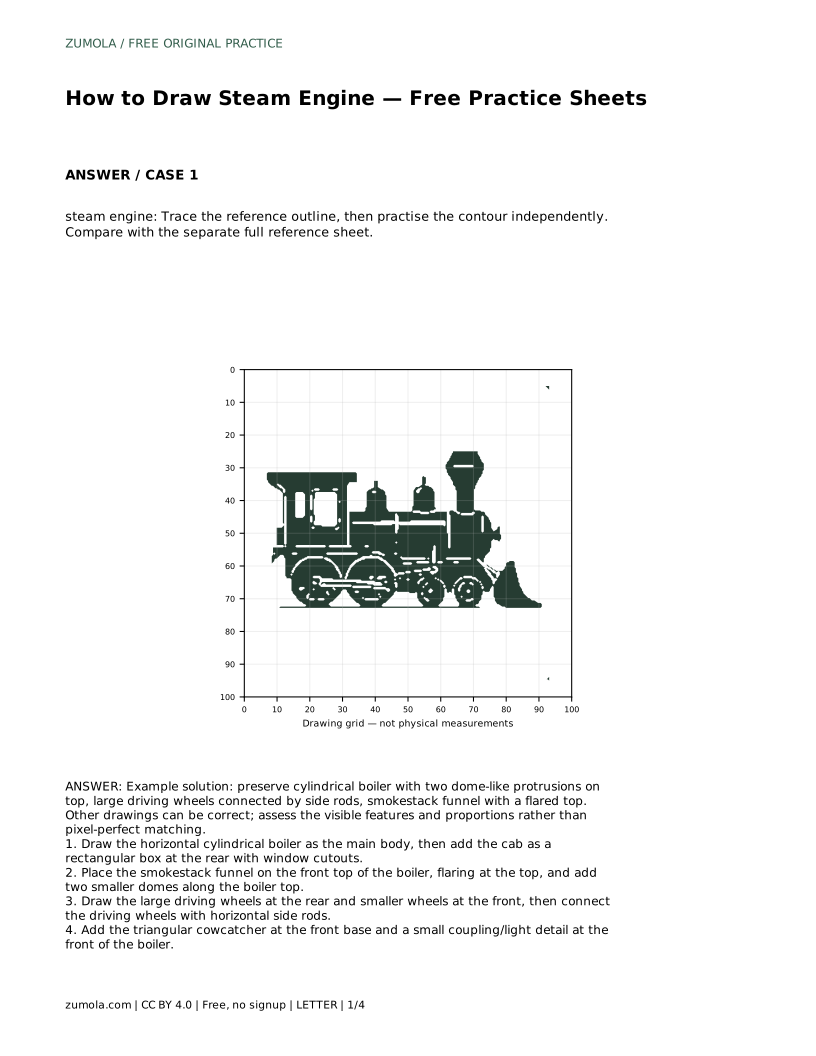
Begin with the boiler: a long horizontal cylinder that runs most of the engine's length. At the rear, add the cab as a rectangular box, slightly taller than the boiler, with window cutouts. On the front top of the boiler, place the smokestack funnel and flare its top edge outward. Add two smaller dome-like protrusions along the boiler top behind the funnel. These shapes establish the engine's overall proportions before any small features appear.
Once the body is placed, draw the wheels. The large driving wheels sit at the rear, and smaller wheels sit at the front. Keep the wheel bases on a shared ground line so the engine looks level. Connect the driving wheels with horizontal side rods. Finish with the triangular cowcatcher at the front base and a small coupling or light detail at the front of the boiler.
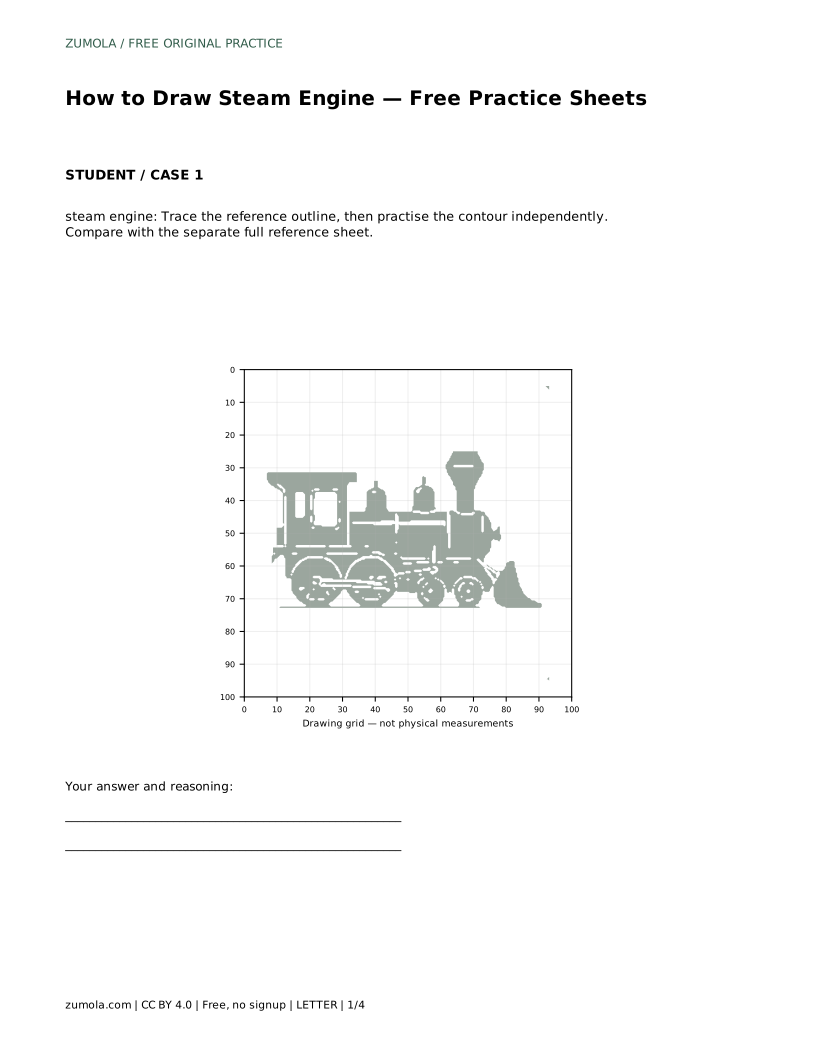
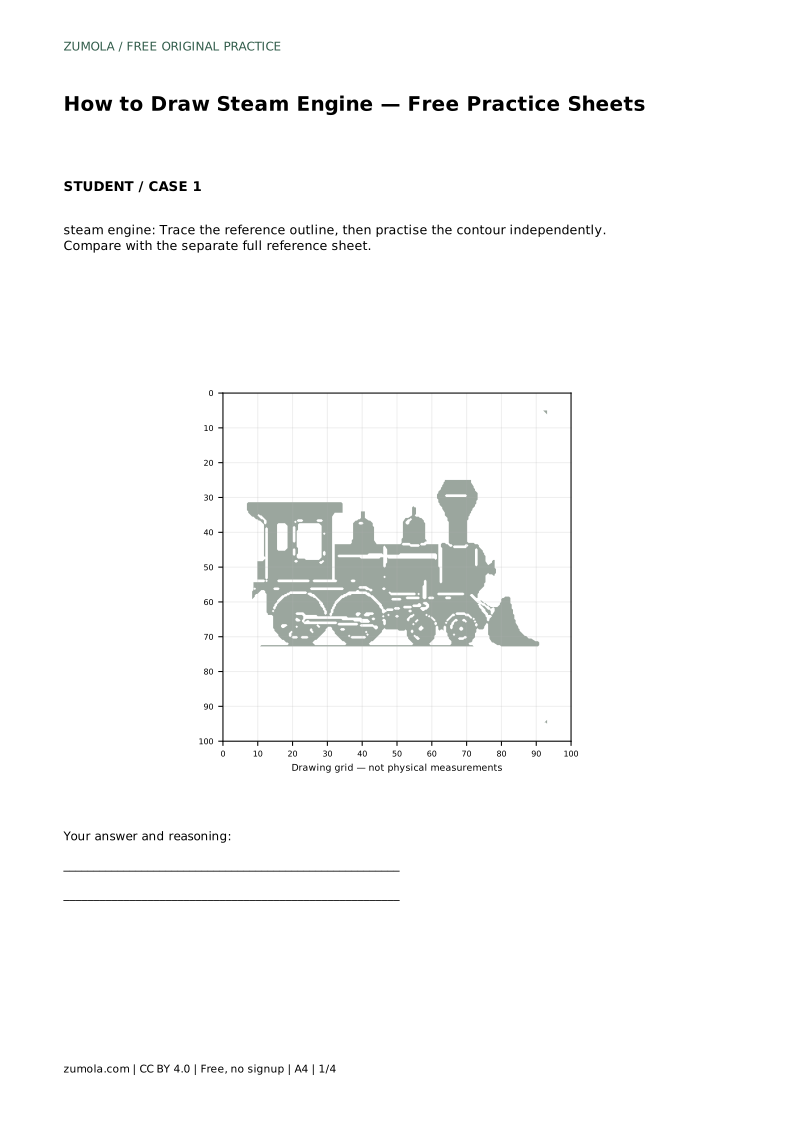
The tracing sheet asks you to follow the reference outline first, then practise the contour independently on blank space. Tracing builds familiarity with the sequence of shapes; the independent pass tests whether you can recall that sequence without the line underneath.
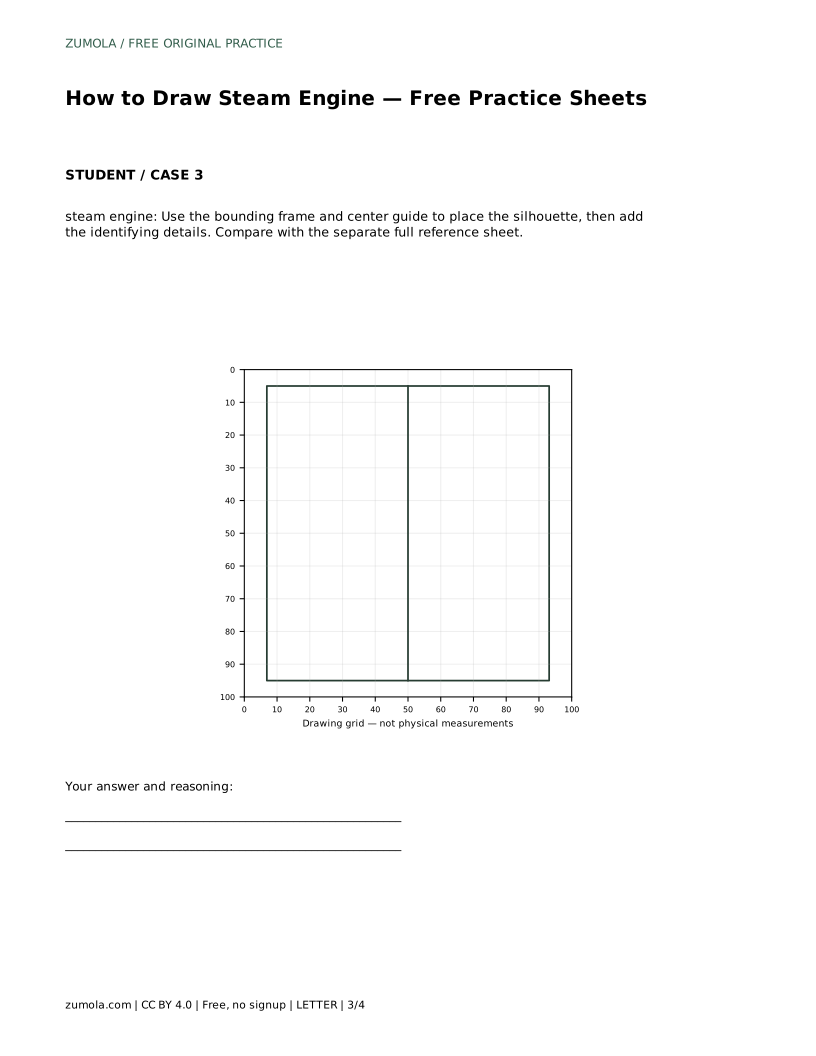
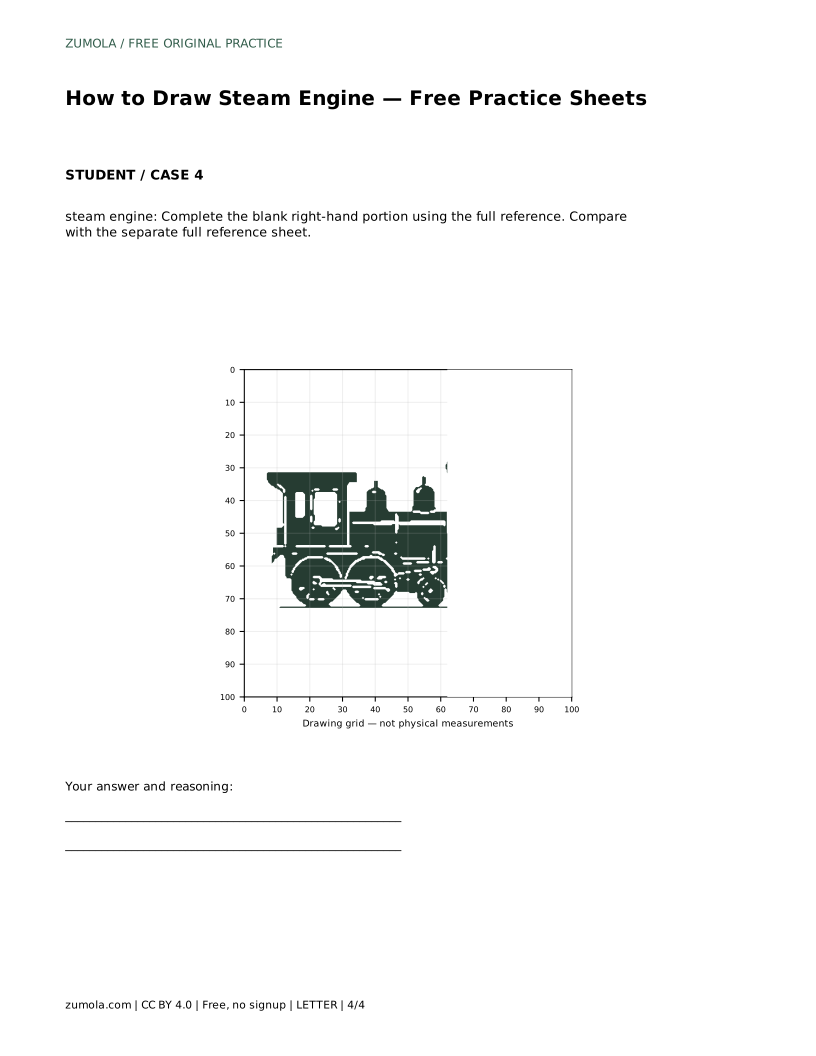
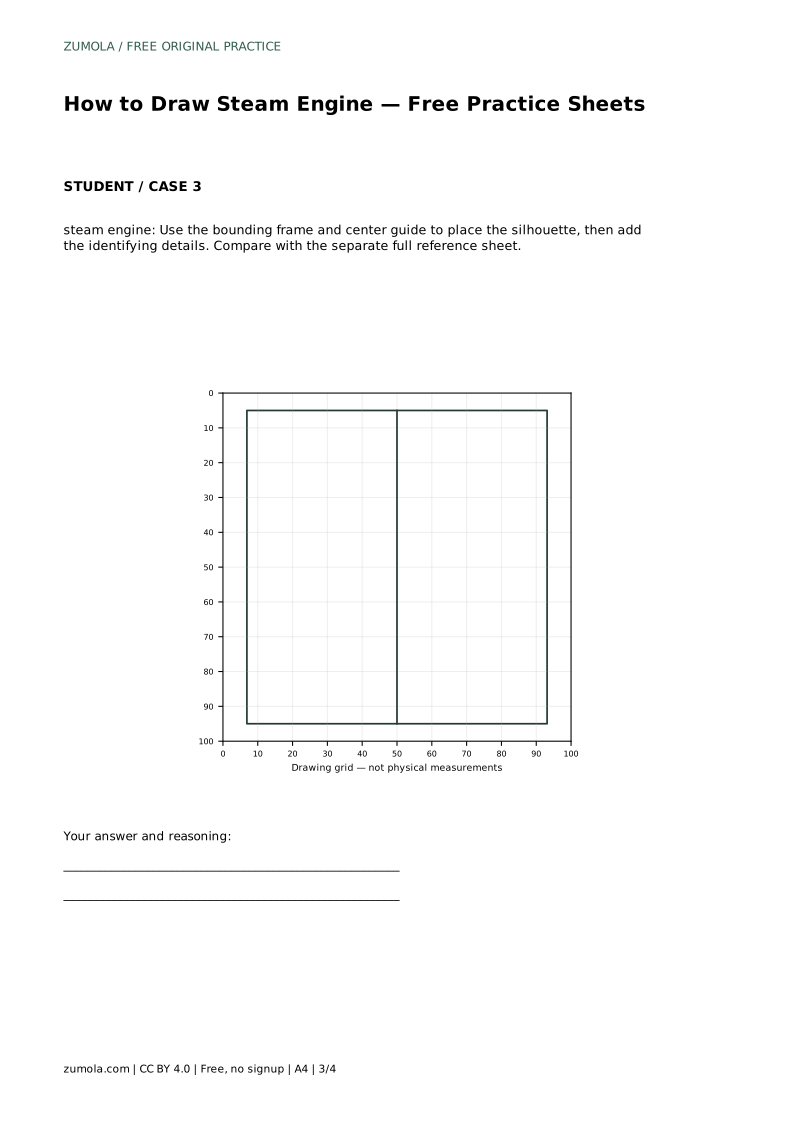
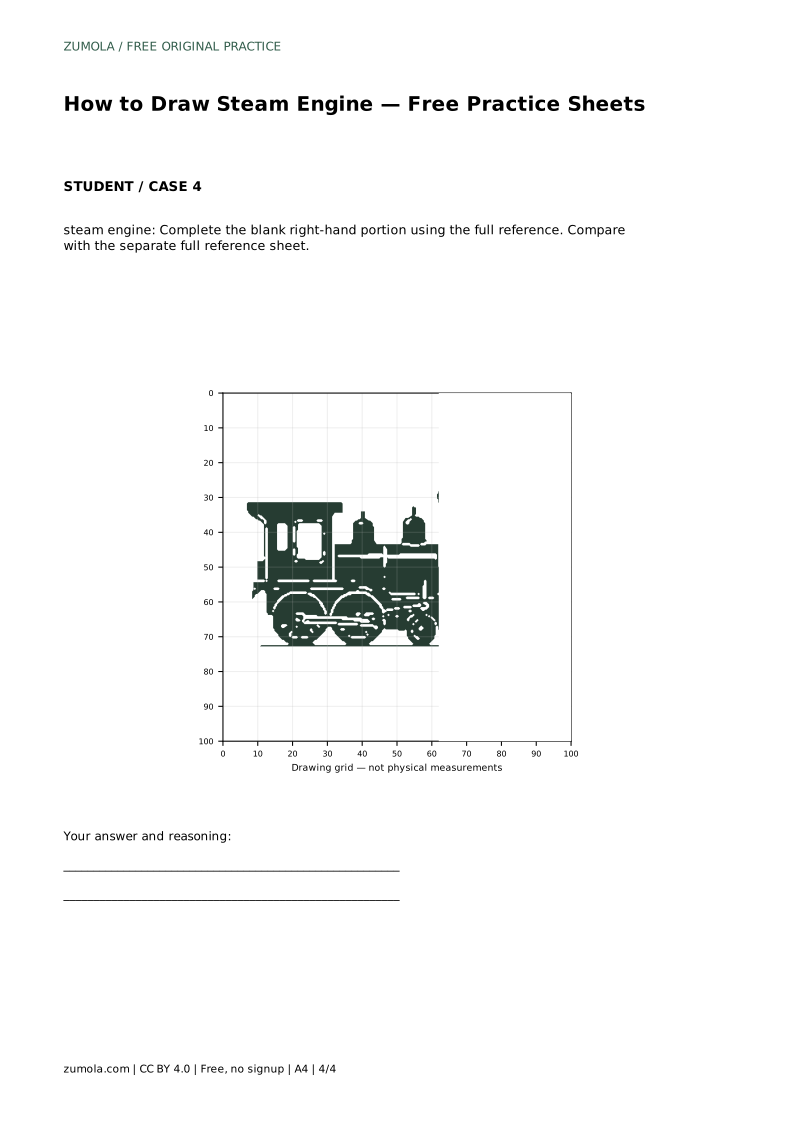
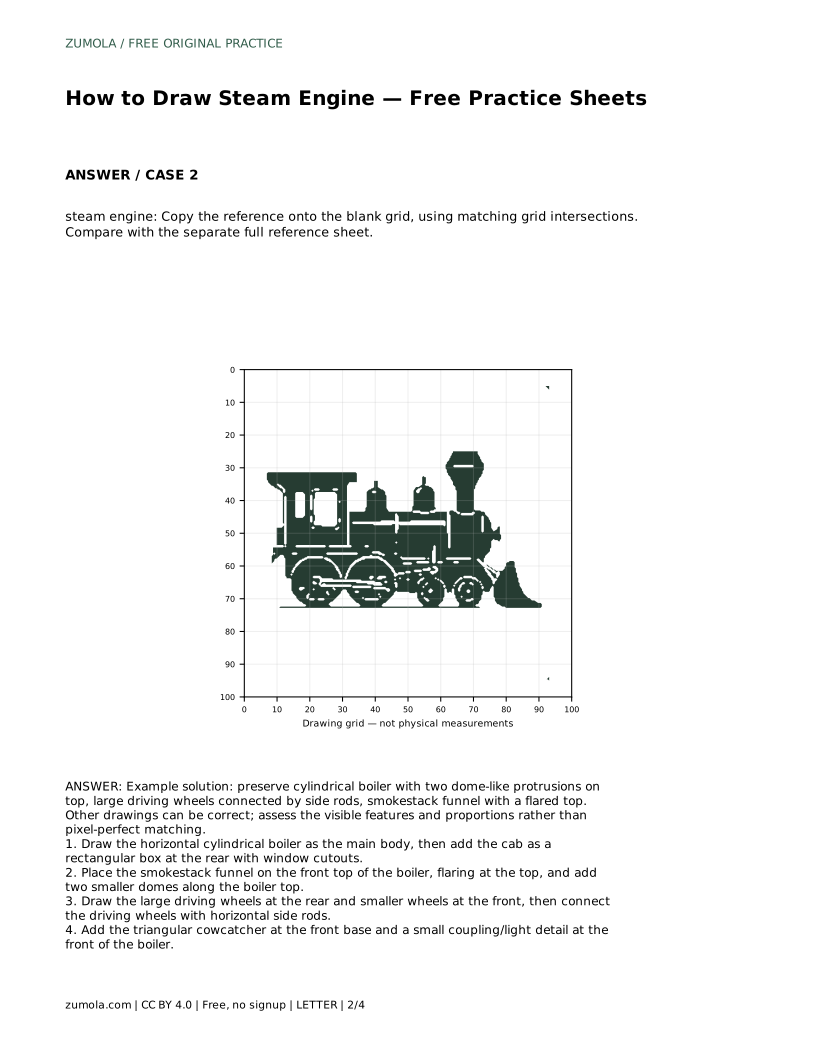
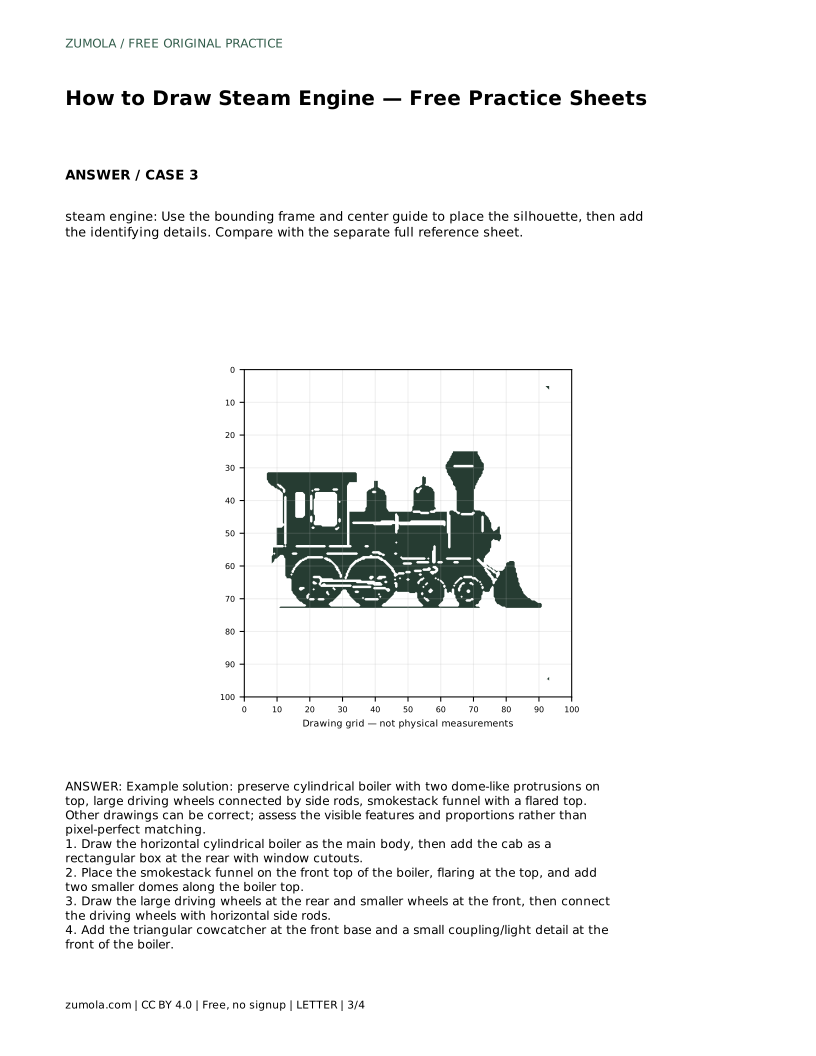
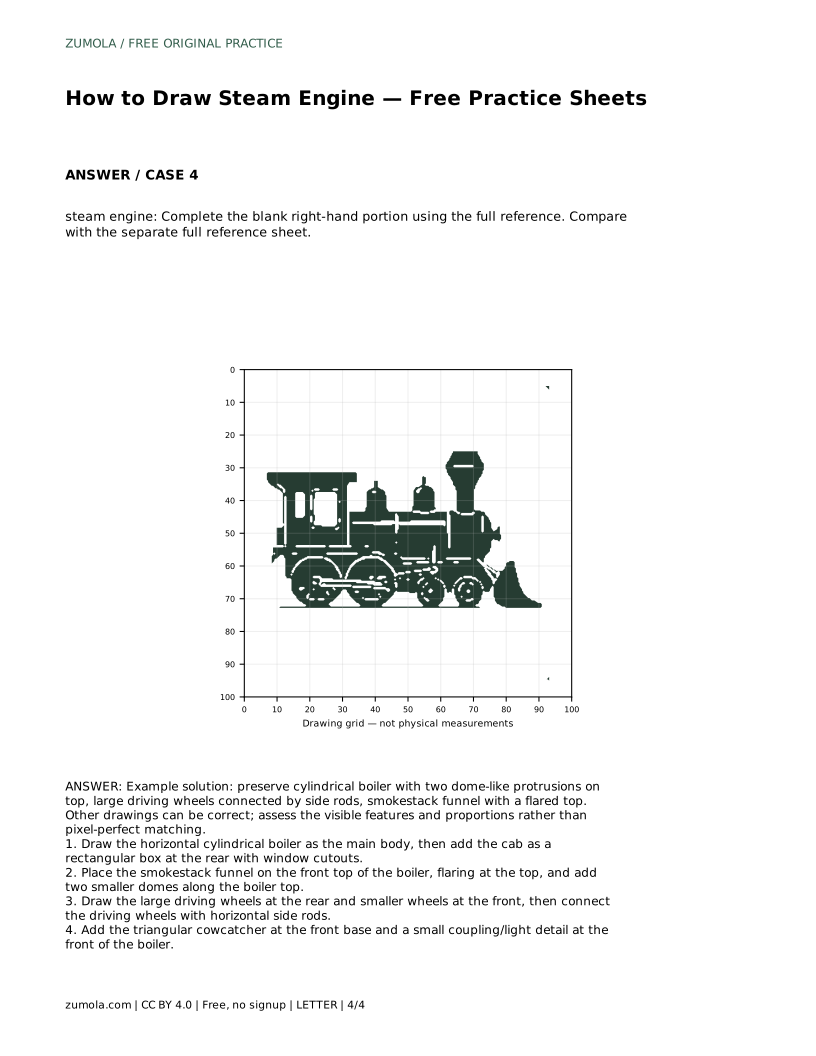
The grid sheet asks you to copy the reference onto a blank grid using matching intersections. Read where each major shape crosses a grid line, such as the boiler's top edge or the centre of a driving wheel, and place those points before connecting them. The guide-frame sheet works differently: use the bounding frame and centre guide to position the silhouette, then add the identifying details. The partial sheet gives you the left portion and asks you to complete the blank right-hand portion using the full reference.
A steam engine drawing can be correct in more than one way. Rather than chasing a pixel-perfect match, check that the identifying features are present and reasonably proportioned: a cylindrical boiler, a rear cab with windows, a flared funnel, two top domes, large rear driving wheels linked by side rods, smaller front wheels, and a triangular cowcatcher.
Proportion matters as much as presence. The boiler should read as the longest element, the cab should sit clearly at the rear, and the driving wheels should be noticeably larger than the front wheels. If the funnel looks too wide or the cab too short, adjust those shapes before adding shading or extra line work.
This is a drawing exercise about recognizable shapes and proportions, not a technical diagram of a working locomotive. Treat the boiler, domes, and rods as visual forms to place and compare. You do not need to explain how steam moves through the engine or how the rods transfer motion. Focus on clean contours, consistent scale, and a level arrangement of wheels.
steam engine: Trace the reference outline, then practise the contour independently. Compare with the separate full reference sheet.
Example solution: preserve cylindrical boiler with two dome-like protrusions on top, large driving wheels connected by side rods, smokestack funnel with a flared top. Other drawings can be correct; assess the visible features and proportions rather than pixel-perfect matching. Draw the horizontal cylindrical boiler as the main body, then add the cab as a rectangular box at the rear with window cutouts. Place the smokestack funnel on the front top of the boiler, flaring at the top, and add two smaller domes along the boiler top. Draw the large driving wheels at the rear and smaller wheels at the front, then connect the driving wheels with horizontal side rods. Add the triangular cowcatcher at the front base and a small coupling/light detail at the front of the boiler.
No. Other drawings can be correct. Assess the visible features and proportions rather than pixel-perfect matching.
Boiler first, then the rear cab, then the funnel and two domes, then the wheels and side rods, and finally the cowcatcher and front detail.
Mark where major shapes cross grid intersections, then connect those points. Place the boiler ends, cab corners, funnel top, and wheel centres before drawing curves.
All drawing practice · Free coordinate paper
Original resources · CC BY 4.0 · Free for personal and classroom use with attribution.