Reference diagrams
LETTER · Download PDF
A4 · Download PDF
Free original resources
Learn to draw a stagecoach by building the cabin, four spoked wheels, and horse team in order. Practice sheets support tracing, grids, and guided placement.
Four original cases, with reference diagrams, practice sheets and worked answers. Everything is free; no signup required.
LETTER · Download PDF
A4 · Download PDF
LETTER · Download PDF
A4 · Download PDF
LETTER · Download PDF
A4 · Download PDF
Use A4 or US Letter to match your printer. Use the stated values and conditions to solve each exercise; diagrams are not physical measuring rulers.
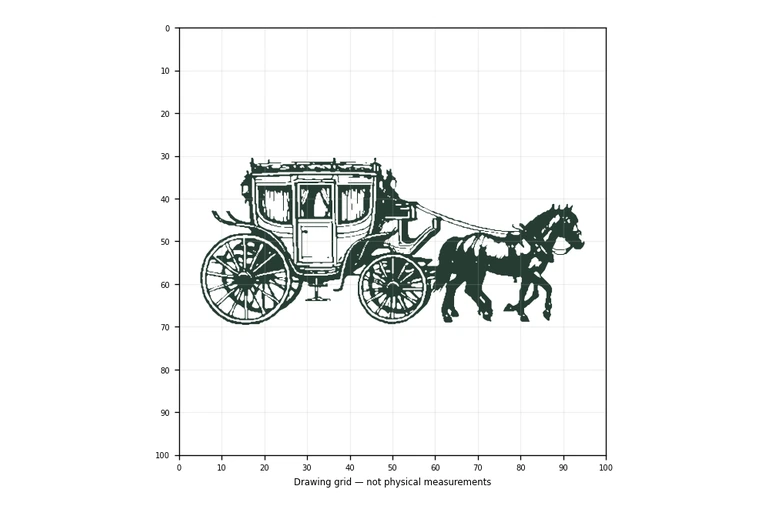
A stagecoach is a useful drawing subject because its parts are easy to name and check: a boxy passenger cabin, four large spoked wheels, and a horse team at the front. This page explains a reliable order for constructing those parts, then shows how to use tracing, grid, and guided-placement practice sheets to build independence. The goal is not a pixel-perfect copy. Different drawings can be correct when the visible features and proportions hold together.
Start with the passenger cabin, because it sets the overall scale. Draw a large rectangle with a slightly arched roof. Add window and door panels on the side you can see. Keep the panels inside the cabin outline so the body still reads as one solid box.
Next, place the wheels. A stagecoach has four large spoked wheels: two larger rear wheels and two smaller front wheels. Each wheel needs a hub and radiating spokes. Draw the rear pair first, then the front pair, checking that the front wheels sit under the forward part of the cabin and the rear wheels sit under the back.
Only then add the horse team at the front. Show the visible horse's body, head, and four legs in a walking pose. Connect the horses to the coach with harness lines, and add the driver's seat and undercarriage details. Working in this order keeps the coach from drifting out of proportion while you draw the animals.
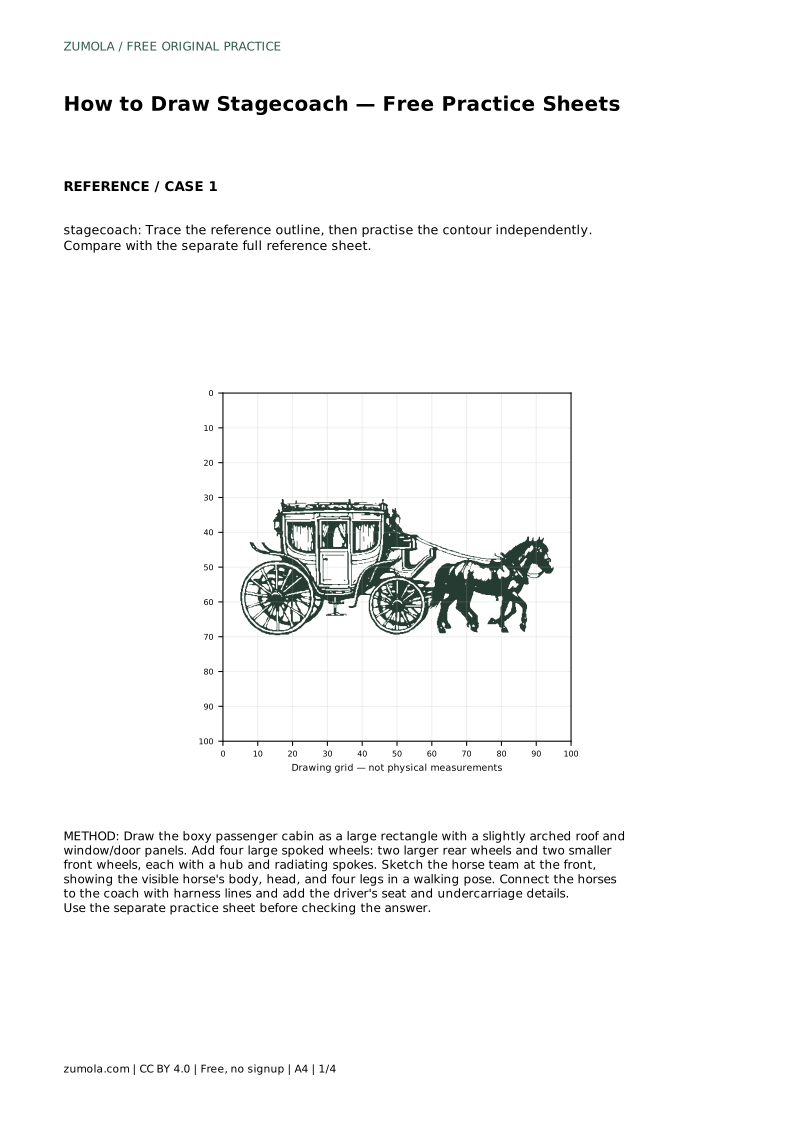
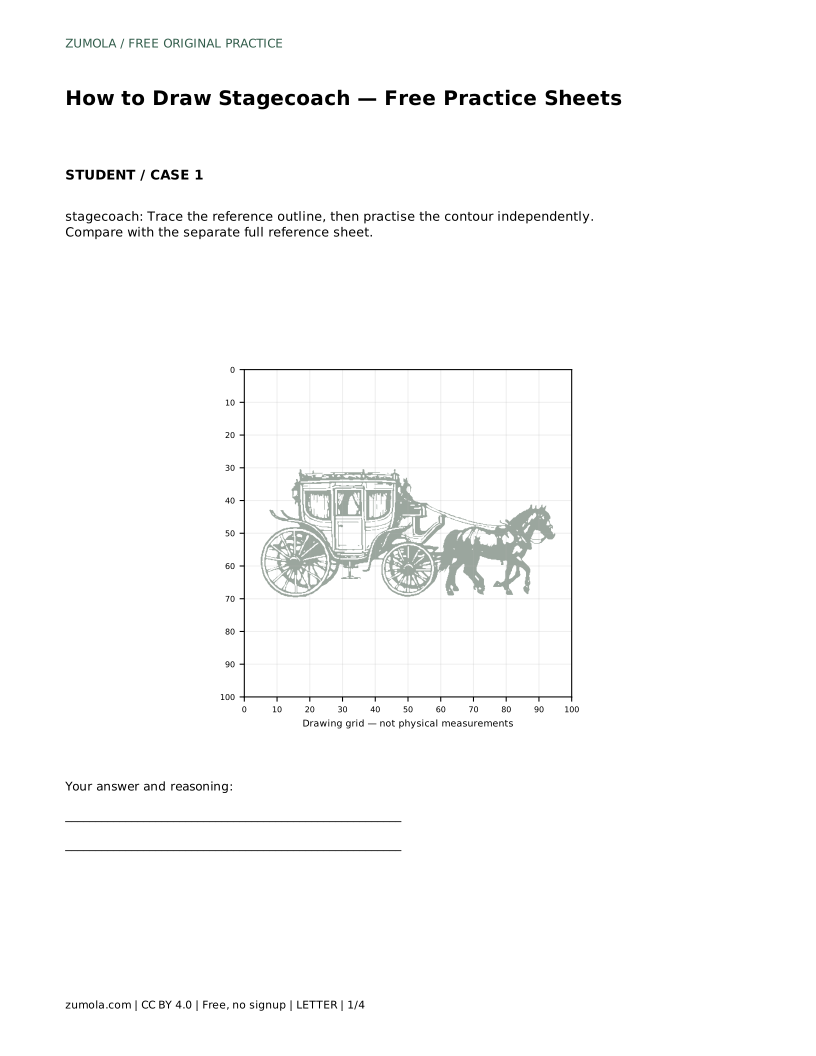
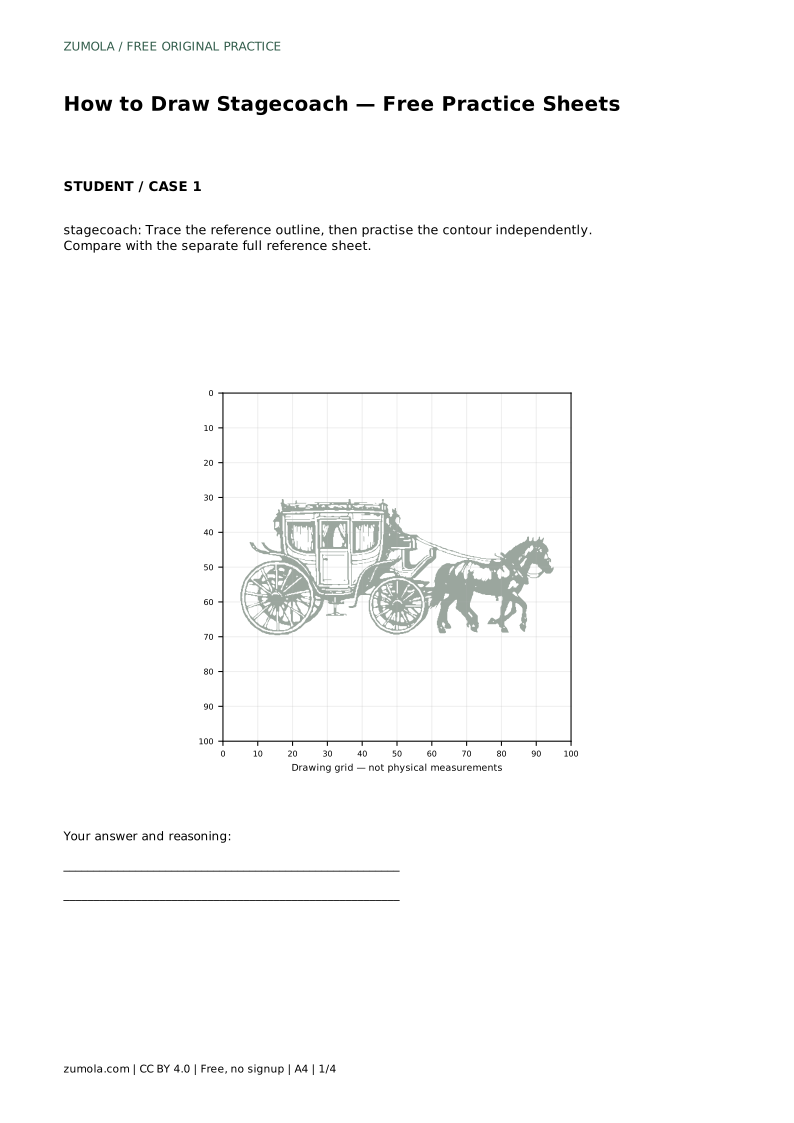
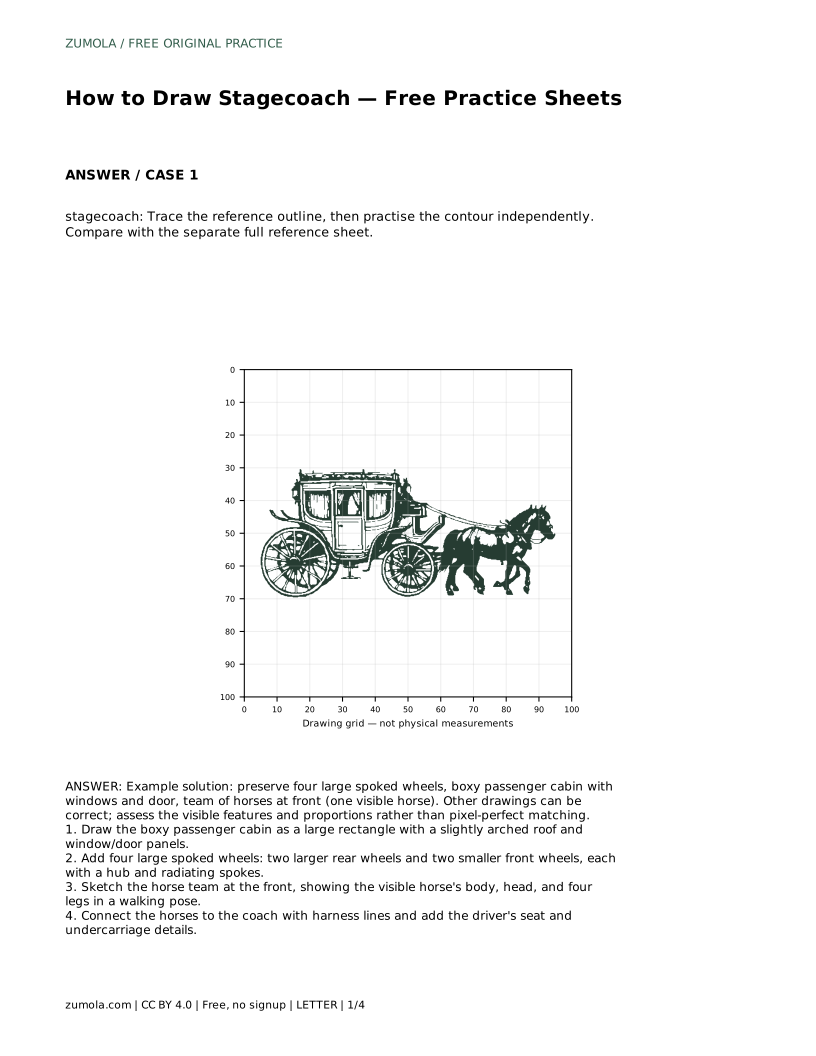
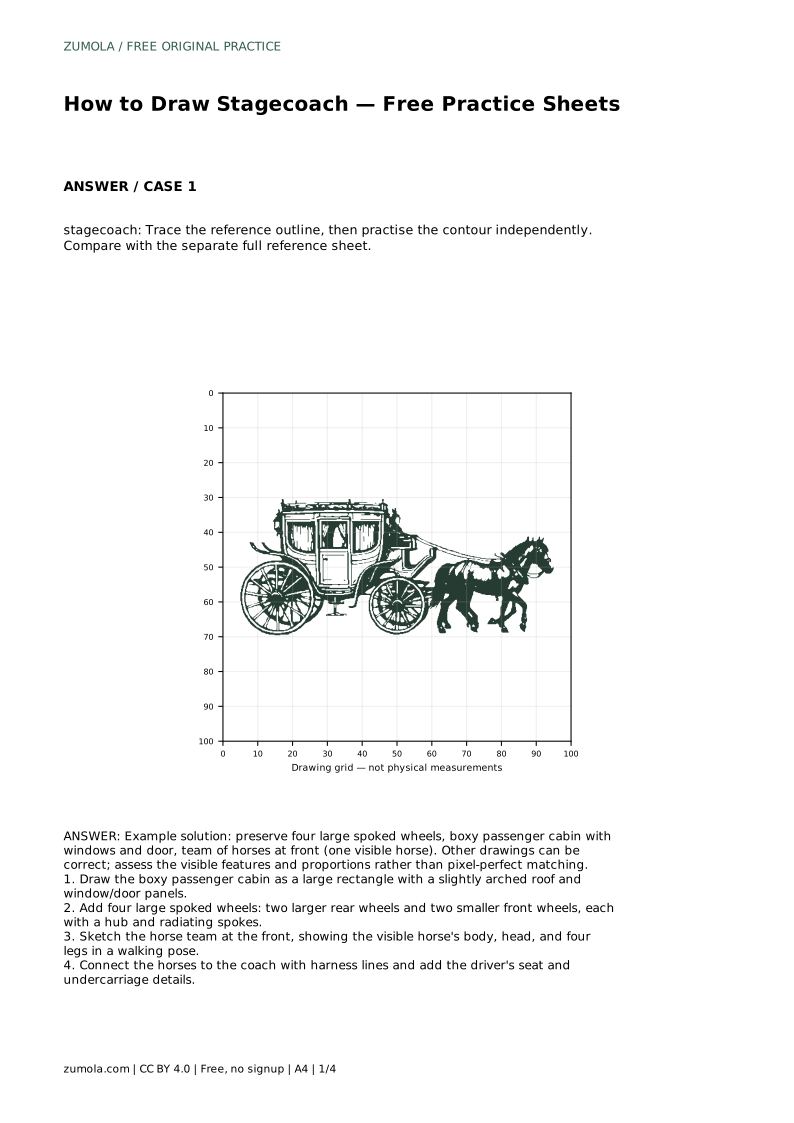
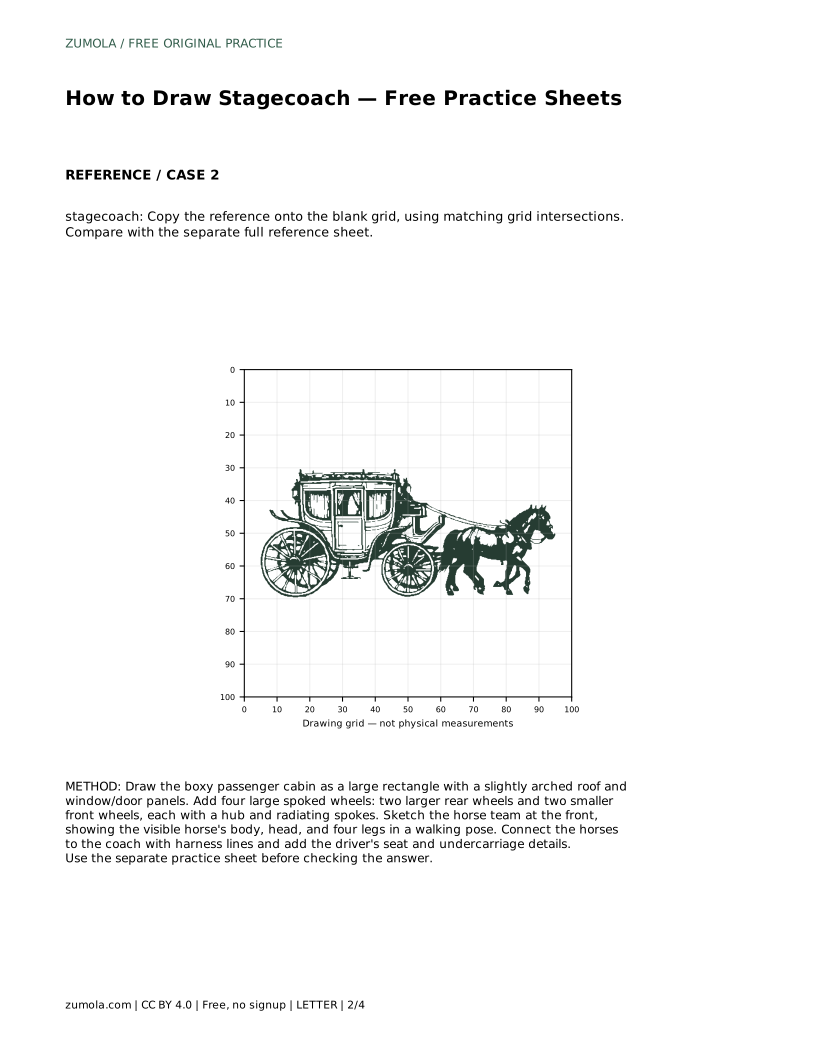
The tracing sheet asks you to follow the reference outline first, then practise the contour independently. Tracing teaches the sequence of the cabin, wheels, and horse team; the independent pass shows whether you can reproduce that sequence without the outline underneath.
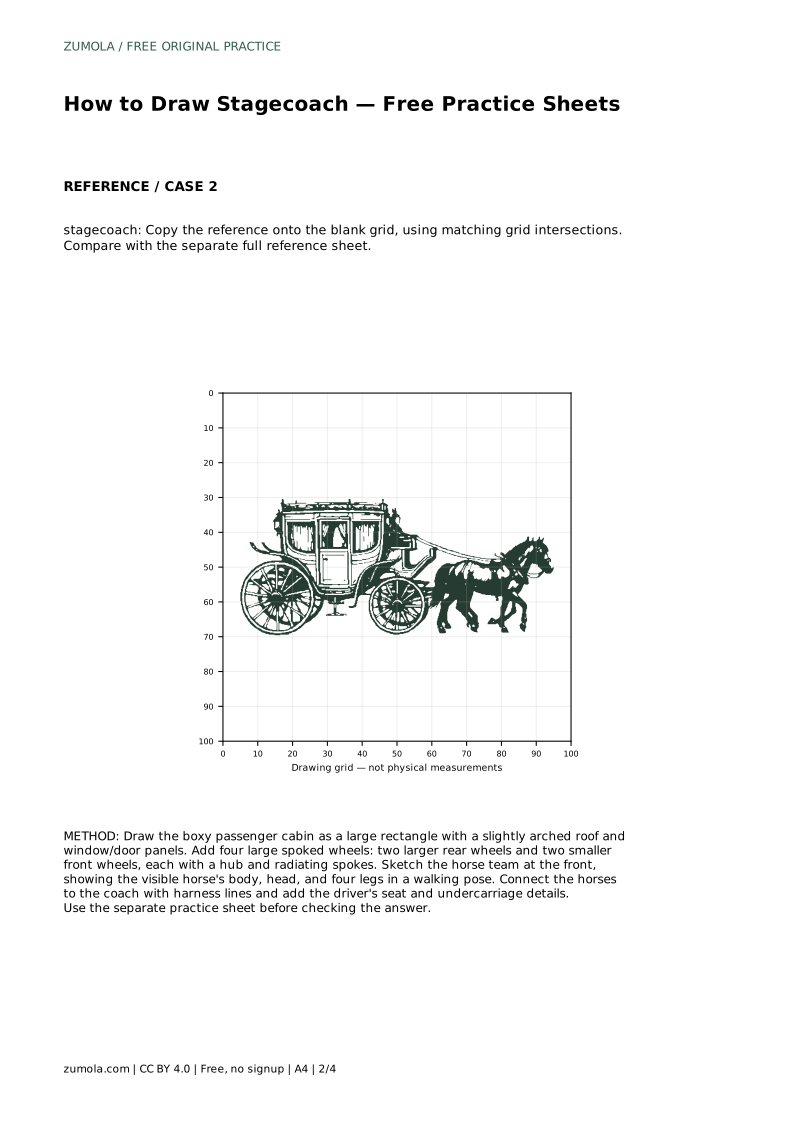
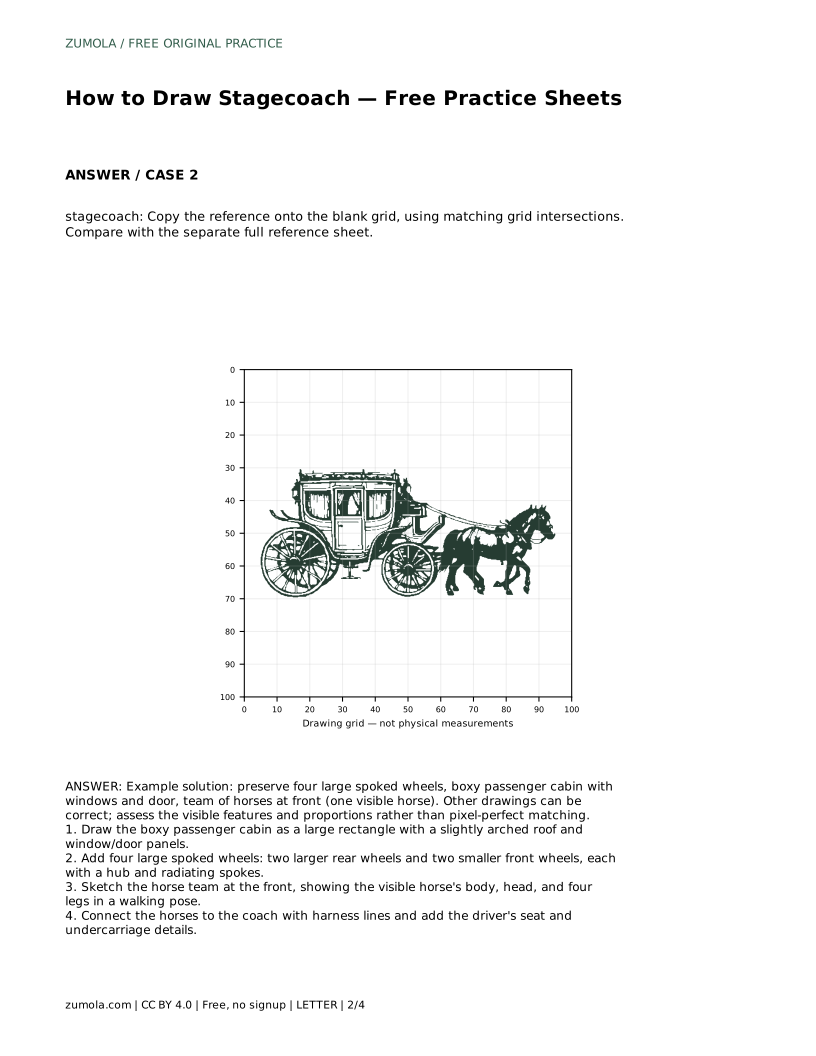
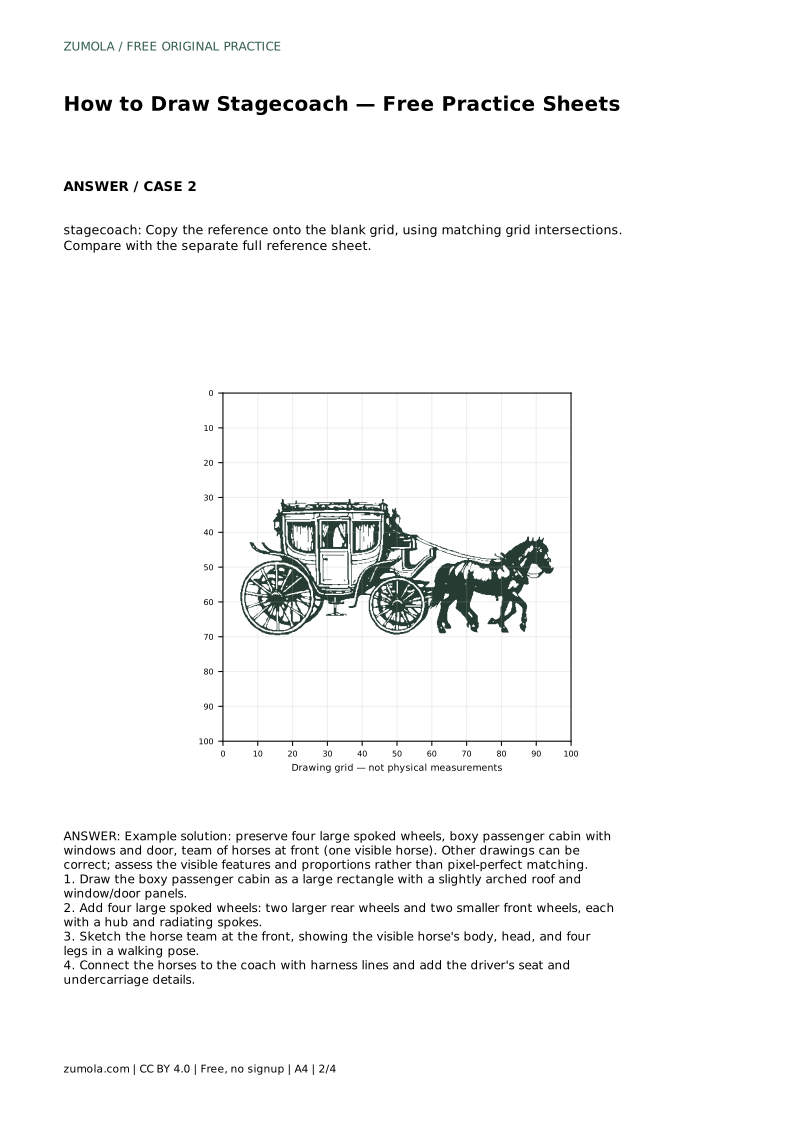
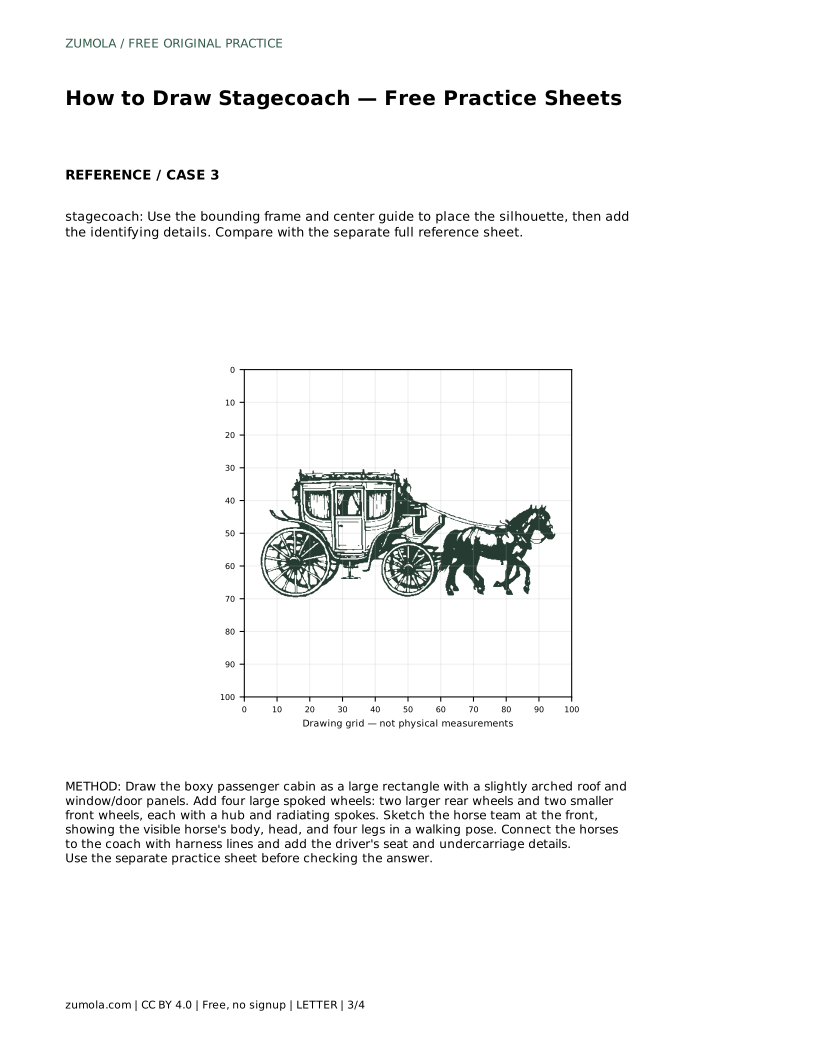
The grid sheet asks you to copy the reference onto a blank grid using matching grid intersections. Use the intersections to fix where the cabin corners, wheel hubs, and horse's head sit relative to one another. Count squares rather than guessing distances.
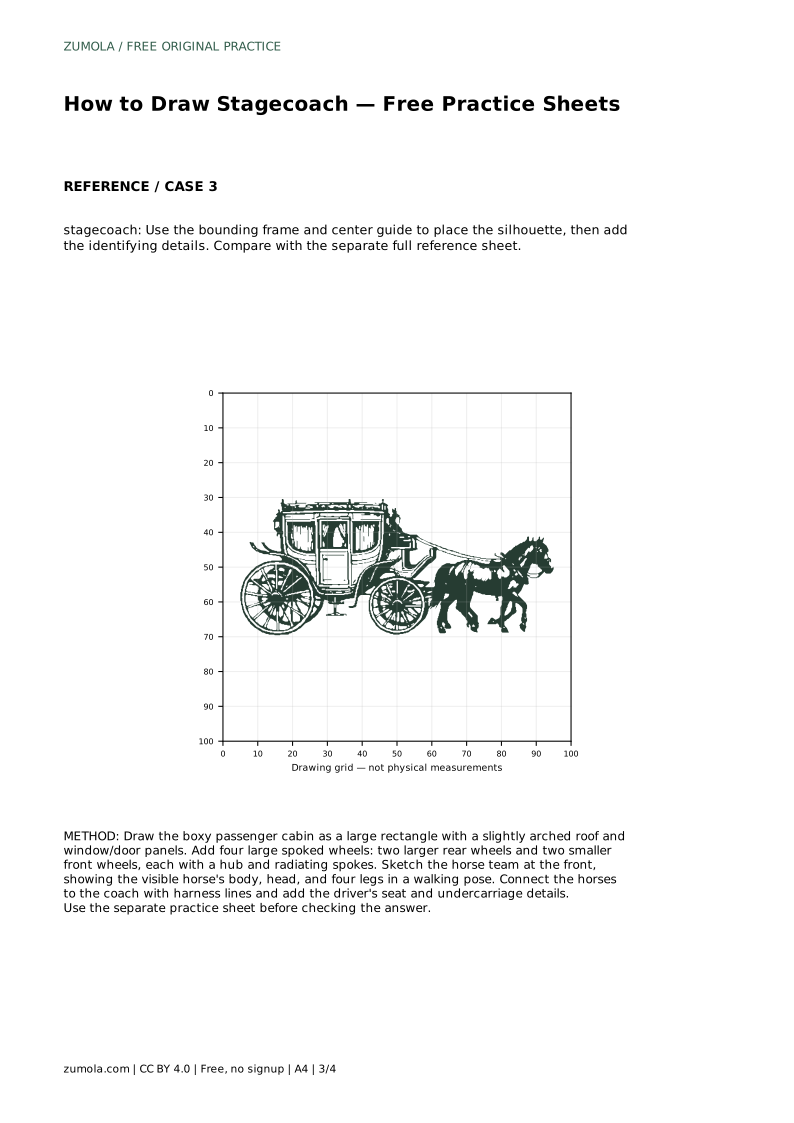
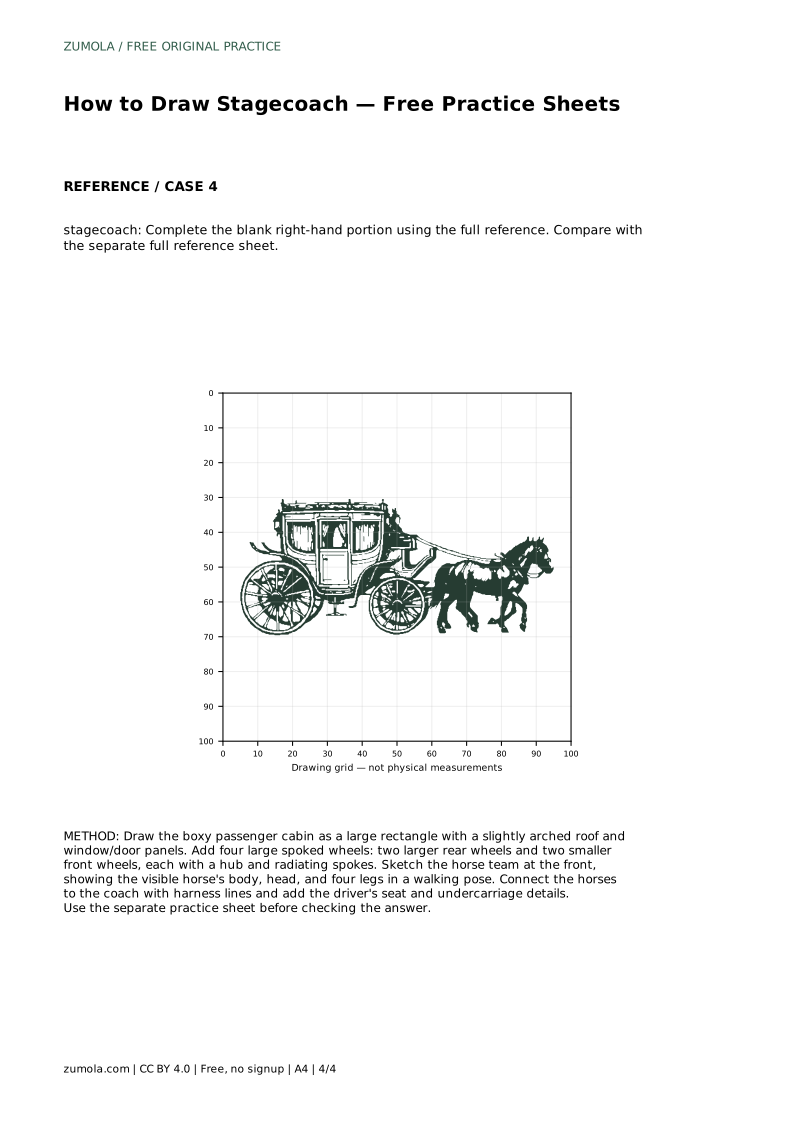
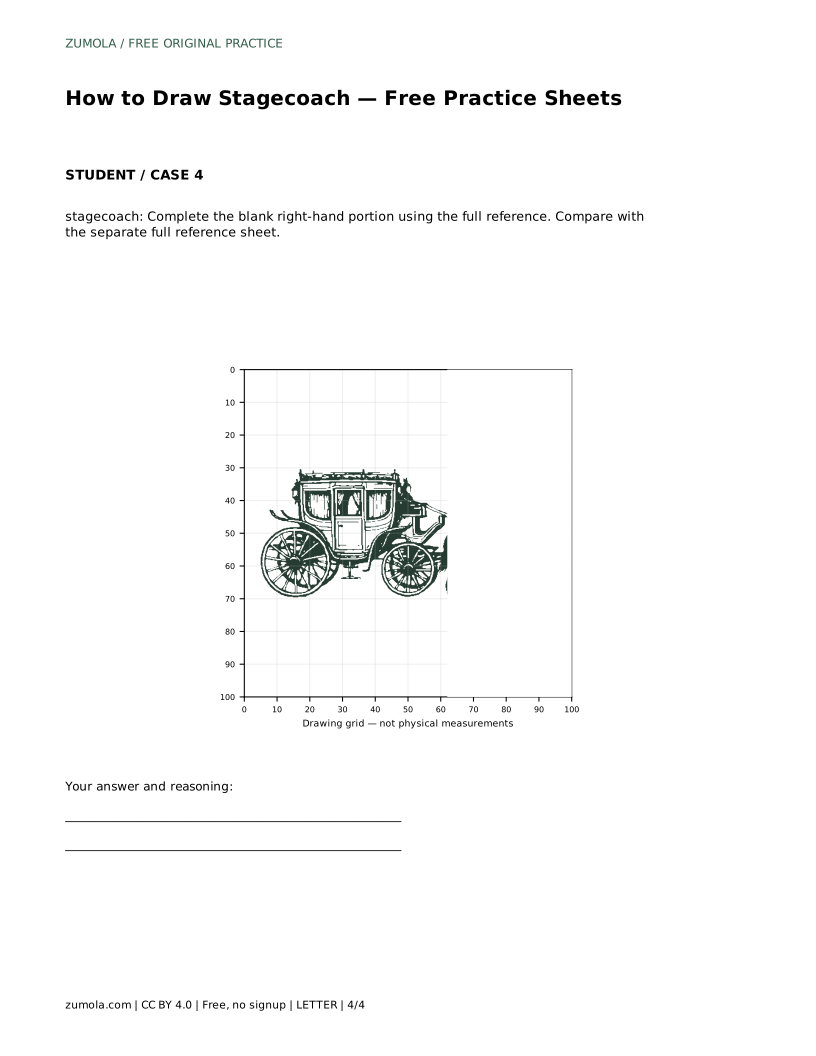
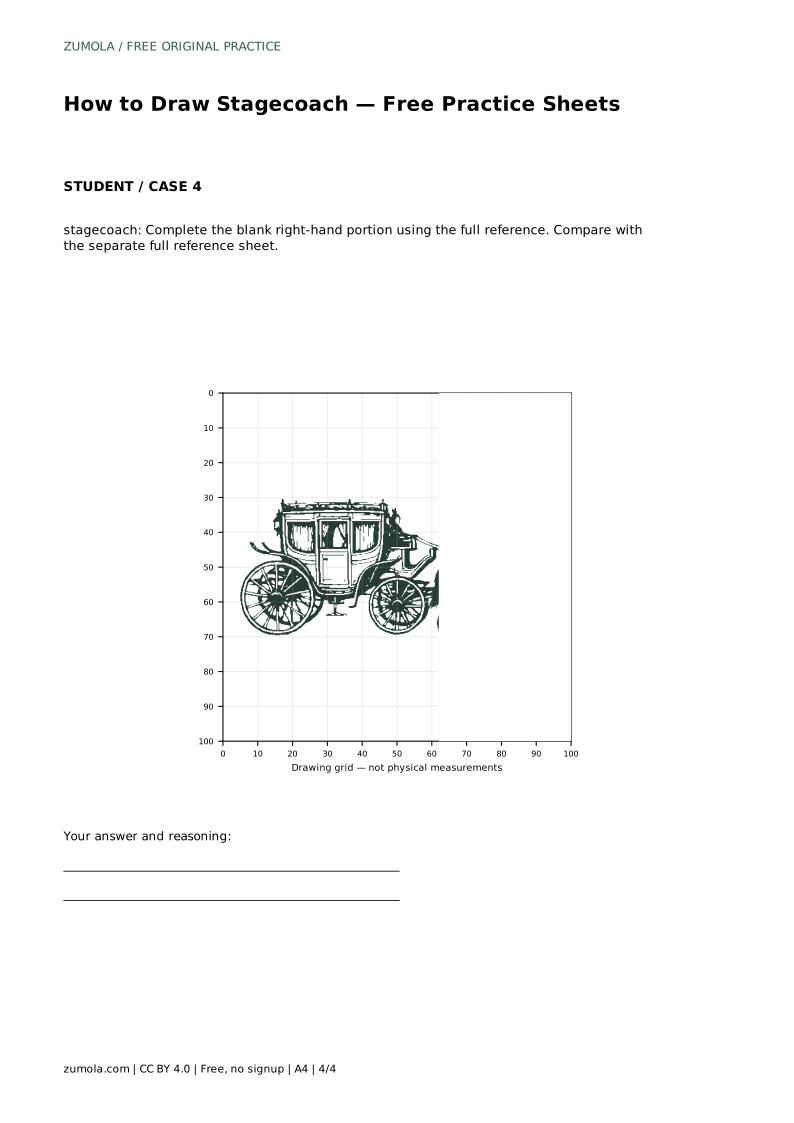
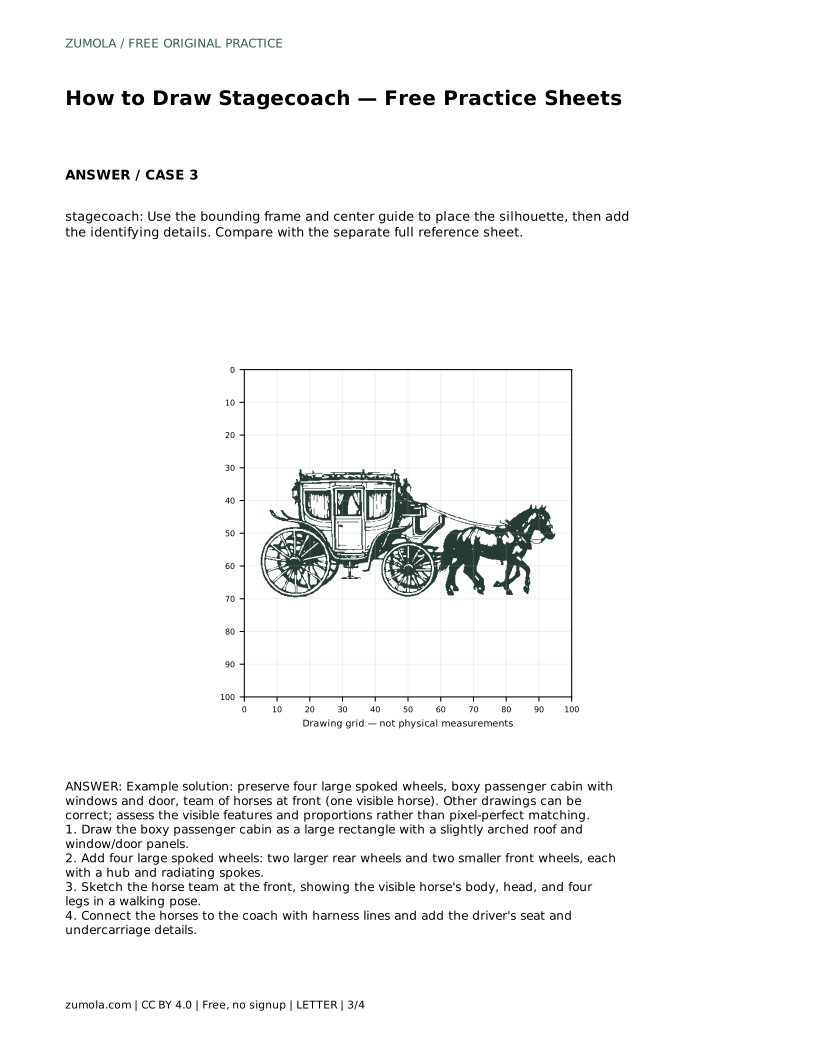
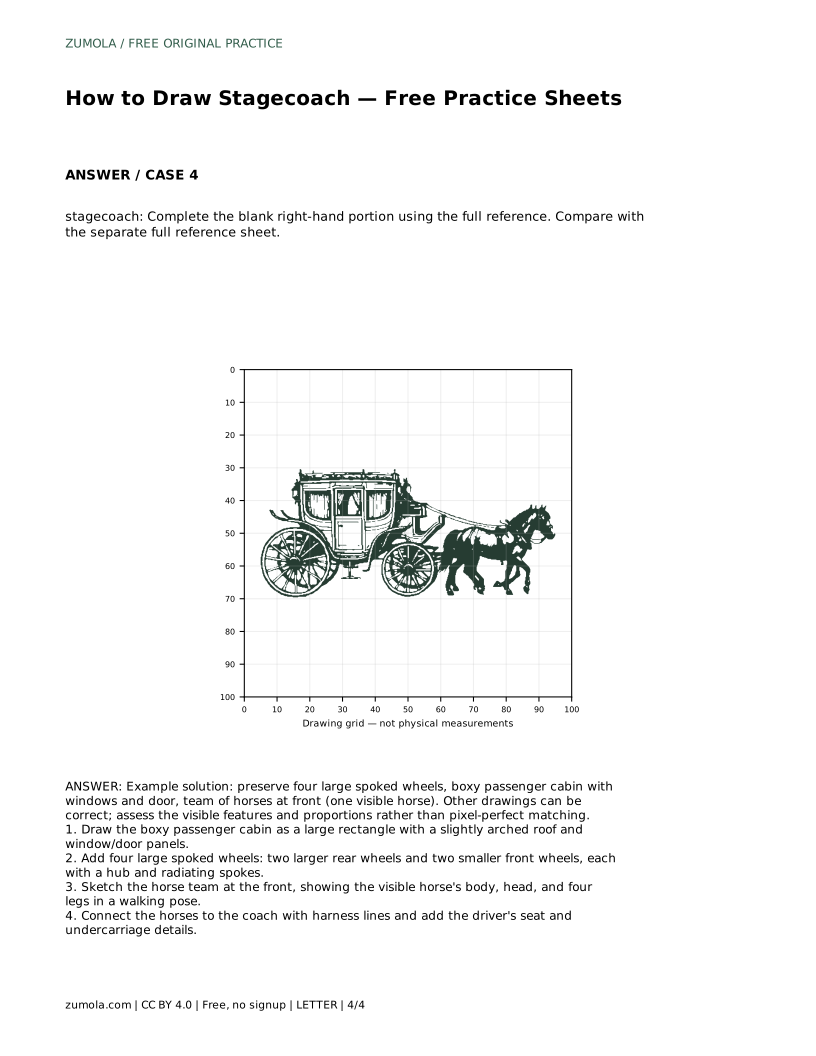
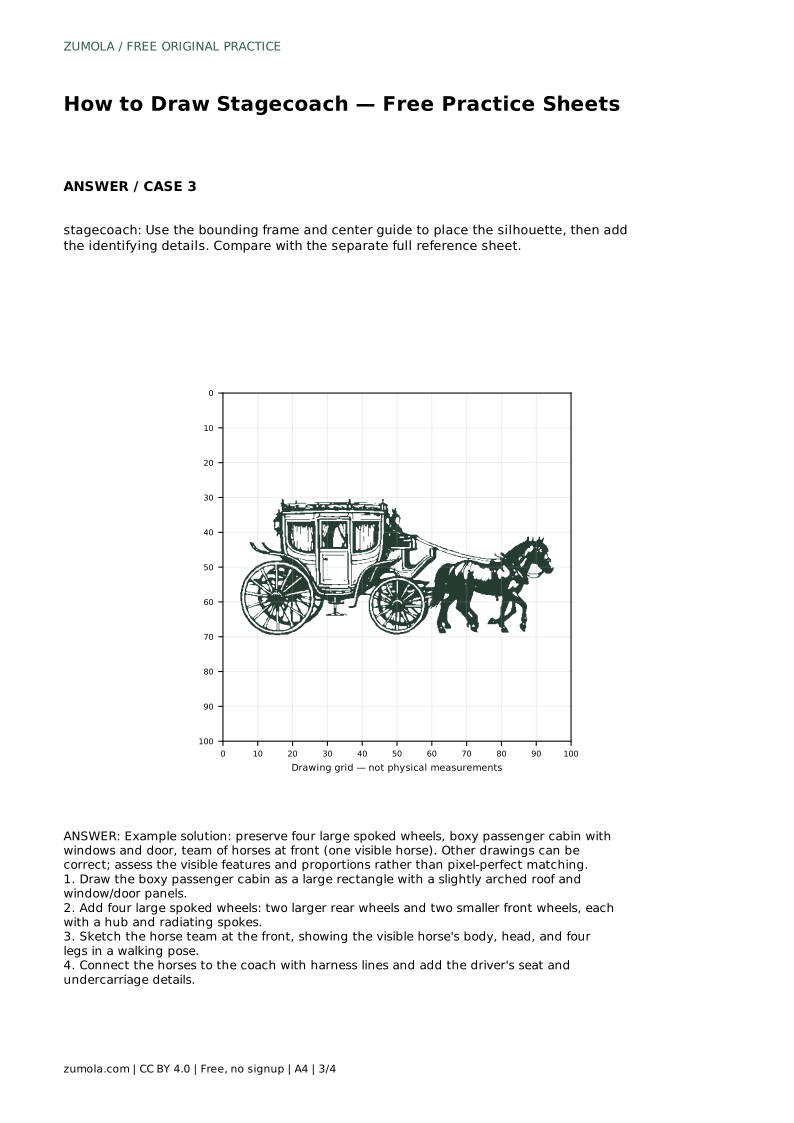
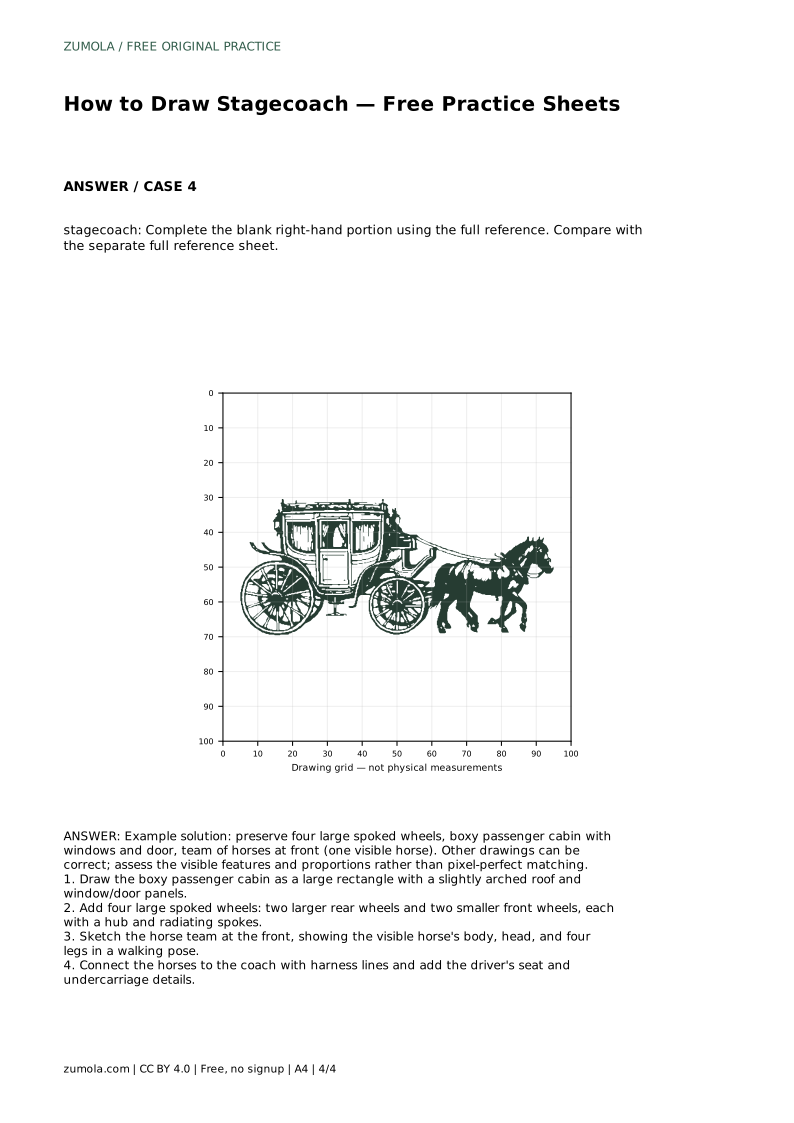
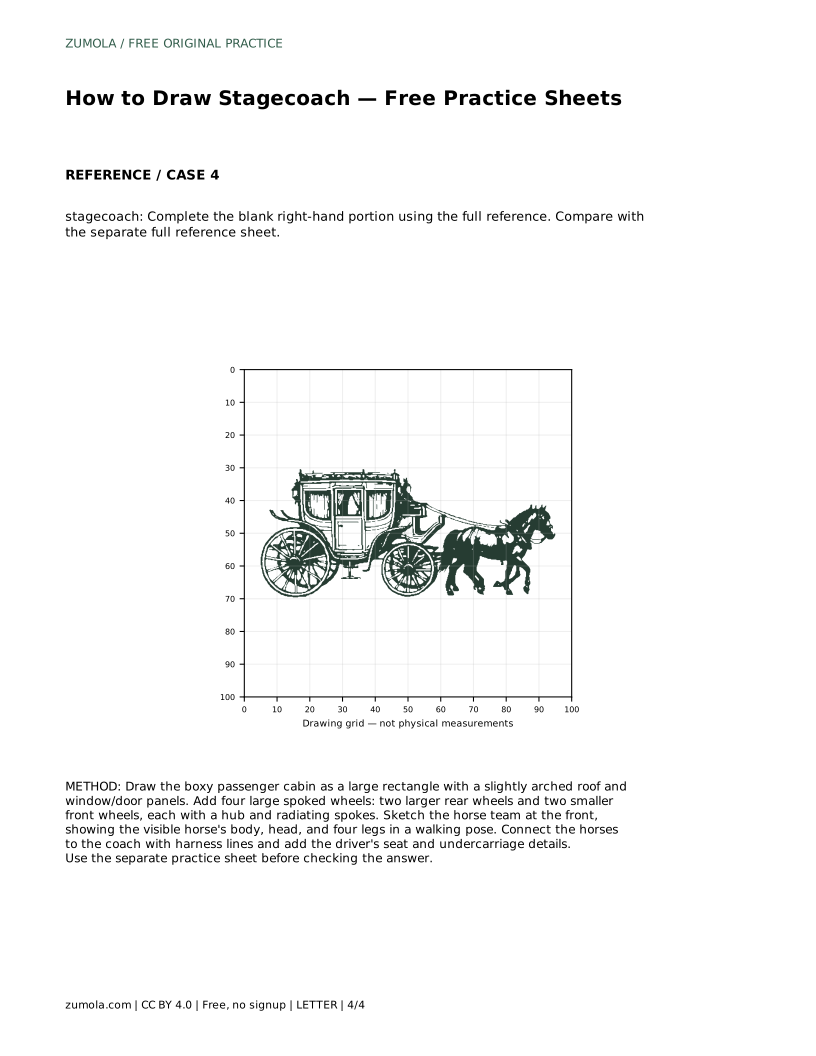
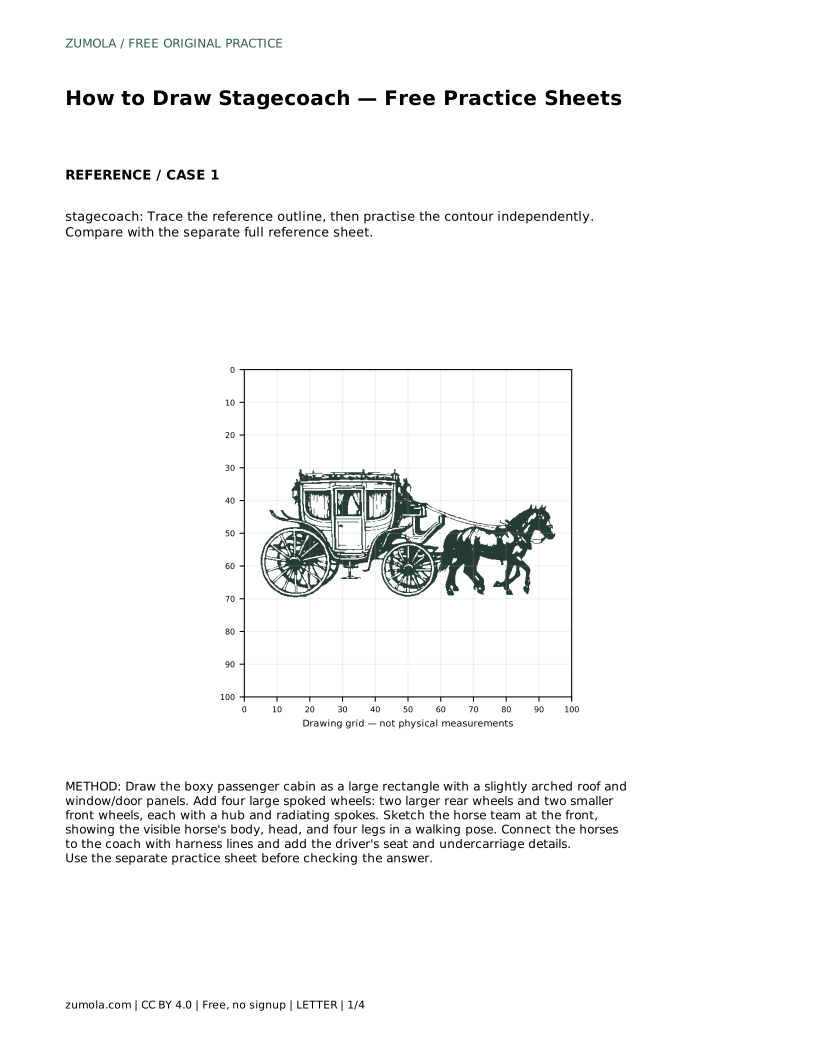
The bounding-frame sheet gives you a frame and center guide. Place the silhouette inside the frame first, then add the identifying details: windows, door, spokes, harness, and driver's seat. The partial sheet asks you to complete the blank right-hand portion using the full reference, so check the left side before continuing across.
Compare the cabin's width to its height, and the rear wheel diameter to the front wheel diameter. The rear wheels should be visibly larger. Check that the horse team sits ahead of the front wheels, not on top of them, and that the harness lines run between the horse and the coach body.
Keep the drawing light until the main shapes agree. Erasing a misplaced wheel hub is easier than erasing spokes drawn over it. When the silhouette and wheel placement look right, strengthen the outlines and add the smaller details.
Because art has multiple valid outcomes, judge the drawing by visible features and proportions rather than by exact matching. A correct stagecoach drawing preserves four large spoked wheels, a boxy passenger cabin with windows and a door, and a horse team at the front with at least one visible horse.
Use the rubric below to review your own sheet or a class set. Note which criteria are met and which need another pass. A drawing can miss one detail and still be a strong stagecoach study.
stagecoach: Trace the reference outline, then practise the contour independently. Compare with the separate full reference sheet.
Example solution: preserve four large spoked wheels, boxy passenger cabin with windows and door, team of horses at front (one visible horse). Other drawings can be correct; assess the visible features and proportions rather than pixel-perfect matching. Draw the boxy passenger cabin as a large rectangle with a slightly arched roof and window/door panels. Add four large spoked wheels: two larger rear wheels and two smaller front wheels, each with a hub and radiating spokes. Sketch the horse team at the front, showing the visible horse's body, head, and four legs in a walking pose. Connect the horses to the coach with harness lines and add the driver's seat and undercarriage details.
No. Other drawings can be correct. Assess the visible features and proportions rather than pixel-perfect matching.
Draw the passenger cabin first, then the four spoked wheels, then the horse team and harness lines.
Use the rubric: four large spoked wheels, a boxy cabin with windows and a door, a horse team at the front, and larger rear wheels than front wheels.
All drawing practice · Free coordinate paper
Original resources · CC BY 4.0 · Free for personal and classroom use with attribution.