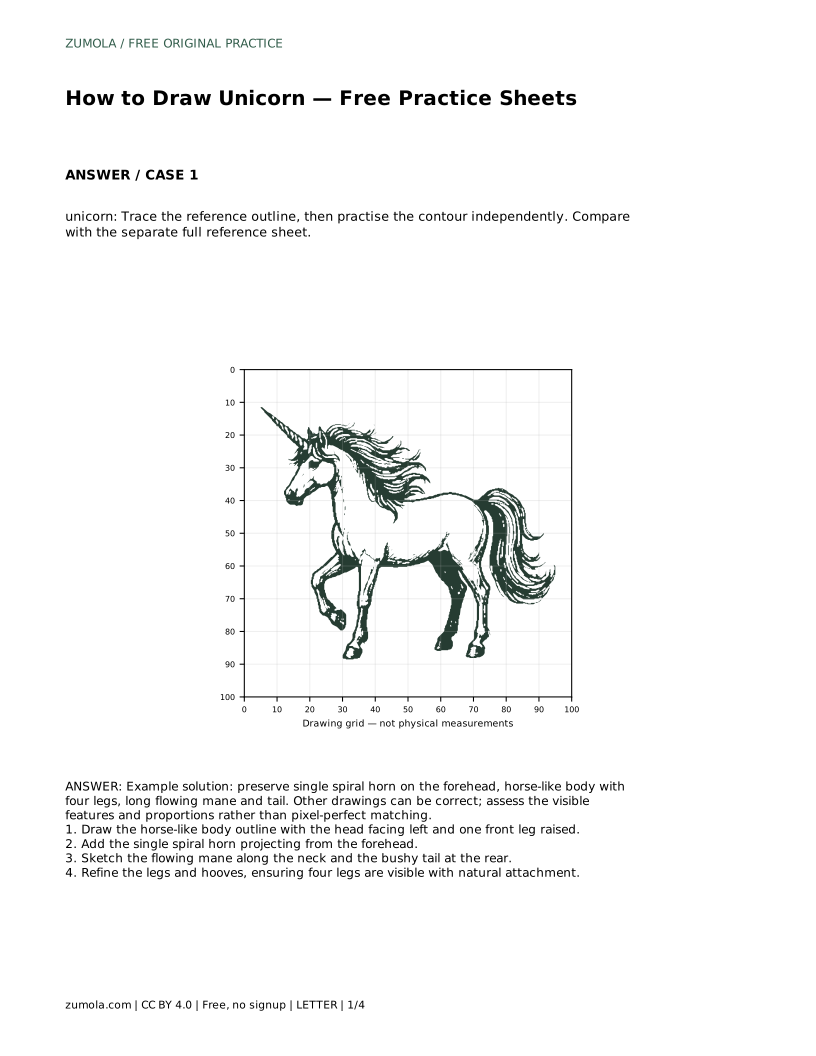
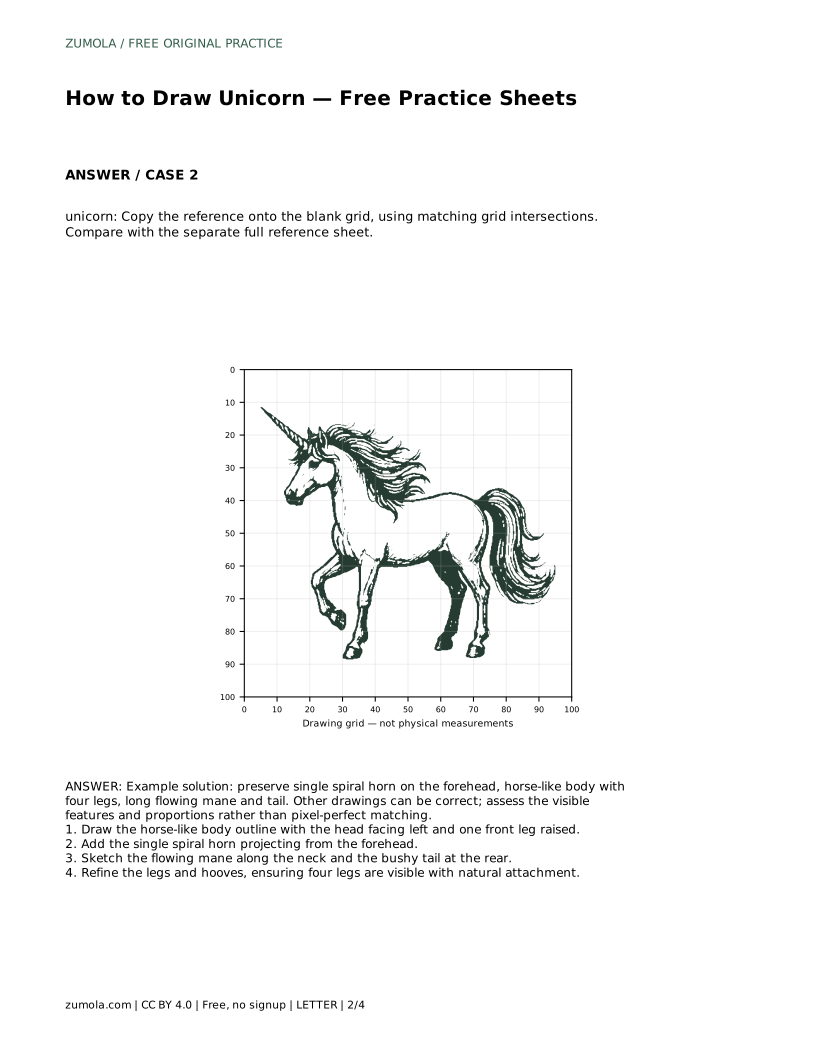
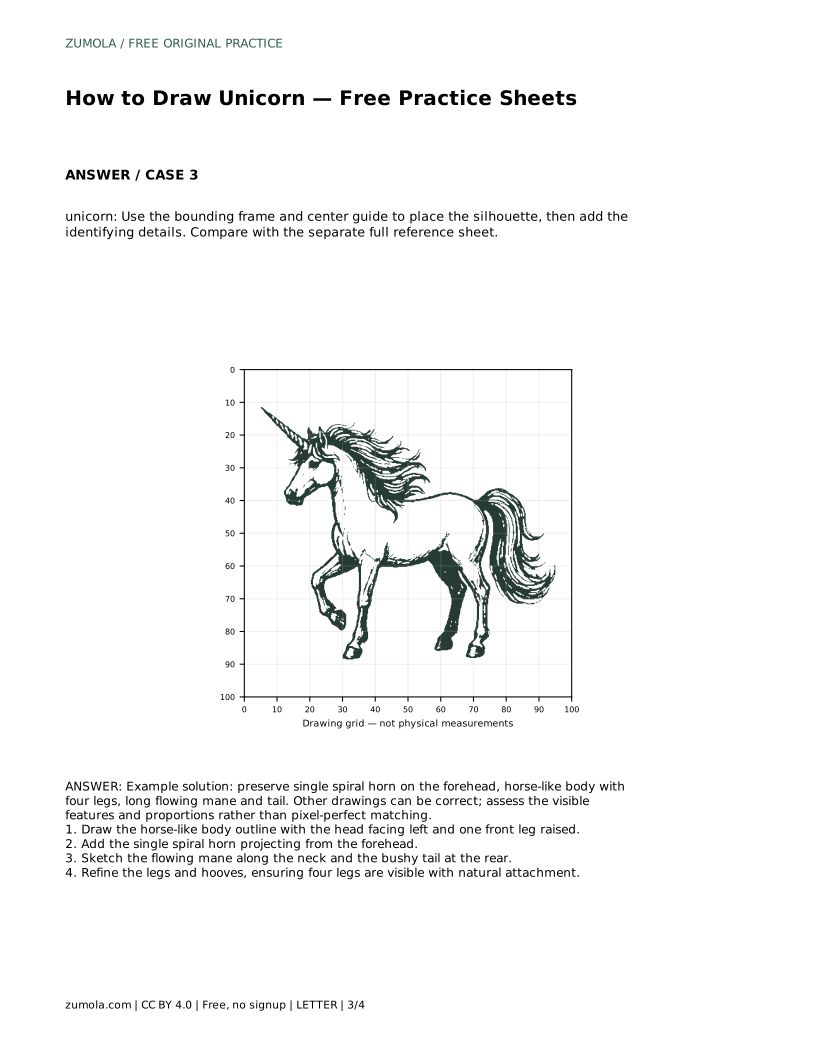
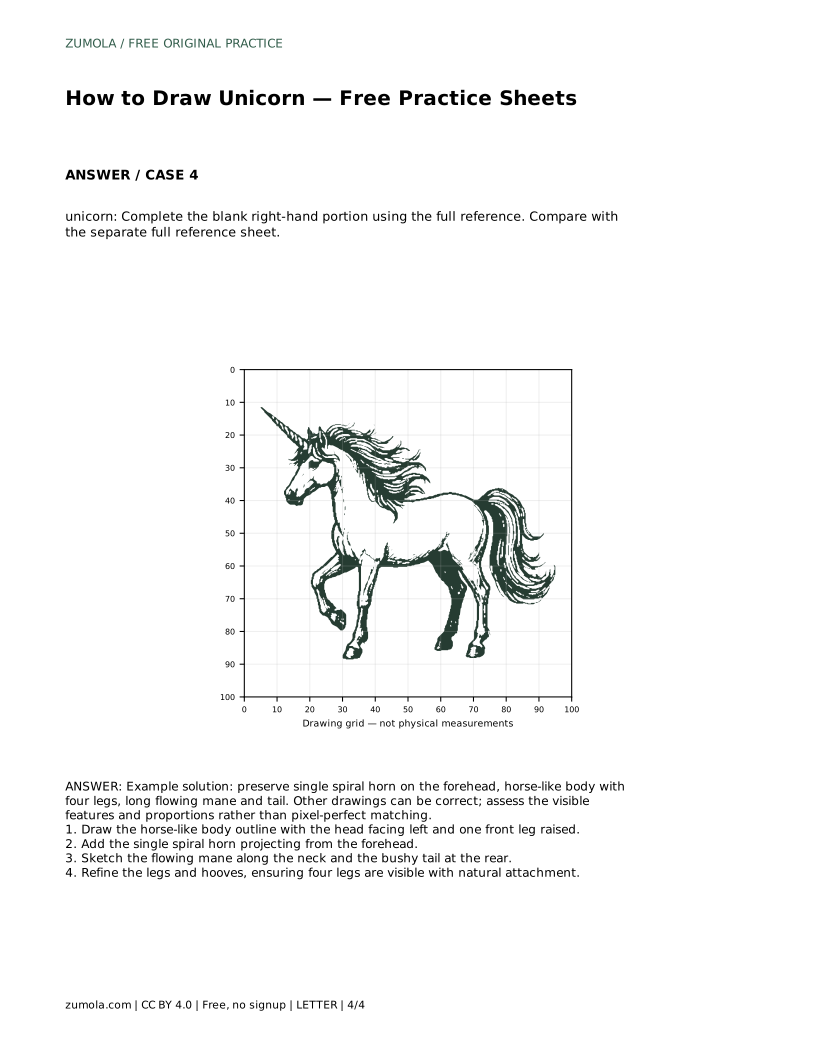
Reference diagrams
LETTER · Download PDF
A4 · Download PDF
Free original resources
Learn to draw a unicorn with a horse-like body, one spiral horn, flowing mane and tail, and four visible legs. Trace, grid, and complete-the-picture practice included.
Four original cases, with reference diagrams, practice sheets and worked answers. Everything is free; no signup required.
LETTER · Download PDF
A4 · Download PDF
LETTER · Download PDF
A4 · Download PDF
LETTER · Download PDF
A4 · Download PDF
Use A4 or US Letter to match your printer. Use the stated values and conditions to solve each exercise; diagrams are not physical measuring rulers.
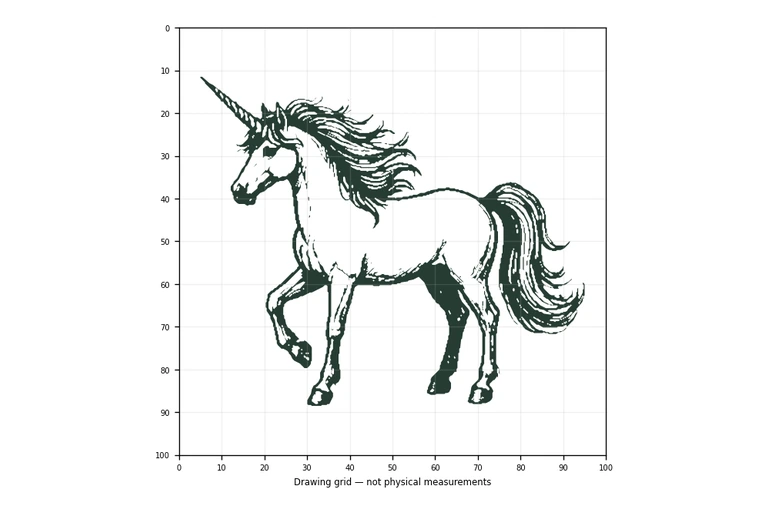
Drawing a unicorn is easier when you break it into a body shape, a single horn, and flowing hair. This guide explains how to trace a reference outline, then practise the contour independently. You will also learn how to copy a reference onto a blank grid, use a bounding frame and centre guide to place the silhouette, and complete a blank right-hand portion. Each method builds the same core skill: recognising and reproducing the unicorn's identifying features and proportions.
Begin by treating the unicorn as a horse-like animal. Draw the body outline with the head facing left and one front leg raised. Keep the torso long enough to support four legs, and leave space at the forehead for the horn. The horn is a single spiral projecting from the forehead, not a pair of horns and not a cone sitting on the nose.
Once the body is placed, sketch the flowing mane along the neck and the bushy tail at the rear. These are the features that make the drawing read as a unicorn rather than a plain horse. Refine the legs and hooves last, ensuring four legs are visible with natural attachment to the body. Check that each leg connects to the torso rather than floating beside it.
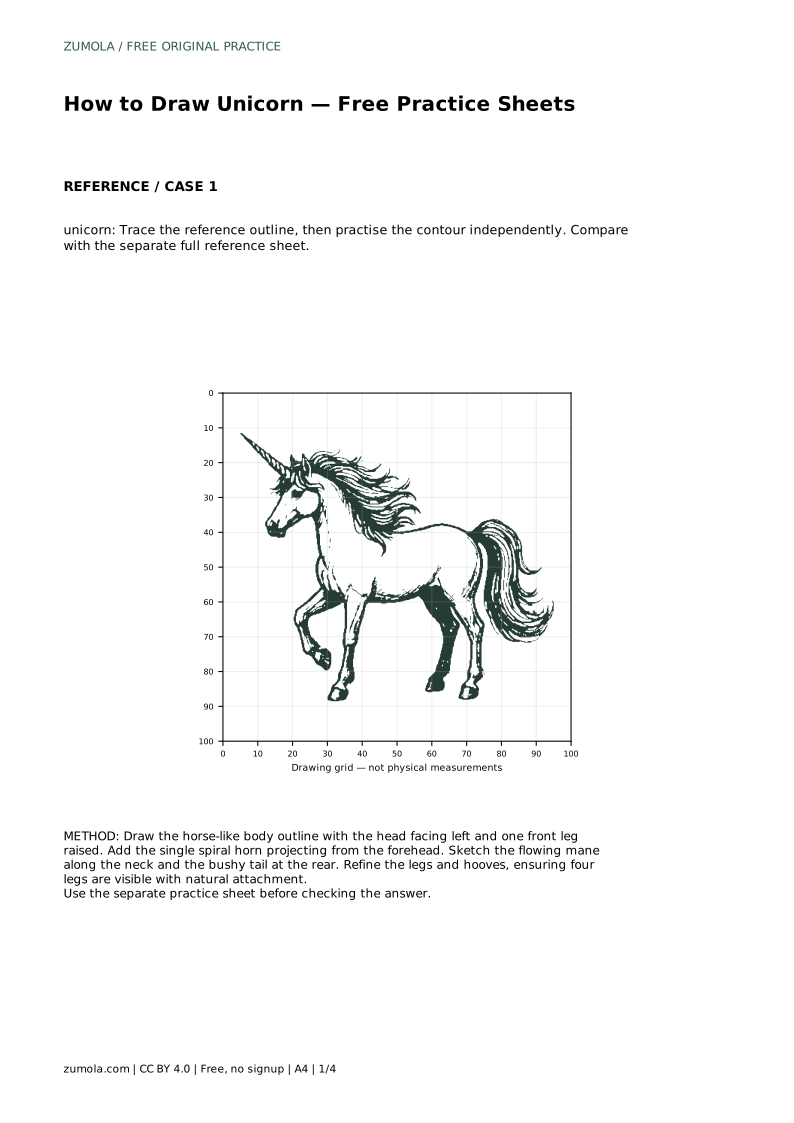
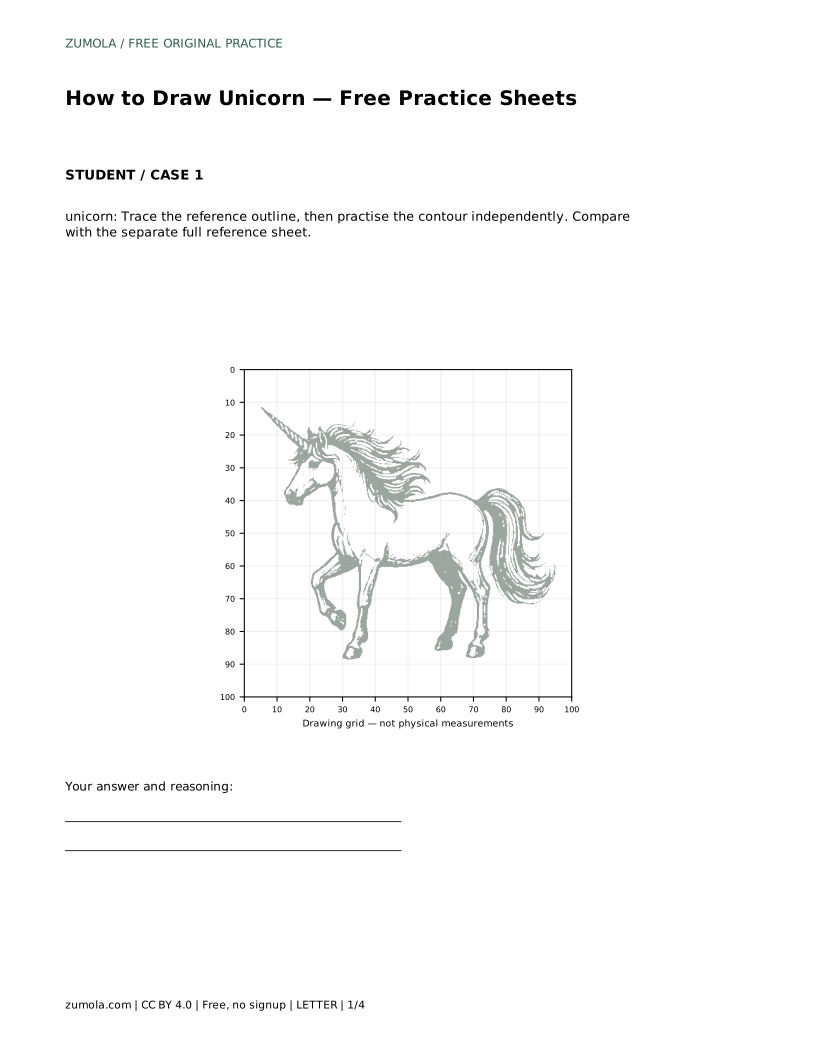
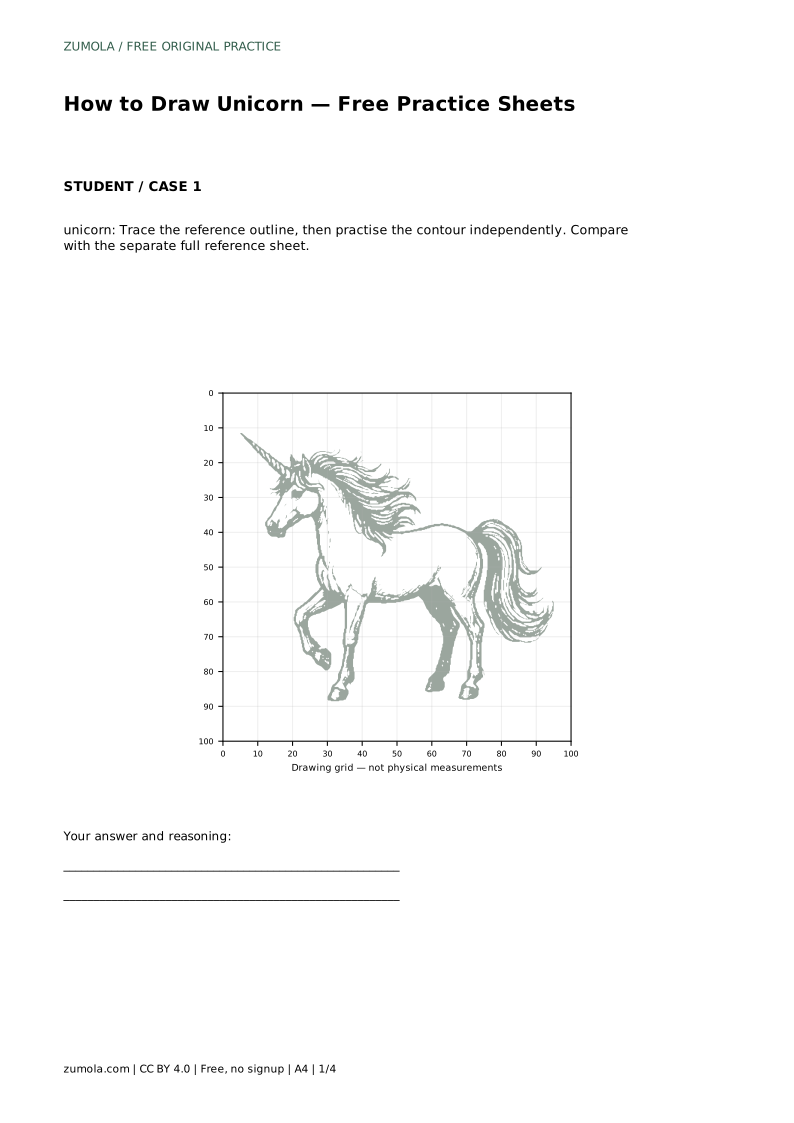
Tracing the reference outline helps you feel the order of the shapes: body, horn, mane and tail, then legs. Trace slowly enough to notice where the neck meets the shoulder and how the raised front leg changes the silhouette. When you move to independent practice, keep the same sequence but do not trace. Draw the body outline from memory, then add the horn and hair.
Compare your independent drawing with the separate full reference sheet. Look for the single spiral horn on the forehead, a horse-like body with four legs, and a long flowing mane and tail. Other drawings can be correct; assess the visible features and proportions rather than pixel-perfect matching. If a feature is missing or misplaced, redraw that part rather than starting the whole sheet again.
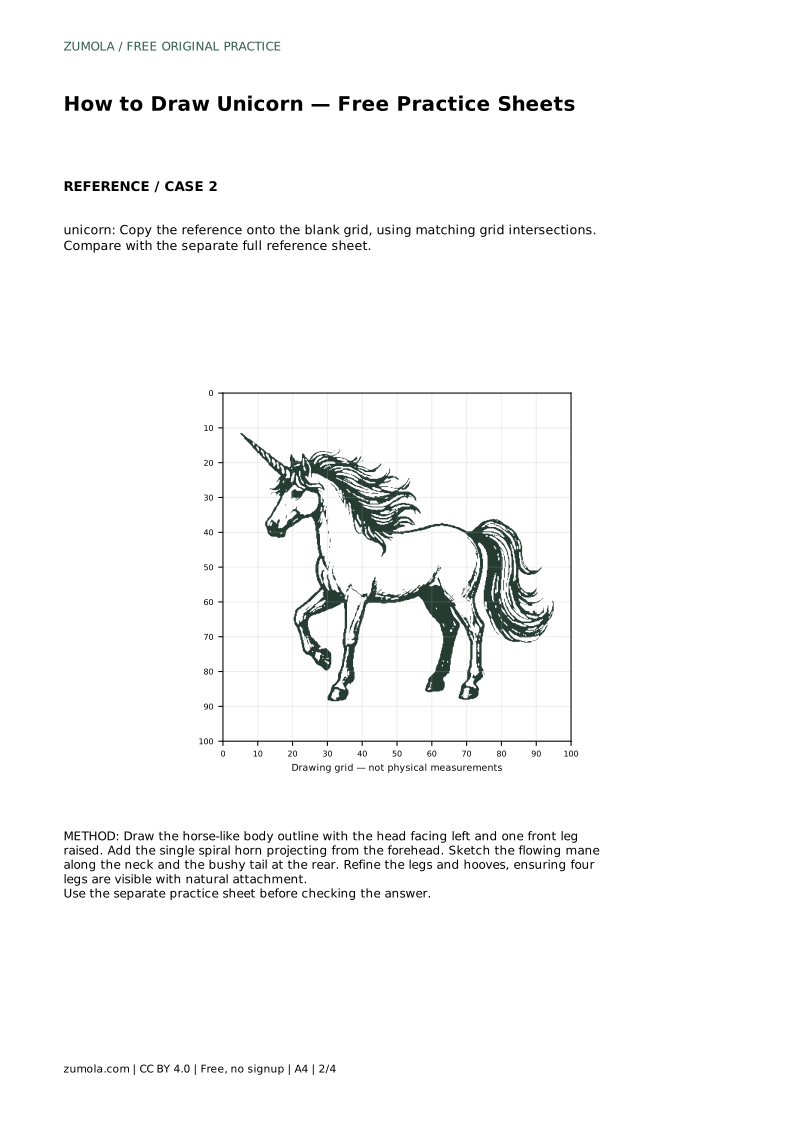
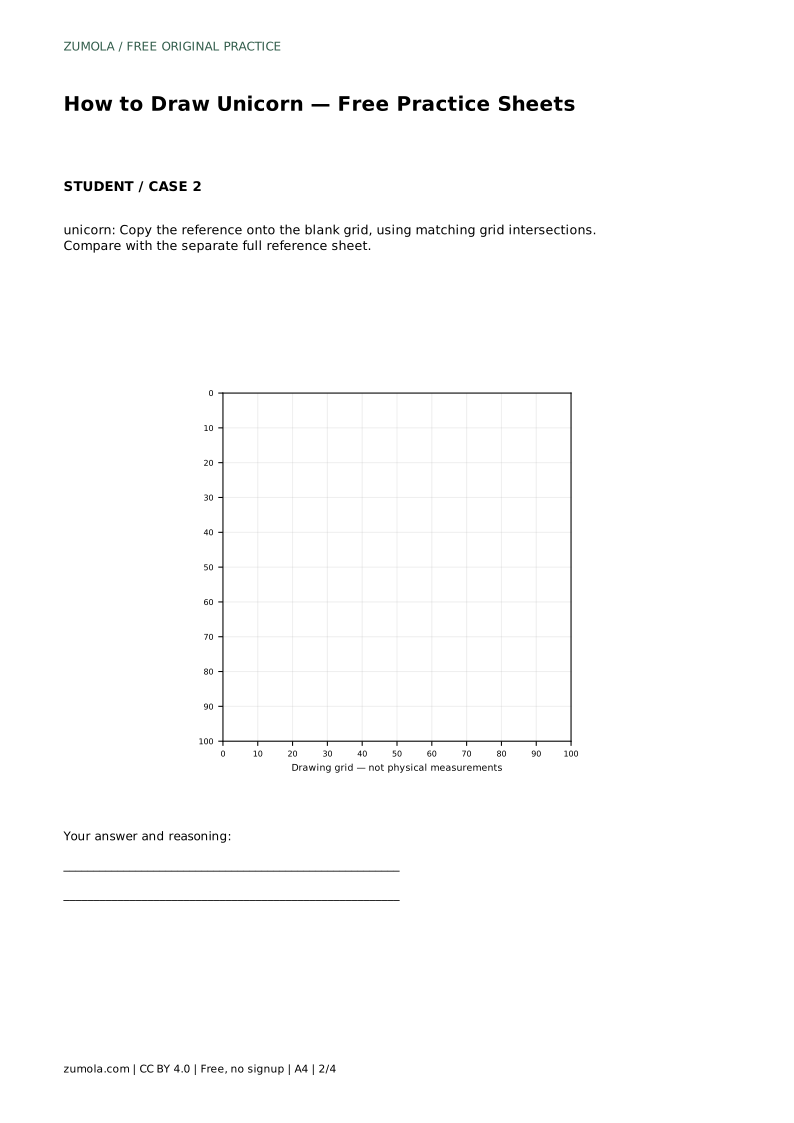
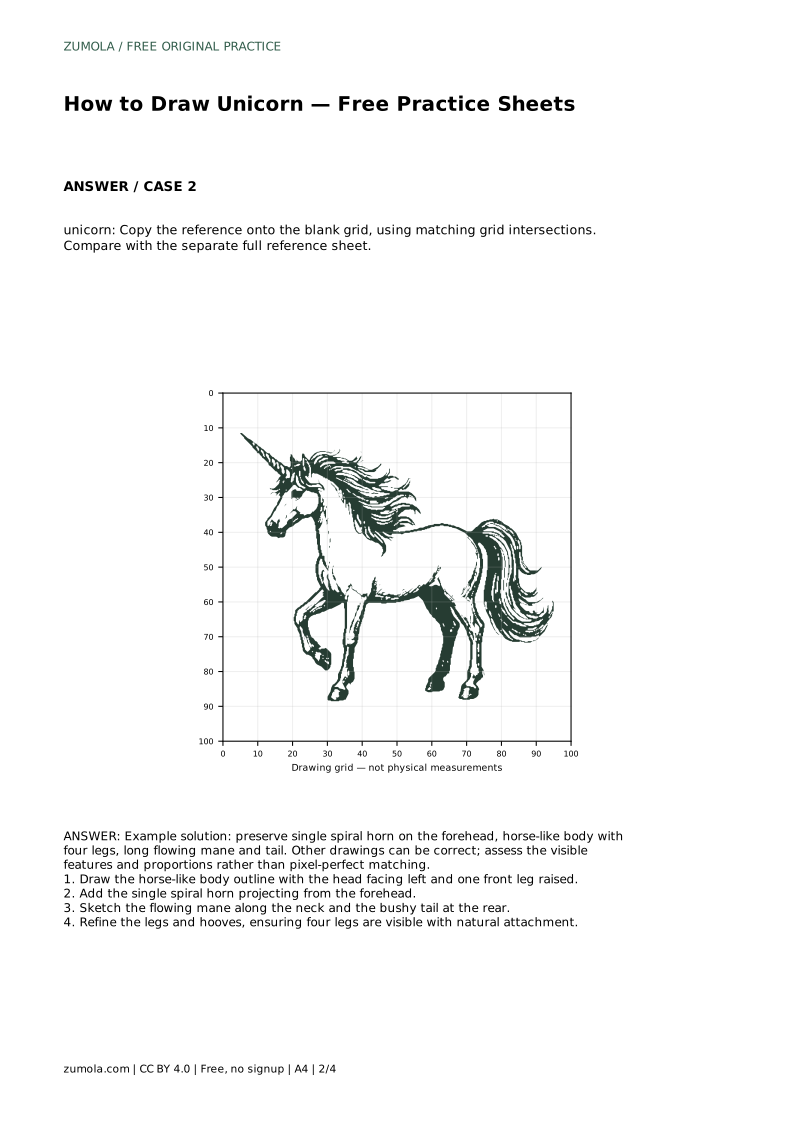
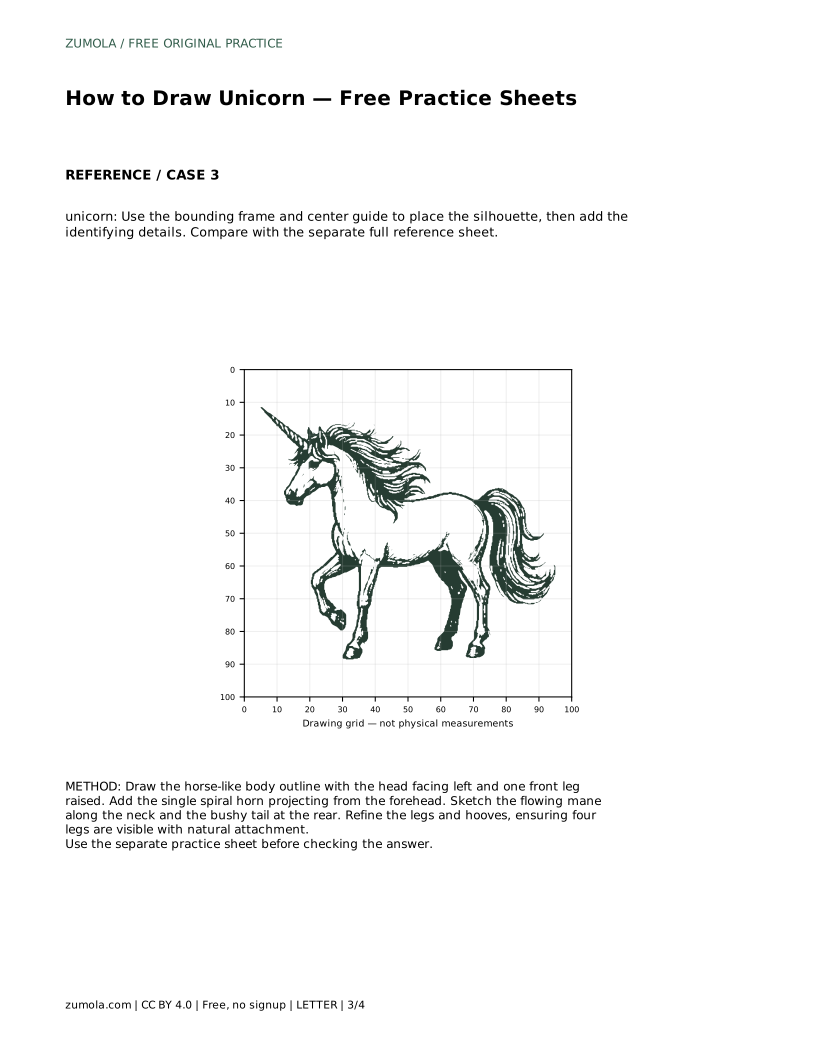
Copying onto a blank grid means matching grid intersections rather than copying every curve by eye. Find where the body outline crosses a grid line, then reproduce that crossing in the matching square. The horn tip, the raised hoof, and the tail end are useful anchor points. Work square by square and check the whole silhouette before adding detail.
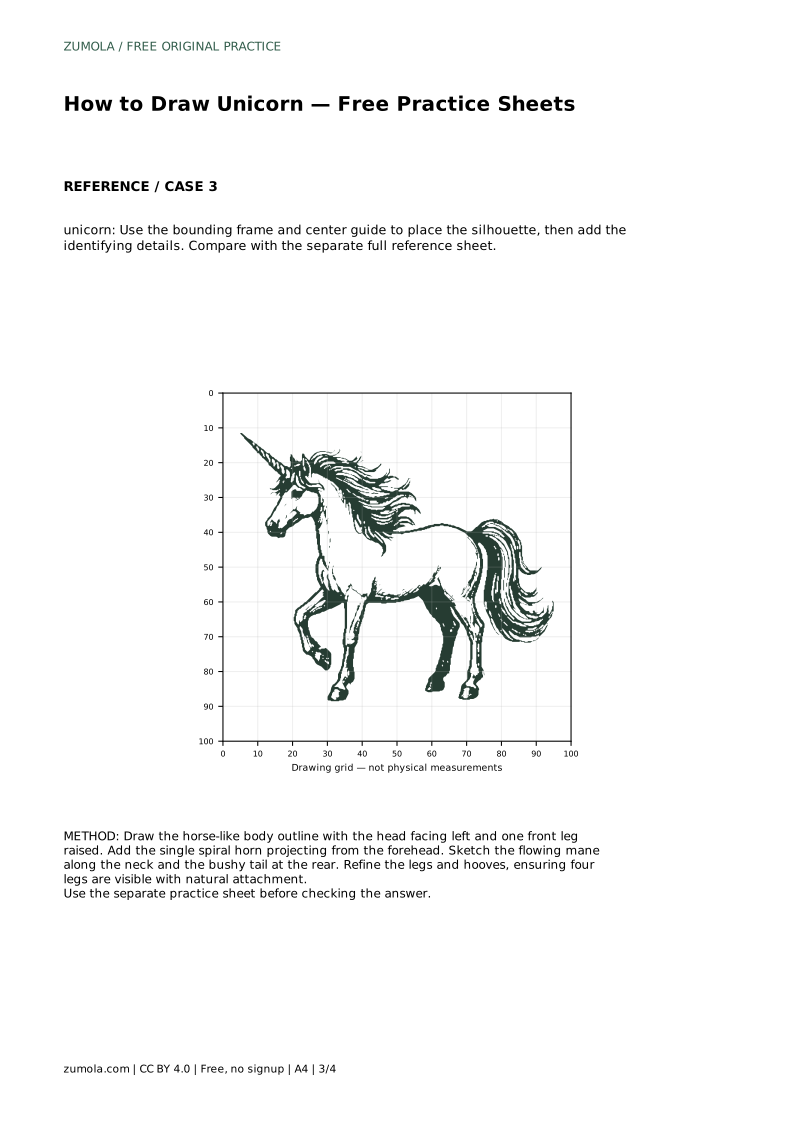
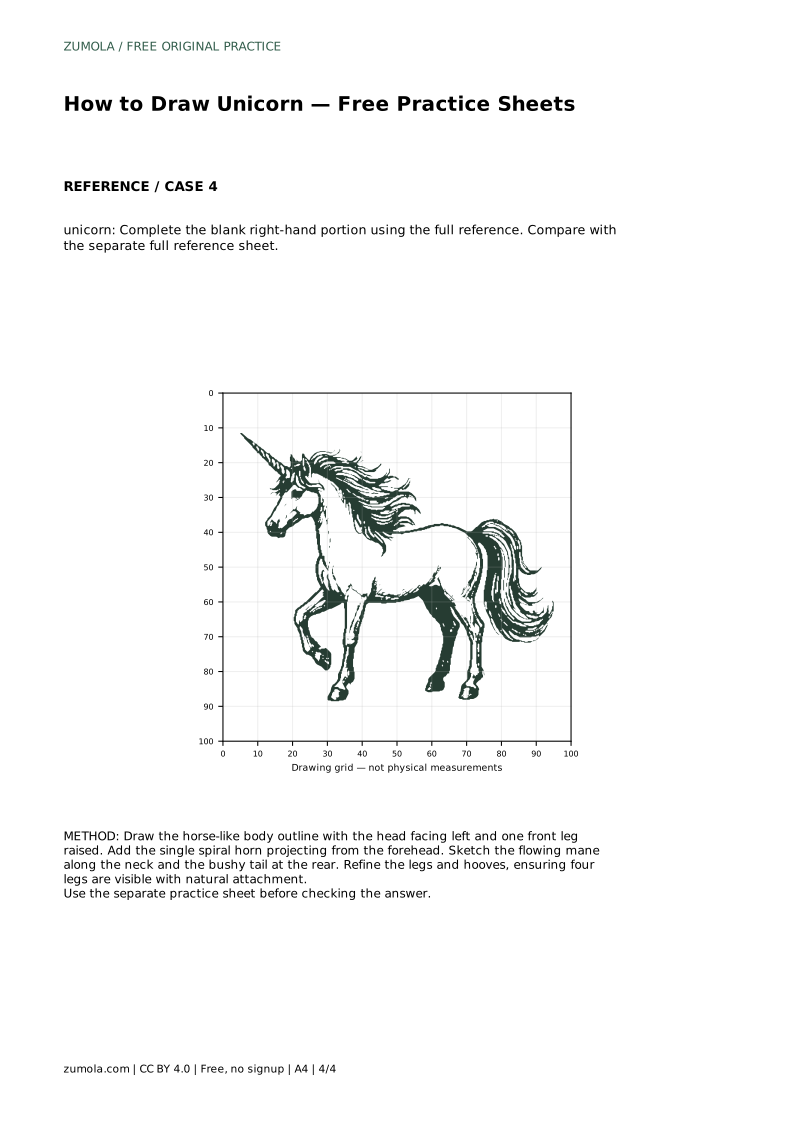
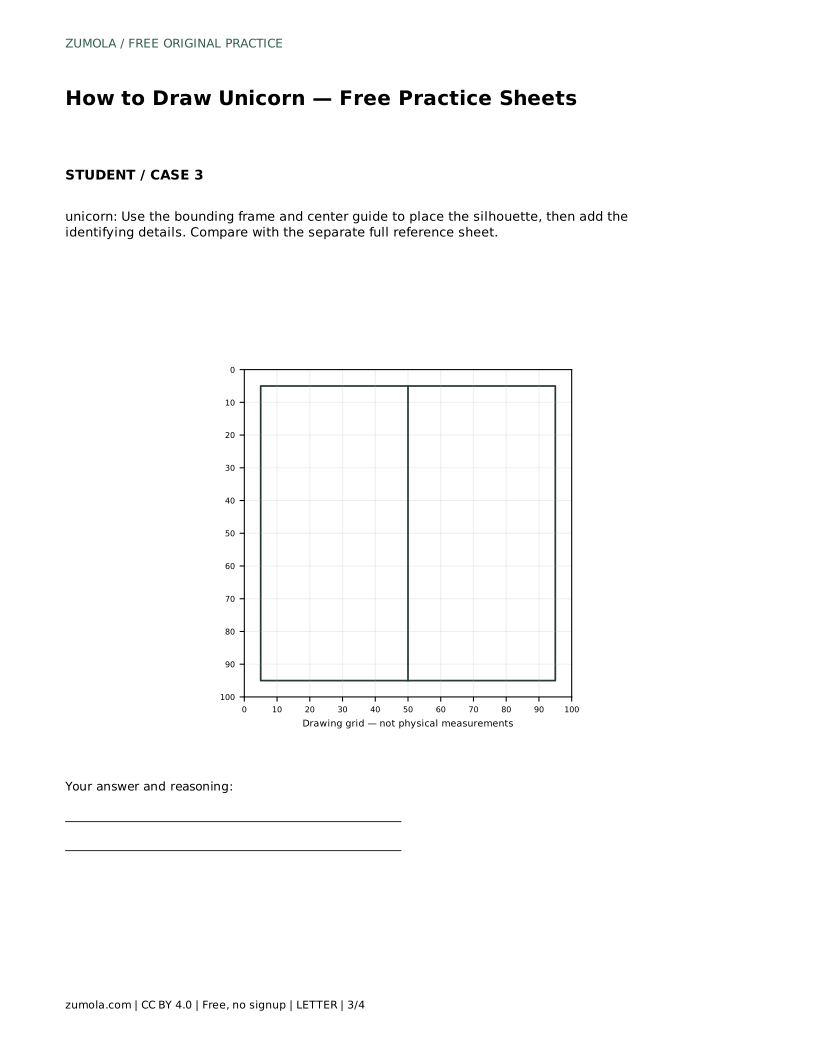
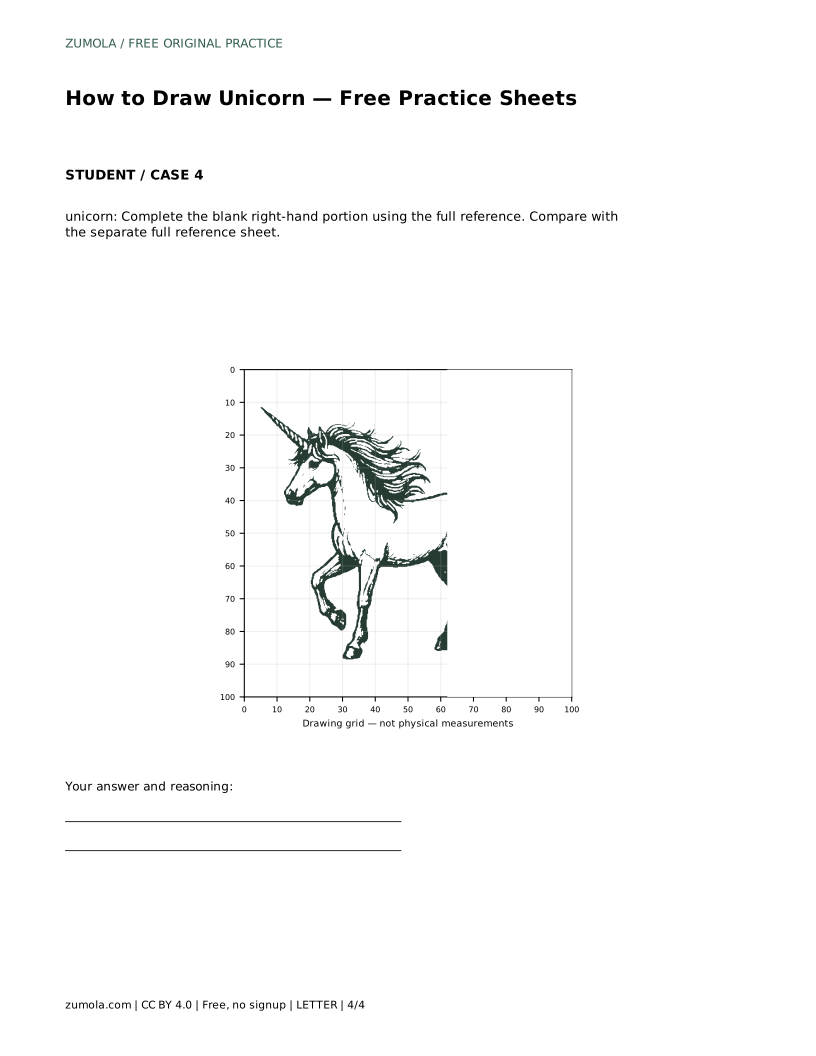
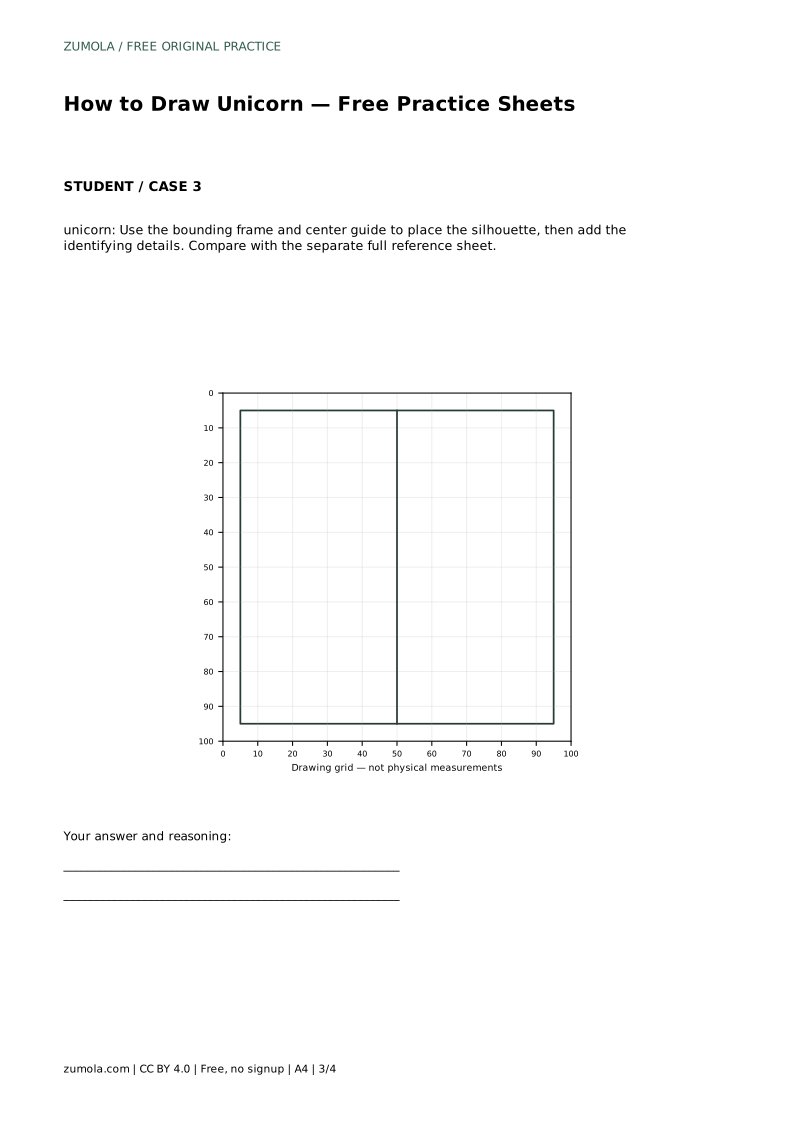
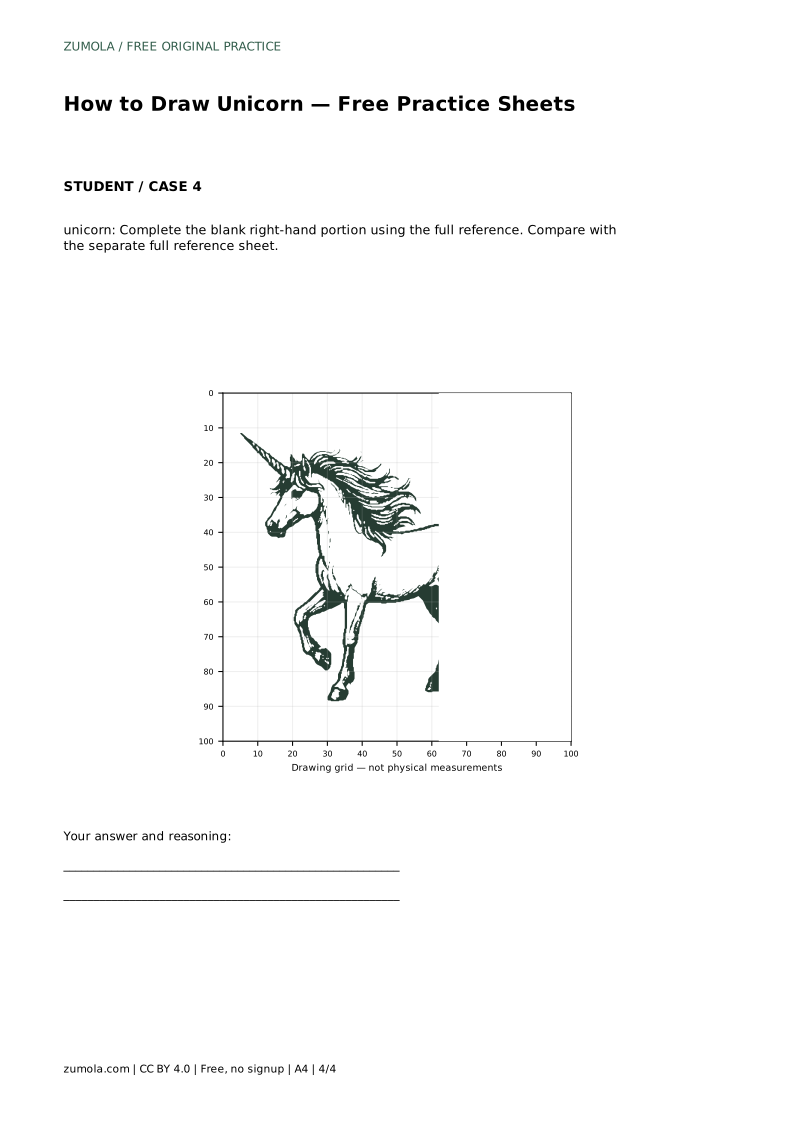
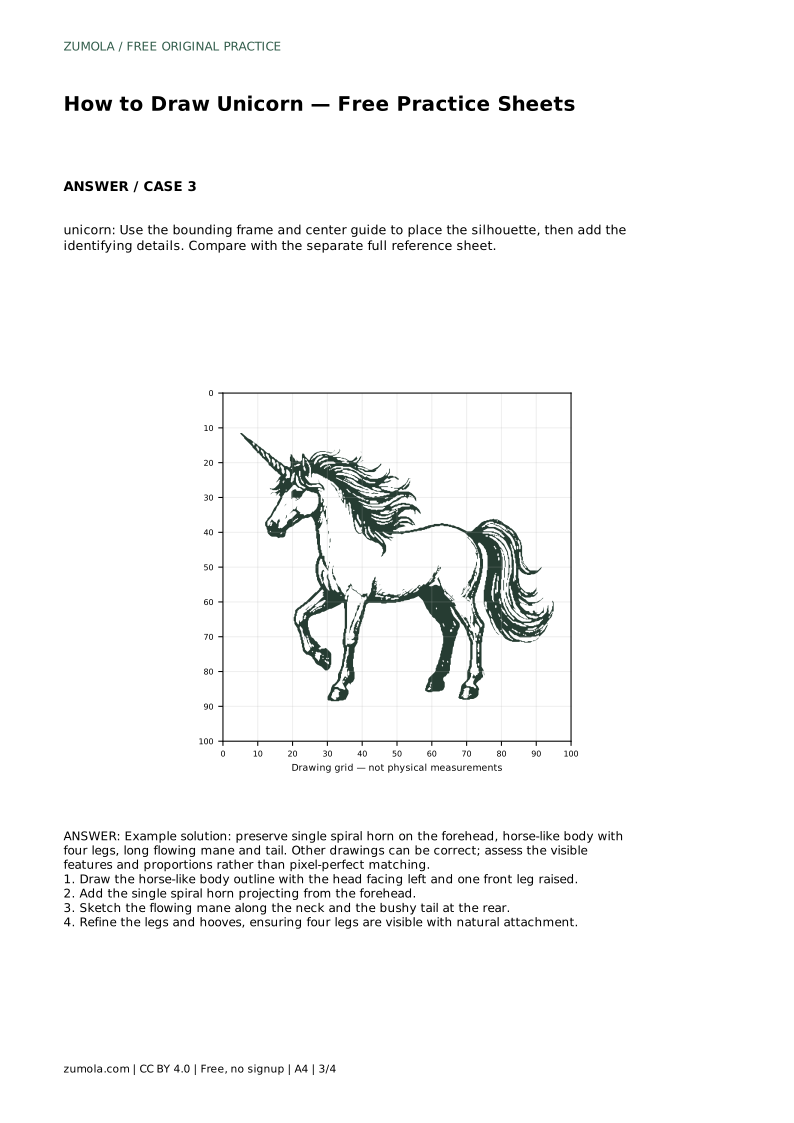
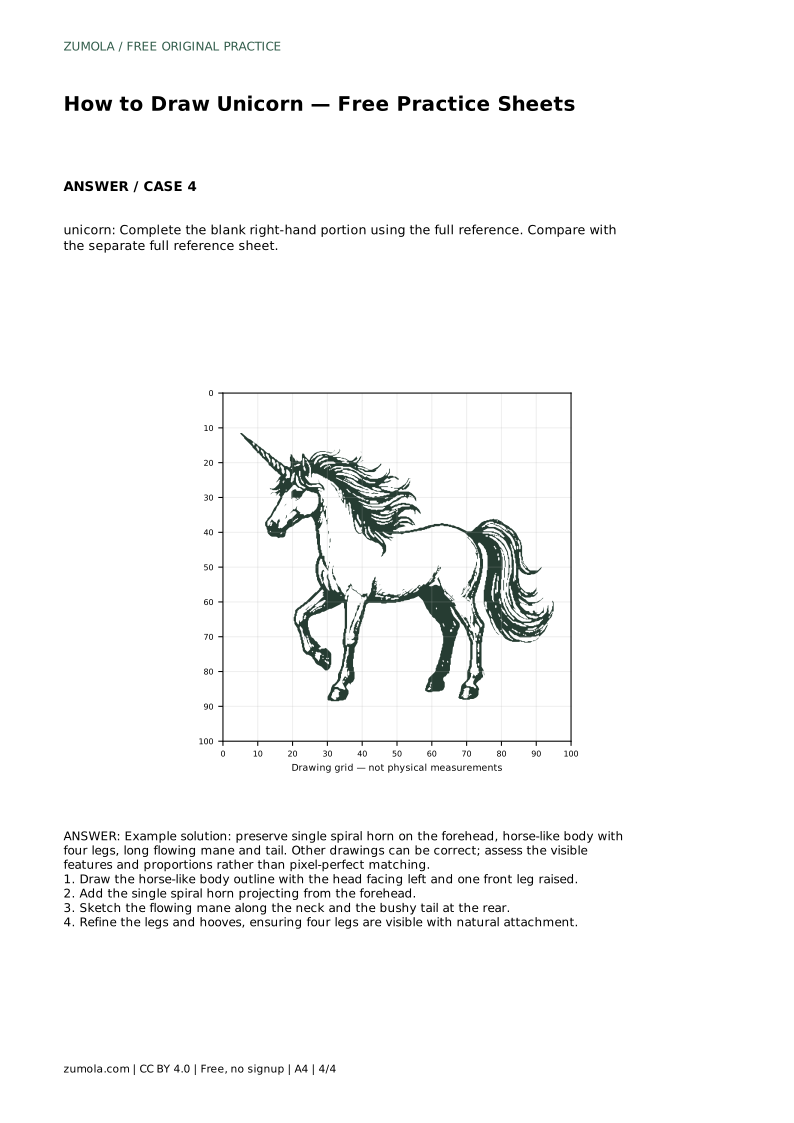
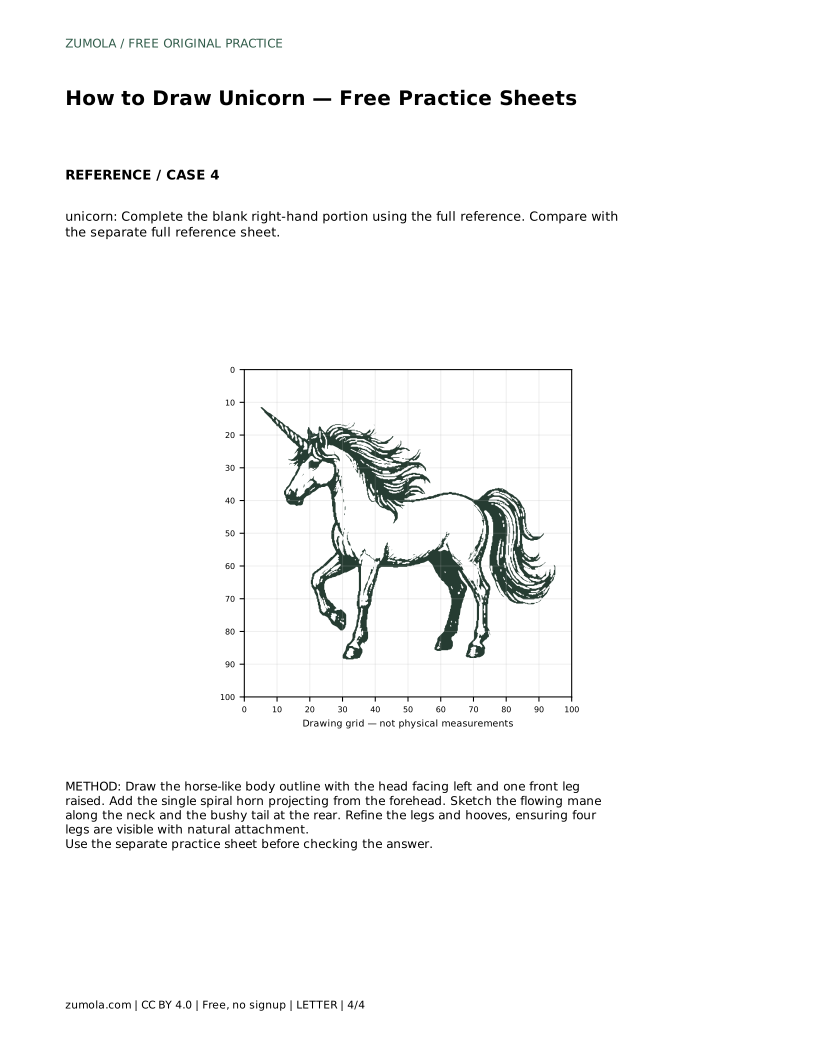
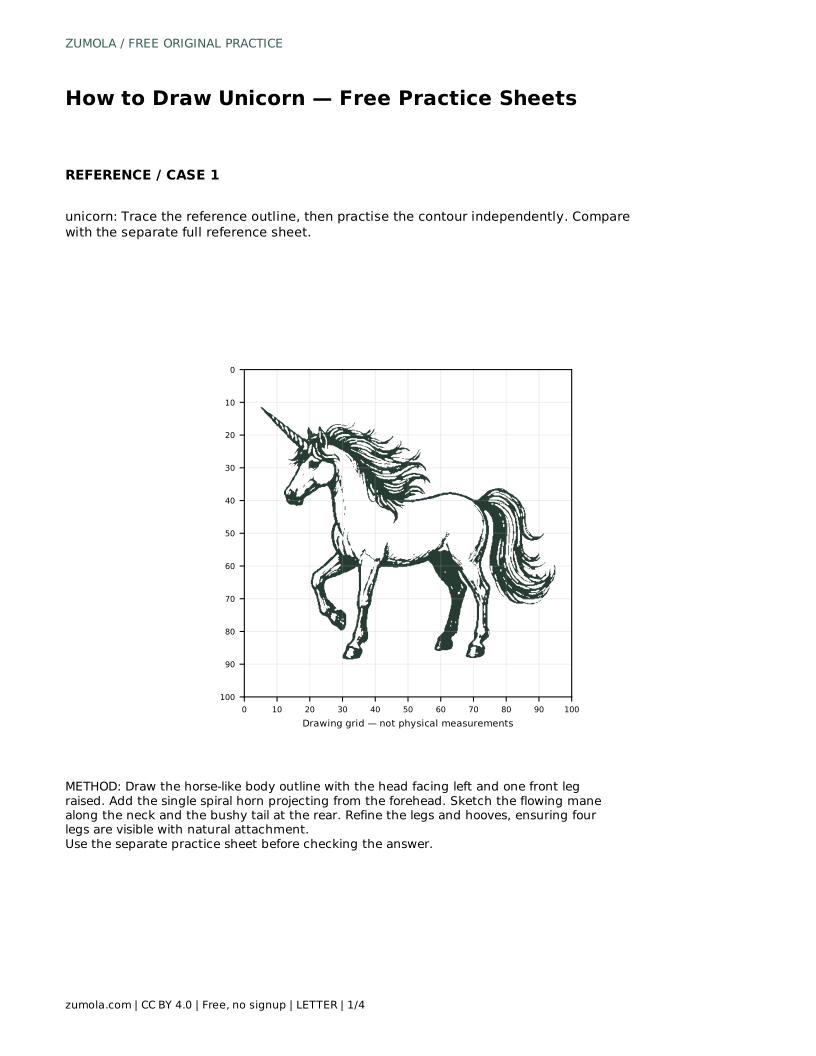
The bounding frame and centre guide help you place the silhouette before adding identifying details. Use the frame to set the overall width and height, and the centre guide to judge whether the head and tail sit on opposite sides of the middle. For the complete-the-picture sheet, use the full reference to finish the blank right-hand portion. Match the existing left side's scale and line direction so the two halves join naturally.
A common problem is making the horn too short or placing it behind the ear. The horn should sit on the forehead, above the eyes and in front of the mane. Another problem is hiding a leg behind the body so only three legs are visible. If the brief calls for four visible legs, adjust the stance or move the hidden leg outward.
Mane and tail volume also affect proportion. A very small tail can make the body look unbalanced, while an oversized mane can swallow the neck. Compare the hair masses with the torso length. Keep the head facing left and the raised front leg clear so the silhouette stays readable.
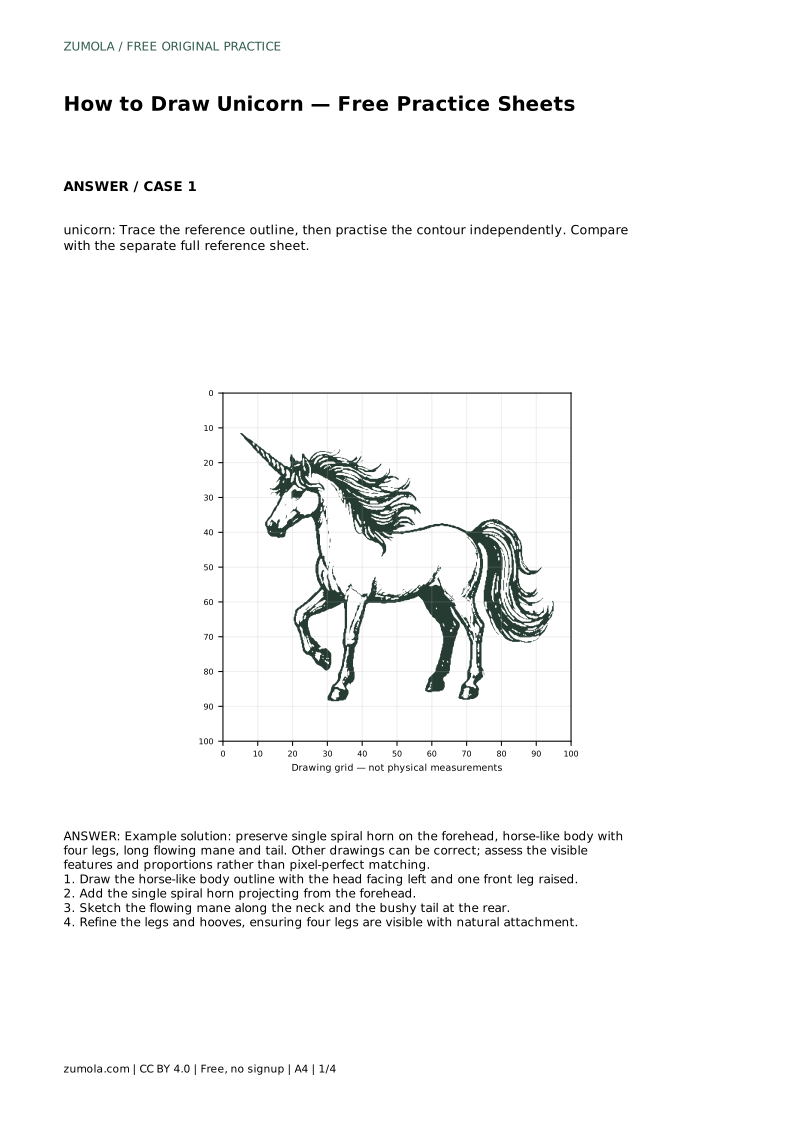
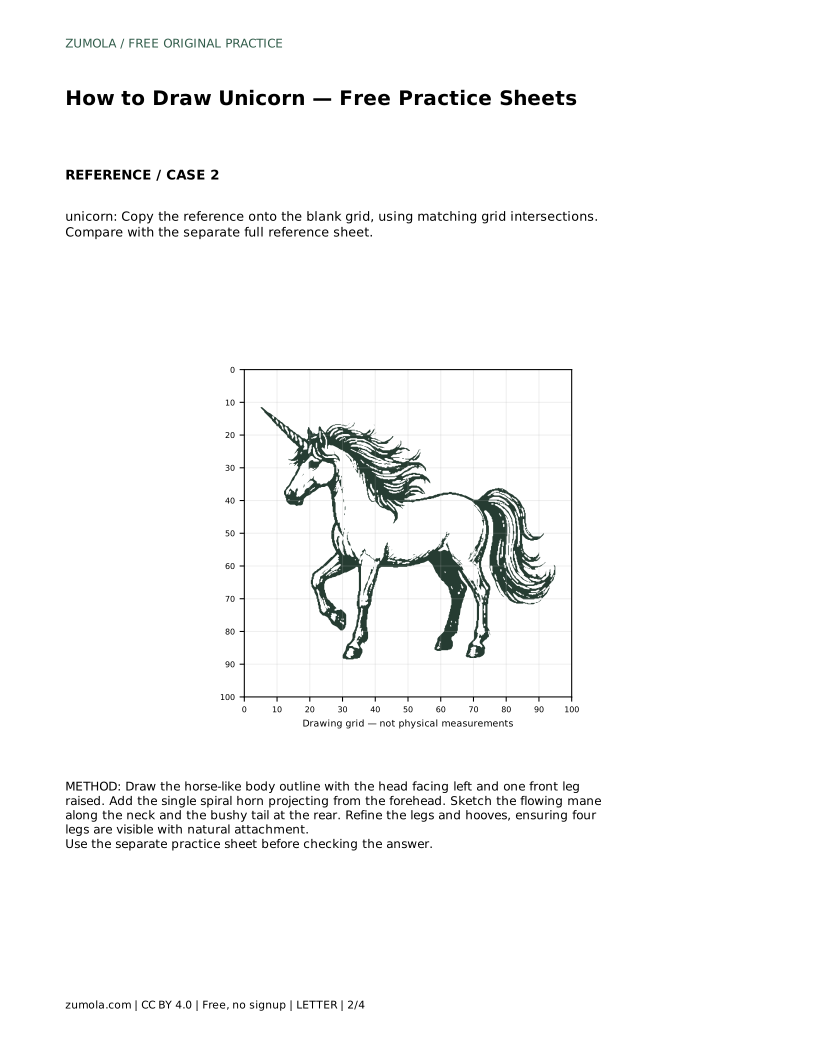
unicorn: Trace the reference outline, then practise the contour independently. Compare with the separate full reference sheet.
Example solution: preserve single spiral horn on the forehead, horse-like body with four legs, long flowing mane and tail. Other drawings can be correct; assess the visible features and proportions rather than pixel-perfect matching. Draw the horse-like body outline with the head facing left and one front leg raised. Add the single spiral horn projecting from the forehead. Sketch the flowing mane along the neck and the bushy tail at the rear. Refine the legs and hooves, ensuring four legs are visible with natural attachment.
Tracing first is useful practice, but the goal is independent drawing. Trace once to learn the sequence, then draw the contour on a blank area and compare with the full reference sheet.
Match where the outline crosses grid intersections, then connect those points. Use the horn tip, raised hoof, and tail end as anchors, and check the whole silhouette before adding detail.
Other drawings can be correct. Assess the visible features and proportions rather than pixel-perfect matching: one spiral horn on the forehead, a horse-like body with four legs, and a long flowing mane and tail.
All drawing practice · Free coordinate paper
Original resources · CC BY 4.0 · Free for personal and classroom use with attribution.