Free printable resources · Original practice
Tessellation worksheets.
Repeat without gaps.
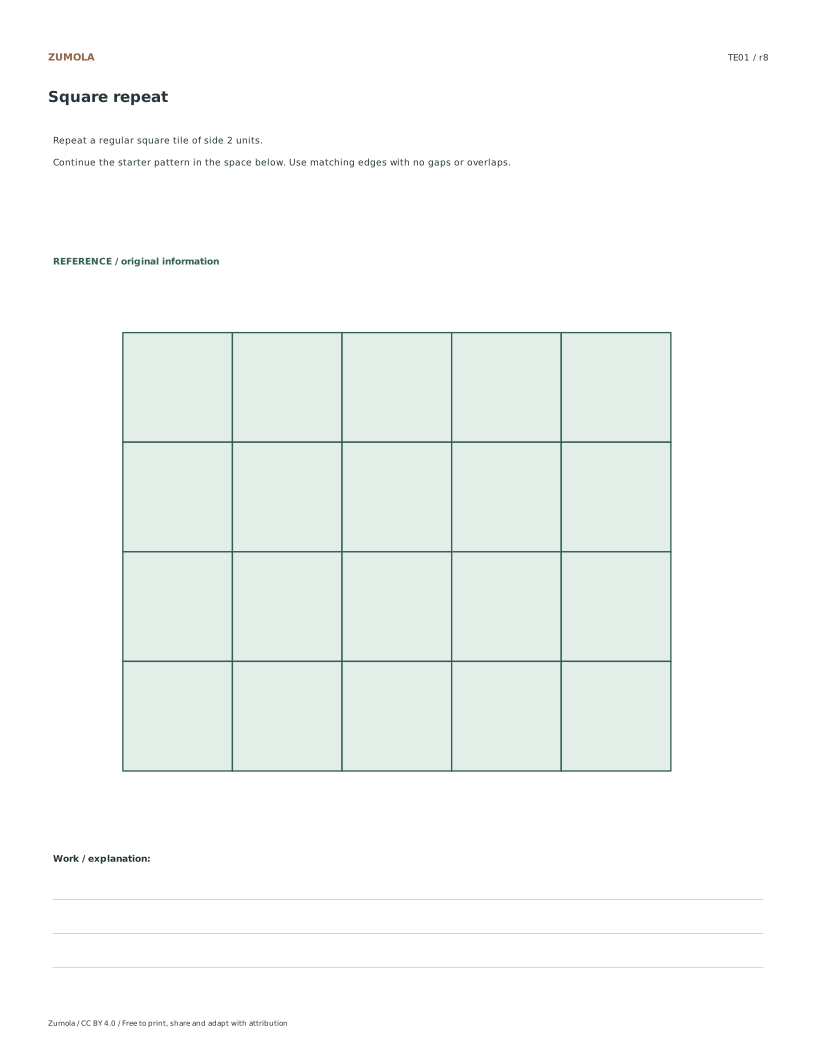
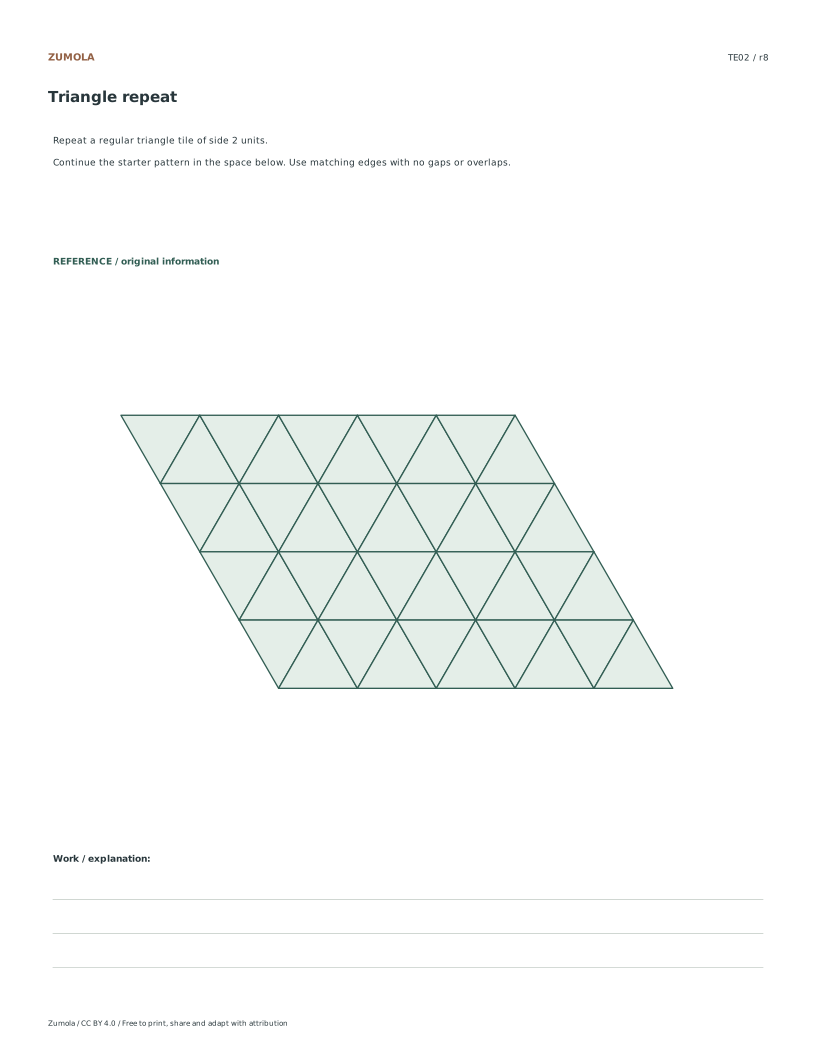
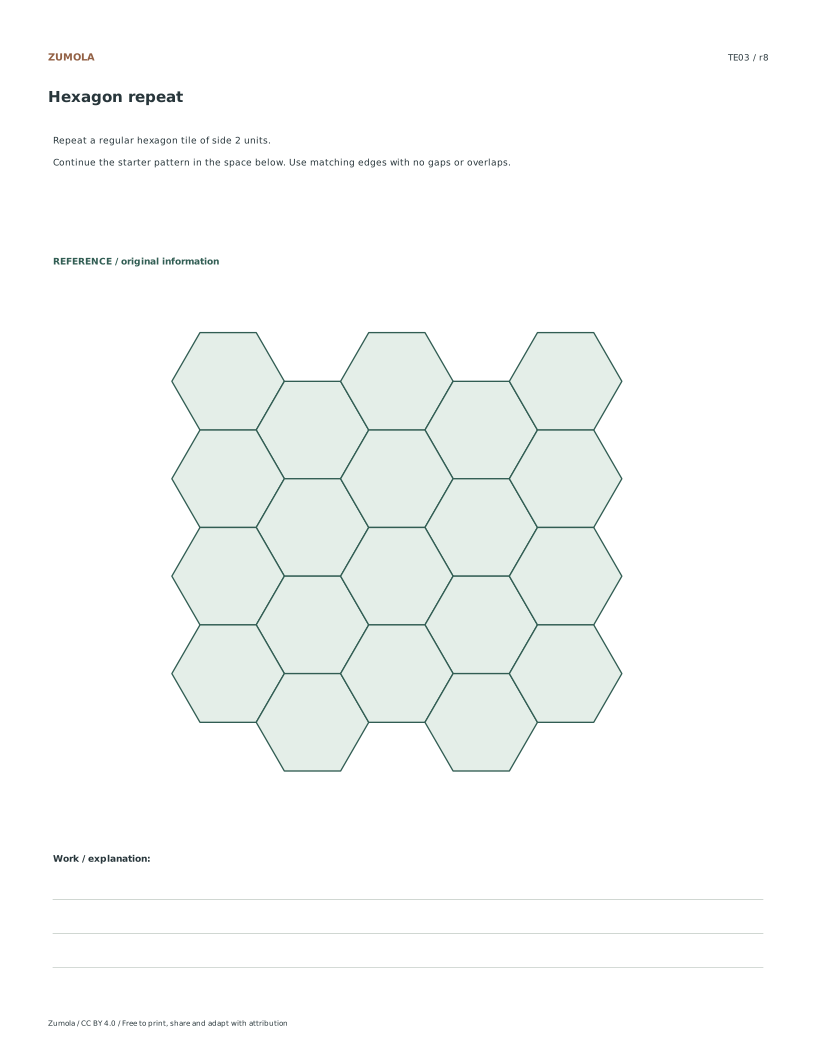
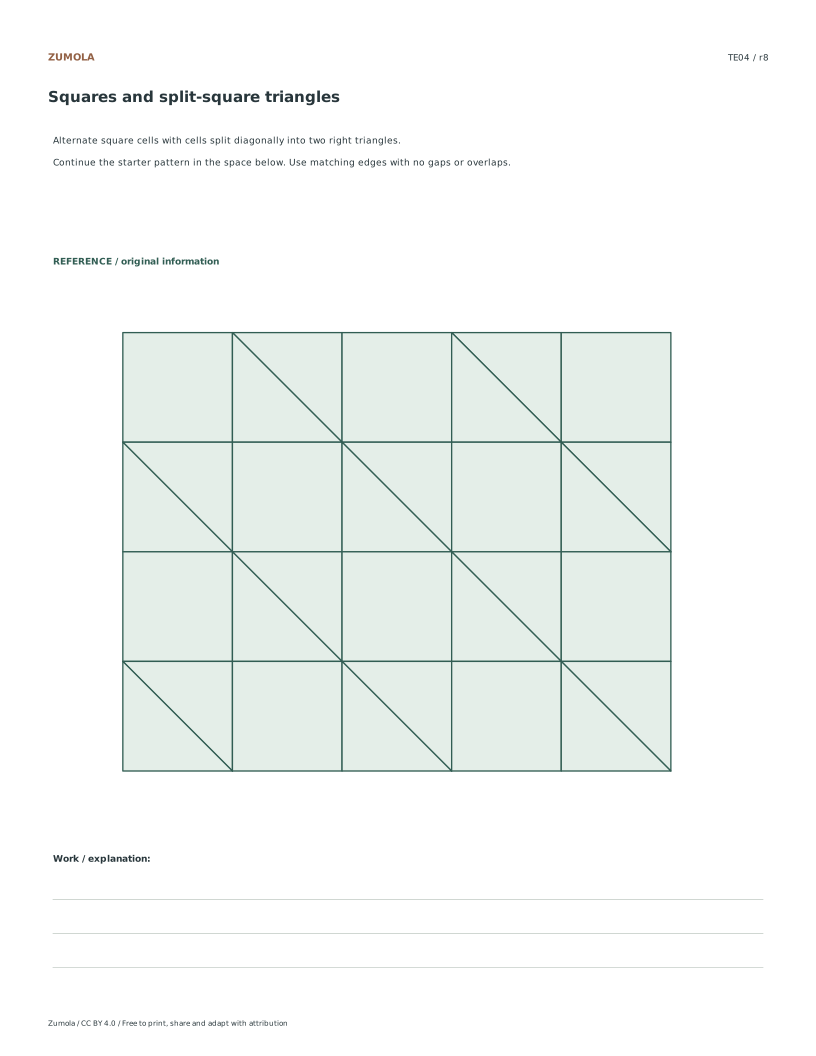
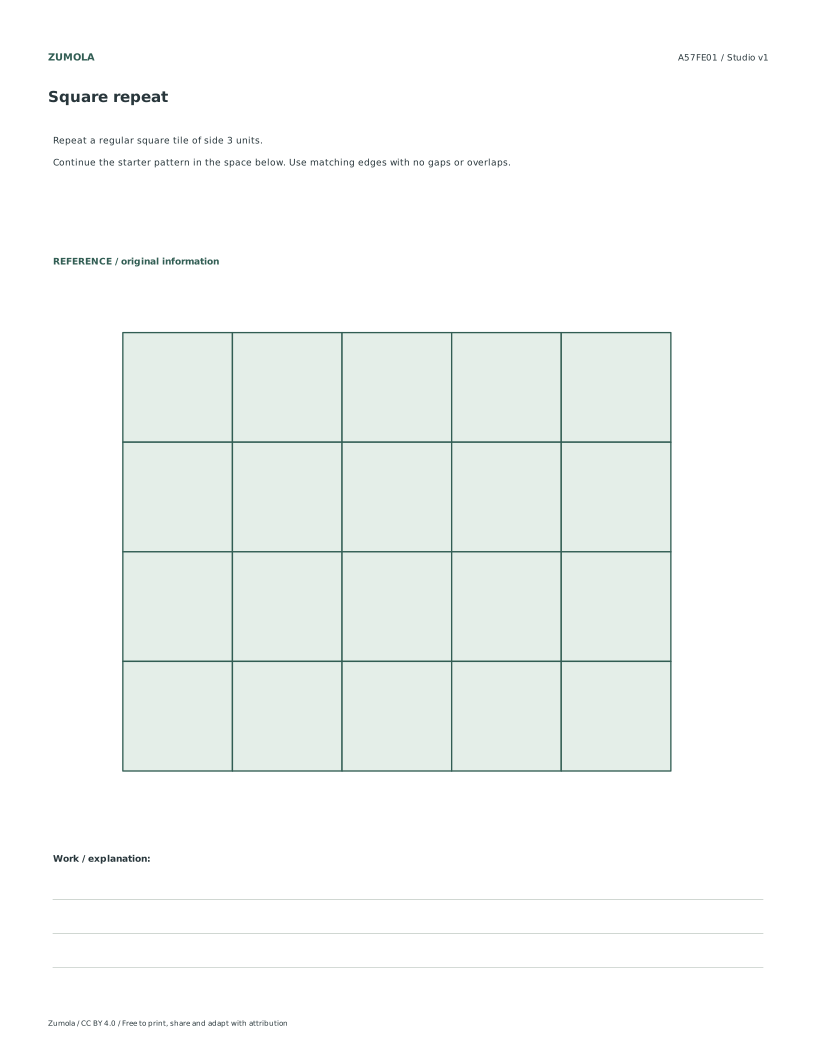
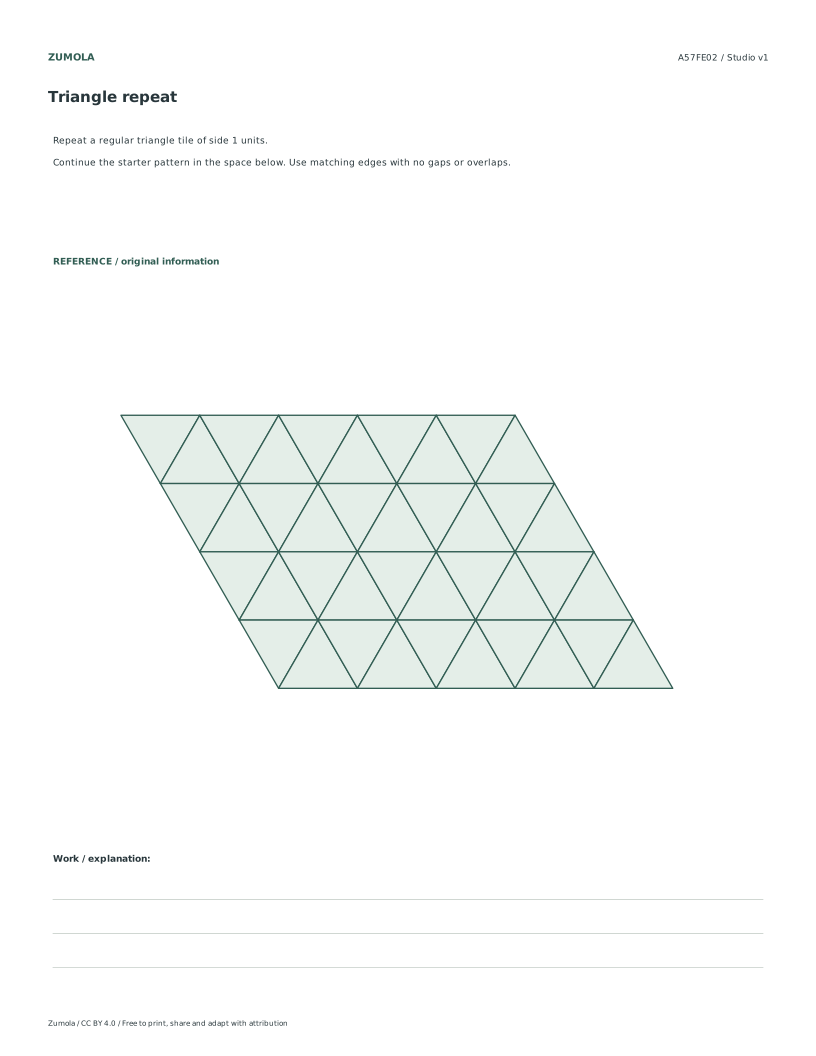
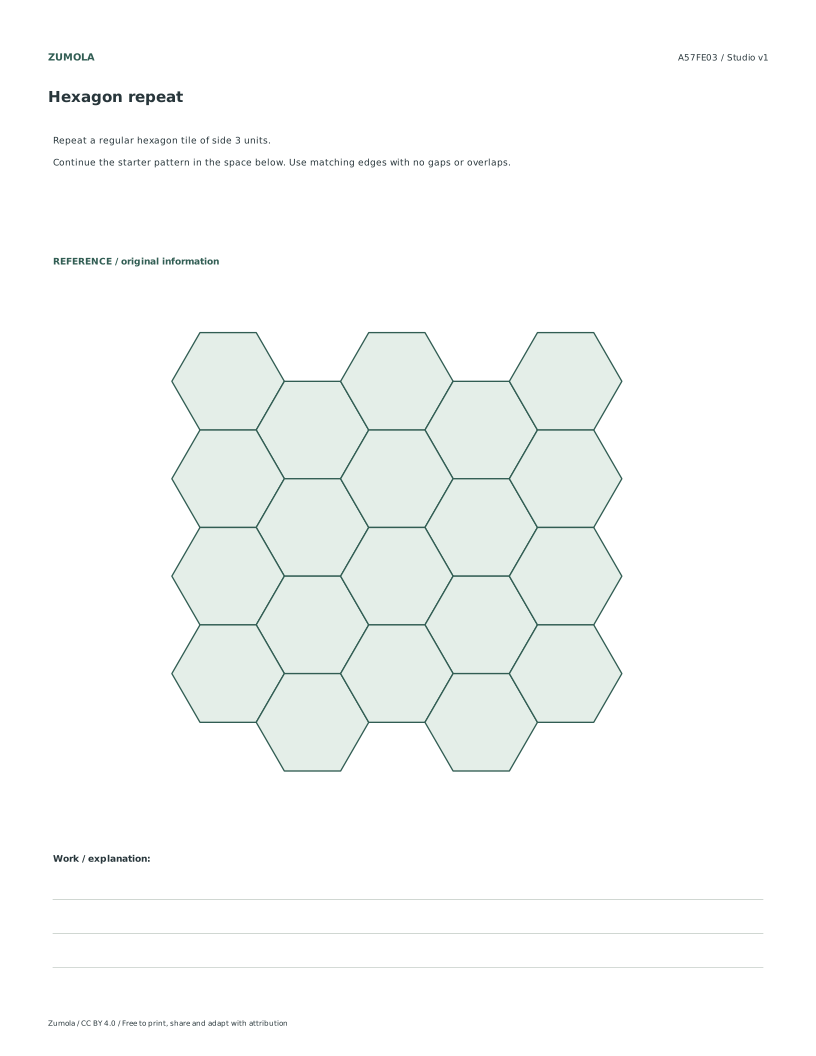
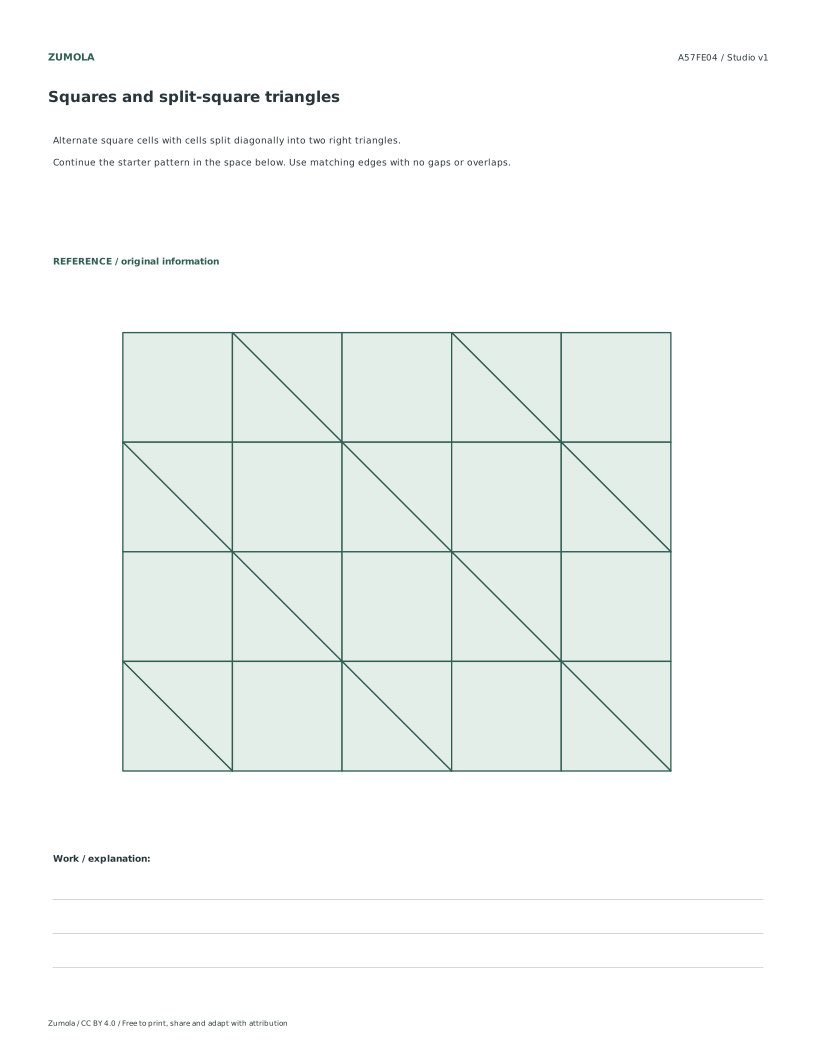
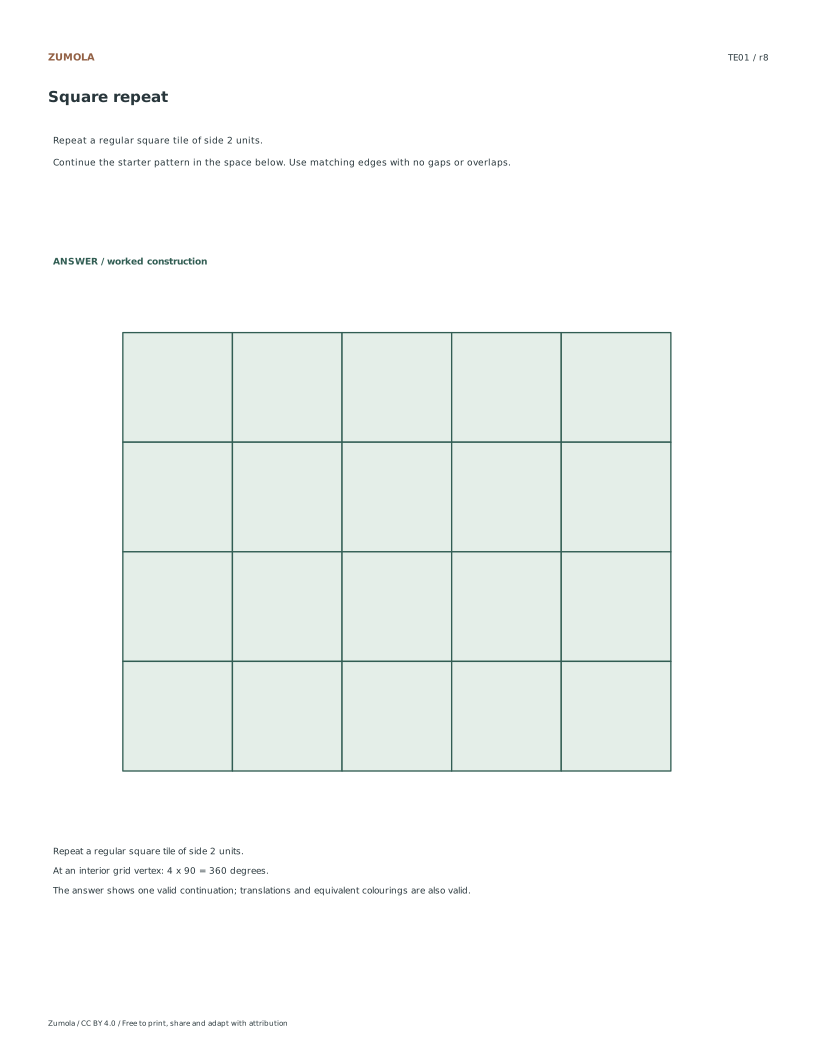
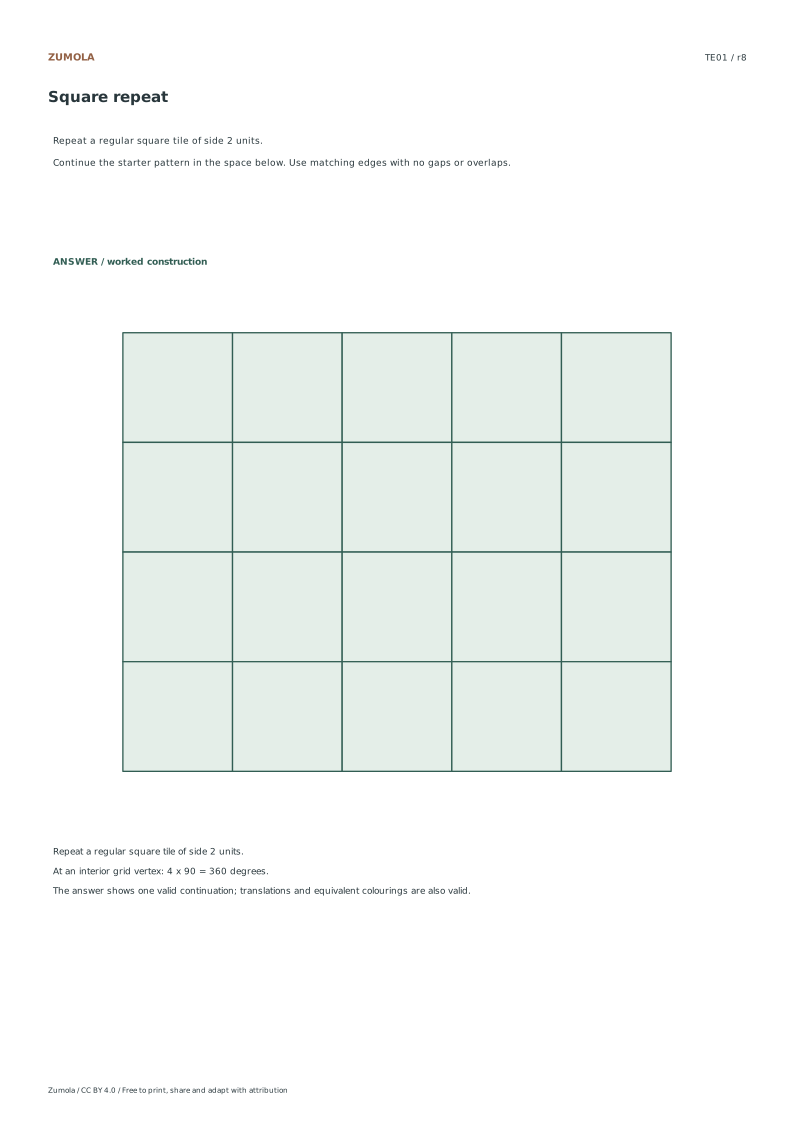
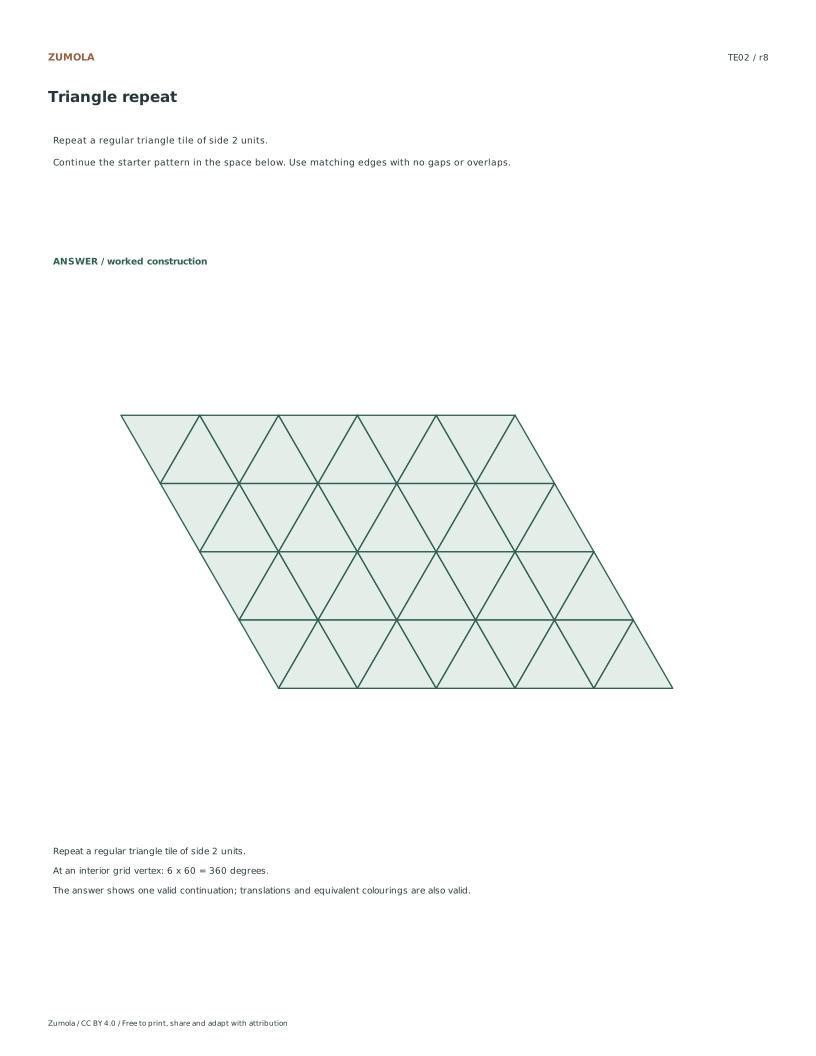
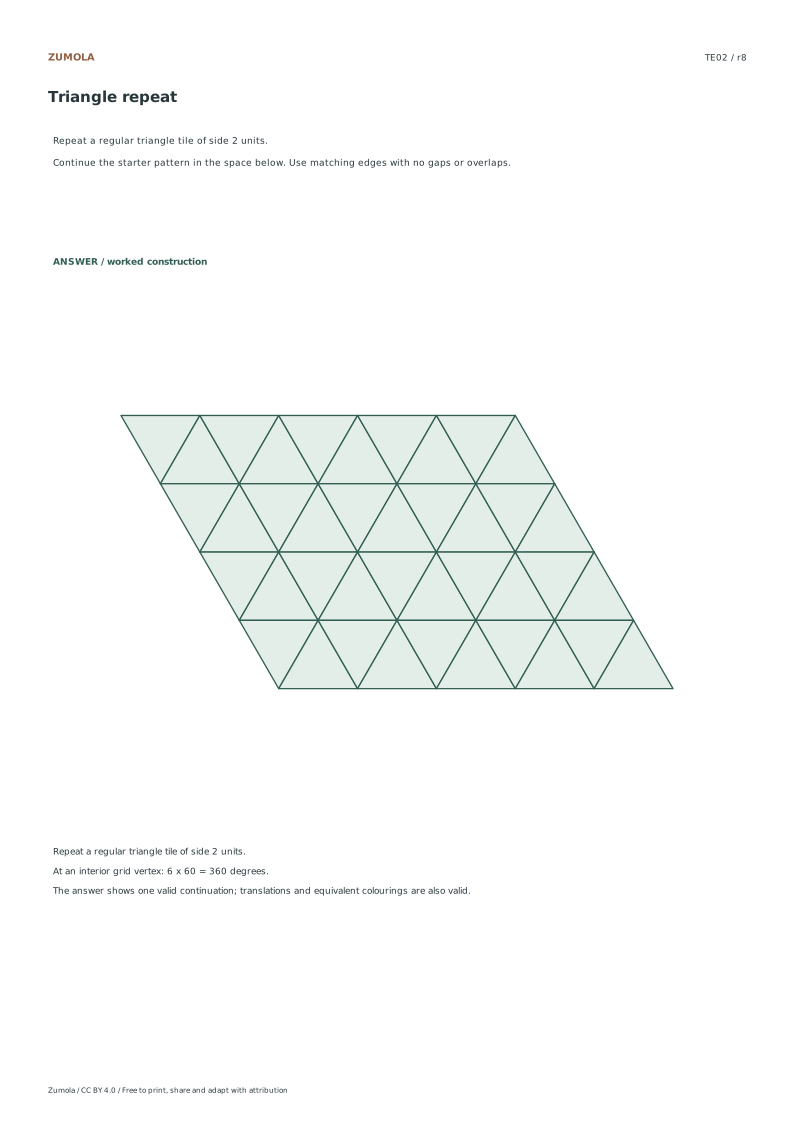
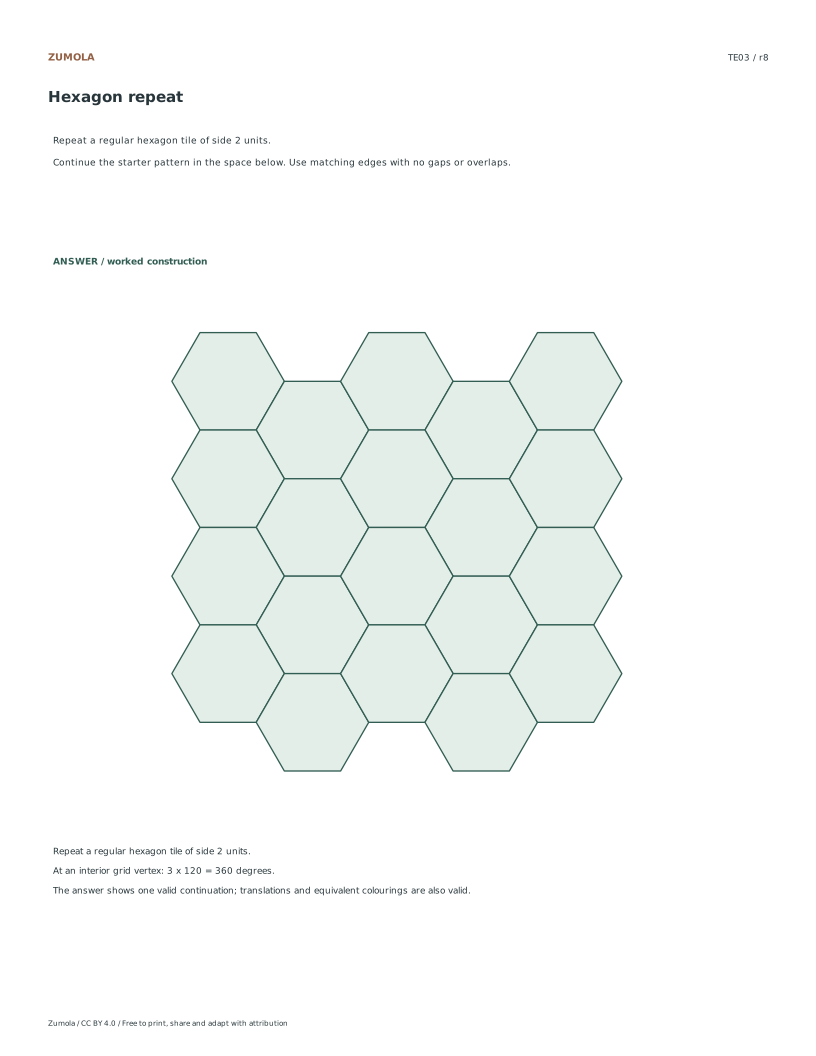
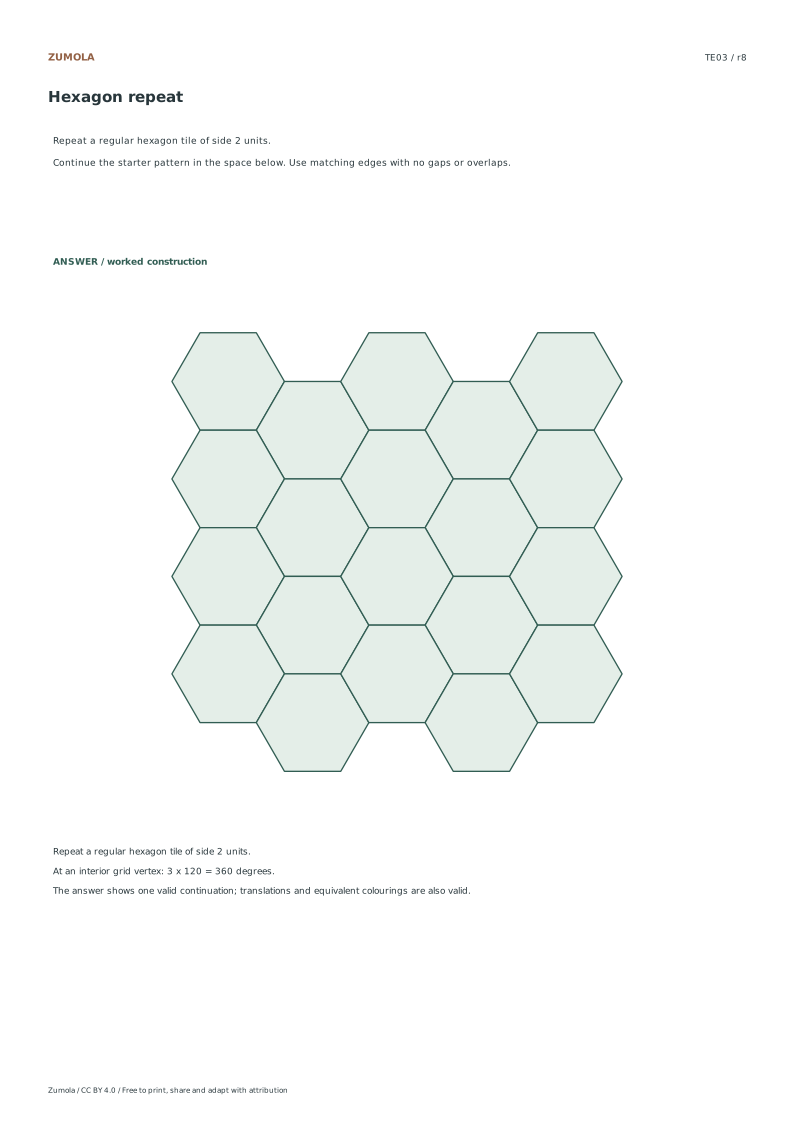
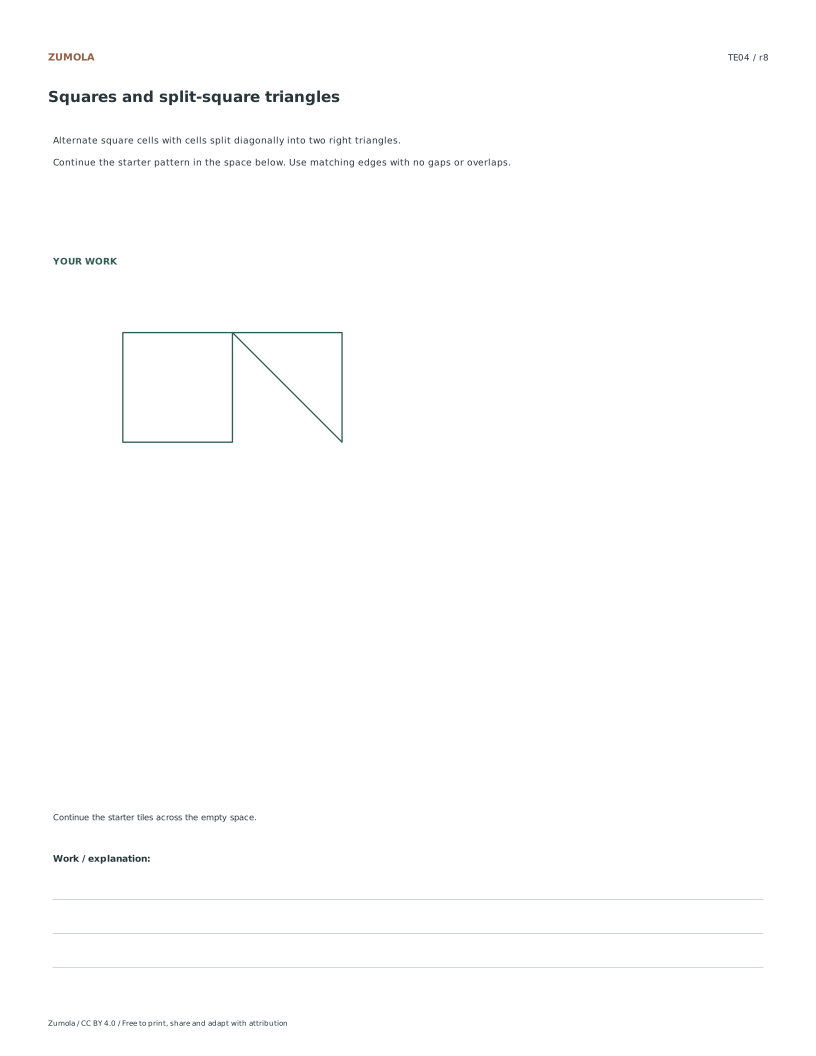
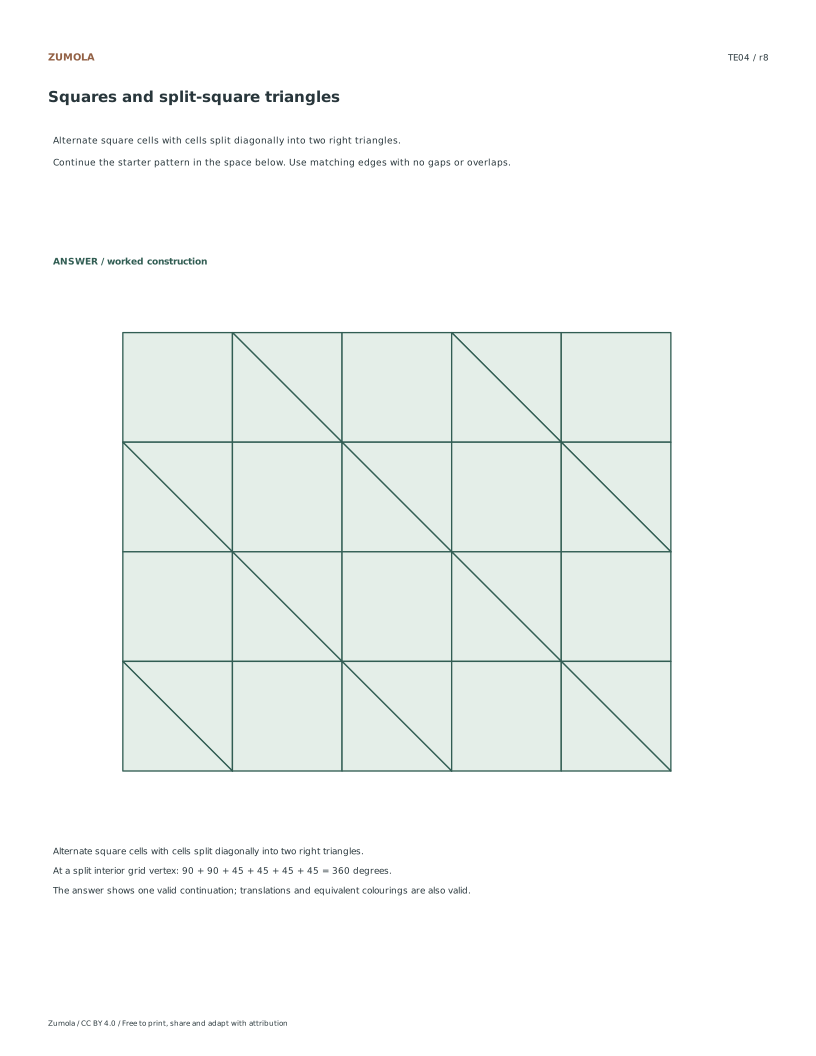
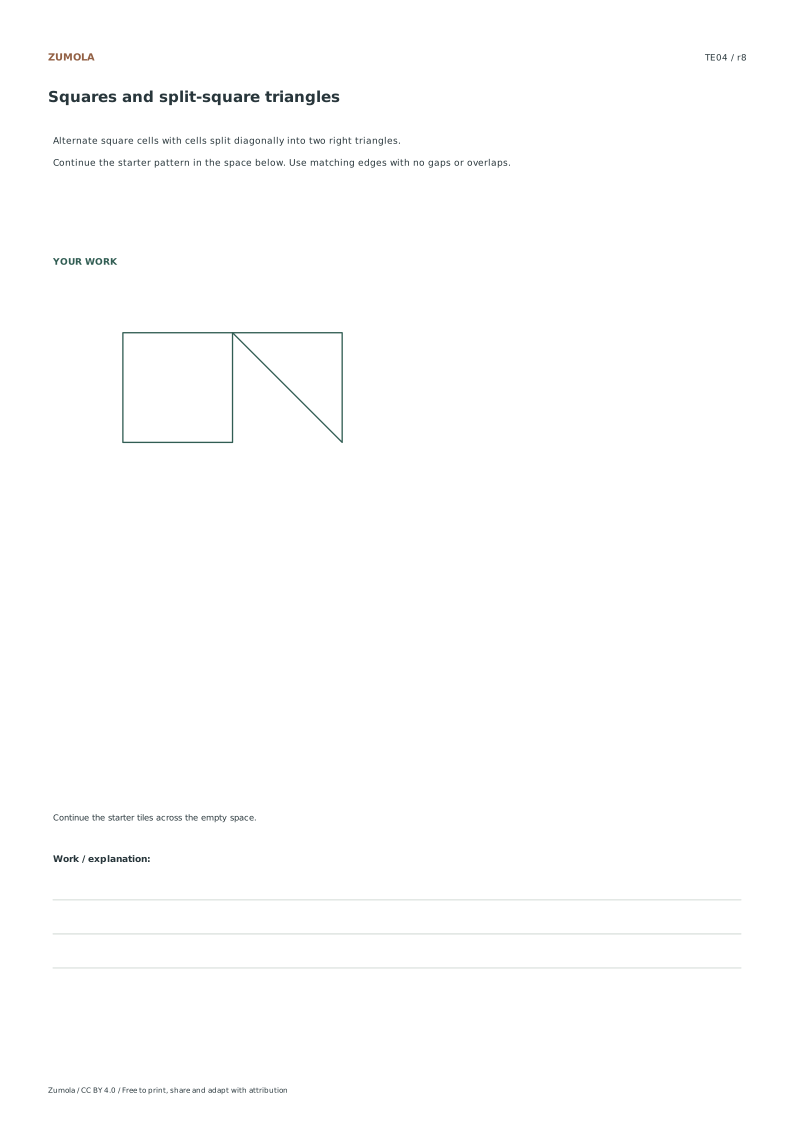
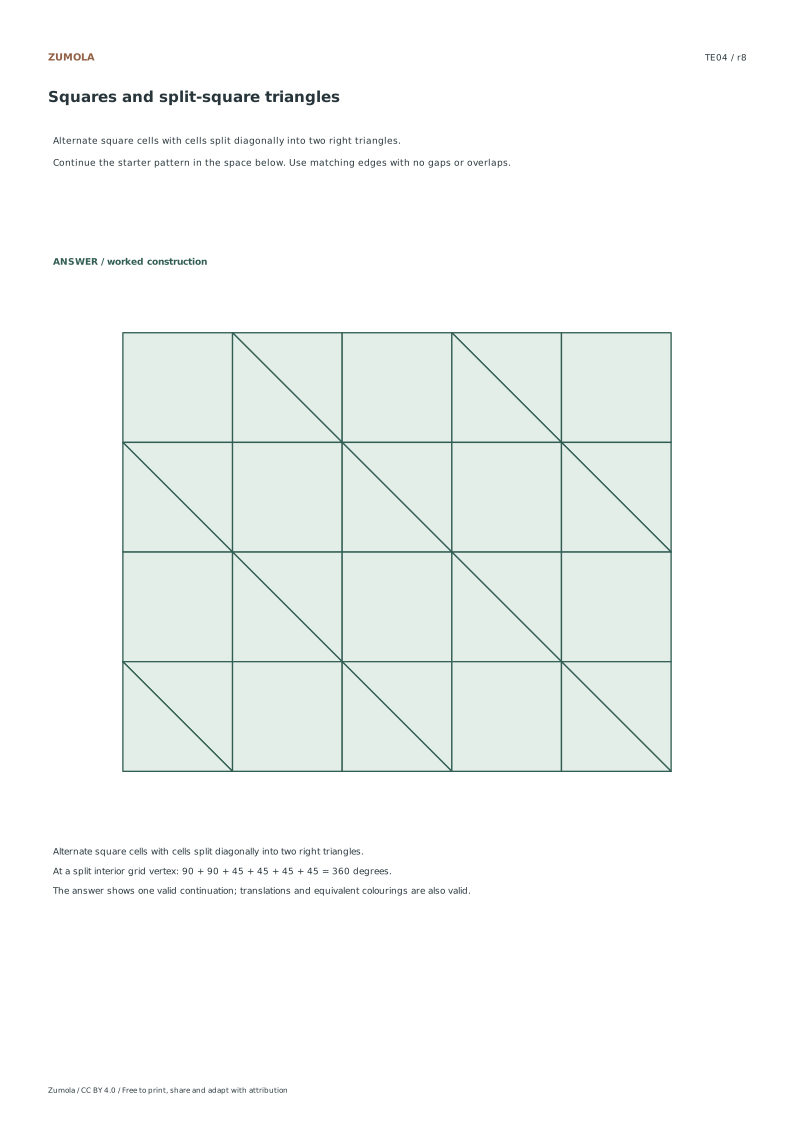
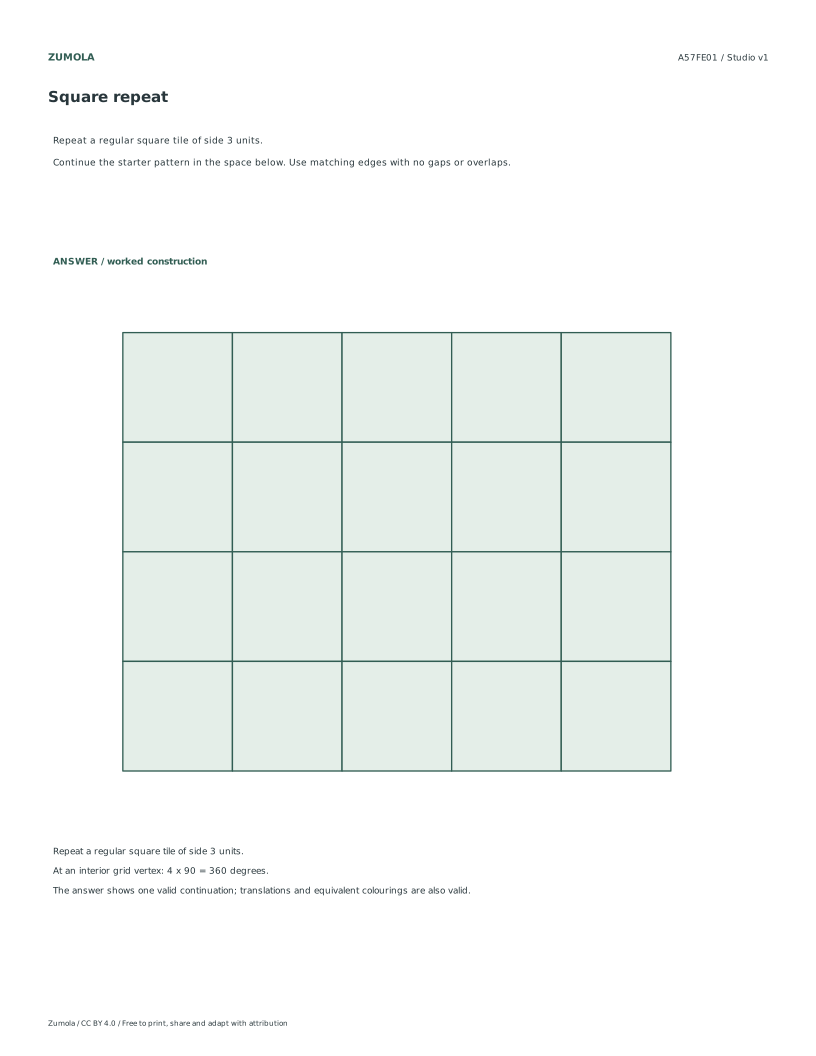
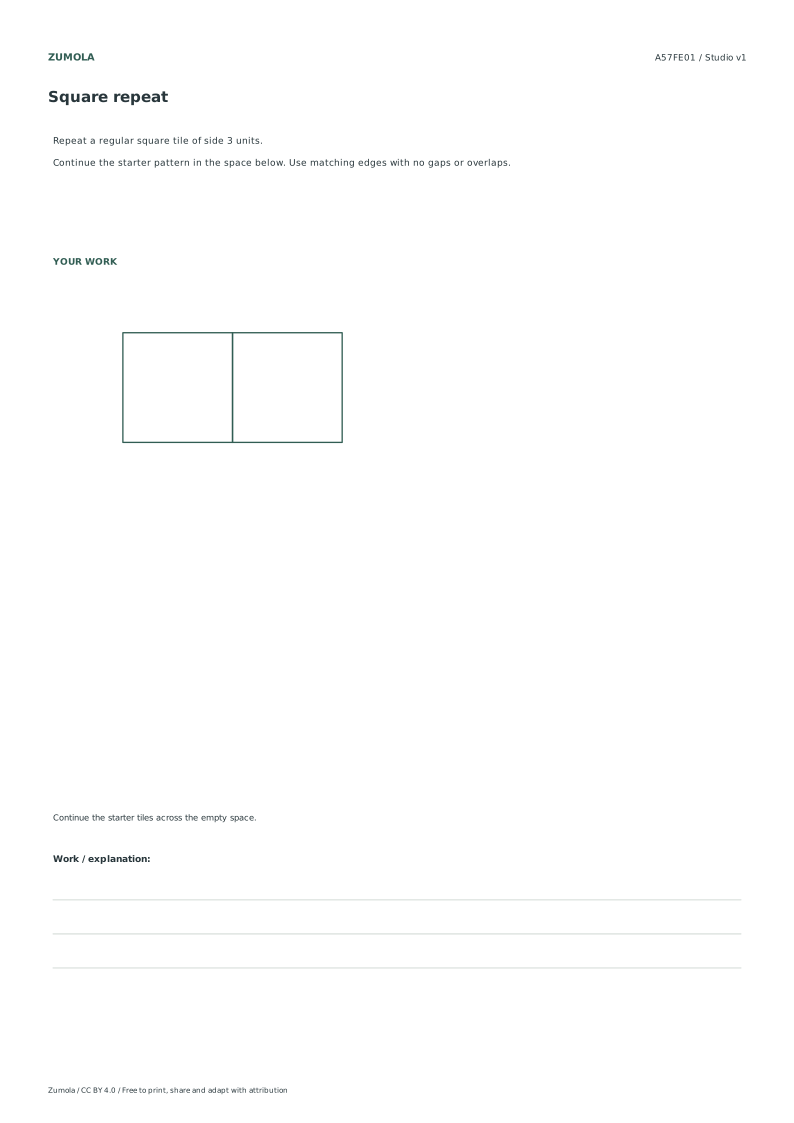
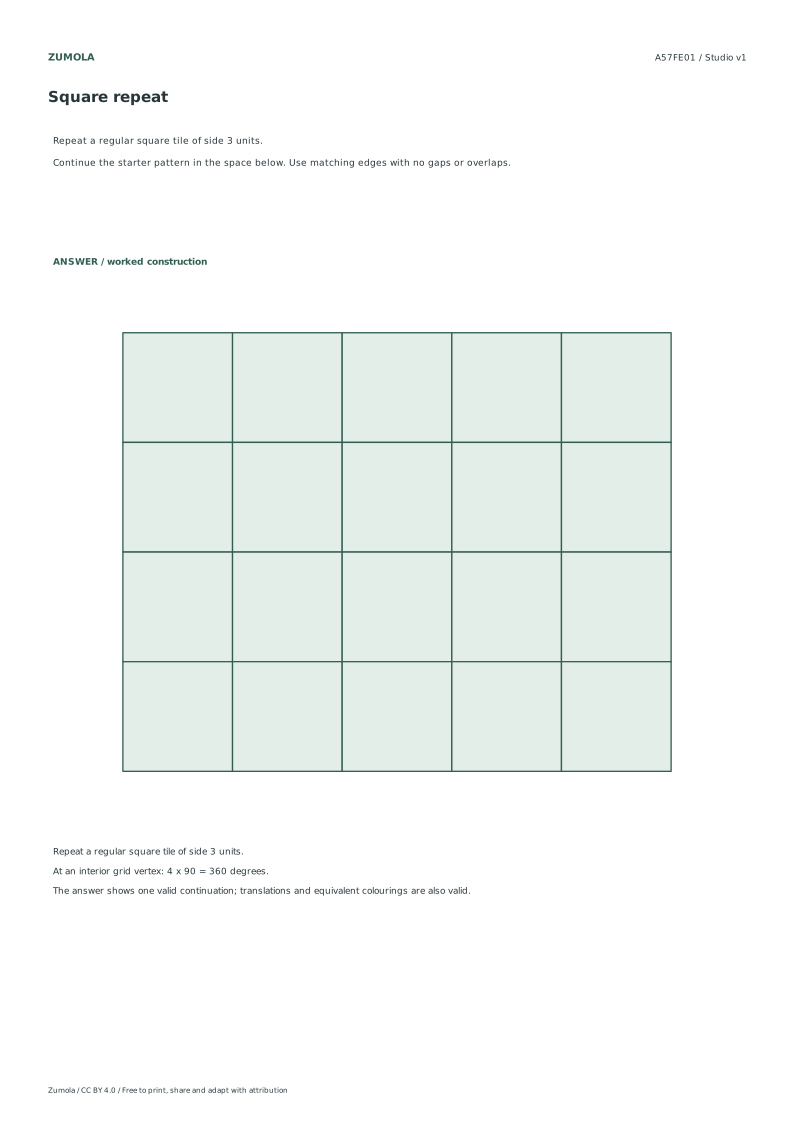
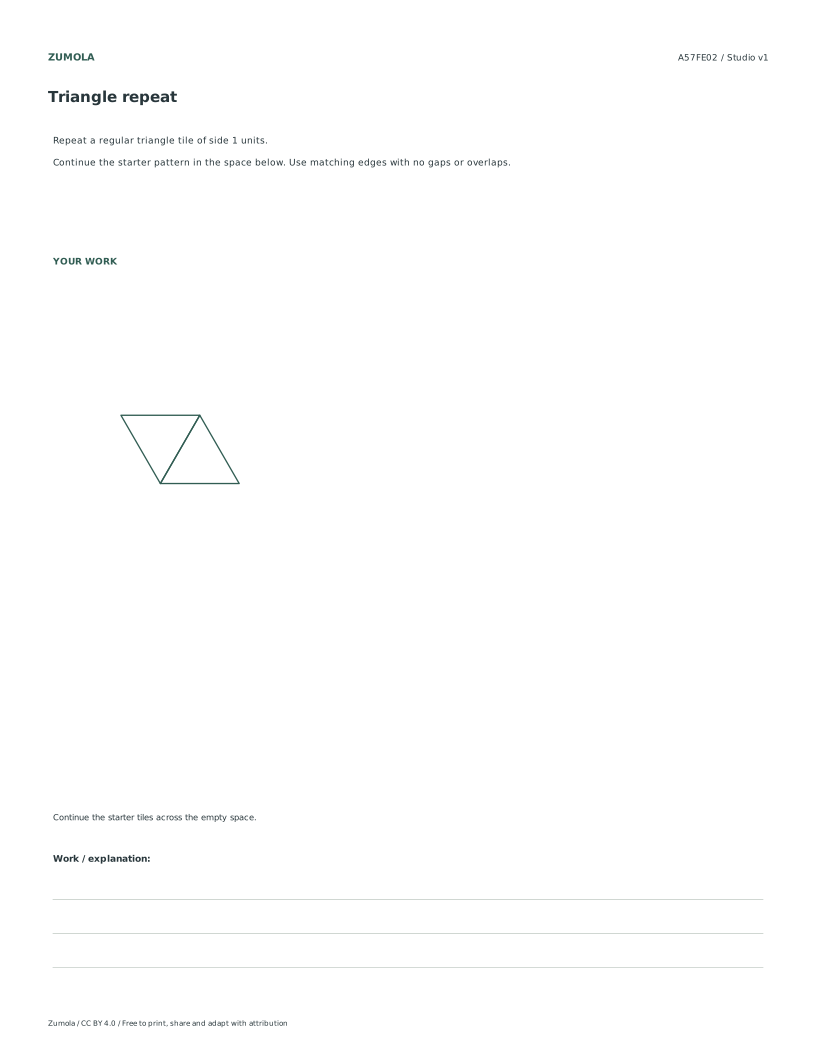
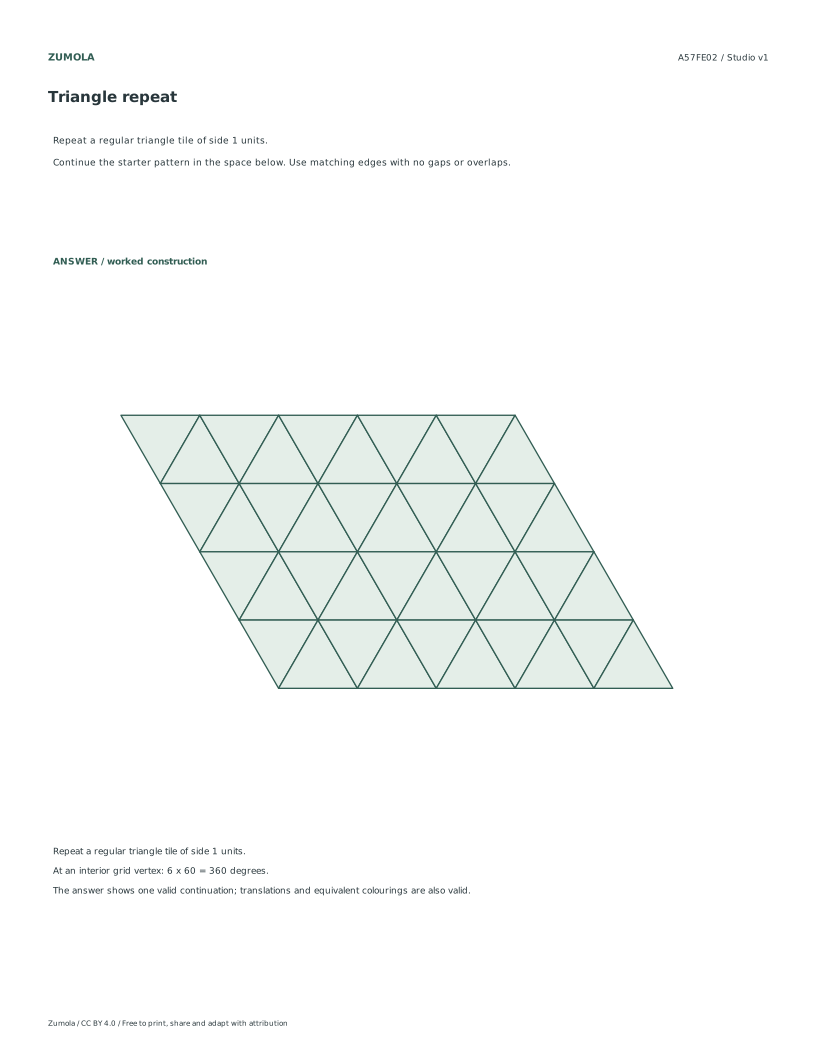
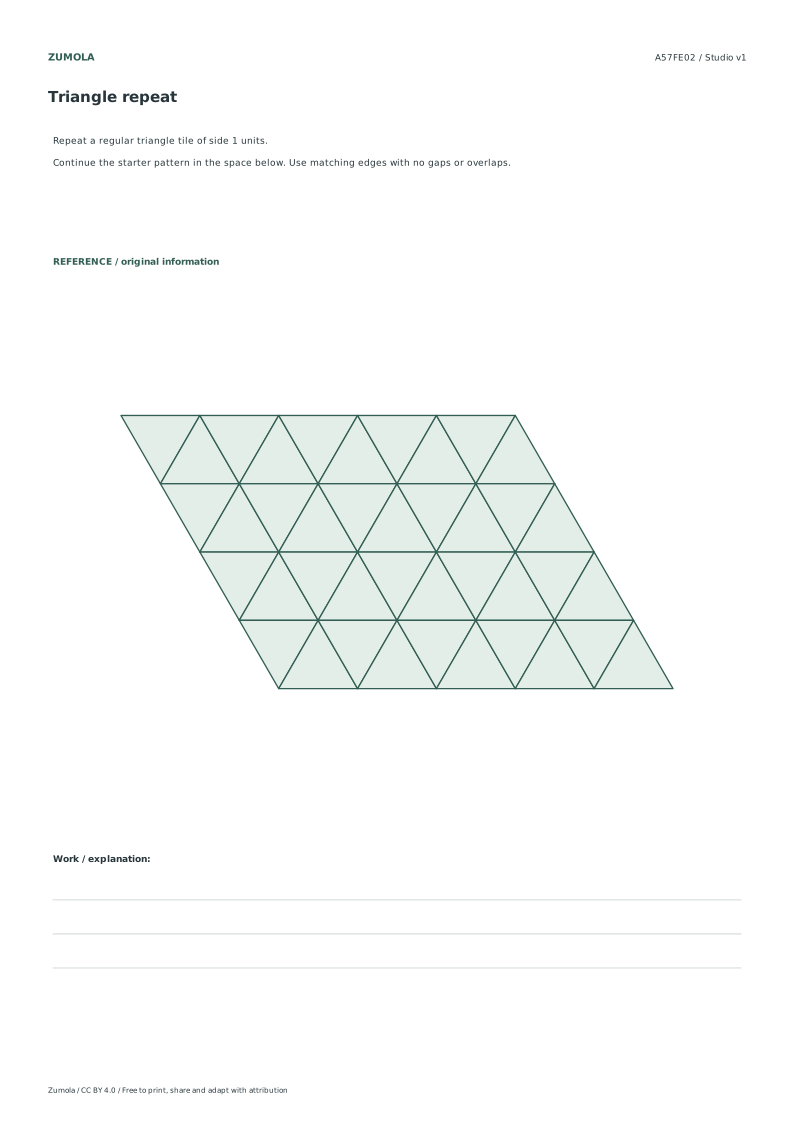
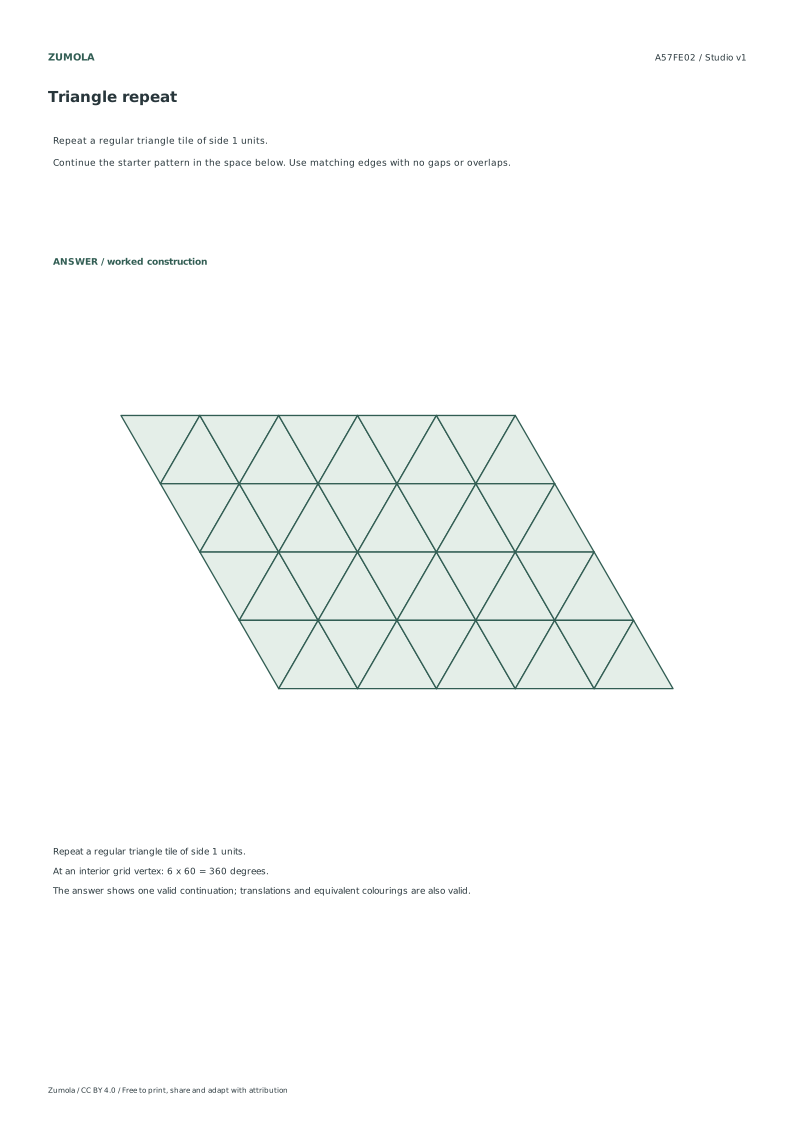
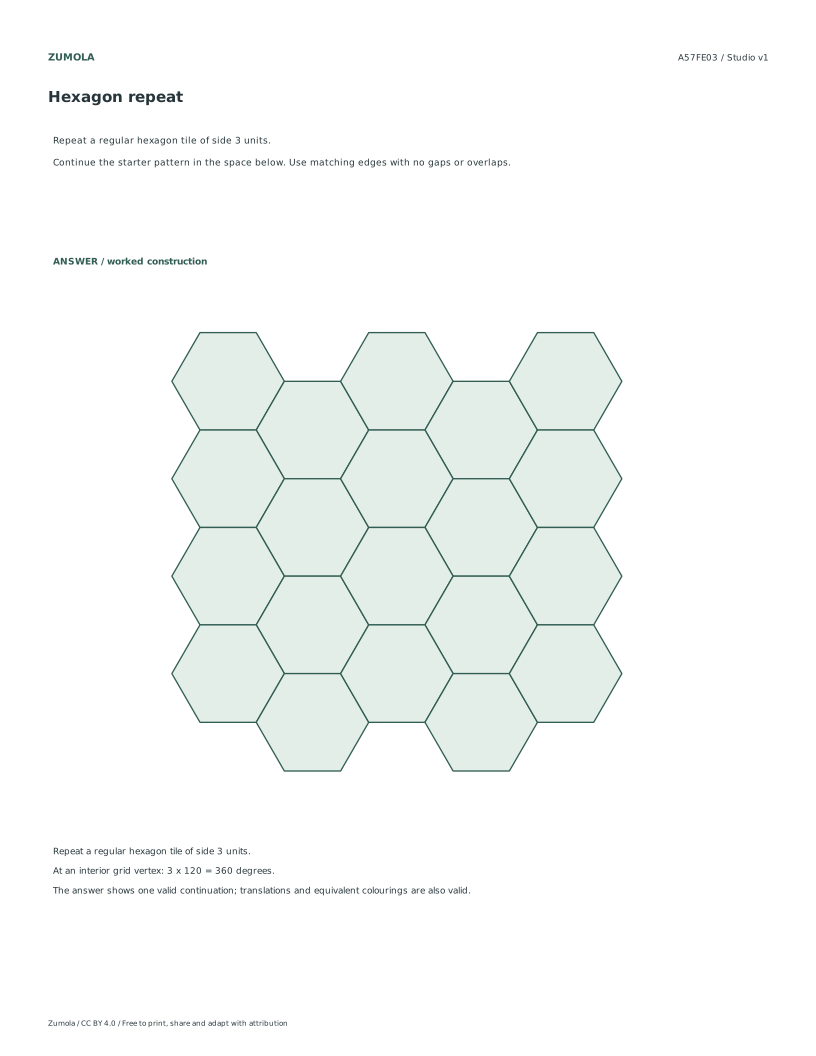
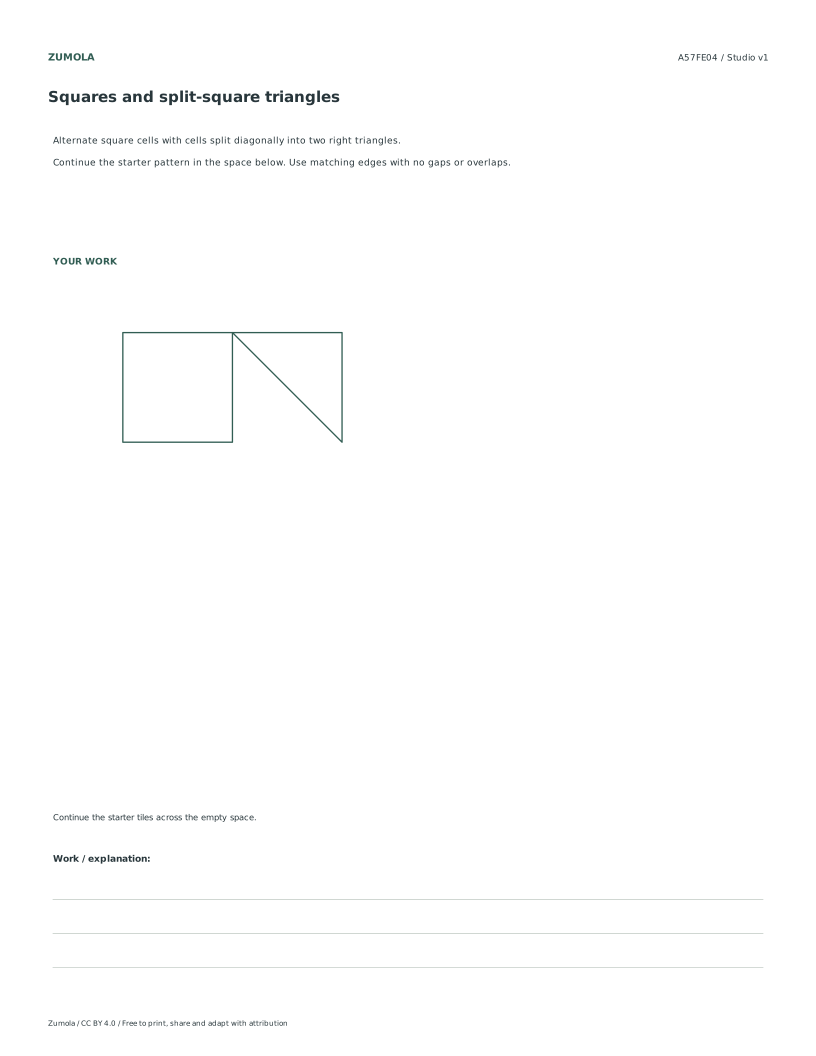
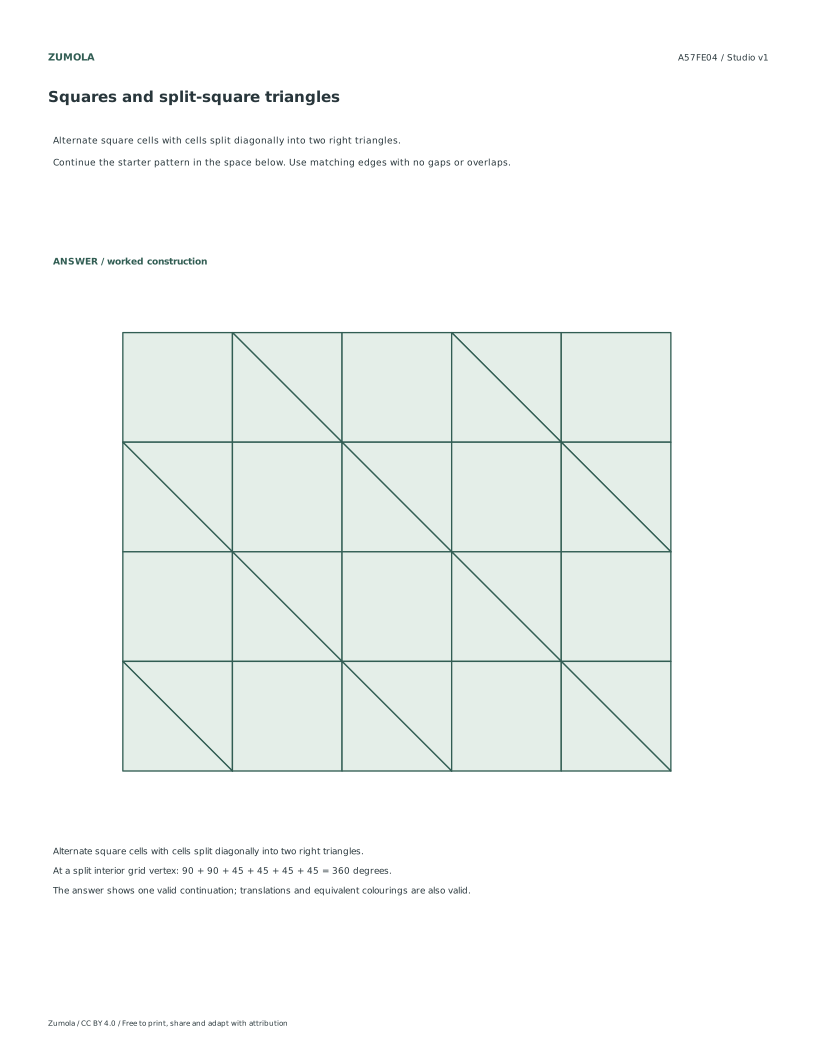
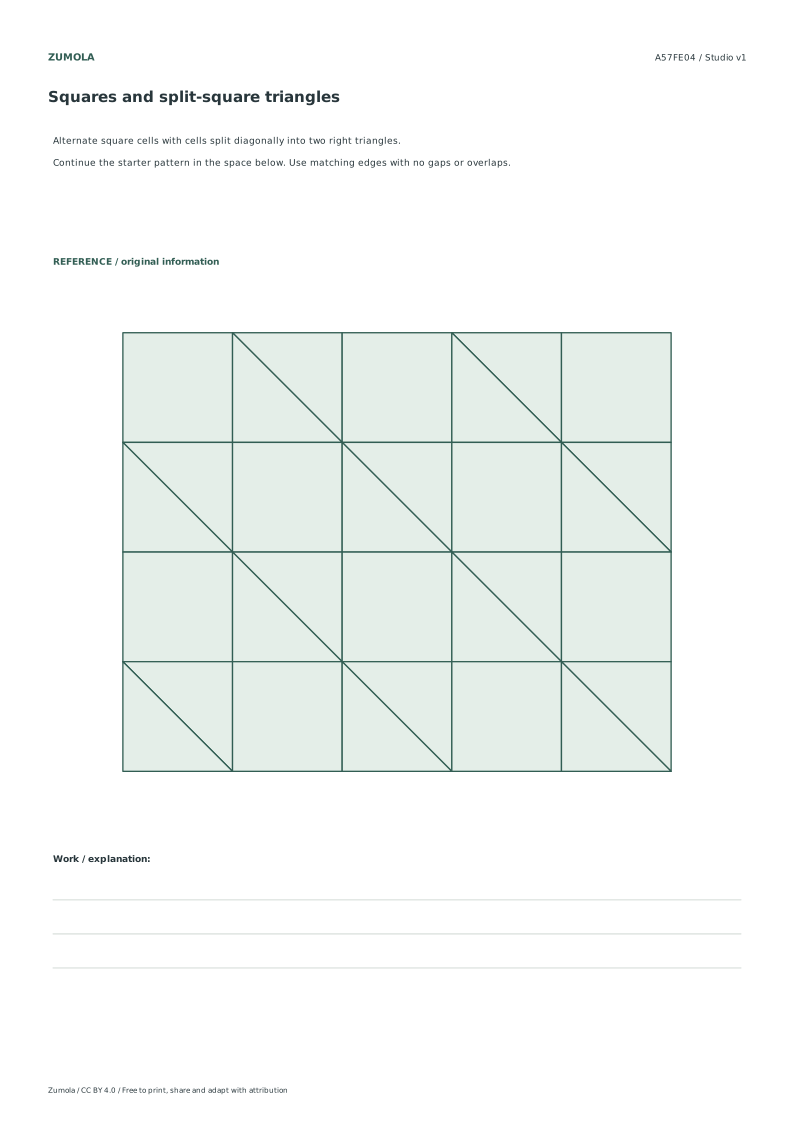
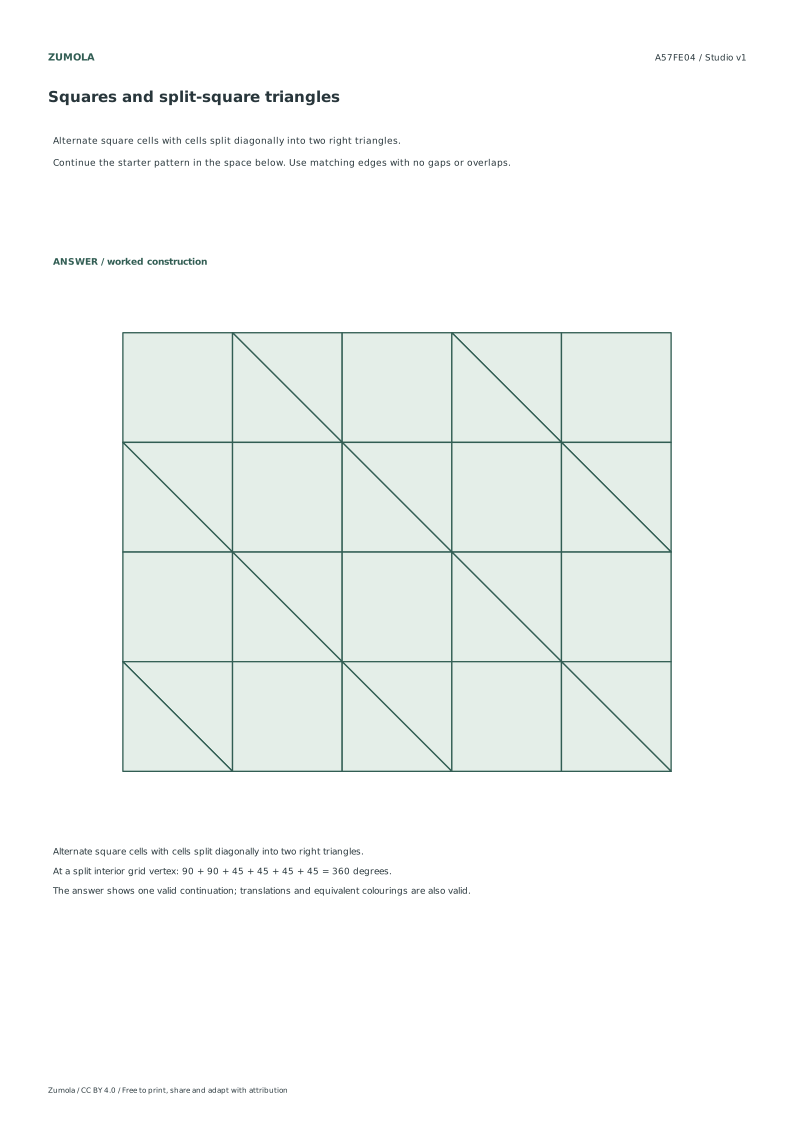
Continue a tile along the grid while matching edges. Check that repeated tiles meet without gaps or overlaps and identify the base tile.
4 tile patterns.
Square, triangle, hexagon and mixed.
More ways to practice
Why translation, not reflection, closes this seam
A plain square repeats easily because its edges are straight. Once you replace the top edge with a stepped path, the matching bottom edge must be the same path moved straight down by the tile height. Reflection would flip the steps and leave a mismatched seam.
Work on grid paper with 1 unit per cell and start from a 4-by-4 square. Read the top boundary left to right as (0,4), (1,5), (3,5), (4,4). The bottom boundary is that same path translated by (0,-4): (0,0), (1,1), (3,1), (4,0). The cap above the square and the notch cut below it have equal area, so each tile stays 16 square units.
- Mark the four top-path vertices and the four bottom-path vertices on the grid.
- Draw the top path and bottom path as connected segments, not straight lines at y=4 and y=0.
- Copy the tile and translate it by (0,+4) so the copy's bottom vertices sit on the first tile's top vertices.
- Check each of the four seam vertices individually; a seam that looks close is not enough.
- Repeat horizontally by (4,0) and confirm vertical seams also coincide.
Angle and area checks at the seam
At the path corner (1,5), the segment pointing to (0,4) and the segment pointing to (3,5) meet at 135 degrees, not 90. Measure or compute this before trusting the join; a right-angle assumption will distort the repeat.
Area is a second independent check. The 3-square-unit top cap replaces a 3-square-unit bottom notch, so the tile area remains 16 square units. If your drawn tile gains or loses area, the seam path was altered.
Do not assume a half-offset layout works for this modified tile. Half-offset repeats suit plain rectangles; this stepped tile needs its own proof before you use any offset.
- Compute the angle at (1,5) from the two segment directions and compare with 135 degrees.
- Count grid squares in the cap and notch; both should total 3 square units.
- Confirm total tile area is 16 square units.
- Only use a half-offset arrangement after proving the seam still matches.
Judging the finished repeat
Tessellation drawing has multiple valid outcomes: line weight, colour and shading vary by artist. Judge the repeat on measurable properties instead of visual similarity to a sample.
Keep labels and margins readable so seam vertices can be checked after drawing. A clean repeat is one where every listed vertex coincides and no region is covered twice.
- Trace one seam and mark every vertex where two tiles meet.
- Check for gaps by looking for uncovered grid cells along the seam.
- Check for overlaps by looking for doubled lines or shaded regions crossing the seam.
Try this example
A student draws the top path (0,4), (1,5), (3,5), (4,4) and copies it translated by (0,+4). Where should the copy's bottom vertices land, and what angle appears at (1,5)?
Show the worked explanation
The copy's bottom vertices are the original top vertices: (0,4), (1,5), (3,5), (4,4). The angle at (1,5) between the segments to (0,4) and (3,5) is 135 degrees. Each tile keeps an area of 16 square units because the 3-square-unit cap matches the 3-square-unit notch.
Common mistakes
- Reflecting the bottom path instead of translating it, so the steps run the wrong way. Rebuild the bottom path by subtracting 4 from each top vertex's y-coordinate and keep the left-to-right order.
- Treating the seam as the straight line y=4 and ignoring the stepped vertices. Plot all four top-path vertices and confirm the copy's bottom vertices land on them exactly.
- Assuming the corner at (1,5) is a right angle. Measure the angle between the segments to (0,4) and (3,5); it should be 135 degrees.
Check your work
- Every listed seam vertex coincides between adjacent tiles.
- No uncovered grid cells appear along the seam.
- No region is covered twice.
- The corner at (1,5) measures 135 degrees.
- Tile area is 16 square units, with cap and notch each 3 square units.
- Labels and margins stay readable after drawing.
Questions before you start
Why can't I mirror the tile to make the seam fit?
Mirroring reverses the step direction, so the bottom path no longer matches the top path. Translation by (0,-4) keeps the same path and closes the seam.
Does a half-offset row work with this tile?
Not automatically. Half-offset suits plain rectangles; this modified tile needs a separate proof that every seam vertex still coincides before you use an offset.
How do I know the tile area did not change?
The top cap adds 3 square units and the bottom notch removes 3, so the area stays 16 square units. Recount if your figure differs.