Choose flat-top or pointy-top hexagons at the same 10 mm across-flats size. Trace a seven-cell flower and calculate its perimeter and area.
Choose US Letter or A4, then download the PDF for printing or the SVG for editing. Keep the student worksheet separate from its answer or reference completion. All files, including the answers, are free without signup.
Choose your paper and download
Download paper size
Every worksheet and answer is free. No signup.
Free original resource
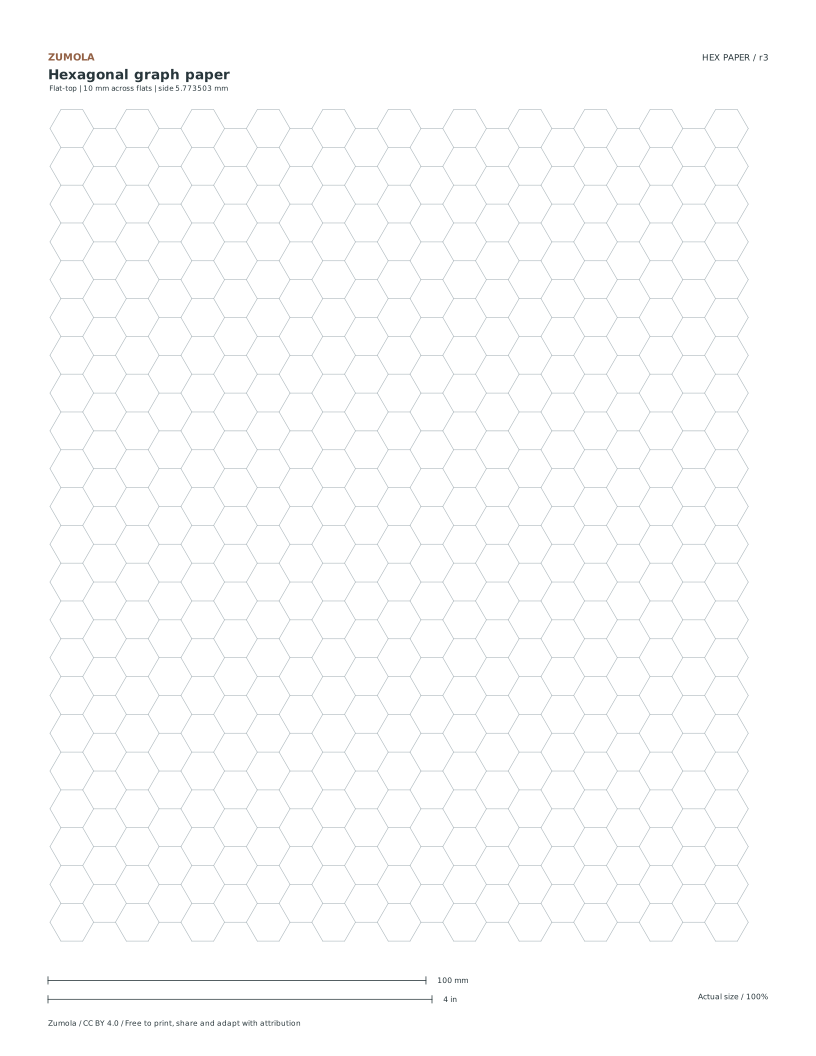
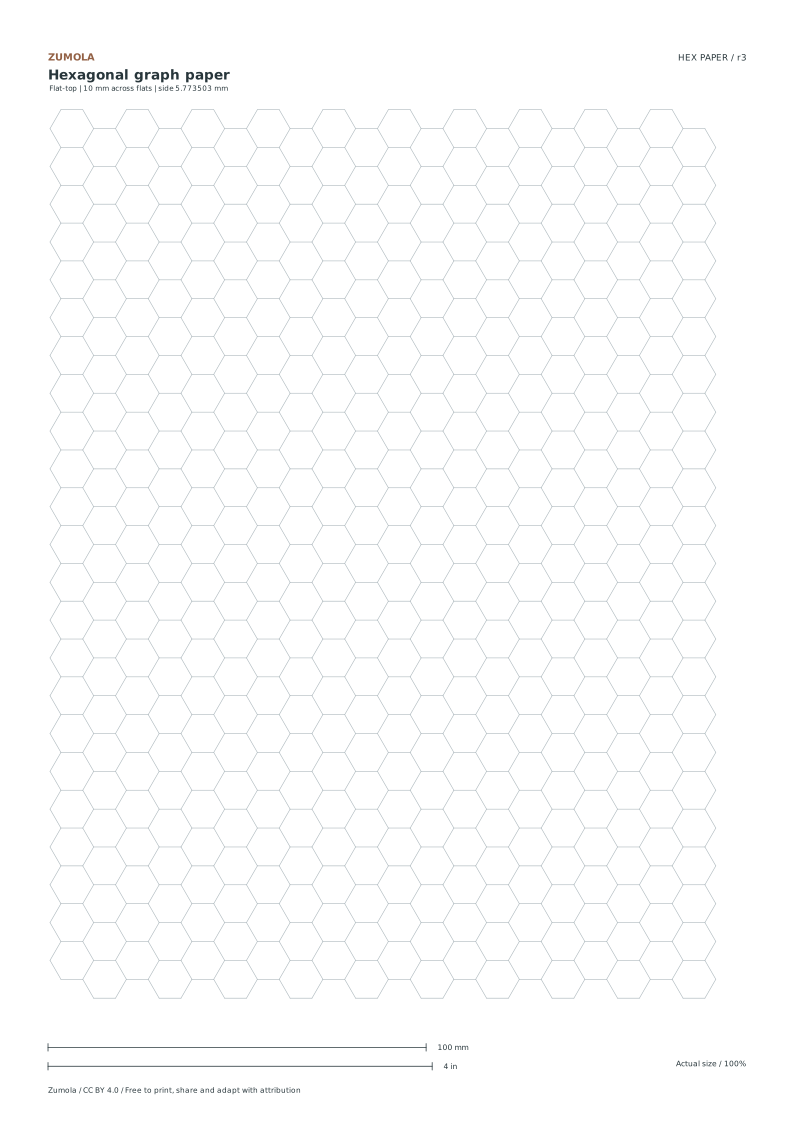
Flat-top hexagonal paper
Original blank printable. Choose Letter or A4; print at actual size.
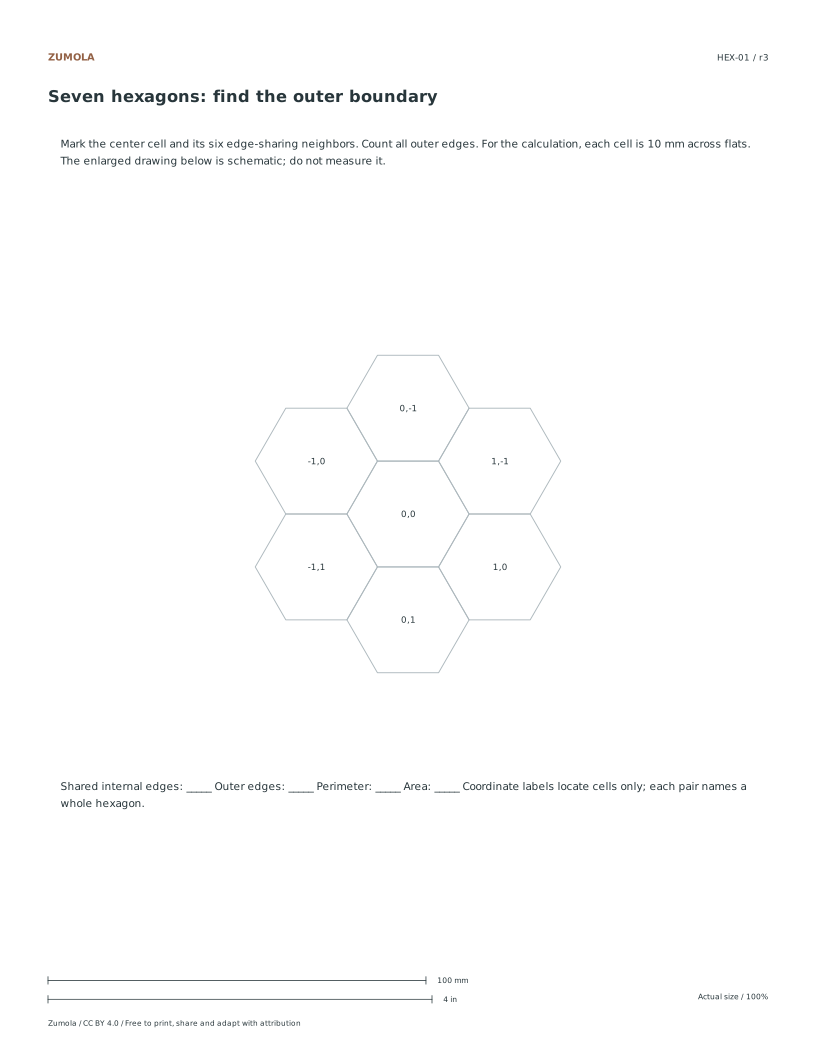
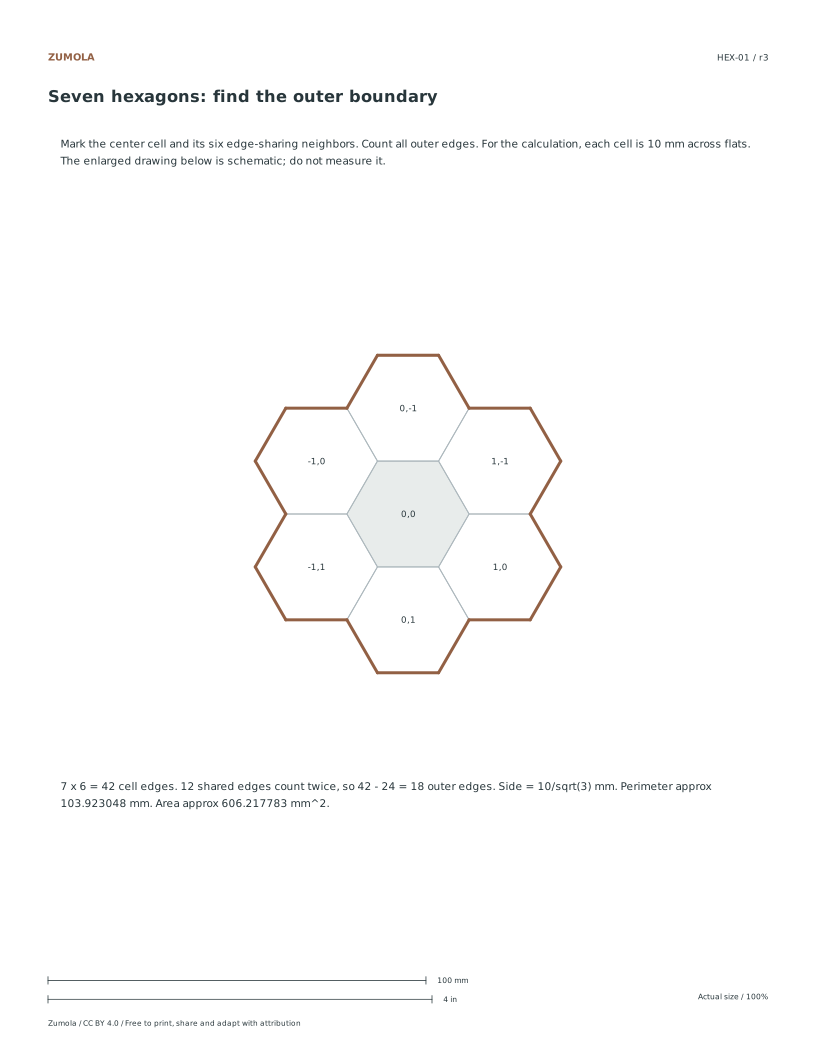
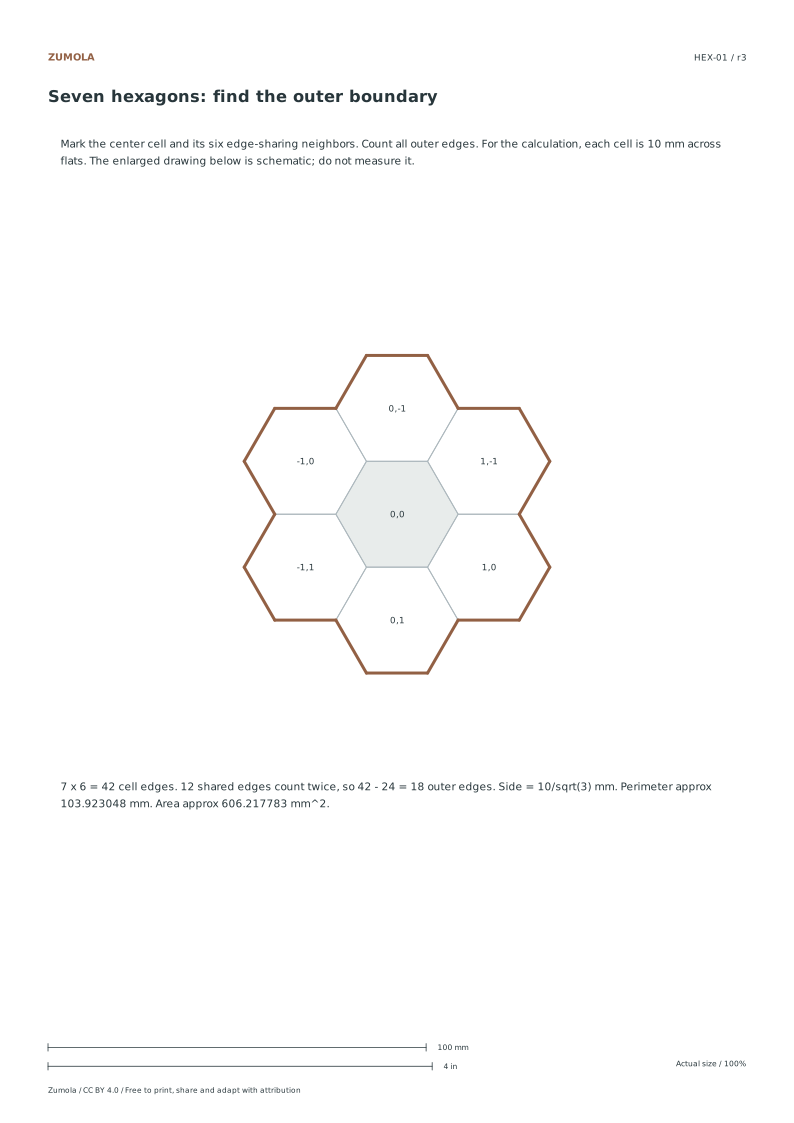
Take one cell and all six edge-sharing neighbors. There are 7 × 6 = 42 cell-edge incidences. Each of the 12 shared internal edges was counted twice. Remove those 24 incidences to leave 18 edges on the outside boundary. The center touches six neighbors, and the surrounding ring contributes six more shared pairs.
Quantity for a 10 mm across-flats grid
Result
Single side s
10/√3 mm ≈ 5.774 mm
Flower perimeter · 18s
60√3 mm ≈ 103.923 mm
One regular hexagon area
50√3 mm²
Seven-cell area
350√3 mm² ≈ 606.218 mm²
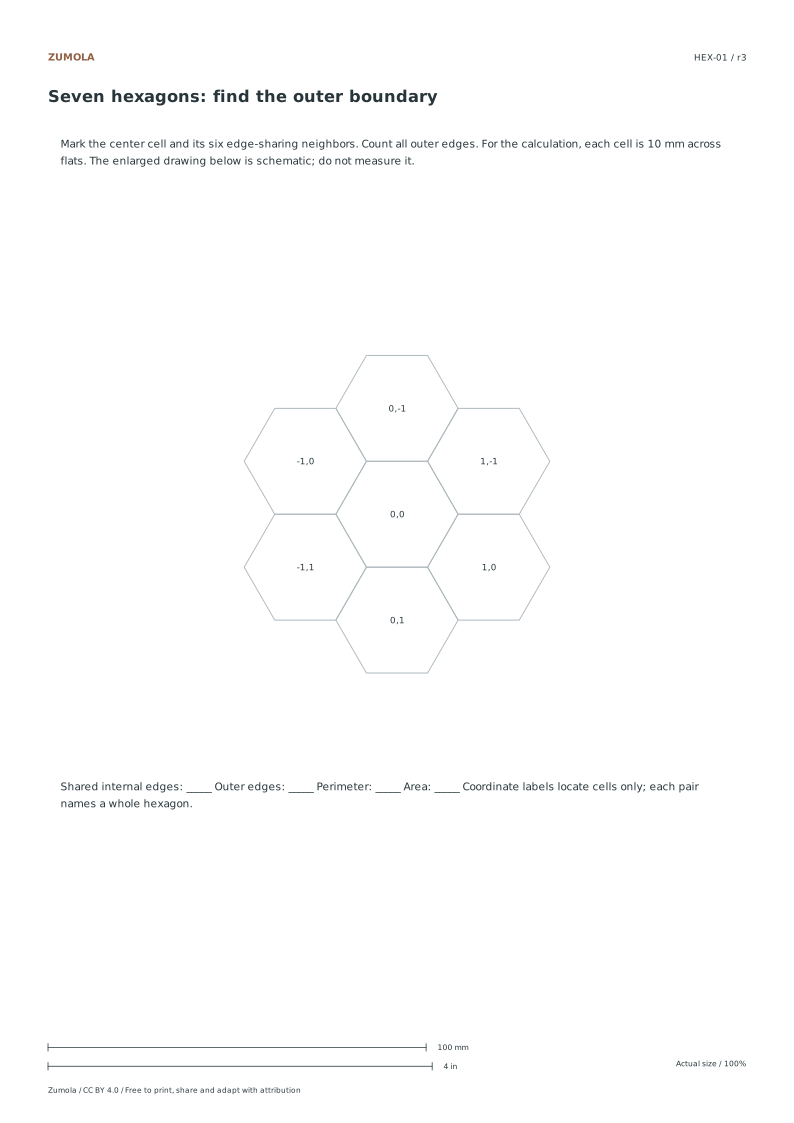
The worksheet enlarges the cells to 28 mm across flats for clear edge counting. Its numeric questions still specify the 10 mm paper size. Treat the large illustration as a schematic and use the stated scale for the arithmetic.
Free original resourceHEX-01
Seven-cell hex tiling
Original practice with a separate reference answer. Choose Letter or A4.
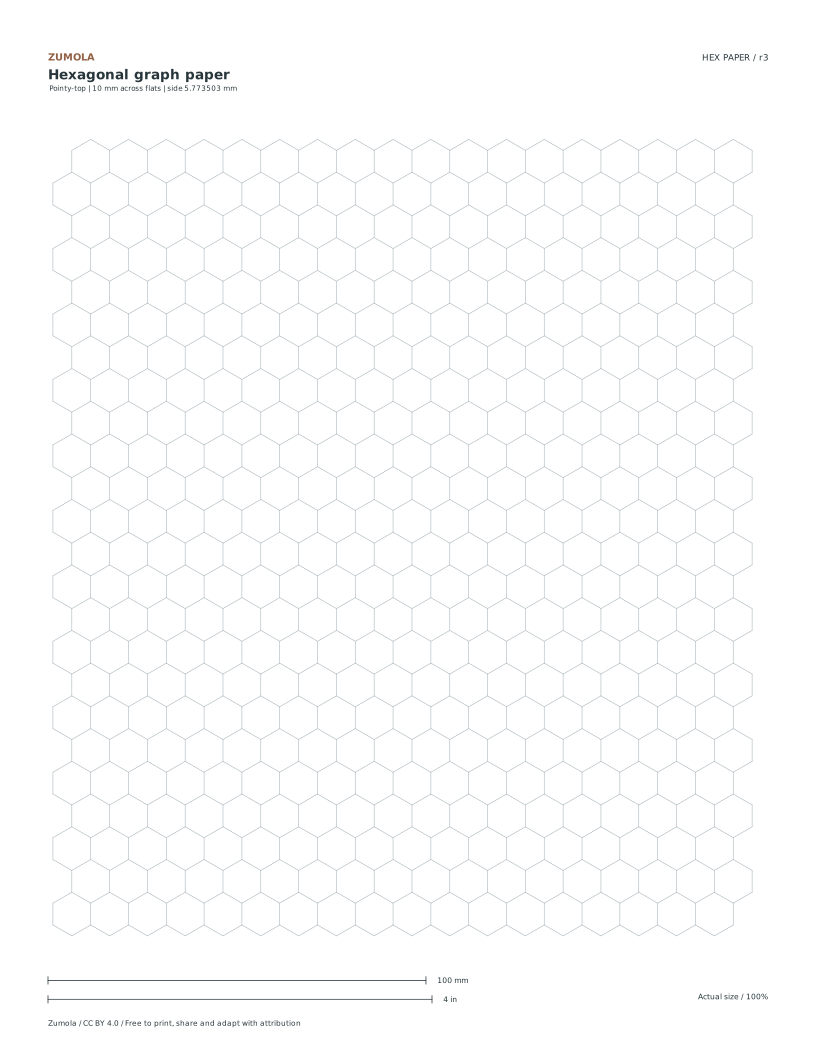
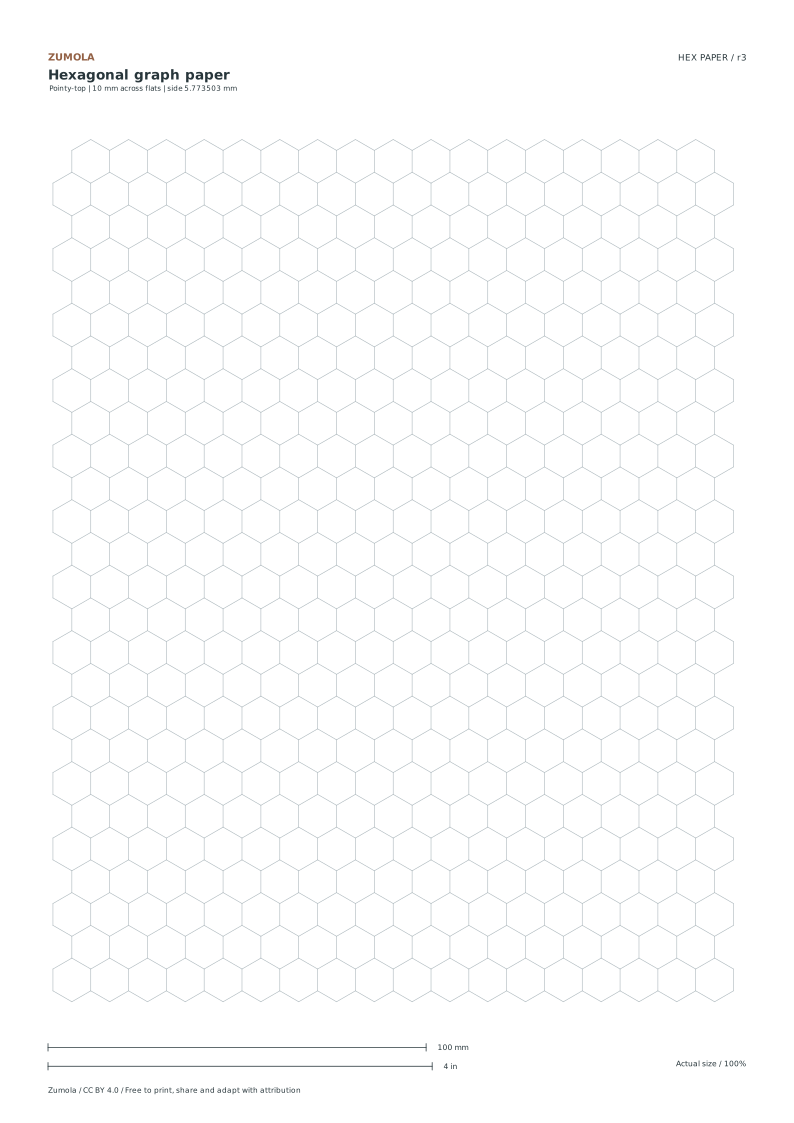
Flat-top paper has a horizontal top edge. Pointy-top paper has an upper vertex. Turning the grid changes its orientation, not the side length or across-flats definition. Only whole hexagons are drawn within the reserved region. Neighboring cells share a single vector edge, keeping internal lines the same weight.
Work through the page
Verifying Hexagon Dimensions
The grid size is defined across opposite parallel flats: 10 mm. It is not a 10 mm side length. First print the matching Letter or A4 PDF at Actual size / 100%, then measure the calibration bars and a flat-to-flat span on the physical sheet. A regular hexagon at this size has side length 10/√3 mm, about 5.77 mm, and opposite-corner distance 20/√3 mm, about 11.55 mm. Use those separate definitions when comparing a ruler measurement or editing the SVG. A monitor preview alone cannot establish the printed size.
Identifying Grid Orientation
Determine whether your printed sheet features flat-top or pointy-top hexagons by examining the edges. Flat-top hexagons display horizontal edges at the top and bottom, while pointy-top hexagons present vertices at these positions. This orientation affects how you visualize the seven-cell flower pattern. Ensure you are working within the inset area where full hexagons are visible, staying away from the page margins; these files deliberately include only whole cells. Correct orientation helps in accurately tracing the shared internal edges and outer boundaries. Select the orientation that best suits your tracing needs, as both provide the same geometric properties for the central cell and its six edge-sharing neighbors.
Tracing the Seven-Cell Flower
Locate a central hexagon and trace its six immediate edge-sharing neighbors to form the seven-cell flower shape. This configuration creates twelve shared internal edges and eighteen outer edges. The diagram provided is enlarged for readability and marked as schematic, so focus on the topology and use the stated 10 mm size for the arithmetic rather than measuring the enlarged illustration. Count the eighteen outer edges to verify your tracing. At the ten millimeter flat-to-flat scale, the total perimeter of this shape is approximately one hundred three point nine two millimeters. The total area of the seven cells is roughly six hundred six point two two square millimeters. Use these values to check your manual measurements against the theoretical geometric constants.
Small checks that catch common errors
Watch for
Check instead
Measuring across corners instead of flats
Always measure the distance between opposite parallel flat edges, which must be ten millimeters. Measuring corner-to-corner yields eleven point five five millimeters, leading to incorrect scaling.
Tracing only the center and five neighboring cells.
A complete flower contains the center plus all six edge-sharing neighbors. Check seven cells, 12 shared edges and 18 exterior edges.
Assuming colors are required for answers
Coloring is optional. The correct answer relies on identifying the boundary and counting edges. Focus on the geometric structure of the seven cells rather than applying specific colors to the diagram.
Print a test sheet before a full pack
Use the PDF that matches the paper loaded in your printer. Choose Actual size / 100% and turn off Fit, Shrink and browser headers. The SVG keeps millimeter dimensions, but an editor or browser can rescale it; the PDF is the simpler print path. Measure any calibration bars with a separate physical ruler when the exercise depends on printed size. A screen preview does not establish physical scale.
Packs combine the same individual pages; they are not extra different exercises. Print a student copy first and keep references nearby for review. Letter and A4 preserve the stated grid spacing or model definition while their surrounding white space can differ. Color is optional: the references also use line position, text or relative lightness to explain the result.
Useful answers
Why is the diagram marked as schematic?
The activity enlarges each hexagon to 28 mm across flats to make edge counting clear. It keeps the same regular geometry. Calculate the requested result using the specified 10 mm grid, not the enlarged diagram.
What is the exact perimeter of the flower shape?
The exact perimeter is 18 × (10/√3) = 60√3 mm. This is approximately 103.923 mm; a finite decimal is a rounded result. Seven hexagons have exact area 350√3 mm², approximately 606.218 mm².
How many internal edges are shared in the flower?
The seven-cell flower configuration has twelve shared internal edges. These are the lines where the central hexagon touches its six neighbors, and where neighbors touch each other within the cluster.
Are the answers and editable files free too?
Yes. Every linked PDF, SVG, worksheet and answer is free without signup. The original Zumola resources use CC BY 4.0: credit Zumola, link the license and indicate changes. Analytics consent is not required to download or use them.
Optional Google Analytics helps us understand which free resources are useful. It is off until you allow it. Drawing tools and downloads work with either choice. Privacy details