Reference diagrams
LETTER · Download PDF
A4 · Download PDF
Free original resources
Learn to graph AND and OR compound inequalities on number lines, choose open or closed endpoints, and write interval notation with unions correctly.
Four original cases, with reference diagrams, practice sheets and worked answers. Everything is free; no signup required.
LETTER · Download PDF
A4 · Download PDF
LETTER · Download PDF
A4 · Download PDF
LETTER · Download PDF
A4 · Download PDF
Use A4 or US Letter to match your printer. Graph coordinates determine the answers; these worksheets are not physical measuring rulers.

A compound inequality joins two conditions with AND or OR. On a number line, AND keeps only values satisfying both conditions, so the shaded parts overlap. OR keeps values satisfying either condition, so the shaded parts may point away from each other. This page explains how to shade, which endpoint style to use, and how to translate the graph into interval notation. Endpoint inclusion follows the inequality symbol, not the direction of shading.
Start by identifying the connective. AND means intersection: a number must satisfy both inequalities. OR means union: a number needs to satisfy at least one inequality. This decision controls the shape of the graph before any endpoint is marked.
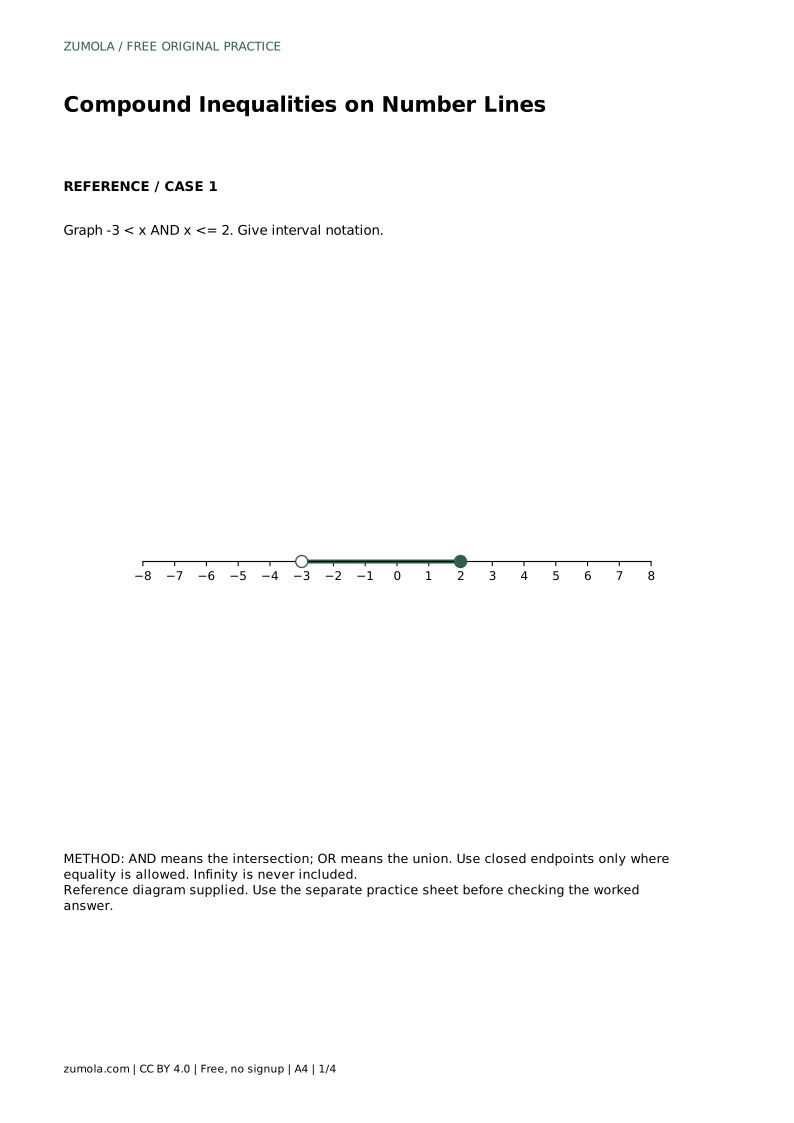
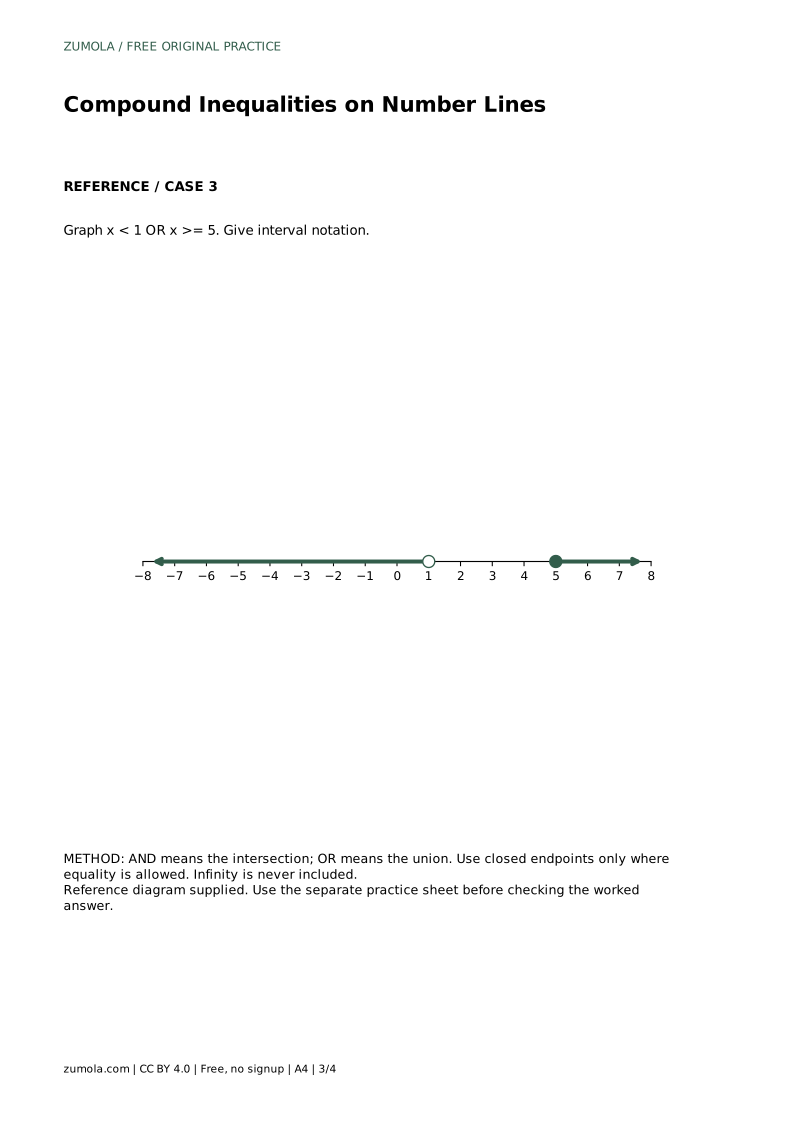
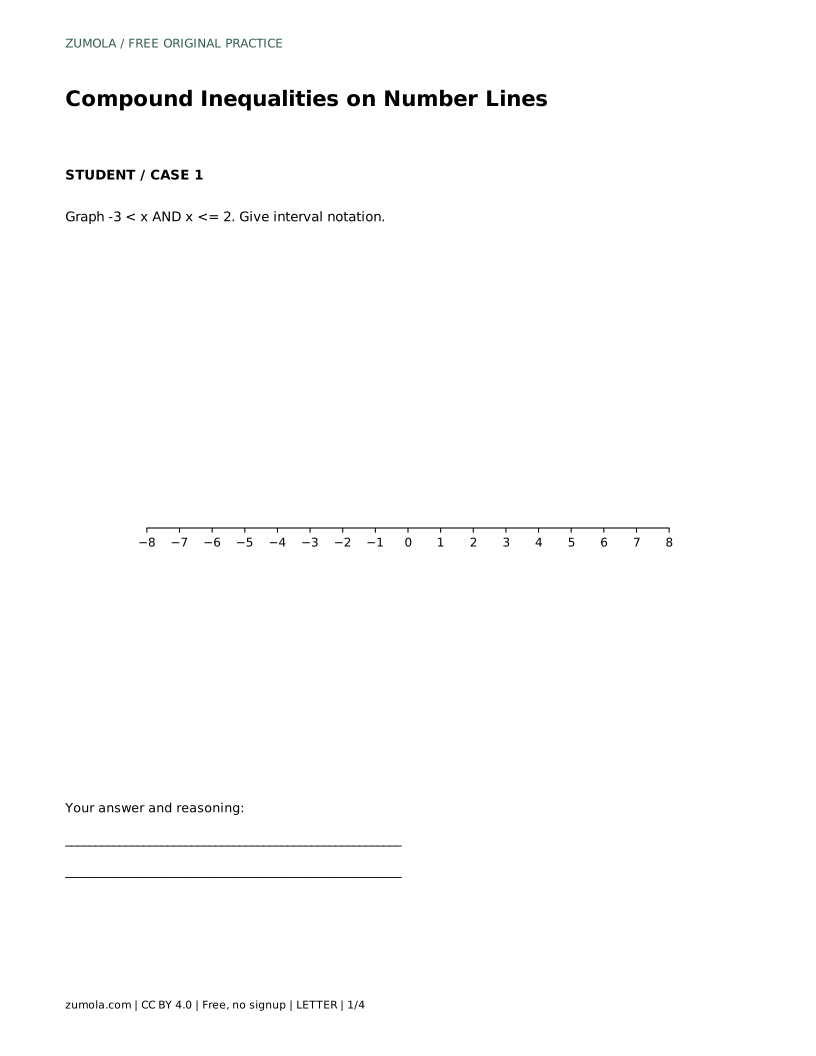
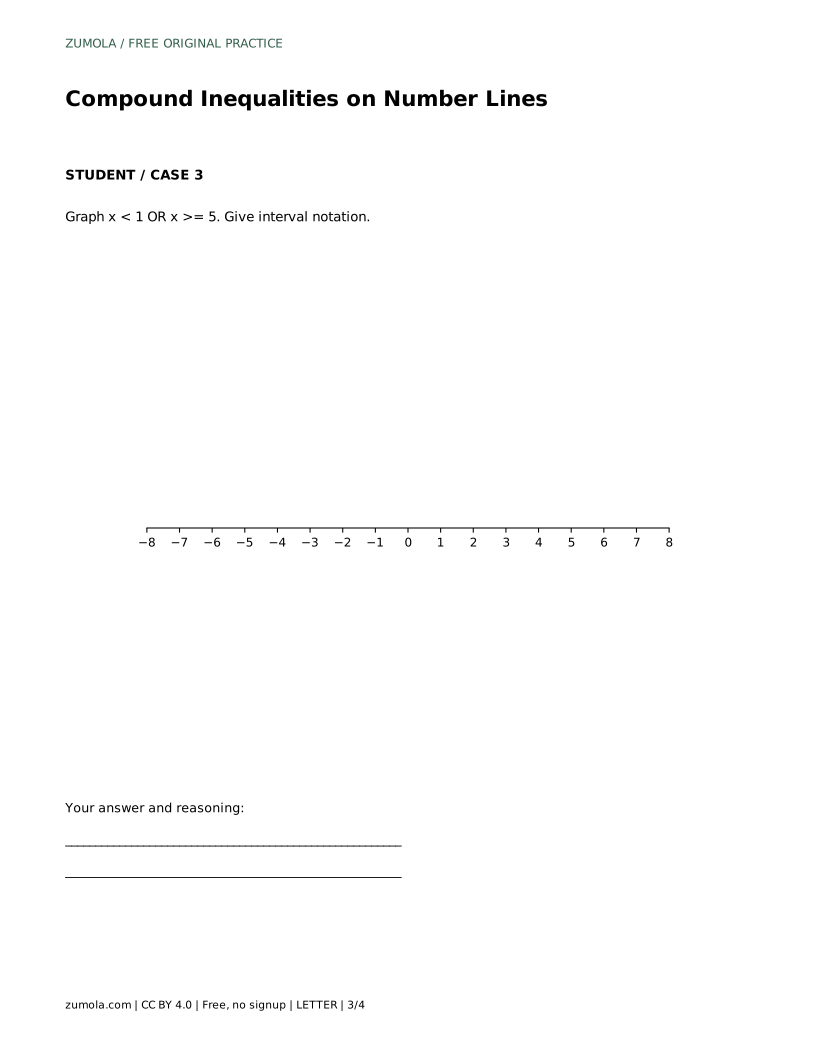
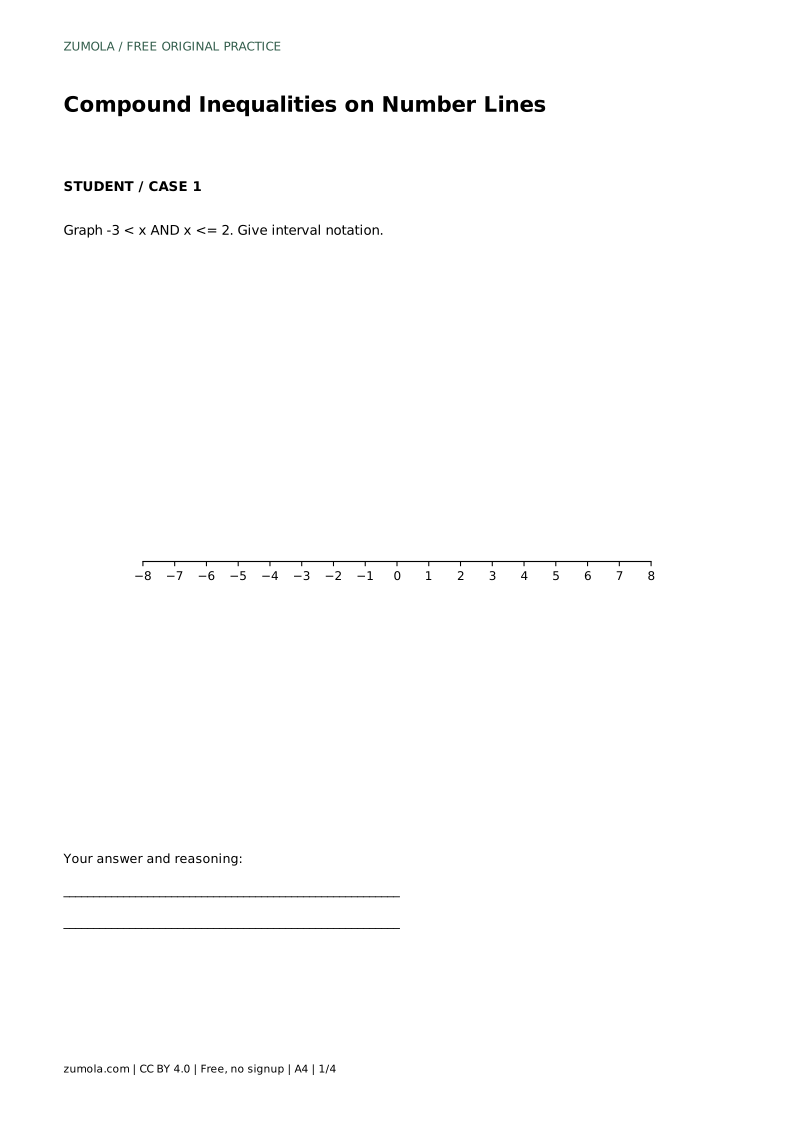
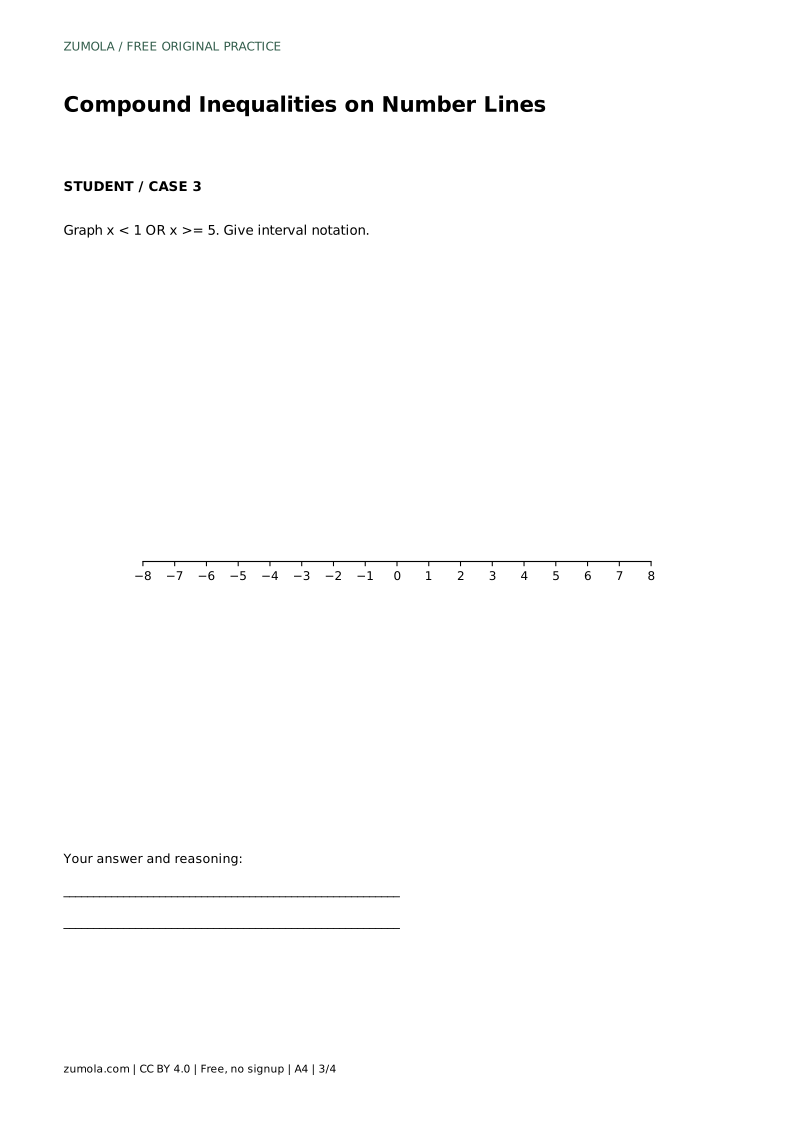
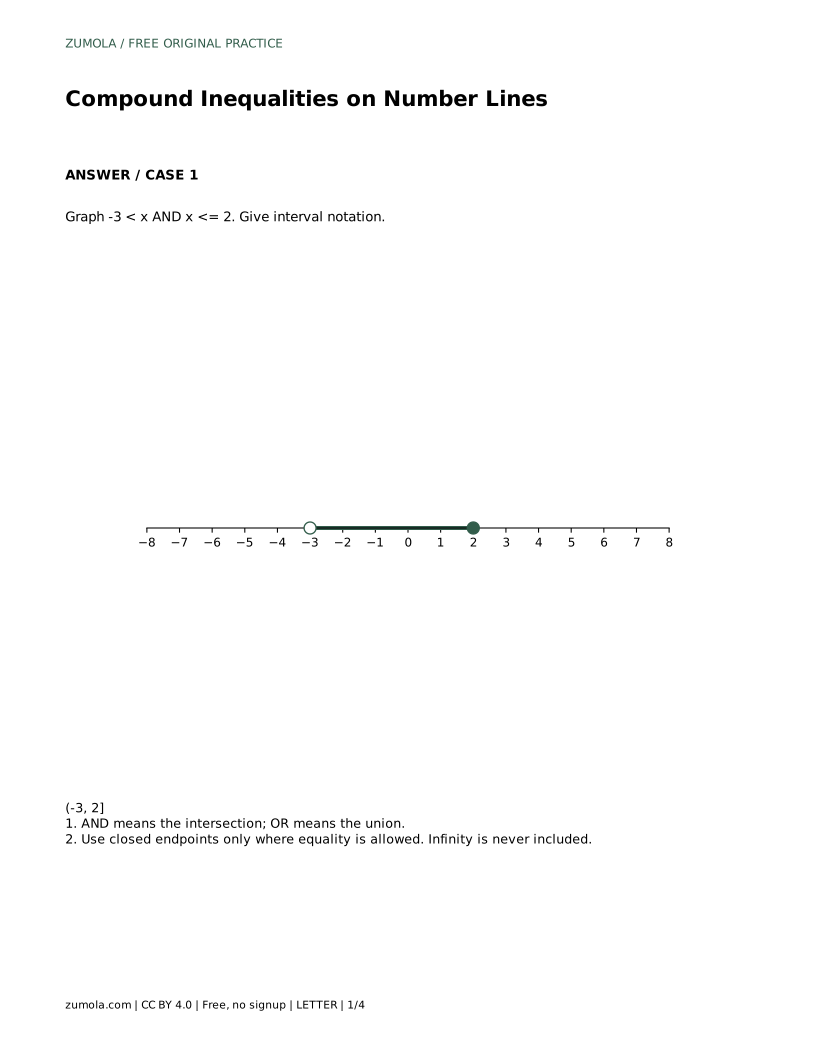
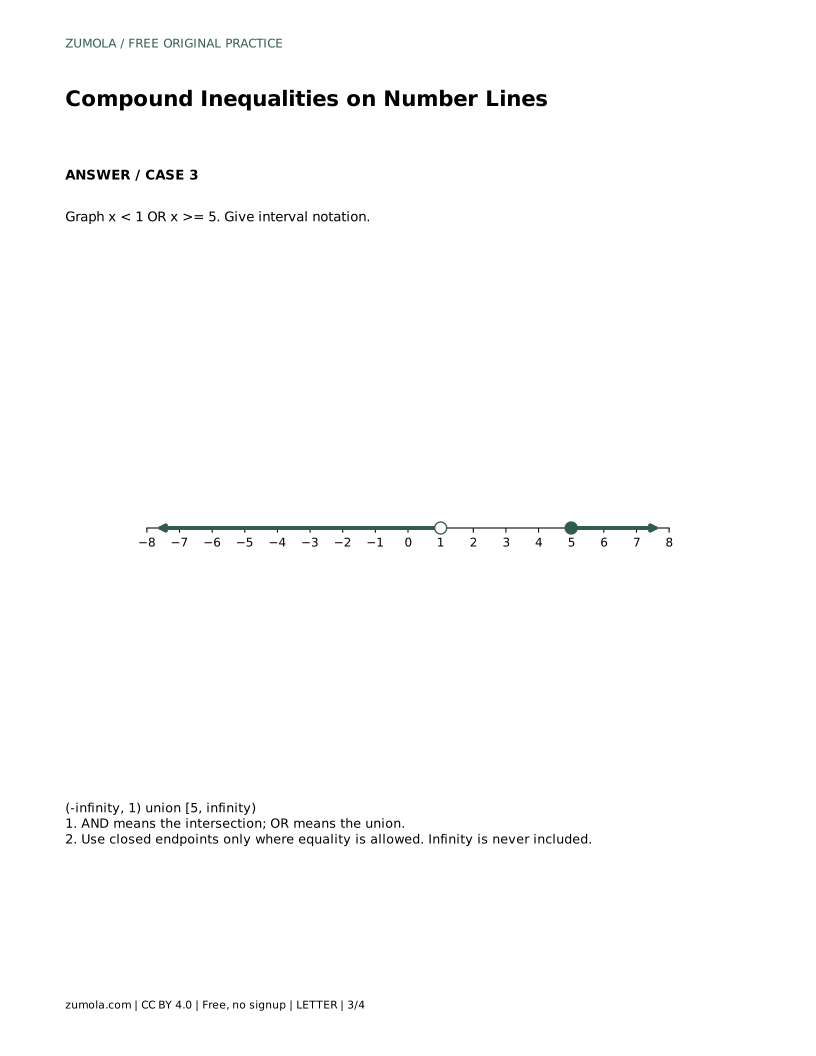
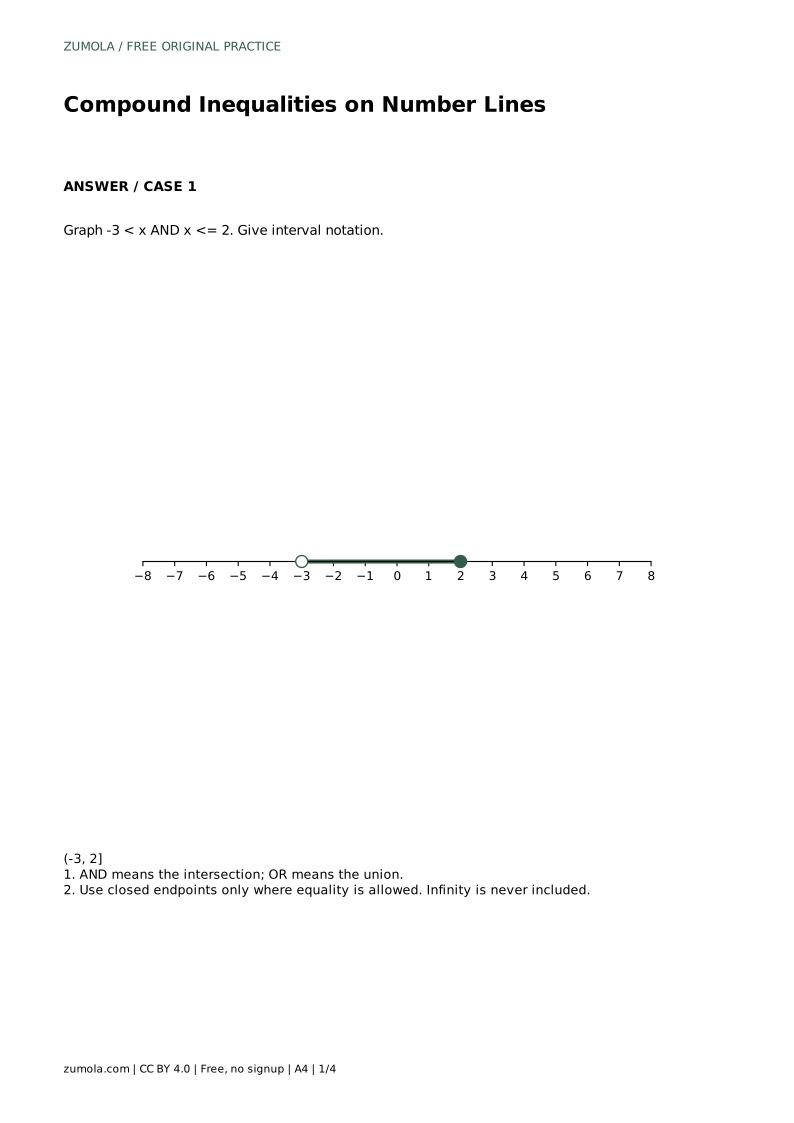
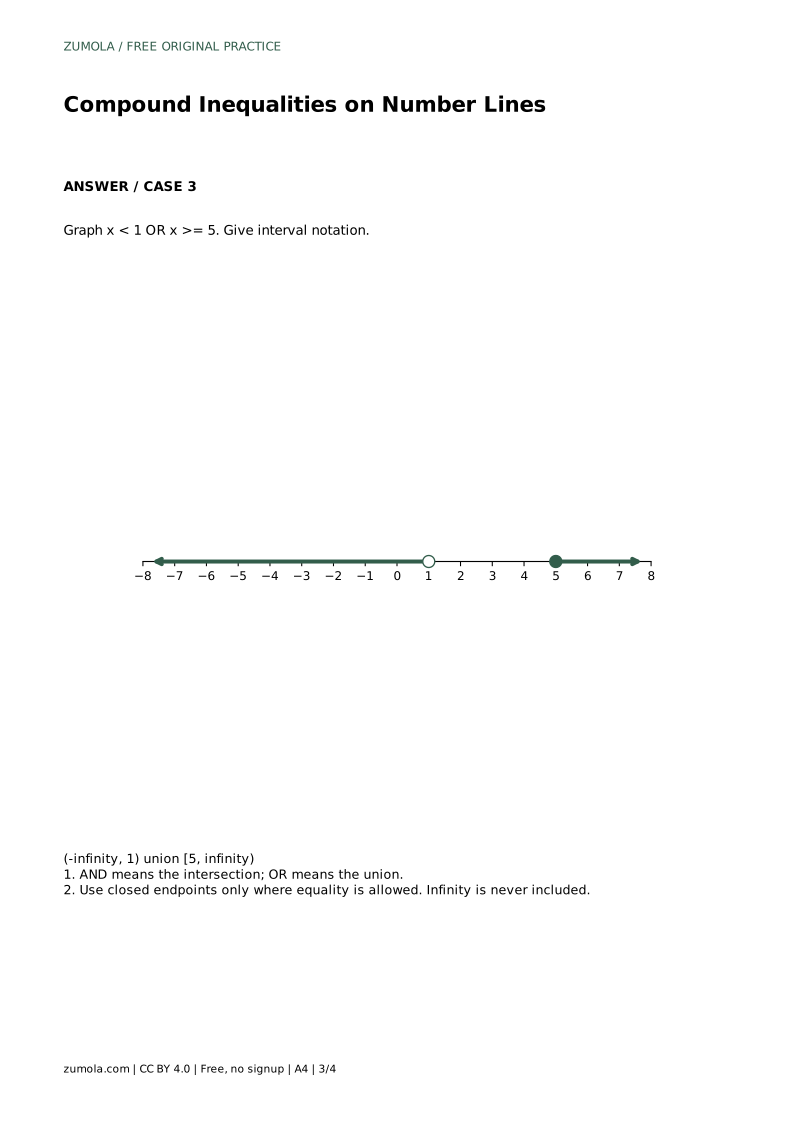
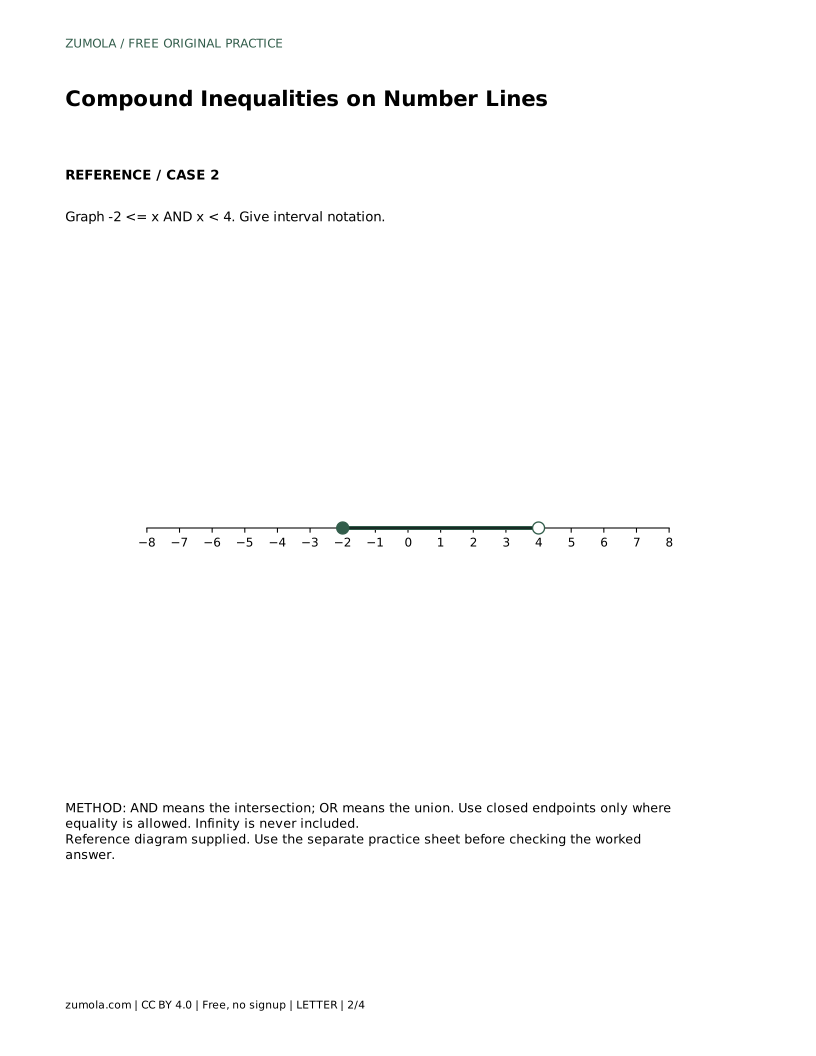
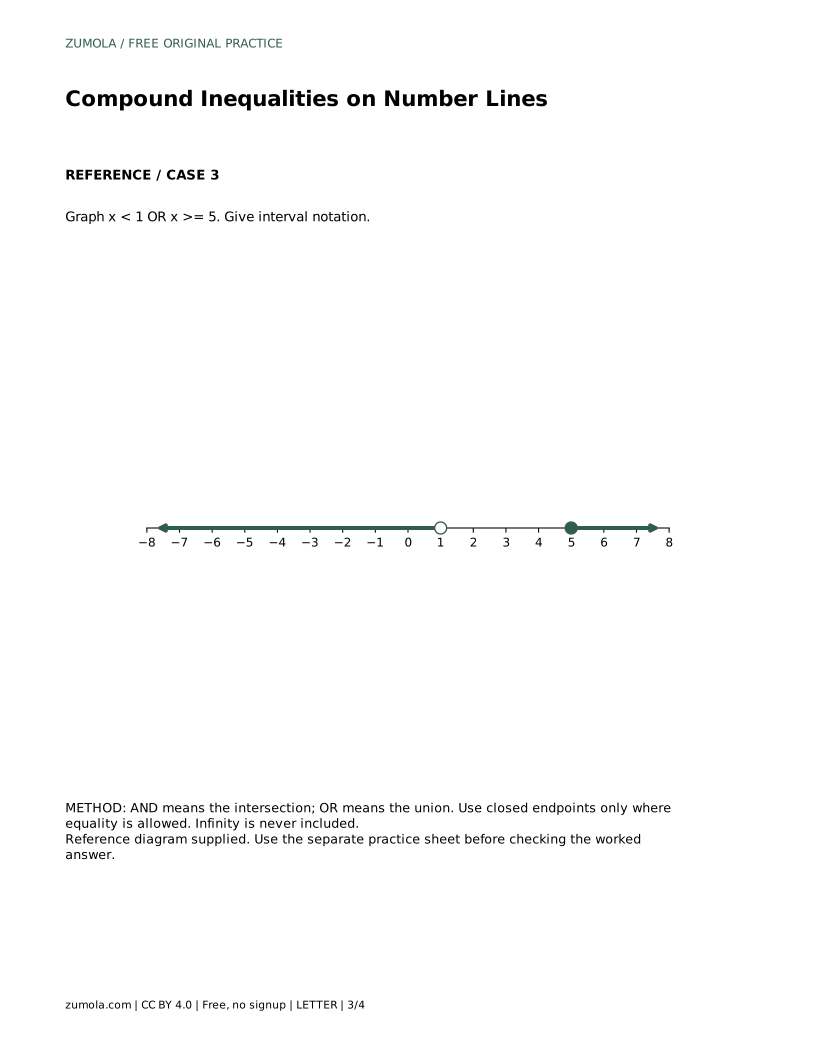
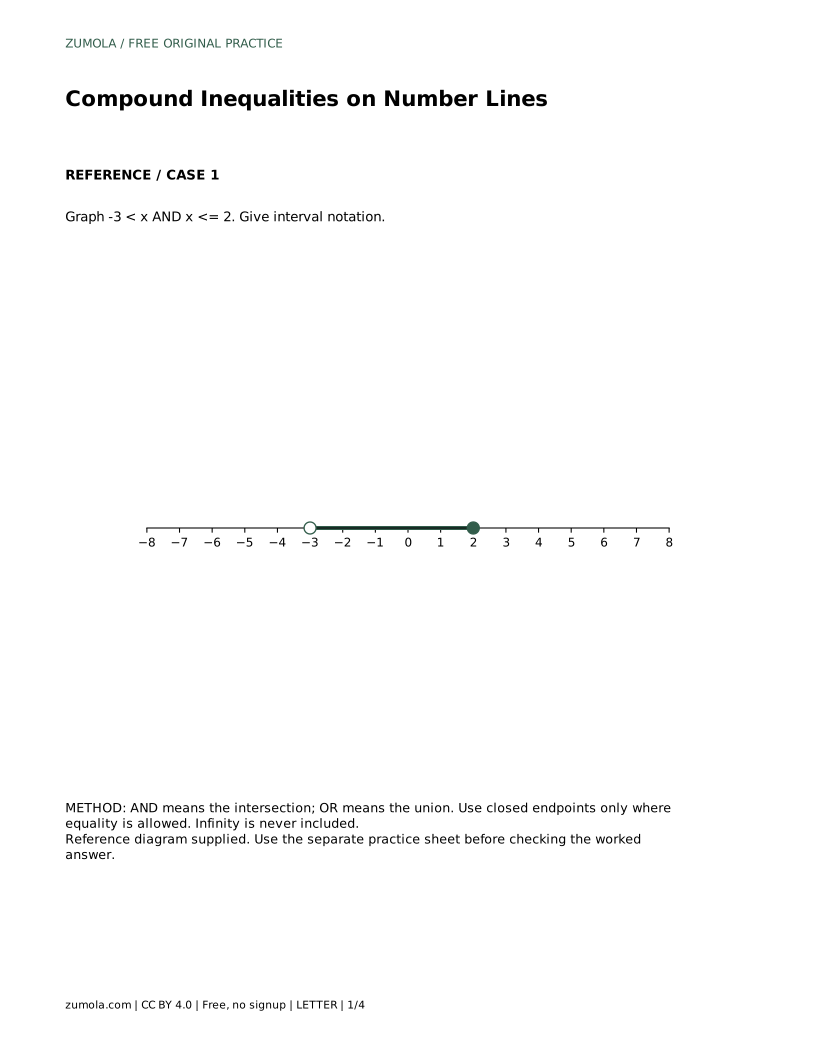
For an AND statement such as -3 < x AND x <= 2, the solution is the overlap between values greater than -3 and values at most 2. For an OR statement such as x < 1 OR x >= 5, the solution includes two separate regions. Do not shade the gap between them unless a value in that gap satisfies one of the conditions.
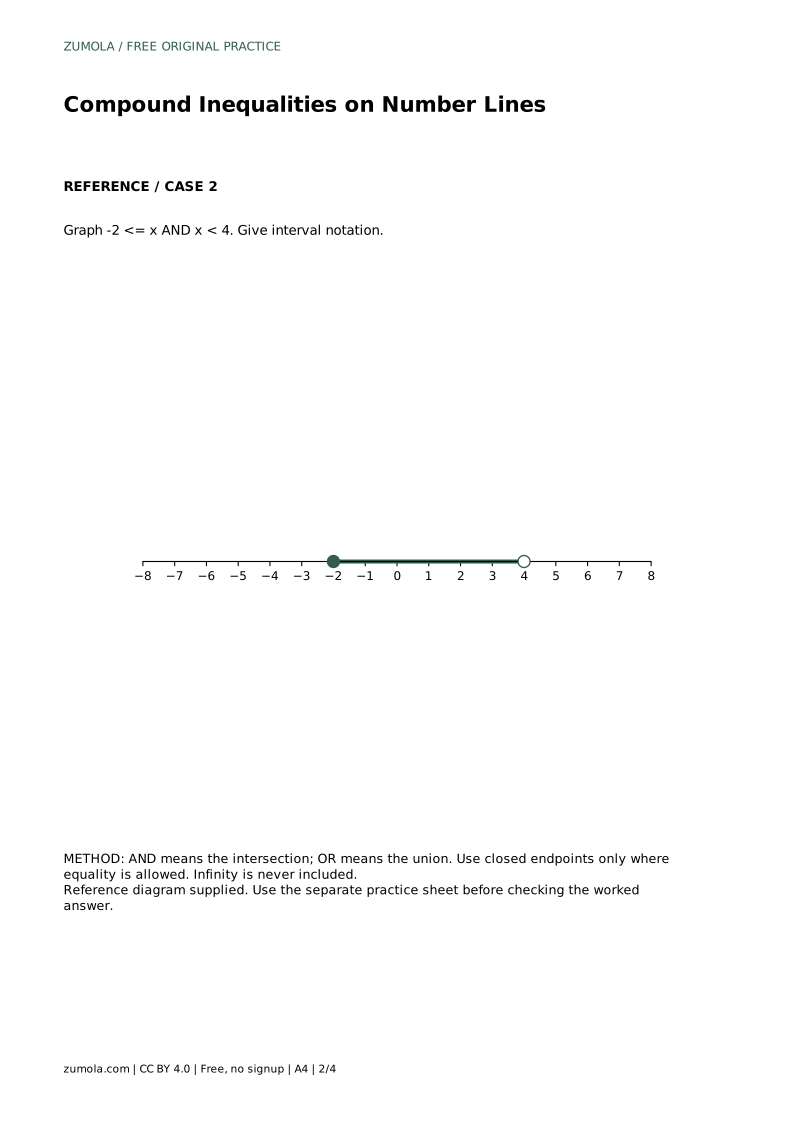
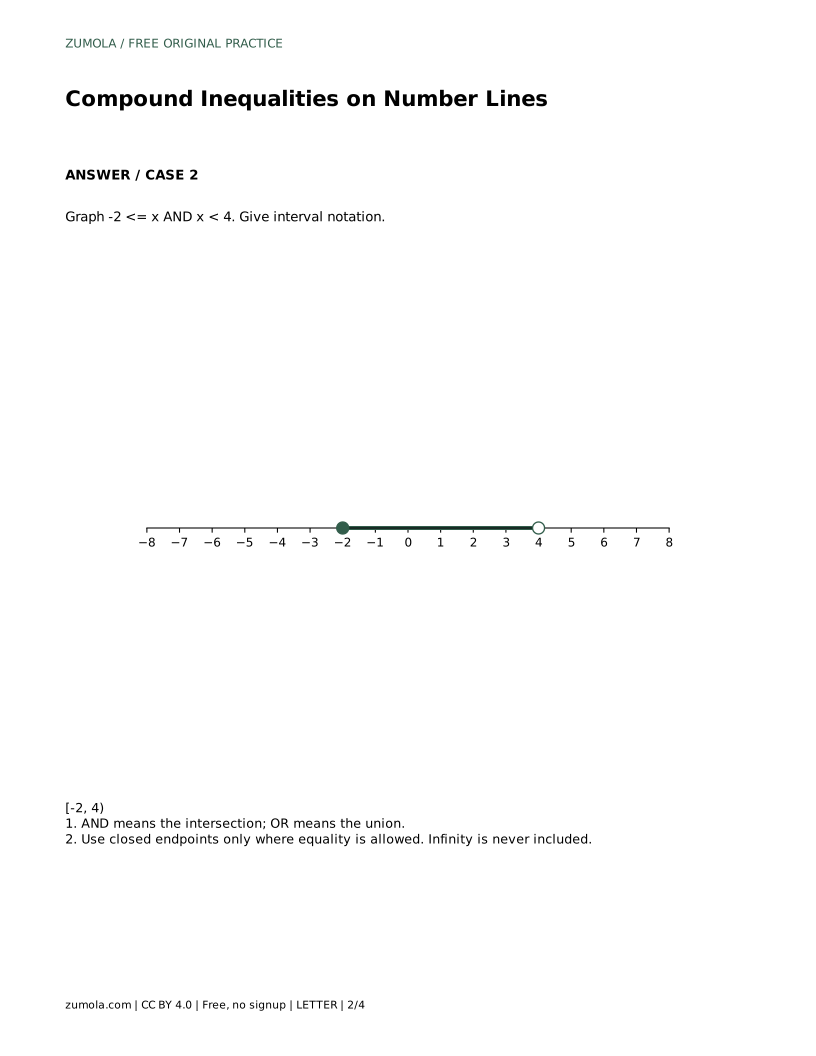
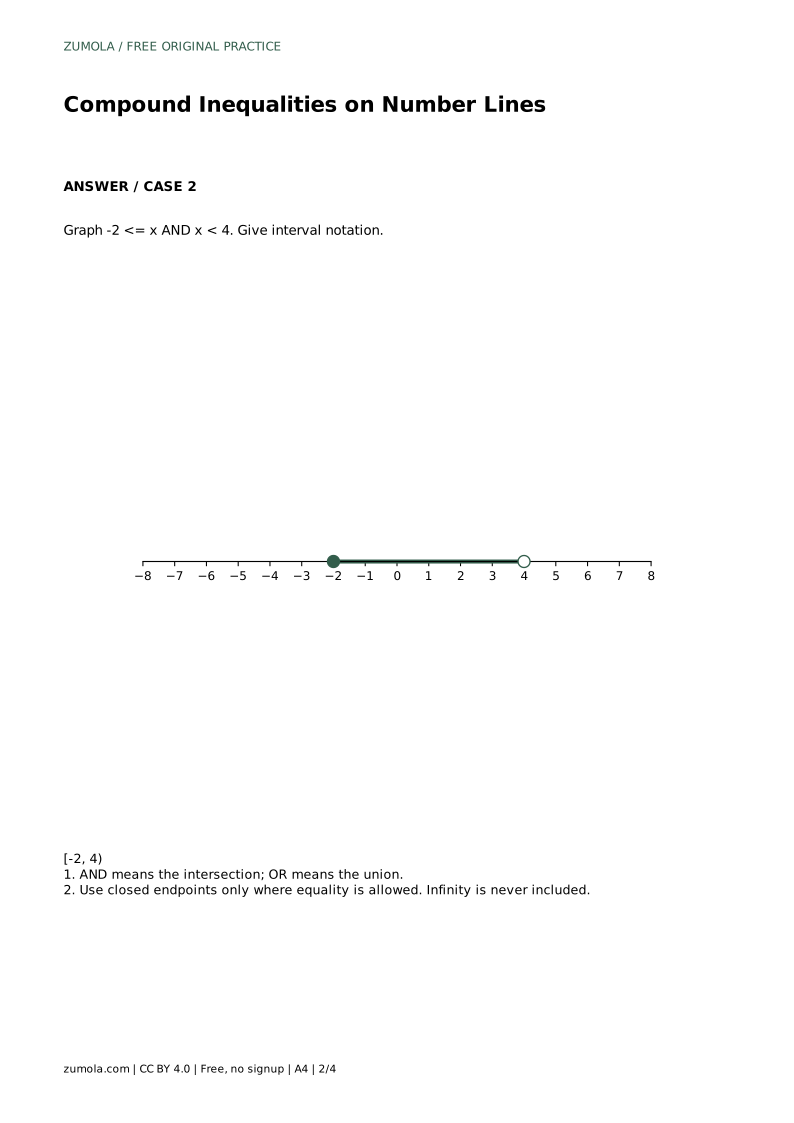
A closed endpoint means the boundary value is part of the solution. An open endpoint means it is not. Match the dot to the inequality symbol at that boundary. A common error is using a closed dot because the shaded region looks solid; the dot style must follow equality, not appearance.
Infinity is a direction, not a number, so it is never included. In interval notation, always use a parenthesis beside infinity or negative infinity. For a finite endpoint, use a bracket when equality is allowed and a parenthesis when it is not.
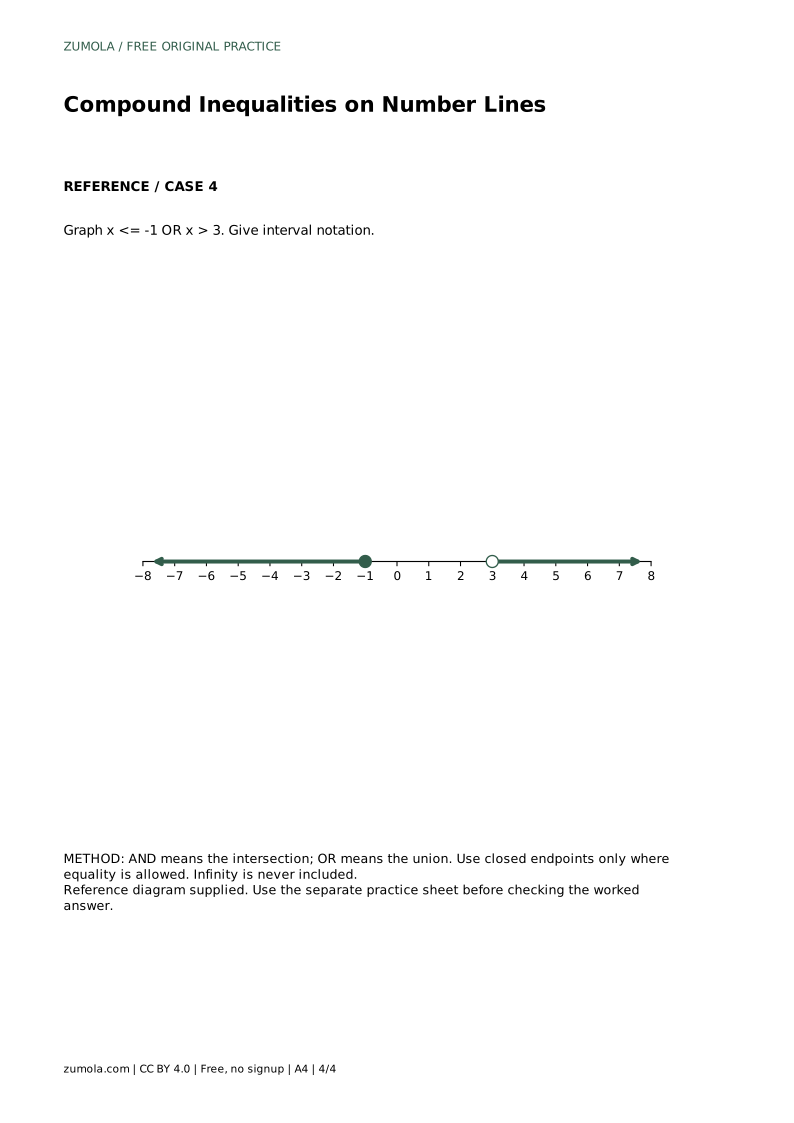
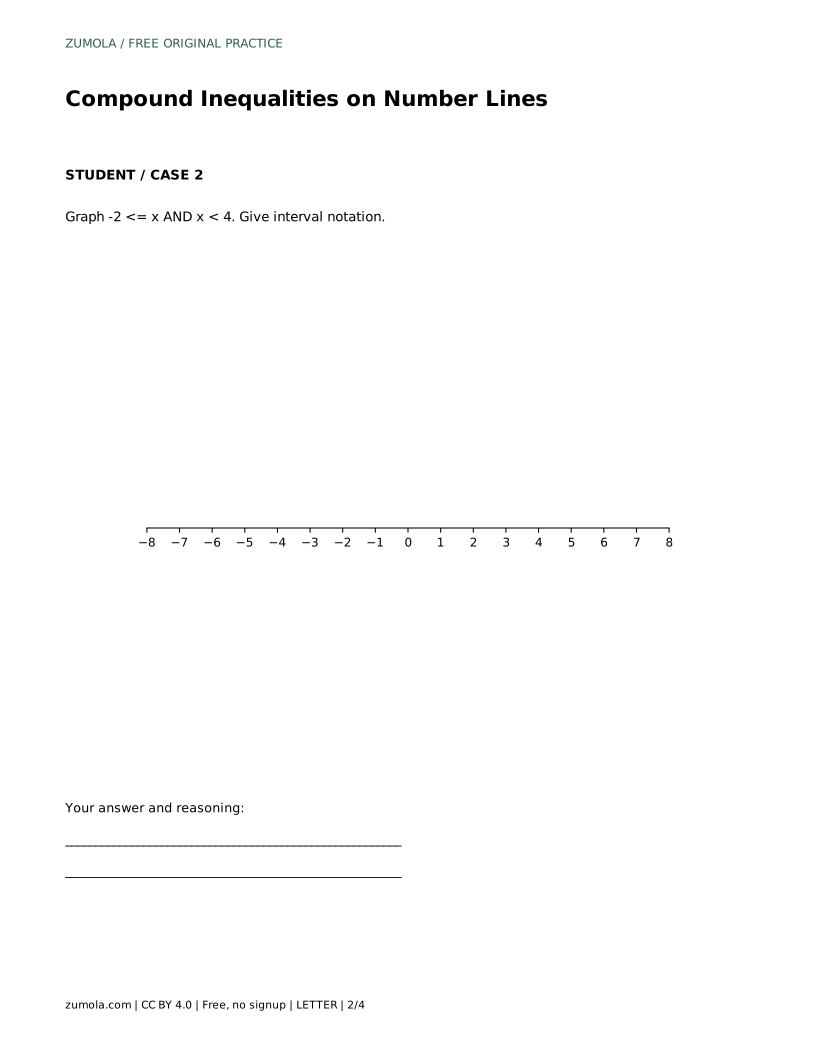
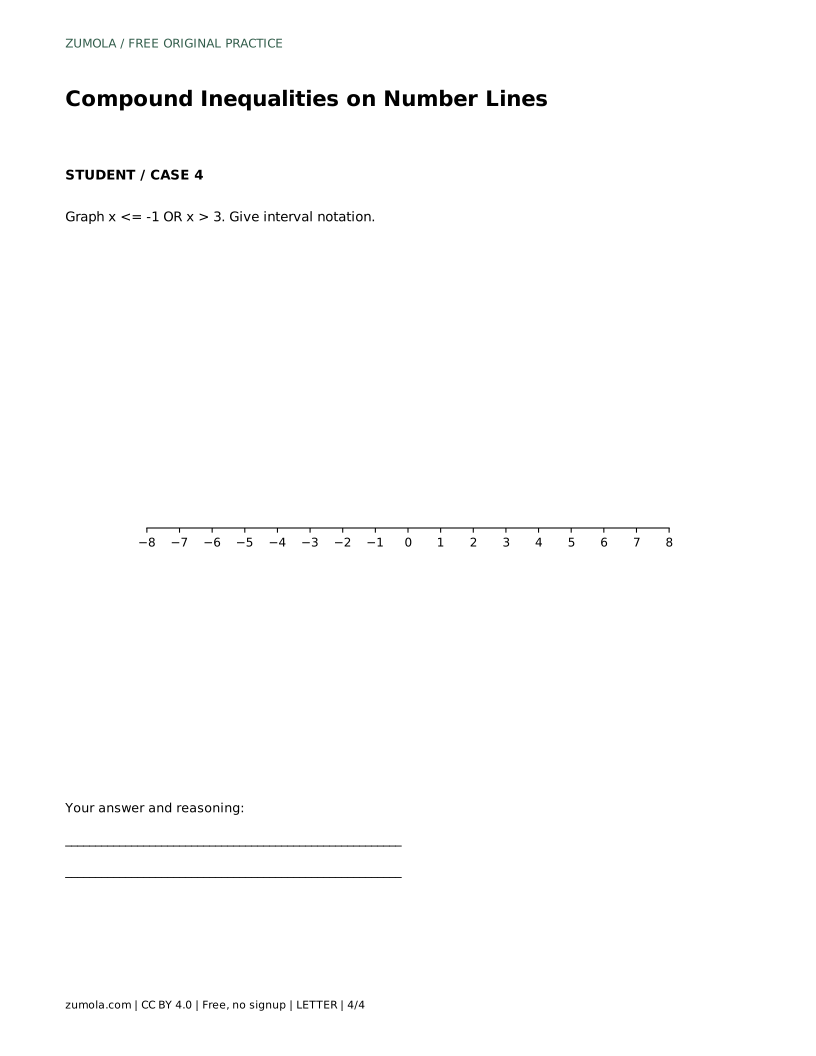
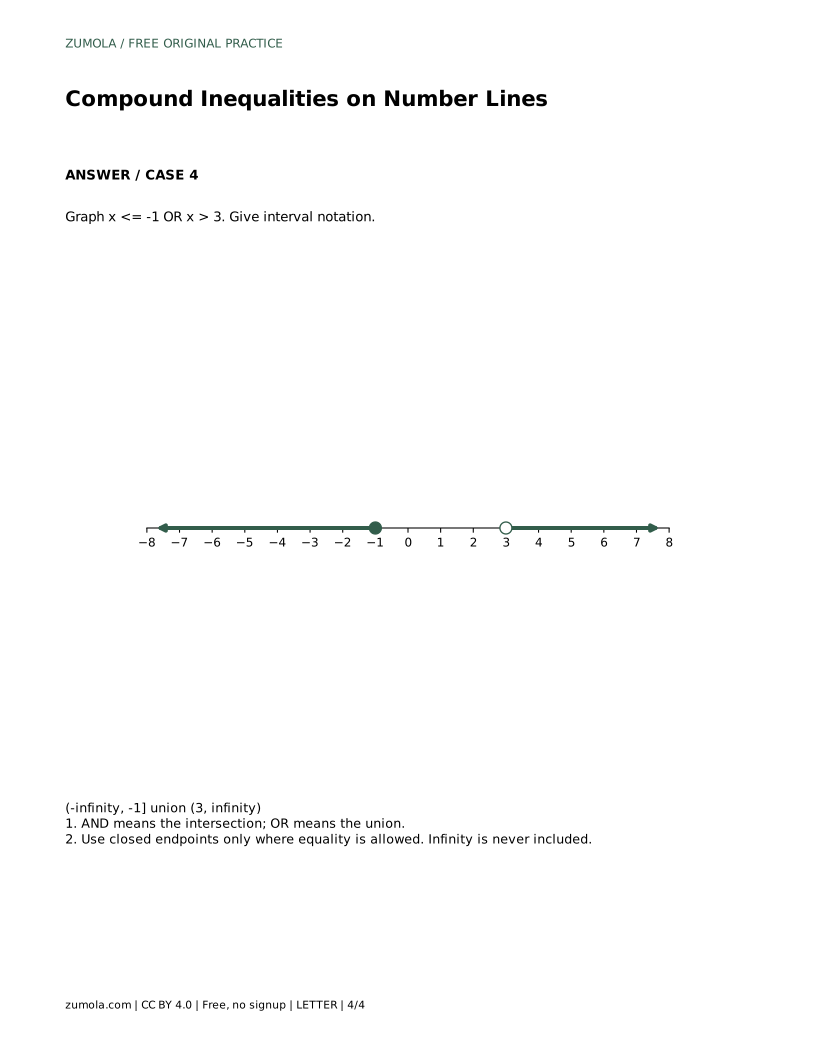
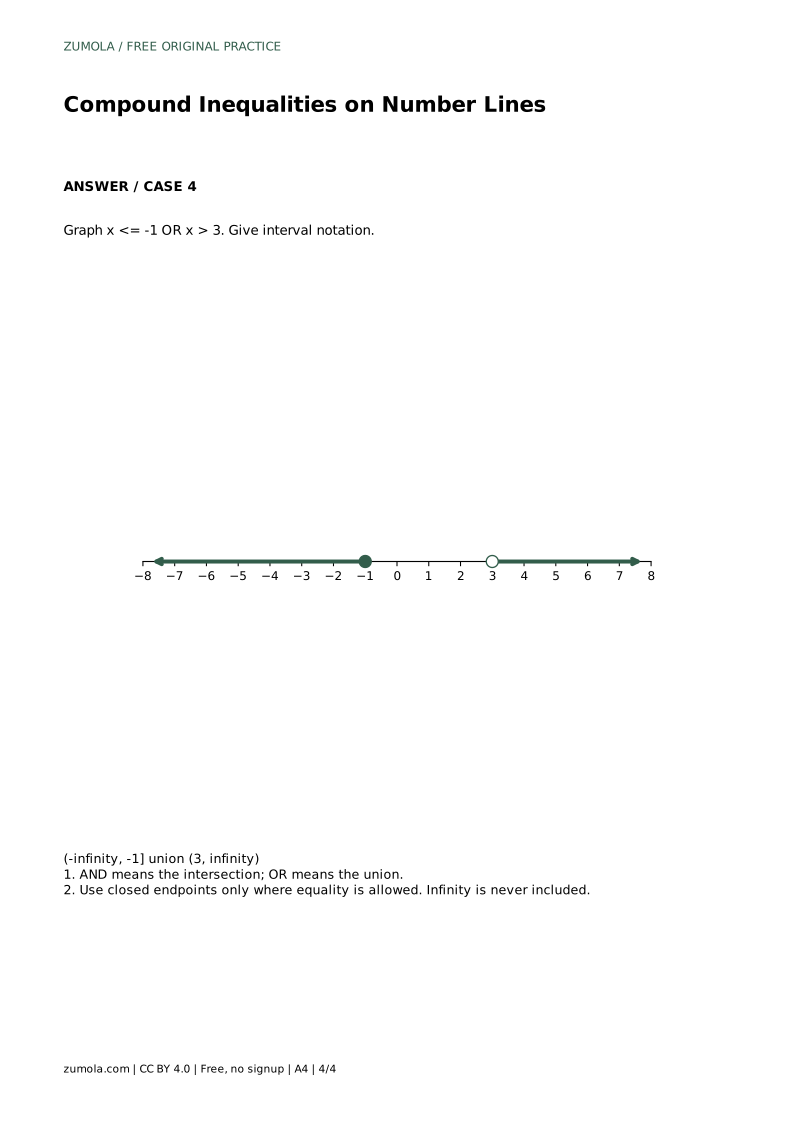
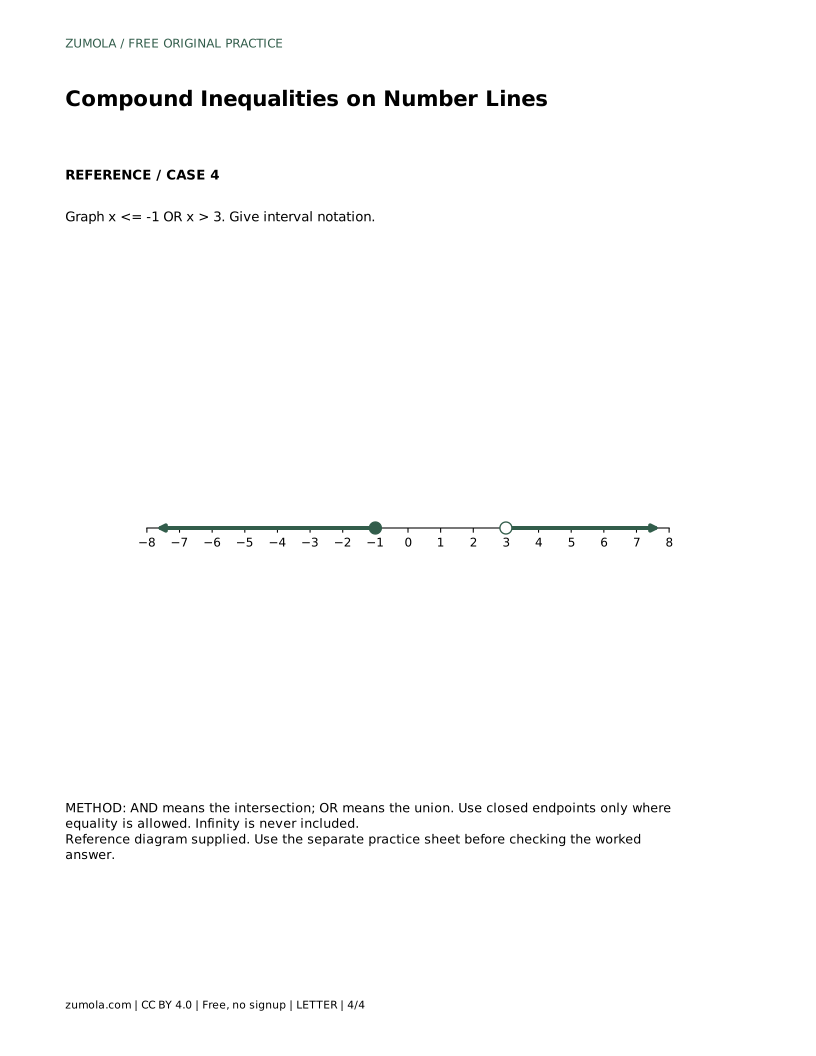
AND solutions usually form one interval, such as (-3, 2]. OR solutions often form two intervals joined by the word union, such as (-infinity, 1) union [5, infinity). Keep the union symbol between the two pieces; it signals that values in either interval are solutions.
A quick check catches reversed shading and wrong endpoint styles. Choose one number inside each shaded region and one number in an unshaded gap. Substitute each into the original compound statement and confirm the truth value matches the graph.
For AND, a test value must satisfy both inequalities. For OR, it only needs to satisfy one. Also test each boundary value itself: if the dot is closed, the boundary should make the statement true; if the dot is open, it should make the statement false. This boundary check is especially useful when the two conditions use different inequality symbols.
Printed number-line references are useful only when the scale is accurate. Before relying on a printed sheet, print at 100% and compare a ruler against a calibration bar on the page. If the bar measures incorrectly, adjust printer scaling and reprint. Do not assume a sheet is to scale without this check.
When drawing by hand, label tick marks consistently and keep spacing equal. A neat number line makes endpoint inclusion and shaded regions easier to read. Artwork and diagrams can have multiple valid layouts, so judge clarity and mathematical accuracy rather than matching one exact drawing.
Graph -3 < x AND x <= 2 on a number line and give the interval notation.
The connective is AND, so shade the overlap of values greater than -3 and values at most 2. At -3, the symbol is <, so use an open dot. At 2, the symbol is <=, so use a closed dot. Shade between the two dots. The interval notation is (-3, 2]: a parenthesis at -3 because it is excluded, and a bracket at 2 because it is included. Check x = 0: it is greater than -3 and at most 2, so it belongs. Check x = 2: both -3 < 2 and 2 <= 2 are true, so 2 belongs, matching the closed dot. Check x = -3: -3 < -3 is false, so -3 is excluded, matching the open dot.
Use the connective written in the statement. AND means shade only values satisfying both inequalities. OR means shade all values satisfying at least one inequality, which may produce two separate regions.
For the linear one-variable cases on this page, an AND solution is the overlap of two intervals and normally forms one interval. Two separate regions usually indicate an OR statement, so recheck the connective and shading.
Infinity describes an unbounded direction rather than a finite endpoint. No finite number equals infinity, so it cannot be included in the solution set.
All math worksheets · Free coordinate paper
Original resources · CC BY 4.0 · Free for personal and classroom use with attribution.