Reference diagrams
LETTER · Download PDF
A4 · Download PDF
Free original resources
Teach elapsed time on the same morning by converting start and end times to minutes after midnight, subtracting, and rewriting the result in hours and minutes.
Four original cases, with reference diagrams, practice sheets and worked answers. Everything is free; no signup required.
LETTER · Download PDF
A4 · Download PDF
LETTER · Download PDF
A4 · Download PDF
LETTER · Download PDF
A4 · Download PDF
Use A4 or US Letter to match your printer. Use the stated values and conditions to solve each exercise; diagrams are not physical measuring rulers.
Elapsed time is the length between a start time and an end time. On these worksheets, both times fall on the same morning, so the task is a single subtraction once each clock time is expressed in minutes after midnight. Students learn to read the times, convert them, subtract the smaller number from the larger, and then regroup the minutes into hours and minutes.
Clock times mix two units: hours and minutes. Subtracting 8:35 from 9:20 column by column invites errors because 20 minutes is smaller than 35 minutes. Converting each time to minutes after midnight puts both values in one unit, so ordinary subtraction works. For a morning time, multiply the hour by 60 and add the minutes. Then subtract the start value from the end value. The difference is the elapsed time in minutes, which can be rewritten as hours and minutes by taking out groups of 60.
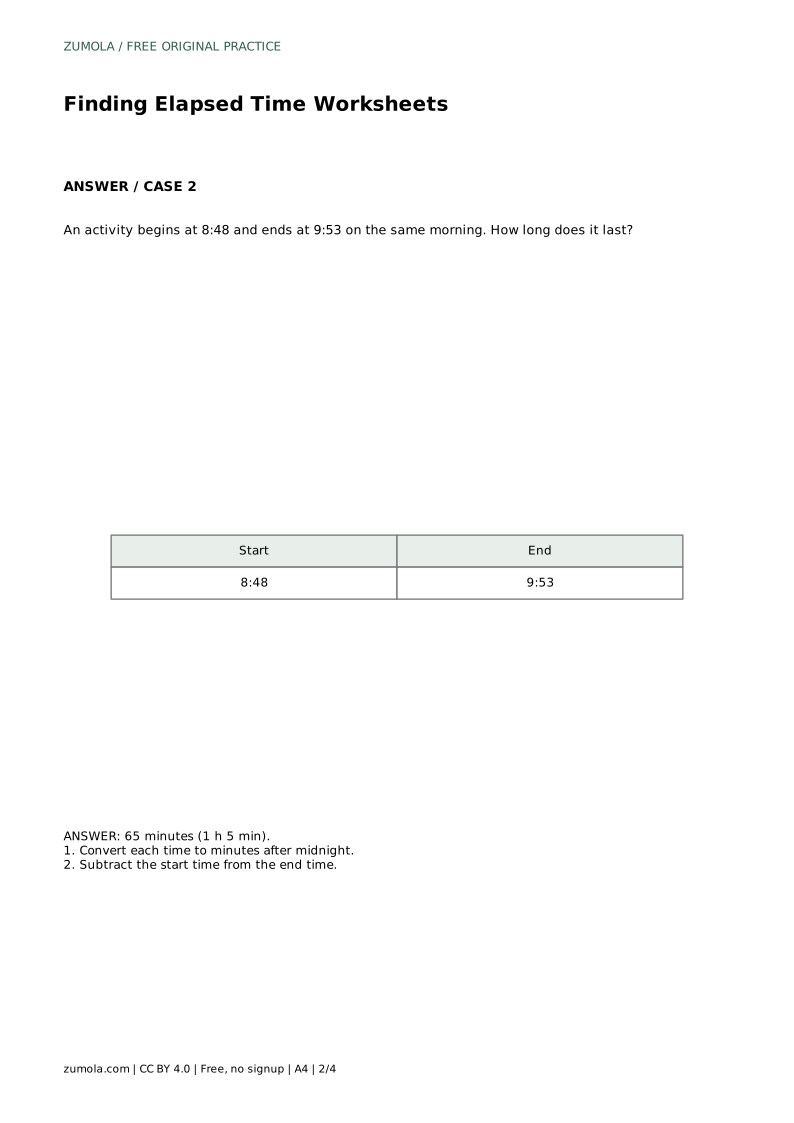
A difference in minutes is correct but not always the most readable form. To convert, count how many full groups of 60 fit into the total, and treat the remainder as minutes. For example, 65 minutes is 1 hour 5 minutes because 65 minus 60 leaves 5. A difference under 60 stays in minutes only. Keep both forms visible on the worksheet so students see that 45 minutes and 0 hours 45 minutes describe the same length.
Check the result by adding it back to the start time. If the start is 8:35 and the elapsed time is 45 minutes, then 8:35 plus 45 minutes reaches 9:20. This reverse check catches subtraction slips without relying on a memorized answer.
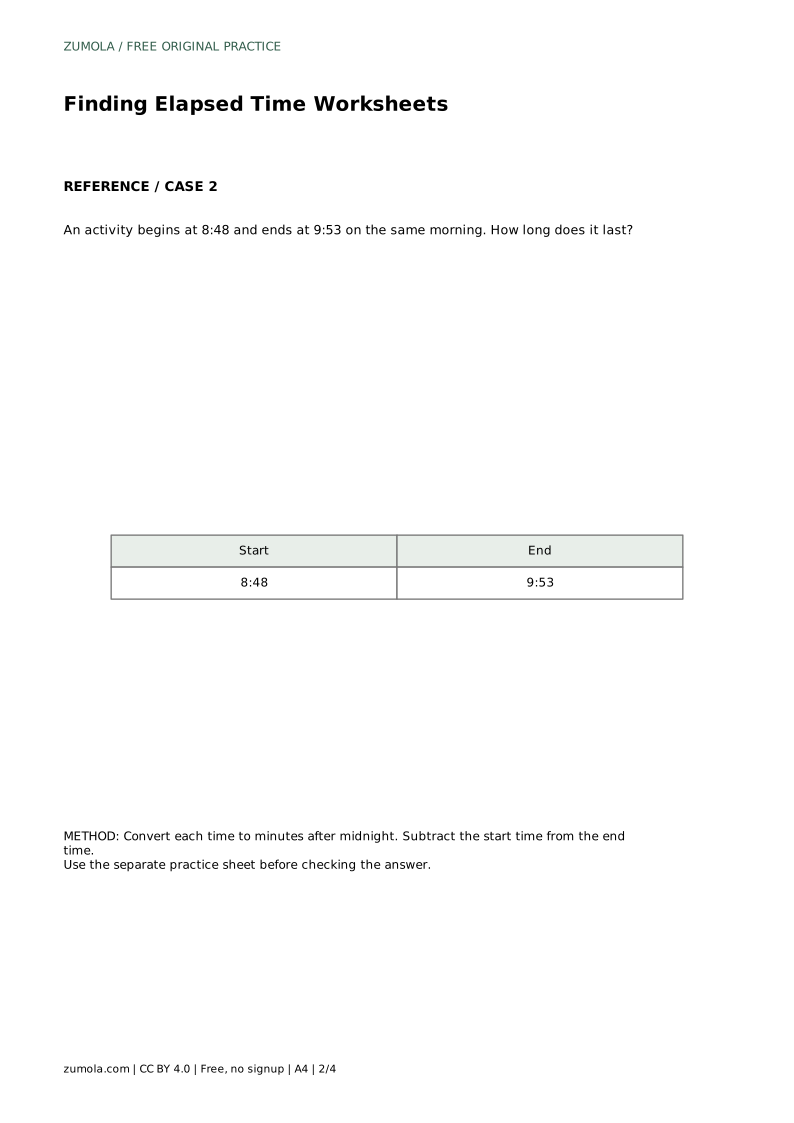
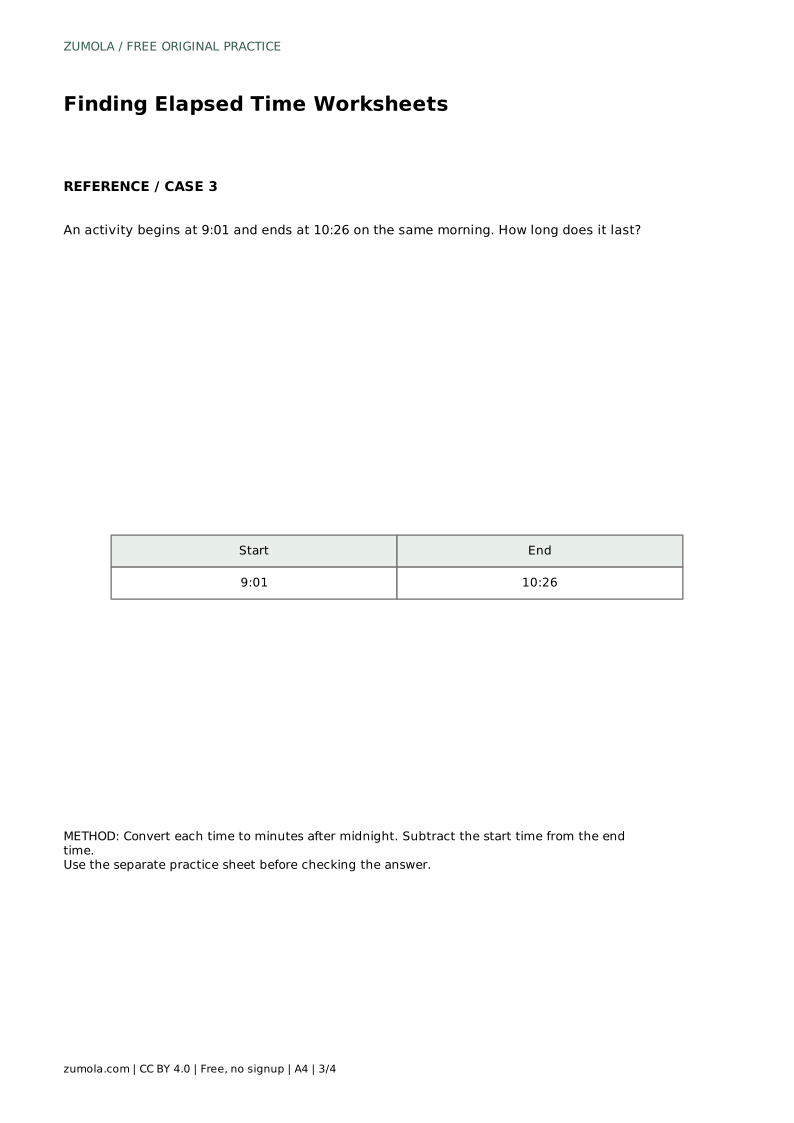
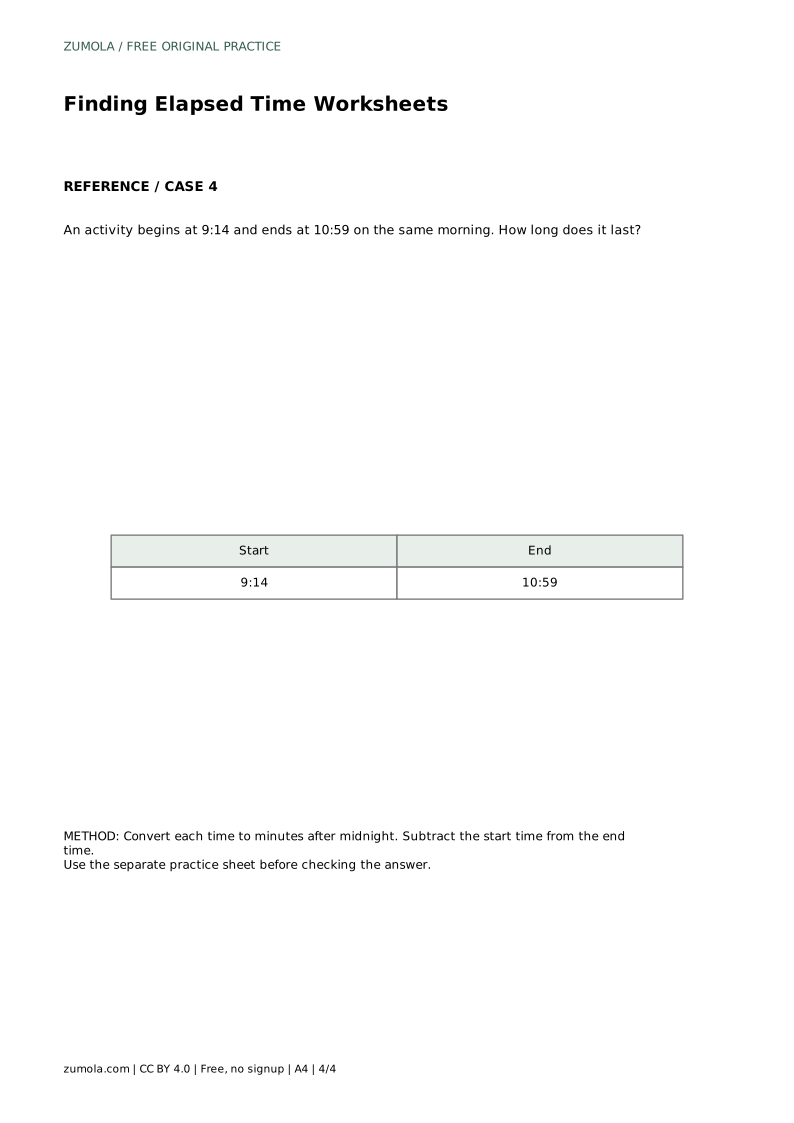
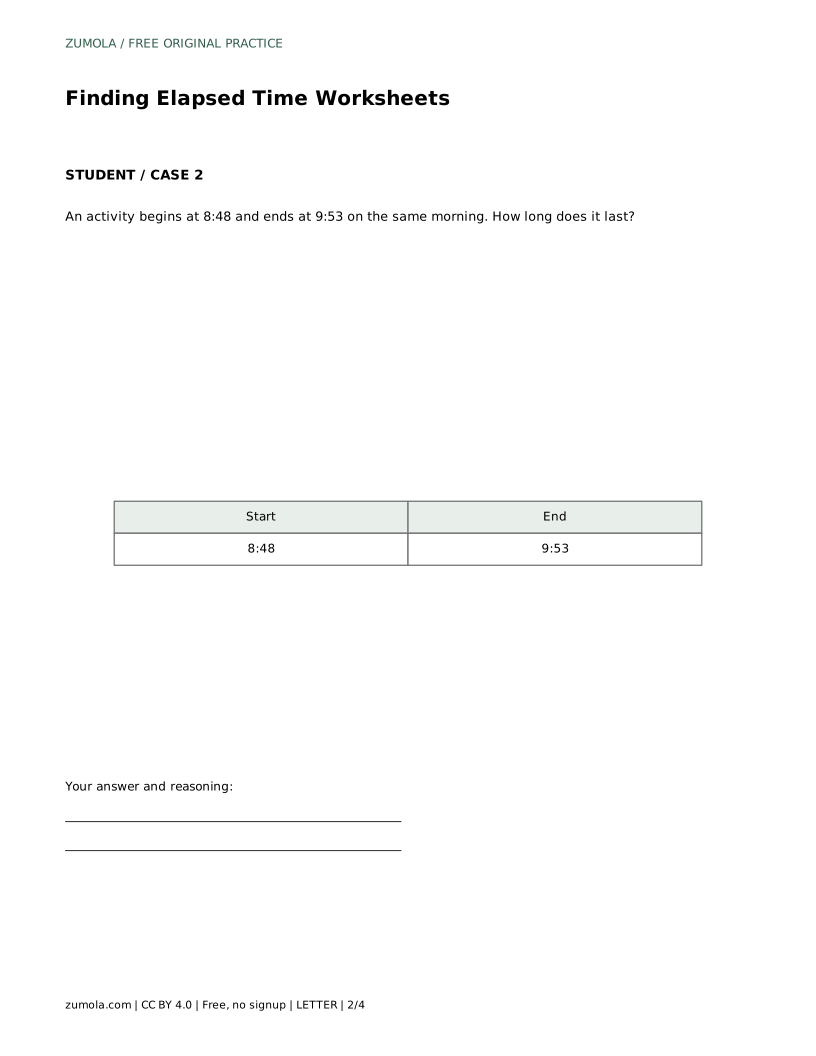
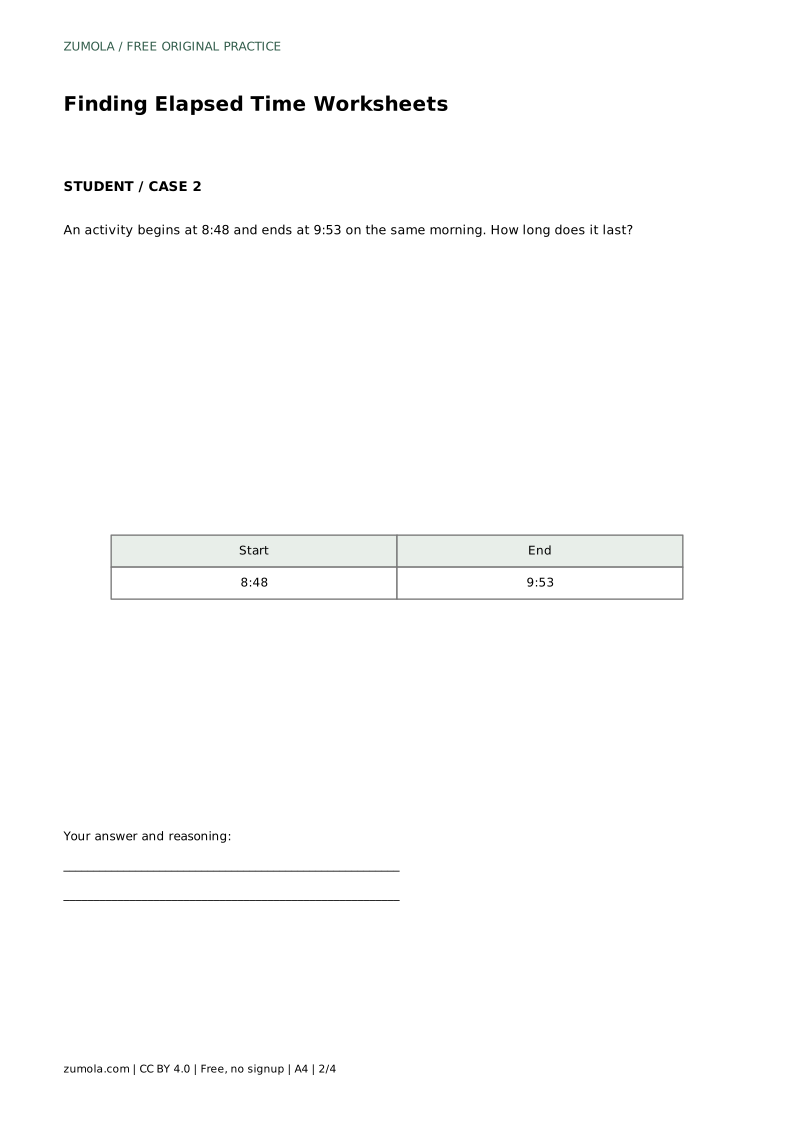
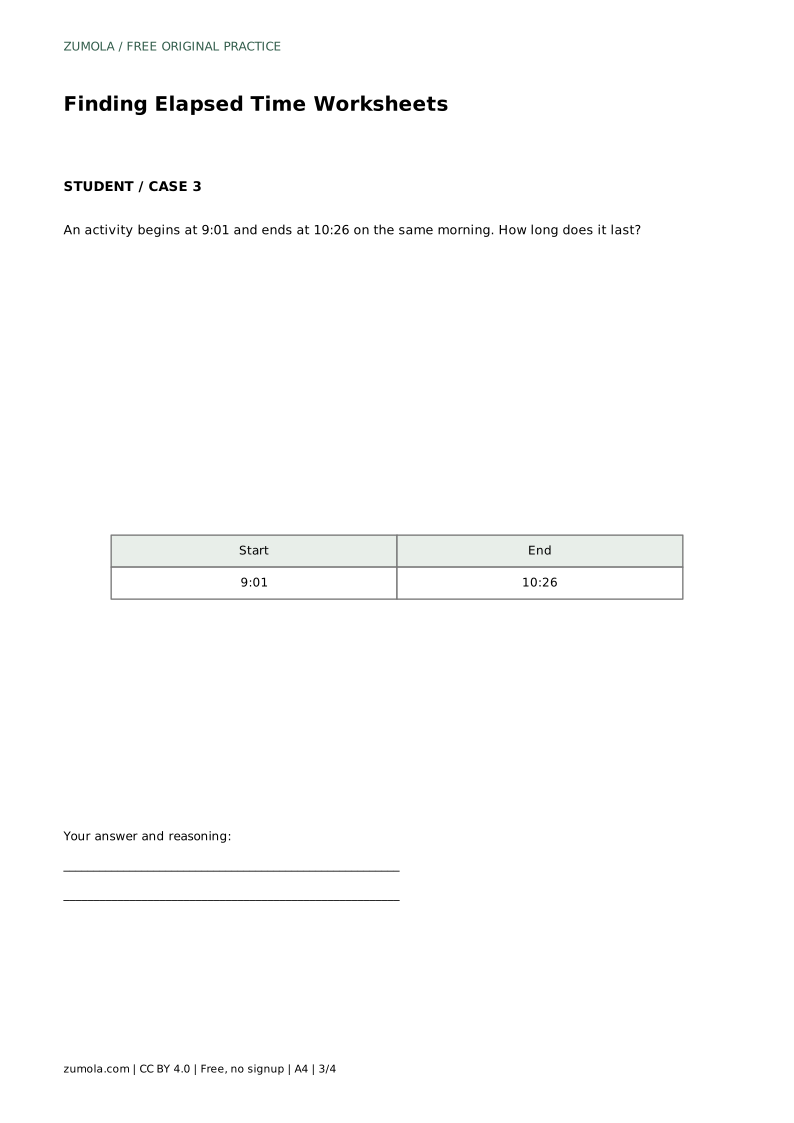
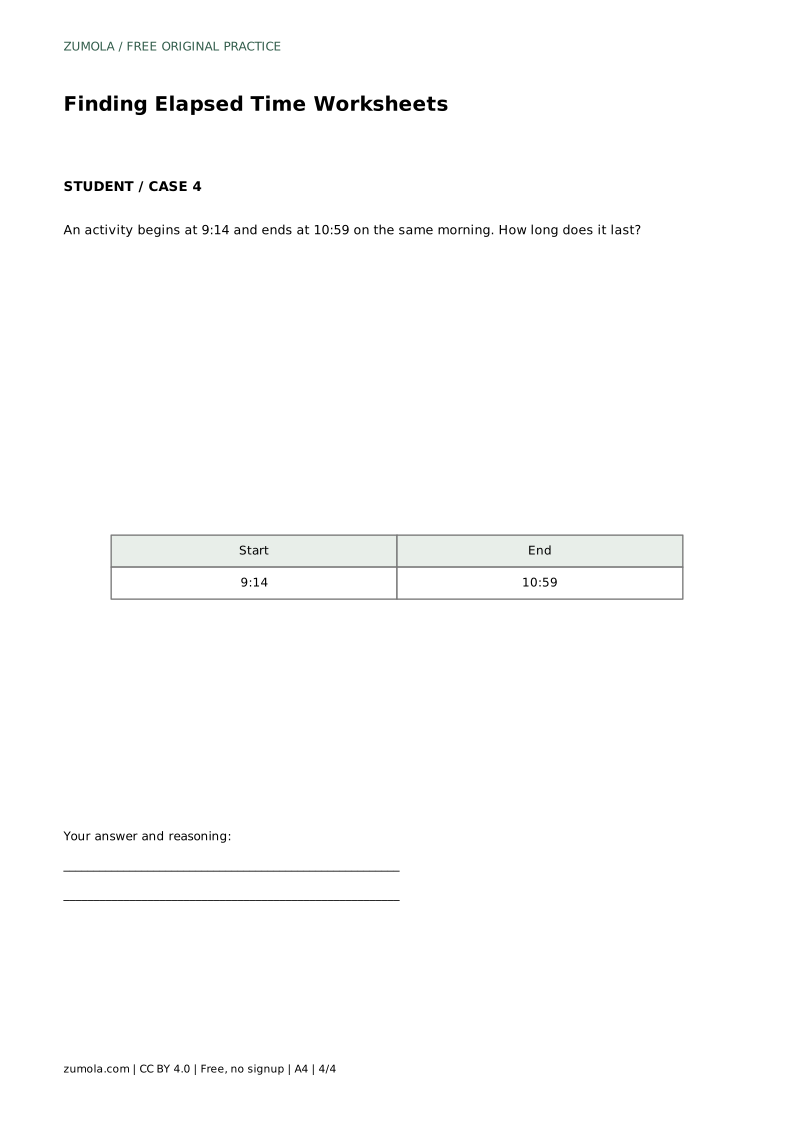
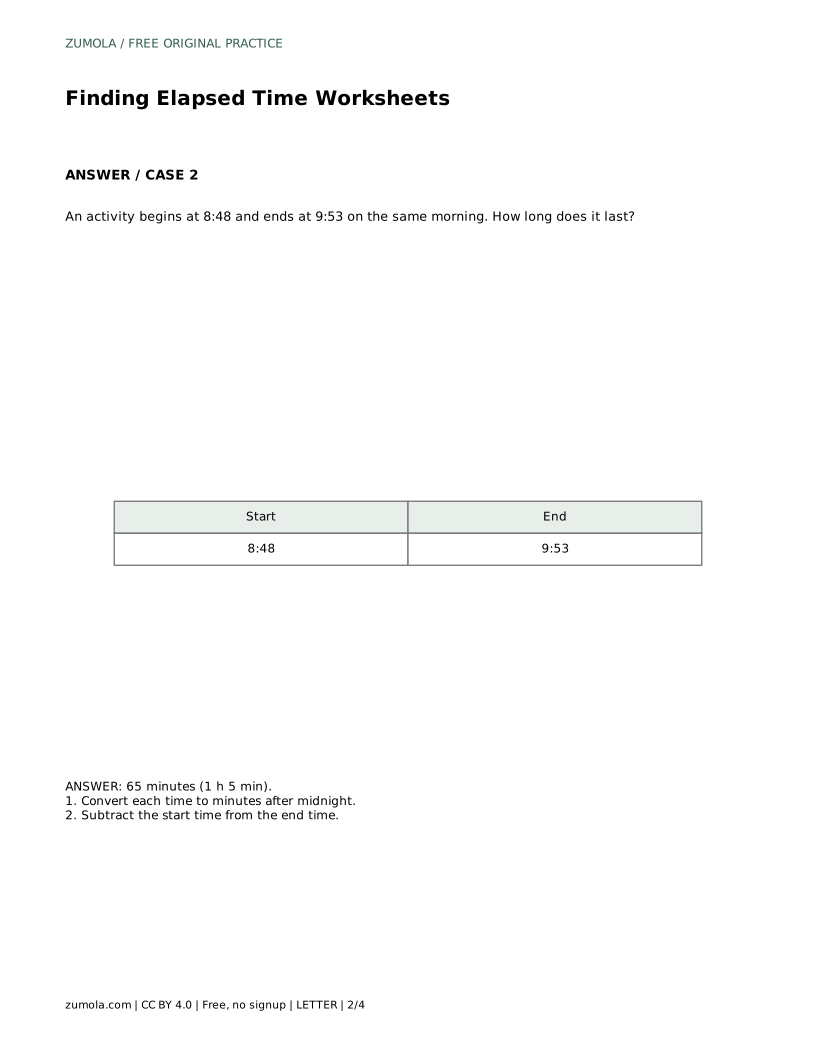
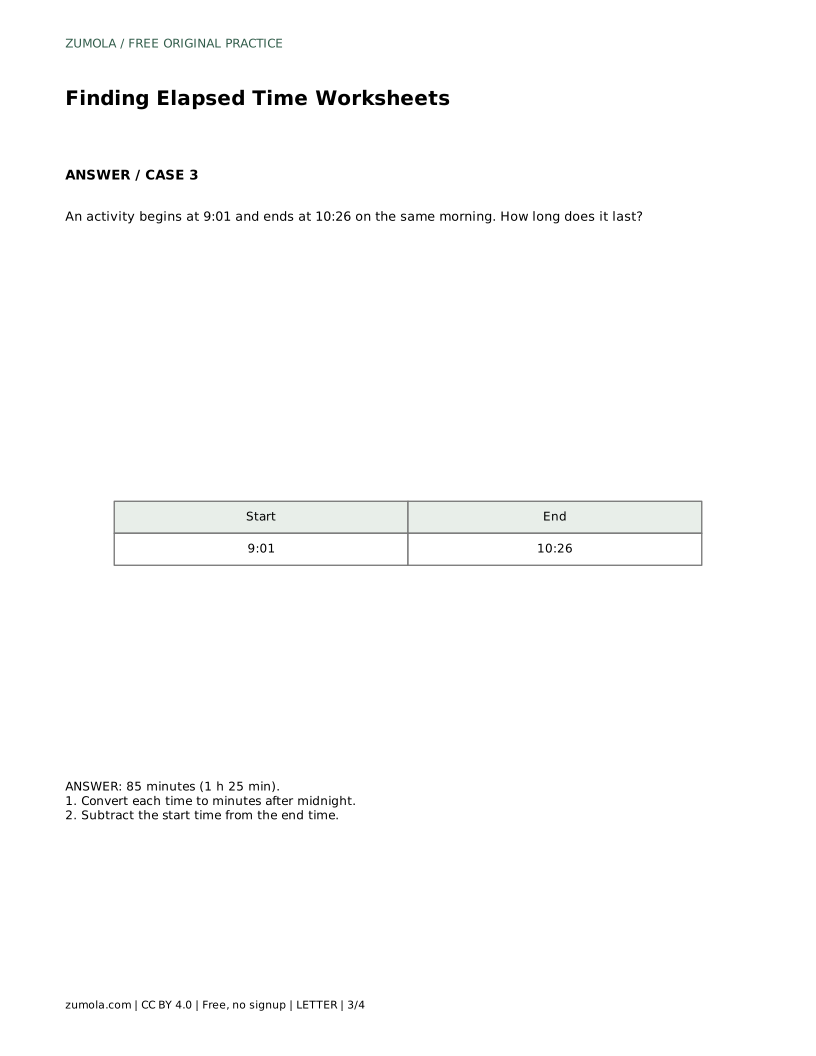
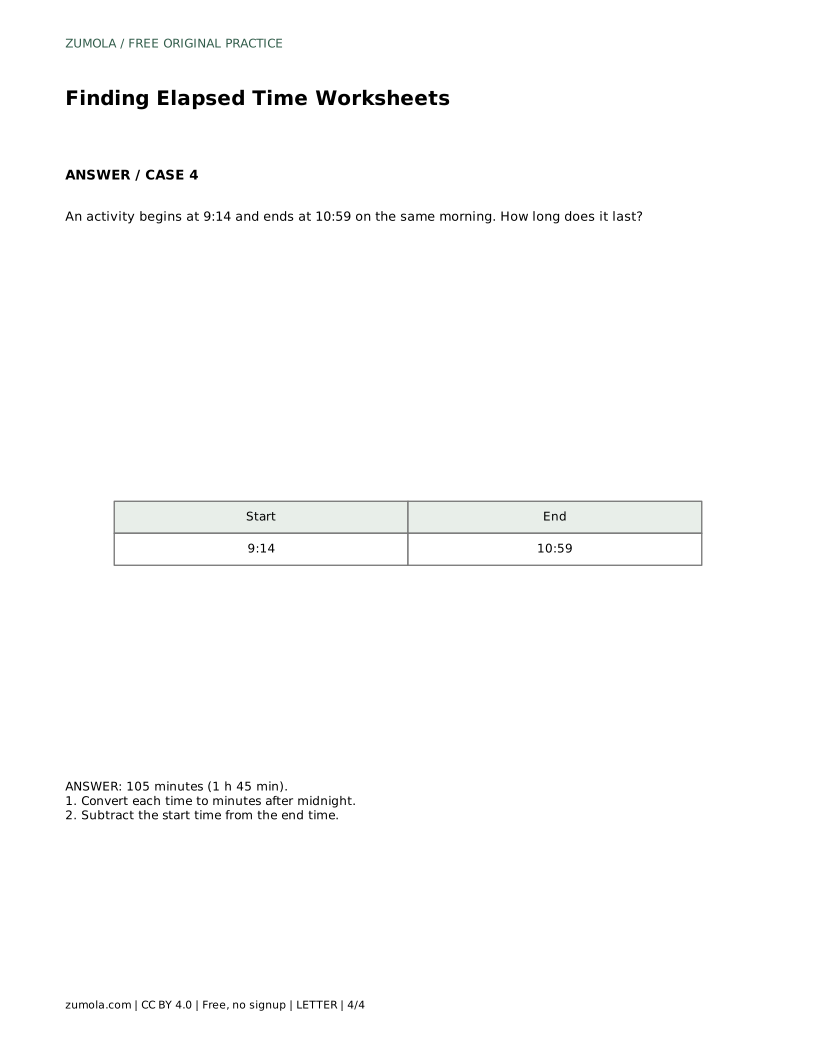
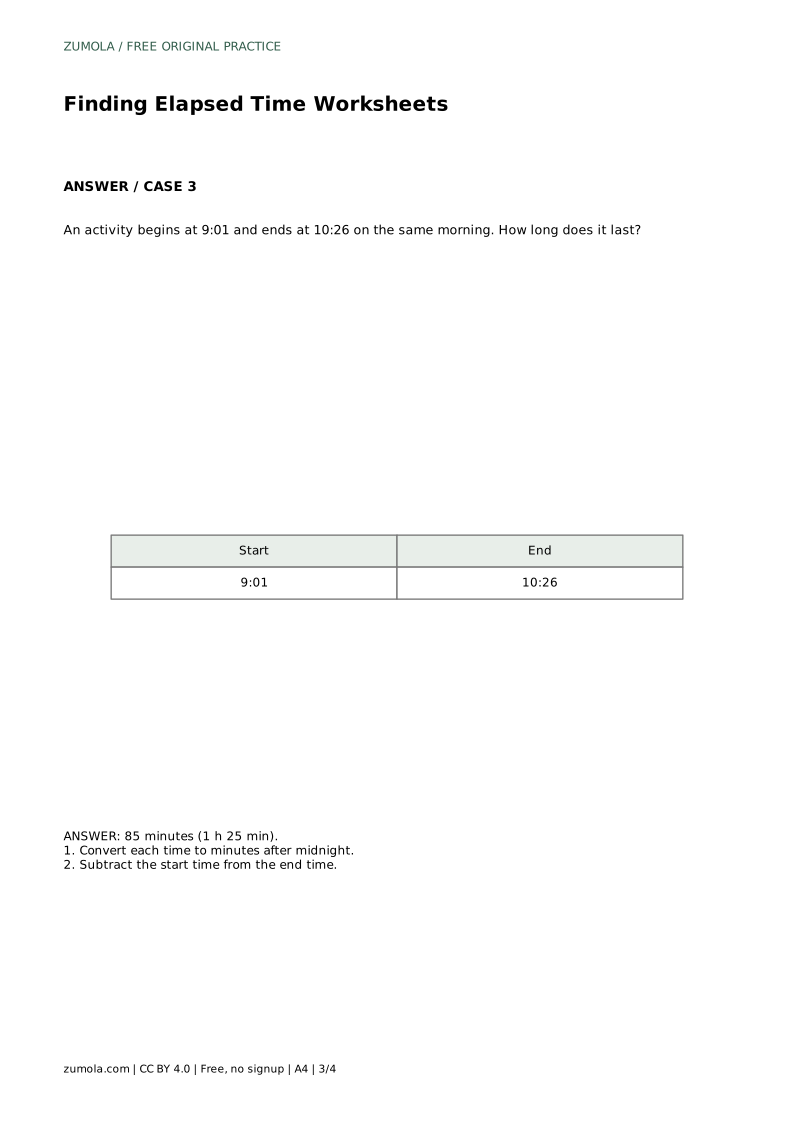
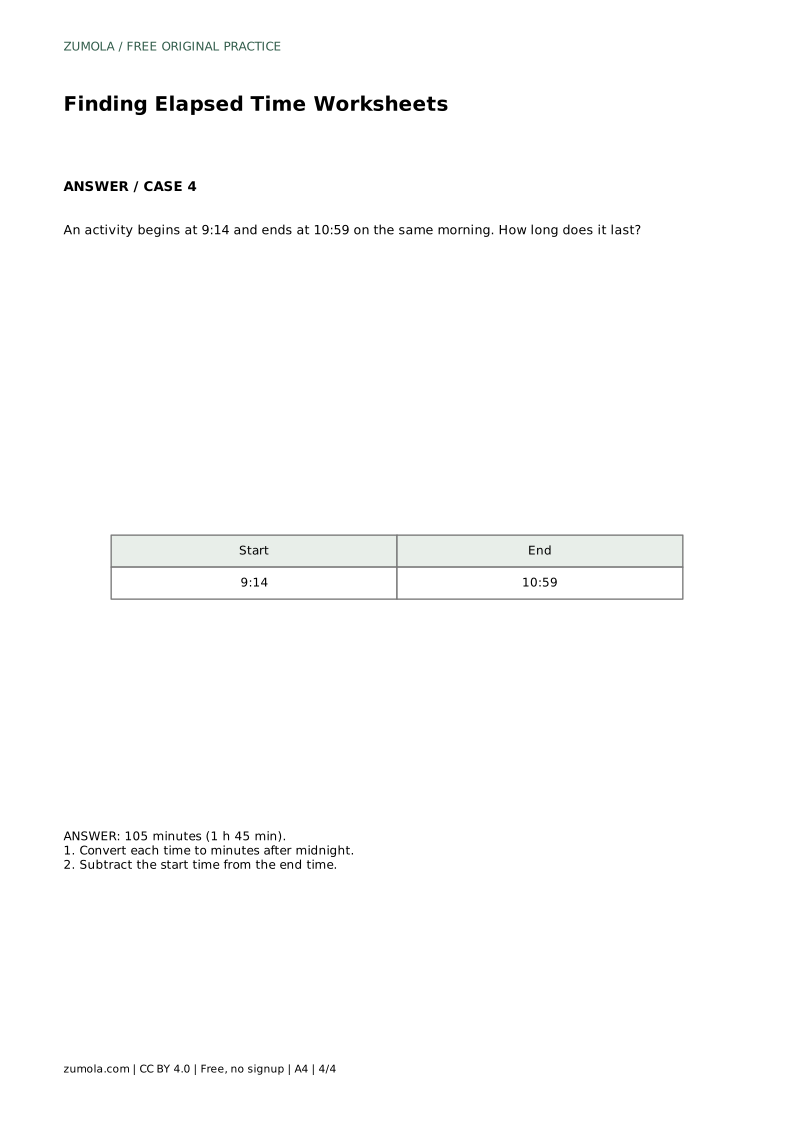
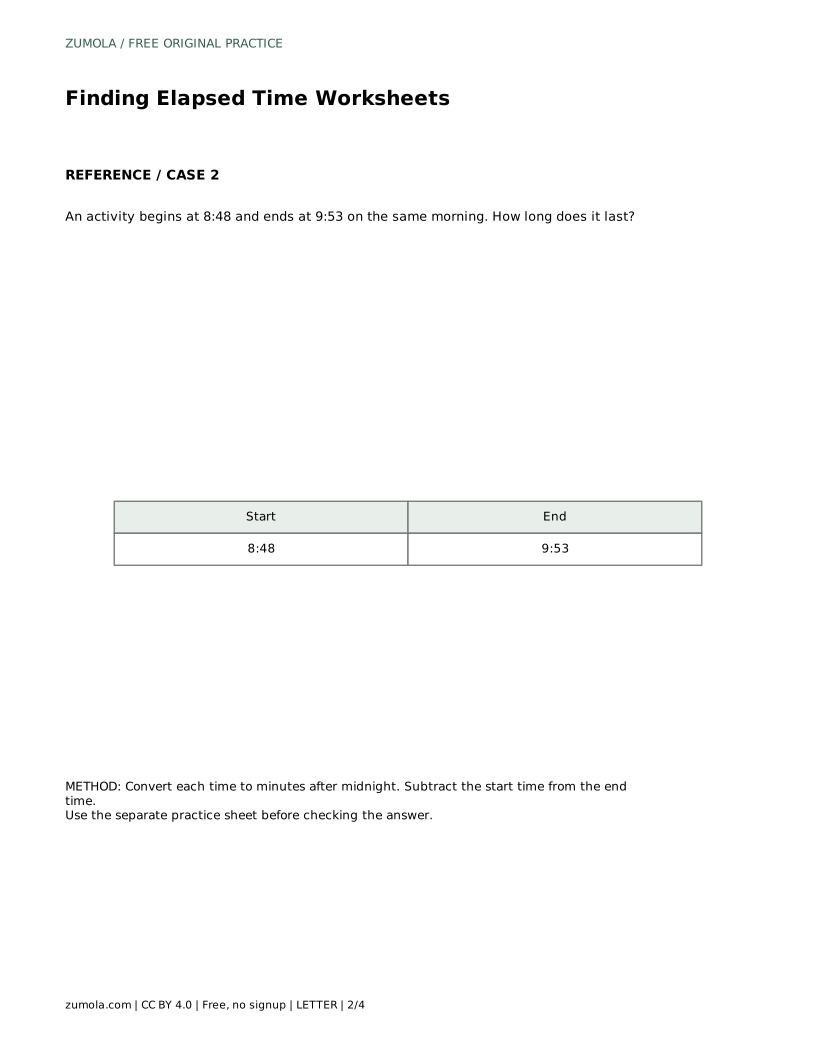
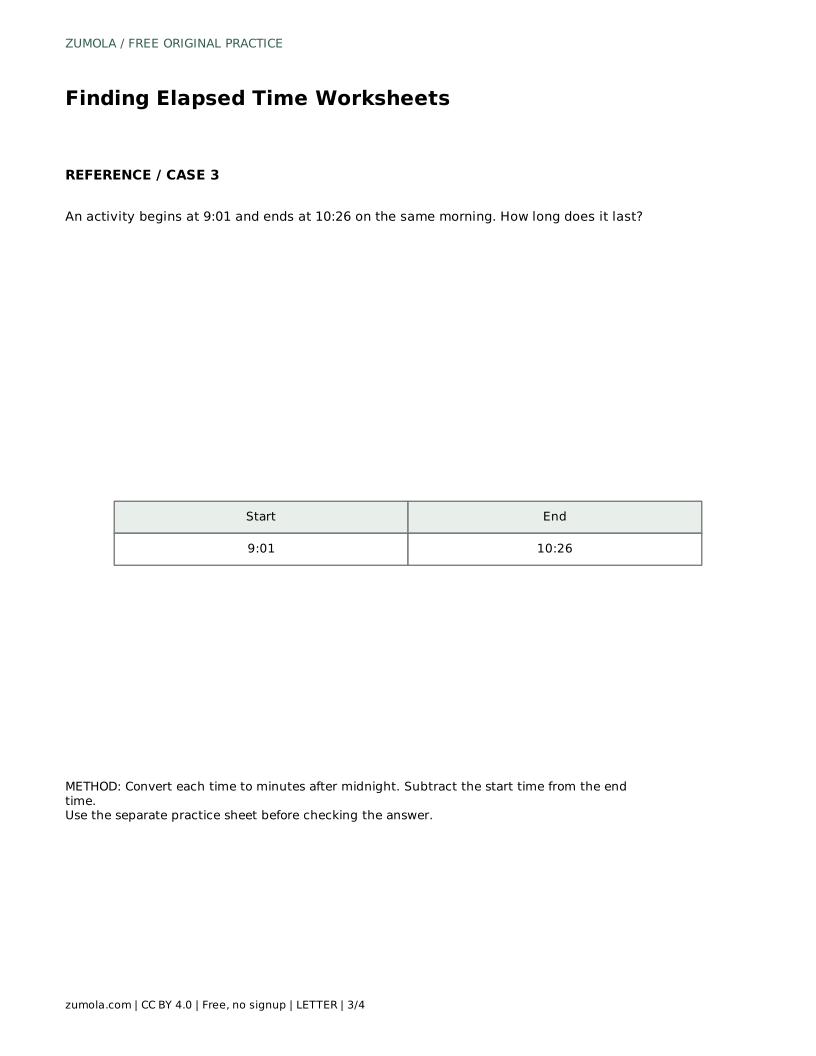
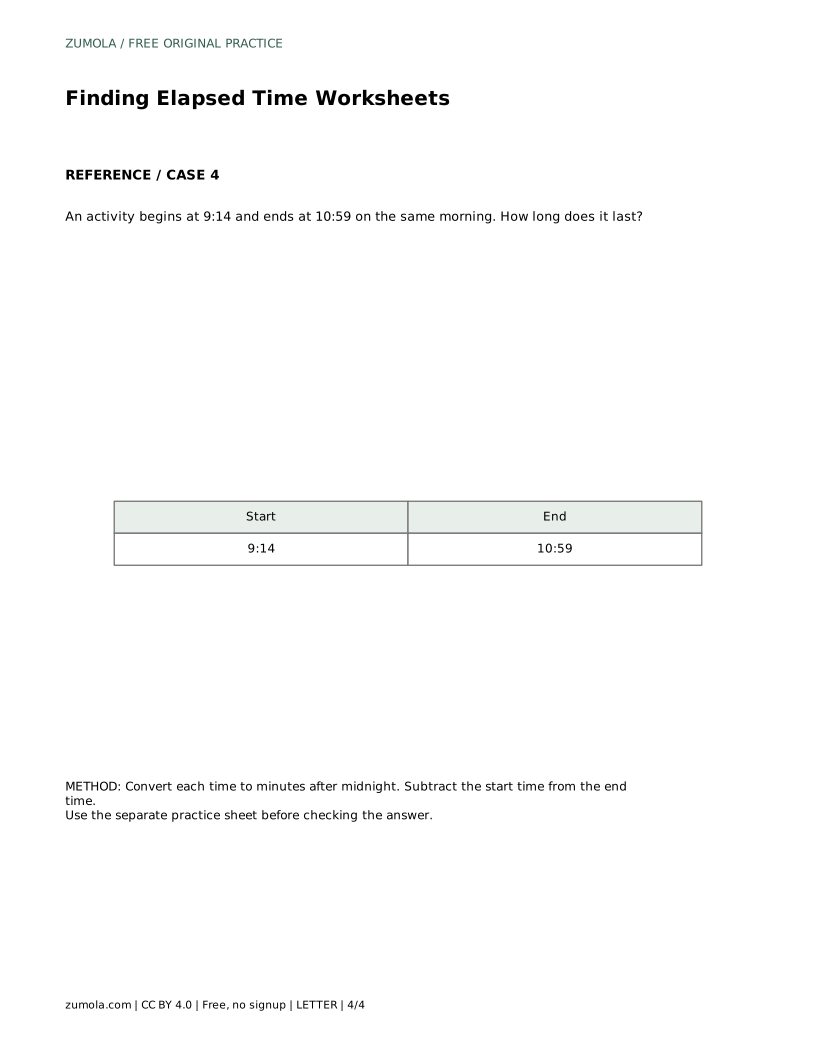
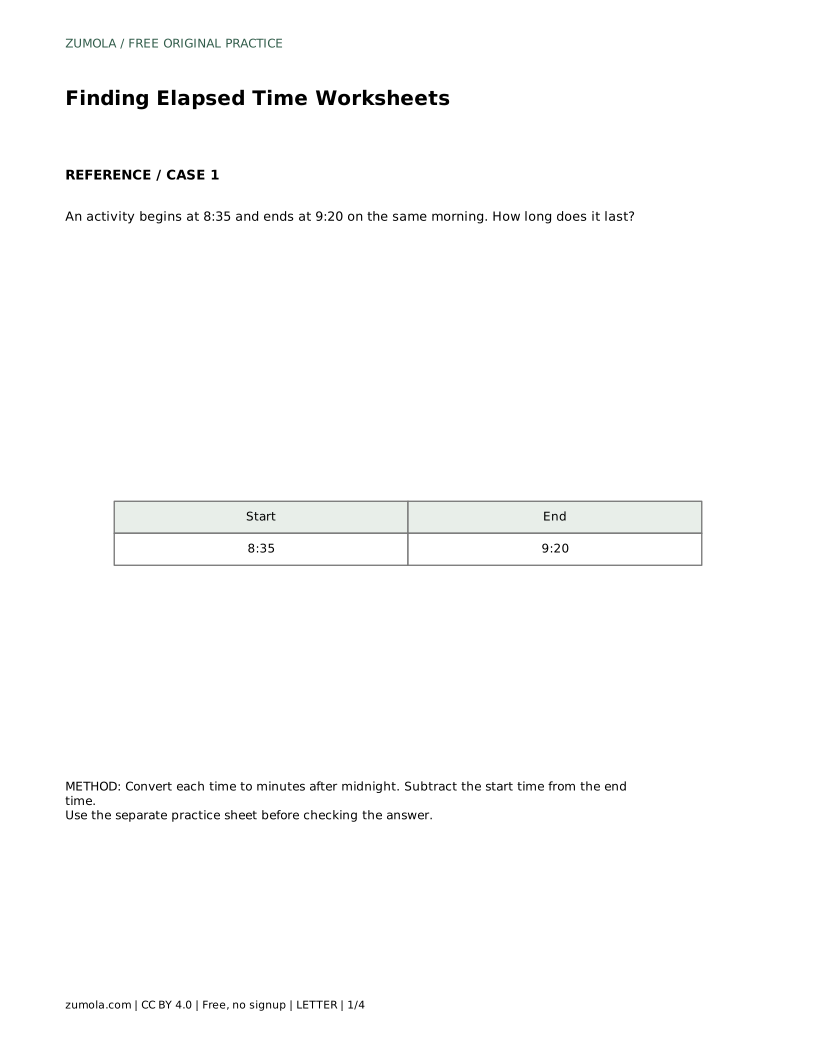
A useful sheet pairs each start and end time in a small table so students can see both values side by side. Leave a blank column for minutes after midnight and another for the final answer. Begin with pairs that cross one hour boundary, such as 8:35 to 9:20, then include pairs where the minute value of the end time is smaller than the start, such as 8:48 to 9:53. These force the conversion method rather than guesswork.
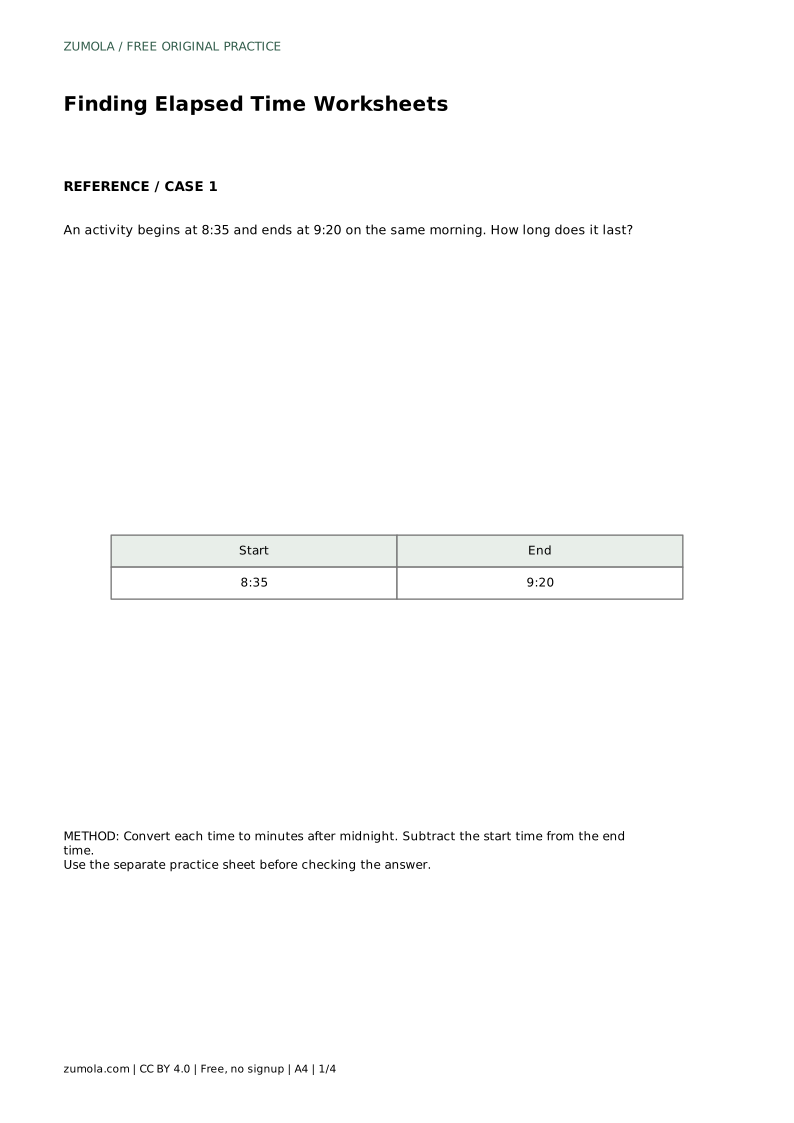
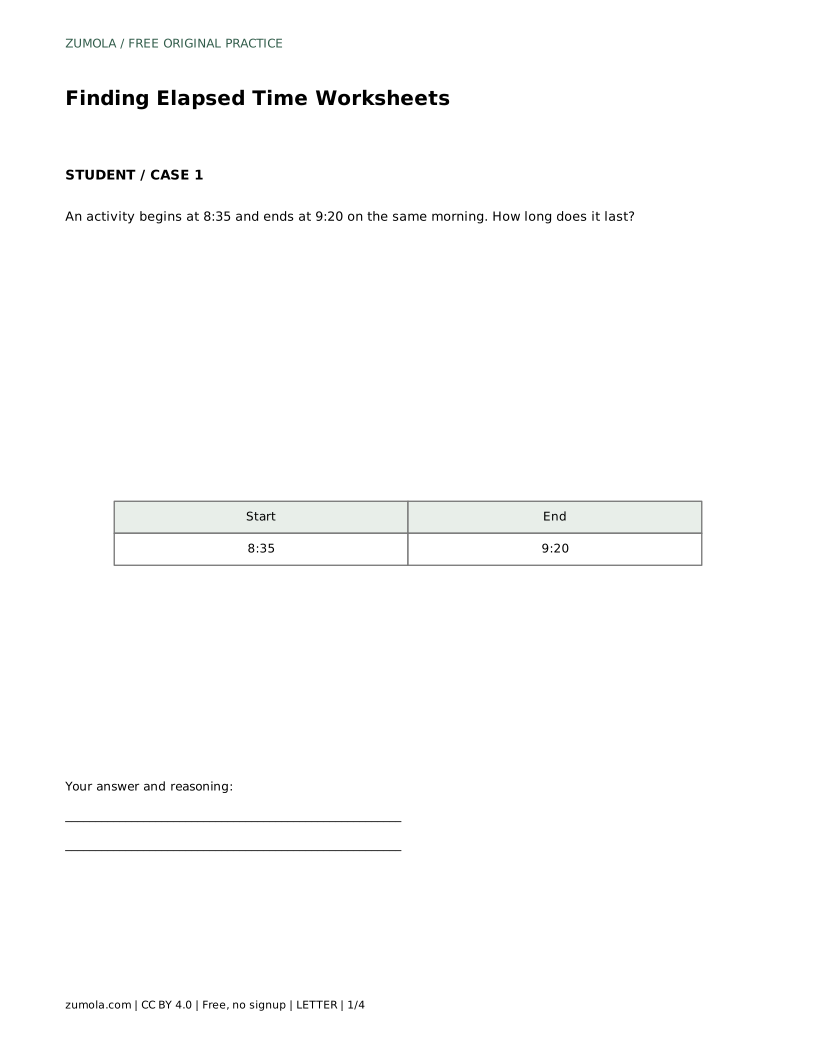
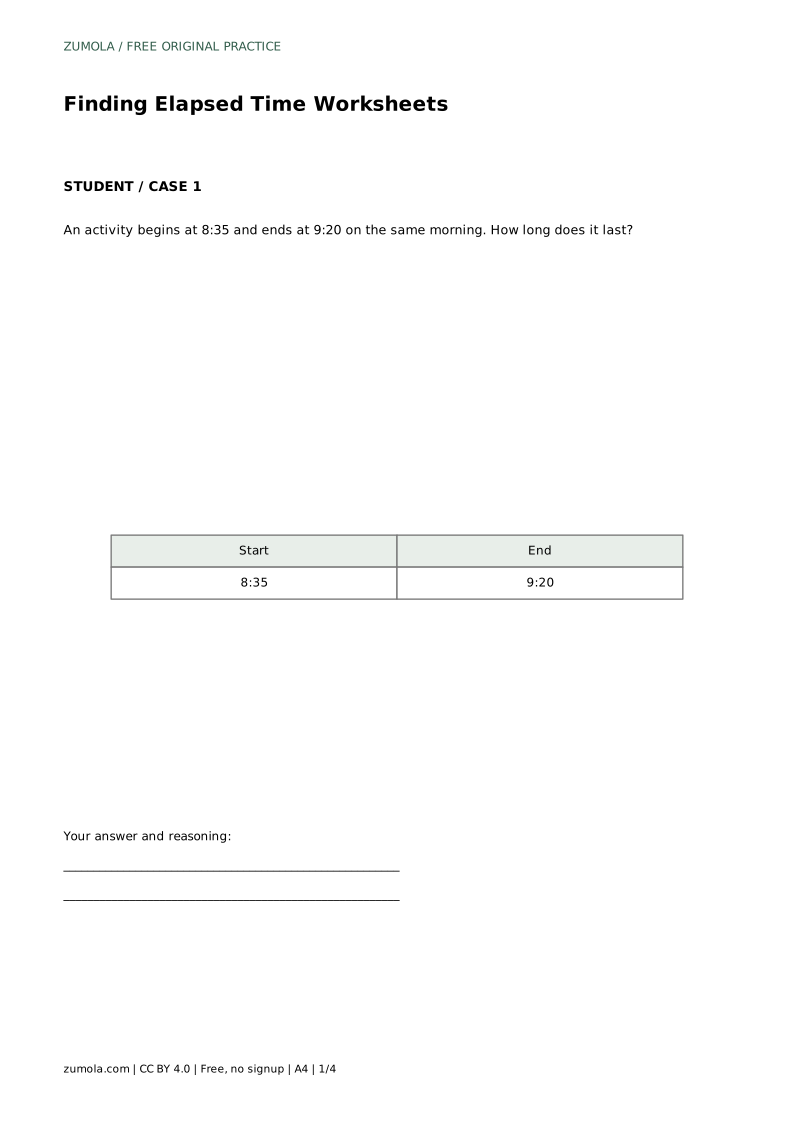
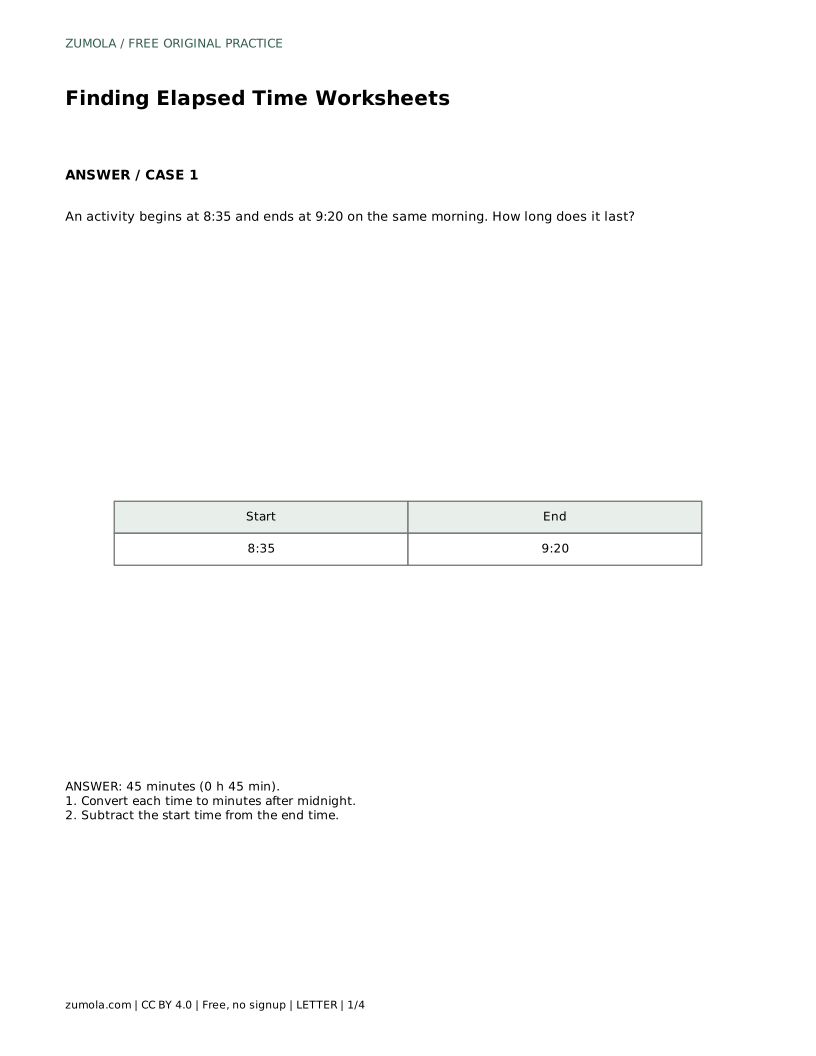
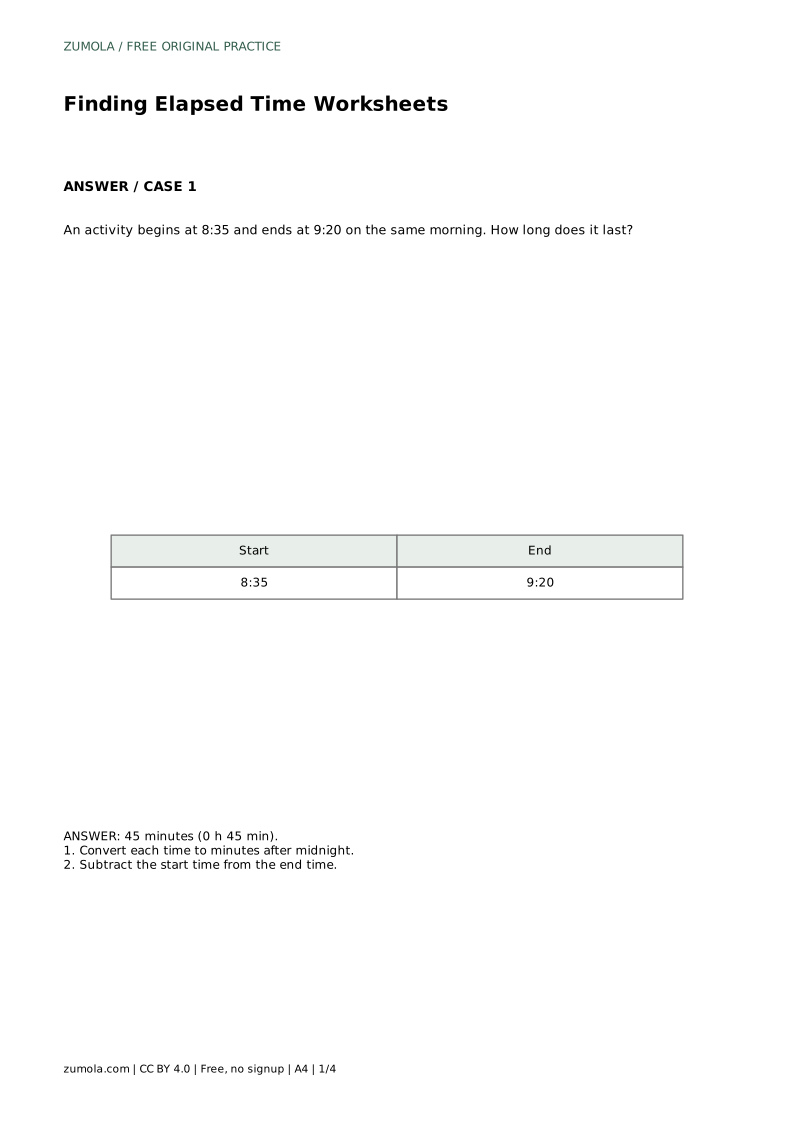
An activity begins at 8:35 and ends at 9:20 on the same morning. How long does it last?
45 minutes (0 h 45 min). Convert each time to minutes after midnight. Subtract the start time from the end time.
For these same-morning pairs it is the most reliable method because it turns a two-unit subtraction into one subtraction. Counting forward on a clock face can also work, but conversion is easier to check.
Keep the answer in minutes, or write 0 hours and the minutes. For example, 45 minutes is 0 hours 45 minutes.
Add the elapsed time to the start time. If the result matches the given end time, the subtraction is consistent.
All math worksheets · Free coordinate paper
Original resources · CC BY 4.0 · Free for personal and classroom use with attribution.