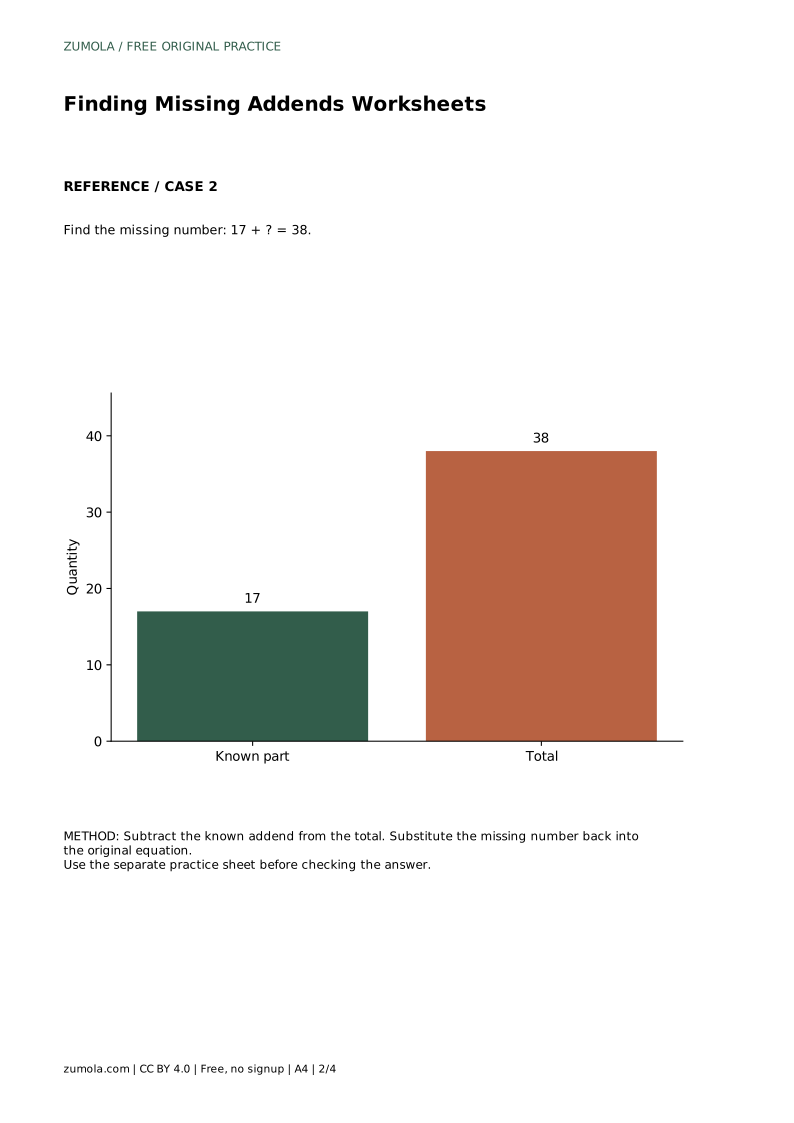
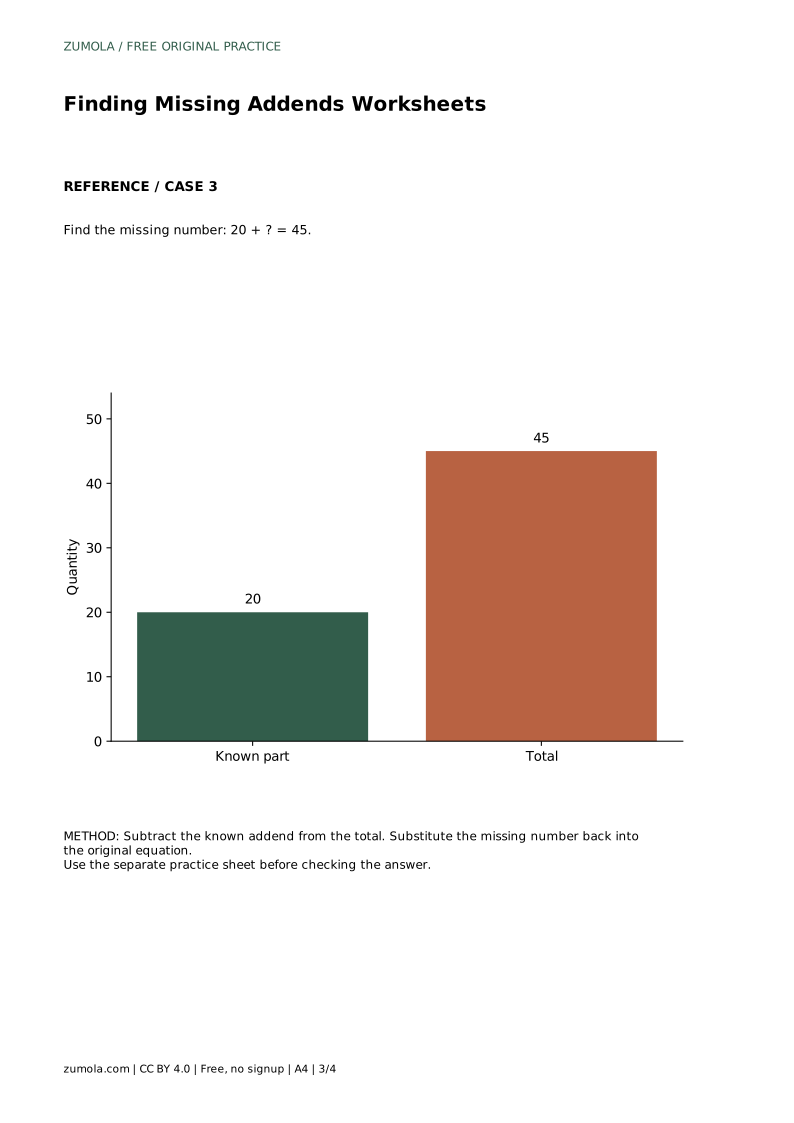
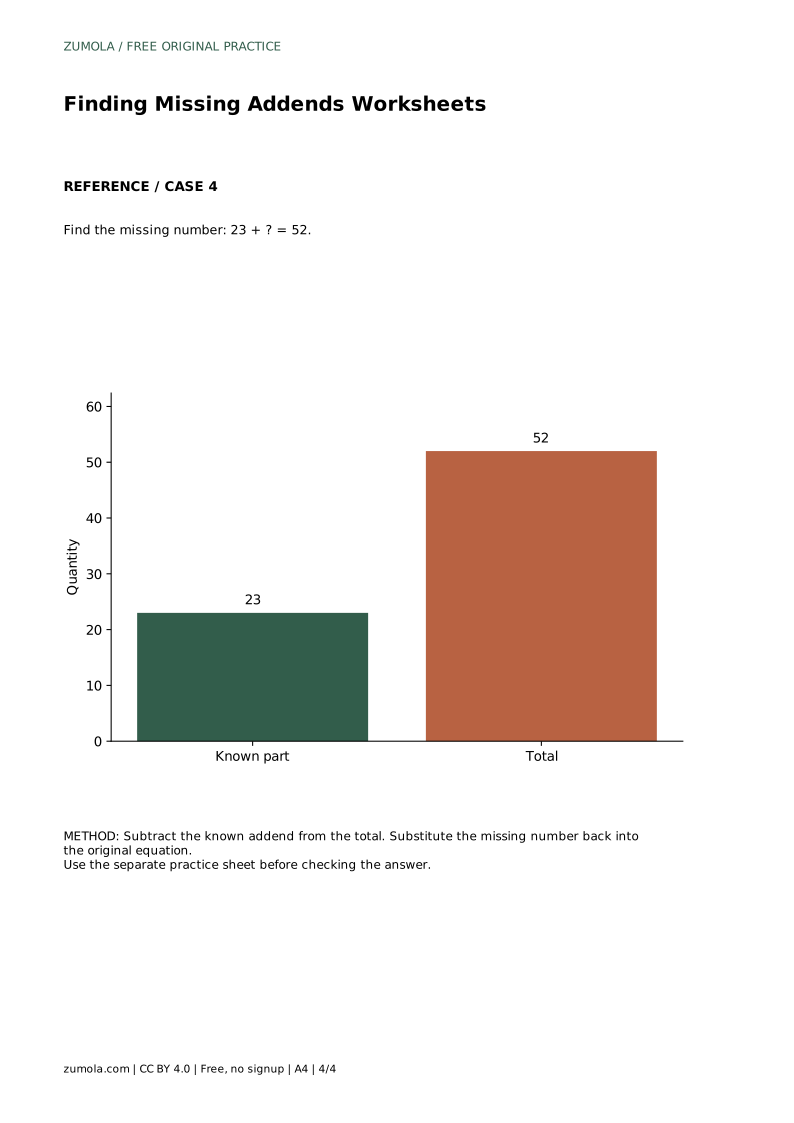
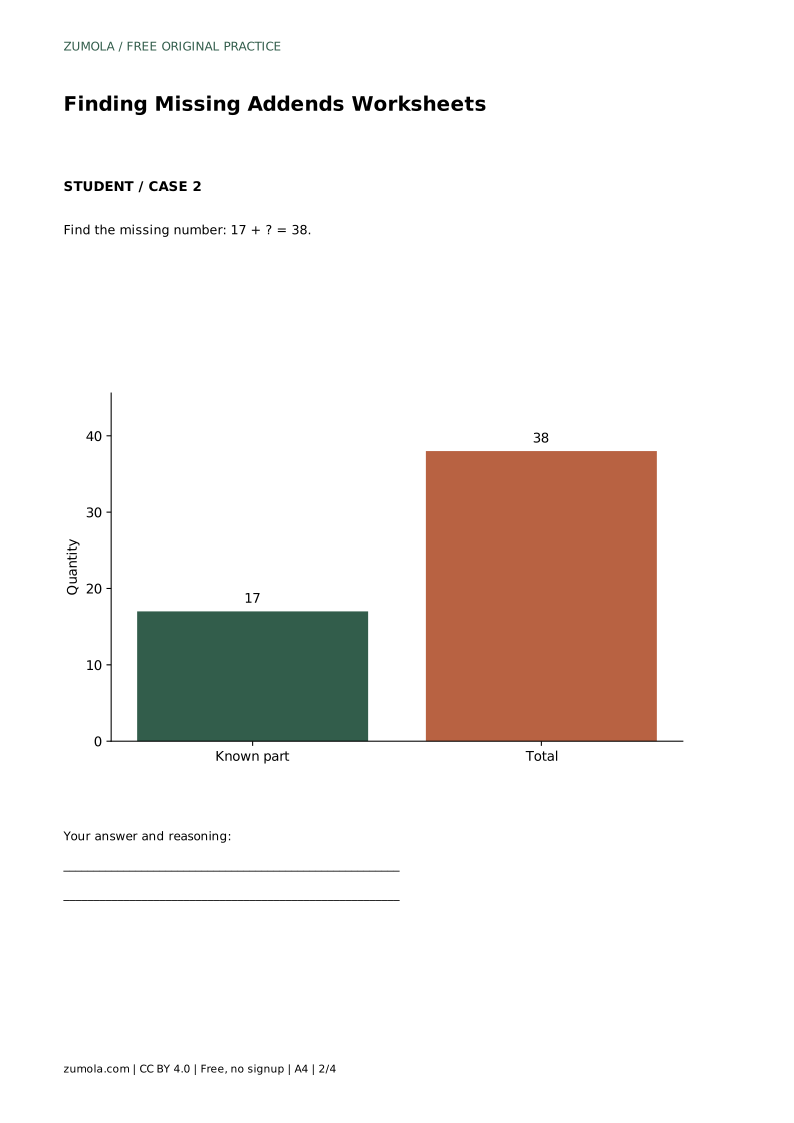
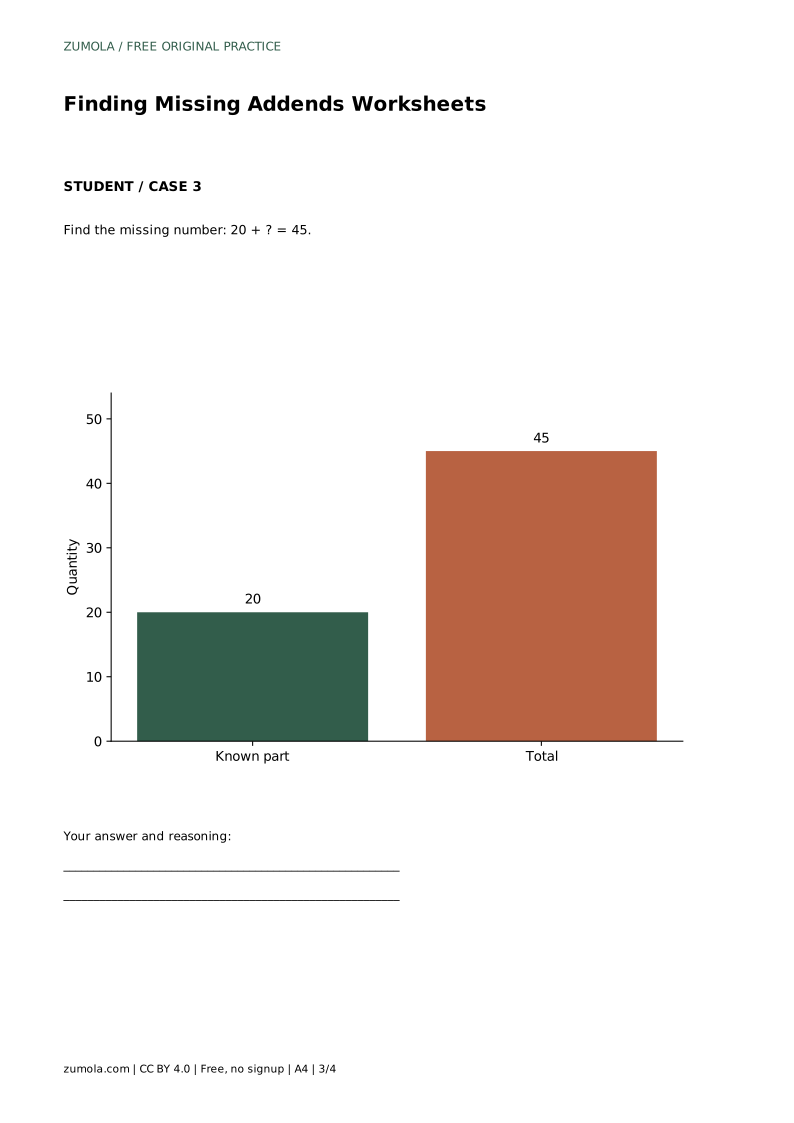
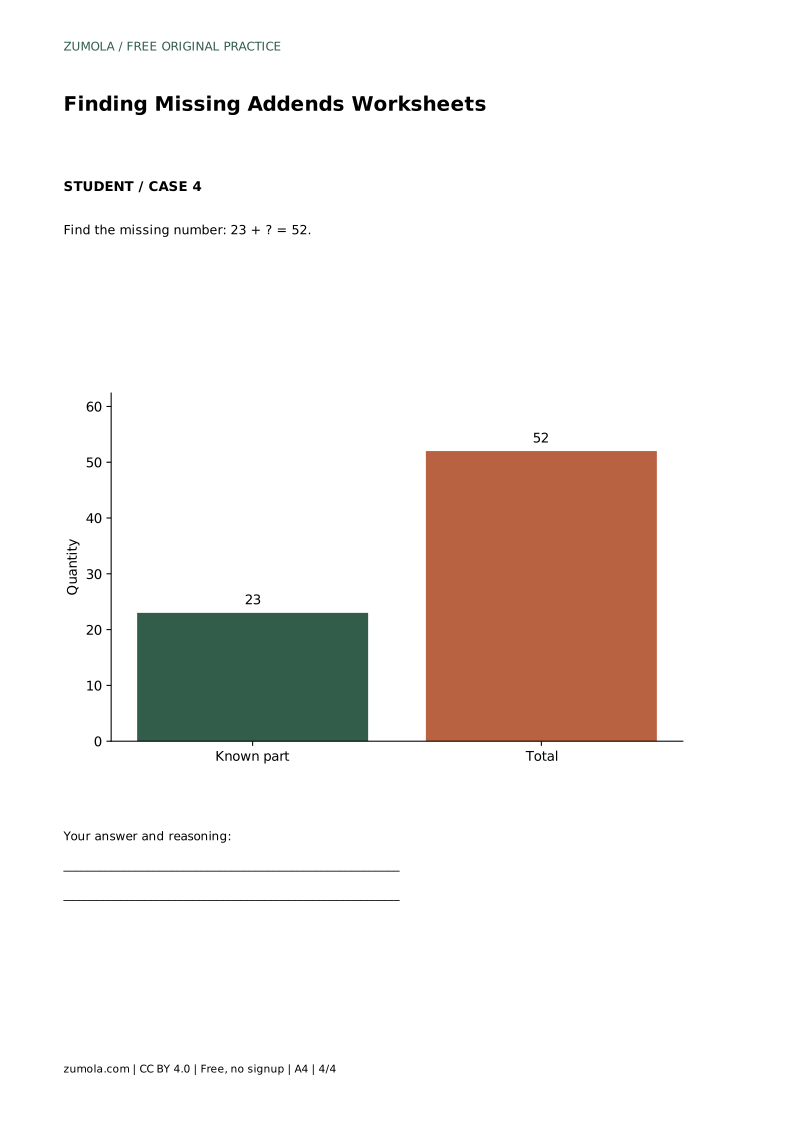
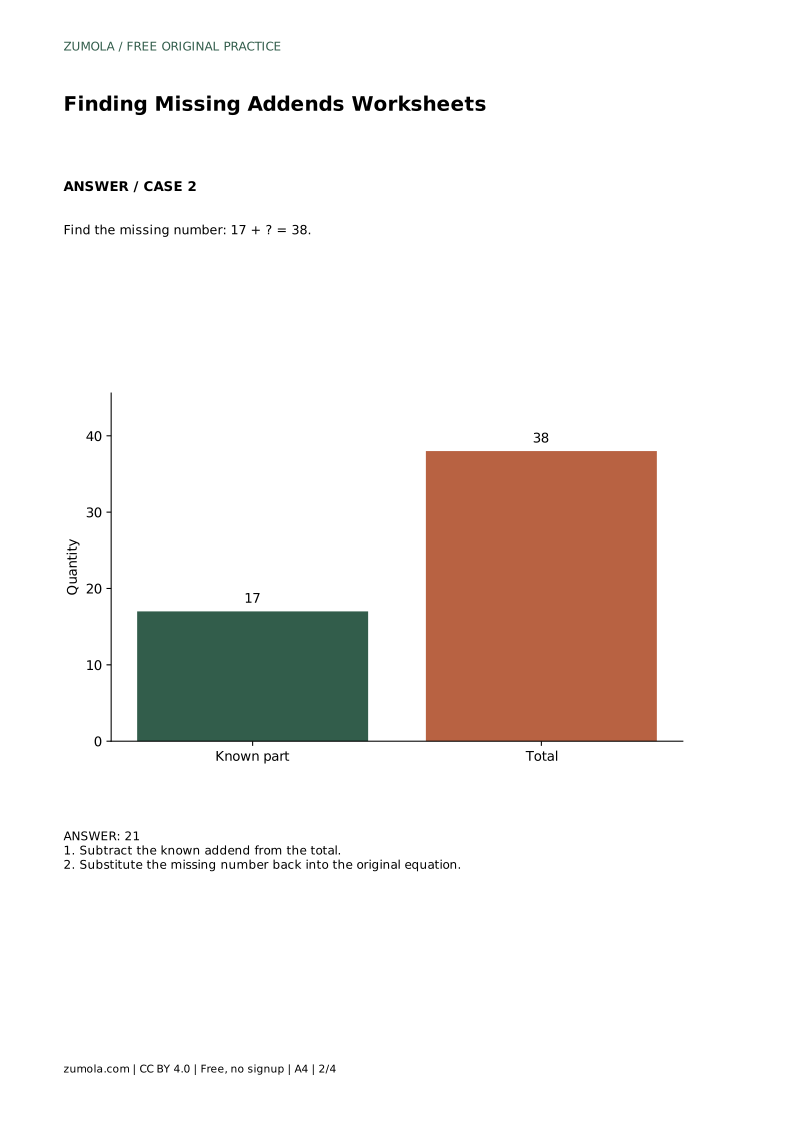
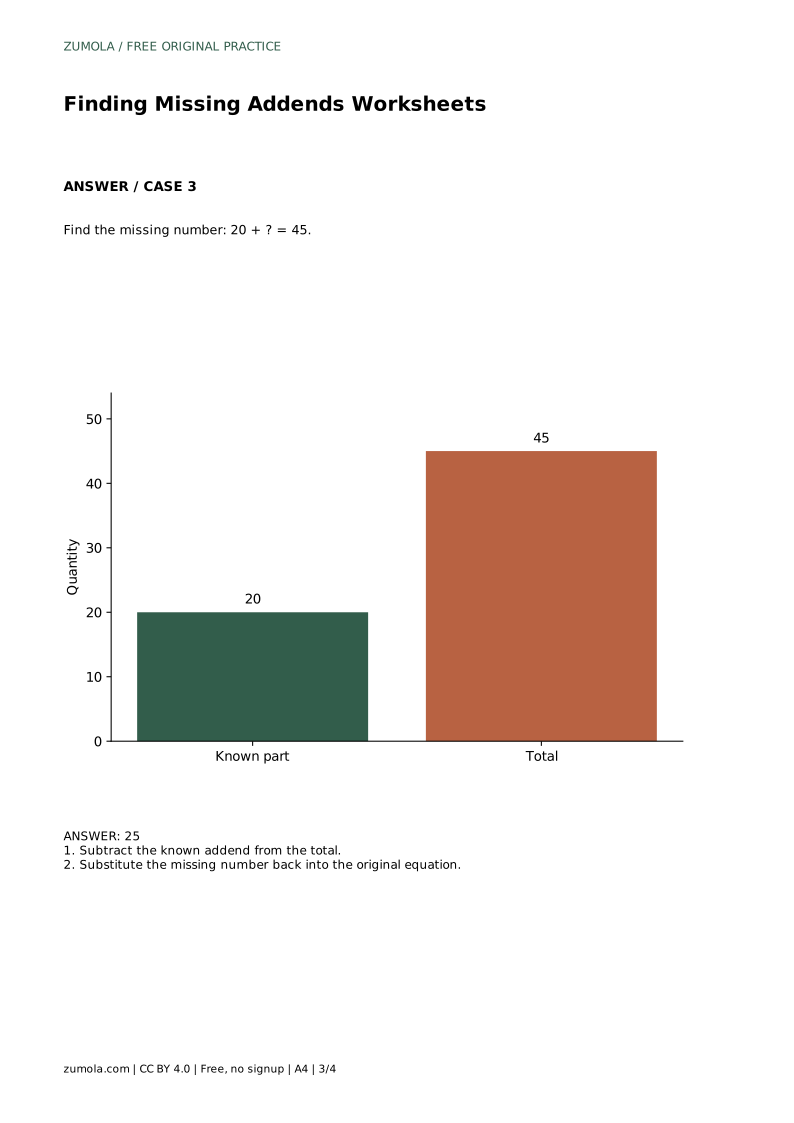
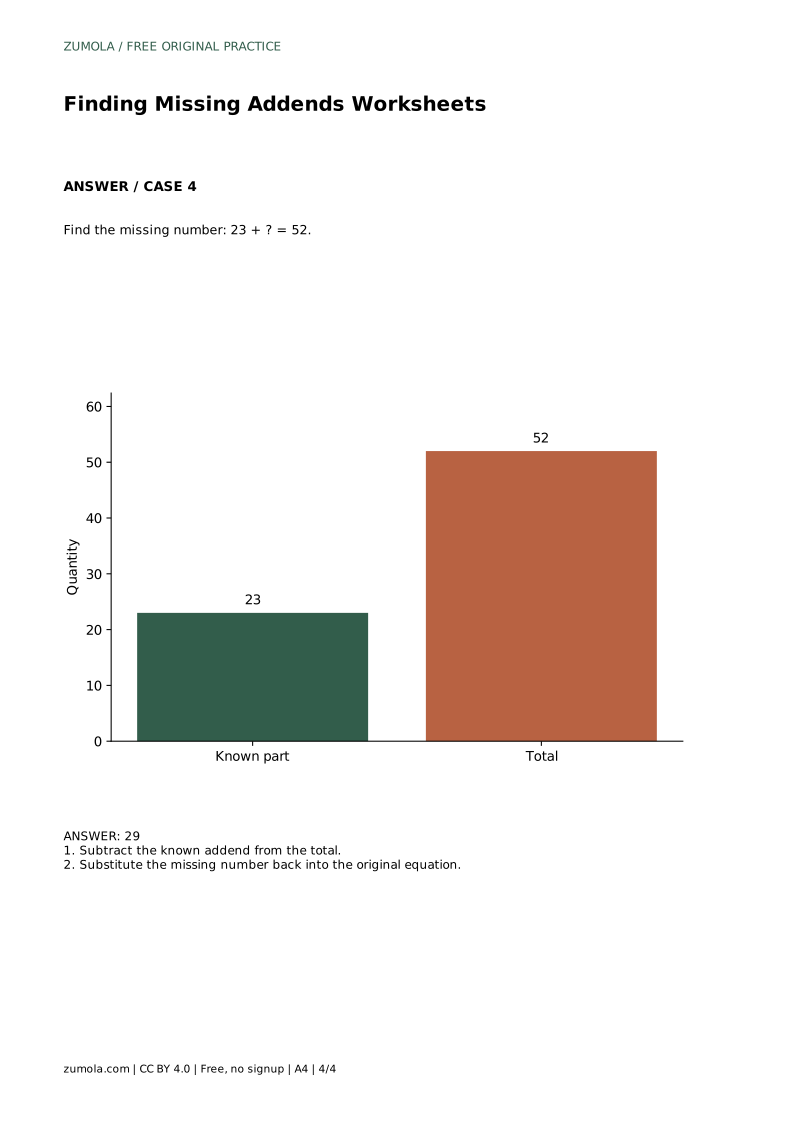
Reference diagrams
LETTER · Download PDF
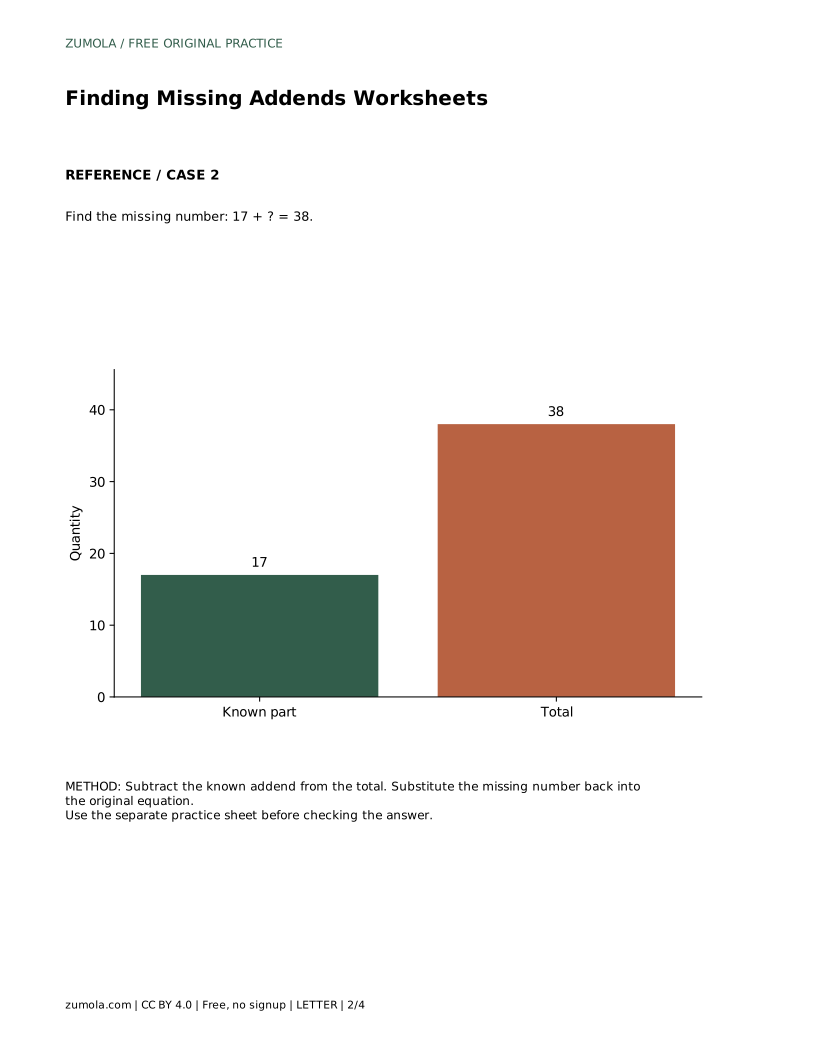
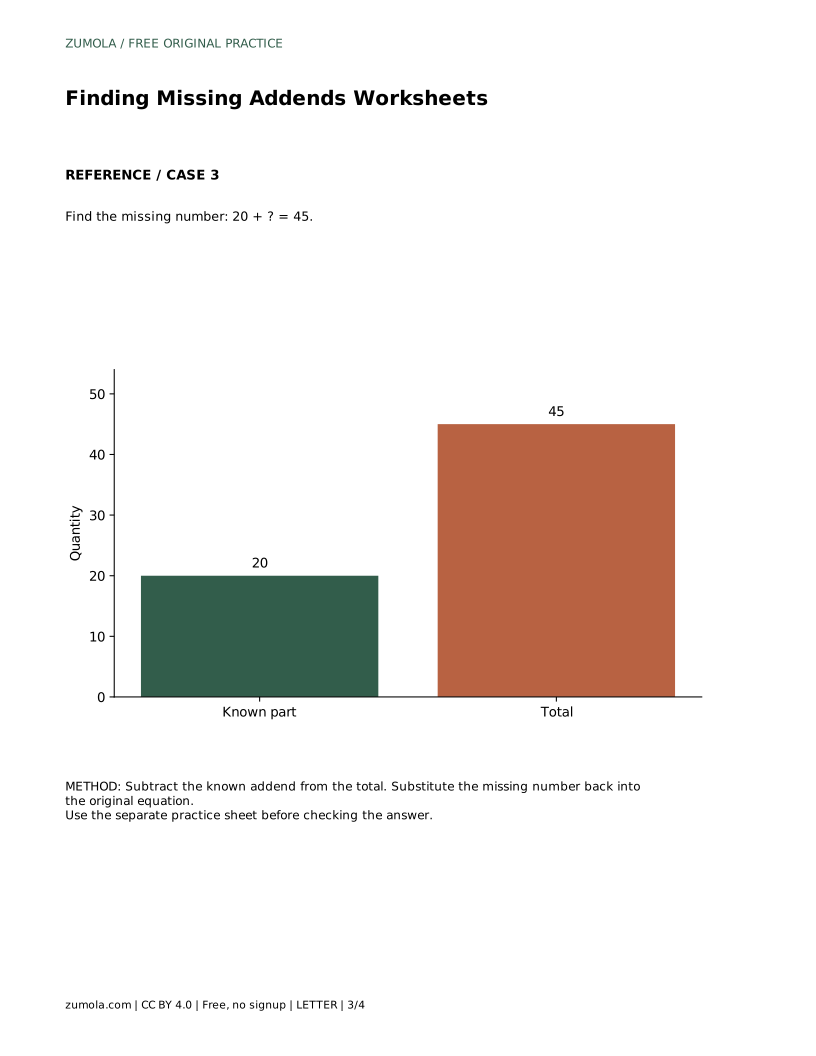
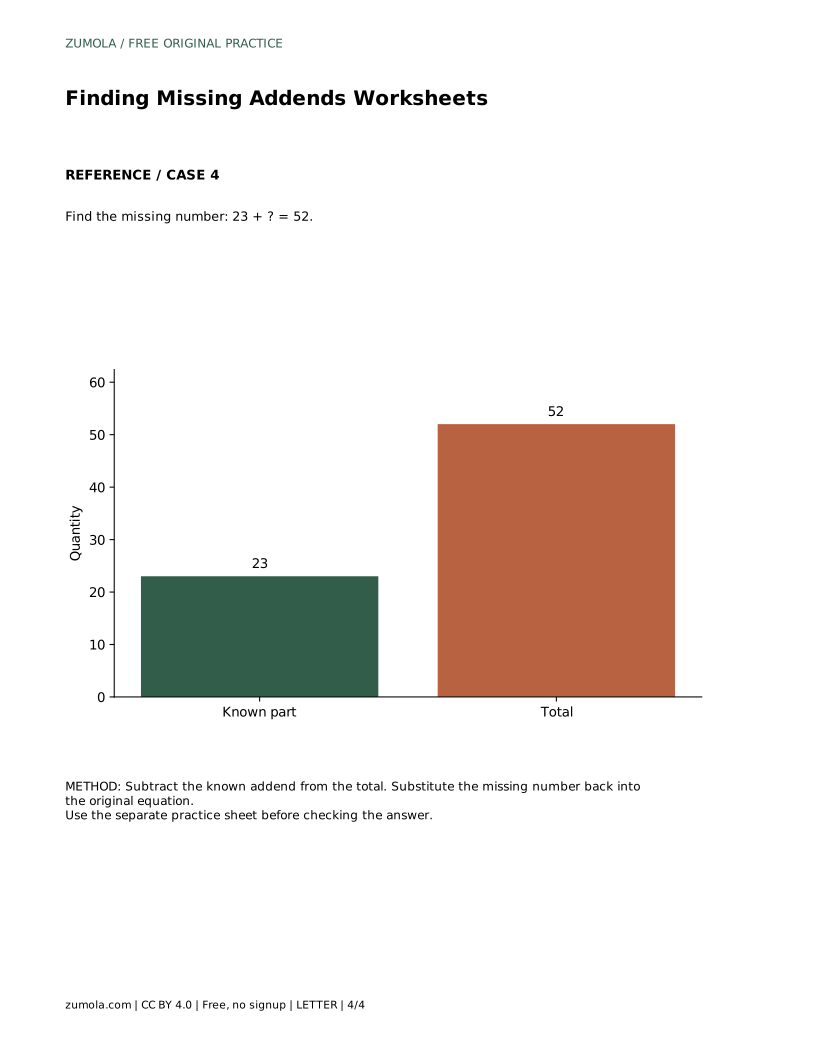
A4 · Download PDF
Free original resources
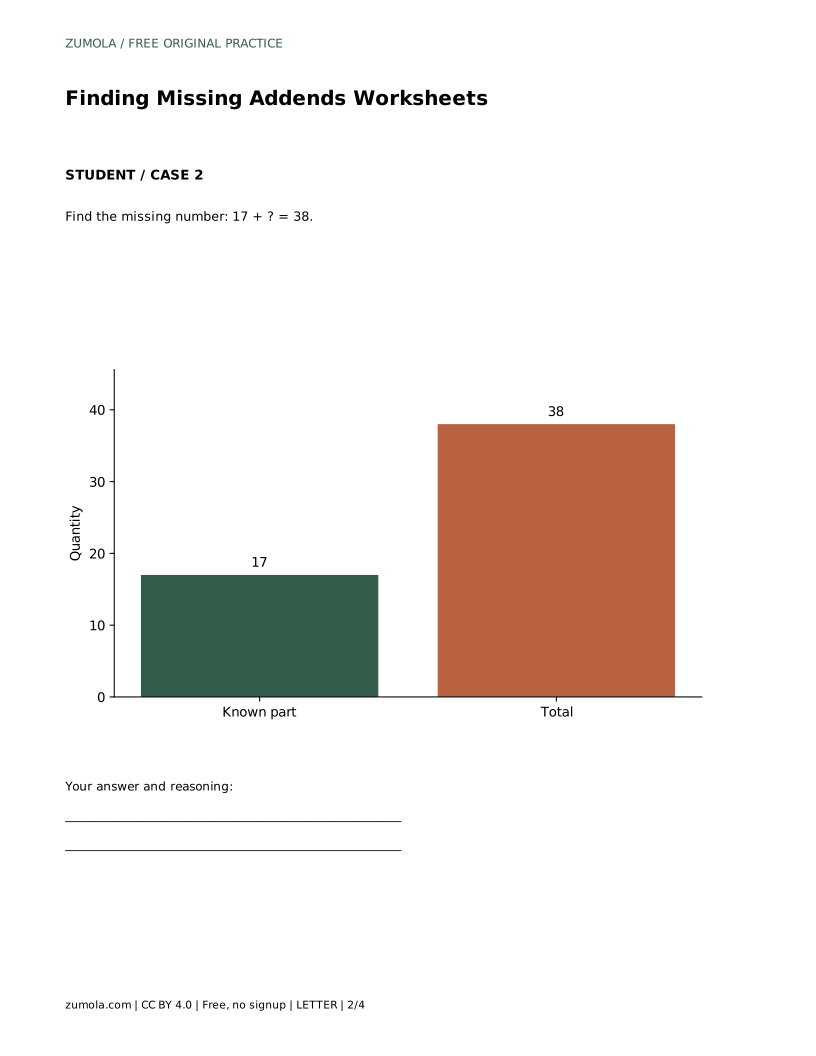
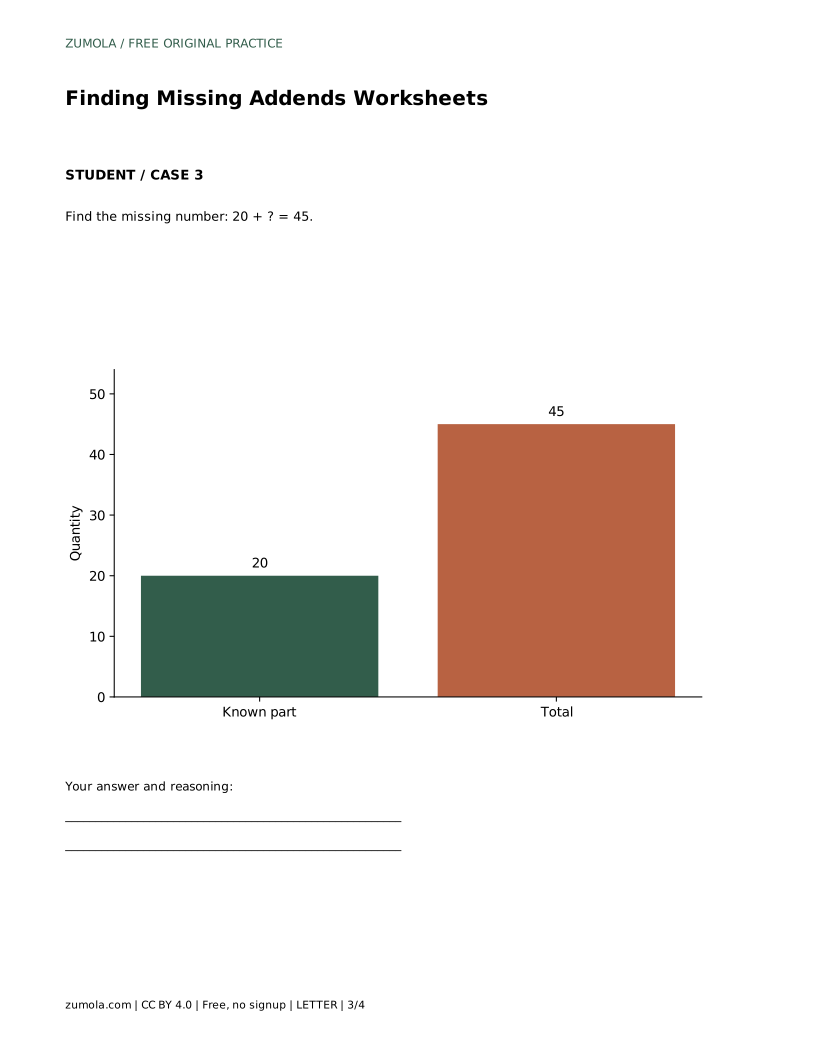
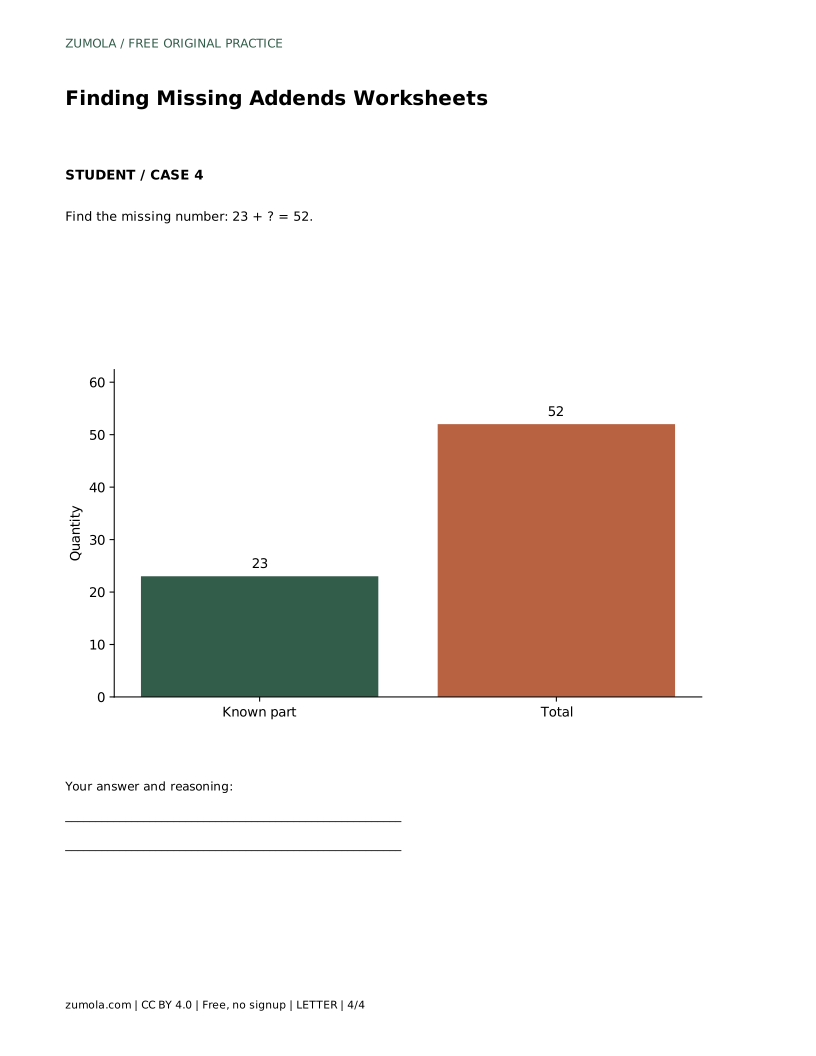
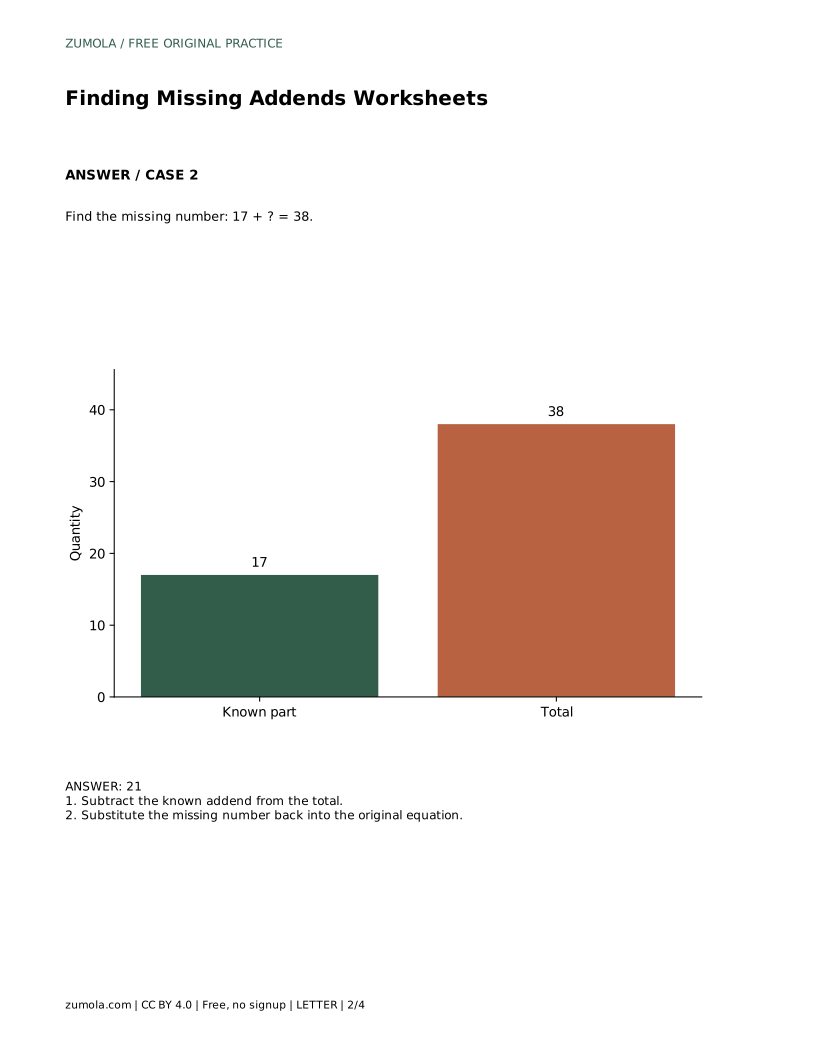
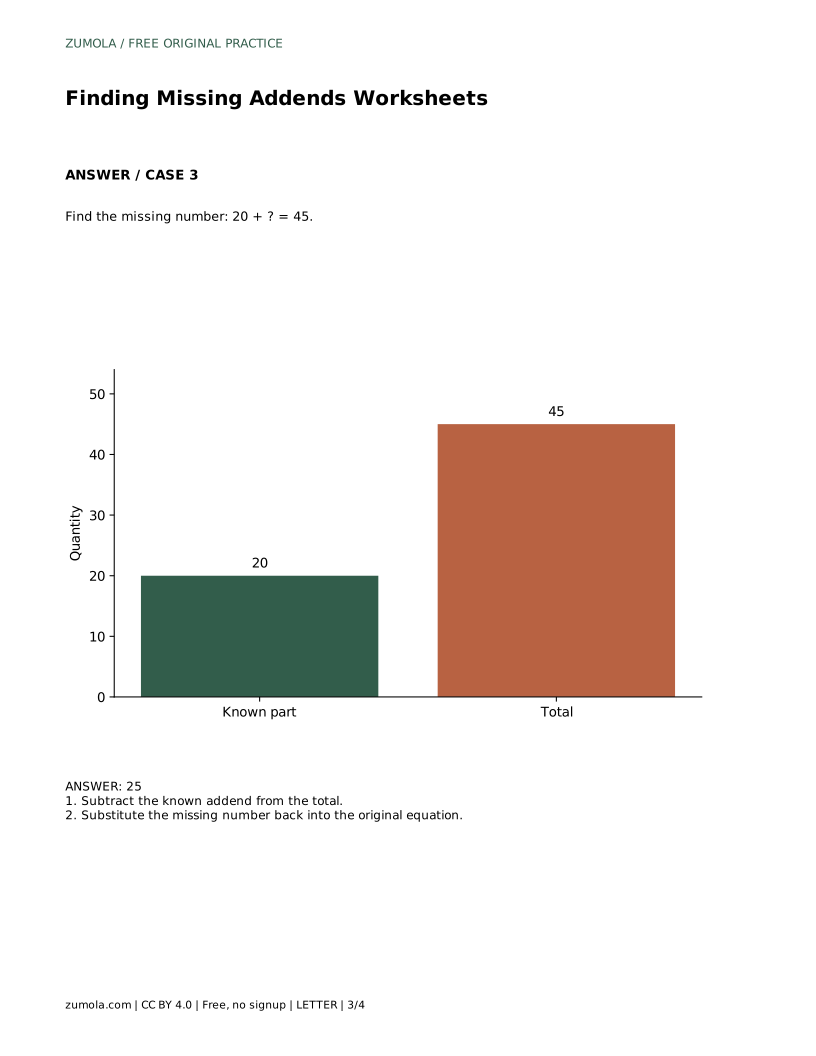
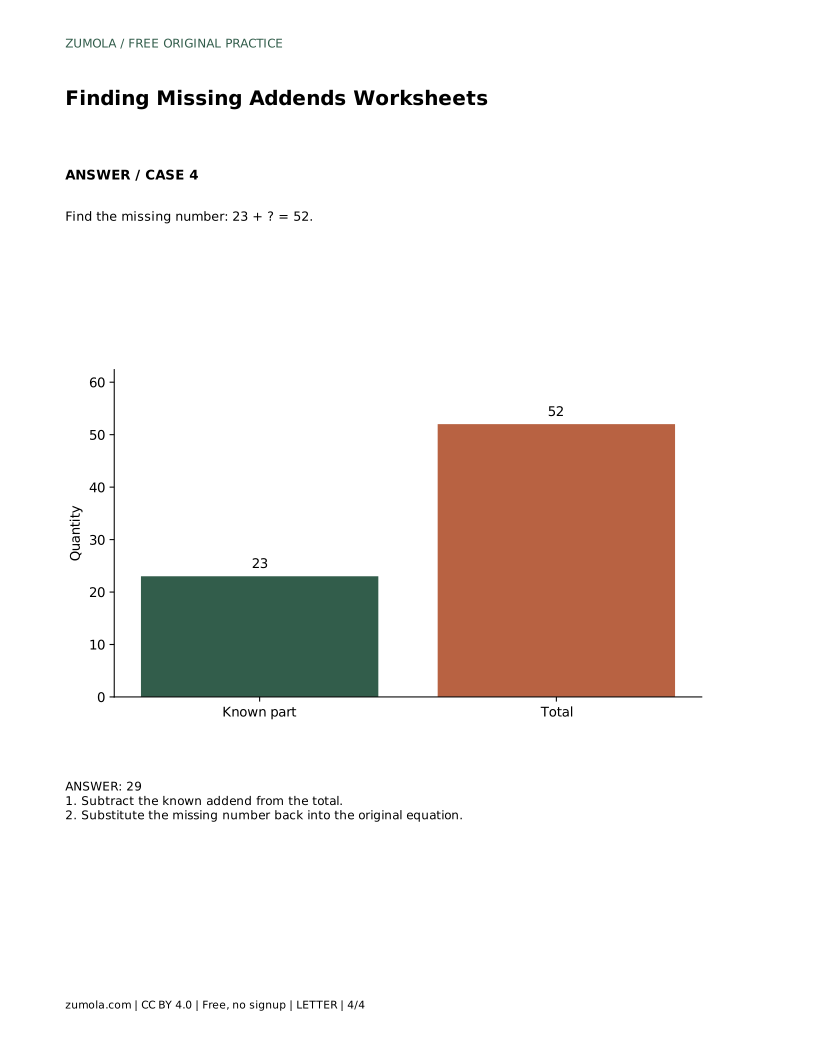
Teach students to find a missing addend by subtracting the known part from the total, then checking the answer in the original equation.
Four original cases, with reference diagrams, practice sheets and worked answers. Everything is free; no signup required.
LETTER · Download PDF
A4 · Download PDF
LETTER · Download PDF
A4 · Download PDF
LETTER · Download PDF
A4 · Download PDF
Use A4 or US Letter to match your printer. Use the stated values and conditions to solve each exercise; diagrams are not physical measuring rulers.
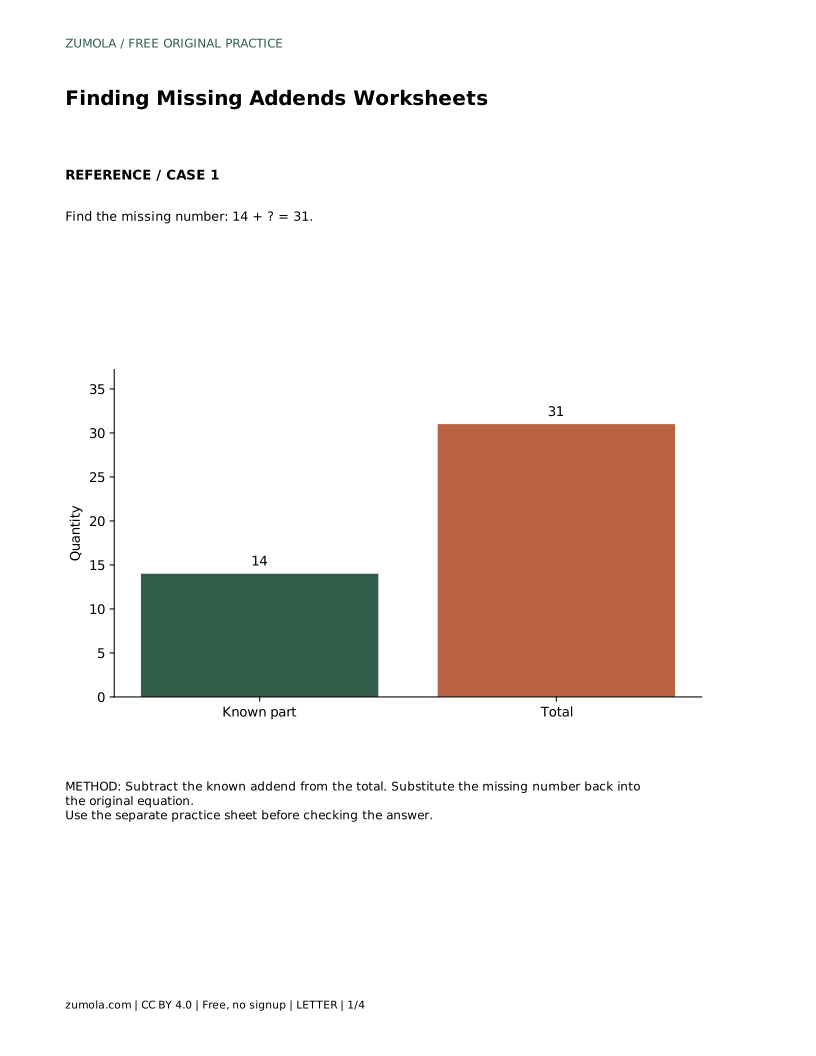

A missing addend problem gives you one part and the total, but hides the other part, as in 14 + ? = 31. The reliable method is subtraction: take away the part you know from the total to reveal the part you do not know. This page explains that reasoning with bar models, worked steps, and a checking habit so students can solve similar equations with confidence.
An addition equation describes two parts joined into one total. When the total and one part are known, the unknown part is whatever remains after the known part is removed. A bar model makes this visible: draw one bar for the known part and a longer bar for the total, then the gap between them is the missing addend.
This is not a trick to memorize. It follows from the meaning of addition. If 14 plus some number makes 31, then 31 minus 14 must be that number. Subtraction and addition undo each other, which is why the same relationship can be written as 14 + ? = 31 or 31 - 14 = ?.
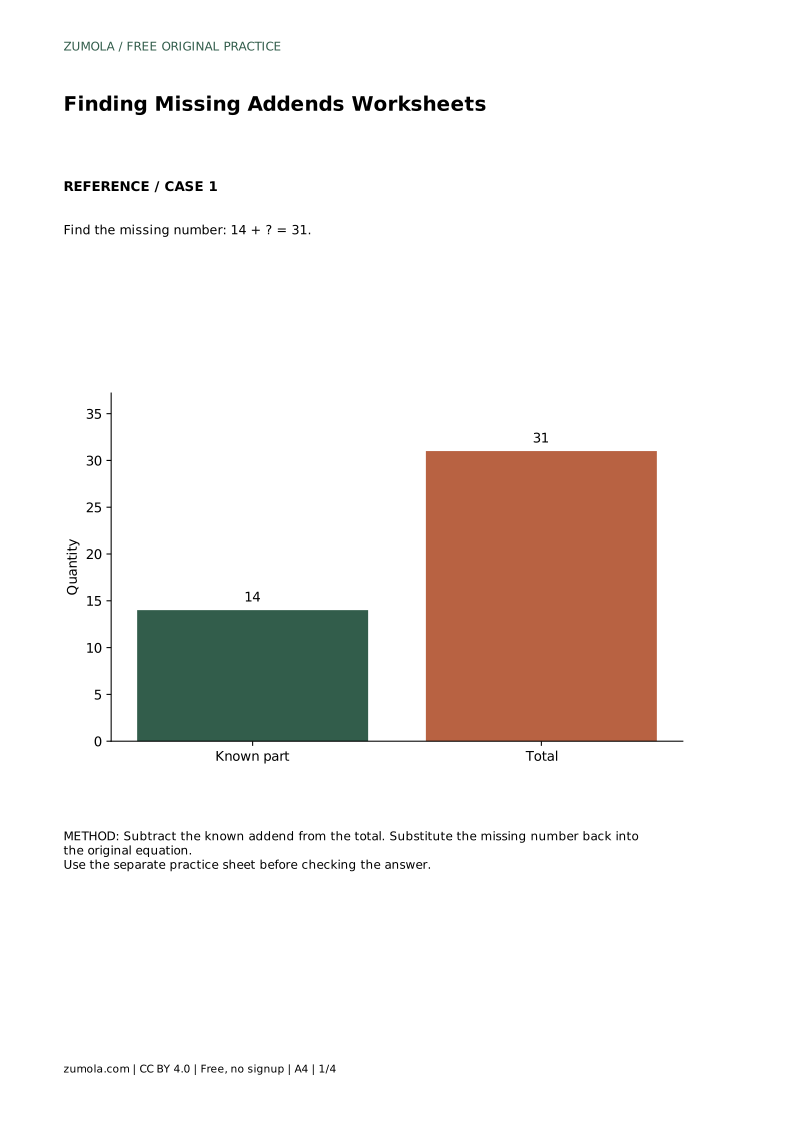
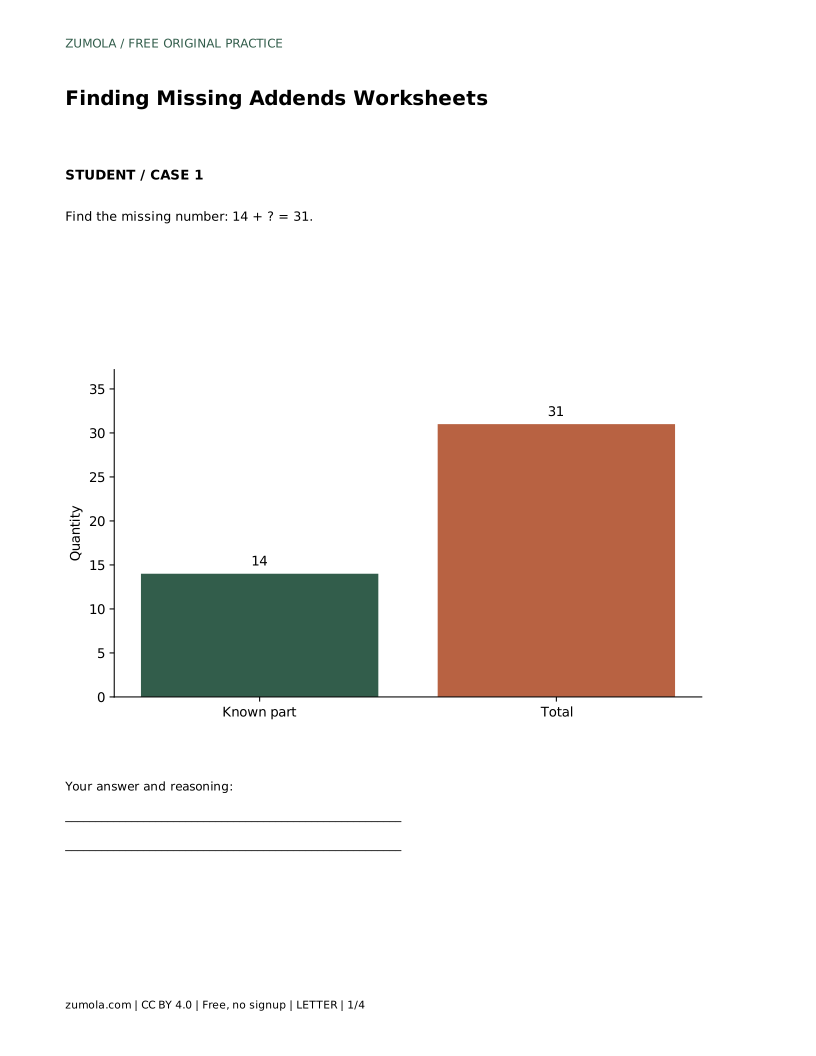
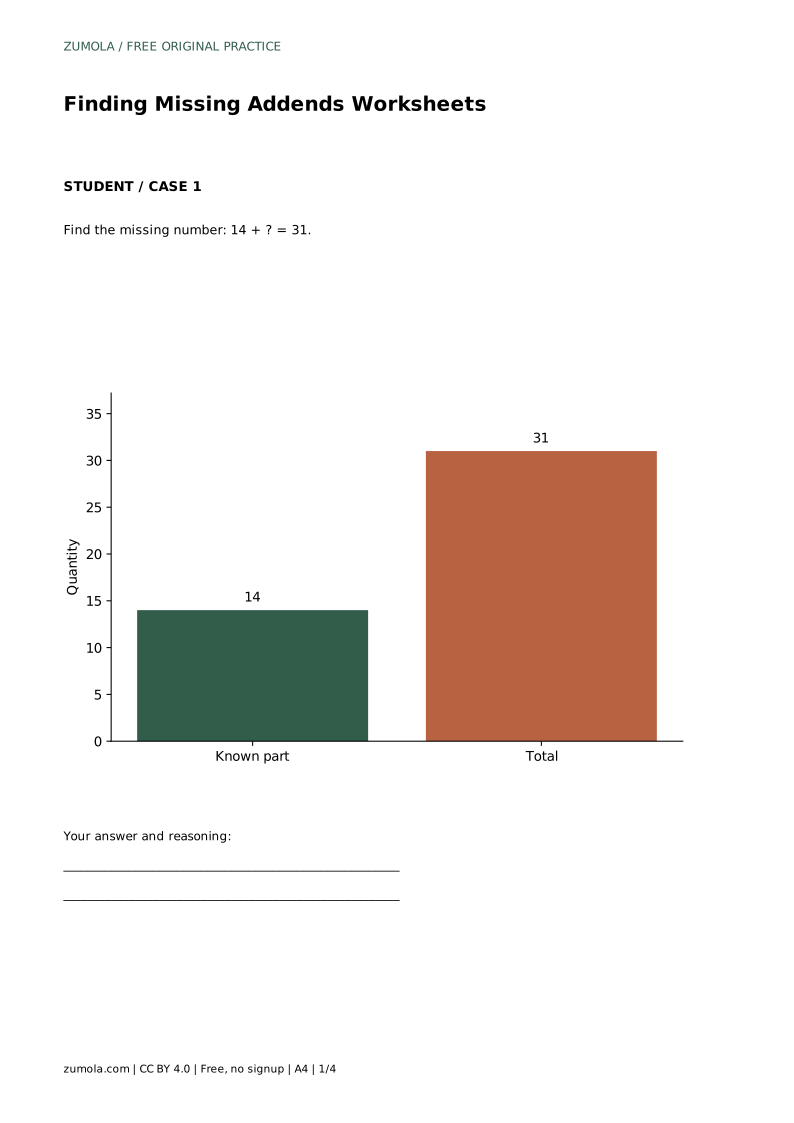
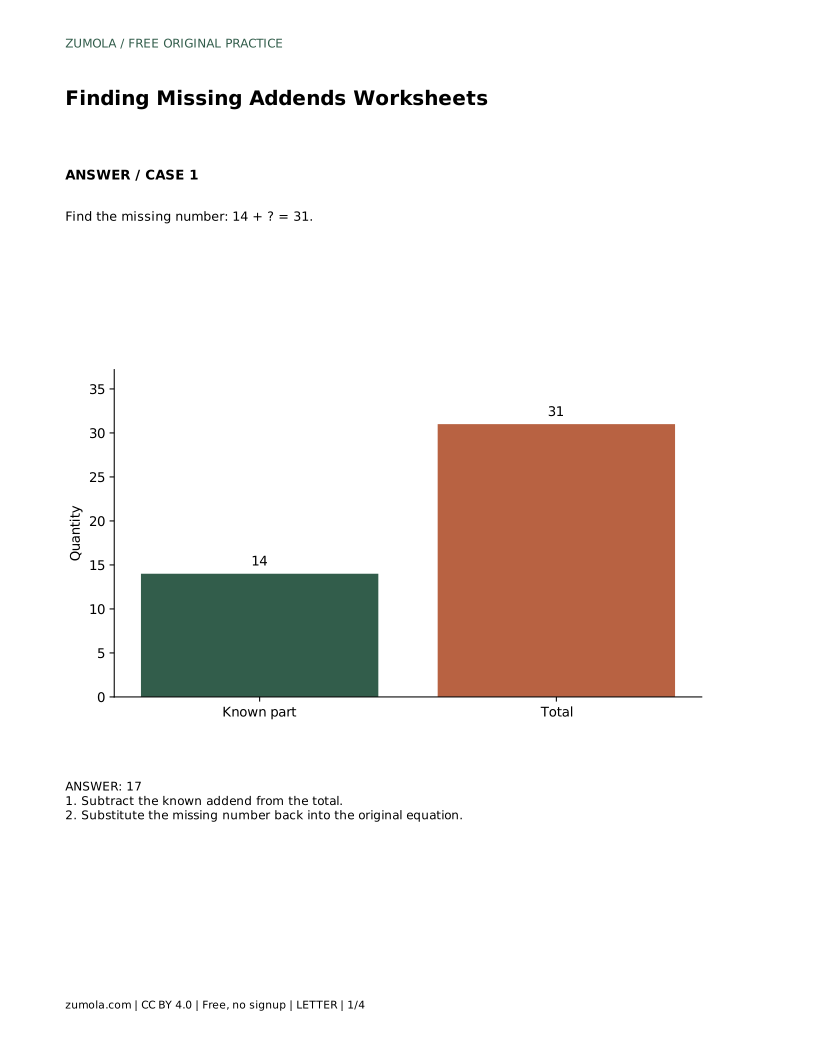
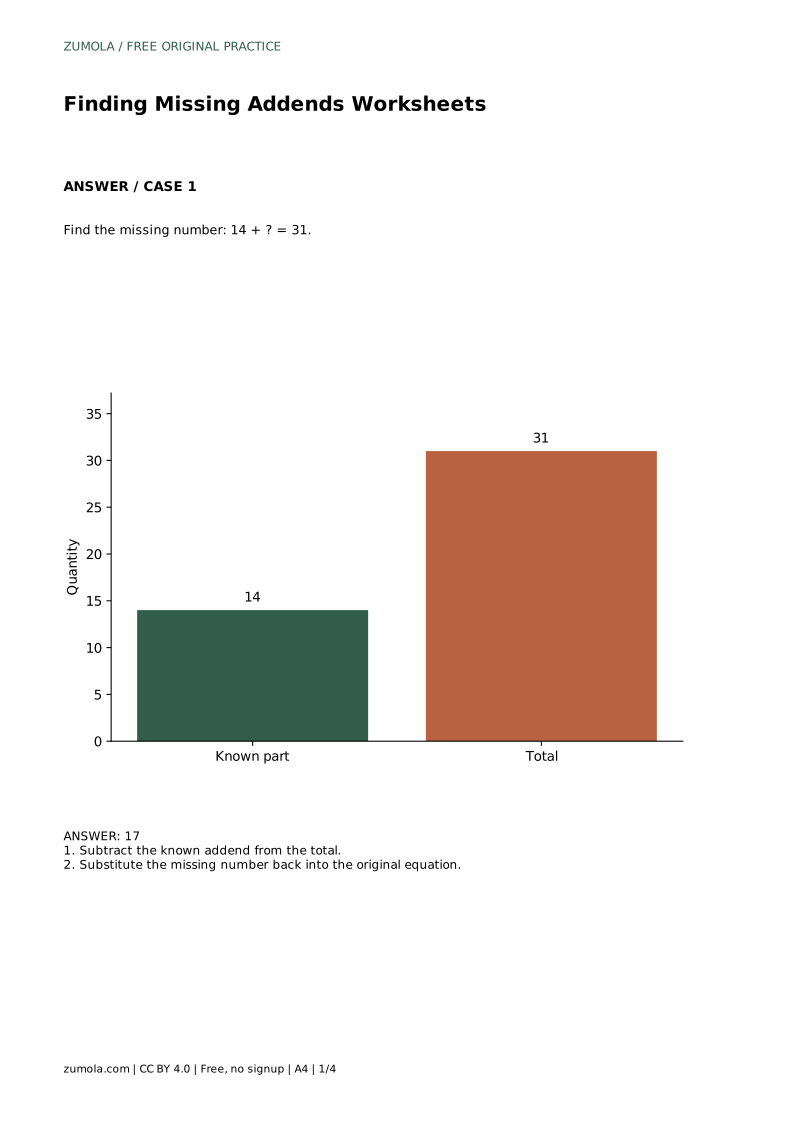
Here the known part is 14 and the total is 31. Subtract 14 from 31: 31 - 14 = 17. So the missing addend is 17. Check by substituting: 14 + 17 = 31, which is correct.
A bar model supports the same reasoning. The known-part bar has length 14 and the total bar has length 31. The difference in length, 17, is the missing part. Students can sketch this before calculating, which helps them see why subtraction is the right operation rather than guessing.
Every missing addend answer should be tested in the original equation. Substitution catches small arithmetic slips before they become habits. Ask students to say the completed equation aloud, such as 14 plus 17 equals 31, so the relationship is reinforced.
Vary the position of the blank only when students are ready. The same subtraction reasoning applies when the blank is first, as in ? + 14 = 31, because the total and known part are still the two given values. Keep totals and parts as whole numbers unless a lesson specifically introduces other number types.
Treat answer checking as part of the task, not an afterthought. A simple column for the substituted equation gives students room to show that their answer works. Sheets can mix totals and known parts, but keep each item self-contained so students apply the subtraction method rather than pattern-matching a sequence.
Find the missing number: 14 + ? = 31.
17 Subtract the known addend from the total. Substitute the missing number back into the original equation.
It is the unknown number in an addition equation where the total and one part are given, such as the blank in 14 + ? = 31.
The total is made of two parts. Removing the known part from the total leaves the unknown part, so subtraction reverses the addition.
No. If the equation is ? + 14 = 31, the total is still 31 and the known part is 14, so subtract 31 - 14 to get 17.
All math worksheets · Free coordinate paper
Original resources · CC BY 4.0 · Free for personal and classroom use with attribution.